

A Republic of Many Bloods
AI-generated music and artwork
A symphonic metal opera about buried American histories, broken national myths, and the unfinished work of plural democracy.
Tracklist
Liner Notes
A short editorial read on the album world, sound, and standout moments.
About the Album
A Republic of Many Bloods does not begin with a salute. It begins with an accusation.
Across fourteen tracks, Melody Mind Music turns the history of the United States into a symphonic metal opera about land, labor, race, memory and the unfinished promise of democracy. The album looks beyond presidents and campaign slogans to ask a harder question: what kind of country is built when its founding story depends on forgetting the people who were already there, the people who were enslaved, the people who arrived with nothing, and the people whose work made prosperity possible while power remained elsewhere?
Musically, the record moves through symphonic progressive metal, cinematic folk metal and political heavy rock without losing its identity. Low-tuned guitars, bowed cello, hammered dulcimer, martial toms and recurring three-note figures bind the songs together, while changing meters and contrasting arrangements prevent interchangeable anthems. Some tracks strike like courtroom verdicts; others unfold like letters preserved in a drawer.
The opening title track establishes the central image: a blindfolded eagle wrapped in a flag stitched from different fabrics. From there, the album moves backward and forward through American history. “Before the Flag, the Nations” rejects the fiction of an empty continent, while “Treaties Written in Ash” gives voice to agreements broken when land became more valuable than honor. “Boarding School Bells” narrows the scale to a child’s stolen name and suppressed language.
“Cotton Under the Anthem” confronts the contradiction between declarations of liberty and wealth extracted from slavery. The song’s blues-rooted metal pulse feels heavy because the lyrics remain concrete: cotton sacks, auction marks, family separation and polished phrases drifting down from the house on the hill. “The Melting Pot Was a Furnace” shifts into a harder industrial rhythm, following immigrants into mills, kitchens, mines and garment rooms. The celebrated melting pot becomes less a symbol of harmony than a machine demanding labor, obedience and the surrender of names.
At the center of the record, “Brown Hands Built the Morning” delivers the decisive turn. Workers from fields, railways, laundries, foundries, kitchens and docks recognize that the wealth surrounding them bears the imprint of hands removed from the official portrait. Its chorus does not ask for symbolic recognition; it demands ownership of the story, the labor and the future. From that point onward, the album becomes less an excavation than a confrontation.
“No Throne for White Men” is deliberately sharper, but its target is not an individual skin color. It attacks the idea that race, gender, ancestry or inherited wealth can grant a natural right to rule. This is not revenge music; it is anti-caste music. It rejects the bargain in which ordinary white citizens are paid in status while power remains concentrated above them. The album’s most direct political line may also be its simplest: there is room at the table, but no seat above it.
The darkest chapter arrives with “Children of the Broken Map,” where removal routes, redlining, school districts and detention systems are linked through children separated by lines they did not draw. “The Border Sings Back” then gives the border itself a voice, cutting through slogans with rivers, fingerprints, payrolls and family ties. The song understands the wall as political theatre: rigid in speeches, porous for profit, and deadly for those forced into the desert.
The final movement offers no easy redemption. “We Were Always Many” argues that pluralism is not a recent complication but an American fact hidden by a narrow national myth. Its patchwork flag is not a branding exercise; every piece retains its name, damage and history. “Democracy Is Not a Bloodline” expands that idea into the album’s climax, replacing the throne with a common table. Democracy, in this telling, is not a national personality trait. It is a daily practice made of voting, organizing, opening records, honoring treaties, sharing power and accepting that no victory remains permanent without participation.
The closing “America, Wake the World” refuses the traditional patriotic finale. America is not asked to lead through force, wealth or moral theatre, but through repair. The song leaves the listener with an open question rather than a clean resolution: can a country become more democratic by facing what it has done, or will it keep turning mythology into permission?
A Republic of Many Bloods succeeds because it treats history as lived experience rather than classroom summary. Its most convincing moments come when large arguments are carried by small objects: a scrap of cloth, a chalk mark, a locked stairwell, a worker’s coat, a child’s map. The record is angry, but not careless; ambitious, but not detached. It does not ask listeners to admire America or reject it wholesale. It asks them to hear the country without the protective layer of innocence.
Production Notes
All tracks were generated with AI music models, then processed for the final orchestral sound. No human performance recordings are used.
Full album download
Download the complete album
Get the full ZIP package with tagged audio files, cover artwork, and album metadata.
Support MelodyMind
Help keep the albums coming
If this album was useful or fun to listen to, a small contribution helps cover hosting, tools, and new music experiments.
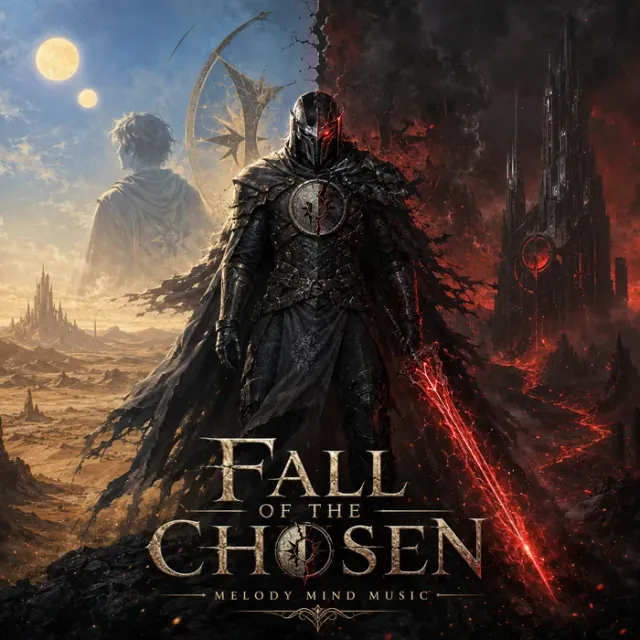
Fall of the Chosen
Fall of the Chosen charts a hero’s descent through prophecy, betrayal and forbidden power in a dark symphonic metal tragedy of love, fear and ruin in flames.
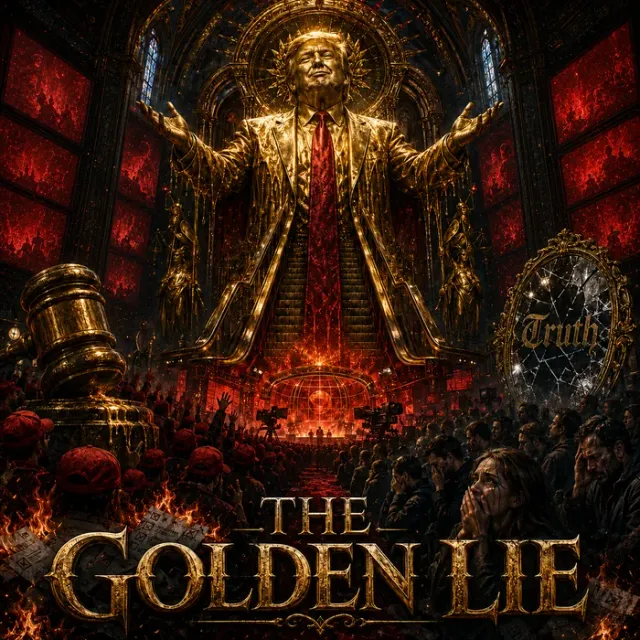
The Golden Lie
A political metal opera about spectacle, propaganda, personal power, and the people who refuse the official version of events.
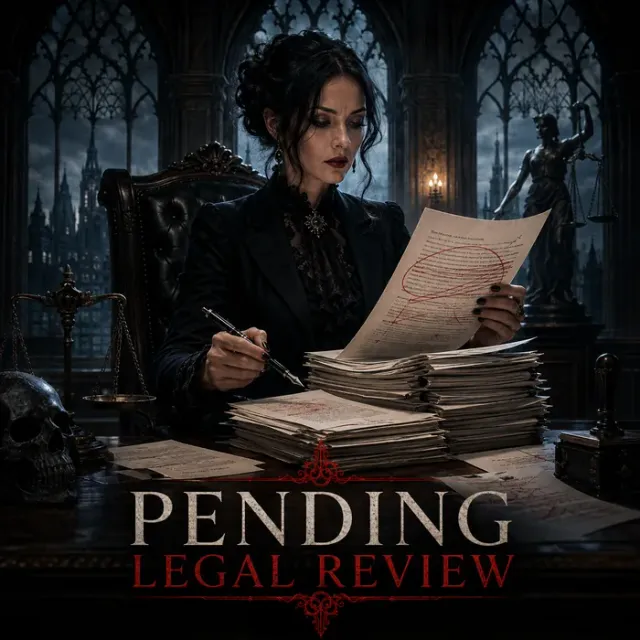
Pending Legal Review
Pending Legal Review is a gothic rock and doom metal concept album about contracts, liability, legal pressure, red lines and the hidden risk of signing blind.
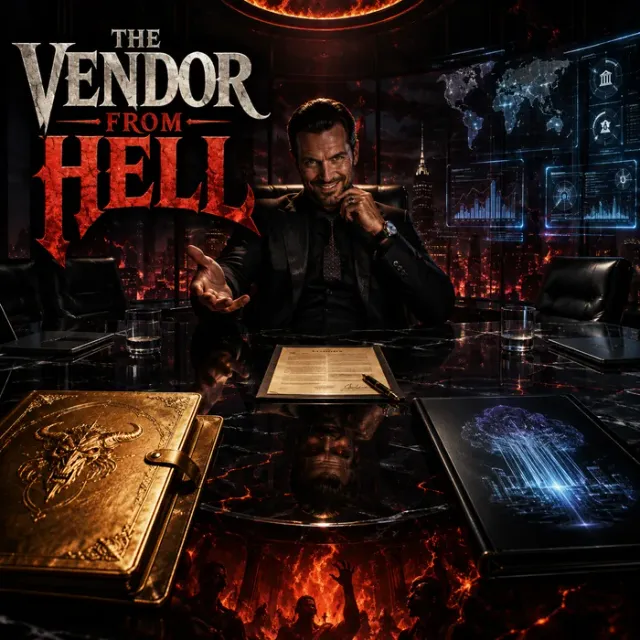
The Vendor from Hell
The Vendor from Hell turns software sales, vendor lock-in and broken support promises into a fierce blues-rock and heavy-metal rebellion inside the boardroom.


