


A taut instrumental aviation score built on brass, strings, and heavy percussion. It favors mission pacing, cockpit pressure, and the uneasy silence after impact over simple action-music spectacle.
Tracklist
Liner Notes
A short editorial read on the album world, sound, and standout moments.
About the Album
Afterburner Horizon is structured like a flight log rather than a collection of isolated action cues. Its fourteen tracks move from pre-dawn preparation to launch, interception, combat, and return. That sequence gives the record its tension: the mission begins before the aircraft leaves the runway, and it continues after the obvious danger has passed.
The title track establishes the scale with brass, strings, and heavy percussion. “Scramble Before Sunrise” and “Runway Burn” then compress the pace around readiness and acceleration. Their job is direct, but the album does not remain on the runway for long. “Carrier Wake” moves the setting offshore, while “Black Water Intercept” and “Heat Signature” narrow the story to detection and pursuit.
The middle of the record is its most sustained action passage. “Low Altitude Vector” keeps the imagined flight close to the ground; “Storm Front Corridor” adds weather as another source of pressure. “Fox Two,” “Knife-Edge Dogfight,” and “No-Fail Airspace” use clipped titles and compact running times to maintain the sense of a mission in which decisions arrive faster than reflection.
Those titles form a technical vocabulary without attaching the score to a named pilot or specific conflict. The album stays with procedures and conditions: a heat signature on a screen, a low-altitude route, restricted airspace, black water below. That choice keeps the story open while giving every cue a practical role. The listener follows the operation through its stages rather than receiving a conventional hero narrative.
The fourteen cues also hold to a narrow range of roughly three to four minutes. None has to carry an entire set piece alone. Instead, tension accumulates through handoffs: runway to carrier, carrier to intercept, storm to dogfight, dogfight to the return path. This compact construction suits the subject. Aviation depends on sequences of precise actions, and the album adopts the same discipline in its track order.
That reflection finally enters with “Above the Thunderline.” The cue opens space after the denser middle section and changes altitude from a tactical advantage into a moment of distance. “Smoke on the Return Path” carries the aftermath into the homeward leg. The mission may be over, but the return does not sound uncomplicated.
The repeated horizon image frames that change. In the title track, the horizon is a line to cross at speed. By “Smoke on the Return Path,” it has become the route home and a place to measure what the mission has cost. The final cue turns it to fire. Reusing one image in three different contexts gives the otherwise anonymous operation a clear dramatic shape.
“Horizon of Fire” closes the album by bringing its large orchestral language back into view. The finale works because the preceding tracks have established more than speed: briefing, exposure, uncertainty, and consequence are all part of the flight. Afterburner Horizon remains an action score, but its pacing gives the machinery a human frame. The return occupies two cues, treating survival as a stage of the mission rather than its automatic conclusion or clean resolution.
Production Notes
All tracks were generated with AI music models, then processed for the final sound.
Full album download
Download the complete album
Get the full ZIP package with tagged audio files, cover artwork, and album metadata.
Support MelodyMind
Help keep the albums coming
If this album was useful or fun to listen to, a small contribution helps cover hosting, tools, and new music experiments.
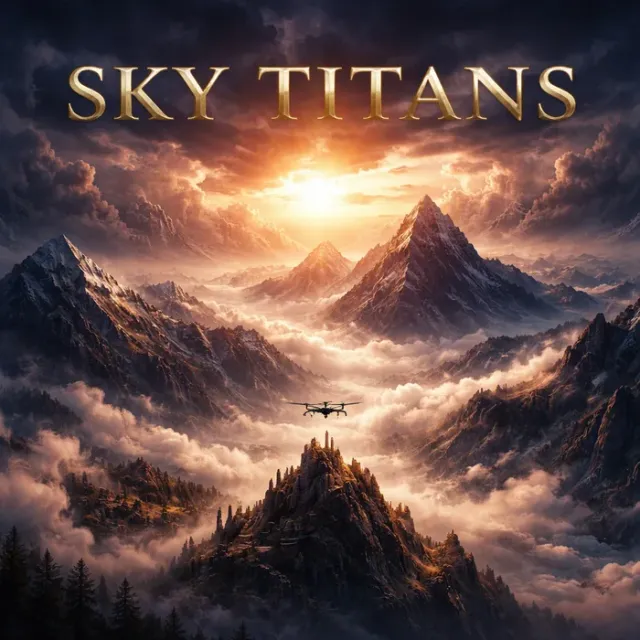
Sky Titans
A large instrumental flight score with brass, strings, percussion, and mountain-air scale. It follows ascent, storm, combat, and hard-won altitude.
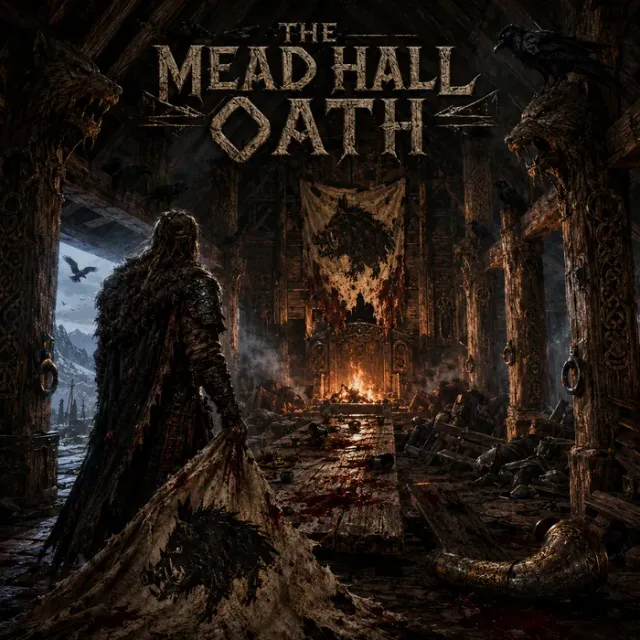
The Mead Hall Oath
The Mead Hall Oath is a dark Viking metal saga of loyalty, betrayal, revenge and memory, forged in thunderous riffs and mournful Nordic fire beneath cold ash.
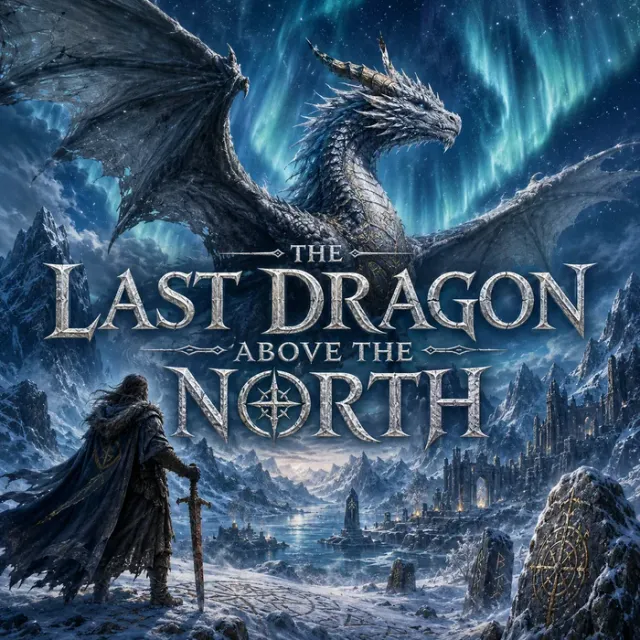
The Last Dragon Above the North
A heroic Nordic power metal saga of dragons, broken oaths, forgotten kings and one chronicler fighting to keep truth alive beneath the northern ice.
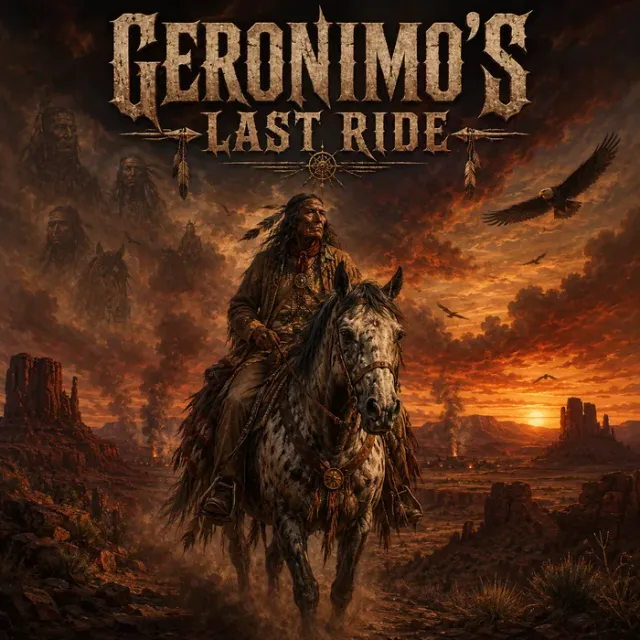
Geronimo’s Last Ride
Geronimo’s Last Ride is an epic Western folk metal concept album about Apache resistance, exile, memory, and the final ride of an old warrior.


