
Hard Rock
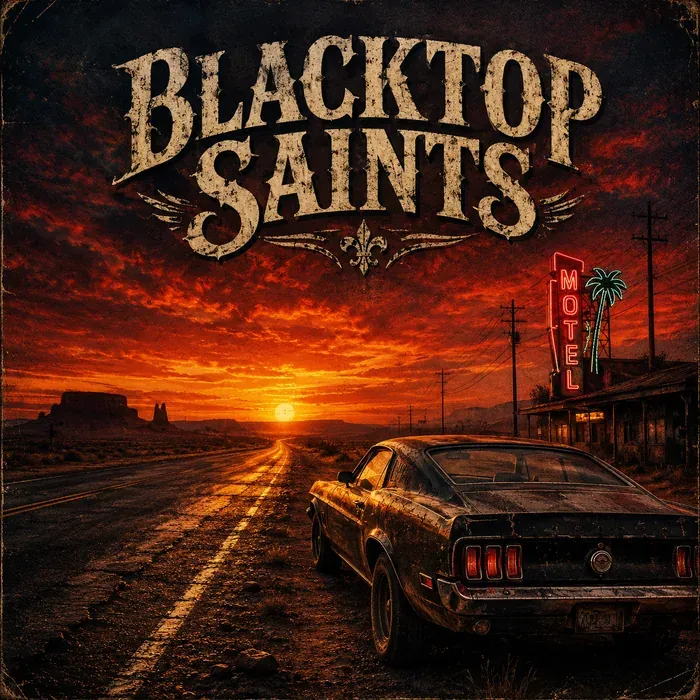
Blacktop Saints
Blacktop Saints is a hard rock road record about people who leave town because staying would finish them. Gritty guitars, raspy vocals, bluesy leads, motel light, bad decisions, and stubborn loyalty carry the album from escape toward something close to mercy.
- Tracks 14
- Length 51 min
Liner Notes
A short editorial read on the album world, sound, and standout moments.
About the Album
Blacktop Saints is hard rock with road dust under its nails. The album uses familiar materials: hot guitars, raspy vocals, blues bends, motel rooms, gasoline, and long miles between towns. What keeps it from feeling like a pile of road-movie props is the way the songs keep circling back to guilt. These people are not chasing freedom because it looks good. They are leaving because the place behind them has become impossible to survive.
The record sits close to classic hard rock and southern road rock. The guitars do most of the talking, with riffs that feel built for engines rather than arenas. The lead parts have that blues-rock habit of bending a note until it sounds half proud and half wounded. The rhythm section keeps the songs moving, but the best moments are not only about speed. They come when the band sound lets some dirt and tiredness stay in the room.
“Blacktop Outlaws” opens the story with momentum and a little danger. It introduces the characters as outsiders, but not as clean rebels. “Gasoline Prayers” is stronger because it lets the religious image stay small: a late-night stop, a little hope, and people who know they have used up most of their second chances. “No Town Wants Us Back” pushes the defiance harder, while “Desert Radio Heartbreak” slows the drive down enough for memory to catch up.
The middle of the album is where Blacktop Saints earns its title. “Motel Bible Blues” has the right kind of cheap-room darkness: not glamorous, just awake too late with the past too close. “Chrome Angels” gives the record its chrome-and-speed anthem, but “Dust on the Dashboard” and “Whiskey at Sunrise” matter just as much. They pull the story away from pose and toward consequence. Freedom sounds different when friendship, money, sleep, and trust are all running low.
“Hell Bent Homeward” is the album’s useful contradiction. The road is supposed to mean escape, yet the songs keep looking over their shoulder. “The Last Diner Light” works like a pause before the final run, a place where the characters can almost admit what they are afraid of. “Run Until the Road Ends” is the big release, but it does not wipe the slate clean. It just gives the band a wider piece of road to work with.
The closing stretch leaves the story open in the right way. “Saints Don’t Sleep,” “Neon Mercy Line,” and “Burn the Map” do not solve the characters. They let them keep moving, which is probably the only honest ending this kind of album can have. Blacktop Saints is best heard as a hard rock record about damaged loyalty: people with scars, bad timing, and just enough belief left to drive through another night.
Production Notes
All tracks were generated with AI music models, then processed for the final sound. No human performance recordings are used.
Support MelodyMind
Help keep the albums coming
If this album was useful or fun to listen to, a small contribution helps cover hosting, tools, and new music experiments.
Iron Hearts & Broken Crowns
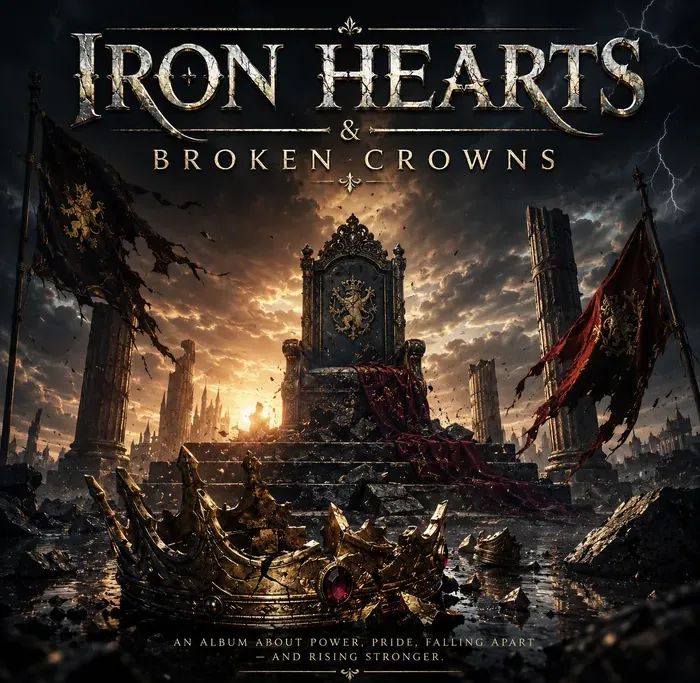
Iron Hearts & Broken Crowns is melodic hard rock with arena-sized choruses, thick guitars, wounded vocals, and a story about pride, collapse, lost love, and learning how to stand again without the crown.
Onder de Scheldelucht
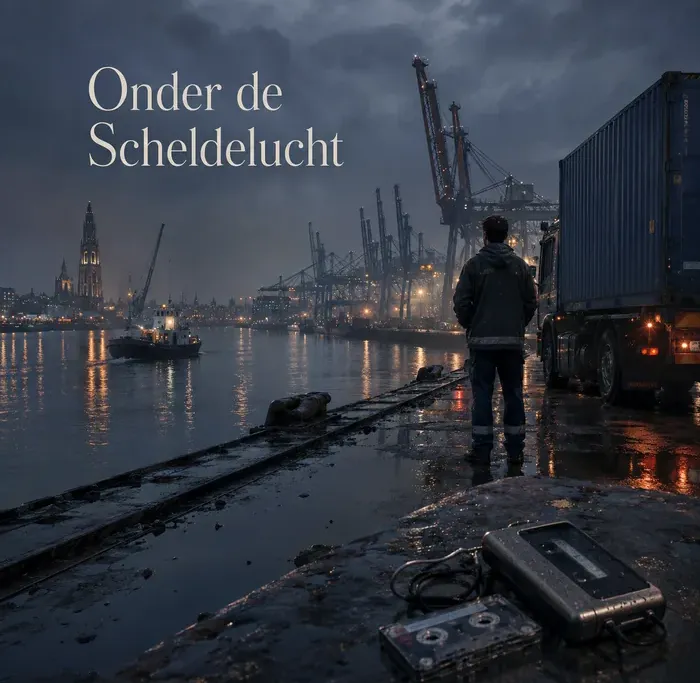
Onder de Scheldelucht is a Flemish indie rock album set along the Scheldt, where harbor light, steel cathedrals, old tapes, family memory, work, trade, and rain blur together. Reverb guitars, warm bass, muted drums, accordion colors, and Dutch-language vocals carry a story of labor, inheritance, and one last look at the river.
Tuhansien Järvien Laulut
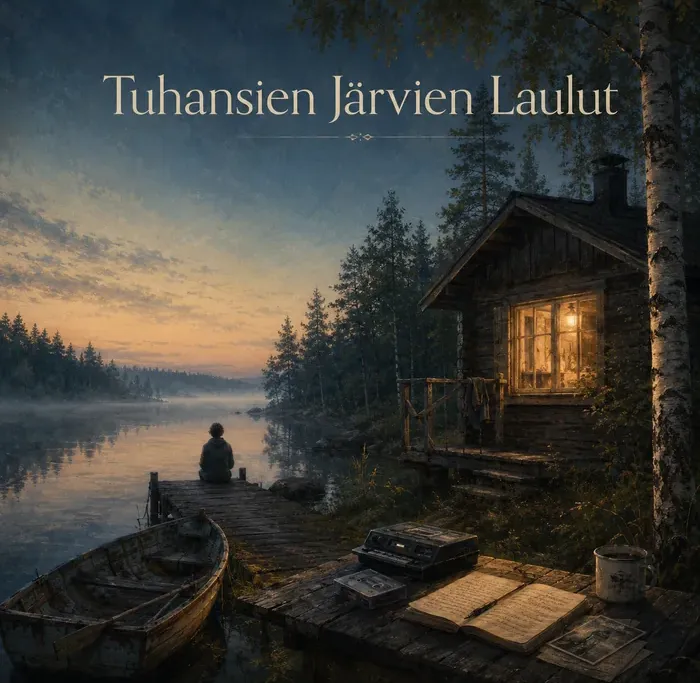
Tuhansien Järvien Laulut is a Finnish-language melancholic folk rock album about leaving the city, returning to an old summer house, and hearing family history through lakes, cassette tapes, letters, sauna rooms, islands, and dark water. Acoustic guitars, soft piano, restrained drums, warm electric textures, and natural ambience keep the record intimate rather than grand.
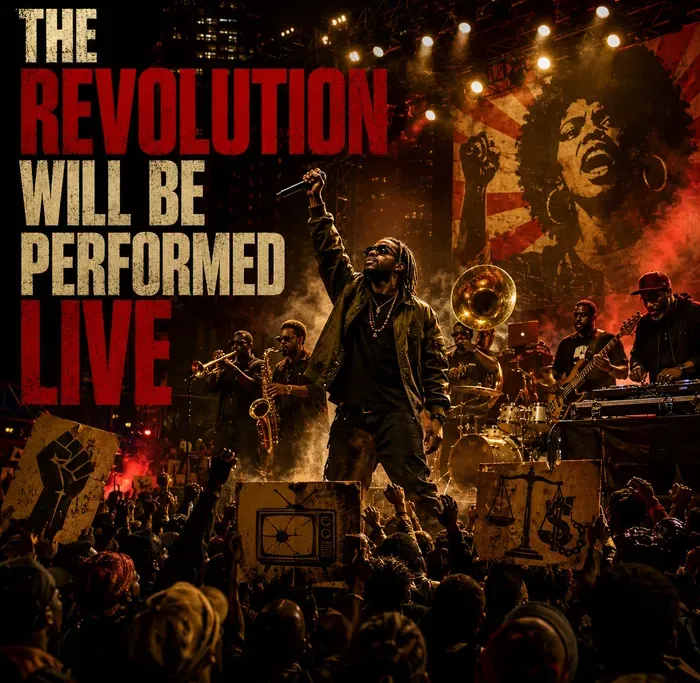
The Revolution Will Be Performed Live
The Revolution Will Be Performed Live is a political hip-hop and funk-rap album staged as a live concert where brass, drums, DJ scratches, gospel backing vocals, and crowd noise turn public anger into performance. The songs move through barricades, receipts, tailored war profiteers, newsfeed static, rent pressure, cheap seats, and the stubborn act of leaving together while still singing.