

Cloud Migration to Nowhere
Made with generative AI; directed and curated by Daniel.
Cloud Migration to Nowhere blends progressive metal, space rock and corporate satire into a sharp concept album about cloud costs, chaos and control at scale.
Tracklist
14 tracks
Liner Notes
A short editorial read on the album world, sound, and standout moments.
About the Album
Cloud Migration to Nowhere turns modern corporate technology’s most familiar promise into a sprawling progressive-metal cautionary tale. At Infinite Loop Solutions, CEO Victor Sterling returns from a technology conference convinced that the company’s future depends on moving everything into the cloud within twelve months. He has no migration strategy, no complete inventory and no clear explanation of what the move is supposed to fix. What he does have is a polished presentation, cloud-shaped graphics and the confidence of a man who has mistaken a slogan for a plan.
From that premise, the album builds a sharp satire about infrastructure, ambition and the corporate habit of treating technical relocation as organisational reform. Progressive metal supplies the complexity and mechanical precision, while space rock opens the arrangements into vast horizons. The cloud is sold as boundless and frictionless, but the songs keep dragging the listener back toward cables, contracts, access roles, ageing hardware and bills that somebody still has to pay.
The opening track, “The Cloud Will Save Us,” establishes Victor’s evangelical enthusiasm. Broad choruses and confident guitar lines turn his keynote language into a corporate anthem, even as shifting rhythms suggest that the foundation is unstable. “There Is No Cloud” answers with Mara’s technical realism, stripping the slogan back to its physical truth: servers still exist, failures still happen and responsibility does not disappear because the hardware belongs to somebody else. Mara is not an obstacle to progress. She is the person asking the questions everyone else is too excited, too afraid or too invested to answer.
As the migration begins, the record becomes increasingly detailed and absurd. “Inventory Not Found” captures the archaeological horror of discovering undocumented systems, forgotten databases and applications whose owners left years ago. “The Server Under Klaus’ Desk” is a revealing chapter: a critical service has been running on an old machine beneath a workstation, protected by Klaus’s memory and a guarded power socket. The company does not merely have old technology; it has lost the knowledge required to understand its own operations.
That loss becomes profitable for Skyward Dynamics, the consultancy that arrives with polished language and a service for every problem. “Everything as a Service” stacks gateways, monitoring layers, permissions and managed tools until simplicity has become its opposite. “Identity and Access to Nothing” follows the team into a maze of roles and approval chains, while “Serverless, Problem-Less” turns one of the cloud era’s most seductive misunderstandings into a bright, unstable anthem. The operational burden remains real. The result feels both absurd and painfully familiar today.
The album reaches its first major peak with “The Infinite Monthly Bill.” Slower, heavier and deliberately overwhelming, the track transforms a ninety-three-page invoice into a doom-metal revelation. Every abstraction receives a price. Every automated process leaves a financial trace. Victor’s insistence that the exploding bill represents successful growth is hilarious and uncomfortably believable. The language of victory is used to disguise loss.
The consequences become personal in “A Test Environment Ate the Budget,” where a forgotten weekend instance creates costs equivalent to a small car. Rather than blaming one developer, the song exposes the system around the mistake: unrestricted scaling, weak safeguards and a culture that rewards speed without ownership. “Locked into the Future” reveals the deeper trap. Proprietary interfaces, custom workflows and vendor-specific services have transformed flexibility into dependency. By “Exit Strategy Not Found,” Mara discovers that leaving is technically possible but financially punishing. The cloud is no longer a destination. It has become a contract.
What makes Cloud Migration to Nowhere more than workplace satire is the seriousness of its final act. Mara does not retreat into nostalgia, nor does the album claim local infrastructure is inherently superior. Instead, “Delete Half the Architecture” becomes a song about discipline. Services are removed, applications are consolidated and the architecture is forced to justify itself. The arrangement mirrors that process, creating more space as the technical stack becomes smaller. Simplification is presented not as defeat, but as hard-earned expertise.
“Hybrid by Accident” delivers the practical resolution. Some systems move to the cloud because doing so makes sense. Others remain local because risk, cost and dependency argue against migration. The result is imperfect, but understandable and maintainable. Naturally, Victor renames this compromise a “Hybrid Multi-Cloud Transformation” and presents it as the original strategy. The closing track, “Transformation Complete,” ends with applause, polished language and a warning from the legacy system still waiting beneath the surface. The company has changed its infrastructure, but its deeper habits remain untouched.
Musically, the album rewards full-length listening. Recurring synthesizer figures, changing meters, doom-weighted cost revelations and direct choruses give the record cohesion without making the tracks interchangeable. The comedy comes from character, timing and precise observation rather than novelty-metal gimmicks. Beneath the satire lies a genuine argument about responsibility: tools cannot repair unclear ownership, poor documentation, broken communication or leadership that confuses movement with progress.
Recommended if you like political punk, post-punk, protest rock, anti-authoritarian lyrics, dystopian concept albums and AI-assisted music projects, Cloud Migration to Nowhere applies that oppositional energy to corporate technology culture. It is angry without becoming joyless, funny without abandoning musical ambition and technical without losing the human story. This is an album for listeners who enjoy heavy music with a narrative spine, sharp writing and a target worth hitting. Press play for the riffs, stay for the escalating disaster, and listen closely when the final alarm begins to sound.
Production Notes
All tracks were generated with AI music models, then processed for the final sound. No human performance recordings are used.
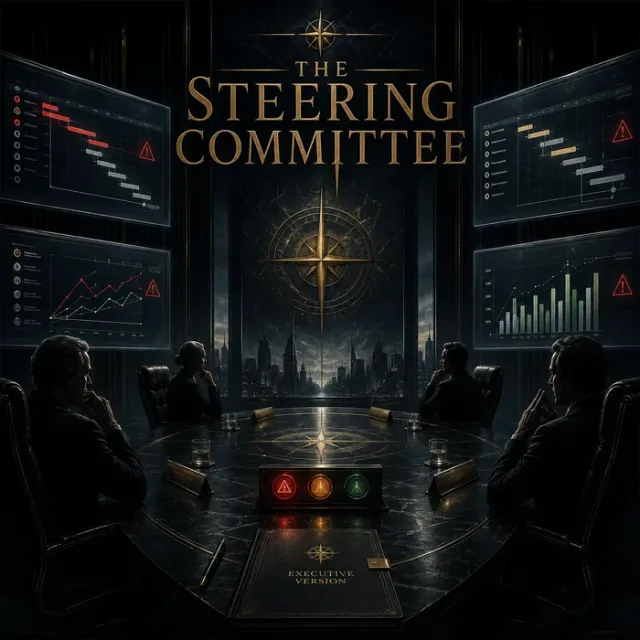
The Steering Committee
The Steering Committee turns corporate power games into progressive metal, exposing four leaders, four timelines and one project pushed toward collapse today.
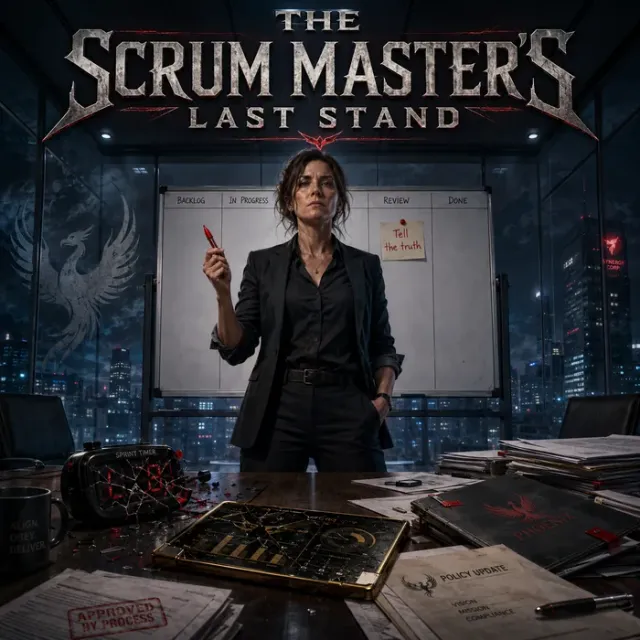
The Scrum Master’s Last Stand
A progressive-metal sequel in which Sabine Wolf confronts executive metrics, protects her team, and cuts Project Phoenix down to something that works.
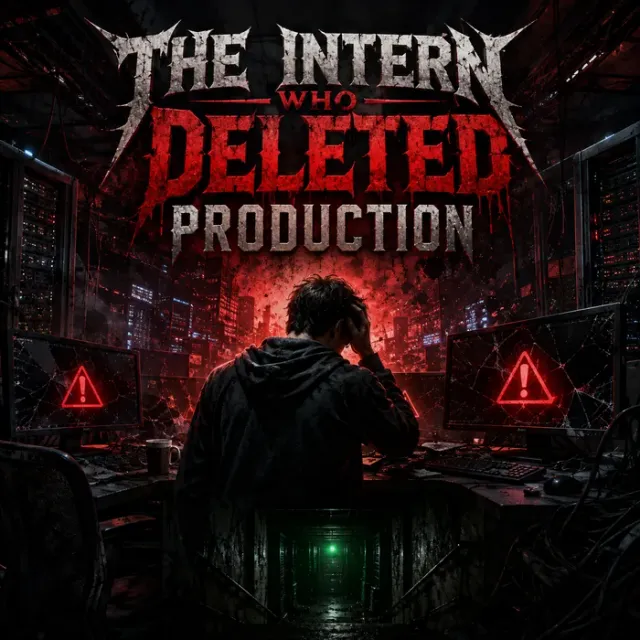
The Intern Who Deleted Production
The Intern Who Deleted Production is a savage comedy-thrash concept album about one fatal command and the broken company that made it inevitable from day one.
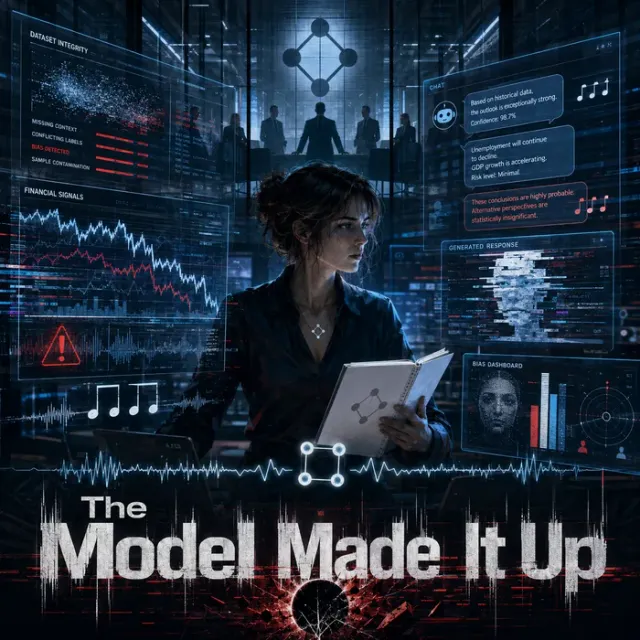
The Model Made It Up
A biting progressive electronic metal concept album about AI hype, bad data, corporate ambition, hallucinations, bias and the fight for human control at work.


Download the complete album
Get the full ZIP package with tagged audio files, cover artwork, and album metadata.
Help keep the albums coming
If this album was useful or fun to listen to, a small contribution helps cover hosting, tools, and new music experiments.