

Compliance Wants a Word
Made with generative AI; directed and curated by Daniel.
Industrial rock and thrash metal turn an audit, abandoned accounts, and corporate denial into a workplace story about accountability.
Tracklist
Liner Notes
A short editorial read on the album world, sound, and standout moments.
About the Album
Compliance Wants a Word turns the most dreaded sentence in corporate life into the opening blow of a sharp, funny and unexpectedly tense concept album. Set inside Infinite Loop Solutions after a ransomware incident, the record follows compliance officer Dr. Helena Ward as she is given six weeks to prepare the company for a major client audit. What appears to be a bureaucratic clean-up quickly becomes an investigation into years of ignored warnings, shared passwords, abandoned accounts and management’s belief that a convincing presentation can replace actual security.
Musically, the album works from a disciplined industrial rock foundation, reinforced by the speed and aggression of thrash metal. Mechanical drum patterns, clipped guitar riffs, hard bass pulses and metallic percussion give the songs the feel of machinery operating under strain. The production is dry and close, matching fluorescent offices and server rooms. A recurring three-note audit motif appears as a stamp, a warning signal or a rhythm that refuses to resolve. It gives the album a recognisable identity without making the fourteen tracks feel interchangeable.
The title track establishes Helena immediately. She is strict, observant and unwilling to confuse paperwork with protection, yet she never becomes a humourless authority figure. “Policy Says We Do” attacks documents describing processes that have never happened, while “Can You Provide Evidence?” turns a routine audit question into a relentless chorus. The joke lands because every polished claim becomes fragile the moment someone asks for dates, owners and proof.
That tension grows more concrete in “The Account of a Former Employee,” where the team discovers that someone who left seven years earlier still has active access. “Shared Admin Forever” follows with one of the album’s most direct satirical hooks, exposing the communal administrator password passed between departments as if it were a company tradition. Its heavy march makes the absurdity immediate, while the point remains serious: when everyone uses the same identity, nobody can be held accountable.
“Accept All Policies” shifts into a crooked dark-cabaret pulse, skewering the ritual of clicking through mandatory training without understanding it. Rather than blaming employees alone, the song recognises that compliance programmes teach people to complete dashboards, not change behaviour. That distinction becomes crucial in “Data in the Test Environment,” where Priya discovers customer information inside an insecure development system. The music grows more technical and unstable as the team traces copied records and undocumented scripts toward the album’s central revelation.
“Do Not Delete” is the record’s midpoint and its central piece of corporate horror. The hidden folder is not supernatural; it is worse because people created it through years of shortcuts, uncertainty and fear. Old contracts, employee lists, customer exports and forgotten incident reports have accumulated beneath a label no one dares challenge. The track begins with oppressive industrial weight before breaking into faster thrash as the scale of the archive becomes clear. Its title changes meaning across the song: first it protects unmanaged data, then it becomes an instruction to preserve evidence before the truth can be examined.
The consequences unfold through “Retention Without End,” whose unresolved rhythmic cycle mirrors a company that never decided when data should be deleted. Instead of arguing that everything old must disappear, it asks who owns each record, why it exists and when that need ends. The moral conflict reaches its darkest point in “Mark the Risk as Closed.” Victor and the board pressure Helena to turn open findings green before the audit, arguing that the contract will fund future improvements. Helena rejects the logic. Her refusal is not a heroic speech detached from consequence; it is a professional decision made where careers, money and trust are all at stake.
“The Auditor Is Here” converts the final inspection into controlled panic: borrowed lobby plants, rehearsed phrases, jammed printers and sample requests that cut through every prepared answer. The auditor is not a villain or a comic bureaucrat. Calm questions expose the difference between performance and evidence. “Tell Them What Is Real” then slows the album at the right moment. Helena weighs losing the client against repeating a lie, while Mara, Priya and Ben show that genuine progress began only when the team stopped pretending everything was complete.
The finale, “Conditional Approval,” refuses the cheap triumph of a perfect certification. The contract survives, but only under clear deadlines and binding actions. That qualified result gives the album more credibility than a clean victory would have done. In “The Findings on the Wall,” Victor announces that the company has passed. Helena answers without a speech: she places the actual findings, owners and deadlines in the lobby where everyone can see them. Security is no longer a document held by one department; it has become visible work shared across the company.
Production Notes
All tracks were generated with AI music models, then processed for the final sound. No human performance recordings are used.
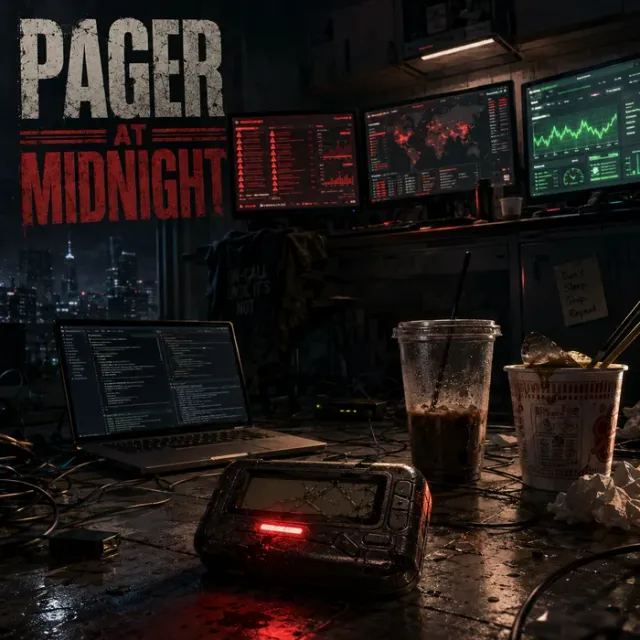
Pager at Midnight
Industrial metal turns an overnight production incident into a story about on-call exhaustion, brittle systems, and the people behind the alert.
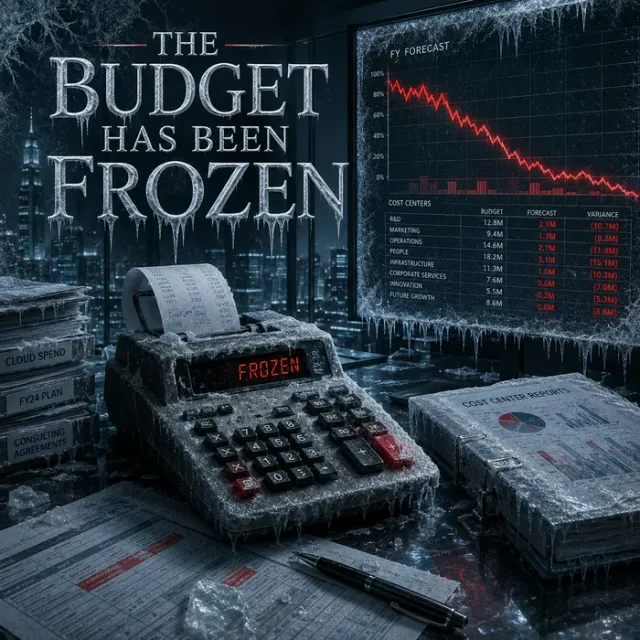
The Budget Has Been Frozen
A razor-sharp progressive rock and jazz metal concept album about frozen budgets, hidden costs, corporate hypocrisy and financial revolt in the modern office.
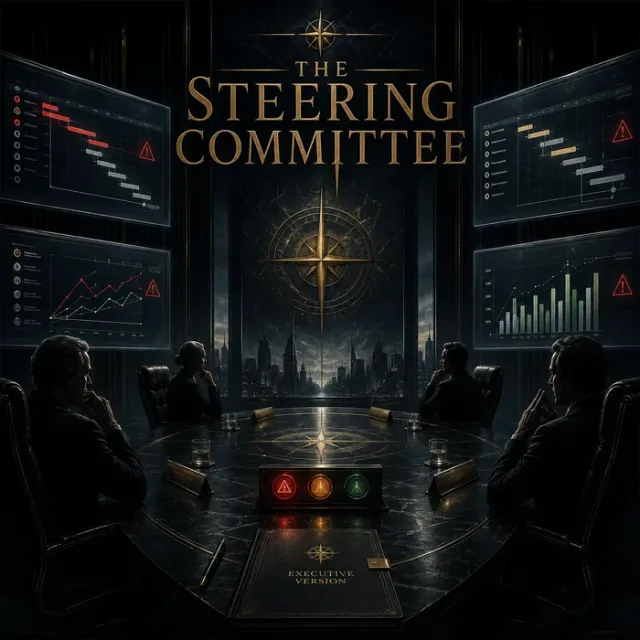
The Steering Committee
The Steering Committee turns corporate power games into progressive metal, exposing four leaders, four timelines and one project pushed toward collapse today.
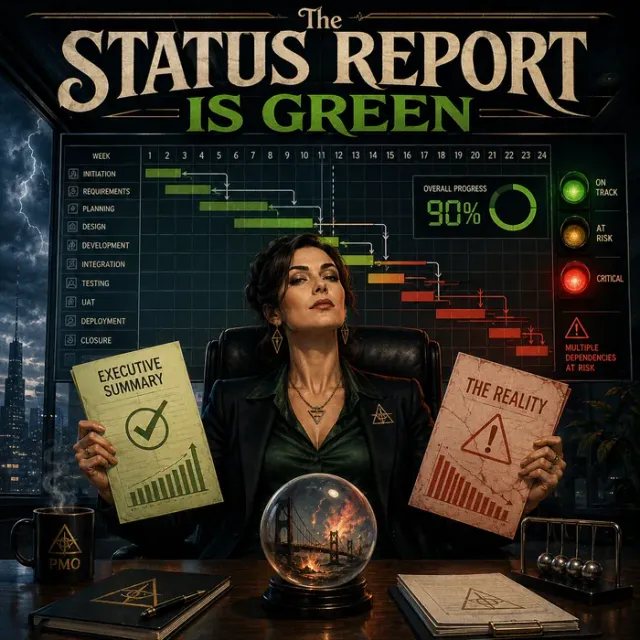
The Status Report Is Green
A sharp progressive rock satire on corporate denial, false green reports, shifting deadlines and one manager who finally tells the truth aloud before collapse.


Download the complete album
Get the full ZIP package with tagged audio files, cover artwork, and album metadata.
Help keep the albums coming
If this album was useful or fun to listen to, a small contribution helps cover hosting, tools, and new music experiments.