


Crimson Sakura is a tragic symphonic J-metal odyssey of war, betrayal, lost love and honor, driven by soaring vocals, fierce riffs and cinematic grief in ash.
Tracklist
Liner Notes
A short editorial read on the album world, sound, and standout moments.
About the Album
Crimson Sakura is not interested in the easy romance of falling blossoms. Here, cherry petals arrive already stained by history: they drift across palace gardens, battlefields, burned fortresses and empty throne rooms, carrying the memory of lives reduced to symbols by those in power. The album takes the language of symphonic J-metal and turns it toward tragedy, following a noble warrior woman whose loyalty is slowly stripped of certainty. What begins as a ceremonial oath becomes a reckoning with obedience, propaganda, grief and the cost of surviving a victory that no longer feels worthy of the name.
The opening songs establish that conflict with unusual patience. “Oath Beneath the Crimson Sakura” introduces the heroine in a world of lacquered armor, ancestral duty and carefully controlled emotion. Galloping guitars, strings and ceremonial percussion lift the oath while darker harmonic turns suggest that the promise has already begun to close around her like a cage. “Departure of the White Blade” then places motion against doubt: the army advances, yet the villages it claims to protect recoil from its presence.
That attention to concrete imagery is one of Crimson Sakura’s defining qualities. The songs return to a small set of objects—a white katana, a broken hair ornament, a sealed letter, black armor cords, scorched banners and petals caught beneath damaged plates—but their meanings change as the story develops. A crown arrives as the reward for survival, only to reveal itself as another instrument of control.
Musically, the record is equally careful about continuity and contrast. Low, tightly played rhythm guitars, live-feeling drums, lyrical lead lines and broad string writing provide a recognizable foundation throughout the fourteen tracks. “Threads Bound in Moonlight” uses an intimate duet and an unsettled five-beat pulse to reveal a forbidden bond across enemy lines. “Blood-Rain on the Stones” turns pizzicato strings and a broken procession groove into the sound of civilian panic. “The Vermilion Fortress Burns” moves through jagged siege rhythms, while “Promise to Meet in Spring” removes most of the weight, allowing piano, cello and restrained vocals to carry a memory that becomes more painful with every return.
The album’s central catastrophe, “The Moon Saw the Banners Lie,” is where its musical and narrative ideas fully converge. False insignia, delayed evidence and military reflex produce a death that is neither noble nor inevitable; it is the result of systems designed to prevent people from seeing one another clearly. The track’s force comes not from making the battle bigger, but from interrupting it. Sudden silence, a fractured recurring motif and the heroine’s desperate refusal to accept what has happened give the song a brutal emotional precision. After this point, the album no longer asks whether the war is justified. It asks what can still be saved from its consequences.
The second half is darker, slower and more morally focused. “My Armor Remembers Every Name” rejects the language of acceptable losses by restoring individual names to the dead. “A Crown Heavier Than a Grave” transforms the throne room into a place of distance, where political reward feels colder than defeat. “Crest of Ash” captures the machinery of slander as the heroine’s own house pressures her to bury the truth for the sake of reputation. Their power comes from pressure: low guitars, measured drums, close vocals and orchestration that leaves enough space for every accusation to land.
By the time “For Whom Was This Blood Given?” reaches the ruined temple, the heroine’s crisis has become a choice. She cannot undo the orders she followed, revive the person she lost or separate herself from the violence carried out in her name. What she can do is stop obedience from becoming an excuse. The late-arriving chorus feels earned because the song spends its opening sections examining the evidence, the dead and the beliefs she inherited. Her decision is not a sudden transformation into a flawless hero; it is the more difficult act of accepting guilt without surrendering judgment.
The finale, “When the Final Blossom Turns to Ash,” delivers the record’s largest arrangement without turning sacrifice into uncomplicated victory. Guitars, violin, drums and brass collide as the heroine exposes the conspiracy, opens the gates and burns the emblem that once defined her place in the world. The decisive image is not an enemy falling, but a chain being cut. Crimson Sakura is ultimately less concerned with conquest than with the moment a person refuses to let institutions decide whose life counts.
The epilogue, “Spring Returned, But You Did Not,” brings the story back to the garden. The war has passed, the old order has fractured and new blossoms grow from scorched roots, but the album does not confuse renewal with repair. Memory is presented as work: naming the dead honestly, resisting beautiful lies and allowing dignity to survive without pretending that grief has ended.
Production Notes
All tracks were generated with AI music models, then processed for the final sound. No human performance recordings are used.
Full album download
Download the complete album
Get the full ZIP package with tagged audio files, cover artwork, and album metadata.
Support MelodyMind
Help keep the albums coming
If this album was useful or fun to listen to, a small contribution helps cover hosting, tools, and new music experiments.
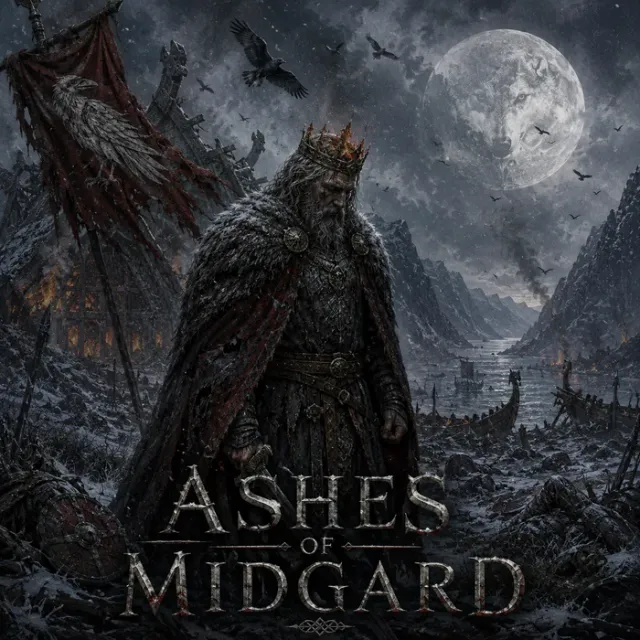
Ashes of Midgard
Ashes of Midgard is a tragic Viking metal concept album of fire, frost, broken oaths and a dying kingdom fighting to keep its memory alive after the last war.
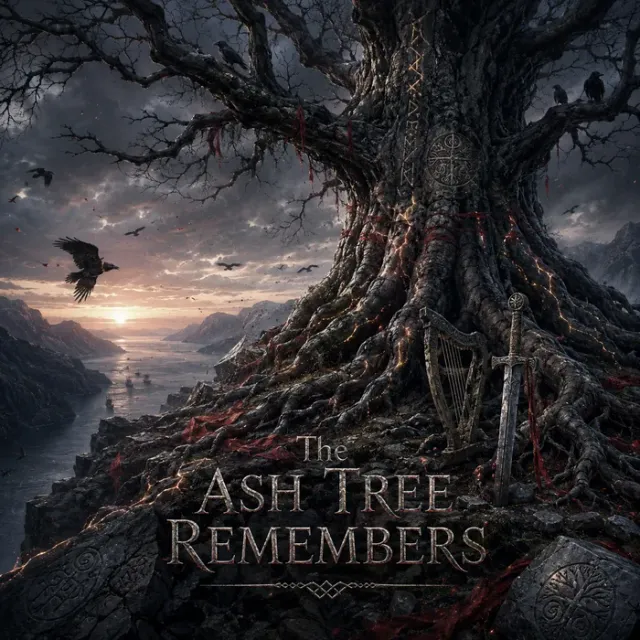
The Ash Tree Remembers
The Ash Tree Remembers is an epic Viking metal journey through Yggdrasil, war, memory, death and renewal, told through crushing riffs and Nordic ritual fires.
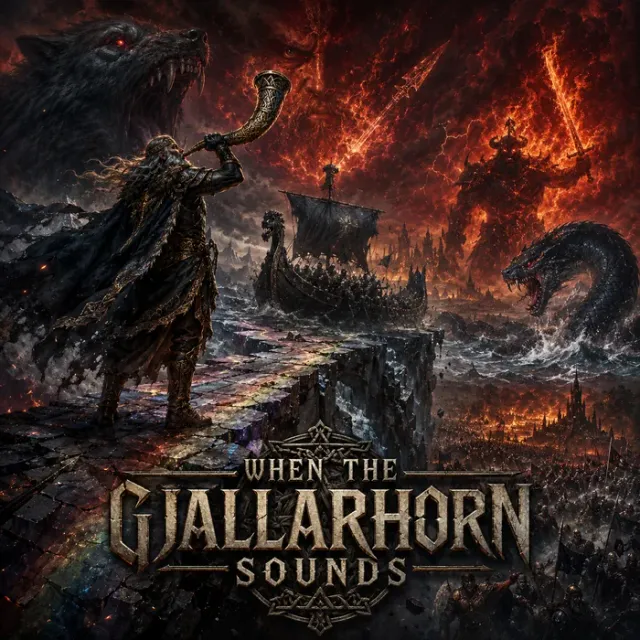
When the Gjallarhorn Sounds
A symphonic Viking metal requiem for Ragnarök, gods fall, monsters rise, and the last horn calls nine worlds toward silence, fire and a world without victors.
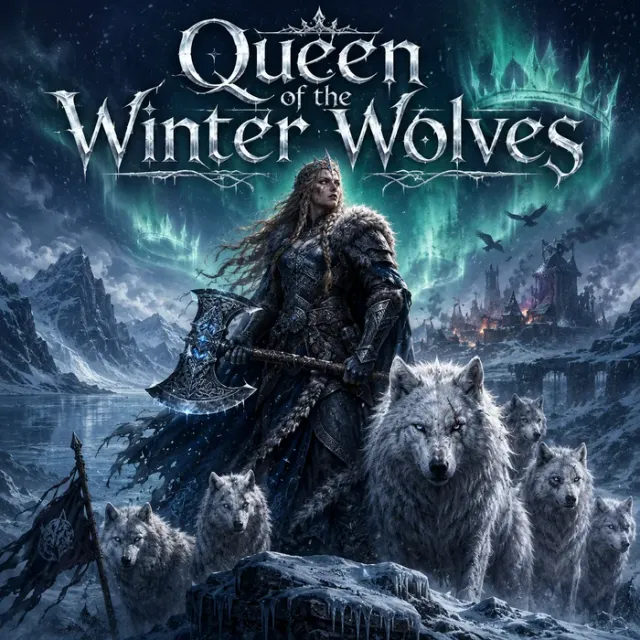
Queen of the Winter Wolves
Queen of the Winter Wolves is a Nordic symphonic metal saga of exile, rebellion, ancestral wolves, and a queen who learns to lead without a throne in wartime.


