
Folk Pop
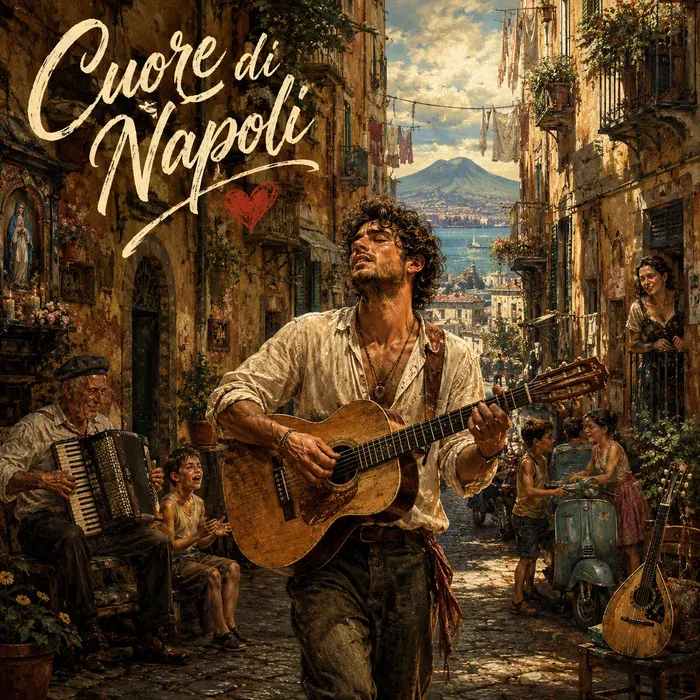
Cuore di Napoli
Cuore di Napoli is Italian folk pop with mandolin, accordion, acoustic guitar, tamburello rhythm, and a street-level story about family, poverty, love, pride, and a young musician learning what his city has given him.
- Tracks 14
- Length 55 min
Liner Notes
A short editorial read on the album world, sound, and standout moments.
About the Album
Cuore di Napoli is Italian folk pop with its feet on the street. The album uses mandolin, accordion, acoustic guitar, tamburello rhythm, and warm vocal lines, but the best moments come from the details around the music: balconies, kitchens, scooters, harbor work, family noise, and the kind of pride that is easier to sing than explain.
The story follows a young musician from Naples who does not have much except a voice, an instrument, and a stubborn sense that songs can keep people together. That could turn sentimental quickly, but the album works better when it stays close to daily life. Poverty is not decoration here. Family is not only comfort. Love is not only escape. The songs keep all three tangled together.
“Vicoli di Sole” opens the record with sunlight in the alleys rather than a grand postcard view. “La Vespa e il Mandolino” gives the album speed and charm, while “Pane, Sale e Famiglia” brings the story back to the table, where affection and argument often share the same plate. That early movement matters because it gives Naples a human scale before the album asks the city to become symbolic.
“Figlio del Porto” ties the protagonist to the harbor and the working life around it. “Donna alla Finestra” brings in romance through a balcony image that feels old-fashioned in the right way. “O Core nun se Venne” is the key turn: the heart cannot be sold. The phrase carries the whole record’s moral pressure without needing to sound noble about it.
The middle stretch gives the album its strongest pulse. “Tarantella dei Sogni Poveri” turns lack into movement, not by pretending hardship is beautiful, but by showing how rhythm can keep people upright. “Mare Ammore e Guerra” lets love and conflict share the same sea air, while “Sotto il Vesuvio” gives the story a larger shadow. The volcano image works because it is not only danger. It is pressure held below the surface.
“La Canzone è la Spada” states the central idea plainly: the song is the blade. The album is better when that blade heals, gathers, and refuses silence rather than winning a fantasy battle. “Notte di Quartiere” then brings the city into night, where pride is quieter and the streets tell the truth more directly.
The final songs open the record back toward community. “Mille Balconi Cantano” is the moment where the private voice becomes public answer. “L’Ultima Serenata” gives the story one last intimate farewell before “Cantammo fino all’Alba” turns the ending into a shared dawn. Cuore di Napoli is strongest when it remembers that its hero is not the young man alone, but the city singing back.
Production Notes
All tracks were generated with AI music models, then processed for the final sound. No human performance recordings are used.
Support MelodyMind
Help keep the albums coming
If this album was useful or fun to listen to, a small contribution helps cover hosting, tools, and new music experiments.

Queen of the Sunset Strip
Queen of the Sunset Strip is a glam metal and sleaze rock album about Roxanne Vale, a club singer building her own crown from neon, bad contracts, cheap champagne, toxic romance, and loud amplifiers. Dirty riffs, bluesy lead guitars, gang vocals, and hard rock choruses keep the glamour scratched and dangerous.
Tuhansien Järvien Laulut
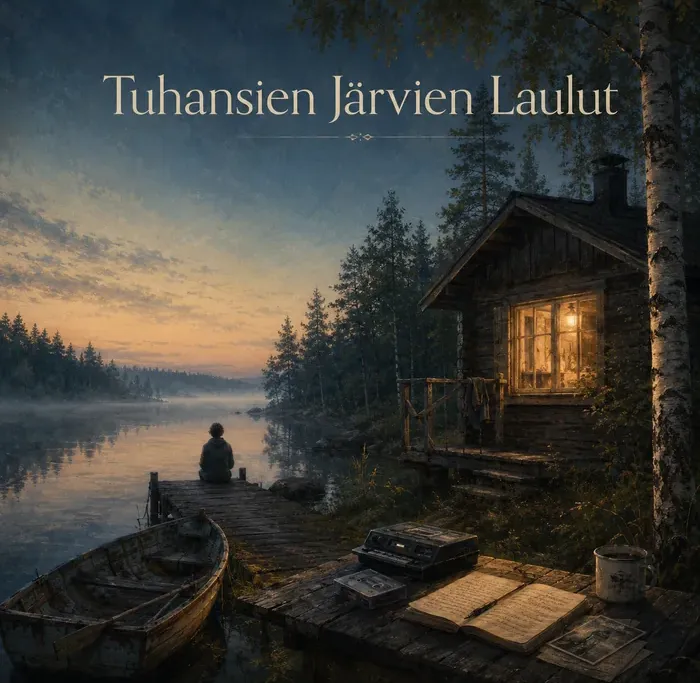
Tuhansien Järvien Laulut is a Finnish-language melancholic folk rock album about leaving the city, returning to an old summer house, and hearing family history through lakes, cassette tapes, letters, sauna rooms, islands, and dark water. Acoustic guitars, soft piano, restrained drums, warm electric textures, and natural ambience keep the record intimate rather than grand.

Luz de Cempasúchil
A Mexican pop and Latin ballad record in Spanish, built on nylon guitar, piano, and trumpet. A woman travels from the city back to her village for Día de Muertos and reads her way through a drawer of old letters.
Sombras de Granada
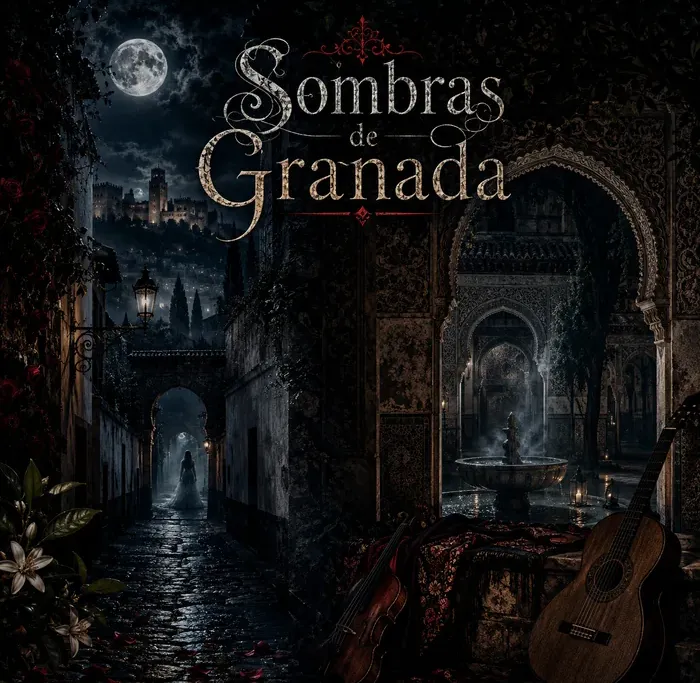
Sombras de Granada is dark Spanish-language folk rock with gothic weight: nylon guitars, shadowed percussion, violin, heavy riffs, and a night-walk story where Granada becomes memory, lover, ghost, and city at once.