

Die Häuser, die uns nicht gehören
Made with generative AI; directed and curated by Daniel.
A German post-punk concept album about rent, displacement, memory and resistance inside one apartment house fighting to remain a home as its city is sold off.
Tracklist
14 tracks
Liner Notes
A short editorial read on the album world, sound, and standout moments.
About the Album
Die Häuser, die uns nicht gehören is not a record about housing policy in the abstract. It is a record about a yellow mailbox with twelve names, a balcony full of red geraniums, a broken lift, damp cellar walls and the moment when a polite letter turns a familiar address into an investment asset. Across fourteen connected songs, Melody Mind Music follows the residents of one neglected apartment building in a nameless German city as their home is sold to an international property fund. The promised renovation arrives in the language of improvement, but behind phrases such as “value-enhancing measure” are surveys, scaffolding, rent increases, buyout agreements and the slow dismantling of a community.
Musically, the album is rooted in German post-punk, but it refuses to reduce that tradition to grey guitars and detached vocals. The bass is often the lead instrument, moving in tense, melodic eighth-note figures while clean, angular guitar lines cut across dry live drums. Sparse piano, cello and viola add weight without turning the songs into orchestral drama. Metallic knocks from radiators, railings and mailboxes become part of the rhythm rather than decorative atmosphere. A recurring motif of three short strikes followed by one sustained note passes from pipework to bass, piano and ensemble, binding the record together like a signal sent through the building.
The opening track, “Der gelbe Briefkasten,” establishes the album’s method immediately. The sale is not announced with slogans or grand speeches, but with envelopes appearing beneath twelve nameplates. From there, each song enters a different room and a different life. “Die Küche im dritten Stock” brings together Mara, a single mother, and Tobias, a nurse returning from night shifts, over cabbage, cocoa and the same threatening letter. “Rote Geranien” gives the building’s oldest resident, retired tram driver Helga Krüger, the authority of someone who remembers every former tenant by name. Her flowers are not a quaint symbol of nostalgia; they are proof of continuity in a city that keeps replacing memory with branding.
The writing is strongest when it lets objects carry the politics. Chalk marks on a doorframe become a confrontation between childhood growth and property measurement. A faded lease from 1974 becomes evidence that tenancy is also history. An old tape recorder recovered from the cellar turns forgotten residents into witnesses. The piano that cannot fit around the stairwell becomes one of the album’s most painful images: Nils may be forced to leave, but the instrument remains behind, physically trapped in the architecture that once made his life possible. None of these details feels ornamental. Each one advances the story and deepens the sense that a home is made from repeated use, shared inconvenience and accumulated memory.
The album also understands that solidarity rarely arrives in heroic form. It begins with opened doors, copied phone numbers, cups placed on a kitchen table and three knocks travelling through heating pipes. By the mid-album climax, “Zwölf Namen gegen eine Nummer,” the residents have created an archive of leases, photographs, recordings and testimonies. Their opponent knows the building as a portfolio entry; they answer by learning one another’s names. That contrast gives the record its central emotional and political charge. Resistance here is neither romanticised nor guaranteed to succeed. It is necessary because the alternative is to disappear without a record.
That refusal of an easy victory gives the final stretch unusual force. “Aufhebungsvertrag” follows Syrian watchmaker Samir Haddad as he signs an agreement under pressure. The song does not judge him, nor does it pretend that leaving is always a free decision. “Die letzte Hausversammlung” is similarly unsentimental. Some flats are saved, others are not. Time is bought, but certainty is lost. The meeting ends not with a triumphant anthem, but with altered contracts, departures and the knowledge that collective action has at least forced anonymous figures to confront actual names.
The title track closes the album from the building’s perspective. New labels appear on the mailbox. A former workshop becomes a studio. The archive moves to a library. The house belongs to someone, but its memory does not. This final distinction is the reason the album lingers after its last sustained note. It does not claim that memory can replace security, affordable rent or legal protection. Instead, it argues that erasure is part of displacement, and that documenting who lived where is itself a form of resistance.
Die Häuser, die uns nicht gehören rewards a full-album listen because its characters, objects and musical motifs gain meaning through repetition. The red geraniums return changed. The pipe signal moves from private contact to collective language. The yellow mailbox shifts from an everyday object to a public record. Even the album’s quieter tracks contribute to the pressure of the whole, allowing its louder moments to feel earned rather than manufactured.
The alternating baritone, female alto and collective voices keep the narrative human, distinct and grounded in the house’s shared acoustics.
Production Notes
All tracks were generated with AI music models, then processed for the final sound. No human performance recordings are used.
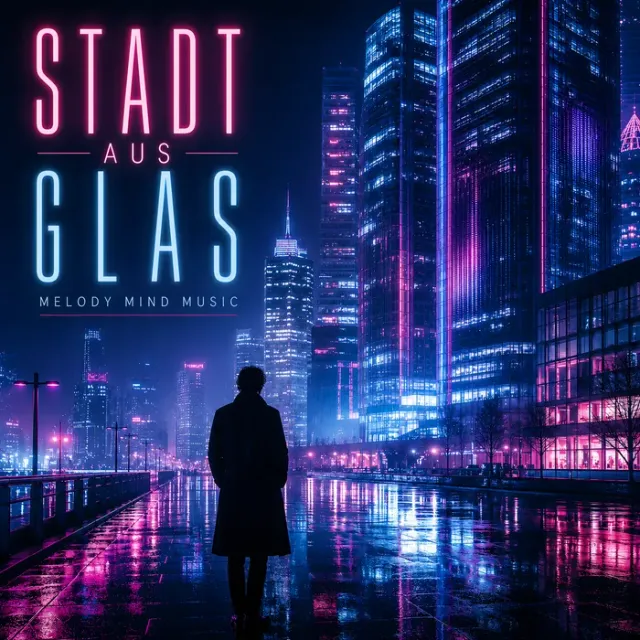
Stadt aus Glas
Stadt aus Glas is a nocturnal German synthpop album about neon cities, loneliness, screens, glass towers, and the search for real human closeness.

Blacktop Saints
A Southern hard rock road album about escape, guilt, friendship, neon motels, and the uneasy freedom beyond the city limits.
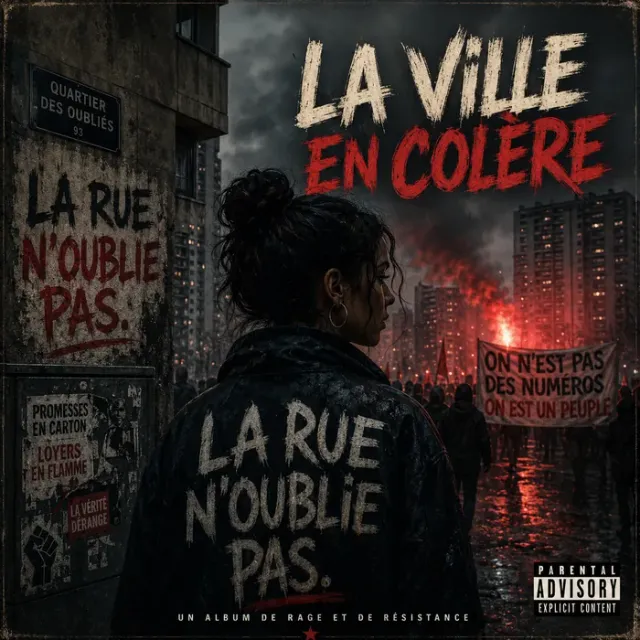
La Ville en Colère
French protest punk concept album with post-punk grit, urban rage, class tension and dark hope in a city that refuses to stay silent.
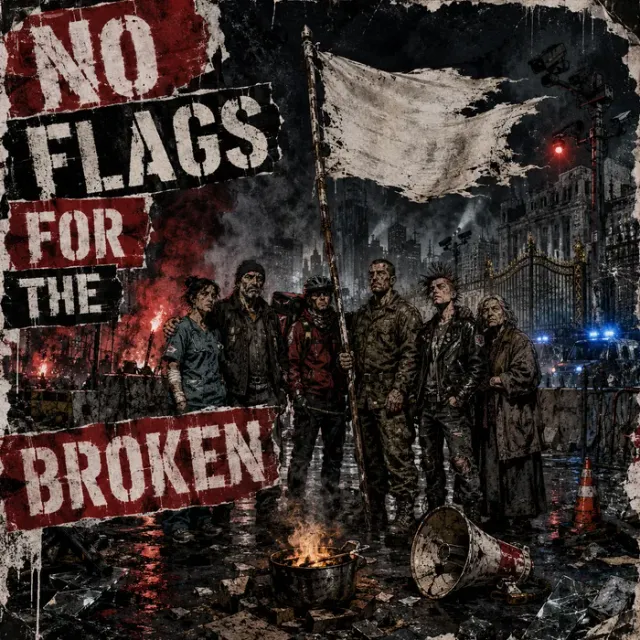
No Flags for the Broken
No Flags for the Broken is a fierce political punk concept album about war, poverty, propaganda and solidarity in a city abandoned by those in power above it.


Download the complete album
Get the full ZIP package with tagged audio files, cover artwork, and album metadata.
Help keep the albums coming
If this album was useful or fun to listen to, a small contribution helps cover hosting, tools, and new music experiments.