


A tragic Viking metal album set among fallen gods, wolves, frozen ruins, and survivors learning what courage means without victory.
Tracklist
Liner Notes
A short editorial read on the album world, sound, and standout moments.
About the Album
Echoes of Ragnarok does not treat the end of the world as a victory parade. There are no raised drinking horns, no promises of glory, and no escape beyond the final battle. Instead, the album approaches Ragnarok as a collapse of meaning: the birds fall silent, the roots of the world burn, the sun darkens, the gods discover the limits of their power, and ordinary people decide what loyalty is worth when survival can no longer be promised. Across fourteen connected tracks, the record turns Norse myth into a human tragedy about courage without reward.
“When the Ravens Fell Silent” opens with absence rather than impact. The vanished birds, blood-red sky and first heat beneath frozen ground establish a world in which knowledge has stopped returning. “The Shield with the Faded Sun” then brings the myth down to one mortal decision. Its damaged round shield cannot save its bearer, but it becomes a symbol of chosen responsibility. These characters are not brave because they expect to win. They are brave because they refuse to let fear make every decision.
The early chapters deepen the approaching failure. “Roots Beneath the Snow” gives the World Tree a voice, letting Yggdrasil describe damage spreading between the realms. “The Untouched Horn” turns Valhalla’s final feast into mourning, until a single vessel carries more emotional weight than a hall full of warriors. “Black Water Under Ice” shifts into a crooked, pressure-heavy rhythm as Jörmungandr wakes below the frozen sea. Its lurching pulse and coiled bass make the serpent feel less like a fantasy creature than a geological force beginning to move.
The album’s emotional center arrives with “Oath-Fire in the Snow.” Reduced to acoustic strings, bowed textures and an intimate duet, it pauses beside a flame small enough to fit between two hands. The promises made there cannot prevent death, yet they become the moral foundation of everything that follows. “When the Pale Gates Open” answers that farewell with a funeral march from Hel, where the dead rise without joy or liberation. Its movement is cold and compulsory, as if death itself has received a final order.
“Wolves Across the Sun” is the record’s decisive rupture. Galloping drums, pursuing lead lines and urgent brass turn the ancient chase into catastrophe at noon. Once the wolves close their jaws, prophecy becomes present tense. In “The Spear Was Already Broken,” Odin’s knowledge becomes its own form of grief: he understands what will happen and still cannot alter it. “No Shield Against Fate” returns to the mortal warrior at his lowest point, giving him a credible chance to run. His decision to stay is not fearless heroism, but a refusal to betray the people whose names he carries.
By “Nine Fires on the Horizon,” destruction has expanded beyond one battlefield. A nine-beat cycle marks each realm as it burns, while the arrangement builds until borders, heavens and underworlds collapse into the same furnace. “Even Gods Leave Echoes” then offers the album’s clearest statement of purpose. Memory cannot block a spear or cool a burning field, but it can resist total erasure. Mortal and divine voices meet not as equals in power, but as equals before extinction. The song asks whether any act still matters when no witness may survive, and answers through the marks people leave in wood, stone, rivers and one another.
The finale, “Ashfall at Vígríðr,” is enormous without becoming victorious. Odin and the wolf, Thor and the serpent, Freyr and Surtr meet their foretold ends while mortal shield-bearers hold a line they know will fail. The cracked spear, faded sun, oath-fire, untouched horn and nine fires converge before Surtr’s blade consumes the remaining order. The arrangement grows crowded because the world itself is running out of separate spaces, yet the recurring motif keeps the chaos tied to the first omen.
After that violence, “Wind Through the Standing Stones” refuses the comfort of rebirth. An abandoned helmet rests in ice. Red wool still clings to a broken shield. A seed remains buried under the ruined tree, but the song never promises what it will become. Instruments gradually disappear until only the old motif and the wind remain. It is a restrained ending that allows silence to carry weight another climax would cheapen.
Production Notes
All tracks were generated with AI music models, then processed for the final sound. No human performance recordings are used.
Full album download
Download the complete album
Get the full ZIP package with tagged audio files, cover artwork, and album metadata.
Support MelodyMind
Help keep the albums coming
If this album was useful or fun to listen to, a small contribution helps cover hosting, tools, and new music experiments.
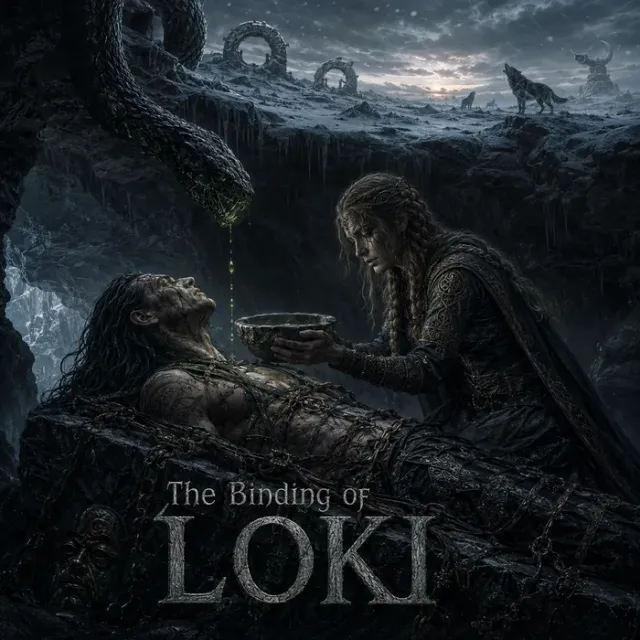
The Binding of Loki
The Binding of Loki is a frostbitten Blackened Viking Metal album of venom, broken oaths, Sigyn’s vigil and Fimbulwinter’s first roar. A grim Norse reckoning.
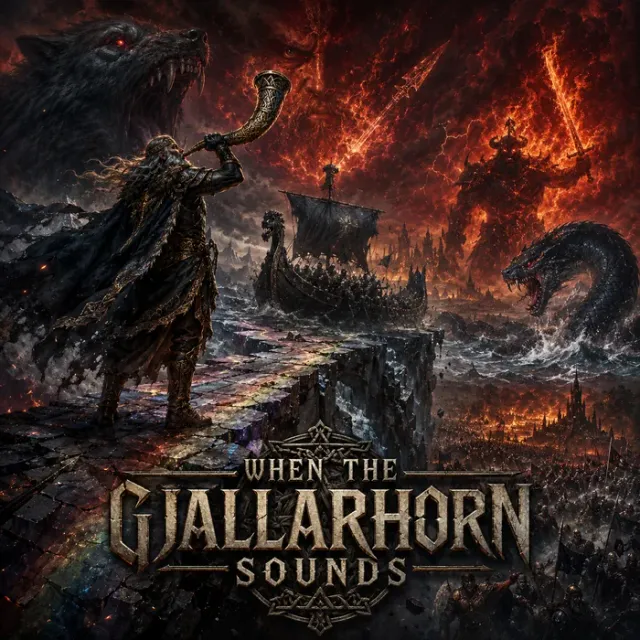
When the Gjallarhorn Sounds
A symphonic Viking metal requiem for Ragnarök, gods fall, monsters rise, and the last horn calls nine worlds toward silence, fire and a world without victors.
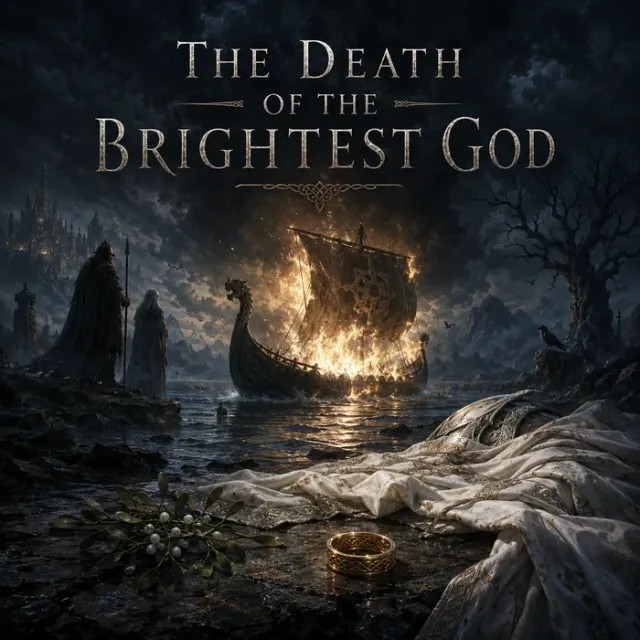
The Death of the Brightest God
Viking doom metal follows Balder's death, the gods' failed bargain with Hel, and the first shadow of Ragnarök.
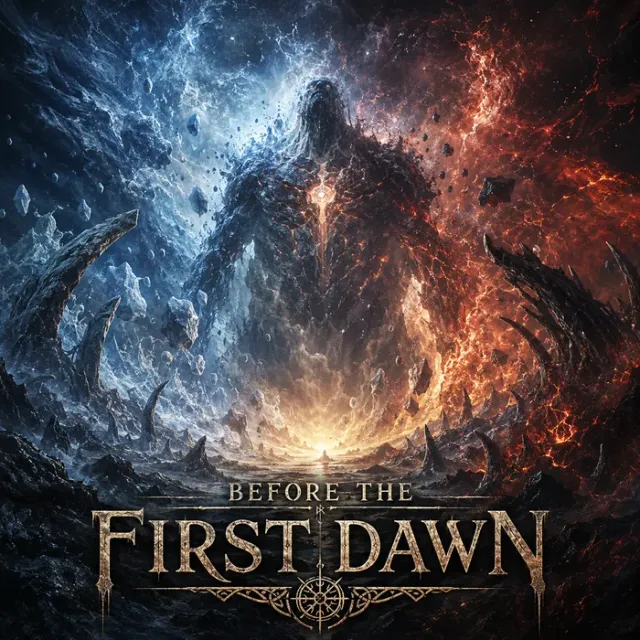
Before the First Dawn
Before the First Dawn turns Norse creation into atmospheric Viking metal, colossal riffs, ritual choirs, blood, frost and nine worlds forged through violence.


