


A cinematic progressive rock opera of starship conflict, sacrifice and hope driven by soaring guitars, vivid storytelling and a cosmic scale through the void.
Tracklist
Liner Notes
A short editorial read on the album world, sound, and standout moments.
About the Album
Enterprise: Voyage Through the Void is a progressive rock opera built around a deceptively simple question: what remains of leadership when every available choice carries a cost? Across fourteen connected songs, Melody Mind Music follows a starship crew beyond mapped space, where exploration gives way to sabotage, mutiny, temporal collapse and mourning. The setting may be cosmic, but the record’s real subject is human: how people behave when certainty disappears, authority is tested and survival demands more than courage.
The album opens with the confidence of departure. Twelve-string guitar, Mellotron, Hammond organ, analog synthesizer and tom-heavy drums establish a sound rooted in classic progressive rock without becoming a museum piece. “Beyond the Known” has the ceremonial lift of an overture, yet the captain’s first moments are clouded by responsibility. The Enterprise is a vulnerable community whose warmth and routines must be protected from the cold machinery outside.
When an impossible transmission arrives from a dead star, the story tightens. “Answer the Dead Star” and “Static from a Silent Sun” turn curiosity into unease through odd meters, clipped vocal exchanges and a descending melodic figure that returns whenever the enemy draws near. The signal carries fragments of future voices, making the crew hear consequences before they understand the decisions that will produce them.
The first attack, depicted in “The Luminous Veil,” is one of the album’s most immediate pieces. Violet and crimson storm imagery is matched by angular guitar lines, hard meter changes and drums that feel like evasive maneuvers rather than generic battle percussion. “Red Across the Bridge” then narrows the focus to damaged decks, evacuation orders and the brutal arithmetic of command. The warning lights illuminate faces, names and rooms that may have to be abandoned.
At the centre stands the damaged blue warp core, described throughout as the ship’s mechanical heart. “Mechanical Heart” gives the chief engineer a voice of their own, replacing grand declarations with oil-stained hands, a worn tool and a family photograph beside the controls. Sacrifice matters because the person making it has habits, humour, fear and something unfinished waiting for them.
“Queen of the Ion Crown” expands the conflict without reducing it to a hero-and-villain exchange. The alien queen is persuasive because her argument begins in trauma. She has seen freedom collapse into factional violence and believes control is the only defence against extinction. Her duet with the captain brings the album’s political dimension into focus: safety without consent may stop chaos, but it also empties survival of meaning.
That consequence arrives in “The Line We Would Not Cross,” where exhausted lower-deck crew members revolt. The mutiny is not excused, but neither is it dismissed as cowardice. Heat has failed, information has travelled unevenly and trust has broken along the same lines as power. When the ship falls into a temporal anomaly, the music fractures with it. “Corridors of Tomorrow” moves through unstable meters and overlapping perspectives as possible futures appear in familiar rooms. Home, death, escape and regret become equally convincing.
The emotional low point, “No Clean Command,” strips the production back to piano, guitar and the missing beat of the failing core. It is less a confession than an audit. The captain admits that leadership cannot produce a morally spotless answer, only a choice that must later be defended before those who paid for it. That honesty prepares “Three Notes for the Living.” The engineer’s final act is intimate: frightened, irritated and practical. Their recurring three-note motif becomes a memorial because earlier songs taught us whose hands those notes represent.
From there, the record rebuilds itself. “Carry the Light” does not offer easy forgiveness after the mutiny. Instead, it proposes accountability as collective labour: the crew names what happened, accepts what cannot be repaired and returns to their stations. The phrase “We carry the light where the stars cannot” changes from mission rhetoric into an obligation to remember the dead and act differently because they lived.
The finale, “Where the Map Runs Out,” delivers the scale promised by the opening without abandoning the album’s moral centre. The crew confronts the queen’s fleet, but victory is defined by restraint rather than destruction. Motifs associated with command, fear and remembrance collide in guitars, organ and synthesizer before resolving into a passage beyond the charted boundary. “The Void Remembers Every Name” shifts from battle to aftermath: a cracked observation window, an empty engineering station and a crew deciding whether grief should send them home or accompany them forward.
Production Notes
All tracks were generated with AI music models, then processed for atmospheric texture. No human performance recordings are used. The album is structured for continuous listening, not shuffled playback. Fourteen tracks, fourteen chapters of the same story.
Full album download
Download the complete album
Get the full ZIP package with tagged audio files, cover artwork, and album metadata.
Support MelodyMind
Help keep the albums coming
If this album was useful or fun to listen to, a small contribution helps cover hosting, tools, and new music experiments.
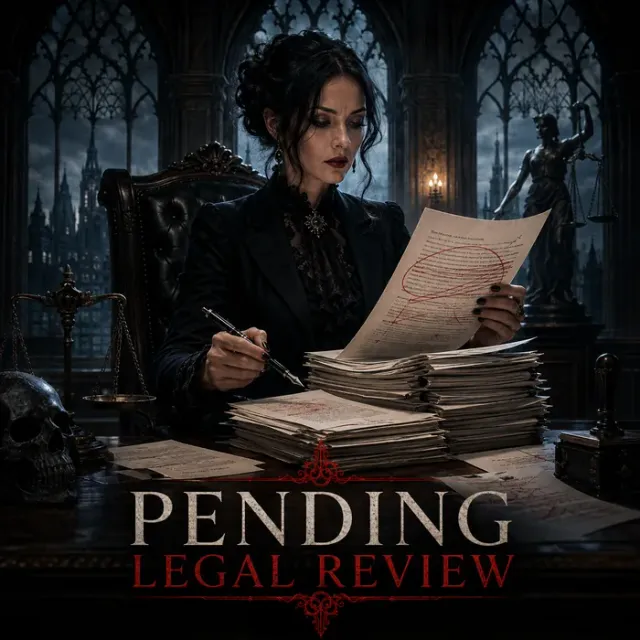
Pending Legal Review
Pending Legal Review is a gothic rock and doom metal concept album about contracts, liability, legal pressure, red lines and the hidden risk of signing blind.

The Vendor from Hell
The Vendor from Hell turns software sales, vendor lock-in and broken support promises into a fierce blues-rock and heavy-metal rebellion inside the boardroom.
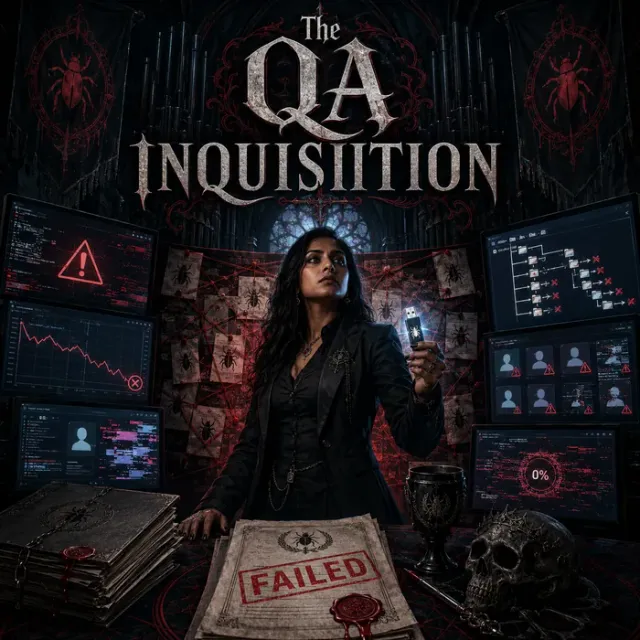
The QA Inquisition
The QA Inquisition is a gothic metal concept album about buried bugs, corporate denial and the high cost of ignoring warnings before a major software release.
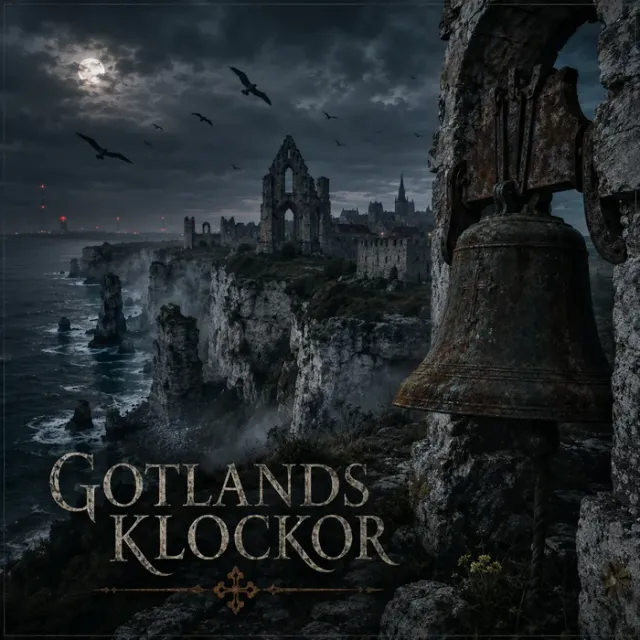
Gotlands klockor
Gotlands klockor turns Gotland’s haunted Baltic history into brooding gothic rock, darkwave and folk metal—a 14-song warning carried by bells over cold seas.


