

Everything Is Priority One
Made with generative AI; directed and curated by Daniel.
Comedy power metal follows a product team through feature creep, shifting deadlines, executive panic, and one priority too many.
Tracklist
Liner Notes
A short editorial read on the album world, sound, and standout moments.
About the Album
Everything Is Priority One turns the familiar language of product management into a full-scale corporate power-metal drama. Roadmaps become battle plans, stakeholder meetings resemble war councils, and a harmless-looking customer ticket develops the destructive potential of an architectural siege weapon. Beneath the comedy, however, lies a remarkably precise story about responsibility, indecision and the damage caused when leadership mistakes universal agreement for genuine strategy.
The album follows Leon Brandt, newly promoted to Head of Product for Project Phoenix. His assignment sounds difficult but manageable: define a clear direction, coordinate the teams and deliver a platform customers can trust. For a few brief hours, Leon even succeeds. Opener “The Product Vision” introduces him in front of three glowing monitors, laser pointer raised, presenting a disciplined roadmap built around measurable goals. The heroic guitars and confident refrain suggest that order has finally arrived. Then management, Sales, Marketing and customers begin contributing ideas.
From that point onward, the album escalates with the ruthless efficiency of a calendar filling itself while nobody is looking. The title track, “Everything Is Priority One,” is the record’s central anthem: an enormous, immediately memorable chorus built around the absurd corporate belief that every task can be treated as the most important task. Sales has a critical deal. Marketing needs a relaunch. Management has already announced an AI feature. QA needs time to stabilize the existing product. Every request is reasonable when heard alone, and completely impossible when accepted together.
That tension gives the album its comic force. The jokes are not random office references pasted onto conventional metal songs. They emerge from recognizable behavior: promises made before estimates exist, hypothetical customers reshaping real development work and roadmaps repeatedly renamed “Final” without ever becoming final. “Just One Small Feature” begins with a simple field request and gradually exposes the permissions, migrations, audit requirements and testing obligations hidden beneath it. Its progressive rhythmic changes reflect the expanding technical consequences, allowing the arrangement itself to become part of the joke.
“The Roadmap Is a Living Document” takes a more reflective approach by giving the roadmap its own voice. What begins as a rational plan becomes an archive of revisions, duplicate commitments and abandoned intentions. The song’s wit carries a quiet sadness: the document remembers having a purpose, even when the people editing it no longer do. That mixture of humor and consequence is one of the album’s greatest strengths. It laughs at corporate dysfunction without pretending the pressure on the people inside it is imaginary.
The middle of the story delivers the record’s most extravagant satire. “Strategic Priority One” finds Leon inventing additional priority levels because the existing system can no longer distinguish between competing emergencies. The titles become increasingly elaborate while the actual decisions remain unmade. “The Backlog Never Forgets” then slows the pace and transforms 2,400 stored tickets into a collective memory of every postponed confrontation. The backlog is not portrayed as the villain. It merely preserves what the company refused to decide.
The first major collapse arrives with “Feature Creep.” Project Phoenix now contains portals, predictive tools, custom tax logic, private-cloud options and enough configuration to bury its original purpose. The track drives forward with the album’s heaviest momentum, while the lyrics trace dependencies with unnerving specificity. Each addition sounds manageable; together they make the product impossible to release. This is where the humor begins to tighten into genuine tension.
Leon’s darkest failure comes in “The Customer Who Might Sign.” A major prospect has not approved a price, completed procurement or defined its requirements, yet the entire roadmap begins bending around the possibility of a contract. The probability of success rises even as the evidence becomes weaker. It is a sharp portrait of organizations gambling stable products on imagined revenue.
The album’s emotional turning point belongs to Sabine in “No Is Also a Product Decision.” Rather than offering Leon another framework, she identifies the real issue: he has used agreement to avoid accountability. Every yes preserved a meeting but transferred the consequences to the team. The duet strips away the heroic language and forces Leon to recognize that strategy requires exclusion. Choosing one direction means allowing another possibility to disappear.
That realization erupts in “Delete the Roadmap.” During a major presentation, Leon removes almost three quarters of the planned work. Sales objects, Marketing panics and Victor accuses him of reducing ambition. Leon’s response defines the album: he is not shrinking the vision; he is restoring a product. The song delivers the record’s largest confrontation without pretending the decision is painless.
Production Notes
All tracks were generated with AI music models, then processed for the final sound. No human performance recordings are used.
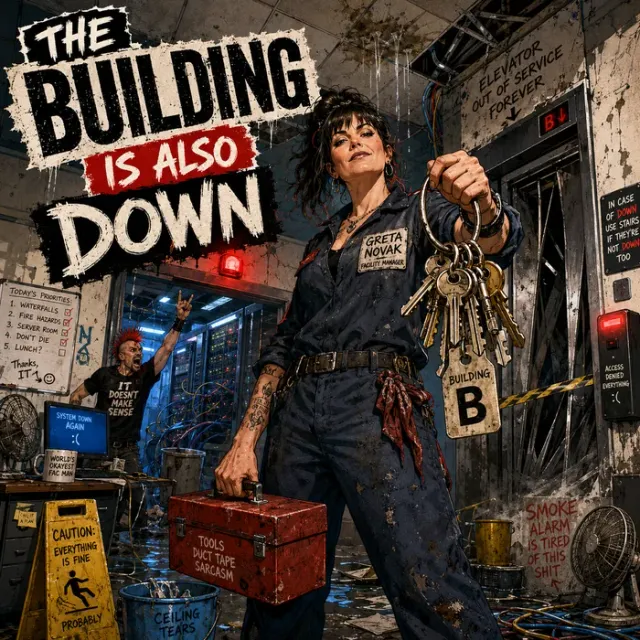
The Building Is Also Down
Punk rock turns broken elevators, flooded server racks, and budget cuts into a workplace comedy about neglected infrastructure.
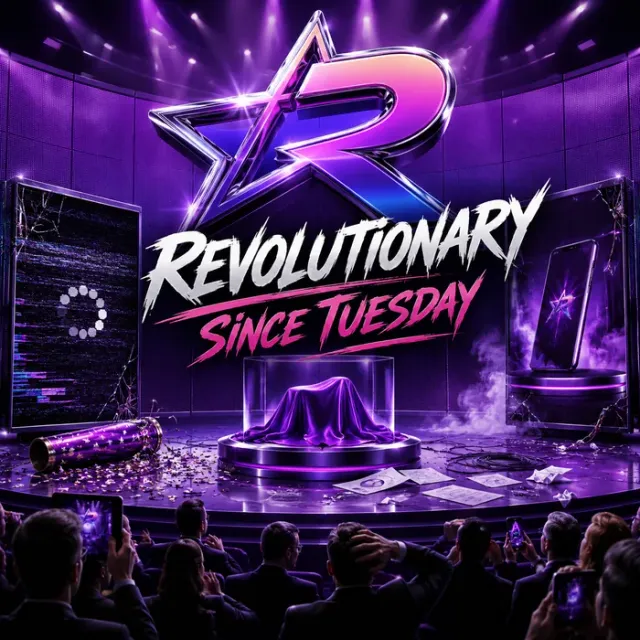
Revolutionary Since Tuesday
A synth-rock concept album about a marketing campaign that turns a routine product update into a promise the company cannot keep.
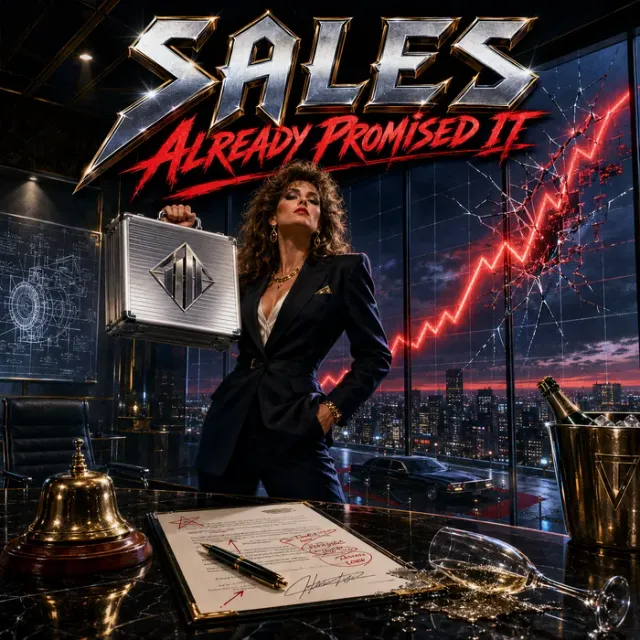
Sales Already Promised It
A glam-metal concept album about a sales director, an impossible enterprise contract, and the cost of telling a customer what they want to hear.
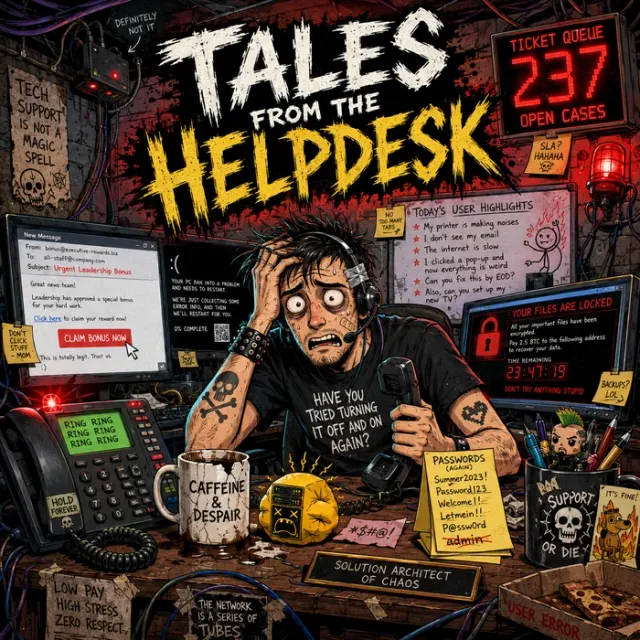
Tales from the Helpdesk
Tales from the Helpdesk turns broken screens, weak passwords and corporate arrogance into a searing punk-metal concept album about chaos, comedy and collapse.


Download the complete album
Get the full ZIP package with tagged audio files, cover artwork, and album metadata.
Help keep the albums coming
If this album was useful or fun to listen to, a small contribution helps cover hosting, tools, and new music experiments.