

Exit Code: Zero
Made with generative AI; directed and curated by Daniel.
Exit Code: Zero turns corporate collapse into melodic heavy metal—an urgent, darkly witty finale about blame, truth, recovery, and starting over with purpose.
Tracklist
14 tracks
Liner Notes
A short editorial read on the album world, sound, and standout moments.
About the Album
Exit Code: Zero is the sound of a company running out of excuses. Rather than treating the destruction of Production as one more workplace disaster, the final chapter of Code, Chaos & Coffee turns to the harder work that follows: establishing what happened, deciding who carries responsibility, restoring what is worth saving, and walking away from everything that made the collapse inevitable.
The album begins in the stunned silence after the outage. The office is still standing, but its rituals have lost their meaning. Dashboards are dark, customers are locked out, TitanBank is preparing legal action, and the people who kept Infinite Loop Solutions functioning are surrounded by evidence of neglected risk. “The Morning After Production” captures that atmosphere with restrained tension before opening into the album’s melodic heavy-metal language: harmonized guitars, drums, prominent bass and choruses built for a room full of voices rather than a solitary hero.
Exit Code: Zero is an ensemble record. Jonas, the intern whose single command triggered the final failure, is never reduced to a convenient symbol. “Isolated Human Error” gives Victor Sterling’s official version of events a polished, poisonous hook, while “Do Not Blame the Intern” tears that version apart with punk velocity and a chorus that feels like collective refusal. The album’s sharpest humour comes from its accuracy: frozen teleprompters, status slides, shared credentials, onboarding forms and executive language are funny because they remain plausible.
Musically, the record stays rooted in melodic heavy metal, but it uses the genre with discipline. Arena-rock choruses appear when the characters act together. Progressive-metal structures accompany investigation and reconstruction. Punk rhythms enter when patience gives way to resistance. The slower passages create room for consequences, uncertainty and decision. A recurring four-note motif links the album, first sounding like an unresolved system alert, then like Rex’s startup signal, and finally like a completed process. It gives the story a musical memory without making every track feel identical.
The investigative middle section is where the album becomes gripping. “We Were All in the Logs” turns an audit trail into a tense progressive-metal arrangement, building department by department until the disaster can no longer be assigned to one person. “The Account Behind the Account” follows Jonas and Noah through old migrations, expired contracts and reused vendor keys. There is no brilliant supervillain waiting at the end. The real antagonist is a network of temporary decisions that became permanent because responsibility was always expected to belong to someone else.
Gregor’s return gives the record its emotional hinge. On “Gregor Returns,” the abandoned server Rex becomes more than legacy hardware. It is a repository of institutional memory, holding the key to an archive of rejected security proposals, reduced test scopes, postponed fixes and warnings rewritten until they became harmless. “Every Warning Was Written Down” is a standout because it refuses the comforting idea that the catastrophe was unforeseeable. Knowledge existed. The failure came from choosing not to act on it.
“Restore What Matters” provides the first genuine release, but even here the album rejects an easy victory. The team does not resurrect the old infrastructure wholesale. It restores customer records, identity services and essential functions while leaving vanity projects and compromised systems offline. That choice gives the chorus real weight: recovery is presented not as returning to the past, but as refusing to repeat it.
The final confrontation arrives with “The Last All-Hands” and “No More Green Reports.” Irene’s unfiltered chronology replaces Victor’s prepared speech, exposing the budgets, vendor arrangements, missing QA gates and manipulated reporting that produced the crisis. Victor acknowledges his role, but the record avoids converting recognition into absolution. He loses his position, the company enters insolvency protection, and a new owner offers the team better salaries and larger titles inside structures that remain fundamentally unchanged.
“We Quit Together” is therefore not an uncomplicated liberation anthem. Its speed carries excitement, but the lyrics preserve the fear of leaving without certainty. The characters pack coffee mugs, old badges, client notes and Jonas’s bent “Hello, World!” sticker. These details prevent the song from drifting into generic rebellion. They are not escaping work; they are choosing to work under conditions they can defend.
The closing sequence shifts the album from protest to construction. “Zero Loop” introduces the cooperative in a former warehouse with mismatched desks, borrowed equipment and handwritten rules. Interns receive mentors. Permissions expire. QA can stop a release. Sales promises require technical approval. On “Build It Small, Build It Right,” the bloated Project Phoenix is stripped of theatrical features and proprietary dependencies until the useful core becomes Ember: modest, documented and reliable.
The title track closes the story without fireworks. Zero Loop’s first production deployment succeeds because every account has an owner, every rollback has been tested and every status indicator is tied to evidence. Mara checks the logs repeatedly, waiting for the familiar alarm that never comes. Her final act is not heroic. She closes the laptop, turns off her phone and goes home. After a series built on permanent urgency, that ordinary freedom feels enormous.
Exit Code: Zero is recommended because it understands that accountability is more dramatic than blame and that rebuilding is more interesting than revenge. It offers memorable riffs, pointed humour, strong recurring characters and a finale that earns its hope through practical choices rather than sentimental promises.
Production Notes
All tracks were generated with AI music models, then processed for the final sound. No human performance recordings are used.
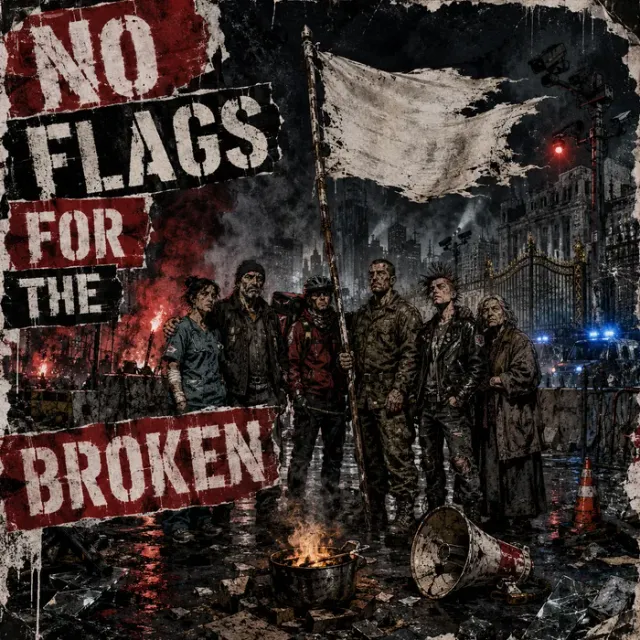
No Flags for the Broken
No Flags for the Broken is a fierce political punk concept album about war, poverty, propaganda and solidarity in a city abandoned by those in power above it.
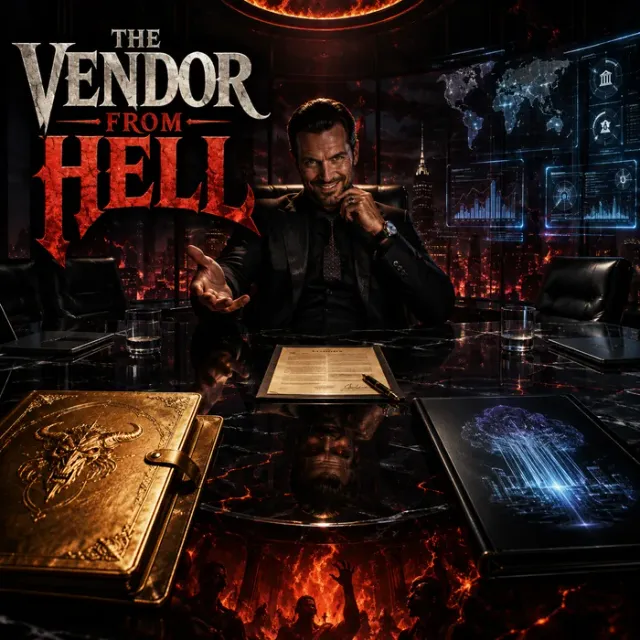
The Vendor from Hell
The Vendor from Hell turns software sales, vendor lock-in and broken support promises into a fierce blues-rock and heavy-metal rebellion inside the boardroom.
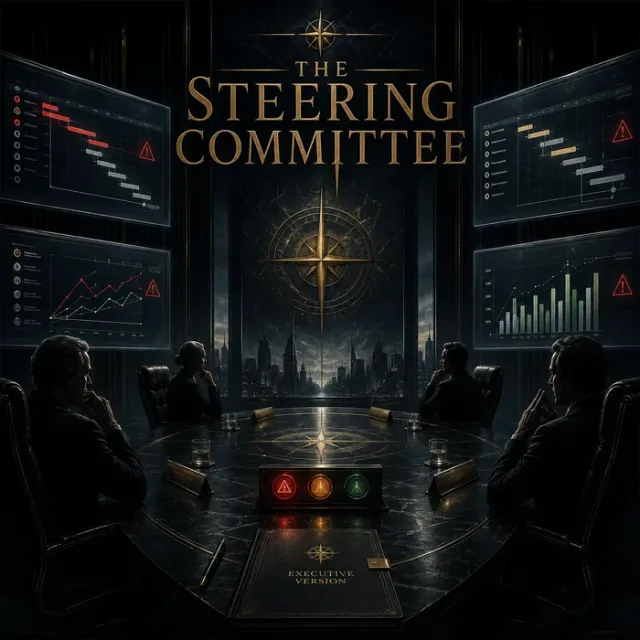
The Steering Committee
The Steering Committee turns corporate power games into progressive metal, exposing four leaders, four timelines and one project pushed toward collapse today.
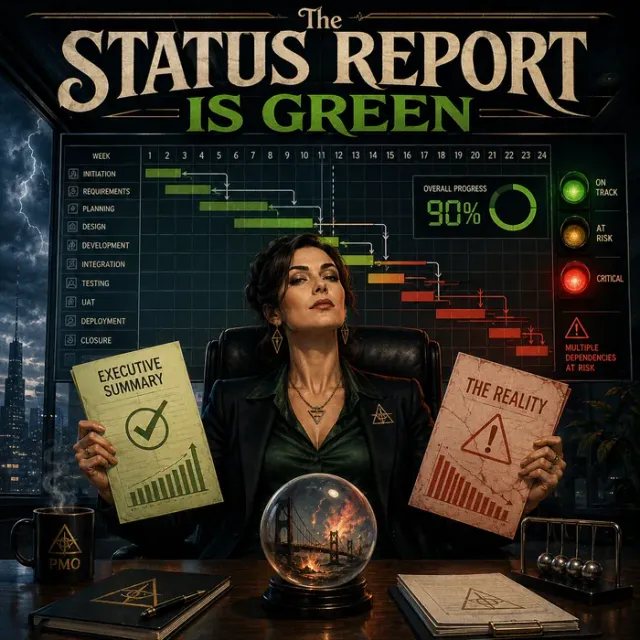
The Status Report Is Green
A sharp progressive rock satire on corporate denial, false green reports, shifting deadlines and one manager who finally tells the truth aloud before collapse.


Download the complete album
Get the full ZIP package with tagged audio files, cover artwork, and album metadata.
Help keep the albums coming
If this album was useful or fun to listen to, a small contribution helps cover hosting, tools, and new music experiments.