


Fleurs Fanées is a melancholic French dream pop album of lost love, quiet depression, rainlit memories, and the slow return to the self, softly told at night.
Tracklist
Liner Notes
A short editorial read on the album world, sound, and standout moments.
About the Album
Fleurs Fanées is a melancholic French indie pop, dream pop and art pop concept album about the aftermath of love—not the explosive ending, not the dramatic final argument, but the quiet, almost unbearable days that follow. It lives in the apartment after someone has left. A small round table by the window. Wilted flowers in a glass vase. A half-empty bottle of red wine. Old black-and-white photos. A scarf that still carries perfume. Rain on the window. City lights blurred into color. This is not heartbreak as spectacle. It is heartbreak as atmosphere.
Across 14 songs, the album follows a solitary narrator as she remains inside a room still shaped by a relationship that no longer exists. Every object has become a witness. The flowers are not simply decoration; they are the central metaphor of the record. Once beautiful, once given with meaning, they now stand dry and fragile, caught between tenderness and decay. Like the love at the heart of the album, they are difficult to throw away because discarding them feels too close to betrayal. That emotional hesitation gives Fleurs Fanées its power: it understands that healing often begins with the smallest, least cinematic gestures.
Musically, the album moves with the softness of French dream pop and the intimacy of bedroom pop, wrapped in warm analog textures, reverb-soaked guitars, quiet synth pads, brushed drums, gentle piano and fragile string colors. The production never tries to overwhelm the listener. Instead, it leans close. The vocals feel near and human, as if sung from the corner of the room rather than a stage. There is a private quality to the sound: late-night, rainlit, restrained, full of pauses and air. The result feels closer to a diary than a staged performance.
The opening track, “Fleurs Fanées,” establishes the apartment as a memory chamber. From there, the album turns ordinary objects into emotional chapters: the scarf on the chair, the messages that remain undeleted, the wine bottle by the window, the unmoving morning, the photographs hidden in a drawer. These songs work because they do not treat sadness as a vague mood. They give it texture. Sadness smells like perfume trapped in fabric. It sounds like an old voice message at three in the morning. It looks like dust moving through cold morning light.
As the album deepens, the narrator begins to question the comfort of memory. “Photos Dans Le Tiroir” recognizes that photographs can edit the past, preserving smiles while cutting away the harder truths. “La Rue Que J’Évite” turns avoidance into geography, showing how a single street can become emotionally impossible to cross. The mid-album turning point, “Sous La Pluie Des Néons,” carries the story outside for the first time. The city does not heal her, but it proves that the world still moves. That is enough to disturb the paralysis.
The second half of Fleurs Fanées is darker, but also braver. “La Chambre Rétrécit” captures the claustrophobia of returning home after a first attempt at movement, when the apartment feels smaller because the narrator has briefly remembered the outside world. “Je Ne T’Écoute Plus” is one of the album’s most quietly powerful moments: the refusal to replay a voice message becomes an act of resistance. Not a grand victory, not a clean ending, but a boundary. The kind that saves a person one night at a time.
The album gains maturity by refusing to rush recovery. “Premier Jour Sans Larmes” treats the first tearless morning not as triumph, but as something almost frightening. The narrator wonders whether feeling less pain means loving less. That emotional honesty gives the record its maturity. Fleurs Fanées knows that grief can become a ritual, and that letting go can feel like losing the person all over again.
By the time “Ouvrir Les Rideaux” and “Jeter Les Fleurs” arrive, the album has earned its fragile light. Opening the curtains, moving a chair, washing a glass, throwing away the dead flowers—these are not decorative symbols of healing. They are the actual work of it. The finale does not erase the relationship. It does not pretend the narrator is suddenly reborn. Instead, it allows her to reclaim the room piece by piece. The closing track, “La Fenêtre Ouverte,” is one of quiet acceptance: the love remains part of the story, but it no longer owns the whole apartment.
Production Notes
All tracks were generated with AI music models, then processed for the final sound. No human performance recordings are used.
Full album download
Download the complete album
Get the full ZIP package with tagged audio files, cover artwork, and album metadata.
Support MelodyMind
Help keep the albums coming
If this album was useful or fun to listen to, a small contribution helps cover hosting, tools, and new music experiments.
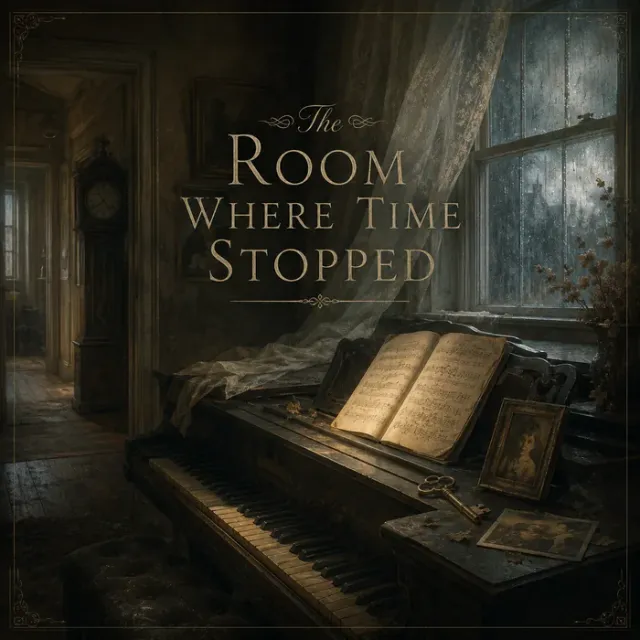
The Room Where Time Stopped
A melancholic neo-classical piano album about memory, grief, old rooms, family ghosts, and returning to a childhood home frozen in time.

Last Call on the Sunset Strip
A dying Sunset Strip club gets one final night in this gritty glam-metal concept album about memory, rent, friendships, survival, and staying loud until dawn.
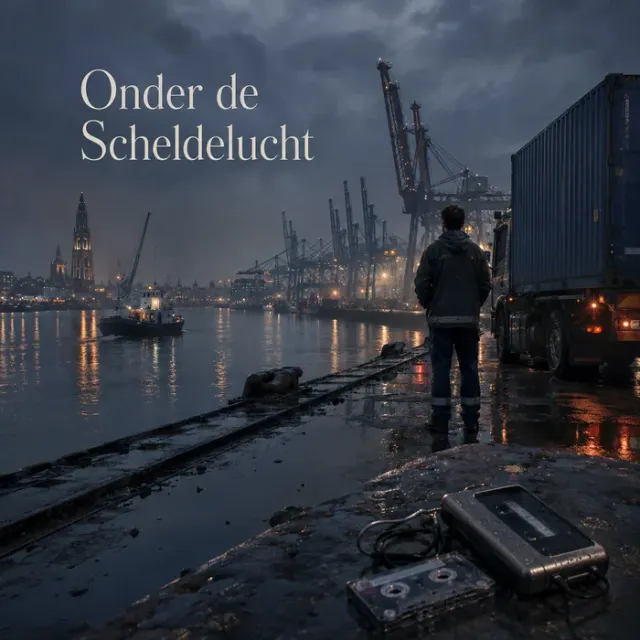
Onder de Scheldelucht
Rain-soaked Flemish indie rock album about Antwerp, the Schelde, harbor ghosts, family memory, trade, exile, steel-lit nights, and lost love by the old docks.
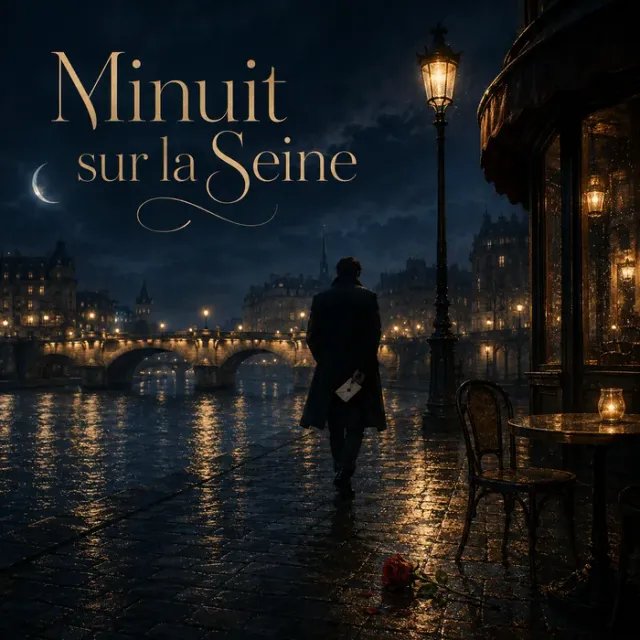
Minuit sur la Seine
French chanson-pop follows a solitary night along the Seine through rain, café memories, and lost romance, with Paris shaping each stop in the story.


