

Nordic Gothic Rock
Gotlands klockor
Gotlands klockor turns Gotland’s haunted Baltic history into brooding gothic rock, darkwave and folk metal—a 14-song warning carried by bells over cold seas.
Liner Notes
A short editorial read on the album world, sound, and standout moments.
About the Album
Gotlands klockor is not simply an album about an island. It is an album about what an island remembers when everyone else has chosen to move on. Across fourteen songs, Gotland becomes a witness: a limestone body in the Baltic Sea, marked by trade, invasion, disease, migration and military vigilance. The record begins in Visby after dark, where a young woman hears church bells ringing from empty towers. What first appears to be a haunting becomes something more demanding. The bells are not calling her toward death. They are asking her to listen.
Musically, the album stands on Swedish gothic rock, Nordic darkwave and Baltic folk-metal color. Baritone guitars move with the weight of weathered stone, while tom-heavy live drums suggest marching feet, rowing crews and distant machinery. Nyckelharpa, harmonium, twelve-string guitar and bronze bell tones give the songs character without turning the record into costume drama. The production stays close and physical. Vocals sit close, breath and grain intact, while the instruments feel carved from wood, iron and limestone rather than polished into a generic wall of atmosphere.
That sense of place matters because Gotlands klockor is built as a journey through history rather than a collection of disconnected songs. “Nattklockan i Visby” opens with a bell no living hand is ringing. “Myntet under muren” follows a Hanseatic coin through streets shaped by commerce, debt and power. “Skepp av järn och salt” looks beyond romantic Viking imagery and asks who paid the price for wealth carried across the sea. By the time “När ringmuren brann” reaches the medieval battle outside Visby, the city wall has become both protection and betrayal: a monument capable of saving one group while condemning another.
The album’s historical chapters are strongest when they refuse spectacle. “Svarta segel, vita kors” treats plague not as gothic decoration but as intimate losses: a sailor at the quay, a boy carrying grain, a church keeper whose hands are cut open by the bell rope. “Salt på fönstret” then brings the story indoors. A torn family photograph links the bells to memories suppressed during the Cold War, showing how history survives inside kitchens, drawers and conversations. Here the album finds one of its most affecting ideas: silence is rarely emptiness. More often, it is fear passed from one generation to the next.
Modern Gotland enters through radar screens, military roads and lights without visible aircraft. “Ljus vid horisonten” uses an uneven mechanical pulse to connect Cold War observation posts with contemporary surveillance. Yet the record never reduces its subject to a political slogan. It understands why an island in an exposed sea would feel vulnerable, and it also understands how fear can make people accept convenient versions of history. The tension is not between peace and war alone, but between vigilance and obedience, memory and propaganda, responsibility and panic.
The eruption, “Alla klockor samtidigt,” pulls every era into the same moment. Merchants cross paths with soldiers; plague victims stand beneath drones; the dead of the medieval battlefield appear beside people lost at sea. This is the album’s turning point, both musically and morally. The protagonist understands that Gotland is not cursed. It is crowded with testimony. The bells demand accuracy, not worship. They ask her to remember who benefited, who was abandoned, who issued orders and who was made to carry their consequences.
From there, the album becomes quieter but more severe. “Efterklang i kalken” listens for individual lives inside the island’s stone. “Havet lämnar inga namn” confronts deaths in the Baltic through objects washed ashore: a child’s shoe, a damaged passport, a toy car. The writing is concrete because the record refuses to let tragedy dissolve into statistics. Its darkest songs do not chase grandeur; they insist that every political abstraction eventually reaches a body, a family or an empty room.
“Ingen ö kan fly” brings the protagonist to a ferry terminal, where she considers leaving as military activity intensifies. Her decision to remain is not presented as heroism. She stays because someone must carry the stories she has heard. That distinction gives the final act its force. In “Flickan som talar med havet,” the sea tells her that remembrance must include life as well as catastrophe: meals, jokes, work, love and the habits that prevent the dead from becoming symbols. “Klockorna över Fårö” then delivers the album’s great confrontation on the cliffs, where she rejects both denial and the seductive certainty of fear. She chooses to become a witness rather than a weapon.
The closing “Morgon över muren” offers no artificial victory. The radar still blinks. The island remains exposed. History has not been resolved. What has changed is the willingness to speak. The bells fall silent because their message has entered hands, notebooks and conversations. It is an ending, and a convincing one: memory becomes useful only when it is shared.
Recommended if you like: Political punk, post-punk, protest rock, anti-authoritarian lyrics, dystopian concept albums, AI-assisted music projects. Even with those reference points, Gotlands klockor has its own identity. It is less interested in slogans than in consequences, less interested in mythology than in the people mythology leaves behind. The result is a dark, structured album that rewards uninterrupted listening. Give it the full fourteen tracks, with headphones, and let the bells reveal why Gotland is not merely the setting of this story, but its essential voice, and why its warnings deserve to be heard now.
Production Notes
All tracks were generated with AI music models, then processed for the final orchestral sound. No human performance recordings are used.
Full album download
Download the complete album
Get the full ZIP package with tagged audio files, cover artwork, and album metadata.
Support MelodyMind
Help keep the albums coming
If this album was useful or fun to listen to, a small contribution helps cover hosting, tools, and new music experiments.
Join the conversation
Reactions from the web
Mentions, likes, reposts, and replies from IndieWeb and Fediverse-friendly sites can appear here after you allow community features.
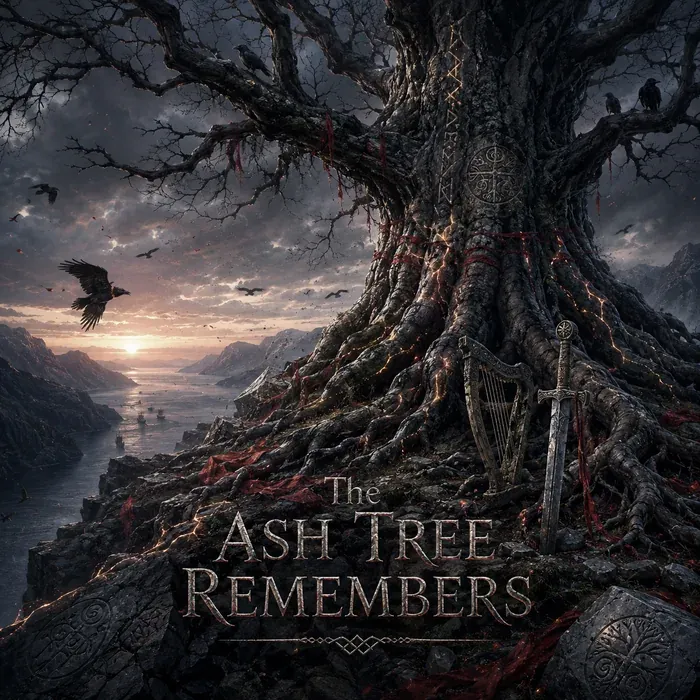
The Ash Tree Remembers
The Ash Tree Remembers is an epic Viking metal journey through Yggdrasil, war, memory, death and renewal, told through crushing riffs and Nordic ritual fires.
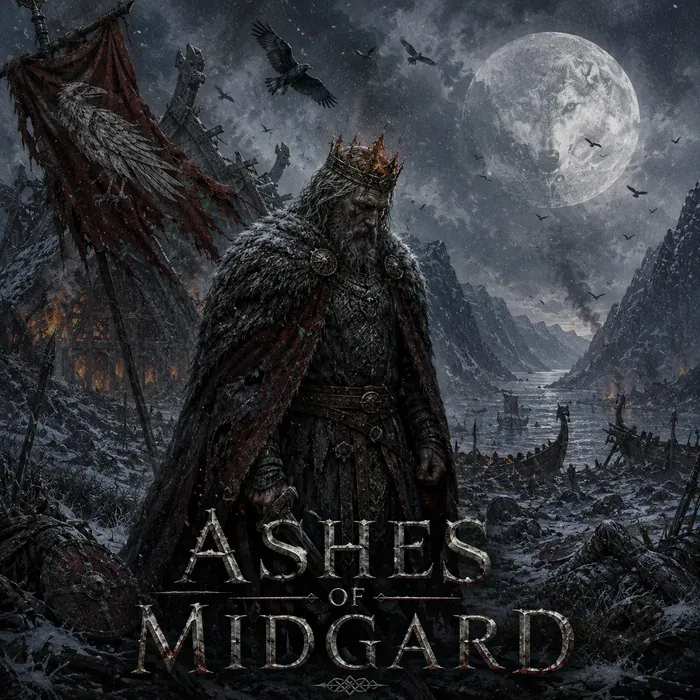
Ashes of Midgard
Ashes of Midgard is a tragic Viking metal concept album of fire, frost, broken oaths and a dying kingdom fighting to keep its memory alive after the last war.
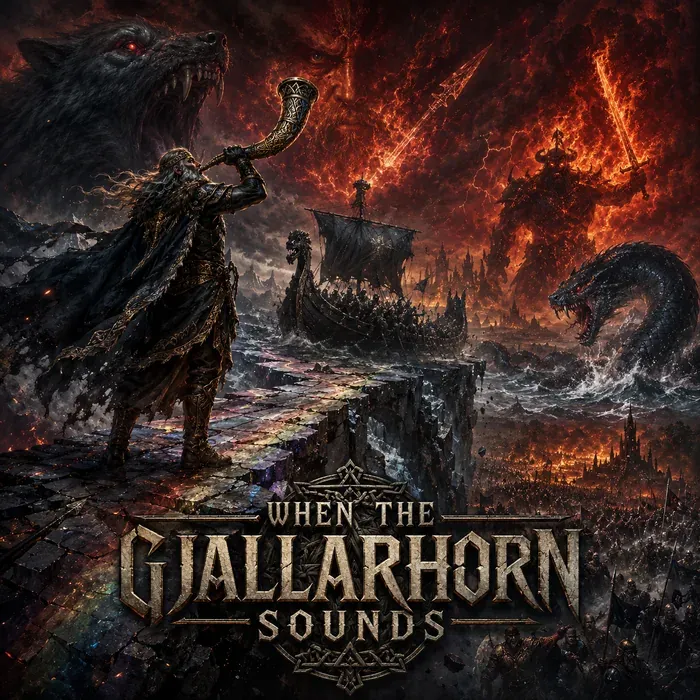
When the Gjallarhorn Sounds
A symphonic Viking metal requiem for Ragnarök - gods fall, monsters rise, and the last horn calls nine worlds toward silence, fire and a world without victors.
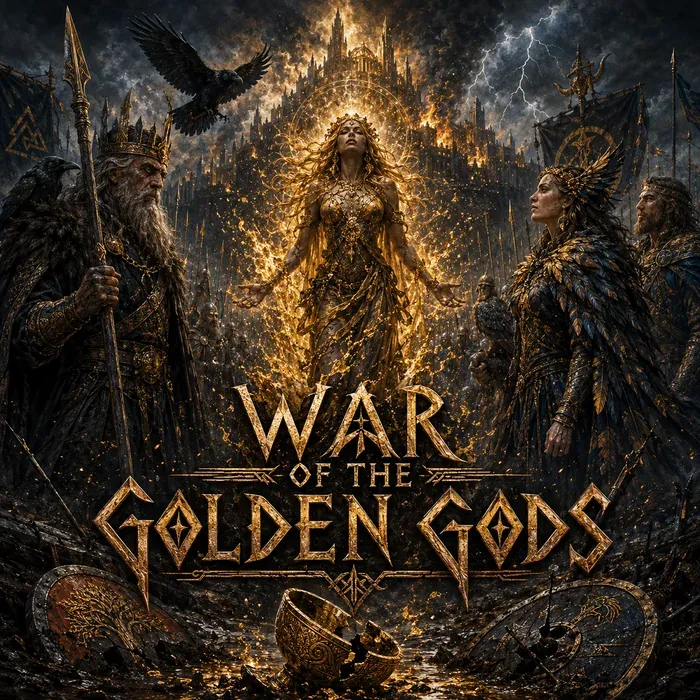
War of the Golden Gods
War of the Golden Gods turns Norse myth into fierce Viking metal - gold, war, magic and uneasy peace in a gripping mythic concept album of power and ruin.
Community
Comments...
Read or leave a comment about this album. Comments are provided by Cusdis and load only after you allow the comments feature.
Enable comments to load the discussion from Cusdis.