


Melodic hard rock follows a fallen ruler through pride, public collapse, lost love, and renewal, using arena choruses, heavy guitars, and rock-opera scale.
Tracklist
Liner Notes
A short editorial read on the album world, sound, and standout moments.
About the Album
Iron Hearts & Broken Crowns is the kind of hard rock concept album that does not enter quietly. It arrives with thunder, smoke, cracked marble, burning banners and the emotional weight of someone standing in the ruins of everything they once believed made them powerful. Built around the grand language of classic arena rock and melodic hard rock, the album tells a story of pride, collapse and rebirth with the scale of a rock opera, but without losing the direct punch of big guitars, huge drums and choruses built to be sung with a raised fist.
Musically, Iron Hearts & Broken Crowns leans into the great tradition of emotional, stadium-sized rock. There are shades of classic Bon Jovi in the wide-open choruses, Europe in the melodic sweep, Whitesnake in the drama and guitar fire, Def Leppard in the polished hard rock architecture, and Gotthard or H.E.A.T. in the balance between muscle and melody. But the album is not simply nostalgic. It uses that familiar arena-rock language as a dramatic engine: every guitar wall, every piano intro, every rising pre-chorus and every final refrain pushes the story forward.
The opening title track sets the tone immediately. “Iron Hearts & Broken Crowns” introduces the album’s world in bold strokes: a kingdom built on ego, fame and emotional denial. From there, “Kings in the Hall of Mirrors” turns inward, confronting the difference between public image and private truth. “Velvet Lies” brings in one of the album’s central narrative threads: the people who gather around power, but disappear when the throne begins to shake. These early tracks have swagger and scale, but beneath the shine there is already rot in the gold.
By the time “Palace on Fire” erupts, the collapse is no longer hidden. It is public, loud and impossible to deny. The song plays like the first major turning point of the album: the moment the character realizes that denial cannot stop the flames. Then comes “Love Left the Throne,” the emotional wound at the center of the record. The central ballad is where the myth breaks and the person underneath becomes visible. The loss of love becomes more devastating than the loss of status, because it reveals what the crown had cost all along.
The middle section of the album is where Iron Hearts & Broken Crowns becomes especially rewarding. “The Weight of Gold” examines fame not as glamour, but as pressure. “Run with the Wolves” shifts the scenery away from palaces and into the open road, where the fallen hero meets other outsiders and begins learning a less polished, more honest kind of survival. “Ghosts of the Glory Days” is one of the album’s most reflective chapters, capturing that bittersweet relationship with the past: the old lights still glow, the memories still sing, but living inside them would mean never moving forward.
The final stretch turns from collapse toward renewal. “When the Thunder Kneels” is the great surrender moment, where the album understands humility not as weakness, but as the first honest form of strength. “Rise from the Ashes” then delivers the comeback anthem the story has been earning from the beginning. Crucially, the character is not trying to rebuild the same kingdom. He is not chasing the old throne. He is learning to stand without it.
“No Crown Can Hold the Sky” expands that realization into something almost liberating. The album’s world opens up; power no longer means control, and freedom no longer requires applause. “Hearts Made of Fire” transforms the personal journey into a shared one, bringing together the broken, the betrayed and the survivors. It feels like the communal arena-rock moment of the record, the song where the crowd becomes part of the story.
The closing track, “The Last Kingdom Falls,” brings the album full circle. The final kingdom is not a place, but an ego. The last crown to fall is the one inside the character’s own mind. That restraint gives the ending weight: pain does not disappear, and the past cannot be rewritten. Instead, it offers something better. The hero walks away without the throne, but with a heart that finally belongs to him.
Production Notes
All tracks were generated with AI music models, then processed for the final sound. No human performance recordings are used.
Full album download
Download the complete album
Get the full ZIP package with tagged audio files, cover artwork, and album metadata.
Support MelodyMind
Help keep the albums coming
If this album was useful or fun to listen to, a small contribution helps cover hosting, tools, and new music experiments.
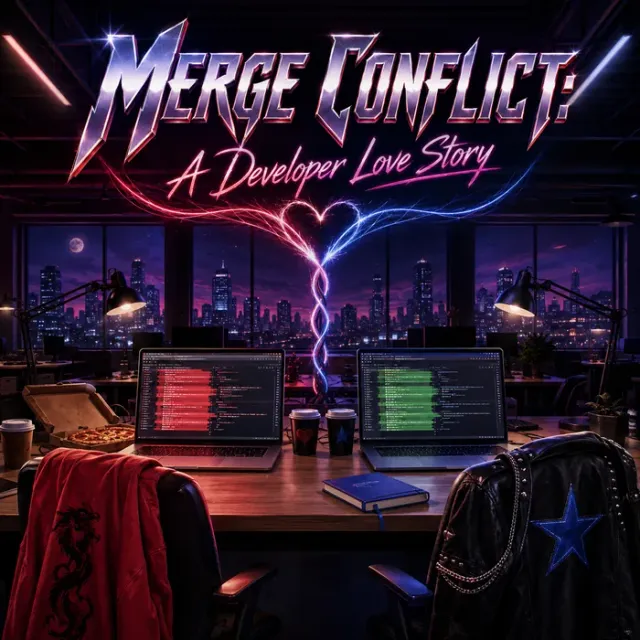
Merge Conflict - A Developer Love Story
A melodic hard-rock concept album about two developers whose late-night collaboration becomes a test of trust, control, and whether Project Phoenix can be saved.
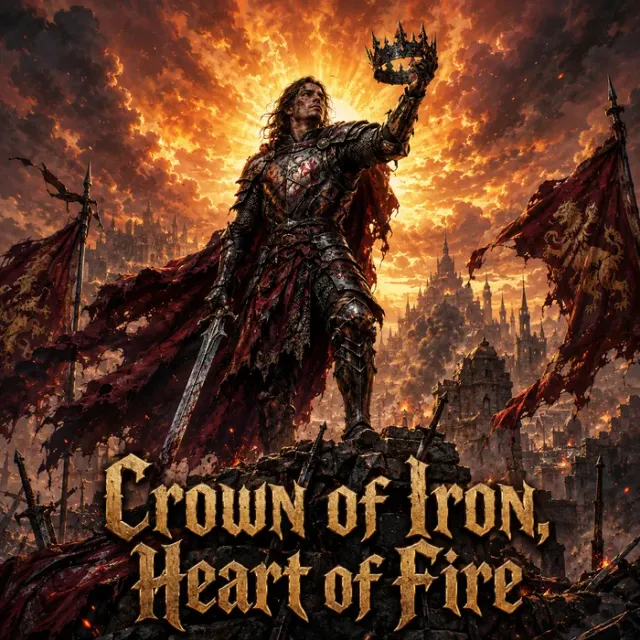
Crown of Iron, Heart of Fire
Epic true metal concept album about exile, betrayal and a warrior forged by iron, fire and honor, for fans of battle hymns and grand metal storytelling.
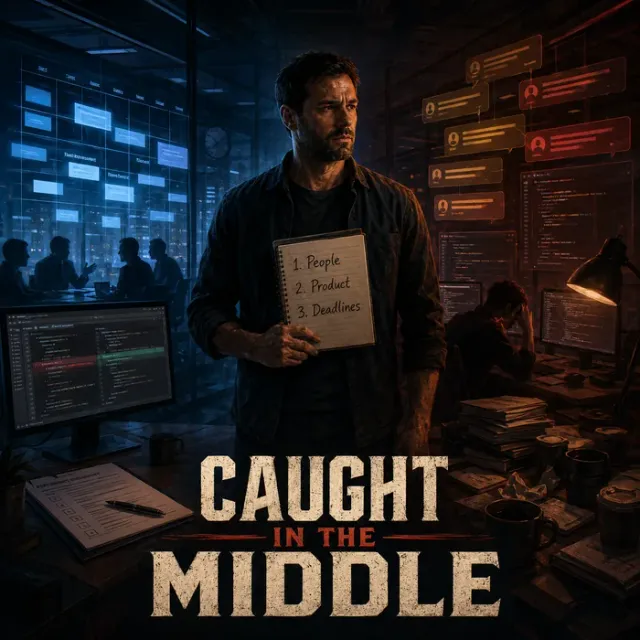
Caught in the Middle
A melodic hard-rock concept album about a developer made team lead without authority, forced to choose between protecting people and absorbing management’s failures.

Letters I Never Sent
Letters I Never Sent is a melodic hard rock concept album about love, regret, unsent letters and the courage to finally speak after years of silence and loss.


