The 1960s as History, Not Legend
Commentary on the 1960s often treats the decade as if the whole decade arrived fully formed: protest songs, psychedelic records, major festivals, and a new idea of pop all appearing at once. That is not what it felt like at the time. The changes came in stages. Early-1960s pop was still tightly managed, and many of the sounds we now associate with the decade had not yet taken shape.
What changed music in the 1960s was not one single breakthrough. It was the pressure of many forces meeting at once: Black musical innovation, youth markets, civil rights struggle, new recording technology, and artists who wanted more control over what they made. Songs started carrying more of the world around them. They could sound private and public at the same time.
It also matters that the decade did not move in one emotional direction. The early years still carried a strong commercial polish inherited from the late 1950s. The middle of the decade opened into experimentation, protest, and new freedoms in the studio. The later years sounded more strained, more divided, and more aware of what music could not fix. That changing mood is part of what gives 1960s music its unusual range.
That means paying attention not only to famous breakthroughs, but also to the slower processes underneath them: who had access to studios, who controlled radio and television, who got written into criticism later, and who was asked to carry political meaning in public. The 1960s still feel alive partly because so many of those pressures remain recognizable.
Paying attention to those forces means resisting the habit of hearing the decade only through its most visible figures. The Beatles, Dylan, Aretha Franklin, Motown, Woodstock, and psychedelia shaped the decade, but they did not explain it by themselves. Local radio, regional labels, touring circuits, TV booking rules, publishing offices, church traditions, and migrant audiences all influenced what the decade could sound like. The picture stays incomplete when those structures stay invisible.
Before the Shift: Controlled Pop at the Start of the Decade
At the start of the 1960s, popular music did not sound especially restless. Much of it was orderly, market-tested, and easy to place. Rock and roll had shaken social norms in the 1950s, but by 1960 the industry had learned how to contain much of that shock. Labels preferred dependable acts. Radio favored familiar formats. Performers were treated as singers or teen idols, not as long-term creative decision-makers.
That surface stability depended on a strong postwar youth market. Teenagers had spending power, and the industry built efficient ways to reach them. Singles drove the business. Albums were treated as packages for fans rather than as unified works. Songwriters, performers, and producers occupied separate roles, which kept authority away from most artists.
In practice, that meant much pop was built by specialists. Publishing houses supplied songs. Session players and producers shaped the recordings. Radio and television decided which records were worth repeating. The model could produce excellent singles, but it also kept most performers at a distance from the decisions that made a career durable.
Still, the arrangement was already under strain. Younger listeners tired quickly of safe repetition. Social tensions around race, gender, and generation became harder to keep outside pop music. The early 1960s sounded controlled, but the ground under that control was beginning to move.
In retrospect, this opening moment matters because it shows how much of the decade’s later explosion grew from a system that first tried to prevent it. The revolutions of the mid- and late 1960s did not arrive on empty ground. They arrived inside an orderly business that had already trained huge audiences while underestimating what those audiences would soon want.
That misreading was historical as much as commercial. Executives acted as if the late 1950s had already shown them how to manage youth music safely, but the audience was changing faster than the business model. More listeners were growing up with records as a daily part of life, more teenagers were using music to mark identity, and more social conflict was entering public view. A system built to package short-lived enthusiasm was about to face listeners who wanted deeper attachment and musicians who wanted more control.
How Rock 'n' Roll Was Softened and Repackaged
When the decade opened, the first shock of rock and roll was still visible, but it had been softened. What once looked unruly was now easier to package. The industry found a way to sell youthful energy without giving up much control.
Elvis Presley still mattered enormously, but by 1960 he no longer seemed as disruptive as he had in the mid-1950s. Films, television, and carefully managed recordings presented a safer version of rebellion. Rock and roll moved from social threat to profitable category.
At the same time, artists such as Chuck Berry and Little Richard were treated as figures from an earlier chapter, even though their musical ideas still shaped the present. Their influence stayed central while their mainstream visibility shrank. Structural racism, segregated radio, and broadcaster gatekeeping produced that gap.
The industry also pushed a new kind of pop star for teenage audiences. Performers like Bobby Vee, Fabian, and Frankie Avalon were marketed as safe, recognizable faces rather than as writers or innovators. Their songs were short, romantic, and easy to absorb. The point was not to unsettle listeners. It was to reassure them.
The division of labor reinforced that model. Professional songwriters worked away from the stage. Producers shaped the recordings. Labels controlled release schedules and promotion. Most performers occupied one place inside a larger commercial machine, where consistency and sales mattered more than authorship.
Even so, cracks were showing. Audiences lost patience with repetition faster than the industry expected. Some artists wanted more say over their work. In the United States and the United Kingdom, local scenes, small labels, and independent studios started pushing at the edges of the system. The early 1960s were not empty. They were crowded with pressure that had not broken through yet.
That is why this period should not be mistaken for creative pause. It was a staging ground. Old forms still dominated the charts, but new expectations were quietly building in clubs, college towns, regional radio markets, and fan culture. The surface stayed calm longer than the structure underneath it.
Gatekeepers: Radio, TV, and Label Power
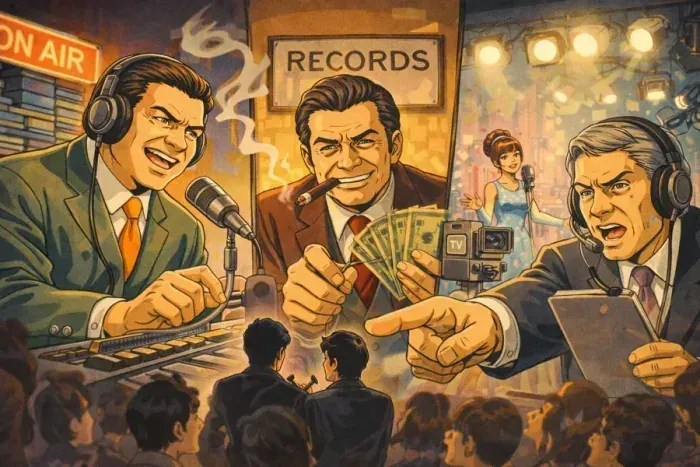
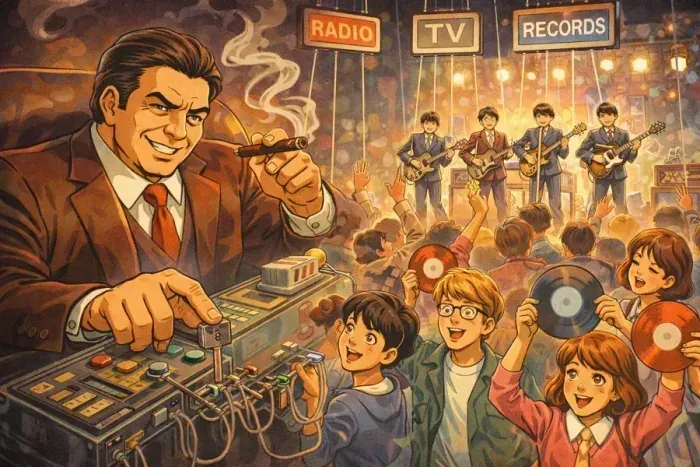
In the early 1960s, getting heard meant getting past a small number of gatekeepers. Radio, television, and record labels worked in parallel, and all three rewarded the familiar.
AM radio was the dominant everyday format. Playlists were short, songs were rotated heavily, and airplay varied by region. A record often had to break in one city before it could spread further. Program directors relied on formats that had already proven successful, which meant that unfamiliar sounds were shut out. For many listeners, popularity was shaped as much by repetition and limited choice as by taste.
Television worked in much the same way. Shows like American Bandstand could make an artist known nationwide, but only if that artist fit a controlled image. Dick Clark’s program was neat, polite, and family-friendly. Songs were selected so they would not unsettle advertisers or parents. A spot on the show could create sudden fame, but it also meant submitting to a narrow idea of acceptability. Music tied too closely to politics, race, or raw emotion was kept at a distance.
In Britain, broadcasting controls created a related bottleneck. The BBC offered limited space for current pop in the early 1960s, which helped offshore pirate stations such as Radio Caroline gain influence after 1964. Those stations did not democratize music fully, but they widened access to new records and helped accelerate the circulation of beat, R&B, and youth-oriented pop across the UK.
Record labels made these rules even stricter. Major companies controlled pressing plants, distribution networks, and promotional budgets. They preferred artists who could deliver popular singles rather than music that felt unfamiliar or difficult to market. Contracts gave performers little control. Decisions about publishing, production, marketing, and long-term financial rights were made without the artist’s input.
These structures hit Black musicians and women especially hard. Even though Black artists were central to the making of popular music, radio separated Black and white music into different categories and on different stations, which limited crossover exposure. Women were treated as interpreters rather than creators and were expected to perform material chosen for them by others.
The system was not total. Independent labels, local radio, and regional scenes created openings. Small studios gave musicians and producers room to try ideas that a major company might reject. Influential local DJs sometimes backed records that did not fit the national pattern. Those smaller spaces mattered because they let change begin before the center was ready for it.
The major institutions protected a stable and profitable business. In practice, they slowed a shift that was already underway. As listeners grew more interested in personality, authorship, and artistic control, the distance between what the industry wanted and what musicians wanted became harder to manage.
Payola scandals at the end of the 1950s left the industry more cautious and more centralized than it liked to admit. Broadcasters and labels talked publicly about order, standards, and responsibility, but those words meant a tighter grip on what kinds of artists could reach national audiences. The result was a music economy that sounded safer than the society around it.
That caution also favored artists who could be explained quickly. A clean image, a simple romantic single, and a label-backed promotional plan moved through radio and television more easily than a performer with unclear politics, rough edges, or visible ties to Black club culture. Gatekeeping shaped the sound before most listeners ever thought of it as gatekeeping at all.
Teenagers as a Market, Not Yet a Public
By the early 1960s, young people were the music business’s most valuable audience, but they still had little say in how the business worked. Teenagers were treated mainly as consumers with spending power, not as listeners with durable tastes or cultural authority. The assumption was that youth culture moved fast, spent fast, and could be managed from above.
That assumption shaped both sound and image. Songs aimed at young listeners stayed close to romance, longing, and manageable heartbreak. The feelings were real enough, but the frame was narrow. Arrangements were polished, lyrics avoided harder social questions, and the industry tried to deliver emotion without much friction.
Artists were packaged to match. Young men were sold as approachable and harmless. Women were expected to seem sweet, composed, and permanently available to the audience. Few acts were encouraged to build long careers. Many were treated as temporary fashions because executives assumed their fans would simply age out of them.
Listeners were already pressing back against those limits. The Cold War, nuclear anxiety, and the early civil rights movement made simple romantic scripts feel less complete than they had a few years earlier. Music still offered escape, but many listeners wanted more than escape.
Records also became tools of identity. Fashion, slang, and local style shaped how young people listened and what they claimed as their own. In many cities, music helped mark belonging. The industry noticed and tried to mass-produce those local signals before they had fully developed on their own terms.
That process could be seen in everyday objects as much as in hit songs. Record sleeves, portable players, fan magazines, posters, and local dances turned music into a visible part of teenage life. Buying a single was not only about hearing one song. It could also mean joining a scene, copying a look, or signaling which future felt more believable to you.
By the middle of the decade, one change was becoming clear: teenagers were attaching themselves to artists, not only to isolated hits. They wanted continuity, personality, and some sense that the performer meant what they sang. The vocabulary of “authenticity” was still forming, but the demand behind it was already real.
That pressure would soon reshape the mainstream. The youth market was not shallow, and it was not temporary in the way executives imagined. Once listeners began asking more from pop, the whole system had to adjust.
The British Invasion and a New Idea of Pop
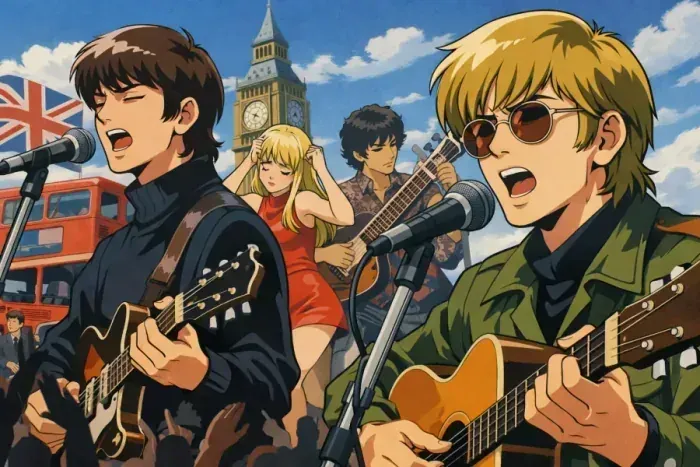
By the early 1960s, British acts were starting to break through on American radio and television. What later became known as the British Invasion was never one unified sound. It was a cluster of bands and singers who drew on American blues, rock and roll, rhythm and blues, and soul, then sent those influences back across the Atlantic in altered form.
British musicians had learned from imported records, radio broadcasts, and local club scenes. But they did not simply copy what they heard. They reworked it through British class experience, regional scenes, and a different relationship to style, humor, and public image. When these artists crossed into the American mainstream, they brought new ideas about bands, songwriting, and artistic identity with them.
The effect was immediate. Bands began to look like creative units rather than groups built around one marketable face. Albums gained weight. Image and sound became harder to separate. The British Invasion did not just interrupt American pop dominance for a few years. It changed expectations about who could define the mainstream and what pop musicians were allowed to do.
The timing sharpened the effect. When British bands broke in the United States in 1964, many American labels were still leaning on safe teen-pop formulas. The new groups looked different because they seemed self-contained: they wrote, played, dressed, joked, and argued like units with their own identity. Young listeners heard that as a stronger form of authenticity than the managed pop system had offered.
There was also a social undertone to that shift, even when the lyrics stayed light. In the wake of postwar austerity, class mobility, and changing youth culture in Britain, many of these acts brought accents, attitudes, and styles that did not match older American ideas of polish. What crossed the Atlantic was not only music. It was a new public image of youth confidence. "There was motion in the air. And the music thing was starting to happen."
The Beatles and the Rise of the Album
When The Beatles became international stars in 1963 and 1964, the first reaction was easy to see: screaming crowds, sharp presentation, quick humor, and a run of irresistible singles. But the more lasting change was deeper than Beatlemania. The group helped reset expectations around authorship, ambition, and what a pop record could be.
Their early records still worked inside a singles-driven market, but Lennon and McCartney were presented not just as performers but as writers. That mattered. In the pop system of the early 1960s, writing and performing were kept apart. The Beatles helped make the songwriting band feel central rather than unusual.
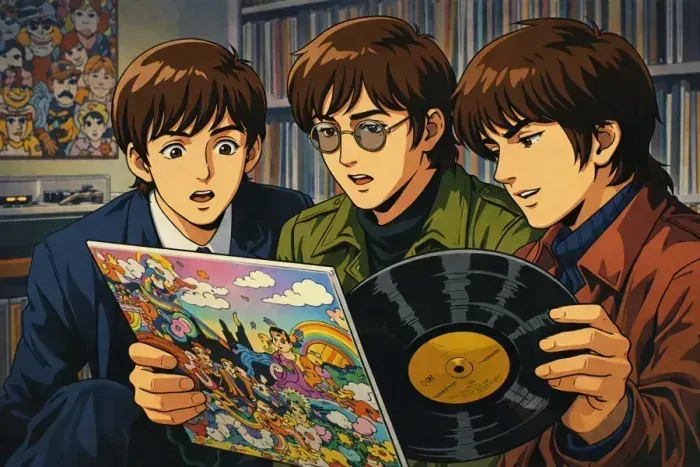
By the middle of the decade, that shift became much larger. Rubber Soul, released in the UK on December 3, 1965, and Revolver, released in the UK on August 5, 1966, made the LP feel less like a container for hits and more like a shaped work with its own logic. The lyrics moved toward self-questioning and emotional ambiguity. The music drew from folk, soul, Indian classical music, and studio experiment without sounding like a novelty tour through influences. Just as important, both albums sold extremely well. They showed that more adventurous pop could still sit at the center of the market.
The studio was crucial to that change. With George Martin, The Beatles treated recording as part of the creative act rather than as a neutral way to capture a performance. Tape loops, vari-speed recording, automatic double tracking, reverse effects, and careful layering made the record itself a place of invention. A song no longer had to be limited by what four musicians could reproduce onstage in real time.
Listeners responded by hearing albums differently. Sequencing, mood, texture, and internal coherence started to matter more. Other musicians noticed as well. The idea that a hugely popular group could change its sound, take formal risks, and keep its audience altered the industry’s sense of what mainstream success could include.
The Beatles did not invent the idea of the album as art, but they helped push that idea into the mainstream. Sgt. Pepper’s Lonely Hearts Club Band, released in the UK on May 26, 1967, pushed the studio logic even further. Sitar, harmonium, brass arrangements, tape effects, and variable-speed recording all became part of its sound world. The album was a major commercial success in both Britain and the United States, and it became the first rock LP to win the Grammy for Album of the Year. More than any single accolade, though, it confirmed that a pop album could be presented and received as a full artistic statement.
The reception mattered almost as much as the sound. Critics, radio programmers, and rival musicians all responded as if a line had moved. A Beatles release was no longer only a pop event. It was treated as a cultural argument about how serious popular music could become, and that changed the language used around other ambitious records almost immediately.
The Stones, The Who, and The Kinks: Harder Edges of British Rock
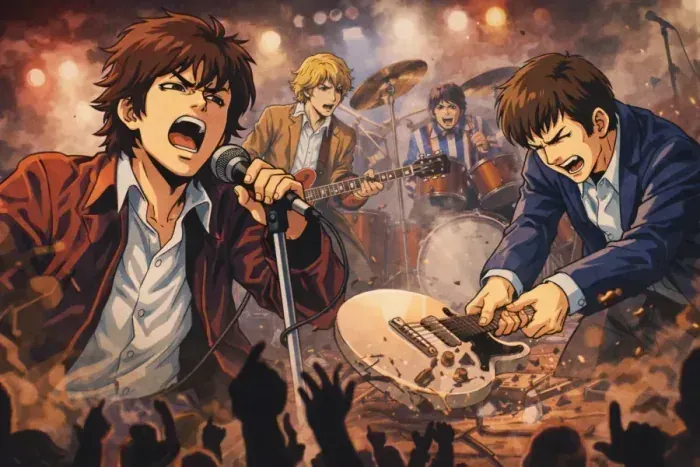
The Beatles made British pop more ambitious in formal terms, but other bands pushed toward harder, stranger, or more abrasive territory. The Rolling Stones, The Who, and The Kinks did not sound alike, and that was the point. Together they showed that the British Invasion was broader and less tidy than its most marketable image suggested.
The Rolling Stones built their identity against pop smoothness. Drawing heavily from Chicago blues and early rhythm and blues, they leaned into grit, sexuality, and unease. “(I Can’t Get No) Satisfaction” (1965), written by Mick Jagger and Keith Richards, caught a mood of frustration shaped by consumer pressure and restless desire. Keith Richards’s fuzz-guitar riff, played through a Maestro FZ-1 Fuzz-Tone pedal, gave the record a harder edge than most chart pop of the moment. It became the band’s first global number-one hit in both the US and the UK and helped prove that mass audiences would embrace music that felt tense rather than reassuring.
The Who worked from a different kind of aggression. Their songs tied sharp writing to live force. “My Generation” (1965), written by Pete Townshend, turned frustration and generational anger into a concise, explosive statement. Roger Daltrey’s stuttering vocal became part of the song’s identity, and the band’s emphasis on volume, confrontation, and physical intensity made performance central to its meaning. In that sense, The Who helped prepare audiences for a live culture in which the concert itself could feel like an event of risk rather than a clean presentation of songs.
The Kinks took another route. Ray Davies often wrote about class tension, domestic frustration, and the odd details of ordinary British life. Songs such as “A Well Respected Man” (1965) and “Waterloo Sunset” (1967) did not rely on direct rebellion, but they were hardly passive. Their precision, wit, and social observation made everyday life seem worth serious attention. “Waterloo Sunset,” produced by Shel Talmy and recorded at Pye Studios, reached number two on the UK Singles Chart and remains one of the most admired British singles of the era.
What linked these bands was not one shared sound, but a stronger sense of point of view. They wanted to write material that sounded like them, even when that complicated the market. British rock could now be polished, jagged, theatrical, intimate, or all of those at once.
They also widened the emotional and social range of what British rock could address. Frustration, class discomfort, boredom, consumer pressure, and performative masculinity all entered the music in different ways. That is one reason these bands mattered beyond hit making: they made rock feel more argumentative and less tied to one stable youth fantasy.
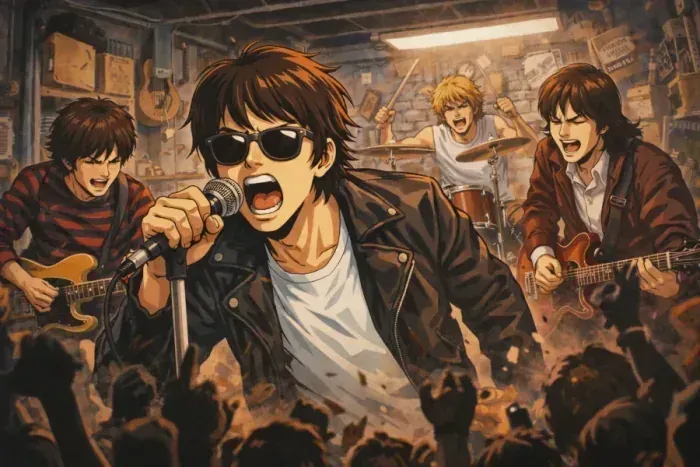
Garage Rock: Raw Energy Before Punk
If the British Invasion raised the formal stakes of rock, garage bands pulled the music back toward raw impulse. Across the United States, young musicians formed local groups with cheap guitars, small amps, and limited training. What they lacked in polish, they often replaced with speed, force, and urgency.
Garage rock had no single capital city. It moved through regional labels, local radio, school dances, teen clubs, and battle-of-the-bands circuits. That matters because it shows that rock in the 1960s was not made only in famous cultural centers. It also came from suburbs, small cities, and regional scenes where young people were testing how loud and direct a record could be.
The sound relied on repetition, fuzz, blunt drumming, shouted vocals, and compact songs. Its roughness was not simply an amateur flaw. For many listeners, that roughness was the appeal. Garage records sounded close to the room, close to the body, and close to the moment before polish set in.
Garage rock rarely received the prestige given to major albums or chart-dominating acts, but it kept rock tied to youthful impatience just as other parts of the industry were becoming more elaborate and expensive. In that sense, it forms an important link between early rock and roll, mid-1960s teenage rebellion, and the later arrival of punk.
Some of its most durable records came from outside the industry’s main power centers. Question Mark and the Mysterians’ “96 Tears” rose from a Michigan scene into the national charts in 1966, and Count Five’s “Psychotic Reaction” did something similar from California. Those hits matter because they show garage rock was not only local noise. It could break into the mainstream while still sounding rough, impatient, and slightly out of control.
Compilations assembled decades later, especially the Nuggets anthology released in 1972, would help define garage rock retrospectively as a coherent tradition. But in the 1960s, it often existed as a local experience first: records cut quickly, sold regionally, and remembered intensely by the people who heard them at the time. That local character is a large part of its historical importance.
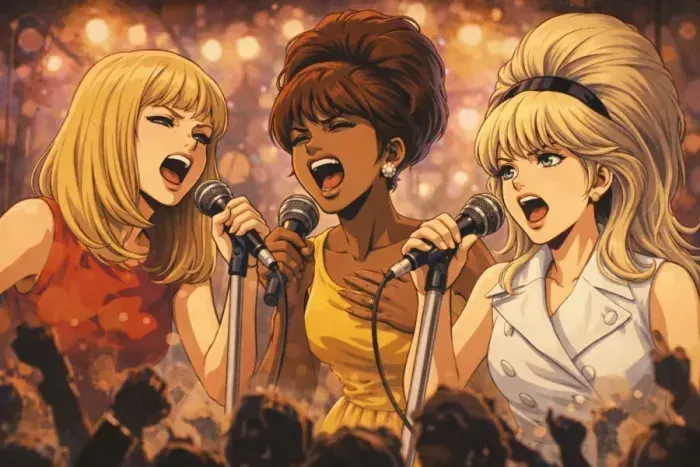
British Women in Pop and Soul
The story of British pop in the 1960s has often been told through bands, but that leaves out women who shaped the decade’s emotional tone and much of its international appeal. They worked under different expectations and tighter restrictions, yet many still built sharply defined artistic identities. They were not marginal to the era. They were part of its sound.
Dusty Springfield is one of the clearest examples. Her recordings brought British pop and American soul into close contact, but the result did not sound borrowed or theatrical. It sounded careful, intimate, and highly controlled. Dusty in Memphis, released in 1969 and produced by Jerry Wexler, Tom Dowd, and Arif Mardin, was recorded largely at American Sound Studio with the musicians later known as the Memphis Boys. It was not an immediate chart sensation, but it later entered the Grammy Hall of Fame and is now widely treated as one of the era’s major pop albums. Springfield’s career also shows the limits women faced: her artistry was obvious, but the industry framed her first as an image.
Petula Clark occupied a different position. She was already established before the British Invasion was named as a phenomenon, and she adapted to the changing market without losing her own style. “Downtown” (1964), written and produced by Tony Hatch, turned urban motion and modern confidence into a major crossover hit. It reached number one in the US, peaked at number two in the UK, and won the Grammy for Best Rock & Roll Recording. Clark’s career showed that a woman could command mainstream pop with range and professionalism, even if the business was still reluctant to describe that as authority.
Younger artists faced even narrower expectations. Sandie Shaw became famous for performing barefoot and projecting an easy, modern image. She was sold as stylish and approachable, but rarely as an artist with clear interpretive control. Like many women of the period, the choices in her records were described as instinctive charm rather than deliberate craft.
Beyond chart performance, these singers widened the emotional language of British pop. Their records made room for loneliness, composure, independence, and restraint at a moment when women were expected to sound merely sweet or decorative.
The industry’s limits remained obvious. Women were rarely recognized as writers, were rarely included in production decisions, and were pushed to the edges of stories about innovation. Still, their work gave the decade a different emotional register. In a movement remembered for bands and swagger, they brought precision, interiority, and quiet force.
British television amplified both the opportunity and the constraint. Women could become highly visible through variety shows and international appearances, but that same exposure encouraged a tighter policing of image and demeanor. The result was a strange kind of fame: wide recognition without equal permission to define the terms of one’s own artistry.
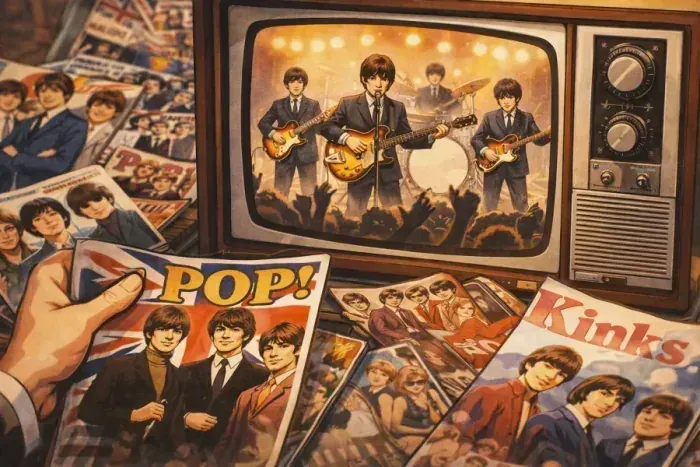
How Media Turned Bands into Myth
British artists did not rise on music alone. Their success was accelerated, reshaped, and sometimes distorted by the media systems growing around global pop culture. Television, radio, newspapers, and teen magazines all helped turn bands into symbols and short-lived moments into larger movements.
Television mattered most. Appearances on shows such as The Ed Sullivan Show put British acts into American living rooms almost instantly. Those broadcasts made accents, humor, haircuts, clothes, and stage behavior part of the package. The novelty was not just the music. It was the total presentation.
Print media strengthened that effect. In the UK, music papers were already treating pop musicians as public figures worth following closely. American magazines soon did something similar. Interviews highlighted wit, personality, and attitude, which helped fans think of musicians not just as voices on records but as people with a recognizable point of view.
That closeness between image and sound changed the business. Audiences paid attention to how artists dressed, moved, joked, and handled pressure. Those details could strengthen a career, but they could also trap musicians inside a fixed public story while their music was still changing.
The exchange across the Atlantic also ran both ways. British acts drew heavily from Black American blues, soul, and rock and roll, while American musicians responded to the success of British bands with fresh ambition of their own. But the media was not neutral in that exchange. White British performers received more attention than the Black American artists whose work helped make their success possible.
Teen media accelerated that loop. Fan clubs, photo spreads, and constant magazine coverage made pop feel more continuous and more personal than it had in the late 1950s. A band was no longer only a set of records. It became a daily presence in bedrooms, schoolyards, and conversation, which gave image a commercial life of its own.
By the mid-1960s, the British Invasion was no longer a novelty. But the shift it triggered kept widening. Pop music had become more international, more image-conscious, and more interested in authorship. Local scenes could now travel quickly, and musicians in the US were increasingly under pressure to claim their own writing and identity in response.
That pressure fed directly into the next stage of the decade. American musicians did not respond only by copying British groups. They responded by pushing harder on local sources, songwriting authority, and studio ambition of their own. In that sense, the British Invasion did not replace American music. It forced parts of it to reintroduce themselves.
It also changed the timescale of pop history. Scenes no longer stayed local for long once television, magazines, and transatlantic promotion started working together at full speed. A hit could now carry a haircut, an accent, a band identity, and a model of youth style across borders in weeks. That acceleration would shape almost every major musical shift in the rest of the decade.
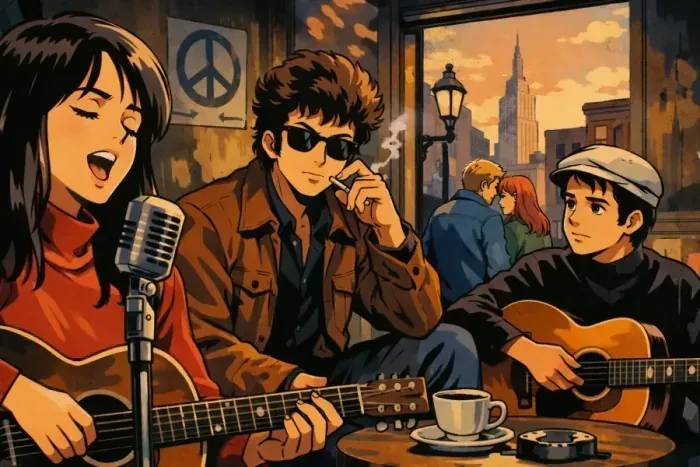
American Songwriters and the Push for Authority
As British acts changed the pop conversation, a parallel shift was taking shape in the United States. It was less sudden than Beatlemania, but it was just as important. American musicians were starting to claim authority through writing, point of view, and a stronger sense that popular songs could hold real personal or political weight.
One sign of that shift was the rising status of the songwriter. Lyrics were no longer expected merely to carry a melody. They became a place to work through social conflict, uncertainty, memory, and identity. Folk was especially important here, but its influence spread well beyond acoustic music. Pop and rock performers increasingly wanted to write their own material and push back against the old split between creator and performer.
The American scene of the early and mid-1960s was full of contradiction. Postwar optimism still mattered, but so did civil rights struggle, generational conflict, and growing distrust of institutions. In that atmosphere, authority began to move away from labels and producers and toward artists who could make a song sound like an argument, a confession, or a witness statement.
Places helped make that possible. Greenwich Village coffeehouses, college campuses, folk festivals, and small urban clubs created settings where songs were listened to for what they said, not only for whether they could sell quickly. That listening culture prepared audiences for a decade in which words, authorship, and point of view would carry more weight than they had in mainstream pop at the start.
The economics were still modest, but the cultural effect was large. A small room with a serious audience could change what counted as a meaningful song. Once listeners expected words to carry argument, irony, memory, or social witness, pop no longer had to stay in the emotional register of quick romance and easy reassurance. That did not eliminate commercial calculation. It changed what commercial music could plausibly contain.
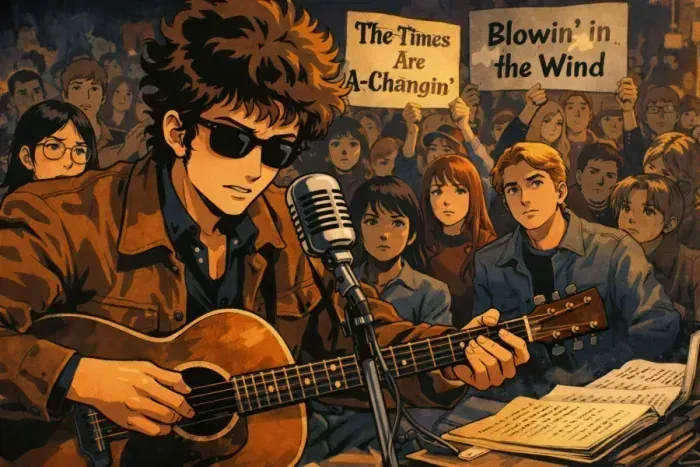
Bob Dylan and the New Weight of Lyrics
When Bob Dylan emerged in the early 1960s, he unsettled listeners partly by refusing the roles already available to him. Folk music was treated as shared, inherited music, something carried forward by communities more than claimed by individual authors. Dylan entered that space as a writer who treated songs as personal statements. He let them be argumentative, ironic, elusive, and unfinished in their meaning. That shifted attention from performance style alone to the words themselves.
His early records still sat inside the folk revival, but the writing was already pushing beyond familiar boundaries. “Blowin’ in the Wind” (1963) and “A Hard Rain’s a-Gonna Fall” (1963) carried moral urgency without offering tidy conclusions. They asked questions and left them open. In a moment of rising social tension, that approach felt newly serious. Listeners wanted music that spoke to public life, and Dylan was pushed into the role of spokesperson even though he resisted it.
As his work grew denser and less predictable, the arguments around him intensified. His move from acoustic performance toward amplified rock made “authenticity” a live dispute. Some listeners heard electricity as compromise. Others heard it as a more honest response to the world he was actually living in. Bringing It All Back Home and Highway 61 Revisited, both released in 1965, showed that rock records could carry irony, verbal sprawl, and emotional instability without losing force.
That dispute became impossible to ignore at the Newport Folk Festival on July 25, 1965, when Dylan appeared with an electric band. That moment became a landmark in later retellings, and it made a larger tension visible retellings, but it still mattered because it made a larger tension visible. Many listeners wanted “authentic” music to stay formally pure even while the world around them was growing louder, more commercial, and more unstable.
The charts made that shift visible beyond the folk world. Peter, Paul and Mary’s version of “Blowin’ in the Wind” reached number two on the Billboard Hot 100 in 1963, helping turn the song into a civil-rights-era touchstone. “Like a Rolling Stone” (1965) then showed that a long, abrasive, lyrically dense single could still break through on a mass scale.
Dylan’s influence came partly from his refusal to settle into one neat meaning. His songs could hold intimacy and distance, accusation and self-doubt, in the same space. Other writers learned quickly from that example. Across rock and pop, songwriters took bigger verbal risks and trusted listeners to follow complexity.
He also changed the scale at which lyrics could be discussed. Reviewers, fellow musicians, and audiences now treated words as something to quote, argue over, and decode with unusual seriousness for popular music. That did not begin with Dylan alone, but his rise made it far harder to pretend that mainstream songwriting had to remain emotionally or verbally simple.
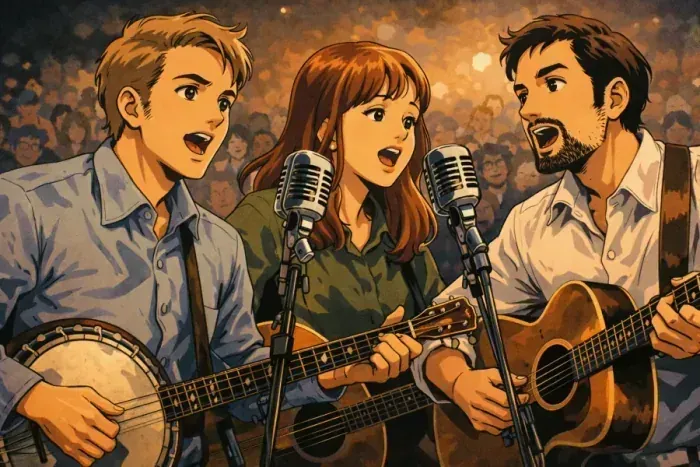
Folk Beyond the Solo Voice
Bob Dylan was the most famous figure in the folk revival, but the movement was never just about him. American folk mattered because it held several approaches at once: communal song, protest, testimony, ballad tradition, and personal reflection. Many artists treated folk less as a fixed style than as a way to think in public.
Joan Baez was central to that shift into the mainstream. Her voice was precise and controlled, and she sang traditional songs and contemporary protest material with the same gravity. Baez’s performances were deliberately understated. She treated music less as spectacle than as witness, and her visible civil rights and later anti-war activism made it harder to separate folk music from public responsibility.
Peter, Paul and Mary opened another path. Their polished harmonies and carefully produced records brought songs about justice and social obligation onto mainstream radio. Some critics heard that polish as compromise. But it also demonstrated that songs with a moral charge could circulate inside commercial culture without losing all of their force.
Phil Ochs pushed more sharply. He wrote with directness, irony, and very little patience for euphemism. That clarity won admiration, but it also narrowed his commercial path. Ochs is a useful reminder that folk’s seriousness carried real professional risk.
The folk revival also depended on physical spaces. Coffeehouses, college campuses, and small clubs created an environment where audiences listened closely and songs could unfold slowly. Performances felt more like arguments or conversations than like show business in the usual sense.
Festivals and campus circuits helped turn that local culture into a national one. Newport, Berkeley, and countless university auditoriums connected artists, students, activists, and small independent labels into a loose network. That network gave folk unusual reach for a form that still presented itself as modest and anti-spectacular.
The movement had clear limits, though. Women were valued more as interpreters than as authors. Artists of color did not receive visibility equal to the genre’s rhetoric of inclusion. And as folk moved closer to the commercial mainstream, tensions grew between tradition and reinvention, and between activism and career survival.
Those tensions became sharper as audiences grew larger. A song that sounded morally urgent in a coffeehouse could sound curated, branded, or simplified once it moved onto network television or major-label distribution. Folk never stopped being politically important, but its expansion into the mainstream forced constant negotiation between message, audience, and market.
Its impact on the decade was still enormous. The folk revival made songwriting feel like a serious public act and taught listeners to expect meaning, not just mood, from popular music. Even when artists moved beyond acoustic forms, that expectation stayed with them.
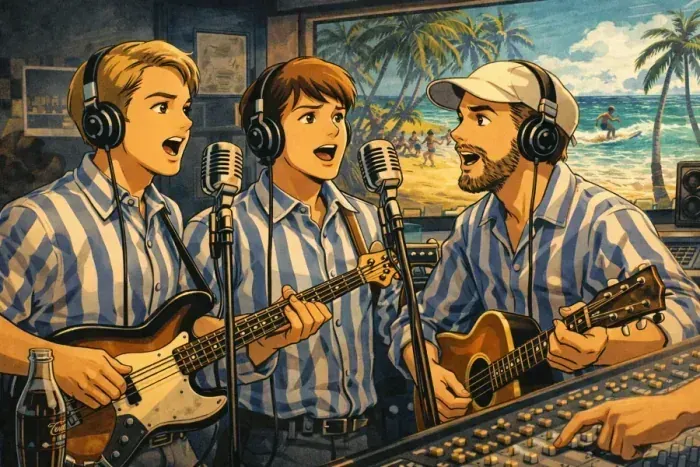
The Beach Boys and California Studio Pop
While East Coast folk pushed on language and conscience, another kind of transformation was unfolding in California. West Coast pop became closely tied to images of youth, freedom, sunlight, and possibility. Yet beneath that bright surface, the music was growing more ambitious and, in many cases, more anxious.
The Beach Boys sit at the center of that shift. Their early hits about surfing, cars, and teenage romance sounded light, precise, and full of harmony, and many listeners dismissed them because of the subject matter alone. But Brian Wilson’s ambitions kept expanding. He began treating the studio not as a place to document a band, but as the place where the music was actually composed.
That change comes into focus on Pet Sounds (1966). Wilson wrote or co-wrote every song, produced the album, and built the arrangements with Tony Asher and other collaborators. He also relied on elite studio players from the Wrecking Crew, including Carol Kaye and Hal Blaine, to realize music that was too intricate to capture as a simple live performance. The album’s orchestral textures, unusual instruments, and layered vocals produced a sound that was intimate but uneasy, full of longing and uncertainty rather than teenage ease. Pet Sounds was received more warmly in the UK than in the US at first, then gradually took on its current status as one of pop’s landmark albums.
Part of what made that turn so striking was the California setting itself. The region was marketed as a dream of ease and optimism, while some of its most important music was starting to sound inward, fragile, and unsettled. Wilson’s growing perfectionism also pointed to a larger problem: the industry wanted ambitious art from its stars without necessarily giving them the conditions to sustain that pressure.
The broader studio culture of California mattered beyond one band. Producers and musicians across pop paid attention to multitrack recording, detailed arrangement, and the idea that a record could reward repeated, close listening. That widened the gap between the live show and the studio record and helped shift value toward albums that held attention over time.
The unfinished Smile project became part of that story as well. Even without reaching the public in completed form during the 1960s, it showed how quickly expectations had changed. A group once associated with surf singles was now being measured against the decade’s most ambitious studio works. That pressure tells its own story about how large the idea of pop art had become.
It is also important to note who had access to those possibilities. Studio experimentation required money, time, and institutional support, and those resources were distributed unevenly. Artists outside major-label systems, especially many Black musicians and other artists working without that infrastructure, often had less room to pursue the same kind of elaborate experimentation.
Even with those limits, California’s studio turn mattered. It showed that American pop could become more emotionally complex without losing its audience, and it widened the mainstream idea of what a record could contain.
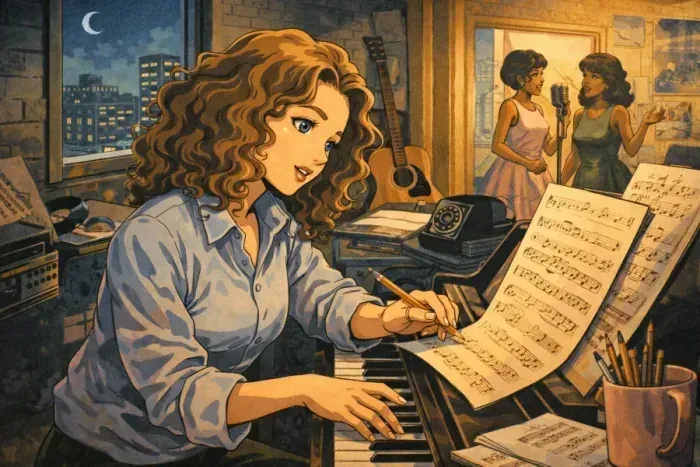
Carole King and Women Writing the Hits
Before the singer-songwriter became a prestige model, women were already shaping American pop from behind the scenes. In the early and mid-1960s, many of the songs filling radio and chart space were written by women whose names were far less visible than the records themselves.
Carole King is one of the clearest examples. Working in the Brill Building world, she wrote or co-wrote a remarkable number of hits. Songs such as “Will You Love Me Tomorrow” (1960), produced by Lieber and Stoller for The Shirelles, and “Take Good Care of My Baby” (1961), produced by Snuff Garrett for Bobby Vee, brought emotional directness into mainstream pop without giving up concision. They were built for radio, but they did not feel empty or generic.
King belonged to a wider network that included writers such as Cynthia Weil and Ellie Greenwich, often working with collaborators like Barry Mann and Jeff Barry. Their songs could move from teenage pop to larger emotional drama without losing structural discipline. “Uptown” (1962) and “You’ve Lost That Lovin’ Feelin’” (1964), for example, show how these writers could make a single feel emotionally expansive while still functioning inside a commercial system.
One reason this writing mattered is that it gave more space to women’s inner lives. At a time when female performers were expected to embody roles rather than explain them, these songs brought vulnerability, doubt, desire, and agency into sharper focus. The form was tight and the time on radio was limited, so every line had to work quickly.
The business still made that authorship easy to overlook. Songwriting teams were treated as interchangeable, and public attention went first to the performer in front of the microphone. Women were not promoted as creative leaders even when they were producing hit after hit. The split between writing and performing made those gendered power dynamics easier to hide.
The work itself was highly structured. Publishing rooms ran on deadlines, demos, rewrite sessions, and constant practical judgment about which hook, phrase, or chord turn would land fastest on radio. Women succeeding in that system were not simply expressing feeling. They were mastering a demanding commercial craft at a very high level.
The long-term effect was substantial. These writers helped define how popular music spoke about intimacy, conflict, and self-understanding. Carole King’s later emergence as a major performer on Tapestry in 1971 can be heard partly as delayed recognition for authority she had already established years earlier.
The women writing American hits in the 1960s did more than supply chart material. They deepened the emotional vocabulary of pop while proving that commercial precision and honest feeling could coexist.
Their influence also spread through performers who may never have been marketed as songwriters in the same way. Once these songs entered the charts, they changed what labels believed female voices could carry and what listeners were willing to hear from them. The effect moved outward from publishing rooms into the mainstream sound of the decade.
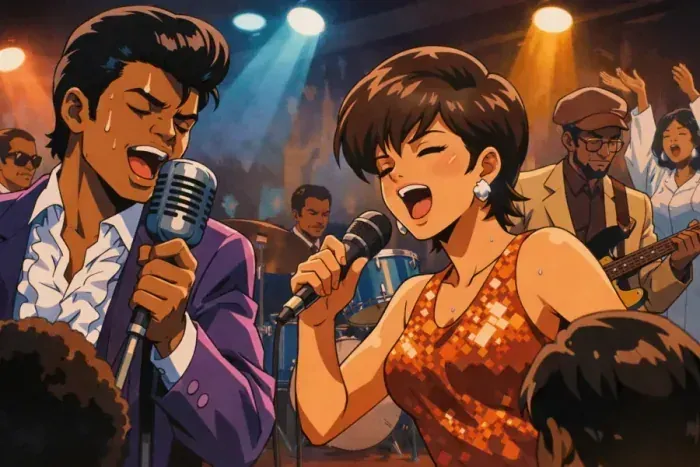
Soul, R&B, and Gospel at the Center of the Decade
No account of 1960s music works if Black American musicians are pushed to the margins. Soul, rhythm and blues, and gospel-rooted music were not side currents in the decade. They were central to how popular music changed, even as the industry kept placing barriers in front of the people making it.
This music carried a long history with it. Gospel shaped the voice. Blues brought directness and weight. Rhythm and blues supplied drive, structure, and room for the beat. In the 1960s, those elements were recombined under intense social pressure. The songs could speak about love, faith, dignity, frustration, pride, and survival all at once.
The business tried to contain this music by format, audience, or marketing category. The artists kept pushing beyond those boundaries. Their records changed pop, rock, and the global mainstream even when credit, money, and long-term control did not flow back to them fairly.
What matters here is not only influence in the abstract. It is the way Black musicians asserted style, authorship, and dignity inside an industry that often profited from them more than it supported them.
The social background matters too. The Great Migration had already reshaped American cities, radio markets, church life, and club culture before the 1960s fully arrived. Soul and R&B in this decade grew from those changes. They were urban forms, community forms, and commercial forms at the same time, which is one reason they could move so powerfully across the country and beyond it.
That scale matters because soul and R&B were not simply “influences” waiting to be borrowed by rock or pop. They were fully developed mainstream-making forces with their own stars, audiences, business systems, and regional styles. To hear them only as sources for other artists is to miss how much of the decade’s center they already occupied.
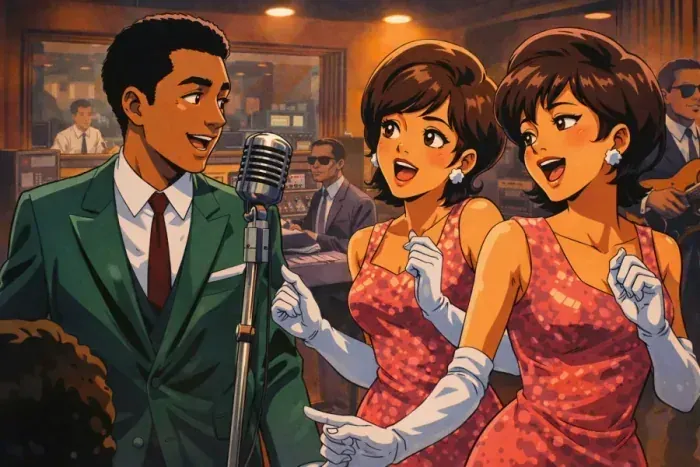
Motown: Detroit's Hit Factory
When Motown became a chart force in the early 1960s, it did something rare in American popular music. It put Black music at the center of the mainstream without treating that center as something that had to sound white first. Berry Gordy, who founded the label in Detroit in 1959, believed soul could reach mass audiences across racial lines while remaining rooted in Black musical practice.
Motown’s success came from a system as much as from individual stars. The label relied on songwriting teams, in-house musicians, rehearsal discipline, and strong quality control. The Funk Brothers gave many records a recognizable rhythmic core, but the label still made space for distinct artists and voices inside that shared method.
That system produced global stars. The Supremes, Marvin Gaye, and Stevie Wonder all broke far beyond the R&B market. Songs such as “Where Did Our Love Go” (1964), “My Girl” (1964), and “Uptight (Everything’s Alright)” (1966) were accessible, sharply made, and emotionally exact without sounding lightweight. They also sold enormously well: “Where Did Our Love Go” and “My Girl” both reached number one on the Billboard Hot 100, while “Uptight” reached the pop Top 3 and topped the R&B chart.
The workplace itself helped shape that sound. Hitsville U.S.A. on West Grand Boulevard was not a glamorous palace. It worked more like a compact production system where writing, rehearsal, recording, finishing school, and image work fed directly into one another. That closeness helped Motown move quickly and build a recognizable identity even before the rest of the industry fully understood how large the label would become.
Motown also cared intensely about presentation. Artists were coached in stagecraft, media etiquette, and public image. That polish could feel restrictive, but it also had a clear strategic purpose inside a racially segregated media landscape. Motown presented Black performers as elegant, poised, and unmistakably self-possessed in spaces that were set up to deny them equal legitimacy.
The same discipline that made Motown powerful also created tension. As the decade moved forward, more artists wanted room to define themselves rather than fit assigned roles. Marvin Gaye’s later move toward more personal and social material is one clear example. Stevie Wonder’s career pointed the same way: he arrived as a teenage sensation with “Fingertips, Pt. 2” in 1963, then pushed steadily toward greater creative control.
Motown’s reach was international. Its records circulated widely in Europe, influenced British musicians, and helped shape the decade’s transatlantic feedback loop. But that success also sharpened harder questions about ownership, profit, and recognition. The label proved that Black music could define mass taste. It did not solve the question of who benefited most from that success.
That contradiction sits at the center of Motown’s historical importance. The label made it impossible for the mainstream to deny Black musical leadership while still operating inside an industry that limited how fully that leadership could convert into control. Motown’s story is therefore one of breakthrough and containment at the same time.
Motown’s achievement remains immense. It expanded the sound of mainstream pop and opened space for Black artists on a scale that the industry had long resisted. But its history also shows that access and control were never the same thing.
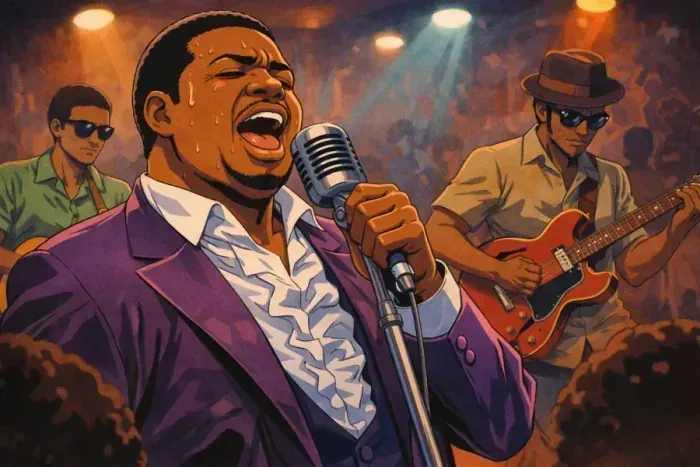
Southern Soul: Memphis, Muscle Shoals, and Emotional Force
Motown specialized in disciplined crossover. Southern soul hit with a different force. It was rawer, more open at the edges, and less interested in smoothing itself for polite consumption. Rooted in gospel practice and shaped by local life in places such as Memphis and Muscle Shoals, it sounded closer to lived pressure than to polished consensus.
Gospel shaped Southern soul at the deepest level. It was there in the phrasing, the shouts, the melisma, the strain, and the willingness to let a voice sound worked through. Those were not decorative gestures. They carried conviction.
Aretha Franklin is one of the clearest examples of what that meant. Earlier in the decade, she had recorded strong material without finding the full setting for her voice. Her move toward gospel-rooted Southern soul changed that. On “Respect” (1967) and “Chain of Fools” (1967), Franklin sounded commanding without becoming rigid and vulnerable without ever giving up authority. Produced by Jerry Wexler, “Respect” grew out of sessions at FAME Studios in Muscle Shoals and was finished later in New York. In Franklin’s hands, Otis Redding’s song became something else entirely: a demand, a warning, and a statement of self-possession. It reached number one on both the Billboard Hot 100 and the R&B chart, won two Grammys, and later entered the Grammy Hall of Fame.
What Franklin did was larger than interpretation in the narrow sense. Through timing, phrasing, and force, she changed the meaning of the material she sang. Her recordings are a clear example of performance functioning as authorship. "It was the right song at the right time."
Otis Redding worked differently from Franklin, but he belonged to the same emotional world. His records sound as if the song has already started before the tape rolls. “Try a Little Tenderness” builds by accumulation rather than by tidy structure, and his singing keeps rough edges where another performer might polish them away. That roughness is part of the point.
Labels such as Stax helped create the conditions for this sound. Stax had fewer resources than the major companies, but its pace and collaborative setup became strengths. Musicians and singers worked closely together, and records were made quickly enough to keep their spontaneity intact. The label’s house players, especially Booker T. & the M.G.’s, also mattered symbolically. In a segregated South, an integrated studio band shaping the Memphis sound was significant beyond the music alone.
Southern soul also carried the pressure of the region that produced it. The South of the 1960s was marked by racial violence, civil rights conflict, and everyday negotiation with unequal power. Even when the lyrics stayed with love or heartbreak, the performances carried that wider strain.
These records traveled far beyond Memphis and Muscle Shoals. They influenced rock, pop, and later soul on both sides of the Atlantic. Their power came not from smoothing themselves into crossover safety, but from staying close to their own emotional logic.
British musicians listened closely. So did white American rock bands, often with fewer of the barriers that Black southern artists faced in media access and touring. That uneven translation is part of the history. Southern soul shaped the wider language of rock and pop even when the musicians who made it were still working under harsher structural limits.
The records also preserved a specific kind of ensemble feeling. Horn lines, organ parts, rhythm guitar, drums, and lead voice often sounded less like separate layers than like one collective push. That density helped Southern soul travel so widely: even listeners who did not know the local conditions could hear that the performances carried more than tidy studio polish.
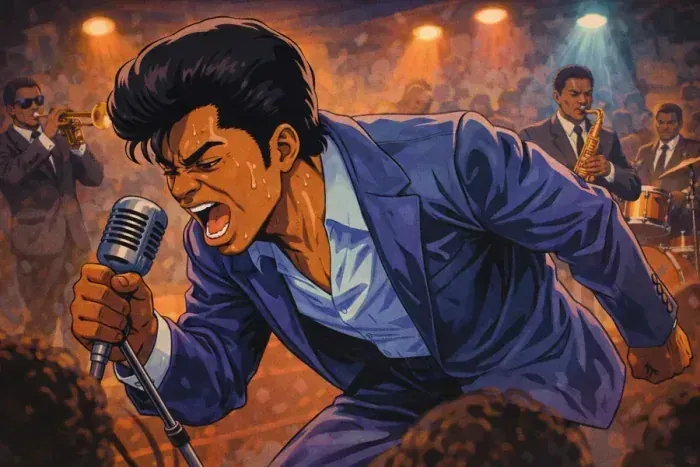
James Brown and Rhythm as Power
Southern soul often opened outward emotionally. James Brown pushed in another direction: discipline, control, repetition, and rhythmic command. His importance cannot be measured by genre labels alone. Brown changed how rhythm functioned in popular music, and with it he changed how presence and power could be projected on record and on stage.
In Brown’s music, melody no longer carried all the meaning. Groove did. Drums, bass, and guitar locked into sharply defined patterns, and Brown’s voice worked almost like another percussive instrument. On records such as “Papa’s Got a Brand New Bag” (1965) and “I Got You (I Feel Good)” (1965), both produced by Brown at King Studios in Cincinnati, the arrangements are lean, the accents hit hard, and the songs feel rooted in immediate bodily force rather than in long narrative development.
That precision extended to the bandstand. Brown ran his groups with rigid discipline and expected instant response. Mistakes were not brushed aside. This was not just a matter of temperament. In an industry that routinely undervalued Black musicians, exactness itself could function as demand and proof.
Brown’s music also carried political weight even when the lyrics were not overtly programmatic. The confidence in the sound mattered. Rhythm became a way to occupy space, command attention, and refuse diminishment. That resonated deeply in the civil rights era.
Live performance made that authority even clearer. Brown’s stage shows were famous for their precision, pacing, and dramatic control, including the cape routine that turned exhaustion, resilience, and command into part of the performance itself. The point was not only entertainment. It was mastery of tempo, attention, and release.
His influence spread quickly. Rock musicians took cues from his stagecraft and rhythmic drive. Soul artists studied his arrangements. By the late 1960s, the foundations of funk were already visible in his work. Brown showed that repetition could intensify feeling rather than flatten it, and that groove itself could reorganize the structure of a pop song.
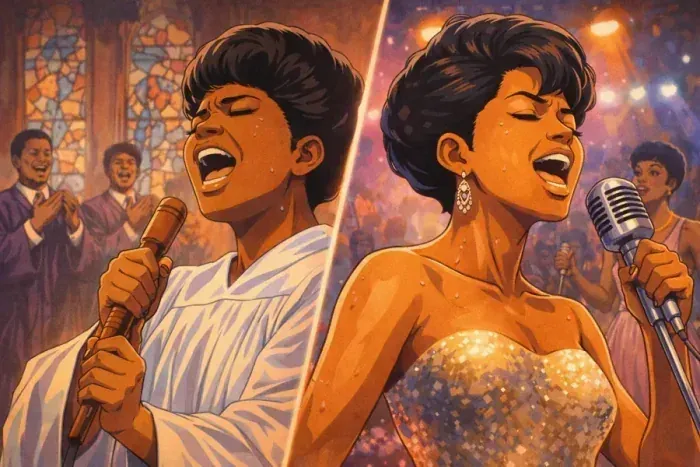
Gospel Voices in Secular Pop
The line between sacred and secular music was never fixed, but it became especially porous in the 1960s. Many of the era’s major singers learned their craft in church, where they absorbed gospel phrasing, breath control, call-and-response habits, and a style of singing that treated emotion as something to commit to fully.
Sam Cooke is central here. He first became known with the Soul Stirrers, and his move into secular music was controversial in some church circles. Yet he brought gospel seriousness with him. Songs such as “You Send Me” and “Bring It On Home to Me” kept the warmth, gravity, and vocal intimacy of church music even while turning toward love and daily life.
Cooke’s crossover success helped define what soul could be. He showed that broad appeal did not require emotional flattening. “A Change Is Gonna Come” (1964), produced by Hugo and Luigi and recorded at RCA with an arrangement by Rene Hall, is one of the clearest cases of gospel-inflected expression being used to face social reality directly. Inspired by Cooke’s experiences with segregation, it began as the B-side of “Shake” and quickly took on a larger public life.
Ray Charles had already crossed similar lines earlier, and his influence still ran through the decade. By fusing gospel with rhythm and blues, he challenged assumptions about what secular music could contain and where spiritual intensity was allowed to appear.
These singers also changed how popular music handled sincerity. Gospel brought grain, strain, emphasis, and testimony into commercial recording. A voice no longer had to sound smooth to sound persuasive. What some pop systems treated as roughness could now carry the meaning.
That crossover also raised harder questions about credit, money, and control. Once sounds rooted in communal religious practice moved into the commercial market, ownership became impossible to ignore. Visibility created opportunity, but not necessarily security.
The transition also carried emotional cost. For singers raised in church traditions, moving into secular markets could mean broader reach and greater income, but also criticism from religious communities that heard the shift as a betrayal. That tension helps explain why some of the decade’s strongest secular performances still sound marked by moral seriousness rather than easy crossover confidence.
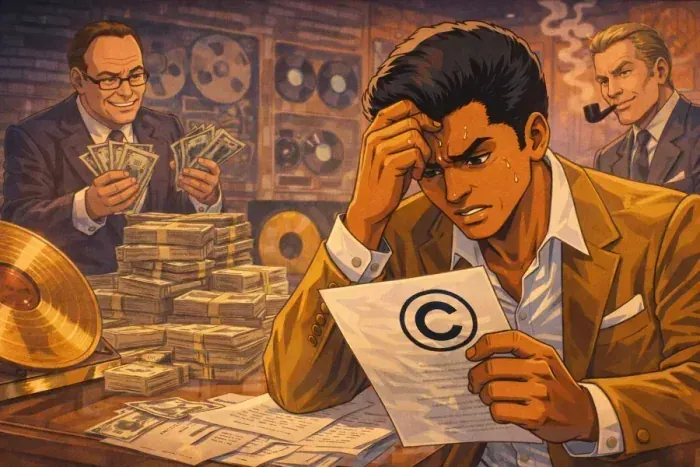
Ownership, Royalties, and the Price of Innovation
Black American music was one of the decade’s strongest creative forces, but the industry rarely paid Black artists in proportion to what they built. Soul, R&B, and gospel-rooted records changed mainstream taste, while contracts, publishing structures, and ownership arrangements worked against the people creating that value.
Many recording deals offered to Black artists were restrictive and opaque. Royalty rates were low, advances were modest, and accounting was difficult to verify. Some musicians signed away publishing rights early without being shown the long-term cost. A hit record could raise visibility fast without creating lasting financial security.
Touring conditions reinforced the imbalance. Black artists traveled hard, crossed segregated territory, accepted unequal venues, and kept producing hits while basic protections remained weak. Money came in unevenly, expenses stayed high, and the people closest to the work were not always the people best positioned to profit from it.
Segregation inside the business made that worse. Radio formats were split by race, which affected airplay, crossover potential, and advertising value. Black artists could dominate the R&B charts while still receiving weak support from pop radio. When crossover did happen, labels and distributors profited more reliably than the performers did. White cover versions could receive wider exposure and further blur questions of credit and payment.
Even successful Black-oriented labels did not automatically solve the problem. Motown and Stax gave Black artists reach they had long been denied, but they also kept tight control over repertoire, release schedules, and public presentation. Some musicians valued that structure. Others increasingly saw it as a limit once their ambitions grew.
By the late 1960s, the push for autonomy was becoming harder to ignore. Artists such as Marvin Gaye began demanding more say over content, sound, and public framing. Authorship was no longer only about writing or singing a song. It also meant ownership, leverage, and the right to decide what one’s work meant in public.
Black women faced an additional layer of constraint. They were central to a label’s identity while remaining far from the business decisions shaping their careers. Race and gender made negotiations harder and independence more difficult to secure.
These inequalities shaped the sound of the decade as surely as innovation did. They determined who had time to experiment, who could survive failure, and who could turn success into long-term control. That context does not reduce the achievement. It makes it clearer.
It also helps explain why later battles over masters, publishing, and creative autonomy did not come from nowhere. Many of the artists who pushed hardest for control in the 1970s had learned in the 1960s exactly how little protection hit-making alone could guarantee.
Seen this way, the decade’s business history is not separate from its artistic history. Questions about who owned the song, who controlled the session, who kept the catalog, and who could renegotiate from strength were part of the same story as innovation itself. The music changed the world. The contracts lagged behind.
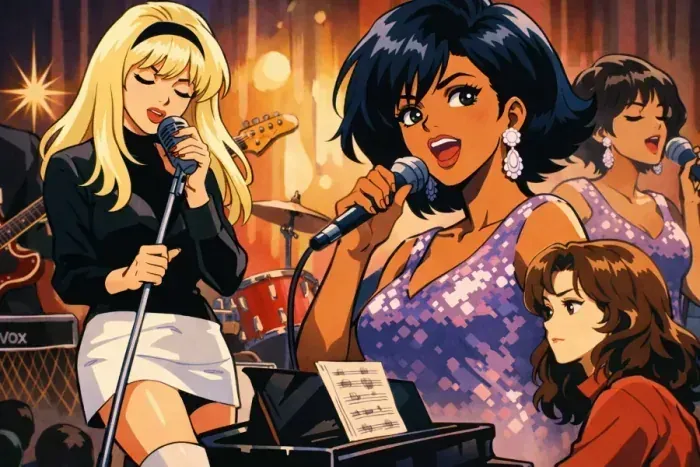
Women at the Center of the Sound, Not the Power
Women were at the center of 1960s music, but the industry rarely described them that way. They shaped the sound of the decade, widened its emotional range, and drove a large part of its commercial success even while the business kept trying to narrow their authority.
Women were discussed in terms of appearance, charm, or vocal tone rather than in terms of artistic decisions. Song choice, arrangement, image, and long-term planning were handled for them rather than with them. Even so, many found ways to assert control through phrasing, repertoire, interpretation, and, in some cases, direct claims to authorship.
That gap between visibility and power runs through the whole decade. A woman could be famous, heavily marketed, and essential to the sound of an era while still being left out of its official stories about innovation and control. The sections that follow treat women not as a side note to a male history of the 1960s, but as one of the main places where the decade’s tensions became audible.
This was especially visible in the worlds of girl groups, solo vocal stars, and television pop, where women could be commercially central yet still excluded from the language of “serious” creativity. The business treated female success as surface and male authorship as substance. That double standard shaped both careers in the moment and the way the decade was remembered later.
Girl groups make that contradiction especially clear. Women could dominate radio, shape fashion, and define the emotional sound of a year while still being described as products of male writers, producers, or labels. The records themselves tell a more complex story, because interpretation, timing, phrasing, and group identity were doing far more creative work than the old business language admitted.
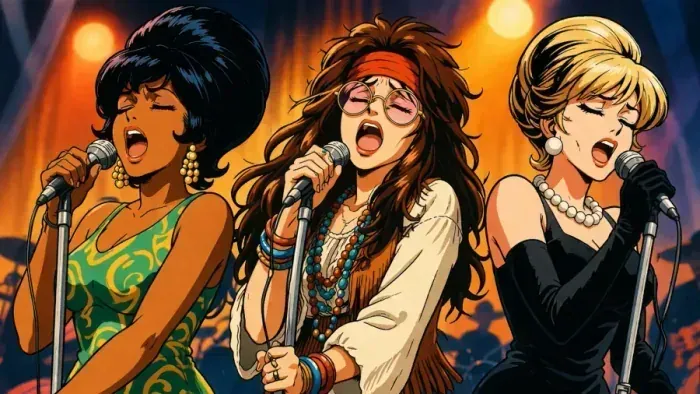
Women Who Changed How Popular Singing Worked
In the 1960s, the voice itself became one of popular music’s main battlegrounds, and women were central to that change. Female singers did not just perform songs successfully. They showed listeners new ways to hear authority, intimacy, tension, and restraint.
Aretha Franklin is the clearest case. Her recordings brought gospel intensity into secular music without turning that intensity into display for its own sake. On “Respect” (1967) and “Think” (1968), every phrase sounds chosen. The power in her singing comes not only from volume or force, but from timing, emphasis, and absolute control over where the song lands emotionally.
Dionne Warwick offered something very different and just as influential. Working with Burt Bacharach and Hal David, she developed a style built on precision, poise, and sharply measured phrasing. Songs such as “Walk On By” (1964) and “I Say a Little Prayer” (1966) show how much feeling can be carried through control rather than vocal excess.
Dusty Springfield added another model. Her voice held warmth, melancholy, and unusual care in its phrasing. Drawing from American soul but never disappearing into imitation, she made small changes in breath, timing, and stress do enormous emotional work. She is a reminder that vocal authority does not have to announce itself loudly to be unmistakable.
What links singers like Franklin, Warwick, and Springfield is not one style but one kind of command. Each used the voice as a tool of interpretation and construction, not just as a vehicle for delivering lyrics. Yet that command was written off as instinct or “natural feeling” rather than recognized as craft.
Their influence was huge. They set standards for phrasing, tone, and emotional precision across genres. Other singers learned from them. Songwriters wrote toward the voices they had made possible. The business did not reward that influence equally, but the records make it impossible to miss.
It is also worth noticing how different these singers sounded from one another. Franklin’s gospel force, Warwick’s poised exactness, and Springfield’s intimate ache did not add up to one model of womanhood or one ideal female voice. Together they made the mainstream less uniform by proving that authority could sound commanding, cool, wounded, elegant, or all at once.
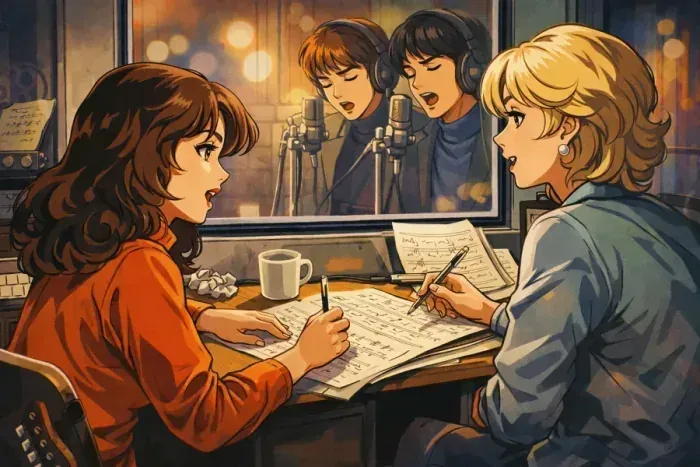
Women Writing the Emotional Architecture of Pop
The decade produced many famous female singers, but the women writing songs behind them were harder to see. They were songwriters, arrangers, and structural thinkers who helped shape the emotional architecture of pop, soul, and folk while receiving much less public credit than the performers out front.
Carole King remains one of the clearest examples. Long before she became widely known as a performer, her work inside the Brill Building system helped define how the decade sounded. “Will You Love Me Tomorrow” (1960) made room for female uncertainty and desire without turning either into melodrama. The writing was compact enough for radio and strong enough to stay with listeners long after the song ended.
King belonged to a wider network of women, including Ellie Greenwich and Cynthia Weil, who knew how to make a single move quickly without feeling thin. Songs such as “Be My Baby” (1963) and “You’ve Lost That Lovin’ Feelin’” (1964) show how much emotional scale could fit inside a tightly built commercial form.
These writers worked in professional environments that demanded speed, adaptability, and consistent results. But those rooms were still structured by hierarchy, and women were expected to contribute without fully claiming the authority behind what they made. Credit was uneven, and public recognition almost never matched their actual importance.
Their work still changed the shape of popular song. By putting female emotional experience closer to the center, they widened what a hit record could say about love, doubt, desire, and self-understanding. Jackie DeShannon is one example of a woman who pushed further by insisting on being recognized not only as an interpreter, but as a writer and performer with her own direction.
Female songwriters were not working in the margins of the 1960s. They were helping build the center, even when later histories failed to present them that way.
That is why recovering these writers is not only a matter of fairness. It changes how the decade sounds. Once their work is centered, 1960s pop looks less like a story of a few male auteurs and more like a dense field of collaboration in which women were shaping the emotional terms of the mainstream from inside its most commercial forms.
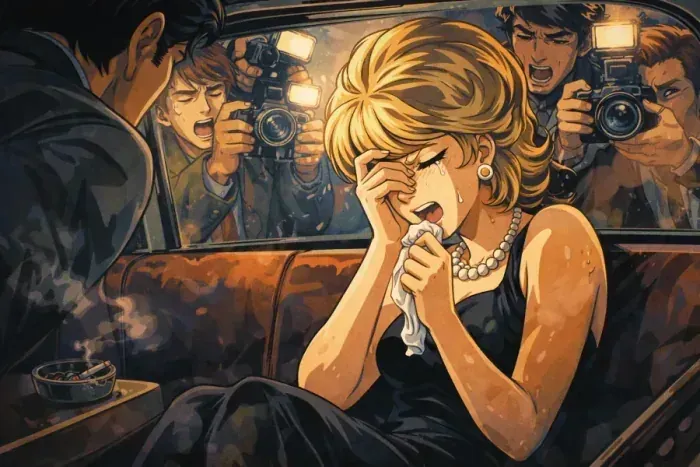
Image, Control, and the Price of Fame
For women in the 1960s music business, visibility came with terms attached. Success was rarely judged on sound alone. Image was tied tightly to artistic identity, often in ways that reduced freedom and distorted how women’s work was understood.
Labels and managers invested heavily in controlling how women appeared in public. Clothes, hair, interviews, posture, and sometimes personal relationships could all be managed. That control was presented as professionalism or protection, but it worked as a limit on both artistic and personal autonomy.
The details varied by genre, but the logic was consistent. Women were expected to seem warm, legible, emotionally available, and never too threatening. Assertiveness could be marketed up to a point, then treated as a problem once it exceeded what gatekeepers found comfortable.
That logic shaped how achievement was described. Emotional depth was treated as instinct instead of skill. Success was credited to personality, authenticity, or charm rather than to discipline, rehearsal, repertoire choice, and long-term judgment. The labor behind a female career was made easier to overlook precisely because it was reframed as something natural.
Control also extended to repertoire, touring, and production decisions. Many women had less formal power in those areas than male peers with comparable visibility. Some worked inside the system to preserve access. Others pushed back more quietly, asserting themselves through phrasing, pacing, song selection, and subtle changes in delivery. Those forms of agency could be hard to document, but they mattered.
The cost of holding a fixed public image could be severe. Constant scrutiny produced fatigue, anxiety, and isolation. Audiences welcomed vulnerability on record, but often judged it harshly in public life. To understand what women achieved in the 1960s, it is not enough to hear the recordings alone. The conditions around them matter too.
This tension appeared in journalism as well. Profiles often moved quickly from music to appearance, relationships, temperament, and supposed emotional stability, turning artistic labor into personality drama. That framing did not only misdescribe women. It also made it easier for later critics to treat their careers as fragile or secondary.
The effect reached beyond magazines. Television introductions, publicity photos, liner notes, and label copy often repeated the same narrowing language, presenting women as charismatic surfaces rather than as decision-makers. Once that frame was established, it became easier for later histories to inherit it without noticing how much work it had already erased.
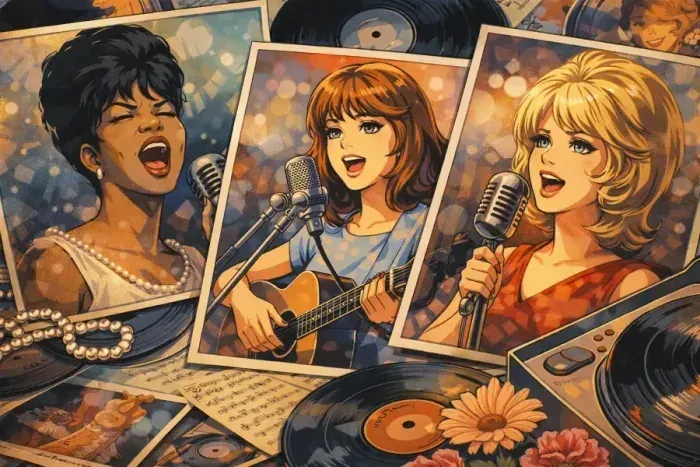
How Women Were Pushed to the Edge of the Canon
Many women who were central to 1960s music found success quickly, but quick success did not guarantee long-term security. Careers were judged in short cycles, and women were given less room than men to age publicly, experiment, disappear for a time, or return in a new form.
Staying visible often required negotiation. Some artists moved into writing, producing, or mentoring. Others became more guarded about their public image and more selective about how they worked. Those moves were not always recognized as strategic choices. They were framed as decline, retreat, or irrelevance.
Later criticism deepened the problem. As rock criticism grew more influential in the late 1960s and 1970s, it often elevated albums over singles, bands over solo performers, and solitary authorship over collaboration. Women were pushed toward the edges of that history not because the work was weak, but because the critical frame had narrowed.
That shift changed the canon. Artists who had once shaped the sound of public life were treated as less central, while innovation was more often attached to a smaller set of mostly male figures. Interpretive skill, vocal intelligence, and collaborative authorship were undervalued because they fit poorly inside the preferred mythology.
The records themselves never disappeared. Songs written, sung, and shaped by women stayed in circulation through memory, reissues, film, sampling, and continued listening. In recent years, scholars, journalists, and audiences have questioned the old standards more directly and asked who those standards were built to favor.
That reassessment is still incomplete, but one thing is clear: the women who shaped the music of the 1960s were never secondary in the sound itself. They were made to look secondary later.
Reissues, documentaries, scholarly work, and new listening cultures have started to reopen that record, but the correction remains uneven. Some women are now restored as major figures while others are still known mainly through a few songs or a simplified image. The canon has widened, but it has not fully caught up with what the decade actually sounded like.
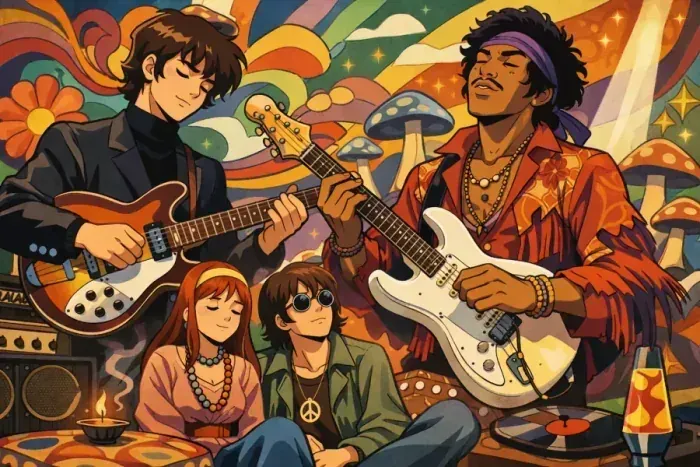
Psychedelia and the Stretching of Pop
By the mid-1960s, popular music was loosening its older rules. Songs ran longer, albums began to feel like experiences rather than packages, and sound itself became something to explore. Psychedelia was never one fixed genre. It grew out of new studio tools, changing ideas about consciousness and freedom, and a broader belief that music could register inner life as vividly as the outside world.
Technology mattered, but it was only part of the shift. Multitrack recording, tape manipulation, and more sophisticated studio practice gave musicians new ways to shape time, space, and texture. At the same time, many artists were becoming impatient with inherited forms. They wanted records that could hold uncertainty, contradiction, and altered states without forcing them back into tidy pop structures.
The album became the main container for that ambition. It was now possible to build a record around mood, sequence, or concept rather than around a few obvious singles. Psychedelia did not abandon popular music. It stretched its limits.
That stretching happened at several levels at once. Songs got longer, but so did the listener’s sense of what a pop record was allowed to contain. Humor, menace, collage, folk intimacy, non-Western instrumentation, free-form improvisation, and electronic texture could now exist in the same broad field without immediately sounding misplaced.
Drug culture forms part of this history, but not the whole of it. Psychedelic music drew energy from talk about expanded consciousness and altered perception, yet its artistic results depended just as much on arrangement, rehearsal, electronics, and careful studio decision-making. The mythology of spontaneity can hide how worked and constructed many of these records actually were.
It is also important to hear how quickly psychedelic ideas moved between underground and mainstream spaces. What began in clubs, art schools, local dance halls, and experimental scenes was soon visible on major labels, network television, and international charts. The speed of that movement is one reason psychedelia became so culturally visible so fast: it translated unusually well between niche experiment and mass-market spectacle.
That wider appeal depended partly on timing. A younger audience was already less willing to accept the tight emotional scripts of early-1960s pop, while studios, FM radio, and the emerging album market were giving musicians more room to test unfamiliar forms. In that sense, psychedelia was not an isolated eruption. It was the point where several mid-decade pressures became audible all at once.
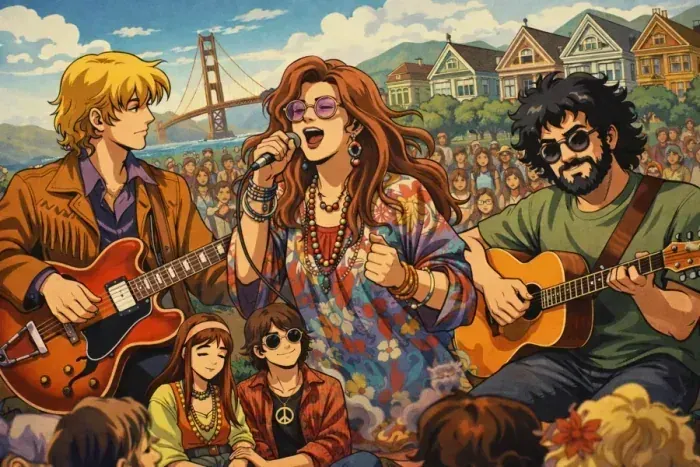
San Francisco and the Scene as Experience
Psychedelia is often linked first to San Francisco, and for good reason. The Bay Area scene grew alongside new ideas about shared living, anti-authoritarian politics, and collective experience. Compared with more star-centered pop culture, it put greater emphasis on scene, overlap, and atmosphere.
Jefferson Airplane helped carry that sound into the national spotlight. Their records mixed folk roots with harder electric attack, and songs like “Somebody to Love” (1967) and “White Rabbit” (1967) sounded direct without becoming literal. They gave listeners something to enter rather than a message to decode once and file away.
The Grateful Dead pursued a looser model. Rather than treating songs as fixed objects, they built their identity around improvisation and collective interplay. Live performance was not just a way to present finished material. It was where the music kept changing.
Venues such as the Fillmore and the Avalon Ballroom made that approach visible. They were not just concert halls. Posters, light shows, audience movement, and social ritual all fed into the event. The audience was not expected to stand outside the experience and simply observe it.
That communal emphasis set the San Francisco scene apart from more individualistic versions of pop success, but the distinction was never absolute. Once the scene attracted national attention, records, tours, and media coverage quickly turned counterculture into something that could be packaged and sold.
Those contradictions matter. Ideals of openness often existed alongside exclusion, uneven visibility, and basic material pressure. Still, the scene changed what a music culture could look like. It suggested that concerts could function as temporary communities and that songs could become social spaces rather than just products.
The Haight-Ashbury district became the best-known symbol of this world, but the symbol was always smaller than the reality. What outsiders saw as instant utopia was in practice a mixture of experimentation, crowding, poverty, idealism, opportunism, and heavy media attention. The music grew from that unstable mix, which is one reason it could sound both inviting and precarious at the same time. "'Pillow' is as close to a live album in the studio as you're ever going to get."
The Recording Studio Becomes an Instrument
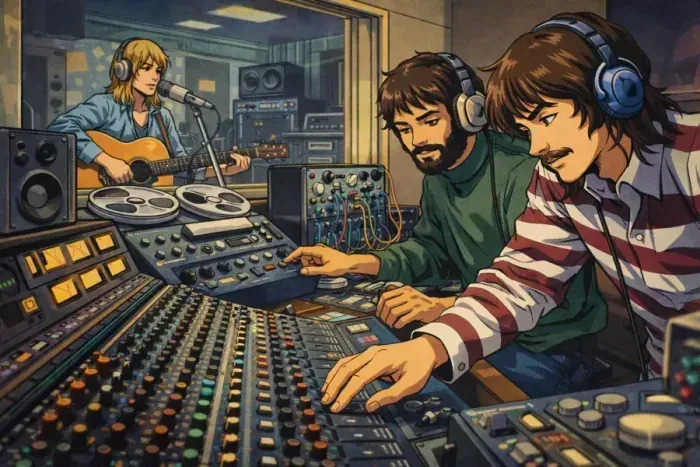
As psychedelic ideas spread, the studio became one of the decade’s decisive creative tools. It was no longer just where a performance was captured. It became the place where sound could be cut apart, layered, reversed, slowed down, sped up, and rebuilt.
The Beatles are an obvious example. Once touring moved away from the center of their work, the studio opened a way past physical limits. Multitrack recording let parts be assembled separately, while tape loops, reversal, and speed changes made recorded sound itself flexible. “Tomorrow Never Knows” is one of the clearest moments where a pop song starts to behave less like a song performed in a room and more like a sound environment constructed piece by piece.
Brian Wilson pursued a comparable idea in the United States. He treated recording as composition, selecting instruments for color and emotional effect rather than routine function. That approach demanded intense concentration, but it also allowed records to carry mood and memory in ways that were not dependent on lyrics alone.
Producers mattered more than ever in this environment. George Martin is a central example because he helped turn arrangement, microphone choice, tape editing, and sonic texture into creative decisions rather than technical afterthoughts. The studio became a site of shared authorship.
Listeners adjusted as well. Records no longer had to be fully reproducible onstage to feel complete. Detail mattered more. Home stereos and headphones rewarded attentive listening, and albums encouraged immersion rather than quick consumption.
The same shift created pressure. Studio ambition could become isolating, expensive, and unequally distributed. Not every artist had access to the time, technology, or support required to experiment at this level. The studio expanded the form, but it also widened some of the decade’s existing inequalities.
Engineers, tape operators, and arrangers became more important in this environment too, even when they remained less visible in public memory. The sound of late-1960s pop often depended on technical workers who helped convert abstract artistic ideas into practical recording decisions. The studio’s rise was therefore also a story about changing forms of collaboration behind the scenes.
When Sound Met Visual Culture
As music expanded in the mid- and late 1960s, visual culture expanded with it. Sound was increasingly framed by album sleeves, posters, clothes, stage design, and light shows before a record or concert was even heard.
Once the LP mattered more, the cover mattered more too. Album art stopped functioning as simple packaging and became part of the invitation into a record’s world. Sgt. Pepper is the obvious example, but the broader change mattered more than any single sleeve: artists and labels were now treating visual presentation as part of the statement.
Psychedelic poster art made the shift visible in public space. Especially in San Francisco, designers used saturated color, warped lettering, and dense imagery to suggest movement and altered perception. These posters advertised concerts, but they also marked membership in a scene. Their occasional illegibility was part of the style.
Live performance changed as well. Projections, liquid lights, and stage design turned some concerts into sensory environments rather than straightforward presentations of songs. Bands such as Pink Floyd pushed especially hard on the relationship between sound, light, and space.
Fashion also entered the argument. Hair, fabric, silhouette, and styling communicated distance from older norms and helped blur the line between performer and audience. The result was a music culture in which sound and appearance increasingly worked together.
That mattered commercially as well as artistically. Boutiques, magazines, poster shops, and album stores all helped turn the visual side of music into a retail environment of its own. Fans did not only buy records. They bought a way of seeing the music and themselves inside it.
That fusion carried risks. As soon as psychedelic imagery became recognizable, it could be packaged and sold back as style. Visual experimentation did not automatically stay radical once the market learned how to reproduce it.
This mattered for memory as well. Later generations often encountered the late 1960s first through poster design, documentary footage, album sleeves, and fashion cues rather than through the full range of records themselves. Visual shorthand made the decade easier to recognize, but it also encouraged a simplified picture in which a few images came to stand for a much wider and more contradictory musical world.
The Hidden Cost of Creative Expansion
As artistic ambition expanded in the 1960s, so did the pressure on the people expected to sustain it. The decade celebrated experiment, freedom, and constant reinvention, but it rarely acknowledged the human cost of living under those demands.
Albums judged as major statements intensified that pressure. Musicians were expected not only to sell, but to evolve, surprise, and symbolize something larger than themselves. Studio schedules grew longer, touring remained punishing, and the gap between private life and public myth became harder to manage.
Brian Wilson is one clear example. The same studio concentration that enabled remarkable work also increased his isolation. Perfectionism functioned both as method and as burden. When the process became unsustainable, the industry was quick to celebrate the results and slow to address the strain.
Syd Barrett’s story points in a similar direction. Psychedelic culture praised boundary pushing, but it offered little protection once a musician became difficult to manage. Experiment was celebrated while it produced value and punished once productivity faltered.
Drug use complicated that environment further. Psychedelic culture often talked about drugs as tools of insight and connection while downplaying dependence, mental strain, and damage. Many artists were left to navigate that terrain with little support.
Women faced added pressure. They were asked for emotional openness on record while being penalized for vulnerability or instability in public life. The industry had weak support structures in general, and even fewer for women working under constant scrutiny.
These stories are not just about individual collapse. They show an industry that treated artists as assets first and people second. The cost of the decade’s freedom was not distributed evenly, and that cost became part of the sound as surely as innovation did.
The same decade that celebrated personal liberation also normalized new forms of pressure: larger touring circuits, heavier symbolic expectations, and a critical culture that wanted constant reinvention from the people it admired. Creative expansion sounded exciting from the outside. Inside the work, it could mean relentless instability.
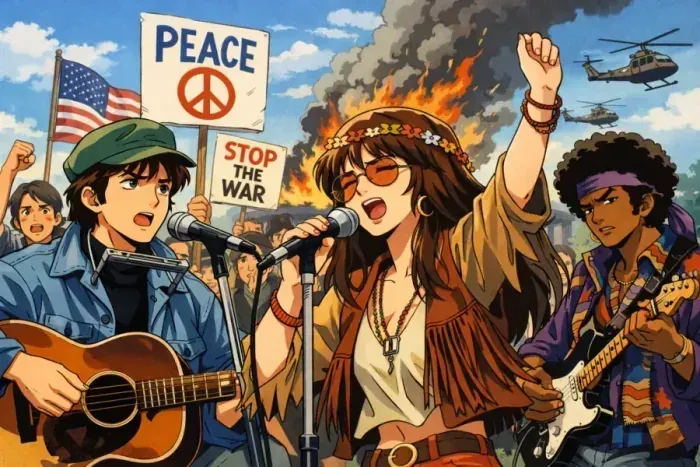
When Popular Music Moved into Public Conflict
By the mid-1960s, popular music was no longer separate from public conflict. Civil rights struggle, war, and political crisis had moved into everyday life, and songs were now being asked to do more than entertain. They were being asked to answer.
That answer did not always sound the same. Some artists named injustice directly. Others worked with doubt, fatigue, or quieter forms of resistance. What changed across all of them was the status of silence. By the middle of the decade, not responding to the world could itself look like a political position.
The relationship between music and politics remained uneasy. Speaking out could cost radio play, sales, and career security. But it also changed what listeners expected from musicians. Singers and songwriters were increasingly heard not just as entertainers, but as public witnesses.
This shift was not limited to lyrics. Benefit concerts, festival speeches, interviews, and even silence became charged with meaning. Once musicians were publicly linked to movements, audiences and journalists started hearing records through those associations as well. Political pressure changed not only what songs said, but how they were interpreted.
The sections that follow treat protest not as one genre but as a set of different public acts. Some songs argued openly. Others carried politics through tone, implication, or pressure. Together they show how music entered the decade’s conflicts and helped give them form.
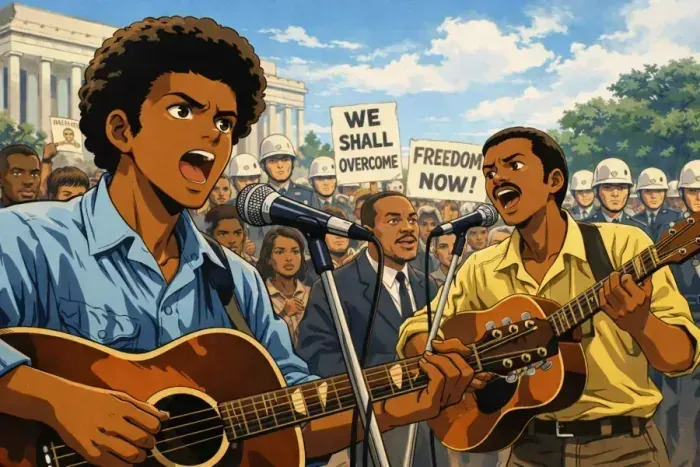
Civil Rights Songs as Witness and Resolve
The civil rights movement reshaped American music under conditions of real risk, especially for Black artists. Songs became a way to name injustice, insist on dignity, and keep hope alive when other forms of speech could be limited or punished. These records were not made at a distance from events. They were shaped by marches, arrests, beatings, funerals, and the long strain of everyday endurance.
Nina Simone was one of the era’s most direct political voices. “Mississippi Goddamn” did not soften racial violence into metaphor. It named what many white listeners preferred not to hear. Simone knew that such clarity could narrow her commercial path, and she did it anyway. The force of her performance comes partly from that refusal to make the audience comfortable.
Sam Cooke worked differently. “A Change Is Gonna Come” does not attack with Simone’s directness, but it carries its own political weight. Hope, exhaustion, grief, and moral resolve all sit in the same performance. Cooke sounds dignified and worn at once, which is part of why the song still lands so hard.
Civil rights protest also depended on collective song. Freedom songs sung at rallies, marches, and meetings, often adapted from spirituals and folk material, were built to be repeated together. Their power came from participation. They reminded people that they were not standing in danger alone.
The legal context matters too. The Civil Rights Act, signed on July 2, 1964, outlawed discrimination in public places and employment, while the Voting Rights Act, signed on August 6, 1965, targeted discriminatory voting barriers in the South. Neither law ended violence or inequality, but both changed the stakes. Music moved through that same public space, carrying grief, urgency, and resolve as the movement entered a new phase.
Civil rights music also moved between formal and informal spaces. It could be heard in churches, at marches, on college campuses, in small clubs, on records, and sometimes in mainstream media. That mobility mattered because it let songs serve different functions at once: comfort, coordination, testimony, warning, and historical memory.
The risks were real. Artists who spoke openly could be surveilled, denied airplay, or punished by venues, sponsors, and broadcasters. Black musicians were expected to entertain without openly challenging the conditions shaping their lives, which meant that even restrained protest could be treated as provocation.
Even so, civil rights music changed what popular song could do in public. It carried memory, emotion, and political force at the same time. These recordings were not just a soundtrack to the movement. They were part of its working language.
Civil rights songs did not resolve the conflict they described. They documented struggle in motion and insisted that music could tell the truth even when other public spaces would not.
That truth-telling had consequences for later protest music across genres. Once civil rights songs had shown that mainstream music could carry testimony, it became harder for other artists to pretend that public history belonged only to newspapers, speeches, or government statements. Song had entered the record of events.
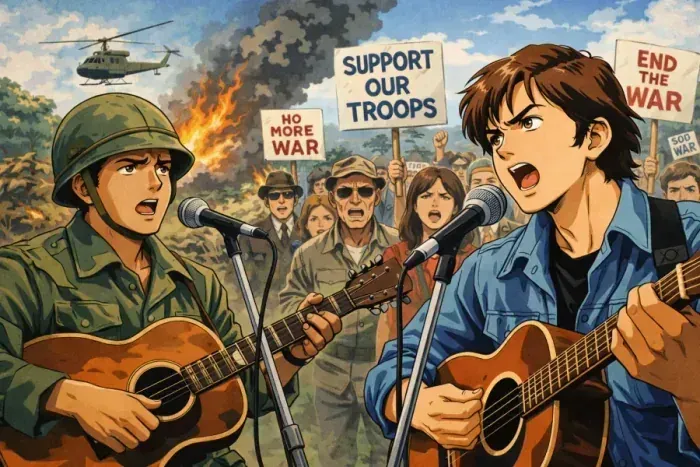
Vietnam and a Divided Musical Public
As the Vietnam War intensified, it became a constant presence in American life. Television, newspaper photography, and returning soldiers brought the war into domestic space with a speed that earlier wars had not. Music became one of the places where anger, confusion, and division could be heard.
Some artists opposed the war directly. Country Joe McDonald is an obvious example, turning protest into something audiences could join in collectively. Satire sharpened the message, but the point was not playful. The war was expensive, intimate, and impossible to keep at a distance.
Others worked more indirectly. Creedence Clearwater Revival’s “Fortunate Son” did not sound like a movement anthem, but its point was unmistakable. The song is about unequal burden, class privilege, and the question of who gets sent to fight.
Anti-war songs exposed deep splits in the audience. Support and hostility often arrived together. Radio stations faced pressure from advertisers and local power brokers. Critics framed outspoken musicians as irresponsible or disloyal. Speaking against the war could still narrow a career, especially for artists who depended on mainstream access.
At the same time, many songs about Vietnam did not offer a single program or solution. They registered fatigue, moral unease, mistrust, and uncertainty. That ambiguity matched the war itself, which kept destabilizing ideas of authority, nation, and responsibility.
Vietnam also changed live music culture. Concerts and festivals became places where opposition could be felt together rather than just argued in print. Music did not replace organizing, but it helped create a shared emotional language around the war.
By the end of the decade, Vietnam had made one thing clear: whether an artist sang about the war or avoided it, the choice was public and political.
The war also changed how audiences listened to patriotism, sacrifice, and national language. Songs that might once have sounded straightforwardly civic or inspirational could now feel strained, ironic, or painfully inadequate. Vietnam did not only generate protest songs. It altered the emotional meaning of songs that never mentioned it directly.
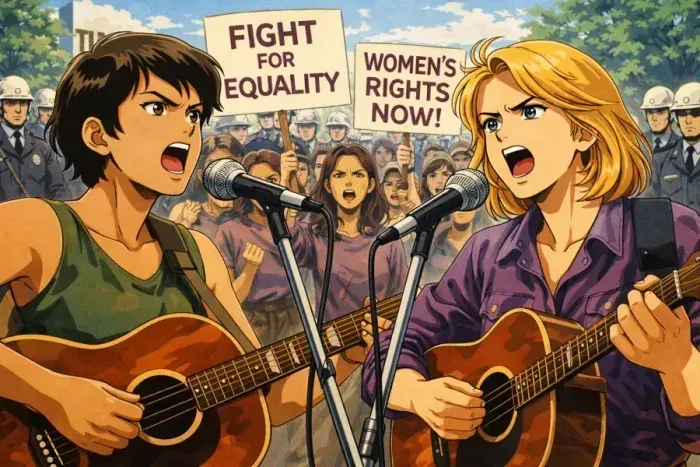
Women, Protest, and Public Risk
For women, public protest in the 1960s carried an extra layer of risk. Political speech could be attacked not only for its message, but for violating expectations about femininity, composure, and silence. In an industry already invested in controlling women’s behavior, open dissent could quickly be framed as a personal failing.
Joan Baez is one of the clearest examples. Her commitment to civil rights and anti-war activism was public, sustained, and costly. She marched, spoke, accepted arrest, and treated music as part of moral responsibility rather than as an escape from it. That stance won admiration, but it also narrowed her commercial options.
Buffy Sainte-Marie faced even harsher consequences. Songs such as “Universal Soldier” linked war, complicity, and injustice without softening the argument. Her activism and her refusal to depoliticize her work contributed to reduced airplay and a quieter form of industry exclusion that still damaged her career.
Women who protested were judged by a different standard than men. Anger could be recast as instability. Assertiveness could be treated as aggression. Emotional directness that was welcomed in love songs could suddenly be framed as unacceptable once it entered politics.
At the same time, women widened the expressive range of protest music. Their songs often connected public conflict to private cost, making war, violence, and inequality feel lived rather than abstract. That shift matters because it changed what political song could sound like.
Support was limited, and the cost was high. Many women kept speaking anyway because silence was not a neutral option for them either.
Their examples also mattered to listeners trying to imagine what female public authority could sound like. When women protested openly, they challenged not only state violence or war, but also the idea that moral seriousness in music belonged mainly to men. That shift was cultural as well as political, because it altered who could be heard as credible in public conflict.
Their presence also widened the moral register of protest music. Public conflict no longer had to sound only declarative, masculine, or overtly militant. It could sound intimate, grieving, patient, accusatory, reflective, or quietly relentless. That broadening of tone was one of women’s major contributions to the political soundscape of the decade.
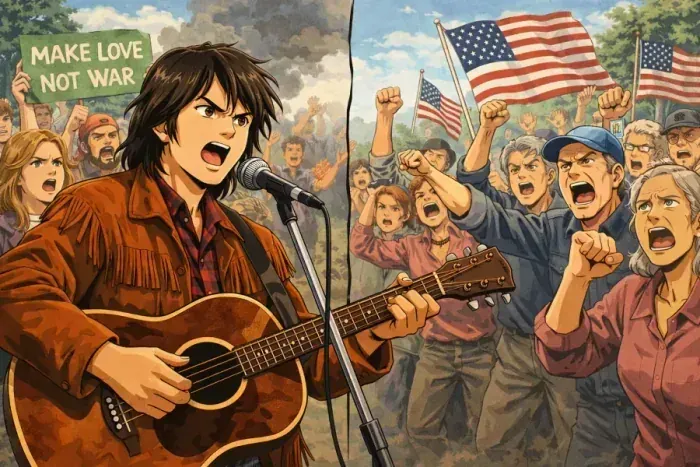
When Protest Divided the Audience
As protest became more audible in popular music, the audience split more openly. Songs about civil rights, war, and inequality entered a culture already marked by generational conflict, political polarization, and rapidly changing social norms. Some listeners heard that music as necessary. Others heard it as an unwanted intrusion into leisure and escape.
The split often followed age, but not only age. Region, class, race, and local politics all shaped how a song landed. A record embraced on college campuses could be rejected in suburbs, small towns, or conservative radio markets. The idea of one unified pop audience was breaking down.
Radio sat directly inside that conflict. Programmers faced pressure from advertisers, officials, and listeners to avoid material that might trigger backlash. Some stations quietly dropped protest songs or pushed them into less visible hours. It was framed as business caution rather than censorship, but for artists the effect was the same.
Concerts reflected the same divide. Political statements could draw cheers, walkouts, or heckling in the same room. Venues sometimes backed away from artists who seemed too controversial. The old expectation that musicians should stay neutral still had force, and challenging it carried immediate cost.
The media sharpened the backlash. Protest musicians were framed as divisive, naive, or irresponsible. Women and artists of color were scrutinized especially harshly, with their motives questioned in ways that repeated older prejudices.
But the backlash also revealed how much popular music had come to matter. Songs that drew strong reaction were no longer just entertainment products. They were public statements, and audiences heard them that way.
That split also changed the business idea of risk. A controversial song might hurt radio support in one market and strengthen loyalty in another. Labels, promoters, and journalists had to reckon with a musical public that was no longer being held together by one easy consensus. Division itself had become part of the commercial landscape.
Beyond America and Britain: A Wider Music Map
The music of the 1960s was never only an American and British story. Across Europe, Latin America, Africa, and the Caribbean, musicians were responding to their own political pressures, cultural histories, and local audiences. These scenes developed on their own terms, but they were also linked by records, radio, migration, touring, and exchange.
In many places, music became one of the clearest ways to talk about identity during rapid change. Reconstruction, decolonization, censorship, military rule, and youth culture all left marks on what people wrote and how they listened. Musicians borrowed from abroad, but they did not simply imitate Anglo-American pop. They translated, challenged, and answered it.
That wider map fell out of standard accounts of the decade. The imbalance matters because it narrows what popular music seems capable of being. Looking beyond the usual centers makes the 1960s sound less unified and far more interesting.
It also changes the story of influence. Records moved through migration routes, port cities, radio relays, state broadcasters, touring circuits, and informal exchange long before every local scene was neatly documented by Anglo-American criticism. The decade sounds different when it is heard as a network of translation rather than a one-way export from London or New York.
That broader frame also changes the meaning of “influence.” It becomes less useful to ask which center led and which margin followed. In many cases, musicians were hearing multiple foreign and local traditions at once, adapting them to specific political and linguistic conditions, and then feeding new ideas back into the global circulation.
Europe's Youth Culture Finds Its Own Voice
European youth culture changed quickly in the 1960s. Young listeners followed British and American pop closely, but they did not stay passive consumers for long. Across the continent, musicians adapted those sounds to local languages, media systems, and social conditions. Pop became a way to talk about belonging, modernity, and generational change in forms that felt local rather than imported.
France’s yé-yé movement is one of the clearest examples. Artists such as Françoise Hardy brought a quieter, more introspective tone to pop than much British or American chart music of the same moment. Her records carried emotional ambiguity without losing their pop shape.
Italy developed a parallel tradition with stronger ties between music and television. Mina moved across pop, jazz, and soul with a vocal authority that made clear how distinct European mainstream music could remain even while it absorbed outside influence.
Spain and other countries under stricter political control reveal another side of European pop in the decade. Even where censorship narrowed what could be said directly, musicians still used style, translation, arrangement, and selective ambiguity to negotiate modernity inside constrained public culture.
In Germany, the transition was slower. Schlager still dominated, but younger musicians began folding beat and rock ideas into German popular music, sometimes switching between German and English. The result was less explosive than in Britain, but it still marked a generational shift.
Across Europe, broadcasting institutions mattered enormously. Radio, television, and festival culture often had a stronger shaping role than they did in the United States. That could slow experimentation, but it could also protect local music from being entirely overrun by foreign markets.
Song contests and televised festivals also gave European pop its own public infrastructure. Events such as Sanremo in Italy and Eurovision across multiple countries rewarded songs that had to work quickly for large audiences, which helped sustain local stars, national repertoires, and multilingual circulation even under strong Anglo-American pressure.
What links these scenes is not imitation but translation. European youth pop widened the decade’s emotional and stylistic range by proving that modern pop could be multilingual, regional, and still fully contemporary.
That point matters because later histories often treat non-English pop either as local color or as a delayed version of Anglo-American trends. In the 1960s, much of it was neither. It was a primary way millions of listeners experienced modernity in their own language, under their own media conditions, and with their own political pressures in view.
Bossa Nova and Brazilian Reinvention
Much of the decade’s most famous music pushed through force or confrontation. Bossa nova offered another kind of modernity. Developed in Brazil from samba, jazz, and a new urban intimacy, it made understatement feel modern. Its pulse was soft, its harmony subtle, and its emotional effect often cooler than the amplified music dominating Anglo-American narratives.
João Gilberto and Antônio Carlos Jobim are central here. Their work showed how close a voice could come to conversation while still carrying rhythmic complexity and formal care. Bossa nova suggested that musical innovation did not need to arrive as volume or spectacle.
The style quickly became a site of exchange between Brazil, the United States, and Europe. Getz/Gilberto and “The Girl from Ipanema” brought bossa nova to a wider international audience in 1964, but the crossover did not erase its Brazilian character. If anything, it showed that a strongly local music could circulate globally without becoming generic.
That success also exposed asymmetries in how international audiences heard Brazil. For many listeners abroad, bossa nova became shorthand for sophistication, leisure, and tropical cool, which only captured part of what Brazilian musicians were doing. The music traveled widely, but the context often thinned as it moved.
Bossa nova also changed what many listeners thought cosmopolitan popular music could sound like. It moved through jazz clubs, film soundtracks, radio, and middle-class domestic space, making softness, distance, and precision feel newly current.
By the late 1960s, Brazil was also producing a more abrasive and openly argumentative modernism. Tropicália, associated above all with Caetano Veloso and Gilberto Gil in 1967 and 1968, mixed Brazilian traditions with rock, psychedelia, avant-garde arrangement, and cultural provocation. Where bossa nova traveled through restraint, Tropicália embraced collision. Together the two movements show that Brazil’s role in the decade was never just “soft crossover.” It was also a debate about culture, identity, and modernity under military rule.
That contrast is important because it prevents Brazil from being reduced to a single export image. The same national scene could produce intimate apartment music, jazz-inflected international crossover, and confrontational pop modernism under authoritarian pressure. Hearing those strands together makes Brazil one of the clearest examples of how rich and internally contested the decade’s global music map really was.
Latin America's Nueva Canción: Music Against Tyranny
In Latin America, music in the 1960s often developed under harsher political conditions than in Europe or North America. Authoritarian rule, social inequality, and state violence shaped daily life and artistic expression. In that context, nueva canción did not appear as a stylistic trend. It appeared as a response to urgent historical pressure.
Nueva canción drew on folk traditions, Indigenous music, and regional forms while speaking directly about labor, inequality, memory, and national identity. These songs were built for clarity and collective use. They were meant to be remembered, sung together, and felt in public.
Violeta Parra helped lay the foundation. She treated folk music as a living archive, collecting traditional songs while writing new material rooted in present conditions. Her work refused to separate private feeling from political life.
Víctor Jara and others pushed the movement further into open political commitment. Jara’s songs about dignity, labor, and solidarity were musically direct and morally unambiguous. That made them powerful, and it made them dangerous under repressive governments.
The official response showed how effective this music could be. Songs were banned, performances interrupted, and artists threatened or silenced. Nueva canción was treated as a threat because it carried shared experience in a form that formal political language often could not.
The movement spread into countries such as Argentina and Uruguay, adapting to local conditions while keeping its basic commitments intact. Internationally it never had the distribution power of Anglo-American pop, but it connected strongly with protest cultures far beyond its home regions.
Its instrumentation was part of its politics. Guitars, charangos, Andean flutes, and other regional sounds mattered because they rejected the idea that modern political music had to sound imported from the United States or Britain. Nueva canción treated local musical memory as part of collective resistance.
Nueva canción matters partly because it reminds us that the 1960s were not experienced as liberation everywhere. In many places, singing publicly about dignity or injustice carried real personal risk.
That risk would become brutally visible in the 1970s, especially in Chile after the 1973 military coup, but its roots are already audible in the 1960s. Nueva canción belongs in the history of the decade not as a footnote to Anglo-American protest, but as one of the clearest cases of music functioning as public conscience under pressure.
Africa and the Caribbean in a Decade of Independence
Across Africa and the Caribbean, the 1960s were shaped by decolonization, independence, urban migration, and contested national identity. Music worked inside those processes as a language of freedom, memory, and modernity. Rhythm was not just style. It carried social history and political meaning.
In West Africa, highlife became one of the period’s defining sounds. Drawing on local rhythms, jazz, and brass-band traditions, it gave urban life in countries such as Ghana and Nigeria a modern dance language. Artists like E.T. Mensah helped shape music that could sound celebratory while still carrying the complexity of rapid social change.
By the late 1960s, those traditions were already evolving. Fela Kuti began combining highlife, jazz, and funk into what would later be known as Afrobeat. His biggest international impact came after the decade, but the groundwork was already there: long grooves, ensemble discipline, and a stronger link between dance music and political critique.
Jamaica changed just as quickly. Ska, with its fast tempo and offbeat emphasis, became the sound of a new urban generation. As the decade moved on, ska slowed into rocksteady, where bass, space, and vocal nuance could carry more emotional and social weight. By the end of the 1960s, early reggae was taking shape from that same movement.
What links these African and Caribbean scenes is their strong tie to place. The music was not abstract. It responded to independence, inequality, migration, and colonial afterlife in audible form. International distribution was uneven, but these sounds still moved widely through records, migration, and influence.
Urban nightlife and sound-system culture were crucial here. Dance spaces, street culture, radio selectors, and locally circulated records helped rhythm travel before official music histories had much to say about it. These scenes were strongest where formal institutions were weakest, which is one reason they could be both under-documented and deeply influential.
Their importance to global popular music is larger than the standard story usually allows. They changed rhythm itself, and with it they changed how popular music around the world moved, felt, and carried history.
Much of that influence was delayed or uneven in international criticism. Some of these scenes were heard globally through migration and musicians’ ears before they were written into mainstream histories. That lag is one reason later genre stories often understate how deeply African and Caribbean rhythmic ideas shaped the popular music that followed.
It also reminds us that archives are uneven. Some sounds traveled through recordings, sound-system culture, diaspora networks, dance floors, and musician-to-musician exchange more effectively than through the official critical channels that later defined the canon. What was under-documented was not necessarily marginal in lived musical life.
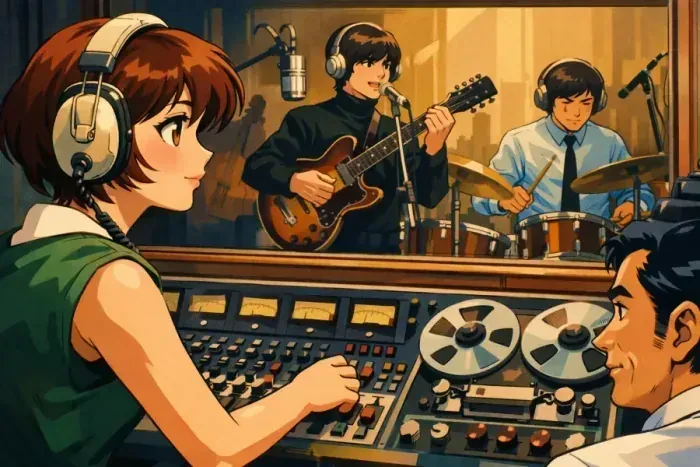
How Technology and the Music Business Changed Listening
By the late 1960s, changes in sound were inseparable from changes in infrastructure. Music was being written and recorded differently, but it was also being sold, broadcast, and heard differently. The industry’s old short-cycle model now had to deal with more ambitious artists and listeners willing to stay with a record beyond one hit.
The shift from a singles-driven market to a more album-conscious one was uneven. Singles still mattered, but more artists were now thinking about sequence, development, and the shape of a career rather than only the next charting track. Labels sometimes backed that change and sometimes resisted it, because longer projects tied up more money, studio time, and risk.
Listening habits changed at the same time. Portable radios, better home stereos, and improved turntables made it easier for music to move between private and public space. The way people listened began to shape the way records were made.
Format mattered as much as hardware. The 45 rpm single still dominated jukeboxes, radio rotation, and quick chart turnover, while the LP was becoming a longer-form object for close home listening. That split shaped budgets, marketing, criticism, and even the kind of attention labels believed a listener might be willing to give.
Retail and distribution changed with those formats. Record shops could now sell not only a hit but a catalog, a persona, and an unfolding career, while mail-order clubs, department store racks, and local independent shops exposed listeners to different parts of the same market. The business of listening became more layered, and artists who could sustain interest across several releases gained an advantage that was harder to achieve in a pure singles economy.
The sections that follow look at that feedback loop. Technology and industry did not sit outside the music. They helped decide what could be made, how it could circulate, and who could hear it clearly.
This matters because listening is never neutral. The same song lands differently on a transistor radio, a car speaker, a home stereo, or a festival sound system. As the 1960s expanded popular music’s technical range, it also multiplied the physical situations in which music could shape daily life.
Those situations also affected status. Music heard alone at home invited a different kind of attention from music heard while driving, dancing, or sharing a portable radio with friends. The decade’s infrastructure therefore helped create several publics at once: casual listeners, devoted album buyers, local scene participants, and nationally marketed mass audiences who were no longer hearing records in exactly the same way.
How the Album Became a Serious Form
For much of the early 1960s, the single remained the main unit of popular music. Songs were written, recorded, and promoted with radio in mind, while albums were assembled quickly from existing material and sold mainly to committed fans. The business rewarded speed and predictability.
As the decade went on, that balance shifted. More artists started treating the album as a space for development rather than filler. The change was not purely idealistic. Albums could build loyalty, deepen an artist’s market, and keep listeners engaged over time. For labels, though, they also meant larger budgets and less predictable returns.
That changed the economics of ambition. A successful album could open room for further experimentation. A failed one could eat money and momentum fast. Those risks were easier to bear for artists who already had sales, leverage, and label confidence, so the new album culture favored some musicians more than others.
It also changed criticism and listening. Sequencing, pacing, mood, and internal coherence now mattered more. Songs could be judged as part of a larger arc rather than only as standalone units. That made the album feel more serious, but it also created fresh pressure to prove seriousness every time out.
FM radio and underground press culture helped that change along. Longer tracks and album cuts gained space where Top 40 logic had little room for them. Once critics and listeners started treating the LP as a statement rather than a bundle, musicians had stronger incentive to think in longer forms even when singles still paid the bills.
By the end of the 1960s, the album had become one of the main forms through which popular music expressed ambition. It did not replace the single. It changed the scale on which artists were judged.
That change also altered memory. Singles had once dominated how people encountered music in the moment, but albums increasingly dominated how critics and later historians ranked the decade. One consequence was that artists strongest in album form often gained prestige later, while others who ruled through singles were more easily minimized.
Stereo, Portability, and New Listening Habits
In the 1960s, technology changed how music fit into daily life. The shift was not just technical. It changed access, portability, and intimacy, and with that it changed the relationship between artists and listeners.
The transistor radio was central. Small, relatively cheap, and easy to carry, it let music move out of the family living room and into bedrooms, sidewalks, beaches, and cars. Listening became more mobile and more tied to youth identity.
Home listening changed too. As stereo equipment spread, records invited closer attention. Layered vocals, percussion details, and left-right separation became easier to hear. Music was no longer only something to sing along with. It became something to revisit and study.
Artists and producers adapted quickly. If listeners were replaying records and hearing them in more detail, then texture mattered more. Technology did not create artistic ambition, but it gave that ambition more surface to work with.
Radio also changed unevenly. AM remained dominant for singles and heavy rotation, while FM gained importance later in the decade for album cuts, longer tracks, and looser programming. That opened space for music that did not fit Top 40 timing.
This had consequences for musicians’ careers. A strong single could still launch an artist, but sustained FM attention could now help build a reputation around deeper catalog tracks, live recordings, and albums that asked for slower listening. Commercial success was no longer measured only in one way.
Access stayed uneven, though. Better equipment cost money, and listening conditions varied by class, housing, and region. Those differences affected which audiences labels valued and which sounds they thought were worth funding.
Car listening added another layer. In the United States especially, music moved through roads, cruising culture, and youth mobility, which kept the single important even as home album listening became more prestigious. The decade did not move neatly from one listening mode to another. Different technologies supported different musical worlds at the same time.
Festivals, Concerts, and the Making of Myth
As records grew more ambitious and listening became more private, live performance took on a new role. Concerts and festivals became places where identity, politics, and collective desire were acted out in public.
The Monterey Pop Festival, held June 16 to 18, 1967, was a turning point. It did not just present famous acts. It brought together emerging artists, different scenes, and a large national audience in one heavily photographed and filmed setting. Jimi Hendrix, Janis Joplin, and Otis Redding all left Monterey with a larger public profile than they had when they arrived.
What mattered was not only the lineup, but the way performance itself was understood. Hendrix’s guitar-burning finale and Joplin’s exposed vocal intensity were not things a record could fully contain. The concert became an event of memory, risk, and bodily presence.
Festivals also became symbols of communal hope. They suggested that music might create temporary public feeling across social divisions. Sometimes that happened. But festivals were also shaped by money, infrastructure, organization, and exclusion. They could produce connection without solving the conflicts around them.
The media helped turn these events into legend. Film, photography, and later criticism reduced messy experiences into repeatable images. That mythmaking is part of why live music from the 1960s still feels so large in cultural memory.
Monterey, Woodstock, and Altamont also reveal three different scales of live ambition: showcase, utopian gathering, and collapse. Taken together, they show how quickly the decade moved from curated promise to overloaded symbolism. Festivals were never just about music. They became public tests of whether a culture could live up to its own story.
Film reinforced that transformation. Once concerts could be replayed through documentaries, news footage, still photography, and later television packages, they no longer belonged only to the people who had been there. Live music became a memory industry as well as a live event, and the most photogenic moments often came to stand in for much messier realities on the ground.
Counterculture Inside the Market
As popular music expanded, the conflict between commerce and creativity became harder to hide. The business still wanted predictable returns, manageable risk, and clear branding. Artists increasingly wanted more say over image, sequencing, production, and direction.
Many musicians learned to work inside the system while quietly stretching it. A record could still sound accessible and carry doubt, critique, or unease under the surface. That was not a rejection of pop. It was a fight over what pop could hold.
Other artists pushed more directly. Disputes over releases, cover art, production choices, and public image exposed how much the industry still depended on inherited ideas about what counted as acceptable ambition.
Commerce adapted fast. Psychedelic design, protest rhetoric, and experimental sound could all be re-sold as style. Counterculture was not only opposed by the market. It was also absorbed by it.
Listeners were part of that process too. By the end of the decade, chart performance was no longer the only way to judge importance. Credibility, seriousness, and autonomy had become part of the value system, even when those ideals could be commercialized in turn.
That tension never resolved cleanly. The same market that sold rebellion also taught audiences to prize the appearance of independence. By the late 1960s, artists were not only making music. They were also being measured by how convincingly they seemed to resist the system that distributed them.
That paradox shaped later rock ideology in durable ways. Listeners learned to value “authenticity” while still encountering it through labels, magazines, promoters, and retail systems built to package difference. The 1960s did not invent that contradiction, but they made it central to how popular music would be judged afterwards.
Who Controlled the Conditions of Stardom
The artists who defined the sound of the 1960s did not work alone. Producers, managers, publishers, label executives, and promoters helped decide what could be recorded, released, funded, and remembered. They were rarely the public face of a record, but they controlled the conditions that made ambition possible.
Producers mattered more as the studio turned into a creative space rather than a neutral one. George Martin remains the clearest example of a productive partnership, but not every artist had support that collaborative. In many settings, producers still held decisive power over arrangement, sessions, and final sound.
Management shaped careers just as strongly. Managers negotiated contracts, organized tours, controlled access, and often influenced image. Some protected artists. Others prioritized short-term profit over long-term stability.
These imbalances were sharper for Black artists and for women, who often faced opaque contracts, weaker leverage, and less access to the knowledge networks that helped preserve power. Hidden structures like these also shaped the canon later on. Promotion, distribution, preservation, and criticism all helped decide which records looked central in retrospect.
Publishers and rights owners mattered just as much in the long run. Control over songwriting, masters, licensing, and archival survival often determined who benefited decades later from music created under intense pressure in the 1960s itself. Stardom could be visible. Ownership often remained hidden.
This is one reason so many stories of genius from the decade sound incomplete when told only through performers. Contracts, catalog control, and business literacy shaped careers just as decisively as charisma or musical skill. The mythology of the 1960s often hides how administrative power worked alongside artistic risk.
It also shaped historical survival. The music that stayed available through reissues, licensing, documentaries, and later streaming was the music supported by stronger rights management and better archival care. Canon formation therefore depended not only on artistic merit or critical judgment, but also on who had the infrastructure to keep a catalog visible over time.
The End of the Decade, Without Resolution
As the 1960s drew to a close, the sense of limitless possibility began to fray. Music kept changing, but the mood around it darkened. The idea that music might help change the world still had force, yet it was now colliding with slower politics, uneven progress, and more visible exhaustion.
Artists who had carried the decade’s energy were reaching a point of strain. Some were tired of exposure and constant demands. Others were struggling to grow beyond the public roles audiences had fixed onto them. The distance between public symbol and private person was getting harder to manage.
At the same time, the decade was already being edited into memory. Some scenes and images were selected for repetition while others were quietly dropped. The last sections stay with that process of unraveling and selective remembrance.
The shift can be heard in the records themselves. Late-1960s music often sounds fuller, heavier, and more self-conscious than the music of the decade’s early years. There is more weight in the bass, more attention to mood, more fatigue in the voice, and more pressure around what an album or artist is supposed to mean. Success no longer looked as innocent as it had in the years before protest, psychedelia, and mass media myth had fully merged.
That is why the ending resists any single clean closing date. The mood darkened before the calendar turned, major artists were already fraying under pressure, and the culture kept trying to summarize itself before the argument was actually over.
What followed in the early 1970s would inherit all of that unfinished business: stronger album culture, deeper business conflicts, harder questions about health and survival, and an expanded belief that music mattered politically even when politics kept disappointing the hopes attached to it.
In that sense, the end of the 1960s is better understood as a handoff than as a final chapter. The decade closed, but its unresolved questions about authorship, inequality, public speech, and artistic strain continued to organize the music that came after it.
What ended was not conflict but one version of innocence. The 1960s had taught audiences to hear records as art, testimony, identity, and market object at once. Once that expansion had happened, there was no simple return to the earlier pop order.
1968 and the End of Easy Optimism
Before 1969 became a symbol, 1968 had already changed the decade’s emotional climate. The assassinations of Martin Luther King Jr. and Robert F. Kennedy, the escalation of Vietnam, and the persistence of unrest made optimism harder to sustain.
Music registered that change in several ways. Some artists turned sharper and more openly political. Others turned inward, sounding tired, uncertain, or spiritually adrift. Late 1960s music grew heavier without becoming uniform.
The dates themselves help explain the feeling. Martin Luther King Jr. was assassinated on April 4, 1968, and Robert F. Kennedy was assassinated on June 6, 1968, one day after he was shot in Los Angeles. Those events did not cause a single musical response, but they changed the atmosphere in which records were written, heard, and argued over.
Listeners changed too. Protest songs could now sound less like direct calls to action and more like records of strain. Psychedelia could imply disorientation as much as liberation. Soul still carried conviction, but often under pressure and grief.
Seen this way, 1968 was less a collapse than a hardening. It made clear that cultural change and political resolution were not the same thing.
1969: Between Woodstock's Dream and Altamont's Shadow
Many people remember 1969 as the symbolic end of the decade. That memory is understandable, but it is too neat. The year did not simply fulfill the 1960s or destroy them. It exposed their contradictions in public.
The Woodstock Music & Art Fair, held August 15 to 18, 1969, in Bethel, New York, became the most famous image of collective optimism. Roughly half a million people arrived, far beyond what organizers had planned for. Food, sanitation, shelter, and transportation all fell short. Heavy rain made the site difficult and dangerous. Yet public memory kept returning to the event as a story of improvised cooperation under pressure.
Altamont, held December 6, 1969, at Altamont Speedway in California, revealed another side of the same culture. Violence, confusion, and weak planning overwhelmed the event, and the killing of Meredith Hunter near the stage while the Rolling Stones played became central to its meaning. Altamont did not erase the decade’s ideals. It showed how fragile those ideals could become when organization, accountability, and fantasy came apart.
These events are often treated as opposites, but the contrast can be too clean. Both mixed connection with breakdown. Both showed that music could gather people powerfully without solving the conflicts they carried into the field.
What 1969 made harder was unqualified optimism. Music was still powerful, but it could no longer be imagined as enough on its own.
The year also intensified the split between lived event and later memory. For people on the ground, Woodstock could mean exhaustion, mud, delay, and confusion as much as idealism. For later audiences, it became a compressed image of communal possibility. Altamont was remembered in the opposite direction: one violent breakdown came to symbolize a larger cultural collapse. In both cases, the decade was being turned into narrative even before it was over.
Artists Under Extreme Pressure
As the decade ended, many artists who had defined it were tired, fragmented, or carrying forms of pressure the industry barely knew how to name. Musicians had been asked to stand for liberation, rebellion, authenticity, and generational identity all at once.
Sometimes the strain was intensely personal. Jimi Hendrix is one clear example. His rise brought enormous artistic freedom, but also relentless touring, constant demands for novelty, and public scrutiny at a scale few musicians had faced before.
Sometimes the strain was collective. Bands that had thrived on shared energy found it harder to survive once success magnified every disagreement. The Beatles’ breakup in 1970 confirmed a process already visible before the decade ended.
Some artists responded by stepping back. Others could not. Janis Joplin, for example, was celebrated for emotional openness on stage while receiving little serious support for the cost of living that openly. The larger issue was structural: the music expanded faster than the systems around it learned to care for the people making it.
This is one reason the end of the decade feels so different from its mythology of free expansion. The culture had learned how to demand constant intensity from artists without building durable forms of protection around them. What looked like liberation from a distance often felt, up close, like exposure without shelter.
That final tension is part of the decade’s legacy. The 1960s expanded what popular music could say, sound like, and mean in public. They did not solve the problem of how artists were meant to live inside that expansion. The brilliance of the work and the fragility of the people making it remained bound together.
The Unfinished Conflicts of the 1960s
The music of the 1960s changed popular culture, but it did not resolve the inequalities that shaped its own production. The decade widened the sound of popular music. It did not redistribute power evenly inside the businesses that financed, packaged, and remembered it.
Racial inequality stayed central. Black artists made many of the decade’s defining sounds without receiving equal ownership, leverage, or long-term protection. Gender inequality followed a similar pattern. Women shaped the decade’s emotional language while still being written out of many later stories about innovation.
Politics exposed another limit. Protest songs could organize feeling, strengthen morale, and help name injustice. They could not substitute for legislation, organizing, or structural reform. When people expected music to deliver political resolution, they were asking art to do work that belonged elsewhere.
This is one reason the decade still resists simple moral summary. Music often clarified conflict better than institutions did, but clarity is not the same as power. Songs could help people feel less alone, more alert, and more historically present. They could not guarantee victory or protect anyone from backlash.
Internationally, the imbalance was just as real. Latin American, African, Caribbean, and continental European scenes mattered deeply in their own contexts, but language barriers, distribution limits, and global power kept many of them from entering the standard narrative on equal terms.
The value of the decade lies partly in those unresolved tensions. The 1960s opened arguments rather than closing them.
That is one reason the decade keeps returning in later debates about music history. It can be used to celebrate freedom, but it can also be used to examine who was asked to carry that freedom, who financed it, who was left exposed by it, and who was remembered once the market began turning the era into heritage. The conflicts were not side effects. They were part of the structure.
How the 1960s Became a Myth
The 1960s survive not only as history, but as myth. Over time, a small set of images came to stand in for the whole decade: bright color, mass protest, giant festivals, major albums, and a familiar roster of heroic bands. Those images contain truth, but they also compress a much messier reality.
Myth also changes scale. It enlarges a few already visible figures while shrinking the infrastructure around them: session musicians, local scenes, arrangers, backup singers, independent labels, and audiences outside the main Anglo-American markets. The more the decade is remembered as a gallery of icons, the easier it becomes to miss how collective its musical life often was.
Documentaries, anniversaries, and selective criticism all helped build that compressed version. Albums were treated as the highest form, bands as the main creative unit, and open rebellion as the clearest sign of seriousness. Work rooted in singles, interpretation, collaboration, or non-Anglo-American scenes was easier to push aside.
Rock criticism played a major role in this narrowing. Its standards were never neutral, and they often favored one kind of authorship over all others. That made it easier to treat women, artists of color, and many international scenes as secondary.
Memory also softened conflict. Music that once divided audiences could later be remembered as universally beloved. Risk turned into nostalgia. Tension turned into heritage. The legend is not false. It is incomplete.
Films, boxed sets, anniversaries, and museum-style retrospectives later helped stabilize that incomplete picture. They preserved important music, but they also encouraged a tidy story in which the decade seemed more coherent, more consensual, and more centered on a small canon than it ever was while it was happening.
Why the Music Still Holds
More than fifty years later, the music of the 1960s still matters because it captured change while that change was still unstable. It does not sound settled. It sounds in motion.
Part of that endurance comes from openness. Artists were still inventing forms in public, responding at once to politics, technology, market pressure, and personal uncertainty. Many of the songs leave room for later listeners because they do not pretend to solve every tension they raise.
Its influence is also structural. The album as statement, the expectation that artists write or co-write their own material, and the idea that popular music can carry political as well as personal meaning all became harder to dismiss in this period.
The decade also stays relevant because its limits never disappeared. Questions about ownership, recognition, inequality, and artistic strain are still with us. The 1960s do not offer a clean model. They offer a vivid record of people pushing at the limits of what popular music could do.
That is also why the decade continues to reward close listening. It contains brilliant records, but it also contains arguments about work, image, race, gender, technology, and memory that never really ended. The archive stays alive because it still feels unresolved.
For later musicians, the 1960s became both resource and burden. The decade offered models of experimentation, protest, and self-definition, but it also created myths of originality and freedom that were impossible to repeat in the same way. Its afterlife is part of its importance.
That is why the music still feels present rather than merely old. It contains techniques later artists still use, but it also contains unresolved standards they still argue with: what counts as authorship, how politics should enter song, which voices receive prestige, and how much pressure a culture is willing to place on the people it celebrates.
Looking Back Without Nostalgia
The music of the 1960s does not need to be sealed off as heritage. It holds up best when it is returned to, questioned, and heard in full context. The decade lasts not because it produced one perfect model, but because musicians worked through uncertainty in public and left records that still sound connected to the pressures around them.
Looking back, we can hear ambition and compromise, courage and fatigue, invention and exclusion in the same archive. That does not weaken the music. It makes its human weight easier to hear.
The 1960s still matter because they show what happens when popular music is treated as a serious public form and then pushed to carry more than one era can comfortably hold.
Returning to the decade with that in mind changes what stands out. Not only the most famous albums and festivals, but also the less mythologized labor behind them: studio craft, local scenes, collective singing, touring pressure, business control, and the uneven distribution of recognition. The music sounds richer once that whole framework is allowed back in.
It also changes how we hear quality. Greatness in the 1960s is not only the property of huge albums, canonical bands, or the records that later critics elevated most. It also lives in singles, regional scenes, vocal interpretations, protest performances, dance records, and local traditions that never fit comfortably inside one dominant story of the decade.
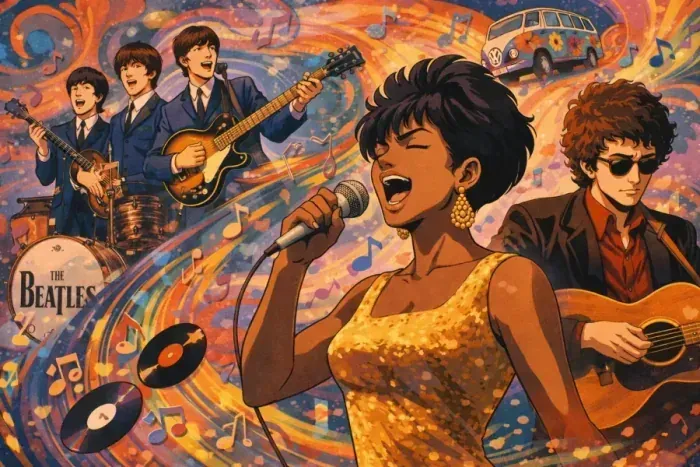
50 Songs Across a Decade in Motion
The music of the 1960s changed popular culture in durable ways. Songs became vehicles for identity, protest, studio experiment, and emotional directness. Rock, soul, folk, pop, and global scenes all changed quickly under pressure from politics, technology, and shifting ideas about artistic authority.
This list of fifty songs follows that movement across the decade. It moves from early pop romance through protest, psychedelia, global exchange, and the heavier tone of the late 1960s.
Women run through the list centrally, and the selection also looks beyond the United States and the United Kingdom. These songs are not only classics. They are documents of how the decade sounded while it was changing.
The list is not meant as a final canon or a claim that only fifty recordings matter. It is organized as a guided path through the decade’s shifts in tone, power, and form. Some tracks were huge hits, others mattered because they redirected the language of popular music, and a few are here because they make the wider global map of the 1960s easier to hear.
Read in sequence, the songs also make one of the article’s central points easier to hear: the decade did not advance in a straight line from innocence to liberation and then to collapse. Several histories were unfolding at once. Teen pop and protest overlapped. Soul and psychedelia changed the mainstream at the same time. Global scenes were not waiting on Anglo-American permission to matter. The list works best when heard as motion rather than as a ranking.
I. Teen Pop, First Love, and Early Innocence
- The Ronettes – Be My Baby (1963)
- Etta James – At Last (1961)
- The Shirelles – Will You Love Me Tomorrow (1960) [written by Carole King & Gerry Goffin]
- Françoise Hardy – Tous les garçons et les filles (1962)
- The Supremes – You Can’t Hurry Love (1966)
II. New Voices and New Authority
- Bob Dylan – Like a Rolling Stone (1965)
- The Byrds – Mr. Tambourine Man (1965)
- Simon & Garfunkel – The Sound of Silence (1965)
- The Kinks – Waterloo Sunset (1967)
- Dionne Warwick – Walk On By (1964)
III. Protest, Witness, and Public Pressure
- Joan Baez – We Shall Overcome (1963)
- Sam Cooke – A Change Is Gonna Come (1964)
- Nina Simone – Mississippi Goddam (1964)
- Phil Ochs – I Ain’t Marching Anymore (1965)
- Buffy Sainte-Marie – Universal Soldier (1964)
IV. Soul, Pride, and Rhythmic Force
- Aretha Franklin – Respect (1967)
- Marvin Gaye – I Heard It Through the Grapevine (1968)
- The Temptations – My Girl (1964)
- Otis Redding – (Sittin’ On) The Dock of the Bay (1968)
- James Brown – Papa’s Got a Brand New Bag (1965)
V. Rock, Rebellion, and Expanding Sound
- The Rolling Stones – (I Can’t Get No) Satisfaction (1965)
- The Who – My Generation (1965)
- The Beatles – A Day in the Life (1967)
- Jefferson Airplane – White Rabbit (1967)
- Jimi Hendrix – Purple Haze (1967)
VI. The Studio as a Creative Space
- The Beach Boys – God Only Knows (1966)
- Pink Floyd – See Emily Play (1967)
- Grateful Dead – Dark Star (1968)
- The Zombies – Time of the Season (1968)
- The Velvet Underground – Heroin (1967)
VII. Collective Feeling, Politics, and Change
- The Mamas & the Papas – California Dreamin’ (1966)
- Scott McKenzie – San Francisco (Be Sure to Wear Flowers in Your Hair) (1967)
- Country Joe & The Fish – I-Feel-Like-I’m-Fixin’-to-Die Rag (1965)
- Crosby, Stills & Nash – Suite: Judy Blue Eyes (1969)
- Janis Joplin with Big Brother and the Holding Company – Ball and Chain (1968)
VIII. Global Scenes Beyond the Anglo-American Center
- Mina – Se telefonando (1966)
- Desmond Dekker – Israelites (1968)
- Violeta Parra – Gracias a la Vida (1966)
- Fela Kuti – Zombi (1970)
- Stan Getz & Astrud Gilberto – The Girl from Ipanema (1964)
IX. Reflection, Strain, and the Late-Decade Turn
- Creedence Clearwater Revival – Fortunate Son (1969)
- Ray Charles – Georgia On My Mind (1960)
- The Doors – Light My Fire (1967)
- Wilson Pickett – In the Midnight Hour (1965)
- The Monkees – Last Train to Clarksville (1966)
X. Endings, Memory, and What Remained
- Sandie Shaw – Puppet on a String (1967)
- Four Tops – Reach Out I’ll Be There (1966)
- Dusty Springfield – Son of a Preacher Man (1968)
- The Band – The Weight (1968)
- Édith Piaf – Non, je ne regrette rien (1960)