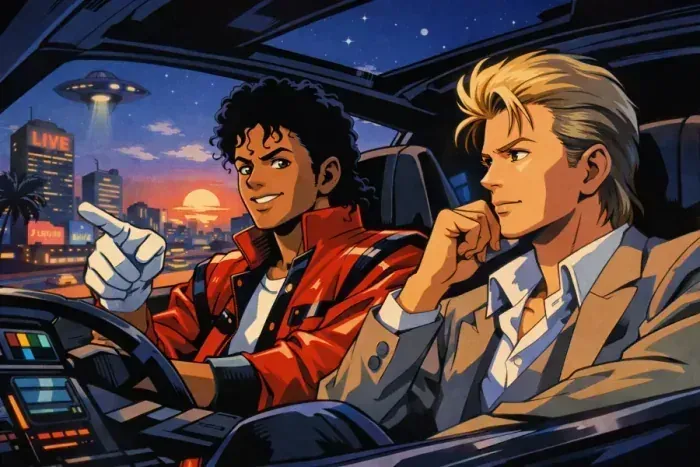
Why the 1980s Still Matter
People often remember the 1980s through bright colors, big hair, and songs that seemed to play everywhere at once. That image is accurate, but it is incomplete. The decade also changed who controlled music, how it was made, and what artists had to give up in order to be heard at the largest scale.
The shift did not happen overnight. The 1980s grew out of the late 1970s, when rock, soul, punk, disco, and reggae were all still active forces. What changed was the system around them. Music moved faster, spread wider, and became more tightly tied to image, marketing, and international media. Artists reached bigger audiences, but they also lived under more pressure and less privacy.
That tension runs through the whole decade. Technology opened new doors while creating new forms of dependence. Corporate power grew at the same time that local scenes became more inventive. A few stars dominated global attention, but some of the most important work was happening in clubs, bedrooms, small studios, and community spaces.
So the story of 1980s music is not only about sound. It is also about visibility, labor, identity, and control. In memory the decade feels immediate. In reality it took shape more gradually than nostalgia suggests.
That is one reason the decade still matters. Many things that now feel normal in popular music became far more visible in the 1980s: the pressure to stay on-screen, the role of branding, the use of studio technology as a compositional tool, the split between global hits and local scenes, and the idea that a song could be part of a larger media system rather than a self-contained object. The decade did not invent all of those pressures, but it forced them into the open.
It also widened the distance between the surface of music and the conditions underneath it. The surface promised glamour, novelty, and easy access. Underneath were contract battles, technological inequality, racial gatekeeping, the growth of tabloids, and a constant fight over who had the right to shape meaning. The bright style of the decade can make it look lighter than it was. In practice, it was one of the periods in which music became most explicitly tied to systems of power.
So when we talk about the 1980s, we are talking about more than a playlist of familiar singles. We are talking about a decade in which music became more visual, more global, and more portable, while also becoming more managed, more unequal, and more demanding for the people making it. That contradiction is the real subject of the story that follows.
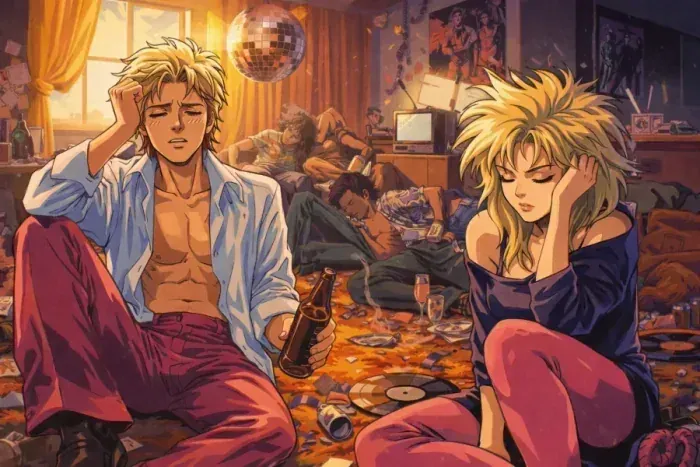
The Morning After: When the 1970s Became the 1980s
The shift from the 1970s to the 1980s is often described as a sharp break. It was not. The change was slower, messier, and more revealing. Many sounds associated with the early 1980s were already in circulation before 1980. What really changed was music’s position inside culture and industry.
By the late 1970s, several dominant models were under strain. Rock felt overblown to some listeners. Disco had become hugely visible and deeply exposed to backlash. Punk hit hard, but its first shock could not last forever. At the same time, artists such as David Bowie were already pointing toward something else through reinvention, atmosphere, and formal experimentation, while bands like Talking Heads and Blondie treated genre as something to mix rather than defend.
The biggest change was structural. In the 1970s, success still centered on albums, touring, and some distance from constant media exposure. By the early 1980s, singles were strong again, radio formats were tighter, and visual identity mattered almost as much as the music itself. Songs became easier to package and repeat at scale. That helped artists who could adapt quickly and often hurt those whose work relied on ambiguity, patience, or slow development.
Audiences were changing too. The idea of one shared mainstream was weakening. Rock no longer spoke for everyone, and neither did soul or disco. Listeners sorted themselves by format, scene, channel, and increasingly by identity. Some artists, including Donna Summer, moved into more electronic pop with striking ease. Others found that changes in radio and public taste could close doors as quickly as they opened.
Labels became more powerful and more risk-conscious. Budgets grew, but so did demands. Artists were expected to make music and to fit a larger story that could travel across radio, television, magazines, and international markets. That push and pull between creative ambition and market discipline shaped much of the decade.
The 1980s did not wipe away the past. They rearranged it. At first the shift looked subtle, but by the middle of the decade the conditions under which music had to survive were different.
Part of the confusion comes from chronology. A lot of what people call “the sound of the 1980s” was still emerging in 1978 and 1979. Post-punk, new wave, synth-pop, and disco’s electronic afterlife did not appear all at once on January 1, 1980. They grew out of late 1970s experimentation, urban nightlife, falling recording costs in some areas, and a broad search for forms that felt less tied to old rock authority. The early 1980s only make sense if you hear them as a continuation and reorganization of those late-1970s currents.
There was also a change in mood. The 1970s had already produced exhaustion, fragmentation, and distrust in inherited institutions. The early 1980s kept that uncertainty, but dressed it differently. Some artists answered it with colder, more synthetic textures. Others moved toward polish, fantasy, or controlled spectacle. In both cases, the music often sounded like it knew the ground had shifted. Even when songs were bright or danceable, they often carried a stronger sense of construction, distance, or stylization than earlier mainstream pop.
The transition matters so much because it marks the point where older ideas of authenticity, genre loyalty, and album-era seriousness began losing their monopoly. Musicians still borrowed from the 1970s, but they were borrowing into a different system: one with tighter formatting, stronger visual demands, faster circulation, and more obvious institutional control. The decade did not begin by erasing what came before. It began by teaching old forms to live under new rules.
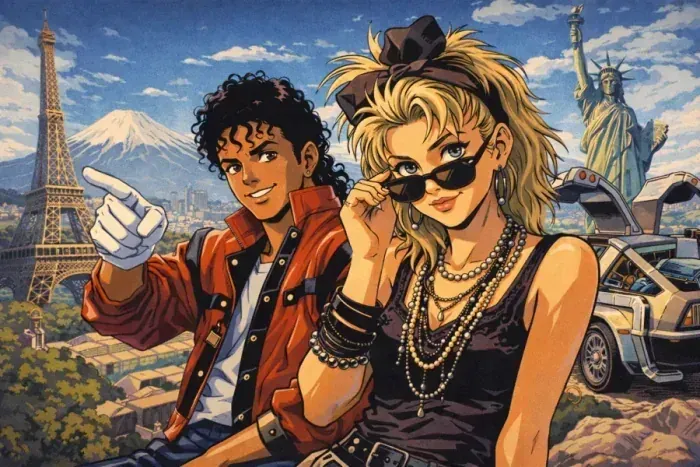
Michael Jackson, Madonna, Prince: The Rise of Global Icons
The global pop star did not begin in the 1980s, but the decade made the role far bigger and far more visible. American stars had traveled abroad before, yet they still moved through separate national markets, uneven radio systems, and slower touring cycles. In the 1980s, many of those limits weakened. Music moved faster, images moved faster still, and a small number of artists began to dominate attention across borders.
Michael Jackson is the clearest example. Released in late 1982 and produced by Quincy Jones, Thriller was not just a hit album. It became a blueprint for how one release could work across radio, television, dance culture, and international marketing at the same time. At the 1984 Grammy Awards, Jackson won eight Grammys in one night, driven largely by the success of Thriller. The record moved easily through funk, rock, soul, and electronic pop, but its reach came from more than sound. Jackson’s videos, choreography, and public image helped redefine what global stardom looked like.
Madonna and Prince showed that worldwide fame did not require one fixed formula. Madonna’s breakthrough, especially around “Like a Virgin,” showed how image, sexuality, provocation, and self-invention could be used actively rather than simply managed. Prince offered a different model. He fused virtuosity, genre collision, authorship, and gender play into a form of stardom that stayed unmistakably his even at massive scale.
Whitney Houston showed another route. Her rise relied less on provocation than on control, clarity, and emotional force. Her early recordings made it clear that technical brilliance and direct feeling could travel widely across markets and cultures. In a decade crowded with spectacle, Houston proved that the voice itself could still organize global attention.
Live Aid, held on July 13, 1985, made that global scale visible in another way. The concert linked London and Philadelphia by satellite and reached an enormous international audience. It raised money for famine relief in Ethiopia, but it also showed how 1980s pop could function as a synchronized global event. Music was no longer just sold across borders. It was increasingly experienced across them in real time.
What united these artists was not a shared sound, but an ability to work inside a rapidly expanding media system in which radio, television, magazines, touring, and public image all reinforced one another. A pop star was no longer heard only during a hit cycle. They were seen, discussed, judged, and circulated almost constantly.
This visibility brought rewards and strain in equal measure. The 1980s did not just create famous musicians. They moved them closer to the center of public life, where music, identity, business, and criticism increasingly overlapped.
What made this scale new was not only audience size. It was the density of repetition. A single artist could now appear on radio, in magazine covers, on television countdowns, in music videos, in tabloids, and on world tours at nearly the same moment. The star image no longer depended on one medium carrying the rest. It depended on all of them reinforcing one another. Once that cycle worked, an artist could seem unavoidable.
Jackson’s success showed how powerful that system could be when every part aligned. Songs like “Billie Jean” and “Beat It” worked in clubs, on radio, and in visual form. The long video for “Thriller” turned a single into an event. The choreography became part of how the music was remembered. Even the smallest gestures, such as costume choices or dance moves, were amplified into shared public reference points. The result was not just popularity. It was saturation.
Madonna understood a different side of the same logic. She was not simply “controversial.” She was unusually skilled at changing frame before the public could lock her into one fixed identity. That mattered in a decade when women in pop were judged through narrow scripts. She kept using those scripts while twisting them, which is one reason she stayed central for so long. Prince, by contrast, resisted simplification through excess of authorship. He wrote, arranged, played, produced, and styled himself in ways that made the star image look like an extension of total creative control rather than label packaging alone.
Whitney Houston expanded the field again by proving that this new scale did not belong only to provocation, genre collision, or visual reinvention. Technical command, emotional discipline, and crossover fluency could also organize mass attention. Her early success showed how strongly the decade still valued control, especially when it arrived in a form that could move cleanly between radio formats and public expectations.
The rise of global icons therefore tells us something basic about the 1980s. The decade did not merely reward talent. It rewarded artists who could function inside an emerging global system of visibility without disappearing inside it. The ones who lasted were not always the loudest. They were the ones who could make mass exposure look coherent.
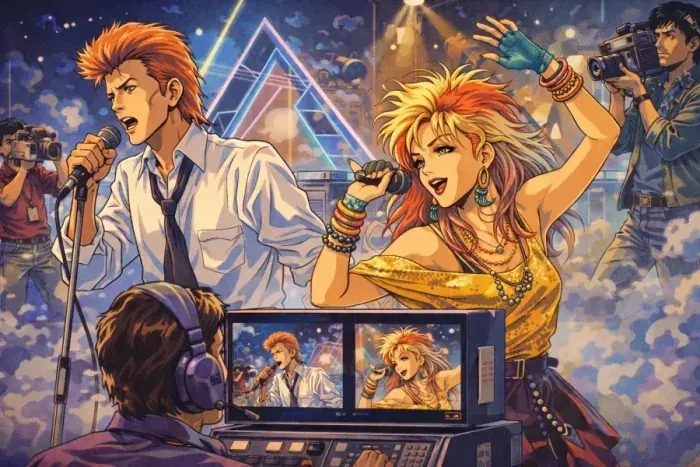
The Image Era: Pop Becomes a Visual System
By the early 1980s, songs arrived with faces, gestures, clothing, interviews, and tightly managed stories. Visual identity had always mattered in popular culture, but now it moved closer to the center. How music was judged and remembered became harder to separate from how it looked.
Grace Jones is one of the clearest examples. She used image as part of the work, not as mere decoration. Her career joined music, fashion, photography, and performance into a deliberate style that challenged conventional ideas of gender, beauty, and power. She showed that image could be sharp, confrontational, and conceptually rich.
For many artists, recognizability became a practical necessity. Duran Duran used polished, cinematic videos to make pop feel glamorous and exportable. Culture Club brought gender play and cultural mixing into mainstream living rooms. These visuals mattered not only because they were memorable, but because they helped audiences classify artists immediately. In a crowded media environment, legibility became part of survival.
That shift changed what musicians were expected to do. They were asked to explain themselves, stay visually consistent, and live inside narratives often shaped by labels, managers, and media outlets. Authenticity became more contested. Some performers embraced self-mythology. Others pushed back against roles that felt imposed rather than chosen.
For women and gender-nonconforming artists, the pressure was especially intense. Visibility created opportunity, but it also invited constant scrutiny. Clothes, bodies, relationships, and mannerisms were discussed as aggressively as songs. The line between artistic expression and public consumption grew thinner.
This was not only a loss. The visual turn also opened real creative space. Artists could work through symbolism, exaggeration, humor, critique, and irony in ways sound alone did not always allow. The new image culture imposed constraints, but it widened the field of expression too.
Music did not stop being about sound in the 1980s. It learned to operate alongside images in a new way. Songs came to feel like part of a larger world, and artists increasingly shaped that world as carefully as the music itself.
This change affected every level of the industry. Labels invested more heavily in image development, stylists mattered more, and directors became more central to how songs were launched. The visual field also changed memory. A listener might forget the chart position of a song but still remember the angle of a camera shot, a jacket, a dance sequence, or the way an artist used gesture. The image became part of the song’s afterlife.
It also changed genre boundaries. New wave, synth-pop, art-pop, dance-pop, and mainstream rock did not simply sound different from one another; they looked different in instantly recognizable ways. This mattered because television and magazines rewarded immediate classification. A visual identity could signal sophistication, danger, androgyny, glamour, or intimacy before the music had time to unfold. That made image both expressive and disciplinary. It opened space for invention, but it also rewarded simplification.
The video era made directors and visual collaborators newly important. Artists who treated visual work seriously could deepen what a song meant rather than simply advertise it. At its best, a music video gave a track another interpretive layer: dream logic, satire, theatricality, sexuality, or political symbolism. At its worst, it reduced songs to surface hooks and repeatable poses. The decade contains both possibilities, often inside the same career.
The image era matters beyond style because it changed labor. Musicians now had to perform themselves across more settings and with more consistency. They were not only asked to write and record. They were asked to remain legible inside a visual economy. That shift helped produce some of the decade’s boldest aesthetic work, but it also made exhaustion and misreading much easier to build into a career.
How Technology Changed Music-Making
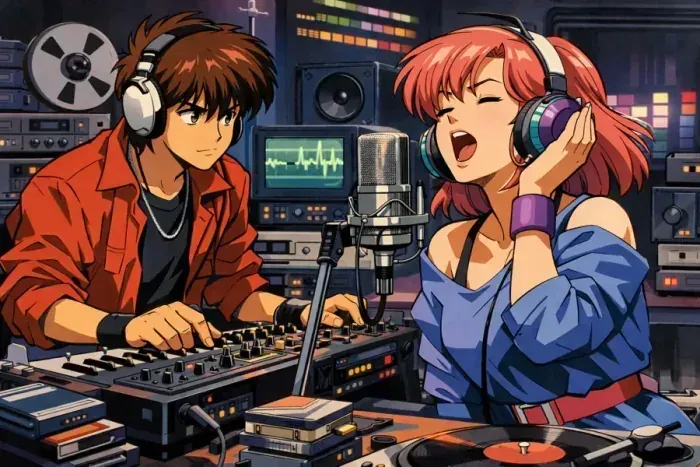
Technology had always shaped music, but in the 1980s it moved much closer to the center of the creative process. New tools did not just polish existing sounds. They changed how music was written, recorded, synchronized, and imagined before a song was even finished. For many artists, machines were no longer just studio tools. They became part of composition.
The change happened quickly and unevenly. Synthesizers, drum machines, sequencers, and digital systems became more accessible than they had been in earlier decades, though never equally accessible. That shifted not only who could make music, but what kinds of music could be imagined in the first place. Traditional instrumental training still mattered, but it was no longer the only path to authorship. A modest setup could produce a serious demo or even a finished track, while high-end studios became more technically complex and more dependent on people who understood the machines.
The change was exciting to some musicians and unsettling to others. Some embraced the precision, clarity, and range of electronic sound. Others worried about losing warmth, imperfection, and physical presence. Those arguments shaped albums, careers, working methods, and entire genres.
To understand 1980s music, you have to understand the tools behind it. Those tools were not neutral. They redistributed access, creativity, and control, and they set up many of the arguments that still define popular music now.
The important point is not that machines suddenly replaced people. That did not happen. The important point is that musical decision-making shifted. Choices that had once belonged to arrangers, live bands, or expensive studios could now be made through programming, sequencing, synchronization, and sound design. Rhythm became something you could construct step by step. Tone became something you could store, recall, and reshape. Timing became more exact, but also more open to manipulation.
It changed what counted as skill. Keyboard technique still mattered, but so did knowing how to program a patch, chain a sequence, lock devices together, or build a track from layered passes instead of a shared live take. In some scenes that new knowledge felt liberating. In others it made music production look more technical, less transparent, and more dependent on whoever controlled the equipment.
It also changed expectation. Once listeners got used to synthetic precision, gated drums, sequenced bass lines, and digitally shaped textures, older production styles could start to sound exposed or dated. The technology did not only expand possibility. It changed the ear of the decade. Musicians were not reacting to machines in isolation. They were reacting to a rapidly changing sense of what modern music should feel like.
Synths, Drum Machines, and the Sound of Tomorrow
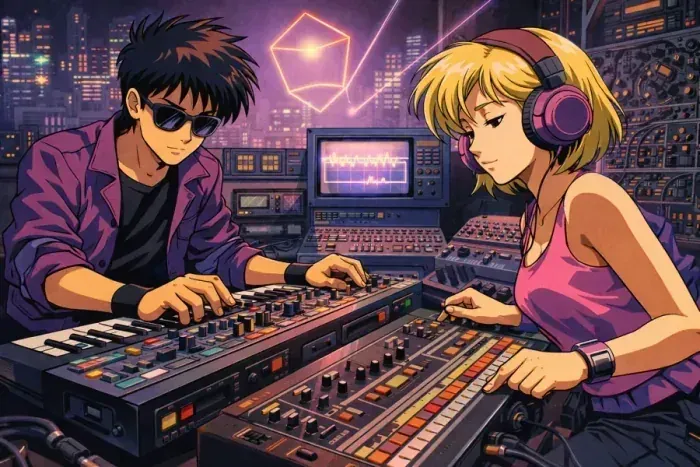
Synthesizers and drum machines began as specialist gear, then moved into the center of mainstream production. The change brought more than a few new textures. It changed the basic grammar of popular music. Where a full band or expensive studio session had once seemed essential, one person could now sketch or even finish a track alone. That altered not only how records sounded, but how they were conceived from the start.
Artists such as Gary Numan helped bring synthesizers into the mainstream without treating them as a gimmick. In his work, electronic sound was not an eccentric extra. It was a full expressive language. Cold, rigid tones could evoke isolation, control, and modern urban life with unusual force. Groups like The Human League and Yazoo showed that electronic pop could be emotionally direct and commercially successful even when built from sparse materials.
The machines themselves mattered. Drum machines like the Roland TR-808, introduced in 1980, produced rhythms that felt mechanical, repetitive, and strangely alive. It was not a convincing substitute for a live drummer, and that became part of its value. The 808’s heavy low end and synthetic snap found early champions in underground scenes before the sound spread much further. Tracks such as Marvin Gaye’s “Sexual Healing” showed that programmed rhythm could feel intimate rather than cold. From there, the 808 moved into pop, R&B, hip-hop, electro, house, and dance music more broadly.
MIDI mattered just as much. Introduced as a shared technical standard in 1983 after collaboration between several manufacturers, it allowed instruments and sequencers from different companies to communicate. The idea sounds technical, but the cultural effect was large. MIDI made it easier to combine devices, layer parts, sync rhythm with melody, and build songs through programming as well as performance. It helped turn the studio into a connected system instead of a room full of isolated machines.
Other instruments pushed the shift in different directions. Yamaha’s DX7, released in 1983, helped bring digital synthesis into the mainstream and gave pop a brighter, sharper palette. At the top end of the market, the Fairlight CMI was far too expensive for most musicians, but it helped normalize sampling, sequencing, and screen-based composition in art-pop and major studio production. These tools did not create one single 1980s sound. They opened several different futures at once.
Synthesizers also blurred the line between musician and technician. Programming a sound took patience, trial and error, and a willingness to treat music as a process rather than only a performance. Bands like Depeche Mode built whole emotional worlds out of electronic tools, showing that vulnerability and depth did not depend on traditional instrumentation.
These developments also raised familiar fears about authenticity. Some listeners worried that machines would replace musicians, or that perfect programmed sound would flatten human expression. The records told a more complicated story. Electronic textures became a way to express desire, fragility, unease, and urban life with a precision that acoustic instruments did not always offer.
By the middle of the decade, synthesizers and drum machines no longer sounded like a distant future. They were the present. They transformed pop, reshaped parts of rock, and helped lay the groundwork for genres that would dominate later decades. The machines did not remove the human from music. They gave human feeling a stranger shape.
What made this shift feel so dramatic was the speed with which once-exotic tools became ordinary reference points. In the late 1970s, a synthesizer could still signal avant-garde experiment, progressive excess, or expensive futurism. By the middle of the 1980s, synthetic timbres had entered chart pop, TV soundtracks, dance records, advertising music, and radio singles so deeply that they no longer marked a fringe position. They marked the contemporary.
That mattered for structure as much as sound. Drum machines encouraged tighter loops, clearer pulse, and a stronger sense that rhythm could carry a song even when harmony or live interplay thinned out. Synth basses could hold a track in a more stable, insistent way than many earlier pop arrangements. Sequencers rewarded repetition and accumulation. Instead of building toward release through band dynamics, songs could build through added layers, tension, and timbral change. That logic would become central not only to synth-pop but also to house, techno, electro, and many forms of mainstream dance-pop later on.
The machines also affected performance culture. Acts built around programmed parts had to solve a new problem live: how to stage music that was partly pre-constructed. Some leaned harder into theatricality, lighting, choreography, or stylized cool. Others used hybrid arrangements that kept some live instability around an electronic core. In both cases, the new sound pulled visual performance and technical planning closer together.
Most important, these tools changed imagination. Once musicians heard what a machine could do well, they stopped asking it to imitate older instruments all the time. They began asking what kinds of feeling, movement, or atmosphere only this equipment could produce. That is why the decade’s electronic turn still feels decisive. It was not just a hardware story. It was a story about musicians learning to hear possibility differently.
Producers Take Over: The Studio as Creative Lab
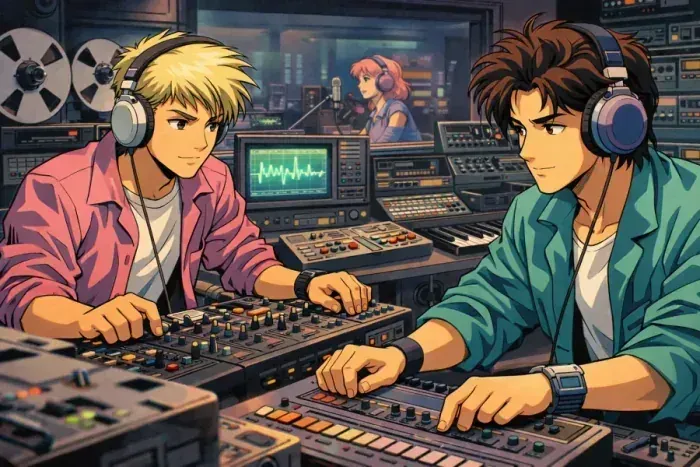
As the 1980s went on, the recording studio stopped functioning mainly as a place to document performance and became a place where songs were actively built. Layers were added piece by piece, sounds were edited instead of simply captured, and decisions made after recording could matter as much as decisions made before it. Producers and engineers became central creative figures rather than background technicians.
Quincy Jones is one of the clearest examples. His work on Michael Jackson’s Thriller showed how production could be precise without turning cold. The details feel carefully placed, from the rhythmic tension to the shape of the vocals. Jones understood that technology did not have to strip away humanity. It could sharpen the emotional effect. "Every song works together to create one album that gives the listener a dramatic experience in nine scenes."
Producers like Trevor Horn treated the studio as a laboratory. In his work with The Buggles and later with Yes and Frankie Goes to Hollywood, sounds were layered, reshaped, and sometimes replaced completely. What mattered was no longer only how something had been played in the room, but how it landed through speakers. As digital tools improved, more producers started thinking the same way.
The studio was also becoming a place of selection, not just performance. Fragments, loops, found sounds, and replayed textures mattered more than before. This was not yet the fully digital workflow of later decades, but it changed what musicians imagined a song could be. Music could now be assembled from pieces as well as captured in continuous performance. That shift would matter enormously for dance music, hip-hop, and later debates about authorship and ownership.
Nile Rodgers linked older traditions to newer methods. Coming out of funk and disco, he used modern recording techniques without losing rhythmic warmth or bodily presence. His productions showed that clarity and groove could coexist, and that technology did not have to flatten physical feeling.
This studio-centered approach also changed the balance of power. Artists who understood the technical process often gained more authority. Those who relied entirely on others could lose control of the final result. The gap between performer and producer widened, and that gap could lead either to conflict or to new forms of collaboration.
The studio changed the experience of time as well. Songs could be revised again and again, vocals could be assembled from multiple takes, and mistakes could disappear quietly. That new perfection came with a cost. Some musicians felt distanced from their own work. Others found freedom in a space where ideas could be shaped without the pressure of immediate live performance.
The 1980s did not make musicianship irrelevant. They changed what the word meant. Playing an instrument still mattered, but so did shaping sound after the performance was over. Music was played, edited, assembled, and often effectively composed inside the studio.
This is one reason producers became so visible in the decade’s success stories. A producer was no longer simply the person who kept sessions on schedule or chose the best take. In many cases, the producer was helping define the sonic identity of an artist, the pacing of an album, the weight of the rhythm section, the scale of the hooks, and the relationship between polish and feeling. The biggest records of the decade often sound inseparable from the people who built them behind the glass.
That changed artistic hierarchy. A singer with strong charisma but weak technical control could end up more dependent on producers, arrangers, and engineers than audiences realized. On the other side, artists who learned production could hold onto far more authority over the final result. This divide mattered commercially as well as aesthetically. To understand the studio increasingly meant understanding where leverage sat.
It also changed how listeners heard effort. Earlier myths of authenticity often centered on the live band, the honest take, or the visible performance. 1980s studio craft made invisible labor more important. Hours of editing, programming, retuning, layering, and balance could sit inside a track that sounded effortless. Some listeners heard that as artificiality. Others heard it as precision, professionalism, or a new kind of musical intelligence. The argument has never really disappeared.
By the mid-1980s, the studio was no longer a neutral container for songs. It had become an active environment with its own logic. It rewarded patience, budget, technical literacy, and the willingness to think of a record not as a captured event, but as an object that could be designed in detail. That was one of the decade’s biggest changes, and one of the reasons so many 1980s records still sound carefully built rather than merely played.
Who Could Afford the Future? Access and Inequality
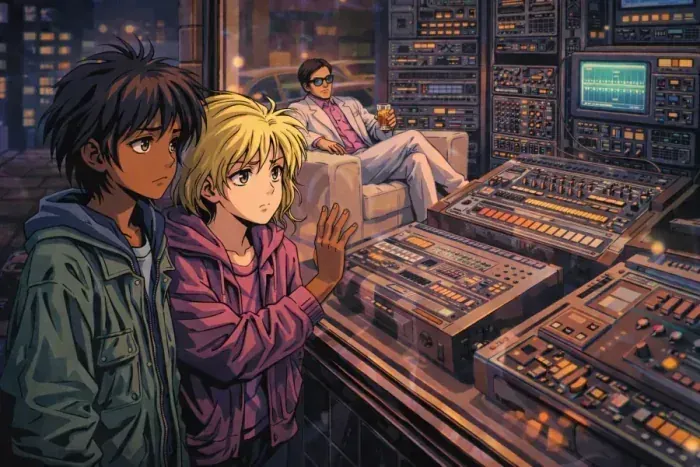
New technology widened creative possibility in the 1980s, but access to it was never equal. The promise of openness was limited by money, geography, and older social hierarchies. Synthesizers, drum machines, and digital studios solved some problems while creating others.
Early electronic instruments were often cheaper than long sessions in major studios, but they were still expensive. Many musicians could not easily afford a reliable synthesizer or drum machine. Artists from middle-class backgrounds, or those already close to industry networks, had more room to experiment. Others had to share gear, borrow studio time, or work in underfunded community spaces. That imbalance shaped who had time to learn the new tools and who did not.
Gender mattered too. Studios were overwhelmingly male-coded spaces, socially and technically. Women were still more likely to be treated as singers than as producers, engineers, or sonic decision-makers. That meant less access to the tools that increasingly defined authorship. Even artists as accomplished as Kate Bush had to fight to be taken seriously as producers of their own work.
Race and geography deepened these inequalities. In many Black and working-class communities, especially in American cities, even a basic recording setup could be hard to assemble. Yet scarcity also drove innovation. Hip-hop producers, for example, turned relatively affordable drum machines and evolving sampling practices into new sonic languages. What began as necessity became lasting invention, even if recognition and money did not always return to the communities where those ideas began.
Outside the United States and Western Europe, the gaps could be wider still. Import restrictions, currency differences, and political systems all affected who could access equipment. Musicians in parts of Eastern Europe, Africa, and Latin America often worked with older or improvised tools, creating sounds that blended local traditions with technical workaround. These scenes were vibrant, but they were rarely supported or covered on the same terms as Western markets.
So the story of democratized technology in the 1980s is only partly true. New tools did spread and they did transform music, but access remained uneven. Technology expanded what was possible without distributing it fairly.
This unevenness shaped the sound of the decade more than broad histories often admit. When one community had access to expensive sequencers, digital reverbs, and elite studios while another relied on borrowed gear, limited tape time, or a single drum machine shared across projects, the difference was not just financial. It changed workflow, ambition, and which ideas seemed practical. Some musicians could experiment by excess. Others had to experiment through compression, making a little equipment do far more than expected.
That is one reason scarcity and invention were so closely linked in the 1980s. A lack of resources did not make better art by itself, but it often forced new methods. Hip-hop is an obvious example, yet the pattern extends beyond it. Small studios, improvised electronic setups, and scene-based exchange networks often produced music that sounded distinctive because they could not simply imitate the richest parts of the industry. Constraint pushed people toward other solutions.
At the same time, inequality affected credit. Communities that innovated under pressure did not always control how their methods were later commercialized. Sounds could move upward into mainstream production faster than money, authorship, or institutional recognition returned to the places where those sounds were shaped. The future, in other words, was not equally owned by the people helping invent it.
The Digital Trap: Perfection and Its Discontents
As digital tools spread, they also changed how recordings felt. Music seemed less temporary. Records sounded more polished and more fixed, as if they were meant to survive in ideal form. Some artists welcomed that permanence. Others found it unsettling.
Analog recording carried a sense of movement and instability. Tape wore down, mixes shifted, and performances could feel slightly different from one playback to the next. Digital recording pushed the ideal in another direction. A song could be preserved in a more exact state and replayed without obvious decay. That precision brought clarity and control, but it also raised awkward questions. If a recording could always be improved, when was it finished? And if a sound dated quickly, how easily could an artist move past it?
Some musicians were openly skeptical. Neil Young, for example, criticized early digital audio because he thought it sounded cold and hollow. That was not just nostalgia. It reflected a wider fear that polished surfaces were starting to matter more than human presence. For artists like Young, analog imperfection was evidence of life rather than a problem to remove.
Younger artists and producers often heard the same tools differently. Precision meant consistency. Sounds could be recalled, repeated, and refined across projects. In a market that rewarded recognizability, that repeatability helped artists build a stable sonic identity, even if it also encouraged rigidity.
Fear of obsolescence spread beyond sound. Technology changed quickly, and equipment seemed to age even faster. A synthesizer that felt revolutionary one year could look dated the next. Musicians felt pressure to keep up creatively and financially. Falling behind technologically could make an artist seem out of step even when the music itself remained strong.
That tension also produced an early nostalgia. New tools were celebrated, but some artists held onto older methods as a way of protecting continuity and identity. Others moved more willingly toward the future, knowing the shift was unavoidable and often uncomfortable.
The 1980s did not settle these questions. They created a condition that later decades only intensified. Music became more permanent in one sense and more disposable in another, and technology made that contradiction harder to ignore.
Part of the trap was psychological. Once perfection became more technically achievable, it also became harder to stop working. A vocal could be redone. A snare could be replaced. A mix could be brightened, tightened, cleaned, and standardized against newer reference tracks. Precision created new forms of dissatisfaction. Artists and producers could hear more detail, but they could also hear more reasons to keep revising.
The trap was historical too. Many sounds that once signaled the future dated quickly. Early digital reverbs, gated drums, bright FM patches, and hyper-clean surfaces could mark a record with exact decade-specific fingerprints. That meant the pursuit of modernity carried its own risk. The more completely a production embraced the newest tools, the more exposed it could become when fashion moved on.
This is one reason debates about analog warmth versus digital clarity became so charged. The argument was never only technical. It was really an argument about what kind of time a record should carry. Should it sound durable, lived-in, and unstable? Or precise, fixed, and future-facing? The 1980s often tried to hold both ideals at once, which is why so many records from the period feel both timeless and unmistakably of their moment. "Michael, the music and MTV all took it to the stratosphere."
MTV: The Channel That Changed Music
When MTV began broadcasting on August 1, 1981, it changed popular music quickly and for good. Music and image had always been linked, but now they were tied together more tightly than before. Songs arrived with faces, bodies, settings, and repeatable visual stories. Listening and watching moved much closer together.
That changed how artists were discovered and how careers were built. A strong song still mattered, but it now had to compete with charisma, visual storytelling, and the ability to hold attention for a few minutes on screen. For some musicians, that opened new possibilities. For others, it created demands that had little to do with the music itself. Race, gender, appearance, and genre all shaped who appeared on-screen and who did not.
MTV also sped up fame. Artists were no longer discovered only through radio and touring. Exposure could become sudden and overwhelming. Success came faster, and so did criticism. Videos were replayed until they settled into shared memory.
MTV helped turn music into a culture of seeing and being seen. It made some artists far more visible than others, expanded the reach of corporate media power, and helped set the terms for the more intimate and more exhausting kind of stardom that followed.
What MTV changed most was not simply promotion. It changed timing. Earlier forms of music television existed, but MTV turned constant repetition into infrastructure. Videos were not special appearances. They became routine exposure. That meant artists had to think about how a song would live after first contact. Would an image survive thirty, fifty, or one hundred replays? Would a performance still read when viewers caught only fragments? Could a visual hook do what a musical hook used to do on its own?
This helped standardize a new kind of career planning. Labels now had to budget for video production, and the question of whether an artist was “good on TV” grew more powerful. Managers, stylists, directors, cinematographers, choreographers, and editors became part of the machinery through which songs reached the public. The line between music business and screen culture got much thinner.
MTV also shifted public expectation. Viewers grew used to the idea that songs should come with a visible world attached: a location, a persona, a recurring color palette, a mood that could be recognized in seconds. This changed the scale of judgment. People no longer asked only whether a song was strong. They asked whether an artist looked convincing, memorable, modern, attractive, dangerous, playful, or emotionally legible. The channel did not invent those questions, but it made them unavoidable.
The Color Line on MTV: Who Got Played
MTV launched on August 1, 1981, promising a new way to experience youth culture, but it quickly reproduced older industry biases instead of escaping them. White guitar-based rock dominated the early rotation, while many forms of Black popular music were treated as if they did not belong in the format.
The choice of “Video Killed the Radio Star” by The Buggles as the first video was symbolic, but the deeper pattern showed up in the playlist. Early rotation mostly featured artists who matched executives’ assumptions about a white suburban audience. That assumption shaped visibility in concrete ways. Black artists such as Grace Jones, Prince, Eddy Grant, Tina Turner, and Donna Summer were making major work in pop, R&B, funk, and dance, but their videos were often excluded or pushed to less prominent time slots.
The imbalance became harder to defend as the decade went on. A widely repeated account holds that CBS Records president Walter Yetnikoff pressured MTV to play Michael Jackson’s videos, helping force a broader shift in rotation. Whatever the exact internal history, artists like Jackson and Prince became impossible to ignore. Their success exposed how thin and unstable the channel’s genre boundaries really were.
Inclusion, when it came, often came with conditions. Black artists were still more likely to be rewarded when they fit visual and stylistic standards shaped by the same institutions that had excluded others. Work rooted more clearly in funk, soul, or overt political expression remained easier to marginalize. MTV claimed to respond to audience taste, but audience taste was being shaped by what viewers were allowed to see.
Gender bias shaped the channel too. Women artists could be highly visible, but often inside narrow frameworks of beauty, desirability, and marketability. MTV did not invent those pressures, but it intensified them by turning visibility into a daily contest.
Even so, the channel became a site of negotiation rather than simple submission. Artists learned to test its limits from the inside. MTV changed over time, but its early exclusions mattered. New media rarely arrive free of older hierarchies, and MTV made that plain. It made music more visible, and it made unequal visibility easier to see.
This mattered because MTV’s logic fed back into the wider industry. If a channel with major national influence treated some artists as naturally visual and others as marginal to the format, labels and promoters adjusted to that judgment. Budgets followed perceived visibility. Publicists learned which stories to push. Executives could present exclusion as market reality rather than editorial choice. The color line on MTV was therefore never just about playlist fairness. It affected careers, investment, and the public sense of which musicians represented “the decade.”
The eventual expansion of the playlist did not erase the structure that produced the problem. It showed how much pressure was required to move it. And it left a lasting lesson: new media platforms often present themselves as open revolutions while carrying forward old assumptions about race, genre, and audience value. MTV made those assumptions highly visible because its exclusions happened on such a bright and public stage.
The Music Video Becomes an Art Form
As MTV became central, some artists and directors began treating music videos as more than promotion. What started as marketing turned into a space for experiment, narrative, and visual authorship. At their best, videos could give a song a second life and deepen its emotional or conceptual force.
Peter Gabriel offers one of the clearest examples. His videos were not built around glamour alone, but around symbolism, discomfort, and visual metaphor. Songs like “Sledgehammer” and “Shock the Monkey” used stop-motion, makeup, and surreal imagery to externalize inner states rather than simply illustrate lyrics. Gabriel understood that video could add meaning instead of just repeating the music.
That shift encouraged tighter collaborations between musicians and directors who treated the form seriously. Filmmakers like Russell Mulcahy helped define the decade’s visual language through movement, editing, and atmosphere. In many cases, a song and its video became inseparable in public memory.
High-budget videos raised the stakes for pop and R&B artists. Janet Jackson used dance, styling, and visual consistency to communicate discipline, confidence, and authority. Her videos were not just performances. They argued for control.
Some artists took a lighter path. The animated, line-drawn world of A-ha’s “Take On Me” showed that visual invention did not have to depend on excess. Its blend of illustration and live action created a fragile, romantic mood that strengthened the song’s vulnerability.
Not every artist embraced the new expectation. Some felt the demand for visually striking work was distracting, invasive, or simply beside the point. That resistance shaped the medium too. Minimal, awkward, or deliberately plain choices could become statements in their own right.
By the middle of the decade, the music video had become a recognizable art form. It shaped fashion, film, advertising, and wider pop culture. Songs no longer arrived alone. They came with images that influenced how they were understood, remembered, and felt. Video did not replace listening, but it permanently changed how sound was perceived and recalled.
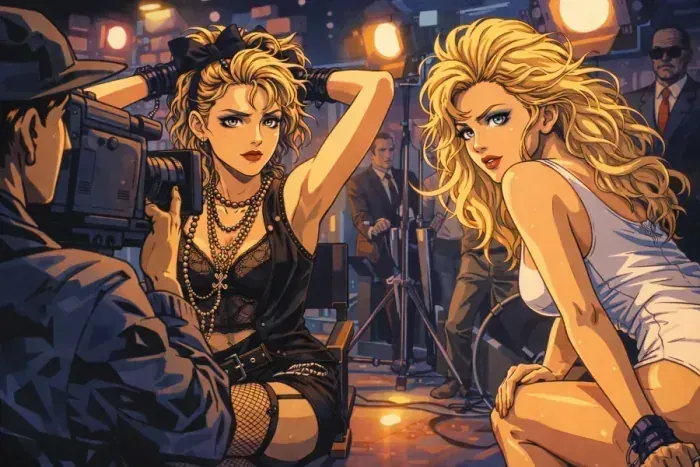
Bodies on Display: Gender, Power, and the Camera
In the 1980s, visibility became essential to success, and the body became part of the negotiation. Image was no longer an extra layer. It had become a condition of participation, though not one applied equally. Women artists were expected to be visible and acceptable at the same time, and their appearance was judged as intensely as their music.
Madonna understood that pressure early and met it head-on. Rather than simply submitting to expectation, she used clothing, sexuality, provocation, and reinvention as tools of authorship. Her visual strategy mattered not because it escaped objectification, but because it redirected and complicated it. “Like a Prayer” became one of the clearest late-decade examples.
For others, the experience was less empowering. Cyndi Lauper’s playful, unconventional style was often treated by critics as novelty rather than authorship. Tina Turner’s comeback was frequently framed through age and body before voice and musicianship, even though her authority had long been established. Praise often arrived mixed with surprise, comparison, and judgment.
Body politics also shaped who was considered suitable for constant rotation. Media systems favored youth, thinness, and narrow beauty standards, and artists outside those norms met other forms of exclusion. Even highly successful women were often expected to stay emotionally legible, sexually readable, and personally available in ways male artists rarely were.
Men were not exempt, but the terms were different. Masculinity could be exaggerated, stylized, or theatrical without automatically damaging artistic legitimacy. Gender-nonconforming artists pushed harder against those rules, often at real personal and professional risk. Media coverage regularly turned them into symbols instead of letting them remain individuals.
The camera intensified all of this. Mistakes, changes in appearance, and moments of vulnerability could now be replayed and recirculated. Privacy shrank, and the gap between private self and public image became harder to manage. Those images also shaped younger audiences, influencing ideas of gender, success, and self-worth in ways that were rarely discussed openly at the time.
The 1980s did not invent body politics in music, but they made them impossible to ignore. Image became a form of currency, and that currency was distributed unevenly. The decade was not only an era of confident icons. It was also a time when being seen had a price.
What changed was the scale and repetition of exposure. Earlier pop eras had their own beauty standards, sexual politics, and media fantasies, but the 1980s multiplied them through television, magazines, video rotation, and celebrity coverage. A body on-screen did not appear once. It could be replayed, paused, ranked, mocked, admired, and woven into public narrative again and again. That made physical appearance part of artistic labor in a new way.
This is why the camera mattered as a tool of power as much as a tool of exposure. It could frame a performer as controlled, excessive, vulnerable, dangerous, glamorous, unserious, or authoritative before a word was spoken. The visual grammar of a close-up, a dance shot, or a costume reveal could steer interpretation as strongly as a lyric. Artists who understood that could redirect the gaze. Artists who did not, or could not, often found themselves reduced by it.
The pressure was especially acute because visual culture in the 1980s liked contradiction. Women were expected to project confidence without threatening male comfort, sexual agency without losing legibility, beauty without seeming vain, and accessibility without giving away too much control. The body had to work as symbol, commodity, and proof of authenticity all at once. Few artists could meet those demands without distortion.
This is also why the section cannot be reduced to media critique alone. Bodies on-screen were not only sites of exploitation. They were also sites of invention. Choreography, fashion, makeup, and gesture became part of how performers argued for authorship, irony, resistance, glamour, or vulnerability. The camera intensified inequality, but it also made new expressive strategies possible for artists willing to work with or against its logic.
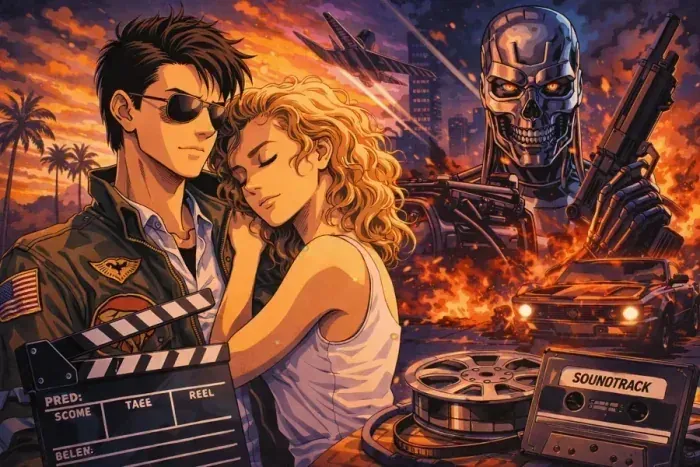
Soundtracks, Film, and the Cinematic 80s
The 1980s did not only bind music more tightly to television. They also strengthened its relationship with film. Soundtracks became major commercial events, and songs written for movies often circulated with the same force as standard singles. This was not just promotion attached to cinema. Film gave pop another stage on which songs could gather image, mood, and narrative all at once.
Some soundtrack moments became inseparable from the decade’s sense of scale. Flashdance, Purple Rain, Top Gun, Dirty Dancing, and other major titles showed that songs could move between cinema, radio, video, and retail as part of one larger circuit. A soundtrack was not always a side product. In some cases, it became central to a film’s emotional and commercial afterlife.
That changed how artists were heard. A song tied to a film scene could take on a cinematic identity that lasted longer than the movie itself. Pop started to feel larger, more narrative, and more portable across media. At the same time, soundtrack culture tied music more closely to corporate coordination, licensing, and cross-promotion. The same decade that celebrated artistic self-definition also kept binding songs to larger visual systems.
The result was a more cinematic way of hearing popular music. Songs no longer lived only as records or videos. They also lived as scenes, end credits, and emotional cues carried back into everyday life.
That mattered because cinema gave songs a different kind of memory. A radio hit could be remembered by chorus or mood. A soundtrack hit could also be remembered by scene, lighting, plot, and character. Once a song locked to a key moment in a film, it could carry that fictional world with it every time it was replayed. In some cases, the film gave the song its emotional frame. In other cases, the song outlived the film and pulled the scene along behind it.
The soundtrack boom also encouraged tighter coordination between music labels, film studios, and publicity machines. A successful soundtrack could sell records, promote a movie, drive video rotation, and reinforce star images across several industries at once. This made the 1980s one of the clearest periods in which pop stopped looking like a single industry and started looking like part of a broader entertainment network.
The songs themselves often changed in response. Big choruses, dramatic intros, swelling arrangements, and emotionally legible hooks fit film culture well because they could carry plot and atmosphere quickly. Even songs not written specifically for movies began to move through a more cinematic listening culture. Pop became easier to imagine in scenes, and scenes became easier to remember through pop.
This did not make every soundtrack artistically deep, but it did alter the relationship between music and narrative. Film gave songs another route into public feeling. And once that route proved profitable, music became harder to separate from the visual systems that staged it.
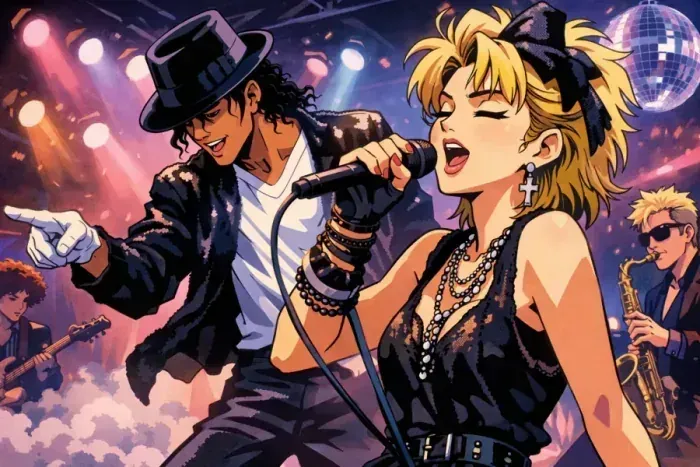
How Pop Became the Center of the Decade
By the middle of the 1980s, pop was no longer just one genre among many. It had become the center of gravity. Pop stars were not only commercially successful. They were culturally influential. They helped shape how people talked about identity, desire, style, and everyday life. That did not happen by accident. It reflected an industry that had learned how to align media, technology, and narrative around individual performers.
In this environment, popularity became a form of power. It allowed some artists to set trends, cross borders, and exert real control over their image and output. But that power was uneven. Some performers could assert authorship inside the commercial machine. Others found that fast promotion brought new forms of management and restraint.
Global pop also sharpened questions about authenticity. Music built to travel widely often had to balance local specificity with broad accessibility. Accents, styles, and identities were shaped by market logic as well as artistic intent. At its best, that produced shared cultural experiences on a new scale. At its worst, it rewarded predictability.
The next sections stay with that tension between creativity, control, and commercial success: who gained leverage, who pushed back, and how global fame changed what success meant.
What made pop dominant was not simply that it sold the most. It was that it absorbed and reframed material from elsewhere at high speed. Dance music, R&B, rock, new wave, electronic experiment, and club styles all fed into mainstream pop as the decade moved on. Pop became less a fixed sound than a powerful center that could translate many sounds into mass circulation.
That gave pop unusual cultural reach. It could carry arguments about gender, race, performance, and technology into spaces that more specialized genres could not always reach. When a pop artist changed style, stagecraft, or self-presentation, the change could ripple outward through fashion, television, advertising, magazines, and everyday language. The genre was not powerful because it was shallow. It was powerful because it sat at the point where music, media, and desire met most visibly.
But the throne was unstable. Pop rewarded fluency, repetition, and legibility, yet it also needed the appearance of freshness. Artists who succeeded inside it had to balance familiarity and surprise more carefully than ever. That tension made room for some of the decade’s strongest work, but it also made collapse, flattening, or overexposure more likely. Pop ruled, but it ruled through pressure as much as through pleasure.
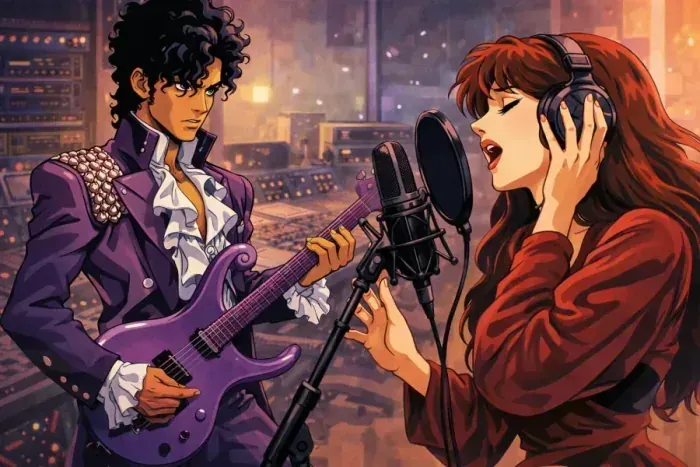
Prince, Kate Bush, and the Fight for Creative Control
One of the central questions in 1980s pop was authorship. As the industry grew more organized and more profitable, creative control often moved away from performers and toward labels, producers, and marketing systems. Some artists pushed back hard, insisting on control over writing, sound, production, and presentation.
Prince is one of the clearest examples. He treated pop as a personal form, handling writing, instrumentation, arrangement, and production with unusual intensity. Albums like 1999 and Purple Rain fused funk, rock, soul, and electronic sound into a style that was unmistakably his. His control over both music and image was not only aesthetic. It also pushed against an industry that often treated performers as interpreters rather than authors.
Kate Bush represented a quieter model. Rather than building authority through constant visibility or relentless touring, she used the studio as a space for composition, arrangement, and experiment. Hounds of Love showed that pop could be detailed, structurally ambitious, and emotionally immediate at once. Her career showed that independence did not always require public confrontation. Sometimes it meant keeping distance and saying no.
For artists like George Michael, the struggle for control became more public. He wanted to be understood as a songwriter and serious solo artist, not only as the charismatic face of Wham! His later label disputes made a broader problem visible. Artists wanted to evolve, but the system rewarded stable identities and repeatable success.
These struggles were not isolated. Musicians were learning that success in pop came with visible contracts and invisible ones. The invisible contracts were about persona, image, and consistency. Reclaiming authorship could mean risking media support, commercial stability, and career momentum.
The artists who won more control left a lasting mark. They widened what pop could hold and showed that formal ambition, technical curiosity, and unstable genre borders could still reach a mass audience. Their careers make one thing clear: much of 1980s pop was shaped by the fight between creativity and structure.
What made the issue so central in the 1980s was the size of the commercial machine around it. Once labels, managers, television platforms, and tour promoters all had a stake in a stable public identity, experimentation stopped looking like a purely artistic decision. It looked like a business risk. Artists who wanted to change style, slow down, disappear, refuse promotion, or complicate their image were pushing against more than taste. They were pushing against infrastructure.
Prince made this conflict unusually visible because his productivity itself became an argument for control. He did not need the industry to imagine a wider musical range for him. He was already making it. Funk, rock, gospel, synth textures, sexual theatre, and emotional vulnerability all sat inside the same body of work. That kind of authorship was harder to shrink into a single market category, which is part of why it mattered.
Kate Bush showed a different but equally important lesson. Control did not have to look like confrontation alone. It could also look like selective visibility, formal care, and a refusal to let publicity outrun the work. In a decade obsessed with exposure, that kind of distance was its own kind of strength.
George Michael’s path helps show the transition from pop role to pop authorship. Once an artist had been made legible in one format, changing the terms of that legibility could become a fight in itself. The point was never only whether the songs were strong enough. The point was whether the system would allow an artist to become newly intelligible on their own terms.
So authorship in the 1980s was not a romantic abstraction. It was a material struggle over who got to define the artist, who benefited from consistency, and who paid for change. That is one reason careers from this period still feel so instructive. They show how hard creative control becomes once a person has been turned into a large commercial object.
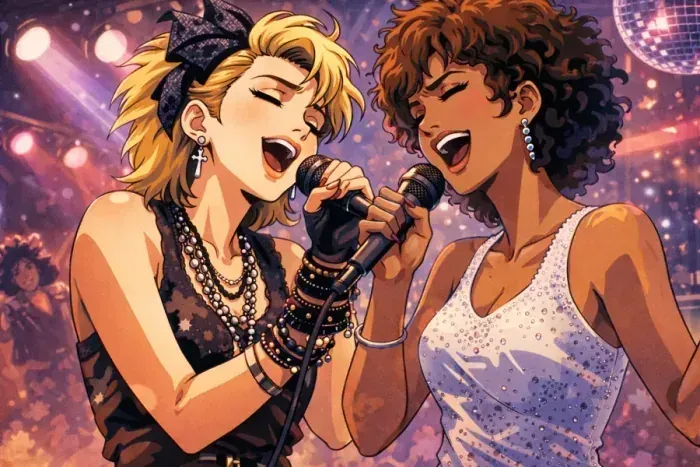
Madonna, Whitney, Janet: Women Who Ruled the 80s
For women in 1980s pop, visibility was never neutral. Being seen created opportunity, but it also invited constant interpretation. Every gesture, outfit, and vocal inflection was read through expectations that often contradicted one another. Women were expected to be relatable and exceptional, controlled and emotionally available, desirable and not too threatening. Managing those demands took strategy as well as talent.
Madonna is the clearest example, but her importance goes beyond provocation. She treated visibility itself as something to manage. Instead of protecting one fixed image, she kept moving through religious symbolism, fashion, sexuality, and shifting ideas of gender. In her case, control meant staying ahead of scrutiny instead of trying to escape it.
Whitney Houston offered another model. Her rise relied less on provocation than on vocal clarity, emotional precision, and broad appeal. Her debut became a major commercial breakthrough and showed that women did not have to choose between mass popularity and technical seriousness. Even so, the reception of her work was still shaped by expectations around appearance, crossover appeal, and public behavior.
Janet Jackson built a third model, rooted in discipline and collaborative vision. Her work with Jimmy Jam and Terry Lewis fused music, choreography, styling, and narrative into a coherent claim to self-definition. Control presented independence not as chaos or pure rebellion, but as composure, authorship, and command.
Artists like Sade resisted spectacle in another way. Through restraint, consistency, and a refusal of overstated performance, she created a space in which steadiness and intimacy carried more weight than constant reinvention. In a culture that often rewarded noise and speed, that calm became its own statement.
These different strategies were often interpreted through frameworks that minimized female agency. Success could be dismissed as image management rather than authorship. Aging was framed as decline, and ambition as calculation. Those narratives did not erase women’s achievements, but they narrowed how those achievements were understood.
The impact of these artists was unmistakable. They widened the emotional and thematic range of pop and showed that visibility did not have to look the same from artist to artist. They negotiated power on their own terms and shifted the center of popular music in the process. The pressures around image, ambition, and control did not end with the 1980s, which is one reason these careers still feel current.
What links Madonna, Whitney Houston, Janet Jackson, and Sade is not style but strategy. Each built a different answer to the same problem: how to remain legible in a visual, male-dominated media economy without surrendering the meaning of your own work. Madonna worked through constant reframing. Whitney through vocal authority and crossover command. Janet through discipline, collaboration, and visual-musical coherence. Sade through poise, restraint, and refusal of excess. Their differences matter because the decade kept trying to force women into narrower categories than the work itself supported.
These careers also changed what mainstream pop could talk about and how it could carry feeling. Female stardom in the 1980s was not limited to romance or decorative visibility. It moved through self-definition, power, sexuality, vulnerability, labor, composure, and the right to shape one’s own image. Even when media systems tried to reduce these artists to symbols, the records and performances kept reopening the frame.
The section matters because it complicates an older music-history habit. Women in 1980s pop were not side figures inside a decade defined elsewhere. They were central architects of the decade’s sound, image system, emotional range, and model of stardom. If the 1980s made visibility unavoidable, these artists showed that visibility could still be used, managed, resisted, and rewritten.
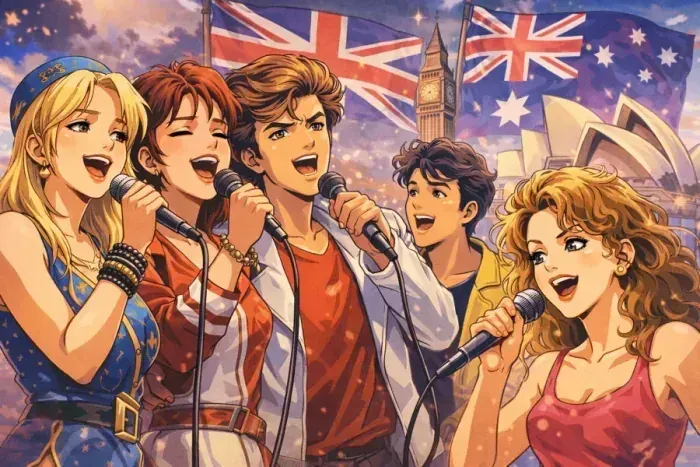
From Europe to Australia: Pop Without Borders
The United States and the United Kingdom remained the main centers of the 1980s pop economy, but the decade also opened new space for artists working outside them. Better distribution, satellite television, and international touring allowed pop to travel in ways that had been more limited before. The field was still unequal, but it now carried more regional accents, local concerns, and stylistic variation inside a shared commercial system.
In continental Europe, artists like Falco showed that language was not always a barrier. “Rock Me Amadeus” became a major international hit and is still notable as the first German-language song to reach No. 1 on the US Billboard Hot 100. His success suggested that local specificity could work as a strength when it met a strong pop structure and a clear visual identity.
Scandinavian pop remained influential too. ABBA’s lingering impact helped shape a generation that valued polished songwriting, melodic clarity, and emotional directness. Later in the decade, artists such as Australia’s Kylie Minogue moved through a broader international pop network centered partly in Europe, showing how industry geography was becoming more flexible.
In German-speaking Europe, electronic and synth-based pop became an especially important shared language. Groups like Yello combined experiment, wit, and distinctive sonic design in ways that stood apart from standard chart pop while still traveling beyond their home markets.
Elsewhere, pop developed under local political and cultural pressure rather than through simple imitation. In parts of Latin America, Africa, and Asia, Western pop blended with regional traditions to produce hybrid styles that global media often failed to cover well. Many of these artists lacked the infrastructure needed for a worldwide breakthrough, but they were central to local youth cultures and to the identities those cultures were forming.
So 1980s global pop was shared, but never equal. Artists wanted to reach beyond local settings while staying connected to them. Some entered the main pop narrative, while others remained peripheral despite strong regional followings. Pop traveled farther than ever before, but it still moved along routes shaped by language, economics, and institutional power. Globalization opened the field, but it did not level it.
This matters because the usual US-UK story can make the decade look more centralized than it really was. In practice, the 1980s produced a denser web of exchange. Songs, visual styles, production methods, and performance models moved through Europe, Australia, Japan, Latin America, Africa, and local regional circuits in ways that did not always flow neatly toward Anglo-American centers. Some of those circuits fed the global mainstream. Others remained strong without ever being fully recognized by it.
The geography of pop was therefore changing in two directions at once. It was becoming more global in circulation, but also more visibly uneven in terms of recognition. Artists outside the main centers could borrow, adapt, and innovate with increasing speed. Yet the institutions deciding what counted as “global” still sat largely elsewhere. This is why so many 1980s success stories outside the US and UK feel double-edged. They prove wider reach, but they also reveal how selective that reach remained.
In practical terms, this meant that language, accent, local media infrastructure, export networks, and touring capacity all mattered enormously. A memorable visual concept or sharp pop structure could help an artist travel further than before, but not every market had the same machinery behind it. Some songs crossed borders because they fit the growing global system. Others mattered intensely at home and still remained marginal in the larger memory of the decade.
So “pop without borders” should never be read too literally. The decade loosened borders, but it did not remove them. What changed was that more artists could be heard against them, through them, and sometimes beyond them. That widening of the field is part of what makes 1980s pop feel so expansive even now.

Rock After Punk: Splits, Scale, and Reinvention
By the time the 1980s arrived, rock music was no longer a one-way conversation. Punk had stripped rock back and exposed its limits, but it did not replace the old order with a single new one. What followed was a fractured landscape in which bands responded in very different ways to the decade’s pressures of commerce, identity, and media visibility.
Some artists decided to expand. Bigger stages, louder sounds, and wider audiences promised that rock could remain central by becoming more cinematic and more public. For others, survival meant refusing that scale altogether. Small labels, regional scenes, and a deliberate distance from television became ways of protecting artistic freedom. Rock spent the decade moving between those poles. Was it spectacle, private expression, or community?
Technology and the media made these questions even stronger. Synthesizers were a new type of sound that changed how guitars were heard. MTV changed how bands were judged. Touring favored artists who could fill bigger spaces and repeat the same impact night after night. At the same time, rock’s emotional range widened. Anger, irony, introspection, dread, and vulnerability all found room in the decade, but rarely in the same places.
Rock’s response to punk then unfolds in different directions. Some bands embraced punk’s impact, others pushed against it, and many landed somewhere in between.
That fragmentation is the point. Earlier stories about rock often move as if one dominant style hands power to the next: British invasion to psychedelia, psychedelia to hard rock, hard rock to punk, and so on. The 1980s resist that shape. Rock no longer moved as one centered tradition. It split into overlapping circuits with different audiences, different economies, and different ideas of seriousness.
Some of those circuits still wanted scale. Arena touring, major-label promotion, and dramatic visual identity promised that rock could remain culturally central even in a more competitive media environment. Other circuits mistrusted those promises completely. They treated commercial visibility as compromise, television as flattening, and smallness as a form of autonomy. In between sat artists who borrowed from both worlds, taking punk’s skepticism into larger markets or pulling mainstream production values into more difficult forms.
This is also why rock in the 1980s can sound so internally divided. One part of it moved toward grandeur, volume, and certainty. Another moved toward ambiguity, atmosphere, and distance. One part asked how to fill a stadium. Another asked how to preserve friction once mass culture had learned to package rebellion itself. The decade kept both questions alive.
So rock after punk was not just a matter of style. It was a fight over function. Was rock still supposed to represent a broad public, or had that role broken apart? Was it now best understood as a commercial spectacle, a subcultural language, an art form, or a place for private intensity? The 1980s never answered those questions cleanly. That is part of what makes the period so rich.
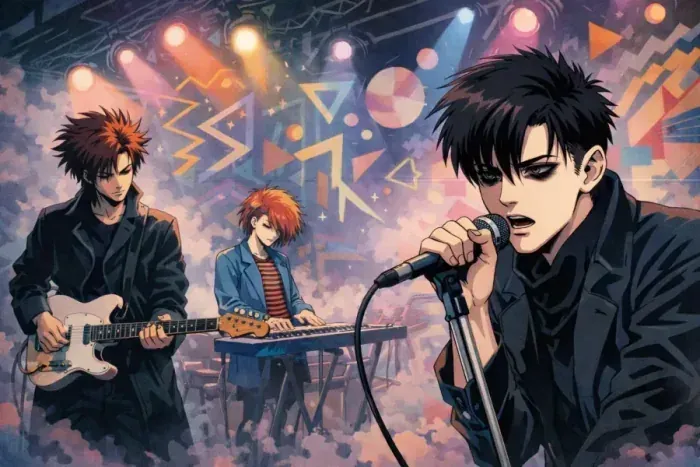
Post-Punk, New Wave, and the Art School Aesthetic
After punk’s first shock, many artists took its urgency seriously without copying its surface. In the late 1970s and early 1980s, musicians began making work that kept punk’s energy but opened it to colder textures, stranger rhythms, and more conceptual thinking. The labels varied: post-punk, new wave, art rock. What linked them was a refusal to return to older rock certainties.
Joy Division pushed rock inward rather than outward. Unknown Pleasures arrived in 1979, but much of its influence belongs to the 1980s. Instead of offering release, it recorded anxiety, isolation, and disconnection. That inward turn spoke to listeners living through economic uncertainty and social strain. It also widened rock’s emotional range. Honesty could sound tense, fragile, and unresolved.
Other artists chose a more theatrical or textured route. Siouxsie and the Banshees paired strong rhythms with a dark, controlled atmosphere shaped by art, fashion, and performance. Their music was confrontational without collapsing into chaos. They showed that post-punk could be visually striking and conceptually precise without losing musical force.
New wave grew partly out of the same terrain, even if it is often treated as the lighter or more commercial cousin of post-punk. Talking Heads used repetition, irony, and rhythmic experimentation to explore modern life, consumer culture, and unstable identity. Dance rhythms and art-school ideas worked together. Intelligence did not have to arrive in a solemn form.
The Cure built a different kind of consistency. Their music moved between minimalism and lush arrangement while returning again and again to longing, sadness, and ambiguity. By the end of the decade, records like Disintegration made clear that this was not a phase but a world listeners could inhabit. That emotional density helped create unusually loyal audiences.
What connected these scenes was less a shared sound than a shared attitude. Rock no longer had to dominate the room or offer clean answers. It could observe, retreat, question, and leave tension unresolved. At a time when much of popular culture was moving toward speed, clarity, and instant recognition, post-punk and related styles kept complexity alive.
These artists kept rock culturally important not by beating pop at its own game, but by changing what relevance looked like.
The difference between post-punk and new wave is often flattened in hindsight, yet the distinction mattered in practice. Post-punk tended to push harder into tension, experiment, and structural unease. New wave was often more willing to turn sharp ideas into accessible pop forms. But the overlap between them was constant. Both emerged from a moment in which genre discipline felt less persuasive than curiosity. That is why bands could borrow from funk, dub, electronics, performance art, minimalism, and dance without feeling they had left rock behind entirely.
This widening mattered emotionally as much as aesthetically. Earlier rock myths often favored release, virtuosity, or collective catharsis. Post-punk and adjacent scenes made room for paralysis, irony, self-consciousness, emotional distance, and urban dread. These were not minor tonal shifts. They gave listeners other ways to recognize themselves inside popular music, especially in cities marked by unemployment, political strain, and social fragmentation.
The art-school side of the scene also deserves attention. Many of these artists treated image, typography, sleeve design, stage posture, and theory as part of the work rather than secondary decoration. Album covers, fashion, video aesthetics, and scene spaces carried meaning alongside the songs. That interdisciplinarity helped explain why post-punk left such a strong mark on later visual culture as well as later music.
So the long-term importance of post-punk and new wave lies not only in which bands became canonical. It lies in the permission they created. They showed that rock could become more conceptual, more danceable, more emotionally unstable, and more visually self-aware without losing force. In a decade that often rewarded clarity, they kept difficulty productive.
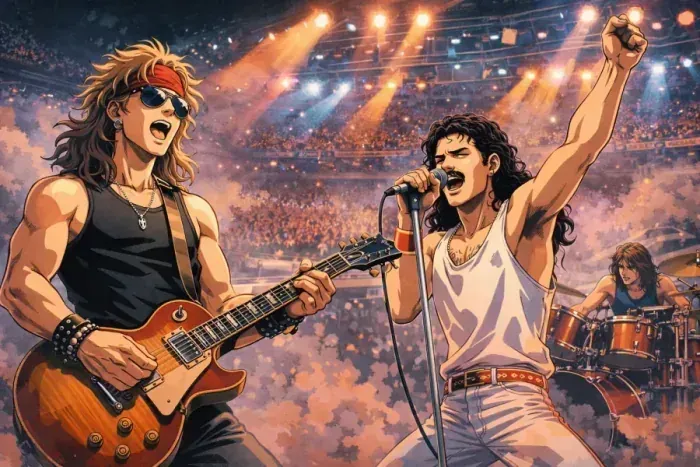
Stadium Rock: Bigger, Louder, Everywhere
Other branches of rock moved in the opposite direction. In the 1980s, rock also got bigger. Arena rock, hard rock, and metal leaned into scale, volume, and spectacle to stay central in a changing market. Bands adjusted their sound and image to fit larger venues, television, and a more visual media environment.
U2 showed how rock could stay ambitious and politically aware even at stadium size. By the middle and late 1980s, they were combining spiritual searching, political urgency, and arena-scale ambition in a way that felt larger than ordinary commercial success. Their shows aimed at collective feeling rather than cool distance. U2 suggested that sincerity and scale could coexist, even as large touring became central to their identity.
Hard rock often followed a more openly commercial path. Bon Jovi and Def Leppard refined their sound for radio and MTV, making hooks sharper, production glossier, and imagery more consistent. Critics often dismissed that polish as superficial, but it helped keep rock dominant in an increasingly competitive market.
Metal expanded in several directions at once. Some bands embraced theater, volume, and spectacle. Others, especially Metallica, pushed toward speed, discipline, and technical precision. Early thrash emerged from underground clubs, but it still sounded dangerous as its audience grew. Its success challenged the lazy idea that heaviness could not also be serious, structured, or ambitious.
Economics shaped these forms as much as taste did. Large venues rewarded bands that could deliver recognizable songs and a repeatable impact night after night. The demands of constant touring also reinforced familiar ideas of masculinity built around control, stamina, and physical endurance, even if emotional vulnerability never disappeared completely.
Arena rock and metal were not just reactions against punk or pop. They were responses to a new environment in which visibility, scale, and repetition mattered more than before. These styles kept rock popular by embracing size, but that also tied them more closely to the systems paying for it and promoting it.
This side of rock mattered because it understood the decade’s expansion instinct better than almost any other form. If MTV rewarded visible identity, stadium rock could deliver it. If touring became central to revenue and prestige, arena acts were built for that economy. If radio favored sharp hooks and emotional immediacy, hard rock and polished metal could provide both without giving up volume. The style was not simply excess for its own sake. It was a practical answer to the scale of the new market.
That is why spectacle became so important. Light shows, giant stages, synchronized cues, anthemic choruses, and repeatable gestures all helped make thousands of people feel they were sharing one concentrated event. The songs were written for replay, but the concert experience was written for recognition. A crowd had to know when to sing, when to raise hands, when to feel release. Stadium rock turned collective response into a form of design.
Metal’s expansion makes the picture more complicated. Once heavy music entered wider circulation, it split rather than smoothing out. Glam metal, arena metal, speed metal, and thrash did not all imagine power the same way. Some forms leaned into visibility and theatre. Others defined themselves through rigor, aggression, and anti-mainstream credibility even while gaining larger audiences. The commercial spread of heaviness therefore did not erase internal arguments. It intensified them.
So bigger rock in the 1980s was not just the loud side of the story. It was one of the clearest examples of how musical form adjusted to the decade’s industrial scale. These acts proved that rock could survive by learning to think like a large system. The price was that it became harder to separate the music from the machinery that carried it.

Indie and Alternative: The Sound of Resistance
Less visible but equally important alternative scenes also took shape in the 1980s. These communities stood apart from arena stages and television rock. They did not reject rock’s past so much as reject its inflation. For them, independence mattered more than fame, and trust came from consistency rather than saturation.
R.E.M. grew out of that world. In the early years, touring meant small clubs and college towns, and recognition spread through word of mouth rather than mass exposure. Their work avoided obvious hooks and grand declarations, leaning instead on atmosphere, ambiguity, and restraint. That approach appealed to listeners who felt alienated by the decade’s louder forms of spectacle. Success came slowly and not always comfortably.
Elsewhere, bands like Hüsker Dü, Sonic Youth, and the Pixies pushed harder against conventional melody and structure. Surfer Rosa became a cult favorite not because it was trying to be difficult for its own sake, but because it widened what rock could express. Distortion, repetition, and noise became tools for dealing with urban tension, frustration, and artistic difference. Mainstream radio had little room for that kind of work.
Independent labels were essential to keeping these scenes alive. SST Records and others provided structure without demanding that artists fit a narrow commercial mold. Money was scarce, distribution was uneven, and touring was constant. The systems were fragile, but they created unusually strong bonds between artists and audiences. The music felt local, earned, and close to the ground.
College radio and fanzines linked these scenes across regions. Songs moved through tapes, recommendations, and live shows rather than through heavy rotation or video saturation. That slower pace gave ideas time to develop. People followed scenes because they found something there worth staying with, not because it was everywhere.
Resistance, though, was never pure. As alternative music attracted more attention, the industry moved in. Some artists navigated that transition carefully, while others were reshaped by it. The line between independence and visibility was hard to cross without cost.
What set these movements apart was not secrecy, but a different definition of success. In a decade obsessed with polish and scale, they defended doubt, experiment, and creative freedom. Their wider breakthrough would come later. In the 1980s, their power lay in sticking with it.
What makes these scenes so important is that they built an alternative infrastructure, not just an alternative sound. Independent labels, college radio, photocopied zines, tape trading, local promoters, and relentless touring created a culture in which visibility could be earned without first passing through the biggest gatekeepers. This did not produce equality or financial stability, but it did produce a different tempo. Music could develop slowly, by trust and repetition, instead of exploding at once through national media.
That slower tempo shaped the records themselves. Bands did not always have to sound immediately universal. They could stay opaque, abrasive, regional, or emotionally awkward. They could let hooks arrive late. They could leave polish unfinished. They could treat smallness not as failure, but as room to think. Alternative rock in the 1980s often sounds the way it does because the systems around it allowed for different kinds of patience.
At the same time, “independent” never meant untouched by pressure. Touring was punishing, money was thin, and scenes could become doctrinaire about authenticity. Bands still had to decide how much exposure they could accept, when compromise became betrayal, and whether growth would strengthen or hollow out the community around them. Those arguments helped define alternative culture as much as the music did.
Indie and alternative mattered beyond their immediate audience size because they kept open a space in which rock could stay exploratory while the mainstream rewarded clarity and scale. The commercial breakthrough of alternative rock would come later, but the social and aesthetic groundwork was laid here: in smaller rooms, slower circuits, and systems built more on commitment than on saturation.
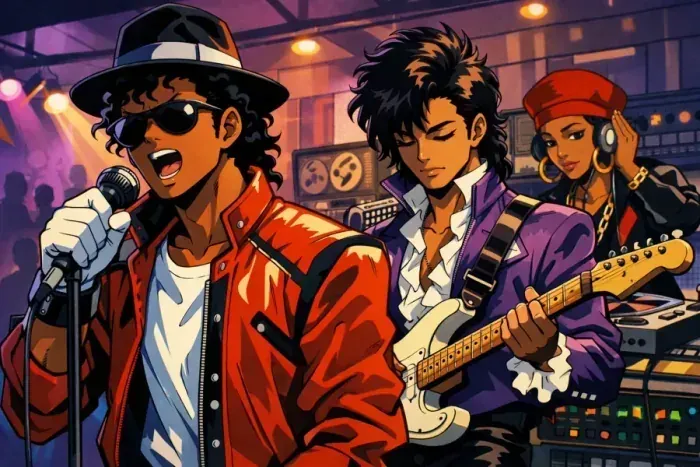
Black Music at the Center, Still Facing Barriers
You cannot understand 1980s music without centering Black artists. Many of the decade’s most important ideas came from Black musical traditions, yet those traditions were still treated unevenly by radio, television, labels, and critics. Black musicians shaped the sound of the era while often facing systems that limited visibility, recognition, and long-term control.
R&B, funk, and soul did not disappear when new technology arrived. They absorbed it. Electronic tools became part of musical languages still grounded in rhythm, intimacy, and community. Hip-hop emerged from local scenes and grew into a national and then global force, carrying stories that mainstream culture often ignored or distorted. These changes were linked by a longer history of adaptation, survival, and resistance.
That larger history matters because Black music was often treated as influence before it was treated as authorship. The decade repeatedly depended on Black innovation at the level of rhythm, vocal style, production, dance, and attitude, yet institutions still organized that innovation through separate categories, narrower marketing, and unequal access to prestige. What the mainstream called the “sound of the 1980s” was frequently built from forms Black musicians had already developed, reshaped, or made commercially legible.
This is also why the decade cannot be understood only through a list of stars. Some of the most important Black musical work in the 1980s happened through local radio, club circulation, independent scene infrastructure, and audience loyalty that did not always register immediately in national media. The center of the culture often became visible only after local communities had already done the listening, testing, and carrying.
Innovation, though, did not guarantee fair treatment. Even when audiences overlapped, radio formats, television exposure, and industry hierarchies kept genres racially segmented. Success was often described as “crossover” instead of being treated as central on its own terms. That language implied that Black music still needed outside approval even when it was defining the decade.
So Black creativity matters here not as a token of influence, but as work made under pressure, negotiation, and constraint. It shaped the decade while still running into limits on how it could circulate and how it would be remembered.
Regional Black Radio, Mixshows, and Format Power
Black music did not move through 1980s culture evenly. It traveled through local radio systems, mixshows, club networks, and regional listening habits that often mattered more than any national story. In many cities, Black radio was not just a delivery mechanism. It was a cultural organizer. It helped decide which songs felt current, which voices sounded local, and which styles could move from neighborhood knowledge into wider circulation.
That local power mattered especially because national media lagged behind actual listening habits. A record could already be part of daily life in a city before the larger industry had decided how to classify it. Regional Black radio helped build familiarity over time. It gave songs repetition, context, and social meaning. Listeners did not simply hear a track; they heard it as part of a community rhythm shaped by time of day, neighborhood identity, club spillover, and the voices introducing it.
Mixshow DJs were central to that process. They blurred the line between broadcaster, curator, and scene-maker by treating radio as an extension of the club and the street. Records were introduced, stretched, blended, and reframed in ways that commercial programming alone could not manage. Before a track looked inevitable on the national charts, it often had to prove itself in more specific local circuits.
That made mixshows a form of translation as well as promotion. DJs could test how records landed, connect new tracks to older ones, and give emerging sounds a sense of continuity before the market had stable language for them. In practical terms, this meant that radio could function as memory, argument, and public rehearsal all at once. It was one of the places where scenes learned what they were becoming.
Format power also set limits. Radio categories could create access for some artists while trapping others inside racialized marketing logic. A record might dominate Black radio and still be treated as marginal by the broader industry. That gap affected budgets, careers, and even the vocabulary used to describe success. Charts alone do not explain how Black music moved in the 1980s. Local systems moved it first.
R&B, Funk, and the Digital Revolution
As the decade went on, R&B and funk changed in ways that were both technological and cultural. Electronic instruments did not replace these traditions. They were absorbed into them. Drum machines, synthesizers, and digital recording altered production, but rhythm, intimacy, and emotional communication stayed central. The result was music that sounded modern without losing contact with older traditions.
Part of what made this transformation so effective was its flexibility. Digital tools could sharpen the groove, clean up the arrangement, or create more space around a voice, but they did not force one emotional outcome. In Black popular music, new machines were often folded into existing traditions of feel, call and response, sensual timing, and vocal nuance. The technology mattered, but so did the hands shaping it.
Prince remains one of the clearest examples. He treated technology as an extension of the music rather than a substitute for it. The machines intensified the sound instead of draining it. Funk stayed bodily and charged even when it was programmed. His work showed that digital precision could live alongside sensuality and spontaneity.
That balance was one reason his records felt so new. The surfaces were crisp, but the internal pressure remained volatile. Drum machines could sound clipped, dry, and exact, yet the songs still carried erotic tension, instrumental risk, and abrupt emotional turns. Prince did not use technology to neutralize Black musical intensity. He used it to sharpen it.
A quieter digital elegance appeared in artists like Luther Vandross. His recordings were warm, controlled, and clear. Modern production techniques supported intimacy instead of overwhelming it, helping sustain a style of R&B that favored emotional presence over spectacle. That mattered for adult listeners who could feel overlooked by the decade’s louder pop narratives.
This is important because the 1980s are often remembered as a decade of excess. In R&B, some of the most durable work moved in the opposite direction. Precision allowed for subtlety. A carefully placed synthesizer line, a gated snare, or a smooth harmonic bed could make phrasing feel more intimate rather than less human. The studio was not only a site of display. It was also a space for building closeness.
Women were central to this evolving sound. Anita Baker showed how digital production could support subtlety rather than excess. Her recordings relied on phrasing, space, and restraint. In an era that often rewarded maximalism, that understatement stood out.
Sade, working in a slightly different lane, showed something related on an international scale. The music was polished, but the emotional temperature stayed controlled rather than showy. That style reached large audiences partly because it offered a different answer to the decade’s pressure toward spectacle. Coolness, patience, and texture could carry as much force as obvious impact.
Group acts adapted quickly as well. New Edition combined classic vocal harmony with modern production, helping build a model that would influence later R&B and pop groups. Their success also reflected a familiar pressure: Black artists were often expected to arrive fully formed, technically precise, and commercially ready from the start.
These shifts also helped reorganize age and audience. Teen performers, adult-contemporary voices, dancefloor records, and quiet-storm intimacy all coexisted inside a broader R&B field that was more diverse than industry shorthand suggested. The format categories made the music look neatly separated, but listeners often moved across them far more fluidly.
Structural barriers remained. R&B was still segmented by radio formats and marketing categories that made it look narrower on paper than it sounded in practice. Tracks could reach the pop charts and still be framed as exceptions instead of evidence of broader leadership. Even when digital R&B was helping define the decade, the institutions around it often struggled to name that honestly.
So the digital transformation of R&B and funk was not a break with the past. It was a negotiation between inheritance and invention, led by Black artists the industry did not always fully credit.
Hip-Hop is Born: From the Bronx to the World
Hip-hop began the decade as a local culture and ended it as a global force. The rise was not sudden and it was not smooth. Hip-hop grew in New York through block parties, sound systems, and community spaces outside the traditional music industry. At first it was less a genre than a social practice built from DJing, MCing, dance, and visual art.
Its early infrastructure was modest but highly resourceful. DJs worked with the records they had, the sound systems they could assemble, and the public spaces available to them. That scarcity shaped the form. Repetition was not a limitation but a method. Breakbeats were extended because dancers needed them, MCs developed around live crowd energy, and the culture took shape through participation before it was fully stabilized on record.
Grandmaster Flash and the Furious Five showed early on that technical innovation and social urgency could work together. “The Message” established that hip-hop could speak about urban pressure, inequality, and frustration with a directness mainstream pop often avoided. Instead of promising escape, it described systems closing in.
That mattered because it widened what recorded popular music could sound like politically. Hip-hop did not need lush arrangement or rock seriousness to describe social breakdown. It could do it through rhythm, repetition, voice, and stark narrative framing. The force came from compression rather than ornament.
As the decade moved on, Run-D.M.C. helped shift hip-hop from a party-centered style toward a harder and more confrontational form. Their sound relied on drum machines, stripped-down arrangements, and forceful delivery. It was built to hit rather than smooth itself out. The collaboration with Aerosmith on “Walk This Way” became a major crossover event, but it also exposed a familiar tension: hip-hop was often treated as fully legitimate only when placed next to established rock.
At the same time, records, tapes, and live shows were spreading the culture well beyond its point of origin. Hip-hop moved through duplication, informal exchange, and regional enthusiasm before many gatekeepers knew how to respond. That circulation pattern mattered. It meant the culture was growing through use before it was fully embraced by institutions.
Sampling raised the stakes further. Producers treated existing records as archives to be cut, rearranged, and made to speak again. That method turned listening into a form of composition and pushed questions of ownership and credit to the center of popular music.
By the late 1980s, hip-hop had become more openly political. Public Enemy used dense production and direct language to make records like It Takes a Nation of Millions to Hold Us Back feel urgent, confrontational, and impossible to reduce to background entertainment. Their work made clear that hip-hop did not need permission to speak with authority.
The backlash was immediate and familiar. News media often framed hip-hop as dangerous, irresponsible, or threatening. Lyrics were scrutinized, performances were heavily policed, and artists were flattened into warning signs. Those responses revealed more about social fear than about the music itself. Hip-hop named violence, surveillance, and exclusion too directly for many institutions to handle comfortably.
Even so, it spread quickly. Cassettes, live performance, and informal circulation helped hip-hop move beyond the radio formats that first ignored it. It reshaped fashion, language, and youth culture well beyond its original communities.
By the end of the decade, hip-hop was no longer a side current. It had become one of the most important voices in popular music. Its rise did not just add another genre to the market. It changed who could speak, how directly they could do it, and what popular music had room for.
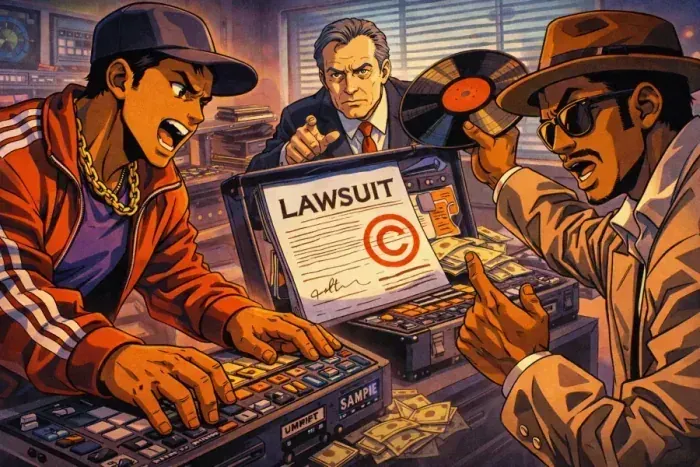
Sampling, Copyright, and the Coming Legal Battles
As hip-hop and sample-based production grew more ambitious, they also exposed a conflict the industry had not fully resolved. Producers were building new music from fragments of existing recordings, treating older records as archives to be cut, looped, and made to speak again. This method was inventive and deeply historical. It depended on listening as composition. But it also raised hard questions about who owned the past and who had the right to transform it.
Sampling mattered artistically because it changed what composition could mean. Instead of starting from a blank page, producers worked from dense cultural memory. A drum break, a horn stab, a bassline, or a vocal fragment could carry older histories into a new social moment. The result was not simple recycling. It was argument through juxtaposition, texture, and timing. Records could speak to one another across decades.
During much of the 1980s, the culture moved faster than the legal framework around it. Sampling flourished before copyright enforcement had fully adapted to what producers were actually doing. That gap made possible some of the decade’s boldest collage-like records, but it also stored up tension. The issue would become far more visible in courtrooms just after the decade ended. Even before that, however, the problem was already present inside the music itself.
There was also a power imbalance inside the legal uncertainty. The artists and producers building new work from fragments often had less institutional leverage than the companies that controlled catalog rights. So the question was never only aesthetic. It was also about whether corporate ownership of the archive would be allowed to limit the next phase of Black musical invention.
What made sampling so important was that it challenged older ideas of originality. It did not reject authorship. It redistributed it. The practice insisted that musical memory could be reworked rather than merely preserved. That helped push popular music forward, but it also made clear that innovation in the late 1980s often relied on materials still controlled by older corporate structures.
Crossover and Its Discontents
As Black music became more visible in the 1980s, it also became harder to discuss honestly. Success was repeatedly described as “crossover,” a term that sounded neutral but carried a clear assumption: Black music started at the margins and became central only after outside approval. That framing helped preserve existing hierarchies even while Black artists were defining the decade.
The term also disguised how much labor had already been done before wider recognition arrived. By the time a record was said to have “crossed over,” it had often already proven itself in Black radio, clubs, and community listening networks. The phrase shifted attention away from those publics and toward the moment of white or corporate recognition, as if that were the point at which the music became fully real.
Michael Jackson’s career shows both the scale of the breakthrough and the limits of the language around it. His success plainly challenged racial barriers, but it was often described as if Black artists had only just begun to shape popular music. Recognition arrived, but it was often framed as an exception instead of evidence that the system had long undervalued its actual center.
The pattern extended well beyond pop. R&B and hip-hop artists who reached larger audiences were often expected to soften their music, image, or politics to fit mainstream templates. Work that aligned with established commercial formats traveled more easily. Work that remained rooted in sharper social realities met more resistance. Some forms of Black expression were praised; others were ignored, diluted, or misread.
Appropriation added another layer. Rhythms, vocal styles, and production ideas developed in Black music moved widely through popular culture, but the people who created them were not always credited or paid proportionately. Similar sounds could be called universal or innovative when they appeared through white performers, even when their origins were clear.
The gatekeeping was institutional, not just personal. Radio segmented audiences by race. Television exposure was uneven. Awards systems often failed to match actual listening habits. These structures shaped careers in lasting ways.
What looks in retrospect like a debate about taste was therefore also a debate about who counted as universal. White performers could be treated as flexible, individual, and unbounded by category. Black performers were more often asked to represent a market segment. The difference was not semantic. It shaped budgets, media narratives, and the range of mistakes the industry was willing to forgive.
Black artists were not passive inside this system. Some used crossover strategically to reach larger audiences without surrendering identity. Others prioritized depth of community over broad approval. Both choices carried costs.
The 1980s did not solve these tensions. They made them impossible to miss. Success was never only about popularity. It was also about access, framing, and power.
Women in Hip-Hop and R&B: Voice, Control, Visibility
Women were present at every level of 1980s hip-hop and modern R&B, but their work rarely received the same long-term authority as comparable work by men. Visibility and power did not reliably travel together.
That imbalance appeared in different ways depending on the genre. In hip-hop, women often had to prove verbal force, crowd control, and toughness inside scenes that still coded authority as masculine. In R&B, women were more likely to be granted visibility, but often under tighter expectations around beauty, softness, respectability, or emotional availability. In both cases, the rules were restrictive even when success looked large from the outside.
Roxanne Shanté emerged from early hip-hop battle culture, where skill, speed, and crowd control mattered. Her success showed clearly that toughness and credibility were never exclusively masculine traits. But the industry that benefited from women like her rarely offered long-term support. Women could be celebrated when they made noise and then left without much protection once the moment passed.
That pattern says a great deal about the early business around rap. Women were often central to the excitement of the culture, but were not always granted the same long development arc, protection, or mythmaking that men received. Their contribution could be immediate and undeniable while still being treated as disposable.
Salt-N-Pepa negotiated that terrain with unusual intelligence. Their records used humor, confidence, and direct language to talk about gender, desire, and social behavior in ways that reached large audiences. Yet media coverage often treated them as novelty instead of as skilled architects of the music. Women in hip-hop were repeatedly asked to prove they belonged, even after success had already done the proving.
Part of what made their work so significant was its range. They could move between party energy, sexual candor, pop precision, and strategic accessibility without surrendering control of tone. That versatility helped build hip-hop’s mainstream future, even if the critical language around the group did not always reflect the scale of the achievement.
In R&B, the pressures were different but related. Janet Jackson worked in highly structured production environments where consistency and control carried enormous weight. Her success depended not just on talent, but on the negotiation of image, collaboration, and authorship in spaces where women were rarely assumed to be the final decision-makers.
Her importance in the decade lies partly in how thoroughly she turned that negotiation into an art form. Discipline, vulnerability, choreography, sonic precision, and visual clarity all became part of one coherent public language. That kind of authorship was easy to underestimate because it often appeared through polish rather than visible struggle. The work looked seamless, which is one reason the labor behind it could be overlooked.
Across genres, women were expected to stand for more than themselves. They were asked to represent sexuality, empowerment, respectability, or some contradictory mix of all three. If they resisted the role, they risked losing support. If they accepted it, they risked being flattened by it. Female ambition was often read as calculation, and assertiveness as something that needed managing.
That imbalance matters because women’s contributions were foundational. Their voices, phrasing, performance styles, and visual choices shaped genres, fashion, language, and the emotional range of the decade. Yet those contributions were often written down later as exceptions rather than part of the structure.
The problem was not a lack of talent. It was a lack of systems willing to grant lasting authority. That gap helps explain why later battles over credit, control, and representation did not appear from nowhere. They were already built into the decade.
Politics, Protest, and Moral Panic
The 1980s were marked by sustained tension. Cold War rhetoric sharpened, economic conflict deepened, and the possibility of large-scale disaster never fully disappeared. Those pressures did not stay abstract. They shaped everyday feeling, including how people imagined the future and their place inside changing systems. Music became one way to register, process, and sometimes resist that unease.
Political pressure did not produce one unified style. It spread unevenly across pop, rock, post-punk, hip-hop, and charity spectacle. Some songs named the crisis directly. Others carried it through atmosphere, repetition, fatigue, or clipped emotional distance. That range matters because 1980s political feeling often lived as much in tone and structure as in explicit statement.
Political expression also changed form. Earlier protest music often aimed for direct statement. In the 1980s, fear was just as often carried by atmosphere, repetition, and restraint. Some artists addressed global conflict plainly. Others turned toward emotional distance, spiritual uncertainty, or private anxiety. Both approaches emerged from the same condition: stability no longer felt guaranteed.
At the same time, conservative politics grew stronger, and arguments about morality, censorship, and cultural values moved closer to the center of public life. Music occupied an awkward place in that debate. It was entertainment, but it was also treated as a possible social threat.
This section follows that pressure: how fear entered sound and language, how institutions responded, and how popular music became both a mirror and a refuge.
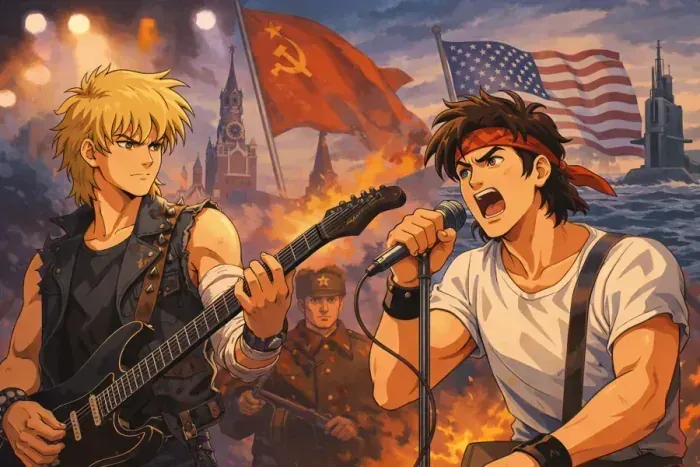
The Cold War Echoes Through Music
The Cold War returned with new force in the 1980s, and the threat of nuclear conflict felt present rather than historical. It entered news, classrooms, television, and everyday conversation. That unease also entered music, sometimes through direct protest and often through mood, repetition, and emotional restraint.
Part of what made this climate distinctive was how ordinary the fear became. Nuclear anxiety did not belong only to speeches and policy debates. It appeared in school life, in television dramas, in newspaper imagery, and in the general sense that disaster was no longer unthinkable. Music absorbed that condition. Even songs that never mentioned missiles or states could still sound suspended, brittle, or haunted by it.
Some artists were explicit. Sting’s “Russians” approached nuclear fear through shared human vulnerability rather than bombast. Its calm tone mattered. The warning did not need to shout to feel serious.
That calmness was part of the argument. Instead of answering geopolitical pressure with more aggression, the song reduced the scale to fragility, empathy, and the possibility of mutual destruction. The danger felt stronger because it sounded measured.
Others carried politics through a more emotional register. U2 paired political awareness with spiritual and moral tension. Songs like “Sunday Bloody Sunday” did not pretend to offer easy solutions. They worked through grief, repetition, and the knowledge that violence could become structural rather than exceptional.
That register mattered because many listeners were not looking to pop songs for policy detail. They were listening for recognition. Music could register stalemate, dread, and moral exhaustion long before it offered any solution. This is one reason colder textures and repetitive forms could feel political even when the lyrics stayed indirect.
In continental Europe, these fears often sounded more openly absurd. Nena’s “99 Luftballons” turned the logic of escalation into a pop song about fragility, accident, and misunderstanding. Its international success suggested that the fear was widely shared even across different political contexts.
The song also captured a key 1980s intuition: catastrophe might emerge not from one villainous act but from a system built to misread signals and escalate too fast. Its light surface made the threat easier to carry, not less serious.
Not all of this music sounded like traditional protest. Repetitive rhythms, stark synth lines, and emotionally distant vocals often carried their own political charge. They reflected a world shaped by surveillance, countdowns, and impersonal systems. People did not always name the fear directly, but they heard it.
That is part of what makes 1980s political music distinctive. It often sounded tired, uncertain, or suspended rather than triumphantly mobilized. The threat lingered instead of arriving and leaving cleanly.
Music did not resolve that discomfort. It gave it form. It became a place for recognition rather than instruction and made public fear audible even when official language smoothed it over.
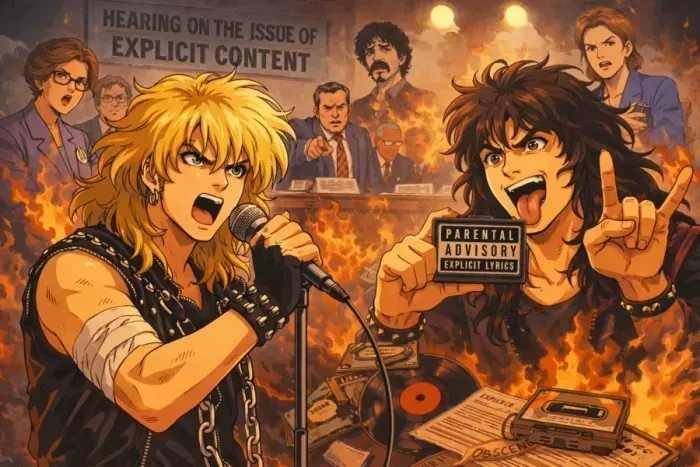
The PMRC and the Battle Over Lyrics
In the 1980s, cultural anxiety often settled on popular music. As youth culture became more visible through television and global media, it also became easier to target. Claims that songs encouraged violence, sexual permissiveness, rebellion, or social disorder were not new, but in this decade they gained stronger institutional backing.
The visibility boom helped drive the panic. Music no longer lived mainly in clubs, cars, bedrooms, and record stores. It appeared on television, in news coverage, and in broader arguments about what young people were becoming. That made it easier for adults to imagine youth culture as a force slipping beyond supervision. Popular music became a convenient site onto which larger fears about authority, sexuality, race, and generational change could be projected.
In the United States, the clearest institutional expression of that anxiety was the Parents Music Resource Center, or PMRC. Led by politically connected figures, the group framed itself as a defender of family values while targeting explicit lyrics and provocative imagery. The Senate hearing on record labeling on September 19, 1985 turned artistic expression into a national public argument.
What made the PMRC effective was not only the complaint itself, but the frame around it. The campaign presented itself as a matter of information and parental protection rather than censorship. That framing gave regulation a respectable tone while still pressuring labels, retailers, and broadcasters to treat certain music as suspect.
Frank Zappa answered by attacking the premise itself. He argued that censorship could not be treated as neutral regulation and warned that once such tools existed, their use would expand. His testimony pushed back against the idea that music was a social problem to be managed rather than a form of speech to be understood.
Dee Snider’s testimony mattered for a different reason. His presence disrupted the public fantasy that musicians under suspicion were automatically incoherent or incapable of serious argument. The hearings relied partly on a visual script in which authority looked reasonable and performers looked dangerous. That script weakened when the artists spoke for themselves.
Others used irony simply by appearing. Musicians from heavy metal, including Twisted Sister, showed Congress how wide the gap was between public fantasy and lived musical experience. They were treated as threats less because of demonstrated harm than because they were loud, visible, and culturally easy to fear.
The panic was never only about lyrics. It attached itself to style, fashion, and genre. Metal, punk, and hip-hop were especially vulnerable, and race and class shaped those judgments throughout. Music from marginalized communities was more likely to be framed as dangerous, while similar themes in mainstream pop could be dismissed as theater.
Parental advisory labels became the compromise, but they also created a lasting precedent. They were presented as information, yet they worked as warnings that affected retail, broadcast, and public perception. Some artists turned the controversy into attention. For others, especially those with less institutional backing, the labels made access harder.
These censorship fights revealed how tightly music was tied to broader struggles over control. Behind the language of protection sat deeper fears about youth autonomy, cultural change, and private listening that might escape supervision.
The panic did not silence music. It clarified how threatening expression can seem when it refuses to stay inside approved boundaries.
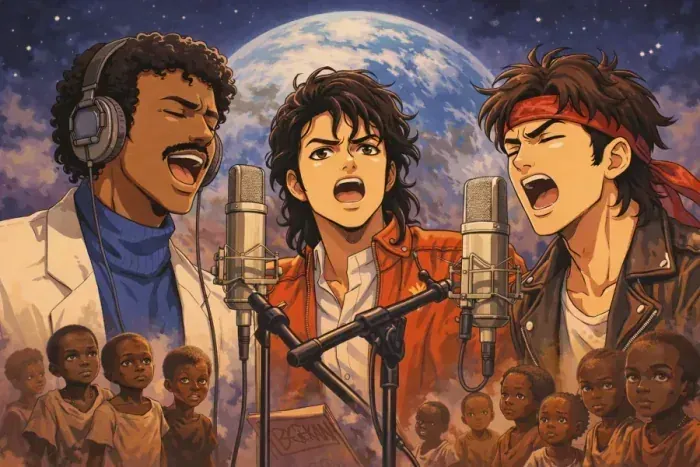
We Are the World: When Pop Tried to Save the World
Political anxiety and moral conflict were not the only public pressures of the decade. Popular music also became a major vehicle for responding to global crisis. Charity singles and benefit spectacles promised unity at a time of division by using familiar voices and simple emotional language.
The appeal of these projects was easy to understand. They offered a form of action that felt immediate and legible. In a decade saturated with distance, fragmentation, and mediated fear, a song could make compassion feel collective and visible. Celebrity became the delivery system for moral urgency.
Band Aid and USA for Africa became defining examples. “Do They Know It’s Christmas?” and “We Are the World” assembled famous voices into a collective appeal, turning concern into spectacle on a scale pop had rarely attempted. Live Aid extended that logic through linked stadium concerts and global broadcast infrastructure. For many listeners, these events were genuinely moving. Pop seemed capable of cutting through paralysis and making compassion feel immediate.
That scale made participation feel possible. Buying a single, donating money, or simply watching became a way to join something larger than everyday life.
There was also a broader media lesson inside these events. Pop had already become global in distribution, but charity spectacle showed that it could become global in moral address as well. The industry was learning to present itself not only as entertainment, but as a public actor capable of staging ethical response on an international scale.
But these projects also revealed the limits of pop-driven activism. Their stories often compressed complex political and economic realities into emotionally legible images of distant suffering. Western stars were often positioned as speakers or saviors, while artists from affected regions were pushed to the edge or left out entirely. The music spoke about them more often than with them.
That imbalance did not erase the sincerity many participants and listeners felt, but it did shape the politics of the format. The spectacle rewarded immediacy over explanation and recognizable celebrity over local authority. Crisis became easier to consume when it could be condensed into one anthem, one event, and one moral appeal.
There was also a tension between immediate emotion and structural change. The campaigns raised money and attention, but they did not alter the systems that had produced the crises. Some musicians worried that symbolism was becoming a substitute for deeper engagement.
Still, it would be too easy to dismiss these efforts outright. They registered a real desire to do something in a decade marked by fear, distance, and fragmentation. Music made global crisis feel emotionally near, even if the model was imperfect.
That is why the legacy of 1980s charity pop remains double. It mobilized enormous attention, but it also left hard questions about representation, responsibility, and who gets to speak for whom.
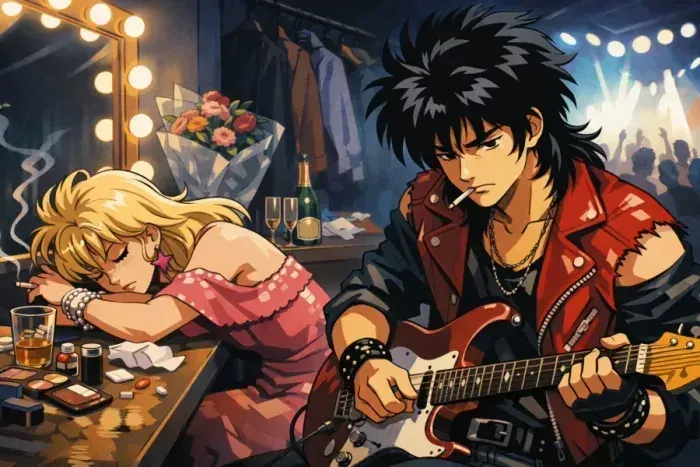
The Price of Fame: What Success Really Cost
The 1980s are often remembered as a decade of confidence and excess, but underneath that surface there was mounting strain. Fame became faster, louder, and more demanding. Artists were expected not only to make records, but also to remain constantly available, legible, and visually compelling in a media environment that never seemed to rest.
What changed was not only the amount of attention, but its rhythm. Visibility no longer arrived in occasional bursts around a release. It became a near-continuous condition managed across video, print, touring, television, and publicity. At the top level of the industry, success increasingly meant being narratable all the time.
The costs were real. Tour schedules stretched, promotional cycles tightened, and private lives became more public. For many artists, especially those whose public image was tightly bound to identity, the line between self and work blurred badly. Success promised freedom, but it often brought new forms of control and exhaustion. Vulnerability became risky, and silence was easily mistaken for failure.
This pressure was unevenly distributed. Superstars had more money and support, but they also carried the heaviest demands for consistency and scale. Newer artists had less room to refuse. Women, Black artists, and anyone already subject to moral or identity-based scrutiny often carried an extra layer of labor on top of the basic workload of fame.
Mental health had little useful public language at the time. Addiction, anxiety, and burnout were often treated as personal weakness rather than as responses to structural pressure. Problems were most visible only when they became impossible to hide. Women and less-protected artists often faced even harsher versions of that pressure.
This next section looks at fame from the inside: daily strain, emotional labor, and the industry’s uneven response when people could no longer keep pace.
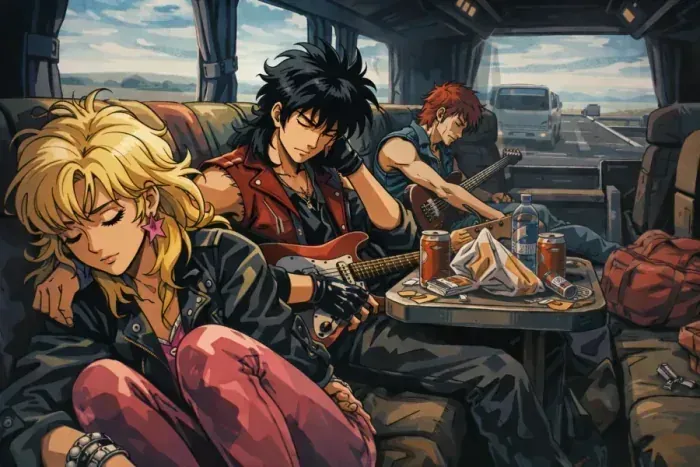
Life on the Road: Touring as Endurance Test
In the 1980s, touring was more than just a way to promote a record. It became a key source of economic growth and a test of how long people could last. As albums became more expensive to make and the number of times a song was played on the radio increased, artists were expected to travel more and perform the same level of music every night. What had once been a promotional cycle started to feel permanent.
The road also became part of the product. Large tours were expected to prove scale, not just support an album. Staging, lights, timing, sound, and physical performance all had to confirm that the artist belonged at arena or stadium level. That raised both the practical demands and the symbolic pressure.
For major artists, the scale was immense. Bruce Springsteen’s mid-1980s tours became symbols of stamina as much as performance. Audiences experienced them as release and collective feeling, but for performers they required repetition, endurance, and very little room for fluctuation. Consistency became mandatory, not optional.
That logic reshaped professionalism itself. To be professional increasingly meant being able to reproduce energy on command, absorb fatigue without showing it, and keep the body functioning inside a schedule designed more for momentum than recovery.
At the same time, media coverage continued after artists left the stage. Between shows, there were interviews, photo shoots, television appearances, and video productions. Music television meant performers had to stay visible even when they weren’t releasing new songs. Silence could read like irrelevance. Staying present became part of the job, no matter what it cost.
For artists like Prince, being productive helped them deal with their feelings and also kept the pressure moving. His constant recording and performing suggested both control and strain. The output was relentless, and rest was hard to protect. At that intensity, it became difficult to tell where dedication ended and self-erasure began.
At lower levels of the industry, the glamour was much thinner. Long drives, bad sleep, technical problems, financial uncertainty, and unstable routine shaped daily life for support acts, crews, and working musicians. The touring economy depended on many forms of labor that stayed mostly invisible.
The demand for constant availability had a particularly hard effect on newer artists. Artists without strong leverage found it especially hard to refuse schedules that left no space for private life or recovery. Touring crews, support staff, and musicians moved through cycles of hotels, soundchecks, and late nights, cut off from routine. Fatigue became normalized and was often treated as proof of commitment.
Women artists had to meet more expectations. Touring meant dealing with exhaustion, safety concerns, maintaining a good image, and emotional labor. The job required being professional and calm all the time, even when things got hard. Complaints were seen as a sign of weakness or ingratitude.
By the end of the decade, the cost of this saturation was becoming clearer. Burnout was not unusual. It was part of how the industry worked. In that system, being present meant being valuable. The music of the 1980s is remembered for its energy, but a lot of that energy came from people pushing themselves past their limits. That helps explain why exhaustion became one of the decade’s hidden rhythms, shaping careers in ways charts and headlines rarely showed.
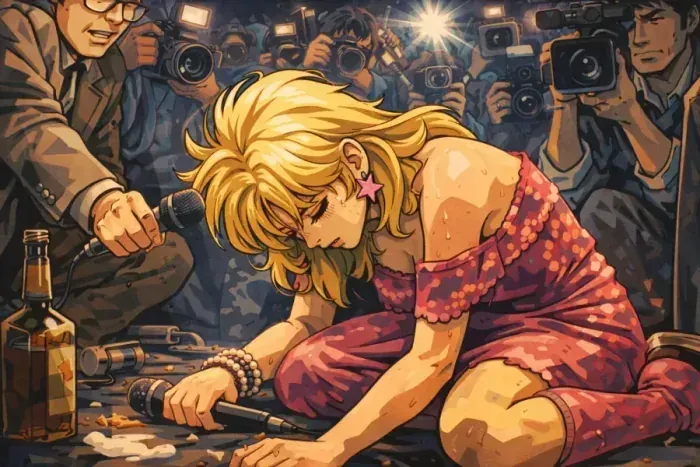
Addiction, Burnout, and Public Collapse
In the 1980s, many highly visible artists buckled under the weight of attention. Addiction was one of the most visible responses to that pressure, and one of the most misunderstood. It was often framed as indulgence rather than as a way of coping inside a system that rewarded exposure, ambition, and availability while punishing caution or withdrawal.
Substances could function as tools as much as escapes: to get on stage, to come down after adrenaline, to stay awake, to sleep, to keep social momentum going, or to blunt panic. That does not soften the damage. It helps explain why the pattern was so persistent in an industry that demanded constant performance and offered limited language for distress.
The decade’s media machinery made those struggles harder to contain. Tabloids expanded, entertainment television multiplied, and the line between reporting and surveillance grew thin. Problems that might once have remained private could quickly become part of an artist’s public identity. Vulnerability was turned into storyline before there was time for understanding or care.
The tempo of collapse changed as well. A missed appearance, a bad interview, or a visible sign of instability could become part of a circulating narrative almost immediately. Once that story hardened, it affected label confidence, media framing, and public sympathy all at once.
The industry’s response was uneven. Some artists received protection, treatment, or room to recover. Others were left exposed once they became harder to market. Support often arrived late, after the crisis had already become visible. When care existed, it was rarely discussed openly. Silence protected careers, but it also deepened isolation.
What made these situations especially brutal was the gap between image and reality. Artists were sold as symbols of success, strength, and aspiration even while dealing with exhaustion, dependency, or fear. That contradiction made it harder to ask for help. Struggle threatened the very image on which success depended.
Looking back, these stories read less like personal failure than like structural strain. Fame did not cause every crisis, but it often intensified the damage and then turned it into spectacle.
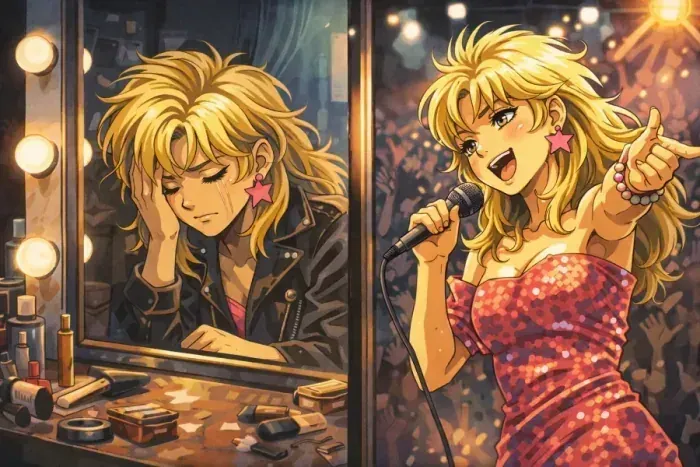
The Invisible Work: Managing Feelings Under the Spotlight
The pressures of fame did not land equally. Gender shaped how artists were seen and what they were expected to feel, manage, and endure. Emotional labor, the work of managing other people’s comfort, became part of the job, especially for women.
That labor was rarely named as labor. It appeared as charm, gratitude, poise, accessibility, patience, and the ability to keep everyone else comfortable. Maintaining that surface took effort, especially under exhaustion, harassment, public judgment, or conflict behind the scenes.
Women were expected to stay warm, grateful, and legible even under severe strain. Confidence could be recast as arrogance, and boundaries as hostility. When artists like Madonna exercised control, the language around them often framed that control as manipulation rather than strategy. The same behavior that made male artists look driven or brilliant could make women look suspect.
For performers like Sinéad O’Connor, emotional honesty brought its own punishment. Refusing to separate personal pain from public art challenged an industry that preferred clean, manageable narratives. Vulnerability was acceptable only when it arrived in approved form.
This pressure extended beyond interviews and publicity. Women were often expected to stand for larger values, to represent their gender, their audience, or a moral position. That symbolic role left less room for contradiction. Mistakes were judged more harshly, and exhaustion was more easily read as instability.
Men were not exempt from emotional pressure, but they were given different instructions. Anger, detachment, or withdrawal could be seen as intensity or depth. For women, similar responses might be seen as unprofessional or unpredictable. This imbalance influenced how artists dealt with stress and how freely they could talk about their struggles.
The burden also extended into collaboration. Women often had to manage the emotional climate of studios, rehearsals, touring parties, interviews, and business meetings where authority was still strongly gendered. Being decisive could carry a reputational cost. Being accommodating could mean surrendering control. That balancing act was part of the work, even though success narratives rarely acknowledged it.
Emotional labor also affected creative output. Songs written by women often spoke about the writer’s personal life, mixing art with confession in the public imagination. That was a narrow way of hearing the work. It reduced structure, craft, and intention to feeling alone and made it harder for women to control the story around their own music.
By the end of the decade, it was clear that these expectations damaged careers. Burnout, collapse, and enforced retreat were visible, but there was little public language for what connected them. Mental health was usually discussed only at the point of crisis, and gendered labor was rarely named at all.
Emotional pressure was built into the machinery of fame. Inequality was not separate from stardom; it was part of how stardom worked. Success required talent and endurance, but also the ability to absorb pressure without visibly breaking. For many artists, especially women, that hidden labor shaped careers as much as reviews or chart positions.
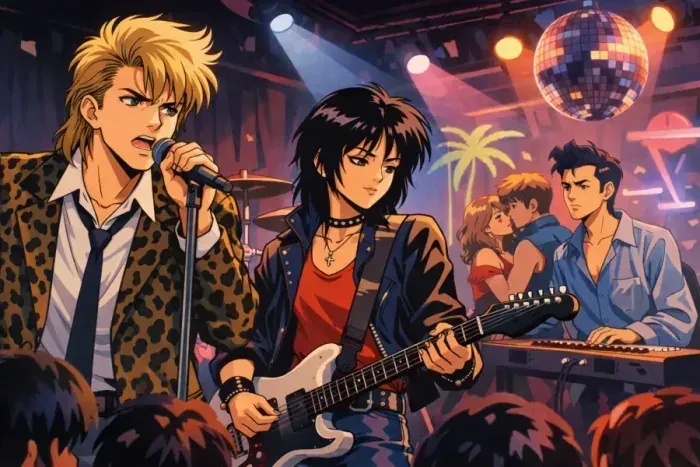
Where Music Lived: Cities, Scenes, and Spaces
Even though public attention centered on stars and mass media, much of the decade’s most important music was made away from that spotlight. It grew in cities, neighborhoods, club basements, rehearsal rooms, and local networks. Scenes mattered because they gave music what the global industry could not: context, place, and shared stakes.
What a scene offered was not just a venue or a roster of bands. It offered repetition, shared reference points, and a social world in which people could hear why something mattered before it made sense to outsiders. Local scenes gave artists a first audience, critics a first language, and listeners a way to belong to music as participants rather than distant consumers.
Cities shaped sound not just through infrastructure, but through pressure, mood, and social structure. Economic decline, political division, migration, and subcultural networks all left audible traces. A song often made deepest sense in relation to the place that produced it, even when it later traveled elsewhere.
These local cultures were never sealed off. Tapes circulated, tours linked scenes, and ideas moved between communities, often faster than money or official support. What mattered was not dominance, but persistence. Many of the decade’s lasting movements were built slowly on shared values rather than immediate scale.
That perspective matters because the 1980s are often remembered from the top down, through charts, icons, and broadcast systems. Seen from the ground, the decade looks different. It looks like scenes building durable forms of life under uneven conditions: cheap rent in some cities, abandoned industrial space in others, and constant improvisation almost everywhere.
This shift from charts to geography helps explain how music stayed locally rooted even as the wider industry grew more standardized.
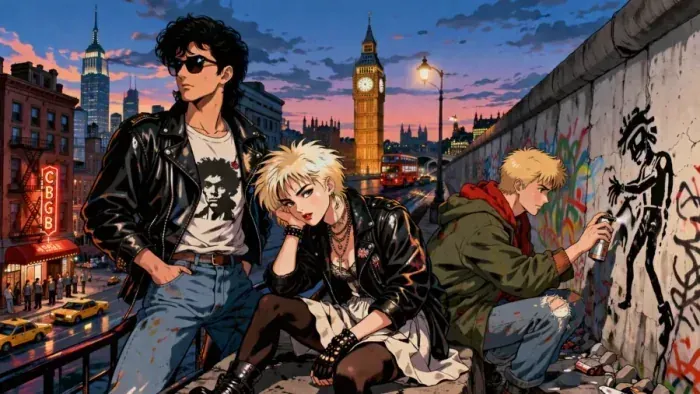
New York, London, Berlin: Cities That Shaped the Sound
In the 1980s, cities were more than backdrops for music scenes. They actively shaped what those scenes sounded like. New York, London, and Berlin mattered not just because they produced influential artists, but because each city imposed different pressures, rhythms, and possibilities on the people working there.
Urban space mattered practically as well as symbolically. Rent levels, transport, club licensing, abandoned buildings, art-school networks, immigration patterns, and police pressure all helped determine who could gather, rehearse, experiment, and stay out long enough for a scene to form. Sound did not float above those conditions. It emerged from them.
In New York City, music grew out of the density and pressure of the city. Hip-hop started in neighborhoods marked by disinvestment and surveillance. It made creativity out of limited resources. DJs and MCs used turntables, drum machines, and public space in new ways, creating a culture that valued presence and immediacy. At the same time, downtown art scenes encouraged new and different styles of rock and electronic music. Bands like Sonic Youth used noise, repetition, and tension to express feelings of urban division. New York’s music was rarely well-polished. It was shaped by friction.
That friction was one reason so many forms could coexist there without blending into one style. Uptown and downtown scenes did not share the same institutions or social base, yet they existed under the pressure of the same city. New York kept producing forms that felt urgent because it kept forcing different communities into uneasy proximity.
London worked differently. Economic austerity, class tension, and post-imperial identity fed both the sound and the attitude of its scenes. Post-punk and new wave artists answered that pressure with irony, minimalism, and sharp social observation. The city’s club culture also mattered, bringing Caribbean music, electronic experiment, and youth fashion into the same orbit.
London’s importance also came from overlap. Pirate radio, clubs, immigrant communities, style magazines, independent labels, and art-school circles were not separate worlds. They rubbed against each other constantly. That helped produce music that was often highly self-aware about image and politics at the same time.
In Berlin, the division was literal. The wall shaped daily life, and music became one way to live inside that pressure. Underground scenes grew in hidden corners where electronic and industrial sounds mirrored isolation, surveillance, and control. In West Berlin especially, clubs and informal spaces could function as temporary zones of freedom for artists and outsiders who did not fit easily elsewhere.
Berlin’s atmosphere encouraged extremity of mood. Sparse electronics, mechanical rhythm, and cold spatial sound made emotional sense in a city defined by separation and constant political pressure. The music did not simply describe the city. It gave shape to what it felt like to remain inside it.
Beyond these well-known centers, many other cities had their own important cultural scenes. Manchester, Detroit, Chicago, and Düsseldorf each had their own unique approach, influenced by their local industries, migration patterns, and infrastructure. In Detroit, economic collapse and automation shaped a group of electronic musicians who turned the city’s industrial decline into futuristic sound. Manchester’s empty industrial spaces gave new club culture and independent music room to grow.
Chicago’s club infrastructure, Düsseldorf’s electronic discipline, and Manchester’s post-industrial emptiness all show the same larger point. Cities did not produce music because they were glamorous. They produced it because they concentrated pressure and made collective response possible.
These cities were united less by style than by function. They offered density, anonymity, and community. Scenes flourished because people could meet, experiment, fail, and try again. Even as music traveled farther, cities remained places where it could still belong somewhere specific.
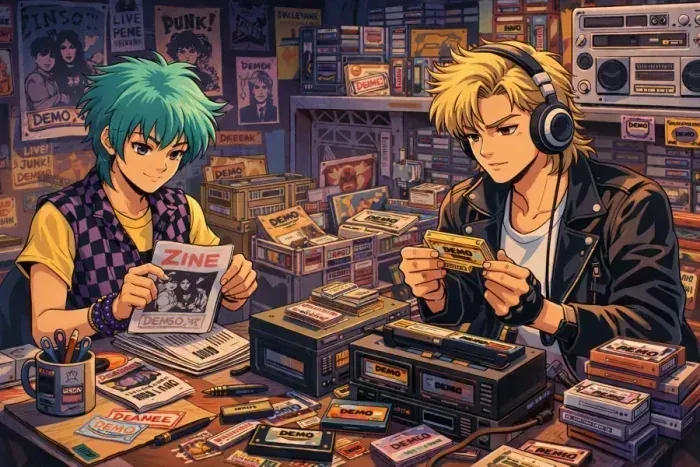
Indie Labels, Zines, and Cassette Culture
Many of the decade’s most important bands depended on networks of independent labels, distributors, college radio stations, zines, and committed fans. These systems were rarely glamorous and often financially unstable, but they kept scenes alive. Where major labels favored scale and predictability, independent structures often prioritized trust, local knowledge, and shared purpose.
These systems mattered because they changed what counted as success. A band did not need a major hit to matter inside a scene. It needed records that could circulate, a few places to play, people willing to write about the music seriously, and enough infrastructure to keep moving. Independent culture turned continuity itself into an achievement.
Labels like Factory Records became symbols of local identity. Factory, a Manchester-based record label, did more than release records. It built a local world in which music, design, and place reinforced one another. Its work with artists like Joy Division and New Order showed a willingness to let projects evolve without demanding immediate commercial clarity. That approach was risky, but it made kinds of work possible that tighter systems would have squeezed out.
In the United States, record labels like SST Records helped bands that weren’t getting a lot of attention. SST’s roster, which included Hüsker Dü and at one point Sonic Youth, favored movement over polish. Records came out fast, touring was constant, and mistakes were treated as part of the process. That pace helped ideas move across long distances before digital exchange made that kind of circulation feel ordinary.
DIY infrastructure was about more than just labels. College radio stations were very important because they could play new music without obeying commercial radio’s narrower rules. DJs often acted more like organizers than gatekeepers, building relationships with artists and listeners over time. Fanzines added another layer: local, opinionated, and more personal than promotional.
Zines were especially important because they produced language as well as publicity. They gave scenes a way to argue with themselves, describe emerging sounds, and create memory before mainstream journalism noticed. Their tone could be partisan, messy, and uneven, but that was part of their value. They made criticism feel local and owned.
Distribution was often improvised. Records were sold at shows, mailed directly, or traded between scenes. Cassette culture extended that reach further, letting music move cheaply and quickly when no formal channel existed. These systems were inefficient, but they made listeners participants rather than passive consumers.
The cassette mattered not only because it was cheap. It encouraged copying, sequencing, recommendation, and personal circulation. It let music travel through friendship and scene loyalty rather than only through retail. That gave listeners a more active role in how underground culture spread.
These systems were independent, but this did not guarantee that they were fair or sustainable. Labels failed, money ran out, and artists still struggled to make a living. But the values these systems established mattered. They showed that music could be organized around shared belief and local commitment rather than around constant mainstream approval.
By the end of the decade, the influence of independent infrastructure was clear. Major labels began absorbing alternative sounds, but the deeper legacy was structural. Community building, self-release, and creative autonomy continued to shape how musicians made and shared work. In an increasingly standardized culture, DIY systems kept some space open for difference.
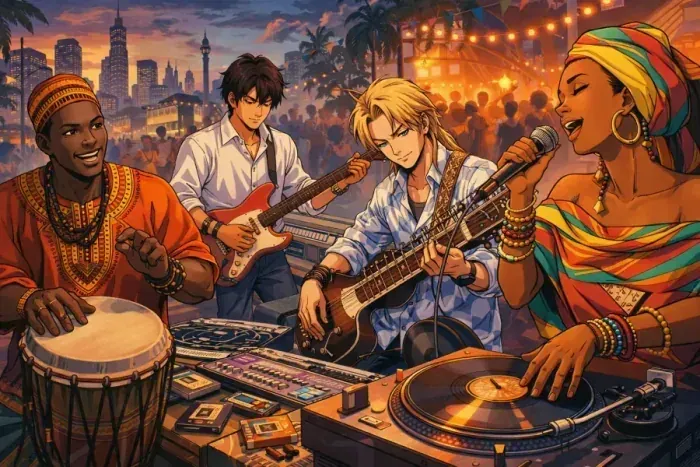
Migration, Exchange, and the Limits of 'World Music'
Much writing on the 1980s still centers Western capitals, but some of the decade’s most important developments came from migration, postcolonial history, and uneven access to global media. Sounds moved across borders through people rather than platforms, carrying memory, displacement, and adaptation with them.
That movement was not abstract exchange. It happened through families, neighborhoods, diasporic businesses, touring circuits, radio habits, imported records, and people building new lives in unfamiliar cities. Music traveled with language, food, fashion, and social memory. It arrived already embedded in lived experience.
Migration had a major effect on the sounds that could be heard in cities. In European cities, groups of people from different parts of the world brought their musical traditions to new places. There, these traditions met local music and technology. Reggae, Afrobeat, and Caribbean and African popular styles reshaped club culture, radio, and youth identity long before mainstream institutions named what they were hearing. These influences were often audible before they were properly recognized.
This is one reason so much later writing about “fusion” sounds incomplete. The mixing was not a novelty effect added in the studio. It often came from ordinary proximity: shared streets, shared night life, shared sounds coming from shops, parties, pirate radio, and family spaces. By the time institutions created a label for these crossings, listeners had often been living with them for years.
Youssou N’Dour is an example of an artist who used local traditions to connect with people around the world without flattening his own cultural context. His work mixed Senegalese mbalax rhythms with modern production in ways that felt contemporary and locally grounded at the same time. The Western label “world music” never captured that well. These were not timeless curiosities. They were modern responses to specific histories.
In Latin America, political repression and economic instability influenced music. Pop and rock developed alongside protest traditions, often under censorship. Musicians worked around state control through metaphor, humor, and coded language, while limited access to synthesizers and recording technology pushed them toward distinctive blends of electronic experiment and regional form.
Hybrid sounds also emerged through return journeys. Artists moving between continents brought ideas back with them, complicating any simple story of one-way influence. Western pop borrowed heavily from these circulations, often without proportionate credit, while local musicians kept building new forms under very different material conditions.
What looked from the center like “global influence” often looked from the margins like uneven exchange. Access to recording budgets, promotion, visas, and international press was not evenly distributed. So circulation created opportunity and distortion at the same time.
What connected these movements was not genre, but negotiation. Musicians wanted to reach more people without severing ties to local audiences. Visibility offered opportunity, but also the risk of simplification. Many artists entered global circuits selectively, taking part without handing themselves over completely.
The 1980s did not invent global hybridity, but they accelerated it. Migration, media, and technology sped up exchange while making inequality more visible. Listen beyond the main centers and the decade stops sounding singular. It becomes a history of movement, adaptation, and unequal connection.
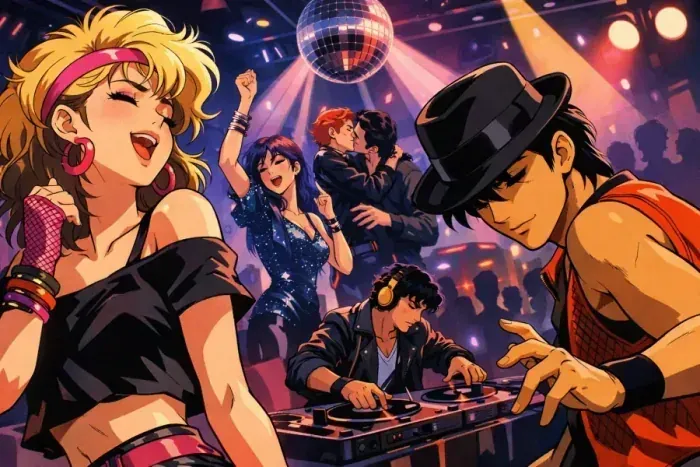
The Club: Where Bodies, Beats, and Freedom Met
If one part of the decade belonged to stadiums and television, another belonged to clubs. Dance floors brought sound, bodies, and community together with very little distance between them. They often operated out of sight, but their influence ran far beyond the room. Before genres were named or marketed, dancers tested them here.
Club culture mattered because it organized time differently from radio and television. A night could last for hours. Energy could rise gradually, hold, break apart, and rebuild. Meaning came from sequence, pressure, and collective response rather than from one song standing alone. That made clubs unusually fertile spaces for musical change.
Songs in clubs were judged less by chart potential than by what they did to the room. DJs acted as curators, translators, and organizers, selecting, extending, and reshaping tracks in real time. The boundary between performer and audience softened as the room responded together.
These spaces were especially important for communities that were excluded elsewhere. Queer scenes, Black and Latino audiences, and experimental subcultures were able to exist according to their own rules. Fashion, language, and identity all changed together with sound. Together they formed whole ecosystems rather than isolated styles. Safety and expression had to be negotiated at the same time, even under constant outside pressure.
The room itself mattered as a social technology. Lighting, sound systems, door policies, who was welcomed, and who felt watched all shaped what kind of freedom was possible. Clubs could never be separated from risk, but they made forms of collective life possible that were harder to sustain in the open.
Dance floors were therefore not side scenes. They were laboratories of sound, sites of resistance, and drivers of cultural change.
The DJ as Author: How Clubs Shaped Music
In the 1980s, clubs were not just places where records were played. They were places where DJs decided how records would live. Tracks were tested on dance floors long before they reached radio or the charts. Crowds helped determine what worked. DJs were not background entertainment. They were editors and authors of shared experience.
This role depended on patience, memory, and social reading. A DJ had to know not only what record was good, but when it should arrive, what should come before it, and how long a room could stay inside one groove before it needed disruption. Authorship here was distributed through timing rather than concentrated in one visible creator.
Frankie Knuckles showed how central that role could become. At places like the Warehouse in Chicago, widely treated as one of the foundational spaces of house music, he treated records as raw material. Tracks were made longer, mixed together, and changed to fit the energy of the room. The goal was continuity, not novelty for its own sake. Music stretched over hours, and dancers moved inside gradual shifts rather than sharp endings. That method valued stamina, repetition, and subtle change, qualities central in practice but rarely rewarded by radio.
In New York, places like the Paradise Garage worked from similar principles but with a different emotional atmosphere. Disco, funk, early electronic music, and new club records were mixed into long arcs. The sound system itself became part of the instrument. For many dancers, these nights offered a rare chance to move, gather, and exist outside ordinary social rules.
Club culture challenged traditional ideas of authorship. The DJ’s choices influenced how people understood records. DJs could turn overlooked tracks into local anthems simply by placing them differently in the room. Producers responded by making longer mixes and club versions, and that feedback loop helped prepare the ground for the 12-inch, the remix, and other ways of treating a song as multiple possible forms.
That feedback loop also changed listening outside the club. Once audiences got used to versions, dubs, edits, and extended mixes, the idea of one definitive recording weakened. Dance culture taught popular music to think in modular form.
Clubs also brought together people who were often ignored or pushed aside elsewhere, including LGBTQ+ communities and people of color. These spaces offered safety without asking people to flatten themselves. Fashion, dance styles, and language changed together with sound, producing cultures that simple genre labels could not contain.
This music eventually reached mainstream audiences, but market success was not its initial purpose. Many of the decade’s key dance records mattered first because they served a room, not a sales strategy. When the industry caught up, it often misunderstood what made these scenes powerful in the first place.
The 1980s dance floor demanded presence. Music had to work in time, with bodies, and over hours rather than minutes. That requirement left a deep mark on sound, emphasizing rhythm, patience, and collective feeling.
The 12-Inch, the Remix, and the Extended Version
One of the most important formal changes of the decade came through the 12-inch single. What looked at first like a format detail became a new way of thinking about time, structure, and repetition. Extended versions gave rhythm more room to breathe. Intros could stretch out, breakdowns could matter, and tension could build without rushing toward a chorus or radio edit.
It changed more than song length. It changed musical expectation. Listeners and dancers learned to treat repetition as development rather than delay. A groove could deepen meaning by staying in place long enough for bodies to hear the small differences inside it.
This mattered especially in clubs, where songs had to function as tools for movement rather than as neatly contained statements. Producers learned to think in terms of versions: radio mixes, dub mixes, instrumental versions, and extended cuts built for specific rooms and audiences. A song was no longer always one fixed object. It could exist as a family of related forms, each revealing a different logic inside the same material.
The remix also redistributed creative authority. Producers, engineers, and DJs gained new influence because rearrangement itself became a creative act. That change moved beyond dance music. Mainstream pop began absorbing club logic, and listeners grew used to the idea that records could be revised, expanded, and repurposed instead of simply released once in final form.
By the end of the decade, this way of thinking had spread far beyond specialist scenes. Even listeners who never set foot in a club were hearing pop shaped by club time: longer introductions, harder drum presence, alternate versions, and songs designed to survive multiple contexts.
Queer Clubs: Where Identity Found Its Beat
Queer spaces were central to the sound, style, and meaning of 1980s dance music. Long before open acceptance, gay clubs gave people room to explore identity without constant explanation. Music in these rooms was more than entertainment. It was survival, self-expression, and connection in a culture that often denied all three.
That social function shaped the music’s emotional range. Dance tracks in queer spaces were not only about release. They also made room for control, glamour, camp, longing, theatricality, and reinvention. The floor could hold joy and defensiveness, display and privacy, euphoria and vigilance at the same time.
In cities like New York and Chicago, the queer community played an important role in the development of club culture. Dance floors were places where gender expression, sexuality, and self-image could change easily. Music allowed for this freedom because it didn’t follow a strict script. Extended grooves, layered rhythms, and gradual transitions let dancers move without interruption, while lyric-light tracks left more room for personal meaning.
Fashion and music were closely connected. In queer club spaces, clothing wasn’t about following trends. It was a way to show that someone belonged and was willing to try new things. Styles drew inspiration from a variety of sources, including drag performance, punk, disco glamour, and everyday streetwear. Those influences were mixed rather than ranked, and the visual field changed how the music itself was felt. Sound and appearance developed together.
Artists like Sylvester combined music, identity, and performance in distinctive ways. He complicated norms of masculinity and self-presentation with joy, theatricality, and emotional openness. His work mattered not only because of individual songs, but because it embodied a sense of freedom that resonated across queer scenes.
These spaces were important even when they didn’t openly push for political change. In the 1980s, there was a lot of conservatism and the early years of the AIDS crisis. Queer clubs were places where people took care of each other and grieved, but they were also places where people celebrated. Music carried what words often could not. Dancing together became a way to insist on being alive under fear and loss.
That insistence mattered historically. Queer club life did not merely react to exclusion. It generated style, social codes, and musical priorities that traveled far beyond the room. Much of what later looked like mainstream club culture had already been worked out in spaces built under pressure.
Much of this influence was recognized late, and often stripped of context. Queer club culture shaped mainstream fashion and music, but the labor required to sustain those spaces was easier to overlook, especially as legal pressure, financial instability, and social hostility increased.
The importance of queer spaces in the 1980s goes beyond any single genre or artist. They showed music as a way of living in which sound, body, and identity were inseparable, and they reshaped popular culture far beyond the rooms where they started.

AIDS, Silence, and Cultural Loss
Any serious account of 1980s club culture has to acknowledge the AIDS crisis. In queer spaces especially, music was never only about pleasure or escape. As the decade moved on, dance floors also became places where fear, care, grief, and endurance were felt together. The loss was personal and communal at once, and it changed the emotional texture of scenes that outsiders often misunderstood as only glamorous or hedonistic.
The crisis also changed the practical life of scenes. Networks of friendship, promotion, care, and artistic collaboration were interrupted again and again. People were grieving in public and private at once, often while official institutions responded too slowly or with open hostility. That produced a historical wound that cannot be separated from the music.
Silence shaped this history as much as sound. Institutions were slow to respond, public language was often cruel or evasive, and many communities were left to care for themselves while the crisis deepened. Music could not solve that violence, but it provided forms of presence that official culture often refused. Clubs became spaces of mourning as well as release. Songs carried memory long after the night itself had ended.
The cultural loss was immense. It affected performers, DJs, dancers, organizers, and whole networks of creative life. Some histories were never fully recorded because the people who made them did not survive to tell them. That absence matters. It reminds us that the sound of the 1980s was shaped not only by visibility and ambition, but also by grief, silence, and the struggle to remain alive inside a hostile public world.
Remembering this changes how the decade sounds. Repetition, uplift, sensuality, and escape do not disappear, but they take on added weight. The dance floor becomes not a denial of history, but one of the places where history was endured.
House and Techno: Electronic Music's Chicago-Detroit Origins
By the late 1980s, rock no longer held an uncontested claim on the future. Attention shifted toward the dance floor, repetition, and collective motion. House and techno did not arrive with instant mainstream triumph. They emerged quietly from local conditions and practical needs, but their long-term impact was enormous.
In Chicago, house music grew out of disco. DJs and producers changed the genre by focusing more on beat and repetition. Drum machines and synthesizers replaced orchestral sweep. Frankie Knuckles and others mattered, but the sound was collective as much as individual. Tracks were built to be mixed, extended, and reshaped in the room. Vocals, when present, often worked more as texture than as narrative. What mattered was the effect on the floor.
Chicago house was practical in the best sense. It answered the needs of clubs, dancers, and working DJs. Machines were used not because they were fashionable in the abstract, but because they made a certain kind of continuity possible. The music valued pressure, release, and collective flow over the self-contained drama of the pop single. "disco's revenge"
In Detroit, techno took shape differently. Economic decline, racial division, and an industrial landscape fed a more abstract and futuristic sound. Producers such as Juan Atkins, Derrick May, and Kevin Saunderson, often grouped together as the Belleville Three, imagined music as motion, machinery, and urban space. Techno largely rejected nostalgia. It looked forward, even when the future it imagined felt cold, distant, or uncertain.
That futuristic quality was not escapism in any simple sense. It came from trying to hear a city transformed by automation, disinvestment, and segregation without reducing it to local realism. Techno sounded synthetic because the world it answered already felt mechanized and unstable.
These genres also changed the idea of authorship. The central figure was no longer necessarily a charismatic front person, but a producer or DJ working from behind the scenes. Records became tools as much as statements. The focus shifted from personality to function, and that connected with audiences who experienced music as something shared rather than watched.
This was one reason house and techno would travel so far. They offered a model of music built around rhythm, systems, and collective use rather than celebrity at the center. That model did not immediately replace mainstream pop, but it permanently changed the horizon of what the future of popular music could sound like.
House and techno music also had social implications. They came from Black, queer, and working-class communities. They created spaces of belonging that sat outside the usual mainstream view. The dance floor became as meaningful as the concert hall. The music unfolded over hours, asking for patience and immersion rather than the quick climax more typical of rock.
As these sounds spread beyond their initial points of origin, they began to influence popular music, movies, and global club culture. In Britain, acid house helped turn that spread into a youth-cultural explosion in 1988, connecting imported Chicago sounds with new club rituals, outdoor parties, and a broader rave sensibility. But the core values of house and techno remained connected to certain places and practices. They did not try to replace rock; they made it possible for rock to feel less central.
By the end of the 1980s, most people no longer thought that popular music had to be organized around bands and songs. Electronic dance music had opened a different path. On that path, rhythm, repetition, and collective experience mattered more than spectacle. Rock did not disappear, but it was no longer the only plausible center.

The Industry Grows Up: Corporate Power and Artist Contracts
The 1980s transformed music into a more centralized and aggressively profitable industry. Record companies consolidated, marketing budgets grew, and success was increasingly judged by international scale rather than local depth. Creativity did not disappear, but it operated inside systems that were becoming harder and less forgiving.
What changed was not only size, but structure. Music became more tightly integrated into broader entertainment logic, with bigger campaigns, more coordination between media arms, and less patience for uncertainty. A release was expected to justify investment quickly. That shifted power toward institutions able to finance visibility at scale and away from the local conditions in which music often first became meaningful.
This change affected the relationship between artists and the industry. Contracts became more complicated. Long-term commitments became more common, and ownership of recordings became a central point of conflict. Many musicians were promised greater visibility without fully understanding the control they were giving away.
At the same time, companies invested heavily in ambitious releases. Production quality, international distribution, and coordinated promotion helped music travel farther than ever. The question was no longer whether the industry had power, but who controlled it and to what end.
What follows is the business side of the decade: consolidation, contract control, and the tension between opportunity and artists’ rights.
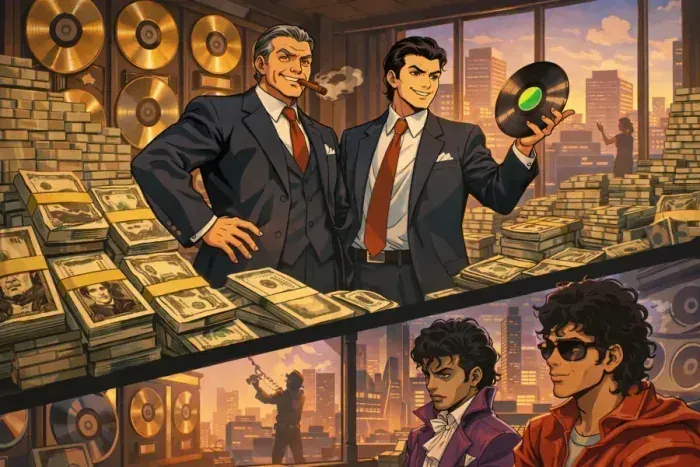
When Major Labels Set the Terms of Success
In the 1980s, the music industry became more consolidated. Record labels that used to operate with relative independence were taken over by larger companies, which were often connected to international media groups. This process took some time, but by the middle of the decade, it had changed how music was financed, marketed, and judged. Decisions about art were increasingly made by management far removed from studios, clubs, and local scenes.
That distance mattered. Executives did not need to hate risk in order to reduce it. They only had to prefer forms of music that could be explained quickly across departments, territories, and media channels. Once success became tied to coordination at international scale, artists who fit a simple campaign logic gained an advantage over those whose work needed time, context, or slower audience growth.
Major record labels had more power than ever before. Their size allowed them to invest a lot in production, promotion, and global distribution. That scale let them build stars who could appear everywhere at once. An album release was more than just a musical event. It became a coordinated campaign across radio, television, newspapers, and billboards. This machinery favored artists who fit existing narratives and worked badly for artists whose risks were harder to package.
The system also trained audiences to expect saturation. If a label committed to a project, the artist could seem unavoidable for weeks or months. That concentration of attention made success look natural when it was often heavily manufactured by budget, access, and repetition.
For musicians, signing to a major label was often the only way to make a living. These advances provided immediate relief, but they also created long-term expectations for artists. Recoupment structures meant that success had to be continuous, not intermittent. A disappointing release could quickly turn an artist from asset to problem. Development deals became harder to justify because labels wanted predictable returns.
Corporate mergers made these pressures worse. Labels became part of larger entertainment companies, and music competed with other forms of entertainment like film, television, and publishing for resources and attention. Financial performance outweighed cultural impact. The system reinforced proven trends more reliably than new ideas. Innovation still happened, but often despite that structure rather than because of it.
Companies with significant market power had a major impact on how people around the world listened to music. International subsidiaries promoted similar artists and sounds in different regions. As catalogs expanded, range often narrowed. Local scenes had a harder time breaking through unless they could be fitted to larger plans.
Power was not concentrated in one place. Major record companies were slow to change because they were so big. This allowed smaller, independent record companies to step in and fill some gaps, but the imbalance remained obvious. The 1980s industry ran on reach, repetition, and centralized decision-making, not on equal partnership.
This consolidation explains why the decade saw both great successes and failures that went unnoticed. Market power did not decide what kind of creativity would be successful, but it did influence which kinds of creativity were amplified and which were left in the margins. Corporations did not invent the decade’s music, but they had enormous power over how far it traveled and on what terms.

What Musicians Lost in the Fine Print
In the 1980s, many artists made the most consequential decisions of their careers early and under pressure. Record contracts promised order and professionalism, but often shifted control in ways artists did not fully understand. Ownership of masters, publishing, and long-term freedom was regularly traded for short-term security.
This was especially true for artists entering the industry from economic uncertainty. Advances could pay rent, fund recording, or make touring possible. In that situation, a contract did not always feel like a negotiation between equals. It felt like a narrow door through which a career might or might not pass.
Most contracts favored labels. The people who owned the music were usually the company, not the artist. This meant that even after tours ended and music trends changed, the rights holders still had major control. That shaped both income and legacy. Decisions about reissues, licensing, and future availability usually fell to the company, not the creators. This was especially painful for artists whose work gained value over time.
The imbalance also affected the future imagination of a career. Artists were often making long-term decisions in a moment when they were least able to think long term. Ownership felt abstract at the beginning, but years later it shaped who could approve a reissue, stop an unwanted use, or benefit from renewed interest in older work.
The creative loss was often gradual. Many musicians assumed early compromise would be temporary, something they could correct once they had leverage. In practice, leverage came late if it came at all. Labels wanted continuity, legibility, and results. Artistic evolution could easily be recast as commercial risk.
Producers and executives were starting to play a key role in connecting artists with the market. While some collaborations were helpful, others limited creative freedom. Songs were changed to fit the format of the radio. Visuals were changed to match what the audience expected. Albums were made around singles instead of following internal logic. These interventions were presented as professional guidance, but they often served market logic more than artistic intention.
This is one reason the business side of the 1980s cannot be separated from the sound of the decade. Contract terms, recoupment pressure, and marketing assumptions influenced what got recorded, how long artists were allowed to develop, and what kinds of risk were treated as acceptable.
Legal disputes made these tensions obvious. Artists who challenged contracts were often seen as ungrateful or difficult, which made it easier for the powerful to stay in control. Litigation was expensive, slow, and stressful, which put it out of reach for many musicians. Even when artists won part of the fight, their careers could still suffer.
The full effects became clearer later. Artists watched their own work reissued, licensed, and repurposed with limited control over use or compensation. The loss was not only financial. It also involved trust, autonomy, and a growing sense of distance from work that was once personal.
The contract culture of the 1980s exposed a basic contradiction. Music was treated as self-expression, but also as property to be controlled by others. That helps explain why so many artists from the decade later spoke about ownership, reclamation, and the slow loss of control over the work that had made them visible.
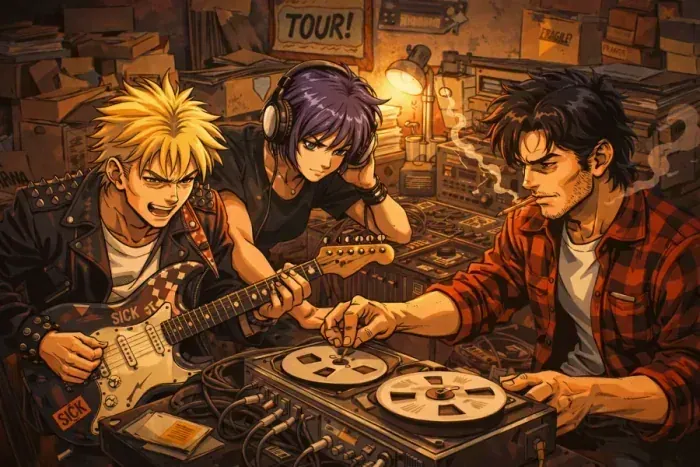
Indie Labels: Freedom, Struggle, and Survival
Independent labels in the 1980s were somewhere between idealism and necessity. They existed because many artists needed other options besides working for companies. But they survived only by dealing with the same economic pressures that shaped the wider industry. Independence promised more freedom, but financial instability touched every decision.
That tension kept independent culture from becoming pure mythology. These labels were not outside capitalism; they were small, vulnerable operations trying to build different priorities within it. Their importance came from how they redistributed attention, decision-making, and tolerance for experimentation, not from magically escaping pressure.
For many musicians, independent labels were the first chance to release their work without having to deal with a major company. These labels were often run by people inside the scenes they supported. They went to shows, shared resources, and understood the context. They did not just tolerate artistic risk. They often expected it. Records could be politically pointed, commercially uncertain, or aesthetically difficult without immediately losing legitimacy. That atmosphere let artists build identities that would have struggled under major-label pressure.
But freedom had limits. The money available was limited, the advances were small or nonexistent, and the distribution was uneven. Labels depended on passion and persistence, not money. When a record exceeded expectations, the infrastructure often buckled rather than strengthening. Manufacturing delays, cash-flow problems, and burnout were common. Independence did not remove exhaustion. It redistributed it.
That redistribution often meant scene people did several jobs at once: booking shows, shipping records, writing press releases, answering mail, staffing tables, driving bands, and trying to keep accounts together. The labor was collective, but it was still labor, and it often ran close to collapse.
Artists and independent labels were often closer, but this didn’t automatically mean that they were treated fairly. Informal agreements replaced formal contracts. This sometimes created confusion about ownership and responsibility. Trust functioned like currency, but it could not always survive financial stress. As scenes expanded, indie labels faced a familiar dilemma: stay small and accept limited reach, or grow and risk resembling the systems they had been built against.
Major record companies were paying close attention to these changes. By the mid-1980s, they started to use independent scenes more and more as places to experiment and develop new ideas. Successful sounds were licensed, acquired, or absorbed, often without preserving the ecosystems that had sustained them. Artists who moved between different genres gained access to larger platforms, but the genres themselves were often left weaker by this process.
Even so, the impact of independent labels went far beyond their financial records. They showed different ways of working, focusing on community, trying new things, and building long-term relationships. Even when the books looked weak, they succeeded in other ways. They changed how music was made, shared, and valued. Many of the decade’s most lasting movements started in these spaces. They were not efficient, but they were patient.
There was always a tension between freedom and survival. Independent labels wanted autonomy, but they still had to deal with the same market forces shaping the wider industry. Their legacy is not purity. It is the proof that music can be organized around values other than scale, even if those values are always under pressure.
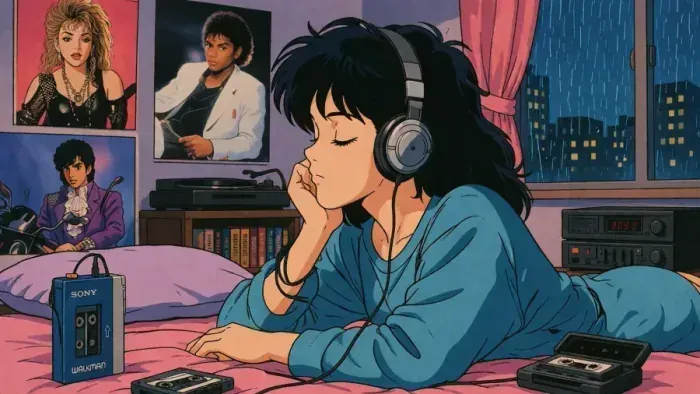
Music Gets Personal: Headphones and Private Worlds
One of the decade’s biggest changes happened outside stages, studios, and boardrooms. It happened in bedrooms, on buses, and inside headphones. Listening became more private. Headphones, cassettes, and personal stereos changed not only how music sounded, but how it fit into daily life.
That shift matters because it changed the scale at which music worked emotionally. Songs could now sit inside routine rather than interrupt it. A track might accompany a commute, cover awkward silence, structure solitude, or make a public place feel briefly private. Listening became less ceremonial and more continuous.
This changed the relationship between listener and artist. Music no longer had to address everyone at once. It could speak to one person, in one place, at one moment. Songs became companions folded into daily routine. That intimacy deepened emotional attachment even as it weakened some of the collective listening habits that had shaped earlier decades.
The privatization of music also changed how people saw themselves. Taste became a way for people to define themselves. It became more chosen than inherited. Listeners organized their worlds through playlists, mixtapes, and repeated listening, often outside the view of peers or family. Music offered comfort and helped people manage emotion in a time of pressure and uncertainty.
Changing listening habits also changed music’s social role. Technology became routine, and listeners took a more active role in deciding how, where, and why music mattered to them.
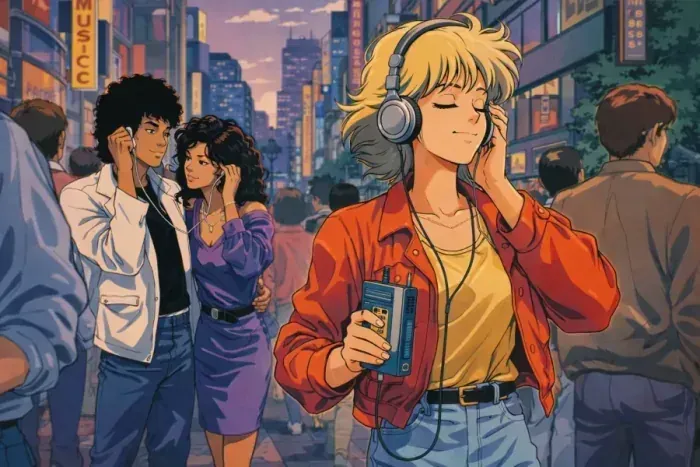
From Shared to Solo: The Walkman Revolution
For most of the 20th century, popular music was something people often experienced together. Families gathered around radios, friends shared records, and public spaces influenced what people heard and when. In the 1980s, that pattern started to change. Listening became more individualized, and that shift made music feel more interior and more immediate.
The spread of personal audio devices changed everyday habits. Sony introduced the first Walkman model on July 1, 1979, and during the 1980s the format became a global habit rather than a novelty. The Walkman did not invent headphones, but it made portable, headphone-based listening commonplace. Music could now accompany movement through the city. It turned commutes, walks, and waiting time into something like a personal soundtrack. This shift affected how songs were chosen and valued. Tracks no longer had to command full attention all the time. They could support movement, routine, and mood.
That portability also changed bodily experience. Streets, buses, and school corridors no longer had to be heard only on their own terms. Music could overlay the city, soften it, heighten it, or emotionally reorganize it. The listener was still in public, but partly elsewhere.
This change led to a new kind of relationship with music. People started to link certain songs with their own daily habits, feelings, and memories. They didn’t think of these songs as something everyone shared. A pop single played on repeat could feel more personal than a carefully planned album played for a crowd. The meaning of music became dependent on use and setting rather than on a single shared public meaning.
Radio was still important, but it was used differently. Instead of organizing one shared listening experience, it increasingly became a tool for discovery that listeners could carry into private life. After a song was broadcast, it moved into other spaces and was replayed under different conditions. This weakened the idea of a single shared musical present. Even when listeners drew from the same pool of releases, they lived in slightly different sound worlds.
This fragmentation did not destroy musical community, but it made community more mediated. People compared notes, traded tapes, and recommended tracks, yet the actual moment of listening no longer had to be shared. That is one reason 1980s taste could feel both more personal and more scene-based at the same time.
Artists reacted to this change, sometimes without thinking. Songs became more straightforward, and the moods they created often grew more intense. Emotional immediacy started to matter more. Lyrics addressed the listener rather than the crowd, and the production leaned toward clarity and intimacy. Even though millions heard the same recording, the voice in the headphones could feel private.
The change had mixed effects. Shared rituals weakened, but privacy also offered refuge. In a decade saturated with scrutiny, listening alone gave people a place to step out of view.
At the same time, the compact disc introduced a different ideal of listening. Sony and Philips brought the commercial CD system to Japan in October 1982, and Sony’s own annual report described a European launch in March 1983 followed by the United States after that. The format promised durability, portability, and a cleaner form of digital playback. At first, CD players and discs were too expensive for many listeners, so the format signaled status as much as convenience. But its rise helped normalize the idea that recorded music was moving toward digital sound, even while cassettes remained cheaper, easier to copy, and more flexible in daily life.
The shift from group listening to personal soundtracks did not completely separate audiences. It changed the rules of the game. Shared taste now formed through conversation, exchange, and scenes rather than through broadcast assumptions alone. In the 1980s, people began to carry music with them more consistently. That made access feel more personal, but it also made the politics of access harder to ignore.
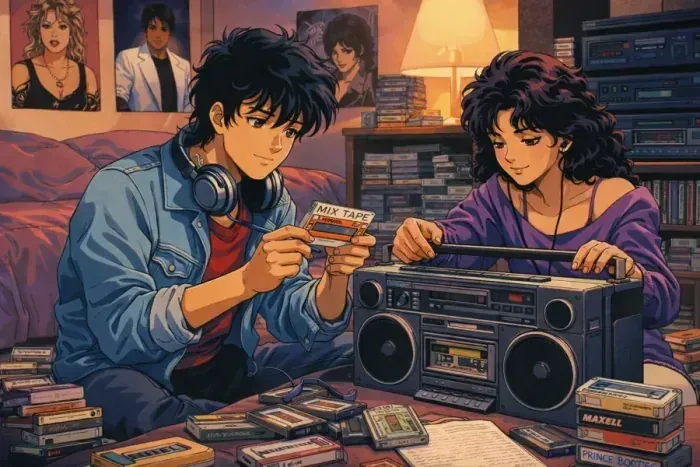
Mixtapes, Bootlegs, and Cassette Culture
If the Walkman made listening private, the cassette made circulation looser and more social. Long before digital files and streaming, the compact cassette made copying cheap, easy, and common. Music moved from person to person more often than through official channels.
That looseness changed the social meaning of ownership. To have music no longer always meant having a store-bought object in pristine form. It could mean having a copy, a live recording, a rehearsal dub, a friend’s sequence of favorite songs, or a tape duplicated so many times that hiss became part of the memory.
Mixtapes became one of the decade’s most intimate cultural forms. Making one took time, attention, and intent. Song order mattered, silence mattered, transitions mattered. A mixtape could function as a letter, confession, argument, or map of taste. In that sense, listeners became curators, shaping narratives from already existing material.
Beyond just sharing music with friends, cassettes were key in spreading music beyond the official channels. Bootlegging was often understood less as theft than as access. Live recordings, radio sessions, and unreleased tracks spread quickly, especially where official distribution was weak or absent. Scenes grew because people copied what mattered to them, not because labels invested first.
This is why cassette culture often sat uneasily inside official moral language. The industry could describe copying as loss, while listeners experienced it as circulation, education, intimacy, and scene maintenance. The same tape could undermine retail control and strengthen an artist’s audience at once.
Cassette culture also changed how people saw themselves. To own records, you needed money and to be close to shops. Making tapes required far less. This made it easier for people to join in, especially young people and people who didn’t live in big cities. Taste became something more people could build and share, regardless of money. Music collections grew through exchange as much as purchase. Music looked more like a community practice and less like a simple market transaction.
The industry was worried about this change. Ad campaigns warned that “home taping is killing music.” They showed copying as something that was bad for artists. People were right to worry about how much musicians were paid. But the story forgot to mention how important cassettes were for helping musicians find fans and keeping them loyal. Many artists first gained popularity by sharing tapes, which were recorded music, long before they released official albums.
Cassettes encouraged people to mix and match different styles. One tape might put pop next to punk and hip-hop next to electronic experiments. These combinations of different types of music loosened genre boundaries in practice. Taste could become more layered and less loyal to a single scene.
By the end of the 1980s, cassette tapes had become a normal part of life. It had created networks for distributing information that were similar to later digital practices, but smaller and slower. The cassette revolution existed alongside the industry while reminding listeners that participation did not always require permission.
Who Got to Listen: Class, Age, and Access
These new listening habits did not affect everyone equally. Access to music and to the devices that carried it still depended on class, age, and geography. Personal stereos and cassettes promised freedom, but that freedom rested on unevenly distributed resources.
For young people, music was often one of the first zones of personal choice. The ability to decide what to hear and when to hear it created a sense of autonomy often missing elsewhere. Bedrooms became listening spaces filled with posters, tapes, and handwritten track lists. In those private rooms, identity could be tested before it was easily spoken.
But this freedom had limits. Devices cost money. Blank tapes, batteries, and replacement headphones were also expensive. Middle-class listeners could absorb those costs more easily. Others had to rely on sharing equipment, borrowing recordings, or leaning on radio and public spaces. In poorer communities and rural areas, music often arrived later, and uneven access could deepen cultural distance rather than close it.
School environments showed these divisions. Music was shared among friends, but who owned it still mattered. The ability to copy, trade, and recommend carried social capital. Taste looked personal, but it was still shaped by material access.
Age also influenced how people listened. While young people were the main source of new musical ideas during that time, older people often liked music in a different way. Adult-oriented music, like soft rock and contemporary R&B, had a strong following through radio and at home. Music became more diverse because it became private. People could listen to different types of music without having to negotiate all the time. The practice of everyone in a household hearing the same thing at once weakened as private listening spread.
Geography made these effects worse. In places where there weren’t many stores, music was available later than in other places. Touring musicians didn’t perform in smaller towns, and specialized record shops were hard to find. Even though cassettes and the radio filled some gaps, discovery remained uneven. What felt abundant in one place could feel scarce in another.
These differences were important because they affected who felt included in music and who felt left out. Access shaped aspiration, confidence, and participation. It helped decide whether music felt like something you could join or something you observed from a distance.
The 1980s are often remembered as a time of choice and personalization. This memory isn’t fully accurate. Choice expanded, but it did so unevenly. The personal turn in listening created new forms of connection without dissolving older class and geographic divisions.
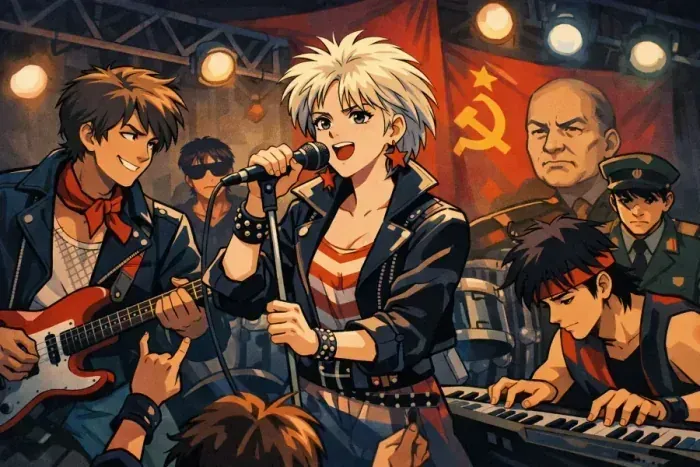
Music Behind the Iron Curtain
The story of 1980s music is often told as if it unfolded inside one open market. It did not. Listening, making, and sharing music were shaped by political borders, and nowhere was that clearer than in the East-West divide. Music crossed those borders, but unevenly, quietly, and sometimes at real risk.
In countries behind the Iron Curtain, access to Western music was restricted and uneven. Records were scarce, radio reception was inconsistent, and public performance was often regulated. But curiosity remained strong. Songs moved from person to person through copied tapes, word of mouth, and late-night broadcasts from abroad. As they moved, they acquired new meanings. Listening became a practice of attention rather than passive consumption. Knowing Western pop could create a sense of connection to a wider world without erasing local conditions.
Scarcity shaped perception. When music was hard to obtain, listeners often knew it in more concentrated ways. A small number of songs, tapes, or broadcasts could be replayed until they felt densely familiar. Access was limited, but attention was intensified.
At the same time, music produced within socialist systems developed its own languages. Artists used metaphor, ambiguity, and coded expression to move around censorship. Private rooms, rehearsals, and informal gatherings became cultural lifelines as much as leisure spaces. Creativity did not disappear under surveillance. It adapted, condensed, and often became more careful about how meaning traveled.
In this context, politics and music have to be read together through restriction, creative workarounds, and ideological limits on cultural exchange.

Making Music Under Surveillance
In many parts of Eastern Europe during the 1980s, music was created and experienced in a way that was difficult to imagine for people outside of the region. The government closely watched what people were making in the culture industry. They thought popular music could be used to express opposition to the government. Lyrics, performances, and personal associations could attract attention. In this environment, making music was more than just an artistic act. It was a negotiation with authority.
That negotiation reached beyond censorship in the narrow sense. It shaped rehearsal possibilities, travel permissions, venue access, recording opportunities, and the social risk around everyone involved. Musicians were not only deciding what to say. They were deciding how visible to become and what kind of vulnerability they could survive.
The government controlled the official record labels and broadcasters. This meant that they needed to be approved long before an audience could hear them. Songs that were too critical, too individualistic, or too influenced by Western culture were at risk of being suppressed. As a result, many artists learned to speak indirectly. People started using metaphors, irony, and abstract ideas to survive. A love song can also be a commentary on confinement. Ambiguity protected both the artist and the listener. This allowed meaning to travel without being fixed on paper.
Surveillance had a big impact on both sound and language. Public performances were often restricted, which meant that scenes were performed in semi-private spaces. Apartments, rehearsal rooms, and informal venues became places where people exchanged ideas. Music was shared with others by copying it onto tapes and playing it quietly. Trust was important. It was just as important to know who could be relied upon as it was to know the songs themselves. Listening was more intense because it wasn’t guaranteed.
That intensity shaped memory. A concert, a copied cassette, or a late-night listening session could become disproportionately important because access was fragile. Under those conditions, music was not background. It was a charged event.
In the German Democratic Republic, for example, the rock and new wave scenes were constantly watched. Bands had to do three things: register, submit lyrics, and accept oversight. But they kept being creative. Artists drew on influences from around the world while also focusing on their own local experiences. They created music that talked about everyday frustrations without using direct language. People in the audience learned to listen closely, which helped them understand the shared meaning behind the words. This understanding was often missed by people from outside the group.
The presence of surveillance also influenced the relationships between artists and fans. Performers were seen as more than just entertainers. They were also seen as people who were brave enough to speak up for those who could not. This made live shows and recordings more charged. A concert was more than a night out. People recognized that together.
At the same time, fear was real. Your job might not progress, you might not be able to travel as much, and your personal life might get in the way. Some artists chose to comply to survive. Others either left or worked secretly. There was no right answer; it was a hard choice to make.
In the 1980s, music was often monitored, creating an atmosphere of tension rather than silence. Constraint sharpened attention and condensed meaning. What emerged was not a weaker version of Western pop; it was a parallel culture shaped by caution, resilience, and secret communication. Freedom in music was about more than sound. It depended on the conditions under which sound could exist.

Western Pop as Forbidden Fruit
In the 1980s, for many people living in countries outside the West, Western music was more than just music. It was more than just its melodies and lyrics; it had deep symbolic meaning. Songs from countries behind the Iron Curtain represented possibility, difference, and connection to a world that felt far away but remained vividly present through sound. Even when the content was not explicitly political, the act of listening was.
This symbolic weight did not mean every Western song was believed uncritically. Part of the fascination came from distance itself. Imported music could stand for freedom, style, mobility, or emotional candor, but listeners also knew those meanings were partial and projected. Desire and skepticism often traveled together.
Radio played an important role in this change. At night, people would listen closely to foreign stations. They would adjust the antennas to catch weak signals that official channels missed. Those broadcasts offered more than entertainment. They offered orientation. Hearing Western pop, rock, or electronic music suggested that other ways of living and speaking existed, even if they could not be experienced directly.
Cassettes made this effect stronger. Tapes were passed from person to person, copied many times, and their sound quality got worse each time. Fidelity was lost, but intimacy was gained. Each copy carried evidence of its journey, which made the music feel both personal and shared.
But this exchange carried risk. Western music could get you in trouble. The authorities often saw this kind of material as a threat to their beliefs, especially when it pushed people to be different or to not follow the rules. Musicians who openly mentioned Western influences were often judged, had fewer chances to perform, or even worse. Listeners learned to be quiet and selective about what music they shared. They also avoided showing too much excitement.
Western music also served as a mirror, reflecting the experiences of the people who created it. It showed the difference between what was promised and what was experienced. It also showed the difference between the idealized images of freedom and the complexity of life under different systems. Some listeners liked these sounds, seeing them as something to strive for. Others were doubtful, knowing that Western pop music also had its own ways of controlling and deceiving listeners. This uncertainty led to a variety of responses to the music, making it difficult to define or copy.
Western influence did not erase local creativity. Instead, it entered into conversation with traditions already in place. Musicians adapted imported sounds to local language, humor, and constraint. What emerged was not imitation, but translation. Western music became a resource rather than a template.
Translation here meant more than changing the language of lyrics. It meant deciding which elements could survive local conditions and still feel true. Rhythm, arrangement, irony, performance style, and coded reference all had to be adjusted to context.
The presence of risk made people more interested. People listened to music attentively, not passively. They memorized the lyrics, studied the album covers, and listened to the sounds over and over until they knew them intimately. Scarcity changed attention. Songs could gain meaning through repetition rather than lose it.
Western music was therefore never neutral. It carried hope, curiosity, and danger at once. It offered connection, but never without risk.
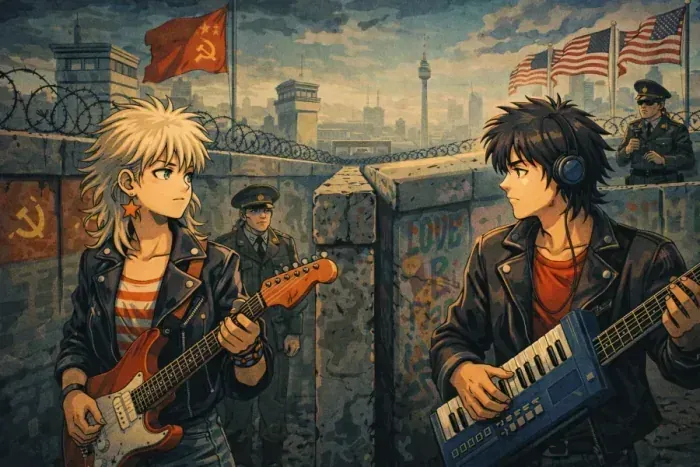
Musicians Between Two Worlds
Some artists in the 1980s experienced the East-West divide firsthand. For them, it was not an abstraction but daily reality. They worked between systems, dealing with access, language, and expectation on both sides of political borders. Their careers were shaped by movement, interruption, and careful calculation. Each step carried cultural and sometimes personal consequences.
These artists often had to translate themselves twice: once for institutions at home and again for audiences or companies abroad. Neither side offered a neutral frame. Each asked for intelligibility on its own terms.
Artists who traveled or moved to new places faced immediate challenges. Western markets offered resources and visibility, but they also demanded legibility. Sound, image, and biography were often adjusted to fit external narratives about life behind the Iron Curtain. Musicians were expected to represent more than just themselves. They became symbols of repression, escape, or transformation. This attention could create opportunities, but it also made things simpler, turning complex experiences into easy-to-understand stories.
Those who remained in Eastern contexts faced a different challenge. There were fewer opportunities for international recognition because they didn’t have much access to Western infrastructure. But staying meant they could develop a deeper connection with local audiences. Some artists decided to work within the official system. They accepted limitations in exchange for stability and continued presence. Others operated at the edges of the music industry, performing in semi-private spaces and releasing music through less traditional channels. Both paths required compromise. They didn’t promise safety.
Movement between systems also affected artistic language. Western pop, rock, and electronic music made new sounds possible, but translating these influences into local music required careful adaptation. If they simply copied, they might be criticized or rejected. Integrating in a subtle way was better for the long-term. Music, rhythm, and production were combined with existing traditions to create new styles that reflected people’s shared experiences, not just their hopes and dreams.
That creative balancing act helps explain why so much music made under divided political conditions sounds layered rather than pure. It carries aspiration, caution, local memory, and borrowed technique at the same time.
For audiences, these artists were especially important. They showed that you can connect with other cultures without losing your own identity. Their work suggested that things can continue through adaptation, not only through rupture. This offered ways to think about how things can exist together in a world that is usually divided. Even though their music was still restricted, they became trusted figures.
At the same time, moving between two systems was very difficult. Travel restrictions, surveillance, and bureaucratic oversight created constant uncertainty. Relationships grew strained, projects were delayed, and future plans stayed uncertain. Success abroad did not always mean safety at home. Recognition could create suspicion as easily as trust.
By the end of the 1980s and into the early 1990s, political change transformed these conditions. Borders became less strict, and movement became easier, but it came with a price. In hindsight, musicians who worked with different systems show how music was both a bridge and a burden. Their careers were shaped by things that happened outside the studio, but they still found ways to create meaning even when they had limited options.
Their stories make the simple stories of liberation more complicated. They remind us that cultural exchange is rarely simple or fair. It is negotiated step by step and is shaped by power, context, and risk. In the 1980s, making music across borders meant more than just crossing a line on a map. It meant living with uncertainty and using sound to stay connected to both sides of a divided world.
The Youth Cult: When Age Became a Commodity
The 1980s intensified something already present in pop: youth became not just an audience, but a market category. Sound, image, and emotional tone were shaped to feel immediate, replaceable, and new. Aging, by contrast, was often treated as a problem to hide or solve.
The shift was tied to media logic as much as to demographics. Television, magazines, advertising, and retail all benefited from treating youth as a visible, renewable style surface. Music fit neatly into that system because it could sell feeling, identity, and novelty at once.
This focus influenced how their careers developed. New artists were promoted quickly and intensely. At the same time, established musicians were pressured to adapt, reinvent, or quietly step aside. Career longevity was no longer assumed. The music had to stay relevant, often through visual cues rather than musical evolution. The result was a culture that rewarded speed and punished hesitation.
Youth culture was not the same everywhere. Class, geography, and access all influenced its shape. Its expression came through fashion, listening habits, and social scenes, rather than just age. Music became one of the main ways young people explored who they were and where they fit in, even as the music industry tried to control and profit from those feelings.
Here, age appears as a hidden form of power: youth as a market category, aging as a source of anxiety, and reinvention as a survival strategy.
Marketing Youth: Selling the Look of the New
By the early 1980s, young people weren’t the only ones listening to popular music. It had become one of the industry’s most valuable products. Age was translated into attitude, appearance, and market segmentation. This meant that adolescence and early adulthood became categories that were carefully managed. Music was more than just a way to entertain young people. It was built around ideas of how young people should look, sound, and feel.
Record labels and media outlets increasingly treated youth as a renewable source of style and energy. New artists were introduced quickly and promoted heavily. They were expected to make an immediate impact. If momentum stalled, people’s attention shifted to other things. This way of thinking put immediate results before long-term progress. Songs were made to grab people’s attention right away. Visuals were used to stand out, and characters were created to seem like the latest trend instead of something that would last. Being young became the same as being relevant, even when the music itself wasn’t deep or long-lasting.
That speed changed artist development. Instead of building a long runway for growth, the industry increasingly searched for visible signals that could be marketed quickly. A face, a hairstyle, a fashion hook, a chorus, and a recognizable attitude could carry as much weight as musical depth in the first public impression.
MTV played a central role in this process. Its visual language favored physical energy, fashion clarity, and feelings readable in seconds. Youth stopped looking like a life stage and started looking like a performance.
Once youth became a performance, artists and listeners were both pushed to maintain it. The market rewarded freshness, but it also standardized it. Even rebellion could become a style package once it was visible enough to sell.
This also influenced how young listeners saw themselves. Music offered models for how to act and what to want, making identity look partly assembled from the outside. Clothes, hairstyles, and music became ways of signaling belonging. That opened space for self-expression, but it also narrowed what counted as acceptable. Stray too far from the trend, and you risked being pushed to the edge of the group.
Being young was never a neutral category. Class and access determined how much someone could participate. Buying records, going to shows, or following fashion trends required money and other resources. People without them were often just watching instead of taking part. The youth culture promised to be open to all, but it actually excluded many people.
Artists felt these pressures directly. Being young was seen as both a good thing and a bad thing. Sometimes, emotional complexity was seen as too early or not right for the situation, while simplicity was praised. This limited what young performers could express. It made stereotypes stronger instead of weaker.
The industry treated youth as both audience and product. Young people were courted, mirrored, and sold back to themselves, even as their actual experiences remained more complicated than the market categories built around them.
That logic helps explain the decade’s restless energy and the persistent fear of aging, replacement, and irrelevance.
Getting Older in a Youth-Obsessed Industry
As youth became the industry’s main focus, aging became a hidden problem. Artists who had built careers in earlier decades found themselves in a situation where new ideas were valued more than continuity. In the past, experience was seen as a sign of authority. But now it was often treated as a liability. The challenge was twofold: to keep making music and to justify staying relevant in a system that valued freshness and visual appeal.
The pressure did not always arrive as an explicit ban on getting older. More often it arrived through smaller signals: reduced promotion, different media framing, fewer risky budgets, and the assumption that relevance now belonged elsewhere. Artists had to notice the shift before they could answer it.
For some musicians, adapting was a necessity. Sound and image were changed to match current trends. Sometimes this was done well, and sometimes it happened in ways that changed the identity of the work. Synthesizers replaced familiar instruments. Production grew glossier, and visuals were updated to look current. These changes were often presented as a new beginning, but the pressure behind them was rarely acknowledged. To stay visible, it was necessary to constantly balance changing to fit new situations and staying true to oneself.
Others resisted more quietly. Instead of following trends, they focused on a specific goal. They released work that was intended for loyal audiences instead of trying to appeal to everyone. Touring moved from arenas to theaters. Spectacle gave way to something more personal. The industry often called this “decline,” but for many artists it marked a new creative phase. Music became less about proving scale and more about keeping connection.
That quieter route mattered because it challenged the industry’s own definition of success. An artist could lose central media visibility and still maintain deep artistic value, strong audiences, and a durable body of work. The problem was not that these careers no longer existed. It was that youth-obsessed media were less interested in describing them.
Gender strongly influenced these experiences. Male artists were more likely to be given stories about maturity, depth, or legacy. Aging could be seen as a sign of seriousness. Women were judged more harshly. Things became less visible more quickly, and getting older was seen as something bad instead of something normal. Even successful women were often asked to explain their continued presence in ways that their male counterparts were not. The youth fixation of the industry deepened long-standing gender bias and made sustained careers harder for women.
The media made these divides worse. It was rare for an artist to make a comeback, return, or reinvent themselves. This made their success seem exceptional, not something that could be understood as part of normal artistic development. Artists were judged by their past successes instead of their current goals. This comparison made musicians feel trapped in stories that didn’t allow for small, steady changes or calm determination.
But older artists also brought something that the youth-driven system couldn’t copy: context. Their work showed memory, growth, and thought. Songs could express not only present emotions, but also historical experiences. This gave listeners a different way to engage. It was based on continuity, not urgency.
The tension between aging and relevance in the 1980s revealed a bigger problem. Music was celebrated as timeless, yet the people who created it were treated as if they were disposable. In theory, experience was important, but in practice, it was not given much attention. Those who made it through did so by defining success in their own way, often without being in the spotlight.
This showed that there are limits to how much the industry can focus on young people. Music can change over time, but only if we understand aging as a transformation, not a decline.
Reinvent or Fade: Survival Strategies
In the 1980s, artists were expected to remain legible to youth culture. They responded in different ways. Some reinvented themselves publicly, others held their line, and many simply tried to survive outside the decade’s preferred narrative of success. These strategies were shaped by access, gender, audience loyalty, and the degree of control an artist could realistically exercise.
What all of these strategies shared was a confrontation with tempo. The industry wanted continuous proof of relevance. Artists had to decide whether to accelerate with it, resist it, or move sideways into other forms of musical life.
The most visible strategy was reinvention. It required not only musical change, but also labels and media working together to tell a convincing story. When it worked, people celebrated it as bravery or genius. When it failed, people thought it was a desperate move. Praise or dismissal often came down to timing and perception. Reinvention required money, energy, and a tolerance for criticism that not everyone could afford. It also required artists to rewrite their own histories in public.
Resistance took different forms. Some musicians refused to change their style to match the current trends, even when that meant they would be seen by fewer people. This resistance was rarely dramatic. It looked like consistency, refusal to explain, or commitment to smaller circuits. Artists kept writing, recording, and performing without chasing visibility. They knew connection did not have to be huge to matter. That persistence had its own authority.
The most common outcome was quiet survival, but it is the least documented. Many artists either didn’t change their style or didn’t openly resist it. They changed what they were expecting, took breaks, switched roles, or worked on and off. Teaching, producing music, writing songs, and working in sessions became ways to stay involved without having to deal with the stress of always performing in public. These paths were often hidden from the public, but they helped keep musical knowledge and tradition alive across different generations.
This hidden continuity matters because popular memory overvalues the visible comeback and undervalues steady work. Much of music’s durability comes from people who remain active without remaining central. The 1980s produced many such figures, even if the decade’s media preferred more dramatic stories.
Gender also influenced which options were available. Men were seen as having more room to grow artistically, while women had more limited opportunities for error. Those in resistance risked being seen less quickly, and survival in secret was often mistaken for disappearance. Even without a dominant public narrative, the work still endured, but it was remembered differently.
Maintaining strong audience relationships was crucial. Artists with loyal fans could take a break from releasing new music regularly. They knew that their fans would come back when they returned. This trust was built slowly and could not be manufactured. It depended more on sincerity than novelty. It offered an alternative to youth-driven promotion.
By the end of the 1980s, these different strategies showed an important truth. Musicians can be successful for a long time even if they don’t always follow the latest trends. It depended on being able to redefine what survival looked like. Artists could adapt, push back, or wait out a system that struggled to value continuity.
The decade’s focus on youth made these quieter stories less visible, but they are important. They show how artists kept their connection to music strong, even when they weren’t at peak visibility. In a culture that rewards loud success, survival often happens quietly, sustained by commitment rather than praise.
How the Media Turned Artists Into Narratives
By the 1980s, music was no longer separable from the stories built around it. Media coverage did more than report success; it actively organized it. Television, tabloids, and entertainment journalism circulated narratives about artists faster than the music itself could travel.
Visibility no longer stopped at promotion. The story about the artist became part of the product itself. A new single, an interview, a rumor, a photo, and a scandal could all feed the same public narrative. Listeners were not only asked to hear music. They were asked to track a personality in motion.
Growing media influence made it harder to separate art from personal life. Interviews, photographs, and rumors became part of the work whether artists wanted them there or not. Scandal could attract attention or destroy trust. Repetition often mattered more than accuracy.
These stories were not neutral. Perception was shaped by race, gender, sexuality, and class. Some artists were forgiven, others were overexposed, and some were ignored. Depending on who did it, the same action could be framed as rebellious, unstable, or authentic. Repetition amplified these biases.
In this environment, public narrative became a force of its own. Tabloids and TV shaped how people interpreted events. Scandal could be both threat and opportunity, and artists worked constantly to take back control.
Tabloids, Scandals, and Public Judgment
By the 1980s, music journalism had grown to include many different types of content beyond just reviews and interviews. In a busy media world, magazines, TV shows, and newspapers fought for attention. Music supplied famous faces and emotional storylines. Coverage leaned on simple plots that cast artists as role models, cautionary tales, or objects of admiration. Complexity usually got flattened.
That simplification was useful to media institutions because it made repetition easy. Once an artist had been assigned a role, coverage could keep returning to it. The rebel, the victim, the genius, the mess, the innocent, the manipulator: these were not just descriptions. They were recurring formats that turned careers into serialized public drama.
Television accelerated all of this. Music news, celebrity interviews, and backstage features brought artists into people’s homes, but in carefully staged form. Personal struggles were compressed into legible segments, contradictions were flattened, and moral storytelling took over. Artists were judged not only on their work, but on how neatly they fit expectations of sincerity, behavior, and stability.
Celebrity magazines amplified the pattern. Rumor and fact blurred. Relationships, addiction, and conflict were serialized into ongoing narratives, especially for women, Black artists, and artists challenging gender or sexual norms.
Serialization changed public time. Instead of encountering artists mainly through albums or tours, audiences were encouraged to follow them as continuing stories. Each new incident became an episode. That structure rewarded escalation and made recovery harder to narrate than collapse.
The language of concern often masked judgment. Headlines warned about excess or decline while profiting from repetition. Silence looked suspicious, change looked risky, and consistency was rewarded even when it came at creative cost.
Some musicians tried to manage these stories in advance. They did this by limiting access or by carefully controlling their public image. Others directly confronted misrepresentation by using interviews and public appearances to set the record straight. Both strategies had limits. If someone said “no,” they might be seen as rude or unpredictable. But if they were open, others might feel entitled to get too close. The story was hard to control and easy to distort through a single photo or quote taken out of context.
Over time, artists learned that visibility carried moral expectations as well as professional ones. To succeed, musicians had to perform not just talent but acceptable character, even though those standards were unstable and often unspoken.
Tabloids and television did not just report music culture. They helped make it. Artists were heard through songs, but increasingly understood through narratives of virtue, excess, scandal, or collapse.
When Media Treats Artists Differently
In the 1980s, the media did not report on events in a neutral way. They were shaped by long-standing assumptions about race, gender, and respectability. These assumptions influenced how artists were seen and how their actions were understood. The same behavior could be described as bold or irresponsible, depending on the person involved.
The result was not only unfair description. It was unequal room to make mistakes, change course, or remain complicated in public. Some artists were granted ambiguity. Others were forced into narrow readings almost immediately.
Black artists were often judged not just for their art, but also for who they were as people. Success was often talked about as surprising or exceptional. This made whiteness seem like the normal standard. When Black musicians asserted control, expressed anger, or deviated from expected roles, the media often focused on the threat or excess rather than the intention behind their actions. This was especially clear when people talked about hip-hop artists. Coverage often framed the music as dangerous or untamed rather than skilled, deliberate, or rooted in context.
Gender deepened these differences. Women were allowed only a narrow set of stories. Ambition could be framed as manipulation, sexual agency as danger, and experimentation as instability. Media attention drifted toward appearance, relationships, and emotional availability at the expense of musical analysis. Aging, motherhood, or reduced visibility were treated as problems to explain rather than normal parts of a career.
This narrowing also changed what counted as evidence of artistic seriousness. Men could be read through output, experimentation, and mythology. Women were more often read through body, behavior, and legibility. The imbalance affected not just public tone, but the terms on which musical labor was recognized.
Artists who challenged gender norms faced stronger backlash. Expressions of androgyny, queerness, or fluid identity were frequently sensationalized. Complex self-presentation was reduced to shock value instead of being treated as an artistic or cultural statement.
Class also influenced judgment. Artists from working-class backgrounds were more likely to be portrayed as unruly or ungrateful when they challenged authority. On the other hand, those with polished media training were granted more credibility. Professionalism came to look like presentation rather than substance, which helped hide unequal treatment.
These patterns mattered because they had consequences. The way the media presented the story affected radio play, label support, and public sympathy. Some artists could survive or even benefit from scandal. Similar controversies ended other careers. This was not just uneven treatment; it had structural consequences.
Some artists learned to navigate these biases strategically. They adjusted public performance or used familiar roles to protect their work. Others refused to compromise and accepted narrower exposure in exchange for honesty. Both responses had costs, and neither guaranteed fair treatment.
By the end of the decade, these unequal judgments could start to feel normal. They were not. They reflected repeated editorial choices about whose behavior looked forgivable, whose looked dangerous, and whose complexity could be ignored. Media bias did not merely reflect the music world of the 1980s. It helped organize it.
Stepping Back: When Silence Becomes Strategy
In a media environment that rewarded constant visibility, silence was one of the most misunderstood choices an artist could make. In the 1980s, it was rare for people to consider stepping back from the public narrative as a neutral act. People often thought that absence meant someone was unstable, declining, or guilty. But for some artists, silence was a tactic, not a sign of discomfort.
That misunderstanding came from the period’s basic media logic. If visibility was proof of relevance, then invisibility looked like failure. The possibility that withdrawal might be deliberate, strategic, or necessary was hard for the culture to hold.
Image repair became a formalized practice during this decade. Apologies were scripted, interviews timed, and appearances staged to restore reliability. The goal was not depth, but legibility.
Not all artists accepted this approach. Some chose to withdraw. They limited interviews, reduced appearances, or disappeared for long stretches. This was risky. In a culture that treated presence as proof of importance, stepping back could quickly undo momentum. But for artists overwhelmed by attention, silence was sometimes the only way to keep control. It created room to recover, reassess, or simply exist outside the narrative.
Strategic withdrawal took different forms. Some artists reduced performance and publicity to focus on studio work. Others moved geographically or shifted into writing and producing. These choices rarely fit the dramatic templates media preferred, which is one reason they were easy to miss.
Yet these quieter choices often preserved careers better than forced continuity would have. They created room for recovery, changed the scale of public exposure, and sometimes opened new forms of authorship behind the scenes. The problem was not that withdrawal lacked meaning. It was that the dominant media system preferred visible conflict over slow repair.
Silence also had unequal effects. Well-known artists with loyal audiences could disappear for a while without being forgotten. For artists at the start of their careers, leaving often meant vanishing from view. Gender and race shaped these outcomes sharply. Women and artists already pushed to the margins were less likely to be granted a second reading. Their absence was more likely to be framed as failure than as a need for change.
These silences were significant because they were rarely respected. News stories often guess about what happened and use that to fill in the gaps. They turn a lack of information into a story. Refusal to speak was treated as evasion rather than as a boundary, revealing how strongly the culture expected constant access.
In hindsight, strategic withdrawal reads less like disappearance than like self-protection. Silence became one way to resist reduction, step outside moral spectacle, and reclaim time from an industry demanding constant performance.
In the 1980s, artists learned that controlling the story was as important as creating the art. For some people, the most extreme action was not to change or confront others, but rather to stay silent until things calmed down.
The 1980s Today: Memory, Nostalgia, and Rediscovery
The 1980s did not end cleanly. Their sounds, images, and conflicts moved into memory, where replay, nostalgia, and selective storytelling reshaped them. Today the decade exists as history, archive, style, and repeated narrative all at once.
That afterlife has been unusually strong because the decade left behind so many durable media traces: iconic videos, recognizable production styles, celebrity imagery, and a vast catalog built for replay. But durability is not neutrality. The parts that keep returning do so through institutions, formats, and habits that still sort the past unevenly.
Memory prefers clarity. History gets shortened into symbols, hits, and memorable events. MTV imagery, chart singles, and global stars often stand in for a far more uneven and contested musical landscape. That narrowing does not happen by accident. Reissues, documentaries, playlists, and anniversary narratives all help decide what is preserved and what fades.
Memory is not fixed. Each generation brings different questions to the decade. Work once dismissed as excessive can return as deliberate performance. Music once reduced to commercial success can be heard again for its craft, reach, or cultural pressure. At the same time, forgotten scenes and marginalized voices are being restored, unevenly but meaningfully, to the larger story.
This final chapter asks how the decade is remembered, misremembered, and reinterpreted. It treats nostalgia as both comfort and distortion. It also asks who gets to decide what counts as important and which histories remain easy to ignore. To understand the 1980s today, we have to listen not only to the music, but also to the stories that continue to frame it.
When the Past Becomes a Style
The 1980s are remembered today through repetition as much as through history. Over time, a small cluster of images and sounds has come to stand in for the whole decade: bright synth-pop, memorable videos, and a handful of global stars. That canon did not emerge on its own. It was built through replay, reinforced by radio formats, reissue campaigns, and later by digital playlists that rewarded familiarity over variety.
That helps explain why the decade can feel simultaneously overfamiliar and underexplained. The same symbols come back so often that they start to stand in for complexity they cannot carry on their own. Recognition grows, but understanding narrows.
Nostalgia plays a central role in this process. It reduces contradiction and discomfort into something easier to hold emotionally. The 1980s are often remembered as a time of confidence, color, and excess, but the decade was also marked by anxiety, inequality, and pressure. Music can preserve youth, comfort, or hope long after the original moment has passed. That emotional power is real, but it is also selective.
The structure of canon formation shows how power and visibility interact. Artists who had strong label support, heavy video rotation, and constant media coverage were more likely to be remembered as definitive. Their work was archived, reissued, and discussed, while equally influential scenes outside the mainstream slipped from view. Local groups, newer genres, and artists without major institutional backing were often pushed to the margins or left out entirely.
This also affects which genres seem central. Pop and rock from the decade remained highly visible, while early house, regional hip-hop, and non-Western pop often returned more slowly. When they did reappear, they were often framed as precursors to later movements rather than as fully formed cultures in their own right. The story of influence often displaced the story of lived experience.
Gender and race also played a role in what was remembered. Women artists were more likely to be remembered for image and controversy than for writing or innovation. The contributions of Black artists were often separated into special categories instead of being treated as central to popular music as a whole. These patterns did not erase impact, but they changed how that impact was understood.
Nostalgia is not inherently deceptive. It can spark curiosity, replay, and renewed attention. But it is rarely complete. It quietly edits the past by highlighting certain sounds and stories and making them easier to hold. The problem begins when that edited memory is mistaken for the whole picture.
To understand the legacy of the 1980s, we need to pay attention to what is missing as well as what is celebrated. The visible canon shows where media power succeeded. The gaps show where access, ownership, and repetition were uneven. Those absences are not side issues. They help explain why the decade still matters and why its history remains contested.
Who Gets Rediscovered and Why
The afterlife of 1980s music has been shaped by both the original force of the work and the later decisions of labels, editors, filmmakers, archivists, and platforms. Reissues, box sets, documentaries, and anniversary editions all influence what is heard again and how it is framed. Rediscovery often appears neutral, but it is guided by economic incentives, editorial choices, and present-day cultural interests.
Streaming added another layer to this process by making access feel abundant while still rewarding the already visible. Playlists, recommendation systems, and metadata do not simply store the past. They rank it, cluster it, and direct attention through patterns that often favor existing recognition over harder recoveries.
Reissue culture makes it easier to sell old material to new audiences. Albums with clear stories, recognizable artwork, or established reputations are easier to package and sell. Artists who are already famous usually benefit most from renewed attention. Expanded editions promise completeness, but they often reinforce existing hierarchies by returning to the same figures instead of broadening the field.
Documentaries work in a similar way. Archival footage, interviews, and commentary are assembled into stories that feel coherent. The gain is clarity. The loss is complexity. Whole scenes are reduced to a few representative voices, and disagreement becomes a tidy lesson.
Distance matters too. People who did not live through the 1980s often hear that music differently. Work once dismissed as excessive can return as stylized performance. Projects once written off as commercial can be heard again for their emotional or technical depth. That openness is valuable, but it also risks aligning the past too neatly with present-day values and flattening the original context.
The availability of rediscovery is still shaped by economic power. Ownership determines what can be reissued, licensed, promoted, or simply kept in circulation. Artists who do not control their catalogs may find that important work remains unavailable, poorly contextualized, or absent from major campaigns. Major companies are far more likely to preserve and promote the material they own. That keeps memory closely tied to property.
There is also a politics of timing. Some work only becomes legible when the surrounding conversation changes. In the 1980s, questions of gender, race, sexuality, and mental health were often minimized or distorted in mainstream coverage. Reappraisal can correct part of that record, but it still happens through current frameworks rather than the original ones.
Institutions do not always initiate rediscovery. Fans, independent writers, collectors, and small labels have played major roles in bringing forgotten scenes back into view. These efforts often value testimony, documentation, and context more than polish. They may reach fewer people, but they can change understanding in deeper ways.
That distinction matters. Large institutions often restore what is easiest to package. Smaller actors are more likely to recover what needs explanation, witness, and patience. Both affect memory, but they do not affect it in the same way.
The politics of rediscovery remind us that memory is active, not passive. Music returns because someone decides it should. Real rediscovery is not only about replaying the past. It is about listening with attention and asking why some sounds had to wait so long to be heard on their own terms.
Hearing the 80s Without the Nostalgia Filter
Listening to the 1980s without nostalgia does not mean rejecting pleasure or memory. It means resisting the urge to treat the decade as a free-floating style detached from its conditions. Nostalgia softens intensity. It turns tension into color, conflict into charm, and complexity into atmosphere. Listening without that filter asks for something slower and more demanding. It asks for context.
This does not make listening colder. It often makes it more vivid. Once the surrounding pressures come back into view, songs regain stakes that repetition alone can flatten. What looked like pure style starts to sound like decision, strategy, or strain.
This kind of listening begins with the knowledge that much of the music was made under pressure. Artists worked inside systems that rewarded visibility and punished hesitation. Technology promised freedom but also created new forms of control. Media amplified success while intensifying scrutiny. Once you hear that context, triumph can sound more strained, and escape can sound closer to quiet resistance.
It also means rejecting a single, fixed story about the decade. The 1980s held many different sounds and many different publics at once. Synth-pop, underground hip-hop, stadium rock, house, regional pop, and post-punk did not move through the culture under the same conditions or for the same audiences. Treating the decade as one unified aesthetic erases those differences.
This approach also makes it easier to hear voices that were present but not equally valued. Women artists whose work was reduced to image, Black innovators treated as exceptions, and regional scenes overshadowed by global exports all sound different once hindsight branding is stripped away. Their music often sounds urgent rather than exaggerated, and deliberate rather than merely stylish.
It also means letting go of the idea that influence is the main measure of value. Much writing on the 1980s treats significance as something proven by later impact. But music also matters in the present tense. Not every record has to predict the future to be important. Some works mattered because they answered the conditions of their own moment with unusual clarity.
There is an ethical side to this kind of listening as well. Some of the decade’s most famous music carries histories of burnout, exploitation, exclusion, or silence even when those histories are not audible on the surface. Holding that context in view does not make the music smaller. It makes the listening sharper.
Finally, listening without nostalgia makes room for new relationships to the music. The 1980s do not have to function only as comfort or escape. They can be heard critically, emotionally, and in real time. The music can surprise again not because it feels familiar, but because it resists summary.
The 1980s persist not only through influence, but through the ongoing act of listening. Choosing to hear the decade without nostalgia does not take away its meaning. It restores its friction, letting the music speak not as a safe memory, but as a body of work that can still feel surprising, complicated, and alive.
What the 1980s Still Ask of Us
The music of the 1980s remains everywhere. It is replayed, reissued, sampled, quoted, and rediscovered constantly. But recognition is not the same as understanding. The decade still asks for attention, not just admiration.
Part of that demand comes from how contemporary the decade still feels. Many pressures now treated as normal in music culture were intensified or made newly visible there: permanent exposure, brand logic, technological dependence, archive politics, and the split between global visibility and local meaning. The 1980s still speak because they are not finished as a problem.
The 1980s were a decade of expansion and concentration at once. More people gained access to music, while the institutions that controlled visibility, ownership, and distribution also grew stronger. Artists became more famous, but their private lives became harder to protect. Local scenes remained crucial, even as global narratives became more standardized. Those contradictions still shape how music is made, circulated, and valued now.
To listen closely to the decade is to hear those tensions rather than smooth them out. It means recognizing that innovation often emerged from pressure, that joy and fear could exist at once, and that progress was never simple. The 1980s produced extraordinary creativity, but also exposed the costs of speed, scale, and permanent visibility. Those costs were distributed unevenly across race, gender, class, and geography, and their effects remain audible.
The decade also reminds us that music is more than sound. It is infrastructure, labor, and relationship. It depends on who is allowed to speak, who is heard, who is archived, and who is remembered. The stories told about the 1980s reveal present-day values as much as past realities. The artists we celebrate, the scenes we rediscover, and the histories we still marginalize are not fixed once and for all.
Engaging with the 1980s today is therefore an active process. It means questioning the stories already in circulation and making room for those long pushed aside. It asks us to listen beyond the obvious hits and beyond the comfort of nostalgia. That does not make the music less enjoyable. It makes the listening more exact.
The music of the 1980s still has a place, but that place should not be automatic. It requires context, patience, and curiosity. In return, the decade offers more than a memory of excess or style. It offers a dense record of how music responds to pressure, adapts to change, and continues to matter long after the original moment has passed.
50 Songs to Hear the 1980s in Motion
The music of the 1980s was shaped by shifting power, expanding media systems, new studio tools, political pressure, and more intimate forms of listening. It became easier to circulate and harder to separate from the systems managing it.
The playlist below is meant to make those tensions audible rather than simply celebrate the decade’s most familiar surfaces. The sequencing matters because the article’s argument is not that the 1980s produced one dominant sound, but that they produced a set of conflicts and possibilities that kept colliding across genres.
This playlist is not a list of the decade’s biggest hits. It is a listening path built around the argument of this article. The sequence moves from transition and experiment into club culture, global stardom, political unease, private listening, and late-decade reflection. The goal is context, not nostalgia alone.
Heard in order, the playlist makes a second point clear: the decade did not move in a straight line from one clean style to another. Different futures were competing at once. Some were built for television, some for clubs, some for bedrooms, and some under conditions of pressure that the mainstream story still tends to blur.
Each artist appears only once to keep the arc balanced. Women artists are integrated across the sequence rather than isolated in a separate block. The selection is intentionally international and meant to reflect migration, hybrid sounds, and exchange beyond a narrow US-UK center. Every track was released in the 1980s.
To get the full effect, listen to the songs in order. Things become clear when they are compared, developed, and revisited.
I. New Beginnings: Post-Punk Awakens
- Joy Division – Love Will Tear Us Apart (1980)
- The Cure – A Forest (1980)
- Talking Heads – Once in a Lifetime (1980)
- Siouxsie and the Banshees – Spellbound (1981)
- Soft Cell – Tainted Love (1981)
II. Synths and the New Sound
- Eurythmics – Sweet Dreams (Are Made of This) (1983)
- Kraftwerk – Computer Love (1981)
- The Human League – Don’t You Want Me (1981)
- A-ha – Take On Me (1985)
- Yello – Oh Yeah (1985)
III. Dance Floors and Nightlife
- New Order – Blue Monday (1983)
- Grace Jones – Pull Up to the Bumper (1981)
- Donna Summer – She Works Hard for the Money (1983)
- Pet Shop Boys – West End Girls (1985)
- Wham! – Club Tropicana (1983)
IV. Pop Takes Over the World
- Michael Jackson – Billie Jean (1983)
- Madonna – Like a Prayer (1989)
- Prince – When Doves Cry (1984)
- Janet Jackson – Control (1986)
- Whitney Houston – How Will I Know (1985)
V. Music With a Message
- Nena – 99 Luftballons (1983)
- U2 – Sunday Bloody Sunday (1983)
- The Clash – Rock the Casbah (1982)
- Public Enemy – Fight the Power (1989)
- Run-D.M.C. – It’s Like That (1983)
VI. Quiet Moments and Private Feelings
- Kate Bush – Running Up That Hill (1985)
- George Michael – Father Figure (1988)
- Sade – Smooth Operator (1984)
- Anita Baker – Sweet Love (1986)
- Tracy Chapman – Fast Car (1988)
VII. The Alternative Edge
- R.E.M. – The One I Love (1987)
- The Smiths – Bigmouth Strikes Again (1986)
- Pixies – Where Is My Mind? (1988)
- Sonic Youth – Teen Age Riot (1988)
- Metallica – Master of Puppets (1986)
VIII. Beyond the US-UK Axis
- Falco – Rock Me Amadeus (1985)
- INXS – Need You Tonight (1987)
- Yellow Magic Orchestra – Rydeen (1980)
- Ofra Haza – Im Nin’alu (1988)
- Youssou N’Dour – Immigrés (1984)
IX. Echoes and Looking Back
- Cyndi Lauper – Girls Just Want to Have Fun (1983)
- Pat Benatar – Love Is a Battlefield (1983)
- Frankie Goes to Hollywood – Relax (1983)
- Beastie Boys – (You Gotta) Fight for Your Right (To Party!) (1986)
- Laurie Anderson – O Superman (1981)
X. The Final Word
- Bruce Springsteen – Dancing in the Dark (1984)
- Tears for Fears – Everybody Wants to Rule the World (1985)
- Sinéad O’Connor – Mandinka (1987)
- Salt-N-Pepa – Push It (1987)
- The Police – Every Breath You Take (1983)