
Why the 2000s Resist a Single Story
People often struggle to sum up the music of the 2000s in one sound or one image. That is not bad memory. It is one of the clearest things about the decade. The 2000s did not have one stable style that organized everything else. The old structures were weakening, and no new system had settled in yet.
At the start of the decade, the music business still looked solid. CDs were still selling, pop stars still dominated television and radio, and the old machinery still knew how to look confident. But the structure was weaker than it seemed. Digital files moved faster than contracts or release plans. Listeners learned to search, skip, copy, and collect on their own. Artists became easier to see and easier to circulate, but not safer.
That contradiction is one reason the decade still feels slippery in memory. Many people remember the same years through completely different gateways: TRL, burned CDs, Napster, mixtape blogs, ringtone charts, mall pop, regional rap, festival indie, and late-night YouTube clips. The decade did not offer one shared road into music. It offered several at once, and they did not always overlap.
You can hear that tension in the music itself. A lot of 2000s records sound polished but uneasy, personal but exposed. Genres mixed freely, yet few of them truly replaced the ones already in place. Careers could accelerate fast and fall apart just as fast. Many of the decade’s key albums sound like artists trying to stay balanced while the ground keeps moving.
So if you want to understand 2000s music, do not start by looking for one defining style. Start with the transition itself: uncertainty, experiment, and a music culture learning new rules in public.
The 90s Hangover: Confidence Before the Break
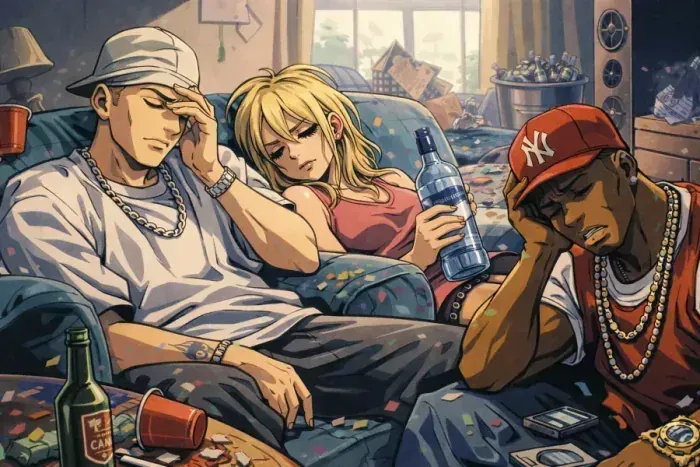
The music of the 2000s did not come out of nowhere. It inherited the late 1990s, when confidence was still high, the business was still expanding, and many people assumed popular culture would keep moving forward in familiar ways. The end of the 20th century felt upbeat and commercially secure. Pop was dominant, alternative rock was past its peak, and electronic sounds were moving further into the mainstream. Even when artists tested the rules, the rules still seemed clear enough to read.
That confidence did not last. Early in the 2000s, many people could feel that something important was shifting even if they could not name it yet. Outside music, worries about politics, the economy, and global security were growing. Inside music, those pressures showed up first as unease, not as a new style. Records still moved through familiar channels, but fewer people fully trusted the system behind them.
This is easy to forget because later platforms make the whole transition look smoother than it felt at the time. The early 2000s were not yet a streaming era, but they were no longer a stable CD era either. Old release structures still produced stars, budgets, and event albums, while new listener habits were already undermining the logic that had created those things in the first place.
What became uncertain was authority itself. Labels still controlled distribution, but that control was weakening. Music television still mattered, but it was already losing some of its old force. Audiences could feel access getting easier before they understood how far digital tools would reshape listening. The result was an uneasy mix of old confidence and new doubt. What remained was a strange blend of polish and instability. A lot of early-2000s music sounds polished, expensive, and tightly managed, but also restless and emotionally tense.
This uncertainty shaped image as well as sound. Many artists entered the decade with expectations built from 1990s success stories. The idea of a long career still existed, but it was getting harder to sustain. New artists felt pressure to break through fast, while established ones felt pressure to reinvent themselves without any reliable model for how reinvention was supposed to work.
The early 2000s were not defined by one movement or one genre. They make more sense as a mood: introspection, defensiveness, polish, and instability. Image and control became more important at the exact moment when the systems meant to enforce them were starting to break down. The feeling of the era shifted from arrival to adjustment. Music did not know what was coming next yet, but it already knew the old balance would not last.

After 9/11: Fear, Control, and Instability
The attacks of September 11, 2001 did not produce one single musical response, but they intensified the anxiety that was already building at the start of the decade. In the United States especially, public culture became more saturated with fear, surveillance, patriotism, and pressure to appear stable. Music did not mostly respond through direct political statements. More often, you hear the shift in mood: unease, heaviness, defensiveness, emotional exposure, and a growing distrust of certainty itself.
That helps explain why so much early-2000s music sounds controlled and strained at the same time. Pop leaned harder into image management. Rock often turned inward, angry, or fragile. Nu metal, emo, and introspective singer-songwriters found larger audiences in a climate where confusion and pressure no longer felt private. Even music made for pleasure or escape often carried a new undertow of alertness.
The point is not that every important record of the decade was directly “about” September 11. It is that the broader cultural weather changed. Public life felt less secure, media language became more heated, and the emotional tone of the decade grew more defensive. That atmosphere shaped how artists were heard, how audiences connected to songs, and why instability became one of the era’s most familiar feelings.
Late in the decade, the 2008 financial crisis made that instability more material. Touring, media budgets, retail confidence, and everyday spending all became harder to take for granted. The crisis did not create one new sound, but it reinforced a lesson the decade had already been teaching: music culture was operating inside systems that could fail suddenly and at scale.
The CD Empire Before the Fall
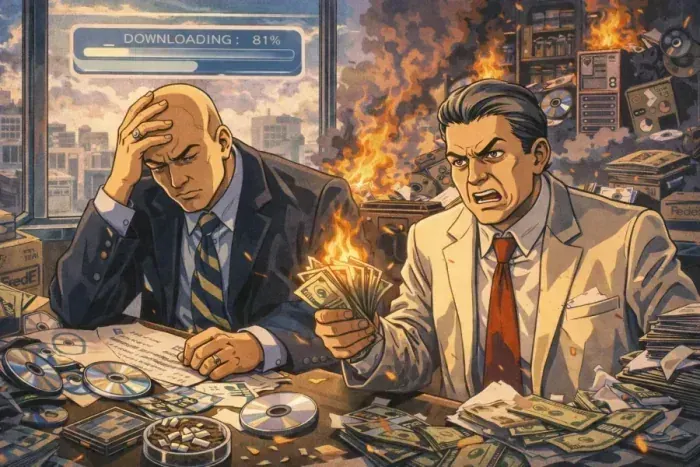
At the start of the 2000s, the music industry still believed it would endure in roughly the same form. From the outside, it looked strong and highly organized. Major labels controlled most large markets, sold huge amounts of music, and measured success in familiar ways: platinum albums, chart positions, radio rotation, and music-video visibility. Few people inside that system expected a real structural break.
The compact disc was still the main source of revenue. Albums were expensive, production budgets were large, and promotional campaigns were tightly coordinated. Radio programmers still shaped exposure, while music videos on television strongly influenced how artists were seen and remembered. The whole system rewarded scale, predictability, and artists who could be packaged across several media at once.
The physical market was still so large that many executives had little reason to imagine a rapid collapse. RIAA later reported that U.S. consumers bought 943 million CDs in 2000, the peak year for the format. A business built on numbers that large could still look durable even while its assumptions about control, pricing, and access were already being weakened.
But the system depended on control, and that control was already slipping. Manufacturing, distribution, and pricing all assumed that music moved slowly, cost money at every step, and stayed inside fixed formats. Consumers were expected to buy full albums even when they wanted one song. Information was supposed to flow from labels to listeners, not the other way around. By 2000, those assumptions were already weakening, even if contracts and careers were still built around them.
The industry’s internal culture mattered too. Decision-making was cautious, precedent- driven, and built to manage risk rather than rethink the model itself. That made the system powerful, but also rigid. Early signs of change were often treated as manageable annoyances rather than warnings. File sharing, home recording tools, and online fan communities looked small and temporary until they clearly were not.
Artists were caught inside that contradiction. The old industry could still fund large productions and deliver massive exposure, but it also demanded constant visibility and commercial proof. There was room for creativity, but it was closely managed. Careers could be built quickly and then dropped just as quickly when momentum slowed.
Looking back, the early-2000s industry resembles a structure that was still standing even after its internal logic had started to give way. It kept its language, rituals, and hierarchy, but it had trouble imagining any future that did not look like a larger version of its own past.
When No One Controlled the Center
The 2000s felt different from earlier musical eras not because they lacked creativity, but because they lacked a clear center. Earlier decades still produced dominant movements and widely shared narratives, even when people argued about the music itself. In the 2000s, several important changes happened at once without merging into one story everyone could recognize.
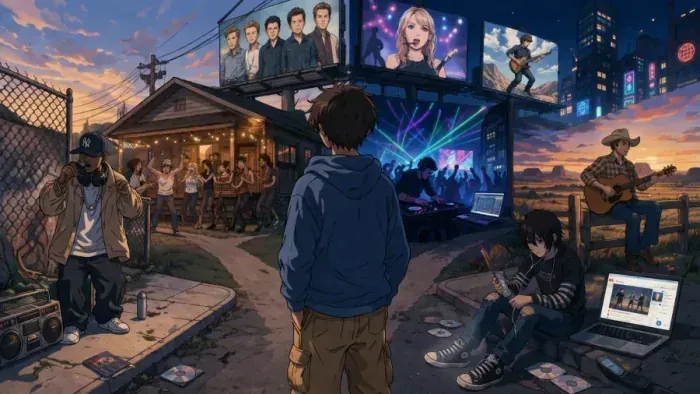
At first, that was easy to miss. Music still seemed to move through familiar channels. Pop stars remained visible, hip-hop kept rising, rock bands still filled venues, and electronic music kept expanding. But none of those currents fully defined the decade. Influence became more local and contextual. What mattered in one scene, city, or platform did not necessarily matter in another.
Part of that shift came from the internet. People no longer had to use the same discovery routes. Some still found music through radio and television, while others relied on file sharing, forums, blogs, or friends. Those paths often barely overlapped. Two people in the same city could be living in very different musical worlds without fully realizing it. Access was widening, but common reference points were getting weaker.
Artists responded in different ways. Some still aimed for maximum scale and mainstream visibility. Others accepted smaller audiences in exchange for more freedom or a clearer scene identity. Many were not sure which path offered real stability. Careers became more volatile. Success could arrive suddenly and disappear just as fast, often without any single explanation that felt convincing.
This lack of a center changed criticism too. Fans, critics, and industry professionals had more lists, genres, and hierarchies than ever, but less agreement about what mattered most. Instead of one broad conversation, there were many overlapping ones. Each made sense inside its own context, but none could convincingly organize the whole landscape.
The 2000s were not chaotic because artists lacked direction. They felt unsettled because the older structures that once aligned taste, exposure, and meaning could no longer do that work. Music still mattered deeply, but the idea that everyone was hearing the same thing at the same moment for the same reasons was starting to break apart.

Access Breaks the System
You cannot explain 2000s music without technology. This was the decade when access, sharing, and monetary value changed faster than the institutions built to manage them. The transition was uneven and often hostile. It involved conflict, confusion, improvisation, and fast adaptation.
What made this shift different from earlier format changes is that it did not only alter how music was sold. It altered what listeners expected music to do for them. Search had to be quick. Libraries had to be portable. Songs had to be available on demand. Once those expectations took hold, the older pace of retail release culture started to feel less like normal life and more like friction.
For decades, the industry had depended on controlling access. Songs moved through defined channels, from labels to radio and retail, and then on to listeners. Technology changed that not mainly by improving sound, but by removing friction. Music became easier to copy, store, move, and separate from the physical systems that had once contained it.
The reaction was intense. Record companies, some artists, and lawmakers framed digital sharing as theft and as a threat to the culture around music. Many listeners experienced it as access, convenience, and freedom from scarcity. Both sides were reacting to real fear. One feared the loss of money and control. The other feared being locked out of music by price, limited availability, and gatekeeping.
What followed was a decade-long struggle over ownership, value, and power. Old gatekeepers tried to defend their place while new ones quietly took shape. The result changed the relationship between artists and audiences for good. Music became less protected, more portable, more personal, and more unstable. Listening still carries that history now. "I don't think we knew for a while yet that NSYNC's two million records was to be the peak of the physical music business."
Napster and the End of Controlled Access
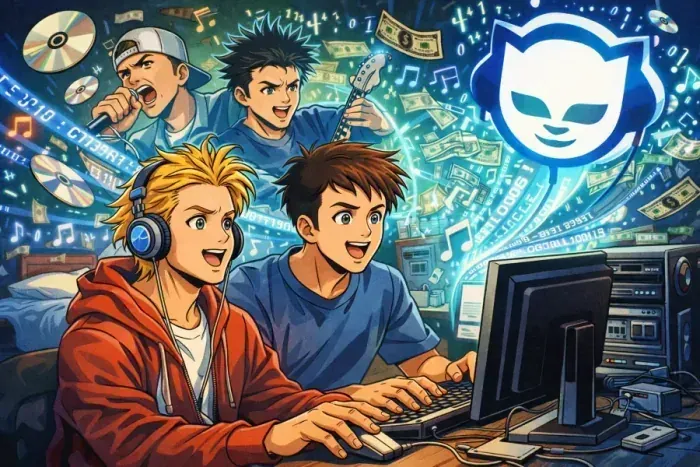
When Napster first appeared in 1999, it did not initially look like a grand historical turn. It looked useful. Users could search for songs, download them in minutes, and save them to personal collections without leaving home. To many listeners, especially younger ones, that felt obvious almost immediately. Music had become data, and data moved easily.
The music industry was shocked by that shift. Napster bypassed almost every older form of control. No record store, price tag, or release plan stood between the listener and the song. People traded tracks without packaging, liner notes, or the usual commercial frame. A product had become a file. The industry responded first with fear, not curiosity.
Prominent artists entered the fight quickly. Metallica became Napster’s most visible opponent, filing lawsuits and publicly calling file sharing theft. Dr. Dre took a similar position. Those reactions made sense within the logic of copyright and artistic labor, but they came with a cultural cost. Many listeners saw them less as defenses of creative work than as attacks on fans. The debate hardened quickly, even though the reality was more complicated than either side wanted to admit.
Napster did not create a sudden desire for free music. It exposed desires that were already there: speed, access, convenience, and relief from the cost of buying full albums. CDs were expensive and not equally accessible everywhere, especially outside wealthier markets. Once file sharing made circulation easy, older assumptions about value looked less natural than the industry had imagined. The law treated music as property. Many listeners were starting to treat it as culture that should move.
This is one reason Napster mattered beyond piracy itself. It taught listeners to think of music as searchable and immediately retrievable. Even people who later returned to legal services often kept the habits Napster had normalized: track-first listening, rapid discovery, and the feeling that waiting for access was already outdated.
By the time court pressure forced Napster offline in 2001, it had already reached tens of millions of users and made file sharing part of everyday listening culture. Other options appeared almost immediately. LimeWire, Kazaa, eDonkey, and later BitTorrent networks filled the gap, often with fewer safety measures and less oversight. Trying to stop piracy turned into a chase rather than a durable solution. Each shutdown made the same point: control could no longer be enforced in the old way.
The panic was not only economic. It was symbolic too. The industry had built much of its authority on controlling who could hear what, when, and through which channel. File sharing challenged that power directly. By the early 2000s, it was already clear that even if piracy could be reduced, the idea of fully controlling access was gone. The rest of the decade unfolded under that fact.
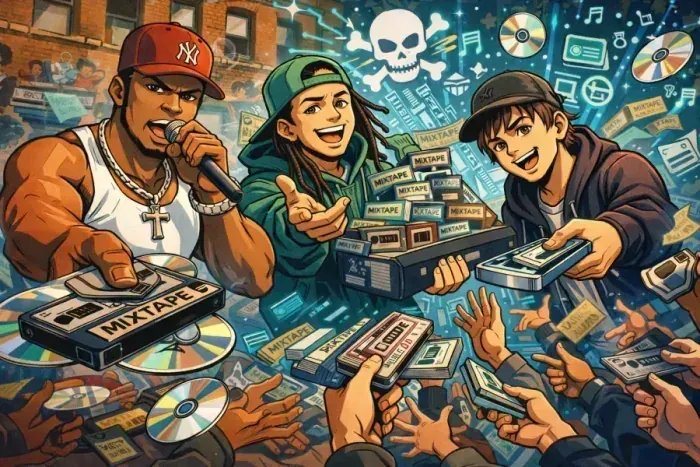
Free Circulation as Rap's New Engine
File sharing did more than weaken old business models. It also created new paths to attention. In hip-hop especially, free circulation became a career engine. Mixtapes, unofficial uploads, burned CDs, message boards, and peer-to-peer sharing let artists build momentum outside the slower logic of formal release schedules. Music could spread before contracts, radio campaigns, or label priorities were fully in place.
That changed the meaning of exposure. A song or mixtape no longer had to come through one authorized channel to matter. Artists could become central in specific scenes long before the wider industry knew what to do with them. That mattered especially in rap, where local credibility, speed, and constant presence often counted as much as a polished album campaign. The unofficial route was not a side story to the decade. It was one of the main ways the decade actually moved.
This free-circulation logic also prepared the ground for blog rap and later internet-first careers. Listeners got used to following artists through leaks, guest verses, loosies, and mixtape appearances rather than only through sanctioned albums. In that environment, abundance could become part of an artist’s identity. To stay present was to stay relevant. The old industry saw disorder. Artists and fans often experienced something closer to momentum.

The MP3: When Songs Became Files
Napster exposed the industry’s weakness, but the MP3 changed something deeper. It altered how people imagined music itself. Compressed audio separated songs from the objects and sequences that had once organized them. Music became easier to move, rearrange, store, and carry, and that changed listening at a basic level.
The MP3 was not mainly a story about sound quality. In many cases, it sounded worse than a CD. What it offered instead was flexibility. Files were small enough to store in large numbers, easy to transfer, and compatible with more and more devices. A personal library could suddenly hold thousands of songs instead of a few shelves of albums. At that scale, many listeners started thinking in tracks more than albums.
That change also altered memory. Physical collections had once reminded listeners what they owned through size, cover art, and placement. Digital libraries worked differently. They encouraged sorting, searching, folder logic, playlists, and shuffling. Music became less tied to one visible object and more tied to moods, tags, folders, and repeatable moments of access.
That weakened the album’s old authority. For decades, albums had organized songs through sequence, cover art, pacing, and context. The MP3 loosened those structures. Tracks could circulate on their own, detached from the record that originally framed them. A song could become meaningful even if listeners never heard the full album it came from.
Listening software pushed that shift further. Programs like Winamp encouraged shuffling, playlist-making, and library organization based on personal preference rather than label or retail logic. Two people could own the same song for completely different reasons and place it in completely different personal contexts. Meaning became more individualized and less fixed.
Artists and labels struggled to respond. Some still treated the album as the main unit of meaning and hoped listeners would return to more linear habits. Others leaned harder into the single. You can hear that tension across the decade. Many records front-load their most immediate songs because artists and labels knew attention might not extend much past the opening stretch.
This also changed emotional attachment. Songs became easier to love and easier to discard once they were detached from their original context. Loyalty shifted away from artists toward particular moods, moments, or memories. Music still mattered, but its place in a listener’s long-term life became less stable.
By the mid-2000s, the MP3 had become normal. Even people who still bought CDs often ripped them into digital libraries and stopped using the discs themselves. The album did not disappear, but it was no longer protected by format. It lasted only when listeners chose to keep treating it as meaningful.
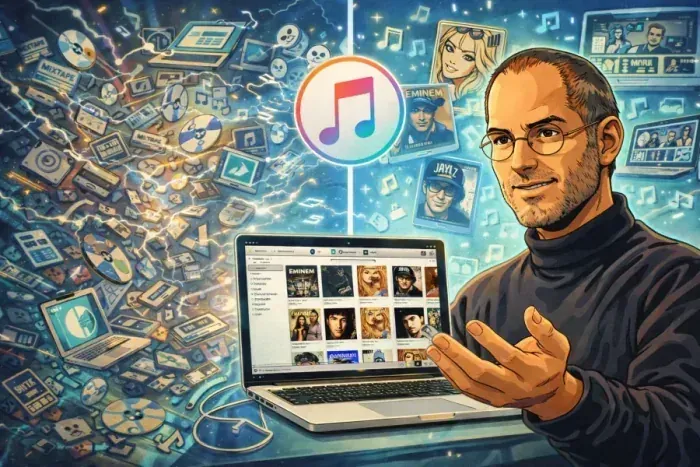
iTunes: Apple Turns Disorder Into a Store
When Apple launched the iTunes Music Store on April 28, 2003, it looked like an answer to digital chaos. For the first time, there was a legal, centralized store selling individual songs at a clear price. The ninety-nine-cent track felt simple, legible, and modern. The industry was already losing its balance, and iTunes seemed to offer a way forward without fully restoring the old system.
That clean design mattered almost as much as the catalog itself. Apple did not ask listeners to go back to CD-era behavior. It accepted the new demand for speed, search, and song-by-song choice, then turned those habits into something legal and easy to use. Order returned at the level of the interface, even though the deeper listening logic had already changed.
Its appeal was obvious. Listeners could buy only the songs they wanted instead of paying for full albums. Labels could finally make money from habits that file sharing had already normalized. For a moment, this looked like a workable bargain between convenience and payment.
But that restored order was partial at best. iTunes replaced some illegal downloading, yet it did not undo the habits file sharing had already created. Listeners were already used to immediate access, large libraries, and choosing their own path through music. Buying a track did not restore the album’s older authority. In many ways, iTunes simply made fragmentation official.
The platform also strengthened new hierarchies. Songs became more important than albums. Metrics increasingly reflected downloads and single-track performance rather than sustained engagement with a body of work. That favored artists who could produce immediate, stand-alone hits and worked against artists whose music depended on long-form development or slower-building context.
For the industry, iTunes delayed a deeper crisis rather than solving it. Digital sales never fully replaced physical-era revenue. More importantly, control over distribution had shifted. Apple, not the labels, increasingly controlled the storefront, the customer relationship, and part of the listening environment. The gatekeeper had changed shape, not disappeared.
Artists felt this in practical ways. Digital success could be measured more precisely, but it was also more volatile. A song could spike quickly and disappear just as fast. Careers became harder to plan and easier to derail. Visibility increased, but stability did not.
Looking back, iTunes was less a return to order than a bridge between systems. It translated ownership into digital form and prepared listeners for a future in which even ownership would become optional. The industry accepted that deal because it needed time. Listeners accepted it because it was easier. Neither side was securing a permanent balance.
YouTube pushed that transition further after its 2005 launch. It did not just give songs another promotional outlet. It changed the speed and texture of circulation. Music videos, live clips, fan uploads, interviews, remixes, and unofficial copies could all sit in one searchable place. Discovery became more visual, more immediate, and less dependent on television schedules or retail access.
Late in the decade, Spotify pointed toward another shift. Founded in 2006 and launched in 2008, it suggested that access might become more important than ownership itself. That model would define the next era more than the 2000s, but its logic had already arrived: music as an always-available service rather than a collection to build and keep.
"So we quietly and with very little funding built the bones of a digital distribution system in the studio."
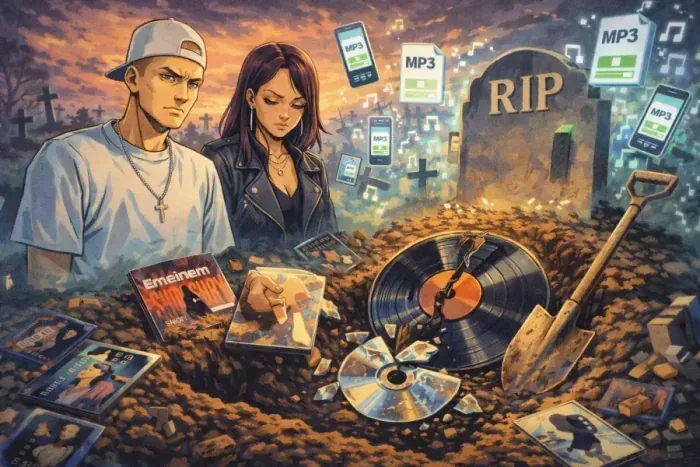
The Album Loses Its Protection
As digital listening became normal, the album entered a more uncertain phase. It remained the main release format, but it no longer defined how most people actually experienced music. Listeners skipped tracks, rearranged songs, and isolated favorites. Linear listening had once been built into the format. Now it required intention.
This exposed the album in a new way. Once the format could no longer rely on habit, sequencing, pacing, and opening impact became strategic problems. Artists still cared deeply about albums, but they had to assume that a distracted listener might leave after track two, or return later for only one favorite song.
It also changed how albums were built. Artists and producers knew many listeners might never reach the middle or closing tracks. Records often opened with their most immediate songs. Hooks arrived faster. Ballads and experiments were pushed later. Albums began to prioritize strong openings over slower narrative arcs. This was not a failure of creativity. It was an adjustment to new listening conditions.
Some artists pushed against the trend directly. Green Day’s American Idiot deliberately reasserted the album as a connected work with recurring themes, linked songs, and a larger political arc. Its success showed that long-form storytelling was still possible. It also showed how unusual that effort had become. Albums increasingly had to justify their own form.
Others adapted more quietly. Eminem balanced radio-ready singles with deeper cuts for more committed listeners. Beyoncé’s early solo records paired stand-alone songs with carefully managed emotional pacing even though many listeners only engaged with part of them. In both cases, the album survived under altered expectations.
Skipping changed emotional attachment too. Once listeners could control sequence and duration, songs often became tools for mood rather than parts of a larger arc. A track could mean everything in one moment and very little in the next. That flexibility was real, but it also rewarded impatience. Albums that asked for time and concentration were easier to bypass or misunderstand.
This shift did not happen because listeners stopped respecting artists. It came from abundance. When access exceeds time and attention, selection becomes unavoidable. Skipping is not always rejection. Often, it is just navigation.
By the late 2000s, the album was no longer protected by format or habit. It still carried meaning, but only when artists and listeners actively treated it that way. The album was not ruined. The conditions for its survival had simply changed.

Why 2000s Music Sounded So Intense
The digital shift did not only change how music moved. It also changed how music sounded. As listening moved from hi-fi systems and car stereos to earbuds, laptops, burned CDs, and compressed files, records had to survive harsher and less predictable playback conditions.
Producers and engineers responded by emphasizing immediacy. Songs were mixed to feel loud, full, and present even at low volume or on weak speakers. Subtlety often gave way to impact. That was not just an aesthetic choice. It was a practical response to a listening environment where distraction was constant and skipping was easy.
Meanwhile, digital tools expanded what the studio could do. Sampling, editing, layering, and vocal processing became more precise and more central to the finished work. The studio no longer just captured performances. It built sound worlds. Producers became more visible as authors of entire eras.
That tension runs through the decade’s sound. The 2000s are polished, compressed, and often emotionally direct, yet they are also full of strain. Music was adapting to a world that heard differently and judged more quickly.
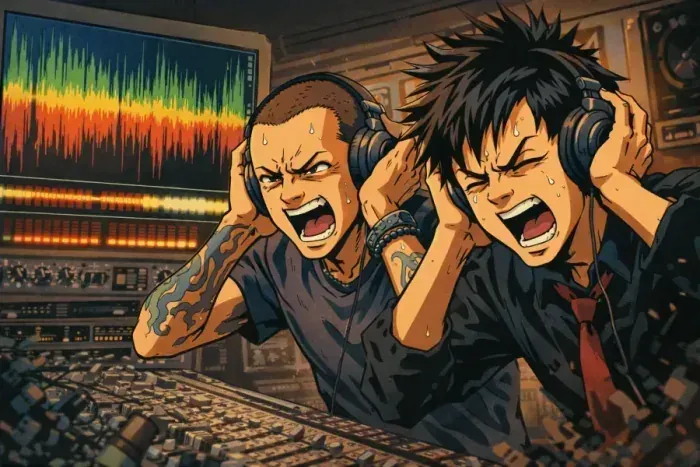
The Loudness War: When Everything Got Compressed
One of the most noticeable yet often poorly understood features of 2000s music is how loud it is. This was not just a coincidence or a matter of taste. It came from a competition across the recording industry to make songs feel louder and more immediate than the ones around them. That competition became known as the loudness war.
As music moved onto more digital devices, songs were increasingly judged in unstable listening conditions: cheap earbuds, laptop speakers, car stereos, burned CDs, and low-bitrate files. Producers and labels feared that quieter recordings would seem weak next to more aggressive mixes. Their answer was compression. Softer moments were pushed up, peaks were flattened, and the overall level was raised so a track would feel present immediately.
For a while, this approach worked. Loud songs grabbed attention quickly. They sounded strong on the radio and more consistent across devices. But it came at an emotional cost. Compression removes contrast, and contrast is one of the ways music creates drama. When everything is loud, less of it feels truly large. Many recordings from the 2000s carry a steady level of intensity that mirrors the pressure of the decade itself. They can sound urgent, crowded, and faintly anxious even when the material is reflective.
That is why the loudness war was never only a technical argument for engineers. It changed how songs felt in the body. A listener did not need specialist vocabulary to hear that some records felt more exhausting, flatter, or less spacious than others. The debate mattered because it revealed that commercial pressure had become audible inside the mix itself.
The loudness war affected almost every kind of music. Pop records were mixed for immediate impact. Rock albums became denser and more aggressive. Hip-hop and R&B often used dense, forward-facing production with elements packed close together. Electronic music, already built around repetition and momentum, often became even more forceful. This was not an engineering accident. It was a market response.
Some artists and producers resisted. Records that preserved more dynamics stood out for their warmth, depth, and breathing room even when they sounded quieter. Over time, listeners also began to feel fatigue. Songs blurred together. Long listening became tiring.
Late in the decade, more people outside technical circles knew about the loudness war. Critics and fans started asking whether albums had become too loud and too flat. The conversation did not immediately change the industry, but it helped establish an important idea: sound was not neutral. It reflected the competitive conditions of its time.
The intensity of 2000s music tells a broader story about distraction, competition, and the fear of being overlooked. Songs absorbed the stress of the environments in which they had to survive.
Auto-Tune: The Sound of Digital Emotion
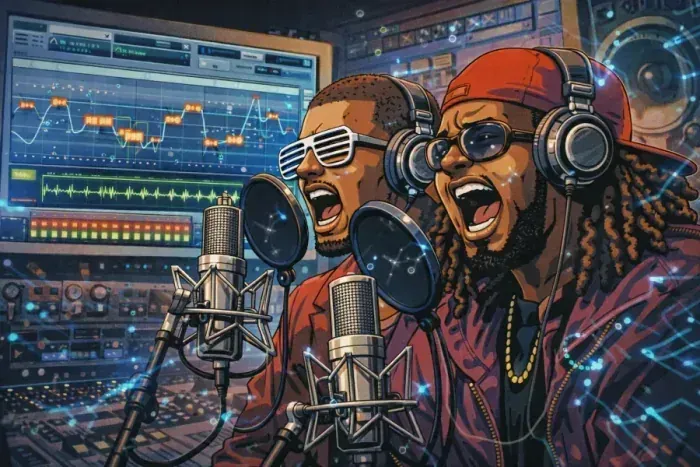
Auto-Tune shows how a technical tool can reshape emotional language. It began as a corrective technology, but in the 2000s it quickly became something more expressive and more culturally loaded. Late in the decade, it had come to represent a changing relationship between the human voice and digital mediation.
The familiar starting point is Cher’s “Believe” in 1998, but the real story of the 2000s is how quickly that once-novel effect became normal. The key question was no longer whether a vocal had been corrected. It was how digital shaping changed its emotional meaning. Auto-Tune could make a voice sound intimate and distant at the same time, polished but fragile.
Artists used the effect in very different ways. T-Pain turned Auto-Tune into a signature rather than a disguise. His singing did not pretend to be untouched. It embraced artificiality and made digital processing feel emotionally flexible. Songs like “I’m Sprung” and “Buy U a Drank” used the effect to communicate vulnerability without slipping into older forms of sentimentality. Lil Wayne’s “Lollipop” revealed another side of the sound: the voice as shield, protected by processing, as if feeling itself needed a filter. "People felt like I was using it to sound good. But I was just using it to sound different."
Late in the decade, the effect had become more introspective. Kanye West’s 808s & Heartbreak used Auto-Tune to express grief, isolation, and emotional dislocation. Its minimal production and altered vocals did not present processing as a novelty. They made distance itself part of the feeling.
Criticism came quickly. Many listeners treated Auto-Tune as proof of declining skill or dishonesty. But that reading missed something important. The spread of vocal processing pointed to a deeper cultural need. In a decade shaped by surveillance, visibility, and pressure, straightforward emotional expression often felt unstable. Digital voices reflected digital lives: shaped, managed, exposed, and not fully at ease in the body.
That is also why the tool survived the backlash. Auto-Tune did not last because artists secretly wanted to hide bad singing. It lasted because it could express forms of distance, control, gloss, vulnerability, and alienation that felt true to the period. It gave artists a way to sound emotionally available without sounding untouched.
Auto-Tune did not remove feeling. It changed how feeling was heard. It let artists signal vulnerability without offering completely unfiltered exposure. That captures something central to the 2000s: emotion was everywhere, but it increasingly reached listeners through screens, systems, and software.
Producers Become the Real Architects
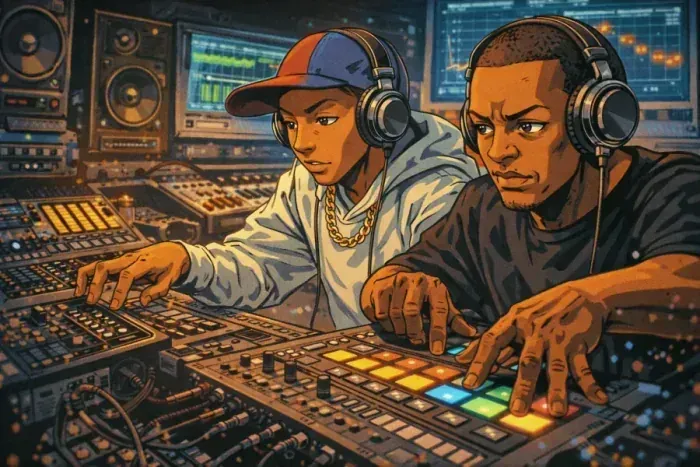
By the 2000s, producers could no longer be treated as background technicians. They had always shaped sound, but in this decade their role became easier to hear and harder to ignore. They were not just refining performances. They were building sound worlds, carrying recognizable styles across artists, and often becoming nearly as identifiable as the performers themselves.
That change was closely tied to technology. Digital workstations let producers move faster, experiment more freely, and control fine details with far more precision. The studio became less a place of capture than a place of construction. Producers increasingly shaped both the emotional direction and the commercial identity of records.
Timbaland is one of the clearest examples. His work for Missy Elliott, Aaliyah, and Justin Timberlake carried unusual rhythms, suspended spaces, and a sense of elastic tension that was unmistakably his. These tracks were not interchangeable backdrops. Artists had to work inside the worlds he built. In doing so, he changed the rhythmic and emotional vocabulary of pop and R&B.
The Neptunes, Pharrell Williams and Chad Hugo, offered another model. Their sparse beats, dry percussion, and sharply etched melodies became one of the signatures of the early 2000s. Across work with Britney Spears, Clipse, and N.E.R.D., they showed that restraint could be just as forceful as density.
Max Martin represented another form of producer authorship: structure, clarity, melodic efficiency, and precisely engineered emotional payoff. His work with artists such as Britney Spears and later Kelly Clarkson helped define a polished pop language that sounded effortless partly because it was so carefully designed.
Kanye West made the overlap between producer and artist even more explicit. His early work, built around soul samples and expressive textures, turned the producer’s ear into a public persona. Production itself became part of the autobiography.
By the 2000s, producers were doing more than making hits. They were setting stylistic terms. Their sounds became signals for mood, credibility, ambition, and cultural placement. Any serious account of the decade has to treat producer authorship as central, not secondary.
Pop as a Visibility Machine
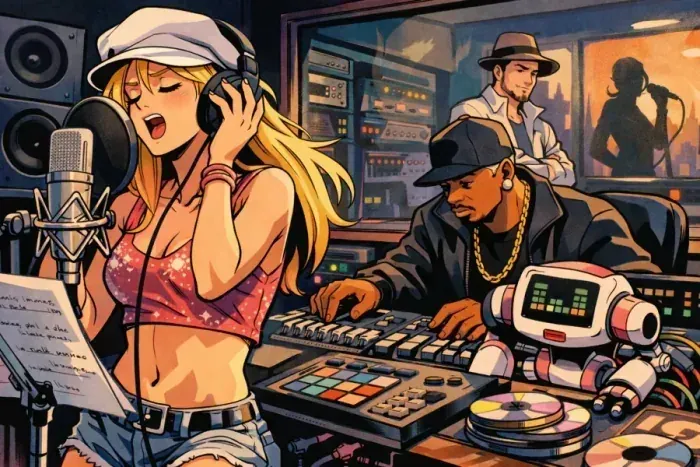
Pop music was everywhere in the 2000s, but it was rarely comfortable inside the machinery that produced it. It dominated charts, television, magazines, and gossip cycles, yet the system around it ran on control, speed, and constant observation. Pop stars were not only performers. They were brands, storylines, and commercial assets expected to remain available, attractive, and adaptable at all times.
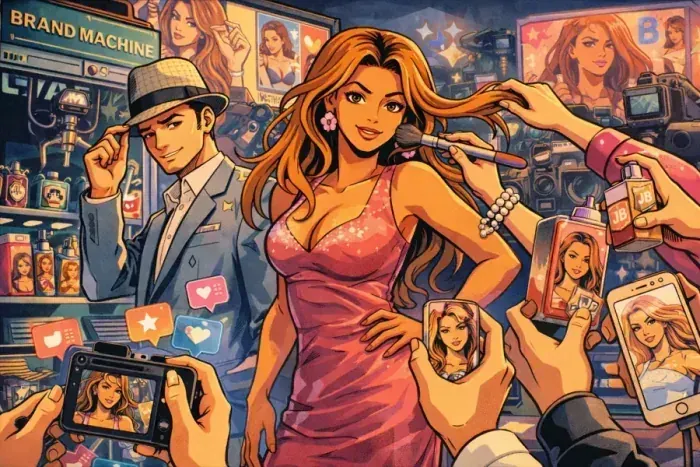
That machine made money by turning songs into only one part of a much larger visibility economy. A single fed radio and ringtone sales. A video fed television. A tabloid image fed gossip sites and magazines. Tours, product deals, fragrance launches, and late-night appearances all reinforced the same public narrative. Pop stars were expected to generate continuous attention, not just strong records.
The decade inherited a highly organized pop machine from the late 1990s. Teen idols, carefully managed images, and tightly controlled releases were already standard. In the 2000s, that machinery intensified. Media cycles shortened. The internet sped up rumor, reaction, and humiliation. Success came quickly, but backlash did too. Many artists, especially young women, became massively visible without gaining real control over the conditions of that visibility.
Even so, pop remained a place of invention. Inside rigid systems, artists still looked for room to maneuver. Some pushed against expectations through sound or image changes. Others treated professionalism itself as a way to claim authorship. They learned the rules well enough to bend them.
The story of 2000s pop is therefore not simply one of manipulation or decline. It is a story of negotiation: control versus freedom, exposure versus privacy, discipline versus spontaneity. The music often sounds confident, but that confidence is often under strain.
Teen Pop and the Branding Machine
By the beginning of the 2000s, the teen-pop system was fully established. Built in the late 1990s, it depended on repetition, saturation, and tight narrative management. Young performers were introduced not just as singers, but as characters inside carefully shaped stories. Their appeal depended on accessibility, aspiration, and the promise of emotional investment.
Britney Spears stood at the center of this system. Her first album, ”…Baby One More Time,” set a new standard. The songs were immediate, highly engineered, and shaped by producers such as Max Martin. The image was just as deliberate. Youthful sexuality was packaged as playful, manageable, and endlessly reproducible through dance, fashion, and media appearance. The result was massive success, but also very little room to breathe. Every gesture could be analyzed, replayed, and sold.
Christina Aguilera began inside a similar framework, but her path exposed the system’s limits more openly. Her vocal force and her desire to exceed the teen-pop template pushed against the narrowness of the role. Stripped presented adulthood and artistic seriousness as a rupture, which also revealed how little organic space for growth the system had left its stars.
The system moved fast. New stars were introduced quickly, promoted aggressively, and expected to monetize attention immediately through albums, tours, endorsements, and media appearances. Rest was not built into the design. When momentum slowed, support often evaporated. Artists were treated as replaceable, and private life became public material.
The changing media environment made this structure even more fragile. Tabloids were not new, but online circulation intensified everything. Private moments became content. Mistakes became headlines. The same visibility that built careers also destabilized them.
None of this means the music lacked craft. Many of these artists worked with remarkable discipline under relentless pressure. The problem was not artifice itself, but imbalance. Control usually flowed downward, while responsibility rarely did. The teen-star system could manufacture fame at scale, but it also showed how easily success could become entrapment.
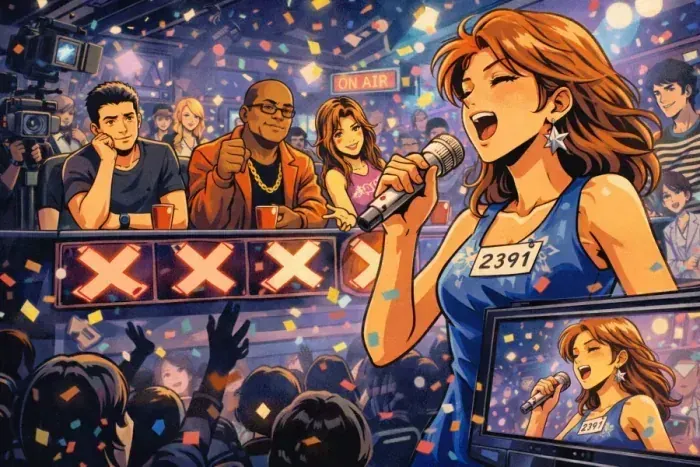
Talent Shows and the Performance of Authenticity
The 2000s also expanded pop visibility through talent-show culture. Formats like the UK’s Pop Idol in 2001, American Idol in 2002, and later The X Factor did not simply discover singers. They trained audiences to experience music through elimination, personality arcs, weekly judgment, and stories about who deserved success. Performance became inseparable from the experience of being watched.
It mattered because talent-show fame worked differently from older star systems. The artist arrived already inside a structure of commentary, measurement, and emotional investment. Viewers were invited to feel that they had helped make the star. That sense of participation made success feel democratic even when the underlying system remained tightly controlled.
The weekly format was crucial. Traditional stardom usually arrived after promotion had already been designed elsewhere. Talent-show stardom unfolded in front of the audience in real time. Viewers saw rehearsal footage, backstories, judges’ reactions, eliminations, and redemption arcs. The result was not simply a singer with exposure. It was a singer already packaged as an ongoing public drama.
It also changed expectations around musicianship and visibility. Singing ability still mattered, but so did relatability, resilience, camera presence, and the ability to turn private feeling into public narrative. What emerged was a new kind of manufactured authenticity that presented heavy mediation as intimacy. Talent shows did not replace pop’s older machinery. They made its logic more visible.
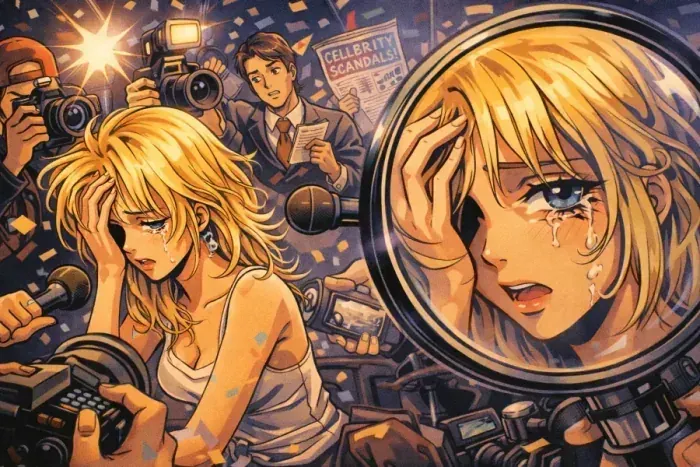
Female Stardom Under Punishment
As pop stardom expanded in the 2000s, female artists were watched with particular intensity. Entertainment and discipline blurred together. Bodies, relationships, and emotions were treated as material for moral judgment and public ownership disputes. Television, magazines, and the growing online world all reinforced that scrutiny.
Janet Jackson’s treatment after the 2004 Super Bowl halftime show remains one of the clearest examples. The reaction was immediate and wildly disproportionate. A few seconds reshaped her media standing for years. Radio support declined, coverage intensified, and blame settled on her with remarkable speed. The episode showed how quickly protection could disappear once moral panic took hold.
What made the episode so revealing was the imbalance between event and consequence. The media did not treat it as one mistake inside a long, successful career. It treated it as a moral referendum on her body, discipline, and legitimacy. That is what the decade so often did to female performers: it converted exposure into a test of character, then judged them through standards that kept shifting underneath them.
Other artists faced similar dynamics in different forms. Jessica Simpson was routinely ridiculed in ways that collapsed music, intelligence, body, and persona into one stream of mockery. Tabloid culture flattened complexity into serial narrative. Curiosity turned easily into contempt.
What made this surveillance especially destructive was its accumulation. Fame in the 2000s allowed little pause and even less room to recalibrate. Every appearance fed the next reaction. Changes in weight, fashion, or emotional stability were framed as evidence of failure, excess, or decline. Growth was accepted only when it fit an approved narrative.
Male artists were scrutinized too, but the pattern was different. For them, misbehavior could still enhance mystique. For women, visibility often increased vulnerability. Success made them easier to target, not safer.
That punitive culture was financially rewarded. Outrage sold magazines and drove clicks. The early online economy rewarded speed and intensity more than care or context. Empathy was not built into the model.
Music made under these conditions often carries traces of that pressure. Confidence can harden into defensiveness. Disclosure becomes more strategic. For many artists, survival depended not only on talent, but on the ability to endure constant surveillance without breaking under it.
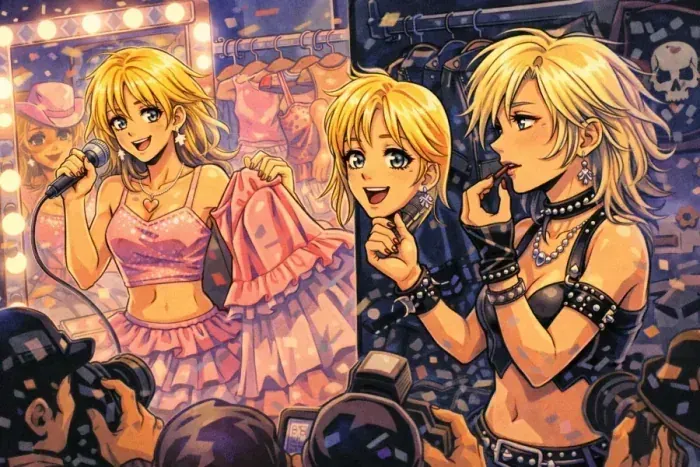
Reinvention as a Way to Stay in Control
For some pop artists, reinvention became a survival strategy. When visibility grew harsh and familiarity started to curdle into boredom, change offered a way forward. This was not a one-time stunt. It was a long-term discipline that required authority, timing, and a flexible understanding of identity.
Madonna entered the decade already known for her ability to change. What made her stand out in the 2000s was how deliberately she matched new styles to shifts in music and culture. Her records moved toward electronic textures, and Confessions on a Dance Floor returned to club history with precision and confidence while still sounding current. These were not reactive moves. They were preemptive. Madonna repositioned herself before irrelevance could become the main question.
Kylie Minogue offered a different model. Her comeback with Fever depended less on rupture than on clarity. Songs like “Can’t Get You Out of My Head” used precision, restraint, and controlled image-making rather than shock. It showed that pop did not have to become bigger to feel newly alive.
Both artists understood timing. Reinvention works best when it feels authored rather than defensive. In the 2000s, younger stars were often pushed into abrupt transformations that were treated as spectacle or confession. Madonna and Minogue, by contrast, kept the sense that change was their decision.
Reinvention also let them reach new audiences without entirely losing older ones. By drawing on dance music, electronic production, and global club culture, they aligned themselves with scenes that valued movement and repetition over fixed identity. That gave their work routes through culture beyond tabloid narratives.
In a decade that demanded constant visibility, reinvention could also function as protection. It created distance between the person and the public image. Instead of being trapped inside their past, these artists redirected attention toward the future. In that sense, longevity depended less on consistency than on controlling the terms of change.
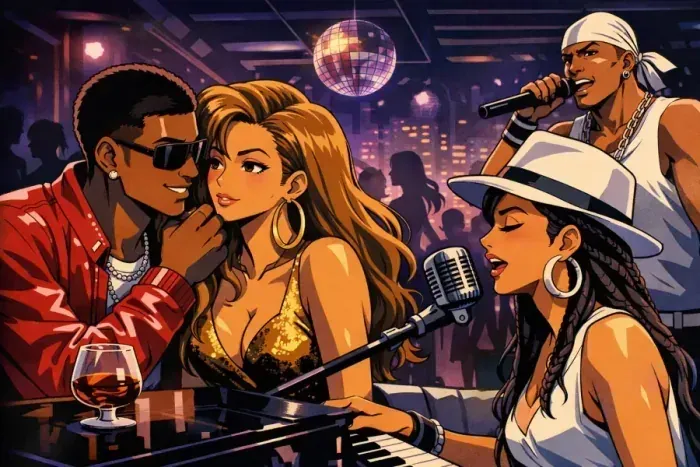
R&B as the Decade's Emotional Center
While pop often gave the decade its biggest spectacles, R&B carried much of its emotional weight. It was one of the main spaces where intimacy, vulnerability, desire, and conflict could be shaped with unusual control. While other styles responded to the instability of the 2000s through scale, speed, or surface, R&B stayed close to the voice. It cared about tone, phrasing, atmosphere, and the difficult balance between strength and openness.
That mattered because the decade did not offer many mainstream spaces where feeling could be public without becoming crude or overexposed. R&B made room for nuance. Singers could sound wounded, suspicious, relieved, seductive, guarded, or quietly self-possessed without flattening those states into one simple message. In a tense cultural atmosphere, that precision gave the genre unusual staying power.
R&B in the 2000s was not one fixed sound. It blended with pop and hip-hop while remaining rooted in soul. That flexibility let it absorb cultural pressure without losing its center. The genre became a public language for private feeling, one of the few places in mainstream music where artists could speak directly about emotional strain, longing, distance, and repair without flattening those experiences into simple slogans.
It also gave many women a form of authority that remained rare elsewhere in the industry. Emotional precision was not treated as softness, but as craft. Control of mood, narrative, and timing mattered as much as technical ability. Male performers also moved toward greater vulnerability, but often within narrower limits and under different expectations.
R&B was more than a passing trend. It was part of the decade’s emotional infrastructure. Its influence reached into pop, hip-hop, and electronic music alike. If you want to understand what the 2000s felt like, not just what they looked like, you have to account for R&B.
Neo-Soul and the Refusal to Forget
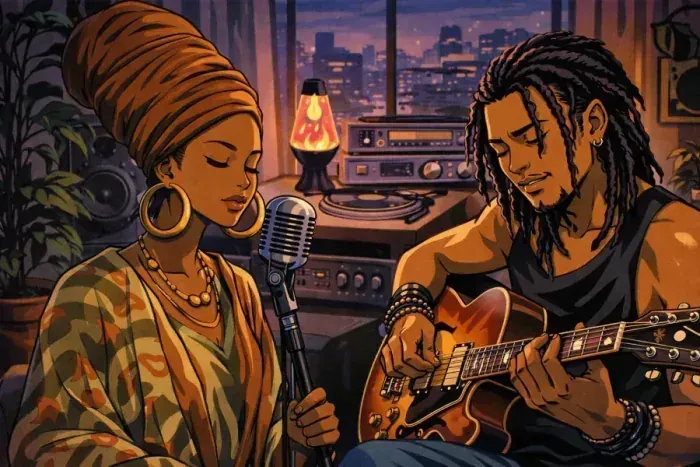
At the start of the 2000s, neo-soul offered something the decade rarely rewarded: continuity. While much of the industry chased speed, visibility, and instant impact, this movement turned toward depth. It drew from soul, jazz, and funk not to stage nostalgia, but to show that musical history could stay active in the present.
That continuity was cultural as well as musical. Neo-soul treated arrangement, groove, lyric detail, and vocal grain as forms of memory. It suggested that progress did not have to mean forgetting older Black musical languages. In a decade increasingly trained toward speed and instant legibility, that insistence on patience was part of its force.
D’Angelo’s Voodoo, released in 2000, became one of the defining albums of the era. Its thick rhythm, warm textures, and unhurried pacing cut against the dominant logic of the moment. The record asked listeners to slow down and stay inside the groove. It did not chase trends or obvious singles so much as present the album as a complete musical and emotional environment rooted in Black tradition.
Erykah Badu worked from a similar sense of lineage while sounding unmistakably like herself. She combined spirituality, self-definition, and everyday detail in a way that resisted easy categorization. Her voice carried authority without aggression. In a culture crowded with noise, Badu made subtlety feel radical.
Jill Scott extended that sensibility through close attention to ordinary experience. Her songs centered relationships, interior life, and the emotional labor of daily survival, especially from the perspective of a Black woman. She did not turn vulnerability into spectacle. She treated it as shared reality. Her success showed that intimacy could remain commercially viable without being simplified.
Maxwell brought another version of continuity. His work emphasized sensuality, restraint, and tonal control, drawing on classic soul language while remaining fully contemporary. In a decade often pulled toward extremes, that commitment to subtlety mattered.
What linked these artists was less a uniform sound than a common belief that craft, lineage, and responsibility still mattered. Neo-soul challenged the idea that modernity required amnesia. It made room for patience, depth, and memory at a moment when all three were getting harder to protect.

Women Who Gave 2000s R&B Its Authority
In the 2000s, R&B remained one of the few mainstream spaces where women could sustain emotional authority without being reduced to spectacle. That authority did not come from shock value. It came from control of voice, narrative, pacing, and tone. These artists were expected to be expressive, but they turned expression itself into a form of mastery. Feeling was not weakness. It was part of the craft.
Beyoncé’s move into solo stardom was a defining shift. Dangerously in Love showed that she could hold power and feeling in the same frame. The album moved between vulnerability, desire, confidence, and independence without reducing those moods to one fixed identity. Beyoncé’s authority was not built on rejecting mainstream structures. It came from mastering them so completely that professionalism itself became a form of control.
Alicia Keys offered a different model. Songs in A Minor grounded her identity in musicianship and introspection. At a moment when pop culture rewarded speed and immediacy, her piano-led arrangements and reflective writing suggested that patience and seriousness could still reach a wide audience.
Mary J. Blige had already built a unique style of emotional R&B before the 2000s, but her work during the decade deepened and stabilized that authority. Blige’s music spoke about pain, healing, and self-worth without smoothing them into easy redemption. No More Drama treated survival as an ongoing process rather than a final arrival, and listeners trusted her because she refused false resolution.
These artists were connected not because their music sounded the same, but because of their command of emotional scale. They were asked to be open, relatable, and strong at once, and they made that difficult balance sound intentional rather than contradictory. Their performances mattered because they gave public weight to feelings that were often dismissed, sensationalized, or misunderstood elsewhere.
In a time of rapid change, female R&B singers found ways to talk about complicated realities without surrendering control. They showed that intensity did not require collapse, and that poise did not mean emotional emptiness. In doing so, they helped define how mainstream music could sound personal without becoming fragile.
Usher, Ne-Yo, and the New Masculinity
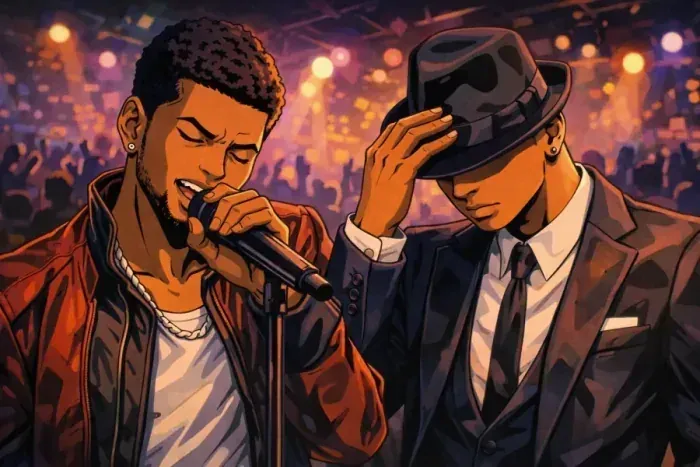
Male R&B artists faced a different challenge. They were expected to sound vulnerable without seeming weak, intimate without giving up authority. The genre became a place where new models of masculinity could be tested: regretful, emotionally dependent, reflective, and still legible within mainstream expectations.
Usher’s Confessions is one of the clearest examples of this negotiation. The album framed emotional exposure as confession rather than collapse. It dealt with infidelity, guilt, and responsibility in a way that felt unusually personal for a blockbuster release. Weakness was admitted, but agency was preserved. That balance made the record both intimate and commercially powerful.
Ne-Yo’s work offered a more self-analytical version of masculinity. As both songwriter and performer, he often portrayed the male narrator as someone learning, regretting, or trying to repair damage. Instead of centering domination, his songs treated emotional responsibility as a form of strength.
Still, the decade showed how easily emotional language could be exploited. Despite serious allegations, R. Kelly remained commercially powerful throughout the decade. That revealed a central contradiction: the industry celebrated emotional disclosure in song while often refusing accountability in practice. It raised harder questions about whose pain counted and whose did not.
The question of masculinity in 2000s R&B was not abstract. It emerged from real social pressures: changing gender expectations, public scrutiny, and the demand to appear emotionally available without fundamentally disturbing older hierarchies. Sensitivity was often celebrated only when it remained safely contained.
R&B did not solve those contradictions, but it made them audible. It gave men room to sing about longing, uncertainty, and emotional dependence while also showing where the limits of that openness remained. In that sense, the genre staged a wider cultural struggle over what masculinity could become.
That emotional authority sat beside another decisive shift. While R&B shaped how the decade felt from the inside, hip-hop increasingly shaped what the center of popular music looked like from the outside.
Hip-Hop Becomes the Center
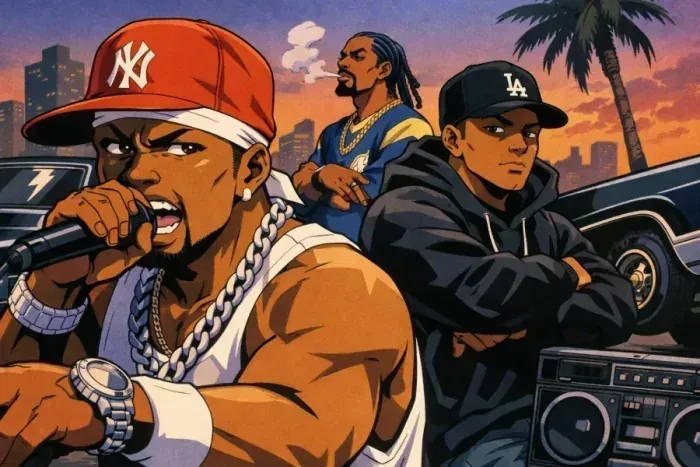
By the beginning of the 2000s, hip-hop was already a dominant cultural force. What changed in the decade was scale and institutional reach. Hip-hop moved from influence to power, reshaping charts, language, fashion, business strategy, and the wider meaning of mainstream success. That expansion created new possibilities, but it also magnified contradictions that had been easier to ignore before.
The shift was visible far beyond rap radio. Other genres started adapting to hip-hop’s production logic, its sharper emphasis on hooks, and its culture of entrepreneurial self-definition. Fashion branding, guest-feature strategy, mixtape circulation, and the idea of the artist as executive all moved closer to the center of the music business. By the middle of the decade, hip-hop was not only succeeding inside pop. It was helping rewrite the rules of pop itself.
The music of this period reflects both ambition and instability. Commercial reach expanded quickly, but so did questions about ownership, control, and responsibility. Artists had more money, more visibility, and more institutional leverage than earlier rap generations, yet the genre remained tied to regional identity, personal testimony, and social critique. As those elements moved deeper into corporate systems, they also became more heavily packaged and consumed.
The 2000s did not dilute hip-hop so much as complicate it. Celebration and critique, excess and vulnerability, ownership and exposure all intensified at the same time. As the genre’s reach expanded, its internal tensions became harder to hide.
To understand hip-hop in the 2000s, you have to start with that dual movement. It is a story of growth and tension, of new leadership and old problems. The decade did not solve hip-hop’s contradictions. It made them more visible by putting them at the center of popular culture.
Rap Moves From Outsider Voice to Industry Power
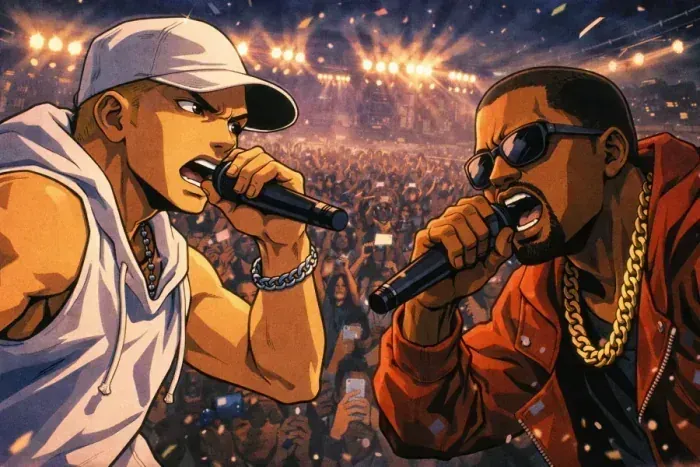
At the start of the 2000s, hip-hop completed a transition that had been building for years. A voice once associated with countercultural distance had moved to the center of the music industry. That did not erase hip-hop’s political or social roots, but it changed the terms on which those roots were expressed. Access brought leverage, and leverage brought compromise.
Jay-Z is the clearest example of this change. His rise in the late 1990s signaled a new relationship between artistry and business. In the 2000s, albums like The Blueprint and The Black Album framed success as strategy, ownership, discipline, and self-possession. Jay-Z treated wealth not as an accident, but as planned achievement. "This man is a diamond born of pressure. He rhymed a recipe for survival."
Elsewhere, Eminem made the genre more popular than ever before. His technical skill, emotional intensity, and willingness to reveal personal weakness challenged traditional ideas of masculinity and control. Albums like The Marshall Mathers LP and The Eminem Show were hugely popular, but they also made many people uncomfortable. Eminem’s success forced the industry to confront race, authenticity, spectacle, and discomfort all at once. He occupied an unstable position: outsider and central figure, embraced and scrutinized in equal measure.
50 Cent represented another model of hip-hop mainstream power. His debut album, Get Rich or Die Tryin’, showed how commercial polish and street narrative could reinforce rather than cancel each other out. Violence, vulnerability, branding, and business ambition were folded into one highly marketable worldview.
These artists were connected not by a shared sound, but by a shared position. They were at the heart of the industry, setting expectations instead of responding to them. Hip-hop was no longer just reacting to outside pressure. It was setting terms.
That shift created tension inside the culture. Hip-hop was becoming more profitable, which led to sharper arguments about authenticity. Some people asked whether mainstream success weakened the genre’s social purpose. Others argued that greater resources created new artistic and political possibilities. Both views carried weight because the stakes had become real.
The move from counterculture to the corporate mainstream did not solve hip-hop’s problems. It clarified them. The genre became wealthier, more visible, and more structurally powerful, but it also had to confront the burdens and limits of dominance. Much of 2000s hip-hop sounds energized by authority while remaining wary of what that authority costs.
The South Redraws the Map of Rap
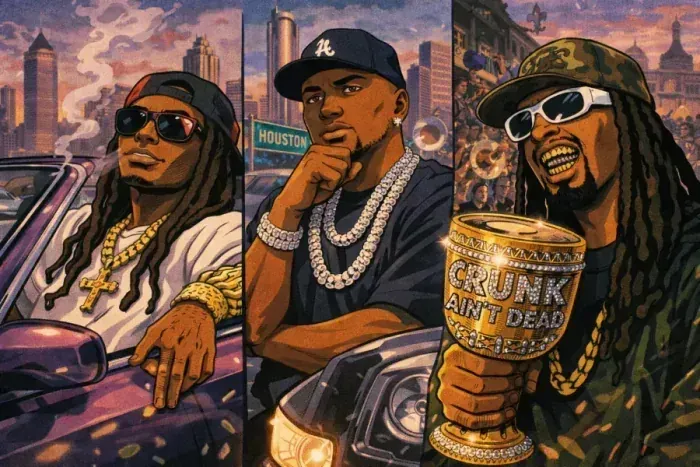
One of the most important changes in 2000s hip-hop was the relocation of its creative center. For years, ideas of legitimacy had been shaped mainly through East Coast and West Coast narratives. The 2000s disrupted that hierarchy. Southern hip-hop did not ask to be absorbed into older frameworks. It asserted itself through scale, confidence, and a distinct regional logic.
OutKast played a major part in this change. The duo’s 2000 album, Stankonia, broke the mold of traditional regional expectations. It mixed funk, psychedelia, political commentary, and playful experimentation. OutKast did not present Atlanta as an alternative to existing centers. They presented it as a center in its own right. "Artistically, when you look at OutKast, they always pushed something new."
Atlanta’s rise accelerated. T.I. helped formalize both the sound and the narrative logic of trap. Albums like Trap Muzik treated regional language and local pressure not as barriers to scale, but as the source of their force. “Trap” named an environment as much as it named a sound.
Its significance went further because it changed what counted as legible mainstream rap. Earlier industry thinking often treated Southern styles as regional exceptions that had to be translated for national markets. In the 2000s, the South increasingly set the terms itself. Local slang, slower tempos, and bass-heavy atmosphere no longer sounded like limitations. They sounded like authority.
Lil Wayne came from another part of the South: New Orleans. During the decade, he transformed from group member into solo force. His style was flexible, relentless, and highly productive. Wayne moved across mixtape culture and the commercial mainstream at once, which fit a decade increasingly obsessed with constant relevance rather than one big moment of arrival.
The rise of Southern hip-hop was not just about individual stars. It changed how the industry thought about infrastructure. Independent labels, local radio networks, and word-of-mouth promotion mattered more than many gatekeepers were used to admitting. Success did not need approval from traditional cultural centers. It could be built in one place and then pushed outward.
The shift changed mainstream sound too. Tempos slowed, bass deepened, and atmosphere carried more weight. Repetition and mood became central, which aligned well with club culture, regional listening habits, and the next evolution of rap.
The growth of Southern hip-hop did more than add new sounds to the genre. It redistributed power. By the end of the 2000s, regional identity was no longer a limit to overcome. It had become a source of authority. The map of hip-hop had been redrawn for good.
When Hooks Became Phone Products
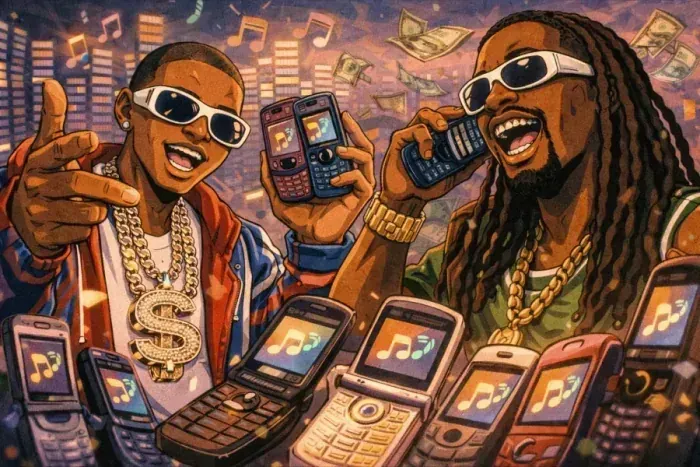
Another revealing 2000s shift came through the mobile phone. Ringtones turned short hooks into a commercial format of their own, rewarding tracks that could announce themselves within seconds. This did not replace albums, radio, or clubs, but it strengthened an economy of fragments in which choruses, taglines, and instantly legible moods gained even more value.
That format changed what counted as musical impact. A ringtone did not need a full arc. It needed recognition, attack, and a hook strong enough to survive being heard through a tiny speaker in a noisy public place. Songs that could cut through that environment gained a different kind of value, one tied less to immersion than to instant recall.
Hip-hop and pop adapted quickly. Songs built around highly recognizable intros, clean percussive hooks, and quotable phrases moved easily through that ecosystem. The point was not only to be heard in full. It was to be identifiable in miniature. That mobile logic fit neatly with the decade’s broader turn toward singles, metrics, and compressed attention.
Ringtone culture now looks transitional, but it mattered because it trained both industry and audience to think of songs as modular assets that could live across platforms and uses. It was one more step away from the album-centered economy and one more sign that the commercial life of music was being redesigned around fragments.
Women Who Expanded Hip-Hop's Range
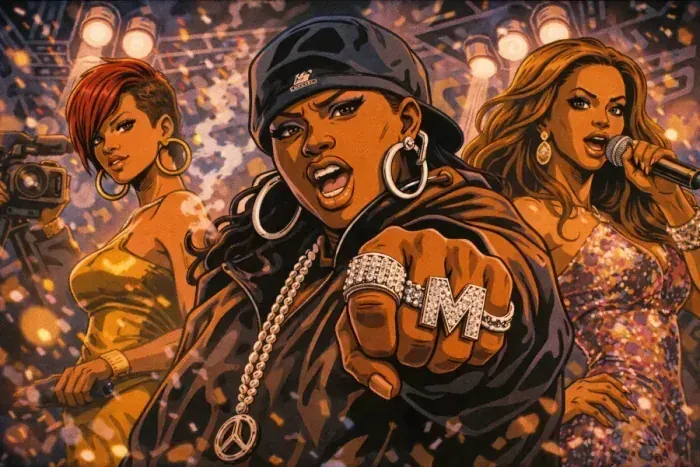
Hip-hop grew more powerful in the 2000s, but that growth did not create equal room for women. Female artists were visible, but usually under narrowed conditions. They were often expected to balance lyrical credibility with marketable image, and the range of acceptable roles remained small. Even so, several artists changed what authority, humor, and self-definition could sound like in mainstream rap.
Missy Elliott is one of the central figures in this story. During the decade, her work refused easy categorization. Albums like Miss E… So Addictive and Under Construction combined technical invention, humor, bodily force, and rigorous control. Working closely with Timbaland, Missy did not simply occupy the genre’s terms. She helped rewrite them, expanding what authorship, gender performance, and visual intelligence could look like in mainstream hip-hop.
Eve offered another model of authority. Her work held toughness and emotional exposure in the same space. Her crossover success also exposed the limits placed on women in the genre: broader visibility often came with pressure to simplify or soften complexity.
Lauryn Hill’s relative absence from the center of the decade’s output was significant. After the success of The Miseducation of Lauryn Hill, her withdrawal from the mainstream left a noticeable gap. Her legacy continued to shape expectations around lyrical depth and emotional honesty, but the industry struggled to support women seeking similar freedom without simplification. Hill’s reduced visibility showed how easily complex female voices could be pushed aside.
Even as more women gained visibility, structural barriers remained. Radio formats often favored male artists. Marketing budgets reflected narrow assumptions about audience demand. Collaborations created exposure, but not always equal power. Women were often invited to contribute without being allowed to define the genre’s broader direction.
The impact of female artists on 2000s hip-hop cannot be measured only numerically. They changed the genre’s aesthetics, performance styles, and narrative range. They widened what confidence, authority, humor, and emotional intelligence could sound like in rap.
The decade did not solve hip-hop’s gender imbalance. It made that imbalance harder to ignore. Women’s work widened the genre’s aesthetic and emotional range while also exposing how much resistance still shaped the field.

Rock After Its Cultural Peak
By the 2000s, rock carried a complicated inheritance. It still claimed the language of defiance, authenticity, and emotional truth, but its cultural authority was no longer secure. Hip-hop had become the dominant commercial force, pop controlled more of the media spotlight, and digital listening was breaking audiences into smaller worlds. Rock was not disappearing, but it no longer felt like the default center of serious music culture.
That instability shaped the decade’s guitar music. Authenticity no longer felt self-evident. A sound could be raw and still feel calculated. A career could be successful and still attract suspicion. The old myths of rock did not vanish, but they stopped working automatically. They had to be defended, revised, or performed more self-consciously.
Different scenes answered that pressure in different ways. Some bands stripped things back to reclaim directness. Others foregrounded emotional openness. Others leaned into tension, alienation, or theatrical collapse. What tied them together was not one style, but a shared unease about what rock could still mean.
That is why 2000s rock often feels less like a unified movement than a series of tests. It kept asking whether sincerity was still possible, whether rebellion still meant anything, and whether authenticity could survive inside a culture saturated with image and irony.
Garage Rock and the Search for Directness
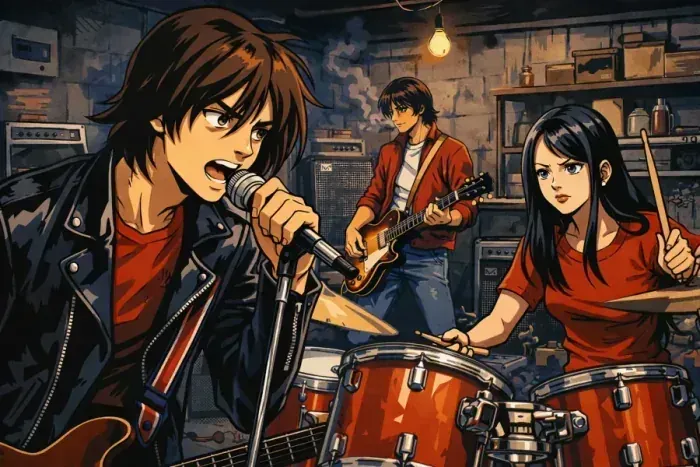
In the early 2000s, garage rock returned as both reaction and reassurance. At a moment when mainstream music often felt heavily polished, compressed, and digitally managed, these bands offered a leaner surface: short songs, sharp guitars, dry production, and the sense that performance could still feel immediate. The revival presented itself less as innovation than as recovery.
The Strokes became its most visible emblem. Is This It sounded disciplined rather than grand. The guitars were clipped, the vocals detached, and the production deliberately dry. The album did not try to overwhelm the listener. It created a small, tightly controlled space. In an era of excess, that restraint felt new.
The White Stripes followed a different logic. Their strict red-white-black imagery, reduced instrumentation, and carefully cultivated mythology made sincerity and performance hard to separate. Albums like White Blood Cells and Elephant drew on blues and garage history, but the simplicity was never naive. It was stylized, almost ritualized, and that was part of its force.
Yeah Yeah Yeahs widened the movement’s emotional range. Led by Karen O, the band fused garage rawness with dance-punk energy and theatrical volatility. Their presence challenged the idea that garage revivalism had to be masculine, stoic, or retro in a narrow sense.
Media narratives helped build the revival and also burdened it. Garage rock was often cast as the thing that would rescue rock itself. That was too much to ask of any scene. Bands were elevated quickly and discarded just as quickly when they failed to restore a whole genre’s former authority.
Still, the revival mattered. It restored faith in texture, concision, and restraint. It showed that rock could still feel urgent without becoming bigger and louder. What it could not do was reverse the broader fragmentation of the decade.
Indie Becomes a Social Code
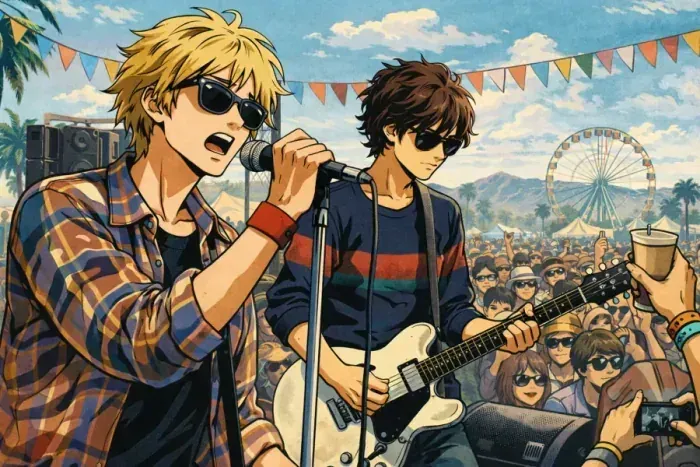
By the middle of the decade, indie had become more than a musical descriptor. It was also becoming a taste culture. Small labels, blogs, record shops, festivals, and visual style started to work together as a loose but recognizable system of belonging. To like indie was not only to like certain bands. It was to adopt a way of organizing taste.
That system had its own rituals and social cues. Certain cover-art styles, venue types, record labels, magazine voices, and festival posters started to signal not just what you listened to, but how you understood yourself. Indie could feel liberating because it gave listeners an alternative to mainstream pop formulas. It could also become restrictive, because belonging often depended on knowing the right references early enough.
Labels such as Sub Pop, Merge, Matador, and XL helped hold that world together, but so did the newer online institutions that interpreted it. Blogs and review sites translated small scene signals into larger cultural meaning. Festival lineups, curated playlists, and recommendation chains gave indie a social shape that listeners could move through and identify with.
It changed how authenticity functioned. Indie no longer meant simply outside the mainstream. It increasingly meant filtered taste: a preference for particular textures, aesthetics, venues, and forms of seriousness. That did not make the music empty. But it did mean that scene identity and lifestyle meaning were becoming more tightly linked. In the 2000s, taste itself became one of the ways people performed who they were.
Emo: When Feelings Became the Point
If garage rock sought credibility through restraint, emo and pop-punk moved in the other direction. They treated feeling as the point. These scenes spoke powerfully to listeners coming of age inside a culture of pressure, irony, and unstable belonging. For audiences who felt excluded by cooler and more guarded styles, that emotional directness mattered.
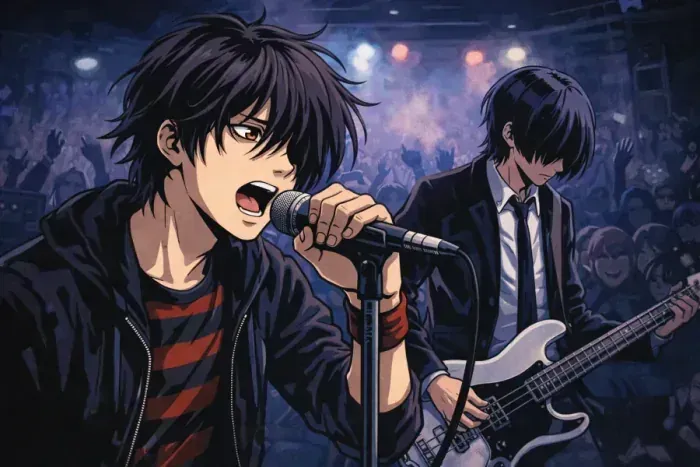
My Chemical Romance turned intensity into spectacle without emptying it of meaning. Three Cheers for Sweet Revenge and The Black Parade used character, drama, and visual world-building to organize pain, alienation, and survival. Critics often called that theatricality excessive, but for many listeners it gave shape to feelings that otherwise felt chaotic.
Fall Out Boy offered a different register. Their songs filtered vulnerability through wordplay, irony, and self-conscious wit. That combination captured a generation fluent in both sincerity and deflection. Pop-punk’s polished hooks made difficult emotions singable without making them trivial.
Avril Lavigne complicated the gender politics of this world. Her early success challenged expectations about how young women in rock-adjacent spaces were allowed to sound, look, and behave, even as the industry still tried to keep that rebellion legible and contained.
These scenes depended on identification more than distance. Fans did not only admire the artists. They recognized themselves in them. Shows became spaces where embarrassment, sadness, and confusion could be performed collectively rather than hidden.
Backlash came quickly. Emo and pop-punk were dismissed as melodramatic, juvenile, or too emotional. Those judgments often missed the conditions that made such expression feel necessary. The decade offered young people few public spaces where fear, confusion, and grief could be voiced without ridicule. These scenes filled that gap.
Their lasting importance lies there. Emo and pop-punk turned private instability into shared form. They made feeling visible in a culture that otherwise rewarded control.

Nu Metal and the Sound of Emotional Overload
Nu metal entered the 2000s carrying a form of anger that felt unprocessed, exposed, and socially charged. Earlier heavy music had often emphasized technical mastery or overt rebellion. Nu metal foregrounded emotional overload instead. Frustration, shame, numbness, and psychic pressure were not side themes. They were the center of the experience. That made the genre hugely popular and heavily stigmatized at the same time.
Linkin Park’s Hybrid Theory became one of the defining debuts of the period because it gave clear shape to internal turmoil. The songs fused aggression and vulnerability, heavy guitars and electronic texture, control and breakdown. Chester Bennington’s voice moved between restraint and eruption, making emotional instability audible in a way millions of listeners recognized.
Korn were harsher and less accommodating. Their music centered discomfort more than release. Lyrics about trauma, insecurity, and alienation were not resolved. Tuned-down guitars and pounding rhythms created psychological heaviness rather than catharsis. For many listeners, that refusal of relief felt honest rather than nihilistic.
Deftones made the genre more atmospheric and sensual. Their music mixed aggression and intimacy while leaving room for interpretation. Albums like White Pony showed that you could be heavy and sensitive at the same time without turning that contrast into a show. Yet this subtlety was often lost in broader cultural discussion, which tended to flatten nu metal into caricature.
System of a Down brought a political edge that made them stand out. Their music addressed war, nationalism, and state violence in a strange and urgent way. Their songs shifted suddenly between tones and tempos. That instability matched a world that felt confusing and dangerous, especially in the years after September 11.
Despite its popularity, nu metal was rarely treated as fully legitimate by critics. It was dismissed as immature or excessive, and its emotional directness was often misread as indiscipline. Those judgments also carried class assumptions. Nu metal spoke powerfully to audiences who felt excluded from cultural spaces that prized irony, restraint, or distance.
The genre’s popularity declined in the late 2000s, but that did not change its importance. Nu metal gave form to intense feelings that other parts of the culture struggled to acknowledge. Its legacy lies less in refinement than in exposure. It said difficult things in a language many critics did not trust, but many listeners needed.
Electronic Music Builds Power Without a Center
Electronic music occupied a strange position in the 2000s. It was everywhere and not always named as such. It was not the decade’s most commercially dominant genre, but it strongly shaped how people moved, gathered, and listened. Unlike styles organized around the star performer, electronic music often worked through systems, spaces, repetition, and shared momentum.
That made it unusually well suited to a fragmented decade. Electronic music did not need everyone to agree on one canon, one front person, or one public narrative. It could thrive through scenes, labels, clubs, festivals, and DJ networks that overlapped without fully merging. In that sense, it anticipated a broader 21st-century pattern: culture sustained by circulation and community rather than by one obvious center.
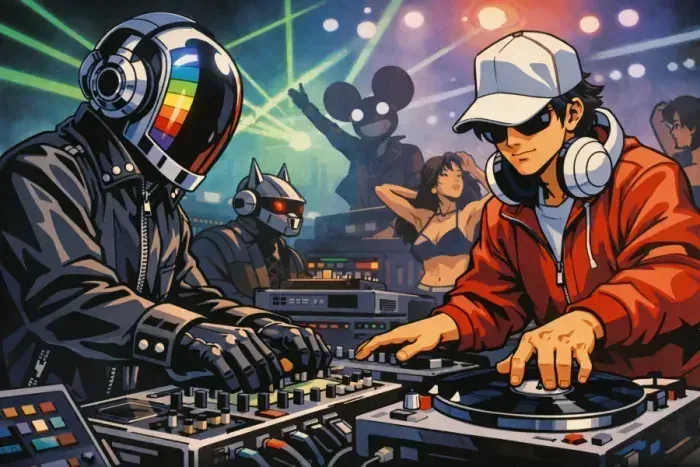
In the 2000s, electronic music became more popular, but it still kept much of its underground character. Club culture spread across more cities and countries. It was supported by festivals, independent labels, and global networks of DJs and producers. Tracks were shared without fixed identities, remixed, and recontextualized night after night. Who made a track often mattered less than the mood it created. What mattered was whether the room moved together.
This culture offered something that was becoming rarer elsewhere in the decade’s media environment. It created spaces where the body mattered more than branding and where time was measured by rhythm rather than news cycles. Electronic music did not promise total escape, but it did offer temporary relief from the pressures of everyday visibility.
Digital tools made production and distribution easier, which allowed electronic music to circulate more widely without abandoning its decentralized character. Producers became recognizable without always becoming stars. In a decade otherwise defined by fragmentation, electronic music offered continuity, circulation, and collective experience.
Dance Music Steps Into the Mainstream
At the start of the 2000s, electronic music reached a level of mainstream visibility that had once seemed unlikely. It did not abandon clubs or underground networks, but it began appearing more comfortably in charts, advertising, and festival culture. The move was gradual and built on the dance infrastructure of the 1990s. Audiences had become more open to repetition, texture, and song forms that did not follow the old guitar-band template.
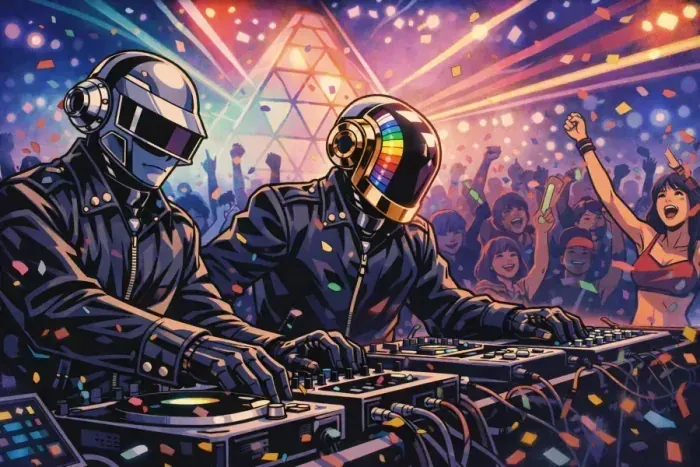
Daft Punk played a central role in that transition. Their 2001 album, Discovery, brought electronic music closer to pop without dissolving its identity. Built from looping grooves, filtered vocals, and bright melodic hooks, it treated dance music as warm, pleasurable, and emotionally resonant. Songs like “One More Time” and “Digital Love” made euphoria feel human rather than mechanical. Daft Punk showed that electronic crossover did not have to feel like a novelty.
The Chemical Brothers brought a rougher route into the mainstream. Their work carried the physical energy of big beat and rave culture while scaling it toward larger audiences. Albums like Come with Us showed that electronic music could be confrontational and still widely accessible. Their live performances translated club force into festival spectacle.
Fatboy Slim offered another route through sampling, humor, and high-energy rhythm. Tracks like “Praise You” and “Weapon of Choice” made electronic music feel playful and easy to grasp for listeners who might otherwise have stayed outside club culture.
These artists were connected less by one subgenre than by timing. The 2000s mainstream was already less centered on guitar bands and linear song narratives. Electronic music fit that environment well because it organized listening around texture, momentum, and mood, qualities that translated easily into the decade’s increasingly personalized listening habits.
But this did not mean electronic music’s underground scene disappeared. Clubs, DJs, and independent labels were still central. Mainstream success was more of an extension than a replacement. Electronic music became more popular without losing its internal logic. It found ways to expand without fully assimilating to other genres.
By the mid-2000s, electronic sounds were no longer treated as new. They were present across pop, hip-hop, and experimental music. The genre had not taken over so much as quietly become part of the foundation.
The Club Networks That Held Electronic Music Together
Electronic music gained visibility through well-known artists and crossover tracks, but its real strength in the 2000s remained infrastructural. Across Europe, clubs, labels, promoters, and committed audiences sustained scenes that did not depend on chart success. What mattered was continuity.
That continuity is easy to underestimate if you look only at crossover hits. Club culture worked on a different clock from mainstream pop. Its values were repetition, endurance, small shifts in texture, and trust built over long nights and many returns. In a decade obsessed elsewhere with novelty, that slower cultural tempo gave electronic scenes unusual stability.
In Germany, the techno culture of the 1990s did not disappear. It became more focused and institutional. Berlin mattered not because it was chasing pop visibility, but because it offered physical and social space for long-form club life. Venues such as Tresor, and later Berghain, became symbols of a culture organized around duration, repetition, and discipline rather than spectacle. DJs were valued for stamina, consistency, and crowd-shaping, not celebrity alone.
The United Kingdom followed a different path. UK garage mixed house, jungle, and R&B into a rhythmic, vocal-driven sound that was socially grounded. Artists and producers like Artful Dodger and Craig David helped make garage visible, but the genre’s real energy still lived in pirate radio, local scenes, and dance floors. Those networks let styles change quickly without needing much money or institutional approval.
France had its own relationship to electronic music as well. Beyond the famous crossover acts, a broader culture of house and techno thrived through independent labels and club nights. Rhythm and repetition were woven into everyday social life rather than kept inside a niche world. Dance music was not just something to consume. It was something to inhabit.
Across Europe, festivals also played an important role. Events like Love Parade, Sonar, and Creamfields brought people together through music. They created temporary cities where people shared the same rhythm. These gatherings made clear that electronic music was about more than individual tracks or artists. It was also about the experience of being together. They offered continuity in a decade otherwise marked by fragmentation.
What tied these scenes together was not uniformity, but structure. In Europe, electronic music was often understood as something played and lived with, not just something made and sold. DJs were closer to caretakers than celebrities. Tracks were played over and over, and each time they returned, they took on new meaning.
In the 2000s, this infrastructure provided stability. While popular trends came and went, club culture remained consistent. It showed that music could be successful even when it was not always in the public eye. That helped European electronic scenes shape the future of global dance culture, even when they were not in the spotlight.
The DJ as Author, Not Celebrity
One of electronic music’s most revealing features in the 2000s was its looser relationship to individual celebrity. Unlike pop or rock, where authorship was usually attached to a face and a story, many electronic scenes cared more about how a track worked than about who could claim it most visibly. Tracks functioned as tools as much as statements. DJs selected, sequenced, and transformed them in real time, creating meaning through order, contrast, and flow rather than through fixed narrative.
This made the DJ a kind of author, even when celebrity remained secondary. DJs such as Laurent Garnier, Sven Väth, and Carl Cox became influential not through chart dominance, but through their ability to shape nights. Their authority came from duration, taste, and crowd-reading. A set succeeded less through isolated tracks than through the logic of flow. The DJ guided collective motion rather than demanding fixed attention.
That kind of authorship can be hard to describe in pop terms because it is not based on a single finished object. A DJ’s work lives in timing, pressure, patience, release, and the ability to sense when a room needs extension rather than climax. In that world, judgment means less “What is the best track?” and more “What should happen next, and when?”
Remix culture reinforced that logic. Songs were not always treated as finished products, but as raw material for new uses. A track could appear in multiple versions, each suited to a different room, time, or audience. Remixes extended a song’s life and distributed authority more widely. In some cases, the remix became more famous than the original. That challenged traditional ideas of ownership and originality without making craft disappear.
Producers like Ricardo Villalobos and Jeff Mills embodied this approach. Their work blurred composition and performance, studio and club. Tracks were not fixed statements so much as material that evolved through use. That flexibility matched the decentralized networks that carried electronic music through the decade.
Anonymity also offered protection. In a media environment saturated with exposure and surveillance, electronic music preserved spaces where work could circulate without being completely absorbed into personality. This did not mean a lack of identity. It meant that attention was distributed differently, toward sound and collective experience rather than biographical drama.
This culture did not reject recognition. It redefined it. Respect was earned through consistency, patience, and durability rather than constant visibility. In a decade obsessed elsewhere with novelty and exposure, that alternative value system proved remarkably resilient.
Electronic music offered an alternative understanding of creativity by emphasizing remixing, repetition, and collective authorship. It suggested that meaning could be created together and carried over time. In the 2000s, that quiet resistance to individualization became one of the genre’s most lasting contributions.
How Music Traveled Before Streaming
Before streaming platforms promised instant worldwide access, music in the 2000s was already moving across borders in uneven and often improvised ways. This was not yet a frictionless global system. Artists crossed languages, markets, and expectations without the help of recommendation engines designed to smooth the path. Success depended more on translation, timing, diaspora support, and cultural negotiation than on platform design.
That unevenness gave the decade a different international feel from the one that came later. Discovery often depended on migrant communities, club DJs, television channels, import shops, fan forums, and peer sharing rather than on one global interface. Music crossed borders through people and scenes first. Platforms only became the dominant map of that movement later.
Global pop in the 2000s was not one unified marketplace. Local industries remained strong and often prioritized domestic audiences over export ambition. Meanwhile, cross-market visibility became more valuable. Artists moving between markets had to adjust sound, image, and language without losing credibility at home. That tension shaped both creative choices and career strategy.
Global circulation also did not mean equal circulation. Western markets still held outsized symbolic power, and many artists achieved enormous success without ever becoming fully legible to English-language media. Visibility remained shaped by language, industry access, and older hierarchies of cultural legitimacy.
Still, the decade laid groundwork for what came later. International collaborations grew. Diaspora communities became powerful cultural bridges. Sounds traveled faster, even when the systems for interpreting them lagged behind. The 2000s were not smoothly global. They were globally restless.
That matters because the decade captures a world in transition. Music was already global, but the structures governing that globality were still incomplete. Mobility expanded, yet barriers remained. What emerged was not a seamless network, but a field of constant movement shaped by both possibility and imbalance.
Latin Pop, Crossover Pressure, and Global Reach
Latin pop occupied a complicated but powerful position in the 2000s. Spanish-speaking artists had long built major careers without needing validation from English-language markets, but the structure of crossover ambition changed during this decade. Global visibility became more attainable, yet it also came with sharper pressure to translate identity into forms the mainstream could immediately recognize.
That pressure worked unevenly. Crossing into English-language markets could expand an artist’s audience dramatically, but it could also narrow the terms on which that audience was allowed to understand them. Crossover often rewarded recognizability first: familiar rhythm, a legible image, a hook that could travel quickly. The harder question was whether an artist could widen their reach without being flattened in the process.
Shakira’s trajectory captures that negotiation clearly. She became a major figure in Latin America through music shaped by rock and regional influences, then expanded her reach in 2001 with Laundry Service. The album moved toward global pop without entirely severing its earlier roots. “Whenever, Wherever” translated parts of her musical identity rather than erasing them. Her success came from adaptation with continuity, not from becoming a generic crossover figure.
Ricky Martin entered the decade already established as a star across Latin and mainstream markets. His late-1990s breakthrough had shown that Latin pop could dominate English- language spaces, but it also exposed the limits of that welcome. Visibility often depended on being framed as energetic, sensual, and exportable. Market appetite did not always leave room for broader artistic range.
Juanes represented a different route. Writing primarily in Spanish, he built international recognition through melody, emotional clarity, and songcraft more than through overt crossover repositioning. Albums like Un Día Normal suggested that translation did not always require transformation. His career showed that sincerity and accessibility could travel across borders even when industry structures remained uneven.
Those structures mattered. Radio formats, awards systems, and marketing categories often preserved separation rather than encouraging real integration. Artists might be welcomed into the global mainstream for a moment without being granted durable inclusion.
Diaspora audiences helped counter that instability. Communities across the United States and Europe supported artists whose identities exceeded simple market labels. That support complicated the idea that crossover success had to be granted from the center outward.
Reggaeton also became impossible to ignore. Rooted in Puerto Rican and Panamanian histories but commercially amplified in the 2000s, it gave the decade one of its clearest new rhythmic signatures. Daddy Yankee’s “Gasolina” in 2004 helped push the genre into wider international circulation, showing that Latin urban music could move through clubs, radio, and global youth culture without fully adapting itself to older pop expectations.
What Latin pop proved in the 2000s was not that border-crossing had become easy. It proved that artists could negotiate access strategically without surrendering the core of their sound. In doing so, they widened the possibilities of global popular music inside a system that remained uneven.
Regional Pop Powers Before Global Hype
In the 2000s, Asian pop music flourished within strong regional systems that rarely needed approval from the West. K-pop and J-pop would later become global phenomena, but they were already successful. This period was defined by autonomy, not invisibility. These industries were built first for local and regional audiences. International expansion existed, but it was not always the main goal.
That autonomy shaped the music as much as the business model. Because these systems were not built primarily to satisfy Western gatekeepers, they could invest in long-term fan relationships, visual identity, training, and genre blending on their own terms. What later looked to outsiders like sudden global efficiency had, in fact, been built through years of regional trust and repeated audience cultivation.
Japan’s pop industry was one of the most powerful and self-sustaining in the world. Artists such as Utada Hikaru showed how local pop could absorb R&B and electronic sounds without losing its own center. Albums like Distance balanced commercial reach with subtle writing and emotional interiority. That worked within a market that rewarded consistency, loyalty, and long-term audience trust.
South Korea’s pop infrastructure developed differently. In the early 2000s, the idol system became more structured around training, performance, discipline, and long-term planning. Artists like BoA exemplified that approach. Her ability to work across languages and markets made her a regional connector, especially between South Korea and Japan. Her success was not framed as crossover in the Western sense so much as expansion within an already connected cultural sphere.
These systems relied on close connections between labels, media, and fan communities. Television, retail, live events, and publicity were closely coordinated. Fan participation was active, organized, and sustained over time. That made stability possible in an otherwise volatile industry. The model emphasized skill development and longevity, even if creative freedom remained unevenly distributed.
Asian pop in the 2000s did not try to become universal by flattening itself. It embraced specificity. Linguistic difference, local aesthetics, and cultural references were treated as strengths, not weaknesses. That runs against the common Western assumption that global success requires simplification or adaptation to majority norms.
It is important not to confuse limited Western recognition with marginality. These artists were not operating on the edges of culture. They were central within robust regional systems. The later global rise of K-pop did not arrive out of nowhere. It was built on 2000s infrastructure, audience trust, and disciplined long-term development.
The broader point matters beyond Asia alone. Global pop did not begin when Western platforms finally noticed it. It was already complex, self-sustaining, and fully alive before algorithms amplified it.
Diaspora Networks Before Platform Globality
The global circulation of music in the 2000s depended not only on national industries, but also on diaspora networks. Long before streaming simplified the language of distribution, sounds moved through migration routes, radio, clubs, family networks, parties, and informal exchange. African and Caribbean influence was especially important, sometimes named directly and sometimes absorbed without proper acknowledgment.
Those routes mattered because they carried taste as well as sound. A song might travel through a wedding set, a cousin’s burned CD, a neighborhood DJ, or a pirate-radio mix before it ever entered any formal chart system. Diaspora circulation was not a weaker version of the market. In many cases, it was the market that listeners actually trusted first.
Caribbean music, especially dancehall, played a major role in this process. Artists like Sean Paul helped push dancehall rhythms into global pop circulation in the early 2000s. That visibility mattered, but it often translated the genre through energy and cadence while giving less space to its deeper local context. Wider reach came with some flattening of meaning.
Meanwhile, Caribbean communities in the United Kingdom remained closely tied to sound-system culture. Pirate radio, clubs, and local scenes provided spaces where dancehall, reggae, and new hybrids could develop outside mainstream pop pressure. Those environments later fed directly into grime, UK funky, and other bass-driven styles.
African popular music followed another path. In the 2000s, what would later be grouped under Afrobeats remained largely regional and diasporic. Artists like 2Face Idibia built strong audiences in West Africa and among diaspora communities without significant Western chart presence. Their music moved through radio, physical media, and community events, grounded in shared cultural reference rather than global marketing logic.
Diaspora audiences acted as cultural translators. Sounds crossed continents through weddings, clubs, family circulation, and informal gatherings long before platforms could flatten everything into a single market. Rhythmic patterns, vocal phrasing, and production choices entered Western popular music even when their origins were obscured.
What linked African and Caribbean circulation in the 2000s was durability. These sounds did not depend on centralized approval or immediate Western recognition. They moved through trust, familiarity, shared identity, and gradual accumulation. Success was often measured locally before it was measured internationally.
In hindsight, the importance of this period is much clearer. Many African and Caribbean sounds that became globally prominent later were already traveling, evolving, and building communities in the 2000s. It simply took the wider industry longer to notice.

Fame in the Age of Constant Exposure
By the mid-2000s, music culture was no longer only about sound. It was increasingly shaped by visibility. Artists operated inside a media environment that was expanding rapidly and offering little protection. Visibility became both a form of currency and a source of risk. The same systems that made success possible could also speed up collapse.
Music television and print magazines were still important, but they were becoming more entangled with online circulation. Rumors moved faster. Images spread without context. Personal moments were recorded, replayed, and archived. For artists already under pressure from touring, release cycles, and promotion, the pace became relentless. The line between work and private life weakened sharply.
This environment did not affect all musicians in the same way. The emotional cost was unevenly distributed. Young artists, women, and performers whose careers depended on public accessibility were often the most exposed. Weakness attracted more attention than strength. Mistakes were treated as moral failure rather than human reality.
The 2000s were a turning point in how fame worked. Public life was no longer confined to interviews, premieres, and scheduled appearances. Visibility followed artists everywhere, often without consent. Music still offered connection and expression, but the structures around it grew harsher and less forgiving.
The biggest change was not only quantity, but speed. A bad performance, a paparazzi photo, an interview clip, or a rumor on a blog could now bleed almost instantly into the commercial story of an album or tour. Image management became a permanent job. For many artists, it required forms of emotional discipline that no label budget could truly protect.
To understand the decade fully, you have to look beyond the records themselves. Media exposure shaped careers, reputations, and emotional survival almost as much as the songs did.

When MTV Stopped Organizing Music
For much of the 1990s, MTV had been one of popular music’s clearest centers of gravity. The network helped shape taste, introduced new artists to mass audiences, and built a shared visual language across genres. By the 2000s, that role was fading. Music videos still mattered, but they no longer carried the same central cultural force. The channel that had once organized so much of music television was slowly turning away from music itself.
The transition was gradual. MTV remained active, but its schedule leaned increasingly toward reality television, celebrity programming, and lifestyle content. Shows like Total Request Live held on for a time, but even they increasingly emphasized personality and entertainment over music itself. Videos became moments rather than major cultural events.
That loss mattered because MTV had once provided something increasingly rare: a shared frame. When a video entered heavy rotation, large audiences encountered it together. That common exposure shaped how songs were remembered and discussed. As MTV drifted away from music, discovery became more fragmented, moving across late-night television, niche programming, blogs, and eventually the internet.
The shift affected artists unevenly. Established stars could rely more easily on existing recognition, while newer artists lost a major route into public visibility. What had once been a relatively centralized bridge between performers and audiences became a scattered set of channels that listeners had to assemble for themselves.
The function of music video changed as well. Without guaranteed airtime, videos became more like promotional tools than widely shared cultural occasions. Budgets shifted. Some artists experimented with lower-cost concepts, while others treated visual material as secondary. The assumption that every major song required a defining video weakened.
MTV’s decline did not mean people cared less about music. It meant they were being trained to want different kinds of media intimacy. Ongoing storylines, personality access, and immediacy began to displace curated musical flow as the dominant mode of engagement.
By the late 2000s, the old model of shared public music time had largely receded. People still gathered around music, but less often in one place and through one institution. MTV’s retreat marked more than a programming shift. It marked the decline of a particular idea of popular music as a public event.
Blogs, MySpace, and the New Taste Brokers
As traditional media lost some of its unifying force, new online gatekeepers emerged. In the mid-2000s, blogs, forums, and early social platforms changed how music was discovered, debated, and granted legitimacy. Power did not disappear. It was redistributed into smaller, faster, and often more opinionated forms.
Music blogs became influential not because of their size, but because of timing and tone. Sites like Pitchfork became powerful reference points in a landscape overloaded with options. A review could rapidly elevate an unknown artist or damage a record’s reputation before it had been widely heard. The voice was often sharp, confident, and conspicuously different from older music journalism. Readers experienced that as honesty. Artists often experienced it as volatility.
MySpace played a different role. It brought musicians and listeners into much closer contact. Artists could upload songs, customize pages, and communicate with fans without waiting for traditional intermediaries. For a moment, that felt like a real break with the old discovery model. Curiosity, peer networks, and scene affiliation mattered as much as broadcast approval. Communities formed across cities and subcultures that had previously felt disconnected.
But MySpace also introduced new pressures. Visibility became measurable through friend counts, plays, and constant activity. The algorithms were still basic, but competition was already intense. Artists were expected to be reachable, responsive, and perpetually active. The platform rewarded quick adaptation and punished slowness.
Blogs and social platforms together created a feedback loop. Online attention generated bookings, label interest, and further media exposure. Success began to look organic even when it was being shaped by informal but very real structures of taste. Trend cycles sped up, which made slower artistic development harder to sustain.
These new gatekeepers were not neutral. Their preferences reflected class position, geography, scene access, and inherited media habits. Some sounds were elevated quickly, while others with large audiences elsewhere remained marginal within blog culture. Access widened, but new forms of exclusion appeared alongside it.
The blog-and-MySpace era was therefore not the end of gatekeeping, but a transition in its form. Music no longer waited to be discovered on one schedule. It was always available and always being judged. Access widened, but so did exposure to scrutiny. The gatekeeper had multiplied.
Britney, Amy, and Fame Without Protection
As media channels multiplied in the 2000s, fame became harder to contain. Artists, especially highly visible ones, were watched not only in performance but in private life. Public identity now included exhaustion, confusion, and vulnerability, often documented without permission.
Britney Spears’s public crisis in the mid-2000s remains one of the clearest examples. Her struggles were documented obsessively. Paparazzi turned distress into spectacle and personal crisis into serialized content. Coverage rarely asked what support was missing. It asked what could be captured next. Even when she needed retreat, visibility did not loosen its grip.
Amy Winehouse experienced a different but equally destructive form of exposure. Her success depended on emotional honesty and deep musical tradition, but the media focused on her decline. Instead of seriously dealing with addiction and mental health, coverage often reduced her to a warning sign. The tension between admiration and intrusion became too much to bear. The industry benefited from her talent, but did not protect her.
These stories are connected not by genre or image, but by structural neglect. The systems that amplified artists had few mechanisms for protecting them. Contracts prioritized output over well-being. Public relations managed perception more readily than recovery. When artists struggled publicly, responses were often punitive or voyeuristic rather than supportive.
This also changed how audiences related to music. People listened to songs about pain while consuming media narratives built from the consequences of that pain. Empathy competed with curiosity. Concern and consumption blurred together.
Visibility without protection was not accidental. It was incentivized. Images sold. Narratives generated clicks. As the cycle accelerated, there was less room for reflection. Artists became both the producers of content and the content itself.
The effects of this period are still felt today. In the 2000s, it became painfully clear that fame itself could be structurally damaging. The decade exposed the distance between cultural interest and ethical responsibility. Music still offered connection and meaning, but the systems surrounding it often harmed the people who created it.
Access Expanded, Equality Did Not
As digital tools spread in the 2000s, a powerful idea took hold: music had finally become democratic. Anyone with a computer could record, upload, and share work. Gatekeepers, it seemed, were losing their hold. That story was hopeful and partly true, but it also hid important realities.
Access was uneven. Technology lowered some barriers and reinforced others. Even as software became cheaper, time, space, education, stability, and equipment remained unevenly distributed. The ability to participate did not automatically mean the ability to sustain a career.
The myth of digital democracy also individualized responsibility. Success started to look like pure merit. Failure started to look like insufficient effort. Structural inequality became easier to ignore. This way of thinking deeply affected how music careers were judged and justified.
The 2000s did not end gatekeeping. They changed its form. Instead of the usual executives and programmers, new filters emerged through attention, metrics, and visibility. To understand this part of the decade, you have to look beyond access and ask who could afford to take creative risks and who paid the price when those risks did not work out.
That distinction matters because digital optimism often confused a lower barrier to entry with a fairer system. Uploading became easier. Sustaining attention, surviving unpaid labor, and turning visibility into a stable livelihood did not. The decade expanded possibility, but it also expanded the amount of invisible work artists had to absorb for themselves.
Bedroom Studios and the Cost of Independence
In the 2000s, falling equipment costs made home production increasingly viable. Software such as Pro Tools, Logic, and Ableton Live allowed artists to record, edit, and produce outside traditional studios. Laptops took over work once tied to expensive rooms and hardware. Bedrooms became studios. It opened creative space while reducing dependence on labels and professional facilities.
DIY culture took many forms. Independent bands recorded demos and home releases, electronic producers built full tracks on personal computers, and hip-hop artists circulated mixtapes rapidly outside older release schedules. Speed, experiment, and immediacy became virtues. Music could respond to the present without waiting for permission.
That responsiveness changed the emotional feel of independent music. Songs no longer had to wait for the pace of label approval, studio booking, or retail rollout. Artists could answer a local scene, a political mood, a breakup, a club trend, or an internet moment much faster. Even when the production was rough, that roughness could feel tied to presence rather than lack.
It changed aesthetics too. Imperfection became more acceptable and sometimes desirable. Rough edges could signal immediacy, presence, or honesty. Lo-fi textures worked as an answer to overpolished mainstream production. The distance between artist and listener seemed to shrink, at least symbolically.
But the DIY story often hides its costs. Home recording required more than software. It required space, time, stability, and some margin for failure. Not everyone could turn a room into a studio or spend months refining work without immediate income. The freedom to experiment remained unevenly distributed.
DIY production also meant that artists absorbed more labor. Musicians were increasingly expected to write, record, produce, promote, and manage themselves. Independence promised freedom, but it also concentrated responsibility. Without institutional support, setbacks could turn quickly into exhaustion. Burnout became a familiar cost, especially for artists balancing creative work with other jobs.
Despite these constraints, DIY culture had lasting effects. It widened the range of voices and sounds entering public circulation, challenged older ideas of professionalism, and helped normalize the idea that creativity could happen outside sanctioned spaces.
In the 2000s, bedroom production did not replace the industry. It developed beside it, opening real alternatives without eliminating older dependencies. The promise of independence was real, but so were its limits. DIY culture makes sense only if you keep both sides in view: what it made possible and what it demanded in return.
Who Could Actually Afford to Go DIY?
The promise of cheaper digital tools encouraged the belief that participation would become broadly equal. In practice, access was still shaped by class, geography, education, and social networks. Technology alone could not erase those conditions.
Time was one of the most important hidden resources. Making music outside traditional structures often meant long periods of unpaid labor: writing, recording, learning software, maintaining an online presence, and playing local shows. Artists with financial cushion, flexible work, or family support could invest differently from those forced to choose between creativity and survival. Endurance mattered as much as talent.
That is why the decade’s success stories can be misleading if they are told only as proof of openness. The artist who “just made it from a bedroom” usually still needed time, equipment, a place to work, enough technical literacy to keep learning, and enough social stability to absorb years of uncertain return. Access expanded, but it did not expand equally for everyone.
Space mattered too. Bedroom production assumed a stable and relatively private environment, an assumption that did not hold for everyone. Shared housing, crowded cities, unsafe conditions, noise limits, and limited equipment all shaped what kinds of work could actually be made. These constraints were rarely acknowledged in celebratory narratives about independence.
Knowledge also remained unevenly distributed. Knowing how to record was only one layer. Knowing how to promote work, navigate contracts, and interpret new platforms was another. That information often moved through informal networks rather than public channels. Artists connected to the right scenes, schools, or industry circles retained invisible advantages.
Geography still mattered. The internet increased circulation, but physical location continued to shape opportunity. Cities with venues, audiences, media ecosystems, and local support offered advantages that remote or underserved areas could not easily replicate. Digital presence did not erase proximity. It changed what proximity meant.
The rhetoric of digital democracy also changed how failure was interpreted. If access was supposedly open to everyone, lack of success could be blamed on the individual rather than on the structure. Inequality became easier to privatize and harder to name.
The 2000s did allow more people to participate and circulate work without waiting for traditional permission. But broader participation did not produce equality. The selection systems changed, yet they still rewarded some conditions and penalized others.
Recognizing these constraints does not make the decade’s creative achievements smaller. It makes them clearer. New ideas came not only from tools, but from the conditions in which those tools were used.

What the 2000s Actually Changed
Looking back, the 2000s are difficult to summarize because they never settled into one style. They were a decade of structural change. Older systems loosened before new ones fully formed. New possibilities emerged without settled rules. Artists, listeners, and industries learned by improvising under pressure.
That is one reason the decade can feel both familiar and oddly unfinished. So many of the habits that define the present were first normalized there, but they appeared in rough and unstable form. The 2000s did not deliver a polished future. They exposed one early, while many of its costs were still becoming visible.
No single sound defined the decade. It produced conditions that still shape music today. Listening became more individualized. Careers became less stable. Technology moved faster than support systems could adapt. Meanwhile, creative access widened, global exchange intensified, and new emotional languages took hold. These outcomes were not planned. They emerged from conflict, adaptation, and necessity.
Its central legacy is therefore structural more than stylistic. It created the habits, expectations, and tensions that shape the present. Streaming, algorithmic discovery, and constant visibility did not suddenly appear in the 2010s. They grew out of 2000s experiments, failures, and compromises.
To understand the present, you have to start with this transitional period. The 2000s were not an empty gap between clearer eras. They were a workshop where the future of music was assembled, imperfectly and piece by piece.
The 2000s Built the Streaming Mindset
The systems that now define everyday listening did not suddenly appear in the 2010s. They were tested, improvised, and normalized during the 2000s. Habits changed first, and infrastructure followed.
The sale of individual tracks was one step toward today’s subscription model. Habits like skipping, shuffling, and playlist-building changed how listeners imagined music. It became more flexible and less object-bound. By the time unlimited catalogs arrived, those behaviors already felt natural. The emotional center of ownership had already weakened.
Data-driven evaluation also intensified in this period. Download counts, chart movement, blog reaction, and MySpace metrics accustomed artists and labels to constant measurement. Success became more immediate, and momentum itself became something to manage. Streaming extended that logic rather than inventing it.
It changed the emotional texture of career planning. A song was no longer simply a release that might build over months. It became a data event to monitor, compare, explain, and react to. That made success feel more measurable, but it also made underperformance feel more immediate and more public.
The producer-led sound of the 2000s also pointed toward the future. As songs became more track-focused, hooks, mood, and replay value grew in importance. Those qualities translate easily into environments shaped by recommendation systems, where engagement often matters more than narrative depth. Choices made under digital pressure in the 2000s later made sense inside streaming culture.
Just as important, the decade normalized instability. Careers could turn quickly. Pauses shrank. Reinvention became ordinary. When streaming later changed payout models, visibility, and discovery again, the shock was real, but the culture had already been trained for precarity.
The 2000s also showed that adaptation has limits. They showed what happens when access expands faster than protection. Mental health strain, burnout, and economic insecurity became clear side effects of a system that kept demanding more. Those problems did not disappear once streaming became normal. They intensified.
That is why the decade still feels contemporary rather than safely finished. Many of the structures listeners now take for granted were already asking artists to be permanently available, permanently measurable, and permanently responsive. The platforms changed names. The deeper pressure often remained.
Seen this way, the 2000s were not a failed attempt to preserve the past. They were an early version of the present. Streaming did not replace a stable world. It entered one already made unstable by the experiments and compromises of the previous decade.
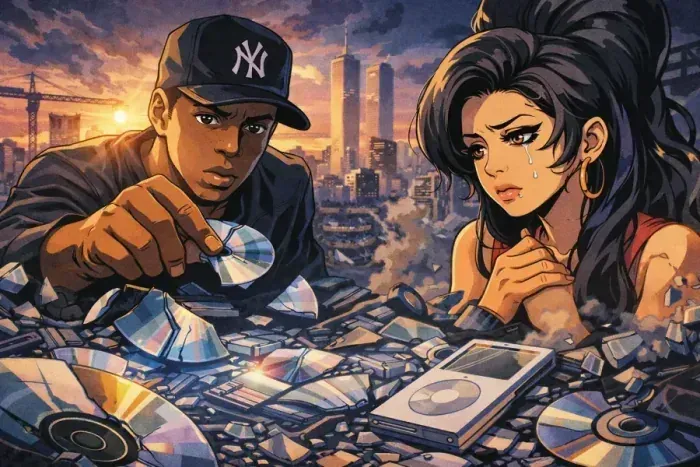
Fragmentation Opened New Worlds
It is tempting to remember the 2000s as a period of confusion or decline. But that reading misses something essential. The decade did not weaken music culture so much as reshape it. Music’s importance did not shrink. The form in which that importance was organized did.
What broke during this decade was not creativity, but agreement. Music no longer moved from artist to audience in the same way. Radio, television, physical sales, file sharing, blogs, clubs, and early social media all operated at once, often without coordination. Instead of one main conversation, there were many conversations happening at the same time. Each had its own rules, audiences, and values.
That fragmentation created room. Pop could flourish beside underground electronic culture. Regional hip-hop could become nationally powerful without eliminating other styles. R&B could carry emotional authority without always dominating the charts. Rock could split into subcultures that no longer needed to agree. These developments did not cancel one another out. They unfolded in parallel.
For some listeners, the loss was the sense of shared experience. Songs no longer seemed to belong to everyone at once. Fewer artists appeared to speak for everyone. But that loss also made room for something else. Listeners no longer had to align with the dominant consensus. Musical identity became more personal and less fixed. Many people felt free, not confused, by that change.
Part of the discomfort comes from what fragmentation asks of listeners. It requires searching, choosing, and assembling meaning rather than receiving one dominant story. That makes the decade harder to summarize, but not less significant.
Fragmentation is not failure. The decade produced lasting work across genres, scenes, and regions. Its influence is visible less in any one sound than in the structures through which music now circulates: niches, scenes, feedback loops, and constantly shifting attention.
The decade therefore represents less a breakdown than a redistribution. Authority, taste, and meaning moved outward from the center. The result was messier, but also more open to real difference.
Why the 2000s Still Live Inside the Present
The 2000s still matter because so many tensions that define today’s music culture first became visible there: the pressure to remain constantly present, the instability of attention-based careers, and the emotional cost of exposure without protection. These were not side effects. They were early signals of the culture to come.
The 2000s matter because they show a moment before everything was decided. Artists, audiences, and industries were still working out what music could be in a digital world. There was uncertainty, but also possibility. Mistakes were made in public. Experiments succeeded and failed without clear instructions. That openness allowed for voices and approaches that might not have emerged in a more settled system.
They also matter because many of the decade’s arguments are still with us. Ownership versus access, freedom versus exhaustion, visibility versus privacy, global circulation versus unequal recognition: none of those tensions disappeared when streaming matured. They simply moved into new interfaces. The 2000s remain useful because they let us see the same pressures before they became routine.
It also changed how listeners related to music emotionally. Songs became less like public consensus and more like private companions. Meaning grew more personal even as shared reference points weakened. Playlist habits, track replay, and mood-based memory all reflect patterns that were formed in the 2000s.
That personal turn did not make music less social. It changed where the social life of music happened. Instead of one dominant center, meaning was increasingly built through small groups, scenes, message boards, playlists, private hard drives, fan communities, and repeat listening habits that felt intimate rather than collective. The 2000s taught people to live with music in more individualized ways.
It also raised ethical questions that remain unresolved. How much of an artist’s private life should become public material? What do industries owe in terms of mental health, protection, and sustainability? How do you measure success in a system that rewards constant exposure and punishes rest? The 2000s did not answer these questions, but they made them unavoidable.
You can hear the era’s influence too. Contemporary pop, hip-hop, electronic music, and alternative all still carry decisions made in the 2000s about production, authorship, genre fluidity, and mediated feeling. Auto-Tuned vocals, producer-led identity, fragmented listening, and hybrid scenes did not arrive fully formed. They took shape during this period of adaptation.
The 2000s mattered because they were more than a bridge between stable eras. They reshaped the ground beneath both. Control loosened, access widened, and meaning became more personal. To understand current music culture, you have to understand that shift.
The decade does not need to be romanticized. It needs to be understood.
50 Songs From a Decade Without a Center
The music of the 2000s was shaped by instability, reinvention, and uneven expansion. Technology changed how songs were stored, shared, and sold. Media changed how artists were seen, judged, and consumed. Older gatekeeping systems weakened, but they were not replaced by a simpler or fairer order. Instead, music culture became more fragmented, more personal, and more globally entangled.
That is why a 2000s playlist is so revealing. The decade does not hold together through one dominant sound. It holds together through pressure: tracks built for CDs, files, phones, clubs, blogs, gossip cycles, and private replay. The songs below do not tell one neat story. They show what it sounded like when music lost its old center and had to keep moving anyway.
Within that instability, different movements pushed in different directions. Hip-hop moved from dominant force to everyday mainstream language. R&B carried much of the decade’s emotional precision. Electronic music built durable underground infrastructures while moving toward broader visibility. Rock splintered into scenes, revivals, and subcultures. Global pop expanded long before algorithms made that process look smooth. The result was less decline than redistribution.
The following playlist reflects the tensions explored throughout this article. These 50 songs, all released between 2000 and 2009, trace a decade shaped by exposure, fragmentation, adaptation, and survival. Together, they show what music sounded like when the systems around it were changing faster than anyone could fully control.
I. Digital Liberation: When Songs Became Free
- Radiohead – Everything in Its Right Place (2000)
- Daft Punk – One More Time (2000)
- OutKast – Ms. Jackson (2000)
- D’Angelo – Untitled (How Does It Feel) (2000)
- Alicia Keys – Fallin’ (2001)
II. Pop Stars Under Pressure
- Britney Spears – Toxic (2004)
- Madonna – Music (2000)
- Kylie Minogue – Can’t Get You Out of My Head (2001)
- Kelly Clarkson – Since U Been Gone (2004)
- Justin Timberlake – Cry Me a River (2002)
III. R&B’s Emotional Power
- Beyoncé – Crazy in Love (2003)
- Mary J. Blige – No More Drama (2001)
- Erykah Badu – Bag Lady (2000)
- Usher – Yeah! (2004)
- Ne-Yo – So Sick (2005)
IV. Hip-Hop Takes Over
- Jay-Z – Izzo (H.O.V.A.) (2001)
- Eminem – Stan (2000)
- Kanye West – Jesus Walks (2004)
- 50 Cent – In Da Club (2003)
- Missy Elliott – Get Ur Freak On (2001)
V. Youth & Guitar Rebellion
- The Strokes – Last Nite (2001)
- The White Stripes – Seven Nation Army (2003)
- Linkin Park – In the End (2001)
- System of a Down – Chop Suey! (2001)
- Green Day – American Idiot (2004)
VI. Indie & Quiet Voices
- Coldplay – Clocks (2002)
- Gorillaz – Clint Eastwood (2001)
- The Killers – Mr. Brightside (2003)
- The Postal Service – Such Great Heights (2003)
- Arcade Fire – Rebellion (Lies) (2004)
VII. Pop Goes Global
- Shakira – Whenever, Wherever (2001)
- Juanes – A Dios le Pido (2002)
- Rihanna – Umbrella (2007)
- Nelly Furtado – Say It Right (2006)
- BoA – No.1 (2002)
VIII. Dance Floor Memories
- The Chemical Brothers – Galvanize (2005)
- Fatboy Slim – Weapon of Choice (2000)
- Röyksopp – Eple (2001)
- Robyn – With Every Heartbeat (2007)
- Timbaland – The Way I Are (2007)
IX. Fragile & Beautiful
- Amy Winehouse – Rehab (2006)
- Norah Jones – Don’t Know Why (2002)
- Sia – Breathe Me (2004)
- M.I.A. – Paper Planes (2007)
- Lily Allen – Smile (2006)
X. Carrying the 2000s Forward
- Muse – Time Is Running Out (2003)
- PJ Harvey – Good Fortune (2000)
- Common – The Light (2000)
- Destiny’s Child – Survivor (2001)
- Sean Paul – Get Busy (2003)