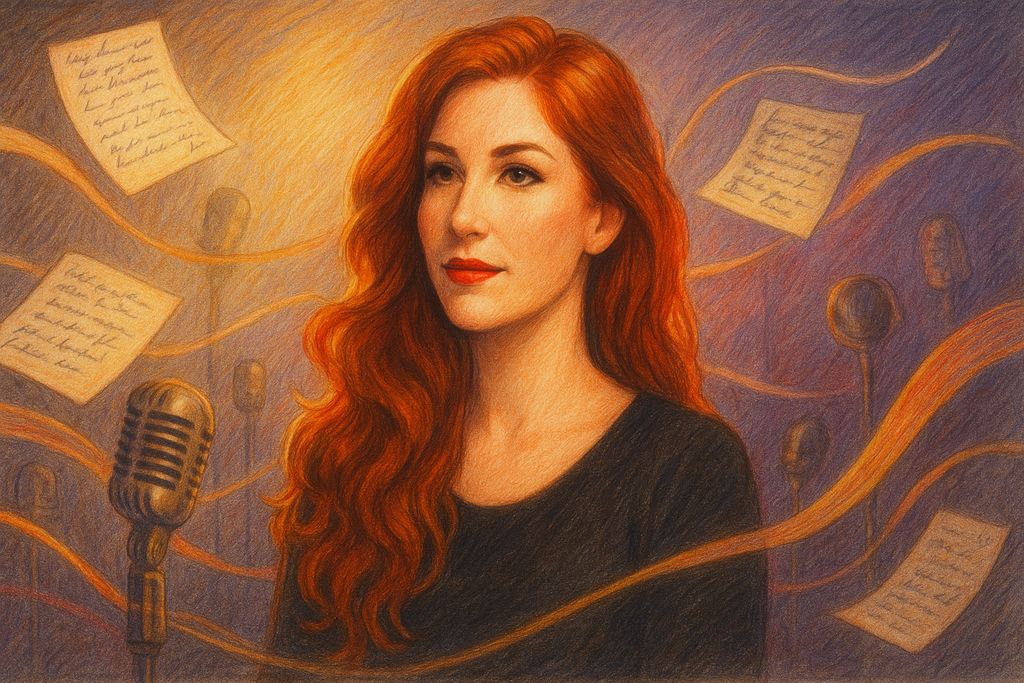

Introduction – The Many Lives of Charlotte Wessels
There are artists whose work unfolds like chapters in an ever-changing novel, and then there are those whose creative lives feel more like constellations. Charlotte Wessels belongs unmistakably to the latter. Her career is not defined by a single ascent, not by one genre, nor by one recognizable era, but by a continuous process of reinvention in which sound, language, and emotion intersect. Born in the Netherlands and known worldwide as the longtime voice of Delain, she has grown far beyond the label of frontwoman or metal vocalist. Over the past two decades, Charlotte has crafted a multidimensional identity in which music, literature, visual expression, and community involvement occupy equally important spaces. In her voice, vulnerability coexists with defiance; in her songwriting, intimacy merges with theatricality; in her artistic vision, the boundaries between forms soften, revealing a creator who thrives in their overlap.
When listeners describe Charlotte, they often start with her timbre—warm, clear, articulate, and emotionally precise. Yet the magic of her musicianship lies not only in her technique but also in her storytelling instinct. Whether she is navigating the symphonic metal soundscapes of Delain’s April Rain era, the darker electronic textures of We Are the Others, or the intimate, self-produced layers of Tales from Six Feet Under, Charlotte sings as someone who understands that songs are not merely structures but vessels. She carries narratives with the confidence of a writer and the sensitivity of someone who has lived inside the worlds she creates. Even when the arrangements swirl with orchestral drama or electronic ferocity, she never loses her anchoring ability to communicate emotion with clarity and nuance.
Charlotte’s artistic identity has always been shaped by multiplicity. Long before she stepped onto international stages, she cultivated interests that ranged from literature and poetry to history and visual aesthetics. These influences were not side notes but foundational experiences that formed the intellectual and emotional soil from which her lyrics and concepts would later grow. Her academic background sharpened her analytical perspective, and her early fascination with the expressive power of words shaped her voice into something more than an instrument. For Charlotte, lyric-writing became a form of narrative exploration, a way of tracing the emotional geometry of human experience. Over time, this perspective evolved into an artistic signature, making her one of the most distinctive writers within modern symphonic and alternative metal.
The story of her rise with Delain forms a crucial chapter, yet it is only one among several. With the band, Charlotte became a central figure in a movement that helped redefine European symphonic metal in the 2000s and 2010s. Her contribution went far beyond performance. Her lyrical themes infused the genre with social commentary, introspection, empathy, and a poetic sensibility that broadened the emotional vocabulary of metal itself. Albums like We Are the Others left cultural footprints, resonating deeply with listeners who saw in Charlotte not only an artist but an advocate for individuality, community, and resilience. Her presence bridged the theatrical grandeur of symphonic metal with an authenticity that rarely seeks the spotlight yet commands it effortlessly.
But her artistic spirit was never meant to remain contained within a single ensemble. As the years progressed and the world of music entered an era of transformation, Charlotte found new ways to express herself that broke open the traditional boundaries of genre and career structure. The dissolution of her longtime collaboration with Delain marked a profound turning point—not an ending, but a threshold. Rather than stepping back, she stepped inward, toward a form of artistic independence that allowed every facet of her creativity to unfold. Through her Patreon community and the Tales from Six Feet Under releases, Charlotte built a new model of sustainable, intimate artistry, one in which connection with listeners is personal, and the creative process is transparent, experimental, and deeply human.
This introduction seeks to prepare the reader for an exploration of an artist who cannot be explained through chronology alone. Charlotte’s journey is shaped by emotional arcs as much as musical eras, by internal landscapes as much as by external achievements. Her work reflects a mind that is constantly observing, questioning, and transforming. Each project, whether a large-scale symphonic album or a quiet home-recorded piece, reveals a different angle of her artistic self. Over the course of this article, we will trace the evolution of her voice, her songwriting, her collaborations, her innovations, and her impact on contemporary metal and alternative music. We will also explore the philosophical undercurrents that shape her art: her relationship to vulnerability, her commitment to storytelling, her fascination with dualities, and her ability to move between darkness and light without fear.
Understanding Charlotte means understanding the way she balances these contrasts. She is an artist who embraces the theatrical without losing sincerity, who navigates electronic soundscapes without abandoning warmth, who writes with literary sophistication while maintaining emotional accessibility. Her work suggests that creativity is not a destination but a perpetual unfolding, and that reinvention is not a rupture but a continuation of one’s truest artistic impulses.
As the following chapters will show, Charlotte’s story is marked by transformation, resilience, and an unwavering devotion to the craft of expression. Whether singing on festival stages, writing in dimly lit rooms, or recording in the intimate space of her home studio, she remains guided by the same core principle: that art has the power to connect, to question, to comfort, and to reveal. Her career, with all its shifts and evolutions, stands as testament to the idea that an artist’s path is not defined by external structures but by the integrity of their inner voice. It is that voice—warm, searching, expressive—that has made Charlotte Wessels one of the most compelling musicians of her generation.
Early Life, Education, and First Artistic Steps
Childhood Inspirations and Early Musical Identity
The early years of Charlotte Wessels unfold like the quiet prelude to a symphony whose full breadth only becomes apparent much later. Growing up in the Netherlands, she was surrounded by an environment that encouraged curiosity, introspection, and creative exploration. Music was not yet a career aspiration, nor a structured discipline; it appeared instead as a natural element in her world, woven into the textures of daily life. The songs she encountered, the stories she read, and the moods that settled around her home became a palette from which she would eventually draw her artistic colors. Her fascination with sound was nourished not by spectacle but by the way melodies could hold emotion and transform atmosphere. Even as a child, she gravitated toward artistic expression that balanced softness with intensity, a contrast that would later become essential to her musical identity.
Charlotte’s earliest connection to music was intertwined with a broader interest in culture and storytelling. While many singers discover their path through imitation of idols or early technical training, her introduction to the arts took a more holistic shape. Literature, visual imagery, and narrative structures captured her imagination just as powerfully as songs did. Books brought her into unfamiliar worlds, offering emotional landscapes and thematic depth that resonated with her developing sensibilities. The way stories unfolded, the rhythm of language, and the subtle shifts between lightness and darkness in written narratives became formative influences that shaped her intuitive understanding of artistic communication. As she read, she absorbed the emotional cadence of characters, scenes, and arcs, long before she translated any of this into her own lyric writing.
Her home environment played an essential role as well. Charlotte has often described a childhood marked not by turmoil but by encouragement and a sense of intellectual openness. This allowed her to explore interests without the pressure of conforming to a predetermined path. She was the kind of child who noticed details, who lingered in moments, who internalized atmosphere. Sounds, colors, and moods carried meaning for her. This sensitivity made her particularly drawn to artistic and introspective pursuits, guiding her toward a form of expression that would eventually combine all these influences. Even before she recognized music as her calling, she nurtured a way of observing the world that was both analytical and emotional, a duality that later shaped her distinctive approach to songwriting.
Her relationship to singing during these early years was subtle but deeply felt. It emerged as a private form of expression, something personal rather than performative. Charlotte did not approach music with the immediate desire to stand on a stage or to become a professional vocalist. Instead, singing served as a means to inhabit different emotional states, much like the characters she discovered in literature. She experimented with her voice in moments of solitude, allowing it to echo her thoughts and moods rather than seeking external approval. That internal relationship with music laid the groundwork for the emotional authenticity that later became one of her defining qualities as an artist. Her voice developed not only through technique but through introspection and emotional observation.
As adolescence approached, her artistic sensitivity deepened. She began to explore more diverse aesthetics, including elements of alternative culture that resonated with her evolving identity. Visual styles, subcultural atmospheres, and expressive forms that lived outside the mainstream world offered her a framework through which she could understand herself more clearly. This growing affinity for the alternative would eventually draw her toward the metal scene, though at this early stage the connection was still nascent, more a spark than a pathway. What mattered most was her increasing awareness that artistic expression could be both personal and transcendent, intimate and expansive.
By the time Charlotte entered her teenage years, the foundations of her musical identity were already in place, even if she had not yet articulated them. She had developed a deep emotional vocabulary, shaped by literature, aesthetic curiosity, and quiet introspection. This vocabulary would later inform the stories she told in her songs, the themes she gravitated toward, and the emotional clarity with which she communicated through her voice. The young girl who filled notebooks with thoughts, absorbed the emotional textures of narratives, and sang in private moments had already taken the first steps toward becoming the artist the world would one day know. Her early inspirations did not simply shape her future; they became the quiet currents flowing beneath everything she would later create.

Education, Creative Formation, and Academic Life
As Charlotte moved from childhood into adolescence and early adulthood, her creative identity began to expand with remarkable clarity. What had once been an intuitive sensitivity to stories, sound, and imagery evolved into a conscious pursuit of knowledge and artistic refinement. Education played a key role in this transformation. Rather than limiting her to a single discipline, her academic journey opened multiple pathways through which music, literature, and critical thinking could merge into a cohesive artistic worldview. This period of her life formed a crucial bridge between personal expression and professional artistry, giving structure and depth to the instincts she had nurtured for years.
Her decision to study at university was motivated not by a desire for traditional career security but by a genuine fascination with cultural narratives and intellectual exploration. Charlotte enrolled in studies that combined history, literature, and the arts—fields that aligned naturally with her emerging interests. These academic pursuits enriched her understanding of the forces that shape societies, emotions, and identities. The analytical skills she developed during this time would later become essential tools in her songwriting, where metaphors are grounded in emotional truth, and narratives unfold with intentional structure. Her ability to weave literary references and philosophical reflections into lyrics stems directly from this period, during which she learned to examine stories not only for entertainment but for their deeper significance and symbolism.
The university environment also provided Charlotte with an intellectual freedom that mirrored her artistic evolution. She encountered new cultural perspectives, absorbed theories about identity and representation, and deepened her appreciation for the arts as interconnected forms of expression. While she was intensifying her academic work, music continued to run parallel—no longer only a private refuge, but a growing creative force that demanded more space in her life. It was during these years that she began performing with early musical projects, gaining her first experiences with collaboration, songwriting, and stage presence. These formative steps laid the groundwork for her later transition into professional musicianship.
Charlotte’s academic background also sharpened her awareness of social and historical contexts, which would become a hallmark of her later lyrical writing. Even before she joined Delain, she displayed a rare ability to articulate emotional experience in ways that resonated universally while retaining conceptual sophistication. Her studies equipped her with a rich vocabulary—intellectual, emotional, and cultural—that allowed her to express complex themes with clarity and nuance. This combination of artistic intuition and academic grounding would become one of her defining traits, distinguishing her from many of her peers and contributing to the unique emotional resonance of her work.
Parallel to her academic formation, Charlotte was drawn increasingly into the creative communities surrounding her. Local music scenes, student performances, and collaborations with fellow musicians provided an environment in which she could experiment without fear of failure. These early partnerships were less about ambition and more about exploration—testing boundaries, discovering her vocal range, and learning how her artistic instincts could translate into musical form. She began to understand how songs could carry narratives, how melodies could evoke mood, and how performance could become a space of emotional transmission. Each small step strengthened her confidence and sharpened her artistic identity.
It was also during this time that Charlotte realized her voice had the potential to become her primary instrument in life. The recognition did not arrive dramatically, but gradually, as friends, collaborators, and mentors encouraged her to explore her vocal abilities more seriously. She began to develop technical skills, refine her tone, and understand how to balance the emotional and physical aspects of singing. The interplay between academic study and artistic practice created a dynamic in which each side nourished the other. Her intellectual understanding of storytelling fed her musical expression, and her musical expression deepened her understanding of narrative and emotion.
By the time Charlotte completed her academic studies, she stood at a juncture where her path could have led into multiple directions. Yet the gravitational pull of music had become undeniable. She emerged from university not with a sense of closure but with an acute awareness that her artistic journey was just beginning. Her education had given her the tools to think deeply, articulate clearly, and question fearlessly. These qualities would soon shape her early years with Delain and define the voice that listeners across the world would come to know—an artist whose creativity is built not only on talent but on intellect, curiosity, and the courage to pursue a life shaped by expression.
Joining Delain – The Rise of a Symphonic Metal Voice
The Birth of Delain and Charlotte’s Early Integration
When Delain first emerged on the European symphonic metal landscape, the project was shaped by a sense of vision rather than by the traditional trajectory of a newly formed band. Founded by former Within Temptation keyboardist Martijn Westerholt after his departure from the group, Delain was conceived initially as a studio project that would gather a constellation of guest musicians and vocalists. It was a creative experiment, an attempt to merge cinematic arrangements, metal-driven intensity, and an accessible melodic sensibility. In its earliest stages, the project held no clear blueprint for long-term identity, but it possessed an unmistakable sense of atmosphere and ambition. Into this landscape stepped Charlotte Wessels, a young vocalist whose talent and artistic depth would soon transform Delain from a studio concept into a fully realized band.
Charlotte joined Delain when she was still in her late teens, drawn into the evolving project through a combination of timing, connection, and creative chemistry. Despite her youth, she brought with her a vocal tone that was strikingly mature—warm yet crystalline, expressive yet controlled. Her sensitivity to narrative and emotion allowed her to inhabit the early demos with a natural ease, and Martijn quickly recognized that her voice offered something essential. What initially began as participation in a guest-vocalist format soon grew into a deeper artistic bond. Charlotte was not simply adding melodies to pre-written material; she was shaping the emotional identity of the project through the clarity and sincerity of her delivery.
The recording sessions that followed for Lucidity, Delain’s 2006 debut, became the foundation for Charlotte’s ascent into the international metal scene. The album featured an array of high-profile collaborators, including members of Nightwish, Within Temptation, and Epica, placing Charlotte’s voice in a rich, multi-layered sonic environment. Her contributions stood out not because they overshadowed the guests but because they provided an emotional throughline, a grounded center of gravity. Even without the stage or the long-term commitment that would come later, it was already clear that she possessed the rare ability to adapt to grand, orchestral textures without losing the intimacy of her expression. Her voice functioned as both anchor and interpreter, carrying melodies with a depth that belied her age.
As Delain gradually shifted from studio endeavor to live-performing entity, Charlotte found herself transitioning into the role of a frontwoman. The shift was not immediate, but it was organic, driven by the growing recognition that the project’s identity resonated most strongly when anchored by her presence. On stage, she brought a combination of grace and groundedness that contrasted with the theatricality often associated with symphonic metal. Her performances emphasized emotional clarity, textual articulation, and connection rather than dramatic exaggeration. She cultivated a stage persona that felt both powerful and approachable, one that matched Delain’s evolving blend of accessibility and grandeur.
For Charlotte, these early years were a period of intense learning and rapid artistic development. She was navigating unfamiliar territory—touring schedules, international audiences, media attention—but she approached each step with humility and curiosity. Her academic training had given her the ability to analyze and adjust, and her early years of introspective exploration had prepared her to express vulnerability without losing strength. As Delain grew into a full band, she began contributing more actively to the creative process, shaping lyrics, melodies, and conceptual elements that would define the group’s future sound.
What made her integration into Delain so impactful was not merely her vocal ability but the way she expanded the emotional dimension of the music. She brought a writer’s sensitivity, a thinker’s perspective, and a storyteller’s instinct to a genre that often prioritizes scale over subtlety. With Charlotte at its center, Delain began to move beyond the conventions of symphonic metal, carving out an identity that balanced cinematic sweep with lyrical intimacy. The seeds of this evolution were planted in these first years—years defined by discovery, collaboration, and the gradual recognition that Delain had found its voice.
By the close of this early period, Charlotte was no longer a participant in someone else’s project. She had become one of its defining architects. Her presence shaped not only the sound but also the ethos of Delain, and her journey with the band was poised to enter its next, more expansive chapter.
Lucidity, April Rain, and the Emerging Signature
The release of Lucidity in 2006 marked the beginning of Charlotte Wessels’ ascent into global recognition, but it was the years that followed—with the creation of April Rain and the formation of a consistent band lineup—that shaped her into a distinctive voice within symphonic metal. While Lucidity introduced the world to her expressive range within a constellation of guest musicians, April Rain allowed Charlotte to step fully into her role as Delain’s emotional and narrative anchor. These two albums represent a unique arc of development: the first a collaborative experiment, the second the emergence of a unified creative identity in which Charlotte’s artistic fingerprint became unmistakable.
On Lucidity, Charlotte’s vocals served as a connective thread woven through a rich tapestry of guest performances. Her youthful yet emotionally articulate delivery brought coherence to an album that could easily have felt fragmented. Listeners were immediately drawn to the clarity of her diction, the subtle warmth of her vibrato, and the way she shaped phrases as if she were sculpting them from breath and intention. Even on tracks where she shared the stage with veteran vocalists, she demonstrated a remarkable ability to hold her own without forcing presence or competing for attention. Instead, she let the emotional truth of the lyric guide her, delivering performances that balanced vulnerability and strength with an instinctive sense of narrative purpose. It was here that the world first encountered the voice that would soon become synonymous with Delain.
But it was April Rain, released in 2009, that transformed Charlotte from a promising talent into a defining figure of a new generation of symphonic metal. This album arrived during a moment when the genre was evolving, incorporating more melodic accessibility, contemporary textures, and thematic depth. Charlotte was central to that evolution. For the first time, she participated not only as vocalist but as a creative partner shaping the emotional world of the album. Her contributions to the lyrics and conceptual framework expanded the emotional palette of Delain, bringing nuance and introspection into a genre often dominated by dramatic grandeur.
The sound of April Rain captured this shift beautifully. While the orchestral arrangements and metal instrumentation remained powerful, Charlotte’s presence lent the album a sense of immediacy. She sang with a heightened emotional clarity, allowing the listener to connect not simply with the sonic scale of the music but with the humanity within it. Songs such as the title track showcased her ability to embody melancholy while maintaining a sense of forward motion, creating a duality of fragility and resilience. Her voice moved effortlessly between soft, intimate passages and soaring melodic arcs, always grounded in expressive intention rather than vocal display.
What began to emerge during this period was not only her vocal signature but her thematic signature. Charlotte’s lyrics often revolved around questions of identity, agency, transformation, and emotional truth. She had an instinct for portraying complexity without obscurity, weaving metaphors that felt both poetic and accessible. Even when exploring darker themes, she maintained a thread of introspective warmth that set her apart within the symphonic genre. Her writing on April Rain revealed an artist attuned not only to external narratives but to the internal landscapes that shape human experience.
This era also marked Charlotte’s transformation as a performer. The more the band performed live, the more refined her stage presence became. Rather than adopting the theatrical grandeur typical of symphonic metal, she developed a style defined by authenticity and connection. Her gestures were subtle but intentional, her expressions revealing but controlled. Onstage, she conveyed the emotional core of each song with a sincerity that resonated deeply with fans. Her performances during this period created a bridge between the cinematic world of Delain’s sound and the personal realities of the audiences who embraced their music.
By the end of the April Rain cycle, it had become increasingly clear that Charlotte was not simply lending her voice to Delain. She was becoming one of the architects of its identity. Through her vocal tone, her lyrical sensibility, and her emotional intelligence, she helped define a sound that balanced symphonic weight with melodic accessibility and thematic sophistication. These early albums revealed the contours of an artist who was already evolving, already questioning, already expanding her creative language—an artist whose influence within the band was becoming central rather than supplementary.

We Are the Others – A Cultural Shift in Symphonic Metal
By the time Delain entered the creative period that would lead to We Are the Others, both the band and Charlotte had matured into a cohesive artistic force. What emerged from this era was not simply another studio album but a cultural milestone—one of the most resonant and socially conscious releases in the symphonic metal landscape of the 2010s. The album’s narrative power, conceptual clarity, and emotional immediacy marked a new chapter for Charlotte as a lyricist and performer. It also signaled a broader shift within the genre toward themes that engaged not only fantasy or introspection but social identity, individuality, and human connection.
The genesis of We Are the Others was deeply influenced by the tragic 2007 case of Sophie Lancaster, a young woman attacked and killed in England because of her appearance and alternative identity. Although the album does not retell her story directly, it was spiritually shaped by the discussions and emotions surrounding the event. As Charlotte reflected on these themes, she channeled them into a lyrical vision that explored belonging, marginalization, and the courage to embrace one’s identity despite social pressures. Her academic background in culture and narrative analysis surfaced prominently here, enabling her to address sensitive topics with nuance, compassion, and poetic restraint.
When the album was released in 2012, its message resonated immediately. The title track, in particular, became an anthem for many listeners who had felt unseen, misunderstood, or judged for their individuality. Charlotte’s performance captured the complexity of empowerment without erasing vulnerability. She did not deliver the song as a triumphant declaration detached from reality, but as a call for solidarity rooted in shared human experience. Her tone balanced warmth and urgency, suggesting not only defiance but also empathy—an invitation to unity rather than confrontation. This emotional intelligence set the track apart and solidified Charlotte’s reputation as a writer capable of weaving social commentary into deeply personal and musically compelling forms.
The album as a whole marked a stylistic evolution for Delain. While the band retained their symphonic foundation, the sound incorporated more contemporary rock and pop elements, bringing an immediacy that aligned with the album’s thematic focus. Charlotte’s vocals sat at the center, guiding the listener through a landscape that alternated between cinematic sweep and melodic intimacy. Her delivery on tracks such as “Mother Machine” and “Get the Devil Out of Me” captured an almost theatrical clarity, presenting each emotional contour with intention. Meanwhile, songs like “Are You Done with Me?” offered a quieter, more introspective dimension, revealing the breadth of her expressive range.
Behind the scenes, this era also reflected Charlotte’s expanding influence within the band’s creative process. Her contributions to lyricism had grown more prominent, shaping not only the emotional character of individual songs but the conceptual direction of the album as a whole. She approached songwriting with a storyteller’s discipline, building thematic coherence while allowing each track to hold its own narrative integrity. Her interest in sociocultural dynamics—sharpened by her academic training—enabled her to articulate complex ideas without sacrificing accessibility or musical flow. As a result, We Are the Others stood as a rare example of a metal album that was simultaneously politically aware, emotionally resonant, and sonically engaging for a broad audience.
The album’s release was accompanied by an outpouring of connection from fans across the world. Many listeners expressed that they found comfort and validation in Charlotte’s words, especially in the title track’s message of unity among those who feel different or marginalized. The album subtly challenged the symphonic metal genre’s traditional thematic boundaries, moving away from fantasy-driven narratives toward real-world emotional and social landscapes. This shift not only broadened Delain’s artistic identity but also contributed to a larger conversation about representation, acceptance, and diversity within the alternative music community.
Charlotte’s role throughout this period reflected a growing artistic authority. She had become not only the voice of the band but one of its guiding creative minds—a songwriter who used melody and metaphor to illuminate themes that extended far beyond the stage. With We Are the Others, she demonstrated how metal could be both cathartic and socially aware, both musically powerful and emotionally intimate. The album marked a moment when her artistic purpose crystallized: to give voice to stories that matter, to create spaces of connection, and to transform emotion into sound with honesty and intelligence.
Artistic Expansion: From Human Contradiction to Apocalypse & Chill

The Mature Sound of Delain’s Later Albums
As Delain moved into its later creative phase, the band entered a period defined not by reinvention but by refinement. Their sound, once rooted primarily in the symphonic traditions of early European metal, began to stretch outward into new sonic territories, embracing electronic textures, cinematic atmospheres, and dynamic contrasts that reflected both the band’s maturation and Charlotte Wessels’ evolving artistic voice. Albums such as The Human Contradiction (2014), Moonbathers (2016), and Apocalypse & Chill (2020) mark this transformation vividly. Each release revealed an increasingly sophisticated interplay between heaviness and melody, between introspection and spectacle, between orchestral depth and modern production. At the center of this artistic progression stood Charlotte, whose vocals and writing provided the thread of cohesion across shifting stylistic landscapes.
The Human Contradiction, inspired in part by Octavia E. Butler’s Lilith’s Brood trilogy, demonstrated how intellectually anchored Delain’s music had become. The album expanded the band’s sonic palette through more intricate layering, darker lyrical undertones, and sharper emotional contrasts. Charlotte embraced these tensions naturally. Her voice adapted to heavier guitar-driven passages with a newfound assertiveness while retaining its signature clarity in softer, reflective moments. Tracks such as “Stardust” highlighted her ability to inhabit an atmosphere of sweeping melancholy without losing the precision that characterizes her storytelling. Meanwhile, “Your Body Is a Battleground” paired her melodic sensitivity with a more confrontational edge, showing that she could navigate thematic complexity with both vulnerability and strength. As the band leaned into broader conceptual frameworks, Charlotte’s interpretive skill deepened, allowing her to bridge literary inspiration and emotional resonance in a way that felt seamless.
With Moonbathers, Delain’s sound opened further into cinematic territory. This album embraced luminous orchestral embellishments and expansive lyrical imagery while preserving the band’s evolving sense of intensity. Charlotte responded by expanding her tonal palette, incorporating brighter timbres, gentler falsetto touches, and dramatic crescendos that amplified the album’s emotional contrasts. Songs like “Fire with Fire” showcased her ability to project determination and defiance, while “Chrysalis – The Last Breath” revealed one of the most intimate performances of her Delain years. Her delivery throughout the album suggested an artist increasingly comfortable with multiplicity: angelic softness and commanding power, poetic reflection and grounded emotional clarity. Her voice became not just a melodic anchor but the emotional architecture around which the arrangements unfolded.
By the time Apocalypse & Chill arrived—a title that juxtaposed existential severity with cultural commentary—Delain had embraced a modern, hybrid sound that fused heavy riffing with electronic programming, cinematic synthesis, and atmospheric layering. The album explored themes of societal tension, technological anxiety, and personal disorientation, framed by production choices that reflected the turbulence of contemporary life. Charlotte’s performance on this record stands as one of her most versatile. She navigated pulsing electronic beats with a crispness that mirrored synth-pop sensibilities, while still delivering the sweeping, emotive lines that defined her earlier symphonic work. In “Burning Bridges,” her voice drifted between ethereal delicacy and fierce insistence, embodying the conflicting emotions of separation and self-preservation. In “Masters of Destiny,” a track anchored by grand orchestral drama, she approached the vocals with theatrical intensity and arresting control, offering what many fans consider one of her most iconic performances.
Across these albums, Charlotte’s artistic evolution was not merely vocal but conceptual. Her songwriting had deepened, shifting from emotionally framed narratives to reflections that engaged with societal contradictions and existential motifs. She wrote increasingly from a place where personal experience, intellectual inquiry, and artistic experimentation converged. Even in moments of bombast, her lyrical choices emphasized humanity—uncertainty, contradiction, resilience, and reflection—qualities that elevated Delain’s later works beyond genre conventions. Her capacity to compress philosophical questions into accessible emotional language became a hallmark of the band’s identity.
The productions of these later albums also placed Charlotte in a position where she could explore new expressive techniques. She experimented with layered harmonies, atmospheric whispers, and dynamic phrasing that added depth to the band’s evolving sound. As Delain moved toward more electronic and contemporary aesthetics, Charlotte adapted without losing the emotional warmth that had always set her apart. Her voice became the bridge between tradition and innovation, grounding the band as they ventured into unfamiliar territory.
This period also marked a time when fans and critics alike began to recognize the full extent of Charlotte’s influence within the band. While Delain was a collaborative effort, her artistic imprint—through lyrics, vocal melodies, and emotional direction—became a defining feature of the group’s identity. The later albums bear this signature unmistakably: the introspective sophistication of the lyrics, the emotional clarity of the melodies, and the careful transformation of symphonic metal tropes into something simultaneously modern and timeless.
These years showcased an artist in full command of her expressive powers, navigating complexity with confidence while maintaining the authenticity that had defined her from the beginning. Charlotte did not simply grow with Delain—she helped shape the evolution of a genre, expanding its vocabulary and pushing its emotional boundaries. The mature sound of Delain’s later work stands not only as a testament to the band’s development but as a reflection of Charlotte’s unwavering commitment to artistic depth and emotional truth.

Songwriting, Collaboration, and Evolving Creative Roles
As Delain entered its most experimental and sonically ambitious years, Charlotte Wessels’ role within the band expanded far beyond that of a vocalist. She grew into a central creative architect whose lyrical insight, melodic imagination, and collaborative instinct shaped not only the emotional direction of the music but also the conceptual texture of the band’s identity. Her evolution during this period was not sudden but gradual, marked by a steady accumulation of trust, experience, and artistic confidence. Yet by the time Delain reached the later stages of its discography, it was clear that Charlotte had become one of its defining creative forces.
Songwriting offered Charlotte a space where her intellectual and emotional sensibilities converged naturally. Her background in literature and cultural studies gave her a unique ability to articulate complex emotional states with clarity, while her personal instinct leaned toward poetic expression. In the early years, she contributed selectively to lyrics and vocal lines, but as the band matured, her involvement deepened. She began shaping the narrative threads that ran through each album, helping transform individual songs into coherent thematic landscapes. Her writing style balanced introspective vulnerability with conceptual sophistication, allowing her to explore themes such as identity, transformation, alienation, empowerment, and emotional contradiction with nuance.
Within Delain’s collaborative environment, Charlotte’s creative approach became a catalyst for musical evolution. She developed a keen sensitivity to the emotional potential of arrangements, often shaping vocal melodies around the mood of instrumental passages rather than adhering rigidly to established structures. This flexible, intuitive method encouraged the band to explore new rhythmic patterns, harmonic turns, and atmospheric layers. The result was a sound that felt increasingly multidimensional, grounded by her ability to inhabit each song as if it were a self-contained narrative. In her writing, she often favored imagery that suggested motion or inner tension—bridges burning, bodies shifting, identities fracturing—metaphors that mirrored the band’s evolving aesthetic.
Her collaborations with other artists further expanded her creative vocabulary. Throughout her years with Delain, Charlotte worked with a wide range of musicians from across the metal and alternative music worlds, including vocalists such as Marco Hietala and Alissa White-Gluz. Each collaboration offered new insights into vocal interplay, thematic contrast, and emotional chemistry. Her duet with Alissa White-Gluz on “The Tragedy of the Commons” became a standout example, blending Charlotte’s warmth and lyrical clarity with White-Gluz’s aggressive vocal textures. Rather than treating these collaborations as opportunities for contrast alone, Charlotte used them to deepen the song’s narrative tension. She excelled at framing her voice in ways that highlighted the unique strengths of her collaborators, demonstrating not only technical mastery but artistic generosity.
The same was true in her work outside Delain. Collaborations with projects such as Phantasma—a symphonic rock opera created alongside Georg Neuhauser and Oliver Philipps—allowed her to explore long-form storytelling and theatrical expression. In Phantasma’s The Deviant Hearts, Charlotte’s performances wove emotional cohesion through a narrative featuring multiple vocalists, reflecting her ability to adapt to conceptual frameworks larger than the standard album format. She was equally compelling in her contributions to Ayreon and Star One, where progressive metal structures tested her interpretive range. Tracks like “Victims of the Modern Age” showcased her capacity to hold her own within a dense, dramatic soundworld while retaining her distinct emotional clarity.
Charlotte’s evolving creative roles within Delain also meant taking on responsibilities that shaped the music from its earliest conceptual stages. She became increasingly active in discussions about thematic direction, album structure, and artistic intent. Her input often guided the emotional architecture of albums, ensuring that each track not only functioned individually but contributed meaningfully to the larger whole. As the band experimented with electronic elements and cinematic arrangements, Charlotte’s ability to adapt vocally—to move from delicate breathwork to sweeping melodic arcs—allowed Delain’s sound to expand without losing coherence.
One of Charlotte’s greatest strengths was her commitment to authenticity within the collaborative process. Even as the band explored broader sonic landscapes, she maintained a focus on emotional truth, always asking what a song was trying to communicate at its core. Her lyrics grew increasingly intimate, exploring not only external themes but inner contradictions, private doubts, and the complex spaces between strength and fragility. This honesty resonated deeply with listeners, who recognized in her writing a reflection of their own emotional experiences. It also gave Delain’s music a sense of depth that distinguished it from much of the genre’s more fantastical or theatrical work.
By the time the band approached the creation of Apocalypse & Chill, Charlotte had become indispensable not only as a vocalist and lyricist but as a creative thinker whose artistic identity shaped Delain’s evolution. The album’s bold fusion of modern production techniques and symphonic grandiosity was possible in part because her writing and vocal adaptability provided a stabilizing center. Without her ability to navigate these shifts—lyrically, melodically, emotionally—the band’s transition into this more experimental territory would not have carried the same depth or coherence.
In this phase of her career, Charlotte Wessels revealed herself not simply as a performer within a band but as an artist whose creativity radiated outward, influencing collaborators, shaping aesthetic choices, and expanding the expressive limits of symphonic metal. Her dedication to thoughtful songwriting, her willingness to embrace artistic risk, and her instinctive understanding of narrative cohesion made her one of the genre’s most compelling creative voices.

Breaking Point and New Beginnings
Every long artistic journey eventually encounters a moment of rupture—an instant when familiar structures no longer sustain the creative energy that once flowed effortlessly. For Charlotte Wessels, her departure from Delain in 2021 marked one of the most publicly visible turning points of her career. It was a moment met with surprise, sadness, and a profound wave of reflection from fans around the world. Yet within the broader arc of her artistic life, it signaled not an end but the beginning of a new chapter defined by autonomy, reinvention, and a renewed commitment to creativity.
Delain had been Charlotte’s artistic home for well over a decade. It was the place where she grew into her voice, into her identity as a performer, and into her role as a songwriter. Through countless albums, global tours, and evolving sonic landscapes, she became not only the face of the band but one of its emotional and conceptual architects. To many listeners, Delain and Charlotte were inseparable. Her departure therefore resonated deeply, because it represented a shift in the internal structure of a band whose identity had been shaped so strongly by her presence.
Yet the circumstances surrounding the band’s transformation in 2021 were complex and internal, and Charlotte addressed the situation with clarity and respect. When Delain announced that it would continue as a solo project led by founder Martijn Westerholt—and that the long-standing lineup, including Charlotte, would depart—her public statements emphasized honesty, transparency, and gratitude. She refrained from speculation, avoided dramatization, and approached the transition with humility. What she expressed most clearly was a sense of closure mixed with affection for the years she had invested, and above all, a desire to continue creating music on her own terms.
The emotional impact of this shift was palpable across the fan community. For many listeners, Delain had provided a soundtrack to formative moments in their lives, and Charlotte’s voice had been the lens through which these experiences were felt. The idea of the band continuing without her forced a reevaluation of what the name Delain represented. For others, the departure ignited a sense of empathy for the musicians involved, recognizing the weight of such a transition after years of shared creative labor. Reflections from fans revealed not anger but mourning—a collective understanding that something meaningful had concluded, even if the future still held artistic promise for all parties.
For Charlotte, this period was defined by both loss and liberation. The dissolution of a long-term creative structure inevitably brings grief, because it uproots familiar rhythms, partnerships, and expectations. Yet it also creates a space in which new possibilities can emerge—possibilities that had not been accessible within the established framework of the band. In interviews and personal statements, Charlotte spoke openly about this duality. She acknowledged the pain of parting ways with an artistic identity she had inhabited for so many years, while also expressing excitement about the freedom to explore new sonic worlds, new writing processes, and new forms of expression.
What stands out most in this transitional period is Charlotte’s resilience. Rather than retreating from the public eye or pausing her creative output, she stepped courageously into a new phase of independence. Within weeks of the announcement, she communicated with fans about her ongoing creative projects, her continuing Patreon community, and her desire to keep releasing music. She demonstrated the rare ability to transform disruption into momentum, channeling uncertainty into art. Her response embodied both emotional intelligence and artistic integrity, qualities that have always defined her work.
The transition also revealed something essential about Charlotte’s identity as an artist: her creativity has never depended on institutional structures. Bands may shift, circumstances may evolve, but her ability to craft emotionally resonant music remains rooted in her internal world—her voice, her storytelling intuition, her sense of melody, her intellectual curiosity. Leaving Delain did not diminish these gifts; it illuminated them. It brought into focus the depth of her artistic independence and the breadth of her expressive potential.
This period also recontextualized her earlier work. Fans revisited albums like April Rain, We Are the Others, and Moonbathers with new understanding, recognizing how deeply Charlotte had shaped Delain’s emotional and lyrical identity. Her departure made visible the extent of her contributions—not for the sake of comparison, but for the sake of appreciating her artistic evolution. It highlighted how her presence had guided the band’s thematic direction, its narrative complexity, and its relationship with listeners across the world.
From a broader perspective, Charlotte’s departure reflected a cultural shift taking place across the music industry. More artists are choosing independence, embracing direct connection with listeners, and building creative ecosystems outside traditional band structures. Charlotte found herself at the forefront of this transition, not because she sought to make a statement, but because her circumstances opened a path that aligned naturally with her values. Her move into independent artistry was not a rejection of her past but an expansion of her future.
In the aftermath of the separation, what emerged most clearly was Charlotte’s commitment to kindness, clarity, and authentic communication. She spoke openly about the challenges and the opportunities ahead, always with a sense of empathy for fans processing the change. Her words conveyed a quiet strength that reassured listeners that the end of one chapter did not diminish the meaning of what came before—and that new music, new art, and new stories were already taking shape.
The years with Delain will always be an integral part of Charlotte’s legacy, but they do not confine it. Her departure marked the moment where her artistic identity expanded beyond the boundaries of a single band and into a space shaped entirely by her own vision. It was a breaking point, yes—but it was also a beginning. From this point forward, Charlotte stepped into a realm of boundless creative potential, ready to redefine her artistry on her own terms.
The Solo Renaissance: Tales From Six Feet Under and Beyond
Patreon, Creative Autonomy, and Rebuilding a Career
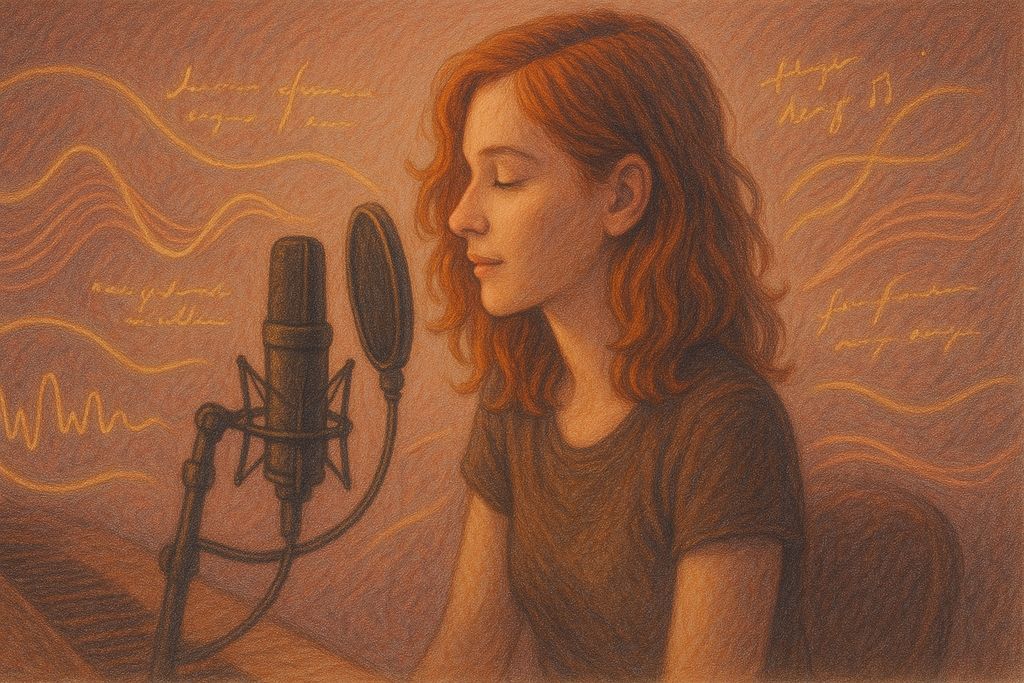
When Charlotte Wessels stepped into her post-Delain chapter, she did so with remarkable clarity of purpose. Instead of seeking the familiar structures of a record label, a new band lineup, or an industry-defined pathway, she chose a direction that felt both intimate and radical: she built her own creative universe, grounded in autonomy, connection, and trust. Patreon became the platform through which this transformation took shape—not as a stopgap solution after leaving a long-running project, but as a deliberate space where she could redefine what it meant to make music on her own terms.
Patreon offered Charlotte something she had never fully experienced in her previous career: direct and unfiltered communication with her audience. In the band environment, creative decisions, timelines, and production choices were shaped by numerous factors—collaboration, scheduling, collective priorities, and the inherent compromise of shared artistry. Now, with her solo platform, Charlotte was able to treat music as a continuous process rather than a cyclical product. Instead of waiting years between album releases, she could write, record, and share songs at the pace of her own inspiration. For both artist and listener, this created a living, breathing rhythm of creativity.
The decision to release monthly songs became the foundation of her new ecosystem. Each track emerged from a place of emotional immediacy: raw reflections, poetic experiments, sonic sketches, and polished compositions flowed side by side. This variety revealed a dimension of Charlotte’s artistry that had previously been hidden behind the architecture of a band. These songs were not constructed for tours, labels, or marketing cycles—they were created for the moment, for expression, and for the intimate space between artist and supporter. Through this approach, Charlotte reclaimed the freedom to explore styles that ranged from indie pop and dark folk to electronic minimalism and cinematic ambient textures.
Patreon also allowed her to cultivate a community defined by loyalty, generosity, and shared curiosity. Her supporters were not just listeners—they became witnesses to her creative process. In behind-the-scenes posts, voice memos, home-studio glimpses, lyric explanations, and personal reflections, Charlotte dissolved the traditional distance between musician and audience. The relationship grew reciprocal: she offered transparency and vulnerability, and her community responded with encouragement, patience, and genuine emotional investment. This dynamic became one of the most distinctive aspects of her solo career. It created an environment where taking risks felt safe, where unfinished ideas could breathe, and where artistic growth became a shared journey.
From a practical standpoint, Patreon also provided stability—an anchor during a time of transition. The uncertainties that come with leaving a successful band were substantial, yet Charlotte’s commitment to autonomy transformed these challenges into opportunity. By building a self-sustaining creative model, she ensured that her music could thrive without external constraints. This independence formed the background against which Tales from Six Feet Under would eventually take shape, a project born directly from the songs she released monthly for her patrons.
But the deeper significance of Charlotte’s Patreon venture transcended the logistical and economic. It revealed the emotional resilience and intellectual clarity that had always driven her work. Rather than framing her next steps as a recovery from loss, she reframed them as a reclaiming of voice. Patreon was no retreat into privacy; it was an expansion into authenticity. She created a space where she could be lyrical, humorous, introspective, experimental, or vulnerable without needing to fit those expressions into a band identity or a genre label.
This period also highlighted her versatility as a music producer. Without the infrastructure of a full studio, Charlotte built her own recording environment at home, teaching herself production techniques, vocal layering, arrangement design, and digital instrumentation. These skills—developed through necessity and driven by creative curiosity—empowered her not only to conceptualize her music but to realize it independently. The result was a sound that felt deeply personal, marked by warmth, intimacy, and the tactile textures of home-crafted production.
For many listeners, Charlotte’s Patreon era became a source of comfort and inspiration. In a world increasingly shaped by distance, uncertainty, and digital fragmentation, her music offered a sense of closeness. The songs held traces of her surroundings—the soft reverb of the room she recorded in, the quiet breaths between phrases, the sincerity of words delivered without pretense. These details transformed her solo work into something more than a continuation of her career: they made it a space of emotional refuge and artistic honesty.
In embracing Patreon, Charlotte demonstrated that an artist’s strength lies not only in their voice or their songwriting but in their willingness to evolve. Her choice to build a creative life rooted in autonomy signified a profound shift, not just for her career but for her relationship to music itself. She had broken free from external frameworks and stepped into a mode of creation defined by openness, experimentation, and trust. This was the beginning of her renaissance—the moment when her future began to unfold with new clarity and limitless possibility.

Tales From Six Feet Under – Volume I
When Charlotte Wessels announced that her first Patreon-era songs would be gathered into a full-length album, the anticipation carried a unique emotional weight. Tales From Six Feet Under was not simply a debut solo record—it was a crystallization of everything she had created in the intimate space between transition and transformation. The album captured the immediacy of monthly songwriting, the vulnerability of self-produced vocals, and the creative freedom that had been unlocked through independence. It was, in many ways, the sonic diary of a year spent rebuilding, rediscovering, and redefining herself.
Volume I emerged in 2021 as a collection that resisted easy categorization. Instead of adhering to the symphonic metal structures that had shaped much of her career, Charlotte embraced the openness of a genre-fluid landscape. The album flowed through dark electropop, melancholic alternative, cinematic ambience, and hints of industrial texture—all held together by the unmistakable warmth and clarity of her voice. The stylistic breadth was not an attempt to reinvent herself for the sake of novelty; it reflected her natural artistic instincts once freed from external constraints. Each track offered a window into a creative moment, a fragment of emotion captured without the pressure to fit into a predetermined shape.
Tracks like “Superhuman” showcased a darker, more experimental edge, blending pulsing electronic beats with introspective lyrics about the weight of expectation and the desire to transcend emotional limitations. Charlotte’s delivery carried both defiance and fragility—two forces that lived in dynamic tension throughout the album. In “Soft Revolution,” a song that many listeners embraced as an anthem of gentle resilience, she explored the quiet power of persistence. Rather than framing revolution as an act of rupture, she portrayed it as something that unfolds through tenderness, reflection, and courage. Her voice hovered delicately above warm synths, creating a soundscape that felt simultaneously intimate and expansive.
One of the defining qualities of Tales From Six Feet Under – Volume I was its emotional honesty. The songs did not attempt to mask the complexities of transition. Instead, they gave voice to uncertainty, grief, hope, and renewal. “Afkicken,” sung in Dutch, offered a deeply personal meditation on release and letting go. Its language, rooted in Charlotte’s mother tongue, lent the track a heightened sense of directness and vulnerability. Meanwhile, songs like “Human to Ruin” explored themes of identity fragmentation and self-protection, grounded in electronic rhythms that echoed the heartbeat of inner conflict.
Because the album was born from Patreon, its production carried a distinctive sonic fingerprint. Rather than the polished sheen of high-budget studios, listeners encountered the textures of a home-crafted environment: breaths left intentionally human, subtle room reverb, the gentle layering of vocals built with care rather than speed. These qualities did not detract from the project—they gave it life. They offered a reminder that artistry can flourish in imperfect spaces, and that emotional truth often shines brightest when it is unfiltered.
The album also demonstrated Charlotte’s growing confidence as a producer. She arranged her own harmonies, shaped her own electronic atmospheres, and built arrangements that supported the emotional arc of each track. Her willingness to step into the technical dimensions of production allowed her to shape not only what she sang but how the music felt. This melding of roles—writer, performer, producer—reflected a new phase of artistic ownership.
Upon release, Tales From Six Feet Under – Volume I was met with admiration from fans and critics alike. Many listeners described the experience of the album as akin to reading a personal journal—open, contemplative, and deeply human. It confirmed what the Patreon community had already felt: Charlotte was entering the most creatively liberated period of her career. Free from stylistic boundaries, she had created a work that mirrored her own complexity and reflected her willingness to explore emotional terrain without hesitation.
In its essence, Volume I was not an album about surviving change; it was an album about inhabiting it. It offered listeners a space where uncertainty could coexist with beauty, where mourning could evolve into movement, and where transformation could unfold without force. This first collection of “tales” from her post-Delain era announced that Charlotte was not simply rebuilding—she was expanding, opening, and stepping into a creative horizon uniquely her own.

Tales From Six Feet Under – Volume II
If Tales From Six Feet Under – Volume I captured the raw immediacy of transition, then Volume II revealed what happens when an artist begins to breathe fully again. Released in 2022, the second installment was not a sequel in the traditional sense, but a deepening of the creative world Charlotte had built through her Patreon community. It showcased an artist who had moved beyond survival into intentional evolution—someone who was no longer documenting change but actively shaping her future with clarity, curiosity, and renewed artistic confidence.
Where the first volume felt like a collection of emotional snapshots—fragile, intimate, experimental—Volume II opened with a sense of expanded vision. The songs flowed with more assertiveness, bridging the vulnerability of the previous year with a bolder sonic palette. Charlotte leaned further into her strengths as a producer, exploring richer harmonies, sharper electronic edges, and more intricate arrangements. The result was an album that felt both cohesive and adventurous, grounded in her recognizable warmth yet more structurally defined.
One of the standout tracks, “Venus Rising,” immediately set the emotional tone for the album. Its luminous atmosphere and ascending melodic lines reflected themes of empowerment and rebirth without drifting into cliché. Charlotte’s vocals soared with a clarity that suggested self-possession—a voice not tentatively emerging from shadow but stepping into light with deliberate intention. The song became emblematic of the album’s underlying message: transformation is not only an internal process but a reclamation of space, voice, and identity.
“Good Dog” offered another striking example of the album’s emotional duality. Its dark humor and multi-layered metaphor explored obedience, boundaries, and the experience of performing emotional labor for others. Charlotte delivered the lyrics with a subtle theatricality that enhanced the song’s unsettling charm. Her ability to blend literary playfulness with emotional gravity highlighted once again the sophistication of her writing—a blend of wit, pain, and observation that few artists navigate with such elegance.
In contrast, “The Phantom Touch” embraced a dreamlike, haunting minimalism. Built around delicate electronic textures and layered whisper-like vocals, the track captured the sensation of longing for something intangible, something lost or remembered only through sensation. It was a testament to Charlotte’s ability to shift between sonic extremes, from bold electronic force to soft spectral resonance, without ever losing her emotional center. Likewise, “Human to Ruin” and “Lizard’s Tongue” showcased her talent for navigating darker conceptual spaces, exploring themes of internal conflict and the fragmentation of identity.
Throughout the album, Charlotte’s production choices became increasingly refined. She experimented with vocal stacking to create choral textures built entirely from her own voice. She layered electronic pulses with organic motifs, weaving subtle percussive elements into atmospheric arrangements. Her home-studio sound, once an intimate necessity, evolved into a signature aesthetic—warm, tactile, and emotionally charged. Far from feeling constrained by minimal resources, she used them to create a cohesive world that felt uniquely hers.
What distinguished Volume II from its predecessor was not only its sonic polish but its emotional orientation. The album carried less sorrow and more resolve, less introspective fragility and more creative self-possession. It presented Charlotte as an artist who had fully settled into her independence, who understood the scope of her abilities, and who was ready to experiment with confidence rather than caution. The songs felt like statements, each one shaped by the understanding that her artistry no longer needed permission, validation, or external direction.
The reception of Volume II reflected this maturity. Fans recognized in its tracks not only the continuation of her monthly songwriting journey but the emergence of a refined artistic identity. Critics likewise praised the album for its emotional depth, production quality, and genre-blurring ambition. More than anything, the project confirmed that the creative world Charlotte had built—rooted in autonomy, intimacy, and honest expression—was not a temporary phase but a sustainable and evolving path.
In its essence, Tales From Six Feet Under – Volume II was a declaration. It affirmed that Charlotte’s independence was not a detour but a destination, and that her creativity, when nurtured on her own terms, could flourish with remarkable clarity. The album stands as a testament to growth—not the loud, triumphant kind, but the quiet, powerful evolution that emerges when an artist trusts herself completely.
Voice, Lyrics, and Artistic Philosophy
To understand Charlotte Wessels as an artist, one must begin with her voice—not merely the sound of it, but the philosophy that shapes how she uses it. Her artistry is built upon an intricate interplay between sound, language, and emotional intention. Over the years, she has cultivated a creative identity in which every vocal inflection, every lyric, and every conceptual choice is deeply rooted in curiosity, authenticity, and a keen awareness of the human condition. Her music does not simply express emotion; it examines it, refracts it, and reassembles it in ways that invite listeners to reflect upon their own internal landscapes.
Charlotte’s vocal tone is one of her defining qualities. From her earliest recordings with Delain to her intimate solo work, her voice carries a warmth that feels both personal and expansive. It is neither operatic nor aggressively metal; instead, it exists within a space of clarity and emotional presence. She sings with articulate precision, allowing even the subtlest lyrical nuance to surface. Yet beneath this precision lies a softness—a timbral gentleness that gives her performances a distinctly human texture. This combination of clarity and tenderness creates a sonic signature that stands apart from the genre’s typical aesthetics, offering a vocal presence that is unmistakable even before a single lyric becomes intelligible.
What sets Charlotte apart is not only how she sings but why she sings the way she does. Her vocal performances are governed by an understanding that the voice is an instrument of truth. She does not use it to overpower or to impress; she uses it to illuminate. Whether navigating the soaring orchestral heights of “Masters of Destiny,” the introspective vulnerability of “Soft Revolution,” or the emotionally charged storytelling of “We Are the Others,” she approaches each song as a narrative space. Her voice becomes a vehicle for exploring questions of identity, resilience, connection, and perspective. She rarely adopts a theatrical persona; instead, she allows the emotional intention of the lyric to shape her delivery organically, resulting in performances that feel authentic rather than embellished.
This authenticity extends into her writing. Charlotte’s lyrics reveal a mind thriving at the intersection of emotion and intellect. Her academic background in art history and cultural studies is not a footnote but an essential dimension of her vocabulary. She incorporates metaphor, symbolism, intertextuality, and philosophical allusion with unusual subtlety. These references never function as decoration; they operate as structural elements—threads woven into the emotional and conceptual fabric of each song. Her writing often blurs the line between literature and lyricism, using the rhythm of language to evoke mood and meaning simultaneously.
One of the defining characteristics of her lyrical style is her ability to articulate complex emotional states without resorting to abstraction. She gravitates toward themes of transformation, fragmentation, vulnerability, and agency. Many of her lyrics explore the boundaries between the self and the world—how internal experience interacts with social reality, how identity is shaped by both personal introspection and external expectation. In Delain’s catalog, this manifests in songs that question conformity, celebrate individuality, or examine the pressures of visibility and performance. In her solo work, these themes take on a more intimate tone, exploring emotional recovery, self-preservation, and the subtle negotiations between past and future.
A recurring motif in Charlotte’s writing is the idea of duality. She is drawn to the tension between softness and strength, shadow and light, detachment and longing. This fascination emerges in both her metaphors and her vocal delivery. She sings contradictions rather than resolving them, allowing emotional complexity to remain intact. In doing so, she grants listeners permission to inhabit their own contradictions—an experience that makes her music especially resonant. Her philosophical inclination toward nuance becomes a central element of her artistic identity.
Another hallmark of Charlotte’s work is her treatment of storytelling as emotional architecture. Rather than writing lyrics as linear narratives, she builds psychological spaces—rooms in which feelings echo, evolve, or collide. Her songs often contain spatial metaphors: walls, windows, bridges, echoes, thresholds. These images function not as clichés but as structural devices that orient the listener within an emotional map. The effect is immersive. The listener does not merely hear her songs; they inhabit them.
Her approach to storytelling is deeply informed by empathy. Charlotte has an innate sensitivity to the internal worlds of others, which allows her writing to communicate both personal and collective emotion. Even when her lyrics reflect her own experiences, she frames them in a way that leaves room for others to see themselves. This empathetic clarity is evident in both her social commentary—such as in We Are the Others—and her introspective solo work, where she invites listeners into her vulnerability without demanding their sympathy. Her lyrics act as mirrors, offering reflections that are both specific and universal.
Charlotte’s artistic philosophy is also shaped by a conviction that art must remain porous. She resists rigid categorizations, preferring to explore the thresholds where genres and mediums intersect. She views creativity as an evolving ecosystem rather than a fixed identity, and this belief permeates her work. Her transition into independent production strengthened this philosophy, allowing her to expand her artistry without the constraints of genre expectations. The result is a body of work that feels fluid, interconnected, and deeply honest.
Another important dimension of her philosophy is her relationship to solitude. Charlotte has often described her creative process as one rooted in introspective moments—late-night writing sessions, quiet home recordings, the slow layering of harmonies in small personal spaces. Solitude, for her, is not isolation but incubation. It is where ideas gain texture and meaning. This intimacy shines particularly in her Patreon releases, where the closeness of the production environment becomes part of the emotional experience. Her listeners can feel the room around her; they can sense the quiet hum of her creative world.
Yet Charlotte’s work is not confined to the interior. She places equal value on community. Her Patreon platform, fan interactions, and collaborative projects reveal an artist who understands that creativity thrives in reciprocal relationships. The way she shares her process—transparent, vulnerable, playful—embodies a philosophy that art becomes richer when it is witnessed. Her relationship with her supporters is rooted in mutual respect, forming a community that sustains her independence and amplifies her artistic confidence.
In essence, Charlotte Wessels’ voice, lyrics, and artistic philosophy form a cohesive whole—a worldview in which emotional truth is honored, intellectual exploration is encouraged, and creative freedom is sacred. Her artistry reminds listeners that music can be both a refuge and a revelation, a quiet companion and a call to courage. She sings not to escape the world but to understand it more deeply, and in doing so, she invites others to do the same.

Impact, Influence, and the Future of Charlotte Wessels
As Charlotte Wessels moves further into the landscape of her independent career, her influence on modern alternative and symphonic music becomes increasingly clear. She is no longer defined by the structures that once framed her artistry; instead, she has positioned herself as a creative force whose relevance extends across genres, mediums, and generations. Her impact is felt not only through her past achievements with Delain but through the unique ecosystem she has built in her solo work—an ecosystem defined by autonomy, emotional intelligence, and a deep commitment to the craft of expression.
Charlotte’s influence begins with her voice, which has become one of the most recognizable timbres in contemporary European metal. Her singing helped redefine what symphonic metal could be, shifting it away from purely operatic traditions toward a more intimate, storytelling-centered approach. She demonstrated that a metal vocalist could be both powerful and understated, theatrical and grounded, technically skilled yet emotionally transparent. Many younger artists cite her as a model for how to navigate the delicate balance between vulnerability and strength—a balance that has become increasingly vital in a genre once dominated by dramatic extremes.
Her lyricism has left an equally profound mark. Charlotte’s writing expanded the thematic vocabulary of symphonic and alternative metal by infusing it with sociocultural awareness, philosophical nuance, and emotional complexity. Whereas many bands in the genre gravitate toward fantasy narratives, she brought attention to issues of identity, empowerment, emotional resilience, and interpersonal conflict. We Are the Others became an anthem for listeners who felt marginalized or misunderstood, and its message of unity continues to resonate widely. Her ability to articulate such themes without sacrificing poetic subtlety has made her one of the most respected lyricists in the scene.
Charlotte’s influence also extends into the realm of representation. By prioritizing authenticity, introspection, and intellectual depth, she has broadened perceptions of what a female artist in metal can be. She has shown that strength does not require aggression, that femininity is not a limitation, and that sensitivity can coexist with power. Her presence in the genre helped pave the way for artists who seek to express emotional truth rather than adhere to predefined archetypes. In many ways, her career has served as a reminder that artistic identity is not a costume but a continuum—one shaped by experience, reflection, and evolution.
Her impact within the independent music community is equally significant. Through Patreon, Charlotte has demonstrated that artists can build sustainable careers outside traditional industry frameworks. Her monthly song releases, transparent creative process, and reciprocal relationship with her supporters offer a model for how musicians can maintain autonomy without sacrificing connection. Her approach reflects a broader cultural shift toward creator-driven platforms, where authenticity and community engagement matter more than commercial structures. In this sense, Charlotte’s work is not only artistically influential but also instructive, showing fellow musicians how to shape their careers in a rapidly changing landscape.
One of the most compelling aspects of Charlotte’s legacy in progress is the way she integrates multiple forms of art. She moves fluidly between music, writing, visual aesthetics, and conceptual storytelling. Her Patreon updates often blend media—photographs, handwritten notes, sketches, song drafts—creating a multidimensional creative environment that reflects her holistic approach to expression. This versatility positions her not merely as a singer-songwriter but as a multidisciplinary artist whose work extends beyond the boundaries of genre or medium.
Looking toward the future, Charlotte stands at a rare intersection of experience and possibility. Her creative path is no longer tied to band cycles or industry expectations. Instead, she has carved out a world that evolves at the pace of her imagination. This freedom opens countless potential directions: more solo albums that deepen her sonic experimentation, collaborative projects that blend genres, literary or conceptual works that extend her narrative voice, and perhaps even ventures outside music entirely. Her artistic restlessness suggests that her future output will continue to surprise, challenge, and resonate.
What remains constant is her connection to her audience. Charlotte’s supporters do not view her simply as a performer but as a storyteller, a companion, and a creative guide. Her authenticity has fostered a form of trust that transcends traditional fan relationships. As she moves forward, this community forms the emotional foundation of her evolving career—witnessing her growth, echoing her words, and sustaining the autonomy that has become central to her artistic identity.
In contemplating the arc of her work, one begins to see Charlotte’s influence not as a single trajectory but as a constellation—interconnected, multifaceted, and continually expanding. She has redefined her genre, reshaped the expectations placed on female artists in metal, demonstrated the power of independent creation, and crafted a body of work that blends intellectual thought with emotional honesty. Her future promises not a repetition of what she has already achieved but an ongoing evolution driven by curiosity and expressive integrity.
Charlotte Wessels stands today not simply as a vocalist or songwriter, but as a visionary artist whose creative philosophy resonates deeply with a world searching for authenticity and connection. Her influence is already felt, her legacy well underway—but perhaps her most important work is still waiting beyond the horizon, shaped by a voice and a mind that continue to evolve with luminous depth.