Introduction – Christina Scabbia’s Unmistakable Presence in Global Metal
From the moment Christina Scabbia first stepped onto a stage in the late 1990s, something about her presence felt unmistakably different. There was a quiet intensity in the way she carried herself, an emotional clarity in the tone of her voice, and a striking blend of elegance and darkness that made her stand out in a rapidly shifting metal landscape. In a genre often dominated by force, grit and theatrical aggression, Christina offered a rare combination of expressive warmth and cool sophistication. Her voice was neither operatic nor growling, neither overly dramatic nor restrained. Instead, it existed in its own uniquely balanced space, fusing melodic lightness with a deep, velvety resonance that commanded full attention. Over the decades, this sound would become one of the most recognisable signatures in contemporary metal.
Christina’s rise as the co-lead vocalist of Lacuna Coil coincided with a moment when the global metal scene was expanding beyond its traditional borders. New influences were entering the genre from alternative rock, electronic music, industrial sound design and gothic culture, creating fertile ground for hybrid identities. The Italian scene, though smaller than the Nordic or American markets, proved especially innovative, and Lacuna Coil became one of its most successful exports. With Christina at the centre of the band’s visual and emotional storytelling, they moved from local Milan clubs to international festivals, reaching audiences across Europe, North America, South America and Asia. Her ability to communicate emotion across cultural boundaries helped the group become one of the most globally recognised European metal acts of their era.
Christina’s artistic identity evolved in tandem with the band’s sound, which shifted from ethereal gothic metal textures in the early EPs to the sharper, more modern production of the 2000s. By the time Comalies appeared in 2002, Lacuna Coil had developed a musical language that blended atmospheric melancholy with driving rhythms and dual vocal interplay. Christina’s voice was central to this blend. It could soar with purity and brightness, then withdraw into soft darkness, creating a sense of emotional duality that resonated with listeners far beyond the confines of any single subgenre. When “Heaven’s a Lie” and “Swamped” entered global rotation, Christina became—almost overnight—one of metal’s most recognisable voices, even to audiences who did not typically seek out European gothic influences.
Yet her story is not just one of technical skill or genre positioning. Christina’s appeal has always been rooted in something profoundly human. She embodies vulnerability without fragility, strength without harshness and confidence without arrogance. Her lyrics, interviews and stage presence reveal an artist who continually interrogates identity, resilience, fear, love, transformation and the complicated spaces between light and shadow. As metal increasingly embraced emotional nuance in the 2000s and 2010s, Christina emerged as a role model for fans who sought authenticity rather than spectacle. Her grounded, thoughtful approach to fame—and her refusal to perform a stereotypical “female metal vocalist” role—helped shift cultural expectations of women in heavy music.
Throughout the band’s evolution, Christina has remained a constant force of artistic maturity. Her vocal performances grew richer and more expressive, her songwriting more introspective, and her public image more fully realised. Her fashion aesthetic, mixing gothic stylings with sleek contemporary elements, became instantly identifiable and influenced countless younger performers. At the same time, her collaborations with artists outside Lacuna Coil—such as Megadeth, Apocalyptica and Alter Bridge—demonstrated her versatility and her ability to move fluidly between metal’s many stylistic branches. These collaborations also introduced her to listeners from scenes slightly removed from Lacuna Coil’s sphere, further expanding her reach.
Christina’s significance extends beyond her discography. She represents a broader cultural shift within heavy music, one that embraces diversity of voice, identity and emotional experience. As the global metal community has opened itself to more nuanced storytelling, Christina has become a symbolic figure of this transformation. Her success has encouraged countless young vocalists to trust in their own tonal identity rather than replicate operatic soprano archetypes or exaggerated growls. She has also become a vocal advocate for mental health, creative freedom, and the importance of personal evolution—messages that resonate deeply in a genre often associated with catharsis and inner struggle.
In today’s musical landscape, where hybrid genres flourish and boundaries continue to blur, Christina remains deeply relevant. Her work with Lacuna Coil demonstrates a sustained commitment to reinvention, and albums like Delirium and Black Anima reveal a vocalist continually pushing into new emotional and thematic territories. At a time when many of her contemporaries lean on nostalgia, Christina has chosen to remain forward-facing, exploring new textures, narratives and aesthetic worlds while honouring the emotional roots that first drew fans to her voice.
Here, the focus is her journey through all these phases. It traces Christina’s early life in Milan and the cultural forces that shaped her artistic identity. It follows the evolution of Lacuna Coil from their formation through their groundbreaking albums and global tours. It examines her vocal technique, her collaborative projects, her media presence and her influence on later generations of artists. It reflects on her personal philosophy, her artistic discipline and her enduring legacy as one of modern metal’s most expressive and beloved frontwomen. Across these chapters, the goal is not only to recount the factual arc of her career, but also to understand the deeper emotional language she brings to her music and the global community she has helped to shape.
Christina Scabbia stands today not merely as a singer, but as a storyteller whose voice bridges continents, cultures and emotional worlds. She is a musician whose art continues to evolve while remaining unmistakably her own, and her journey offers a meaningful lens through which to explore the past, present and future of heavy music. Her story invites us to reconsider what power looks like in the metal genre, and how artistry and humanity can coexist in a space often defined by extremes. Through her work, Christina has carved a path that is both deeply personal and universally resonant, making her one of the most impactful figures in contemporary rock and metal.
Early Life, Identity and the Formation of Lacuna Coil
Milan’s Cultural Landscape and Christina’s Early Artistic Roots
To understand the emergence of Christina Scabbia as one of the most distinctive voices in modern metal, it is essential to explore the cultural environment that shaped her. Milan during Christina’s youth was a city in transformation, a place where fashion, art and underground music coexisted in a kind of restless harmony. As Italy’s creative capital, Milan offered a complex backdrop in which optimism and melancholy lived side by side. The polished world of couture and high design was only a few streets away from smoky rehearsal rooms, independent record shops and small venues that nurtured local rock and alternative musicians. This juxtaposition created an atmosphere that valued self-expression in many forms, allowing emerging artists to develop identities that were not bound by tradition.
Christina grew up in this multifaceted environment, absorbing influences from both the mainstream culture that surrounded her and the alternative scenes that existed beneath the surface. Her early musical memories were shaped not by a single genre but by a diverse collection of sounds that drifted through Italian radio, European television programs and imported vinyl. Genres such as new wave, post-punk, dark pop and early gothic rock found loyal audiences in Italy, and Christina gravitated naturally toward the emotional intensity of artists like The Cure and Depeche Mode. These groups, with their introspective lyrics and atmospheric aesthetic, resonated deeply with her sense of identity and would later become important creative reference points.
Yet the foundation of Christina’s artistic development was not purely musical. Growing up in Milan exposed her to a larger cultural sensitivity — one that prized style, imagery and emotional storytelling. Fashion was not simply an industry in the city; it was a language. Visual identity mattered, and Christina absorbed this sense of aesthetic awareness from a young age. She would later incorporate this understanding into her work with Lacuna Coil, shaping the band’s imagery with a careful balance of darkness, modernity and understated elegance. Even before she became known internationally, she already possessed an intuitive understanding of how visuals could enhance emotional expression, a skill that would eventually distinguish her from many vocalists in the metal world.
During the late 1980s and early 1990s, the Italian music scene was undergoing a subtle but important shift. Rock and metal were gaining stronger footholds, and Milan in particular became a gathering point for fans of heavier genres. Small venues, rehearsal spaces and independent clubs increasingly welcomed bands inspired by doom metal, gothic metal, alternative rock and emerging European styles. Christina, drawn by curiosity and instinct, gravitated toward these scenes. She was not yet a professional musician, but she found herself captivated by the energy of live performances and the raw emotional intensity conveyed by underground acts.
Although she did not initially train with the intention of becoming a professional singer, Christina’s natural talent quickly became apparent to those around her. She possessed an unforced clarity and a tonal warmth that made her voice stand out in casual settings. Friends encouraged her to pursue singing more seriously, and she slowly became involved in local musical circles. Milan’s artistic openness allowed her to experiment without pressure, to explore her own vocal identity and to understand what kind of emotional narrative she wanted to express.
At the same time, Italy’s position within the broader European music landscape provided Christina with access to an even wider range of influences. International tours frequently passed through the country, and Christina, like many young fans, absorbed inspiration from foreign artists who introduced new ideas into the local scene. The darker shades of British alternative music, the dramatic flair of Scandinavian gothic rock, the emotional gravity of American grunge and the polished force of German industrial music all left traces on her evolving artistic sensibility. She learned that music did not have to choose between beauty and pain, melody and heaviness, intimacy and power — it could hold all of these at once.
The emotional depth that would later define Christina’s singing can be traced back to this period, when she explored how the human voice could move between vulnerability and strength without losing authenticity. She often expressed in interviews that she preferred honesty over perfection, believing that the emotional truth behind a performance was more important than technical flamboyance. This early commitment to genuine expression became one of the most important foundations of her later career.
Another key influence during Christina’s formative years was Milan’s thriving artistic independence. The city encouraged experimentation, and its subcultures flourished. Graffiti art, underground fashion designers, alternative photographers and independent filmmakers contributed to a broader creative atmosphere that fuelled imagination. Christina absorbed this energy, developing a keen awareness of how art can convey emotion beyond words or sound alone. This would eventually translate into her stage presence, which blends controlled elegance with bursts of expressive power, and her ability to inhabit the emotional world of a song without becoming theatrical or distant.
Christina’s early experiences also shaped her resilience, which would later prove essential in the demanding world of professional music. Milan could be inspiring, but it was also a competitive and fast-moving environment. Artists had to carve their own space, cultivate their individuality and maintain a sense of inner clarity. Christina learned to trust her intuition, remain grounded and develop a clear sense of personal identity — traits that would help her navigate the pressures of international touring, media attention and the evolving expectations placed upon female performers in heavy music.
Although Christina did not come from a traditional conservatory background, her self-guided approach allowed her to grow organically. She discovered her voice through experience, experimentation and emotional honesty rather than rigid technique. This gave her singing a natural authenticity that distinguished her from vocalists who came from more formal training. It also helped her adapt to the hybrid sound that Lacuna Coil would later develop, where melodic purity and darker tonalities needed to coexist seamlessly.
By the time Christina first encountered the musicians who would later invite her into Lacuna Coil, she had already built a rich inner foundation for her artistry. Milan had given her a sense of aesthetic purpose, emotional sensitivity and creative courage. Her influences were diverse but cohesive, blending gothic melancholia with modernity, emotional depth with clarity, and introspection with expressive strength. She was prepared — even if she did not yet know it — for the moment when her path would cross with a group of musicians searching for a voice that could embody multiple emotional dimensions at once.
That moment would come soon, on the threshold of a new era in Italian metal and at the dawn of a career that would place Christina Scabbia among the most compelling figures in the global music world. But the seeds of that future were planted long before, in the streets, clubs and cultural currents of Milan, where Christina first learned to see music not just as sound, but as a complete form of expression that could transform emotion into art.

The Birth and Early Development of Lacuna Coil
The story of Lacuna Coil begins in the mid-1990s, at a time when the Italian rock and metal scene was still relatively small but filled with creative restlessness. Milan, with its mixture of underground culture and urban ambition, served as the nucleus for many emerging musicians who were eager to find a unique voice within an already crowded European landscape. Among these musicians were bassist and vocalist Marco Coti Zelati and vocalist Andrea Ferro, who had been collaborating under the name Sleep of Right, later briefly renamed Ethereal. Their sound blended gothic atmosphere with alternative rock and early metal influences, and while the band’s identity was still forming, the foundations of something distinctive were already there.
When Christina Scabbia entered their orbit, the trajectory of the band shifted almost instantly. What began as a simple creative encounter soon developed into a strong artistic connection. Christina initially joined the group informally, contributing backing vocals for demo recordings. The band quickly realised that her voice was not only complementary but transformative. Her tonal clarity, emotional expressiveness and natural ability to convey vulnerability provided a striking contrast to Andrea Ferro’s more rhythmic and spoken-sung vocal approach. The interplay of their voices created a dual-vocal dynamic that felt fresh, cinematic and emotionally layered — a feature that would soon become Lacuna Coil’s defining hallmark.
As the band evolved, they crafted a sound that blended gothic warmth, atmospheric depth and alternative edge. This combination set them apart from many European metal bands of the time, who often relied on operatic vocals or heavily theatrical aesthetics. Lacuna Coil instead embraced a more modern sensibility, one driven by emotion and subtle contrasts rather than grandiosity. Christina’s presence strengthened this direction. She brought a sense of melodic elegance that balanced the band’s darker textures, and her sensitivity to mood and nuance allowed the music to explore emotional spaces that felt intimate and relatable, even when wrapped in metallic intensity.
In 1997, the band caught the attention of Century Media Records, one of the most influential labels in alternative and gothic metal. The label recognised the potential in this Italian group whose dual vocals and atmospheric style offered something new within the genre. Before releasing their first EP, the band changed their name to Lacuna Coil — a poetic phrase referring to a “spiral” or “coil” of emptiness, symbolising both mystery and emotional complexity. The new name captured the emerging identity of the group more accurately, evoking imagery of introspection, depth and psychological contrast that aligned perfectly with their developing sound.
The self-titled debut EP, Lacuna Coil (1998), introduced the world to the band’s aesthetic. It contained songs that were atmospheric, melodic and rich with emotional tension. Christina’s voice guided the listener through these sonic landscapes, offering a sense of clarity and warmth within the darker shades of instrumentation. The EP was met with positive reception, particularly in European metal circles, and signalled that Lacuna Coil was a name to watch. It also marked Christina’s official arrival as a full member of the band, cementing the dual-vocal foundation that would define their future.
The early years of Lacuna Coil were shaped by rapid creative evolution and relentless touring. Their follow-up EP, Halflife (2000), demonstrated a more polished and ambitious approach, with stronger songwriting and greater vocal interplay. Christina and Andrea had by this point developed a seamless artistic dialogue. Their voices did not compete but intertwined, moving between contrast and cohesion in ways that felt narratively expressive. As the band refined their identity, Christina emerged as a central emotional anchor. Her ability to elevate melodies, convey introspection and project emotional strength became essential to the band’s expanding sonic world.
These early recordings also showcased Marco Coti Zelati’s growing role as the band’s primary composer, crafting musical frameworks that could carry the emotional weight Christina and Andrea brought through their voices. His approach allowed the band’s sound to evolve organically, maintaining gothic sensibilities while slowly incorporating more modern influences. This would eventually lead to the band’s breakout period, but even in these formative years, the seeds of Lacuna Coil’s signature style were clearly visible.
Touring played a crucial role in developing the band’s identity and chemistry. Lacuna Coil shared stages with other rising acts across Europe, gaining attention for their atmospheric sets and the unusual dual-vocal approach that set them apart. For Christina, these early performances were both a learning experience and a doorway into a larger world. Her stage presence grew more confident, her emotional expressiveness deepened, and she developed a connection with audiences that would later become one of her defining traits. Fans admired her authenticity and the grounded elegance with which she carried herself, noting the distinct contrast between her soft-spoken offstage personality and her commanding onstage presence.
As Lacuna Coil became more visible, Christina’s role within the band expanded beyond her vocal contributions. She increasingly influenced aesthetic decisions, helping to shape imagery, photo concepts and the visual identity that would accompany future releases. Milan’s cultural landscape—where fashion, art, darkness and modernity coexisted—continued to inform her vision, and this influence became intertwined with the band’s evolving presentation. Her eye for visual detail contributed to the band’s reputation for cohesive artistic direction, where the music, lyrics and imagery aligned with rare consistency.
By the time Lacuna Coil prepared for their breakthrough album Unleashed Memories (2001), the group had developed a clear sense of their place within the broader European metal scene. They had refined their sound, strengthened their emotional voice and established the foundations of what would soon become an internationally resonant identity. Christina, now firmly recognised as one of the band’s most compelling creative forces, was beginning to attract attention from fans, media and fellow musicians across the continent.
These formative years were crucial, not only because they established Lacuna Coil’s musical direction, but because they revealed Christina’s emerging artistic philosophy. She embraced collaboration, believed in emotional truth and valued the balance between individuality and unity within the band. This outlook would guide her throughout her career and would prove essential as Lacuna Coil entered the next phase of their evolution: the era of Comalies and the global recognition that followed.
Artistic Breakthrough During the Comalies & Karmacode Era
The Rise of “Heaven’s a Lie” and “Swamped” in Global Circulation
When Comalies was released in October 2002, Lacuna Coil had already built a solid foundation in Europe and were gaining traction in North America, but nothing could have predicted how dramatically the album would transform their trajectory. Recorded at the legendary Woodhouse Studios in Germany under the guidance of producer Waldemar Sorychta, Comalies combined emotional intensity with refined songwriting and an atmospheric depth that felt both modern and timeless. For Christina Scabbia, the album became the catalyst that would carry her voice far beyond the constraints of the European gothic-metal niche and introduce her to audiences worldwide.
“Heaven’s a Lie,” the album’s breakout single, played a central role in this shift. Although often misunderstood because of its title, the song was not a critique of religion but rather a poetic reflection on emotional liberation and authenticity. Its lyrical ambiguity, paired with Christina’s luminous vocal delivery, allowed listeners from diverse backgrounds to interpret the song in personal, deeply resonant ways. Her voice moved with fluid grace, rising above the rhythmic tension with a clarity that carried both brightness and vulnerability. This duality became a defining characteristic of the track’s success.
The song’s growing popularity coincided with a moment when rock and metal programming on television channels such as MTV2, Fuse and Kerrang! TV experienced a surge in demand for alternative and emotionally driven music videos. “Heaven’s a Lie” entered rotation and did something few European metal tracks had achieved at the time: it crossed into mainstream visibility without abandoning its underground identity. The video, with its warm golden tones and symbolic imagery, highlighted Christina’s enigmatic presence. Her expressive yet understated performance framed her as a vocalist who did not need theatrics to command attention. Her emotional transparency made the song relatable to audiences who may never have encountered gothic metal before.
As the video circulated, the band found themselves introduced to a new generation of listeners who were exploring hybrid genres that combined atmosphere, melody and intensity. Christina’s voice became the focal point of this discovery. The rise of online forums, early music-sharing communities and the growing influence of alternative radio gave fans around the world access to Lacuna Coil’s music, and many were drawn first and foremost to the emotional clarity of Christina’s singing. She had, almost unexpectedly, become the face and voice of a new form of contemporary European metal.
But it was the second major single, “Swamped,” that solidified Comalies as a global breakthrough. With its driving rhythm, dynamic contrasts and soaring vocal lines, “Swamped” offered a more urgent and cinematic dimension of the band’s identity. Christina delivered the chorus with a combination of power and finesse, creating a sound that felt grand without ever becoming overblown. Her ability to maintain emotional vibrancy even in moments of heightened intensity set her apart from many of her contemporaries. The track’s polished yet atmospheric production made it especially appealing for film and gaming soundtracks, and it eventually found prominent placement in the soundtrack of Resident Evil: Apocalypse (2004), further amplifying its reach.
These two singles transformed Lacuna Coil from a promising European act into a global force. American radio stations began requesting the songs, international press coverage increased, and fans who discovered the band through the Resident Evil franchise began exploring their entire catalogue. For Christina, this period marked her emergence as a recognisable figure on the world stage. Interviews, magazine features and television appearances introduced her to audiences who were captivated not only by her voice but also by her thoughtful demeanour and grounded personality.
Christina’s presence in this era reflected a new global archetype for women in metal. She did not rely on operatic grandeur, visual shock, or aggression to assert herself. Instead, her calm confidence and emotional expressiveness spoke for themselves. Her appearance in the “Swamped” video, where she projected strength without posturing, resonated deeply with fans who felt that she represented a different kind of power: one rooted in empathy, authenticity and artistic sincerity. This distinction helped Christina connect with audiences far outside traditional metal circles, including listeners drawn from alternative rock, gothic subcultures and even mainstream pop-rock communities.
The success of “Heaven’s a Lie” and “Swamped” also changed the band’s relationship with touring. Demand increased rapidly, particularly in North America, and Lacuna Coil soon found themselves performing on larger stages alongside well-established acts. Christina adapted naturally to this expanding environment. Her stage presence, shaped by years of performing in intimate European venues, translated seamlessly to bigger crowds. While many singers struggled to maintain emotional connection in large arenas, Christina possessed an ability to project intimacy through scale — a rare skill that contributed directly to the band’s rising profile.
Onstage, the dual-vocal dynamic between Christina and Andrea became even more striking. Fans were drawn not only to Christina’s voice but to the way her melodic lines intertwined with Andrea’s harsher rhythmic delivery. The contrast between them added emotional dimension to the live performances, and Christina’s ability to transition between soft introspective passages and powerful choruses reinforced the band’s unique identity. She stood at the centre of this dynamic, anchoring the performance with emotional clarity and an expressive intensity that remained controlled yet deeply affecting.
As Comalies gained momentum, the album climbed charts in the United States and Europe, eventually becoming — and remaining — Lacuna Coil’s bestselling release. Critics praised the band’s refined songwriting and modern Gothic sensibility, often highlighting Christina’s vocals as the emotional nucleus of the record. Her interpretation of the songs gave Comalies its lasting resonance. She conveyed longing without melodrama, sorrow without despair and strength without hardness, offering listeners a multidimensional emotional experience that felt authentic and human.
The global rise of these singles positioned Christina as one of the most recognisable frontwomen in modern metal. Fans admired her for her voice, but they also admired her authenticity and her refusal to conform to stereotypes. She was approachable yet mysterious, powerful yet unpretentious. Her presence, both onstage and in media, broadened the perception of what a female metal vocalist could be, challenging outdated expectations and helping pave the way for greater diversity within the genre.
By the end of the Comalies cycle, Lacuna Coil had become a global touring act, and Christina’s reputation as a commanding, expressive and emotionally resonant vocalist was firmly established. She had not only helped elevate the band to international acclaim but had also reshaped the landscape of modern metal by offering an alternative vision of femininity, artistry and emotional expression. The success of “Heaven’s a Lie” and “Swamped” marked the beginning of a new chapter in Christina’s career — one defined by evolution, experimentation and an ever-expanding global influence.
Karmacode and the Reimagination of Modern Metal Identity
By the time Karmacode was released in 2006, Lacuna Coil had already secured their place on the global stage thanks to the overwhelming success of Comalies. The pressure to follow such a career-defining album could easily have constrained the band, but instead, they embraced the moment as an opportunity for reinvention. For Christina Scabbia, Karmacode represented both an artistic evolution and a personal expansion in vocal expression. It marked a period when she refined her identity not just as a singer, but as a performer, collaborator, and creative force capable of bridging traditional gothic textures with contemporary metal innovations.
Karmacode, once again produced by Waldemar Sorychta, diverged from the ethereal, atmospheric qualities that had defined Comalies. Instead, it leaned into heavier, more rhythm-driven arrangements influenced by the growing global interest in alternative metal and the darker, polished aesthetics of early 2000s American rock. Lacuna Coil were not imitating these trends but interpreting them through their uniquely European sensibility. The album’s sound was defined by sharper guitars, deeper low-end presence and a more pronounced emphasis on groove, all of which gave Christina a broader and more dynamic canvas on which to explore her voice.
One of the most noticeable shifts on Karmacode was the way Christina used articulation and tonal variation to convey emotional nuance. While Comalies had showcased her clarity, luminosity and warmth, Karmacode invited her to venture into more grounded, earthy tones and to embrace a sense of immediacy that matched the album’s tightened production. Songs such as “Our Truth,” “Closer” and “Within Me” revealed how comfortably she could navigate heavier arrangements without losing the melodic elegance that defined her earlier work. Her voice had grown stronger, more dynamic, more textural. She could shift from delicate introspection to assertive power with fluid ease, creating a sonic palette that expanded Lacuna Coil’s emotional range.
“Our Truth,” the album’s lead single, became one of the most recognisable songs in Lacuna Coil’s entire discography. Its syncopated rhythms, Middle Eastern-influenced melodic motifs and bold vocal layering showcased the band’s evolving identity. Christina’s performance in the song’s chorus displayed a new kind of electricity — vibrant, confident and filled with momentum. Her voice soared above the instrumentation with a clarity that felt both urgent and controlled, embodying the album’s thematic exploration of emotional contradiction, self-discovery and the desire for stability in a chaotic world. The song gained widespread attention through its inclusion in the Underworld: Evolution soundtrack, further introducing Christina to a broader international audience.
“Closer,” another standout track, illustrated Christina’s increasing comfort in blending electronic textures with metal. The song featured subtle synth layers, rhythmic pulses and a sleek atmosphere that reflected the evolution of mid-2000s alternative music. Christina adapted to this shift effortlessly, using smooth phrasing and warm tonal blends that highlighted her intuitive sense of modern melodic structure. These songs demonstrated her ability not only to deliver powerful choruses but to shape the emotional tone of entire compositions through delicate interpretive choices.
At the same time, Karmacode revealed a deepening emotional maturity in her vocal performance. “Within Me,” one of the album’s most introspective tracks, allowed Christina to explore vulnerability in a stripped-back setting. Her voice carried a sense of longing that felt more personal and grounded than some of the more abstract melancholy of earlier albums. She conveyed introspection without fragility, offering a performance that captured the bittersweet weight of self-reflection. Fans and critics alike noted how her ability to express emotional subtlety had evolved, and how this new vocal depth enriched the band’s overall musical identity.
Thematically, Karmacode engaged with ideas of internal conflict, spiritual searching and cultural fragmentation. Although Christina has always emphasised that Lacuna Coil’s lyrics are open to interpretation, the album’s emotional complexity reflected her own growth as an artist navigating a world that was rapidly changing. Her vocal delivery often carried a sense of restrained intensity, suggesting the push and pull between inner calm and external pressure — a dynamic that resonated strongly with listeners during a decade defined by uncertainty and cultural transition.
Visually, the Karmacode era marked a shift in the band’s aesthetic. The artwork featured intricate patterns, muted red and gold tones, and a sense of spiritual symbolism that departed from the organic warmth of Comalies. Christina embodied this evolution in the band’s photoshoots and music videos. Her styling became stronger, more structured, and more modern, blending gothic undertones with sleek contemporary fashion. She appeared both grounded and ethereal, emphasising that her identity as a frontwoman was not confined to traditional genre archetypes. This visual growth complemented the band’s sonic expansion, creating a cohesive artistic identity that felt global and contemporary.
In live performances, this evolution became even more apparent. Christina embraced the heavier direction of the album with a renewed stage presence that balanced power and fluidity. She interacted with the audience more dynamically, pushed her vocal limits more confidently, and displayed a captivating blend of emotional expression and physical precision. Her movements became more intentional, matching the rhythmic weight of the new material. The band’s shows felt more expansive, more physical, more modern — a reflection of how Karmacode had broadened their artistic vocabulary.
The release of Karmacode also positioned Lacuna Coil within a wider international conversation about the future of metal. The early 2000s saw a dramatic shift in the genre’s landscape, with nu-metal, alternative metal and experimental hybrid forms entering mainstream attention. Lacuna Coil were often grouped among these movements, though their sound retained a uniquely European elegance that distinguished them from many American contemporaries. Christina’s voice was a major factor in this distinction. Her combination of precision and emotional warmth allowed the band to remain accessible while maintaining artistic depth.
As Karmacode climbed charts and gained strong radio play in North America, Christina’s visibility expanded. She appeared on magazine covers, took part in major interviews and represented the band at global events. She became not just the voice of Lacuna Coil, but one of the most recognisable figures in modern international metal. Her transition from rising European vocalist to global frontwoman was complete.
In retrospect, Karmacode represents a pivotal moment in Christina’s artistic journey. It demonstrated her adaptability, her willingness to embrace new influences, and her capacity to grow without losing her core identity. The album proved that Lacuna Coil could evolve beyond the gothic-metal label and engage with contemporary trends while maintaining emotional authenticity. For Christina, this era marked the beginning of a new chapter — one in which her voice became a bridge between genres, cultures and audiences, reaffirming her place as one of the most influential vocalists of her generation.
The Touring Years: Christina as a Global Performer
The release of Comalies and Karmacode not only elevated Lacuna Coil’s international reputation but also transformed Christina Scabbia’s life as a performer. What began as intimate club shows in Italy and central Europe evolved into a relentless global touring cycle that carried the band across continents, placing them on festival stages and arena tours alongside some of the most influential names in modern rock and metal. For Christina, these years were both an artistic proving ground and a period of profound personal growth. Touring demanded stamina, adaptability and emotional resilience — and she met those challenges with a grace that would become one of her defining qualities.
One of the most significant milestones in this era was Lacuna Coil’s participation in Ozzfest, the iconic touring festival created by Ozzy Osbourne and Sharon Osbourne. Ozzfest’s reputation for showcasing major metal acts — including Black Sabbath, System of a Down, Disturbed, Slipknot and many more — meant that Lacuna Coil were suddenly placed in front of massive, diverse crowds. Christina’s performances stood out immediately. Her ability to project emotional intensity across enormous festival grounds, while maintaining the nuanced delivery that characterised her sound, impressed both audiences and fellow musicians. The festival became a gateway to new fans who may never have encountered Lacuna Coil in more traditional metal spaces.
During this period, Lacuna Coil also toured extensively with Disturbed, one of the most commercially successful metal bands of the early 2000s. The contrast between Disturbed’s aggressive, rhythmic energy and Lacuna Coil’s atmospheric, melodic approach created a dynamic concert experience that highlighted Christina’s versatility. She adapted her stage presence to larger, more explosive environments without compromising her artistic identity. Her performances maintained the clarity and emotional depth that defined her voice, while also embracing the raw, physical momentum of these high-energy shows.
Another significant moment in Christina’s touring evolution came through performances with Rob Zombie, whose theatrical, industrial-driven live productions were known for their intensity and visual force. Sharing stages with such a larger-than-life figure demonstrated Christina’s ability to hold her own in environments that demanded charisma and authority. Rather than being overshadowed, she contributed her own form of presence — more grounded, more focused, yet equally magnetic. Her authenticity resonated with audiences who appreciated her refusal to adopt exaggerated personas to match the theatrics around her.
Lacuna Coil also spent considerable time touring with P.O.D., Sevendust, Stone Sour and other major acts in the American alternative-metal and hard-rock scenes. These tours exposed the band to varied audiences and expanded Christina’s influence across musical subcultures. Her adaptability was again evident. Whether performing in front of nu-metal fans, alternative rock crowds, or European gothic-metal loyalists, she understood how to shape the emotional centre of each performance. Her communication with audiences — through facial expression, body language and vocal phrasing — conveyed sincerity rather than spectacle, which helped her build a powerful connection with fans worldwide.
Christina’s professionalism during this era also contributed to her growing reputation among musicians and industry figures. She handled the demands of long tours, intense schedules and shifting environments with steadiness and humility. Her interactions with fans were warm and genuine, reflecting her belief that music should bridge emotional distances rather than elevate the artist above the listener. This attitude strengthened Lacuna Coil’s international fanbase, which grew not only because of the band’s music but because of the integrity with which its members, especially Christina, presented themselves.
These touring years established Christina Scabbia as a global performer whose presence extended beyond the boundaries of genre. Her ability to adapt to different stages, cultures and audiences revealed the depth of her artistry and confirmed her position as one of modern metal’s most engaging and expressive vocalists. The experience she gained during this period would shape the next phase of her career, preparing her for the evolution and reinvention that defined Lacuna Coil’s later albums.
Evolution, Reinvention and Maturity: Shallow Life to Black Anima

Exploring Mainstream Currents: Shallow Life
When Shallow Life arrived in 2009, it marked one of the most intriguing shifts in Lacuna Coil’s artistic evolution — and an important chapter in Christina Scabbia’s ongoing development as a vocalist. After the atmospheric refinement of Comalies and the grounded, groove-oriented energy of Karmacode, the band now entered territory that embraced a more accessible, radio-friendly form of alternative metal. Rather than repeating the formula that had earned them commercial success, Lacuna Coil chose to challenge themselves creatively, and Christina stood at the center of this experimentation.
The album was produced once again by Don Gilmore, known for his work with Linkin Park and Pearl Jam, which already hinted at a different sonic direction. The result was a blend of polished rock structures, catchy hooks and a more contemporary sound that resonated with the mainstream rock landscape of the late 2000s. For some fans, this evolution felt unexpected, but for Christina it represented an opportunity to expand her vocal vocabulary. She adapted to the album’s modern rock sensibility with ease, showcasing a clarity, directness and expressive warmth that fit naturally with the sleek production.
“Spellbound,” the album’s lead single, captured the essence of this new phase. The song opened with a crisp, rhythmic drive and erupted into a chorus that highlighted Christina’s ability to deliver infectious, emotionally charged melodies without sacrificing depth. Her voice carried a confident brightness, reflecting a more extroverted emotional palette than the introspective tones of previous albums. The accompanying music video, filmed in Milan’s elegant Teatro Filodrammatici, presented Christina in a glamorous, high-fashion aesthetic that further emphasised the album’s cinematic and contemporary character. The visual contrast between her dark, gothic roots and the more modern styling demonstrated her artistic versatility and her refusal to be confined by genre expectations.
Tracks such as “I Won’t Tell You,” “Underdog” and “Wide Awake” allowed Christina to explore a slightly different emotional spectrum. The writing was more straightforward, and the vocal lines were crafted to deliver immediate impact. The emotional themes of the album — identity, vulnerability, societal pressure and the masks people wear — resonated strongly with Christina’s expressive capabilities. She navigated these themes with a compelling balance of strength and introspection, capturing the tension between surface-level beauty and deeper emotional truths that the album’s title implied.
Despite its accessible sound, Shallow Life still retained the dual-vocal interplay that defined Lacuna Coil. Christina and Andrea maintained their dynamic contrast, but Christina’s melodic lines took on a more central role in shaping the album’s emotional focus. Her phrasing became more rhythmic, her articulation more precise, and her harmonies more layered. These choices reflected her growing confidence and maturity as a vocalist who could excel not only in atmospheric, gothic-infused material but also in polished, genre-blending rock.
Thematically, Shallow Life addressed the superficiality of modern culture — a world preoccupied with appearance, material success and external validation. Christina brought nuance to these themes by grounding them in authentic emotional performance rather than satire or cynicism. Her delivery made the lyrical messages relatable and human, suggesting that she approached the themes not as abstract commentary but as reflections of experiences many listeners shared.
Live performances during this era further highlighted Christina’s evolution. The new material demanded a different type of energy — more outward-facing, more dynamic, more immediate. Christina embraced this shift with striking confidence, bringing vibrant movement and expressive physicality to the stage. Unlike the introspective poise of the Comalies era or the atmospheric intensity of Karmacode, the Shallow Life live performances emphasized connection and momentum. Christina’s ability to shift seamlessly between emotional registers made these concerts compelling, and the new songs quickly became fan favorites in the band’s setlists.
The album also expanded Christina’s international presence. Mainstream rock radio in the United States responded strongly to “Spellbound,” and the song became one of Lacuna Coil’s most recognisable tracks. Christina’s visibility in global music media increased, and she began appearing in interviews, features and playlists that reached beyond the traditional metal press. This broadened her audience and further solidified her status as one of the most versatile and charismatic figures in modern rock.
Although Shallow Life remains one of Lacuna Coil’s most stylistically daring releases, it also represents a crucial moment in Christina Scabbia’s artistic journey. It demonstrated her ability to adapt to new genres without losing the emotional authenticity that defined her earlier work. It revealed her willingness to take creative risks, explore new aesthetics and engage with contemporary musical landscapes. Most importantly, it showed that Christina’s identity as an artist was not anchored to a single sound but rooted in a deeper commitment to emotional storytelling.

Dark Adrenaline and the Return to Dramatic Gothic Roots
With the release of Dark Adrenaline in 2012, Lacuna Coil entered a period of creative recalibration that brought them back toward the darker, more dramatic aesthetics that had shaped their earlier work, while still preserving the clarity and modernity gained during Shallow Life. For Christina Scabbia, this era represented a return to emotional intensity and atmospheric depth — a space where her voice could stretch across shadow and light with renewed purpose. The album marked a synthesis of the band’s evolving identity, merging the introspective elegance of Comalies, the heavier momentum of Karmacode, and the contemporary accessibility of Shallow Life into a cohesive, richly textured whole.
The album’s lead single, “Trip the Darkness,” set the tone for this renewed direction. The song opened with haunting guitar lines and a pulsing rhythmic drive that signaled a shift back into more dramatic territory. Christina’s vocal performance blended precision with raw emotional tension. Her voice carried a stark clarity that cut through the track’s dense layers, yet retained a sense of fragility that heightened the song’s introspective themes. Her phrasing — dynamic yet controlled — grounded the song’s sense of urgency, allowing the lyrics to resonate with the emotional complexity that had long been one of her signatures.
“Trip the Darkness” quickly became a standout in the band’s discography. It earned strong international airplay, appeared in the Underworld: Awakening soundtrack and reintroduced the global audience to the darker facet of Lacuna Coil’s identity. Christina’s commanding vocal presence helped the song bridge the gap between modern rock audiences and fans of heavier, more atmospheric metal. Her ability to convey both strength and vulnerability made the single feel like a natural evolution rather than a return to the past.
Other tracks on Dark Adrenaline further explored this renewed dramatic sensibility. “Kill the Light,” “Upsidedown” and “Give Me Something More” positioned Christina’s voice at the emotional center of the album, highlighting her refined control and expressive maturity. She embraced a broader tonal palette — at times colder and sharper, at others warm and introspective — which allowed the album’s themes of inner conflict, identity, addiction and emotional turbulence to unfold with cinematic depth. Her ability to infuse even the heaviest moments with human sensitivity reinforced her status as a vocalist whose artistry transcended conventional genre boundaries.
One of the most striking displays of Christina’s interpretive power on the album came in “End of Time,” a ballad that featured one of her most emotionally moving performances. Stripped of heavy instrumentation, her voice carried a weight that felt deeply personal. With minimal accompaniment, every breath and inflection became meaningful. Christina navigated the song with a delicate tenderness that showcased the full range of her emotional vocabulary. The accompanying music video amplified the song’s themes of loss, connection and release, presenting Christina in a visual narrative that echoed the song’s vulnerability.
In contrast, the band’s charged cover of R.E.M.’s “Losing My Religion” demonstrated Christina’s adaptability and her ability to reinterpret iconic material through her own emotional lens. Rather than mimicking the original, she infused the song with a darker, more dramatic resonance that aligned perfectly with Dark Adrenaline’s aesthetic. Her performance captured both reverence for the original composition and a willingness to explore new emotional territory.
Live performances during the Dark Adrenaline era reflected the album’s intense emotional tone. Christina’s presence on stage became more theatrical — not in the sense of overt dramatics, but through heightened emotional expressiveness and purposeful movement. Her vocal delivery remained precise, yet carried an undercurrent of volatility that mirrored the album’s themes. Songs such as “Trip the Darkness” and “Kill the Light” became concert highlights, with Christina channeling the record’s darkness into performances that felt intimate even on expansive stages.
For many fans and critics, Dark Adrenaline marked a confident, fully realized evolution of Lacuna Coil’s sonic identity. For Christina, it represented a reaffirmation of her strengths as a vocalist capable of navigating both modern accessibility and atmospheric depth without sacrificing authenticity. The album’s blend of emotional weight, contemporary production and dramatic storytelling allowed her to explore new layers of artistic maturity, setting the stage for the even more personal and conceptually ambitious work that would follow in Broken Crown Halo and Delirium.
Broken Crown Halo and The Cinematic Expansion
With the release of Broken Crown Halo in 2014, Lacuna Coil entered one of the most cinematically inspired phases of their career. The album felt like a dark film universe rendered in sound — a world of fading empires, internal battles, fractured identities and the quiet resilience found in the ruins of emotional collapse. For Christina Scabbia, this period offered a powerful opportunity to explore deeper, more theatrical forms of expression, both vocally and visually. The result was an album that balanced grandeur with intimacy and marked a further refinement of the band’s identity.
Musically, Broken Crown Halo built upon the polished energy of Dark Adrenaline but shifted toward a heavier, more atmospheric sound infused with industrial textures and gothic undertones. The production carried a cinematic weight, with sweeping arrangements, dense guitar layers and rhythmic pulses that evoked imagery of dystopian landscapes and mythic decay. Against this backdrop, Christina’s voice emerged as both a guiding light and a haunting echo — a presence that embodied the emotional states explored throughout the album.
Songs such as “Nothing Stands in Our Way,” which became one of Lacuna Coil’s most powerful anthems, showcased Christina’s ability to blend strength and vulnerability in a single performance. Her voice rose with unwavering clarity above the song’s heavy structure, delivering a message of resilience that resonated deeply with listeners. She carried the track with a sense of steadfast determination, turning it into a statement of survival and defiance. The song’s success reflected Christina’s capacity to channel raw emotional energy into precise, moving vocal lines that felt both universal and personal.
Tracks like “Die & Rise,” “I Forgive (But I Won’t Forget Your Name)” and “Hostage to the Light” further illustrated Christina’s evolving ability to convey cinematic emotion. Her delivery oscillated between molten intensity and soft introspection, embodying the album’s themes of rebirth, memory and the fragmented nature of identity. She leaned into shadow and brightness with equal conviction, creating a sonic character arc across the record that felt almost narrative in its emotional progression.
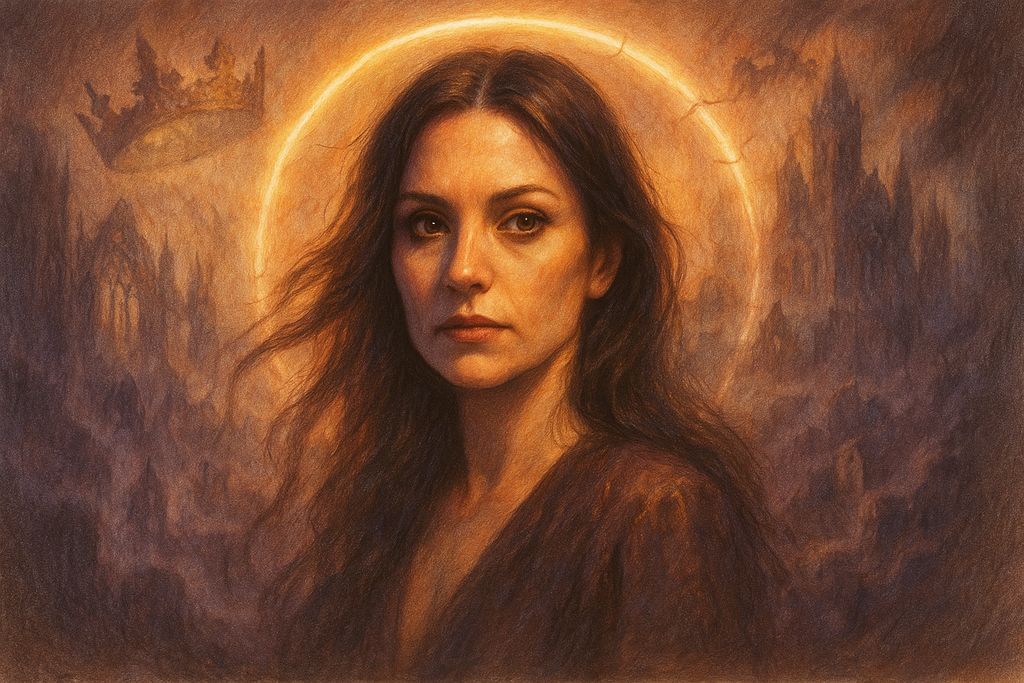
Visually, the Broken Crown Halo era offered Christina a chance to embrace a more stylised, gothic-cinematic aesthetic. The album’s imagery featured decayed architectural motifs, glowing halos, symbolic smoke and dramatic contrasts of gold and black. Christina embodied this world with striking presence — powerful yet introspective, elegant yet hardened by experience. Her fashion choices, movement and visual expression during this period reinforced the album’s overarching mood of beauty emerging from ruin.
Onstage, Christina amplified the cinematic qualities of the album, bringing intensity and expressive choreography into her performance. She moved with deliberate grace, pairing emotional storytelling with vocal power in a way that made the live experience feel immersive and theatrical.
As a transitional work, Broken Crown Halo set the foundation for the emotional depths and raw personal honesty that would define Delirium, while showcasing Christina as an artist capable of anchoring massive emotional landscapes with finesse and authenticity.

Delirium and the Personal Depth of Pain, Isolation and Healing
With the release of Delirium in 2016, Lacuna Coil entered what many consider one of the most emotionally intense and thematically daring phases of their career. Unlike the cinematic expansiveness of Broken Crown Halo, this album turned inward, exploring psychological turmoil, memory, trauma and the fragile boundaries between suffering and healing. For Christina Scabbia, Delirium represented a profound artistic shift, pushing her into raw emotional territory that required not only vocal versatility but personal courage. The album was heavier, darker and more personal than anything the band had created before, and Christina’s performance became the emotional epicenter of this transformation.
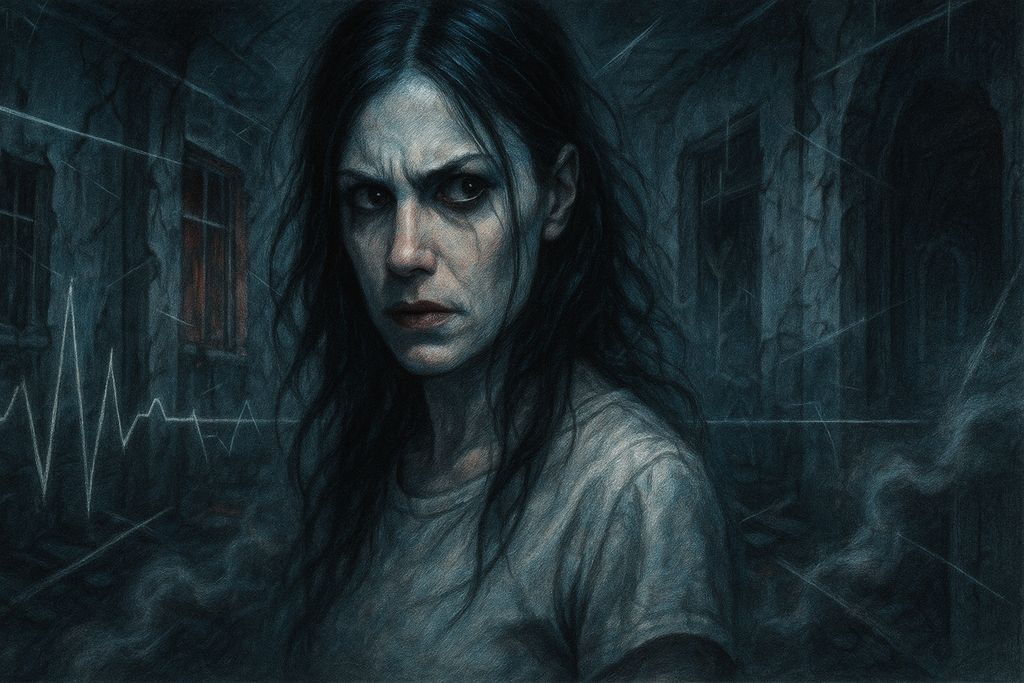
The thematic concept of Delirium drew inspiration from mental health struggles and the metaphor of an abandoned asylum, a place where fear and fragility coexist with the hope of recovery. Christina approached these themes not as distant dramatic material but as emotional landscapes to inhabit. Her vocal delivery on the album reflected this immersion. She embraced harsher, more intense tones when necessary, surprising longtime listeners with an edge that was both powerful and unsettling. At the same time, she retained her signature melodic clarity, creating a haunting contrast between vulnerability and ferocity that defined the album’s emotional character.
Songs like “The House of Shame” pushed Christina into a darker sonic space than fans had ever heard from her. Opening with Andrea Ferro’s intense screams, the track quickly shifts into Christina’s soaring, anguished vocals, which rise with an almost operatic weight without losing emotional authenticity. Her performance embodies the terror, desperation and eventual release that the song narrates. It was a moment that demonstrated her ability to transcend the boundaries of her previous vocal identity and tap into deeper reservoirs of emotional storytelling.
On “Delirium,” the album’s title track, Christina explored a different register — one defined by melancholy, introspective fragility and an aching sense of longing. Her delivery is restrained yet full of emotion, giving the impression of someone trying to hold onto clarity while drifting into confusion. The chorus, with its hypnotic repetition and swelling melodic arc, showcases how Christina can communicate emotional unraveling through subtle shifts in tone and phrasing. Her voice becomes the embodiment of the album’s central theme: the struggle to remain grounded in the face of overwhelming internal turmoil.
Other songs, such as “Blood, Tears, Dust” and “You Love Me ’Cause I Hate You,” highlight Christina’s ability to balance aggression and emotional sensitivity. Her vocals cut through the heavier production with precision, yet retain a human warmth that prevents the music from becoming detached or purely visceral. This duality — intensity fused with empathy — is one of her greatest strengths as an artist, and on Delirium, it reached a new level of depth.
The emotional weight of the album was mirrored by the band’s internal transitions. Delirium was the first Lacuna Coil album created after significant lineup changes, leaving Christina, Andrea and Marco Coti Zelati as the core creative force. This shift brought new urgency and vulnerability into the writing process, and Christina’s presence became even more central. She took an increasingly active role in shaping the album’s thematic direction, contributing to an emotional authenticity that resonated strongly with fans who connected deeply with the album’s exploration of mental health.
Live, the Delirium era brought some of Christina’s most intense performances. She approached the stage with heightened emotional commitment, channeling the album’s themes through nuanced gestures, facial expression and vocal weight. Her presence during this period was striking — powerful, unfiltered and deeply human. Fans responded with overwhelming appreciation, often describing the concerts as cathartic experiences.
Delirium stands as one of Lacuna Coil’s most personal statements, and Christina’s contribution is central to its impact. She navigated emotional depths that few artists are willing to explore publicly, offering performances that were courageous, honest and transformative. Her ability to turn themes of pain, confusion and healing into art solidified her reputation as an artist whose voice carries not just musical skill, but profound emotional truth.

Black Anima: A Mature Artistic Peak
With the release of Black Anima in 2019, Lacuna Coil reached one of the most profound and artistically realized moments of their career. The album stands as a testament to emotional depth, spiritual symbolism and sonic reinvention — a work that embraces darkness not as despair, but as a transformative force. For Christina Scabbia, Black Anima represented a new level of vocal maturity and expressive nuance, allowing her to explore the themes of loss, identity, grief, memory and rebirth with unprecedented emotional clarity.
The album was shaped, in part, by personal experiences of loss within the band, including Christina’s own grieving after the passing of loved ones. Rather than hiding these emotions, she allowed them to guide her performance with honesty and vulnerability. This authenticity permeates the album, giving it a gravity that feels both deeply personal and universally resonant. Christina’s voice moves between intimate whispers and powerful, soaring passages, always carrying the emotional truth of each moment. Her vocal delivery on tracks like “Layers of Time,” “Reckless” and “Veneficium” captures the raw essence of the album’s themes, shifting effortlessly between strength and sorrow, clarity and chaos.
Musically, Black Anima is one of Lacuna Coil’s heaviest and most experimental albums, integrating modern metal, atmospheric elements and haunting electronic textures. Christina embraced this sonic evolution with complete artistic conviction. Her voice became the emotional anchor amid dense instrumentation, rising above the darker textures with luminous precision. She demonstrated remarkable versatility, adapting her tone and phrasing to match the intensity of the album without sacrificing her signature melodic warmth.
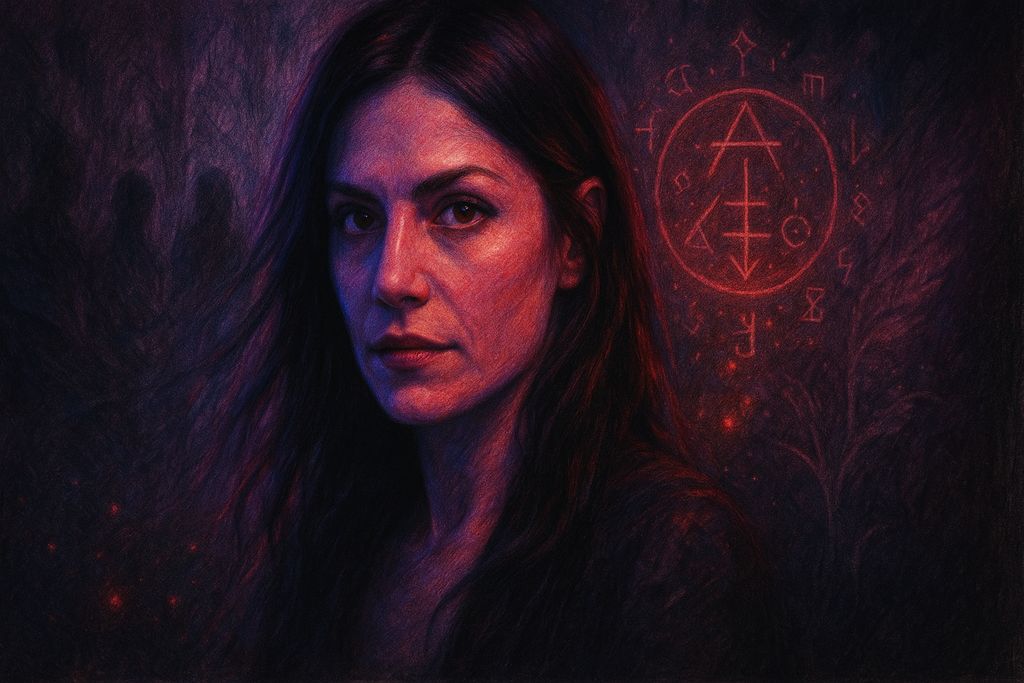
Visually and conceptually, Black Anima marked a new symbolic era for the band. The imagery — shadowed figures, red-black palettes, geometric symbols and ritualistic motifs — complemented Christina’s introspective performance. Her presence during this period was powerful yet contemplative, embodying the album’s message that darkness can lead to understanding, renewal and connection.
Black Anima remains a pinnacle of Christina’s artistic evolution, showcasing a voice at full emotional depth and creative maturity.
Christina Beyond Lacuna Coil: Collaborations, Media Work and Influence
Collaborations with Artists Across Genres
Throughout her career, Christina Scabbia has demonstrated a remarkable ability to transcend genre boundaries, collaborating with artists whose musical worlds differ significantly from Lacuna Coil’s signature sound. These collaborations reveal not only her technical versatility but also her deep curiosity as an artist — her willingness to step outside familiar territory and engage with new emotional landscapes. Each partnership highlights a different facet of her voice and her artistic identity, providing a broader understanding of her influence on contemporary metal and alternative music.
One of the most significant collaborations in Christina’s career came in 2007, when she joined Megadeth for a new version of their classic song “À Tout le Monde (Set Me Free)”. Appearing on the album United Abominations, the duet became an international success and introduced Christina to an entirely new segment of the metal community. Her voice, clear and luminous, contrasted beautifully with Dave Mustaine’s unmistakable tone. The emotional weight she brought to the chorus expanded the song’s narrative dimension, creating a dialogue between fragility and resolve. The collaboration showcased her ability to elevate a composition without overpowering it, blending seamlessly into the musical world of a thrash metal icon while retaining her own expressive identity.
In the same year, Christina collaborated with Apocalyptica on “S.O.S. (Anything But Love)”, a dramatic, cello-driven composition that allowed her to explore a different kind of emotional intensity. Apocalyptica’s orchestral metal aesthetic created a haunting backdrop, and Christina’s performance cut through the instrumental darkness with heartbreaking clarity. Her voice carried a tone of urgent longing, revealing a raw vulnerability rarely heard in such a symphonic context. The collaboration became one of Apocalyptica’s most celebrated vocal features, and it remains a highlight in Christina’s guest discography — proof of her ability to adapt her melodic sensibility to profoundly different sonic environments.
Another memorable collaboration occurred in 2008, when she joined Alter Bridge for an Italian rendition of their ballad “Watch Over You.” Paired with Myles Kennedy, one of modern rock’s most respected vocalists, Christina delivered a performance filled with tenderness and emotional intelligence. Her ability to match the warmth and sincerity of Kennedy’s voice illustrated her nuanced interpretive skill. She contributed an emotional color that enriched the song without altering its essence, creating a duet that resonated strongly with audiences across linguistic and cultural boundaries. The collaboration further cemented her reputation as an artist capable of forming deep musical connections with performers whose backgrounds were far removed from her own.
Beyond studio collaborations, Christina has appeared in various live performances with prominent artists. She has shared stages with P.O.D., performing emotionally charged renditions of “Goodbye for Now”, and she has joined Dave Mustaine for special appearances featuring “À Tout le Monde.” These moments highlighted her adaptability in spontaneous performance environments, where vocal chemistry must be created in real time. Christina’s grounded presence and expressive voice allowed her to connect effortlessly with audiences and fellow musicians alike, creating performances that felt natural, organic and emotionally immediate.
Christina’s collaborations also extend into the cultural sphere beyond traditional rock and metal. Her work as a guest judge and performer on Italian television programs introduced her to a wider mainstream audience and demonstrated her willingness to engage with music in diverse formats. Whether participating in charity events, media appearances or cross-genre performances, she consistently maintains a balance between professionalism and emotional authenticity — a balance that has made her one of the most respected vocal figures in European contemporary music.
What stands out across all these collaborations is Christina’s instinctive understanding of musical empathy. She approaches each partnership not as an opportunity to showcase vocal power, but as a chance to explore emotional connection. Her performances reflect a careful attention to the emotional language of each song, allowing her to adapt without losing her own artistic identity. This flexibility — combined with her unmistakable tone — makes her an ideal collaborator, capable of enhancing a track while integrating seamlessly into the artistic vision of others.
These collaborations also broadened Christina’s influence within the global metal community. They positioned her as both a genre figure and a bridge between stylistic worlds, expanding the visibility of Lacuna Coil and reaffirming her relevance beyond the confines of any single musical category. Through each partnership, Christina has demonstrated that the boundaries between genres are not rigid barriers but creative spaces where new forms of expression can emerge.
Media Presence, Fashion Identity and Public Persona
As Christina Scabbia’s career expanded far beyond the traditional boundaries of metal music, her presence in media, fashion and public culture evolved into a significant extension of her artistic identity. While her voice remains her most defining element, Christina’s public persona — shaped through interviews, visual aesthetics, social media and television — reflects a multidimensional artist who values authenticity, creativity and emotional honesty. Over the years, she has become not only a respected musician but a cultural figure whose influence resonates across diverse audiences.
One of the most notable aspects of Christina’s public identity is her fashion sensibility, which blends gothic elements with contemporary elegance. Rather than adopting the theatrical extremes sometimes associated with metal imagery, Christina cultivated a style that is sophisticated, personal and expressive. Dark tones, structured silhouettes, tailored jackets, leather, lace and subtle metallic accents often define her look, but these choices are never purely aesthetic. Her fashion expresses the same duality present in her music — strength intertwined with vulnerability, minimalism balanced with dramatic contrast. This approach has earned her recognition in alternative fashion circles and has become an important part of how fans perceive her artistic identity.
As social media became an integral part of modern music culture, Christina emerged as a relatable yet deeply grounded figure online. Her presence is defined not by self-promotion but by sincerity. She shares reflections on creativity, life challenges, mental health and the realities of sustaining a long-term artistic career. Fans appreciate her transparency and kindness, traits that stand out in a world often characterized by curated personas. Christina uses her platform not only to connect with listeners, but to emphasize empathy, personal growth and the value of community — messages that resonate widely across generational and cultural boundaries.
Her media presence expanded notably when she participated as a coach and judge on the Italian talent competition “The Voice of Italy” (2014). This role introduced her to a broader mainstream audience who may not have been familiar with Lacuna Coil’s music. On the show, Christina demonstrated her sharp musical intuition, respectful mentorship style and ability to recognize emotional authenticity in performers from diverse genres. Her presence challenged stereotypes about metal artists, showing that the genre’s leading figures are versatile, articulate and capable of engaging deeply with music far outside their own stylistic niche.
Christina’s public persona also reflects a strong sense of individuality. She has repeatedly described herself as someone who values self-awareness and emotional balance, preferring to communicate truthfully rather than perform exaggerated roles for media attention. Her interviews reveal a thoughtful and introspective personality who approaches both art and public life with maturity. She neither distances herself from fans nor cultivates an inaccessible image; instead, she balances professionalism with genuine connection. This authenticity has earned her a loyal fanbase who see her not only as an artist but as a role model.
Her visibility in various cultural contexts — from international magazines to television programs, from metal festivals to mainstream entertainment — highlights her unusual ability to inhabit multiple worlds without compromising her identity. Christina’s media presence reinforces the idea that metal artists can be elegant, articulate, emotionally intelligent and deeply engaged with broader cultural conversations. She expands the image of what a frontwoman in heavy music can represent.
Ultimately, Christina Scabbia’s public persona is defined by coherence. The way she presents herself visually, emotionally and intellectually reflects the same values that shape her music: honesty, depth, resilience and a commitment to authentic expression. Her fashion, media work and online presence are not separate layers, but interconnected facets of an artist whose influence extends far beyond the boundaries of genre.
Christina as a Global Metal Role Model
Across more than two decades of international visibility, Christina Scabbia has become far more than the co-lead vocalist of Lacuna Coil — she has evolved into a global role model whose influence extends through the entire metal community and beyond. Her presence challenges stereotypes, expands definitions of artistic identity and inspires a generation of musicians who see in her a rare combination of strength, empathy, creativity and authenticity.
In a genre historically dominated by male performers, Christina carved out a space that never relied on imitation or confrontation. Instead of conforming to established archetypes of the “female metal singer,” she built her own path, grounded in emotional sincerity and artistic integrity. Her approach redefined expectations and encouraged younger vocalists — women and men alike — to embrace individuality rather than emulate stylistic trends. Many emerging artists credit Christina as a source of confidence, describing how her stage presence and grounded personality helped them see metal as a space where authenticity is valued more than performance stereotypes.
Her vocal identity — melodic yet powerful, expressive yet controlled — also expanded the possibilities for what a metal frontwoman could sound like. Christina proved that emotional depth, tonal purity and subtle nuance could coexist with heavy instrumentation and intense sonic environments. This opened doors for vocalists who wished to explore melodic approaches in modern metal without sacrificing credibility or emotional weight.
Christina’s influence extends far beyond technical or aesthetic realms. Her public advocacy for mental health, her reflective discussions about creativity and her willingness to share personal challenges resonate deeply with fans. She communicates with humility, listens with intention and speaks with clarity — traits that make her an accessible and inspiring figure. For many listeners, she represents a reminder that strength does not require hardness, and that vulnerability can coexist with resilience.
Her impact is especially visible in communities where representation matters. Christina’s presence on global stages — from Ozzfest to major European festivals — serves as a symbol of possibility for aspiring musicians around the world. She stands not only as a successful artist but as proof that authenticity, emotional intelligence and artistic evolution can carry a performer through decades of relevance in an ever-changing musical landscape.
Christina as a Global Metal Role Model
As Christina Scabbia moves through the third decade of her career, her legacy has become something far greater than a collection of albums, performances or collaborations. It is the story of an artist who has continually evolved without losing authenticity, of a vocalist who has shaped the emotional language of modern metal, and of a cultural figure who embodies resilience, empathy and creative freedom. Christina’s influence reaches across genres, generations and continents, forming a rich tapestry of artistic and personal impact that continues to expand with each new chapter of her work.
One of the most defining aspects of Christina’s legacy is her unwavering commitment to emotional truth in music. While many artists build their careers on theatrical personas or exaggerated intensity, Christina has always placed honesty at the center of her expression. Her lyrics, interviews and performances reveal a person who is introspective yet grounded, open-hearted yet thoughtful. This emotional intelligence has shaped her vocal presence, allowing her to inhabit songs with a depth that feels both deeply personal and universally resonant. She does not perform emotion; she channels it. This distinction has contributed to the longevity of her career and the loyalty of her global fanbase.
Her philosophy toward artistry reflects a consistent belief in growth through vulnerability. Instead of clinging to a fixed identity, Christina has embraced change as a natural and necessary part of artistic evolution. From the ethereal atmospheres of early Lacuna Coil to the heavier experimentation of Delirium and the spiritual darkness of Black Anima, she has approached each transformation with openness and sincerity. This willingness to evolve has allowed Lacuna Coil to remain relevant across decades, even as musical trends shift dramatically. It also serves as an example to younger performers, who often look to Christina as proof that reinvention does not require abandoning one’s core self.
Christina’s legacy is also defined by her representation of women in metal, though she has never framed her work solely through gender. Instead, her presence has quietly but powerfully challenged stereotypes. She stands as a counter-narrative to the notion that female performers must rely on theatrical spectacle, operatic extremes or overt aggression to succeed in heavy music. Christina demonstrates that emotional nuance, authenticity and artistic intelligence are equally powerful. Her journey has helped broaden perceptions of what a frontwoman can be, encouraging more diverse voices to enter the genre and shape it in new ways.
Another central element of her influence is her understanding of community. Christina speaks often about the importance of connection — with fans, with fellow musicians, with creative collaborators. She does not position herself above her audience; instead, she communicates with them directly, valuing their interpretations and emotional responses. On social media, she maintains an accessible, genuine presence, sharing reflections that are thoughtful rather than performative. Fans frequently describe interactions with her as grounding experiences, marked by kindness and authenticity. This relational approach has created a sense of shared emotional space around Christina’s work, where music becomes a meeting point rather than a barrier.
Her role within Lacuna Coil also illustrates her commitment to collaborative identity. While Christina is often recognized as the band’s most visible figure, she consistently emphasizes the importance of unity, shared vision and mutual respect within the group. The dynamic between Christina, Andrea Ferro and Marco Coti Zelati has withstood immense change, personal challenges and the pressures of international demands. The enduring strength of these relationships reflects her belief that creativity thrives in environments where trust and openness prevail.
Looking toward the future, Christina continues to approach her career with curiosity and intention. She has expressed interest in ongoing artistic exploration, whether through new musical directions, visual collaborations or media projects. She remains open to expanding her creative universe while preserving the emotional core that defines her work. This mix of stability and innovation is central to her philosophy: growth is meaningful only when it is anchored in sincerity.
Christina’s later work — particularly Black Anima — suggests an artist who has entered a period of profound introspection and expressive refinement. Her voice, now rich with decades of experience, carries emotional layers that cannot be manufactured or imitated. There is a depth in her phrasing, a maturity in her tone and an awareness in her storytelling that reflects both personal history and artistic evolution. She sings not only from skill but from lived experience, transforming grief, love, uncertainty and resilience into sound.
Her impact also extends to the next generation of musicians, many of whom cite her as a foundational inspiration. Vocalists across genres — from gothic metal to alternative rock to symphonic hybrids — speak of Christina as a pioneer who showed that metal could be melodic without losing edge, emotional without becoming fragile, and artistically ambitious without sacrificing accessibility. Her influence has helped shape a landscape where vocal diversity is more widely celebrated and where authenticity is increasingly valued over conformity.
As Christina moves into the future, her legacy remains dynamic rather than fixed. She is not an artist defined solely by past achievements but by a continuous unfolding of creativity. Whether she is performing onstage, recording new material, collaborating with other artists or engaging with fans, she does so with a sense of presence that is rare in contemporary music. Her journey suggests that true artistic endurance comes not from maintaining a persona but from cultivating an honest relationship with one’s evolving self.
Ultimately, Christina Scabbia’s legacy can be understood as a constellation of qualities: a voice that communicates emotional truth with clarity and depth; a philosophy rooted in authenticity, empathy and artistic bravery; a presence that expands what is possible for women in metal; and a future that remains as open and compelling as her past. She stands as one of the most influential and beloved figures in modern metal — an artist whose work continues to inspire, heal and connect audiences around the world.
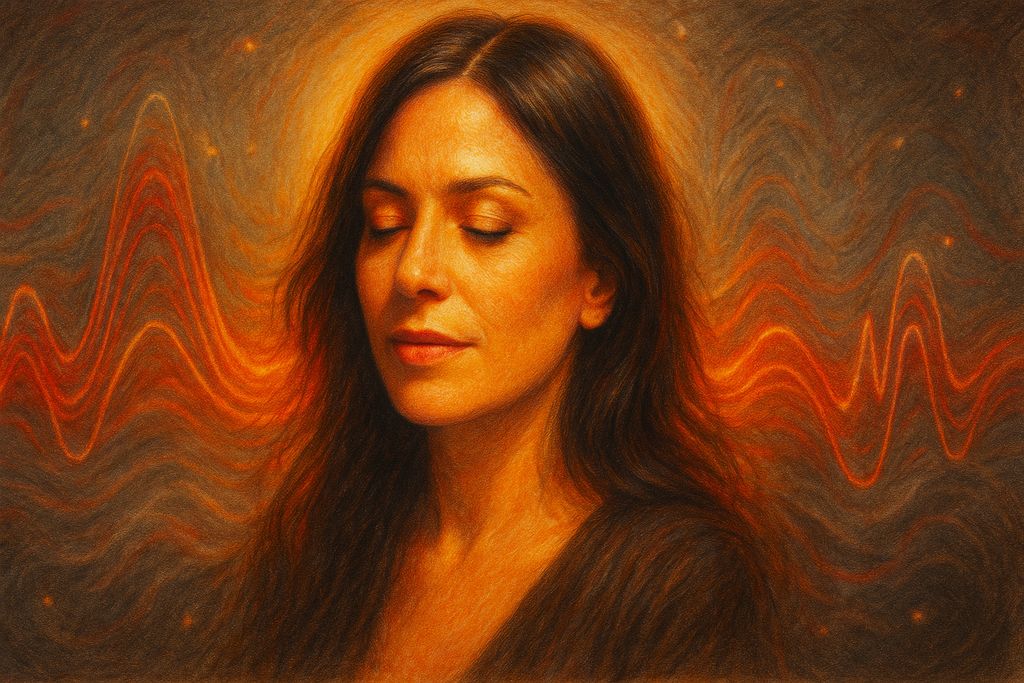
Conclusion – The Enduring Light and Shadow in Christina Scabbia’s Art
As the final chords of Christina Scabbia’s artistic story — at least up to this moment — resound through decades of evolving sound, it becomes clear that her influence extends far beyond any individual album, performance or era. Her career stands as a testament to the power of emotional authenticity, creative evolution and the profound impact of a voice that carries both clarity and depth. Christina’s journey has never been defined by staying within the limits of genre, expectation or tradition. Rather, it has been shaped by the continuous search for meaning, connection and artistic truth.
From her early years in Milan to her emergence as one of metal’s most recognisable and respected vocalists, Christina has embodied a rare combination of grace, strength and expressive intelligence. Her voice has never been just an instrument; it has been a form of emotional storytelling capable of navigating inner turmoil, resilience, longing, introspection and transcendence. Whether soaring above atmospheric arrangements or cutting through dense modern production, her tone remains unmistakable — a sound that is at once human and luminous, grounded and expansive.
Her evolution across Lacuna Coil’s discography mirrors the evolution of modern metal itself. Each album marks a distinct chapter in the band’s sonic growth, yet Christina’s presence provides a consistent emotional core. She has guided listeners through the introspective melancholy of Unleashed Memories, the international breakthrough of Comalies, the modern edge of Karmacode, the polished immediacy of Shallow Life, the dramatic darkness of Dark Adrenaline, the raw emotional turbulence of Delirium, and the spiritual weight of Black Anima. Across these eras, she has shown that reinvention is not a departure from identity but an extension of it.
What makes Christina’s legacy especially powerful is the way she navigates dualities: light and shadow, vulnerability and strength, melody and heaviness, introspection and performance. She embodies the idea that true artistry arises from embracing complexity rather than simplifying it. This ability to live within emotional nuance — to express contradictory states with honesty — gives her music its lasting resonance. Fans across the world connect with her not because she fits a predictable mold, but because she expresses something inherently human.
Beyond her work with Lacuna Coil, Christina’s collaborations, media presence and public persona reflect a figure who carries authenticity into every sphere she enters. She bridges cultures, genres and artistic forms without losing her sense of integrity. Her empathy, wisdom and humility have made her not only an admired vocalist but a beloved public figure who leads through example rather than performance.
The legacy Christina continues to build is not one fixed in the past, but one that unfolds with each new creative step. As she moves forward — exploring new sounds, new expressions, new collaborations — her influence will continue to shape the emotional landscape of metal and alternative music. She stands as a reminder that art is not defined by boundaries but by the courage to evolve, express and connect.
In the light and shadow of Christina Scabbia’s art, both the past and the future shine with equal intensity. Her voice remains a guiding presence in contemporary metal, carrying stories of transformation, resilience and the beauty of emotional honesty. And as long as she continues to sing, listeners will continue to find meaning, comfort and inspiration in the world she creates.