

When the Voice Becomes a Vessel
A voice does more than carry melody. It carries memory, training, and social history. When listeners hear a bent note, a stretched syllable, a harmony line that answers back, or a chorus that opens a little later than expected, they are often hearing habits shaped in Black churches across the United States long before the modern pop industry existed.
Gospel was not just a genre label. It was a way of singing together. The lead voice was part of a room that listened, answered, and pushed the performance forward. Over time, those habits moved into theaters, studios, radio, television, and eventually global pop. They helped shape rhythm and blues, gave Soul much of its force, and became part of the basic grammar of R&B and pop singing.
This article follows that movement. The route from Gospel to global pop runs through migration, recording technology, commercial pressure, artistic ambition, and repeated reinvention. What stays recognizable is the voice itself: a human instrument carrying church-born habits into new settings.
The Sacred Blueprint: How Gospel Built the Modern Voice
Before Soul filled concert halls and R&B took over radio, much of modern singing was already being worked out in churches. Gospel shaped breath control, phrasing, dynamic contrast, and emotional pacing. It made room for intensity and treated vulnerability as evidence of conviction, not weakness.
In many Black communities across the United States, the church was also a place of teaching, memory, rehearsal, and public response. Choirs met regularly. Soloists learned to project before dependable amplification was common. Congregations answered in real time. That cycle of repetition and response built stamina, control, improvisational instinct, and a precise feel for when a line should stay contained and when it should open.
When later generations entered recording studios, they brought those habits with them. Microphones changed scale, not structure. Soul singers used Gospel timing to sing about desire, grief, pleasure, and dignity. R&B singers stacked harmonies like studio choirs. Pop singers learned how to build a chorus so that it felt earned rather than merely loud. To understand the later story, it helps to start with the people who gave the form shape.
Gospel Beyond Protestant Churches
This article follows one lineage rather than trying to summarize the full history of all sacred singing. Its main focus is Black Protestant church tradition in the United States, because that tradition had the clearest and most direct influence on Soul, R&B, and later pop singing. Other sacred traditions also shaped vocal music, including Catholic liturgical singing, Jewish cantorial practice, Muslim devotional recitation, and many local sacred musics across Africa, the Caribbean, Europe, and Latin America. Those traditions matter, but they are not the main thread traced here.
When writers say that Gospel influenced pop, they usually mean a cluster of practices strongly associated with Black church music in the United States: call and response, melisma, layered harmony, testimony-like phrasing, and the slow build from restraint to release. Naming that frame makes the argument clearer and avoids treating all sacred song as interchangeable.
What follows shows how that specific church-based tradition entered commercial music and changed what popular singing could sound like.
The Black Church as Training Ground, Not Monolith
Even within that focus, there was never one Black church sound. Sanctified congregations, Baptist churches, Methodist traditions, quartet circuits, urban choir programs, and local revival cultures all trained voices differently. Some settings valued ecstatic release. Others emphasized blend, formal arrangement, or sermon-like clarity. Singers often moved between these worlds rather than staying inside only one.
That variety helps explain why Gospel influence later appears in very different forms. A singer shaped by quartet singing might bring sharp ensemble discipline into R&B. A singer raised in a large choir tradition might favor dense harmony stacks. A singer from an improvisational church setting might carry looser timing into Soul ballads. The tradition was shared, but it was never uniform.
Calling the Black church a training ground is useful only if the phrase does not flatten its differences. It offered technique, discipline, emotional timing, and a public place to perform. What it did not offer was one style that everybody copied. That internal variety helps explain why the later history of Soul, R&B, and pop is so varied while still feeling connected.
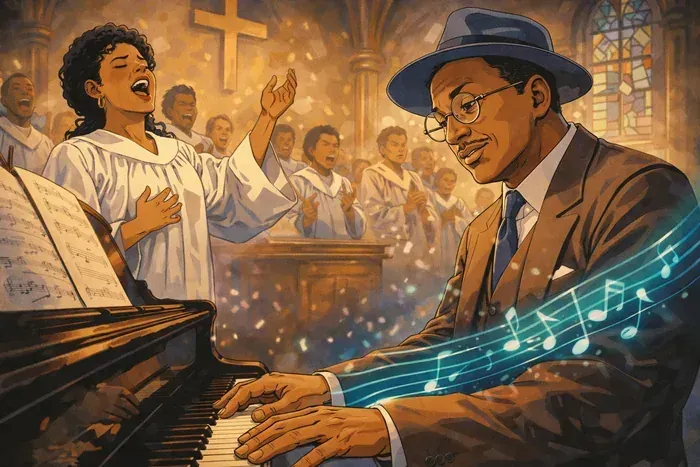
Thomas A. Dorsey: The Father Who Brought Blues to Church
When people talk about modern Gospel music, Thomas A. Dorsey is usually near the center of the story. He is widely described as the father of Gospel music, though the label compresses a much older history of Black sacred music. Before his name became tied to sacred repertoire, Dorsey worked as a blues pianist and songwriter under the name Georgia Tom. That background shaped his sense of rhythm, phrasing, and emotional release. When he turned more fully toward sacred music in the early 1930s, he did not leave those instincts behind.
Dorsey brought blues-derived melodic movement and rhythmic flexibility into church settings. He combined older hymn practice with a more conversational, expressive writing style. His songs gave singers room to stretch phrases, delay resolution, and make the text feel lived rather than merely recited. “Precious Lord, Take My Hand,” written after the 1932 deaths of his wife Nettie Harper Dorsey and their infant son, became one of the most enduring examples of that approach. Its force comes not only from grief, but from the way the melody makes space for tenderness, suspension, and release.
At first, many churches resisted this blend. Blues language was associated with nightlife and secular entertainment, and some leaders worried that sacred music would lose dignity. Congregations responded differently. They recognized the sound, and it felt immediate rather than remote. Over time, Dorsey’s style spread through choirs, conventions, print publishing, and touring groups.
He mattered not only as a songwriter, but also as an organizer. He worked with choirs, promoted concerts, and helped build networks that connected singers across cities. Gospel became more professional without losing its communal core. Choir directors trained vocalists with discipline, and soloists learned to project with clarity and confidence. The commanding presence later associated with Soul was already visible in church programs and revival meetings.
Dorsey’s influence can still be heard in later performances: the slow opening, the phrase that widens a little at a time, the modulation or final lift that arrives only after the song has earned it. He showed that sacred purpose and blues expression were not opposites. Many modern studio ballads still follow an arc that early Gospel listeners would recognize.
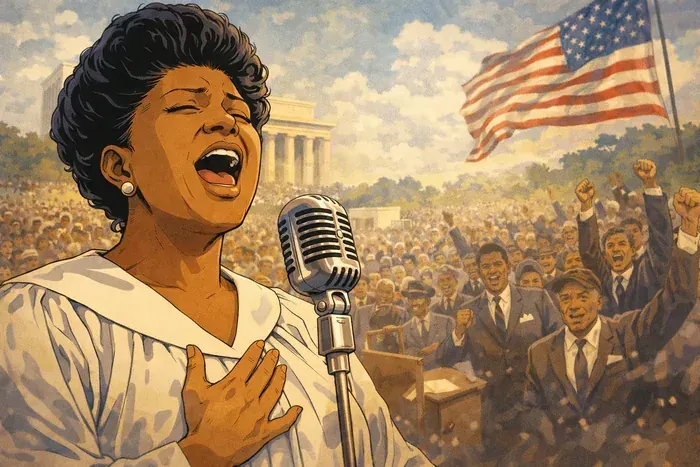
Mahalia Jackson: The Voice That Moved a Nation
Thomas A. Dorsey helped shape modern Gospel writing. Mahalia Jackson brought that sound to a mass audience. Her voice was large, warm, and direct without sounding ornamental for its own sake. She did not need elaborate embellishment to make a line land. She made listeners believe the message first, and then they noticed the technique.
Jackson was born in New Orleans in 1911 and later built her career in Chicago. She grew up in a world where church singing, parade rhythm, and blues feeling lived close together. Her contralto was powerful, but what made it unforgettable was patience. On “Move On Up a Little Higher,” she does not sprint toward the climax. She shapes each word, lets the line gather force, and trusts the room to follow.
Her success in the 1940s and 1950s changed Gospel’s public reach. She sang in churches, on radio, on television, and in major concert spaces, including Carnegie Hall. She also became deeply tied to the civil rights movement. On August 28, 1963, at the March on Washington, she stood in the middle of a national political moment without changing her musical identity to fit it.
Jackson refused to record secular material, even when it would likely have brought her broader commercial success. That decision sharpened her public identity, but it did not limit her influence. Younger singers listened closely to her breath control, her use of silence, and the way she let emotion rise without losing pitch center.
Many Soul singers who emerged in the 1960s carried part of her approach with them. The intensity heard later in singers such as Aretha Franklin did not appear from nowhere. It grew from rooms where singers were expected to move an audience in real time. Jackson showed that emotional force could fill a large hall without losing the grain of a human voice.
Through radio broadcasts, records, and touring, she helped popularize a style of singing that valued depth over cool detachment. That approach later became central to Soul ballads and many R&B anthems. Her recordings make a simple point: technique matters most when it serves feeling instead of replacing it.
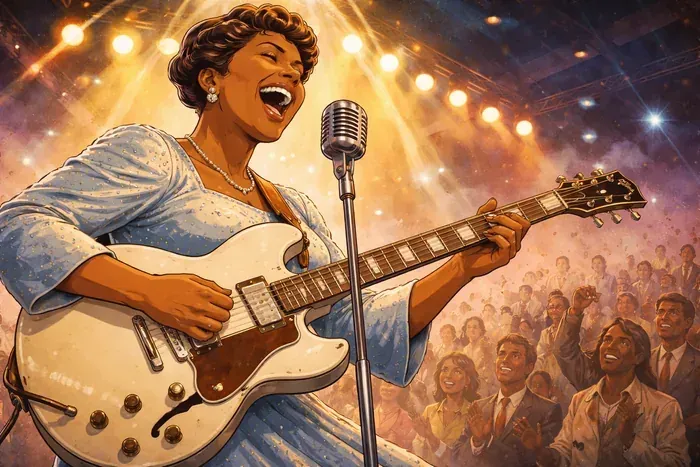
Sister Rosetta Tharpe: The Godmother of Rock & Roll
Mahalia Jackson brought Gospel to concert halls with grave authority. Sister Rosetta Tharpe took it somewhere louder. She plugged in a guitar, turned up the volume, and sang sacred lyrics with the rhythmic drive of popular entertainment. That move unsettled some church leaders, but it also widened the audience for Gospel-rooted sound.
Tharpe began performing as a child on the Pentecostal circuit. By the late 1930s, she was recording for Decca and appearing in both churches and nightclubs. Songs such as “Strange Things Happening Every Day” fused sacred text, blues feeling, and a beat that later rock and roll musicians would recognize immediately. Her guitar playing could snap, glide, or roar, and she stood at the front of the stage with the ease of a born star.
Her presence mattered in a music culture that often pushed women into supporting roles. She led bands, played guitar with authority, and moved between religious programs and popular venues without softening her command. The sacred message did not vanish when the amplifier came on. It traveled farther.
Many early rhythm and blues and rock musicians later named her as an influence. Her deeper impact was structural. She proved that Gospel technique could survive in louder, more commercial settings. The vocal lift, the expressive attack, and the conversation between singer and band all remained intact.
By the time Soul arrived in the 1960s, the idea of carrying spiritual intensity into everyday stories was no longer new. Tharpe had already shown that a voice rooted in Gospel could thrive outside the church without losing its identity. Her records connect spiritual conviction to rhythmic modernity in a way later genres kept reusing.
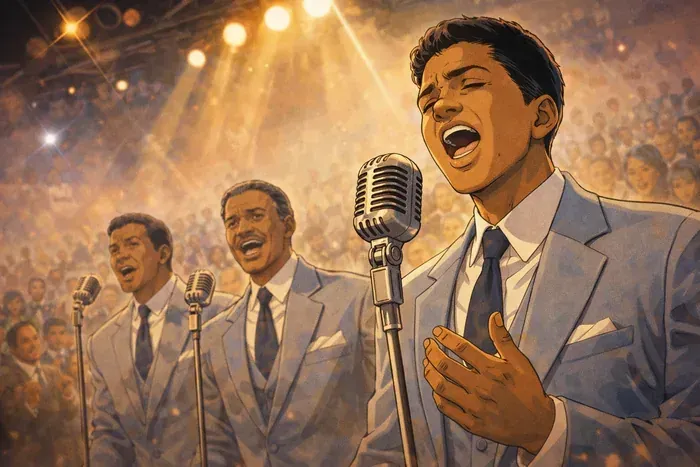
The Soul Stirrers: Where the Solo Star Was Born
Before Soul had chart categories and crossover plans, it had quartet stages and tightly arranged harmony. One of the most important groups in that tradition was the Soul Stirrers, founded in the 1920s and known for precise blend and emotionally charged lead singing. Their performances had a structure that would become familiar in secular music: steady support underneath, then a lead stepping forward with personal urgency.
When Sam Cooke joined in 1950, he brought a lighter tenor and a smoother, more conversational tone than many earlier Gospel leads. He held notes a little longer than expected, delayed phrases by a fraction, and made the melody feel personal instead of formal. Audiences responded immediately, and the sound of the modern lead singer began to shift.
In the quartet format, background singers kept structure while the lead colored the song through improvisation. That balance mattered later in Soul, where arrangements often supported the singer rather than competing with them. The idea of the star tenor started to take shape here: a singer out front, but still tied to the group behind him.
Cooke’s move into secular music sparked real anger among some Gospel listeners. But the skills he used in his solo career came straight from quartet tradition. Songs like “You Send Me” carried church-bred timing and phrasing even as the subject shifted to romance.
The Soul Stirrers mattered beyond Cooke’s tenure. Their approach to the relationship between lead and backing voices shaped vocal-group recording for decades. Even when singers perform alone today, studio layering often recreates that quartet logic, with stacked harmonies underneath the lead and each part doing a clear job.
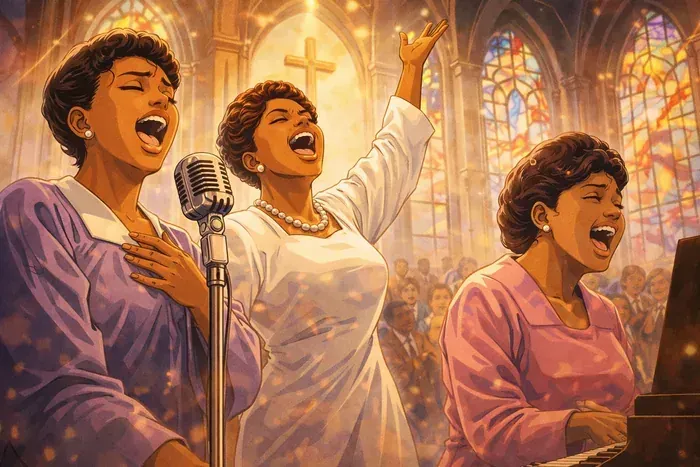
The Women Who Built Gospel's Architecture
When people tell the story of early Soul and R&B, they often focus on male crossover stars. That leaves out a great deal. Many of the expressive habits later heard in popular singing were refined by women in Gospel well before crossover became common. Choir leaders, soloists, and touring ensembles shaped pacing, phrasing, and harmonic balance in ways later generations carried into radio and the studio.
Clara Ward and the Ward Singers combined strict ensemble discipline with dramatic solo features. Ward knew how to keep a melody contained before opening it into fuller sound. That kind of timing mattered later in Soul ballads. The idea that a song should rise and fall like testimony was sharpened on Gospel stages like hers.
Mavis Staples, the unmistakable lead voice of the Staple Singers, carried that tradition forward while the group moved gradually into secular music. Early Staple recordings drew directly from church repertory. Later songs such as “Respect Yourself” and “I’ll Take You There” brought spiritual gravity into songs about social life and self-worth. Mavis Staples did not overwhelm arrangements. She anchored them.
These women helped define the emotional structures the music would later rely on. They showed how to place a key change that felt earned rather than decorative, and how a harmony line could answer the lead like a supportive congregation. In Gospel settings, that exchange reflected community life. In Soul and R&B, it became part of the music’s dramatic logic.
Their influence reached beyond church audiences. When women entered Soul studios in the 1960s, they brought with them a sense of pacing, authority, and ensemble awareness learned from Gospel mentors. Later performers such as Aretha Franklin made those earlier lessons audible in secular repertoire.
By the time Gospel became a commercial market, women had already shaped many of its most durable expressive habits. Modern pop listeners may not always know the source, but the echo remains in arrangements that still reflect lessons first refined in rehearsals led by women who knew how to hold a room.
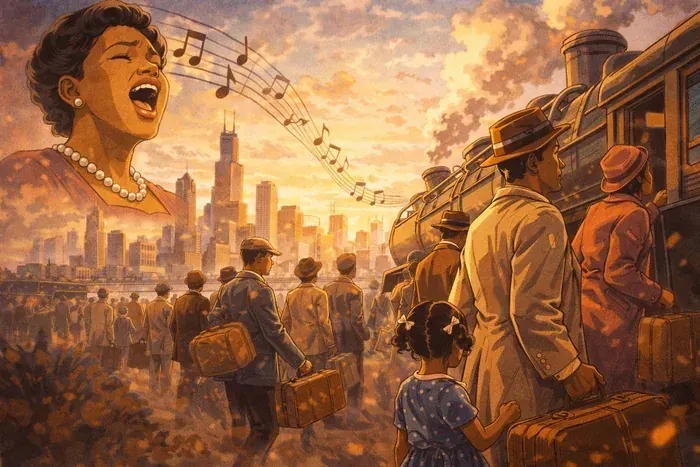
The Great Migration as a Sound Bridge
One reason this church-rooted vocal tradition spread so widely was the Great Migration. Across the twentieth century, millions of Black Americans moved from the South to cities such as Chicago, Detroit, Cleveland, New York, and later Los Angeles. They carried church habits, regional styles, quartet traditions, and local repertories with them. What had been local practice in Southern congregations entered urban networks of radio, clubs, theaters, schools, publishing houses, and record labels.
Chicago was especially important to this story. Thomas A. Dorsey and Mahalia Jackson both built major careers there, and the city’s church and publishing infrastructure helped Gospel circulate beyond the South. Detroit later became central to Motown’s polished ensemble logic. Memphis linked church intensity to Southern Soul. The migration did not simply move people. It moved vocal method.
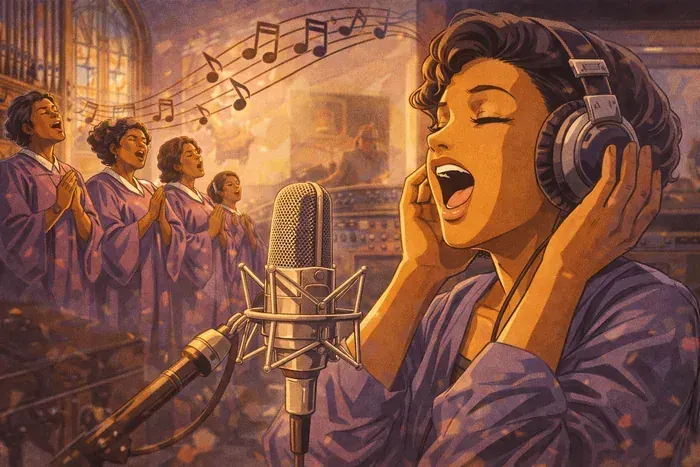
From Choir Loft to Microphone Technique
As Gospel moved from church spaces into recording studios, the microphone changed more than volume. In a church, singers often had to project across a room and reach the back row. In the studio, they could work much closer to the listener. Breath, grain, and small changes of tone suddenly carried more weight. The emotional scale of the performance could become more intimate without becoming less intense.
This shift helped make possible the sound of modern R&B and pop balladry. A church-trained singer knew how to fill a room, but the microphone allowed that singer to whisper, soften the onset of a phrase, or hold a note with less force and more detail. Close-miked vocals made vulnerability newly audible. The old Gospel build remained, but it could now unfold inside a more private acoustic frame.
That technical change also shaped later ideas of authenticity. Listeners came to hear breath noise, vocal texture, and near-spoken phrasing as signs of honesty. What had once been communal projection became studio intimacy. The move from choir loft to microphone did not replace Gospel expression. It gave it a new set of tools.
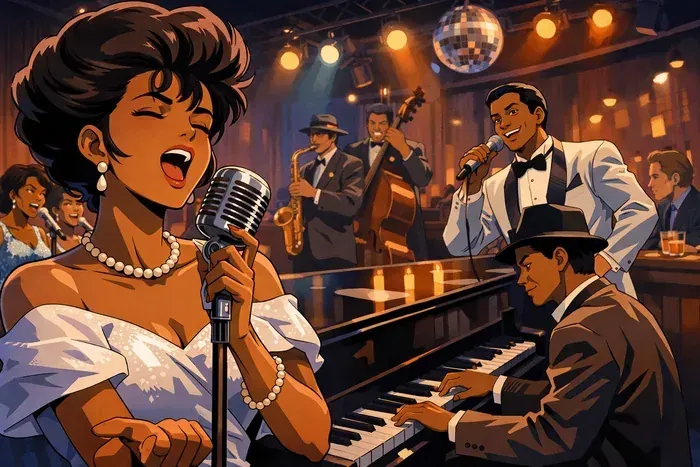
Before Soul: When Gospel Met the Nightclub
By the late 1940s, Gospel singing was becoming audible far beyond church walls. Its vocal techniques were showing up in nightclubs, theaters, and early recording studios. The word “soul” was not yet a settled commercial label, but the emotional language later attached to it was already present in rhythm and blues. Singers brought church phrasing into secular lyrics, and producers learned how to capture that urgency on tape.
Rhythm and blues brought both opportunity and tension. Clubs asked different things of performers than sanctuaries did. Themes shifted from spiritual devotion to romance, heartbreak, labor, nightlife, and everyday struggle. The emotional force remained recognizable, but the setting changed. Singers now worked for paying audiences and radio listeners as well as local communities.
Several artists stood at that crossroads. Their recordings show how Gospel music changed when it entered secular markets. They refined the techniques that would later define Soul, even as they faced an industry that was still segregated and uneven. Understanding the Soul explosion of the 1960s requires looking closely at these earlier musicians who created the blend of sacred sound and popular rhythm.

Ruth Brown: The R&B Star Who Helped Build Atlantic
In the early 1950s, Ruth Brown became one of Atlantic Records’ defining stars. So much of the label’s early success rested on her hits that Atlantic was later nicknamed “the house that Ruth built.” Her records had the drive of rhythm and blues, but they also carried Gospel-shaped phrasing, warmth, and a strong internal swing.
“Teardrops from My Eyes” showed how well she could combine hurt, wit, and dance-floor energy. She did not rely on sheer volume. Instead, she leaned on key syllables and let the rhythm section carry the pulse. Her voice could rise and fall without losing control, a discipline that sounds close to church training even in a secular setting.
Atlantic shaped arrangements to keep her voice in focus. The horns answered her phrases in a call-and-response pattern, and the background vocals added texture without pulling attention from the lead. That production logic became a model for later Soul recordings.
Brown’s career also shows how unequal the business could be. She generated major revenue for Atlantic but later spoke openly about royalty disputes and financial mistreatment. Her case was not unusual. Many Black artists helped build labels without sharing fairly in the profits they created.
Brown showed that Gospel-influenced phrasing could work commercially in secular music. Her tone was conversational rather than overstated, and listeners felt she was speaking directly to them. That intimacy would later become central to Soul ballads and R&B slow jams. Her work helped create a space where religious practice could support non-religious storytelling without losing depth.
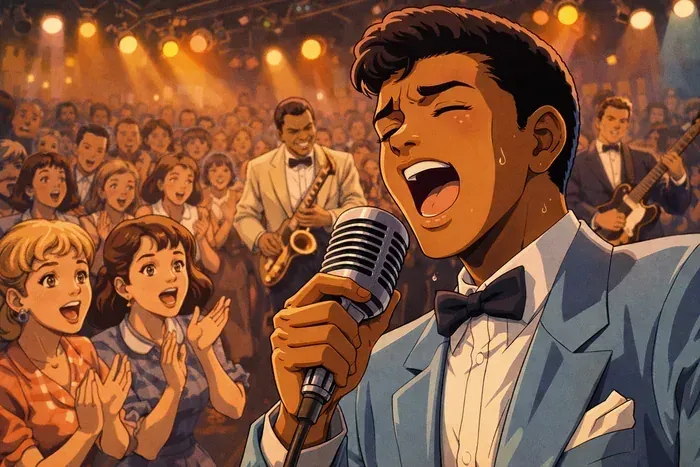
Clyde McPhatter: The Tenor Who Crossed Over
Ruth Brown helped define the commercial edge of early rhythm and blues. Clyde McPhatter added a new kind of vulnerability. Before launching his solo career, he sang with Billy Ward and the Dominoes. His high tenor showed clear Gospel training. He moved quickly through notes, leaned into upward glides, and made even romantic lyrics sound almost devotional.
When McPhatter started The Drifters in 1953, his voice became the center of the group’s sound. Recordings like “Money Honey” captured the energy of Gospel quartet performance in an R&B setting. The structure still relied on tight harmony and a commanding lead. What changed was the lyrical focus and the harder instrumental attack. Desire replaced devotion, and the rhythm section pushed with greater force.
McPhatter sounded natural, but he was also highly disciplined. Years of church singing had taught him how to intensify emotion without losing pitch or shape. He knew when to soften a line and when to let it rise sharply. That control let him move between tenderness and urgency with unusual ease. His style became a model for later Soul tenors who paired vulnerability with strength.
McPhatter’s career also reflects the realities of the 1950s music industry. The Drifters went through lineup changes, management problems, and financial disputes. Because the group continued after his departure, some of his contributions were later overshadowed. Even so, the emotional directness heard in many 1960s Soul recordings can already be heard in his early work.
McPhatter showed that Gospel intensity could work inside secular stories without feeling forced. He did not abandon his roots. He translated them. The call-and-response structure, the gliding phrases, and the emphasis on testimony-like storytelling all carried forward. His records are an important link between church quartets and the Soul soloist who would soon dominate popular music.
By the mid-1950s, the groundwork was firmly laid. Voices trained in religious settings were becoming more prominent in popular music. The next step would cause strong debate about that blend. When a singer mixed Gospel melodies with non-religious lyrics and found commercial success, the conversation about sacred and secular music changed permanently.
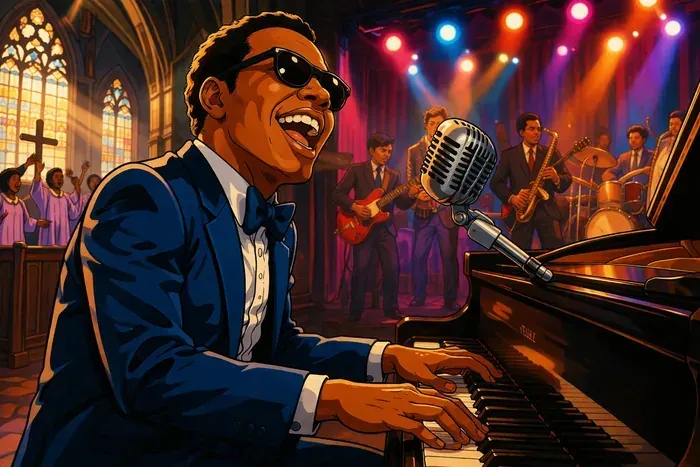
Ray Charles: The Man Who Merged Sacred and Secular
When Ray Charles began combining Gospel vocabulary with secular lyrics in the mid-1950s, people reacted fast. Some listeners were thrilled. Others were uneasy. The music sounded familiar and provocative at the same time. Charles had grown up with church music and blues, so he understood both vocabularies from the inside. By joining them openly, he made their closeness impossible to ignore.
Songs like “I Got a Woman” drew on Gospel melodies and call-and-response patterns. The band played with force, and Charles sang with the conviction of a church soloist. The lyrics, however, were about romantic love rather than religion. For some churchgoers, that shift felt troubling because the emotional tools of worship were now being used for earthly desire.
Charles did not frame this as rebellion. To him, these emotional languages were already close to each other. He phrased secular themes with Gospel-rooted conviction, building tension through repetition and allowing backing voices to answer him like a small congregation. The structure remained stable even when the subject changed.
The approach was commercially effective, too. Atlantic recognized that the blend could reach broad audiences. Black listeners heard the Gospel base clearly, while many white listeners responded to the rhythm and emotional directness. His 1962 album Modern Sounds in Country and Western Music pushed that logic further. By singing country material through a Gospel-informed style and orchestral frame, he challenged fixed ideas about who could inhabit which genres.
The controversy surrounding his early recordings revealed deeper cultural tensions. Sacred music had long been a space where communities could find protection and identify themselves. When it started performing in non-religious entertainment, people started asking if it was respecting religion and if it was becoming too commercial. Charles stood at that breaking point. He carried the influences from his upbringing with him, even as he redefined how it could function in popular music.
His work marked a clear shift. The boundary between Gospel technique and secular storytelling became less rigid. Singers who followed no longer had to justify the mix in the same way because the model was already public. Ray Charles did not build the bridge alone, but he crossed it with unusual clarity.

The Soul Explosion: A Decade of Vocal Revolution
By the early 1960s, the combination of Gospel singing and rhythm and blues had become a distinct commercial force. Migration, political change, and the growth of independent labels created room for a new sound. That sound would soon be called Soul. It carried the urgency of church singing, the rhythm of R&B, and a sharper sense of identity. These voices did not hide intensity. They used it.
Soul music emerged during a period of political and cultural change. The Civil Rights Movement was reshaping public life. Black artists were reaching broader audiences through radio and television. Record companies began to recognize that emotional honesty could reach across racial lines, even in an industry where segregation persisted. Singers entered the studio with confidence built from years of live performance.
The 1960s did not invent the gospel-rooted voice. They amplified it. This generation of musicians made records that many listeners still regard as the foundation of soul music. Their work carried dignity, longing, and resilience in ways that felt immediate and personal. The transformation extended beyond chart success. It changed what a voice could carry.
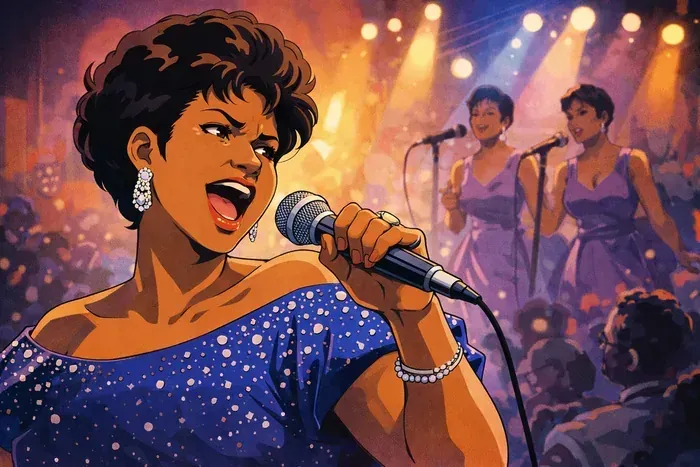
Aretha Franklin: The Queen Who Demanded Respect
Aretha Franklin sits at the center of Soul history. Raised in Detroit by the Baptist minister C. L. Franklin, she grew up around major Gospel singers and recorded her first album, Songs of Faith, as a teenager. When she moved into secular music, she carried the same sense of purpose with her. The setting changed. The method did not.
Her 1967 breakthrough at Atlantic changed the scale of her career. “I Never Loved a Man (The Way I Love You),” recorded at FAME Studios in Muscle Shoals with Jerry Wexler’s guidance, sounds relaxed and intense at once. Franklin controls each phrase, leans into key syllables, and holds back just before the emotional peak. The band supports her without boxing her in.
“Respect” followed that same year and changed the meaning of a song many listeners already knew from Otis Redding’s version. Franklin shifted the center of gravity, added the spelled refrain, and turned the record into a demand rather than a plea. She is forceful, but never blunt. The background singers answer her like a Gospel chorus inside a secular anthem. "Everyone wanted respect."
Franklin’s authority came from more than vocal delivery. She played piano, shaped arrangements, and knew when a song should build and when it should stay taut. Her Gospel training taught her how to command a room, and that command translated cleanly to the studio.
Her success also changed what listeners expected from women in popular music. She was not there as decoration. She stood at the center. Songs like “Do Right Woman, Do Right Man” and “Chain of Fools” show her range, from tender restraint to open defiance. The emotional arc of each song still mirrors the shape of a church solo, building toward release.
Franklin kept returning to Gospel even while using its force in secular music. Her records showed that sacred intensity could speak directly to everyday life. She set a standard for control, conviction, and emotional timing that still shapes singers across genres.
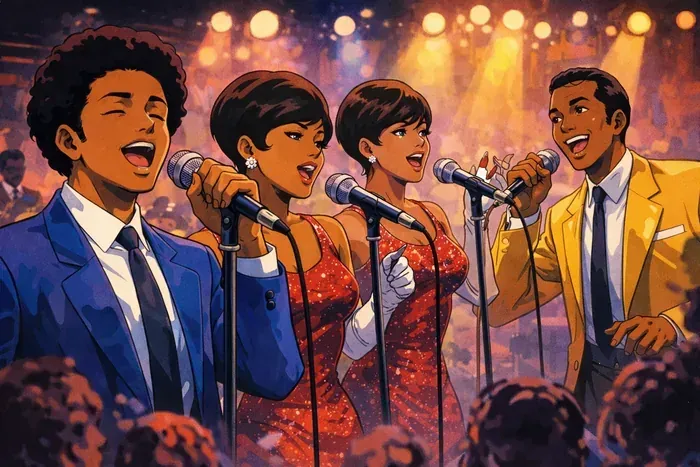
Motown: The Factory That Polished Soul
Aretha Franklin represented one route through 1960s Soul. Motown represented another. Founded by Berry Gordy in Detroit, the label approached music with unusual discipline. The goal was to make records that could succeed on mainstream radio without draining away emotional force.
Motown built a highly organized system. Songwriting and production teams such as Holland-Dozier-Holland crafted memorable melodies. The Funk Brothers gave the records their rhythmic engine. Artists rehearsed dance steps, stage deportment, and vocal blend. The result was a polished form of Soul that reached Black and white audiences during a period when the music business was still heavily segregated. "Our tours made breakthroughs and helped weaken racial barriers."
Groups such as the Supremes became international stars. Diana Ross’s lead vocals were clear and controlled, while the harmonies stayed tight and precise. Songs like “Baby Love” and “Stop! In the Name of Love” sound graceful on the surface, but the vocal interplay still carries Gospel inheritance, only streamlined for radio.
The Temptations brought a different energy. Their harmonies were more similar to the music of Gospel quartets. The members take turns leading, which creates variety within a cohesive sound. In songs like “My Girl,” the bass and tenor lines played off each other, creating a sound that was both pop and reminiscent of church music.
Marvin Gaye thrived at Motown because he combined discipline with artistic ambition. His early recordings fit the label’s polished style. Over time, he wanted more creative freedom, and this led to the 1971 album What’s Going On. That project expanded Soul’s subject matter to include war, poverty, and environmental concerns. Gaye’s versatile voice and smooth style demonstrated how Gospel-influenced emotion could be expressed through socially conscious material.
Motown’s system did not erase individuality. It refined it. Artists learned to express feeling with precision. That balance between control and emotional clarity later became crucial in modern vocal pop, where authenticity often has to survive inside carefully managed production.
The label’s success demonstrated that Soul could reach mainstream charts without losing its core character. Motown changed how artists recorded, rehearsed, and performed, helping Gospel-influenced singing spread globally. The 1960s revolution was about disciplined craft as much as personal expression.
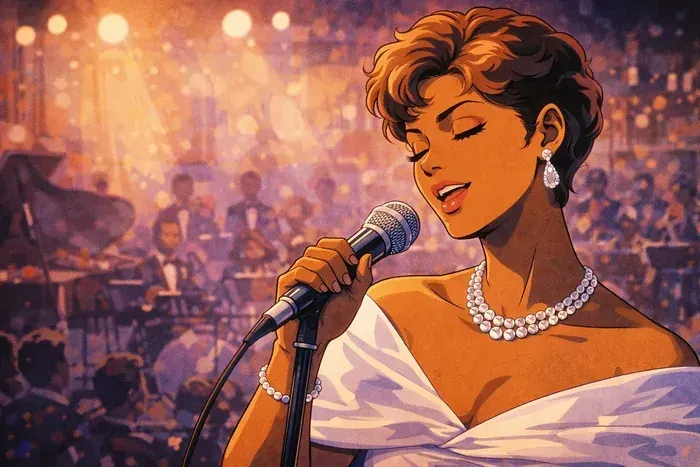
Dionne Warwick: Elegance Meets Soul
Motown was known for its strict rules, and Aretha Franklin was a symbol of spiritual power. But Dionne Warwick showed that songs based on Gospel music could easily be turned into sophisticated pop songs. Her career is closely tied to the writing and production team of Burt Bacharach and Hal David. This team was an important bridge between church-bred vocal instinct and orchestrated mainstream elegance.
Warwick grew up singing in church, and she is related to famous gospel singers like Cissy Houston. This foundation helped her control her breathing and improve her singing. However, her early 1960s recordings were not intense. Songs like “Walk On By” and “I Say a Little Prayer” needed precise timing and musical accuracy. Bacharach’s compositions often used unusual chord changes and rhythmic patterns. Warwick played with skill, staying in control of the song even when it took an unexpected turn.
Her voice wasn’t forced or overly powerful. Instead, it was understated. She used small changes in pitch to express meaning. A slight delay before a phrase, a gentle lift at the end of a word, or a soft swell in the middle of a line created emotional movement without a big show. That control was based on Gospel discipline, where singers learned to hold notes and shape phrases with intention.
Warwick’s success on popular music charts showed that a style of music that came from soul music could be successful in a more controlled setting. She didn’t come across as a passionate church soloist. She looked confident, calm, and stylish. But the technical background could still be heard by listeners who paid attention. Her ability to sing complex melodies in a warm and emotional way influenced later pop and R&B singers. These singers were able to combine sophistication with emotional depth in their music.
Her work also taught the public about different types of Gospel influence. It didn’t always arrive with obvious excitement. Sometimes it lived in careful breath placement and harmonic sensitivity. In this sense, Warwick’s recordings expanded the definition of soul-adjacent music.
By the mid-1960s, different types of Gospel influence were shaping popular music in parallel. Some styles were raw and urgent. Others were polished and intricate. This variety helped Soul succeed across different settings. The bridge between sacred technique and mainstream pop was no longer narrow. It had become a well-traveled path.
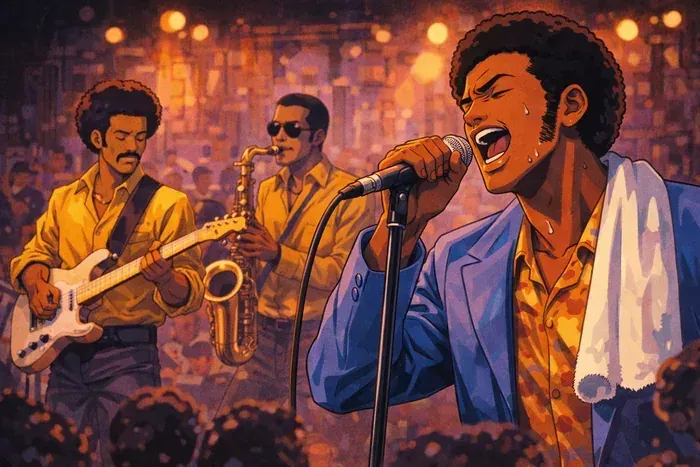
Stax Records: The Raw Soul of the South
If Motown polished Soul, Stax gave it grit. The Memphis label sounded earthier, looser, and more visibly tied to Southern band interplay. Gospel influence was unmistakable, but the arrangements left more room for friction, breath, and surprise.
Otis Redding is central to this sound. His voice was urgent without feeling uncontrolled. On “Try a Little Tenderness,” he builds patiently, phrase by phrase, until the final section releases emotion in full. The pacing feels close to a church solo rising toward communal response.
Redding’s phrasing was plainspoken and largely free of ornament. He sometimes pushed just past the center of a note, and that rough edge carried emotional weight. The band behind him, often Booker T. & the M.G.’s, answered tightly. The relationship between lead and rhythm section felt close to call-and-response practice, even when the lyrics were about love, sex, or vulnerability instead of devotion.
Isaac Hayes pushed Stax in another direction. He wrote, produced, arranged, and performed, using longer forms and orchestral texture. His 1969 album Hot Buttered Soul made room for spoken passages, long introductions, and dramatic builds. Hayes’s deep voice carried both sensuality and preacherly authority.
Stax operated in a distinct cultural environment. The label’s in-house band included white and Black musicians working together in a segregated South — a setup that produced a sound grounded in community collaboration rather than top-down planning. The recordings captured live energy, sometimes preserving small imperfections that added character rather than reducing them.
Southern Soul showed that Gospel-rooted expression did not need to be softened to become popular. It could keep texture, strain, and grain. The rawness of Stax balanced Motown’s polish and made clear that Soul was never one aesthetic.
By the end of the 1960s, Soul had developed multiple accents. It could be choreographed or unfiltered, ornate or plain. Yet the underlying vocal design stayed recognizable. Church practice had already established the core elements, and labels like Stax and Motown built their distinct sounds on top of it. Each label organized emotion differently, but none started from nothing.
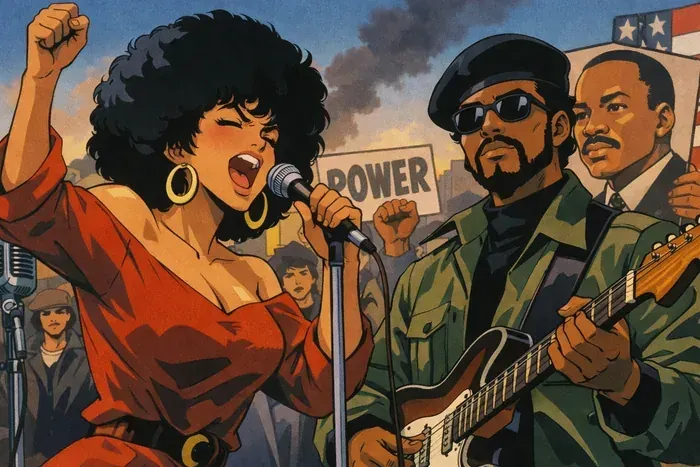
Deeper Cuts: Soul Finds Its Political Voice
As the 1960s came to a close, Soul entered a new phase. The three-minute single still mattered, but more artists were thinking at album scale. Records became places for reflection, not just containers for hits. Social unrest, the Vietnam War, Black political thought, and shifting ideas about identity all changed what singers wanted to say.
The studio changed, too. Multitrack recording gave artists and producers greater control over layering, pacing, and atmosphere. Some singers pushed against label expectations. Others worked through long partnerships with trusted producers and arrangers. The voice was still central, but it now lived inside denser and more deliberate sound worlds.
During the 1970s, Soul became more personal and more political at the same time. It spoke plainly about love, but it also addressed poverty, drugs, war, faith, self-determination, and exhaustion. Gospel foundations did not disappear. They reappeared in slower builds, deeper harmony, and a stronger moral charge. The artists below helped turn Soul into an album-based art form without draining away its original intensity.
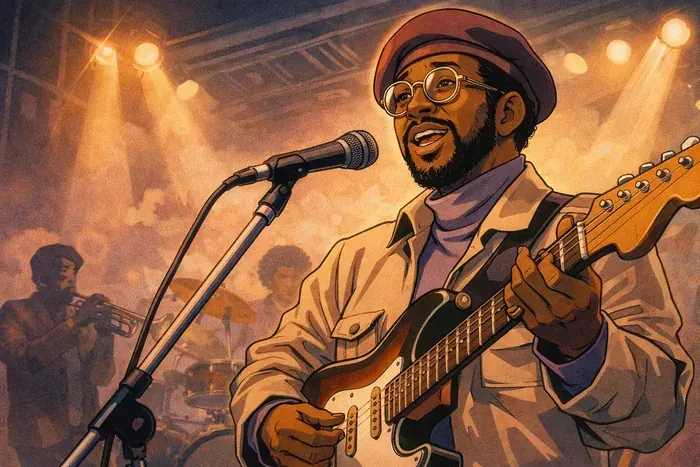
Curtis Mayfield: The Gentle Revolutionary
Curtis Mayfield was one of the defining voices of early-1970s Soul. Before his solo career, he led the Impressions, a group known for smooth harmony and socially aware lyrics. Songs like “People Get Ready” carried spiritual imagery without sounding preachy. The tempo was measured, and Mayfield’s high voice floated above the arrangement with unusual lightness.
As a solo artist, Mayfield pushed this approach further. His 1972 soundtrack for Super Fly did not simply glamorize the film’s world. It commented on it. Mayfield’s voice was never oversized, yet it carried unusual authority. He sang with careful breath support, small dynamic shifts, and a calm insistence that made the message land without shouting.
Mayfield’s falsetto deserves special attention. Unlike the showier high notes heard elsewhere in 1970s Soul, his upper register often felt conversational. He used it to create intimacy, irony, and unease. That contrast between delicate singing and hard rhythmic material later influenced R&B singers who wanted softness without passivity.
His records also show how the album format changed Soul. Themes could develop across multiple tracks instead of being compressed into a single hit. Mayfield used that space to write about poverty, faith, temptation, drugs, aspiration, and survival without reducing them to slogans.
The Gospel influence in his work appears in both structure and sound. Songs often build slowly, adding instruments and harmony until they reach an emotional crest. Even when strings enter or the groove stretches out, the vocal line keeps carrying the argument.
Mayfield’s independence as a writer, producer, and label owner also reflected a broader industry shift toward artist control. Through Curtom, he made clear that voice, message, and business power did not have to be separated.
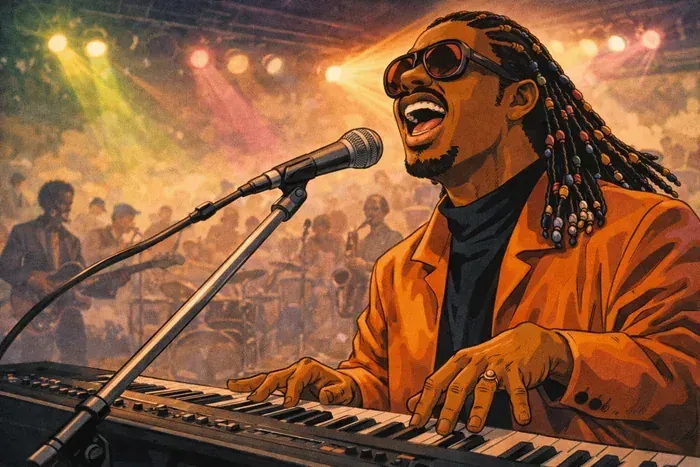
Stevie Wonder: The Genius Who Broke Free
By the early 1970s, Stevie Wonder had already spent more than a decade at Motown. Signed as a child prodigy in the early 1960s, he grew up inside one of the most disciplined hit factories in popular music. What he wanted as an adult was freedom. The result was one of the strongest album runs in modern music.
Beginning with Music of My Mind in 1972 and continuing through Talking Book, Innervisions, Fulfillingness’ First Finale, and Songs in the Key of Life, Wonder changed what Soul could sound like. He embraced synthesizers and studio technology, especially in his work with Malcolm Cecil and Robert Margouleff, but he used them for warmth, tension, and movement rather than novelty alone.
Wonder’s voice stayed central throughout. He moved easily between chest voice and falsetto, shaping melodies with a supple sense of phrase. On “Superstition,” he locks into the groove with almost percussive precision. On “Living for the City,” he turns that same control toward urgency and social indictment. The emotional design remains close to Gospel logic: tension builds in the verse, then the chorus answers with conviction.
These albums broke with the older Motown model because they were not built from a single label formula. Wonder played multiple instruments, shaped the arrangements, and fought for contract terms that gave him real control. That shift changed the balance between artist and label in ways later R&B and pop musicians would study closely.
The album format let Wonder hold joy and criticism together. Songs in the Key of Life, released in 1976, moves from exuberant celebration to reflective balladry to sharp social commentary without losing coherence. Even when the arrangements are dense, the singing stays lucid and human.
Gospel technique still shapes his style. He uses dynamic shift rather than brute volume to create intensity. Harmony answers the lead in ways that recall choir practice. Key changes, stacked voices, and climactic lifts arrive because the song needs them, not because convention demands them.
Stevie Wonder expanded Soul’s vocabulary without abandoning its foundation. He proved that new technology, artistic freedom, and Gospel-shaped feeling could coexist inside the same body of work.
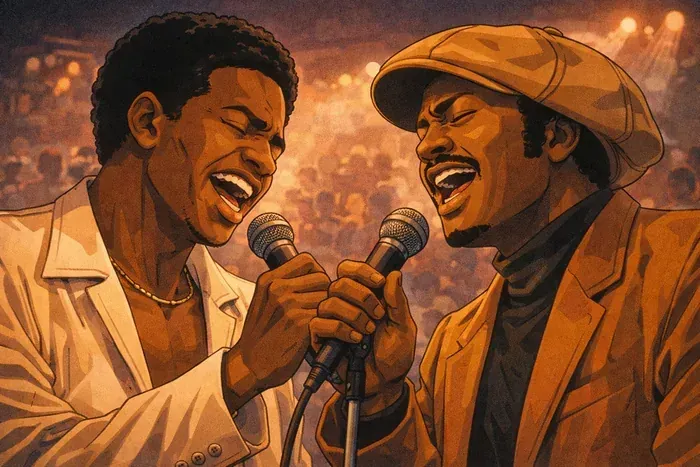
Al Green & Donny Hathaway: Masters of Intimate Soul
As the 1970s continued, Soul became more experimental and more intimate. Two singers in particular changed how vulnerability sounded in popular music: Al Green and Donny Hathaway.
Al Green’s recordings at Hi Records in Memphis, made with producer Willie Mitchell, created a style that was restrained and deeply emotional at once. “Let’s Stay Together” moves on a subtle pulse rather than a heavy attack. Green often reaches for high notes gently, sometimes almost in a whisper, before opening the sound wider. He rarely forces the point. He lets feeling accumulate.
His Gospel roots remained clear. Green grew up singing in church, and even his secular love songs carry a trace of reverence. Small pauses, soft attacks, and close harmony make the listener lean in. The backing vocals often answer him like a subdued congregation.
Donny Hathaway offered a different kind of intimacy. His voice was warm, textured, and heavy with lived experience. In “A Song for You,” he moves from gentleness to intensity without losing the sense of conversation. He does not rush toward the climax. He brings the listener into the room first.
Hathaway’s live recordings show another side of that closeness. The audience becomes part of the performance. Applause, shouts, and spontaneous response fold into the music the way congregational reaction does in church. Even outside a sacred setting, his phrasing keeps that same communal charge.
Both artists show that Soul can be vulnerable without becoming weak. The Gospel blueprint taught singers how to project emotion outward. Green and Hathaway turned some of that projection inward, using breath, tone, and pacing to make quiet intensity do the work. Later R&B ballad singers drew heavily from that lesson.
In the changing world of the 1970s, intimacy became another form of power. These artists showed that Soul did not need full-volume release to move a listener. Church-born emotional depth could survive in a softer frame.
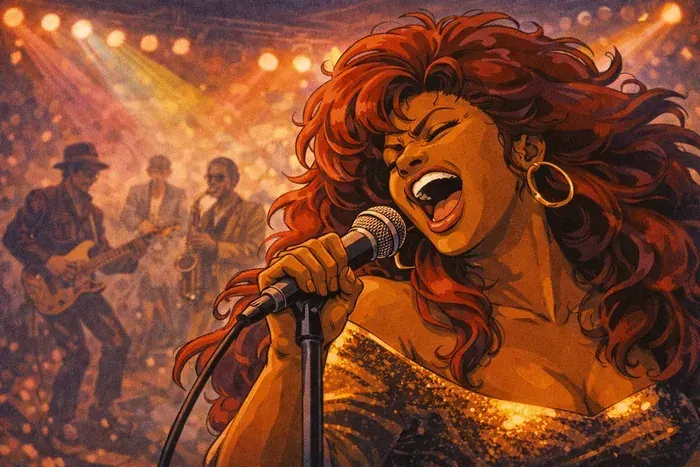
Chaka Khan: The Voice That Commanded Funk
If Al Green and Donny Hathaway made intimacy central, Chaka Khan brought another kind of force to the 1970s. First known as the lead singer of Rufus, she fused funk rhythm with Gospel-trained attack, control, and lift. Her voice announced itself immediately.
Songs like “Tell Me Something Good” and later solo hits such as “I’m Every Woman” show how completely she could command space. Khan moves between funk, Soul, and pop with ease. She bends notes sharply, belts with force, and drops ad-libs that feel spontaneous while remaining technically secure. The church inheritance is clear, but the groove is fully modern.
What makes Khan especially striking is her balance between power and precision. Even at high volume, her pitch center stays secure. She uses vibrato selectively, shapes phrases against the beat, and knows exactly when to widen the sound in the chorus. That discipline lets her move from hard-driving funk to smoother ballads without losing focus.
Khan also changed expectations for women in Soul and funk. She stood at the center of the band, not at its edge. Her authority matched the force of the music around her, and that combination of technique and stage command influenced later R&B singers deeply.
In live performance, she turns the stage into a conversation. She answers instrumental breaks with runs, pushes the band harder, and draws the crowd into the exchange. The structure is still call and response. Only the rhythm has changed.
Chaka Khan shows another dimension of Soul. Earlier artists in this article often turn toward restraint, reflection, or moral weight. Khan turns toward propulsion. The foundation is still the same. Gospel-trained technique lets her sing complex rhythmic material with unusual clarity and force.
By the mid-1970s, Soul had expanded in many different directions. It could be about politics, love, style, or rhythm. The Gospel’s ability to adapt to different situations is shown clearly in Khan’s example. The next phase would put that adaptability to the test again, as new technologies and media platforms reshaped how music traveled and how voices were heard.

The Vocal Toolkit: Sacred Techniques, Secular Stages
Before moving into the 1980s, it helps to pause and listen to the mechanics of the voice itself. Certain techniques recur across Gospel, Soul, R&B, and pop. They are not decorative extras. They are tools for shaping emotion.
One of the clearest is melisma: stretching one syllable across several notes. In church, that device lets a singer stay inside a word and intensify it. Aretha Franklin used melisma to widen emotional space inside a phrase. Whitney Houston later turned it into a highly controlled mainstream art. In the best performances, the run is not decoration. It is argument.
Mariah Carey popularized this technique further in the 1990s, placing intricate runs inside pop songs with unusual exactness. But the lineage is older. These runs are not random bursts of virtuosity. Like church solos, they depend on improvisational instinct, breath control, and tonal clarity.
Ad-libs are another key part of the tradition. In Gospel, singers often add improvisations near the end of a song, introducing new lines or reshaping repeated phrases. That habit continued in Soul and R&B. Many recordings end with added vocal layers around the main melody. Ariana Grande often uses this structure in pop, enlarging the final chorus without losing the song’s central hook.
Harmony stacking also comes from Gospel quartets and choirs. Instead of relying on a single line, singers build chords around the lead. In the studio, that may mean recording the same voice many times to create a choir-like effect. The technique supports the lead while adding depth, and it preserves the old relationship between solo voice and communal answer.
Another central tool is the dynamic crescendo. Many Gospel songs begin in restraint and rise in stages. Soul ballads often follow the same pattern: a controlled opening, a wider chorus, then a final repetition that carries more breath, more tone, and more risk. The structure feels satisfying because it follows a familiar emotional arc.
These tools help explain why Gospel continues to shape modern pop. Production styles change. The vocal architecture remains legible. A close listen to the run, the stacked chorus, the answering harmony, or the final ad-lib often reveals an older church logic still at work.

Why Ballads Became the Main Carrier
When Gospel influence appears across different song types, it becomes most audible in ballads. Slow and mid-tempo settings give singers more room to stretch vowels, delay resolutions, shape crescendos, and let harmonies bloom behind the lead. Ballads make the church grammar easier to hear.
That explains why so many landmark vocal performances in Soul, R&B, and pop are ballads rather than dance records. A fast groove can carry Gospel energy through rhythm, but a ballad reveals phrasing — the details of breath control, tonal shading, and the gradual opening of the emotional arc become audible.
This does not mean Gospel influence belongs only to slow songs. Funk, uptempo R&B, and minimalist pop still use its habits. But ballads became the main carrier because they highlight what church-trained singers knew best: sustained tone, narrative pacing, call-and-response support, and the release that comes when a held-back voice finally opens.

The 1980s: When R&B Conquered the World
The 1980s brought new technology, new media systems, and new expectations for performance. Synthesizers, drum machines, digital multitracking, and music television changed the scale of pop. R&B did not merely adapt to that environment. It often led it.
Gospel-derived vocal technique remained central. What changed was the frame around it. Arrangements became more electronic, more layered, and more image-conscious. Artists could reach global audiences faster than before, but the voice still had to cut through polished production and televised spectacle without losing human presence.
This decade produced singers who reset standards for control, clarity, and crossover. Some specialized in grand balladry. Others worked through rhythm, layering, and choreography. Together, they made pop-R&B feel global while keeping it tied to deeper Gospel roots.
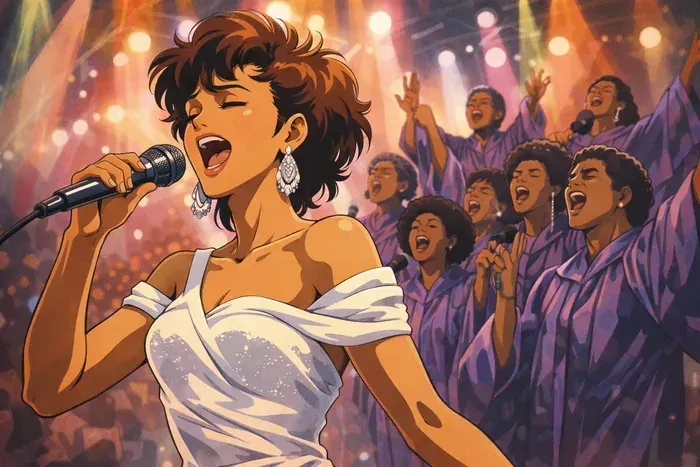
Whitney Houston: The Voice That Defined a Generation
Whitney Houston entered the 1980s with a voice that sounded effortless and expansive. She grew up in a church-centered musical family that included Cissy Houston and Dionne Warwick, and that background gave her early training in blend, breath control, and tonal clarity. Those skills later let her become a mainstream star without losing Gospel-bred discipline.
Her 1985 debut album combined R&B warmth with a polished pop frame. Songs like “Saving All My Love for You” showed how long she could sustain a line without audible strain. She shaped each phrase carefully, building toward emotional peaks in measured stages. The arrangements left her room, and Clive Davis understood that the voice had to stay at the center of the record.
Houston’s technique combined power with precision. She moved easily between soft verses and full choruses. In “Greatest Love of All,” the performance unfolds in stages. Each repetition grows slightly stronger, so the final lines feel triumphant because the build has been carefully paced.
Her 1992 version of “I Will Always Love You” is a strong example of Gospel technique inside pop. The opening a cappella lines reflect church discipline. When the full arrangement enters, her voice grows in intensity without losing clarity. The controlled vibrato and carefully placed melismas show mastery rather than excess.
Houston’s impact extended far beyond her own catalog. Young singers in church choirs, talent shows, conservatories, and commercial pop settings studied her phrasing, support, and control. Her ballads helped define what many listeners came to mean by a modern “big voice” performance.
At the same time, her career shows the pressure attached to global fame. She faced intense expectations about success, image, and crossover identity. Musically, however, her work proved that Gospel-rooted singing could thrive inside polished pop production without losing emotional credibility.
Houston became an international benchmark not by breaking with tradition, but by carrying it forward with unusual clarity and control. Her voice connected church, studio, film, and arena in one continuous line.

Janet Jackson: Precision, Rhythm, and Control
If Whitney Houston took one path through 1980s pop-R&B, Janet Jackson took another. Her breakthrough came with the 1986 album Control, which reset her career and expanded her artistic authority. Working closely with Jimmy Jam and Terry Lewis, she built a sound shaped by drum machines, synthesizers, and sharp rhythmic structure. The voice remained central, but it now interacted with rhythm in a new way.
Jackson’s voice was not oversized, and that is precisely the point. She used precision, timing, and phrasing as primary tools. In “What Have You Done for Me Lately,” she places syllables cleanly against the beat, creating tension through rhythm rather than sheer force. That discipline echoes church training, where composure matters as much as feeling.
Rhythm Nation 1814, released in 1989, widened her thematic range. The album moved between social critique and personal narrative without losing sonic coherence. On tracks like “Rhythm Nation,” her voice does not fight the arrangement. It controls the space by living inside the rhythm with absolute intent.
Her layered background vocals also show a deep understanding of Gospel harmony. Multiple tracks create depth without clutter. The lead and backing lines interact like choir parts, but inside an electronic production frame. This approach later became common in R&B and pop.
Jackson’s performances also depended on demanding choreography. Singing while dancing required strong control of breath and body. The Gospel-trained ability to project clearly under pressure proved invaluable. Even in high-energy sections, her voice remained steady.
Beyond technique, Jackson’s career marked a change in artistic freedom. Control was not just an album title. It was a statement of authorship. The clarity in her voice matched the clarity of that message.
Janet Jackson showed that rhythm and subtlety can be just as impactful as vocal power. The Gospel blueprint is adapted once again, this time to electronic textures and visual spectacle. The voice stayed expressive, but its authority came from precision and groove rather than sheer volume.

Anita Baker: Quiet Storm's Defining Voice
While some 1980s R&B pushed bold production and choreography, Anita Baker moved in another direction. Her records were restrained, plush, and deeply felt. The arrangements often rested on soft keyboards, muted rhythm sections, and patient pacing.
Baker’s 1986 album Rapture made her widely known. Songs like “Sweet Love” unfold slowly. She starts with a soft, conversational tone. As the arrangement expands, her vibrato widens and the breath line lengthens. The emotional build is patient rather than sudden. The result is intimacy rather than spectacle.
Her Gospel background is clear in her control. She can hold a note without strain. She knows when to give others space. In church, silence can make the meaning stronger. Baker uses that idea in her secular ballads. Pausing before the final line can make it sound as powerful as a sustained high note.
The Quiet Storm radio format fit her perfectly. Late-night playlists favored slower tempos and a calmer emotional weather, and Baker’s records flourished there. But her importance was larger than format. Her precise phrasing influenced later R&B singers who wanted deep feeling without vocal excess.
Some of her contemporaries favored long, intricate runs. Baker preferred compression. She made meaning through small melodic changes, breath placement, and timing. That approach required confidence. It trusted the song’s structure to carry the feeling. The Gospel blueprint remained present, even when the release stayed quiet.
Her success demonstrated that R&B does not require high energy to be effective. The voice did not need to compete with the production. It could sit inside it. That lesson continued through the 1990s ballad tradition into modern R&B slow jams.
Anita Baker helped make mainstream R&B more inward. The sacred tradition taught singers how to release emotion outward. Baker showed how to draw a listener closer instead, using pacing and tone to build a quiet, resonant kind of intensity.

Sade: Soul's Sophisticated Global Voice
As R&B gained more visibility on American radio and television in the 1980s, related sounds also gained prominence in the United Kingdom. Sade brought a distinctive blend of Soul, jazz, and understated pop. Her work showed that Gospel-shaped vocal logic could survive in a restrained, internationally legible form.
Sade Adu’s voice is not loud, but it is unmistakably centered. On Diamond Life, released in 1984, songs like “Smooth Operator” move with controlled elegance. The rhythm section is firm, the arrangement spacious, and her phrasing sits slightly behind the beat in ways that create poise rather than drag.
Although her style can look minimalist on the surface, it still rests on Gospel-linked principles: clear note placement, breath-led line shaping, and an expressive build that never needs to become theatrical. The emotional weight sits in tone, not decoration.
Sade’s transnational profile also broadened what Soul and R&B could mean commercially. Her band blended British pop sensibility with American Soul and jazz inflection. The result felt global while staying rooted in a specific London scene.
Her success showed that Gospel-shaped technique was not confined to one national or religious context. The careful build, the measured phrasing, and the relation between lead voice and subtle backing harmony all remained legible even as the production frame changed.
Later artists learned a great deal from that steadiness. Sade showed that vocal authority does not always arrive through loudness. Sometimes it arrives through calm control. Her records helped R&B travel more widely without flattening its emotional depth.
By the end of the 1980s, the voice shaped by Gospel tradition had proved remarkably flexible. It could anchor grand ballads, rhythmic pop, late-night intimacy, or international jazz-inflected arrangements. The next decade would test that flexibility again as hip-hop rhythms and new production methods reshaped the landscape.
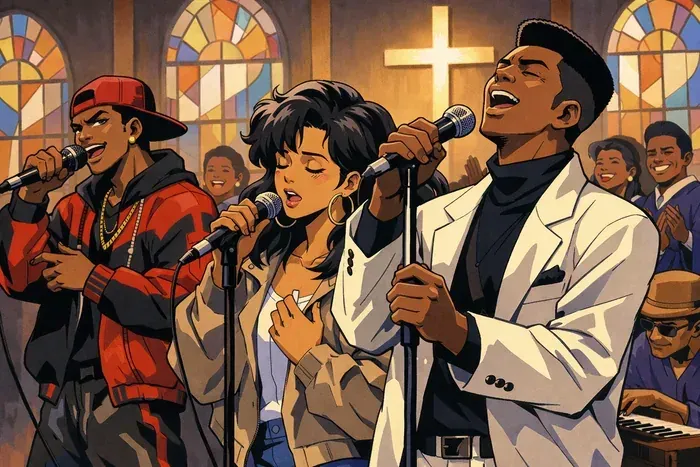
Neo-Soul & Hip-Hop Soul: The Gospel Returns
As the 1990s progressed, R&B entered another period of change. Digital production and a broader commercial reach had expanded the genre, but many listeners wanted more texture, more inwardness, and a stronger link to Black musical memory. Hip-hop had become a dominant cultural force, shaping rhythm, language, and attitude. Out of that moment came hip-hop soul and neo-soul.
These styles did not reject the 1980s. They corrected its balance. Drum machines and samples still mattered, but live instruments, rougher textures, and deeper harmony returned with new purpose. The lyrics became more personal and reflective. The Gospel inheritance, always present, became easier to hear again.
Singers in this era were often more open about personal experience, self-definition, and contradiction. They embraced textures that felt human rather than polished out of the mix. The voice could sound rough, close, layered, and unfinished in productive ways. The artists below reshaped R&B by reconnecting it to spiritual and communal roots while fully engaging modern rhythm and modern Black culture.

Mary J. Blige: The Queen of Hip-Hop Soul
Mary J. Blige is one of the defining singers of hip-hop soul. Her early 1990s work, especially What’s the 411?, combined hard rhythmic tracks with Gospel-shaped singing. The production, led by Sean “Puff Daddy” Combs and others, drew heavily on hip-hop beats and sampling. Over that foundation, Blige sang with a voice clearly informed by church tradition.
Her phrasing feels direct and honest. She often leaves rough edges. That honesty is what makes her style stand out. In songs like “Real Love,” the rhythm is steady. Blige sings with conviction, stretching her notes at emotional high points. The balance between tight rhythms and freedom in expression reflects the dual influence of hip-hop and Gospel music.
Blige’s lyrics also changed the sound of mainstream R&B. Instead of presenting a perfect love story, she spoke openly about hard times, heartbreak, and feeling unsure of herself. Her performance is urgent but not exaggerated. When she speaks, it sounds like she means it. When she softens it, the vulnerability feels real.
The Gospel blueprint is clear in the harmonies she uses. Even in songs with a lot of background vocals, the lead singer’s voice stands out. The call-and-response dynamic is still there, but it’s been translated into a studio setting. At live performances, Blige often sings long passages, reminding listeners of her church background.
Her impact goes beyond technique. Blige helped create a space where hip-hop culture and R&B singing could coexist naturally rather than as a crossover experiment. Beat and voice strengthened each other. That integration shaped many artists who followed.
Mary J. Blige helped return R&B to textured confession. The smoother surfaces of the 1980s gave way to rougher edges, clearer hurt, and a voice that did not pretend to have itself fully together. Gospel inheritance was not just decoration in her work. It was grounding.

Lauryn Hill: Soul's Independent Voice
Lauryn Hill brought together sharp lyric writing and Gospel-shaped singing in a way that felt singular in the late 1990s. As a member of the Fugees, she had already shown that singing and rapping could belong to the same voice. Her 1998 solo album, The Miseducation of Lauryn Hill, turned inward while holding on to public and spiritual stakes.
Hill’s vocal style clearly reflects her church background. She uses breath to shape long arcs rather than isolated moments. In “Ex-Factor,” she sounds personal without sounding fragile. The melody rises in controlled waves, and the backing harmonies carry a Gospel weight even when the setting is fully modern.
Her lyrics move through love, faith, motherhood, betrayal, self-respect, and identity without treating those subjects as separate compartments. When she reaches higher notes, the sound is urgent rather than flashy. Each rise in the line belongs to the story.
The Miseducation of Lauryn Hill mixes live instruments, hip-hop rhythm, and warm harmony in a way that still feels unusually coherent. Hill often works from the middle register, which keeps the vocal presence grounded even when the songs widen emotionally. That balance shows how Gospel-rooted expression can live inside contemporary production without feeling pasted on.
Hill’s approach also emphasized authorship. She shaped the songwriting, the sequencing, and the point of view strongly enough that the album feels unified from start to finish. She showed that R&B could be intellectually serious, spiritually alert, and widely accessible at the same time.
Her influence on later R&B and pop is enormous. Artists who combine autobiography, Gospel-shaped phrasing, and lyrical exactness still work in terrain she helped define. In her best performances, technical control and emotional honesty strengthen each other.
Lauryn Hill helped re-center Gospel-rooted expression in R&B. The voice became a tool for emotional truth, critique, and self-definition.

D’Angelo: The Organic Soul Renaissance
D’Angelo emerged in the mid-1990s as one of neo-soul’s central figures. His 1995 debut, Brown Sugar, combined the warmth of 1970s Soul with a contemporary rhythmic sensibility. Live drums, bass, and electric piano softened the colder edge of digital R&B. The result felt intimate, loose, and deeply worked.
D’Angelo’s voice has a relaxed, conversational quality. He often sings slightly behind the beat, which gives the line elasticity rather than sloppiness. That phrasing recalls Gospel practice, where delay can deepen emotional effect. In the studio, the melody often feels as if it is unfolding at the moment of performance.
Voodoo, released in 2000, pushed this approach further. Tracks like “Untitled (How Does It Feel)” move with almost stubborn patience. The layered voices create a soft choir effect, and the harmonies remain legibly Gospel-derived even when the emotional charge is sensual rather than explicitly spiritual.
D’Angelo’s musicianship matters as much as his singing. He worked closely with live players, building arrangements that feel collective rather than grid-locked. That group interplay resembles church music, where singers and musicians react to one another in the moment, even when the final result is a studio record.
The organic turn he helped lead was not simple nostalgia. It was a deliberate effort to restore warmth, looseness, and human timing to R&B. Small timing variations became part of the expressive feel rather than errors to be cleaned away.
Later artists who favor groove, atmosphere, and live-feeling ensemble work owe him a great deal. Through D’Angelo, neo-soul reminded listeners that R&B’s roots run through body, rhythm, breath, and layered vocal feeling.
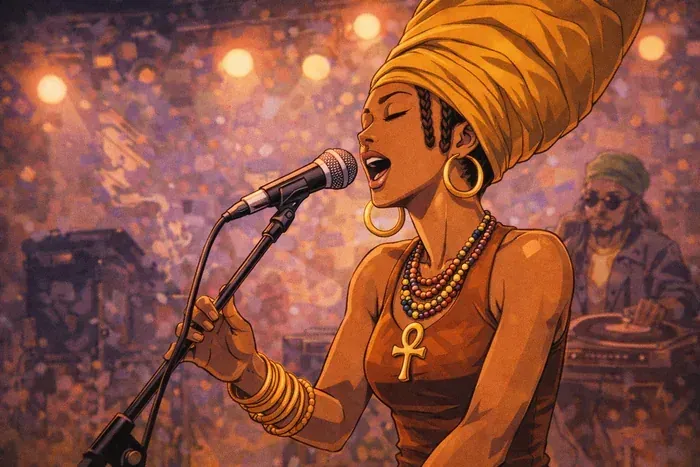
Erykah Badu: The High Priestess of Neo-Soul
Erykah Badu arrived in the late 1990s with a calm but unmistakable presence. Her 1997 debut, Baduizm, helped define neo-soul not by volume, but by atmosphere and point of view. The production used warm, live-sounding texture, and the voice remained the anchor.
Badu’s phrasing often feels conversational. She lets syllables stretch gently and sometimes places them just behind the beat. That relaxed timing recalls Gospel practice, where singers may bend tempo slightly to deepen expression. In “On & On,” she moves through the melody with ease, as if the line is being discovered in real time.
Her tone is low, slightly husky, and immediately recognizable. She rarely chases dramatic climax. Instead, she sustains mood and lets thought accumulate inside the phrase. The quiet choral harmonies behind her increase the music’s depth without changing its surface temperature.
Badu’s lyrics widened the conversation around neo-soul. She sang about spirituality, self-knowledge, responsibility, lineage, and social awareness without flattening those ideas into slogans. The calmness of her delivery is part of the point.
Visually and stylistically, Badu embraced imagery connected to the Afrocentric identity and artistic independence movement. Her stage presence feels ritualistic at times, linking her performance to a sense of cultural continuity. The voice is both an instrument and a statement.
Erykah Badu pushed neo-soul into a richer cultural space. It became a site of identity work as well as musical revival. The Gospel inheritance remains audible in her phrasing, harmony, and pacing even as the music absorbs spoken-word cadence, hip-hop rhythm, and Afrocentric symbolism.
Her influence is clear in later artists who value atmosphere and introspection. By remaining calm while sounding deeply centered, Badu showed that R&B could change without losing its spiritual charge. Her recordings blend older and newer vocabularies in a way that makes tradition feel generative rather than fixed.

Maxwell: Romance in Slow Motion
Maxwell entered the neo-soul movement with a smooth but deliberate voice. His 1996 debut, Maxwell’s Urban Hang Suite, arrived quietly by major-label standards. The music favored mood over display, and the arrangements left room for the voice to do subtle emotional work.
Maxwell’s tenor moves gently across melodies. He favors soft high notes and gradual dynamic shifts. In songs like “Ascension (Don’t Ever Wonder),” his delivery glides across the rhythm section with ease. The Gospel influence appears in his breath support and in the way he lets intensity arrive gradually rather than forcing it.
One of Maxwell’s clearest traits is patience. Many songs on the album move at a pace that invites close listening. The vocal line never races ahead of the arrangement. That pacing recalls church traditions in which songs evolve according to feeling rather than clock time.
His later work, including BLACKsummers’night, continued this approach while absorbing more contemporary production. Even as the sonic frame changed, the vocal center remained recognizable. The quiet choral effect in the harmonies still points back to Gospel.
Maxwell’s gift for holding back matters in a genre full of overt technique. He shows that emotional clarity does not need constant embellishment. One carefully placed note can say more than a cascade of runs.
Maxwell showed that neo-soul could be emotionally intimate and technically exact at the same time. His recordings keep the voice in the center, with the instruments arranged around it rather than piled on top of it.
As the 1990s were ending, neo-soul and hip-hop soul brought depth and organic texture back to R&B. The Gospel inheritance felt present once more, not as nostalgia but as a living structure. The next phase would look at harmony itself, examining how vocal groups carried these traditions across decades and into the modern studio.

Harmony as Architecture: The Choir Within the Group
Solo voices often get the credit, but harmony has always been foundational to Soul and R&B. Before studio layering became common, Gospel quartets built songs from clearly defined parts. One voice led. Others answered. The tension between individuality and unity gave the music much of its force.
That framework moved into 1960s Soul groups, 1990s R&B quartets, and eventually modern pop production. Even when an artist records alone, the background vocals often recreate a small choir. Harmony is not decorative here. It is architecture.
The next examples show how different groups carried that logic forward under different production conditions. From classic Soul to digital-era pop, harmony remains one of the clearest places where church practice survives in commercial music.
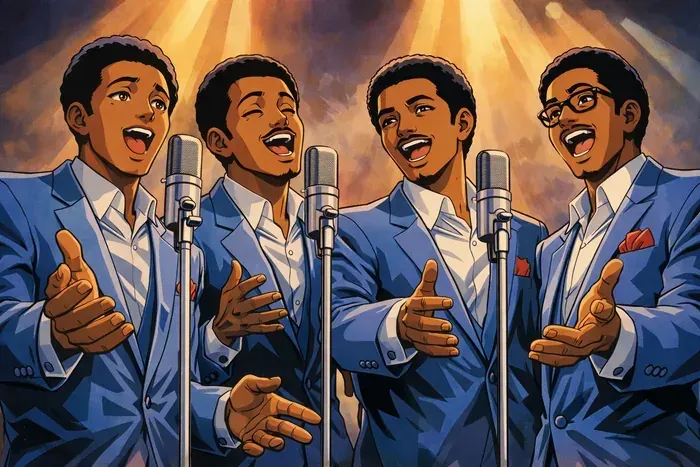
The Temptations: Harmony Perfected
The Temptations show how Gospel-quartet principles shaped 1960s Soul. They came out of Motown’s disciplined system and paired choreographed movement with carefully arranged vocals. Under the polish, the structure is older: a lead steps forward and the group answers.
In songs like “My Girl,” David Ruffin’s lead works against a harmony layout that still resembles Gospel quartet practice. The bass voice keeps the chord grounded. Tenors add brightness and lift. Each part has a defined job, which is why the arrangement feels so balanced.
The Temptations also benefited from multiple strong lead voices, and that created contrast inside unity. Gospel ensembles often rotate soloists for exactly this reason. A change in voice changes the emotional color of the song without breaking the group.
As the 1960s went on, the group moved into broader themes. “Papa Was a Rollin’ Stone” used longer instrumental passages and more serious subject matter. Even in these more expansive arrangements, harmony remained central. The layered vocals built tension slowly and made the emotional argument more persuasive.
Studio production made these sounds louder and clearer. Multi-track recording made the harmonies sound fuller than they would have in a live performance. But the logic behind them was still based on the quartet structure. Each voice entered with purpose, responding to the lead rather than competing with it.
The Temptations showed how Gospel-derived group logic could thrive inside mainstream entertainment. Harmony let them move across subjects and production styles without losing coherence. Their influence remains audible in later R&B and pop acts built around carefully arranged backing vocals.

Boyz II Men: The Harmony Kings of the 90s
In the early 1990s, Boyz II Men brought quartet-based harmony back to the center of mainstream R&B. Their ballads sounded contemporary, but the structure underneath them was much older.
“End of the Road” and “I’ll Make Love to You” show the design clearly. One singer carries the lead while the others support, answer, and deepen the chord. The bass voice grounds the harmony the way it did in older Gospel groups, and the upper voices move with unusual smoothness.
Boyz II Men updated the format through studio layering. Multitrack recording let each part be captured with near-perfect precision and blended into a rich whole. But the emotional arc remained familiar: restraint in the verse, widening in the chorus, then ad-libs and repetition in the final release.
Their phrasing makes it easy to understand. They rarely add too many extra notes to the melody. When runs appear, they feel intentional. The balance between technical control and heartfelt delivery connects directly to Gospel training, even though the lyrics focus on romantic themes.
The group’s success in the 1990s showed that harmony-rich R&B could dominate pop radio without losing its soulful core. Their performances reached large audiences because the emotion felt both polished and sincere.
Boyz II Men also influenced later studio practice. Many modern R&B singers build tracks by stacking their own vocals until one singer can simulate a full group. The technology is new. The logic is not.
Boyz II Men combined tradition and innovation in their music. They kept the basic structure of Gospel singing while also using modern digital recording techniques. The sacred blueprint continued to shape popular music, now amplified by studio precision and global distribution.

Destiny’s Child: Harmony for the Digital Age
By the late 1990s, R&B was shifting again, and Destiny’s Child became central to that change. Their music combined assertive harmony with production shaped by hip-hop rhythm and pop structure. The sound was polished, but the underlying group logic still came from Gospel and Soul practice.
What made Destiny’s Child stand out was clarity of function. Lead lines and support lines were arranged sharply rather than blurred together. In “Say My Name,” the background parts almost behave like percussion, creating rhythmic tension around the lead. That is close to call-and-response logic translated into late-1990s studio pop.
Studio layering let the group create dense vocal textures without muddying the song. Multiple takes, tightly arranged harmonies, and rhythmic backing parts created a choral effect that still left the lead clear.
Beyoncé’s role in the group also shows how Gospel-informed technique adapted to contemporary pop. Her phrasing combines precise runs with rhythmic control, while the other members reinforce the lead rather than competing with it. That division of labor is part of why the group sounded so sharp.
Destiny’s Child also made group identity part of the performance. Their songs projected certainty, self-protection, and control. The strength in the vocal delivery matched the lyrical stance.
Their influence remains obvious in modern pop and R&B. Many solo artists now stack their own voices to create a group effect, preserving the dynamics of harmony-based R&B even when only one name is on the cover.
The architecture of harmony went fully digital with Destiny’s Child, but it didn’t lose its roots. The sacred blueprint remained present beneath the polished production and chart success. Harmony worked as background and as the main structure that held melody and emotion together.
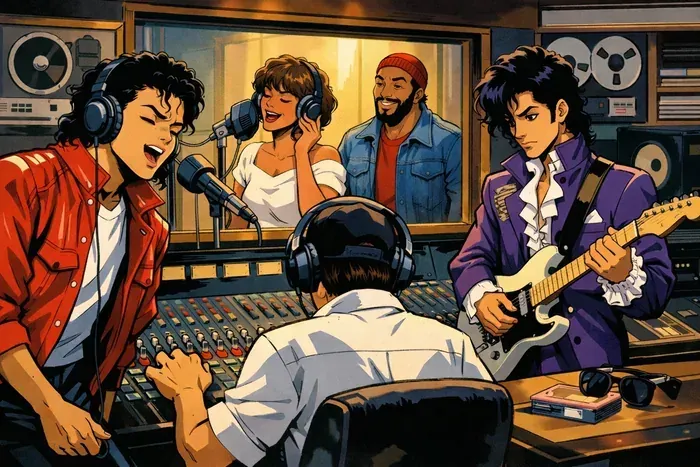
The Producer Map: Shaping the Sound of Soul
Every major voice in Soul and R&B depends partly on the environment around it, and producers help build that environment. They do not replace the singer, but they strongly shape how the singer is heard. From the 1970s onward, certain producers became architects of the modern vocal frame.
Quincy Jones offered one version of large-scale vision. Though often associated with pop and jazz as well as R&B, his work showed how detailed arrangements could elevate a voice without overwhelming it. He understood balance, leaving space for phrasing while expanding the background through orchestration. The singer stayed in the center, but the world around the singer grew larger.
In the 1980s, Jimmy Jam and Terry Lewis built a different frame. Working closely with Janet Jackson and others, they created rhythmic structures that demanded clean, disciplined singing inside synthetic textures. The singer had to lock to the groove without sounding mechanical.
Babyface became central in the late 1980s and 1990s through warm chord progressions, melodic clarity, and an unusual sensitivity to vulnerability. Artists such as Toni Braxton and Boyz II Men benefited from his ability to leave space for small tonal changes to register emotionally.
Timbaland introduced a new level of rhythmic complexity in the late 1990s and early 2000s. His stripped-down but syncopated beats forced singers to adapt their timing and phrase shapes in new ways.
Pharrell Williams and the Neptunes favored minimalism and open space. That sparseness let voices try different tones, cadences, and rhythmic placements. Singer and beat often sound less like stacked layers than like a conversation.
Over time, producers shaped the sound and public expectations. They helped decide how climaxes were built, how harmonies were layered, and how much imperfection remained in the final take. Yet even as technology changed, one standard stayed constant: the voice still had to feel believable.
This producer map shows how Gospel architecture changes shape without disappearing. Whether the frame is orchestral, digital, sparse, or densely layered, breath control, dynamic build, and harmony still guide the performance. Producers reshape the room. The singer still has to carry the story.

Background Singers and Session Vocalists
Star narratives can make this history look more individual than it really is. Behind many of the most famous lead vocals stood background singers, session vocalists, choir arrangers, and section leaders who carried Gospel practice directly into commercial recording. Their work shaped blend, response lines, dynamic lift, and the choral feeling that turns a solo record into a larger emotional event.
That is true across eras. The Andantes at Motown, studio choirs behind major Soul and R&B sessions, and later multi-tracked background arrangements in pop all kept alive a Gospel idea of collective support. Even when one name appeared on the sleeve, the record often depended on a miniature congregation built in the studio. The lead voice testified, but the surrounding voices confirmed, intensified, and answered.
This matters because Gospel influence often survives most clearly in the parts casual listeners treat as secondary. A stacked refrain, a shouted response, a held chord behind the lead, or a final round of ad-libs can carry as much historical memory as the main melody. To hear the full lineage, listen to the star in front and to the voices around them.

The 2000s: R&B's Global Reinvention
In the early 2000s, R&B changed in both scale and visibility. It no longer had to fight for access to pop. It was already at the top of charts around the world. Artists moved between radio, film, fashion, and digital platforms with increasing ease. The voice remained central, but the surrounding landscape grew more complex.
The production styles blended hip-hop rhythms, electronic textures, and layered harmonies. Confession became a central theme. Singers openly discussed relationships, self-worth, ambition, and doubt. The Gospel inheritance was expressed not through religious language, but through strong emotions and the way they were expressed.
This era produced performers who balanced technical skill with cultural influence. They influenced music and public conversation. Their recordings traveled across continents, helped by new digital platforms. This helped R&B go global while keeping its original power.

Beyoncé: The Auteur of Modern Vocal Pop
Beyoncé began the 2000s as a member of Destiny’s Child and quickly redefined what solo R&B stardom could look like. Her 2003 debut, Dangerously in Love, showed rhythmic command, stamina, and a clear instinct for scale. “Crazy in Love” pushed drive and timing to the front. Ballads such as “Dangerously in Love 2” showed how fully she could sustain a line and build a layered chorus.
Beyoncé’s singing still carries clear Gospel training. She tends to build intensity in stages rather than spending everything at once. Verses stay controlled and sharply articulated. As the chorus widens, she adds runs, lifts, and ad-libs that sound earned rather than decorative.
As her career developed, the subject matter widened. Lemonade, released in 2016, joined personal narrative to Black historical memory, Southern imagery, and political reflection. The production shifts sharply from track to track, but the vocal throughline remains coherent.
Beyoncé also turned the visual album into a major pop form. Even in that multimedia frame, the voice stayed central. Her layering techniques grew more intricate, and the backing vocals often function like a studio choir, extending a Gospel ensemble logic into digital cinema and arena pop.
Her live performances make that continuity clear. Even with choreography and large-scale staging, she stays centered in pitch and dynamic control. Extended improvisational passages, familiar from church practice, are adapted here for arena scale.
Beyond technique, her career is also a story about control. She took unusual command over release strategy, presentation, and authorship at a level few mainstream pop stars had previously managed.
Beyoncé helped bring Gospel-derived vocal method into a new era of authorship and global reach. The blueprint did not disappear. The stage expanded, and so did the conversation around identity and control.

Alicia Keys: When the Voice Plays the Piano
While some 2000s artists leaned harder into polish and spectacle, Alicia Keys arrived framed as a singer-pianist-songwriter. Songs in A Minor made that identity central from the start. That mattered because it linked her to an older Soul tradition in which the singer also helped shape the harmonic and structural world of the song.
Keys’ voice is warm, grainy, and slightly rough at the edges. She often begins phrases gently and lets them widen as the lyric deepens. In “Fallin’,” the verses stay measured, and the chorus opens gradually. The arc closely resembles Gospel tension and release.
Her piano playing supports that structure rather than competing with it. The harmony gives the voice emotional footing, and the arrangement usually leaves enough air around the lead to keep phrasing audible. Keys’ records tend to favor tonal depth over overt vocal stunt work.
The Gospel influence can be heard in her ad-libs and the way she harmonizes with herself. The background vocals enter quietly and strengthen key moments without distracting from the lead. She sometimes adds gentle runs, but never in a way that feels excessive. The focus stays on emotional clarity.
Keys also helped normalize a reflective kind of strength in 2000s R&B. Songs like “If I Ain’t Got You” treat ambition, value, and love as linked subjects. Even when she opens the sound, the tone stays centered rather than theatrical.
When Keys performs live, she often reduces the arrangement to piano and voice. That choice shows trust in the material. With less production around it, the Gospel-shaped technique becomes easier to hear through breath control and phrasing.
Alicia Keys represents a 2000s R&B lane built around musicianship, composition, and vocal clarity. In her work, the sacred blueprint is not announced loudly. It appears through structure, restraint, and emotional control.
Usher: Vulnerability as Performance
Usher became one of the defining male singers of 2000s R&B. Confessions, released in 2004, was a commercial phenomenon, but its importance was not only numerical. It showed how a Gospel-shaped emotional arc could thrive inside highly polished pop-R&B.
Usher’s vocal style blends control with expressiveness. In songs like “Burn,” he begins in a gentle, almost conversational tone. As the track continues, the sound opens, especially in the chorus. The structure follows a familiar church-shaped arc in which repetition intensifies emotion over time.
Usher’s approach differs from earlier male Soul models built around long belts. He leans harder on rhythmic phrasing. Syllables land precisely against the beat, showing how deeply hip-hop changed R&B timing. But the flexibility in the runs and ad-libs still points back to Gospel training.
Confessions also helped shift mainstream R&B toward more autobiographical storytelling. The album’s themes of regret, accountability, temptation, and emotional contradiction felt messier and more exposed than the genre’s smoother surfaces often allowed.
During this time, songs often had many layers of harmony and backup vocals sung in a stacked arrangement. Usher’s recordings use these techniques in a careful way. The background lines support the melody while keeping it clear. The lead stays separate, with enough space around it.
He also brought strong stage presence to the material. Choreography was a central part of his performance style, and keeping the voice steady under physical strain required discipline. That pressure-tested control has clear parallels with Gospel performance.
Usher showed that R&B can be both emotional and commercial. The Gospel tradition has been adapted to a culture of celebrity and spectacle without losing its fundamental structure. The voice was still the most important part, helping listeners connect with personal stories in a global pop sound.

Rihanna: Caribbean Rhythm in Global Pop
Rihanna emerged in the mid-2000s with music that pulled Caribbean rhythm into the center of mainstream pop-R&B. Born in Barbados, she expanded the rhythmic palette of global pop at precisely the moment crossover categories were loosening.
On albums such as Good Girl Gone Bad, she balanced sharp rhythmic attack with melodic economy. In “Umbrella,” the vocal line does not overpower the beat. It rides it. The chorus grows stronger through repetition and placement rather than through large, dramatic belts.
As her career developed, the voice became richer and more flexible. Songs like “Take a Bow” and “Stay” reveal a quieter, more exposed side of her singing. In those ballads, the Gospel blueprint becomes easier to hear in her pacing, word choice, and measured build.
Her work also reflects the increasing globalization of R&B. Caribbean rhythm, hip-hop beats, and electronic textures meet without weakening the vocal center. The layered harmonies and call-and-response echoes remain, but they now operate inside new rhythmic contexts.
Rihanna’s impact also lies in how fluidly she moved across music, fashion, film, and business without giving up musical identity. Her voice is not built on constant high-force belting, but on adaptability, timbre, and instinctive phrasing.
In live performances, she often balances dance moves with long stretches of singing, showing that she has a strong voice. Even when there’s a lot of activity in the production, the vocal line remains clear.
Rihanna showed that modern R&B can take in influences from around the world while still staying true to its roots. The sacred architecture underlying Soul continues to resonate, even when the rhythm shifts toward Caribbean grooves and modern pop minimalism. The voice changes its tone while keeping the same foundation.
Alternative R&B: When Less Became More
By the early 2010s, R&B was changing again. Mixtape culture, blogs, streaming platforms, and home-studio production all altered how songs circulated. Production became sparser in some places and more atmospheric in others. The voice no longer had to arrive as a belt. It could be a whisper, a fragment, a falsetto drift, or a close-miked murmur.
Alternative R&B did not reject tradition. It reduced and rearranged it. Gospel ideas remained present in pacing, lift, and emotional timing, but they became harder to spot at first listen. Feeling shifted from open display to inward pressure.
These artists changed R&B by removing obvious excess and building atmosphere instead. The result shows that sacred vocal logic can survive inside sparse, digitally built spaces. The structure remains. The room gets quieter.

Frank Ocean: Intimacy in the Streaming Age
Frank Ocean emerged in the early 2010s with music that mixed R&B, indie texture, and close attention to writing. Channel Orange, released in 2012, presented a voice that was restrained on the surface but emotionally exacting underneath.
In songs like “Thinkin Bout You,” he effortlessly transitions between high and low notes. The transitions feel natural, not forced. The Gospel influence is clear in his dynamic awareness. He builds up intensity slowly, often letting a note last a little bit longer than expected before resolving it. This kind of patience creates emotional tension without showing it.
Ocean’s later album Blonde pushed minimalism further. Sparse arrangements and ambient textures place the voice in an almost isolated space. Harmonic support appears and disappears quickly. Even so, the pacing still recalls church logic: verses unfold quietly, and emotional revelation arrives with restraint rather than shock.
His storytelling also widened what mainstream-adjacent R&B could address directly. Ocean writes openly about identity, desire, memory, status, and vulnerability. The calm delivery often sounds self-protective, which is part of its emotional power.
The production choices make that connection clearer. Reverb, ambient space, and selective layering create atmosphere without swallowing the lead. Even when electronic elements appear, they usually work as frame rather than interruption.
Frank Ocean’s work shows how Gospel-rooted vocal logic can work in subtler settings. Breath control, tonal variation, and gradual dynamics still matter. They operate at a lower volume.
Ocean showed that you don’t need to scream or shout to be emotional. The sacred blueprint continues, changing to fit listeners who enjoy music through headphones and streaming playlists instead of big concert venues.

The Weeknd: The Dark Side of Soul
The Weeknd first gained wide attention in the early 2010s with a sound that felt familiar and unsettling at once. The early mixtapes later collected as Trilogy introduced a moody, atmospheric R&B built from slow tempos, echoing synthesizers, and stark emotional contrast.
The Weeknd’s voice often sits high, which gives the line a fragile sheen. Older Gospel habits are still audible in the stretched syllables and delayed release points, but he rarely turns them into overt display. Tension builds through repetition, layering, and small variation.
His lyrics move through excess, isolation, and desire. The contrast between dark subject matter and smooth vocal tone creates tension. The structure remains familiar: verses stay controlled, choruses open slightly wider, and layered harmonies support the melody without turning it into a shout.
As his career moved deeper into mainstream pop with albums like Beauty Behind the Madness and After Hours, the production grew larger and more radio-facing. Even in songs like “Blinding Lights,” his voice retains that Gospel-shaped discipline. The release comes from a measured build rather than a sudden explosion.
The Weeknd’s approach shows how R&B can succeed with darker tones. The sacred blueprint doesn’t need bright instruments. It adapts to the atmosphere. The call-and-response pattern is expressed internally through layered vocals and echoing effects, rather than through direct interaction between the choir.
He made alternative R&B popular around the world without losing its personal feel. The voice sounded strong, but it wasn’t loud. His recordings show that even in places with less sound, the Gospel-inspired architecture still works well for modern vocal performances.
Solange: Soul as Art and Activism
Solange’s approach to alternative R&B is shaped by art practice, Black history, and a strong commitment to self-definition. A Seat at the Table, released in 2016, does not depend on vocal display. It builds feeling through space, repetition, and subtle harmony.
Solange’s tone is soft but firm. She rarely reaches for forceful belts. Instead, she sings in layers, often like a miniature choir. The emotional intensity grows through spacing, harmony, and repeated phrase shapes rather than through loudness.
In songs like “Cranes in the Sky,” she uses pauses as structure, not ornament. The melody repeats with small changes, and those small changes do the emotional work. The effect is closer to reflection than to climax, but the intensity is real.
Her sonic and visual choices show the same restraint. Warm bass lines, minimal percussion, and subtle keyboard textures create openness that invites reflection. The Gospel blueprint appears in the deliberate timing of verses and choruses, all held inside a controlled frame.
Solange also uses spoken interludes to place the songs inside family memory and broader cultural conversation. The voice becomes part of a larger social field rather than a sealed-off performance.
Her live performances often feel like ritual gatherings. The movement and staging are deliberately restrained. The focus stays on mood and the group’s presence together. The sacred architecture is still there, but it has been turned into a modern art form.
Solange shows that alternative R&B can be powerful when it’s controlled. The Gospel inheritance works well in quieter environments and still has a lot of depth. Her recordings encourage listeners to take time and fully experience the emotions, rather than rushing through the song. The voice is like a vessel for reflection, with harmonies that come from church choirs and soul music.

Janelle Monáe: Soul's Futuristic Storyteller
Janelle Monáe’s approach to R&B and Soul combines theatrical ambition with real vocal discipline. Early albums such as The ArchAndroid use funk, orchestral pop, and R&B as storytelling tools, but the voice stays centered even when the arrangements turn dense.
Monáe’s training shows in breath support, pitch stability, and rhythmic command. In “Tightrope,” her phrasing sits exactly where it needs to sit. The music is funky and forward-moving, but the vocal logic still reflects Gospel-rooted discipline. "Choose freedom over fear."
Dirty Computer explores identity, freedom, and vulnerability through highly designed pop production. Even when the tracks become loud or crowded, the voice remains legible. The harmonies support the melody, and the dynamic pacing still follows a slow-build logic.
Monáe also uses call-and-response techniques in modern pop music. In live performances, she often interacts directly with the audience, encouraging participation that resembles the atmosphere of a church service. That exchange becomes part of the performance.
Her lyrics move beyond romance into social commentary and questions of identity. The voice often sounds composed rather than explosive. Even when the subject is difficult, she maintains clarity and poise.
Janelle Monáe is pushing the boundaries of alternative R&B, taking it in a more dramatic and conceptual direction without losing its musical foundation. The sacred blueprint is still there in the words, the music, and the energy. Her work shows that innovation doesn’t mean erasing the past. Instead, it grows from understanding and reshaping it.
As the 2010s went on, the lines between R&B and pop music became more blurred. The techniques used in Gospel settings continued to influence performances, even when production styles changed a lot. The next step in this journey looks at how trade and digital platforms made that exchange across borders faster.
The Diaspora Loop: How Soul Traveled the World
By the 2010s, this transition was unfolding across multiple regions at once. What started in Black churches in the United States had spread internationally decades earlier. In the streaming era, that movement accelerated. Influence moved quickly between cities, continents, and scenes. It did not travel in one direction. It looped.
Sade had already shown in the 1980s that Soul could flourish in the United Kingdom. In the 2000s and 2010s, that exchange intensified. Rihanna combined Caribbean rhythm with mainstream R&B and pop while retaining Gospel-shaped vocal habits. The sound changed, but the underlying logic remained recognizable.
In the United Kingdom, artists like Ella Mai brought smooth R&B ballads back into the global charts with songs like “Boo’d Up.” Her phrasing is reminiscent of 1990s American R&B, which itself draws from Gospel traditions. The loop becomes clear. Influence travels outward, returns changed, and enters the mainstream again.
Streaming platforms made this circulation even stronger. People no longer only listened to regional radio. Playlists group artists from different continents based on shared moods instead of using strict genre labels. A vocal style influenced by gospel music might appear in an American R&B track, a British soul recording, or an Afro-influenced pop song in the same listening session.
The diaspora loop also reflects migration and exchange beyond music. Black musical traditions moved through communities shaped by empire, displacement, labor, adaptation, and return. Each stop added local accent, local rhythm, and new vocabulary.
Even with technological change, the basic structure stayed the same. Music is recorded in studios, and vocal layers are arranged like a choir. Ad-libs in late choruses echo earlier phrases. The emotional intensity of the music, even when it’s produced electronically, follows patterns that were first developed in church services many years ago.
The Gospel foundation is still present around the world. Its forms have multiplied. The sound may feel modern, atmospheric, or digitally polished, but the structural habits stay the same. The cycle continues, linking sacred beginnings to global playlists.
As R&B and pop move deeper into the 2020s, Gospel influence remains a major part of the musical landscape. Its strength lies in adaptation to new technologies, audiences, and cultural contexts. The voice still carries memory, and it now travels farther than ever.

Modern Vocal Pop: When R&B Became the Universal Language
By the late 2010s and into the 2020s, the line between R&B and pop had become much less stable. Techniques once heard as specifically Soul- or church-derived began sounding normal in mainstream pop across many markets.
This shift did not erase genre differences. It made R&B vocal habits more widely shared. Singers trained in church or shaped by Soul history helped define the sound of global radio, and even artists without direct Gospel backgrounds began using the same expressive habits.
Modern vocal pop often sits inside digital production, minimal drums, and synthetic texture. But the voice still tends to build gradually, widen at the chorus, stack harmonies, and end in ad-libs. What began as a specific Black sacred and secular expression now functions as a global vocal language.
From here, the focus turns to how R&B technique became the standard for modern pop singing.

Adele: The Power Voice Returns
Adele became globally famous in the late 2000s with a voice that felt classic and modern at the same time. Albums like 21 and 25 turned ballad singing back into major-event pop. While her records belong mostly to pop and Soul, the pacing and vocal authority owe clear debts to Gospel-shaped ballad craft.
Adele usually starts her performances in a reserved way. In songs like “Someone Like You,” the verses are almost like a conversation. As the chorus approaches, her voice gets deeper and richer. The most emotional part of the song arrives gradually. This pacing reflects the church-based tension and release that is explored throughout this article.
Her vibrato stays steady, and she avoids excessive decoration. The force lives in tone rather than in constant melismatic display. That clarity ties her to an older Soul-ballad line even when the production is contemporary.
Adele’s worldwide success showed that strong vocal storytelling still matters in an increasingly digital music economy. Listeners responded to the sense of directness in her voice. The arrangements often center on piano and a small ensemble, allowing the vocal line to stand forward without heavy competition.
Her live performances show strong vocal control. Even in big venues, she keeps her pitch steady and controls the dynamics. The audience joins in singing during the chorus, which is similar to communal singing traditions, but in a non-religious setting.
Adele shows that the Gospel-shaped model of vocal authority still resonates globally. Her ballads demonstrate that, even in a highly digital industry, a well-timed and well-paced vocal performance retains unusual power.

Ariana Grande: Precision Meets Soul
Ariana Grande is one of the artists who helped make R&B phrasing feel standard in pop. From her early 2010s releases onward, her agility stood out. She moves through melismatic runs and between registers with unusual precision.
In songs like “Dangerous Woman” and “God Is a Woman,” Grande uses different levels of intensity to create excitement. Verses often feel restrained, with a lighter tone and clear articulation. As the chorus begins, her voice gets bigger and stronger. The harmonies stack behind her, creating a layered texture that resembles a choir arrangement in a studio setting.
Grande’s melisma is deliberate rather than decorative. Each run follows the song’s emotional logic. She does not overload every line with extra notes. Instead, she uses agility to sharpen key moments. That balance reflects both disciplined technique and careful production choices.
Her background vocals are often recorded in multiple takes, layered together to create dense stacks. These layers work together like a group of singers. Even when she performs alone, the arrangement recreates the group’s energy. The call-and-response logic is still there, but it’s been translated into studio layering.
Grande’s style helped normalize R&B phrasing for a broad global pop audience. Many listeners hear Gospel-shaped runs and dynamic builds in her records without naming the lineage directly. By this point, the technique had become part of mainstream expectation.
Live performance makes her breath control and stability especially clear. Even while moving onstage, she stays in tune. The climactic notes often resemble church-style crescendos, but within a pop setting.
The Gospel’s influence can be heard in modern pop music through Ariana Grande. The sacred blueprint is no longer always obvious; it has become part of the language. Her career shows how R&B’s vocal style became the worldwide standard, setting the bar for what pop singing sounds like today.

Sam Smith: Soul Ballad in Contemporary Pop
Sam Smith became widely known in the mid-2010s with a vocal style grounded in the soul ballad tradition. Their breakout hit, “Stay With Me,” uses a simple piano-led arrangement and layered backing vocals. The structure feels familiar because it follows a well-tested arc: a restrained verse and a fuller, harmony-rich chorus.
Smith’s voice is a clear tenor with a soft vibrato. Instead of having complicated runs, they use sustained notes that build emotional weight. The arc of the story is still the most important part. The early lines are soft in the mix. As the song’s tune gets higher, the sound gets wider and more urgent. The music gradually gets louder, which makes the ending feel earned.
The background vocals in “Stay With Me” evoke a small Gospel choir. Though recorded in a studio, they carry the weight of church harmony. The call-and-response effect strengthens the lyric’s plea. The sacred design appears not in religious language, but in pacing, layering, and harmonic depth.
Smith’s later releases maintained this balance between being accessible to a wide audience and maintaining a soulful sound. Songs like “Too Good at Goodbyes” use subtle melisma and careful breath placement. The production is often simple, which lets the voice be the main focus.
Their work shows how R&B techniques have been used in global pop music. British pop music often includes Gospel-inspired elements as part of its mainstream sound. Smith’s emotional delivery connects with people from all cultures.
Live performances center on control and clarity. Even in large venues, the voice remains focused. When the audience joins the chorus, the moment creates a sense of collective feeling that echoes church practice in a secular setting.
Sam Smith keeps the Soul-ballad tradition alive in contemporary pop without depending on a single genre label. The Gospel architecture appears in pacing, harmony, and dynamic build. Longing still travels through disciplined structure.

Lizzo: Joy, Power, and Self-Love
Lizzo’s music combines R&B, hip-hop, pop, and a highly physical stage presence. The songs are often exuberant, but the vocal design still points back to Soul and Gospel. Dynamic contrast, stacked harmonies, and a forceful sense of release do much of the work.
In “Cuz I Love You,” Lizzo opens a cappella in a way that immediately signals Gospel training. The sustained first note shows breath control, tonal weight, and confidence before the track even enters. Once the groove arrives, the voice stays locked in.
She also uses stacked background vocals to thicken the emotional peaks. The result is a choral effect that modernizes Gospel-group logic without hiding it. Even in high-energy tracks, the voice remains the dominant expressive force.
Her lyrics often center self-worth, bodily confidence, frustration, desire, and pleasure. Those themes land because the delivery has real conviction. She projects outward with clarity, and the technical security underneath the exuberance keeps the songs from collapsing into slogan.
When performing live, Lizzo combines dance moves, flute playing, and interacting with the audience without compromising the quality of her voice. The sustained high notes and dynamic builds feel deliberate rather than impulsive. The energy from the audience at concerts is similar to the energy found at Gospel gatherings, but expressed through contemporary pop music.
Lizzo makes that continuity easy to hear. The sacred architecture endures inside her mainstream success. The voice is joyful and forceful, yet it still follows patterns long established in Soul.

What Pop Borrowed, and What It Left Out
Modern pop borrowed a great deal from Gospel-rooted singing. It took melisma, stacked harmonies, dynamic lift, ad-lib structures, and the emotional arc from restraint to release. These techniques became so common that many listeners now hear them as normal pop language rather than as features with a specific historical lineage.
At the same time, pop often left out some of the context that gave those tools their original meaning. In church, call and response functioned as a communal act, not just an arrangement device. Testimony was a social and spiritual practice tied to witness, memory, and collective affirmation rather than just expressive singing. In mainstream pop, those same devices often function more as style than as shared ritual.
That does not make the borrowing false, and it does not mean pop emptied the form of all depth. Many artists still use these techniques with seriousness, knowledge, and emotional truth. But the shift in context matters. What moved from church to charts was not just a set of sounds. It was a method of feeling together. Pop kept much of the sound and only part of the communal frame.

The Politics of Naming: Labels, Categories, and Power
As Gospel moved into Soul, R&B, and modern pop, the language used to describe that music also changed. Labels, radio formats, and award categories did not simply describe sound. They organized power, visibility, and money.
In the late twentieth century, music made by Black artists was often grouped under “urban.” The term functioned as a marketing category, but it also separated R&B from pop even when the underlying vocal habits, songwriting, and production were closely related. Category affected airplay, promotion, awards, and commercial trajectory.
Another issue followed quickly: ownership. As artists fought for more creative control, questions about masters, contracts, publishing, and distribution became inseparable from questions about sound and identity.
The next section examines how naming, ownership, and industry frameworks fit with the Gospel-rooted tradition traced throughout this piece.

The “Urban” Label: Marketing or Marginalization?
The term “urban” became influential in radio programming in the late 1970s and 1980s. It was used as a market label for music aimed largely at Black audiences, often collapsing R&B, hip-hop, and Soul into one basket. Over time, the category expanded, but its racial logic never disappeared.
This affected how artists were presented and marketed. Grammy categories, for example, separated “R&B” from “Pop” even when the styles shared clear musical traits. A ballad shaped by Gospel phrasing might compete in a different field from a similar song by a pop artist with a different profile. That split influenced how the public understood genre.
Many performers objected to the term because it compressed a complex musical lineage into a marketing shorthand. A vocal blueprint that had already shaped mainstream pop at the highest level could still be treated as niche because of who was making it.
At the same time, radio formats provided important platforms for R&B artists. Dedicated stations helped new voices be heard and supported community engagement. The challenge was finding the right balance between recognition and restriction. Being considered “urban” made them more visible in some markets but less so in others.
The debate became especially visible in June 2020, when the Recording Academy announced that it would retire the term “urban” from several Grammy categories. That change did not resolve every structural issue, but it showed that naming is not neutral. Labels shape how music is funded, discussed, archived, and rewarded.
The history of naming in soul and R&B shows a central tension. The music that started in Black church communities became popular all over the world. But institutional structures often did not reflect that influence fairly. This helps us understand why cultural impact and industry power are not always the same thing.
The Gospel-rooted tradition continues to move through changing business systems, but the labels around it remain contested. The voice stays powerful. The categories remain open to debate.

Who Owns the Voice? Contracts and Creative Freedom
Beyond labels and radio formats, ownership has shaped how artists move through the industry. For decades, many Soul and R&B singers signed contracts that gave labels control over masters, publishing, and long-term revenue. The financial architecture often favored institutions over creators.
In the 1970s and 1980s, more artists began resisting those arrangements. The fight for creative autonomy became part of a broader fight over representation, labor, and long-term legacy.
Prince became a well-known figure in this debate during the 1990s. His public disagreement with Warner Bros. Records showed the tension between artistic freedom and a contract. During performances, he wrote the word “slave” on his face and changed his name to an unpronounceable symbol. This attracted attention to ownership structures that limited creative freedom. His music was a mix of funk, R&B, and pop, but the issue he was dealing with was relevant to all of these genres.
In the 2000s and 2010s, artists pursued new strategies. Some negotiated stronger contracts. Others started labels or built alternate release models. Beyoncé, for example, maintained unusual control over release strategy and visual presentation. That level of control showed how a major artist could reshape industry practice.
Ownership connects directly to the Gospel-rooted lineage traced here because that lineage treats voice as testimony. When artists do not control their recordings, someone else can shape the conditions under which that testimony circulates.
The rise of streaming platforms made things more complicated. The way money was made changed. Artists gained global reach but often faced lower pay for each stream of music. It was also essential to control masters and publishing when navigating this new environment.
The voice remained central, but the business frame around it kept deciding who could sustain a career, who could build generational wealth, and who could control the archive of their own work.

The Algorithm Era: New Gatekeepers, New Rules
The rise of streaming platforms in the 2010s changed how Soul, R&B, and pop circulated. Recorded sales declined, radio lost some of its gatekeeping role, and digital discovery expanded quickly. For Gospel-rooted artists, that shift opened new opportunities while creating new pressures.
Streaming lets songs travel across borders almost instantly. An R&B ballad released in London can reach listeners in Lagos, Toronto, or Los Angeles within hours. The diaspora loop described earlier became faster and denser. At the same time, visibility often depends on algorithmic placement, editorial playlists, and recommendation systems.
This environment rewards consistency, recognizability, and frequent release. Artists may feel pressure to make songs that fit playlist moods rather than album narratives. When skip rates matter, vocal builds often have to unfold faster.
But streaming also allows experimentation. Artists who don’t have support from traditional record labels can still reach audiences directly. Independent releases and major-label campaigns can be used together. The Gospel-rooted voice can succeed in smaller communities without having to be popular with everyone right away.
Social media amplifies this dynamic. Platforms like Instagram and TikTok allow performers to extend their performances beyond the stage. Short clips of singing, live sessions, and rehearsal snippets spread quickly. The close bond between singer and audience brings to mind church services, but it’s happening through screens.
The new gatekeepers are less visible than traditional executives, yet they can be just as influential. Algorithms shape discovery, and data shapes strategy. Artists now have to balance artistic integrity with digital metrics.
Even inside this system, the underlying mechanics of the voice do not change. Breath, harmony, pacing, tension, and release still matter. Technology changes circulation, not the basic human work of singing.
Streaming culture has not stopped gospel music from having a big impact on popular music. It has redistributed it. The church-born vocal blueprint now travels faster, reaching people who may never step inside a church yet respond to its emotional logic.

The Price of Power: What the Voice Demands
The Gospel-rooted voice has carried hope, protest, desire, grief, and celebration across churches, theaters, studios, and stadiums. But the more symbolic a voice becomes, the more strain the person carrying it is often asked to absorb.
The industry often rewards emotional openness without offering much protection. Touring schedules demand physical endurance, and the media watches personal lives closely. The same exposure that can make a performance moving can also make the performer vulnerable.
Some singers in Soul and R&B faced extreme public pressure. Their lives show how fame, industry structure, addiction, labor, and psychological strain can become entangled.
The next sections turn to that human cost directly.
Whitney Houston: The Burden of Perfection
Whitney Houston was one of the defining singers of her generation. Her technical command set a global standard, but praise came with relentless scrutiny. From the start of her career, she faced expectations about commercial success, public image, crossover appeal, and vocal perfection all at once.
Houston also had to navigate crossover politics. Some critics questioned whether her polished pop sound sat too far from the Black musical traditions that formed her. Others reduced the conversation to sales and awards. That focus sometimes obscured the discipline and artistry behind the performances themselves.
Touring and constant media attention intensified the strain. Sustaining a major voice requires care, but the industry often pushes artists toward continual output. Houston struggled with that pace in later years.
As Houston’s struggles with substance use became public, much of the coverage was sensational rather than careful. A complex life was repeatedly compressed into scandal. Yet even in later performances where the voice showed wear, traces of the older phrasing remained audible.
Houston’s story shows the tension between symbolic status and personal vulnerability. The same voice that moved millions also carried private burdens. Public expectations often treated her less as a person and more as a symbol.
Her life also shows what happens when a tradition built on emotional truth is pushed through an industry that rewards exposure more consistently than care. The recordings still inspire. The career also remains a case study in how little protection major artists often receive.
Amy Winehouse: Soul, Struggle, and the Spotlight
Amy Winehouse drew from Soul, jazz, and girl-group history while making a modern record. Back to Black, released in 2006, paired older instrumental colors with direct, cutting songwriting. Her phrasing carried jazz inflection, Soul timing, and a singer’s instinct for damaged elegance.
Winehouse’s voice was lower, rougher, and more resonant than many of her pop peers. Songs like “Rehab” and “Love Is a Losing Game” show how controlled that apparent rawness often was. The performances sounded exposed, but they were carefully shaped.
As she became more famous, media scrutiny intensified. Tabloids covered her personal problems relentlessly, and public fascination often crossed into invasion of privacy. Coverage of her career became entangled with stories about addiction and personal instability.
In her later years, the live performances became inconsistent, and public response often mixed sympathy with voyeurism. That reaction exposed a broader cultural discomfort with watching public vulnerability in real time.
Winehouse’s career fits an older pattern in Soul history. This lineage values emotional transparency, and that transparency can become hard to carry under constant scrutiny. Her recordings also gave later singers permission to sound bruised, intimate, and imperfect without sanding those qualities down.
Her legacy also helped sharpen later conversations about mental health, addiction, press ethics, and care. The industry talks about those issues more openly now, but the structural incentives have not vanished.
Winehouse’s recordings endure because they combine historical awareness with frightening directness. Her life remains a warning about what happens when a culture confuses witness with spectacle.

The Hidden Cost: Burnout Behind the Spotlight
Beyond individual headlines, the broader structure of the music industry places sustained strain on vocal artists. Touring remains a major source of income, especially as recorded music yields less revenue per unit. For Gospel-rooted singers, live performance is central to both identity and craft. Yet repeating the same show across many cities can become physically and emotionally draining.
Vocal health depends on rest, hydration, and disciplined technique. Night after night of projection in large venues tests even the best-trained voice. Artists often speak about nodules, fatigue, and the need for quiet between shows. Audiences hear the high note at the end, but they do not always hear the cost of reaching it repeatedly.
Adele has spoken publicly about vocal-cord surgery and cancellations made to protect her voice. Sam Smith has spoken about the emotional cost of touring. Those admissions reflect a broader shift toward openness around the labor of singing.
Mental health and physical endurance are connected. Performing deeply personal material requires repeated emotional exposure. A tradition that values sincerity can become hard to sustain when that sincerity is demanded night after night.
Managers, promoters, and labels all play a role in this balance between revenue and care. Sometimes contractual pressure outweighs caution. In other cases, performers now set firmer boundaries than earlier generations could. The conversation is still evolving.
Burnout does not always look dramatic. It can appear as fatigue, flatness, anxiety, injury, avoidance, or the need to step away from the road entirely.
The tension between full expression and long-term sustainability sits near the center of modern vocal pop. The sacred architecture encourages emotional fullness, while industry structures often demand constant output.
Seen this way, each sustained note reflects preparation, discipline, and openness. Protecting that foundation is necessary if the Gospel-rooted tradition is to continue without overwhelming the people who carry it forward.

Continuity and Change: The Voice Moves Forward
After moving through Gospel, Soul, contemporary R&B, and modern vocal pop, one point remains clear. The surface keeps changing, but the underlying structure stays legible. Production tools evolve. Distribution shifts from radio to streaming to short-form video. Yet singers still build lines, shape crescendos, and stack harmonies in ways that reflect habits formed in church spaces generations ago.
The future of vocal pop will not look like its past. Artificial intelligence, networked production, and new release systems are already changing how songs are made. But technology cannot replace breath control, phrasing, and emotional timing.
This final chapter is less a prediction than a synthesis. Gospel-derived vocal logic has adapted across eras, regions, and business models without needing to remain inside a single genre label. What persists is not one sound, but a way of releasing a note, pacing emotion, and inviting response.

Technology vs. The Human Voice
Digital tools have transformed recording. Pitch correction, vocal comping, time editing, and dense layering can all produce highly polished results. A final performance can now be assembled from many takes with microscopic precision.
These tools do not automatically remove authenticity. They can increase clarity and creative possibility. But a Gospel-rooted vocal tradition still depends on micro-timing, breath pressure, attack, release, and emotional decision-making that are hard to fake convincingly.
Artists like Beyoncé and Ariana Grande use studio layering a lot, but their live performances show their underlying technique. Technology improves how we present, but it doesn’t replace the core skill.
Auto-Tune and other vocal effects also became stylistic choices, especially in hip-hop and contemporary R&B. Used intentionally, they add texture and emotional color. The question is not effect versus purity. It is whether the effect extends a musical idea or merely hides a weak performance.
Artificial intelligence raises a sharper version of the same question. Synthetic voices can imitate timbre and phrasing patterns, but they do not share the social context, communal memory, or bodily risk that gave this tradition force in the first place.
Listeners still respond strongly to live vocal moments. Acoustic clips and stripped-back performances spread because they reveal what editing cannot fully manufacture. Audiences still want craft, but they also want evidence of a real body behind the sound.
Technology will continue to shape the environment around the voice. It will affect arrangement, distribution, and even songwriting. The underlying design, however, still depends on physical and emotional processes that remain human.
As long as singers shape tension through breath, pacing, and release, this Gospel-rooted logic will endure. Tools will change. The body and voice remain the core instrument.

A Living Tradition: The Blueprint Endures
The transition from Gospel to modern pop is still happening. Choir rehearsals still shape young singers. Church services still teach pacing, breath control, blend, and the art of building a room. Even artists who are not religious often absorb those habits indirectly.
The names discussed in this article, from Aretha Franklin to Whitney Houston to Beyoncé, show a clear connection. But the tradition isn’t just for stars. It includes local singers, background singers, and community choirs who support the craft every day.
Modern vocal pop may not look religious on the surface. Stadium lights replace church pews, and streaming playlists replace hymnals. Yet the way songs build and release tension, answer the lead voice, stack harmonies, and extend the melody still feels familiar.
This tradition has lasted because it can adapt without losing its internal logic. Gospel was never confined to one commercial genre, even when industries tried to package it that way.
Future artists will continue to reinterpret this legacy in opposite directions. Some will strip the voice down. Others will scale it up. The blueprint allows both.
At its strongest, the voice carries memory. It connects the present performance to earlier gatherings where emotion was shared rather than merely displayed. That continuity helps explain why certain phrases still feel powerful decades later.
Gospel choirs and global pop stages are connected. The surface may change, but the building’s structure remains the same. The sacred blueprint can still be heard when singers rise into a final chorus and when audiences respond, even if they don’t know the history behind the sound.

From Sacred Breath to Global Echo: The Full Circle
The story does not move in a straight line from church to chart. It loops, expands, gets renamed, and returns. Gospel did not simply turn into Soul and then into pop. It became part of the operating system of popular singing.
When Aretha Franklin shaped a phrase, she carried church call-and-response discipline into mainstream radio. When Whitney Houston rose into a climactic note, she showed how breath control learned in spiritually grounded spaces could fill arenas worldwide. When Beyoncé layers multiple vocal parts, the arrangement still follows choral principles developed long before the digital studio.
Throughout history, the environment has changed. Motown introduced polish. Stax embraced raw urgency. The 1970s deepened album storytelling. The 1980s globalized vocal standards. In the 1990s, hip-hop soul and neo-soul brought emotional introspection back to the foreground. In the 2000s and 2010s, R&B moved to the center of global pop. Streaming and social media accelerated that circulation. Technology expanded what was possible.
Despite everything, some habits remained the same. A verse begins with self-control. The chorus opens up. The background voices respond. The final repetition gets stronger. These are not random patterns. They are inherited forms.
Industry structures created opportunity and pressure at the same time. Labels named the music. Contracts decided ownership. Tour schedules strained the body. Media systems turned private struggle into public content. Some artists navigated that environment better than others. Many paid heavily for it.
But the tradition is still alive. Choir rehearsals continue in small churches. Independent artists upload songs they’ve recorded in their homes. Stadium performers project onto huge crowds. The contexts are different. The architecture remains the same.
Today’s listeners may not name Gospel when they hear a pop chorus. They do not have to. The emotional logic is already in the structure: a held-back verse, a widened chorus, stacked response lines, a final release.
The transition from Gospel to modern vocal pop is not about one genre taking over. It is about continuity through adaptation. Sacred breath became secular song. Community practice became a global language. The blueprint survived because it kept changing form.
In the end, the voice is still a human instrument. It carries memory, struggle, joy, and conviction. Technology can package it. Industry can market it. But when a singer leans into a note and lets it hold, older echoes are still there.
The sacred blueprint is not a relic. It is a living structure, evident in today’s charts and tomorrow’s rehearsals.

Listening Through Time: Past, Present, and Future
When we listen closely to modern vocal pop, we rarely hear something detached from the past. We hear layers. Beneath synthesizers, platform logic, and polished mixes there is still a breath shaped by older rooms.
The transition from Gospel to Soul to contemporary R&B to global pop is not just a change in genre. It is a story of transmission. Choir directors teach young singers technique. Listeners absorb habits at home through records. Producers study the phrasing of earlier generations. Artists borrow, reshape, and return.
Think about how a pop chorus is often written and performed today. A quiet verse sets up tension. Harmonies gradually thicken. The lead voice opens up. Ad-libs sharpen the final repetition. Even when the production is electronic, the emotional pacing follows a much older map.
The careers of artists as different as Aretha Franklin, Whitney Houston, and Beyoncé show how those principles persist while changing shape from decade to decade.
This lineage also shows the strength of the culture that produced it. Gospel grew in communities shaped by exclusion, hardship, and collective endurance. As it entered popular culture, it changed the sound of modern music while still carrying those community roots.
Modern artists still inherit techniques and ideas from earlier singers. Some encounter them directly in worship settings. Others learn them indirectly through recordings and mentorship. Either way, the result is a living tradition rather than a fixed archive.
In the future, technology will keep improving. Machines can imitate tone, and virtual concerts may reach even larger audiences. Distribution systems will shift again. Even so, the human voice will remain essential because breath, diction, muscular tension, and release are physical acts before they become data.
When we listen to older recordings, we can hear how styles have changed. When we listen in the present, we see that many modern ideas actually come from older ones. The sacred blueprint is not just in history books. You can hear it in playlists, live streams, rehearsal rooms, and quiet moments when a singer closes their eyes and focuses on a line.
From Gospel’s call-and-response style to modern pop’s layered choruses, the evolution is clear. The blueprint endures. As long as singers express emotion through breath and timing, the echo of its origins will continue to sound.
The Playlist: 50 Songs That Tell the Story
How did Gospel change into Soul, then into Contemporary R&B, and eventually become today’s global vocal pop sound?
These 50 songs trace the emotional and technical foundations of modern vocal performance. The sequence runs from Mahalia Jackson’s spiritual authority to Whitney Houston’s precision, from D’Angelo’s neo-soul looseness to the chart-scale exactness of Beyoncé and Ariana Grande.
These songs trace a clear lineage: call-and-response phrasing, melismatic runs, layered harmonies, dynamic crescendos, and emotional storytelling. They connect sacred choir traditions to global charts.
Whether you approach it as history, close listening, or pure pleasure, the playlist offers one workable route through a major vocal tradition in modern music.
I. Sacred Foundations: Where the Voice Learned to Testify
- Mahalia Jackson – Take My Hand, Precious Lord (1956)
- Sam Cooke – A Change Is Gonna Come (1964)
- Ray Charles – I Got a Woman (1954)
- Bill Withers – Lean on Me (1972)
The emotional and spiritual blueprint. Community, testimony, and the birth of secular soul.
II. Soul Awakening: Harmony Finds Its Heart
- Smokey Robinson & The Miracles – The Tracks of My Tears (1965)
- The Temptations – My Girl (1964)
- Gladys Knight & The Pips – Midnight Train to Georgia (1973)
- Dionne Warwick – Walk On By (1964)
Harmony structures deepen. Vulnerability moves to center stage.
III. Golden Era Power: Soul Takes a Stand
- Aretha Franklin – Respect (1967)
- Otis Redding – Try a Little Tenderness (1966)
- Marvin Gaye – What’s Going On (1971)
- Curtis Mayfield – Move On Up (1970)
- Stevie Wonder – Superstition (1972)
Political consciousness meets vocal force. The album era expands the frame.
IV. Intimate Soul Depth: The Art of Tenderness
- Al Green – Let’s Stay Together (1971)
- Donny Hathaway – A Song for You (1971)
- Luther Vandross – Never Too Much (1981)
- Anita Baker – Sweet Love (1986)
Refinement, warmth, and emotional control.
V. 90s Vocal Elevation: The Era of the Power Ballad
- Toni Braxton – Un-Break My Heart (1996)
- Brandy – Have You Ever? (1998)
- Boyz II Men – End of the Road (1991)
- Whitney Houston – I Will Always Love You (1992)
- Mariah Carey – Vision of Love (1990)
Melisma enters the global mainstream. Ballads become vocal showcases.
VI. Rhythm & Identity: Hip-Hop Meets Soul
- Janet Jackson – Rhythm Nation (1989)
- Prince and The Revolution – Purple Rain (1984)
- Mary J. Blige – Real Love (1992)
- Lauryn Hill – Ex-Factor (1998)
- Destiny’s Child – Say My Name (1999)
Hip-hop soul and personal narrative reshape R&B identity.
VII. Neo-Soul Grounding: Roots Reimagined
- D’Angelo – Untitled (How Does It Feel) (2000)
- Erykah Badu – On & On (1996)
- Maxwell – Ascension (Don’t Ever Wonder) (1996)
- Alicia Keys – Fallin’ (2001)
- John Legend – Ordinary People (2004)
Organic instrumentation and spiritual phrasing return to the surface.
VIII. Alternative Intimacy: Vulnerability Goes Minimal
- Frank Ocean – Thinkin Bout You (2012)
- Solange – Cranes in the Sky (2016)
- H.E.R. (feat. Daniel Caesar) – Best Part (2017)
- Sam Smith – Stay With Me (2014)
- Adele – Someone Like You (2011)
Minimalism and vulnerability redefine vocal intensity.
IX. Contemporary Expansion: Soul in the Streaming Era
- Usher – Burn (2004)
- Rihanna (feat. Mikky Ekko) – Stay (2012)
- Ella Mai – Boo’d Up (2017)
- Tems – Free Mind (2020)
- Ariana Grande – Dangerous Woman (2016)
Modern production meets Gospel-informed phrasing.
X. Global Celebration: The Blueprint Goes Worldwide
- Janelle Monáe – Tightrope (2010)
- Lizzo – Cuz I Love You (2017)
- Beyoncé – Halo (2008)
- The Weeknd – Earned It (2014)
- Sade – Smooth Operator (1984)
- Chaka Khan – I’m Every Woman (1978)
- Burna Boy – Heaven’s Gate (2018)
- Stevie Wonder – Living for the City (1973)
Confidence, scale, and global resonance. The blueprint comes full circle.
Why These 50 Songs Work Together
Key patterns in the playlist:
- The movement from Gospel into Soul and R&B
- The rise of melisma and harmony stacking in 1990s ballads
- The fusion of hip-hop rhythm and R&B singing in the 1990s and 2000s
- The global spread of vocal-pop styles in the streaming era
- The lasting influence of Black musical traditions on mainstream charts
From church choirs to stadium tours, and from vinyl records to digital platforms, the listening context has changed dramatically. The emotional blueprint has not. These songs offer one clear path through that longer history.
Press play and listen for the line connecting the room, the choir, the studio, and the chart.