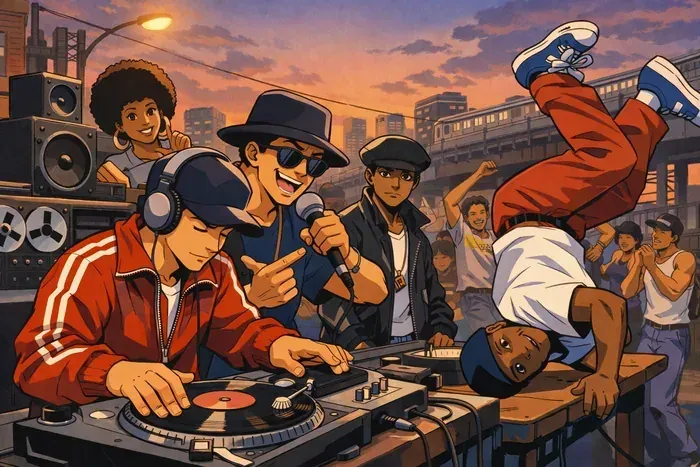
Before the Records: Where Hip Hop Was Born
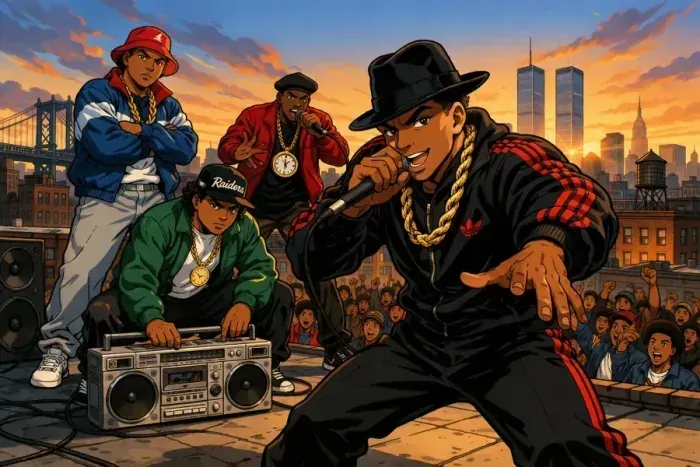
Hip hop grew in parks, schoolyards, and recreation rooms — loudspeakers, borrowed records, and improvised wiring were enough to build a whole night around rhythm. In the early 1970s, much of the South Bronx was shaped by disinvestment, housing loss, and shrinking public services. Young people still needed places to gather, compete, and make something of their own. Music moved into that space.
DJs stretched the instrumental breaks of funk and soul records because dancers wanted more time to move. That choice sounds obvious in hindsight, but it changed the logic of the party. The focus shifted from the whole song to the hardest hitting section. Around those breaks, people tested new dance moves, rhymed into the mic, and turned a local social scene into a new musical method.
Nobody at those early parties was talking about global markets. They were solving local problems with sound, wit, and presence. Record labels, radio programmers, and television executives came later. Before hip hop was a product on store shelves, it was a practice built on live presence, competition, and shared codes.
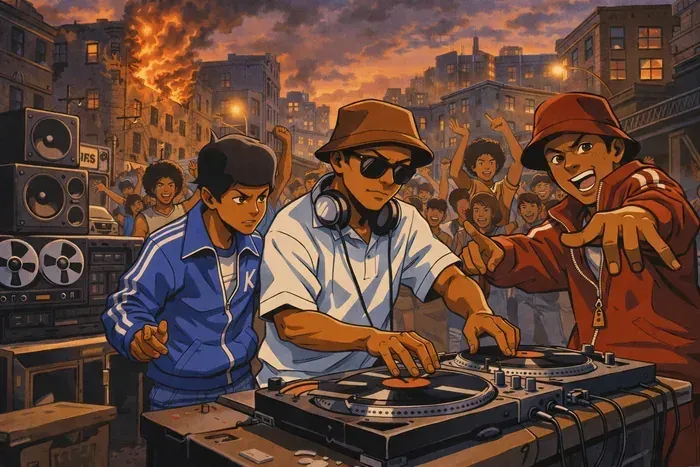
The Bronx in Crisis: How Block Parties Were Born
New York City was sliding toward the fiscal crisis that broke open in 1975. Factory jobs had left, many buildings in the South Bronx were neglected or abandoned, and some landlords resorted to arson-for-insurance schemes. For teenagers in that environment, daily life felt unstable and tightly policed at the same time. Community infrastructure was weak, but the need for social life was not.
Neighborhood parties were cheap, local, and collective. For a few hours, a rec room or schoolyard could become a place where people were not only surviving the neighborhood but shaping it.
Clive Campbell, later known as DJ Kool Herc, brought part of that method from Jamaican sound system culture, where selectors, deejays, and massive speakers turned recorded music into a live event. On August 11, 1973, at a back-to-school party in the recreation room of 1520 Sedgwick Avenue, Herc used two turntables to extend the break sections of records. He kept the drums going by moving between copies of the same record and by cycling through favorite break-heavy tracks. Dancers responded right away because the break was where the rhythm opened up and the body had the most room to answer it.
The technique became known as the “merry-go-round.” It was not flashy equipment magic. It was a practical way to keep the most exciting part of the record alive. Herc used two copies of the same record on two turntables. When the break section played out on one turntable, he cued up the same break on the other and dropped it in seamlessly. This let him extend a thirty-second drum passage into something that could last for minutes. Dancers later known as b-boys and b-girls built whole movement vocabularies around those repeated drum passages. The DJ was no longer just selecting songs. He was reshaping them in real time. "I am the founding father of hip-hop."
Grandmaster Flash became known for precision and for treating the turntable like an instrument. He refined cueing, cutting, and quick-mix techniques until transitions became tighter and cleaner. Afrika Bambaataa used parties to build a broader network. He connected music, dance, and crew identity to a larger project of turning street rivalry into creative competition.
Block parties became more than entertainment. They were gathering points. Flyers moved hand to hand. Electricity was sometimes pulled from nearby buildings or streetlights. Word spread across neighborhoods long before radio paid attention. There was no long-range strategy behind it. The goal was immediate: create a space where people could gather, move, and be recognized.
Those nights did not feel historic while they were happening. They felt temporary and, at times, fragile. Still, the pattern was already there: use whatever technology is available, push it past its intended use, and build collective energy from it. The Bronx did not invent rhythm, poetry, or dance. It fused them into a new cultural system that could hold celebration and pressure in the same beat.
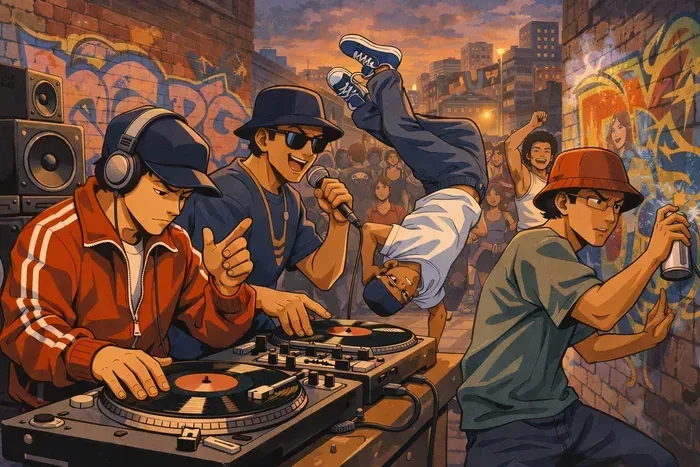
The Four Elements: DJing, MCing, Breaking, Graffiti
The parties grew, hip hop became more than a DJ technique. It turned into a culture with its own aesthetics, rivalries, rituals, and shared references. People later described four main elements: DJing, MCing, breaking, and graffiti. Nobody handed them down as a formal doctrine in the early years. They developed together because the same neighborhoods and the same crews kept feeding all of them.
DJing remained the center. Precision mattered. Timing mattered. Grandmaster Flash helped formalize techniques such as pre-cueing records through headphones and tightening transitions so the party never lost momentum. Once the turntable stopped being a passive playback device, the DJ became a composer in front of a crowd.
MCing started as crowd work. MCs called out neighborhoods, friends, crews, and dancers to hype up the crowd. Over time, those short lines grew into longer rhythmic passages. Groups like the Furious Five showed that the voice on the mic could do more than keep the party moving. It could develop style, humor, authority, and eventually social commentary.
Breaking, often called breakdancing by the media, turned those extended drum passages into a competitive dance form. Dancers built reputations in circles, not on formal stages. The performance space was open, the audience stood close, and skill had to read immediately.
Graffiti added a visual layer. Writers put names on walls and subway cars so those names could travel across the city. Fame depended on style, placement, and reach. City officials treated it as vandalism. Within the culture, it worked as a way to mark territory and reputation publicly.
Afrika Bambaataa helped connect these strands into a larger cultural frame. Through the Universal Zulu Nation, he pushed the idea that crews could battle through music, dance, and style instead of through violence. He also widened the sound. On “Planet Rock” in 1982, produced with Arthur Baker and shaped by Kraftwerk’s influence, hip hop moved toward electro without giving up its rhythmic core.
Competition stayed fierce. But there was still a broad understanding that the culture belonged first to the people making it. Major labels had not written the rules yet. The elements reinforced each other. MCs needed DJs. Dancers needed breaks. Graffiti carried names beyond the range of the microphone.
By the early 1980s, hip hop had moved beyond a single neighborhood without yet becoming an industry on stable terms. It had rituals, leaders, and a recognizable structure. What it still lacked was reliable access to the national record business. That changed next, and the change brought both reach and friction.
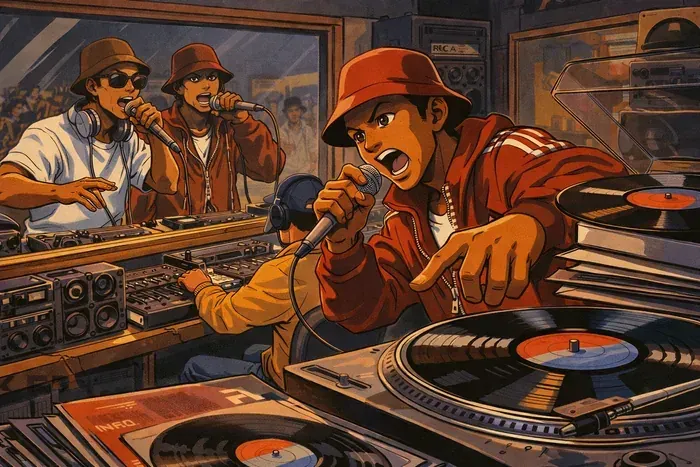
From Live Ritual to Vinyl Record
For several years, hip hop lived mostly in parks, school gyms, and community centers. It spread through word of mouth, homemade flyers, and tapes of live sets. Without records in stores or regular radio play, the culture stayed largely local. That changed in 1979.
Sylvia Robinson, a former singer who co-founded Sugar Hill Records, saw commercial possibility in that new party sound before most of the music business did. She assembled the trio that became the Sugarhill Gang and recorded “Rapper’s Delight.” The record used a replayed version of Chic’s “Good Times” and ran more than fourteen minutes in its original 12-inch form. For large parts of the United States, and for many listeners abroad, this was the first widely distributed rap record they heard.
Reactions in the Bronx were mixed. Some artists felt the group had not earned its status through the local party circuit. Others were simply struck by the idea that rap could work on vinyl at all. The record’s success settled the commercial question quickly. It charted, traveled, and proved there was demand for recorded rap far beyond neighborhood parties.
Sugar Hill followed with more releases, including records by Grandmaster Flash and the Furious Five. Then “The Message” arrived in 1982 and expanded what recorded rap could say. Most of the writing came from Melle Mel and Duke Bootee. The song described pressure, poverty, and psychological strain with a bluntness that party records usually did not attempt. Many listeners heard, for the first time, that rap could function as social reporting as well as entertainment.
Recording changed the culture in practical ways. Studio time cost money. Lyrics became fixed instead of endlessly flexible. Producers, label owners, publishers, and contracts entered the picture. The gap between artists with access to recording infrastructure and those without it grew wider.
At the same time, records preserved and multiplied moments that would otherwise disappear. A live set ended when the night ended. A single could cross boroughs, then states, then continents. DJs and MCs in other cities could study flows, breaks, and production choices that began in the Bronx. A neighborhood ritual became something repeatable.
Moving from the park to the pressing plant did not erase the original spirit. It gave that spirit a new set of tensions. Hip hop was now both a local social practice and a product for sale. That split shaped every era that followed.
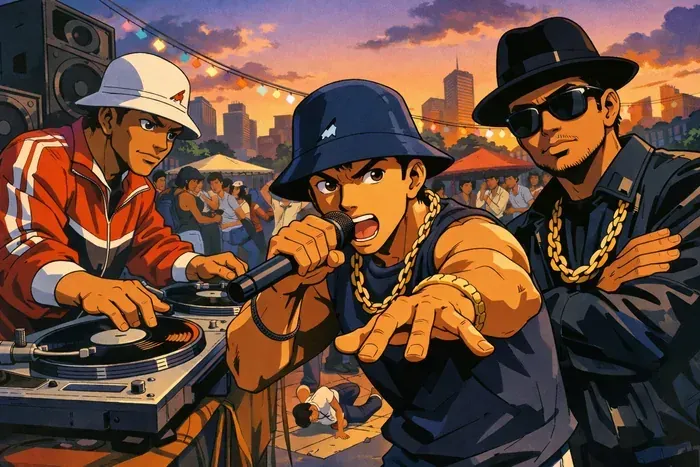
Old School Foundations: The First Wave
By the early 1980s, hip hop was no longer only a neighborhood activity. It had entered the music industry. What worked in a packed park now had to work from home stereos, car speakers, and radio playlists.
Old school rap carried block-party energy into this new setting. The rhythms were direct, the lyrics were often playful, and the records still drew heavily from funk and disco. At the same time, the sound was already changing. Drum machines started replacing live session bands, arrangements got harder and leaner, and the MC became more central to the recording.
A small circle of labels, producers, and radio gatekeepers began shaping what audiences heard. Def Jam became especially important in the middle of the decade. Its records favored stripped-down drums, forceful voices, and a harder visual identity. Artists like Run-D.M.C. and LL Cool J helped move rap away from disco gloss toward a more stark, street-centered presentation.
Old school hip hop kept its roots even as it adapted. It translated block-party energy into recorded form. Spontaneity gave way to structure. Local scenes gained national visibility.
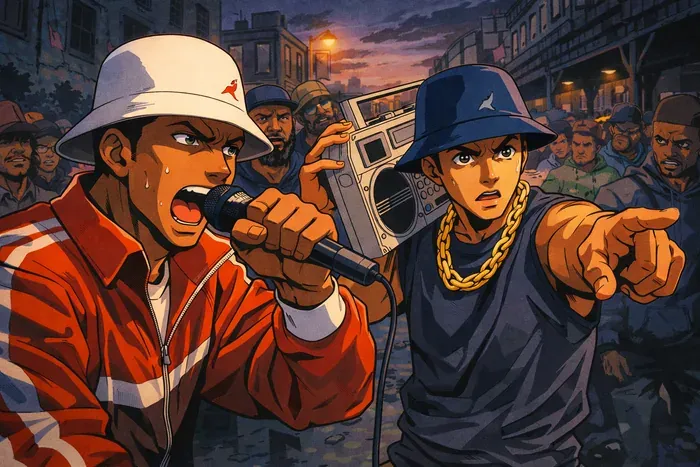
Grandmaster Flash and the Turn Toward Social Realism
Grandmaster Flash had already built a reputation in the Bronx for technical control. He approached the turntable with the discipline of an instrumentalist, paying close attention to timing, balance, and feel. When records associated with Flash and the Furious Five reached the studio, that attention to detail stayed in place.
Early singles such as “Freedom” and “The Birthday Party” still carried late-1970s party energy. But “The Message” in 1982 changed the frame. Even though the record carried Flash’s name, most of its writing came from Melle Mel and Duke Bootee. The song slowed the mood and shifted the subject from celebration to pressure.
Its details were concrete: broken glass, rats, stress, and psychic fatigue. The famous chorus did not feel symbolic or distant. It sounded immediate. For many radio listeners, this was the clearest proof yet that rap could describe urban hardship without smoothing it into entertainment.
The success of “The Message” showed that seriousness did not have to break rap’s rhythm. It also expanded the role of the MC. A rapper could still move a crowd, but could now also act as a reporter, critic, and witness.
The shift was not absolute. Party records did not disappear overnight. But the center of gravity moved. Once “The Message” worked, artists had stronger proof that everyday pressure, not just party release, belonged on the record.
The song matters beyond its chart life because it gave recorded rap one of its first widely recognized realist records. It didn’t invent social commentary in Black music.
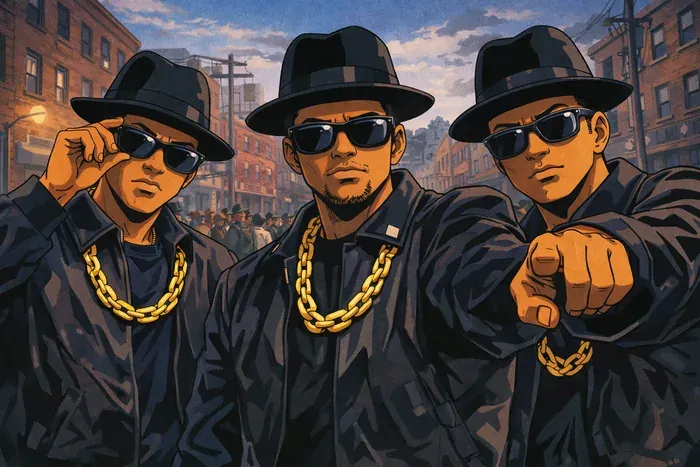
Run-D.M.C.: Minimalism, Force, and Crossover
By the mid-1980s, the glossy disco residue of early rap records was fading. In its place came harder drum sounds, sharper machine patterns, and arrangements with less decoration. No group made that shift clearer than Run-D.M.C.
Joseph “Run” Simmons, Darryl “D.M.C.” McDaniels, and Jason “Jam Master Jay” Mizell formed Run-D.M.C. in Queens. Their 1984 debut album sounded stripped down compared with much of what rap had offered before. On tracks like “Sucker M.C.’s,” a drum machine, a few scratches, and hard-edged voices were enough. That sparseness gave the music force.
Def Jam, founded by Rick Rubin and Russell Simmons, helped make that approach dominant. Rubin favored heavy, simple drum programming and arrangements that left almost nothing to hide behind. The directness worked on radio, in clubs, and on small speakers.
In 1986, “Walk This Way” with Aerosmith made rap-rock crossover feel commercially obvious without sounding forced. Jam Master Jay’s turntable work locked into Joe Perry’s riff, the video got heavy MTV rotation, and hip hop reached viewers who had rarely seen it given that level of exposure.
Image mattered too. Adidas sneakers, black fedoras, leather jackets, and unlaced shoes looked like streetwear rather than stage costume. Their Adidas deal, one of hip hop’s earliest landmark brand partnerships, showed how quickly style, fandom, and business could merge.
The point was not that less detail meant less craft. Taking things away became its own technique. By removing clutter, Run-D.M.C. made voice, rhythm, and attitude hit harder.
By then, the question was no longer whether hip hop worked on record. It was what kind of record it should become. Run-D.M.C. offered one answer. Women artists, often undercounted in that story, were building others.
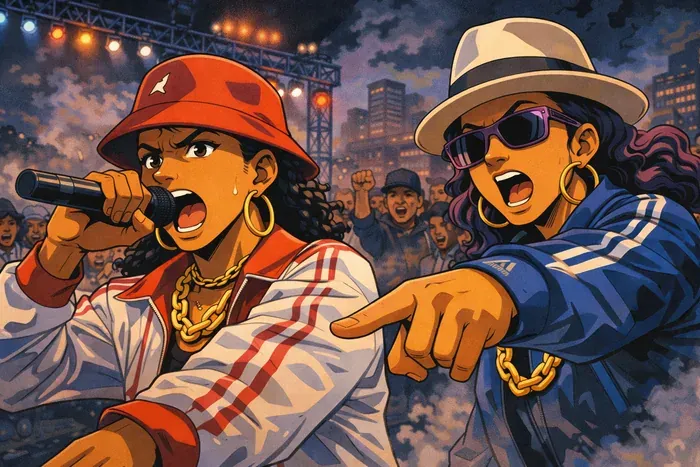
Women's Early Voices: Claiming Space
Women were part of hip hop from the beginning. They danced, wrote graffiti, DJed, managed crews, organized events, and rapped. When the industry started packaging rap for a wider audience, though, it pushed men to the front more often than it reflected the actual scene.
Sha-Rock of the Funky 4 + 1 is one of the foundational MCs in that history. In the late 1970s, her presence made clear that women were not guests in the culture. She had command, timing, and stage authority, and she did not need novelty framing to prove it.
Roxanne Shanté sharpened that point in 1984. Her answer record “Roxanne’s Revenge,” released when she was still a teenager, launched the Roxanne Wars and showed how quickly a young MC from Queensbridge could seize the city’s attention through wit and attack angle alone.
Salt-N-Pepa brought another kind of breakthrough. Cheryl “Salt” James and Sandra “Pepa” Denton, later joined by DJ Spinderella, turned radio and television success into a wider argument about who could lead rap records. Their music and image were self-directed, playful, and commercially sharp without surrendering authority.
The industry still framed women as exceptions far too often. They were forced to prove authenticity in ways male rappers usually were not, and coverage often leaned harder on appearance than on craft. Even so, women established early that authority at the mic was a matter of skill, not gender.
That foundation mattered for every later generation. The range of voices in hip hop got wider because women had already claimed space in its formative years and refused to treat that space as temporary.
Technology Takes Over: Drum Machines and Samplers
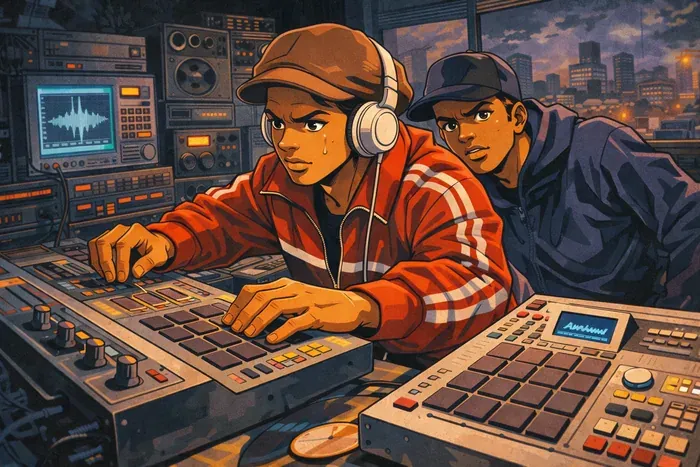
As hip hop moved deeper into the 1980s, studio technology began reshaping the music from the inside. Park DJs had worked with turntables and crates of records. In recording rooms, drum machines and samplers changed not just workflow, but the very texture of the beat.
The Roland TR-808 became especially important because its sub-bass and crisp handclaps did not imitate a live drummer very well. Producers embraced that artificial quality instead of hiding it. The sound could be cold, wide, and heavy at once, leaving room for the MC to drive the track.
Sampling technology also improved. Instead of replaying whole grooves with studio musicians, producers could lift small fragments from existing records and rework them. The machines had severe memory limits, so each sound choice mattered. Constraints pushed inventiveness rather than blocking it.
“Planet Rock,” produced by Arthur Baker and John Robie with Afrika Bambaataa, showed how electronic textures could merge with hip hop rhythm. Its dialogue with Kraftwerk made clear that rap did not have to stay inside one instrumental palette.
Studio work also changed performance habits. Breath control mattered more at close range. Verses that worked in a noisy gym sometimes needed to be tightened for a three- or four-minute song. Producers took a larger role in shaping structure, pacing, and hooks.
These tools did not eliminate the DJ’s role. Many early producers were DJs first. But the balance of power did begin to move toward whoever could shape the final recording most effectively. By the end of the old-school era, producers had helped turn hip hop into a distinct sonic world.
The Producer as Architect: Building the Sound
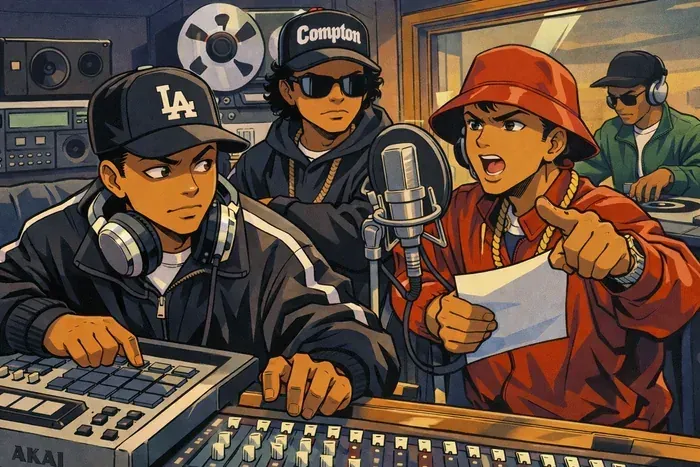
By the mid-1980s, rappers were becoming more visible, but producers were increasingly deciding what whole eras would sound like. Their names did not always appear first, yet their choices defined scale, texture, and atmosphere.
Hip hop was unusual because it grew by directly manipulating recorded music. DJs were already cutting, looping, and rearranging records before they ever entered a studio. Once samplers improved, that live logic moved into production rooms. Hardware mattered because it shaped texture, timing, and feel.
Producers developed audible signatures. Listeners could often identify a track’s lineage by its drums, loop treatment, or tonal mood before the rapper even entered. The beat was no longer background. It was the architecture around the voice.
As the genre grew, records stopped being read as the work of an MC alone. They were increasingly collaborations between voice, beat, and studio vision.
Marley Marl: The SP-1200 Pioneer
Marlon Williams, better known as Marley Marl, helped change what a hip hop record could sound like. Working in the mid-1980s with the Juice Crew and artists such as Big Daddy Kane, Biz Markie, and Kool G Rap, he turned sampling technique into a defining style.
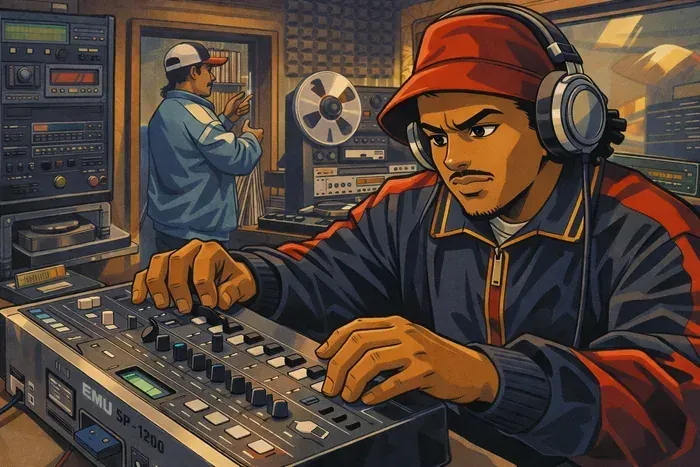
Producers had often used studio musicians to replay parts over sampled recordings. Marley Marl began isolating individual drum hits from existing records and reprogramming them on the E-mu SP-1200 sampler. Instead of lifting an entire loop, he could take one snare or kick and turn it into a new pattern. That method made the beats hit harder.
The SP-1200 had limited memory and a distinct gritty texture. The sound was not clean and polished. Its rough texture fit hip hop’s street roots. Instead of hiding that grain, Marley Marl embraced it. The drums sounded thick and immediate rather than tucked into the background.
His production on tracks like Big Daddy Kane’s “Ain’t No Half-Steppin’” balanced clarity with weight. The beat left room for complex rhymes without losing force. On Kool G Rap records, the production added cinematic tension to already detailed storytelling.
Marley Marl’s impact was larger than any one song. He helped normalize the idea that a crew, a label, or a neighborhood could carry a distinct sound. Queensbridge became known not only for MCs but for production character.
His work also sat near the legal tensions that would later reshape sampling. As hip hop grew, negotiations with rights holders became more difficult, and experiments often moved faster than the rules.
Marley Marl is remembered for turning technical limits into creative advantages. The SP-1200 did not offer endless possibilities. It offered hard constraints, and he built a voice inside them.
DJ Premier: Master of the Jazz Loop
If Marley Marl sharpened the drum hit, DJ Premier refined the loop. Born Christopher Martin in Houston and later based in New York, Premier formed Gang Starr with Guru and helped define the East Coast sound of the late 1980s and early 1990s.
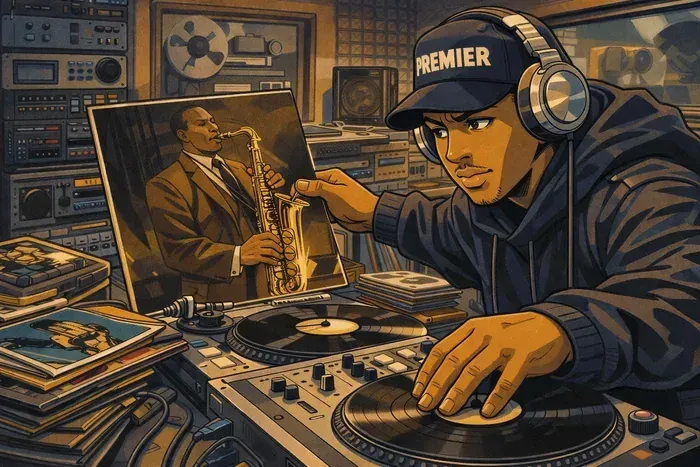
Premier’s beats often centered on concise jazz-based loops: a piano phrase, a horn figure, a bass fragment. The loop rarely tried to impress through density. Its repetition created focus, while the drums kept the track alert.
On Gang Starr albums like Step in the Arena and Daily Operation, Premier balanced simple structures with small but important details. His scratches, often built from chopped vocal fragments, worked like punctuation. They were part of the verse’s internal rhythm, not decoration added on top of it.
His outside production made the influence even clearer. Nas’s “N.Y. State of Mind” from Illmatic is tense and dark, but not cluttered. The piano loop and hard drums frame the verse instead of competing with it.
Premier’s control matched the growing complexity of rap writing during the Golden Age. As MCs used denser rhyme schemes and longer thought patterns, the beat had to leave enough room for language to register. Premier treated restraint as a technical advantage.
His style also helped sharpen regional identity. Early-1990s East Coast rap often relied on chopped samples, boom-bap drums, and a leaner sense of space. Premier did not invent that sound on his own, but he became one of its clearest signatures.
Later studios moved toward digital workstations, but Premier stayed attached to older methods and older textures. That consistency gave his records a lineage you could hear.
By treating the loop and the scratch as compositional tools, not leftovers from DJ culture, he showed that repetition could stay vivid and dramatic instead of turning static.
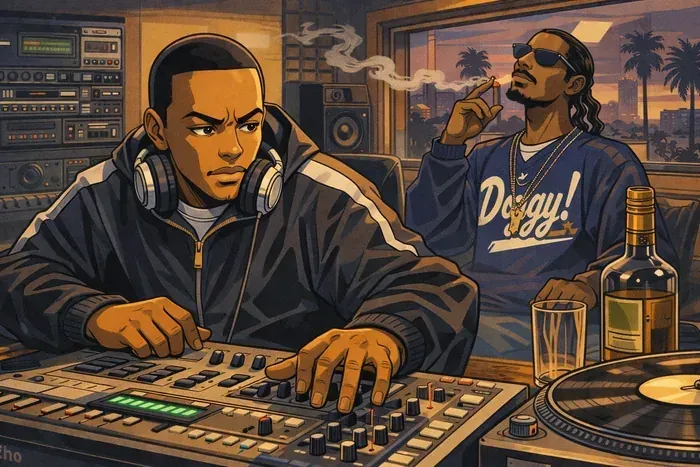
Dr. Dre: The G-Funk Architect
While New York producers refined chopped loops and boom-bap drums, a different sound was taking shape on the West Coast. Andre Young, known as Dr. Dre, first became nationally visible through N.W.A. After leaving Ruthless, he co-founded Death Row Records with Suge Knight and helped reset the sound of West Coast rap.
The Chronic in 1992 turned G-funk into a national standard. Dre built from slower tempos, deep bass, bright synthesizer leads, and the long shadow of Parliament-Funkadelic. The grooves felt laid-back on the surface, but the mixes were tightly controlled and unusually clean for the time.
“Nuthin’ but a ‘G’ Thang,” featuring Snoop Doggy Dogg, made that approach feel effortless. The record was melodic, radio-ready, and still unmistakably rap. Dre often relied on studio musicians and replayed elements rather than dense stacks of uncleared samples, which also gave him more control as sampling law tightened.
Dre’s influence reached far beyond his own albums. He shaped records by Snoop, helped set the conditions for Death Row’s run, and later played major roles in the careers of Eminem and 50 Cent. Across those records, one lesson stayed constant: the vocal had to sit clearly, the low end had to feel controlled, and the hook had to land fast.
G-funk also sharpened regional identity. West Coast rap now sounded smoother, slower, and more melodic than the East Coast records dominating New York. The press turned that difference into a rivalry story, even when the actual musical exchange between regions was more complicated.
The album was a commercial breakthrough and made Death Row a dominant force. It also sat inside a larger controversy. Politicians and advocacy groups attacked gangsta rap, while Dre’s own documented violence against women forced questions that could not be answered by talking only about artistic freedom.
From a production standpoint, Dre helped make studio polish itself into a rap value. The producer was no longer just a technician in the background. He was a curator, a public name, and, increasingly, a gatekeeper.
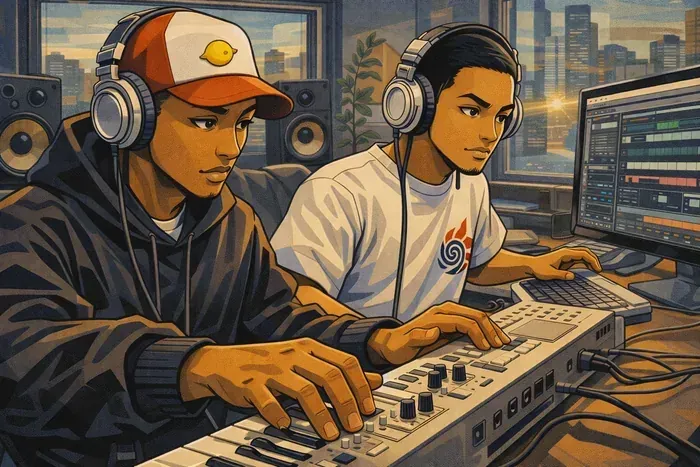
The Neptunes: When Minimalism Met Pop
By the late 1990s and early 2000s, digital production tools were more common and rap was crossing into pop more often. In that setting, Pharrell Williams and Chad Hugo, working as the Neptunes, built a sound that felt spare, bright, and instantly identifiable.
The Neptunes favored clipped drums, unusual rhythmic accents, and keyboard figures over dense sample stacks. Silence was part of the composition. Their records left air around the vocal instead of filling every corner.
On Clipse’s “Grindin’,” percussion carried almost the whole record. The beat felt raw not because it was unfinished, but because every element had been stripped back to impact.
The duo moved easily across rap, R&B, and pop, producing for artists as different as Clipse, Jay-Z, Nelly, Kelis, and Britney Spears. By that point, hip hop production methods were not just influencing pop. They were helping structure it.
Pharrell’s melodic instincts helped keep those records catchy even when they were sparse. Just as important, the Neptunes turned producer identity into a market force. Their sound could be more recognizable than the featured artist’s. That was a significant shift in industry power.
They also marked a move away from dusty, sample-heavy textures toward cleaner synthetic lines. The surface changed, but the underlying logic of repetition and groove remained firmly rooted in hip hop.
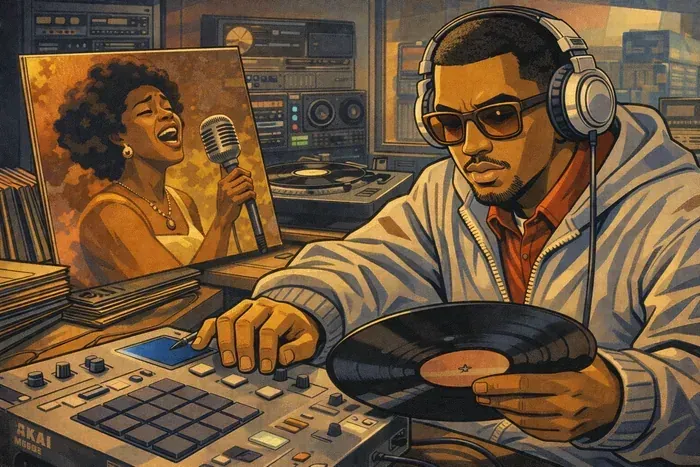
Kanye West: Soul Samples, New Emotion
In the early 2000s, a lot of rap production was becoming polished, sleek, and club-ready. Kanye West pushed back by making warmth and emotion central again. Before his solo career took off, he was already known as a producer, especially through his work with Jay-Z.
On The Blueprint in 2001, West produced tracks such as “Izzo (H.O.V.A.)” and “Heart of the City (Ain’t No Love).” His soul-chipmunk approach pitched up older vocal samples and turned them into warm, insistent hooks. The sound was nostalgic without feeling backward.
When he released The College Dropout in 2004, that texture stayed central. “Through the Wire” and “Jesus Walks” mixed soul, gospel, sampling, and heavy drum programming in ways that sounded emotionally open rather than detached.
West’s rise also showed how producers were moving to the front of the frame. He was not just shaping the beat from behind the scenes. He was also the public voice, the narrator, and the brand.
His catalog shifted repeatedly after that, from the orchestral scale of Late Registration to the stripped electronic attack of Yeezus. Each turn pushed younger producers to think of rap production as a field open to larger aesthetic reinvention.
His career also became deeply controversial. Public debate around West moved far beyond music and into questions of politics, antisemitism, celebrity power, and responsibility. That does not erase his production impact, but it does change how any full history has to frame him.
From a production standpoint, West helped prove that large-scale sampling, melody, and rap ambition could still coexist after sampling had become more expensive and legally risky. By the mid-2000s, hip hop production had already passed through several distinct phases.
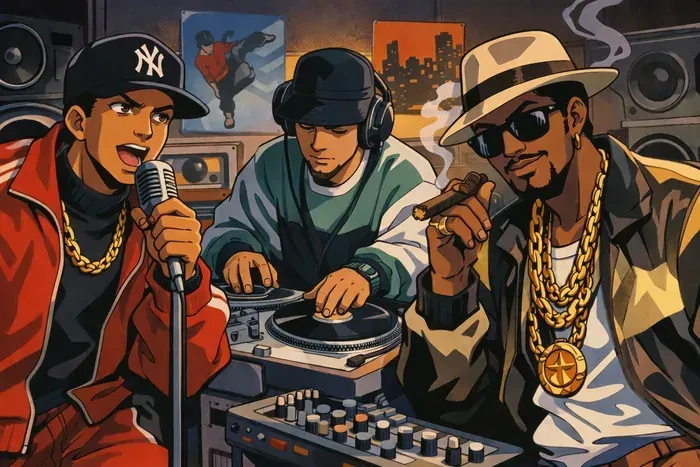
The Golden Age: Hip Hop's Renaissance
By the late 1980s, hip hop had developed technical confidence. Production improved, MCs experimented more freely with flow and structure, and the music opened outward instead of settling into one dominant model. The so-called Golden Age names a period of expansion, not a single sound.
Sampling technology allowed producers to layer jazz, funk, soul, and rock fragments into dense collages. MCs answered with more complex rhyme schemes, sharper storytelling, and more individual voices. Regional identities became clearer without breaking the larger culture apart.
Political commentary stood next to playful abstraction. Street realism sat beside Afrocentric thought, humor, spiritual searching, and technical bravado. Women artists were more visible, and independent labels mattered more. In hindsight, “Golden Age” sounds nostalgic. The better use of the term is narrower: it points to a stretch of unusually rapid experimentation.
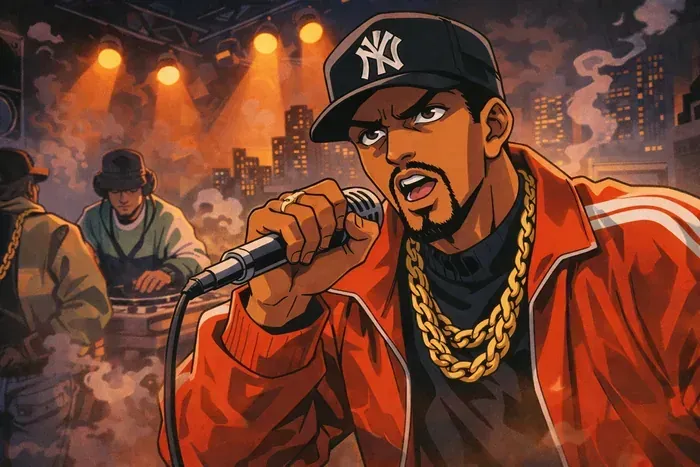
Rakim: The Man Who Changed Flow Forever
When Eric B. & Rakim released Paid in Full in 1987, listeners heard a new approach to flow. Rakim did not rely mainly on end-rhyme punch or chant-like cadence. He packed internal rhyme into the line and shifted his pace with unusual control.
On tracks like “Eric B. Is President” and “My Melody,” he treated the bar as flexible space. He did not rush to fill every gap. He let the beat breathe and trusted the pause as part of the line.
The production around him gave that style room to work. Jazz-influenced samples and steady drum patterns held the floor without crowding the verse. The balance between MC and beat was one of the duo’s great strengths.
Rakim’s influence spread quickly because other rappers could hear the upgrade. Technical precision no longer had to come at the expense of clarity. Braggadocio could sit beside self-possession and discipline. Paid in Full became one of the defining records of the era because it changed what excellence in rap could sound like.
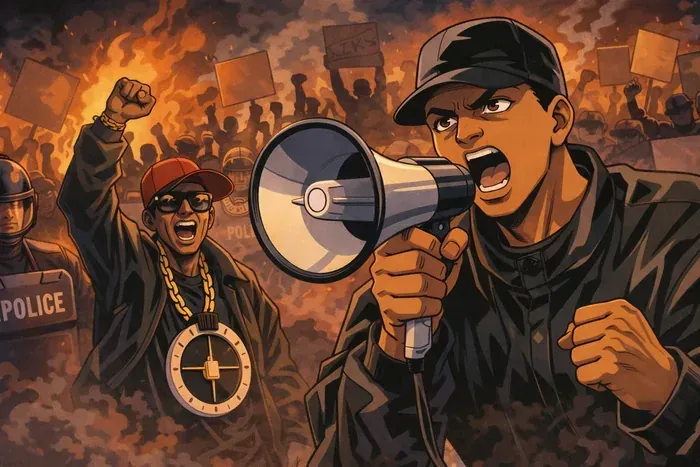
Public Enemy: Protest in Stereo
If Rakim refined internal flow, Public Enemy built external pressure. Formed on Long Island in the mid-1980s, the group centered Chuck D’s commanding voice, Flavor Flav’s volatile energy, and the Bomb Squad’s dense production design.
It Takes a Nation of Millions to Hold Us Back in 1988 sounded overloaded on purpose. Sirens, speech fragments, noise, and drum loops crowded the mix because the group wanted urgency, not polish. "We're going to set a nation and the world on fire."
Chuck D’s writing and delivery were direct enough that the targets rarely felt vague. In “Bring the Noise” and “Don’t Believe the Hype,” he addressed media framing, structural racism, and state power without diluting the attack. Flavor Flav gave the group another kind of energy: comic, unruly, and necessary.
Public Enemy also understood staging. The Security of the First World, dressed in paramilitary style, made the group’s visual language feel disciplined and confrontational.
The group rose during the Reagan years, when debates around crime, drug policy, race, and inequality were already highly charged. Public Enemy chose escalation rather than softening. That choice gave the music force, but it did not spare the group from scrutiny. The 1989 controversy around antisemitic remarks by Professor Griff complicated the group’s legacy and forced real questions about political language and responsibility.
The Bomb Squad’s production pushed sampling to a density that later legal standards made harder to sustain. Even when the exact method became less practical, its influence on rap’s sense of scale and intensity lasted.
Public Enemy showed that hip hop could function as organized protest without giving up formal innovation. Their records made political urgency sound big, abrasive, and technically ambitious at the same time.
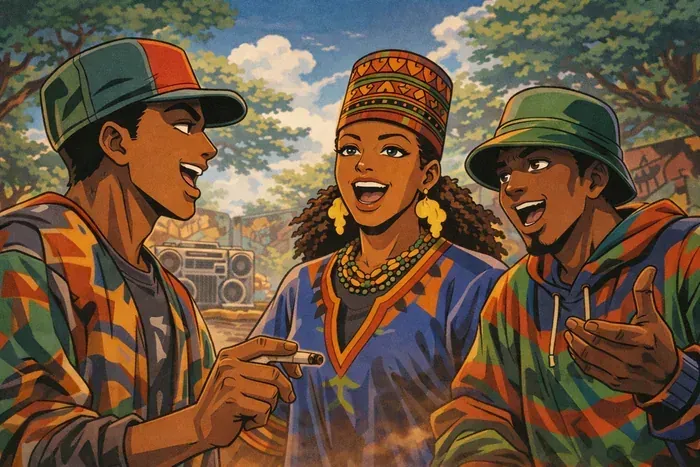
Native Tongues: A Different Kind of Conscious
While Public Enemy played with intensity, another group offered a different tone. The Native Tongues, which included A Tribe Called Quest, De La Soul, and the Jungle Brothers, approached hip hop with playfulness, warmth, and cultural curiosity. Their music did not avoid social awareness, but it expressed it through lighter textures and open experimentation.
A Tribe Called Quest’s early albums, especially People’s Instinctive Travels and the Paths of Rhythm and The Low End Theory, mixed jazz bass lines with relaxed drum patterns. Q-Tip and Phife Dawg traded verses that felt like a conversation instead of a fight. The beats allowed for moments of reflection. Instead of busy layers, the songs used subtle rhythms.
De La Soul’s 3 Feet High and Rising brought humor and imagination to the forefront. Produced by Prince Paul, the album included short musical pieces, surprising uses of other songs, and a tone that could not be easily described. The group pushed against common ideas about what rap should be like. They wore colorful clothes. They wrote songs about their own lives instead of borrowing aggression from elsewhere.
The Jungle Brothers were often seen as the group’s early foundation, helping to create an environment built on collaboration. Their song “Straight Out the Jungle” mixed funk with modern rhythms. The movement’s sense of community stood out. Guest verses and shared production created a network of careers rather than a set of isolated stars.
Queen Latifah added another layer to this alternative current. With songs like “Ladies First,” she talked directly about respecting and empowering women. Her presence showed that political awareness could include feminist ideas. She didn’t repeat the same messages that men were saying. She spoke from her own position within the culture.
The Native Tongues movement widened the emotional range of rap. Their music could be reflective without sounding solemn, and politically aware without relying on confrontation as the only tone.
Commercially, the movement was uneven. Some releases earned huge influence without matching the biggest sales numbers. But later artists kept returning to Native Tongues as proof that creative freedom could be central, not marginal.
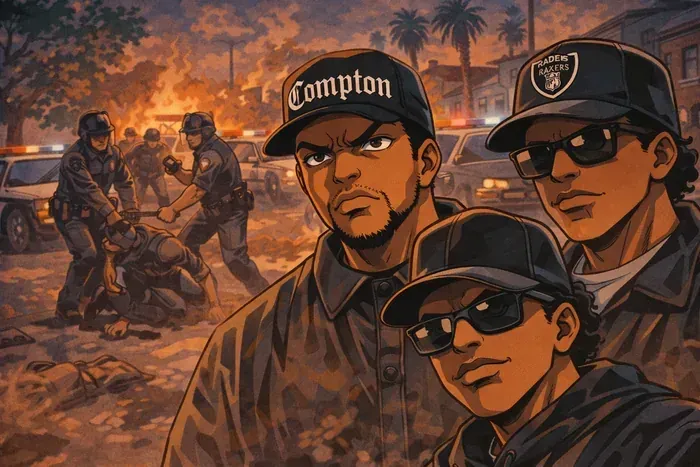
N.W.A.: The West Coast's Raw Truth
While New York artists explored jazz loops and lyrical density, N.W.A. forced national attention toward Compton. Formed around Eazy-E, Dr. Dre, Ice Cube, MC Ren, and DJ Yella, the group turned Straight Outta Compton in 1988 into one of rap’s defining regional shocks.
The production, shaped largely by Dre and Yella, favored hard drums and blunt arrangements. The records left little room for ornament. They pushed stories about police brutality, street violence, and daily life in South Central Los Angeles into national circulation.
“F*** Tha Police” caused the biggest backlash. Framed like a courtroom scene, it turned direct accusation into performance and drew a warning letter from the FBI to the group’s label. National media then argued over whether the song documented violence or encouraged it.
In communities that felt over-policed and underrepresented, the record landed differently. The group argued that they were reporting what they saw. Critics answered that the music was misogynistic and often glorified aggression. Supporters countered that blunt depiction is not the same as endorsement.
The album was a major hit, confirming that West Coast rap had entered the mainstream. It also fed the East Coast-West Coast rivalry story in the press, even though the scenes kept influencing one another.
N.W.A. fractured internally, with Ice Cube leaving over finances and Dre later leaving to build the next West Coast phase through G-funk. Their legacy remains contested because the music made rap more confrontational at the mainstream level while also sharpening long-term questions about responsibility, misogyny, and representation.
Women Storytellers: Expanding the Narrative
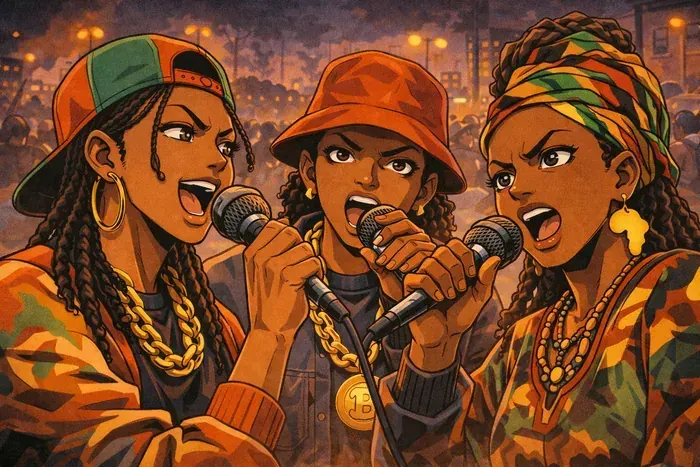
As the Golden Age unfolded, women were shaping tone, subject matter, and authority in ways that materially widened the genre. Their work did not fit one lane. Some led with politics, some with technical precision, some with humor, and some with sexual self-definition.
MC Lyte arrived in the late 1980s with a measured, exact delivery that made craft the point. On tracks like “Paper Thin,” she handled betrayal and distrust without sacrificing control or falling back on caricature. Her authority came from skill.
Queen Latifah extended that argument in a different register. All Hail the Queen and “Ladies First” with Monie Love made dignity, self-respect, and feminist language central without borrowing a male performance model to do it.
In the mid-1990s, Lil’ Kim and Foxy Brown shifted the terms again by making sexuality, luxury, and threat central to their public voices. For supporters, that move claimed narrative control in a field that had long preferred women to remain legible through other people’s desire, not their own.
Missy Elliott took another route. Emerging first through Sista and then through work with Timbaland, she mixed humor, futurism, and rhythmic invention. Her solo career made visual imagination part of the musical statement instead of a separate layer.
The industry still reduced female rappers to caricatures too often and kept questioning their authenticity. But by the late 1990s, it was no longer credible to frame women as exceptions. They were central to the period’s range of tone, politics, and style.
1990s Canon: Regional Voices, Literary Depth
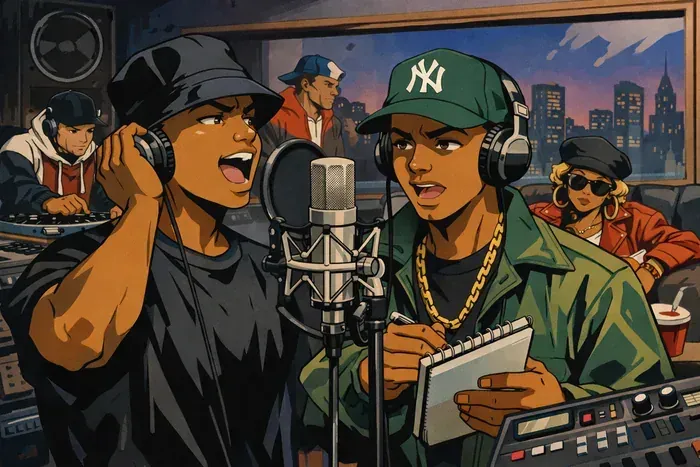
By the early 1990s, hip hop was no longer asking whether it belonged in popular culture. It was already there. Albums sold in the millions, radio formats shifted, and major labels invested more aggressively. That expansion brought new pressure from both the market and the culture itself.
The decade produced records that many listeners still treat as reference points. Lyrics got more detailed, storytelling more cinematic, and regional scenes more self-assured. The key question was no longer whether hip hop mattered. It was what shape its canon would take.
Violence and rivalry shaped many headlines, but the music itself was broader than those stories. Producers thickened the sonic palette, and rappers pushed further into memory, faith, ambition, humor, vulnerability, and dread.
Nas: Poetry from the Projects
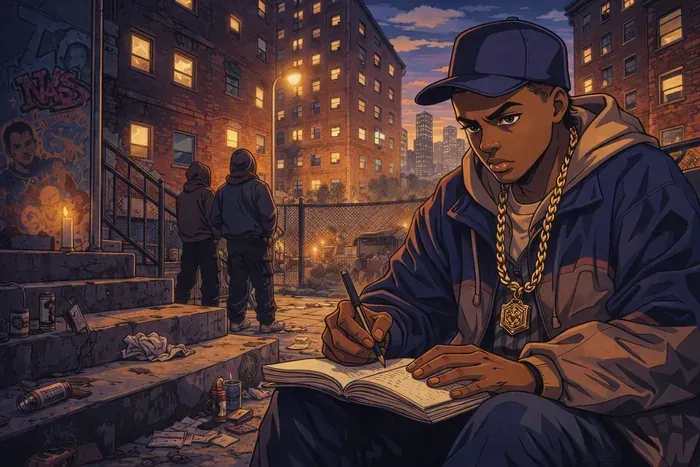
In 1994, Nasir Jones released Illmatic, a debut that quickly became a benchmark for lyrical control. Growing up in Queensbridge, Nas wrote with close attention to place. His details felt observed rather than inflated.
The producer list was unusually strong, with Large Professor, DJ Premier, Pete Rock, Q-Tip, and L.E.S. contributing, but the album still felt unified. Jazz-based loops and steady drums gave Nas room to think aloud at high precision.
“N.Y. State of Mind,” produced by Premier, remains a clear example. The beat is spare but tense, and Nas moves through the verse with elastic pacing and dense rhyme without ever sounding rushed.
Illmatic was compact, under forty minutes, and not built around blockbuster spectacle. Its impact came from concentration. It did not initially sell like the biggest rap albums of its era, but it became canonical because it showed how literary density and street realism could live inside a lean, rhythmic form.
Wu-Tang Clan: Nine Voices, One Empire
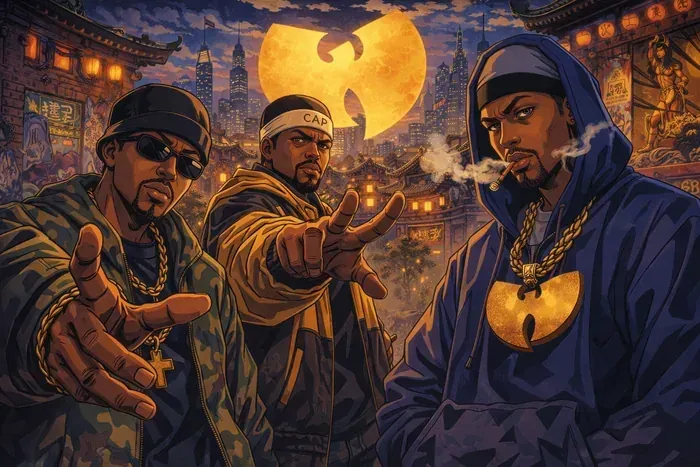
If Nas concentrated attention into one voice, Wu-Tang Clan exploded it across a group. Formed in Staten Island in the early 1990s, the crew’s 1993 debut Enter the Wu-Tang (36 Chambers) sounded rough, unstable, and unlike almost anything else in rap’s commercial center.
RZA’s production used rough samples, off-center drum programming, and film dialogue to make a world that felt damaged, mystical, and immediate. The mixes did not chase smoothness. Their abrasion was part of the appeal.
Each member extended that world in a different direction. GZA favored precision, Method Man charisma, Raekwon and Ghostface dense street narrative, and Ol’ Dirty Bastard open chaos. The group worked because the voices were distinct enough to collide productively.
Wu-Tang also changed the business logic. RZA’s deal structure let members sign solo deals with different labels while keeping the group intact. That model expanded reach without dissolving identity.
The crew also built a symbolic universe around Five Percent teachings, martial-arts imagery, aliases, and street codes. Fans did not just consume songs. They entered a system. Wu-Tang’s influence spread nationwide because it proved that hip hop could work as collective storytelling as well as individual authorship.
Wu-Tang showed that rap could build a collective myth as rich as any solo autobiography.
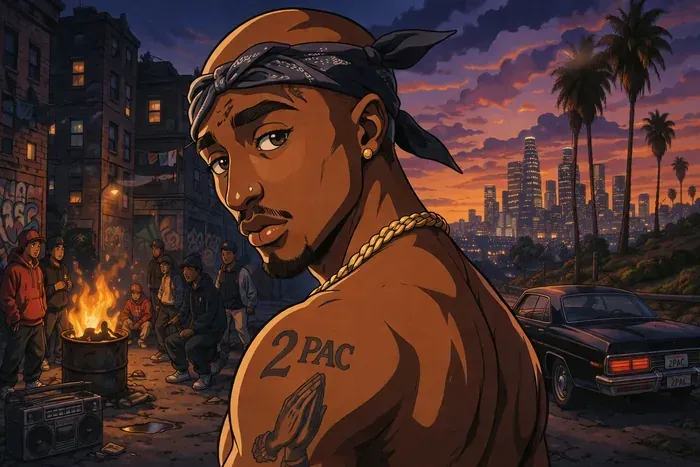
Tupac Shakur: The Poet of Contradiction
Tupac Shakur was one of the most emotionally volatile and wide-ranging artists of the 1990s. Born in New York, raised partly in Baltimore, and later based in California, he carried political inheritance and street pressure into the same body of work. His mother, Afeni Shakur, had been active in the Black Panther Party, and that history mattered.
After first reaching a wide audience through Digital Underground, Tupac’s solo work quickly showed a larger range. Records like 2Pacalypse Now and Strictly 4 My N.I.G.G.A.Z. addressed poverty, police brutality, and neglect, while songs like “Keep Ya Head Up” and “Dear Mama” carried tenderness and familial intimacy.
By the mid-1990s, legal trouble, a prison sentence, and relentless media coverage made his public image far more volatile. After his release and signing to Death Row, All Eyez on Me turned him into an even larger star and pushed West Coast scale and bravado to the foreground.
Yet Me Against the World, released in 1995 and recorded largely before his prison term, remains one of rap’s clearest documents of fear, exhaustion, and introspection. Tupac could sound aggressive one moment and exposed the next without making the transition feel artificial.
The media fixated on the East Coast-West Coast rivalry, especially his feud with the Notorious B.I.G., often flattening the music into conflict narrative. Tupac was shot in Las Vegas on September 7, 1996, and died six days later at age twenty-five. His death made questions about violence, celebrity, and media escalation even harder to avoid.
Tupac remained polarizing because the contradictions were real. He could sound threatening, reflective, wounded, and theatrical across a very short span. The posthumous mythology is powerful, but the work itself is what keeps him central.
Tupac’s reach came from that unstable mix of force and exposure. He made contradiction into part of the art.
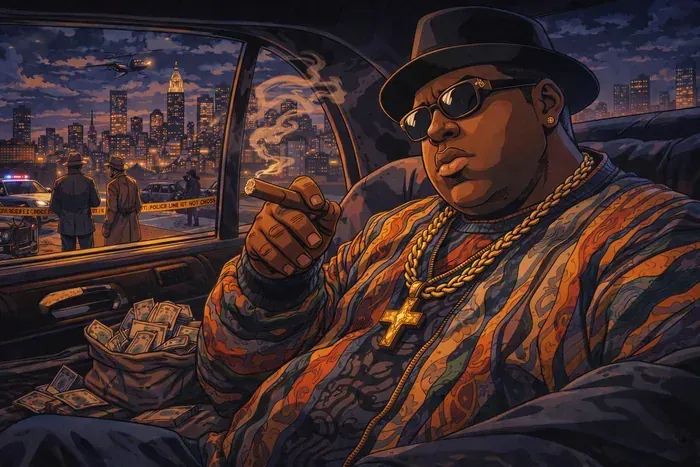
The Notorious B.I.G.: Smooth Voice, Heavy Stories
Christopher Wallace, known as the Notorious B.I.G., brought another kind of mastery. His Brooklyn perspective, heavy voice, and apparently effortless flow made Ready to Die in 1994 feel both cinematic and intimate.
Working closely with Sean “Puff Daddy” Combs and the Bad Boy team, Biggie recorded songs that balanced polished hooks with lived-in detail. “Juicy” is celebratory, but it never forgets what the climb out of poverty cost.
On “Gimme the Loot” and “Warning,” he showed how much drama could fit inside conversational control. He switched voices, built scenes efficiently, and often sat just behind the beat in a way that made the flow feel relaxed and dangerous at once.
Ready to Die reached wide audiences without simplifying itself. Depression, ambition, humor, survival, and self-loathing all sit inside the album. Biggie did not perform himself as morally pure or emotionally consistent.
As the East Coast-West Coast narrative intensified, the media cast Biggie as Tupac’s counterpart whether the music supported that frame or not. Biggie was killed in Los Angeles on March 9, 1997. Life After Death followed shortly after and debuted at number one.
The deaths of Tupac and Biggie changed rap’s public conversation. Violence, industry pressure, and media incentive structures were no longer abstract topics. Biggie’s musical legacy remains central because few rappers have matched his combination of narrative ease, melodic instinct, and control.
The 1990s canon included more than East Coast and West Coast stars. Southern artists were already changing the map underneath the rivalry headlines.
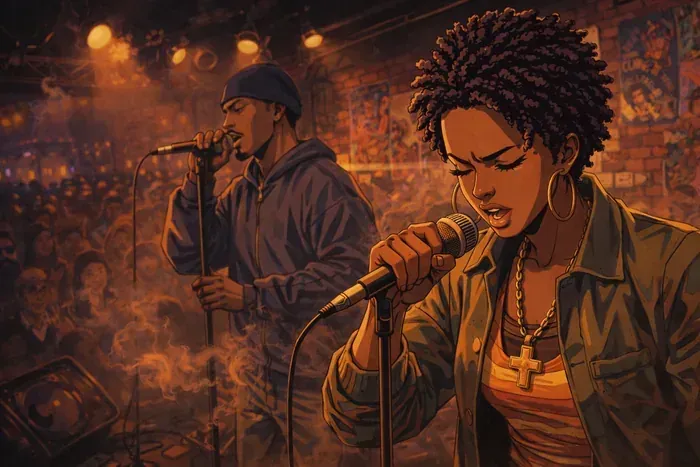
Lauryn Hill & The Fugees: Emotion Meets Rhythm
While rivalry stories dominated the news, the Fugees showed another route. Lauryn Hill, Wyclef Jean, and Pras Michel mixed rap, reggae, soul, and live-band sensibility on The Score in 1996 and reached a far broader audience than many critics expected.
The album’s appeal came partly from its openness. It used drums, melody, and live-playing in ways that welcomed listeners who were not already committed rap fans. “Killing Me Softly” put Lauryn Hill’s voice at the center, and that voice carried authority without sacrificing warmth.
Hill’s writing and delivery made the category lines feel unstable. On “Ready or Not,” she moved between rap and singing without treating the switch as a novelty.
The Miseducation of Lauryn Hill in 1998 pushed that range even further. It mixed rap, soul, and gospel while sounding personal rather than genre-strategic. “Doo Wop (That Thing)” addressed relationships, ego, and self-respect with unusual clarity. The album won five Grammy Awards, including Album of the Year.
Hill’s success also showed how quickly possibility turns into pressure. Credit disputes, industry conflict, and public expectation all changed the conditions around her career. Even so, the Fugees and Hill expanded how much melody, vulnerability, and emotional specificity hip hop could carry without giving up rhythmic force.
By the late 1990s, hip hop was no longer centered only on New York or Los Angeles. The South was claiming national authority in its own accent and on its own production terms.
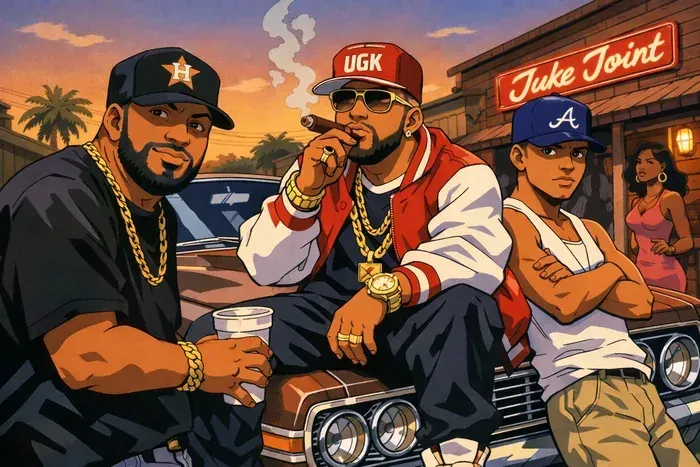
Southern Voices: Before Trap Took Over
When rap entered the mainstream, New York and Los Angeles dominated the map. By the mid-1990s, Southern artists were changing that balance with accents, production choices, and social worlds that did not sound like either coast.
OutKast was central to that shift. Southernplayalisticadillacmuzik in 1994, produced mostly by Organized Noize, used live instrumentation, bass weight, and Southern funk in ways that felt distinct from New York’s chopped-loop logic.
At the 1995 Source Awards, André 3000’s line, “The South got something to say,” landed because it answered a real hierarchy inside the genre. OutKast’s later albums, especially ATLiens and Aquemini, widened the palette further through funk, psychedelia, and introspection.
Elsewhere in the region, UGK and Goodie Mob showed that Southern rap was never one sound. UGK paired relaxed delivery with economic realism, while Goodie Mob’s Soul Food moved through spirituality, poverty, and systemic neglect in a distinctly Southern cadence.
Three 6 Mafia brought Memphis darkness into the frame through repetitive chants, ominous production, and low-end pressure that would later feed directly into crunk, trap, and drill.
Southern scenes helped decentralize hip hop for good. Local labels, regional radio, and tour circuits made it impossible to pretend that authority still came from one coast alone.
Conscious vs. Gangsta: A False Divide
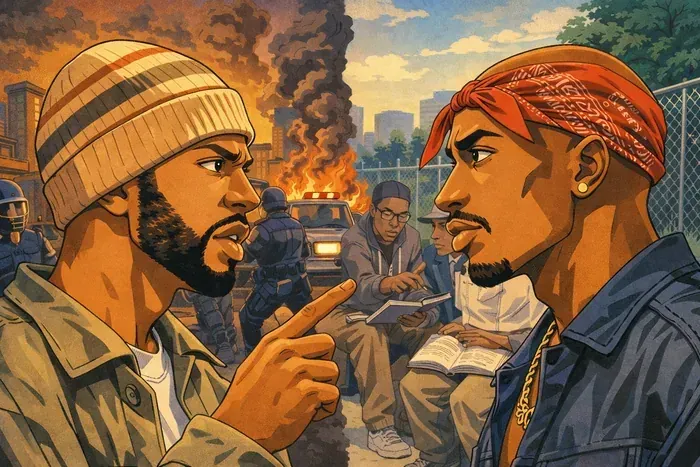
By the mid-to-late 1990s, rap was often explained through fixed categories: conscious or gangsta, political or commercial, underground or mainstream. Those labels made the culture look neater than it was.
Many rappers moved between reflection and aggression on the same album. Street stories could also carry social criticism. The tension between these currents did not mean they were in conflict. It reflected the complexity of real life.
The media focused heavily on East Coast-West Coast rivalries, which made the division seem bigger than it was. Headlines flattened albums that were often far more complex. At the same time, smaller labels and college radio stations supported artists who favored depth over chart logic.
The late 1990s and early 2000s did not silence earlier political voices. They widened the field. Some rappers focused on social issues. Others emphasized performance, charisma, and competition. Neither approach dominated the other.
The categories mattered in journalism and marketing, but the records kept crossing them. Conscious and gangsta were not separate roads. They were made from the same conditions.
KRS-One to Dead Prez: The Political Lineage
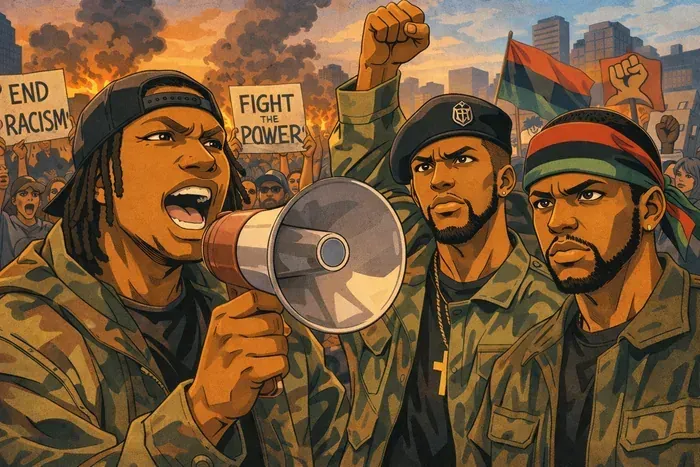
KRS-One had already become one of rap’s clearest self-appointed teachers before the 1990s ended. After the death of DJ Scott La Rock, Boogie Down Productions moved more directly into education, history, and social critique. “My Philosophy” and “Sound of da Police” made that public role unmistakable.
KRS-One spoke in a clear and confident voice, often using examples from history and community responsibility. His presence reinforced the idea that hip hop could educate as well as entertain. Lectures and interviews became part of that public role.
In the late 1990s, Dead Prez continued that tradition with a more intense and aggressive tone. Their 2000 album Let’s Get Free combined strong rhythms with clear political statements. Songs such as “Hip Hop” criticized commercialization, while “Police State” addressed surveillance and institutional control.
Dead Prez’s production focused on simple drums and bass lines that created a sense of urgency. The group did not try to appeal to a wider audience through radio. Their audience often grew through independent networks and grassroots promotion.
While critics sometimes compared artists with strong political messages to successful rappers, many of the same themes appeared across both lanes. Concerns about inequality, imprisonment, and media representation surfaced in many forms. The difference often lay in tone and emphasis, not in the underlying issues.
Both KRS-One and Dead Prez faced an industry that rarely rewarded political directness at the same level it rewarded mass appeal. Even so, their influence spread through classrooms, community spaces, and activist circles as much as through record sales.
The Backpack Era: Common, Mos Def, Talib Kweli
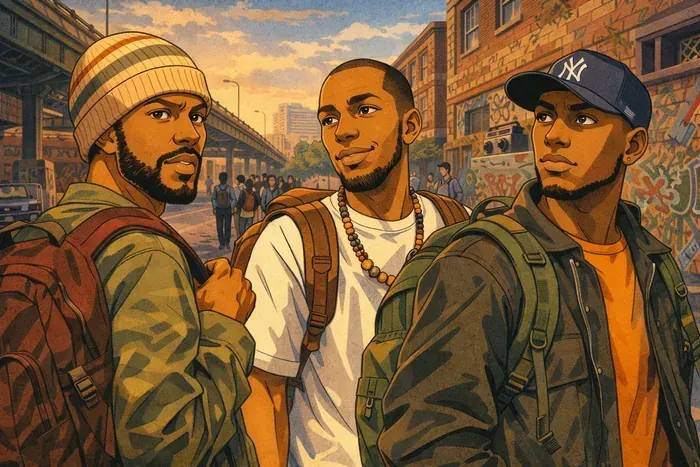
In the late 1990s, artists associated with the “backpack” scene drew fresh attention to thoughtful writing. The label could sound dismissive, as if lyric-heavy rap belonged only to a niche audience. The records themselves argued for a much wider reach.
Common, born Lonnie Lynn, had already earned respect in the early 1990s with albums such as Resurrection. By the time he released Like Water for Chocolate in 2000, his writing had become deeply introspective. Working with producers such as J Dilla and members of The Soulquarians collective, Common combined jazz-influenced beats with lyrics about love, faith, and responsibility. His calm delivery invited listeners to think as much as react.
Mos Def, later known as Yasiin Bey, was equally direct. On his first solo album, Black on Both Sides, released in 1999, he balanced talking about social issues with talking about his personal life. The song “Mathematics” used DJ Premier’s smooth beats to talk about the wealth gap and incarceration. But the album also included tender, intimate moments. Mos Def’s voice could move from sharp analysis to soulful melody without losing its center.
Talib Kweli, both as a solo artist and as part of Black Star alongside Mos Def, was known for his clear and fast-paced way of speaking. Black Star’s 1998 self-titled album addressed issues such as race, media portrayals, and the importance of artistic authenticity. The production often focused on simple drum patterns that allowed for complex verses to stand out.
These artists did not reject commercial success, but they resisted flattening their work to reach it. Their audiences grew through word of mouth, college radio, touring, and critical reputation rather than through pure marketing scale.
The so-called backpack movement kept rap’s intellectual tradition in public view. It also exposed how artificial the split between “thoughtful rap” and “street rap” could be.
Snoop Dogg: Persona as Power
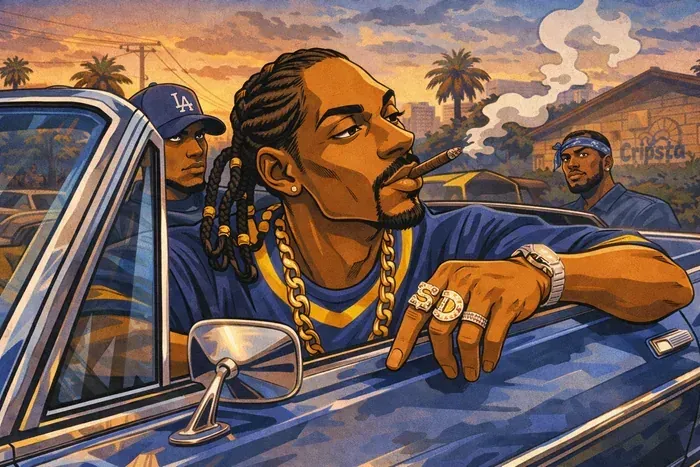
Snoop Dogg’s voice showed up on The Chronic in 1992 and it was unlike anything else on radio at the time. That relaxed, slightly delayed delivery felt confident without needing to rush. It set him apart from faster-rapping peers and made the G-Funk formula sound effortless.
His debut album Doggystyle hit number one in 1993. “Nuthin’ but a ‘G’ Thang” and “Gin and Juice” showed how he could mix street life with humor and still keep things smooth. Dre’s production anchored those tracks with heavy bass and bright synths.
He wasn’t as openly confrontational as some West Coast peers. But Snoop stayed central to that identity even as his career broadened into other genres, television, and film. He outlasted most of them.
Legal trouble hit in 1993 when a shooting charge ended in acquittal. The case kept public debate about rap and violence active regardless of the verdict.
Snoop’s career shows how important persona is to hip hop. The image and voice are closely connected. A relaxed flow can make controversial themes seem less intense without removing their importance. Being successful in the business world doesn’t automatically make you popular on the streets, but it does change the situation.
Many artists during this time felt pressure to balance artistic expression with public scrutiny. Politicians, advocacy groups, and media outlets often framed hip hop as a social threat. That narrative influenced business decisions, public debate, and the way the culture was presented and defended.
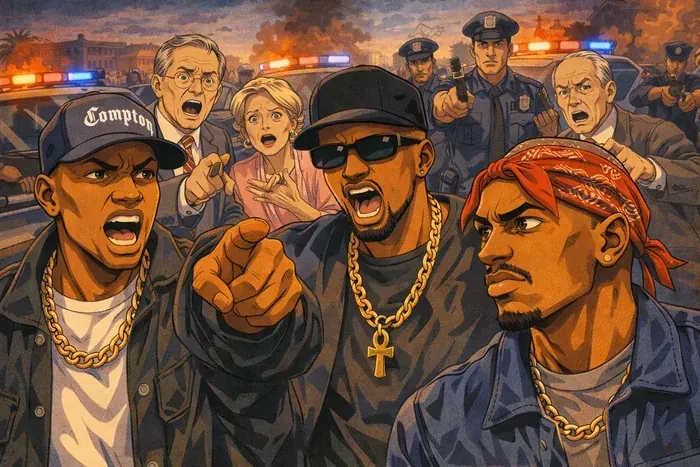
Moral Panic: How America Feared Hip Hop
As hip hop’s audience grew in the 1990s, so did the scrutiny of the genre. Politicians, talk show hosts, and newspaper columnists began using rap lyrics as evidence in broader cultural debates. Songs about violence or anger were often presented as endorsements, not depictions. The line between storytelling and advocacy became blurred in public discussion.
Groups like the Parents Music Resource Center had already asked for warning labels in earlier decades. By the time gangsta rap became popular, the “Parental Advisory” sticker was already well-known. Some retailers used this as an excuse to limit sales. For many fans, it became a symbol of authenticity.
Government officials also focused on rap lyrics. Television segments replayed controversial lines without providing the context. Artists like N.W.A, Ice-T, and later Eminem were at the center of national debates about free speech. Ice-T’s 1992 song “Cop Killer,” which he recorded with his metal band Body Count, led many law enforcement groups to demand that it be removed. The song was eventually taken off the album, but people still talked about it.
Media framing often makes complex realities seem simpler. Rappers who talked about systemic violence were called “promoters of chaos.” At the same time, issues like poverty, segregation, and police brutality were not given as much attention. Hip hop became a symbol of these anxieties.
But the controversy also made it more visible. Public debate brought attention to artists who might have otherwise remained unknown. Sometimes sales went up, but so did the criticism. The tension between condemning and consuming became part of the industry’s dynamic.
Artists responded in different ways. Some remained defiant. Others explained their intentions in interviews and lyrics. Some changed direction and explored ideas that were less likely to cause a negative reaction. These responses are all connected to what was happening in the market. Record labels weighed how risky it was and how much money they could make. Radio stations dealt with concerns from advertisers.
The moral panic of the era did not stop hip hop from growing. Instead, it made people talk about responsibility, censorship, and representation. It also showed that different genres were judged differently. Themes about violence in rock music and movies did not always receive the same political focus.
By the year 2000, hip hop had become a dominant part of culture. The debate around it had not stopped, but it had become more mature. The chapter ahead examines how business structures, branding, and corporate growth reshaped that debate.
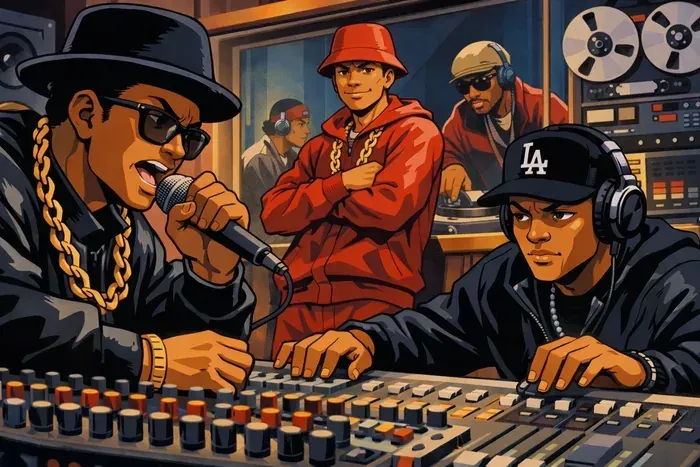
The Business of Hip Hop: From Art to Empire
By the late 1990s, hip hop was no longer treated as a fringe business. Major labels were competing for rap artists, music video channels depended on rap visibility, and brand partnerships were becoming routine. A local cultural practice had become a global market.
This growth created both opportunities and challenges. Artists had more money and were able to show their work around the world. At the same time, contracts became more complicated. Ownership of masters, publishing rights, and branding deals became central concerns. The conversation shifted from survival to dealmaking power.
Executives who once hesitated to invest in hip hop now saw it as a reliable source of profit. Rappers learned to move through both boardrooms and studios. Some launched clothing lines and beverage brands. Others started labels to gain more control over their music.
The relationship between art and business had always been there, but during this period, it became obvious. Success wasn’t just about how good the lyrics were; it was also about how much of the market they were able to capture. The profiles that follow track artists who embodied this shift, combining creative ambition with strategic business moves.
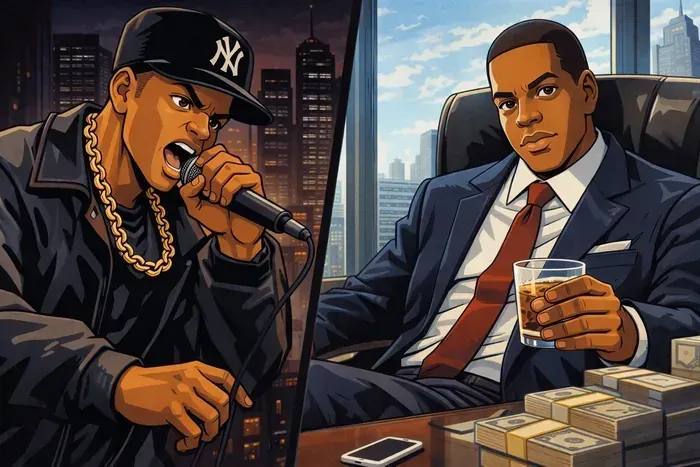
Jay-Z: From Rapper to CEO
Shawn Carter, known as Jay-Z, became one of the clearest examples of rap’s merger of craft and business strategy. By the early 2000s, he was not just a major rapper. He was one of the genre’s most visible executives.
After creating Roc-A-Fella Records in 1995, Jay-Z released a series of albums that combined street credibility with polished production. The Blueprint, released in 2001, was one of his most successful albums. Kanye West and Just Blaze helped produce the album, which mixed soulful samples with strong lyrics. Tracks like “Takeover” showed how competitive he is, while “Izzo (H.O.V.A.)” was more likely to be played on the radio.
Jay-Z’s image shifted from hustler to executive without fully dropping either side of the performance. He spoke directly about ownership, catalog value, and dealmaking power. His later role at Def Jam helped normalize the idea that rappers could also occupy the industry’s highest decision-making positions.
Brand partnerships made this idea stronger. Jay-Z’s involvement in businesses like Rocawear clothing and later investments in sports and streaming platforms made him influential outside of music. The line between artist and executive became less clear.
He wrote lyrics that were technically precise. His flow felt natural, like he was just talking, but there was a hidden rhythm to it. Even as his business grew, he remained committed to his craft, as shown by albums like The Black Album.
Jay-Z’s success as an entrepreneur influenced younger artists, showing them that entrepreneurship was an essential part of their career, not just an optional extra. The idea that a rapper could build a successful career without changing their artistic style became more popular.
The rise of executive authorship did not eliminate creative tension. Negotiating corporate structures required compromise. But for Jay-Z and others, business knowledge became a tool, not a problem.
As hip hop moved deeper into the 2000s, its look also changed. Producers and artists experimented with glossy, crossover sounds, which reshaped radio playlists and international charts.
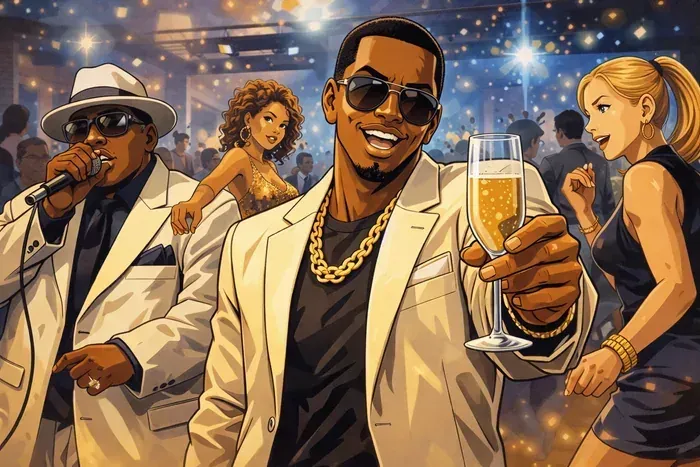
Puff Daddy: The Art of the Crossover
Jay-Z represented one model of executive authorship. Sean “Puff Daddy” Combs represented another. As the founder of Bad Boy, he treated production, branding, and visual scale as parts of the same business.
Bad Boy’s early success was thanks to The Notorious B.I.G., whose albums combined detailed stories with well-crafted beats. Combs liked glossy productions that often used samples from well-known soul and pop records. The hooks were clear, and the choruses were memorable. Songs like “Mo Money Mo Problems” were fun to listen to, but they still had clever lyrics.
Puff Daddy also became famous as a performer. His 1997 album No Way Out featured well-known collaborations and professional-looking visuals. The song “I’ll Be Missing You” was recorded after Biggie’s death. It reached a wide audience and topped charts internationally. Its prominent use of the melody from The Police’s “Every Breath You Take” also highlighted Bad Boy’s crossover strategy.
Visual presentation became central. Music videos showed luxury settings and images that made people want to be rich. Suits replaced casual streetwear in some appearances, signaling that the performer was moving up in the world. Some people didn’t like that this style made hip hop less edgy. Supporters saw it as proof of success and independence.
Bad Boy’s rise happened at the same time as the music industry was becoming more concentrated. Major record labels either took over smaller record companies or worked with them to increase how many records they could sell. Marketing budgets increased. Artists were able to go on global tours and promote brands.
At the same time, there were internal struggles. Financial disputes and changing relationships affected careers. Media-amplified East Coast–West Coast tension also strained relationships between labels.
Puff Daddy’s model showed how hip hop could succeed within corporate structures. The approach was not without controversy. As songs became more commercial, people questioned authenticity and depth. The lyrics did not disappear, but the context changed.
As polished production became the main style of rap music on the radio, another figure emerged who would spark intense debate about race, identity, and shock value within mainstream rap.
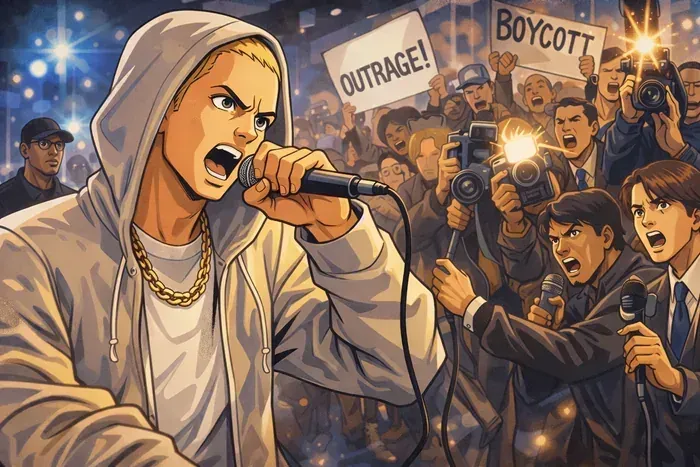
Eminem: Skill, Controversy, and the Mainstream
When Eminem became famous in the late 1990s, he surprised people in several ways. He was born Marshall Mathers in Detroit. He first became famous by competing in local rap battles. Then he caught the attention of Dr. Dre. His first album on a major label, The Slim Shady LP, was released in 1999. On it, he mixed technical skill with humor and shock value.
Eminem is a highly skilled rapper. His rhymes were precise, and he could change his tone in the middle of a verse, which made it hard to predict what was coming next. In songs like “My Name Is,” he mixed humor with a sense of self-awareness. But the humor often had a sharp edge. People were upset with the references to violence, celebrity culture, and personal problems.
The topic of race came up early in the conversation. Eminem is a white rapper. He performs in a genre that is based on Black cultural expression. Because of this, he faced criticism from both critics and fans. Some people wondered if his success was because of unfair competition in the industry. Others pointed to his public acknowledgment of hip hop’s origins and his collaboration with Black artists as evidence of respect for the culture.
His 2000 album The Marshall Mathers LP created controversy. Songs like “Stan” showed a lot of narrative depth, exploring obsession and the pressures of fame. At the same time, other tracks intensified debate about misogyny and homophobia. The album sold extremely well, showing the market power of boundary-pushing music.
Dr. Dre helped Eminem significantly at the beginning of his career. Dre’s polished production balanced out Eminem’s fast-paced rapping, creating a solid foundation for the music. This partnership also showed cross-regional collaboration between Detroit and Los Angeles.
People’s negative reactions did not stop sales. Protests outside award shows and heated television debates often increased public attention. Eminem responded through music, sometimes by becoming louder rather than softer.
As time went on, his work became more introspective. Albums like The Eminem Show talked about fame and personal problems in a more detailed way. Even so, his early years made people see him as both talented and controversial.
Eminem’s rise to fame showed how being successful in the mainstream can make cultural tensions more obvious. Hip hop’s influence had grown so wide that it touched on important national discussions about free speech, personal identity, and the responsibility of artists.
While there was constant controversy in the news, there was also quiet innovation in rhythm and production. One artist-producer partnership in particular changed the soundscape and expanded how women’s voices were heard in mainstream rap.
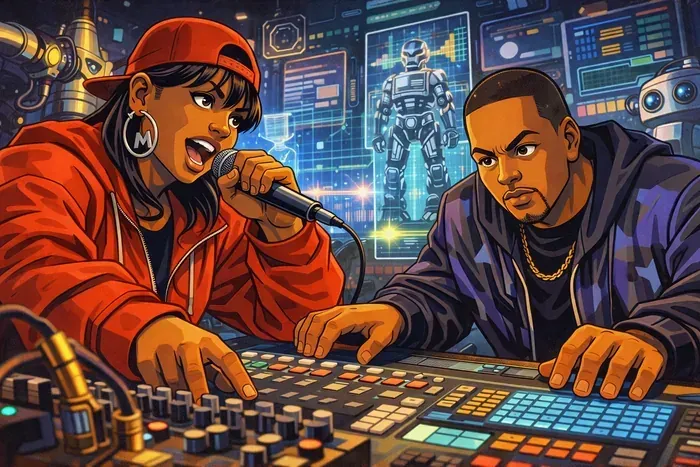
Missy Elliott & Timbaland: Inventing the Future
As commercial rap started to use more polished formulas, Missy Elliott and Timbaland introduced rhythms that felt unfamiliar and forward-looking. Emerging from Virginia’s music scene in the mid-1990s, they brought playfulness and unpredictability to mainstream hip hop and R&B.
Missy Elliott first became famous as part of the group Sista before she started working on her own music. Her first album, Supa Dupa Fly, which was produced mostly by Timbaland, sounded very different from the music that was popular on the radio at the time. The beats were based on syncopated drum patterns, unusual percussion textures, and negative space. Timbaland’s production didn’t rely on many samples. He built from carefully chosen sounds, often simple but striking.
The song “The Rain (Supa Dupa Fly)” had a strong bass sound and a strange rhythm. Missy’s performance seamlessly blended rap and melodic elements. Her voice had humor, confidence, and self-awareness. She didn’t fit the typical image of a hip hop woman. Instead, she reworked that image on her own terms.
The visual style made that originality clear. Music videos directed by Hype Williams and others used distorted camera angles, bold costumes, and imaginative set design. The images felt like they were from the future, not based on real life. Missy controlled her story through both sound and sight.
When she performed, she combined confidence with humor. Her lyrics addressed relationships, independence, and desire without focusing solely on conflict. She showed that innovation and accessibility could coexist. Radio stations played her singles, but the production style remained experimental.
Timbaland’s influence was also felt outside of Missy’s own work. He worked with other musicians like Aaliyah, Ginuwine, and later Justin Timberlake, and their music had similar rhythmic elements. Pop and hip hop production changed when musicians started focusing more on rhythm and less on traditional melodies.
Missy Elliott’s work as a producer and songwriter also broke new ground in the music industry. She was her own person, not just carrying out someone else’s vision. She created the music. Her success showed that there are more opportunities for women in both behind-the-scenes and on-stage roles.
During a period of corporate expansion and cultural controversy, Missy and Timbaland showed that popularity and experimentation were not opposites. As the 2000s continued, distribution models also changed. Before streaming took over, another informal network was already reshaping how hip hop circulated.
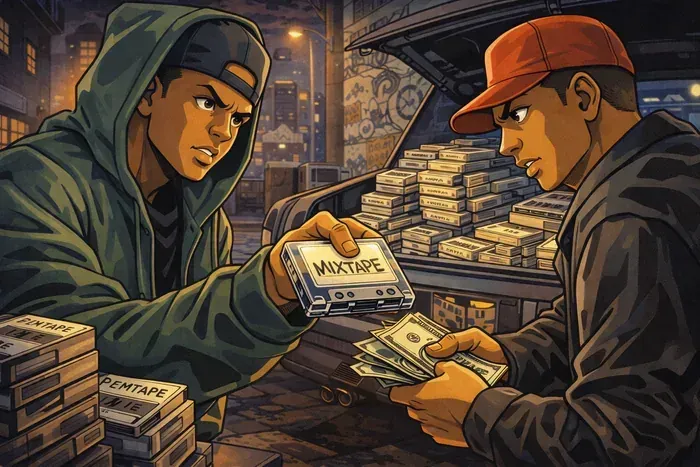
Mixtapes: The Underground Economy
Before streaming platforms dominated distribution, mixtapes formed a parallel economy. They circulated through shops, street vendors, car trunks, DVDs, CD-Rs, and later download sites. For many artists, they offered far more freedom than a label album cycle.
In the late 1990s and early 2000s, DJs like DJ Clue and DJ Drama were central. Their tapes often featured exclusive freestyles and early versions of tracks that would later appear on albums. A strong mixtape could create excitement even without support from formal radio stations. Artists gained recognition by rapping over popular beats and demonstrating lyrical skill against familiar instrumentals.
50 Cent is a clear example of how powerful mixtapes could be. Before he became famous with the 2003 album Get Rich or Die Tryin’, he was already known in New York for street tapes that were widely shared. His enthusiastic style and constant self-promotion generated excitement that record labels could not ignore.
Lil Wayne’s mixtapes from the mid-2000s also showed how effective the format could be. Wayne’s projects Dedication and Da Drought featured him playing remixed versions of other artists’ beats while sharpening his profile as a relentless rapper. These releases strengthened his credibility and expanded his audience before the official album cycle.
Mixtapes also allowed for experimentation. Artists could try new styles and ideas without the pressure of having to write songs that would be played on the radio. Since they had lower budgets, they could take more risks with less financial pressure. In that space, the culture often valued immediacy over polish.
At the same time, copyright problems became important. Mixtapes often used unlicensed beats. As digital distribution grew, there was more legal scrutiny. But the relaxed style of the format meant that it could be shared quickly.
By the late 2000s, websites like DatPiff made this underground network even bigger. People shifted from physical tapes to downloads. The model foreshadowed the streaming era, where direct audience access became essential.
The mixtape economy made it hard to tell the difference between an amateur and a professional. It allowed artists to build fan bases without traditional label support. As technology advanced, that direct route became even more important.
Hip hop was about to change again. The music was becoming more prominent in the Southern United States. Attention now shifts to the rise of trap, a style that would define much of the 2010s.
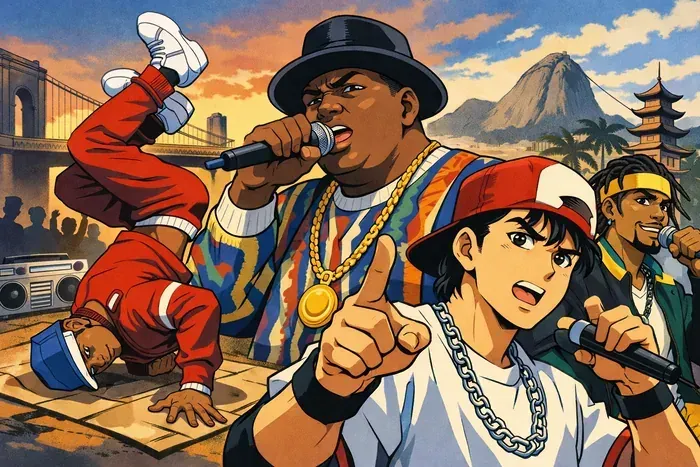
Global Hip Hop: A Shared Rhythm, Many Voices
As hip hop grew in the United States, it also spread outward. By the late 1980s and through the 1990s, artists across Europe, Africa, Asia, and Latin America were adapting it to their own languages, class tensions, and political realities.
Hip hop didn’t just spread as a simple export. It was reinterpreted. In some countries, it became a way to deal with immigration, unemployment, or racial discrimination. In other cases, it gave young people a way to challenge political authority or change how a nation’s people see themselves.
American artists influenced global scenes, but influence moved in multiple directions. Artists in different countries exchanged music with one another, and collaboration grew as travel and media access expanded.
By the 2000s, hip hop was no longer imitating New York or Los Angeles. It had become a set of local movements linked by shared rhythm and method. Several international scenes below show how that transformation unfolded.
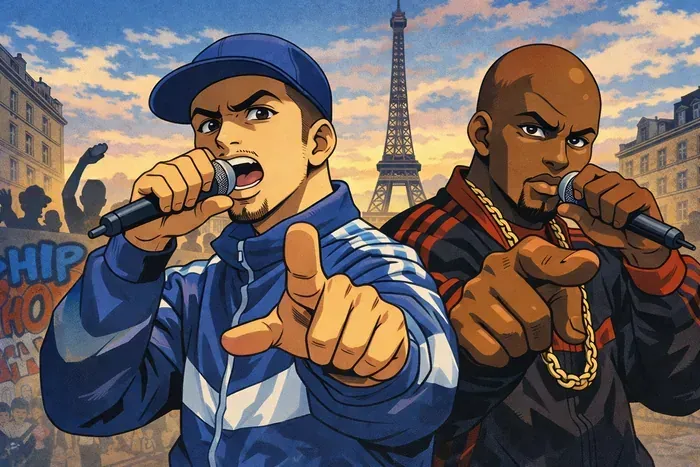
France: Where Hip Hop Spoke French
France has one of the most visible hip-hop scenes outside of the United States. In the late 1980s and early 1990s, musicians like MC Solaar and the Marseille-based group IAM made French-language rap popular throughout the country.
MC Solaar’s first album, Qui sème le vent récolte le tempo, released in 1991, showed how well French could carry rap’s rhythmic structure. His delivery was smooth and reflective. The song “Bouge de là” mixed jazz-influenced production with clever lyrics. Solaar showed that French rap could be as agile and layered as English-language rap.
IAM, a hip hop group from Marseille, used their music to talk about political issues. Their 1997 album L’École du micro d’argent addressed themes of immigration, inequality, and urban marginalization. Marseille’s multicultural character shaped the group’s outlook. IAM often referenced Mediterranean identity and North African heritage, reflecting France’s colonial history.
French hip hop developed in a period of social unrest. In the 1990s, debates about integration and discrimination were intense. Rap gave young people in the banlieues a way to express frustration. Lyrics often addressed police violence and economic exclusion with unusual clarity.
Early American hip hop grew in relative industry isolation, but French rap quickly entered mainstream media. It became visible on radio and in the charts, while underground scenes continued to expand and innovate.
The French language needed to be adjusted to flow and cadence. Artists changed the rhymes to fit different syllabic patterns than English. This change in language showed how flexible hip hop is. The culture was not based on one language.
France’s success encouraged other European scenes to do the same. The UK developed a special approach that mixed Caribbean influences with local dialects. This change would create new types of music and eventually influence global trends.
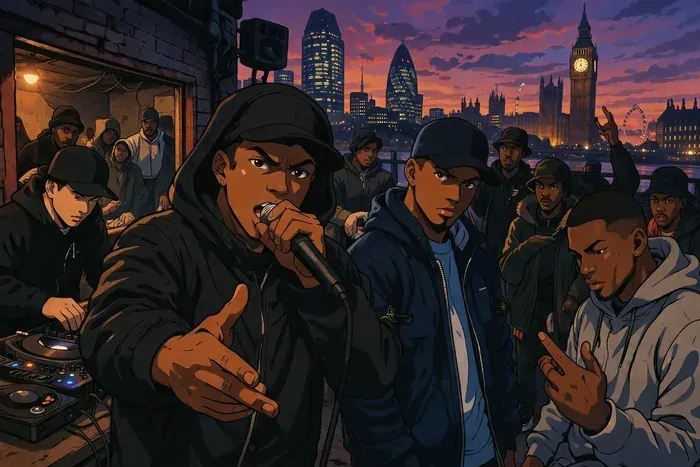
UK: From Grime Basements to Mainstream Charts
Hip hop arrived in the United Kingdom in the 1980s, but it evolved differently here. Caribbean sound system culture had already influenced British urban music, especially in London. This background influenced how rap and electronic production came together.
In the early 2000s, grime emerged from East London neighborhoods. It was a fast-paced style with heavy bass. MCs delivered rapid bars over stark electronic beats. Artists like Dizzee Rascal helped bring that sound to national attention. His 2003 album, Boy in da Corner, combined fast-paced rapping with rough production that reflected his local experience. The record won the Mercury Prize, which made it famous outside of the underground music scene.
Grime differs from traditional American hip hop or West Coast funk. The tempos were faster, and the rhythms felt jagged and intense. Pirate radio stations were essential to circulating the music because they let artists test new songs in real time. MCs competed for attention over instrumentals that sounded more like UK garage and electronic dance music than classic hip hop.
British rap has grown beyond grime. Artists like Stormzy mixed grime music, which has its roots in the London area, with more traditional rap styles. His 2017 album Gang Signs & Prayer debuted at number one on the UK charts. The record addressed issues like faith, race, and political frustration while maintaining club-ready tracks. Stormzy’s support for social justice movements made hip hop an important tool for activism in Britain.
UK drill later emerged, drawing influence from Chicago’s drill scene while adapting to British accents and production styles. The bass stayed strong, but the flow adapted to the local rhythm. The authorities were concerned about the lyrics, which mentioned street conflicts. Some music videos were removed from online platforms because they were accused of encouraging violence, which has led to discussions about censorship and freedom of expression.
The British scene showed how hip hop could combine with electronic music and postcolonial identity. Instead of imitating American pronunciation, artists embraced regional speech patterns as markers of identity rather than barriers to legitimacy.
By the 2010s, collaboration between UK and US artists had become more common. Production methods and stylistic ideas traveled back across the Atlantic. The exchange showed how hip hop can change and grow. It was no longer centered in one place. It worked as a group of local expressions connected by a shared rhythm and a tendency to tell stories.
In other parts of Europe, Germany developed its own path, influenced by reunification, immigration debates, and language politics.
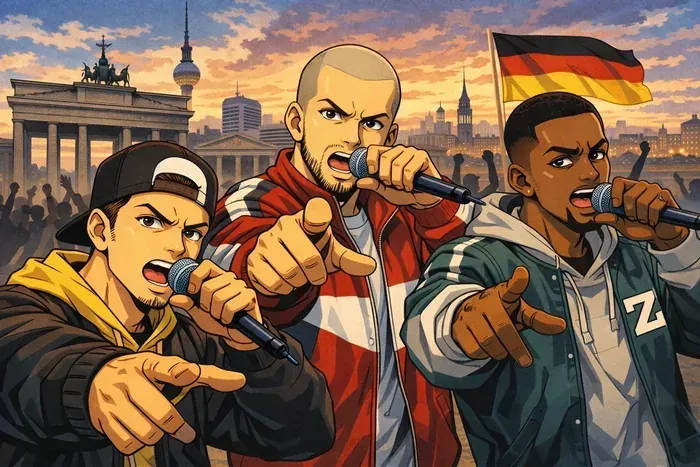
Germany: Finding Identity in the Mother Tongue
Hip hop first arrived in Germany in the 1980s. It was introduced by American military radio stations, imported records, and breakdancing crews. Early adopters often performed in English under strong American influence. That started to change in the early 1990s when German-speaking artists began rapping with confidence, adapting their flow to the local language and rhythm.
Die Fantastischen Vier, a group from Stuttgart, helped make German-language rap popular. Their 1992 album 4 gewinnt featured the hit song “Die da!?” The group’s style was playful and easy to understand, which made hip hop appealing to people who hadn’t listened to it before. Critics sometimes said they were too lighthearted, but their success showed that German could carry rhythmic structure effectively.
Around the same time, Advanced Chemistry took a more politically charged approach. The Heidelberg-based group addressed questions of identity and citizenship. Their 1992 song “Fremd in eigenem Land” (“Foreign in One’s Own Country”) describes being treated as foreign despite being born in Germany. The track became prominent during intense debates about immigration and rising xenophobia after reunification.
German hip hop developed in many different ways. Some artists used their art to talk about social problems. Others embraced party themes or, later, street-focused narratives. That diversity reflected regional differences between cities such as Berlin, Hamburg, and Frankfurt.
Adapting rap to German required formal experimentation. German’s longer compound words and different stress patterns influenced the flow of the language. Rappers adjusted phrasing to preserve rhythm without losing clarity. Over time, audiences grew accustomed to hearing complex rhyme schemes in German.
By the 2000s, German rap had grown significantly. Artists were using both thoughtful and aggressive styles. Independent record labels and local festivals helped the music scene grow. While America was still involved, the scene developed its own unique references and rivalries.
Germany is a strong example of this pattern. Hip hop became a way to discuss belonging and national identity, even when the form itself came from elsewhere. It functioned as a flexible framework for local expression.
In places outside of Europe, scenes in Brazil, South Africa, and Japan were also starting to develop their own unique styles. These movements showed that hip hop’s most important elements could cross borders without losing their meaning.
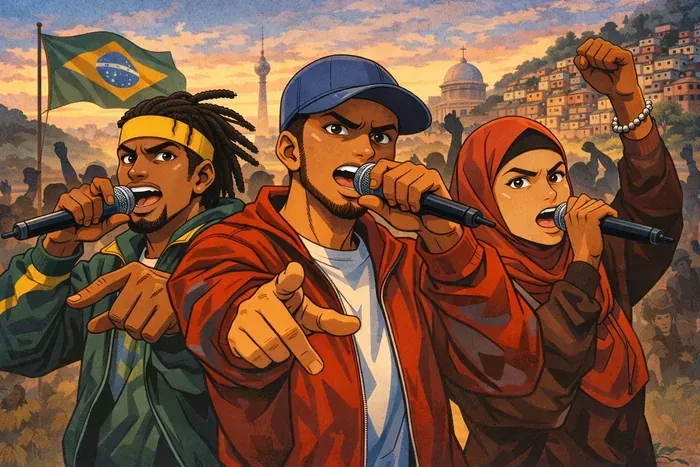
Global South: Hip Hop Beyond the West
In places outside of Europe and North America, hip hop flourished in cities facing challenges like inequality, migration, and political tension. In many parts of the Global South, rap became a way to narrate local experience. The rhythms were familiar, but the references were deeply local.
In Brazil, the group Racionais MC’s started in the late 1980s in the neighborhoods on the outskirts of São Paulo. Their 1997 album Sobrevivendo no Inferno clearly addressed police violence, racism, and economic inequality. The production had a strong focus on low, thumping bass and simple, sharp beats, which allowed the deep, emotional Portuguese lyrics to convey the message. For many Brazilian listeners, Racionais were more than just entertainers. They wrote about the daily struggles of their people.
In South Africa, hip hop music blended with the country’s new post-apartheid reality. Groups like Prophets of Da City in the early 1990s used rap to challenge government power and racial injustice. Their music drew on American influence while telling specifically local stories. The use of multiple languages in their verses reflected the country’s linguistic diversity.
Japan developed its own hip-hop scene in the 1990s. Artists like Rhymester helped establish Japanese-language rap as a respected form of music. The way they adapted to new rhythms required paying close attention to the timing of each syllable, similar to developments in Germany and France. Japanese hip hop often combined social commentary with playful wordplay, reflecting urban youth culture in Tokyo and beyond.
These movements were strengthened by transnational connections. People moved across continents and shared sounds. Caribbean rhythms influenced UK rap. Artists from Africa and Latin America collaborated with artists from the United States. By the 2000s, international festivals and digital platforms had accelerated that exchange of ideas.
Global hip hop did not replace local traditions. It blended with them. Each scene’s identity was shaped by regional instruments, slang, and political context. The common thread was the relationship between rhythm, voice, and beat.
As the 2000s continued, Southern U.S. production styles started to dominate the charts around the world. Heavy bass, fast hi-hats, and atmospheric textures defined a new era. What started in Atlanta influenced artists from London to São Paulo.
The focus now shifts to trap music. This style is rooted in Southern street stories and became one of the most popular sounds of the 2010s.
Trap: The Sound of 808s and Emotion
By the early 2000s, hip hop’s center of gravity had moved toward the South, especially Atlanta. Trap did not appear from nowhere. It condensed several Southern traditions into a tighter, darker, more pressurized sound.
Memphis horrorcore, Houston street rap, Atlanta bass-heavy production, and crunk all fed into that shift. Trap was not a clean break from what came before. It was a tighter, darker recombination of regional ideas that were already circulating across the South.
The 808 became central again, but now with deeper sub-bass and more complex hi-hat programming. Early trap artists wrote about street economies, surveillance, pressure, and survival. The word “trap” referred first to drug houses and drug corners, but it also came to name a wider emotional condition.
Mixtapes helped spread the sound before radio stations fully embraced it. Producers developed recognizable signatures. The atmosphere was as important as the hook.
Trap did not replace other forms of hip hop. It refocused attention on rhythm and mood. The sections ahead trace how it moved from a local scene to a global sound.
T.I., Jeezy, Gucci Mane: Defining the Trap
The word “trap” entered rap vocabulary before it described a genre. In Atlanta, it pointed to houses or corners tied to the drug trade. T.I. helped push the term into national circulation with Trap Muzik in 2003, where ambition, detail, and 808-weight all came together.
Young Jeezy reinforced the style with Let’s Get It: Thug Motivation 101 in 2005. His barked delivery and stark production made the music feel austere and forceful at once.
Gucci Mane expanded the scene through constant mixtape output. Trap House in 2005 helped establish the texture, but his larger influence came from the ecosystem around him. He became a central connector for the next generation of rappers and producers.
Early trap music often used dark synthesizer sounds and rapid hi-hats programmed in tight subdivisions. The rhythm created urgency, even with minimal instrumentation. There was space between the drum hits, which let rappers stretch out syllables and experiment with the rhythm.
Mixtapes were still very important. Before major labels scaled the genre, tapes were shared widely through local networks and online platforms. DJs and producers worked closely with artists to improve the sound as they went.
Trap’s popularity grew at the same time that recording technology was improving. Digital workstations replaced most of the old hardware setup. Producers could build entire tracks on laptops, speeding up the process.
At first, critics thought trap was only a regional subgenre. Within a decade, it became the dominant form of mainstream hip hop and influenced pop music worldwide. The next stage of trap moved beyond simple realism and introduced melodic experimentation and new emotional range.
Lex Luger & Metro Boomin: Building with 808s
As trap moved from regional force to mainstream template, producers pushed even further to the front. Lex Luger and Metro Boomin became two of the clearest names in that shift.
Lex Luger broke through in the mixtape internet era with Waka Flocka Flame records like “Hard in da Paint.” His beats were loud, orchestral, and immediate, with huge 808s and rapid hi-hats doing most of the dramatic work.
Luger’s style spread quickly because it worked instantly. Metro Boomin arrived a little later and took trap in a moodier direction. On records with Future and 21 Savage, he balanced low-end weight with eerie melody and more careful use of empty space.
In earlier eras, producers sometimes stayed out of the spotlight, but Metro Boomin’s name became a brand in itself. Producer tags and short vocal signatures at the start of tracks identified authorship. Beatmakers became central to marketing and recognition.
The focus on 808 architecture changed how hip hop felt physically. Sub-bass frequencies are designed to resonate in car speakers and club systems. The experience of listening became physical, not just emotional.
Digital tools made it easier for people to work together, even if they were far apart. Beats could be emailed, modified, and released quickly. Output accelerated, and so did competition.
Trap’s popularity reflects both technological advances and rising regional confidence. Producers were not just supporting rappers. They were defining emotional tone.
Future: When Trap Found Melody
As trap grew louder and more popular, another shift emerged. The sound stayed heavy, but the emotional tone changed. Future became one of the clearest examples.
Future, born Nayvadius Wilburn in Atlanta, became one of trap’s key shape-shifters. His 2012 album Pluto brought melody and vocal texture closer to the center without leaving trap’s drum architecture behind.
Auto-Tune became a defining expressive tool in his music, not just a pitch fix. On “Turn On the Lights,” vulnerability, fatigue, desire, and trap atmosphere all sit in the same frame.
Monster and DS2 pushed the atmosphere darker. Tracks like “March Madness” let mood carry as much weight as plot, which changed what many listeners thought trap could hold.
At first, critics questioned whether this melodic approach weakened traditional rap technique. Over time, its influence became undeniable. A new generation began mixing singing and rapping in fluid ways.
Future’s work also reflected the pressures of modern visibility. Themes of excess, addiction, and isolation appeared frequently in his lyrics. While they didn’t come right out and say it, they suggested that something was wrong beneath the surface. The tension between public persona and private vulnerability became part of the genre’s evolving narrative.
Production teams reinforced that shift. Metro Boomin and collaborators created an immersive atmosphere rather than a crowded one. The beat was not just a place for bragging. It was an emotional environment.
“Trap” came to mean more than “stark realism” or “street report.” It could also carry sadness, desire, and confusion. A trio from Atlanta reshaped flow patterns in ways that would be popular all over the world.
Migos: The Triplet Flow That Changed Everything
If Future expanded trap’s emotional language, Migos transformed its rhythmic structure. The Atlanta trio Quavo, Offset, and Takeoff first built momentum through mixtapes before “Versace” broke through in 2013. The track made their rhythmic approach impossible to miss.
Triplet phrasing was not new to rap, but Migos made it central to a mainstream style. Their evenly spaced bursts of syllables locked to trap hats in a way that felt both rigid and elastic.
Culture in 2017 made the formula unavoidable. On “Bad and Boujee,” ad-libs, spacing, and hand-offs between voices were structural, not decorative.
The way the group worked together was central. Verses rotated quickly, which prevented monotony. Each musician played a little differently, but together they played in time. The production was simple enough to highlight the beat.
Migos also gained popularity on streaming platforms. “Bad and Boujee” first took off on social media, then climbed the charts. Its hook spread quickly online, showing how music discovery was changing.
The triplet flow soon appeared across different types of music. Pop artists used similar rhythms. International rappers used this pattern in their music, adapting it to the sounds of different local languages. What started as a regional symbol spread around the world and became a universal rhythmic vocabulary.
Some critics complained that the lyrics weren’t very deep, and that they just repeated themselves. Supporters argued that rhythmic innovation is a form of artistry in its own right. Hip hop has always changed through beats as well as words.
By the late 2010s, trap was no longer considered a subgenre. It set the production standard for mainstream rap. Women artists were central to this phase and dominated the charts.
Women Dominating: Nicki, Cardi, Megan, and More
As trap became the dominant sound of the 2010s, women were not just present inside it. They reshaped what mainstream rap stardom looked and sounded like.
Nicki Minaj first became famous in the late 2000s by releasing several mixtapes. Then, in 2010, she released her first album, Pink Friday. Her technical skill was immediately obvious. On “Monster,” she matched and, for many listeners, surpassed Kanye West, Jay-Z, and Rick Ross. She shifted voices quickly, changed character mid-verse, and treated performance itself as a technical art.
Minaj balanced pop songs like “Super Bass” with harder rap songs. Her ability to appeal to both radio and rap audiences helped her succeed in both spaces. She worked in a male-dominated industry, but she was never easy to overlook.
Cardi B’s rise to fame shows how important social media is for musicians today. After building a fan base online, she released “Bodak Yellow” in 2017, which reached number one on the Billboard Hot 100. Her first album, Invasion of Privacy, came out in 2018. It combined strong songwriting with direct stories about ambition, independence, and self-definition. Cardi’s authenticity resonated widely, in part because her public persona felt unfiltered.
Megan Thee Stallion is from Houston and has a confident, assertive style that is inspired by Southern tradition. Tracks like “Hot Girl Summer” and “Savage” show off her control of rhythm, voice, and punchline. Her freestyles circulated widely online, helping establish her technical credibility.
Rapsody, who is not often considered part of the mainstream trap narrative, had a strong presence in the 2010s with albums such as Laila’s Wisdom. Her work was reflective and lyrical, showing that contemporary female rap did not fit into only one category.
These artists did more than chart well. They expanded the subject matter. Topics such as sexuality, financial independence, and personal boundaries were discussed openly. Debates about respectability echoed earlier conversations from the 1990s. Their commercial success also helped normalize women as central decision-makers in rap, not exceptions.
Trap’s strong presence set the dominant pulse, and women used that space to speak for themselves. As the 2010s continued, another type of music became more visible. This style was characterized by stark realism and deep bass. Drill would soon carry Trap’s sonic foundation into a more intense sound.
Drill: From Local Streets to Global Stage
By the early 2010s, a new style was emerging on Chicago’s South Side. It had trap’s heavy bass and simple production, but its tone felt colder and more direct. Drill didn’t set out to make polished hooks or appeal to a wide audience. It documented the environment with minimal filter.
The term “drill” referred to retaliatory violence within certain neighborhoods. The music matched that setting. The beats were dark, built on slow tempos, with a low, steady bass sound and loud, simple hi-hats. The mood was often stark and restrained.
Social media played a key role in spreading the style. YouTube videos and other online platforms let local artists reach audiences beyond Chicago even without the support of a traditional record label. This visibility also sparked backlash. Some argued that lyrics about violence could worsen existing conflicts. Supporters said that the music reflected real life instead of creating it.
Drill spread from Chicago to London and then to New York. It changed to fit the accents and production details of each place.
Drill moved from a local style to a global phenomenon.
Chicago: Where Drill Was Born
Chief Keef was the most well-known early representative of Chicago drill music. In 2012, his song “I Don’t Like” became popular on the internet. Social media and a remix featuring Kanye West helped make the song even more popular. The song’s simple production and repetitive hook fit with the raw style of drill music. Keef’s performance felt distant and unemotional, which added to the cold atmosphere.
His first album, Finally Rich, made him even more popular. The song “Love Sosa” had the same level of intensity with fewer added elements. The music was mostly dark and heavy. The focus was on creating a certain mood, rather than on complex rhymes.
Lil Durk, another important figure from Chicago, had a slightly different approach. While his music was based on the style of drill, it also included more melodic elements. Songs like “Dis Ain’t What U Want” mixed stories about the street with feelings. Over time, Durk’s career grew beyond local to national collaborations.
Drill’s early growth happened alongside real violence in parts of Chicago, so news coverage often collapsed music and neighborhood conflict into one story. Artists argued that they were documenting conditions, not inventing them.
Producers like Young Chop built dark, spare beats at slower tempos than much mainstream trap. The emphasis was on menace, repetition, and atmosphere rather than dense rhyme display.
YouTube was the main delivery system. Low-budget neighborhood videos felt immediate and local, but they also drew national attention. Some were later removed or age-restricted, which kept censorship debates close to the genre from the start.
Chicago drill did not set out to be the most popular in the world. It was specific to the local scene. But its sound proved adaptable. Within a few years, artists in the United Kingdom were reshaping drill through their own accents and production choices.
UK Drill: New Accent, Same Energy
When drill music reached the United Kingdom in the mid-2010s, it was not a direct copy of the Chicago style. British producers changed the sound to fit local tastes. They adjusted the tempo and rhythm but kept the dark atmosphere. The bass lines and hi-hats stayed important, but the rhythm changed to fit London accents and slang.
Groups like 67 and Harlem Spartans were some of the first to contribute to UK drill’s rise. Later, artists like Headie One and Digga D made this style more popular. The production often used eerie melodies and off-center drum patterns. The mood felt tense and cinematic, distinct from Chicago’s earlier version of the style.
UK drill music developed in the context of youth violence debates similar to those that surrounded Chicago’s scene. The police in London tried to stop some performances and online videos because they thought the lyrics could cause real problems. Sometimes, the court would order artists to submit their lyrics for review before releasing them. Platforms removed content when authorities pressured them to do so.
Artists responded by saying that drill music lets people tell stories, not encourage violence. Many argued that structural inequality, limited opportunity, and aggressive policing existed long before the music. For young listeners, drill offered visibility in a system that often ignored them.
Despite the controversy, UK drill music was successful commercially. Tracks began appearing on national charts. Working with well-known artists helped them reach more listeners. The style’s adaptability allowed it to combine with traditional British rap and grime influences.
The worldwide use of digital platforms has increased the spread of ideas. American musicians started using elements of UK drill in their own songs. The exchange moved in the opposite direction of what had been happening before. Instead of just importing a style and leaving it untouched, the UK reworked it and sent it back.
UK drill’s rise showed that hip hop can still adapt global styles to fit local tastes. It also made it clear that there are still strong disagreements between artistic expression and state oversight. People were still talking about censorship and responsibility, like they did during other moral panic moments, like the ones around gangsta rap.
As the style of drill spread further, New York artists embraced and modified it, creating another regional chapter that would gain international attention.
Brooklyn Drill: Pop Smoke's Deep Voice
By the late 2010s, drill had spread across borders again. In Brooklyn, producers and rappers used many UK drill sounds while adding their own local style. The result felt both familiar and new.
Pop Smoke became the most famous Brooklyn drill rapper. His real name is Bashar Jackson, and he became famous in 2019 with his song “Welcome to the Party.” The beat of the song, created by 808Melo, included the low, thumping bass and crisp high-pitched drum beats that are typical of UK drill music. However, Pop Smoke’s voice was unmistakable. The song had a deep, gravelly sound that stood out among the other instruments.
His mixtapes Meet the Woo and Meet the Woo 2 raised his profile further. Songs like “Dior” mixed club energy with drill’s cold atmosphere. The production made room for his voice to lead. He did not rely on complicated techniques; his presence carried the track.
Brooklyn drill combined New York’s long-standing lyrical identity with a new sonic frame. The collaboration between American rappers and UK producers shows how hip hop scenes influence one another globally. What started in Chicago changed in London and came back to New York completely different.
Pop Smoke’s career grew quickly, but it ended suddenly when he was killed in 2020 at the age of twenty. His album Shoot for the Stars, Aim for the Moon, which was produced after his death by 50 Cent, made him even more popular. The project added smoother hooks and R&B elements while keeping the core of drill music.
The mainstream success of Brooklyn drill showed how digital networks had made it easier for musicians to reach a wider audience. Geographic distance no longer limited how far sound could travel. Production files traveled faster than physical records ever had.
At the same time, debates about responsibility and censorship returned as drill gained visibility in New York. Some critics focused on lyrics that mentioned violence. Supporters repeated an older argument: depiction is not the same as endorsement.
Drill’s popularity around the world showed a pattern that was already familiar in hip hop history. A hyperlocal sound emerges, is examined closely, adapts across borders, and eventually enters mainstream charts. As drill expanded, the wider music industry was also changing through streaming platforms and algorithmic discovery.
Algorithms and Censorship: Who Gets Heard
Drill’s rise in Chicago, London, and New York happened at the same time as a new form of gatekeeping. In the past, record labels and radio programmers decided what music the public heard. By the 2010s, online platforms like YouTube, Spotify, and Apple Music had taken over that role. Their algorithms determined visibility in ways that were not always clear.
On one hand, online platforms allowed artists to get around traditional industry barriers. Chief Keef’s early videos got millions of views without big record labels promoting them. In the UK, drill crews gained fans by uploading their music directly. The fast circulation meant that local tracks could go global within weeks.
On the other hand, content moderation policies created new limits. Videos were sometimes removed because they were said to promote violence. In the UK, the police asked for YouTube to take down some drill videos. They said these videos made gang members fight. Some artists were told they couldn’t perform certain songs live.
Balancing expression and regulation is difficult. Platforms are pressured by advertisers and governments. Their policies were often too simple. Automated systems flagged keywords or imagery without context. Artists were dealing with appeals processes that were hard to understand and seemed to be moving slowly.
At the same time, the system rewarded users who spent more time on the site. Tracks that people reacted strongly to, either positively or negatively, often rose quickly in the recommendation feed. The way content spreads online could make confrontational content go viral, even if the people sharing it don’t mean to.
Drill was not the only one dealing with these challenges. The wider hip-hop world adapted to the streaming model. Shorter songs, memorable hooks, and visually appealing thumbnails became important factors.
The balance of power shifted again. Artists could reach audiences directly, but they couldn’t control how visible they were. The promise of independence meant new forms of dependency.
As hip hop grew in this environment, it entered an era defined less by physical distribution and more by digital presence. The upcoming chapter examines how streaming, social media, and online communities changed creativity, career choices, and mental health across different scenes.
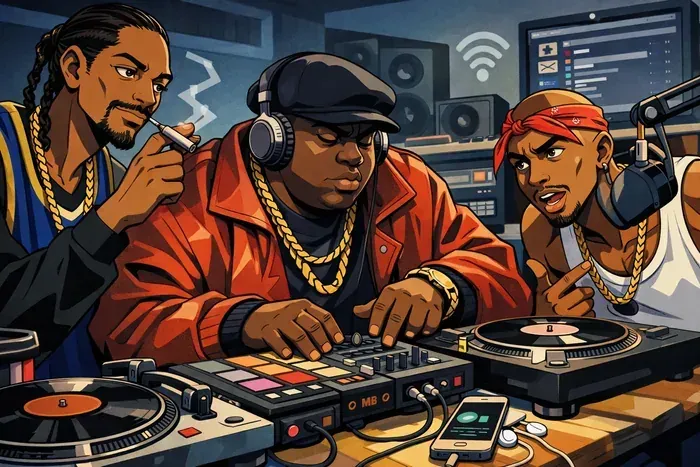
The Streaming Era: Hip Hop in the Digital Age
By the mid-2010s, hip hop no longer depended on physical sales or even traditional radio rotation. Streaming platforms changed listening habits. Algorithms suggested new artists before fans actively searched for them. Social media blurred the line between musicians and public personalities.
This shift made entry easier, but it also increased the pressure to be constantly active. A rapper could go viral overnight, then disappear from attention just as fast. Attention became a form of currency. Artists had to manage studio work, release timelines, and comment sections at the same time.
Easier distribution gave more people a voice, but competition became more intense. Thousands of tracks were uploaded every day. Visibility depended on timing, strategy, and platform logic.
The internet did not replace older forms of hip hop. Instead, it fragmented them into many parallel scenes. Different styles grew at the same time, and collaboration crossed continents without travel. But the pressure to stay visible never stopped.
The next sections look more closely at SoundCloud’s impact, the effect of viral culture on song structure, and the growing conversation around mental strain in modern rap careers.
SoundCloud: Where the Internet Made Stars
Before streaming giants like Spotify and Apple Music became dominant, platforms such as SoundCloud helped new artists get noticed. The site let musicians upload music directly, without label approval. That lowered the barrier to entry and encouraged experimentation.
Chance the Rapper became an early proof point for that model. Acid Rap in 2013 built a devoted audience online, and Coloring Book in 2016 showed that a streaming-first release could chart and win major awards. Internet-led distribution no longer looked marginal.
At the same time, a different sound came from SoundCloud’s less tightly connected network. Artists like Lil Uzi Vert combined trap production with catchy melodies and punk-inspired energy. His 2017 album Luv Is Rage 2 showed how styles from the internet could be successful on the charts.
The SoundCloud era also produced figures such as XXXTentacion and Juice WRLD. Their music blended rap with emo and rock influences. Their openness about mental health struggles connected with young listeners. However, both careers were also marked by controversy and tragedy. XXXTentacion was facing serious legal accusations before he died in 2018. Juice WRLD died in 2019 from an accidental drug overdose. Their deaths intensified discussion about addiction and pressure in the music industry.
Online platforms made it easy for artists to build audiences quickly. They also made private mistakes and public backlash more immediate. Social media intensified both support and criticism.
SoundCloud’s role changed over time as larger streaming platforms started using similar tools for discovering content. But its impact on hip hop is still clear. It helped a generation feel comfortable mixing different types of music and rejecting strict rules about genres.
The internet changed traditional power structures. Success no longer required radio airplay or physical distribution. But this freedom came with new risks. From here, the discussion moves to how virality and algorithm logic influenced song structure.
Viral Culture: How TikTok Changed Song Structure
As streaming and social video grew more dominant, song structure changed with them. By the late 2010s, a track’s opening seconds could determine whether it spread or disappeared.
Apps like TikTok let users share short clips without needing the full song. A fifteen-second excerpt could reach millions before most listeners heard the complete track. Producers and artists adapted: intros got shorter, hooks arrived faster, and instrumentals often opened with the most memorable moment instead of building slowly.
This shift did not eliminate artistry, but it changed priorities. Repetition became a key strategy. A phrase people could quote or dance to also carried promotional value. Songs like Drake’s “In My Feelings” spread quickly through online challenges, where audiences also became promoters. The line between fan and marketer became less clear.
The length of the songs was also influenced by streaming metrics. Platforms count how many times a song is played, not how long people listen. So shorter songs could often generate higher stream counts more easily. Some projects leaned toward brief tracks that held attention without sounding unfinished.
Algorithmic recommendation systems rewarded consistency. Artists who released music often appeared in curated playlists. If there were long gaps between projects, people might forget about them. The pressure to stay present led to faster output cycles.
At the same time, the musical landscape became more fragmented. Listeners could explore styles without geographic limits. Online spaces hosted everything from lo-fi rap to genre-blending hybrids. The era when a few major releases dominated shared cultural attention became less common.
Virality could turn unknown artists into stars quickly, but it could also trap them in a single moment. Sustaining a career required careful management of attention. Some musicians stayed online constantly, while others struggled with the demand for permanent visibility.
Song structure changed alongside media habits. Scrolling interfaces shortened attention windows, and hooks worked like anchors in a nonstop feed.
These conditions affected not only creativity but also well-being. Public exposure, constant comparison, and pressure to perform took a mental toll. Mental health and burnout became more common topics in hip hop.
Mental Health: The Cost of Constant Visibility
When hip hop entered the streaming era, it became more visible. Artists were no longer present only through their albums and interviews. They were active on social media, where they appeared in live streams and faced constant public commentary. Success brought scrutiny that rarely stopped.
Mental health, which was rarely talked about in rap music, became a topic of conversation. Kid Cudi’s 2009 album Man on the Moon: The End of Day had already explored loneliness and anxiety in a way that connected with younger listeners. In the 2010s, depression, addiction, and emotional instability appeared more often across different rap styles.
Artists like Juice WRLD openly discussed drug use and emotional struggles in songs like “Lucid Dreams.” His death in 2019 at age twenty-one led to new discussions about industry pressure and access to support. Mac Miller also died from an accidental overdose in 2018. Both cases showed how fame can intensify existing struggles.
Heavy touring schedules added more strain. Artists had to travel long distances, sleep irregularly, and perform constantly because demand was high worldwide. Success brought money, but it also required relentless labor. Social media increased exposure, and one mistake could trigger immediate criticism.
Some artists started setting boundaries. They cut back on online interactions and delayed tours to focus on well-being. Others spoke openly about therapy and recovery, helping normalize conversations that earlier generations often avoided.
The industry’s response was inconsistent. Record labels benefited from releasing new content quickly, but they did not always provide adequate mental health support. Fans also had questions about the cost of having constant access. Sometimes, the desire for authenticity bumped up against the need to respect someone’s privacy.
Hip hop has always spoken about hardship. What changed in the streaming era was the speed of response. Artists could share pain instantly with millions. That openness created connection, but it also created new vulnerability.
As conversations about well-being became more open, another issue also demanded attention: ownership. In a world shaped by digital platforms, questions of power, distribution, and revenue sharing became central. Artists negotiated control in an era of streaming contracts and 360 deals.
Who Owns the Music? Masters, Deals, and Power
As streaming replaced physical sales, revenue shifted too. Artists relied more on streams, tours, merchandise, sponsorships, and licensing. Labels responded by pushing 360 deals, which allowed them to participate in much more than record income.
These agreements gave money and marketing help to new artists. In exchange, record companies took a percentage of the money earned from touring, selling merchandise, and endorsements. Opinions were divided. Some viewed these deals as necessary in a fragmented market. Others saw them as overreach that limited long-term independence.
Questions about master recordings became more important again. Who controls licensing and long-term revenue depends on who owns the masters. Public disagreements between artists and record labels showed how important this was. In 2019, Taylor Swift’s legal fight over her early catalog pushed the issue into broader media coverage, but hip hop had been grappling with similar ownership disputes for decades.
Rappers increasingly discussed equity and control. Jay-Z’s focus on ownership in the past resonated anew. Artists started their own record labels, negotiated deals with streaming services instead of traditional contracts, or partnered directly with streaming services.
In 2020, Kanye West spoke out against some parts of record contracts. He shared some of his contracts online and asked for more transparency. The conversation went beyond just talking about specific situations to include bigger questions about fairness in the digital economy.
People also looked closely at streaming platforms. The way the money is divided was designed to favor tracks with very high play counts, which often benefited established musicians. Independent artists could reach audiences around the world, but it was hard to make money without large listener numbers.
Technology has made production more accessible than ever. Laptops replaced expensive studio time. Distribution only needs an internet connection. However, how well a song could be heard depended on marketing and where the song was placed on a playlist, which were areas where major record labels still had significant influence.
The modern hip hop scene has both opportunities and limitations. Independence is possible, but rarely simple. Ownership matters beyond the financial. It is also an important cultural value.
Streaming has become the most popular way to consume music, and hip hop is a global network of overlapping scenes. The final chapter looks at what has lasted through all these changes.
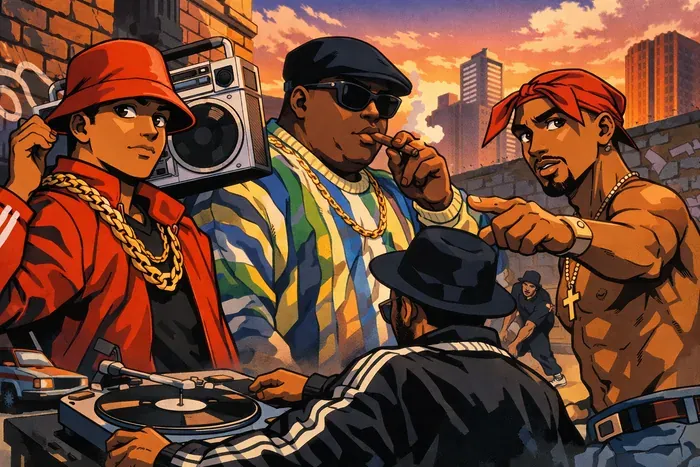
What Endures: Hip Hop's Lasting Legacy
After fifty years of change, hip hop no longer belongs to one sound, one city, or one industry model. It began in the Bronx under conditions of scarcity and became a global system of music, style, and argument. That scale changed the form, but not its basic drives.
The rhythm is still the most important part of the form. The relationship between voice and beat continues to define structure. Stories, whether personal or political, are still central. Even as production shifts from vinyl loops to digital software, the instinct to reshape existing sound persists.
Hip hop has always balanced individual ambition with collective identity. Crews, collaborations, and regional scenes matter as much as solo stardom. Debate and critical reflection remain core parts of the culture.
Looking back, several patterns stand out: the rise of trap, cycles of conscious and gangsta rap, and the expansion of drill. The genre changes quickly, but it rarely leaves its history behind completely.
The remaining sections focus on the elements that continue to define hip hop, even as it keeps evolving.
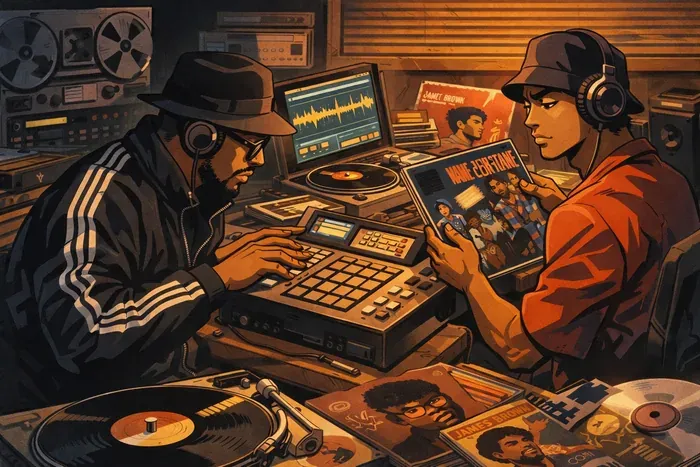
Sampling: Echoes of the Past in Every Beat
Hip hop has always used existing sounds, from Kool Herc’s long breaks to digital production software. Sampling, in its broadest sense, helps preserve cultural memory. A drum break from a 1970s funk record can reappear decades later in a new context, and it will still sound a little like the original.
In the Golden Age, producers mixed jazz, soul, and rock fragments to create complex sounds. In the 1990s, laws limited some of that freedom, but the desire continued. Even when musicians played melodies with live instruments to avoid fees, the act of referencing the past stayed central.
Sampling is not the same as recycling. It involves reinterpretation. A song’s lyrics can be changed to express a different emotion. Kanye West’s use of soul samples in the early 2000s brought older Black musical traditions to the attention of younger audiences. Today’s producers are still digging into old records, looking for textures that stand out.
Digital tools have increased the possibilities. Producers can precisely change the pitch, tempo, and structure of a song. But the most important rule is the same as it was for DJs in the past: find a moment that makes people feel something, and keep it going.
Sampling also raises questions of ownership and respect. When negotiating rights, it’s important to balance giving creative people freedom with paying them fairly for their work. People have been talking about credit for a long time, but there is still some tension.
Hip hop also samples language and style, not only music. Slang is reused and reshaped over time. Fashion works in a similar way. References return from earlier eras, but they are recast for the present.
The practice of building from fragments reflects the origin story of hip hop. In neighborhoods with few resources, artists worked with what they had. This way of thinking continues even when budgets are bigger.
Sampling helps us hear the past in the present. It shows that change and continuity can exist together. As sounds evolve, listening to the past remains part of moving forward.
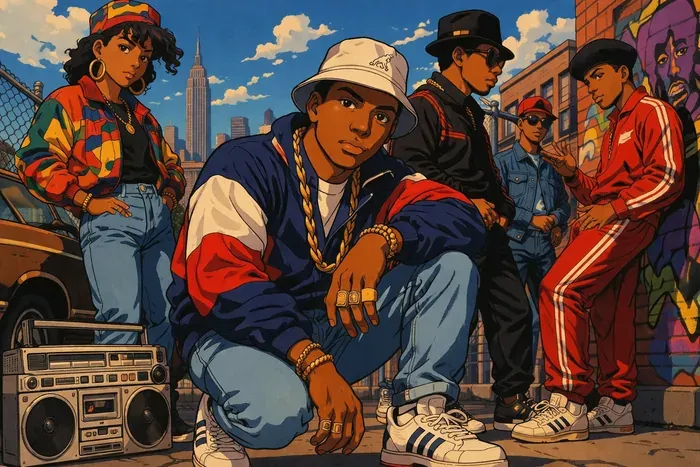
Style and Slang: Identity Beyond the Music
Hip hop has always been more than music. Language and fashion are parallel forms of expression. From early block parties to today’s global stages, style communicates identity, affiliation, and taste.
Slang often spreads more quickly than music. Phrases that are first used in one city can be used all over the world in just a few months. But local dialects are still very important. Southern accents, British accents, and Berlin street slang each have their own rhythm. Language shapes performance, and performance shapes identity.
Fashion follows similar patterns. In the 1980s, Run-D.M.C.’s Adidas sneakers were seen as a symbol of authenticity, not just a way to make money. Over time, brand partnerships became central to the industry. Designers collaborate with rappers. Luxury houses now use streetwear styles. Hip hop and fashion influence each other.
Clothing also shows which community a person is part of. The meaning of colors, logos, and silhouettes can be deep. Sometimes, outsiders have misunderstood or made these signals look threatening. Even so, style remains a way to claim identity.
The way men and women express themselves in hip hop has also changed. Female artists and non-binary performers are challenging earlier assumptions about who belongs at the mic. The visual presentation changes along with the lyrics.
Digital platforms make styles more visible. Social media posts can influence trends right away. But people still want to stand out while feeling connected to their roots.
Language and fashion show how hip hop carries identity beyond sound. Music is central, but the culture always reaches beyond the speaker.
As cultures interact more, styles blend more. African rhythmic traditions merge with trap drums, and Latin influences mix with drill textures. The genre does not disappear as it takes on new elements.
The closing section places these patterns in a broader cultural frame. It presents hip hop not as a passing trend, but as a durable form of expression.
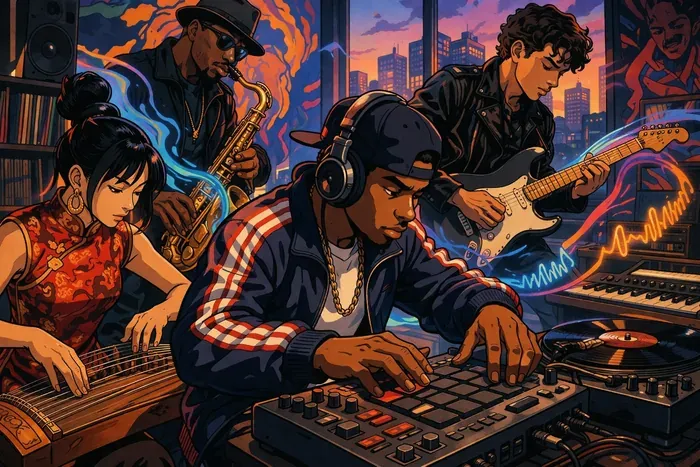
Genre Blending: Evolution, Not Erasure
In recent years, genre boundaries have blurred further. Artists move across rap, R&B, pop, rock, and electronic music with far less friction than earlier eras allowed. Even so, hip hop’s structural logic remains audible inside many of those hybrids.
Drake’s use of Caribbean rhythms in his rap music shows how the connections of people from the Caribbean have long influenced urban music. Artists like Burna Boy work with American rappers, mixing Afrobeats with trap music. Latin trap artists adapt 808 patterns to Spanish-language flows. These exchanges don’t change where hip hop came from. They extend those roots.
Hybridization is not a new concept. Run-D.M.C. worked with Aerosmith a long time ago. The difference now lies in speed and scale. Digital distribution speeds up the exchange of ideas.
Even as different sounds come together, the most important parts stay the same. The beat is the foundation of the track. The voice gives a clear point of view. Rhythm organizes the story. The relationship between those elements stays the same, no matter if it’s played on jazz loops or electronic synths.
Hip hop has lasted so long because it can change with time. It adapts to new technologies without losing its identity. It speaks in local voices while remaining globally legible.
The genre has survived moral panic, commercialization, and fragmentation. It has received both internal and external criticism. Throughout history, artists have changed what it means to be authentic.
What started as a community practice in the Bronx now resonates around the world. The move from old-school block parties to trap and drill shows evolution rather than replacement. Styles change, but the core method remains.
Hip hop survives because new people can enter it without erasing those who came before. Its endurance comes from a tension between memory and invention, between local detail and global circulation.
Before turning to the playlist, several additional threads deserve attention. They help explain why hip hop kept changing even when outsiders thought its core story was already set.
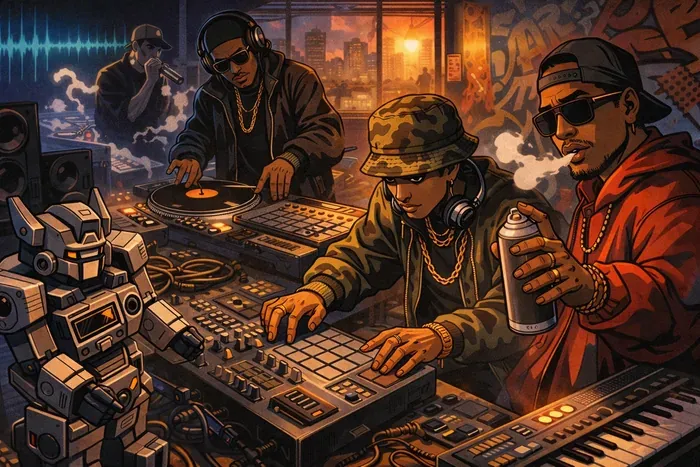
Additional Forces That Shaped the Sound
Hip hop history is often told through stars, regions, and hit records. That approach is useful, but it can hide other forces that changed the music just as deeply. Legal rules, local tape cultures, and digital curation shaped both listening habits and artistic choices.
Hip Hop on Screen: Film and Television as Accelerators
Before streaming and social clips, film and television already helped hip hop travel far beyond its original neighborhoods. Movies such as Wild Style and Beat Street, along with later television platforms such as Yo! MTV Raps, gave national and international audiences a way to see the culture’s visual language, not just hear its sound.
That mattered because hip hop was always audiovisual in practice. Graffiti, breaking, fashion, posture, and crowd response were never secondary details. When cameras captured them, viewers could understand how the elements connected. A scene that had looked local and temporary in the Bronx could suddenly appear portable and repeatable across cities and countries.
Screen exposure also changed aspiration. Young listeners did not only hear records; they saw how crews dressed, how dancers moved, and how MCs held a crowd. That visual literacy helped spread the culture faster than audio alone could. Long before algorithms, film and TV had already shown hip hop how powerful image could be as a distribution tool.
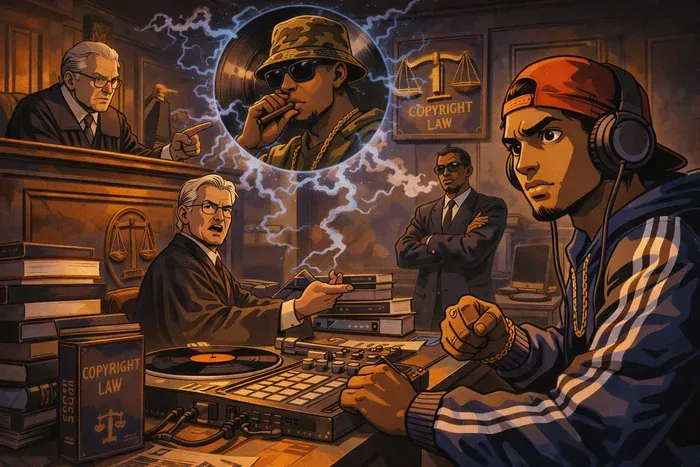
Sampling on Trial: When Clearance Changed the Beat
By the late 1980s, sampling had become one of hip hop’s defining techniques. Producers cut small pieces from soul, funk, jazz, and rock records, then turned them into something new. That freedom helped create some of the most adventurous music of the Golden Age. It also set up a legal conflict that would reshape the craft.
In 1991, the Biz Markie case Grand Upright Music, Ltd. v. Warner Bros. Records Inc. became a turning point. The dispute centered on Markie’s use of Gilbert O’Sullivan’s “Alone Again (Naturally).” After the ruling, labels treated uncleared samples as a far bigger risk. The message to the industry was clear: if you wanted to sample commercially, you needed permission.
That shift did not end sampling, but it changed how producers approached it. Dense, collage-like construction became harder to finance and harder to clear quickly. Some artists turned to replayed interpolations. Others used smaller, less recognizable source fragments. Some moved toward original keyboard lines and drum programming, not because sampling had lost its power, but because the business environment had changed.
You can hear the result across the 1990s and 2000s. Dr. Dre’s use of studio musicians, the cleaner synth designs of The Neptunes, and the selective soul chops of Kanye West all fit a world in which clearance costs mattered. Law did not dictate creativity, but it changed the range of affordable choices. Hip hop remained sample-based in spirit, even when the technique itself had to become more strategic.
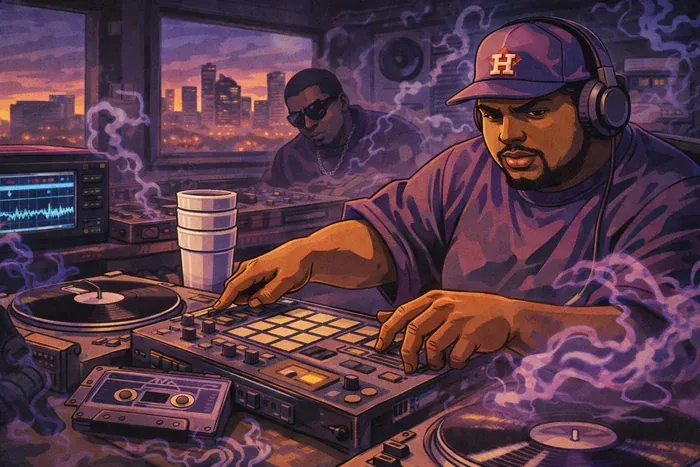
Houston Slows Time: DJ Screw and Chopped and Screwed
While New York and Los Angeles often dominated national rap coverage, Houston developed a different logic of listening in the 1990s. DJ Screw slowed records down, reshaped their rhythm, and added repeated cuts that made familiar tracks feel heavy, hazy, and intimate. The result became known as chopped and screwed.
This was not only a studio effect. It was also a local social practice tied to car audio, neighborhood circulation, and cassette culture. Screw’s tapes moved hand to hand and car to car, building a scene that did not depend on the approval of the coastal industry. Houston listeners heard space, bass, and repetition differently because the music was made for physical immersion.
Chopped and screwed changed more than tempo. It changed emotional emphasis. A boast would start to sound reflective. A club track could feel melancholy. That slowing effect opened another path for Southern rap, one that later connected with the atmospheric side of trap, the emotional looseness of melodic rap, and the low-end design of modern streaming-era production.
DJ Screw’s influence is sometimes discussed as a side branch, but that understates the case. Houston showed that regional innovation did not need to imitate New York lyricism or Los Angeles polish. It could redefine listening conditions themselves. That lesson became crucial once digital distribution allowed more local scenes to travel on their own terms.
Playlists as Programmers: The New Gatekeepers
Radio programmers once decided which rap records reached the widest public. In the streaming era, that power became more distributed, but it did not disappear. Editorial playlists, recommendation systems, and homepage placement began to shape discovery in similar ways, even if the interface looked more open.
Flagship playlists such as Spotify’s RapCaviar became especially influential in the mid-2010s and after. A placement could move a track from niche momentum to national visibility within days. At the same time, the logic of playlists encouraged certain formal choices: immediate hooks, clear mood, fast recognition, and a sound that fits alongside neighboring tracks without losing identity.
This changed listening habits as well. Many listeners no longer arrived through full albums or local scenes first. They arrived through mood, activity, or algorithmic association. That shift made genre borders looser, but it also risked flattening context. A Memphis-influenced track, a Brooklyn drill record, and a melodic trap song might meet in the same queue even when their histories were very different.
Playlist culture did not replace scenes, labels, or artists’ own strategies. It added a new layer of curation that could accelerate careers while making competition even more intense. In that sense, the playlist era echoed older hip hop history: access expanded, but gatekeeping never fully disappeared. It just changed shape.
When Video Took Over: MTV, BET, and Rap on Screen
Hip hop was never only an audio culture. Clothing, gesture, dance, neighborhood imagery, and crew identity were always part of how it communicated. Once television gave rap regular national exposure, those visual codes became even more important.
Programs such as Yo! MTV Raps and later BET’s Rap City helped move regional scenes into national view. A video could do several things at once: introduce a flow, define a fashion language, establish neighborhood credibility, and teach audiences how an artist wanted to be seen. That mattered in a genre where persona and delivery were already closely linked.
The visual era also changed who could break through. Some artists became stars because their presence on screen amplified the music. Run-D.M.C.’s streetwear, Missy Elliott’s futurist imagination, Puff Daddy’s luxury imagery, and 50 Cent’s hardened charisma all worked in part because the camera made their worlds legible at scale. Videos did not replace lyrical skill, but they altered the terms of competition.
That shift still matters in the age of short-form clips. Social video did not invent the importance of image in hip hop. It accelerated a much older pattern in which performance, fashion, and narrative framing help determine how songs circulate.
Before TikTok: Blogs, Forums, and the Mid-2000s Internet
The streaming era did not begin from nothing. In the 2000s, blogs, forums, file-sharing, and early social platforms had already changed how rap moved. Artists no longer depended only on radio rotation, magazine coverage, or a label’s physical distribution network. Leaks, message-board debates, and blog premieres started influencing taste in real time.
This environment rewarded speed and conversation. A freestyle could spread before an album campaign was fully designed. A mixtape could build momentum because fans posted links, argued over verses, and remixed local reputations into wider online visibility. Internet audiences did not replace street credibility, but they created a second arena where careers could rise quickly.
The blog era also encouraged a more fragmented canon. Listeners could follow Southern trap, underground backpack rap, blog-friendly crossover records, and regional scenes at the same time. That weakened the idea that one center had to define quality for everyone else.
In hindsight, this period looks like a bridge. It connected the mixtape economy to the fully platform-driven world that came later. By the time streaming playlists and viral clips dominated discovery, hip hop audiences were already used to finding music outside traditional gatekeeping channels.
Battle Logic: Freestyle, Status, and Verbal Competition
Another thread that runs through the whole history of hip hop is competition. MCs tested one another live long before battle rap became its own visible circuit. DJs competed over selection and technique, dancers battled in circles, and rappers built reputation through wit, timing, and nerve.
That competitive energy sharpened the music. Freestyle was not only improvisation for its own sake. It was a way to prove presence under pressure. Even when verses were partly prepared, the audience still judged authority in real time. Could the rapper control the crowd, answer an opponent, and sound composed while doing it? Those questions shaped how skill was heard.
Later battle scenes made that logic more formal, but the underlying principle stayed the same. Hip hop values style, but it also values contest. Punchlines, boasts, diss records, and public face-offs remain central across very different eras because of this. The culture keeps changing, but it still rewards people who can think, react, and perform with precision under pressure.
Who Gets to Belong: Expanding the Visible Canon
Hip hop has always been full of arguments about authenticity, authority, and belonging. Those arguments often carried assumptions about gender, sexuality, respectability, region, and class. Over time, more artists challenged the idea that only one kind of voice could sound legitimate at the mic.
Women had been doing that from the beginning, but later decades widened the challenge. Artists with openly queer identities, more fluid presentation, or styles outside older masculine norms became more visible in the 2010s and 2020s. That visibility did not end conflict. It made older assumptions easier to see and harder to defend.
This matters historically because hip hop’s growth has never been only about sound. It is also about who gets heard as a full subject rather than as an exception. When the visible canon expands, the genre gains new emotional registers, new social perspectives, and new performance codes.
The result is less a break with tradition than a return to one of hip hop’s oldest impulses: using available space to claim presence. That logic links the early Bronx, women’s early interventions, global reinterpretations, and today’s broader field of voices. The form survives because it can absorb challenge without losing its core drive.
50 Essential Tracks: The Hip Hop Journey in Sound
Hip hop didn’t just appear fully formed. It changed over time, in different cities, and across different generations. It started in the Bronx in the 1970s and grew into a worldwide cultural force that changed music, fashion, language, and politics. This playlist of 50 essential tracks follows the evolution of hip hop from Old School to modern genres like gangsta rap, conscious movements, Southern trap, UK grime, and modern drill.
Each song marked a turning point. Some producers changed how tracks were built. Others redefined lyrical complexity, artist branding, or what global hip hop identity could look like. Together, these songs trace hip hop’s evolution, acting as both art and social documentation.
The selection moves from the past to the present, so listeners can hear how rhythm, flow, technology, and storytelling have changed over time. Women artists are central to this journey, as are international voices that expanded hip hop far beyond its American origins.
If you want to understand how hip hop developed from block parties to being played on streaming platforms, this listening pathway offers a clear and historically grounded guide.
I. Where It Started: Bronx Beginnings
- The Sugarhill Gang – Rapper’s Delight (1979)
- Grandmaster Flash and the Furious Five – The Message (1982)
- Afrika Bambaataa – Planet Rock (1982)
- Run-D.M.C. – Sucker M.C.’s (1983)
- LL Cool J – I Can’t Live Without My Radio (1985)
II. Golden Age: Lyrics Take Flight
- Eric B. & Rakim – Paid in Full (1987)
- Public Enemy – Fight the Power (1989)
- A Tribe Called Quest – Can I Kick It? (1990)
- De La Soul – Me Myself and I (1989)
- MC Lyte – Paper Thin (1988)
- Queen Latifah – Ladies First (1989)
III. Coast to Coast: The 90s Defined
- N.W.A – Straight Outta Compton (1988)
- Dr. Dre – Nuthin’ but a ‘G’ Thang (1992)
- Snoop Dogg – Gin and Juice (1994)
- Nas – N.Y. State of Mind (1994)
- Wu-Tang Clan – C.R.E.A.M. (1994)
- The Notorious B.I.G. – Juicy (1994)
- 2Pac – Dear Mama (1995)
- Lauryn Hill – Doo Wop (That Thing) (1998)
- OutKast – ATLiens (1996)
IV. Conscious & Alternative: A Different Vibe
- Common – The Light (2000)
- Mos Def – Ms. Fat Booty (1999)
- Dead Prez – Hip Hop (2000)
V. Mainstream Rise: Producers Take the Spotlight
- Jay-Z – Izzo (H.O.V.A.) (2001)
- Missy Elliott – Get Ur Freak On (2001)
- Eminem – Lose Yourself (2002)
- 50 Cent – In Da Club (2003)
- Kanye West – Jesus Walks (2004)
VI. The South Rises: Trap Foundations
- T.I. – What You Know (2006)
- Young Jeezy – Soul Survivor (2005)
- Gucci Mane – Lemonade (2009)
VII. Trap Era: The 808 Takeover
- Nicki Minaj – Super Bass (2011)
- Future – March Madness (2015)
- Migos – Bad and Boujee (2016)
- Cardi B – Bodak Yellow (2017)
- Megan Thee Stallion – Savage (2020)
- Rapsody – Power (2019)
VIII. Drill: Raw Reality on Record
- Chief Keef – Love Sosa (2012)
- Lil Durk – Dis Ain’t What U Want (2013)
- Pop Smoke – Dior (2019)
IX. Global Voices: Hip Hop Without Borders
- Dizzee Rascal – Fix Up, Look Sharp (2003)
- Stormzy – Shut Up (2015)
- IAM – Je danse le Mia (1993)
- MC Solaar – Bouge de là (1991)
- Die Fantastischen Vier – Die da!? (1992)
- Advanced Chemistry – Fremd im eigenen Land (1992)
- Racionais MC’s – Diário de um Detento (1997)
- Prophets of Da City – Understand Where I’m Coming From (1990)
- Rhymester – B-Boyイズム (1995)
X. Streaming Era: The Digital Bridge
- Drake – Started From the Bottom (2013)
Why This Playlist Matters
Fifty tracks can’t capture everything, but they trace the main currents. You’ll hear production shift from turntables to 808s, lyrics move from party rhymes to street realism to introspection, and regional scenes stake their claims across the decades.
Women artists and international voices didn’t appear at the margins. They were central forces shaping how the genre evolved.
The playlist works as a listening guide. Work through it chronologically or jump around. Either way, you’ll hear how hip hop kept reinventing itself without losing what made it hip hop in the first place.