Jazz as a Living Language
Jazz did not begin as a museum piece. It grew in crowded rooms, on street corners, in churches, and in dance halls. In those spaces, the floor mattered as much as the stage. Before it entered music schools or record stores, it was a way of listening and responding. Players built phrases together in real time, and its rhythms carried memory, migration, and everyday life.
Jazz developed across several cities, including New Orleans, Chicago, Kansas City, and New York. It was built on swing, improvisation, and risk. Musicians like Louis Armstrong, Duke Ellington, and later Charlie Parker and Dizzy Gillespie did more than create a new style. They gave modern music a new vocabulary. Harmony grew richer. Rhythm stretched and sped up in unfamiliar ways. Solos became statements of identity.
That language did not stay contained. It traveled, changed its accents, and absorbed new influences. Every phase that followed built on that early grammar.
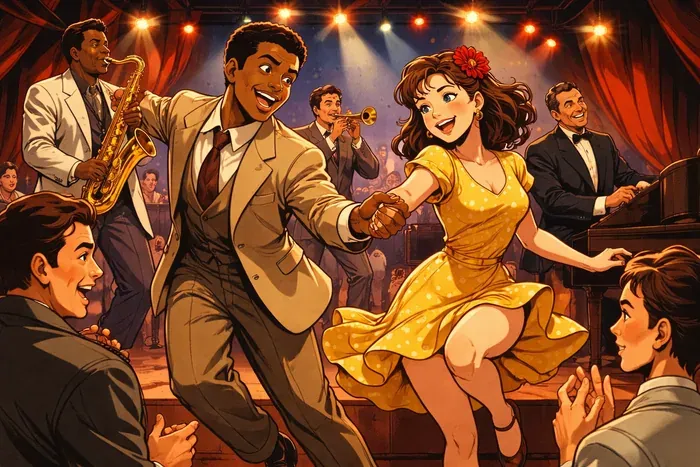
The Swing Era: Moving Together
At its core, early jazz depended on shared rhythm. Swing was more than a rhythm pattern. It was a way of moving together. The music felt buoyant, as if it were always leaning forward. You can hear this in recordings by Louis Armstrong, especially in “West End Blues.” His trumpet doesn’t rush. It breathes. Each phrase is confident, but the band still contributes its own character. The result feels more like a conversation than a machine.
Armstrong’s importance goes beyond his technique. He helped change the focus from group improvisation to the solo performance. In the past, New Orleans groups often played in layers. Armstrong stepped forward and made the solo the most important part of the piece. That change shaped the future of jazz and, later, every genre that values personal expression within a group setting. You can see a connection between Armstrong’s style and that of later singers and musicians who treat melody as something flexible rather than fixed.
In Kansas City, Count Basie’s orchestra made swing smoother and steadier. Basie played the piano in a simple style. He carefully placed his notes, often leaving long periods of silence. Those silences were important. They allowed the rhythm section to find their groove, which felt solid and generous. The Basie band’s rhythm team, with Walter Page on bass and Jo Jones on drums, created a floating sense of time that would influence rhythm sections for decades.
Later, Art Blakey took that same energy and used it to create hard bop music. With the Jazz Messengers, he saw the band as a place to practice and a living organism. Young musicians learned to play with urgency and collective purpose. Blakey played the drums in a way that pushed the music forward without overpowering it. His press rolls and accents encouraged soloists to take risks. The balance between structure and freedom is central to jazz’s identity.
Swing was a social activity. It was popular in dance halls during the Depression. It offered release and dignity during hard times. But it was also disciplined. Musicians practiced detailed charts. They understood harmony and timing perfectly. That mix of freedom and control would be seen again later, in jazz-funk and neo soul. Today, when producers talk about “feel,” they’re still trying to recreate the subtle energy of the early swing musicians.
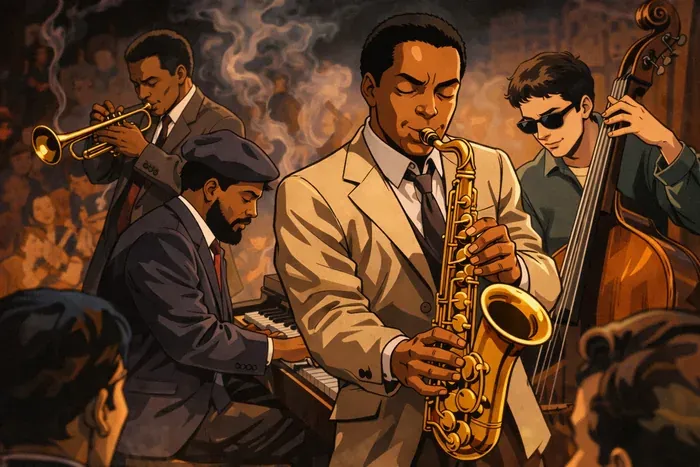
Bebop: Jazz Gets Complex
By the mid-1940s, a new generation of musicians wanted something different from the dance-driven swing era. They weren’t rejecting rhythm, but they weren’t as interested in pleasing large audiences. In small clubs in Harlem, especially at places like Minton’s Playhouse, players met after hours to test the limits of their musical ability. Bebop came from those sessions.
Charlie Parker was at the heart of that change. His alto saxophone solos on songs like “Ko-Ko” are fast, but they don’t sound hurried. He played melodies with sharp angles, moving smoothly through chord changes with a clear sound that still feels modern. Parker did not stop swinging. He tightened it. The pulse continued, but the surface became more complex. Listeners had to pay attention. The music felt closer to a concert than to something built for dancing.
Dizzy Gillespie played the trumpet with the same intensity. In “A Night in Tunisia,” he played fast, complicated passages and used rhythms from Afro-Cuban music. This mix of styles made jazz music more varied. Bebop was urban, restless, and curious. It reflected the mood in New York after the war, where Black musicians were showing that they were artists who mattered, even though they didn’t always have enough money.
The music of bebop was complex. Chords were extended and substituted. The usual songs were used as frameworks for fast harmonic movement. Musicians studied advanced theory and learned to play fast and intricate pieces. This technical demand changed the culture of jazz. To become a master, musicians needed deep practice and strong ears. The casual listener felt left out, and that divide shaped how jazz would be marketed in the decades that followed.
But bebop also had a deep emotional impact. Parker’s lines can be playful one moment and vulnerable the next. The music conveyed a range of emotions, including joy, frustration, ambition, and fatigue, often within a single performance. Many of these musicians faced racism, unstable income, and personal struggles. Their art did not hide those realities. It turned them into sound.
The move from swing to bebop marked a major shift. Jazz moved away from being understood primarily as popular entertainment and increasingly came to be heard as an art form in its own right. That change opened space for later experiments with form, electric instruments, and studio production. When fusion artists later pushed jazz outward, they were still working from bebop’s belief that the music could become more complex, more personal, and more adventurous.
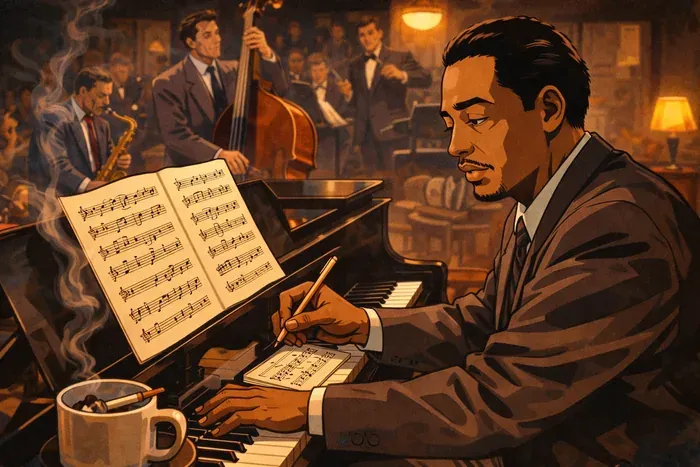
Jazz as Composition
While bebop emphasized improvisation, another strand of jazz placed equal weight on composition. Some bandleaders treated their groups almost like orchestras, shaping the music through arrangement as much as through soloing. Duke Ellington is central to that story. His work with the Ellington Orchestra shows how jazz can be both deeply personal and carefully structured. Pieces like “Mood Indigo” reveal a refined sensitivity to tone color. Ellington wrote with specific musicians in mind. He understood their strengths, their habits, and their feel. Even with a large ensemble, the result remains intimate.
Ellington did not separate composition from experience. He drew on blues, spirituals, and extended suites that reflected Black history and identity. Longer works such as “Black, Brown and Beige” used music as narrative. That ambition changed what jazz composition could mean. It was no longer only music for dancing. It could also carry historical and emotional weight.
Charles Mingus took this idea even further. His album Mingus Ah Um combines precise arrangements with sections that feel chaotic. Mingus believed in discipline, but he also encouraged strong emotions. His bands often balanced written passages with open space for everyone to express themselves. His music has tension. It shows the social tensions of the late 1950s and early 1960s, when questions of race, politics, and who owns art were impossible to ignore. Mingus did not try to hide or ignore these conflicts. He let them resonate inside the music.
Thelonious Monk had a different way of composing. His pieces, like “Round Midnight” and “Straight, No Chaser,” may sound easy at first. However, the harmonies are full of unexpected changes. Monk played notes slightly ahead of or behind the beat, creating a sense of unease. His music invites the listener to pay attention to small details. Space is as important as sound.
Ellington, Mingus, and Monk show that jazz isn’t just a music for solos. It is also an architecture of ideas. Their influence extends far beyond traditional jazz. Later producers in fusion and neo soul would borrow from this balance of structure and freedom. The compositions are carefully layered, the tones are precise, and the composers are bold enough to leave silence in their music. All of these things come from the compositional lineage mentioned earlier.
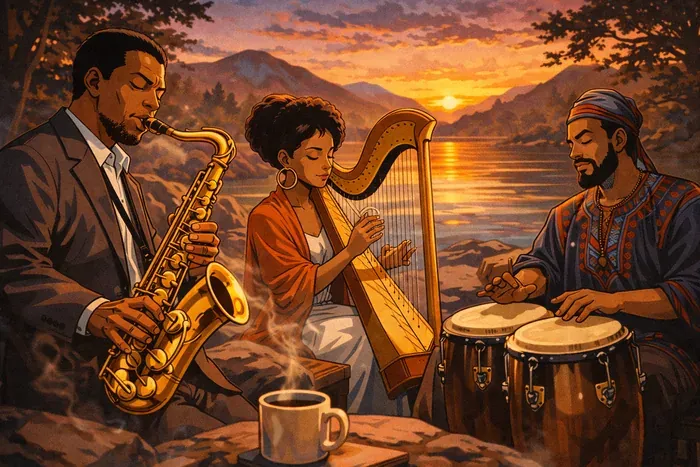
Finding Space and Spirit
By the end of the 1950s, some musicians began looking for more space within the harmony itself. Bebop’s rapid chord changes made the music exciting, but they could also feel a bit overwhelming. Miles Davis responded by simplifying the underlying structure. In 1959, he and his collaborators explored modal jazz on Kind of Blue. Instead of moving quickly through complicated progressions, the music often stays on a single scale for longer periods of time. This change creates space. Solos unfold with patience. Notes linger.
Listen to “So What.” The bass plays a simple tune. The piano responds with open, airy chords. When Davis enters, he doesn’t take up every corner. His phrases feel measured, almost like he’s talking to a friend. John Coltrane, who also played on the album, has a different approach. His lines are more searching and intense. The contrast shows how modal harmony can express many different emotions at the same time.
Later, Coltrane would take this idea even further on his album A Love Supreme. Released in 1965, the album focuses on spirituality in a personal and universal way. The four-part suite talks about gratitude, struggle, and affirmation. The rhythm section, with McCoy Tyner on piano, Jimmy Garrison on bass, and Elvin Jones on drums, creates a strong foundation. Coltrane’s saxophone sounds like a chant. The music is demanding and deeply focused. It asks for sustained attention.
Bill Evans, who also worked on Kind of Blue, brought a new level of sensitivity to modal thinking. His own recordings, including Portrait in Jazz, highlight the subtle ways that the three musicians interact with each other. Evans paid close attention to his bandmates. He treated the piano not only as the main instrument, but also as part of a shared texture. That approach influenced generations of musicians who thought that playing together mattered more than showing off.
Modal jazz was not the only path available in the 1960s, but it was a decisive one. By reducing harmonic movement, musicians could focus more on tone, groove, and atmosphere. That shift mattered far beyond straight-ahead jazz. Fusion artists would later stretch those open harmonies with electric instruments, and neo soul producers would use related ideas to create warmth, suspension, and emotional space. The spiritual intensity Coltrane embraced also remained influential. For many later artists, music was not only entertainment. It was a way to think, testify, and search.
Women Who Built Jazz
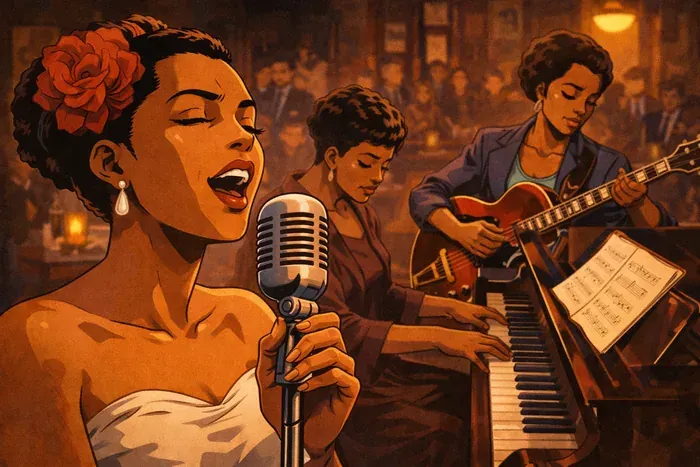
The history of jazz is often told through a narrow list of names. But from the beginning, women were key to its development. They were composers, arrangers, instrumentalists, and bandleaders. Their contributions were sometimes left out of official stories, but they were always present in the music itself.
Mary Lou Williams is central to this story. She was a pianist, composer, and arranger who helped shape the swing era through her work with Andy Kirk and his Twelve Clouds of Joy, then stayed engaged as bebop emerged in New York. Her career lasted for decades, and so did her curiosity. Williams moved across styles without treating any one period as the final version of jazz. She also mentored younger musicians and remained a respected musical voice as the language around her changed.
Melba Liston was another essential voice. As a trombonist and arranger, she worked closely with artists like Randy Weston. Her music added depth and warmth, often drawing on African themes. In an industry that didn’t readily welcome women instrumentalists, Liston found her place through her talent and determination. Her work influenced the sound of several important recordings, even when her name was mentioned less often than those of her male peers.
Nina Simone is also important in her own way. She studied classical piano, but her music combined jazz, blues, and folk styles to create a powerful political voice. Songs like “Mississippi Goddamn” directly address the civil rights movement. Simone’s choice of words is intentional. Her piano playing makes her voice stand out, and it adds tension to the music. She didn’t separate art from responsibility. That attitude would have a big impact on music from later generations, especially neo soul.
Betty Carter pushed vocal improvisation to an uncommon level of freedom. Her live performances often reshaped familiar songs in real time, and she expected her bands to stay alert and respond to sudden turns. Carter also took unusual control of her business life, founding her own label so she could protect her artistic direction. That model of self-determination mattered later for artists who wanted more authority over sound, presentation, and career timing.
These women did more than just take part in jazz. They expanded its language and defended its complexity. Their presence reminds us that innovation rarely belongs to one gender or one narrative. The evolution toward fusion, acid jazz, and neo soul clearly shows their influence, just like it does with the better-known bandleaders.
Jazz Travels the World
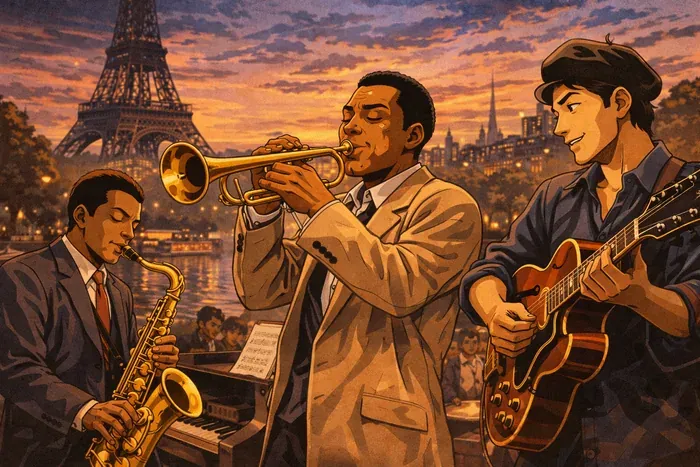
As jazz grew in the United States, it also began to travel. Musicians traveled to other countries. Records traveled across oceans. Radio brought new sounds to distant cities. What emerged was not a simple export, but a conversation. Jazz was taken up by artists outside the U.S. and changed by their own experiences.
In Brazil, Antônio Carlos Jobim worked with João Gilberto to create bossa nova, a style that mixed samba rhythms with cool jazz harmony. Albums like Getz/Gilberto, recorded with Stan Getz, introduced this sound to the world. The guitar parts felt simple. The harmonies were soft but complex. Bossa nova was not like American jazz. It combined it with Brazilian musical traditions, creating something new. This relaxed yet harmonically rich style would later influence jazz-funk and neo soul producers who valued subtle groove more than showy style.
In South Africa, Abdullah Ibrahim used his experience of living in other countries to create his music. During apartheid, cultural life was strictly controlled. Ibrahim left his country and found places in Europe and the United States where he could record and perform his music. His music combines traditional township melodies with jazz improvisation. The result feels both reflective and rooted in place. His work reminds us that jazz often travels through migration, shaped by political realities as much as artistic curiosity.
Japan also developed a strong jazz culture after World War II. Toshiko Akiyoshi was a pianist and bandleader. She worked in both Japan and the United States. Her big band arrangements combined traditional Japanese elements with modern jazz styles. In Europe, musicians like Jan Garbarek created music with a spacious, atmospheric sound that fit with the style of ECM Records. These recordings often focused on clarity and mood, showing another way the music could go.
Jazz across the diaspora did not lose its core language. It gained new accents. Each scene added rhythmic patterns, sounds, and cultural stories. Later types of music like fusion and acid jazz used this network as well. The music had already gone beyond the limits of any single city. It was part of a larger community of people who listened to each other and shared ideas.
From Street Corners to Conservatories
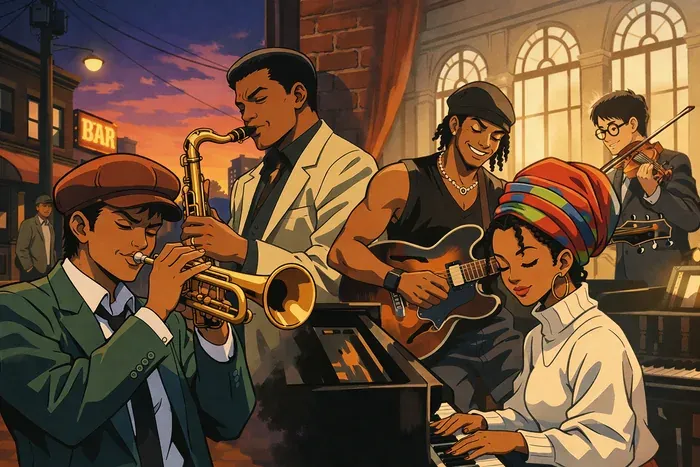
As jazz spread across cities and countries, it also moved into more formal settings. It began in clubs, churches, rented halls, and unstable touring circuits. Over time, however, it also entered classrooms. By the late twentieth century, universities and conservatories were offering degrees in jazz performance and composition. What people had learned by ear, on bandstands, and through apprenticeships was now being written down in textbooks and class schedules.
This change brought new opportunities. Young musicians were able to receive training, access historical archives, and connect with professional networks. Jazz earned recognition as an art form worthy of serious study. But something else changed too. When a living tradition becomes a part of an institution, questions follow. Who decides what gets included in the “canon”? Which artists are studied in depth, and which are only mentioned briefly? How does improvisation change when it is graded and examined?
The move from community to conservatory did not replace the earlier culture of jazz. It added new systems on top of it. Those systems would shape the next generations of musicians, including many who later moved into fusion, acid jazz, and neo soul. The change in institutions is one reason why jazz is still around and has become more formal. From here on, the story is not only about sound. It is also about who gets trained, funded, archived, and remembered.
Jazz Goes to School
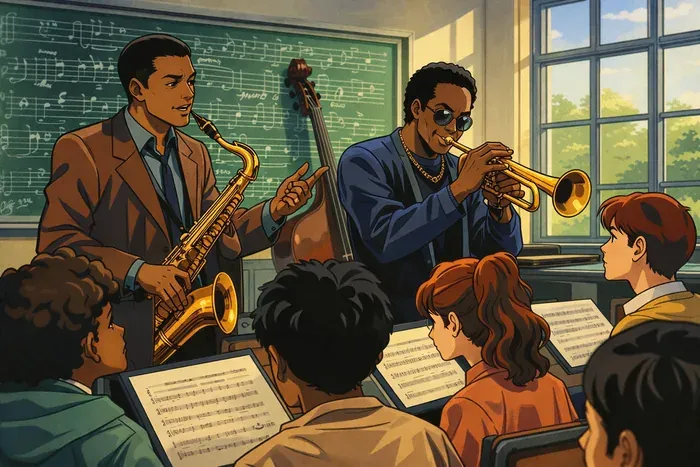
By the 1970s and 1980s, jazz education had become more structured instead of relying mainly on informal apprenticeship. Schools such as Berklee College of Music in Boston helped formalize jazz training, and later institutions such as Juilliard in New York added dedicated jazz studies programs. Students studied harmony, ear training, arranging, and ensemble playing within clear academic structures. Earlier generations learned mainly by listening in clubs, but now much of that knowledge was also being written down, analyzed, and tested.
This change affected how musicians approached the tradition. A young saxophonist entering Berklee might spend hours studying Charlie Parker solos. They don’t just copy them; they try to understand the logic behind them. Harmonic substitutions, altered scales, and rhythmic displacement weren’t magic tricks. They became ideas that could be taught. This clarity helped protect the technical knowledge that might have been lost otherwise. It also helped players from different backgrounds communicate with each other.
At Juilliard, the creation of a formal jazz studies program was symbolically important. Jazz was no longer treated only as popular entertainment. It had a place inside one of the most visible conservatory settings in the United States. That mattered especially for a music rooted in Black American experience that had long been unevenly recognized by cultural institutions.
However, making these rules can cause problems. Improvisation works best when you can’t predict what’s going to happen. When we break down improvisational language into exercises and patterns, there is a risk of repetition without risk. Some critics said that academic jazz could become too polished and emotionally flat. Players who trained in schools sometimes entered the professional world with remarkable technical fluency, yet struggled to find their own style.
At the same time, many artists switched easily between formal education and creative experimentation. Later musicians like Robert Glasper and Esperanza Spalding got strong jazz training and changed the style of jazz. Their work shows that institutional learning does not automatically limit expression. It can provide tools that expand it.
The growth of jazz education also influenced global scenes. Students from Europe, Asia, and Latin America studied in U.S. programs and returned home with new connections and skills. The classroom was one of several places where jazz continued to evolve. The music still had a strong connection to the community. At the same time, it gained another layer of transmission that would quietly shape the sound of decades to come.
Who Gets Remembered
When jazz started being taught in schools, the question of what should be included in the curriculum became important. A syllabus has limits. Teachers must choose which recordings to assign, which composers to analyze, and which solos to transcribe. These choices affect how students understand the tradition. Over time, some names become central, while others remain at the margins.
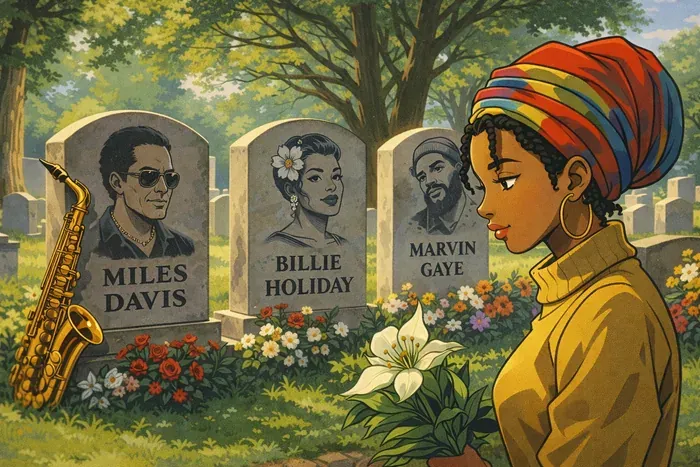
Duke Ellington, Charlie Parker, Miles Davis, and John Coltrane are frequently mentioned in jazz curricula. Their influence is undeniable, and their recordings offer rich material for study. But focusing on a small group of people can make the story seem limited. Artists like Mary Lou Williams or Melba Liston, whose contributions were essential, are often discussed less. Betty Carter and other singers like her are often remembered for their vocal style, but they were also central to the development of jazz improvisation in song.
The canon also reflects larger cultural hierarchies. In the past, instrumental jazz has often been treated as more important in academic settings than vocal jazz. Large-ensemble performances are often prioritized over community-based ones. These patterns do not erase the music’s diversity, but they shape how it is remembered and taught.
Students who learn jazz this way sometimes start to think that jazz should sound a certain way. That idea can be associated with certain eras, especially the bebop and hard bop periods of the 1940s through 1960s. Styles that mix jazz with funk, R&B, or electronic music have not always been seen as equally valid in academic settings. Fusion, acid jazz, and neo soul are often considered outside of formal jazz study, even though they draw heavily on its language.
At the same time, the canon isn’t set in stone. It changes as scholars and musicians look again at old records and ask why some things were left out before. More and more, courses are including a wider range of topics. They’re looking at jazz around the world and the important contributions of women and artists from groups that are often underrepresented. This evolution is a result of ongoing conversations within the music itself.
Understanding the problem with the “canon” (the official list of the best and most important works) helps explain some of the tension that later genres faced. When fusion artists started using electric instruments, or when neo soul musicians drew from jazz harmony without following its traditional format, they sometimes encountered skepticism from purists. These reactions are based not only on taste, but also on long-standing definitions influenced by education and criticism. Jazz changed significantly when it went from something played mainly in communities to something performed and evaluated in institutions. This change affected how people thought about jazz, talked about it, and defended it.
Different Ways to Pay the Bills
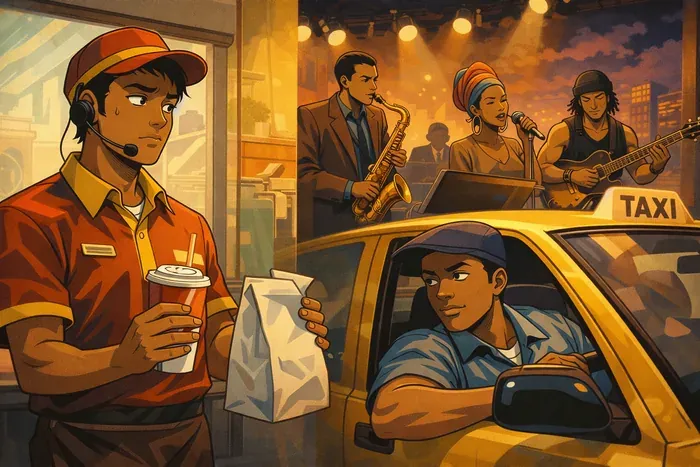
Once institutions began shaping jazz history, economics became harder to ignore. The way jazz developed inside and outside the United States was shaped by culture and money. In the U.S., jazz musicians often work within a market-driven system. Income from record sales, touring, club bookings, and private sponsorships helps determine who can stay in the profession. Even artists as important as Charles Mingus and Betty Carter faced financial strain. Musicians often feel pressure to adapt to what will sell, attract larger audiences, or move across genres in order to survive.
In some parts of Europe, a different model emerged. State funding and public broadcasting systems offered more support for the arts. Musicians could get grants, commissions, or residencies. Festivals often received money from the government or local governments. This environment did not completely eliminate economic pressure, but it provided a safety net that allowed for longer-term experimentation.
ECM Records, founded by Manfred Eicher in Germany in 1969, offers a clear example of this European approach. The label developed a distinct sound: spacious production, close attention to tone, and a calm intensity. Artists like Jan Garbarek and later Keith Jarrett recorded albums that were more reflective than commercially driven. ECM’s style influenced how people around the world saw European jazz as calm and atmospheric. It was different from the more groove-centered or commercially oriented styles that developed in the U.S.
These differences in funding affected how musicians positioned themselves. Sometimes, American players traveled to Europe to find stability and audiences who would appreciate them. European musicians, in turn, took in American traditions while adding their own regional styles. The exchange was continuous.
The difference between subsidy and market logic also influenced later developments. Fusion in the U.S. focused on larger audiences and rock arenas, partly because of the money to be made. Acid jazz in the UK grew out of a club culture that relied on both independent record labels and exposure on public media like the radio and television. Neo soul musicians had to deal with a music industry that wanted records to sell well but also wanted musicians to be real.
Economics does not determine creativity, but it does shape the conditions around it. If there is money to support the work, there is usually more time to experiment. In places where markets are strong, artists often balance innovation and accessibility. Jazz and other types of music that came from it show both systems. Their evolution was affected by the financial realities that supported or limited them.
When Jazz Found Its Groove Again
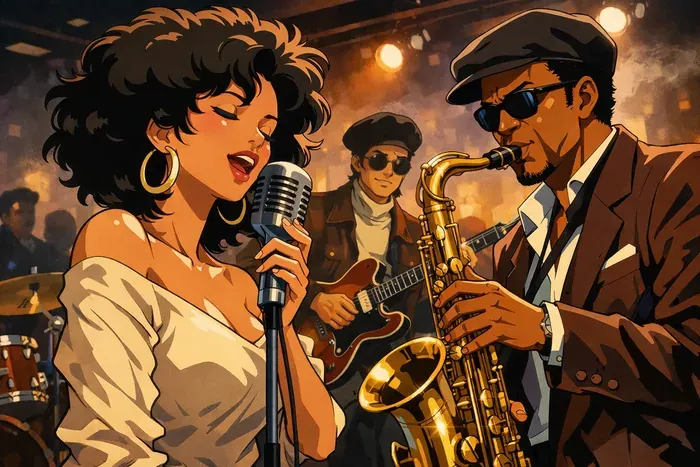
By the late 1950s and into the 1960s, jazz had become richer, more abstract, and in some settings more institutional. Bebop had taken harmony to a new level of complexity, while modal and spiritual directions opened new emotional space. At the same time, many musicians felt a need to reconnect with the body and with everyday social life. Clubs were changing. Audiences were changing. Rhythm and blues was becoming more popular. Gospel traditions remained deeply important to Black communities. The body, not just the mind, needed attention.
Soul jazz was the answer. It made the groove stand out more without losing the harmonic depth. The organ replaced or supplemented the piano. The backbeat felt heavier. Melodies drew openly from church music. This was not a retreat from sophistication. It was a rebalancing. The music invited listeners back toward the body.
From there, jazz-funk took the idea even further. Electric instruments became more common. Producers shaped records more deliberately in the studio. Bass lines became hooks. The groundwork was laid for fusion, as well as for later club movements and neo soul. The groove turn was an important part of jazz history. It opened the music to new contact with funk, R&B, and eventually hip hop.
The Sound of Soul Jazz
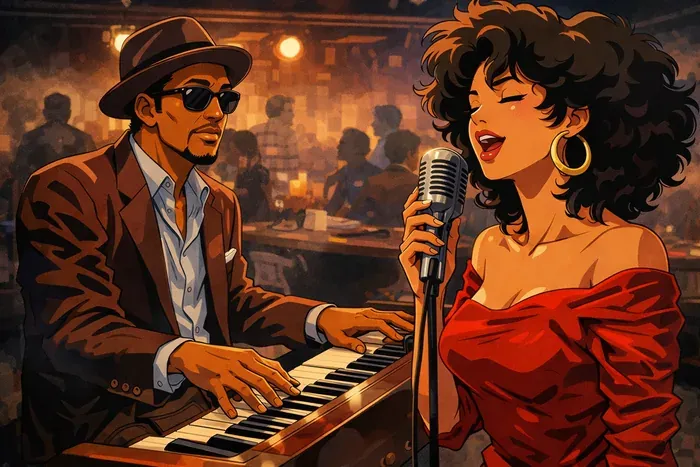
If swing was built for dance halls and bebop for late-night listening, soul jazz brought the music back to a more communal rhythm. The Hammond organ became its most famous instrument. The organ could do things the piano couldn’t. It could sustain tones, get louder, and fill a room with sound. It carried the sound of church services into small clubs.
Jimmy Smith was key to this change. His recordings for Blue Note in the 1950s and early 1960s made the organ trio popular. Smith worked in organ trios with guitar and drums, and he created music that felt direct and accessible. The bass lines were often played with the organ’s foot pedals, creating a steady rhythm. He used bebop vocabulary, but the overall feeling was closer to blues and gospel. Audiences responded to that familiarity.
Cannonball Adderley also helped bring jazz and soul together. The song “Mercy, Mercy, Mercy” was recorded live in 1966. The piece has a simple, welcoming sound. The electric piano and rhythm section create a relaxed atmosphere. Adderley starts the piece in a friendly, warm way, almost like a radio host speaking to friends. The soloing does not get more complex just for the sake of complexity. It aims for clarity and feeling. This approach broadened jazz’s appeal without abandoning its core language.
Les McCann brought strong energy, especially during live performances. He also worked with Eddie Harris on “Compared to What,” a song that captured the political and social tensions of the late 1960s. The rhythm is steady, almost hypnotic. The song’s lyrics speak out against injustice. Soul jazz didn’t ignore the problems of its time. It addressed them through rhythm.
Church music had a strong influence during this period. Many musicians started out playing gospel music before moving on to jazz. The way they sang along with each other, the bluesy sounds, and dynamic contrasts blended together easily. The result was music that felt both traditional and modern.
Soul jazz reminded listeners that being sophisticated doesn’t require being distant. A strong groove can carry complex harmony without announcing it. Decades later, this sound would influence neo soul, a style where long-lasting chords go well with relaxed rhythms. The return of the body did not mean giving up the mind. It meant reconnecting both.
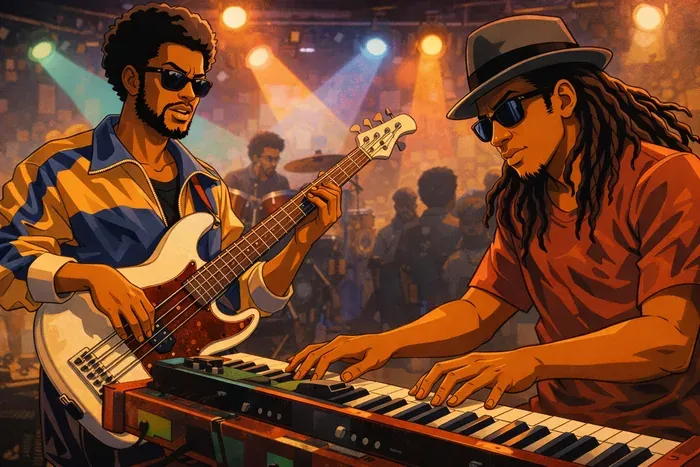
Jazz-Funk: The Bridge to Tomorrow
As the 1970s approached, the music got louder and more electric. Jazz musicians listened closely to James Brown, Sly and the Family Stone, and the rising wave of funk. The groove got tighter. Bass lines became the most important part of a song, instead of just being a background sound. The studio itself began to shape the sound more deliberately.
Donald Byrd embodies this change clearly. He was a well-known hard bop trumpeter in the 1950s and 1960s, but he changed his style with albums like Places and Spaces in 1975. Byrd worked with producers Larry and Fonce Mizell. Together, they used synthesizers, layered vocals, and danceable rhythms. The song “Change (Makes You Want to Hustle)” was perfect for dancing to. However, the harmonic language was still based on jazz training. The trumpet parts sounded like bebop, even when they were played with funk rhythms.
Roy Ayers, who is often associated with the vibraphone, built a similar bridge. He created music that blended jazz harmony with soulful vocals and steady rhythms with Roy Ayers Ubiquity. “Everybody Loves the Sunshine,” released in 1976, moves with calm confidence. The chords are rich, but the rhythm remains relaxed. This balance later made the song a favorite source for hip hop sampling. Producers could easily use it in new ways.
Jazz-funk also changed the way musicians connected with audiences. The music became less about long solos and more about collective playing. Repetition became a strength instead of a weakness. The bass and drums were in perfect sync, allowing small changes to stand out. Electric keyboards, especially the Fender Rhodes, added a smooth texture that would become a staple in later decades.
Some purists criticized this period, seeing the move toward funk as a compromise. But for many artists, it felt natural. Black popular music has always been interconnected. Jazz-funk didn’t abandon the tradition. It acknowledged that groove and harmony can evolve together.
It is important not to treat jazz-funk and fusion as if one cleanly replaced the other. They overlapped in time, shared musicians, and often used the same electric tools. The difference was usually one of emphasis. Some records leaned toward virtuosity and extended forms, while others favored repetition, pocket, and crossover clarity. Together, they widened the road that later led to acid jazz, hip hop sampling, and neo soul.
The blueprint created here would last for decades. Later, acid jazz DJs found these recordings in large collections of old records. Neo soul musicians took on the chord progressions and steady rhythms. Jazz-funk showed that being sophisticated and being easy to listen to don’t have to be opposites. They can share the same beat.
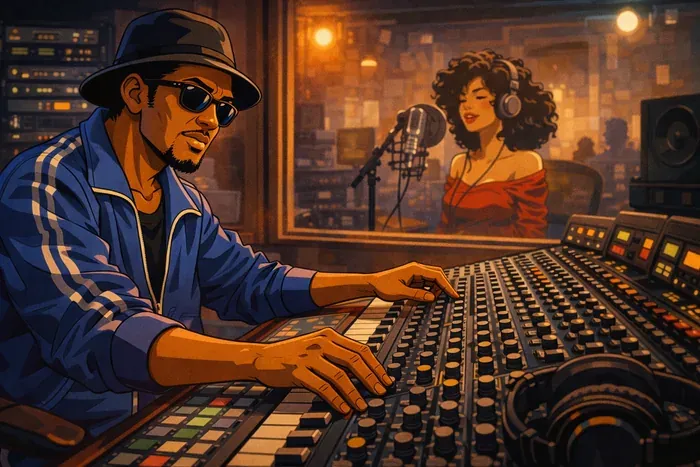
When Producers Took Over
As jazz moved deeper into the 1970s, the role of the producer became more visible. Creed Taylor, who founded CTI Records, created one of the most distinctive jazz-funk sounds of that time. He thought of albums as complete works of art. The music, the arrangements, and even the cover design were all chosen carefully. The company’s large-format photographs and clean layouts made CTI releases easy to recognize.
Taylor’s productions often had polished arrangements, lush strings, and a refined studio sound. Some musicians, like Freddie Hubbard and George Benson, recorded albums that combined improvisation with a style that worked on radio. Benson’s later success with “Breezin’” came from this polished environment. The guitar parts sounded natural and musical, and the overall production was easy for a wider audience to enjoy.
CTI sessions also relied on close networks of musicians. The same musicians, arrangers, and engineers worked on different projects. This made a consistent sound. It also showed how jazz had become a collaborative industry, not just a group of touring bands. Studio craft was important. Where the microphone was placed, the mixing decisions, and the post-production choices all influenced the listener’s experience.
This producer-driven model influenced later movements in small ways. In the 1990s, record labels that played acid jazz music did the same thing. They created a clear image and sound for their music. Neo soul albums often had creative teams who worked well together and understood each other. The idea that a record captures not only performance but also the atmosphere around it first emerged during this time.
CTI’s success also raised questions about commercialization. Some critics said that the label’s smooth textures made jazz less intense. Others saw the refinement as a real continuation of earlier traditions. Either way, the producer’s role had changed. The bandstand, where musicians perform live, was gradually replaced by the studio console, where sound is recorded.
The producer era did not get rid of improvisation. It changed it by carefully designing new spaces. That balance between being spontaneous and being polished would be very important as jazz moved toward fusion and beyond.
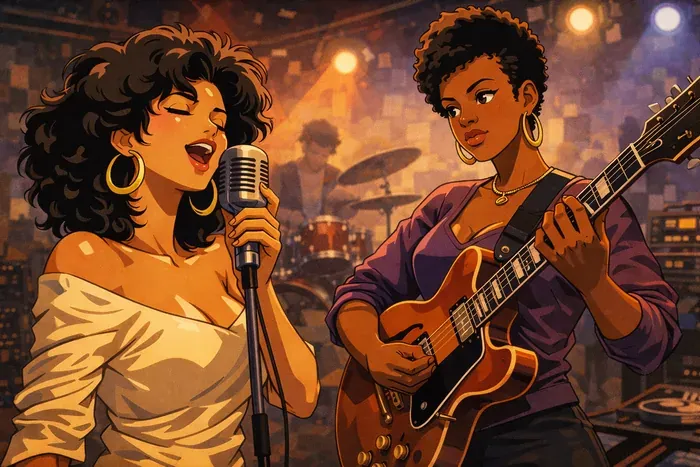
Women Kept the Groove Alive
The 1970s brought new opportunities for women in the industry, but there was still a lack of recognition for their work. Some artists navigated that barrier with remarkable skill. Patrice Rushen illustrates this well. She studied jazz piano, and her first albums had a fusion style. Over time, she moved closer to R&B and funk. She released songs like “Forget Me Nots,” which became popular on the radio and was used in many hip-hop recordings over time. Rushen’s keyboard playing shows deep harmonic command. Her ability to move between audiences and genres shows how flexible those boundaries can be.
Dee Dee Bridgewater represents another kind of continuity. She started her career in the 1970s, combining jazz singing with theatrical and crossover projects. Bridgewater never stopped focusing on the improvisational part of jazz singing. Her phrasing remained flexible, rooted in the blues feeling. At the same time, she worked in a music industry that often pushed women singers toward image over artistry. Staying true to her artistic vision required persistence.
Alice Coltrane belongs somewhat outside the popular side of this story, but her presence during this period was deeply influential. After John Coltrane’s death, she kept exploring spiritual and modal forms, adding harp, organ, and elements of Indian classical music. Her album Journey in Satchidananda combines steady rhythm with a meditative atmosphere. While it’s not strictly jazz-funk, her use of repetition and sustained harmony connects to the broader groove shift. Her work reminds us that rhythm can help us think deeply, just like it can in dance.
These artists faced challenges in the way the industry was set up. The people in charge of the studio, the label, and the critical attention were often men. But women had a big impact on the music of this time. They wrote, arranged, played, and negotiated contracts. They were present throughout jazz’s evolution into funk and soul, ensuring that the story was never one-sided.
When acid jazz DJs later rediscovered recordings from the 1970s, they didn’t just use recordings by male bandleaders. Songs by Rushen and others became popular again in clubs, bringing together people from different generations. The groove shift carried forward their contributions, even when they were not in the spotlight.
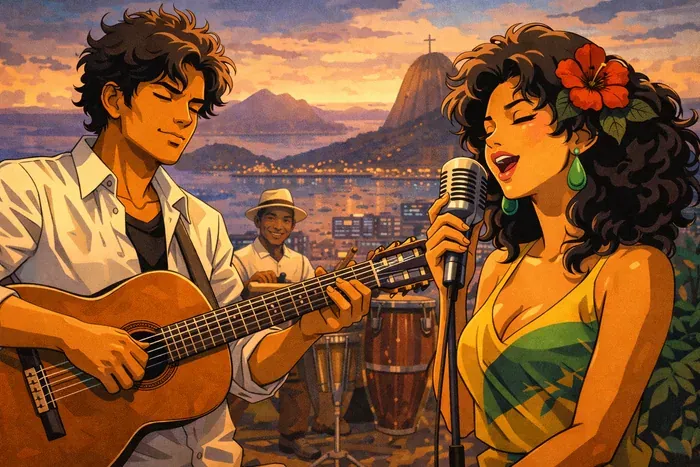
Brazil: Adding New Colors
While jazz-funk developed in the United States, Brazil created its own style of harmony and rhythm that would later be popular all over the world. The connection between Brazilian music and jazz had already been established through bossa nova in the early 1960s. But that wasn’t the end of the story. A younger generation of Brazilian musicians expanded the language in ways that would quietly influence fusion and later soul movements.
Milton Nascimento is a key figure in this development. His work on Clube da Esquina, recorded in 1972 with Lô Borges and other musicians, blended Brazilian folk traditions with jazz harmonies and progressive textures. The album alternates between soft acoustic parts and complex, layered compositions that sound like movie music. The chords are full-sounding, often changing in unexpected ways while still being emotionally direct. Nascimento’s voice is fragile and strong at once, and it communicates across language barriers.
Airto Moreira and Flora Purim brought the rhythms of Brazil to the American jazz scene. They both worked with important fusion musicians in the early 1970s. Airto’s percussion added subtle complexity, blending samba and other Afro-Brazilian rhythms with electric sounds. Purim’s voice was mixed with the other instruments, creating a clear but warm sound. They played in fusion bands, which made people think that jazz was already popular as a truly global form.
The group Azimuth, which formed in the 1970s, played jazz-funk music. With electric keyboards, steady rhythms, and melodic improvisation, they created music that feels closely connected to the groove turn happening in the United States. However, the harmonic movement often has a Brazilian style, being softer but still complex.
Brazil’s contribution lies not only in rhythm but also in emotional depth. The mix of joy and sadness, which is common in Brazilian music, added to the evolution of jazz. Later neo soul artists would use extended chords and gentle rhythmic sway that echo these earlier experiments.
This exchange was not a simple borrowing. It was a conversation about migration, touring, and recording networks. Brazilian musicians took jazz ideas and changed them. This helped show a key point: jazz grows when it pays attention to other music.
Afrobeat: Politics on the Dance Floor
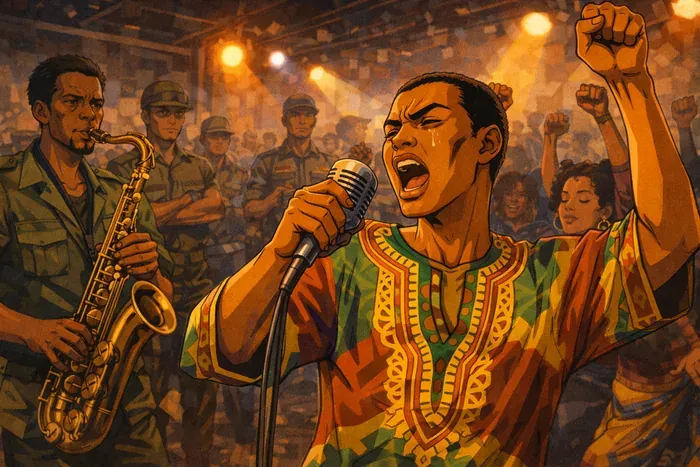
While jazz-funk and Brazilian music combined to create new sounds, another groove-based movement was happening in West Africa. Afrobeat, created by the Nigerian bandleader Fela Kuti, is known for its long, layered compositions with strong rhythms and a sense of political urgency. Though Afrobeat developed independently, it shares deep roots with jazz. It has many similar features, such as improvisation, horn arrangements, and extended forms.
Fela Kuti studied music in London, where he discovered jazz and highlife influences. When he returned to Nigeria, he started combining these elements with Yoruba rhythms and strong political comments. His band, Africa 70, later Egypt 80, was a tight, disciplined group. Songs often lasted more than ten minutes. They were built around repeating bass lines and interlocking percussion patterns. The horn sections joined in with sharp bursts, echoing big band traditions while following a structure that was distinctly West African.
The rhythm of Afrobeat is steady and intentional. It doesn’t rush towards a climax. Instead, it grows little by little, with vocals and instruments adding layers on top of each other. The structure allows space for solos, but the collective rhythm remains central. The balance between individual expression and the group’s rhythm is similar to what was done in earlier jazz practices.
Afrobeat is also important because of its political message. Fela Kuti used music to speak out against corruption, colonial legacies, and authoritarian rule. His performances were both celebratory and resistant. The band’s sound and its message were closely connected. This combination of groove and social awareness would later influence hip hop and neo soul music.
In the 1990s and 2000s, DJs and producers in London and New York rediscovered Afrobeat records. The steady rhythms and horn arrangements fit naturally into club environments and music production that uses samples. Acid jazz scenes, especially in the UK, were full of the same kind of energy found in Afrobeat. The long-form groove became the starting point for creating patient, layered builds.
Afrobeat shows us that the groove turn wasn’t just a US thing. Across the Atlantic, musicians were also expanding rhythmic language and connecting it to their own experiences. The jazz continuum uses these influences not just for decoration, but as important parts of the structure. The long political history of Afrobeat adds weight and depth to the evolving story.
The Instruments That Changed Everything
Musical ideas and the tools that carry them are inseparable. A new instrument can change the harmony, rhythm, and even the way musicians work together. When electric keyboards, synthesizers, and amped bass started being used in jazz, they did more than just make it louder. They changed texture. They changed how musicians interacted. They changed how long a note could ring and how thick a chord could feel.
In the past, acoustic pianos and upright basses were the main instruments used in groups. The arrival of the Fender Rhodes, the Moog synthesizer, and the electric bass created new opportunities. The sustained tones sounded smoother. Bass lines became more forceful. Studio manipulation became more important.
These changes did not happen immediately. They developed over time as musicians experimented on stage and in the studio. When fusion music first appeared in the early 1970s, the range of musical styles had already expanded. Later types of music, like acid jazz and neo soul, heavily featured these electric textures. Knowing about the instruments helps explain why the groove got deeper and why the harmony started to sound different.
The Fender Rhodes: A New Sound
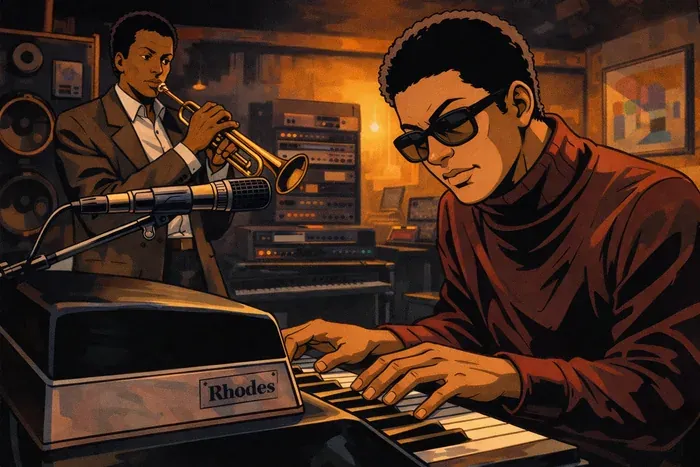
The Fender Rhodes electric piano is one of the most important instruments in the sound of modern jazz. It has a warm tone that sounds a little like a bell. It can hold notes for a long time, which acoustic pianos cannot do. When played softly, it feels intimate. When amplified, it can fill a room without losing clarity.
Herbie Hancock’s use of the Rhodes on albums like Head Hunters shows how it can produce a wide range of sounds. On “Chameleon,” the electric piano fits well within a tight funk groove, following the rhythm instead of playing above it. The chords are full and last a long time, but they fit well with the overall sound. The instrument makes harmony feel less percussive and more atmospheric.
Chick Corea also used the Rhodes extensively when he was working with Return to Forever. His lines often moved quickly, but the electric tone made them sound softer. The fast passages felt smooth and natural, not sudden or abrupt. This small change affected how listeners thought about complexity. Even though the ideas are complex and intertwined, they can be presented in a way that isn’t overwhelming or harsh.
The Rhodes also influenced vocal music. In later decades, neo soul producers liked its sound because it was deep but not too overwhelming for singers. Extended chords can gently support a melody instead of competing with it. The instrument encouraged musicians to be careful. The space between notes became important.
The Rhodes was easy to transport and could be amplified, which made it a good choice for touring. Bands playing in larger venues needed instruments that could project clearly. Electric keyboards met that need while offering a wide range of sounds. Effects pedals and studio processing added extra layers.
The Rhodes’ emotional quality comes from its balance. It’s warm but not overly sentimental. It suggests reflection without being quiet. This balance would become very important for neo soul, where you can feel the music and think at the same time.
When listeners hear the soft sound of electric piano in modern R&B or contemporary jazz, they are hearing the impact of this change. This instrument helped bring acoustic music and electric experimentation together. It didn’t replace the piano. It expanded the range of possibilities.
Synthesizers Enter the Picture
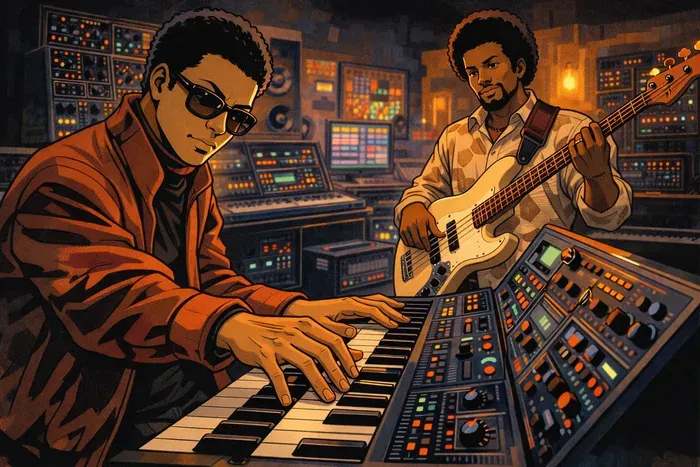
The Fender Rhodes added warmth, and the synthesizer brought a new sense of space and possibility. Early analog synths, like the Moog, let musicians make sounds that were different from traditional instruments. Instead of imitating a piano or horn, the synthesizer created sounds that felt futuristic and abstract. For jazz musicians who were already challenging the status quo, this was an opportunity they couldn’t refuse.
Joe Zawinul of Weather Report became one of the leading figures in this area. He used synthesizers not just for decoration. They were structural tools. On albums like Heavy Weather, he added layers of synthesizer sounds under melodic parts, creating rich, full-sounding pieces. The beginning of “Birdland” is a good example. The tune is catchy, with a pop feel, but the electronic sounds around it give it depth and color.
Zawinul used the synthesizer to express himself. He adjusted filters, envelopes, and modulation in real time, shaping the sound as part of the performance. This approach mixed the roles of musician and sound designer. The studio became like an extension of the bandstand.
Herbie Hancock also used synthesizers during his fusion period. On songs like “Chameleon,” the synth bass line is strong and repetitive, keeping the beat going while also allowing for some improvisation. The electronic tone is clear and defines the piece. This showed that jazz could work with modern technology instead of being separate from it.
Synthesizers changed how audiences thought about jazz. The band’s electric textures caught the attention of fans who were already into rock and funk. At the same time, some people who like traditional music were worried that the music was changing too much and was no longer acoustic. These debates would become more intense during the fusion era.
Later movements naturally included these electronic elements. Acid jazz producers used keyboards and computer-generated sounds to recreate and reinterpret 1970s grooves. Neo soul artists used subtle electronic sounds along with live instruments to create a warm and inviting atmosphere.
The synthesizer did not get rid of jazz’s improvisational core. It made more colors available. By embracing electronic textures, musicians expanded the possibilities of music and laid the foundation for genres that heavily relied on studio creativity.
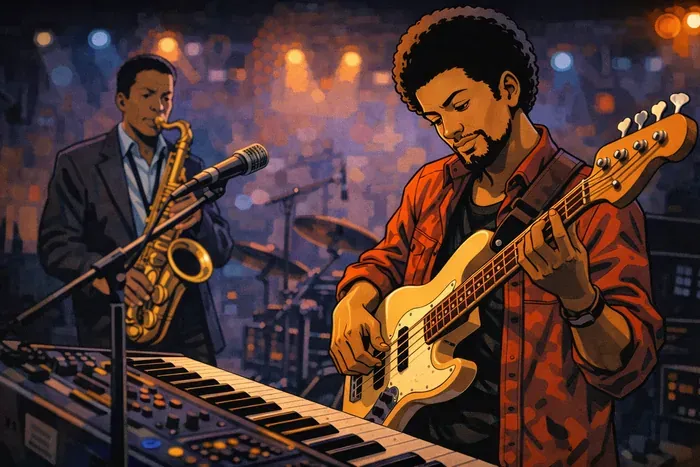
The Bass Steps Forward
If electric keyboards reshaped harmony, the bass reshaped physical impact. In early jazz, the upright bass provided a steady walking foundation. It clearly showed chord changes and kept time with a subtle but noticeable sense of authority. As funk and fusion music gained popularity, the electric bass became a central element in the music.
Larry Graham is famous for playing in the band Sly and the Family Stone. He invented a special way of playing the bass guitar called the slap technique in the late 1960s. He made a drumming sound by plucking the strings, which mixed rhythm and melody. The bass no longer just kept the rhythm. It drove it. This approach influenced many players in different genres, including jazz-funk and fusion.
Jaco Pastorius was an amazing jazz bassist who pushed the instrument to new limits. As a member of Weather Report and through his solo album, he played the fretless electric bass like a lyrical instrument. On tracks like “Portrait of Tracy,” harmonics ring out clearly and precisely. His lines often moved melodically instead of staying in the same pitch. Pastorius showed that the bass could sing while still anchoring the low end.
The bass revolution changed how ensembles worked together. Drummers and bassists worked more closely together, creating rhythms that felt more confident than earlier swing music. This focus on low-end clarity influenced how music was mixed in the studio. Producers made the bass louder and used it to create the sound of a track.
This legacy continued in later decades. Thundercat is a musician from Los Angeles who works with artists like Flying Lotus. He combines jazz training with modern production styles. His bass lines carry complex harmony with a strong rhythmic presence. The instrument plays both the melody and the rhythm.
The electric bass helped bring jazz closer to funk, R&B, and eventually hip hop. Producers who make music using samples often make tracks with a strong bass sound based on recordings from the 1970s. Neo soul musicians used bass lines that were not very loud but still very important. This allowed space for vocals while keeping the sound deep.
The bass’s transformation wasn’t just a technical change. It changed how listeners experienced music physically. The low frequencies became a way for them to express their identity and power. The bass revolution created the foundation for many other genres of music that came after it.
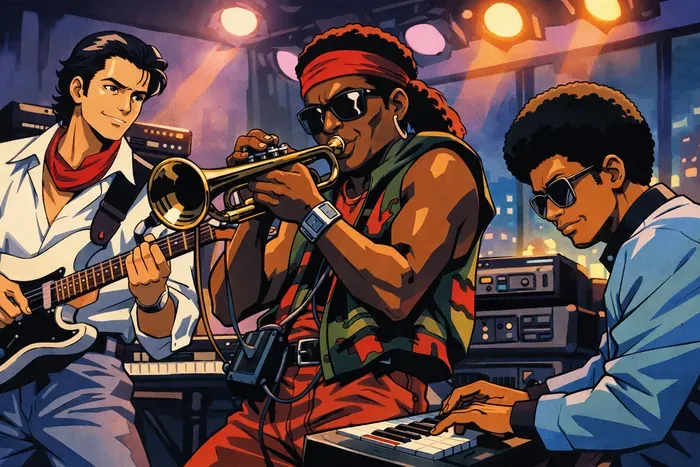
Fusion: When Jazz Went Electric
By the late 1960s, it was clear that electric guitars were becoming more popular. Rock audiences were filling arenas. The amplifiers got louder. Studio technology got better quickly. Jazz musicians had to choose: stay true to the old acoustic style or go for the powerful sound that was changing popular culture.
Fusion emerged from that tension. It did not begin as a marketing category. It began as a set of experiments. Musicians who had mastered bebop and modal forms started using electric guitars, synthesizers, and rock rhythms in their work. The result was dense, rhythm-driven, and often technically demanding music.
For some listeners, fusion felt liberating. The music reached wider audiences and used modern sounds without apology. Others worried about authenticity and commercialization. These debates were not only aesthetic. They were tied to race, economics, and control over artistic direction.
Fusion is at the center of jazz because it forced the tradition to confront modern technology and mass culture directly. This led to later developments in club music and the mixing of different genres. To understand fusion, you have to understand how jazz gained popularity, influence, and change.
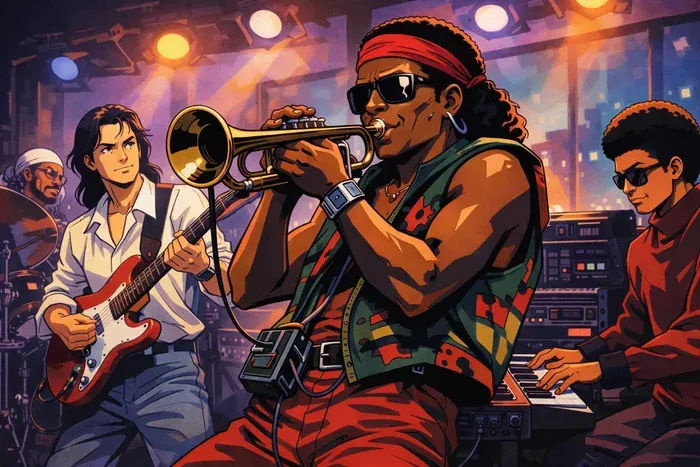
Miles Davis Goes Electric
In histories of fusion, Miles Davis usually stands near the beginning. Davis had already changed jazz several times. He took a major step into electric territory with In a Silent Way in 1969 and Bitches Brew in 1970. These recordings did not just add amplification to existing forms. They reimagined the structure of the music itself.
In a Silent Way feels a bit restrained at first. The tempos are steady, and the harmonies are often simple. But electric keyboards and guitars change the atmosphere. The music is built around mood rather than following a traditional song structure. Producer Teo Macero played a central role in editing and assembling the sessions. The final result was shaped by tape splicing and studio manipulation. The studio became an important part of the creative process.
With Bitches Brew, the scale got bigger. There were many drummers and percussionists playing together, creating complex rhythms. The electric pianos and guitars played at the same time, creating a thick, layered sound. The album was long and complex, which made it difficult for some listeners to absorb. Some critics were upset, saying that Davis had strayed from the true spirit of jazz. Others recognized that he was responding to the world around him. Rock bands like Jimi Hendrix’s Experience were changing how people thought about stage presence and sound volume. Davis wanted jazz to be as energetic as possible.
The musicians involved in these sessions would go on to form key fusion groups. Other musicians, like Herbie Hancock, Wayne Shorter, Joe Zawinul, and Chick Corea, also incorporated electric sounds into their own music. The effect was immediate.
Davis’s move wasn’t just about making money, even though it did reach more people. It showed that he was curious and restless. He listened to modern music and refused to stand apart from it. The core of the music, which was improvised, remained the same, even though the sounds were different.
The controversy around Bitches Brew shows how strongly people felt about jazz’s identity. But history shows that the album opened doors rather than closing them. It expanded the vocabulary and proved that jazz could incorporate modern technology without losing its edge.
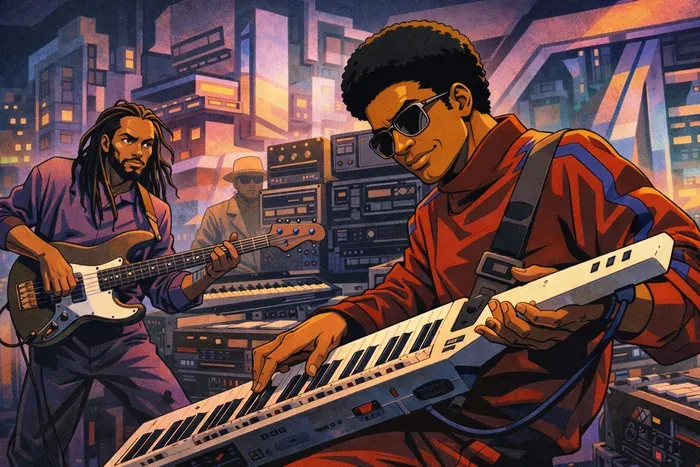
Hancock’s Funk Architecture
While Miles Davis pushed boundaries through large, layered studio projects, Herbie Hancock built a different kind of electric framework. After leaving Davis’s band, Hancock moved toward a groove-centered sound that was both experimental and accessible. His 1973 album Head Hunters is a classic example of jazz-funk music.
The first song, “Chameleon,” has a simple but strong bass line. The groove repeats with confidence, allowing space for keyboards and horns to move around it. Hancock uses the Fender Rhodes and synthesizers to create a modern texture that still feels warm. The music is based on jazz, but it’s also open to feeling and movement.
What’s most noticeable in Hancock’s work during this time is how clear and well-organized it is. Instead of long, abstract explorations, he built tracks around hooks and rhythmic precision. The design is compact. There’s enough space for each instrument, but it doesn’t look cluttered. This helped bring together jazz fans and funk listeners.
Hancock also liked technology. He experimented with early synthesizers and electronic effects, treating them as creative partners. His curiosity about sound design foreshadowed later producers who would mix the roles of musician and programmer.
The album was a hit. Head Hunters reached people who might not have gone to a typical jazz concert. This increased visibility led to a discussion. Some critics worried that the music was too popular. But Hancock’s musical complexity was still evident. He was not making his craft easier. He was changing how he saw it. "I had no idea I was creating something brand-new."
The most important thing about Hancock’s approach is that it lasts a long time. The groove-centered structure of Head Hunters became a template for acid jazz bands and later neo soul producers. Many modern soul recordings use repetition, subtle variation, and layered keyboards. The architecture built in the 1970s is still useful for new voices.
Hancock showed that jazz musicians could embrace funk while still maintaining their own styles. His work shows how structure and groove can coexist, creating a sound that feels both solid and exploratory.
Mahavishnu Orchestra and Return to Forever
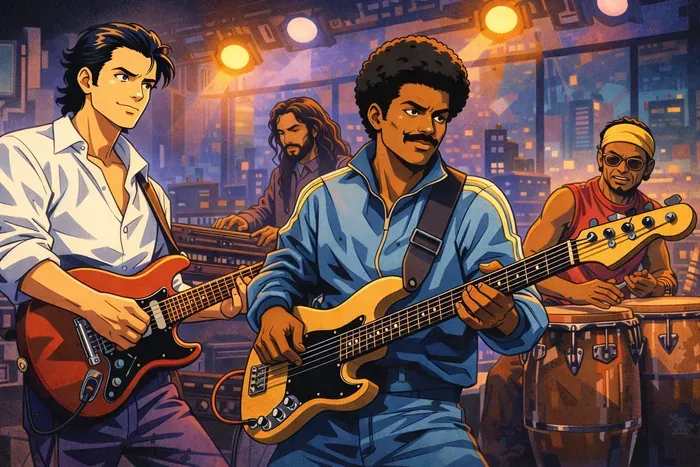
While Herbie Hancock focused on creating rhythmic beats, other fusion artists emphasized playing with more intensity and technical skill. The Mahavishnu Orchestra, led by guitarist John McLaughlin, brought a new energy to the early 1970s. Their first album, The Inner Mounting Flame, came out in 1971. It mixed jazz improvisation with the energy and speed of progressive rock.
The band’s music is complex. The time signatures and fast notes require accuracy. Billy Cobham’s drumming drives the music forward with force, while McLaughlin’s guitar playing cuts sharply through dense arrangements. The influence of Indian classical music is evident in the rhythmic cycles and modal structures, which adds another layer to the mix of different musical styles. This was not background music. It required focused listening.
Return to Forever, led by Chick Corea, followed a similar path but was also unique. Their early recordings featured a style that was lighter and more melodic, often influenced by Latin rhythms. Later albums like Romantic Warrior moved toward a more complex, almost symphonic fusion style. Electric keyboards and guitars played together with closely arranged ensemble passages. Virtuosity became central to the band’s identity.
These groups attracted audiences beyond the usual jazz fans. Rock fans found the music and the performers’ stage presence familiar. Concert venues got bigger. Fusion began to fill theaters and arenas rather than small clubs. This growth made it easier to see what was possible, but it also led to more debate about jazz’s direction.
Some listeners felt that the focus on speed and complexity was not in line with the jazz style’s bluesy origins. Others saw it as a natural next step for bebop, which had already shown strong technical ambition. The musicians themselves often rejected labels that tried to define them too strictly. They were exploring all the things they were capable of and the people and ideas that influenced them.
The impact of this virtuosic fusion phase reaches further than it might appear. Even artists who later preferred a more subtle sound learned about being precise with rhythm and playing together. Neo soul musicians may not always stand out, but they’re often skilled musicians who can play complex harmonies easily.
Mahavishnu Orchestra and Return to Forever showed that jazz could be as big and ambitious as contemporary rock. Their work made jazz more popular and showed that jazz could continue to evolve.
Weather Report: Jazz Without Borders
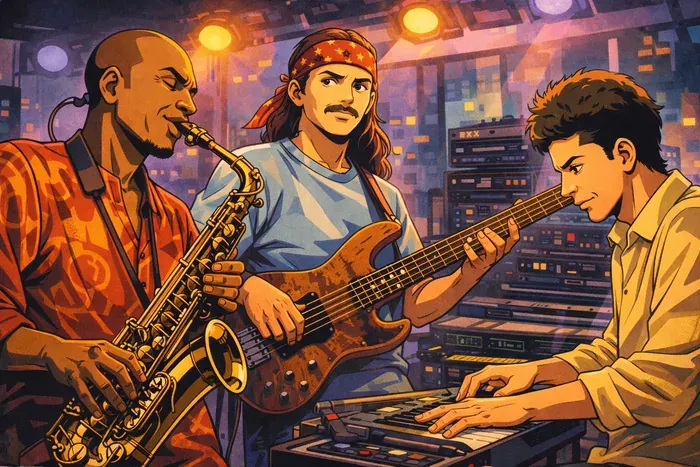
If Mahavishnu Orchestra was intense and Return to Forever was melodic, Weather Report was another way of thinking about fusion. Joe Zawinul and Wayne Shorter, two musicians who studied under Miles Davis, started the band. They wanted to focus more on the group playing together instead of having one musician play alone.
Albums like Heavy Weather show a careful balance between groove and atmosphere. “Birdland” is one of their most famous pieces. Its melody is clear and inviting, almost pop in its accessibility. But much more is happening beneath the surface. Zawinul’s synthesizers create layered backgrounds. Shorter’s soprano saxophone lines move with fluid grace. The rhythm section provides a solid foundation for the music, but it doesn’t dominate the sound.
The arrival of Jaco Pastorius in the mid-1970s changed everything for the group. His fretless electric bass added melodic independence to the low end. Instead of just playing chords, he added melodies and harmony to the music. This change made people think that every instrument could have a new role.
The music of Weather Report could be enjoyed all over the world. The band toured extensively in Europe and Japan. Audiences there loved the mix of jazz sophistication and modern style. The group’s lineup reflected international exchange. Zawinul was from Austria, Shorter was from the United States, and Pastorius was also from the United States. Later members came from different places. Fusion became a language spoken all over the world.
Some fusion acts emphasize speed, but Weather Report often focused on creating a certain mood. Long passages are built gradually, focusing on tone and rhythm rather than constant soloing. This approach would later be popular with acid jazz producers, who valued atmosphere as much as technical skill.
The band’s success also showed that jazz-derived music could exist comfortably within large concert settings. Fusion did not get rid of improvisation. It changed it to fit better in larger, mixed-audience venues.
Weather Report’s legacy is this balance. The music is complex but easy to enjoy. It shows how jazz can take in influences from around the world, electronic instruments, and modern production methods without losing its own style. This helped prepare the ground for the club-oriented reinterpretations that would follow in the 1990s.
Fusion Around the World
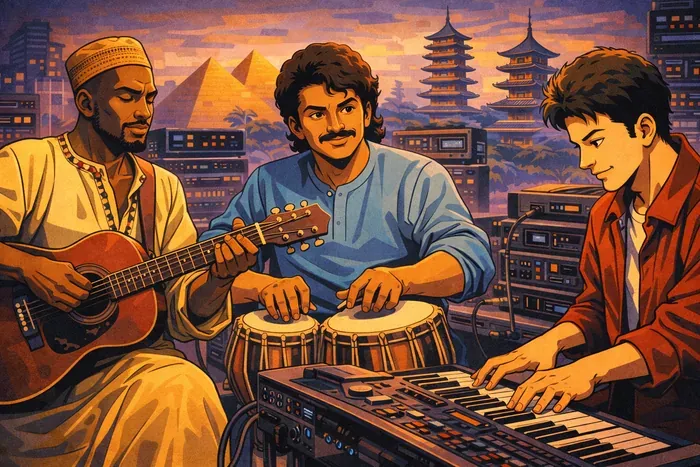
As fusion spread through the 1970s, it became popular in other countries too. Musicians in Europe and Japan started using electric textures and complex rhythms, adapting them to fit their own styles. These scenes weren’t copies. They developed their own styles while still being part of the larger jazz community.
In Japan, the band Casiopea became one of the most popular fusion groups of the late 1970s and early 1980s. Their recordings combined tight ensemble playing with bright, melodic themes. The guitar and keyboard often moved in unison, showing the technical skill needed for fusion. The tone was light and cheerful, not serious. The precision of Japanese studio production made the layered arrangements clearer. Casiopea’s success in Asia showed that fusion could thrive far beyond its U.S. birthplace.
In the United Kingdom, bands like Soft Machine and Brand X did fusion differently. The band Soft Machine was formed in Canterbury, a place where rock and jazz music met. Their work often incorporated experimental structures, blending electric improvisation with abstract composition. Brand X, which had drummer Phil Collins in its early years, mixed jazz complexity with rock sensibility. These groups show how fusion fit with local movements that already existed.
European festivals played an important role in keeping these scenes alive. Events like the Montreux Jazz Festival allowed musicians from different countries to perform together. Musicians met, toured, and recorded together. The support of public funds for festivals in some European countries allowed for new ideas to be tried, which might not have been possible in an environment where the market was the only factor.
International fusion also made the musical style more varied. Musicians added traditional music from their area, experimented with electronic sounds, and created their own rhythms. The result was a network rather than a single style.
This global expansion was important because it helped shape how later genres of music evolved. Acid jazz DJs in London drew from fusion records from Japan and Europe, as well as from the United States. The movement of vinyl records connects distant places. Fusion became part of a shared archive that club culture would later revisit.
The international phase of fusion shows that the evolution of jazz is not a simple straight line. It branches, intersects, and returns in unexpected forms. Each local version of the story makes the larger story stronger.
The Sellout Debate: Was It Real Jazz?
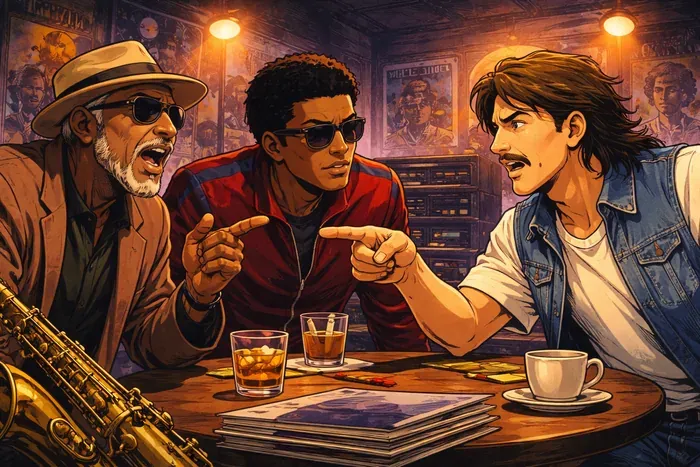
As fusion gained popularity in the 1970s, criticism grew louder. Some jazz writers and listeners thought that electric instruments and rock rhythms changed the traditional sound of jazz. They described fusion as commercial, even opportunistic. People started using the term “sellout” in reviews and interviews. That accusation raised bigger questions about ownership and identity.
Jazz had always been a part of Black American communities. It carried histories of struggle, innovation, and cultural resilience. When fusion music became popular with a wider audience, some feared that people would forget where it came from. Amplified guitars and arena stages made jazz seem too similar to rock music, which was mostly played by white people. These concerns were not only about how things looked. They showed the real tensions around race and economic control in the music industry.
At the same time, many fusion artists were responding to real-life situations. Touring small jazz clubs didn’t pay much. Bigger venues meant more money and more attention. Musicians like Herbie Hancock and George Benson dealt with these changes by thinking about the artistic and financial pressures they faced. For them, playing funk and rock was not a betrayal of their musical roots, but a natural progression.
Critics also disagreed about how deep the art was. Some people thought that long improvisation within complex electric textures lacked the subtle swing of earlier eras. Others pointed out that bebop itself had once faced resistance. Every time jazz changed its style, people debated about it. Fusion was part of that ongoing pattern.
Race was a complicated topic in these discussions. Rock music started with Black rhythm and blues, but by the 1970s, it was often performed by white people. When jazz musicians started playing in rock spaces, they crossed boundaries shaped by unequal power dynamics. The artists did not always have control over how their music was produced, promoted, and distributed.
These tensions didn’t go away. They became popular again in later decades when acid jazz and neo soul blended genres. Questions about authenticity, market influence, and cultural ownership were still important.
The debate about whether jazz has changed too much shows that its evolution has never been just about music. It is connected to ideas about what is valuable, race, and the economy. Fusion made people talk about these issues in public. People either loved or hated it, but it expanded the range of styles that later artists could use.
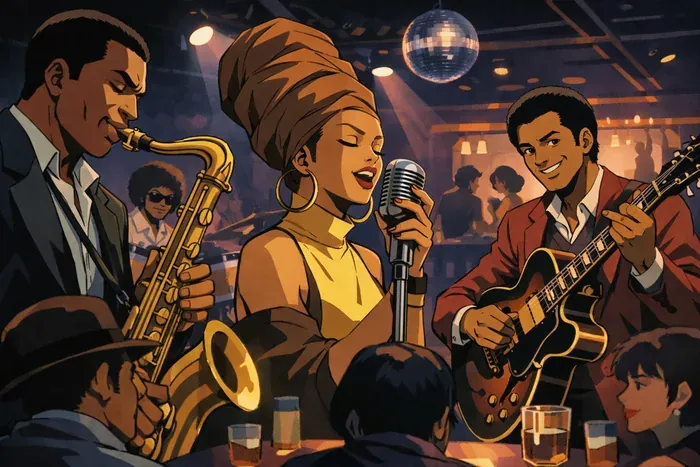
Where the Music Lived: Clubs as Creative Labs
Music does not change on its own. It changes in places where people gather, listen, and test ideas together. As fusion moved into larger venues, a different kind of space became central in the 1980s and 1990s: the club. Smaller than arenas and more flexible than concert halls, clubs worked like laboratories. DJs tested old records. Live bands tried out new dance-floor rhythms. Audiences answered immediately.
Cities like London, New York, and Philadelphia developed different infrastructure to support this experimentation. Pirate radio stations, independent record shops, and community networks connected musicians and listeners. In these environments, jazz, funk, soul, and early hip hop naturally blended together.
These urban spaces gave rise to acid jazz and laid the foundation for neo soul. They reinterpreted earlier recordings, incorporating 1970s jazz-funk into new styles. Geography was important. The setting of a scene often reflected the city’s social and economic realities. Knowing about these clubs helps us understand how jazz moved from big concert halls back to smaller, dance-oriented venues.
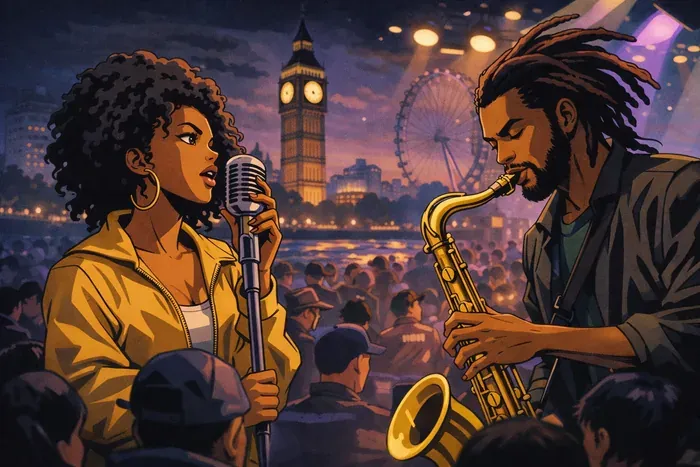
London: Where the Groove Came Back
In the late 1980s and early 1990s, London was a place where different kinds of music met and influenced each other. Clubs like Dingwalls in Camden and the Jazz Café brought together Caribbean sound system culture, American soul music, and local jazz talent. These places were not formal concert halls. They were places where people would go to socialize and listen to DJs and live bands.
Rare groove nights were central to the scene. DJs searched through large collections of vinyl records to find forgotten jazz-funk and soul records from the 1970s. People started dancing to the music of artists like Roy Ayers and Donald Byrd again. The selection process itself became creative. By putting older recordings in new order, DJs changed how listeners heard them.
Pirate radio stations helped people learn more. Broadcasters worked outside of the official licensing system. They sent soul, funk, and jazz-funk music to people’s homes. This informal infrastructure allowed for the growth of niche interests. Musicians and producers heard these sounds and started making new tracks based on them.
The label Talkin’ Loud, founded by Gilles Peterson, was an important outlet for this emerging music scene. Peterson was both the DJ and the curator, which means he connected club culture to recording projects. Bands like Galliano and Incognito made music that mixed live instruments with danceable rhythms. The term “acid jazz” was used to describe this mix of styles, but the music scene was much broader than just one label.
London’s many cultures influenced the music. It drew on Afro-Caribbean traditions, jazz harmony, and hip-hop production techniques. The result felt both historical and modern.
This club environment did not reject musicianship. Many players were formally trained in jazz. They simply chose to use those skills in dance settings. The London clubs showed that jazz could thrive in discos as well as in concert halls.
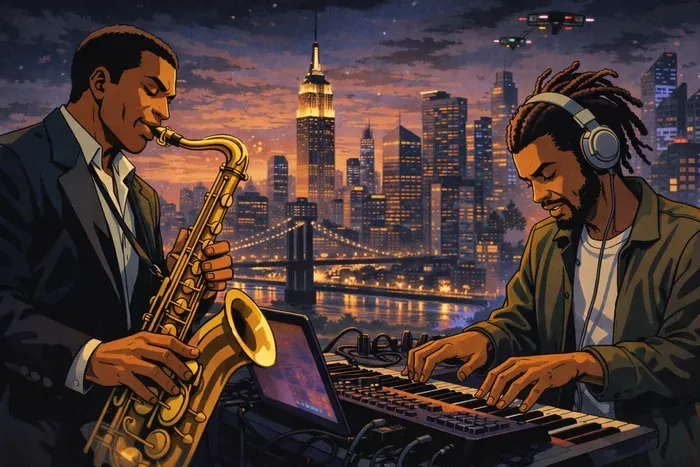
New York: Tradition Meets Tomorrow
While London’s club scene reshaped jazz-funk for a new generation, New York sustained a different kind of density. The city had long been one of jazz’s central laboratories. It was one of the key places where bebop took shape, and it later hosted the loft-jazz experiments of the 1970s. By the late twentieth century, established venues and newer cultural spaces existed within the same urban map.
The Village Vanguard and the Blue Note kept hosting famous jazz musicians. These rooms kept the tradition alive. The audience sat close together and listened intently. But a few subway stops away, different environments were starting to appear. The Nuyorican Poets Café in the Lower East Side was an important gathering place for music, poetry, and performance. The combination of poetry, rhythm, and improvisation there echoed one of jazz’s oldest habits: turning spoken feeling into musical time.
New York’s diversity helped cross-pollination. Latin jazz traditions were very popular in uptown neighborhoods. They mixed Afro-Cuban rhythms with bebop vocabulary. Salsa bands, hip hop DJs, and jazz musicians often performed for the same audiences. The city’s density made it easy for people to overlap. A bassist might play a traditional jazz gig one night and a funk session the next.
Record stores and college radio stations played a role similar to London’s pirate broadcasts. They placed rare grooves next to current releases and made connection-making a public activity. By the late 1980s and early 1990s, producers were also thinking in samples, loops, and breakbeats. That shift did not erase live musicianship. It changed how musicians and listeners understood continuity. The foundation for jazz rap and later neo soul was already in place.
New York’s scene was different from London’s. London’s scene was focused on one type of music, while New York’s scene was more plural. No single term captured it. Instead, there were multiple currents moving at once. Musicians like Branford Marsalis started groups like Buckshot LeFonque, which mixed jazz with hip hop rhythms. These experiments showed the city’s ongoing negotiation between tradition and innovation.
New York’s spaces show that labels often don’t match up to real life. Clubs, cafés, and radio programs helped people share ideas quickly. The city kept its tradition of acoustic jazz. It allowed new grooves to emerge alongside it. This coexistence prepared the ground for neo soul’s later rise, combining live musicianship with modern production.
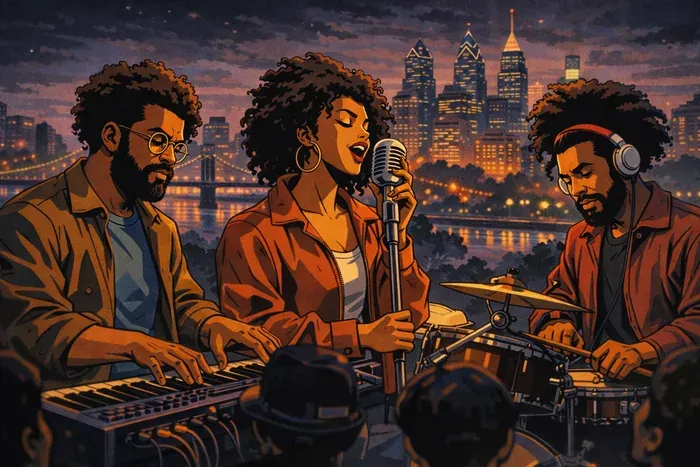
Philadelphia’s Neo Soul Network
While London’s clubs nurtured acid jazz and New York kept multiple traditions in motion, Philadelphia built a quieter network that became central to neo soul. The city already had a deep musical foundation. In the 1970s, the writing and production team of Kenny Gamble and Leon Huff helped define the lush, orchestrated sound later known as Philadelphia soul. That legacy did not disappear. It remained available as a musical memory and a practical model.
By the 1990s, a new generation of musicians was meeting in smaller clubs and rehearsal spaces around the city. Open mic nights became working spaces as much as social spaces. A key node was the Black Lily, a weekly gathering that brought singers, musicians, poets, and producers into the same room. These sessions were relaxed but serious. Artists tested new material in front of audiences that cared more about depth and honesty than spectacle.
Jill Scott, who later released Who Is Jill Scott? Words and Sounds Vol. 1, was part of this environment. The same was true of the production circle around The Roots. Questlove and his bandmates did more than just perform. They connected musicians, recommended collaborators, and supported new talent. The sense of community was both practical and artistic.
The Philadelphia scene was different from the more DJ-centered culture of acid jazz. It focused more on live instrumentation. The bands rehearsed carefully. The rhythm sections were more focused on depth than on being flashy. Extended chords and subtle grooves became a signature style. This wasn’t just a revival of the past. It was a new version of old soul and jazz styles made for modern listeners.
The city sat far enough from New York and Los Angeles to experiment without constant entertainment-industry pressure. Artists developed slowly. They refined their sound before signing major deals. When neo soul started to become more popular thanks to artists like Erykah Badu and D’Angelo, Philadelphia was ready for it.
This network mattered because it balanced craft and intimacy. Many musicians had studied jazz, but they focused more on feel than on display. Clubs and community spaces helped new ideas take root. The results would soon be visible across the country, but the scene first came together in modest rooms where rhythm and melody could develop slowly.
Acid Jazz: When Old Records Became New Again
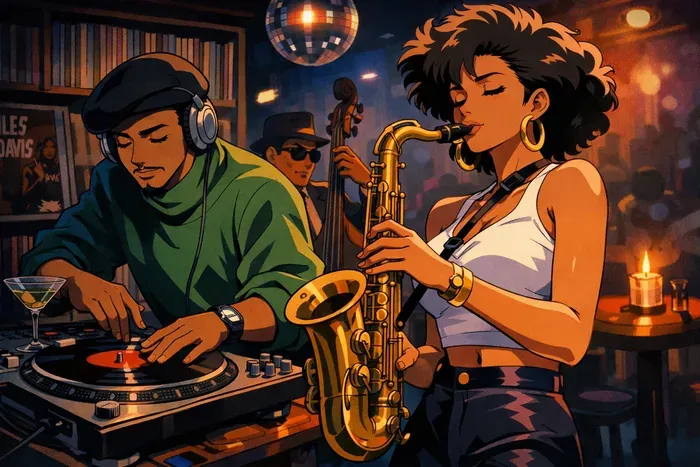
By the late 1980s and early 1990s, one label for the sound taking shape in London clubs began to circulate: acid jazz. The term was loose, and people used it differently, but it did capture a real shift. DJs were not only reviving older jazz-funk records. They were building a listening culture in which rare grooves, new productions, live bands, and club energy all belonged together. Horns were back on the dance floor, but so were turntables, bass-heavy mixes, and a DJ’s sense of sequence.
Acid jazz was more of a listening method than a strict genre. It treated the 1970s less as a lost golden age than as a usable archive. Producers tested different drum feels. Bands studied older recordings and replayed their logic with fresh energy. The atmosphere was urban and multicultural, shaped by Caribbean sound-system traditions, American soul and funk, and British club culture.
Rare groove culture was the most important part of this movement. Without the patient digging through secondhand vinyl bins, acid jazz would not have developed. The dance floor became a place where history was rewritten. Records that had been forgotten were given new meaning.
Acid jazz didn’t set out to be a big hit on the pop charts. It tried to bring back the connection between musicianship and groove in a club setting. Its influence spread quietly into hip hop and neo soul, showing that reinterpretation can be as creative as invention.
DJs as Musical Historians
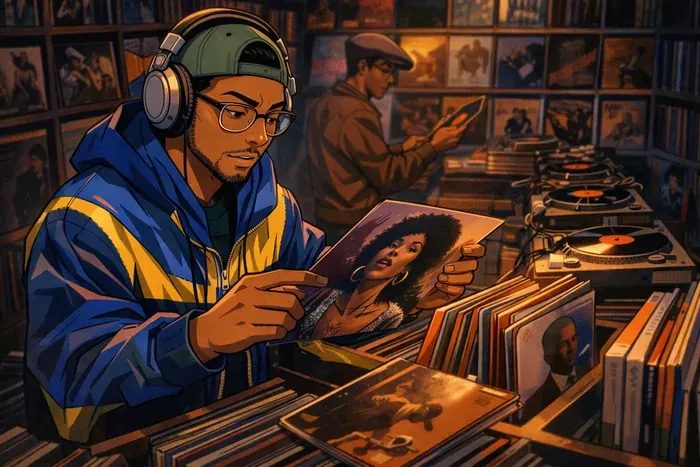
Before there was an “acid jazz” label, DJs were already treating vinyl records like living documents. In London, selectors like Gilles Peterson and Chris Bangs spent years searching for forgotten jazz-funk, soul, and fusion recordings from the 1970s. Many had been pressed in small quantities and had quickly disappeared from circulation. On the dance floor, though, they felt vivid and new.
Rare groove culture required patience and knowledge. DJs listened closely to the bass lines, drum breaks, and horn arrangements. They tested out their music in clubs to see how the audience reacted. A steady groove by Roy Ayers or a polished jazz-funk track by Donald Byrd could liven up a room when played in the right order. The key was understanding the context. The choice of material and the timing made old recordings seem new.
This approach changed what the DJ’s role was. Instead of just playing music, DJs started to choose and teach about the music they played. They introduced listeners to musicians who had never been famous. Record shops became places where people could learn about music. Conversations around quality, original labels, and production credits became central.
The practice also influenced producers. Technology allowed older recordings to be used in new compositions. The bass sound and steady beat of 1970s jazz-funk music worked well with the loop-based structures. Acid jazz bands often used the same types of instruments as on those earlier records, blending live horns with modern rhythm sections.
By looking back without feeling nostalgic, the rare groove movement expanded the range of jazz. It said that new ideas don’t have to mean forgetting the past. Sometimes it means hearing it in a different way. This way of thinking influenced not only acid jazz but also hip hop and neo soul, where producers looked to older music for more depth in harmony and rhythm.
The DJ played a quiet but important role as historian. If people hadn’t taken the time to listen, many of these songs might have remained hidden. Instead, they laid the groundwork for a new conversation between jazz, funk, and modern club culture.
Talkin’ Loud and Scene Infrastructure
Scenes need infrastructure. Clubs create momentum, but record labels, distributors, and media platforms turn momentum into continuity. In the early 1990s, Talkin’ Loud became one of the most important platforms for the emerging acid jazz movement. The label was started by Gilles Peterson, who wanted to document and extend club culture into recorded form.
Talkin’ Loud did not invent the sound. It provided a home for it. Artists like Galliano, Young Disciples, and Incognito made albums that mixed live music with danceable rhythms. The production often emphasized live instruments more than electronic sounds. Horn sections, bass guitars, and Rhodes keyboards were still the most important parts of the music.
The label also brought together radio and club culture. Peterson’s work as a broadcaster helped make the artists he supported better known. Airplay on stations like BBC Radio 1 introduced acid jazz to a wider audience beyond the club scene. This combination of live events and broadcast media helped the scene grow without losing its unique character.
The visual presentation mattered too. The album artwork, typography, and photography were all done in a simple but classy way. The branding was serious but not overly commercial. That balance was important. Acid jazz positioned itself as knowledgeable and rooted in history, yet unmistakably current.
Infrastructure also included networks of musicians. Session players appeared on many projects, which helped bring the scene together. Producers and arrangers shared ideas. This group of musicians worked together in a way that was similar to earlier jazz communities. In those communities, musicians would switch between different bands.
The scene had label support that allowed artists to improve their sound over time. Not every record needed to be a hit. The focus remained on groove and craft. This patience helped make the movement last a long time.
Talkin’ Loud shows how genre evolution depends on more than creativity alone. The way music travels is influenced by the support it gets from organizations. Without these structures, many acid jazz recordings might have remained local phenomena. They helped make jazz popular around the world and helped shape the style of jazz music that came later.
Live Bands Return
If DJs reopened the archive and labels stabilized the scene, live bands gave the movement its public face. Groups like Jamiroquai, The Brand New Heavies, and Incognito brought musicianship back to the center of the dance floor. Their performances were not built only on loops. They had tight rhythm sections, horn arrangements, and singers who understood soul phrasing.
Jamiroquai’s first album, Emergency on Planet Earth, released in 1993, is a clear example of this mix. The grooves are based on 1970s funk and jazz-funk styles. The bass lines are strong and melodic. The rhythm is punctuated by precise horn sections. But the songs are written for their own moment. The lyrics address environmental and social issues, combining groove with commentary.
The Brand New Heavies focused even more on using live instruments. Their early recordings feature tight drumming, rich keyboards, and assertive singing. Instead of hiding their influences, they embraced them openly. The sound pays homage to earlier soul and jazz-funk styles, but it doesn’t copy them directly. It reflects musicians who closely studied those records and learned their structure.
Incognito, led by Jean-Paul “Bluey” Maunick, developed a polished ensemble style. Their music often features layered vocals and complex horn parts. The groove stays steady, but small changes in pitch keep the music interesting. Incognito’s long career shows that acid jazz can last beyond a single trend.
The return of live bands was important because it showed that club culture wasn’t just about DJs and machines. Acid jazz focused on improvisation within a groove-based framework. Many people in these groups had received formal jazz training. They shared that knowledge in forms that still made sense on a dance floor.
This band-centered approach influenced later neo soul artists. The focus on tight rhythms and natural instruments can also be heard in the music of D’Angelo and Jill Scott. The dance floor and the rehearsal room were now one. Acid jazz showed that they could work well together.
These bands kept jazz harmony alive by combining groove with visible musicianship. The revival wasn’t just a reminder of the past. It was a statement that in today’s urban culture, skill and style are still important.
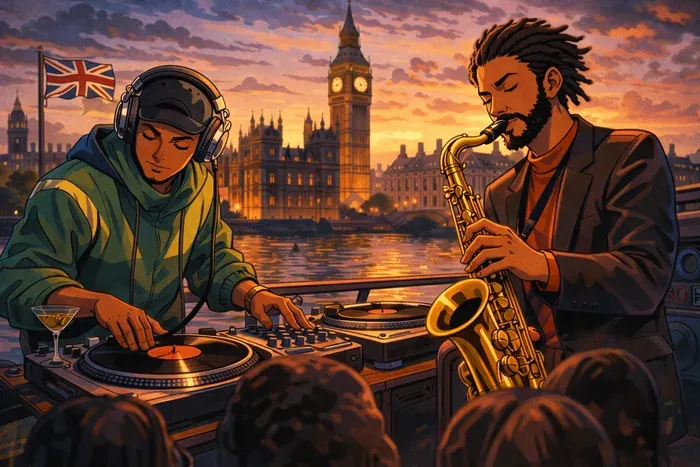
Acid Jazz Crosses the Atlantic
Although acid jazz is often associated with London, similar developments were also taking shape in the United States. The American scene used different labels, but the desire to bring jazz harmony back together with the energy and style of hip hop was just as real.
Digable Planets offer a strong example. Their 1993 album Reachin’ (A New Refutation of Time and Space) mixes jazz samples, relaxed bass lines, and thoughtful lyrics. Tracks like “Rebirth of Slick (Cool Like Dat)” move with a confident but calm energy. The production uses jazz elements without sounding overly academic. The group’s approach listens closely to earlier recordings while placing the sound firmly inside modern hip hop culture.
Branford Marsalis also explored a similar style of crossover music with Buckshot LeFonque. The project combined live jazz instruments with rap vocals and modern beats. Instead of thinking of jazz and hip hop as separate traditions, Buckshot LeFonque treated them as connected. The results were sometimes uneven, but the experiment showed a willingness to blend styles.
In cities like New York and Los Angeles, musicians who had grown up studying bebop were also listening to funk and rap. Studio sessions often included players who were comfortable playing different styles. The line between acid jazz, jazz rap, and contemporary R&B became less clear.
The American context was different from the UK scene in terms of size and structure. There was less reliance on a single label identity. Instead, projects were created through collaborations among musicians, producers, and small independent companies. College radio and other programs helped make this new style of music popular.
Acid jazz in the United States was not as popular as it was in the United Kingdom. But it was still important. The combination of live instruments and a strong rhythmic beat laid the foundation for neo soul’s popularity later in the decade.
The American side of the conversation shows that acid jazz wasn’t just some style that came from another place. It was actually part of a bigger discussion. Jazz musicians were already a part of urban music cultures that were influenced by hip hop and R&B. The style of music might have changed, but the main idea stayed the same: bring jazz vocabulary back together with modern rhythms and real-life experiences.
Women in 1990s Groove Scene
As acid jazz and related club music gained popularity, questions of visibility returned. Women had always been part of jazz and soul traditions, yet scenes led by male DJs and bands could still reproduce older imbalances. Several artists moved through that world with clarity and strength.
Neneh Cherry is an example of someone who can sing in different styles. In the late 1980s and early 1990s, she mixed hip hop, soul, and electronic music. Although her music is not strictly acid jazz, her presence in London’s multicultural music circles connected her to the same networks. Cherry’s ability to switch between different styles reflected the flexibility of the time period. She didn’t fit neatly into one category, and this flexibility became part of her identity.
Sade is another important reference point. Her music combined smooth jazz and soul. Albums like Diamond Life established an aesthetic of restraint and elegance. While Sade didn’t release music under the acid jazz label, her music was often played in the same clubs. DJs liked her recordings because they could set the right mood and have a subtle rhythm. Her international success showed that jazz-influenced soul music could reach a wide audience without losing its sophistication.
In live acid jazz bands, female singers often carried much of the emotional weight. However, leadership roles behind the scenes were less evenly distributed. The people in charge of making music, the people who managed record labels, and the DJ culture around the scene were still mostly male. That imbalance did not cancel out women’s contributions, but it did affect how credit was given.
These changes would later influence the rise of neo soul. Artists like Erykah Badu and Lauryn Hill worked not only as singers but also as creative directors of their own work. The basis for that confidence came partly from earlier scenes where women had faced both opportunities and limitations.
Groove culture in the 1990s shows that progress is rarely a straight line. You can see more visibility, but structural inequality can still remain. It’s important to recognize the contributions of women in acid jazz and similar styles to have a balanced story. Their presence made sure that the evolving group included many different points of view, not just one dominant voice.
Broken Beat: Rhythm Gets Elastic
As acid jazz matured in the 1990s, another rhythmic variation began to emerge in West London. Broken beat, also called bruk, shifted the groove slightly off center. Instead of the steadier pulse of classic jazz-funk, the drums moved in more fractured patterns. The feel remained danceable, yet it was more elastic.
Groups like 4hero and producers like IG Culture were key in creating this sound. 4hero, a group that started out in drum and bass, later developed a jazz-influenced style that mixed electronic music with strong harmonies. Their work showed how club culture could combine live musicianship and advanced studio techniques. The music had complex rhythms, but it still sounded warm.
Bugz in the Attic, another group of musicians from West London, continued this exploration. Their productions focused on teamwork. Different members of the group contributed tracks, remixes, and live sets. The scene was centered around clubs like Co-Op, where DJs and musicians experimented with new rhythms in front of audiences who were knowledgeable about music. Broken beat didn’t try to be popular. It focused on quality and community.
The harmonic language stayed true to jazz tradition. The music had long chords, beautiful tones, and bass lines that recalled earlier decades. But the rhythmic approach pointed forward. The small differences in the drum beats made the music feel intense and then relaxed. The dancers moved to a rhythm that was always changing, not a simple, predictable pattern.
Broken beat sat between acid jazz and neo soul. Later, producers working with soul singers picked up these rhythmic ideas. The result was music that felt both personal and modern. The West London scene showed that evolution does not always require dramatic rupture. Sometimes it arrives through small, repeated adjustments in feel.
By changing how time feels, Broken Beat took jazz in a new direction. It focused on harmony while changing the foundation. This balance would continue as thoughtful songwriting met meticulously designed rhythms. That is one reason the path from acid jazz to neo soul is clearer than it first appears. Broken beat translated club knowledge into a more elastic rhythmic language, and that language later made sense inside the slower, more intimate world of neo soul and adjacent hip hop production.
Acid Jazz Goes Global
While London’s acid jazz scene became popular, similar types of music were also becoming popular in Europe and Japan. These movements were not just copies of British trends. They were influenced by the local listening cultures of the time, which were shaped by record collecting, club nights, and strong jazz traditions.
In Germany, Jazzanova became highly influential. The Berlin collective was founded in the mid-1990s. They blended jazz harmony with soul arrangements. Their remixes and original productions mixed live instruments with electronic sounds. The grooves often moved slowly, allowing the chords to play out gradually. Instead of going for a quick impact, they focused on creating a certain atmosphere.
Jazzanova’s work shows how the principles of acid jazz were adapted to a European context where electronic music was already popular. House, techno, and jazz could all be played in the same clubs. Producers moved easily between scenes, thinking of them as different parts of the same language. The result felt polished yet remained true to the tradition of finding rare records.
In Japan, two groups, Kyoto Jazz Massive and United Future Organization, developed similar approaches. Both projects drew heavily from 1970s jazz-funk and fusion while integrating contemporary club rhythms. Their music was played in DJ sets all over Europe and North America. The exchange of vinyl and later digital files created a network that made geographic boundaries less clear.
Japanese audiences had long been fans of jazz. They paid close attention to the quality of recordings and performances. That respect for craft led to adaptations of acid jazz that were precise. At the same time, the club environment encouraged trying out different tempos and textures.
These continental scenes show that acid jazz was more of a listening practice than a fixed genre. It invited musicians and DJs to look at history in a new way. Berlin, Kyoto, and London all committed to groove and harmonic depth, but each city had its own sound.
By the late 1990s, the groundwork was firmly laid for neo soul to emerge. The worldwide popularity of jazz-funk and acid jazz led to audiences who were eager for thoughtful, harmony-driven songwriting, performed by talented musicians. The range of possibilities had widened, and its next phase was already taking shape.
Jazz Meets Hip Hop: The Art of Sampling
While acid jazz brought back the live groove in clubs, hip hop changed jazz through production. Technology allowed producers to take pieces from old records and rebuild them into new structures. A bass line from a 1970s jazz-funk track could be used in a rap song. Horns and electric piano chords were used in new ways. The connection between the past and the present became clear.
Jazz rap started in the late 1980s and early 1990s. Artists started combining jazz and hip hop music on purpose. The link was more than surface style. Both traditions valued improvisation, rhythm, and community. The DJ’s turntable was like a horn or piano.
This movement made producers more powerful. The studio replaced the bandstand as the main place for creativity. Deciding which records to sample was a big deal. Sampling honored earlier musicians while raising questions about ownership and credit.
Jazz rap didn’t just borrow from jazz. It used urban storytelling and modern music styles to do so. This change in perspective would have an impact on neo soul, a genre that often blended live instrumentation and hip hop production. The continuum moved forward through reconstruction as much as performance.
A Tribe Called Quest: Less Is More
When A Tribe Called Quest released The Low End Theory in 1991, the connection between jazz and hip hop felt both natural and intentional. The album features strong bass lines and simple drum beats. Instead of piling on elements, the group chose to focus on space. That choice allowed jazz elements to breathe.
Tracks like “Check the Rhime” and “Jazz (We’ve Got)” are inspired by earlier recordings, but they don’t sound nostalgic. The bass often takes up the center, playing a thick and round sound that brings to mind 1970s jazz-funk. Q-Tip’s production style is focused on clarity. Each element has enough space around it. The groove stays relaxed.
The album title itself shows that the band is focused. “Low end” refers not only to bass frequencies but also to groundedness. The music feels personal, almost like a conversation. Rap verses move with relaxed precision. The words of the song’s lyrics move smoothly, even when the beat stays constant. This subtle rhythmic flexibility shows the influence of jazz in a structural way.
A Tribe Called Quest also worked directly with jazz musicians. On later projects, they worked with bassist Ron Carter, creating a connection between different generations of musicians. These collaborations showed that hip hop and jazz were not separate worlds, but parts of the same conversation.
The cultural impact of The Low End Theory goes beyond just mixing different genres. It showed hip hop as thoughtful and musically aware, which went against stereotypes that reduced the form to aggression or novelty. Jazz references made the album seem smart, but it never felt boring. It was based on everyday experience.
Producers and singers who later shaped neo soul listened closely to this balance. The combination of strong bass lines, minimal production, and layered harmony became an example to follow. Jazz rap showed that sampling could be a way to interpret other music instead of stealing from it. It used older recordings as a basis for new stories.
A Tribe Called Quest showed that the jazz continuum didn’t just depend on live bands. It could move through turntables and samplers, guided by ears attuned to rhythm and texture.
Guru’s Jazzmatazz and Live Collaboration
If A Tribe Called Quest showed how jazz samples could shape hip hop production, Guru took the idea a step further. In 1993, he released Jazzmatazz, Vol. 1, which brought jazz musicians directly into the studio. Instead of making tracks using only pre-made loops, Guru had musicians play along with pre-programmed beats.
The album features collaborations with artists such as Donald Byrd, Roy Ayers, and Branford Marsalis. These were not just for show. The musicians performed their best. The result is a true hybrid. Live horn lines and vibraphone passages fit well with hip hop beats. The groove stays the same, but the texture is natural.
Guru’s calm and measured voice lets the instruments play freely. He doesn’t compete with the musicians. Instead, his verses move like a smooth conversation between phrases. The production respects silence and restraint. This balance is similar to earlier jazz groups, where conversation was more important than one person leading.
Jazzmatazz also had a special meaning for different generations. Veteran jazz musicians who had been sampled so often now worked together. This change addressed some of the tension around appropriation and recognition. By inviting musicians into the process, Guru openly acknowledged his musical heritage.
The project did not stop people from talking about whether the work was real. Some critics wondered if mixing live jazz and hip hop would weaken either tradition. But the album has been popular for a long time, which suggests that listeners thought the collaboration was sincere. The musicians weren’t chasing trends. They were exploring a shared rhythmic style.
Jazzmatazz had a lasting impact on neo soul. The combination of live instruments and modern production became a hallmark of late-1990s soul albums. Producers learned that they could use programmed drums and real horns together.
Guru’s experiment reinforced an important idea in the history of jazz: musicians can improve their craft by talking with each other. By combining jazz musicians with hip hop, he showed that history can be a living, changing thing. The conversation between generations moved from one person playing a small part of a song to everyone performing together, which made the connection between rhythm and improvisation stronger.
The Producers Who Changed Everything
As hip hop grew up, the producer became an important creative person. Sampling was more than just a technical trick. It became a way of writing music. The producers were the ones who shaped the rhythm, harmony, and atmosphere of the music from behind the console. They were often as influential as the front-facing artist.
Pete Rock helped create this approach in the early 1990s. His music often included warm jazz samples layered over precise drum beats. The bass felt deep but was easy to control. The horn loops and electric piano chords were chosen carefully. Pete Rock knew how to use sound to create depth in a song without competing with the voice.
DJ Premier developed a new style. His beats often included short jazz pieces that were put together to create smooth, rhythmic patterns. The drums hit hard, but the harmonic samples gave the tracks a nostalgic pull. Premier’s work with Gang Starr showed that you can create a strong identity with just a few ingredients. The combination of minimal piano notes and consistent drums created a sense of excitement and clarity.
J Dilla took this style of music to new levels in the late 1990s and early 2000s. His music had subtle rhythmic changes that felt a little off, but also felt human. Drum hits landed just behind or ahead of the grid, creating a relaxed, almost uneven swing. Dilla’s approach was similar to jazz timing, where feeling the music more than playing it perfectly was important. Albums like Donuts show how he could take short pieces of music and turn them into emotionally rich miniatures.
These producers changed what it meant to be an author. They were not just supporting rappers. They were creating musical worlds. The artists’ choices about which jazz records to sample influenced which artists remained visible in contemporary culture. They could make a vibraphone line from Roy Ayers or a bass groove from a forgotten fusion track sound new and exciting again.
Neo soul artists took this idea of production and ran with it. Albums by D’Angelo and Erykah Badu show that they pay close attention to the drum beats and the overall sound, which is similar to the way hip hop is produced in the studio. The line between bandleader and producer became less clear.
The focus of the music industry shifted from live performances to recorded music. But the connection to jazz was still clear in the emphasis on groove, timing, and layered harmony. By using samples and rhythmic nuances, these producers explored new musical territory.
Sampling: Who Owns the Music?
Sampling opened creative doors, but it also raised difficult questions. When producers built tracks from parts of older recordings, problems with who owns what and how much they should be paid quickly came up. Early hip hop often existed in legal gray areas. Small record labels sometimes released records without clearing samples. As the genre’s popularity grew, so did the number of lawsuits.
In the early 1990s, major lawsuits changed the way things were done. The courts decided that even short, easy-to-recognize samples needed permission and payment. The cost of licensing changed how records were made. Some producers started using studio musicians to replay melodies instead of lifting them from records. Others used more abstract chopping techniques to avoid being detected.
Beyond legal issues, there were also cultural debates. Critics asked whether sampling honored jazz musicians or took advantage of them. Supporters of the hip-hop genre say that it has helped people remember older music that many people had forgotten. A bass line from A Tribe Called Quest or a drum break from J Dilla would often remind listeners of the original artist. Record sales and streaming numbers sometimes rose as a result.
For many jazz musicians, the situation was complicated. Some people liked that they could work together and make money from licensing. Others felt uneasy about their work being fragmented without their input. One way to do this was to bring older musicians into the process directly, as in Guru’s Jazzmatazz.
Sampling also changed the idea of composition. In jazz, improvisation is based on shared standards. Musicians play familiar songs every night. Hip hop took that idea and used it with recorded music. The sampler became a modern instrument, rearranging history as it played.
These debates about what is right and wrong did not stop the exchange. They made the structures around it clearer. Contracts started to include more details. The credits became more precise. Producers learned to navigate legal frameworks while keeping their creative freedom.
People are still talking about ownership, especially in the streaming era, when digital platforms make money differently from vinyl sales. But the main idea is still the same: jazz and hip hop are connected because they both reuse and reinterpret music. When we approach the past with respect and transparency, it can shape the present. It shows that the continuum moves forward through dialogue, not isolation.
Women Behind the Boards
By the time neo soul began to take recognizable shape, questions of authorship had moved from the club to the studio. When people talk about producers, they usually mean men. But women have also shaped the studio in ways that can be heard across neo soul and related music. Their roles have included songwriting, arranging, producing, and guiding the overall creative process.
Missy Elliott is one of the key production figures of the late 1990s and early 2000s. She worked closely with Timbaland, helping to create a new style of music that mixed futuristic sounds with Black musical traditions. While her music was more like R&B and hip hop than straight jazz, the focus on groove and space is similar to jazz-funk and broken beat. Elliott had more control over her image and creative direction, which also showed a change in the balance of power. She was more than just a performer. She was a decision-maker.
Lauryn Hill played an important role in creating The Miseducation of Lauryn Hill. Although the people who worked on the production were listed as a group and later there was a legal dispute about who worked on what, Hill’s artistic vision guided the way the album was structured and the tone it had. The record mixes live instruments with hip hop style, drawing on soul and jazz traditions. Its organic feel influenced many neo soul projects. Hill showed that a singer could also arrange music and come up with the big ideas.
Me’Shell Ndegeocello is distinctive in her own right. She is a bassist, singer, and composer who moves between jazz, funk, rock, and spoken word. Her albums from the 1990s and 2000s show deep musical intelligence as well as social awareness. Her bass playing recalls figures like Jaco Pastorius and Larry Graham, yet her songs remain personal and exploratory. She moves across genres without losing the groove.
These women show that studio power isn’t just about technical programming. It includes decisions about how to arrange things, the tone, working together, and how to present the story. Neo soul would not have developed as it did without this new way of thinking about authorship.
Recognizing women in the studio continuum strengthens the historical record. It recognizes that the transition from jazz to hip hop to neo soul was driven by a variety of creative leaders. The studio, like the bandstand, has always been a shared space, even when some people could be seen and others couldn’t.
Neo Soul: Music for the Soul
By the mid-1990s, jazz, soul, hip hop, and club culture were meeting in new ways. The term “neo soul” came into use for artists who drew deeply from classic soul traditions while embracing modern production, hip-hop-informed rhythm, and jazz-based harmony. The label was always imperfect, and many artists resisted it, but it captured a real mood. This music felt reflective. It valued live musicianship, slow-building arrangements, and emotional detail over formula.
Neo soul did not appear out of nowhere. It drew from jazz-funk, classic soul, hip hop, gospel, and earlier jazz vocabularies. The studio became a place where patience mattered more than speed. Bass lines were warm and centered. Drummers often played slightly around the grid instead of locking every accent into it. Sustained guitar tones, Rhodes chords, and layered backing vocals created a soft but highly intentional environment.
Neo soul centered vulnerability, self-definition, and emotional precision. Its artists spoke about love, social tension, spiritual search, and everyday life in a clear but careful way. The movement may not have been as commercially dominant as mainstream R&B, but it had a significant impact. It offered an alternative path grounded in craft, community, and sonic patience.
If the label described a broad field, a few artists gave that field a recognizable center. D’Angelo, Erykah Badu, Lauryn Hill, Jill Scott, Maxwell, and others did not all sound the same, but together they made neo soul legible as a movement rather than a loose critical category.
D’Angelo: Craft, Pressure, Retreat
When D’Angelo released Brown Sugar in 1995, the sound felt both familiar and newly focused. The album is mostly 1970s soul and jazz-funk. The Rhodes piano glows softly. The bass lines sit close to center. The drums play with a relaxed swing that feels like hip hop production and live jazz. However, the songwriting feels personal rather than nostalgic.
The title track, “Brown Sugar,” has a steady rhythm that opens gradually. D’Angelo’s voice slides across the beat, slightly behind it at times, creating a sense of intimacy. The chords are extended but not flashy. They enhance the mood rather than controlling it. D’Angelo plays several instruments and carefully shapes the arrangement.
In 2000, D’Angelo took this approach deeper with Voodoo. The album features collaborations with Questlove, Pino Palladino, Roy Hargrove, and other musicians connected to jazz, soul, and live hip hop. “Untitled (How Does It Feel)” moves slowly and leaves room for silence, breath, and small changes in texture. Across the album, the rhythm often feels slightly behind the beat, loose without being careless. That feel became one of the most studied and admired rhythmic signatures in modern soul. "It was a ministry in itself."
The success of Voodoo made him highly visible. The music video for “Untitled” amplified that visibility, and public attention often reduced the work to image. Interviews from that time show the tension between artistic control and what the media expected. This pressure made him retreat from the spotlight.
But D’Angelo’s influence did not fade. Musicians studied not only the songs, but also the album’s internal balance: how the drums sat in the pocket, how the bass carried weight without clutter, and how background vocals thickened the harmony without crowding it. That attention to feel became part of the genre’s long afterlife.
His career shows how creative visibility can be, but also how difficult it can be on a person. Neo soul valued authenticity, but the industry often viewed artists in a limited way. D’Angelo’s retreat reminds us that the continuum is built by human beings navigating complex environments. The craft remains, even when the artist takes a break.
Erykah Badu: A Defining Voice
When Erykah Badu released Baduizm in 1997, the album sounded calm, self-possessed, and fully formed. The music was rooted in soul tradition, but the phrasing and harmonic choices showed a clear jazz influence. Coming after the producer-centered shifts of the early and mid-1990s, it also made a broader point: intimate, jazz-aware soul could still arrive as a clear public statement. “Rimshot (Intro)” opens with an unhurried pulse. The bass hums beneath extended chords, and Badu’s voice enters almost like speech. The effect is intimate rather than theatrical.
“On & On,” a defining song of the album, mixes spiritual thinking with a steady beat. The tune repeats itself, and subtle changes to the harmony can be heard beneath it. Badu’s phrasing often lags behind the beat, creating tension without rushing. This timing is similar to the jazz vocal traditions of Billie Holiday and Betty Carter, but it also sounds very modern.
Badu is not only a singer. She is also a curator of atmosphere. Her style drew from Black cultural memory, spoken-word cadence, jazz phrasing, and hip-hop rhythm. The production balances live instrumentation with careful studio detail, and nothing feels hurried. "I represent the artists who are often unheard, and this is for us."
Her presence also changed the conversation about Black womanhood in mainstream music. Instead of presenting a highly polished pop persona, Badu leaned into a style that felt thoughtful, self-defined, and connected to cultural memory. Audiences responded to that authenticity.
Subsequent albums such as Mama’s Gun allowed her to experiment with new sounds. The music still had a strong focus on drums and bass. Horns and keyboard textures added depth to the music. The mood was often more about thinking and less about big shows.
Badu’s influence on neo soul is hard to overstate. She showed that an artist could center tone, phrasing, and worldview rather than conventional pop escalation. Younger musicians looked to her for proof that spacious grooves and conversational singing could succeed in modern R&B without sounding conservative.
Her work bridges different eras. It pays tribute to earlier jazz and soul styles while remaining relevant to today. Erykah Badu reinforced a key idea of the continuum: progress grows strongest when it remembers where it began.
Lauryn Hill: Authenticity as Art
When Lauryn Hill released The Miseducation of Lauryn Hill in 1998, the album clearly crossed over between different genres. Hill was already famous as a member of The Fugees, mixing hip hop and soul in a natural way. Her solo project was even more successful. It focused on songwriting, arrangement, and personal storytelling.
The song “Doo Wop (That Thing)” features both live instruments and a clear hip-hop rhythm. It echoes a 1960s girl-group record, but it addresses modern social pressures. The groove is steady but not rigid. The background vocals are similar to the style of gospel music. Hill’s performance seamlessly transitions between singing and rapping, highlighting the connection between jazz phrasing and spoken rhythm.
On ballads like “Ex-Factor,” the music feels rooted in soul and jazz. The chords are full of emotion. The arrangement makes room for vulnerability. The order of the songs on the album was chosen carefully. The songs are like lessons in self-awareness and cultural identity, set up by spoken interludes from a classroom setting.
Hill’s visibility brought both praise and criticism. The record won several Grammy Awards and received strong reviews from critics. However, the story about her career soon became controversial, especially regarding songwriting credits and problems in the music industry. Legal disputes over production and arrangement showed the complicated realities of working together in a studio.
These tensions highlight a recurring theme. People often demand authenticity from artists, but the systems around them remain unequal. Hill later stepped away from many conventional industry expectations and followed a more selective public path. Her career shows how costly intense visibility can become.
Despite these challenges, the album’s influence remains strong. Many later neo soul and alternative R&B artists point to The Miseducation as a model for combining thoughtful lyrics, social criticism, melodic craft, and groove. "A love song to my parents, my family, my people, my musical and cultural forebears."
Lauryn Hill’s work shows how jazz-inspired harmony can work in popular music. It also reminds listeners that artistic integrity exists within complicated networks of credit, power, and expectation. Her contributions to the industry are twofold: she created new sounds and forced the industry to confront important questions.
Jill Scott: Poetry in Motion
Jill Scott’s first album, Who Is Jill Scott? Words and Sounds Vol. 1, released in 2000, shows the influence of Philadelphia’s tight-knit music scene. Scott’s work is different from projects built around a single producer because it feels collaborative. Musicians, poets, and arrangers from the city’s live music scene contributed to its texture.
Songs like “A Long Walk” have warm bass lines and gentle drum beats. The rhythm feels steady without being rigid. The chords keep going and resolving patiently. Scott’s voice combines the rhythm of spoken word with melodies. She moves easily between storytelling and singing, following the style of jazz and soul singers who used lyrics like they were conversation.
Philadelphia’s rich musical tradition is still evident, but in a more personal way. The music is composed in layers, but it’s not overwhelming. Horns and keyboards support the music rather than dominate it. This approach reflects the open mic culture that shaped Scott’s early performances. The songs were tested in small rooms before being recorded in the studio.
Scott also focused on the everyday experience. Her lyrics are clear and easy to understand. They are about love, self-doubt, humor, and community. The tone avoids being overly dramatic. It feels like it comes from real interactions. That authenticity resonated with listeners seeking alternatives to highly stylized mainstream R&B.
The production environment around Scott included musicians from The Roots and other local groups. This network strengthened the connection between neo soul and live hip hop. Players could make small changes to the music without losing the song’s center.
Scott’s presence made neo soul music more emotional. She didn’t use mystique or abstraction. Her storytelling felt direct. But the complex rhythms in her songs were still connected to the jazz tradition.
The Philadelphia music scene showed that neo soul can come from community practice, not just industry strategy. Jill Scott’s success proved that model right. Her albums show how working together, practicing, and sharing a space can create music that feels both planned and natural.
Scott represents continuity in the broader context. She combines the club culture of acid jazz, the production awareness of hip hop, and the harmonic language of jazz. Her work shows that neo soul is not a new style; it’s a continuation of the music that came before it. It is a careful continuation.
Maxwell & Sade: The Power of Restraint
Maxwell’s debut album, Maxwell’s Urban Hang Suite, came out in 1996. It is widely seen as a major neo soul statement. The record moves slowly and deliberately. Songs like “Ascension (Don’t Ever Wonder)” have smooth bass lines and subtle drums. The music is rich, but never overwhelming. Maxwell’s high tenor voice floats above the arrangement.
The key quality is patience. The tracks allow space between phrases. The instruments enter gradually. The focus is more on intimacy than on display. This minimalism draws from earlier soul traditions and jazz harmony. Extended chords and subtle changes create depth without drama.
Although Sade was around earlier, in the 1980s, her influence on neo soul is clear. Albums like Diamond Life and Love Deluxe created a relaxed and confident sound. The band’s music is immediately recognizable. Guitar, bass, and saxophone move with precise balance. Sade Adu’s voice never gets louder than a quiet murmur, even when she’s singing about feeling lonely or weak.
Sade showed that you can be sophisticated and still be successful. Her music reached a global audience without losing its complexity. This balance was an example for later artists dealing with commercial pressures.
Maxwell took on some of this quiet authority. He did not present himself as a grand romantic figure. Instead, he focused on mood and texture. The production featured live musicians, which reflects the collaborative spirit of the Philadelphia and New York music scenes.
Both artists show the power of restraint. Fusion had explored technical expansion. Acid jazz made people want to dance again in clubs. Neo soul, as represented by artists like Maxwell and Sade, focused more on personal experiences. The focus shifted toward showing emotions in a subtle way, supported by carefully arranged harmony.
Their work shows that evolution doesn’t always mean adding complexity. Sometimes, it involves improving the existing elements until they are clear. Romantic minimalism is an important part of neo soul music. It kept jazz’s sensitivity to timing and tone, but expressed it in a modern R&B style.
The Architects Behind the Sound
If the singers gave neo soul its public face, musicians and producers gave it structural coherence. Their work was less visible than that of the artists in the spotlight, but it had a major impact.
Questlove, the drummer and bandleader of The Roots, played a central role. His drumming style mixes jazz feeling with hip hop timing. He often hits the snare drum slightly after the beat, creating a relaxed swing that feels natural instead of being programmed. On D’Angelo’s Voodoo, Questlove’s approach to rhythm helped define the album’s texture. The drums aren’t too loud. They breathe.
James Poyser, the keyboardist and arranger, helped make many neo soul recordings sound richer. His chord choices reflect deep jazz fluency. Instead of using simple triads, he uses extended harmonies that subtly change beneath melodies. This harmonic depth became a symbol of the movement. Poyser’s work with The Roots and other Philadelphia artists made the city well-known for its craftsmanship.
Raphael Saadiq added another layer to the music. As a producer and musician, he combined the style of vintage soul with modern structure. His own recordings and his production work for artists such as D’Angelo and later performers showed that he paid close attention to tone. Saadiq often preferred to use live tracking instead of digital editing, which kept the instruments’ natural sound.
These producers were like architects. They understood how bass, drums, and keyboards should work together. They emphasized rehearsal and group interplay. The tempo, drum feel, and harmonic pacing of the songs created their emotional character.
The presence of strong musical directors helped neo soul avoid becoming a simple revival movement. The sound was from the past, but it felt current. Studio sessions often sounded like small jazz bands, where listening was as important as playing.
Knowing about these architects helps us understand how the continuum works. Evolution depends on more than charismatic voices; it also depends on careful structural design. Neo soul’s continuing influence rests in part on the people who built its inner logic.
Expanding the Canon: India.Arie, Angie Stone, Me’Shell Ndegeocello
As neo soul became more popular in the late 1990s and early 2000s, it came to be seen as more than just a small group of artists. India.Arie, Angie Stone, and Me’Shell Ndegeocello each expanded the movement’s emotional and stylistic range while staying connected to its jazz-influenced roots.
India.Arie’s first album, Acoustic Soul, released in 2001, had a warm and clear sound. The arrangements are often simple. The acoustic guitar, bass, and percussion gently support her voice. The harmonic language is still rich, but it’s not overly showy. Songs like “Video” talk about how people see themselves and the pressure from society. Arie’s focus on authenticity matches neo soul’s most important qualities, but her style is less focused on urban club music and more on folk music. This shift shows how flexible the movement is.
Angie Stone was more connected to earlier R&B traditions. She started her career in the hip hop trio The Sequence, but later developed a solo style based on classic soul phrasing. Her album Black Diamond mixes smooth music with gospel-style singing. Stone’s songs often show emotional maturity. The rhythm sections keep a tight and relaxed feel, similar to jazz-funk.
Me’Shell Ndegeocello is unique and doesn’t follow the typical rules. As a bassist and composer, she plays a wide variety of music, including jazz, funk, rock, and spoken word. Albums like Plantation Lullabies show how she uses complex bass lines with lyrics that deal with social issues. Ndegeocello’s musical style draws from jazz, but her lyrics also touch on themes of identity and politics. She challenges the limited definitions of genre and gender in the industry.
These artists show that neo soul is a flexible style. The movement isn’t limited to a single sound or approach. The songs often have long chords, deep bass lines, and thoughtful lyrics, but each person’s experience of the music is different.
Expanding the canon matters because it resists simplification. Neo soul is often described using a few well-known artists as examples. Including Arie, Stone, and Ndegeocello reveals a broader field. The range of musical styles grows not through uniformity, but through variation grounded in shared harmonic and rhythmic values.
The Sound of Neo Soul: Harmony and Groove
After the artists and scenes come the musical details that hold the whole story together. Every time this continuum changes style, its musical language changes too. Jazz brought new sounds and tempos. Fusion expanded texture through electricity. Acid jazz returned the groove to the club. Neo soul gathered those elements into a new expressive balance.
The core of neo soul is not academic in the classroom sense. It can be found in rehearsal rooms and studios. Musicians often discuss the feel, or vibe, of a piece. They also talk about the pocket, which refers to the rhythm and groove of a song. The style is defined by extended chords, subtle syncopation, and patient pacing, all of which shape how the lyrics land.
Knowing what neo soul is can help you understand why it feels different from mainstream pop. The harmonies are often more complex. The rhythm usually isn’t exact. Silence is important. These musical choices create a sense of intimacy.
What follows doesn’t try to break music down like a machine. Instead, it shows how certain harmonic and rhythmic practices from bebop and modal jazz made their way into contemporary soul music. The goal is to listen more closely, not to reduce the music to formulas.
From Bebop to Neo Soul: The Harmony Journey
Jazz added greater harmonic complexity. Instead of stopping at three-note chords, musicians started adding sevenths, ninths, elevenths, and thirteenths. These extensions made the music more colorful and expressive. In bebop, musicians like Charlie Parker played fast-moving chord changes with altered tones. Later, modal jazz made harmonic motion simpler while adding more tonal variety within a single scale.
Neo soul took this harmonic richness and ran with it. Listen to the chord progressions in D’Angelo’s “Untitled (How Does It Feel)” or Erykah Badu’s “On & On.” The underlying structures often include major seventh or minor ninth chords. These voicings create warmth without sounding overly emotional. They suggest complexity in a subtle way.
Keyboardists like James Poyser use jazz voicing techniques in a subtle way. Instead of putting notes close together, they spread them across the keyboard, leaving space between them. This openness lets the vocals move freely. The harmony supports rather than competes.
Maxwell’s recordings also show that he paid attention to choosing the right chords. The progressions may look simple on paper, but the voicings include inner movements that add depth. A bass note might change while the higher notes stay the same, creating smooth transitions.
The connection to jazz is deliberate. Many neo soul musicians studied jazz in some way. They took the language of extended harmony and changed it to work better at slower tempos and in groove-based frameworks.
This harmonic continuity explains why neo soul feels so emotionally layered. Extended chords carry a little tension. They avoid the brightness of basic major chords or the starkness of simple minors. Instead, they suggest shades of feeling.
The transition from bebop’s fast substitutions to neo soul’s slow, steady beats shows how musical ideas can change without losing their original character. The words are still there, but the timing is different. Harmony becomes a quiet companion to storytelling. It is rooted in jazz, but adapted to a new context.
Swing: Then and Now
Swing has never had one fixed rhythm. In early jazz, it referred to the subtle push and pull between beats, the way musicians leaned into the rhythm rather than dividing it evenly. Drummers like Max Roach and Art Blakey created the swing through ride cymbal patterns and responsive accents. The feeling was elastic. It allowed for movement without being too precise.
Neo soul reinterprets this idea in a different way. Instead of the fast, energetic sound of bebop, the groove often slows down. The swing feels less intense. Drums may play slightly behind the beat, creating a relaxed pocket. This timing is very similar to the timing of hip hop production, particularly the off-center drum placement associated with J Dilla.
On D’Angelo’s “Voodoo,” the drums rarely land exactly where a digital grid would predict. The snare drum might feel a little late. The kick drum might start a little early. These small changes make the groove feel warmer and more human. The groove breathes. Questlove’s playing on the album strikes the right balance between being relaxed and in control.
Erykah Badu’s music often has a similar vibe. The rhythm section plays in sync, but the overall sound remains smooth and flowing. The swing is internal rather than obvious. Listeners may not think about it, but they feel it.
This new version combines the sounds of acoustic jazz with modern digital production techniques. Early jazz relied on live interaction to generate swing, but neo soul often combines live musicians with studio editing. The goal is not to be perfect, but to have character.
The idea of a pocket is the most important part. Musicians often talk about “sitting in the groove,” which means to keep a steady pace without rushing. This kind of patience is similar to what we saw in earlier jazz practices, even though the style on the surface is different.
By slowing down the rhythm and incorporating it into groove-based structures, neo soul maintains a fundamental aspect of jazz. The rhythm isn’t too fast. It settles into a deeper layer. In that depth, the subtle choices about timing can have a strong emotional effect. The continuum adapts, but the principle remains the same: time is flexible, and how something feels is more important than exact measurement.
The Power of Space and Silence
Not every change in music comes from adding layers. Sometimes it’s revealed through what’s left out. One of neo soul’s most important features is its connection to space. The music uses silence, sustained tones, and simple arrangements. This makes the music feel strong without being overly exciting.
In early jazz, space was important. Miles Davis often left pauses between phrases, allowing the rhythm section to respond. The absence of notes became part of the conversation. Neo soul takes this lesson and reframes it at slower tempos in a more personal way.
In Maxwell’s recordings, instruments often come in gradually. A bass line might start on its own. Next, a soft keyboard chord follows. The drums join in later, adding a steady but subtle rhythm. The arrangement gradually builds up. Each element has enough space around it. The listener won’t feel overwhelmed.
Erykah Badu’s work is similar. The background vocals are added one at a time, so that they don’t get in the way of the main melody. The percussion may be minimal, focusing attention on changes in pitch and vocal nuance. This restraint draws the ear inward.
Producers learned that emotional depth doesn’t require constant movement. Extended chords can linger. One bass note held for a moment can change the feeling of the whole phrase. These small choices show jazz’s sensitivity to tone and timing.
The minimalist style of neo soul is different from the overly polished style of mainstream pop. Instead of using all the available frequencies, artists leave some gaps. Those gaps create space for reflection. The sonic choices match lyrical themes that often center on introspection.
The balance between rhythm and space connects directly to earlier phases of the continuum. Fusion explored density and technical expansion. Acid jazz brought new life to dance floors. Neo soul slows down the tempo and narrows the focus. It asks listeners to lean closer.
By treating silence as active rather than empty, neo soul reinforces jazz’s most important principle: music is like conversation. What you don’t play can matter as much as what you do. In that quiet, the continuum continues. It is shaped by attention and care rather than spectacle.
The New Jazz Renaissance
By the early 2000s, some people were wondering whether neo soul would fade into a brief moment. Instead, a new generation of musicians began combining formal jazz training with contemporary production culture. This was still the era of CDs, blogs, mixtapes, and early digital platforms rather than the fully developed streaming system of the 2010s. But home-recording software was increasingly accessible, cross-city collaboration was easier, and artists had more ways to release work outside the traditional label model.
This environment supported the mixing of different musical cultures. Artists moved easily between jazz groups, hip hop sessions, and R&B songwriting camps. The difference between “serious” jazz and popular styles became less clear. Producers like J Dilla remained audible in the drums, while the harmonic language of neo soul still shaped the music’s emotional center.
A quiet renaissance took shape, led by artists who respected jazz tradition without treating it as untouchable. They performed at festivals with rappers and indie bands. They studied harmony formally and then used it in new ways.
This phase of the continuum does not reject the past. It reinterprets it through global networks and digital tools. The conversation is becoming increasingly complex, not less.
Robert Glasper: Jazz for Today
Robert Glasper is one of the clearest examples of how jazz and contemporary R&B remained intertwined in the twenty-first century. He studied at Houston’s High School for the Performing and Visual Arts and later attended the New School in New York. That training grounded him in bebop and modal language, but his professional path quickly moved beyond a strictly traditional jazz lane.
He did this with the Robert Glasper Experiment, especially on Black Radio in 2012. On it, he mixed live jazz instruments with R&B vocals and hip hop rhythm. The album features collaborations with artists such as Erykah Badu and Bilal. The groove often sits low and steady, while keyboards layer extended harmonies above it. The production feels modern, but the improvisational core is still there.
Glasper’s piano playing shows that he pays close attention to every note. He uses space in a measured way, letting chords ring out. His style reflects neo soul, which emerged in the late 1990s. At the same time, he adds subtle electronic textures and studio layering.
The success of Black Radio showed that audiences and institutions had become more open to hybrid language. The album reached beyond a niche jazz audience and won the GRAMMY for Best R&B Album. That mattered symbolically as much as commercially. It showed that jazz-based musicianship could sit at the center of contemporary Black popular music rather than at its edges. "When you open it up, more people are prone to walk through that door."
Glasper also emphasizes working together. His projects bring together rappers, singers, and instrumentalists without a strict hierarchy. This approach is similar to earlier scenes in Philadelphia and London, where the community influenced the sound.
His work suggests that the continuum isn’t limited to one style. Jazz, hip hop, and soul still belong in the same conversation. Instead of treating jazz as a museum tradition, Glasper presents it as a living toolset.
He does this by mixing styles such as fusion and neo soul in a way that’s easy to follow. He shows that technical mastery and accessibility can work together to reinforce each other.
Esperanza Spalding: Defying Categories
Esperanza Spalding is another important figure in twenty-first-century music. She is a bassist, singer, and composer who moves easily between jazz, chamber music, and contemporary soul. Her training is rigorous, but her presentation resists simple categorization.
On albums such as Esperanza and Radio Music Society, Spalding plays complex bass lines while singing melodies. She often sings in different languages, showing that jazz is global in reach. The musical patterns in her work are complex, but they remain clear. Instead of foregrounding virtuosity, she folds it naturally into the song.
Spalding’s bass playing recalls earlier acoustic jazz, but she also plays electric bass in a way that honors the electric revolution that changed the instrument. Her voice moves with strong rhythmic phrasing. She easily switches between supporting and leading roles. This flexibility reflects the expanded role the bass took on after players like Jaco Pastorius, and later within neo soul.
Her GRAMMY win for Best New Artist in 2011 showed that jazz-informed music could still break through at the highest-profile award level. Some observers were surprised, since the category is often associated with pop momentum. The result suggested broader public interest in musicianship that crossed genre lines. "Jazz has always been a melting pot of influences and I plan to incorporate them all."
Spalding also works on conceptual projects. Later works explore ideas of who people are, how they can heal, and how communities can come together. These ideas are shown in the music through many different layers. She works with dancers, poets, and visual artists, which shows how jazz is connected to other types of art.
What makes Spalding notable is her ability to move across genres with unusual control. She doesn’t see jazz as something to borrow from. She lives in it completely, even when she goes beyond its usual structures. Her music shows that the range of musical styles can change. It can take in different musical elements, R&B phrasing, and experimental textures without losing its own style.
In a world of constantly changing trends and algorithms, Spalding’s dedication to quality stands out. Her work shows that deep training and contemporary vision are not opposites. They are both important parts of the ongoing changes in jazz-derived music.
Los Angeles: The New Laboratory
New York and Philadelphia were crucial in the earlier stages, but Los Angeles became another major center in the late 2000s. The independent record label Brainfeeder, founded by producer Flying Lotus, became an important reference point for a new generation of artists working across styles. Its catalog mixes jazz harmony, electronic production, and experimental hip hop.
Flying Lotus, a grandnephew of Alice Coltrane, represents both family lineage and new ideas. His music combines broken beats with layered textures. Albums like Cosmogramma mix live instruments with digital editing. The result feels dense yet intentional. Jazz improvisers often appear within these soundscapes not as nostalgic references, but as active collaborators.
Thundercat, a bassist closely associated with Brainfeeder, combines jazz technique with contemporary culture. His playing is similar to that of Jaco Pastorius, but with a more relaxed, rhythmic style that is characteristic of J Dilla’s production. On his solo albums, the bass lines move melodically through harmonically rich environments. The singing and synthesizer textures give the music a dreamlike quality.
The Los Angeles music scene is built on collaboration. Musicians move between jazz clubs, electronic festivals, and studio sessions. Live performances and laptop productions can be developed side by side and often coexist. The city has a long history of studio musicianship, which makes it easy for musicians to work together. Players who have trained in jazz can easily switch to experimental hip hop.
Brainfeeder’s work shows that the continuum is not linear. It grows by adding new technologies while still following its most important ideas. Even when they use electronic effects, the focus on harmony, groove, and improvisation stays central.
This laboratory approach recalls earlier fusion experiments, but the mood is different. Instead of arena-style competition, it encouraged exploration and experimentation. Here, neo soul’s intimate focus meets the abstract sound of electronic music.
Los Angeles adds to the conversation happening all over the world. It shows that language used in jazz can easily adapt to new tools. The continuum continues not through strict preservation, but through open-ended experimentation rooted in listening.
UK Modern Soul: A Continuing Story
While Los Angeles explored electronic hybridity, the United Kingdom cultivated a modern soul strand that remained closely tied to songwriting and vocal presence. Amy Winehouse’s Back to Black, released in 2006, was a turning point. The album draws heavily from 1960s soul production, yet its phrasing and harmonic sensibility reflect jazz awareness.
Winehouse’s voice has a subtle swing to it. In songs like “You Know I’m No Good,” her timing changes as she follows the beat. The songs were produced by Mark Ronson and Salaam Remi, and feature live instruments. Horns, upright bass, and drums create a rich, layered sound. The sound feels classic, but it never feels derivative.
Winehouse’s success set a new benchmark for British soul artists. Her honest songwriting and jazz-aware style were widely influential. But her high profile also showed the pressures on artists dealing with fame and media scrutiny.
Lianne La Havas represents a different part of this range. Her first album, Is Your Love Big Enough?, mixes folk-influenced guitar with jazz-influenced harmony. The arrangements remain spacious. La Havas often works with minimal instrumentation around the voice. Her later self-titled album leans further into warm bass lines and subtle rhythms.
The UK modern soul scene is supported by strong jazz education and club infrastructure. Musicians often perform in small venues and on larger stages. Radio stations, especially the BBC, keep supporting artists who mix traditional styles with modern sounds.
This scene shows how important songwriting is. Groove is still important, but clear lyrics and well-crafted melodies carry equal weight. The harmonic language still uses jazz vocabulary, but the presentation feels personal instead of technical.
The UK’s contribution highlights that evolution is not limited to one city or country. Each region adapts the shared language to fit its own experiences. Modern British soul is influenced by acid jazz, neo soul, and classic jazz, and it’s used to tell new stories. The conversation continues to be active and transnational.
Hiatus Kaiyote: Jazz from Down Under
The United States and the United Kingdom were key in shaping the early neo soul movement, but by the 2010s, it was clear that this style had spread all over the world. Hiatus Kaiyote, a band from Melbourne, Australia, is a great example of this change.
Their music doesn’t fit neatly into any one category. The band mixes jazz harmony, neo soul groove, and experimental structure into compositions that change on a dime. Songs often have different sections, with a change in speed and sound, but the song stays connected. Nai Palm’s voice smoothly moves over long musical notes, sometimes in a way that feels deliberately unpredictable.
The music of Hiatus Kaiyote is complex. The chords are played in new and interesting ways, showing the influence of both jazz training and modern production styles. The rhythm section plays complex patterns easily. Drums and bass interact in interesting ways, rather than just repeating the same pattern. This combination of styles reflects the fusion genre while keeping neo soul’s intimacy.
International touring and digital platforms helped the band reach more people. Artists like Kendrick Lamar used their music in their work, showing the connection between global neo soul and American hip hop. This cross-pollination shows how the continuum now works across continents in real time.
Hiatus Kaiyote’s presence also highlights the importance of independent infrastructure. The band first became popular by performing live and through word-of-mouth. Then, they gained wider recognition. Their success shows that audiences are still open to complex harmony and unusual structure if the music is sincere.
The global hybrid model shows that jazz-derived language can naturally adapt to different cultures. Musicians from Melbourne can draw on bebop harmony, London club grooves, and Los Angeles production styles.
The continuum no longer moves in one direction from a central hub. It circulates. Ideas spread quickly and come back changed. Hiatus Kaiyote shows that the evolution of jazz to neo soul isn’t limited to any one place. It is part of a network that focuses on listening to people from different backgrounds.
Who Decides What We Hear
By this point in the story, the question is no longer only how the music sounds. It is also how it is filtered, rewarded, and remembered. Every musical movement eventually comes up against institutions. Record labels, award committees, streaming platforms, and academic programs influence which artists become visible. The transition from jazz to neo soul follows the same pattern. While music often grows in small spaces, its longer legacy is shaped by systems that decide what is kept, promoted, and taught.
In the past, record labels and radio programmers decided which songs could be played. Today, algorithms influence discovery. Streaming services put music into playlists. These playlists can make a whole scene popular or unpopular. The language of genre becomes both a tool and a limitation.
At the same time, universities and conservatories are also teaching jazz and contemporary soul music. The things that are included in the curriculum affect how future musicians understand the history of music. Decisions about canon formation matter.
From here, the focus shifts to how industry structures intersect with artistic evolution: visibility, inequality, and the making of cultural memory. The continuum is shaped not only by sound, but also by who is heard and remembered.

How Hybrid Scenes Stay Funded
The conditions in which musicians work vary widely by region. In some parts of Europe, the government gives money to jazz festivals, art centers, and educational programs. Government grants and cultural subsidies can provide stability for artists exploring hybrid forms. Festivals like Montreux in Switzerland and North Sea Jazz in the Netherlands bring together jazz veterans and contemporary soul artists on the same stage.
In the United States, funding often depends more heavily on private sponsorships, ticket sales, and philanthropic foundations. While well-known places like Lincoln Center often have jazz performances, smaller, more experimental projects may have a harder time getting consistent support. The market plays a bigger role in deciding which artists get long-term support.
These differences affect how the continuum changes over time. European scenes sometimes support experimental fusion or jazz-electronic hybrids for longer, thanks to public grants. American music often starts with local groups and small record labels.
The contrast does not mean one system is better than the other. Both systems produce a large body of work. However, the economy affects how much risk people are willing to take. When financial pressure is high, artists might feel like they have to follow trends that have been successful in the past. When support is stable, it’s easier to experiment.
The development of neo soul in cities like Philadelphia shows how communities can make up for limited institutional funding. Open mic nights and networks of collaborators let musicians practice and get feedback for free.
As streaming platforms become the main way people consume music, payment models keep changing. Musicians often earn less from recorded music than they did in earlier eras. Touring and merchandise have become more important sources of income. These realities affect how musicians plan their careers.
Understanding the economic context makes the music itself more enjoyable. The continuum survives not only because of artistic drive, but also because communities find ways to support it. Institutions can make things louder or quieter, but they don’t completely control the direction of sound.

How Algorithms Shape What We Hear
Now, most people discover new music through playlists on streaming platforms, rather than in record stores or on radio shows. Platforms group artists into categories like “neo soul,” “jazz vibes,” or “chill R&B.” These categories can help listeners discover new music quickly. They can also make things too simple.
Algorithms prioritize engagement. Songs that fit a certain mood may be placed alongside others that have a similar tempo and texture, regardless of their deeper origins. A track by Erykah Badu might be played next to a bedroom producer who has never studied jazz harmony. On one level, this cross-exposure makes access easier. On another, it makes the historical context unclear.
Playlist culture usually prefers individual tracks to full albums. But much of the difference between the albums, from Bitches Brew to Voodoo, depends on the order they’re listed and the mood they create. Albums were originally intended to be complete statements. When songs are separated from that structure, part of the artistic intention changes.
Streaming data also affects production choices. Artists may feel pressure to create shorter introductions or more immediate hooks to avoid being skipped. Neo soul’s focus on patience and space doesn’t always fit with this setting. The challenge is finding the right balance between making art and keeping it discoverable.
Digital distribution makes it easier for new companies to enter the market. Independent musicians can release their music worldwide without needing support from a record label. The Los Angeles Brainfeeder collective gained popularity online. Fans all over the world discovered artists at the same time.
Algorithmic identity affects how people perceive things. If a musician is often described as “lo-fi chill,” listeners might see the music as background instead of as a serious art. The way things are set up affects how they’re received.
The streaming landscape doesn’t change the fact that there’s a connection between these things. It changes how you access it. If you listen closely, you can still hear connections from fusion to neo soul to modern hybrids. The tools have changed. It is still important to listen carefully.
Knowing how algorithms work helps us understand how genres have changed and now interact with digital systems. Perception is shaped by code as well as by critics. The story continues, with new infrastructures added to older traditions.
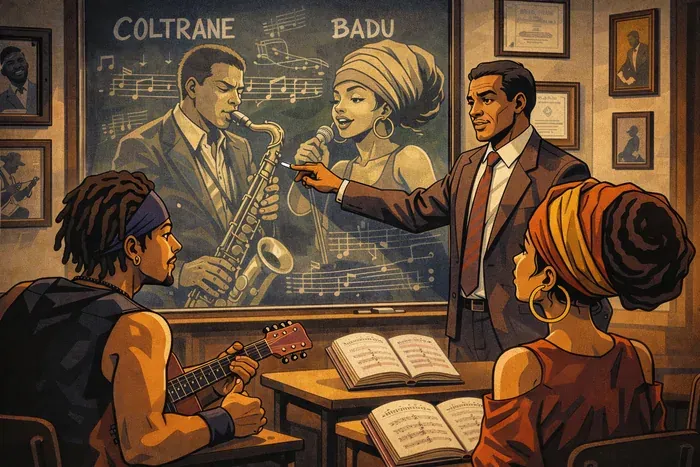
Who Gets Taught and Remembered
Jazz education has expanded significantly in the last few decades. Now, colleges and universities offer degrees in jazz performance, composition, and even contemporary production. This shows that jazz is a serious art form. But what is taught in schools affects how people remember this history.
For many years, academic programs focused heavily on early- to mid-20th-century jazz: swing, bebop, and modal jazz. Some people treated fusion and neo soul as side branches rather than central parts of jazz history. This way of thinking was similar to older discussions about authenticity.
This view has slowly changed over time. Educators now include musicians like Herbie Hancock, Erykah Badu, and Robert Glasper in course materials. Students will learn about extended harmony in neo soul and study how to produce hip hop music using improvisation. This broader approach recognizes that the continuum extends into the present.
Archives play a similar role. Record labels, libraries, and digital repositories decide which recordings are kept and made available again. Re-release campaigns can bring attention back to fusion albums that have been overlooked or rare groove compilations. When catalogues are digitized, more people can access them.
However, there is still work to do. Women and artists from other countries have not been as visible in historical accounts. Efforts to fix these imbalances continue, but it’s not happening evenly. Who ends up in the textbooks and who just stays in the footnotes can shape how people see things in the future.
Education also has a direct impact on musicianship. Students who learn jazz harmony can later use that knowledge in R&B or electronic music. The lines between different types of music get mixed up in classrooms where students learn songs from different decades.
The question of who gets taught is not abstract. It affects how future generations understand musical history. If neo soul is shown as connected to jazz instead of as a different style, students can better understand the connections.
Institutions can both preserve and narrow history. When curricula are thoughtfully expanded, they strengthen the educational system by making its threads visible. It’s important to understand that jazz didn’t stop evolving with bebop. It continues through fusion, acid jazz, and neo soul.
The Human Cost of Making Music
Even though styles and industry rules have changed, musicians’ lives are still shaped by what they can and cannot do. The jazz-to-neo-soul continuum includes stories of creative people who work intensely and then retreat. People often expect too much from artists, especially when they are seen as symbols of authenticity or cultural renewal.
People often talk about D’Angelo’s long absence after Voodoo in this context. The album was a big success, and the media wrote constantly about his image and musicianship. His interviews from that period show discomfort with being treated as a symbol. The pressure to meet commercial demands while maintaining artistic control led to his withdrawal.
Amy Winehouse’s career shows similar tensions, but in a different genre. People all over the world loved her songwriting and jazz-influenced style. At the same time, tabloids wrote nonstop about her personal struggles. The difference between how talented a musician is and how much the media talks about them shows how weak the support systems for musicians can be.
People talk more openly about mental health today. Today’s artists are more open about feeling anxious, tired, and stressed from touring. But there are still structural pressures. Streaming culture always demands new content. Social media expects constant engagement.
The continuum depends on human creativity, and creativity requires space. Neo soul values patience and introspection, which often contrasts with the fast pace of the music industry. Artists who do not want to stay constantly visible may lose market share.
Community networks, like those in Philadelphia or Los Angeles, can provide grounding. Collaborative environments share responsibility and reduce feelings of isolation. Still, fame can change the dynamic.
If we recognize mental health as part of history, we can avoid making struggles seem romantic. The music comes from real lives that are filled with both inspiration and fatigue. If we protect the well-being of artists, we can make sure that the art form continues without burning out the people who carry it forward.
The evolution of genres isn’t just about sound. It’s about people dealing with how others see them, what others expect, and how much of their lives they are asked to expose. Paying attention means recognizing that human cost.
What Changed, What Stayed the Same
After all these shifts in sound, scene, and institution, a simple question remains: what actually changed, and what stayed recognizable from the beginning? A great deal changed. The instruments changed. Technology changed. Venues expanded and contracted over time. But some things remained central: ensemble interplay, rhythmic flexibility, and personal expression.
Jazz started as a shared form of communication that was influenced by improvisation and a back-and-forth exchange of ideas. Fusion brought electricity and ambitious plans for large-scale projects. Acid jazz brought back the groove to the club, reuniting dance culture with musicianship. Neo soul slowed the tempo and focused more on personal feeling and lyrical honesty.
At each stage, there were debates. Every shift was accompanied by questions of authenticity, ownership, and commercial influence. These tensions did not weaken the continuum. They defined it.
If we look back over many years, we can see that change rarely happens in a simple, steady way. It involves overlap, contradiction, and revision. The goal is not to find one “true” form, but to understand how ideas travel and adapt.
The Groove That Never Stopped
If one thread ties all of those changes together, it is groove. In the early days of jazz, swing brought a feeling of movement to both dancers and listeners. The pulse was flexible and shaped by interaction between musicians. When fusion adopted electric instruments, the groove became heavier and more pronounced. Bass lines moved to the front. Drumming also became more forceful and more exact.
Acid jazz brought those 1970s dance grooves back into nightclubs, showing that dancing and attentive listening can coexist. Rare groove DJs and live bands both used rhythm as the foundation of their music. Neo soul took that legacy and made it their own, slowing down the music but keeping the same depth. The pocket was as important as the melody.
This continuity explains why listeners can still find connections between eras even when the surface elements differ. A bass line by Jaco Pastorius may not sound exactly like one by D’Angelo, but both show that low sounds play a bigger role in the music. A Rhodes chord in Herbie Hancock’s work can be heard in Erykah Badu’s recordings decades later.
Groove also had a social meaning. It brought communities together in clubs, at festivals, and in small venues. It was a shared experience, whether at London’s rare groove nights or Philadelphia’s open mic sessions.
What changed over time was the situation, not the main idea. Groove moved from dance halls to arenas to small studios. It crossed borders and languages. It survived debates about whether it was pure enough and whether it was commercially appealing enough.
The groove continued because it met a basic human need for connection. It is enriched by harmony and melody, but its rhythm keeps it steady. The continuum’s strength comes from its ability to be both steady and flexible.
Vocal Phrasing as Continuity
Groove explains one kind of continuity. The voice reveals another. One of the clearest ways this continuum survives is through phrasing. Billie Holiday and Betty Carter showed that a singer could treat melody as flexible speech, leaning behind the beat, reshaping a line, or letting breath become part of the meaning. That approach did not disappear when production changed. It traveled.
You can hear that inheritance in Erykah Badu’s conversational timing, in Lauryn Hill’s ability to move between sung line and spoken emphasis, in Jill Scott’s spoken-word cadence, and in D’Angelo’s soft delay against the groove. Later artists carried it forward in different ways, but the principle remained the same: phrasing is not decoration. It is structure, emotion, and time feel at once.
This matters because it joins several strands of the article in one place. Harmony, rhythm, gospel influence, and personal expression all become audible through the voice. When listeners hear a phrase land late, stretch open, or hover just above the groove, they are hearing jazz history continue inside modern soul.
Women Who Shaped the Story
Once phrasing, groove, and authorship come into view together, another fact becomes impossible to miss: women were not marginal to this history. They influenced its direction at every stage, even when later narratives placed them at the edges.
In the early days of jazz, singers like Billie Holiday changed how songs were sung and made them more emotional. Her approach to timing influenced generations of singers, including Erykah Badu and Amy Winehouse decades later. Instrumentalists and composers, though often not talked about as much, were just as present in local scenes and touring bands.
During the fusion era, the focus was often on the skills of male musicians. But artists like Flora Purim brought the rhythms of Brazil to electric jazz. Her work with Airto Moreira and other well-known fusion groups shows that women played an important role in the growth of this music.
The acid jazz and rare groove movements included female singers in live bands, even though most decision-making roles remained male. As neo soul music became popular, women started to be creative directors of their own projects. Lauryn Hill, Erykah Badu, Jill Scott, India.Arie, and Angie Stone each helped shape the movement’s style and message. They gained more control over how they were seen because of this.
Me’Shell Ndegeocello made her mark as a bassist and composer. Esperanza Spalding built on that success, combining her musical talent with songwriting and creative vision.
Representation is still not equal, especially in production and executive roles. But the record shows that women had a lasting impact across decades. The musical style, the way singers shape lines, and the deeper themes associated with neo soul would not exist without women’s contributions.
This acknowledgment corrects simple stories. The change from jazz to neo soul didn’t come from just one group of people. It was shaped by networks of people working together, where women often had important emotional and structural roles.
Music Without Borders
The same pattern appears geographically. One of the most striking developments across this continuum is its global reach. Jazz began in specific American communities, but it spread quickly. When fusion appeared, musicians from Europe, Japan, and Brazil were not just copying it. They were reshaping it.
Brazilian artists like Milton Nascimento mixed jazz harmony with local musical traditions. Japanese fusion bands like Casiopea brought technical precision to electric jazz. The acid jazz scene in London mixed American jazz-funk with Caribbean and British styles. Later, groups from Australia like Hiatus Kaiyote brought complex harmonic hybrids to a global audience.
Digital platforms made this circulation faster. Producers in Berlin could remix tracks from Los Angeles. Artists in Melbourne could work with rappers in California. Streaming services let listeners access music that was once only available at specialized record shops.
Global exchange makes things more complex, but it also raises questions. When people borrow from one culture and adopt it in another, it can be a way to celebrate or take advantage. Working together in a respectful way depends on recognizing and acknowledging others’ contributions. The history of jazz includes both cooperation and unequal power dynamics.
The positive aspect of circulation lies in dialogue. When artists listen to each other from different cultures, they learn new ways to create harmony and rhythm. Broken beat in West London, for example, grew partly from Afro-Caribbean rhythms filtered through jazz sensibility. These interactions create new accents rather than erasing origins.
Globalization does not eliminate local identities. Scenes are still connected to certain neighborhoods and communities. Philadelphia’s open mic nights and Los Angeles’ studio sessions have their own unique vibes, even as their music reaches fans around the world.
The exchange is what makes the continuum thrive. It changes by listening outward while also remembering where its ideas came from. The evolution from jazz to neo soul is now a global conversation rather than a one-way export.
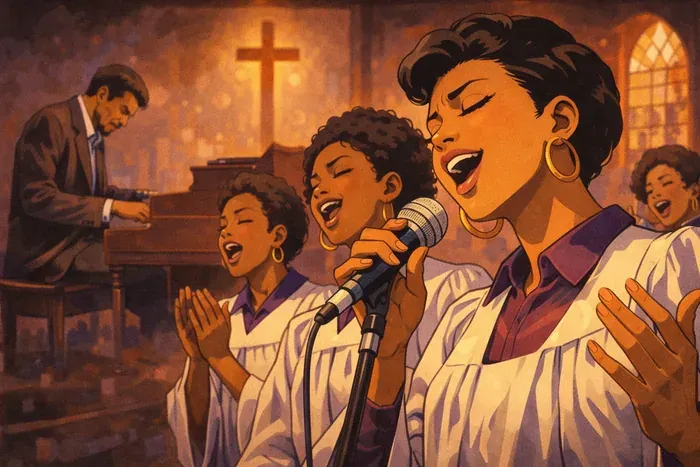
Gospel as the Missing Link
Global exchange explains where the music traveled. Gospel helps explain why its emotional logic stayed legible. One of the clearest threads running through this continuum is gospel, even when it is not named directly. Jazz did not emerge from sacred music alone, but Black church traditions shaped the phrasing, vocal intensity, communal energy, and call-and-response logic that continued through soul and later neo soul. Gospel helped carry emotional directness into styles that were otherwise becoming more harmonically complex.
This influence can be heard at several levels. There is the obvious level of voice: singers stretching vowels, leaning into melisma, and treating each line as testimony rather than mere melody. There is also the structural level: the buildup of tension, the release into repetition, and the sense that a performance is moving toward revelation rather than just toward a chorus. Even secular songs can retain that shape.
Neo soul drew heavily from this inheritance. Lauryn Hill could move from rap cadence into gospel-inflected intensity without breaking the song’s frame. Erykah Badu often used a more restrained approach, but her phrasing still carried the patience and spiritual focus of church-rooted Black music. D’Angelo’s recordings, especially at their most intimate, turn breath, grain, and repetition into forms of devotion as much as style.
Gospel also helps explain why neo soul often feels spiritually serious even when the lyric is not explicitly religious. The music values depth, witness, and transformation. That quality links it not only to soul and R&B, but also to John Coltrane’s spiritual search, to soul-jazz organ traditions, and to the long history of Black sacred music in American life.
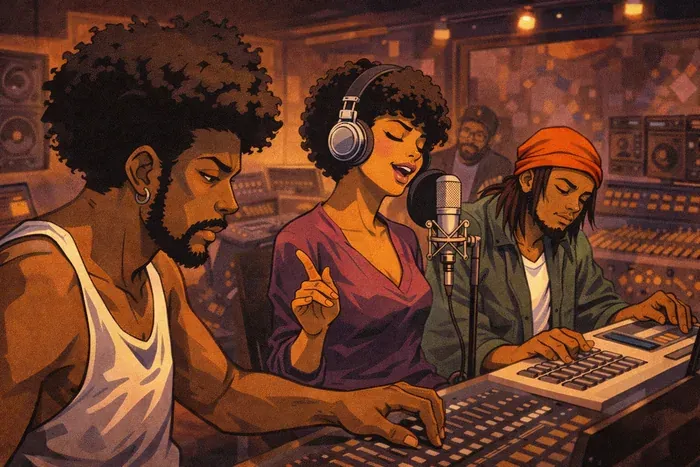
The Soulquarians and Studio Community
If gospel names one deep inheritance, the Soulquarians show how that inheritance was organized in practice. Neo soul is often described through individual stars, but one of its defining strengths was collective process. In the late 1990s and early 2000s, a loose network of musicians, producers, singers, and rappers often grouped under the name Soulquarians helped shape the music around D’Angelo, Erykah Badu, Common, Bilal, The Roots, J Dilla, James Poyser, and others. Their work crossed albums, sessions, and informal exchanges rather than staying inside a single band.
What made this network important was not only who belonged to it, but how the work was made. Musicians spent long hours building songs through rehearsal, revision, listening, and live interaction inside the studio. Electric Lady Studios in New York became one of the key spaces associated with that process. The studio worked less like a neutral recording room and more like a social and musical laboratory.
This community model helps explain why albums from that era often feel connected even when they are not identical in sound. Similar players, shared references, and overlapping values produced a recognizable atmosphere: deep pocket, rich chords, patience, and an interest in emotional truth over radio formula. The music was crafted, but it still felt lived in.
The Soulquarians did not create neo soul on their own, and the term should not flatten the broader movement. But the collective does reveal something essential: this was not only a singer-led revival. It was also a studio community in which collaboration, trust, and shared taste shaped the sound at a structural level.
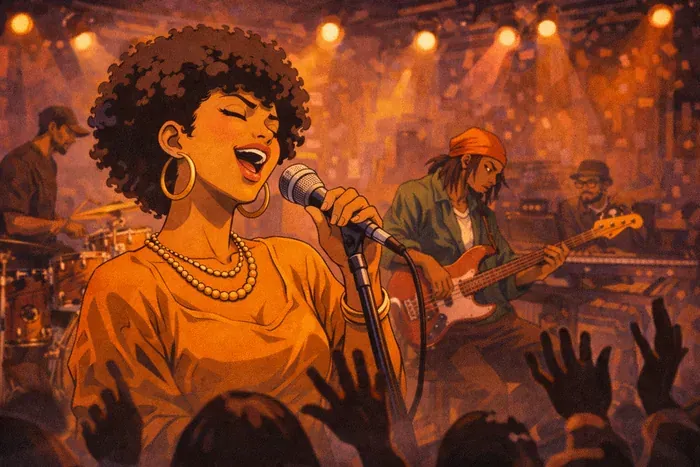
Live Performance and the Return of the Band
That studio community also helps explain what happened onstage. Even though neo soul depended heavily on studio craft, it also marked a renewed emphasis on the band as a visible creative unit. This mattered in the 1990s, when much mainstream R&B was becoming more producer-centered and more tightly sequenced. Neo soul did not reject technology, but it often put players back in the frame.
The Roots were central to that shift. As a hip hop group built around live instruments, they showed that groove, improvisational listening, and stage chemistry could remain central in contemporary Black popular music. That example mattered beyond rap. It helped normalize the idea that a modern act could sound current without hiding its musicians.
This approach shaped how audiences understood artists like Jill Scott, D’Angelo, Erykah Badu, and later Bilal or Robert Glasper. A performance was not only a reproduction of the record. It was a place where timing could stretch, harmonies could open up, and songs could reveal their jazz inheritance more clearly. Bands made the music feel social again.
The return of visible band culture also changed the symbolic meaning of neo soul. The stage suggested rehearsal, craft, and interaction. It resisted the idea that polish had to erase human variation. In that sense, live performance became part of the genre’s argument: this music valued chemistry, not only finish.
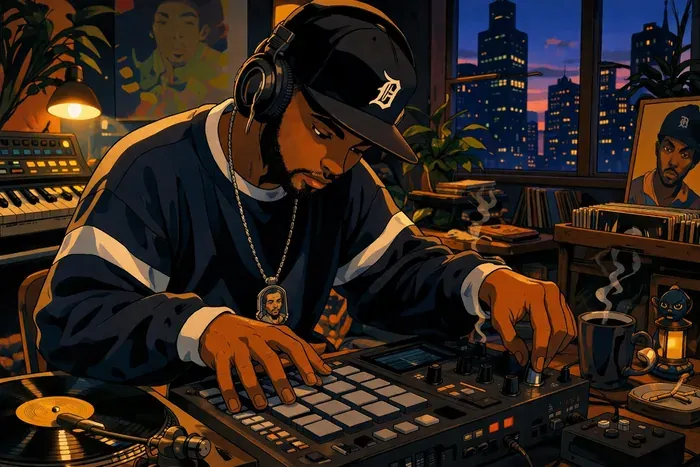
The Drum Feel After J Dilla
Live performance made the looseness audible. J Dilla’s influence is often discussed in general terms, but one specific contribution deserves closer attention: feel. His beats did not simply sound “loose.” They reorganized how many listeners and musicians heard pocket. Kicks, snares, hi-hats, and samples could sit slightly apart from one another while still locking into a persuasive groove.
That mattered because it offered a new relationship between machine logic and human timing. Earlier jazz drummers had already played with push and drag inside swing. Dilla’s production translated a comparable sensitivity into sample-based and sequenced contexts. The result felt relaxed, but it was carefully shaped. What sounded irregular often carried its own internal precision.
This drum feel became deeply influential across neo soul, jazz crossover, and later alternative R&B. Questlove studied it closely. Producers and drummers in the 2000s and 2010s absorbed it into both programmed and live settings. You can hear its afterlife in the way modern rhythm sections let backbeats lean, let subdivisions blur slightly, or let the groove breathe without losing force.
The importance of Dilla’s timing is not that it replaced earlier rhythmic traditions. It joined them. His work helped connect hip hop beat-making to jazz ideas of touch, microtiming, and elastic flow. That is one reason his influence reaches far beyond the tracks he directly produced.
Independent Labels and the Alternative R&B Afterlife
That rhythmic legacy did not stay confined to one period. Neo soul did not end so much as disperse into adjacent languages. By the 2010s, some of its afterlives were being discussed under labels such as alternative R&B, art soul, or progressive soul. Those labels are imperfect, but they point to a real continuation: artists kept using jazz-informed harmony, intimate pacing, and emotionally layered production, even when the music no longer fit the classic neo soul image.
Independent infrastructure was important here. Smaller labels, artist-led imprints, digital distribution, and scene-based platforms gave musicians more room to work outside a single mainstream template. That flexibility helped artists build careers around nuance, atmosphere, and hybrid form rather than around one dominant radio format.
Artists such as Solange, Frank Ocean, Blood Orange, Moses Sumney, Charlotte Day Wilson, and Cleo Sol are not interchangeable, and it would be inaccurate to treat them as a single school. Still, their work often continues questions that neo soul made central: How can an R&B song hold more space? How can arrangements stay sparse but emotionally thick? How can a record sound intimate without becoming small?
This afterlife also helps explain why neo soul still matters historically. It was not only a style tied to a few late-1990s releases. It was a way of reorganizing priorities. It shifted attention toward feel, texture, vulnerability, and deep listening. Later artists inherited those priorities even when they moved into more ambient, electronic, minimal, or art-pop directions.
Where the Music Goes Next
From there, the final question is not whether jazz survives in today’s music. It already does. The more useful question is how it will keep evolving without losing depth.
Younger artists now have immediate access to many years of recordings. A student can listen to music by Charlie Parker, Herbie Hancock, and D’Angelo in one sitting. This shortened timeline changes how influence works. Musicians take in sounds from many different times and places. The result is often fluid rather than sequential.
Technology will continue to shape production. Artificial intelligence tools, advanced digital audio workstations, and remote collaboration platforms can expand what artists can do. But the most important elements are still human: touch, timing, and knowing when to play together. No computer program can fully imitate a drummer laying a cymbal hit slightly behind the beat, or the emotional depth in a singer’s altered note.
Education will also remain important. As conservatories add neo soul, hip hop production, and global hybrids to their music curricula, the next generation of musicians will approach genre boundaries differently. The difference between jazz and R&B may not seem as clear.
The future of the continuum depends on balance. Respect for musical history must go hand-in-hand with an openness to new sounds. Artists who understand extended harmony and rhythmic nuance will keep finding new uses for them.
The setting can be anything from a small club to a digital platform. The goal remains to create music that feels alive, responsive, and connected. The evolution of jazz, fusion, acid jazz, and neo soul shows that listening remains central to musical progress. As long as musicians pay close attention to one another and to the past, the story will keep moving.
This history does not fit neatly into one genre. It unfolds wherever groove, harmony, and attentive listening meet with intention.
Reissues, Archives, and Digital Memory
One reason that future remains audible is that older music keeps returning in new forms. Reissues, remasters, documentaries, library projects, and digital uploads have made it easier for listeners to hear connections that once required years of record-store digging. A groove recorded decades ago can now re-enter public life through a playlist, a sample, a film soundtrack, or a young artist’s recommendation.
That circulation changes musical memory. It does not make all history equally visible, but it does widen access. Listeners can now move more easily between canonical albums, local scenes, overlooked women instrumentalists, independent soul records, and jazz-funk projects that once sat outside the usual curriculum. The archive is still uneven, yet it is more available than it used to be.
This matters because the story from jazz to neo soul has always depended on recovery as much as invention. Acid jazz relied on rediscovery. Hip hop sampling turned fragments of older recordings into new statements. Neo soul drew strength from older forms without simply copying them. In each case, the past stayed active because somebody kept listening closely enough to hear unfinished possibilities inside it.
Digital memory has made that process faster, but not necessarily simpler. Context still matters. A song means more when listeners know where it came from, who built it, and what musical problem it was trying to solve.
How to Listen Across the Continuum
With that in mind, it helps to listen for a few recurring ideas before moving into the playlist. First, listen to time feel. In swing, the pulse breathes forward. In fusion, the groove locks more tightly. In neo soul, the beat often relaxes again, but with a different kind of weight. The surface changes, yet the search for feel never disappears.
Second, listen to harmony. Early jazz made chord movement more flexible and expressive. Modal jazz opened space by slowing that movement down. Fusion expanded the palette with electric color, while neo soul often used extended chords to create emotional depth without overcrowding the arrangement. The harmony is one of the clearest threads linking the whole story.
Third, listen to the relationship between bass, drums, and voice. Across these styles, the rhythm section does more than support the song. It defines mood, pressure, and direction. Sometimes the singer rides the groove directly. Sometimes the vocal line leans behind it. Sometimes the instruments say more than the lyric. That balance keeps shifting, and that shift is part of the meaning.
Finally, listen for space. Not every major change in this lineage comes from adding more notes. Some of the most important changes come from subtraction: a held chord, a delayed snare, a pause before a phrase resolves. Jazz, fusion, acid jazz, hip hop, and neo soul all teach the same lesson in different ways. Sound gains power when musicians know what to leave open.
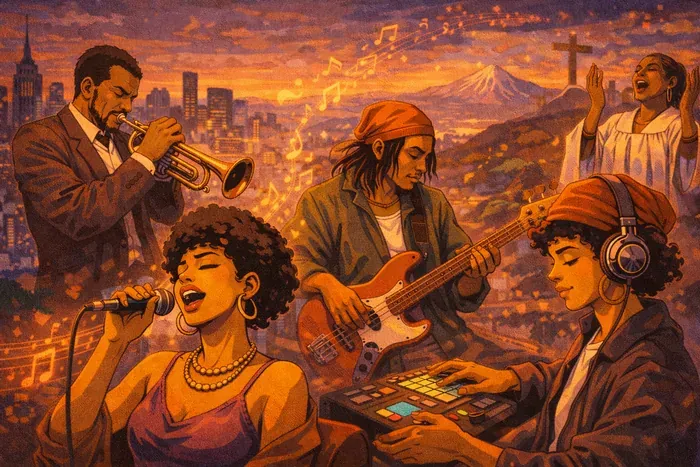
50 Essential Songs: The Journey in Music
The story of modern soul does not begin in the 1990s. It begins in early jazz clubs, in horn sections shaping extended harmony, in rhythm sections discovering swing. From there, the path runs through electric fusion, rare groove culture, acid jazz dance floors, hip hop sampling, and finally into the introspective warmth of neo soul.
This curated playlist of 50 essential songs follows that exact evolution. It moves chronologically and emotionally, tracing how groove deepened, how harmony expanded, and how global exchange reshaped the sound. Each artist appears only once, allowing space for a wide international perspective and strong representation of women who shaped the continuum.
You will hear how Louis Armstrong and Duke Ellington laid harmonic foundations. How Miles Davis and Herbie Hancock redefined texture. How Fela Kuti and Milton Nascimento expanded rhythm across continents. How London’s acid jazz scene revived rare grooves. How A Tribe Called Quest and J Dilla reframed jazz through sampling. And how D’Angelo, Erykah Badu, Lauryn Hill, and Jill Scott transformed that lineage into neo soul.
This is not nostalgia. It is a living lineage.
I. Jazz Foundations
Louis Armstrong – West End Blues (1928)
Duke Ellington – Take the “A” Train (1941)
Charlie Parker – Ornithology (1946)
Miles Davis – So What (1959)
Nubya Garcia – Pace (2018)
II. Going Electric: Fusion Era
Herbie Hancock – Chameleon (1973)
Weather Report – Birdland (1977)
Return to Forever – Spain (1972)
Mahavishnu Orchestra – Meeting of the Spirits (1971)
Casiopea – Asayake (1979)
III. Global Rhythms: Jazz Around the World
Fela Kuti – Water No Get Enemy (1975)
Milton Nascimento – Clube da Esquina No. 2 (1972)
Azymuth – Jazz Carnival (1979)
Flora Purim – Open Your Eyes You Can Fly (1976)
IV. Rare Groove & Acid Jazz
Roy Ayers – Everybody Loves the Sunshine (1976)
Donald Byrd – Places and Spaces (1975)
The Brand New Heavies – Dream Come True (1990)
Incognito – Still a Friend of Mine (1991)
Jamiroquai – Emergency on Planet Earth (1993)
Jazzanova – Bohemian Sunset (2002)
4hero – Les Fleur (2001)
V. When Jazz Met Hip Hop
A Tribe Called Quest – Jazz (We’ve Got) (1991)
Digable Planets – Rebirth of Slick (Cool Like Dat) (1993)
Guru – Loungin’ (1995)
Pete Rock & CL Smooth – They Reminisce Over You (T.R.O.Y.) (1992)
DJ Premier – A Million and One Questions (Instrumental) (1997)
J Dilla – Workinonit (2006)
VI. Neo Soul Core
D’Angelo – Brown Sugar (1995)
Erykah Badu – On & On (1997)
Lauryn Hill – Doo Wop (That Thing) (1998)
Maxwell – Ascension (Don’t Ever Wonder) (1996)
Jill Scott – A Long Walk (2000)
Angie Stone – No More Rain (In This Cloud) (1999)
India.Arie – Video (2001)
Me’Shell Ndegeocello – If That’s Your Boyfriend (He Wasn’t Last Night) (1993)
Raphael Saadiq – Still Ray (2002)
Bilal – Soul Sista (2001)
The Roots – You Got Me (1999)
VII. Modern Soul & Beyond
Sade – No Ordinary Love (1992)
Amy Winehouse – You Know I’m No Good (2006)
Lianne La Havas – Green & Gold (2015)
Gregory Porter – Liquid Spirit (2013)
Robert Glasper Experiment – Afro Blue (2012)
Esperanza Spalding – I Know You Know (2008)
Thundercat – Them Changes (2015)
Flying Lotus – Never Catch Me (2014)
Hiatus Kaiyote – Nakamarra (2013)
Branford Marsalis – The Beautyful Ones Are Not Yet Born (1991)
Neneh Cherry – Buffalo Stance (1989)
Kendrick Lamar – These Walls (2015)
Why This Playlist Matters
This selection highlights how jazz harmony and rhythmic sophistication traveled across decades and continents. It shows:
- The shift from acoustic swing to electric fusion
- The transformation of jazz-funk into acid jazz club culture
- The role of hip hop producers in reshaping groove
- The rise of neo soul as an intimate, harmony-driven movement
- The global continuation of jazz-informed music in the 21st century
The journey from jazz to neo soul is not a straight line. It is a network of conversations between musicians, cities, and generations. These 50 songs capture that exchange.
Listen in order. Let the groove evolve. The continuum is still unfolding.