The Rhythmic Foundations of Latin Music
Latin music did not begin in a studio or a boardroom. It began in motion: ships crossing the Atlantic, people moving through port cities, languages mixing in daily life, and communities building rhythm long before the modern music industry named the process.
The path from salsa to Latin trap starts much earlier than most playlists suggest. It starts in the Caribbean, where African rhythmic systems, Spanish melodic and harmonic traditions, and local cultural practices met under unequal and often violent historical conditions. Over time, those elements became new musical languages tied to migration, labor, religion, and survival.
When Cuban son moved into New York ballrooms, it changed. When Puerto Rican musicians and promoters reshaped it in the Bronx and East Harlem, it changed again. Each generation inherited older patterns, then bent them toward new cities, new audiences, and new media. Salsa, Latin pop, reggaeton, and Latin trap all grew from that repeated act of translation.
Those early foundations still matter. The rhythmic logic, call-and-response patterns, circulation routes, and production habits that emerged across the Caribbean still shape Latin urban music today. To understand the present clearly, the story has to begin there.
Where African Drums Met Spanish Melodies
Long before “Latin music” became an industry label, the Caribbean was already a zone of contact and exchange. Enslaved Africans carried complex rhythmic systems and performance practices into the region. Spanish colonial culture brought string instruments, harmonic forms, and repertories of song and dance. Local communities contributed their own ceremonies, vocabularies, and social traditions. None of these elements stayed separate for long. They met in ports, plantations, patios, churches, and streets.
In Cuba, that exchange became especially audible in son, which joined Spanish-derived string instruments and song forms with Afro-Cuban percussion, call-and-response, and syncopated rhythmic design. The result was not simply a hybrid style. It was a durable musical grammar that later genres would keep reworking.
Arsenio Rodríguez was a central figure in that process. In the 1940s, he expanded the son conjunto format, strengthened its Afro-Cuban rhythmic emphasis, and helped move the music toward the denser, more percussion-driven sound that later shaped salsa arranging in New York.
At the same time, rumba traditions were thriving in working-class neighborhoods in Havana and Matanzas. Rumba depended less on orchestral polish than on percussion, voice, improvisation, and physical exchange between performers and dancers. Its intensity and body-centered pulse would remain important long after the style itself moved out of the mainstream spotlight.
These early genres were linked by circulation as much as by sound. Musicians moved between islands. Sailors and migrants carried records. By the early 20th century, Cuban recordings were already circulating across the Caribbean and into Latin American cities. Shellac discs often traveled farther than the artists themselves.
That is why the older pulse remains audible even after later genres become more polished. Brass sections may grow, studio techniques may change, and song structures may tighten, but the rhythmic logic survives. Salsa drew directly from son and related Afro-Cuban forms. Reggaeton later absorbed Jamaican and Panamanian influences, yet it still emerged from the same wider Caribbean world of migration and syncopation. Even Latin trap, for all its digital minimalism, still depends on tension between beat, silence, and accent.
The Caribbean was not a footnote to global music history. It was one of its laboratories. What developed there kept moving, and each new era carried some part of that earlier grammar forward.
New York: The New Heart of Latin Music
By the middle of the 20th century, the center of gravity was shifting. The Caribbean remained essential, but New York became a new meeting point. After World War II, larger Puerto Rican and Cuban communities expanded in the city. People arrived with records, instruments, repertoire, and memory, then rebuilt musical life in a very different urban environment.
In neighborhoods like East Harlem and the South Bronx, music became a way for people to stay connected. Clubs were small, crowded, and loud. Ballrooms like the Palladium gave musicians room to test new ideas in front of demanding dancers. The sound grew sharper, brighter, and more urban. Brass sections hit harder. Arrangements became denser. Dance floors demanded volume, precision, and momentum.
Tito Puente stood at the center of this world. A virtuoso timbalero and bandleader, he brought technical command and theatrical force to mambo and Latin jazz. His orchestras were disciplined yet explosive. He drew on big-band language without flattening the Caribbean rhythmic core.
Machito and his Afro-Cubans played an important role in blending Afro-Cuban rhythms with jazz harmony. They worked with American jazz musicians, and together they created a shared language. This exchange did not erase identity. It made it stronger. Latin musicians weren’t imitating jazz. They were reshaping it.
A younger generation pushed further. Eddie Palmieri expanded harmonic structures and introduced bold piano voicings. His arrangements felt modern and restless. The music reflected the tension of city life. It was proud, rhythmic, and direct.
New York did more than amplify the sound. It helped produce a new identity. “Nuyorican” became a widely used term for Puerto Ricans shaped by life in New York, often living between Spanish and English, island memory and city experience. Music became one of the main bridges between those worlds, and the lyrics increasingly addressed barrio life, discrimination, love, and resilience.
The industry evolved too. Studios, distributors, promoters, and community radio created a tighter circuit for recording and circulation. Music moved faster, and styles blended quickly. Musicians listened to jazz, R&B, and soul while staying grounded in Afro-Caribbean rhythm. That cross-pollination set the stage for what would soon be called salsa.
What happened in New York was not a departure from Caribbean tradition. It was an extension. Migration increased the exchange. The city put many different cultures into small spaces. The result was a sound that felt sharper, louder, and more urban, yet it was still clearly based on the rhythms that had traveled north with the people who played them.
The Puerto Rican Diaspora: A Mainland Network
New York was the first great mainland center of modern Latin music, but it was never the only one. Puerto Rican migration created a wider network that linked the island to multiple mainland cities across decades. Because Puerto Ricans are U.S. citizens, movement between the island and the mainland had a different legal and social structure than many other Latin American migrations. That made circulation faster, more constant, and more musically influential.
Families moved for factory jobs, military service, education, housing, and later for service-sector work and new regional opportunities. New York remained the symbolic center for much of the 20th century, but communities also grew in places such as Chicago, Philadelphia, Orlando, Tampa, and Miami. Music traveled with that movement. Records, cassettes, radio preferences, DJs, and concert circuits all followed.
This mainland network mattered because it created durable audiences inside the United States without requiring translation into English-language pop first. Salsa could move through Puerto Rican neighborhoods in New York and Philadelphia. Decades later, reggaeton and Latin trap could spread through Florida and other mainland scenes with the same kind of built-in community support.
The diaspora also changed the emotional content of the music. Artists were writing for people who often lived between places, sending money back home, returning for family visits, and speaking in mixed linguistic registers. Nostalgia, urban pressure, and pride in neighborhood identity all became part of the same lyrical field.
That is one reason Latin music in the United States developed differently from a simple “immigrant niche.” It became a mainland system with island memory built into it. By the time reggaeton and Latin trap expanded in the streaming era, those routes were already in place. The audience was not being invented from scratch. It had been built over generations of movement.
How Vinyl and Radio Built an Industry
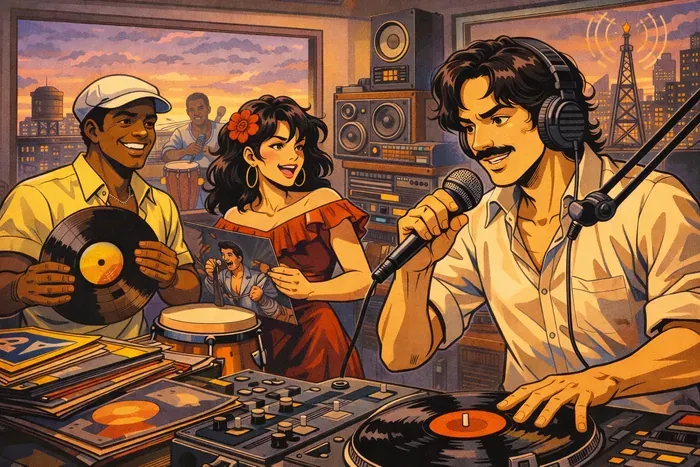
As the sound evolved in clubs and ballrooms, another force quietly shaped its direction: recording technology. By the 1950s and 1960s, vinyl records had become central to how music circulated. Radio stations served growing Latino communities in New York and other US cities. Independent labels began to see potential in a market that had long been treated as secondary.
One of the most influential institutions to emerge from this moment was Fania Records. Founded in 1964 by Johnny Pacheco and Jerry Masucci, the label did more than release albums. It built a marketable identity around a sound that was already taking shape in clubs and ballrooms. “Salsa” gained force not only through musical practice, but also through packaging, promotion, and touring.
Fania brought together artists such as Willie Colón and Héctor Lavoe under one umbrella. Their recordings captured the intensity of New York’s Latin scene. Albums were not just collections of songs. They became identity markers for a generation navigating migration, poverty, and pride.
The recording studio introduced new dynamics. Arrangements had to fit vinyl time limits. Songs were structured with radio play in mind. Producers learned how to balance percussion and brass for clarity. The raw energy of live performance was translated into a format that could travel far beyond a single dance floor.
The LP format allowed musicians to explore longer compositions, but it also demanded cohesion. Album sequencing began to matter. Cover art reflected urban aesthetics. Distribution networks expanded into Latin America and Europe. Salsa, as a label, now had visual and commercial identity.
At the same time, commercialization brought tension. Afro-Caribbean roots sometimes faded in promotional narratives. The music was presented as exotic, festive, and dance-focused, even when lyrics addressed social struggle. This gap between marketing and lived experience would return in later eras of Latin pop and reggaeton.
Still, the industry infrastructure built during this period proved durable. Contracts, touring circuits, radio relationships, and international licensing agreements laid foundations that later genres would inherit. When reggaeton emerged decades later, it would build its own parallel networks, but the idea of a unified Latin market had already been tested.
By the early 1970s, salsa was no longer just a local club phenomenon. It was an organized industry with recognizable stars and global distribution. The groundwork had been laid. Rhythm, migration, and identity had found a commercial frame. At the same time, younger musicians were already reshaping that sound from within, and the dance floor was where those changes became visible first.
Dance and Club Culture as a Driving Force
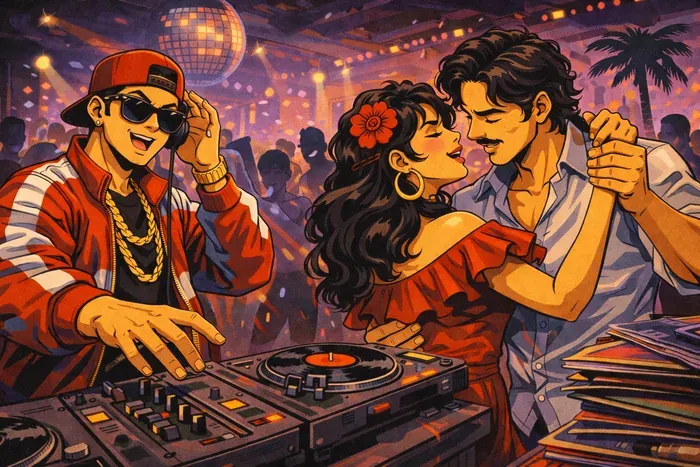
Latin music did not spread only because people bought records or heard songs on the radio. It spread because bodies tested it in real spaces. Dance floors, social clubs, block parties, neighborhood lounges, and later nightclubs and festival grounds acted as live laboratories. A rhythm that looked strong on paper still had to prove that it could move a room.
That mattered in every era. Son and rumba were social forms before they were historical categories. Mambo and salsa gained force in ballrooms where audiences demanded precision, energy, and volume. Boogaloo reflected bilingual youth culture partly because dancers responded to its directness right away. Reggaeton and dembow were validated in perreo spaces, car systems, clubs, and informal parties long before institutions fully accepted them.
These spaces also shaped structure. Musicians learned where tension had to build, when the chorus needed to land, and how repetition could become physical rather than boring. A great club track is not simply catchy. It understands timing, anticipation, and release in relation to a crowd.
Club culture also helped genres cross borders. Diaspora parties in New York, Miami, Madrid, and other cities turned migration into shared movement. People who did not come from the same national background could still meet inside the same beat. That social mixing mattered just as much as label strategy.
Seen this way, the dance floor was not a secondary stage after the song was finished. It was one of the main places where the music was judged, refined, and made durable. That is also why the next phase of the story belongs to youth culture and the styles it pushed forward.
Before Salsa: Youth Culture Changes the Sound
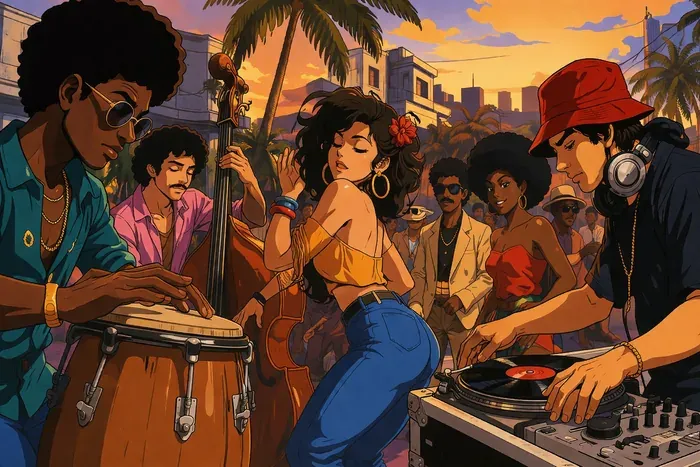
By the time “salsa” became a popular label, the sound in New York was already changing. Younger musicians were hearing soul, R&B, and early rock alongside Afro-Cuban records at home. English and Spanish mixed naturally in the same neighborhoods. On the dance floor, energy often mattered more than category.
The late 1960s were a period of social and political change in the United States. Civil rights struggles, student protests, and urban transformation shaped how young people saw themselves. In Latino communities, especially among second-generation Puerto Ricans and Cubans, identity felt layered. They were American and Caribbean, urban and diasporic, Spanish-speaking and English-speaking. The music reflected that complexity.
Before salsa became a stable market label, musicians were already testing ideas in clubs and on small labels. Boogaloo brought bilingual street energy. Latin jazz expanded the harmonic language. Nuyorican writing pulled social reality into the lyrics. The scene was restless, and that restlessness mattered.
That transitional period was short, but it mattered. It explains how salsa could later become both a commercial brand and a cultural movement. Musicians were already mixing different styles without asking permission.
Boogaloo: The Sound of Bilingual Streets
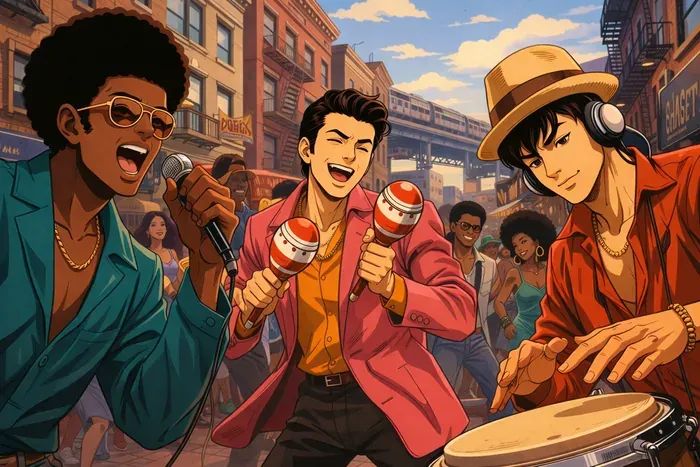
Boogaloo did not dominate for long, but it mattered. It emerged in the mid-1960s and reached its commercial peak before the end of the decade. The style was driven by young Latino musicians in New York who moved easily between Afro-Cuban rhythm, R&B, and street English. They wanted music that sounded like their actual lives, not only like inherited tradition.
The structure was simple and direct. The Afro-Cuban rhythms were still there, but the arrangements were leaner. English choruses made songs easier to sing along with. The groove leaned toward soul and early funk. Some older musicians heard it as a commercial detour from son and mambo. For younger dancers, it felt immediate and honest.
Joe Cuba was one of the movement’s key figures. His sextet made records that crossed cultural lines without sounding forced. “Bang Bang” captured that balance perfectly: Latin rhythm, urban cool, and a hook built for the room.
Pete Rodríguez reached a similar breakthrough with “I Like It Like That.” Its English hook helped it travel beyond Spanish-speaking audiences, and its afterlife in later pop culture showed how durable the record remained.
Boogaloo spread through neighborhood clubs and local radio, but it represented more than a brief trend. It gave a generation a sound that matched its daily life. Young musicians were not rejecting heritage. They were reshaping it. English and Spanish did not cancel each other out. They worked side by side.
The rise of boogaloo also exposed tensions inside Latin music. Traditionalists worried that the style sacrificed depth for accessibility. Labels saw commercial potential almost immediately. Simpler structures, stronger hooks, and bilingual phrasing looked easier to market.
By the early 1970s, “salsa” began to replace boogaloo as the dominant label for this evolving field. Boogaloo’s chart moment was brief, but its impact lasted. Its bilingual logic anticipated later crossover strategies, and its mix of street energy and dance rhythm prepared audiences for the decades ahead.
Boogaloo matters because it proved how quickly Latin music could adapt to urban youth culture. It also showed that identity in New York was not fixed. It was negotiated through sound, and that negotiation continued in every phase that followed.
Language Politics: Spanish, English, and Code-Switching
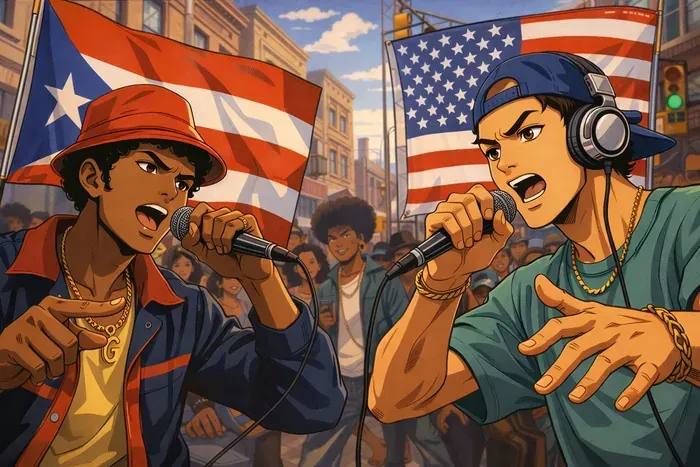
Language was never a minor detail in this history. It was one of the main ways artists signaled audience, class, geography, and ambition. In New York, bilingual life did not need to be explained. People moved between Spanish and English in school, on the street, at work, and at home. Music reflected that reality.
Boogaloo made that especially visible in the 1960s. English hooks opened the door to broader radio play, but they also captured the sound of second-generation urban Latino life. Later crossover pop campaigns treated English more strategically, sometimes as a way to enter mainstream U.S. media. Yet Spanish never disappeared. It remained central to identity, memory, and credibility.
Code-switching carried different meanings in different eras. In salsa and boogaloo, it often reflected neighborhood speech. In the crossover years, it could signal commercial mobility. In reggaeton, artists frequently kept Spanish dominant while borrowing phrases, flows, or ad-libs from hip-hop and Caribbean English. In the streaming era, the mix became even more fluid. Collaborations could move across languages without treating one as the default and the other as the exception.
This made language both a tool and a battleground. Labels sometimes pushed English for airplay. Fans sometimes treated Spanish as proof of authenticity. Artists had to decide when language was a market strategy, when it was a social mirror, and when it was simply the most honest way to sound like themselves.
That tension helps explain why Latin music has never followed one straight path toward “crossover.” Some artists crossed by translating. Others crossed by refusing to translate at all. The real continuity lies in flexibility. Language in Latin music has always been less about purity than about negotiation.
Latin Jazz: Complexity, Discipline, and Swing
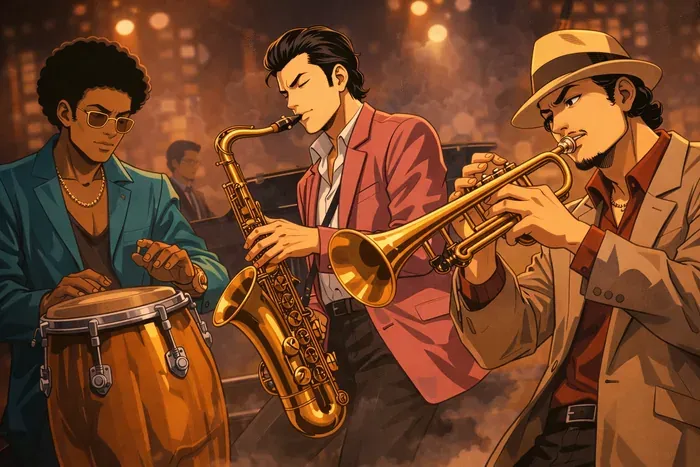
While boogaloo favored short songs and radio hooks, another part of the scene moved in a different direction. Latin jazz expanded the vocabulary with richer arrangements, deeper harmony, and greater virtuosity. It demanded discipline, rehearsal, and strong musical leadership.
In New York, large ensembles became laboratories for experimentation. Musicians trained in jazz theory worked out how to expand Afro-Cuban rhythm without simplifying it. The percussion section remained the anchor. Clave-based logic held the music together even when horns and piano moved into more adventurous territory.
Tito Puente was one of the defining figures in this world. His orchestras balanced technical precision with dance-floor momentum. He treated Latin rhythm not as novelty, but as a serious musical language that could stand beside any big-band tradition. Touring and recording helped carry that argument far beyond New York.
Eddie Palmieri pushed the limits of harmony. His piano playing featured sharper voicings and unexpected transitions. Albums like Azúcar Pa’ Ti showed how Latin jazz can be both intellectual and earthy. Palmieri’s approach required listening closely without losing the beat.
Latin jazz also depended on infrastructure. Large ensembles needed arrangers, rehearsal space, management, and reliable bookings. Ballrooms and festivals became economic anchors. Musicians moved between projects, building reputations across bands in a scene that was both collaborative and competitive.
This environment helped train future salsa stars. Many singers and instrumentalists honed their craft in jazz settings before moving into more commercial projects. The discipline of those ensembles shaped later salsa recordings, even when the music became more radio-ready.
The orchestra model also showed structural inequality. It was expensive to keep a large group of musicians together. Financial stability depended on record sales and touring opportunities, which were not spread evenly. Smaller groups often had a hard time. Meanwhile, record labels preferred artists who could make money.
Latin jazz rarely dominated the charts, but it mattered deeply. It affirmed that Afro-Caribbean rhythm belonged in serious musical conversation. It also strengthened community networks through mentorship, live performance, and shared standards of excellence.
The combination of jazz complexity and dance floor functionality influenced the evolution of salsa. It also set the stage for future producers who would approach reggaeton and Latin urban music with similar attention to sound structure, even when tools changed from live horns to digital software.
The Nuyorican Voice: Poetry, Politics, and the Barrio
As the music changed, the lyrics started to express strong opinions about society. Life in New York wasn’t seen as something to dream about. Poverty, discrimination, and cultural tension were all part of daily life. Musicians responded by telling stories about the streets around them.
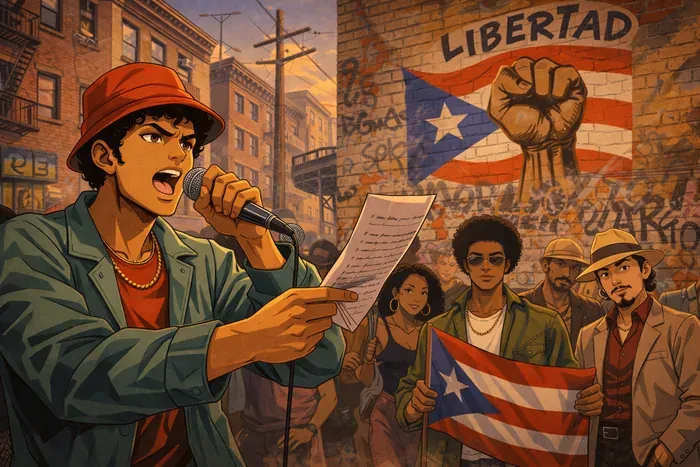
The Nuyorican movement emerged from this environment. Poets, activists, and musicians used performance to work through identity, migration, and urban life. On the Lower East Side, Spanish and English often moved through the same sentence. That spoken rhythm fed directly into songwriting.
Rubén Blades became one of the defining voices of this period. Born in Panama, he found a larger audience in New York. His work with Willie Colón on the 1978 album Siembra marked a turning point. Songs like “Pedro Navaja” brought urban lives vividly into focus. The storytelling felt cinematic, but it also felt grounded in real experience.
Blades did not rely on abstract slogans. He wrote about people facing moral choices, crime, and survival. Listeners recognized those stories. The music remained danceable, but the lyrics demanded close attention. That balance between rhythm and realism gave salsa new emotional depth.
Political awareness did not require ideological agreement. Some artists emphasized pride and resilience, while others focused on injustice. The point was not consensus, but expression. Audiences wanted more than romance. They wanted to hear themselves in the lyrics.
That lyrical depth shaped later genres as well. Reggaeton artists would also write about barrio life, ambition, and structural barriers. Latin trap would turn inward toward pressure, vulnerability, and identity. The idea that rhythm could carry narrative was already established.
At the same time, commercial pressure never disappeared. Labels still preferred songs that worked immediately in clubs and on radio. Heavier themes did not always receive the same support. Artists had to balance airplay with credibility.
The Nuyorican era made one thing clear. Latin music in New York was not simply a way of remembering the past. It was a modern urban voice. Migration had not weakened identity. It had sharpened it. That sharper voice would soon reach a much wider audience. Salsa was becoming more than a style. It was becoming a cultural symbol.
Salsa: The Sound of Migration and Identity
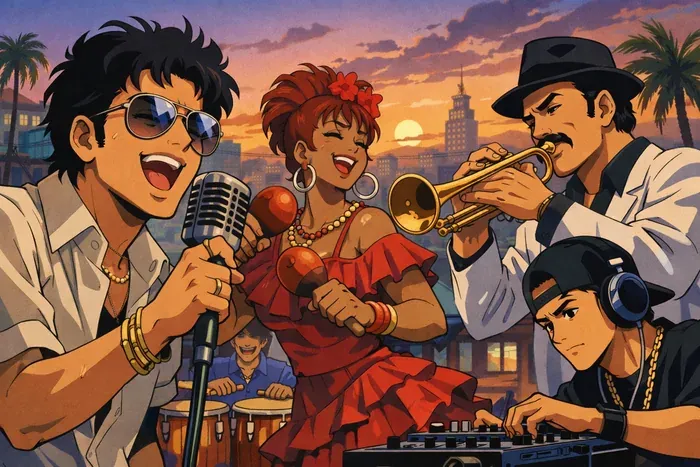
By the early 1970s, the music that had been forming in clubs and studios needed a name that could travel. “Salsa” became that name. It was simple, catchy, and easy to market. But behind the label were many years of Afro-Caribbean music, people moving to New York, and trying new things.
Salsa was not invented in one day. It was a consolidation. The music was a mix of son, mambo, guaracha, Latin jazz, and boogaloo. What changed was the sense of unity. People started to think of this new type of music as a single genre. Concerts got bigger. Tours started offering trips to Latin America. The album covers showed off a sense of pride in the city.
The word itself suggested flavor and heat. That image helped the music business, but it also risked flattening the music’s diversity. At times, Afro-Cuban structures and barrio realities were reduced to festive stereotypes. Many musicians fought against this simplification by keeping the music’s rhythms and messages complex and social.
The focus here is salsa during its most popular period. It looks at how industry power influenced it, how artists defined it, and how questions of race, gender, and identity were still present beneath the dance floor energy.
Fania Records: The Label That Defined Salsa
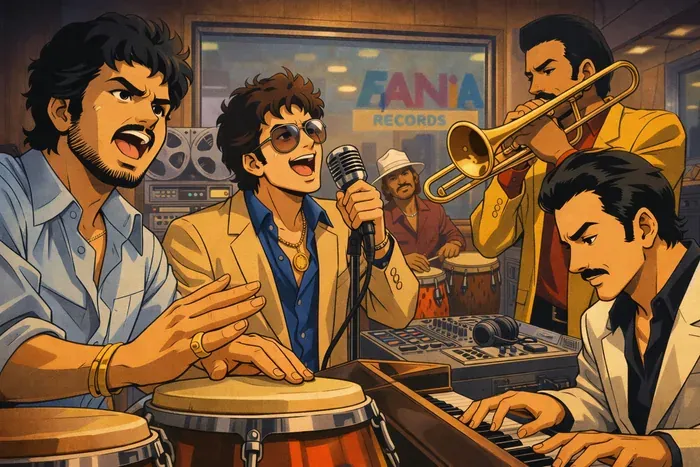
When Fania Records gathered major artists under one banner, it changed the Latin music scene in New York. Founded by Johnny Pacheco and Jerry Masucci, the label consolidated performers who were already active but often scattered across smaller companies.
Fania did not create the rhythms. It made them legible at scale. The Fania All-Stars turned musicians into symbols of a collective movement, and live recordings carried local energy far beyond neighborhood circuits. Salsa became not just a sound, but a recognizable brand and identity.
Willie Colón and Héctor Lavoe captured that shift especially well. Colón’s trombone-heavy arrangements sounded gritty and urban. Lavoe sang with swagger, melancholy, and dramatic clarity. Together they made albums that resonated deeply in Latino communities and told stories about street life, ambition, and loss.
The marketing language emphasized unity. Salsa was presented as music for all Latinos in New York. That narrative created pride, but it also flattened regional difference. The music drew on Cuban, Puerto Rican, Dominican, and other traditions that did not simply disappear into one label.
Money and control were part of the story too. Fania handled distribution, promotion, and tours, which gave artists exposure but also tied them to contracts that were not always favorable in the long run. Questions around masters and publishing were already taking shape, long before similar debates reappeared in reggaeton and Latin trap.
Salsa’s popularity was not just a business decision. It had a political meaning. Large concerts in Latin America were a symbol of cultural exchange across borders. These exchanges were shaped by migration and dictatorship. The audience could relate to the performers because they, too, had left home.
Tensions remained. The music rested on Afro-Latin foundations, but its marketing often favored a generalized “Latin” image that blurred racial history. The Caribbean was never a racially uniform space, and the industry’s visual language did not always reflect that complexity.
Despite these differences, salsa achieved something rare. It created a shared soundtrack for a community that was spread out. The label remained the same, even as the styles changed. This group identity would later be used as a reference point when new genres emerged and asked whether they belonged inside or outside the tradition.
Celia Cruz: The Queen Who Demanded the Stage
Salsa is often remembered through male bandleaders and singers. Orchestras were large, and formal authority usually sat with men. But women were central to the genre’s history.
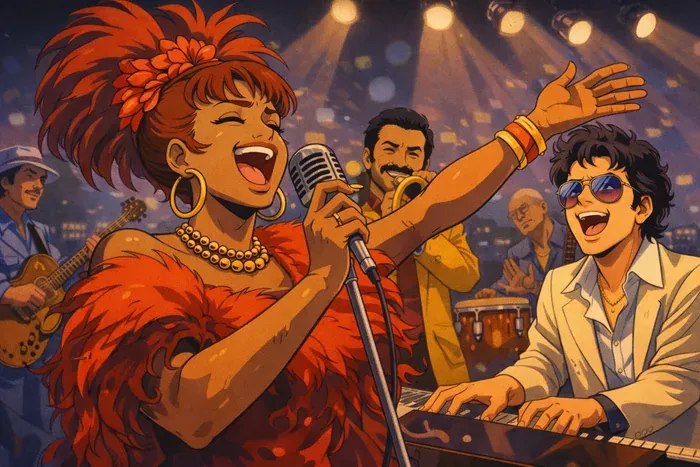
Celia Cruz is the clearest example. Born in Havana, she built her career long before salsa became a market label. After leaving Cuba in 1960, she rebuilt her life and career in exile. Her voice was powerful, precise, and unmistakable. She carried Afro-Cuban memory into every performance.
Cruz joined the Fania orbit and became one of its defining figures. Songs like “Quimbara” and, later, “La Vida Es Un Carnaval” showed her range, charisma, and command. On stage, she never reduced her intensity to fit expectations. Audiences across Latin America and the United States responded to her authority, not to novelty.
Her success did not erase structural inequality. Women still had fewer leadership roles in orchestras, harsher image expectations, and less control over the terms of touring and promotion.
Other artists pushed against those boundaries. La India was later a strong voice mixing salsa and other types of music. She took charge of her music’s style and wrote songs about being independent.
The presence of women in salsa complicates any simple story of male control. They were not just featured voices. They translated styles across audiences and expanded the genre’s expressive range, even while fighting for space inside male-dominated institutions.
The way men and women interacted in salsa also influenced other types of music that came later. When reggaeton became popular decades later, female artists again had to create their own spaces in lineups full of male artists. The examples set during the salsa era offered both inspiration and a chance to learn from mistakes.
Celia Cruz’s career shows what artistic authority can look like under pressure. Her path from Havana to New York and beyond mirrors the broader migration story of Latin music itself. Her voice carried rhythm, history, and exile, and it remains one of the clearest bridges between early Afro-Cuban tradition and the global stages that followed.
Rubén Blades: Salsa's Storyteller
As salsa grew in popularity, some artists started using storytelling more in their music. Dance remained an important part of the music, but the lyrics began to include topics beyond romance and celebration. Life in the city offered opportunities that were too good to ignore.
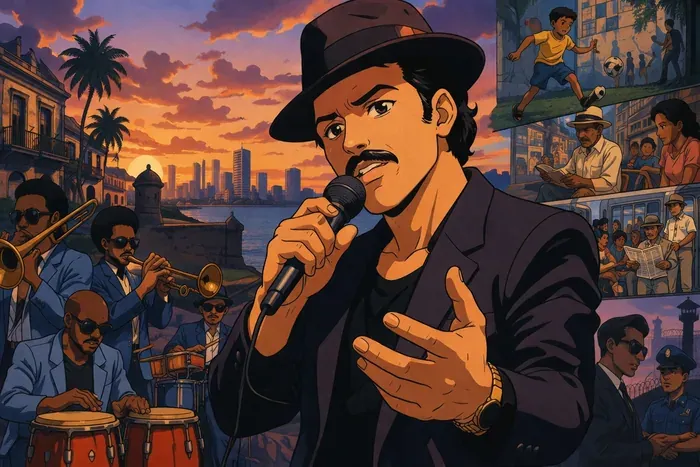
Rubén Blades is one of the clearest examples of this shift. Before committing fully to music, he studied law and developed a writer’s attention to character and social detail. His work with Willie Colón reached a peak on 1978’s Siembra, one of the best-selling salsa albums of its era.
“Pedro Navaja,” one of the album’s defining songs, tells the story of a street hustler whose life ends abruptly. It plays like a short film. The characters feel vivid, and the moral remains implied rather than announced. Salsa proved it could tell complex stories without losing its rhythmic pull.
Blades wrote about corruption, migration, and social inequality in language that was readable but never simplistic. People could dance to the music and still absorb the message. That dual function gave salsa broader cultural weight. It was not just atmosphere. It reflected lived experience.
The partnership between Blades and Colón also showed that commercial success and social commentary can exist together. The album sold a lot in Latin America. Concerts filled arenas. Salsa was no longer just for immigrants in New York. It had become a language used in more than one country.
Even so, the industry still preferred some themes over others. Lighter tracks usually received more radio support. Artists who leaned into political critique could face resistance. Blades managed to preserve artistic seriousness while still working inside a commercial system.
His influence continued. Later reggaeton artists would sing about the realities of life in the barrio. Latin trap performers would explore vulnerability and ambition in harsh environments. The idea of combining rhythm with realism didn’t disappear when production styles changed.
Years later, Blades entered politics in Panama, reinforcing his reputation as a public figure engaged with civic life. The move blurred the line between performer and public intellectual, and it reminded audiences that Latin music has long been more than a soundtrack.
Salsa is often remembered for movement first. Blades helped make sure it would also be remembered for narrative, critique, and emotional depth.
Salsa Romántica: Intimacy Enters the Format
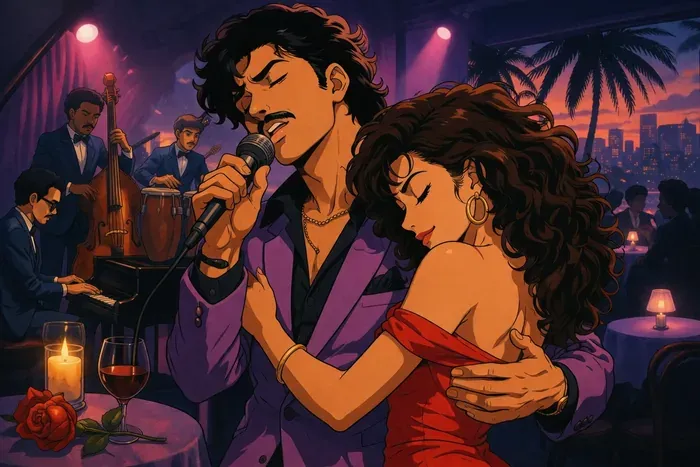
By the 1980s, salsa was entering a new phase. The big orchestral style stayed the same, but the arrangements became more relaxed. Romantic themes became more prominent. Radio programmers liked the new version better because it was produced more smoothly. The shift did not completely remove earlier social realism, but it did change the focus.
This period became known as salsa romántica. The vocals were polished and melodic. The lyrics centered on love, heartbreak, and longing. Clave and brass remained, but the mood grew more intimate.
Artists like Eddie Santiago helped define the style. His recordings reached broad audiences across Latin America, and their emotional directness appealed to listeners who wanted a more personal mode of expression.
Frankie Ruiz brought a rawer emotional tone. His voice could sound fragile without losing force, and fans responded to that vulnerability. The songs dealt in regret and devotion without feeling artificial.
The business advantages were obvious. Radio favored the smoother sound, and labels could count on steady sales during a period when global pop and rock were intensely competitive.
Some critics said that the romantic style made the genre less intense. They missed the social commentary and experimental arrangements of the 1970s. Others saw it as a natural change. People’s tastes in music change over time, and musicians have to adapt to that.
What matters historically is continuity. Salsa romántica did not abandon the earlier tradition. The rhythm section remained rooted in Afro-Caribbean patterns, even when the surface felt softer and more romantic.
The romantic phase also helped Latin pop grow in the 1990s. The focus was on melody, emotional clarity, and radio formatting that followed broader pop conventions. Artists learned how to make music that was more popular in other countries.
Gender dynamics were still unequal. Female artists continued to face an industry that rarely put them in charge of orchestras. Romantic salsa allowed people to express themselves vocally in a way that later generations built upon.
Salsa in the 1980s did not disappear. It adapted to survive. The genre’s flexibility allowed it to switch from realistic stories set in urban areas to more emotional ballads without losing its rhythmic identity. This ability to adapt would become a defining trait as Latin music entered the era of global crossover.
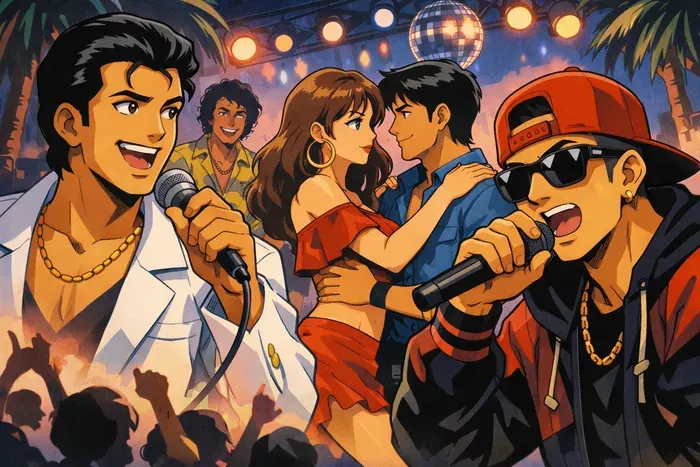
Beyond Salsa: Merengue, Bachata, and Freestyle Rise
Salsa was the most popular dance music in the 1970s and 1980s, but it wasn’t the only kind of music people danced to. In other parts of the Caribbean and among migrant communities in other countries, new styles were emerging. They did not compete directly with salsa. They moved alongside it, sometimes using it as inspiration, and sometimes reacting against it.
Merengue brought the energy of the Dominican Republic to ballrooms and radio stations. Bachata, once seen as rural and sentimental, started changing to appeal to city audiences. In New York clubs, Latin freestyle blended electronic production with bilingual hooks. These sounds got listeners ready for shorter songs, direct choruses, and a style of production that was popular in clubs.
This parallel movement is important because it explains how Latin music entered the 1990s ready for crossover. When reggaeton first appeared in Puerto Rico, people were already used to pop music with a strong rhythm. Salsa was still around, but the ecosystem had expanded.
These developments weren’t minor details. They were part of the same evolving network.
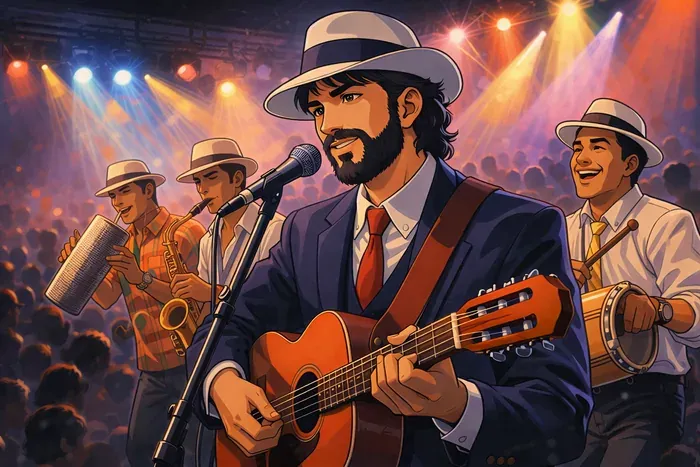
Juan Luis Guerra: Merengue with Poise and Precision
Merengue has long been central to Dominican cultural life. Fast, bright, and driven by accordion, güira, tambora, and brass, it filled dance halls across the Caribbean. Its international profile expanded sharply in the late 1980s and early 1990s.
Juan Luis Guerra was one of the central figures in that expansion. A Berklee-trained musician, he learned how to combine Dominican rhythm with sophisticated harmony and thoughtful lyric writing. His 1990 album Bachata Rosa became a major commercial success in Latin America and in Spanish-speaking communities in the United States.
What made Guerra stand out was his ability to maintain balance. The drumming was lively and clearly had a Dominican style. At the same time, the melodies were smooth and easy to listen to. Songs like “Ojalá Que Llueva Café” mixed poetry with a danceable rhythm. Listeners could move to the beat and think about social and spiritual ideas.
Merengue’s tempo and clarity also worked well on television. As music videos became more important, visual presentation mattered more too. Artists were no longer only heard on radio and records. They were seen, styled, and branded.
The genre’s expansion also reflected migration. Dominican and broader Latino audiences in New York and other cities created demand, and DJs responded to crowd energy rather than to strict genre borders. Merengue, salsa, and pop ballads often lived in the same night.
Female stars like Olga Tañón also helped move merengue into broader Latin pop visibility. Her stage authority showed that high-energy dance music could be led by a powerful female voice.
Merengue became popular worldwide, but it stayed rooted in Dominican local culture. Its expansion showed that Caribbean music could scale internationally without losing local character. That lesson mattered in the decades that followed.
As the 1990s progressed, bachata would undergo a similar transformation, moving from marginalized beginnings into global visibility. The dance floor was already preparing for another shift.
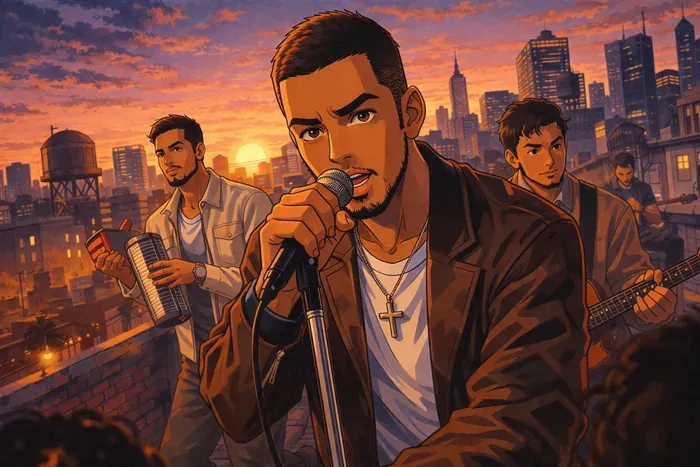
Aventura: Bachata's Urban Reinvention
For much of the 20th century, bachata carried strong class stigma in the Dominican Republic. It was associated with rural bars and working-class neighborhoods. Its core instrumentation was simple: guitar, bongos, bass, and güira. The songs dealt in heartbreak and longing. Elite media in Santo Domingo often ignored it.
That began to change in the 1990s. Younger musicians in New York’s Dominican community reimagined the genre without abandoning its emotional core. Electric guitar, effects, smoother production, and R&B influence entered the mix.
Aventura became the most visible symbol of this change. The group, led by Romeo Santos, blended traditional bachata rhythm with modern urban influences. Their 2002 hit, “Obsesión,” was popular everywhere. It became especially popular in Europe and beyond.
Aventura worked because of perspective as much as sound. Raised in the Bronx, the members understood both Dominican tradition and American R&B. Their bilingual environment shaped their songwriting, performance style, and audience reach.
This new bachata followed a pattern seen earlier in salsa and merengue. A local tradition was reshaped by migration, urban reinterpretation, and new technology. Recording and touring expanded the audience, and clubs that once centered salsa made room for bachata alongside reggaeton and Latin pop.
The genre’s rise also reshaped ideas about class and legitimacy. What had once been dismissed became newly prestigious. Migration and urban reinterpretation helped bring an overlooked tradition into the center.
Female artists later became more visible in the modern bachata space, but male artists were more prominent during its crossover phase. The emotional openness of this style of music influenced later Latin urban artists. These artists combined being vulnerable with having rhythm.
By the early 2000s, bachata stood beside salsa and merengue as a major Caribbean form. Its modernization showed that Latin genres could evolve without losing identity, a lesson that would matter again when reggaeton and Latin trap reshaped the mainstream.
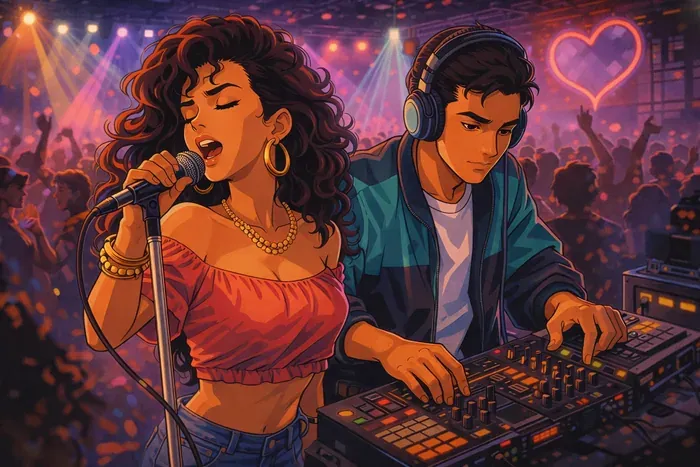
Latin Freestyle: Electronic Beats, Bilingual Hearts
While merengue and bachata were developing across the Caribbean, another sound was shaping urban dance culture in New York. Latin freestyle emerged in the 1980s as a blend of electronic production, Latin vocal sensibility, and high-energy club momentum. Large orchestras gave way to drum machines, synthesizers, and programmed rhythm.
Freestyle grew through local clubs and youth-oriented radio. The sound drew from disco, electro, and early hip-hop, but many of its best-known voices came from Latino communities living between languages and identities.
Lisa Lisa became one of the most important people in this music scene with Lisa Lisa & Cult Jam. Songs like “Head to Toe” became popular. The production was smooth and electronic, but her voice sounded warm and urgent.
Exposé also helped bring freestyle into a broader pop frame. Their polished harmonies and clean production reached well beyond local clubs. The format suited radio: short songs, clear hooks, immediate danceability.
Freestyle was an important change in how music was produced. Live orchestras were no longer needed to fill dance floors. Home studios and electronic equipment made it easier for people to get involved. Producers had more control over sound design. This change foreshadowed later developments in reggaeton and Latin trap, where digital tools would become dominant.
The club infrastructure around freestyle mattered too. DJs gained influence, and nightlife circuits in New York, Miami, and elsewhere became increasingly connected. Before major labels fully arrived, local radio, cassettes, and word of mouth were already building the market.
By the early 1990s, Freestyle was no longer as popular, but its lessons about structure remained important. Electronic rhythm programming, short songs, and music videos set the stage for the next generation.
Most importantly, freestyle made bilingual pop music popular on American charts. Latino artists can lead dance hits without fully abandoning their cultural identities. This helped Latin pop music become more popular around the world at the end of the decade.
The dance floor had become electronic, urban, and media-aware. These changes did not completely eliminate older traditions. They added new tools. When reggaeton came along soon after, it fit into a world that had already been shaped by club culture, youth identity, and new production technology.
Cuban Exile, Miami, and the Industry Shift
If New York defined the first great urban era of Latin music in the United States, Miami became the city that reorganized the industry for a later phase. That shift was tied in large part to Cuban exile communities that transformed South Florida after the Cuban Revolution. Musicians, entrepreneurs, broadcasters, club owners, and future executives helped build a Spanish-speaking cultural economy with a very different profile from New York’s barrio-centered salsa world.
Miami’s importance was not just demographic. The city linked the United States to the Caribbean and to Latin America through media, tourism, finance, and recording infrastructure. It was geographically closer to many Latin American markets and became a natural site for studios, television production, showcases, and label strategy. By the 1980s and 1990s, it was increasingly plausible to build a Latin hit there with regional and international ambitions from the start.
The Estefan orbit made that model visible. Gloria Estefan and Miami Sound Machine helped show how Latin rhythm, English-language pop craft, and highly professional studio production could be combined into a crossover formula with global reach. Around them, a broader Miami system took shape: producers, session musicians, managers, television contacts, and label relationships that treated Latin music as an export business as well as a community practice.
That did not replace New York. It changed the balance. New York remained crucial for salsa memory, Puerto Rican identity, and club history. Miami, however, became one of the clearest places where Latin music could be packaged for television, award shows, radio, and eventually global pop marketing. The city’s role in later Latin pop and Latin urban success makes more sense when it is seen as an industrial turning point, not only as a touring destination.
By the time the crossover boom arrived in the late 1990s, Miami was already more than a regional scene. It was one of the main control rooms of the Latin music business, and that helps explain why Latin pop could scale so quickly through television, image, and crossover strategy.
Latin Pop Goes Global: TV, Image, and Crossover
By the mid-1990s, Latin music was no longer confined to diaspora neighborhoods or regional charts. Television, award shows, and international touring expanded its reach. Production grew more polished, singles became more tightly structured, and visual presentation started to matter almost as much as rhythm.
Latin pop did not appear suddenly. It built on salsa romántica, merengue’s international reach, and freestyle’s electronic accessibility. Artists learned how to craft shorter openings, deliver camera-ready performances, and work within larger promotional systems. Labels refined strategies aimed at both Spanish-speaking audiences and broader pop markets.
This period marked a turning point. The industry began to see Latin artists as global competitors rather than as niche specialists. Language barriers still mattered, but they no longer looked impossible to cross.
In the late 1990s, a moment occurred that changed how people around the world thought about Latin pop. Before that explosion, however, the groundwork had to be set. Miami studios, bilingual performers, and networks of people from the same ethnic background played important roles in that preparation. Just as important, Spanish-language media had already built the infrastructure that could keep those artists visible across markets.
Radio, TV, and Univision as Infrastructure
Stars alone did not build Latin music’s U.S. presence. Spanish-language media created the infrastructure that allowed those stars to be seen repeatedly, discussed publicly, and marketed across regions. Radio remained essential because it kept artists present in daily life, especially in cities where local programming reflected neighborhood taste. But television changed the scale.
By the late 20th century, Spanish-language networks such as Univision were doing more than broadcasting entertainment. They helped organize a shared Latin public sphere in the United States. Viewers in different cities could watch the same artists, award shows, live performances, interviews, and promotional cycles. That made Latin music feel less local and more interconnected.
Award shows became especially important. They did not just reward success after the fact. They created recurring moments of visibility, canon formation, and cross-generational validation. Premios-style broadcasts, countdown formats, morning-show appearances, and special event programming helped turn a song into a season, a star into a household name, and a genre into a durable part of media routine.
This infrastructure also connected touring to television and radio. An artist could break through in one city, appear on network television, then convert that exposure into shows across the mainland and Latin America. Univision and related Spanish-language media systems helped create that loop long before social platforms accelerated it.
Seen this way, television was not just a promotional bonus for Latin pop. It was part of the machinery that turned regional success into continental visibility. Later digital platforms would change the tools, but not the underlying logic: media systems create the conditions under which a genre starts to feel inevitable.
Gloria Estefan: The Miami Crossover Blueprint
Before the crossover boom of 1999, Gloria Estefan had already built a durable bridge between Latin rhythm and American pop. Born in Havana and raised in Miami, she showed with Miami Sound Machine how Caribbean groove could work inside polished mainstream production.
In the 1980s and early 1990s, she blended pop songwriting with Latin percussion. Songs like “Conga” brought Afro-Cuban rhythmic feeling into English-language markets without hiding its roots. The groove remained unmistakable even as the chorus followed pop logic.
Mi Tierra, released in 1993, marked a deliberate return to Spanish-language material. Estefan treated that repertoire as central to her artistic identity, not as a side project. The album celebrated Cuban musical memory while reaching a global audience.
Miami played a central role in this expansion. Its studios became major Latin pop production hubs, and its producers understood both American radio expectations and Latin rhythmic sensibility. That made movement between markets easier.
Estefan’s visibility changed industry assumptions. A Latin artist could headline major award shows and appear on mainstream television without being confined to a narrow cultural slot. Her success encouraged labels to invest more seriously in Latin talent.
Gender representation was still important. Estefan was not just a featured singer. She led projects and influenced creative direction. Her career showed that female Latin artists could perform on international stages while keeping their cultural identities.
The Miami model emphasized professionalism, format awareness, and adaptability. Songs were arranged for radio, while music videos and television appearances reinforced the brand. Latin pop was no longer treated as a lucky exception. It became a planned strategy.
By the late 1990s, the infrastructure was ready for a larger surge. Younger artists took advantage of this foundation and helped make Latin pop a global sensation.
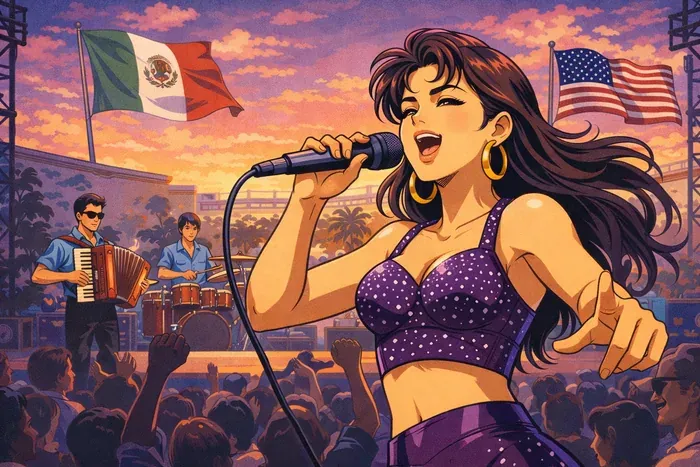
Selena: Bicultural Stardom Before the Boom
Selena offers one of the clearest examples of crossover potential before the late-1990s boom. Selena Quintanilla was born in Texas to Mexican American parents and grew up performing Tejano music with her family band. Tejano blended Mexican regional tradition with cumbia and pop, and it was strong in places like Texas even if it rarely reached the center of the U.S. pop market.
Selena changed those expectations. She combined discipline, stage charisma, and wide emotional appeal. “Como La Flor” resonated in both the United States and Mexico, and her songs about love and longing traveled easily across the border.
Her impact went beyond the songs. Style, interviews, and television appearances made her a clear bicultural figure for second-generation Latinos. She did not present herself as split between two worlds. She moved comfortably through both.
She was working on a full English-language crossover album when she was killed in 1995. The posthumous release Dreaming of You showed the scale of her commercial potential. It debuted at No. 1 on the Billboard 200.
Selena’s importance goes beyond chart placement. She showed that Latino artists could expand their audience without severing cultural roots, and she made the size and power of bilingual U.S. audiences harder to ignore.
The industry noticed. Labels began actively looking for artists who could do the same, and media outlets recognized the growing demand for Latin voices on mainstream platforms.
Her legacy influenced the artists who came after her. When Ricky Martin and Shakira later entered English-speaking markets, they did so in an environment already prepared by Selena’s success. The idea of crossover wasn’t just an abstract concept anymore.
Selena’s career also shows how people’s identities affect how they are received. She dealt with expectations related to gender, ethnicity, and language while staying true to herself. This balance is still important for Latin artists today, especially those working in global streaming platforms where cultural details can be lost.
Her influence is still being felt. The crossover conversation that dominated the late 1990s did not begin in 1999. It started earlier, on local and bilingual radio stations. These artists believed their stories could reach more people than the industry thought they could.
1999: Latin Pop Becomes a Global Event
If Selena opened the door, 1999 pushed it wide open. In the late 1990s, Latin pop became a highly visible part of global pop culture. Award-show performances, expensive videos, and coordinated label campaigns turned a slow build into a public event.
Ricky Martin became the face of that breakthrough. His performance of “La Copa de la Vida” at the 41st Grammy Awards in February 1999 drew huge attention, and “Livin’ la Vida Loca” soon became a worldwide hit. The song followed classic pop structure: tight writing, explosive chorus, polished production. Latin identity remained visible, but the language was English. The strategy was deliberate.
Shakira followed a different route. Spanish-language albums like Dónde Están los Ladrones? had already made her a star in Latin America. With Laundry Service in 2001, she entered English-language markets without abandoning her songwriter identity. Her voice, writing, and perspective remained distinct.
Jennifer Lopez also became a major figure in this period. Her background in film and dance gave her broad public recognition, and songs like “If You Had My Love” made her a central pop star while keeping her Latina identity visible. Media often folded her into the “Latin explosion” narrative, sometimes flattening the specifics of her story.
The industry responded quickly. Major labels increased investment in Latin talent, marketing budgets rose, and collaborations became more common. Spanish phrases also became more audible in mainstream pop.
But visibility came with pressure. Artists were sometimes encouraged to neutralize accents or release English-language versions for broader airplay. The core question persisted: how much did a Latin artist need to change in order to be accepted globally?
Despite those debates, the 1999 moment proved that the scale had changed. Latin pop was no longer peripheral. It had become central to commercial pop conversation, and that success rested on decades of groundwork in salsa, merengue, bachata, freestyle, and bilingual club culture.
For many listeners, this was the first time Latin artists felt central on English-language charts. For Latino communities, it looked like long-delayed recognition. The crossover was musical, but it was also symbolic.
But the stage would soon change again. While Latin pop was in the spotlight, underground music was hardening into a different system in Puerto Rico and Panama. The next big change would not come from television studios. It would come from live circuits, mixtapes, and local networks.
Live Performance and Festival Circuits
Recorded music could travel farther than most musicians, but live performance gave the genres social proof. Touring circuits, theater shows, festivals, television specials, and award-show stages repeatedly turned local momentum into public legitimacy. A song could be popular on radio, but a scene became undeniable when it could fill rooms across cities and countries.
This was true in the salsa era, when labels and promoters used concerts to turn bands into symbols of a larger movement. It remained true in the crossover years, when televised performances and arena tours showed that Latin artists could command attention at the same scale as English-language pop stars. In reggaeton and Latin trap, stage power mattered in a different way: artists had to prove that music built in mixtape culture or online could also dominate giant festival crowds.
Diaspora concerts were especially important because they connected migration to spectacle. Artists could perform in New York, Miami, Chicago, Los Angeles, San Juan, Santo Domingo, Madrid, or Mexico City and still be playing to audiences who felt tied to the same wider cultural field. Touring helped transform separated communities into a visible market.
Festival circuits later amplified that process. Once Latin urban artists began to appear as headliners rather than niche additions, the hierarchy changed. Promoters, sponsors, and media outlets all received the same message: this music was not supplemental. It was one of the main engines of live entertainment.
That is why stage infrastructure deserves a place next to radio, television, and streaming. Live performance does not just reflect popularity. It helps produce it.
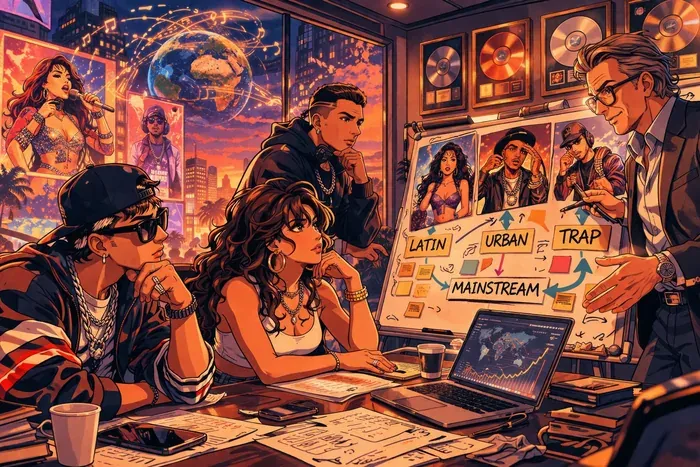
Behind the Crossover: Gatekeepers, Branding, and Stereotypes
The crossover boom of the late 1990s created more opportunities, but it also showed how strictly controlled the industry could be. Audience expectations shaped what labels and media were willing to promote. Labels invested a lot in artists who fit a certain image. Marketability, language choice, and appearance often influenced decisions as much as musical skill.
Television intensified those pressures. Videos circulated globally, and award shows often packaged Latin performers through a simplified story of identity and success. The term “Latin” itself became a commercial category that grouped artists from different countries, genres, and racial histories into one marketable frame.
Artists were careful to navigate these structures. Some musicians released bilingual albums to satisfy both Spanish-speaking fans and English-language radio stations. Others were encouraged to focus on English singles. The assumption was simple. Using broader language meant reaching a wider audience. That calculation did not always show what the artist intended.
Gender added another layer. Female performers are often judged more strictly for how they look and how they act. The stage costumes, choreography, and interviews were studied more closely than those of the male performers. At the same time, women such as Shakira and Jennifer Lopez used their popularity to their advantage, keeping control over songwriting and branding when they could.
Gatekeeping also operated through awards and charts. “Latin” categories kept artists visible, but they could also isolate them from the broader pop field. Crossing over often meant adapting to mainstream pop expectations.
Despite these challenges, the crossover era led to the creation of lasting infrastructure. More and more touring circuits popped up in Europe and Asia. Latin artists now have dedicated promotional teams. Media outlets started to see Latin music as an important part of pop music around the world, not just a passing trend.
However, the model had its limitations. The polished pop approach didn’t represent all Latino youth culture. In Puerto Rico, Panama, and urban neighborhoods across the Caribbean, a different sound was emerging. It felt rawer, had a stronger rhythm, and was based on street-level storytelling.
The industry’s focus on crossover pop allowed alternative currents to develop outside of traditional avenues. Television had helped build underground networks, and these networks would soon challenge the status quo. That shift from polished studios to mixtapes and club speakers marked reggaeton’s turning point.
Reggaeton: Street Culture, Mixtapes, and Beatmakers
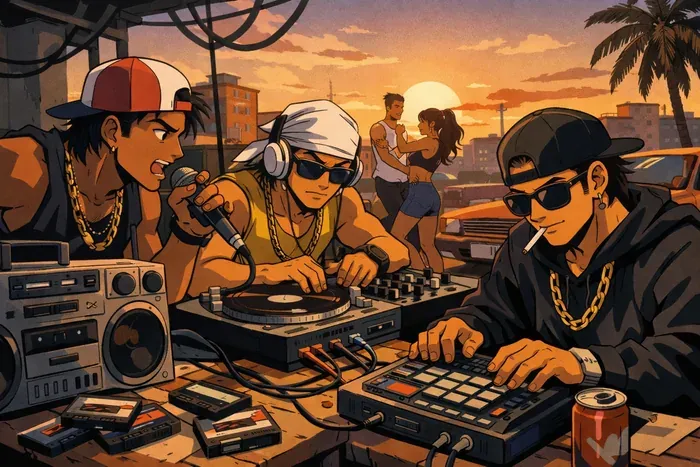
While Latin pop was taking over award stages and television screens, another movement was forming far from the polished studios. In Puerto Rico and Panama, DJs and producers were trying out simple beats, strong bass, and clear song lyrics. The sound was rough, repetitive, and meant for street parties, not formal concerts.
Reggaeton didn’t come from just one artist or record label. It grew through mixtapes, informal distribution networks, and club systems that weren’t approved by the mainstream. Authorities in Puerto Rico often mistrusted it. The lyrics, which focused on life in the barrio and included explicit themes, faced criticism. The police raided places where early compilation tapes were made.
But the music spread. Cassette recordings moved from person to person. Clubs met this demand. Producers learned how to create beats that could fill small spaces with endless energy. Dembow rhythm patterns, influenced by Jamaican dancehall, became central.
What follows traces reggaeton’s early development through the DJs, producers, and performers who created an alternate industry. The movement would eventually reach global charts, but it started in neighborhoods that mainstream media rarely visited.
Producers as Canon Builders
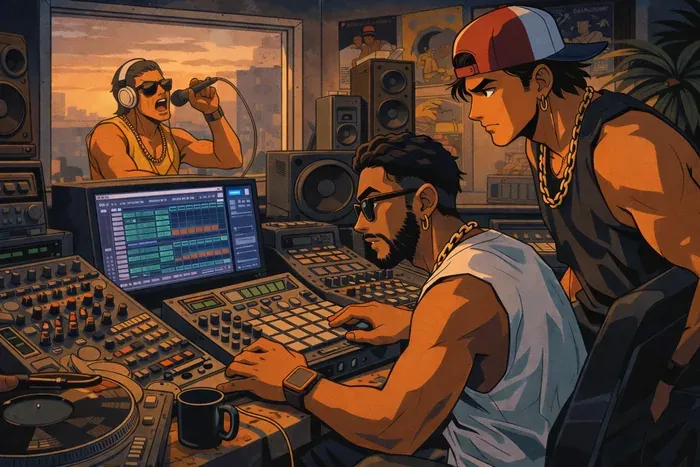
One of the clearest continuities across this history is that producers, arrangers, and musical directors repeatedly shaped the canon as much as front-facing stars did. In the salsa era, arrangers decided how brass hit, how percussion locked in, and how urban orchestral drama would sound on record. In reggaeton, DJs and beatmakers determined which rhythms spread through mixtapes, clubs, and radio. In Latin trap, producers often became the architects of mood itself.
That power matters because genres are not built only through songs. They are built through repeatable sonic rules. Arsenio Rodríguez expanded ensemble logic. New York arrangers made Afro-Caribbean rhythm work in louder urban orchestras. Fania producers and musical directors helped standardize what salsa could sound like as a record-market category.
The same pattern returned in reggaeton. DJ Playero, DJ Nelson, Luny Tunes, Noriega, and later Tainy did not merely support singers. They built frameworks that allowed multiple vocalists to sound as if they belonged to the same movement while still keeping individual identity. That is one reason compilation projects mattered so much. They made producers into curators of entire eras.
In the streaming age, producer visibility increased even more. Tags, signature drum textures, session formats, and branded release strategies taught listeners to hear production style as a star quality of its own. Bizarrap is one clear example, but the logic is broader. A producer can now define a format, not just a track.
This is why the history of Latin music cannot be told only through singers. The people who designed the beat, arranged the brass, shaped the mix, and connected one artist to another often decided which sounds would travel and which would stay local.
Panama: Spanish Dancehall Before Reggaeton
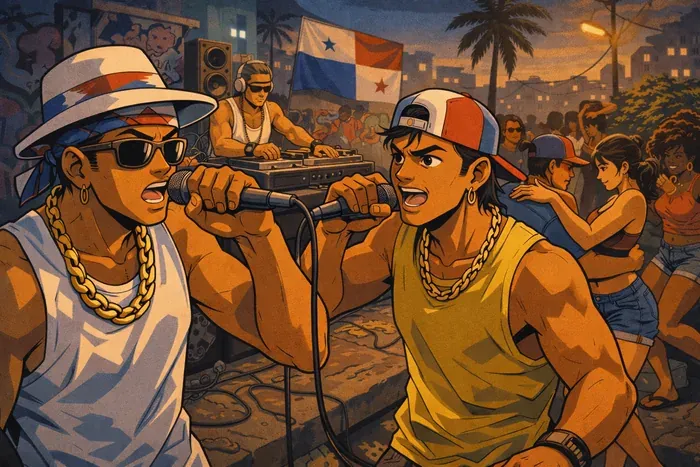
Before reggaeton was widely identified with Puerto Rico, Panama was a crucial foundation. Jamaican and other West Indian communities had long shaped the country’s musical life, and local artists began adapting dancehall rhythms into Spanish in the 1980s and early 1990s.
El General became one of the first internationally visible stars of this style. His songs kept the dancehall pulse intact while shifting the vocal delivery into Spanish. Tracks like “Te Ves Buena” circulated across Latin America and into the United States.
The adaptation was not just imitation. Panamanian artists made the themes and delivery more relatable to their local audience. They changed the flow and words to match the Spanish way of speaking. The rhythm stayed in the dembow pattern, a type of syncopated beat structure that would later become the foundation of reggaeton.
Panama’s role is often overshadowed by Puerto Rico’s later commercial success, but Spanish-language dancehall was foundational. Without that early experimentation, reggaeton would have developed differently.
Distribution was still informal. Cassettes moved through neighborhoods, radio treated the music cautiously, and the songs proved themselves in dance settings before they reached broader visibility.
The model that emerged in Panama showed that Caribbean music can change its language without losing its rhythm. It also showed that young people would combine global influences with their own local identity, rather than simply accepting them.
As the 1990s went on, Puerto Rican producers took these influences and made them even stronger. The music got louder. The lyrics were more precise. Mixtape culture grew quickly.
Panama was the first to do this. Puerto Rico would improve and expand on it. All of these places helped shape what we now call reggaeton.
The Mixtape Era: Puerto Rico's Underground Network
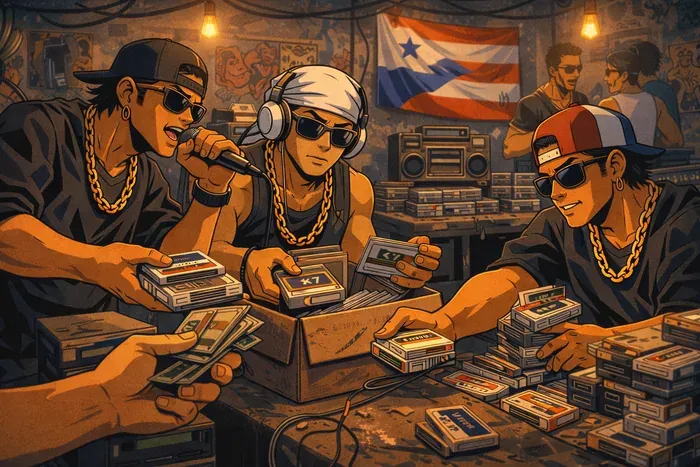
In Puerto Rico in the early 1990s, reggaeton wasn’t considered part of the music industry. It was popular in cassettes, in car stereos, and in small clubs. Producers and DJs put together compilation tapes that featured different singers singing over the same rhythms. People sold these tapes illegally, or traded them from person to person.
DJ Playero was one of the key architects of that underground network. His Playero mixtapes introduced voices that would later become central to the genre, including a young Daddy Yankee still developing his style.
The mixtape model mattered because it lowered the barrier to entry. Artists did not need a full album budget. They needed a producer, a beat, and a microphone. Compilation formats also heightened competition. Each vocalist had to stand out quickly, which pushed delivery toward greater clarity and urgency.
Vico C played an important role during this time. He is widely recognized as an influential pioneer of Spanish-language rap in Puerto Rico. He mixed hip-hop beats with Spanish-language lyrics. His early work helped shape the style and content that would become characteristic of reggaeton.
Authorities treated the movement with suspicion. Police raids targeted underground tapes, and critics claimed the music encouraged bad behavior. Instead of weakening the scene, that reaction sharpened its oppositional identity. Reggaeton was defined partly through resistance.
Distribution remained largely outside formal industry channels. Small record shops, street vendors, and club promoters moved the music. Because major labels stayed away, producers had to build their own systems. That independence later gave reggaeton leverage when major companies finally entered the market.
The underground phase also made the dembow beat the most important part of the music. Repetition was not a problem. It was power. The steady beat was mesmerizing, perfect for packed dance floors.
By the late 1990s, the movement had grown so big and obvious that people could not ignore it. The clubs were filled. Artists were starting to gain a loyal following. What started as a casual way of collecting music was becoming more organized.
From there, stronger production teams and clearer branding became essential. The foundation, however, was built through mixtapes and neighborhood networks. Without that underground infrastructure, reggaeton would not have become popular around the world.
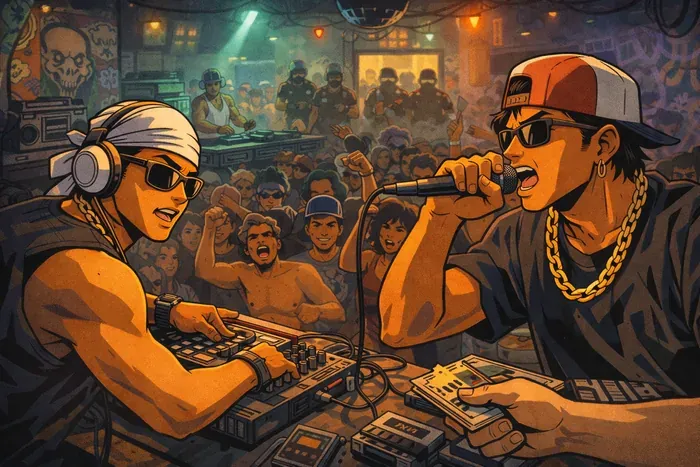
The Noise: The Club That Scared the Establishment
As mixtapes spread, clubs became the main testing ground. In San Juan, venues like The Noise helped new talent grow. Performers tested material in real time, DJs adjusted sets to crowd response, and the scene felt immediate and self-contained.
The Noise was more than a club. It was a scene-forming institution. Young artists played short sets, often sharing the stage, in an atmosphere that was both competitive and collaborative. Consistent presence built reputation. A track that worked there could move quickly through cassettes and word of mouth.
This visibility also led to scrutiny. Reggaeton often talks about street life, sex, and social problems. Some people complained that this type of music encouraged violence and a decline in morals. Some news outlets in Puerto Rico presented it as a problem instead of a cultural expression.
Police raided stores that sold underground tapes, and compilations were confiscated as obscene. Artists and producers were publicly criticized. But the backlash made the scene more clearly defined. The music became a voice for young people ignored by mainstream institutions.
The fast, repetitive drumbeat did not ask for approval. It demanded attention. Its simplicity gave vocalists space for speed, attitude, and directness. Energy mattered more than polish.
The backlash resembled earlier reactions to hip-hop in the United States. In both cases, marginalized communities were treated as threats when they spoke in their own voice. Efforts to suppress the music often made it more visible.
Club culture also encouraged experimentation. DJs mixed dancehall, hip-hop, and new reggaeton tracks, and the sound gradually became more unified. Producers moved from rough cassette setups toward cleaner studio production without losing urgency.
By the early 2000s, reggaeton was no longer limited to a small scene. Crowds were growing, radio was cautiously adding tracks, and major labels could see the genre’s commercial potential.
The Noise and similar spaces were crucial to that shift. They let songs prove themselves in real rooms and allowed artists to build reputations before signing formal deals.
The underground era was more than just a beginning. It had a big impact on the development of reggaeton. Even after it became popular worldwide, it still showed its sense of independence, resistance, and community.
Luny Tunes: The Architects of Reggaeton's Sound
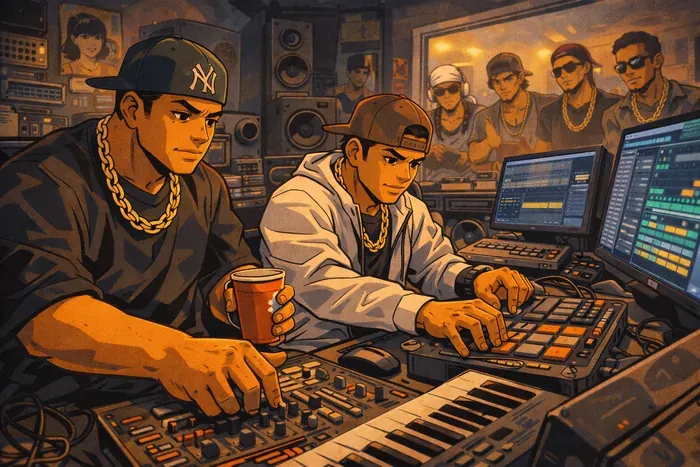
As reggaeton moved from raw mixtapes to wider popularity, producers became more visible. The sound needed to be clear without losing its rhythm. Studio craft became central. The hooks were tightened. The beats grew heavier and cleaner.
Luny Tunes were central to that shift. Francisco Saldaña and Víctor Cabrera helped define the sound of early-2000s reggaeton through crisp drums, bright synths, and choruses built to stick. The Mas Flow compilations gathered multiple singers over carefully designed instrumentals that felt unified without sounding repetitive.
Noriega also pushed the studio sound forward, helping shape records that could compete with mainstream pop while keeping reggaeton’s force. The genre was no longer only underground. It was becoming an industry contender.
In this era, producers acted like curators. They selected vocalists, matched them to specific beats, and designed tracks for maximum impact. Chorus placement, vocal texture, and club utility all became strategic decisions.
This model, which puts producers in the center, changed how power is shared. Vocalists were still popular, but producers controlled the sound. The beat often determined a track’s identity more than the vocalist’s flow. That structure would influence Latin trap years later, where producers again played a key role.
The era also introduced younger talent that would later dominate the genre. Tainy started working with established artists as a teenager, and his early productions helped connect classic reggaeton to the more melodic urban sound of the 2010s.
Even though reggaeton has become more professional, it still has its underground roots. It did not erase them. The rhythm stayed repetitive and direct. The lyrics still drew on street life and neighborhood identity. What changed was the scale and the polish.
Production increased, distribution deals expanded, and video budgets grew. Clubs outside Puerto Rico began treating reggaeton as a regular part of the night rather than a regional curiosity.
By the mid-2000s, the groundwork was set for a global breakthrough. The producers had created a distinctive sound. The industry now had a product it could confidently export.
The next major change would come when one song broke through across radio markets. Reggaeton was ready for its defining mainstream moment.
Daddy Yankee: The King of Barrio Fino
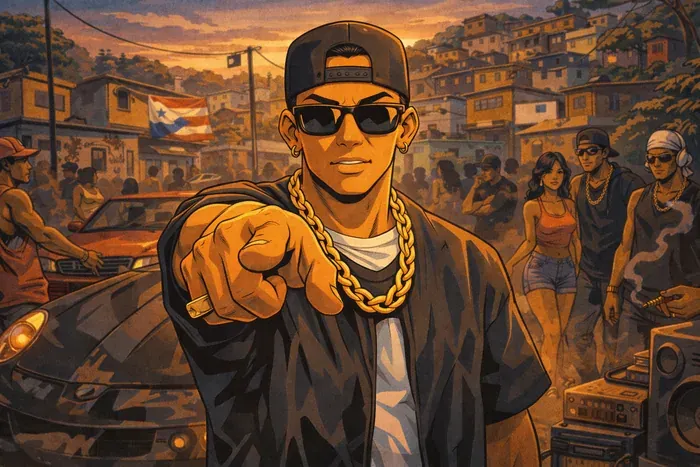
When Barrio Fino arrived in 2004, reggaeton moved into a new commercial tier. Daddy Yankee already had underground credibility, but this album made him a global star.
“Gasolina” became the genre’s defining breakthrough. Its dembow pulse was unmistakable, and its hook was built for repetition. Radio programmers who had hesitated started making room for it. Clubs in Latin America, the United States, and Europe adopted it quickly. The track did not dilute reggaeton. It clarified it.
Barrio Fino paired street credibility with polished production. The beats were cleaner without losing force, and the album felt cohesive rather than assembled around one single. Daddy Yankee rapped with confidence, economy, and strong rhythmic control.
The success of “Gasolina” changed industry expectations. Reggaeton was no longer a niche scene. It had become a viable global format. Labels invested more heavily, and international collaborations increased.
The album title mattered too. “Barrio” named neighborhood origin instead of hiding it. The project framed local identity as strength, and that choice resonated with listeners who heard their own communities in the music.
Any doubt about reggaeton’s staying power faded quickly. Tours grew, award-show appearances multiplied, and the genre’s audience broadened.
The breakthrough also changed what younger artists believed was possible. A performer from Puerto Rico’s underground could now top international charts without abandoning the core rhythm. That opened the door to more experimentation inside the genre.
Success brought new pressure. As reggaeton entered mainstream markets, debates intensified around lyrical content, commercialization, and authenticity. Some feared the genre would be softened. Others saw a chance to expand it.
What became clear was that Barrio Fino marked a structural change. Reggaeton was no longer orbiting Latin pop. It was competing with it. The underground infrastructure built over the previous decade had produced a global star.
The genre kept growing with each new release. Other artists quickly took advantage of this success, expanding the genre’s commercial reach even further.
The Stars Who Scaled Reggaeton Globally
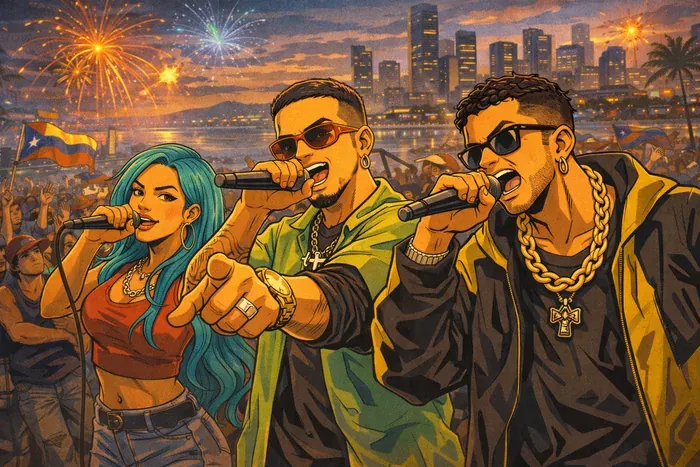
After Barrio Fino, reggaeton did not harden into one fixed sound. It expanded. Different artists brought different textures to the mainstream stage.
Don Omar became one of the era’s defining voices. His 2003 album The Last Don had already established him, but the post-Gasolina years expanded his reach even further. His delivery was dramatic, melodic, and emotionally charged. Tracks like “Dale Don Dale” and, later, “Danza Kuduro” showed how easily he could move between reggaeton and broader Latin dance styles.
At the same time, Wisin & Yandel perfected a duo format that became hugely influential. Their mid-2000s releases balanced street credibility with sleek production. They expanded reggaeton’s audience without changing its rhythmic core. Their reunion in 2018 underlined how durable that influence had become.
As the music industry grew, it brought bigger tours, sponsorships, and collaborations between different types of music. Reggaeton songs started to be played on the radio along with Latin pop songs. The line between underground and mainstream music became less clear.
During this period, video budgets increased and the visual language became more polished. Urban imagery remained central, but its presentation increasingly followed global pop standards. The genre was learning how to scale.
Critics often described this as the moment when reggaeton became commercial. That is true, but incomplete. More money entered the system, yet the rhythmic core remained intact. What changed most was texture, layering, and reach.
The audience also became more diverse. What had once been closely linked to Puerto Rican youth culture now had an impact across Latin America and within diaspora communities in Europe. Clubs in Spain, Italy, and Germany regularly played reggaeton music.
Growth also deepened internal debate. Some artists leaned toward pop collaboration. Others held tightly to neighborhood storytelling and underground codes. Reggaeton was widening, but it was still arguing with itself.
Even at that level of popularity, reggaeton still rested on underground foundations. The work of DJs and producers had created a system strong enough to support multiple stars at once rather than just one breakout name.
One artist in particular made sure that women’s authority would remain impossible to ignore. That presence deserves its own space.
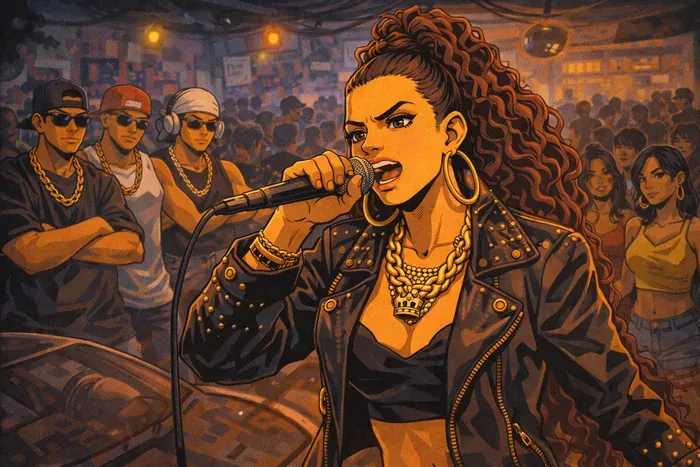
Ivy Queen: Authority, Gender, and Reggaeton
As reggaeton grew louder and more visible, it often projected a male-centered image. Lineups were dominated by men, and many lyrics reinforced masculine control. Yet women had been part of the scene from the underground years onward.
Ivy Queen is the clearest example. She emerged in Puerto Rico’s underground during the 1990s not as a novelty feature, but as a central figure. Her presence challenged narrow assumptions about who could command dembow.
Albums like Diva and Sentimiento showed an artist who was forceful, clear, and unwilling to soften her message. “Yo Quiero Bailar” redefined the politics of the dance floor with a simple argument: a woman could dance without owing anyone intimacy.
Ivy Queen’s authority came from consistency. She worked the same mixtape circuits and club spaces as her male peers. She matched the music’s intensity without changing her voice to fit someone else’s expectations.
The industry often treated female reggaeton artists as exceptions rather than equals. Booking practices and media coverage reflected that imbalance. Ivy Queen’s longevity showed that the problem was institutional, not artistic.
Her visibility shaped later generations. Artists such as Karol G and Natti Natasha rose in a field that had already been altered by her example.
Gender politics in reggaeton remained complex. Explicit lyrics often triggered debates about empowerment and objectification, and women had to navigate those tensions in public. Ivy Queen’s answer was to claim the narrative rather than accept a secondary role.
Her success highlights a bigger truth about how reggaeton has changed over time. Even when it was most popular, the genre had discussions about identity, power, and representation. Those debates did not make it weaker. They made it more complex.
By the late 2000s, reggaeton had a durable foundation, global stars, and clearly visible female leadership. The next transformation would not replace that structure. It would extend it through streaming, digital distribution, and a much faster collaboration logic.
The Remix and Collaboration Economy
Latin music has long relied on collaboration, but the scale and speed of that logic grew dramatically from the reggaeton era onward. Remixes, posse tracks, guest verses, and producer-led multi-artist projects helped songs move across regions, audiences, and platforms much faster than a single-artist release often could.
The roots of that system can be heard in compilation culture. Mixtapes and producer albums already trained listeners to think in terms of shared beats, rotating vocalists, and scene membership. A track could function as both a song and a network map. Who appeared with whom mattered because it signaled affiliation, legitimacy, and expanding reach.
In the streaming era, that logic became even more powerful. Collaborations joined fan bases and improved the odds of playlist circulation across markets. A remix could refresh a song that had already peaked, introduce it to another country, or reposition it stylistically without abandoning its core hook. Despacito’s remix is one famous example, but the broader pattern goes much further than a single song.
This system also changed artistic identity. Instead of building careers only through solo albums and long gaps between cycles, artists could stay visible through features, cross-market singles, live collaborations, and quick-turn remixes. Producers benefited too, since they often acted as the connectors who could bring scenes together.
The result was not just more exposure. It was a new economic model of scale. Latin music grew partly because it became unusually good at turning collaboration into infrastructure. That model would only become more powerful once streaming platforms reorganized discovery.
The Streaming Era: A New Geography of Latin Music
By the early 2010s, the central question was no longer whether reggaeton would survive. It was who would shape the next phase. Physical sales had weakened. Radio still mattered, but it no longer controlled discovery on its own. YouTube views, streaming totals, and playlist placement started to influence careers directly.
That shift redistributed power. Puerto Rico and Miami remained important, but Medellín, Mexico City, Buenos Aires, and Madrid became major nodes in the same network. Artists could release a track online and watch it move across borders without waiting for a TV slot or a major radio push.
The music adapted quickly. Hooks arrived sooner. Intros tightened. Visual identity became part of the release strategy. Collaborations multiplied because platforms rewarded shared audiences and constant circulation.
Streaming did not erase older gatekeepers, but it opened the field. Independent artists could now build leverage before signing a large deal, and regional scenes could reach a global audience faster than before.
The next sections trace that digital remapping of Latin music and the artists who turned it into a truly multinational system.

YouTube: The New Video Stage for Latin Music
In the 1990s, television was the main path to mass visibility. By the 2010s, YouTube had taken over much of that role. Viewers no longer had to wait for scheduled programming. They could choose, replay, and share a video immediately.
For Latin artists, that shift was crucial. Language barriers became less restrictive because discovery no longer depended as heavily on local radio. A viewer in Germany or Japan could encounter a Spanish-language track through search, recommendation, or sharing without any traditional gatekeeper in between.
Reggaeton artists adapted quickly. High-energy visuals, dance choreography, and vivid color all worked well in an algorithm-driven environment. The music still hit on laptop speakers because its rhythmic force had already been proven in clubs.
Few artists benefited more clearly than J Balvin. His bright color palette and highly controlled visual identity translated perfectly to the platform. Videos reached hundreds of millions of views, and he gained worldwide recognition without relying on an English-first strategy.
At the same time, Maluma cultivated a polished persona that blended pop sensibility with reggaeton rhythm. His strategic collaborations helped him reach more people. Digital metrics showed strong demand for his music.
YouTube also changed the feedback loop. Comment sections, reaction culture, and fast sharing gave artists and labels immediate signals about what was connecting and where.
The platform’s algorithm preferred frequent releases and strong visual elements. The song structure changed to fit shorter attention cycles. Choruses arrived faster. Intros were shorter. Producers began thinking not only about radio but also about how appealing the videos would be to audiences.
This environment did not eliminate competition. Artists still needed consistent output and strong branding. But compared with the television era, access was wider and the barriers to discovery were lower.
As YouTube’s popularity grew, streaming platforms like Spotify made it even more popular. Playlist culture amplified that reach. Latin urban music has been a regular on the global charts, not just a passing fad.
The map was getting bigger. Colombia would soon become one of its most dynamic centers.
Streaming Platforms and Playlist Power
Streaming platforms opened the field, but they also created a new set of gatekeepers. Playlist editors, recommendation systems, autoplay chains, and engagement signals all started influencing which songs rose quickly and which remained invisible. That power was different from radio power, but it was still power.
For Latin artists, this shift had two major effects. First, it reduced dependence on traditional broadcast bottlenecks. A track no longer needed to win one local program director to begin circulating. Second, it increased the importance of metadata, release timing, skip rates, completion rates, repeat plays, and feature positioning inside platform ecosystems.
Playlist placement became especially influential because it joined discovery to scale. A song added to the right editorial or algorithmic environment could travel across national and linguistic borders very quickly. That helped Latin urban music reach listeners who had no prior connection to a specific local scene. At the same time, it rewarded songs that announced themselves fast and fit the mood logic of playlist culture.
This did not make music less creative, but it did change incentives. Producers wrote stronger openings. Artists coordinated releases more carefully. Labels and managers learned to treat platform strategy as part of artistic rollout, not only as post-release promotion.
So the streaming era did not eliminate mediation. It redistributed it. Radio programmers lost some influence, but platform systems gained it. Understanding that change is essential to understanding why certain Latin songs became global at extraordinary speed in the 2010s and 2020s.

Visual Culture: Music Videos, Fashion, and Image
Latin music became global through sound, but it also became global through image. Music videos, television appearances, stage costumes, cover art, choreography, and fashion all helped define how a genre felt before a listener fully understood its history. Visual culture was never decoration. It was part of the argument.
The crossover years made that especially clear. MTV, Univision, glossy videos, and award-show staging helped present Latin artists as international pop figures rather than as regional specialists. In the streaming era, the visual burden became even heavier. On YouTube and social media, image was not a supplement to the release. It often shaped first contact.
Different artists used that power differently. J Balvin leaned into color, graphic clarity, and bold styling. Bad Bunny used fashion and presence to challenge older norms around masculinity. Rosalía built worlds that tied sound to concept and symbolism. Tokischa used image as a direct challenge to respectability politics. In each case, the visual strategy did not simply mirror the music. It extended its meaning.
Fashion also helped turn artists into transnational symbols. A look could circulate across press photos, performance clips, brand campaigns, fan edits, and memes. That made identity portable in a way earlier generations could only partly control through album covers and television.
This is one reason Latin music cannot be explained only through charts and sound design. Its expansion also depended on visual fluency. The genre learned how to be seen at scale, and that changed how the world read it.
The Colombian Wave: Medellín Redraws the Map
For years, Puerto Rico was treated as reggaeton’s unquestioned center. By the 2010s, Colombia complicated that picture. Medellín became a major production hub, and local studios developed a cleaner, more melodic urban sound that traveled well across international playlists and radio formats.
J Balvin helped drive that shift. His music refined reggaeton into a cleaner, more melodic form that traveled easily across radio and playlists. Accessible hooks sat on top of a steady rhythmic base, and the overall style felt controlled and deliberate.
Maluma followed a slightly different path. His voice leaned more openly toward pop, but the rhythmic base remained urban. Hits like “Felices los 4” showed how Colombian artists could move smoothly between reggaeton and mainstream Latin pop.
An important part of this wave was the growing visibility of women in Colombia’s urban scene. Karol G became one of its defining figures. Early collaborations raised her profile, but her solo work made her a star. She embraced reggaeton’s rhythmic language while writing from her own perspective, signaling a generational shift.
Colombia’s success was due to its well-developed infrastructure and talented workforce. Producers, managers, and creative directors worked together strategically. Studios worked to deliver sound quality that could compete globally. Digital metrics helped decide when to release new music and how to plan collaborations.
Medellín’s symbolic transformation also mattered. A city long defined internationally by violence and crisis became associated with creative ambition and musical infrastructure. Urban culture became a space for reimagining civic identity.
Colombia did not replace Puerto Rico. It made the map bigger. Collaborations between different countries became common. The tracks featured artists from different countries, mixing accents and styles smoothly.
Geographic diversification made Latin urban music more appealing around the world. The genre was no longer limited to a single island story. It was becoming a regional force that many communities could shape.
This shift in leadership helped prepare the next stage of global expansion. Latin music was no longer being treated as a temporary curiosity. It had become a stable part of the mainstream.
Despacito: The Song That Changed Everything
In 2017, one song reset the scale of the conversation. Luis Fonsi released “Despacito,” featuring Daddy Yankee, and the track joined polished pop songwriting to a reggaeton pulse in a way that felt both familiar and newly global.
Its success was immediate, but it was not accidental. The song had a strong melodic hook, a soft-edged dembow feel, and a structure built for repetition across radio, YouTube, and streaming services. The later Justin Bieber remix widened its reach, but the original had already shown something important: a Spanish-language song could dominate the center of the global pop conversation without being translated.
“Despacito” went to No. 1 in multiple markets and spent a record-tying 16 weeks atop the Billboard Hot 100. Just as important, it changed executive assumptions. Labels increased their investment in Latin artists, radio programmers became more willing to back Spanish-language hits, and collaborations across markets accelerated.
The song also clarified a structural point. It worked because it was hybrid. It did not abandon reggaeton’s rhythmic DNA, but it softened the edges enough to reach broad pop audiences. That balance was only possible because earlier generations had already built the bridge between underground rhythm and mainstream format.
So “Despacito” was not the beginning of the story. It was the moment when a long historical build became impossible for the wider industry to ignore. After 2017, Latin music was not merely entering the global mainstream. It was helping define it.
Brazil's Funk Carioca: A Parallel Urban Force
While Spanish-language Latin music was expanding globally, Brazil was moving through a related but distinct path. Portuguese sets Brazil apart linguistically from much of Latin America, yet rhythm connects it to the wider region. Funk carioca, born in Rio de Janeiro’s favelas, became one of the country’s most important urban genres.
Funk carioca drew heavily from Miami bass and electronic dance music. The beats were heavy and repetitive, and the lyrics were often blunt. Like early reggaeton, the genre emerged from marginalized communities and faced criticism from authorities and mainstream media. It still spread through local parties and independent networks.
Anitta is now one of the genre’s most visible ambassadors. She started her career singing Brazilian funk and pop music, and over time she started working with musicians from other countries. Her strategy was deliberate. She released songs in Portuguese, Spanish, and English, which helped her reach listeners in different languages.
Anitta’s rise shows Brazil’s dual orientation. The country has a strong internal market, which is big enough to support stars domestically. At the same time, digital platforms made it easier for artists to expand internationally. Collaborations with reggaeton and Latin urban artists showed that Lusophone and Spanish-language scenes were starting to interact more.
Brazilian funk also mattered at the level of production texture. Its deep bass, clipped loops, and stripped-down rhythmic logic parallel developments in reggaeton and Latin trap. In recent years, those sounds have circulated even more visibly across borders.
Brazil’s role makes it harder to treat Latin urban music as only a Caribbean or Spanish-language story. The region is larger and more diverse than that. Brazil’s size, population, and internal music economy make it impossible to treat as a side note.
Including Brazil in the broader conversation produces a more accurate regional map. Streaming platforms sort music by listener behavior as much as by language. As audiences move across scenes, collaborations become easier to discover organically.
Brazil’s growth is an important part of this change. Latin music doesn’t just come from one country and spread to others. It moves through different hubs that overlap. Puerto Rico, Colombia, and now Brazil all influence its direction.
The digital era has made it easier for people to communicate with each other, regardless of where they are. What used to feel separate now feels close. This partnership is growing, especially as Mexico and Europe play a bigger role in the ecosystem.
Mexico: Scale, Streaming, and Market Power
Mexico had always been central to Latin music through regional styles, ballads, and pop. In the streaming era, its influence expanded in a new way. It became one of the world’s largest digital music markets, and listener scale alone began shaping chart outcomes.
Streaming data confirmed what industry insiders already understood. Mexico’s audience is so large that strong performance there can lift a song far beyond the country itself. Playlist momentum often reflects that scale.
Mexico City also became a major live market for Latin urban artists. Reggaeton and Latin trap joined existing pop and regional circuits, and radio and festival programming adapted to the new balance.
Artists from other regions actively pursued the Mexican market. Cross-genre collaboration increased. Regional Mexican performers appeared on urban tracks, and urban artists entered regional spaces. The overlap reflected both artistic curiosity and commercial strategy.
Mexico’s involvement also highlights a significant change in the global economic landscape. Streaming platforms measure how people engage with content, not just where they live. A song that becomes popular in Mexico might also appear in curated global playlists. This cycle quickly connects local hits with international exposure.
Mexican artists also appeared more often in urban collaborations. While regional Mexican music remains popular in the United States, younger performers are combining it with trap and reggaeton styles. The lines between corridos, urbano, and pop music became less clear.
Demographics matter as well. A large young population uses social media intensively, and TikTok trends that take hold in Mexico can push songs into wider circulation very quickly.
Mexico is not replacing earlier centers such as Puerto Rico or Colombia. It strengthens the ecosystem by adding scale. In the streaming age, scale is important.
Mexico is becoming a major player in the world of streaming music, which shows that Latin urban music is now popular in many different places. Influence is not one-way anymore. It now moves across the Americas and beyond.
As this circulation grew, Europe became another important place for the spread of ideas. Spain has a vibrant city life that is influenced by both local traditions and the Latin American community there. This change marks the next step in the evolving map.
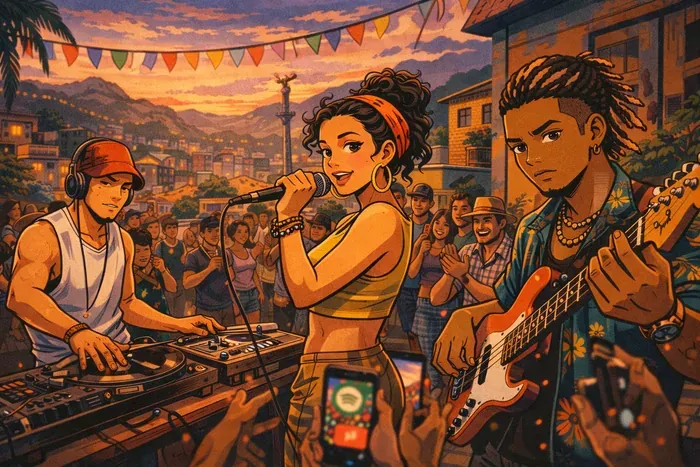
Local Scenes Beyond the Biggest Markets
Once streaming weakened older geographic bottlenecks, smaller or previously secondary scenes could accelerate trends much faster than before. That matters because the modern Latin ecosystem is not controlled by only a few capitals. It works through many local clusters that can suddenly become globally relevant.
Mexico is one major example, not only because of its scale but also because regional Mexican music and urban production increasingly overlap in collaborative and platform logic. Panama also remained important beyond reggaeton’s early history, continuing to act as a bridge between Caribbean rhythm, local identity, and transnational circulation. Chile, Peru, and other scenes contributed artists, producers, and audiences that did not always dominate the headlines but did shape how tracks moved online.
These local scenes often act as accelerators rather than symbolic capitals. They may not define the full genre narrative, but they can push songs through club circuits, regional playlist behavior, dance trends, and diaspora sharing patterns. In the platform era, that kind of acceleration matters almost as much as formal industry centrality.
The effect is cumulative. A genre that once appeared to move from one center outward now moves through many hubs at once. One city may provide the beat, another the star, another the audience surge, and another the playlist or meme momentum that pushes the track over the edge.
That decentralization is one of the clearest differences between today’s Latin music system and the earlier eras dominated more visibly by New York or Miami. Influence now travels in more directions, and secondary scenes can become primary drivers very quickly.
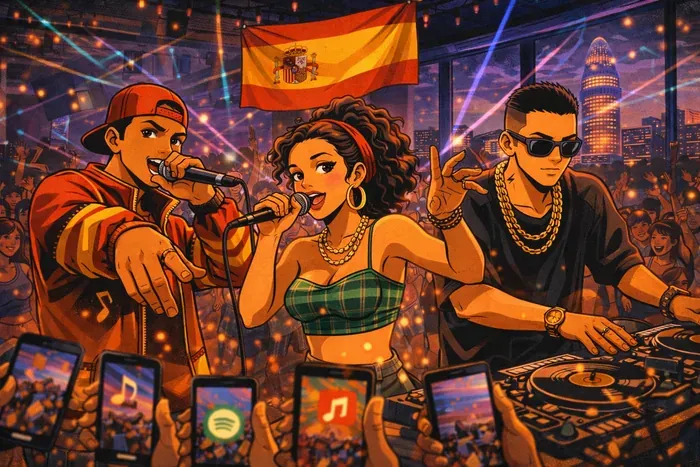
Spain's Urban Explosion: Diaspora, Clubs, and Reinterpretation
As streaming made it easier to reach fans all over the world, Europe became more than just a touring destination. It developed its own active role within Latin urban culture. Spain was at the center of that change.
Large Latin American communities in Madrid and Barcelona helped make reggaeton popular in Europe. Clubs started playing this style of music regularly long before it became popular on the radio. DJs built local followings around Caribbean and Colombian sounds. What started as a diaspora-driven culture gradually became a normal part of what it means to be a young person in Spain.
During this time, Rosalía became a well-known figure in Spain’s urban pop music scene. Her early work was inspired by flamenco traditions, but her later releases incorporated reggaeton and trap elements. Collaborations with Latin urban artists mixed Spanish music with Caribbean rhythms.
Rosalía’s rise also led to discussions about who owns and influences culture. People started talking more about appropriation, heritage, and artistic freedom. These debates are similar to conversations happening in Latin America about identity and representation. Europe was no longer just watching. It was participating.
Spain’s cities changed quickly. Producers and singers came up with their own versions of dembow and trap. The sound reflected local accents and phrasing. European festivals started booking Latin urban acts as headliners instead of only booking smaller, more specialized acts.
The Latin urban music scene’s growth in Europe showed its global popularity. Songs were not crossing borders temporarily. They were becoming a part of the local cultures.
Diaspora communities remained central to this process. Migration created cultural links long before streaming accelerated circulation. Young Europeans who grew up with Latin rhythms at home carried that sound into mainstream peer culture.
The European boom also showed that the genre can change to fit different situations. Reggaeton and Latin trap could incorporate regional flavors without losing their core identities. This allowed the music to be popular all over the world.
By the late 2010s, Latin urban music had changed from being a regional movement to a global phenomenon. Many different factors influenced its direction at the same time. One of the most dynamic areas was Dominican dembow, where song structures became even shorter because of viral culture and intensified rhythmic minimalism.
Dominican Dembow: Speed, Brevity, and Virality
As reggaeton spread around the world, one of its most important rhythmic elements took on a life of its own. The dembow dance style, which started in Jamaica and spread through Panama and Puerto Rico, became an important part of a unique Dominican dance movement. In the Dominican Republic, artists sped up the beat, cut it down even more, and built a scene that thrived on immediacy.
Dominican dembow didn’t wait for mainstream approval. It started with local parties, YouTube uploads, and neighborhood studios. The songs were short. The production was straightforward. Energy was more important than polish. What started as a local network soon linked up with the worldwide streaming system.
Viral culture became central. Dance challenges and short-form video could push a track through the system quickly. Sometimes a fifteen-second clip became recognizable faster than a traditional radio single.
Dominican dembow matters here because it intensified reggaeton’s rhythmic base while also fitting neatly into the logic of social platforms. It also sharpened debate around gender, visibility, and public reaction in a highly connected media environment. To see that more clearly, it helps to move from the broad pattern to the local form itself.
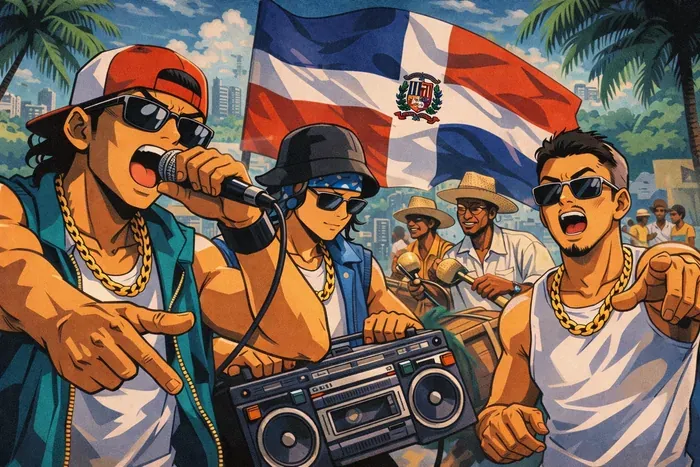
Dominican Dembow: A Nation's Rhythmic Identity
The rhythm most listeners now call dembow entered broad circulation in the early 1990s through Shabba Ranks’ “Dem Bow.” It became foundational in Panama and Puerto Rico, then took on a sharper, faster identity in the Dominican Republic.
Dominican dembow kept the basic rhythmic skeleton but accelerated it. Production was often sparse, with few melodic layers and heavy emphasis on percussion and pulse. In small party spaces, the effect was relentless.
Artists like El Alfa became central to the movement. His high-pitched delivery and rapid phrasing helped distinguish Dominican dembow from the smoother feel of much Puerto Rican reggaeton. The songs were short and hook-driven.
The genre’s growth reflected the Dominican Republic’s highly active urban culture. Local producers often worked with small budgets but strong internet access. Home recording replaced expensive studios, and basic equipment was enough to get a track online.
Dembow also represented its region. The lyrics talked about life in neighborhoods and places that Dominican people know. While connected to reggaeton’s broader ecosystem, the genre asserted its own identity rather than being a simple imitation.
The genre quickly gained international recognition. Working together with artists from Puerto Rico and Colombia helped these artists reach more people. Streaming platforms started adding dembow tracks to playlists that focus on Latin urban energy.
Critics often called the music repetitive or too simple. But repetition is central to dance culture. A constant beat creates shared momentum, and in viral environments, simplicity can increase memorability.
Dominican dembow shows how rhythmic foundations can change into new forms without losing their connection to the past. The dembow pattern that once fueled underground reggaeton now supported a distinct national movement.
The genre grew quickly, and it fit well with the way short-form video platforms worked. Songs with short, catchy hooks were popular. The connection between rhythm and virality would become even more obvious in the controversies and viral cycles surrounding Tokischa.
Tokischa: Breaking Rules, Breaking Barriers
Dominican dembow made the rhythm more intense. It also made people more interested in the debate. The genre’s direct style often dealt with topics that were considered taboo, such as sexuality and gender. Few artists showed that better than Tokischa.
Tokischa became visible in Santo Domingo through a public persona that was impossible to ignore. Her lyrics addressed desire, autonomy, and social hypocrisy with unusual directness. She did not position the work as a reply to critics, but as an extension of lived reality.
Reaction was sharply divided. Supporters saw her presence as empowering, especially in a genre long dominated by male voices. Critics called her excessively provocative. The debate quickly moved beyond music into questions of morality, censorship, and artistic freedom.
Tokischa’s collaborations widened her reach. As Dominican dembow appeared beside artists from other countries, the genre entered new markets and the surrounding debates grew louder. Social media amplified both support and backlash.
The gender politics around dembow echo earlier reggaeton debates. Women are often judged more harshly than men for explicit lyrics and public image. Tokischa confronted that double standard directly instead of softening it.
Her presence also reflects generational change. Younger audiences talk about identity and sexuality more openly on the internet. The line between performance and persona becomes blurred in online spaces. Artists are always navigating these challenges.
Dembow’s fast tempo and simple production create room for strong vocals. This open sound lets the personality stand out. In Tokischa’s case, her personality is key to the public narrative of the genre.
The discussion around her work is not a side issue. It shows how closely Latin urban music is tied to larger arguments about acceptable expression, narrative control, and public morality. Those tensions became even more visible once short-form video began shaping how tracks were built and circulated.
As dembow gained popularity online, it started to look a lot like short-form video trends. Songs made for immediate impact were used in viral loops. The connection between rhythm and platform logic became clearer.
TikTok Era: How 15 Seconds Changed Music
As Dominican dembow gained popularity, short-form video platforms changed how songs were made and enjoyed. TikTok in particular changed attention patterns. A fifteen-second video clip could determine whether a track reached millions of listeners.
Producers adapted quickly. Intros shortened. Hooks arrived almost immediately. Long instrumental sections became rarer. The goal was no longer only radio play, but also reusability. A segment that looped cleanly could thrive in dance challenges and edits.
Dembow’s style fit naturally within this format. The music’s rhythm made the body react strongly. Dancers choreographed short routines that spread quickly. The success of a track depended on how easy it was for people to understand and copy its energy.
Rather than reducing artistry, this shift changed the focus. Albums were still important for some artists, but individual songs often became popular first through short clips before listeners heard the full release.
Streaming platforms made this pattern stronger. Songs that people listened to a lot rose in the rankings. Shorter runtimes increased the total number of streams. The economic rewards were linked to replay value and clip-friendly structure.
Latin urban music, which was already full of rhythm, was especially adaptable. The dembow beat didn’t need much introduction. The listeners recognized it almost immediately. This made it more likely to go viral.
Some critics argued that this environment favored surface over substance. There is some truth in that concern. Viral momentum often rewards immediacy over nuance. But dance music has always thrived when beats and hooks announce themselves clearly.
Artists who understood how to use platform mechanics could use them in a smart way. Viral videos often led to broader streaming success, international bookings, and offers of collaboration.
The relationship between music and media format has changed repeatedly. Vinyl shaped salsa albums. Television helped turn Latin pop tracks into event singles. Mixtapes built early reggaeton. Now short video is reshaping Latin urban music again.
The core impulse stays the same. Rhythm connects bodies through movement. Technology changes the setting, but people still want to move together. As dembow music became popular, another branch of Latin urban music was also growing. That sound was based on trap production and had a more thoughtful sound.
Latin Trap: Bedroom Production and Global Reach
While reggaeton dominated clubs and dembow accelerated online, another style was rising. Latin trap drew from Atlanta trap, but filtered it through Caribbean and Latin American experience. The mood darkened. Tempos often slowed. Themes turned inward.
By then, the tools of production had changed. High-quality beats could be made on a laptop in a bedroom studio. Digital audio workstations replaced large recording rooms, and a new generation learned structure from software, tutorials, and file sharing rather than formal apprenticeships.
Latin trap and reggaeton are distinct, but they overlap constantly. Many artists moved between them with ease. The difference was largely tonal. Trap emphasized introspection, ambition, and emotional exposure under pressure.
At this point, the narrative highlights the people who created Latin trap and how digital production changed the music industry. The bedroom studio became as important as the nightclub stage, and that shift first became legible through artists like Anuel AA.
Anuel AA: Early Latin Trap's Public Voice
Anuel AA was one of the first artists to define Latin trap’s public image. He started gaining popularity in the mid-2010s by releasing music online that mixed reggaeton’s energetic rhythm with the darker sound of trap music.
Anuel’s style mixed raw confession with boastful confidence. His lyrics dealt with street life, ambition, loyalty, and vulnerability. Production leaned on 808 bass, hi-hat rolls, and sparse melodic layers. Compared with classic reggaeton, the atmosphere felt darker and more pressurized.
Legal trouble delayed his career but also intensified public attention. Songs recorded or released during his imprisonment circulated online, and supporters treated him as a symbol of defiance. His release only amplified that momentum.
Early Latin trap did not depend on large label campaigns. Social media and streaming let artists reach audiences directly. Anuel’s rise showed how digital engagement could sustain momentum even during absence or controversy.
The genre’s style changed. Reggaeton is known for its lively, communal dance energy, while trap often focuses on the personal story behind the music. The beat was slower but more intense. The silence between drum beats created an emotional tension.
Collaborations helped mix different styles. Anuel worked with famous reggaeton musicians and later with artists from Colombia and Argentina. The lines between subgenres quickly became blurred.
Latin trap also signaled a generational shift. Younger listeners connected with themes of pressure, ambition, and vulnerability in competitive urban life. That tone differed from earlier reggaeton’s more one-directional confidence.
Anuel AA is one of the artists who brought Latin trap to the public’s attention. The next step in Latin trap’s evolution would come from an artist who expanded its emotional range and restored the album as a meaningful form in the streaming era.
Bad Bunny: Albums, Identity, and New Scale
If early Latin trap established the mood, Bad Bunny expanded its scale and ambition. He emerged in the mid-2010s through SoundCloud uploads and collaborations, and he was quickly recognized for his vocal character and his refusal to stay inside one lyrical mode.
His 2018 debut album, X 100PRE, marked a clear shift. The project did not rely on one formula. Trap, reggaeton, and alternative pop coexisted inside a coherent album statement. Melancholic melodies sat beside club-ready beats, and the sequencing mattered.
He continued to use this approach with later releases. Albums were not just filler between hits. They were conceptual spaces where the mood and sequence of the music shaped the listener’s experience. In a streaming environment dominated by playlists, this focus on album identity stood out.
Bad Bunny wrote about heartbreak, fame, loneliness, and social tension without giving up confidence. That mix of swagger and vulnerability became one of his defining strengths.
He also moved differently in public. Fashion, interviews, and image challenged older assumptions about masculinity in Latin urban culture. The message did not arrive as a manifesto. It came through repetition, presence, and refusal.
His rise showed that Latin urban music had become central rather than peripheral. Albums could now debut at the top of major charts without an English-language transition, and the commercial ceiling for a Spanish-language artist looked very different than it had a decade earlier.
Bad Bunny’s success signaled a broader change. Artists who understood digital distribution could remain creative and distinctive while reaching massive audiences. Collaboration still mattered, but singular identity mattered just as much.
He also relied on close producer relationships that helped define his sound. Digital production made experimentation faster and less dependent on traditional studio hierarchies.
That album-centered approach briefly restored long-form listening inside a platform system built for fragments. It showed that cohesion and experimentation could still thrive under algorithmic pressure.
Latin trap, which started as a small part of Latin music, has become a central part of it thanks to Bad Bunny. The next shift would highlight the producers and home studio culture that enabled such quick changes in style.
The Home Studio Revolution: Producers Take the Lead
Many of the most popular reggaeton and Latin trap songs were produced by a generation of producers who grew up with laptops instead of big studio budgets. Tainy is one of the most influential.
Tainy started working with major reggaeton artists as a teenager, and by the 2010s he had become one of the central sound architects of Latin urban music. He understood classic dembow structure, but he was equally fluent in trap atmosphere and pop melody.
Digital audio workstations changed the workflow. Producers no longer needed expensive studios to experiment. Beats could be programmed at home, vocals could be recorded in small rooms, and software could handle refinement that once required larger facilities. Access widened.
The home studio revolution also shifted power. Producers gained independence. They could build catalogs on their own and approach artists with finished ideas. Collaboration often started with file exchange rather than with a shared room.
Tainy’s work shows how having a long-term vision can shape a genre. His productions supported artists across multiple phases, from early reggaeton to contemporary trap-infused pop. Instead of following trends without thinking, he changed basic rhythms to fit changing situations.
Digital tools also enabled rapid revision. Songs could change after release. Remixes could circulate quickly. The boundary between underground experimentation and mainstream rollout grew less stable.
This change in technology is similar to earlier ones. Vinyl shaped salsa albums. Mixtapes helped build reggaeton’s underground scene. Now, software and streaming are key parts of Latin trap.
Today’s producers are no longer just background technicians. They are brand names, and listeners can recognize a production style almost as quickly as a vocal tone.
The bedroom studio doesn’t make music less deep. It changes the route to it. Creativity moves faster. Access is wider. Competition is stronger.
Latin trap’s growth wouldn’t have reached global scale without this digital infrastructure. As production tools changed, geographic centers became more diverse. Argentina quickly became an important center for this movement, thanks to the creativity of its young artists and the fresh ideas they brought to the studio.
Argentina's Trap Wave: From Buenos Aires to the World
By the late 2010s, Argentina had become one of Latin trap’s most dynamic centers. Freestyle battles in Buenos Aires parks grew into a powerful digital scene. YouTube and streaming helped local talent build audiences quickly, often without waiting for traditional label support.
Nicki Nicole became one of the wave’s most recognizable voices. Her music combined trap with melodic sensitivity and light R&B shading. She did not need aggressive delivery to command attention. Restraint became part of her signature.
Cazzu moved in a darker direction. Her early work emphasized heavy atmosphere, independence, heartbreak, and ambition. As one of the scene’s most visible women, she broadened gender representation within Argentine trap.
Bizarrap has played a key role in increasing Argentina’s international visibility. His “Music Sessions” format changed the way people work together. Instead of releasing albums at regular intervals, Bizarrap invited artists to record music in the studio. These sessions were filmed and released as individual episodes. The format made people excited and kept the audience interested.
The session model also made producer identity unusually visible. Bizarrap’s stripped-down studio visuals and audio tag created a recognizable frame even as collaborators changed. Each session felt distinct, but all belonged to one larger narrative system.
Argentina’s trap scene also benefited from strong digital literacy. Artists understood how to use YouTube premieres, streaming rollouts, and social media as coordinated tools for growth.
Earlier crossover eras often relied on English. Argentine artists, by contrast, reached international audiences while keeping Spanish at the center. That shift showed how much the global position of Latin urban music had changed.
The Argentine wave also showed how well the genre can adapt. The song mixed local slang and cultural references with a trap beat that was also popular around the world. The sound felt anchored but also connected.
By this time, Latin trap had become a regional language that people shared. Puerto Rico, Colombia, Argentina, and Spain each added their own unique flavors. The conversation about identity and roots became more complicated, especially as artists in Europe started using traditional elements in urban settings.
Rosalía: Tradition Meets Trap
As Latin trap and reggaeton spread across continents, Spain’s urban scene gained new visibility. Rosalía became one of its most discussed figures. Trained in flamenco, she first drew attention through an ambitious reinterpretation of traditional Spanish forms. Her 2018 album El Mal Querer merged those references with trap, R&B, and modern pop production.
Her later work moved more directly into reggaeton and Latin urban territory, combining Caribbean rhythm with electronic and pop design. That movement across styles drew both admiration and criticism.
Discussion around her work focused on origin, ownership, and cultural inheritance. Critics asked how flamenco, with its deep ties to Andalusian and Romani history, should interact with global pop systems. Supporters argued that music has always evolved through reinterpretation and exchange.
These discussions are not limited to Spain. Similar arguments appeared when salsa became a commercial export and when reggaeton moved onto radio. Once music crosses borders, questions of authenticity tend to follow.
Rosalía’s rise in popularity shows a bigger change. Spain is now a producer of Latin urban music too. It contributes actively. Producers, singers, and DJs create local versions of music that are popular around the world.
Streaming platforms made this exchange faster. Young listeners in Spain quickly embraced reggaeton and trap music. Clubs in Madrid and Barcelona play Latin urban music as well as mainstream music.
The debate around roots shows how the ecosystem is connected. The music of the Caribbean has influenced Spain. Spanish artists reinterpret those influences. Collaborations then circulate those results back across the Atlantic.
The growth of Latin trap in Europe shows that its popularity is not limited to certain regions. It grows stronger through communication. This kind of conversation can sometimes create tension, but it can also lead to new ideas.
As Latin trap music spread to different regions, a new generation of musicians grew up entirely in this digital and cross-border environment. Their visibility shows a change in how they are represented and how their audience engages with them. This change marks the next part of the story.
Young Miko: A Post-Genre Generation Comes Into View
By the early 2020s, a new generation of fans entered Latin urban music without knowing about its underground beginnings. They grew up with streaming platforms, social media, and global collaborations being a normal part of life. For them, the lines between different genres feel less defined.
Young Miko is a clear example of this shift. She gained attention in Puerto Rico’s modern urban scene through online releases and a strong digital presence. Her style blends melody with trap rhythm, often in an understated but confident register.
Compared with the previous wave, this generation differs in both sound and visibility. Social platforms let artists shape their own narrative more directly, and music now travels alongside identity, fashion, and personality. Young Miko’s presence also reflects a more open conversation around gender and sexuality in Latin urban culture, often with less defensiveness than in earlier eras.
The production environment supports that flexibility. It can travel digitally between countries. Collaborations happen across time zones. A track can feature artists from Puerto Rico, Colombia, and Argentina without logistical barriers.
At the same time, this generation has to deal with constant public scrutiny. Streaming metrics update right away. Viral success can happen quickly. The pressure to stay focused is high. Artists must balance creativity with what their audience expects.
Latin trap started as a small music style on mixtapes. It has grown to be heard all over the world. This has made room for many different kinds of artists. Young Miko’s rise shows how this space keeps expanding.
Her career shows a bigger truth about the genre’s history. Each phase builds on the infrastructure from the previous phase. The music, the strategies, the producer networks, and the streaming systems all come together here.
Latin urban music is now a complex system. It joins Caribbean culture, diaspora experience, digital technology, and the identity work of young listeners across the world.
From that growth came structural questions about power, ownership, and access. Being successful in business does not solve these problems. It often makes them worse.
Power Behind the Beats
Latin urban music now fills stadiums and dominates streaming charts. Its artists headline festivals around the world. But visibility does not resolve structural inequality. Every viral video sits on top of contracts, publishing splits, and ownership questions that shape who benefits over time.
From the salsa era to reggaeton’s expansion and Latin trap’s streaming dominance, the industry has changed repeatedly. Producers gained influence. Artists built direct audiences. Major labels adopted digital metrics. But control over masters and publishing remains uneven.
Questions of race, gender, and access continue to shape opportunity. The music’s rhythm has always been influenced by Afro-Latin identity, but the people in charge often look very different. Female and queer artists have more visibility, but they are also judged more.
From here, the focus shifts to the less obvious ways Latin music has changed over time, including who owns what, the contracts people have, who they’re representing, and the media cycle. Success has grown dramatically. People are still debating who should control that success.
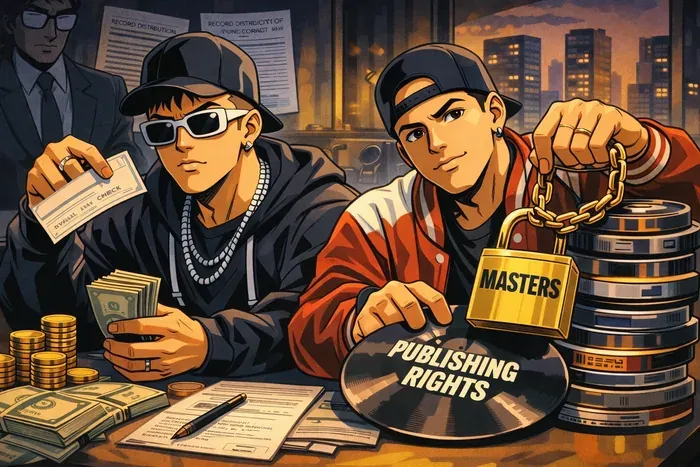
Ownership: Masters, Publishing, and Leverage
Ownership has shaped Latin music for decades. During the salsa era, labels like Fania accumulated catalogs that later proved historically and financially valuable, while artists often had little control over master recordings.
The reggaeton underground started without any major contracts. Mixtape culture lowered the barriers to entry, but as the genre entered global markets, traditional label structures came back. Deals to spread music out to more places meant more negotiations about how much artists should be paid.
In the streaming era, publishing became even more important. Songwriting credits determine long-term income through performance and mechanical royalties. Producers and writers who control publishing shares often gain stability that touring alone cannot provide.
Today’s artists are more aware of their contracts. People are talking more about who owns rights across formats and platforms. Latin urban performers are paying more attention to keeping their copyrights or negotiating splits that are fair to them.
Streaming also changed how revenue flows. High play counts can generate meaningful income, but the value per stream is low. The system therefore rewards scale, frequent releases, and constant audience engagement.
Producers also leveraged brand identity. Bizarrap is one of the artists who created formats that are easy to recognize. These formats help people have more power when they’re negotiating. The producer is no longer invisible in contract discussions.
But inequality still exists. New artists often sign contracts that focus on getting their work out there more than on keeping control of it over time. Geographic disparities affect negotiation leverage. Artists from smaller markets may have fewer options.
The conversation around masters and publishing shows that the genre is growing up. Latin urban music is now a global money-maker. Whoever controls that money can have a big impact on future generations.
The discussion about who owns something is connected to the idea of what makes a group of people “culture.” These decisions carry influence. They decide who shapes the story and who builds a career that will last. As the industry grows, it will also be more closely watched.
After contracts, it’s important to have the right representation. The identity of people of African and Latin American descent, as well as colorism, continue to influence how visible people are in both creative and executive jobs. This complexity needs to be looked at closely.
Afro-Latin Identity: The Unseen Foundation
Black and Afro-descendant communities have shaped Latin music from its earliest formation to modern dembow. The rhythmic foundations of salsa, reggaeton, and related genres draw directly from African diasporic practice. Industry narratives have not always reflected that reality clearly.
In the marketing era of salsa, images often showed a general “Latin” identity while ignoring specific racial histories. Afro-Cuban musicians were key to the sound, but sometimes the publicity focused on how the music was the same instead of on how it was different.
Reggaeton made those issues newly visible. Tego Calderón, for example, brought Afro-Latin identity into the center of the genre’s early mainstream rise. His work focused on Black Puerto Rican experience at a time when media images often favored lighter-skinned representations of Puerto Ricanness.
Colorism affects casting, promotion, and executive opportunity. Artists with darker skin tones can face greater difficulty in international marketing. These patterns reflect wider social hierarchies across Latin America and the Caribbean.
The streaming era widened visibility. Independent distribution lets artists build audiences without depending entirely on traditional gatekeepers. But algorithms do not eliminate bias. Marketing budgets and media exposure still shape trajectory.
Artists, writers, and organizers across Afro-Latin communities are pushing to reclaim a more explicit place in the story. Festivals, collaborations, and public debate increasingly name Black contribution directly rather than leaving it implied.
The conversation is ongoing, and sometimes uncomfortable. It challenges the idea that “Latin” is a single, uniform group. It also highlights the historical importance of African diaspora influence.
Representation matters for more than just symbolism; it also creates opportunities. When there aren’t many different types of people in executive roles and ownership positions, power stays in the same hands for a long time.
Latin urban music carries a memory of rhythm that is connected to the history of the Afro-diasporic community. Recognizing that foundation helps the genre tell a fuller story.
As more people are open about their lives, there are also more discussions about gender and sexuality. Women and queer artists work in a world that gives them more opportunities but still criticizes them a lot. These dynamics intersect with racial identity, shaping experience differently across communities. The next part examines these different ideas.
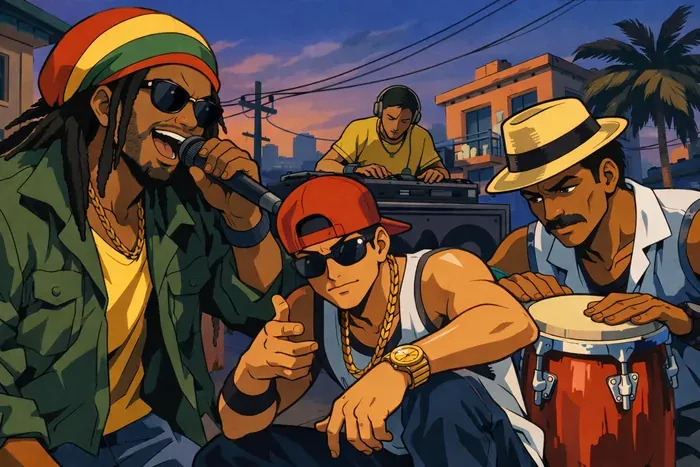
Race and Black Caribbean Influence Beyond Puerto Rico and Cuba
Any account of Afro-Latin influence becomes incomplete if it stops with Cuba and Puerto Rico. Black Caribbean circulation also shaped Panama, the Dominican Republic, and other parts of the region in ways that matter directly to modern Latin urban music. Jamaican and West Indian migration into Panama helped create the conditions for reggae en español and later reggaeton’s early history. Dominican musical life, meanwhile, carried its own Afro-diasporic rhythmic practices into merengue, bachata, and later dembow.
These connections are not superficial. They help explain why certain rhythmic ideas moved so effectively across the Caribbean basin. The story is not only one of influence moving outward from a single island. It is one of overlapping Black Atlantic routes: labor migration, port exchange, sound system culture, and local reinterpretation.
That broader frame also complicates the commercial category “Latin.” Panama’s Black Caribbean history does not fit neatly into simplified mainland narratives. Dominican dembow cannot be understood only as a derivative branch of Puerto Rican reggaeton. Both are part of a larger Afro-diasporic field in which language, race, migration, and beat travel together.
Recognizing that wider Black Caribbean foundation makes the article’s central argument clearer. Latin music became global not by leaving Afro-diasporic history behind, but by carrying it into new formats, new markets, and new digital systems.
Women in Latin Music: Visibility, Pressure, and Change
From salsa orchestras to reggaeton stages and Latin trap festivals, gender has shaped the evolution of Latin music. Women were always present, but their authority often had to be fought for rather than granted.
During the salsa era, Celia Cruz stood out in a field dominated by men. Decades later, Ivy Queen asserted comparable authority inside reggaeton. Their careers show that women were always central, not exceptional.
The streaming era made it easier for artists like Karol G and Young Miko to build direct audience relationships. At the same time, online platforms amplified criticism and scrutiny.
Sexual expression remains one of the clearest double standards. Male artists are often granted more freedom to be explicit, while women face harsher scrutiny for similar content.
Queer representation has also become more visible. Artists use fashion, interviews, and lyrics to challenge traditional gender roles, and those gestures often provoke strong reaction.
Debates about empowerment and objectification remain complex. Some listeners read explicit performance as agency. Others see it as reinforcing harmful norms. Artists live inside those competing interpretations.
Media cycles intensify those tensions. A single performance or interview clip can trigger outsized reaction, and the speed of digital circulation often strips away nuance.
Despite that tension, the broader trend points toward more space and visibility. Women now headline major tours, cross-gender collaborations are no longer exceptional, and artists speak more openly about consent and autonomy.
The evolution of gender politics in Latin music mirrors wider social change across Latin America and the diaspora. Music acts as both mirror and catalyst.
Backlash has accompanied every phase. Salsa was accused of softening, reggaeton of moral danger, and Latin trap of excess and nihilism. Those reactions are part of what makes the music socially legible.
A final structural dimension is media framing and scandal cycles. In the streaming era, attention itself has become a form of currency. How that money moves around can have a big impact on people’s careers.
Women Beyond the Headliners
It is not enough to name the most visible women and stop there. Women also shaped Latin music as DJs, producers, songwriters, choreographers, executives, publicists, radio workers, and local scene-builders. Their labor often determined how music circulated, even when public memory attached the era to male stars.
This pattern repeats across decades. In salsa and Latin pop, women were often crucial as arrangers, supporting vocalists, managers, presenters, and media professionals inside the machinery that kept careers visible. In reggaeton and trap, the imbalance was especially obvious because male lineups dominated the foreground, but women were still active behind the scenes in writing rooms, promotion, dance culture, styling, and digital strategy.
The streaming era made some of that labor more visible because social platforms exposed creative teams and release processes more directly. Still, visibility remains uneven. Headliners receive the narrative spotlight while the people shaping audience connection, campaign timing, choreography, and sonic development often remain undercredited.
Including this wider field matters because it changes what “participation” means. The question is not only who held the microphone. It is who built the conditions under which a song, a look, or a scene could scale.
That broader view also sharpens the gender discussion elsewhere in the article. Latin music’s history is not simply one of women breaking into a male system. It is also a history of women repeatedly helping build that system while being remembered too narrowly.
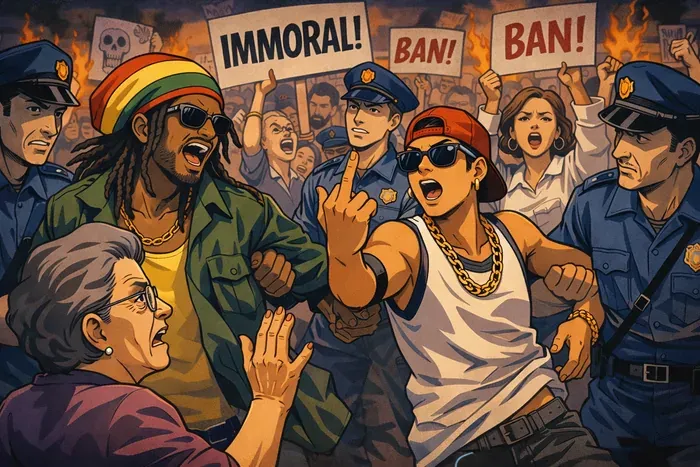
Criticism, Moral Panic, and Censorship Across Eras
Conflict with gatekeepers is not unique to reggaeton or trap. It is a recurring pattern in the history of Latin music. Each era produced its own version of the argument that the new sound was too sexual, too loud, too commercial, too political, or too socially destabilizing.
In salsa, criticism often focused on commercialization, street realism, or the fear that the music was losing earlier complexity. In crossover pop, suspicion sometimes centered on whether artists were diluting identity for the mainstream. In reggaeton, the backlash was more aggressive. Police raids, obscenity debates, and media panic made censorship part of the genre’s public story, especially in Puerto Rico during the underground era.
Latin trap inherited some of that pressure, but with a different emotional tone. The concerns shifted toward explicit lyrics, drugs, masculinity, and the normalization of bleak urban narratives. Women and queer artists faced an added burden: the same kind of sexual candor or provocation that was accepted from male performers often drew harsher judgment when they used it.
These disputes were never only about morality. They were also arguments about power. Who gets to define respectable culture? Which communities are allowed to represent themselves without softening their language? Which genres are treated as social threat rather than as legitimate expression?
Seen across decades, moral panic functions almost like an unwanted rite of passage. The closer a sound gets to public visibility, the more likely it is to trigger efforts to discipline it. That does not mean controversy is proof of artistic value. It does mean that backlash has been part of how Latin music enters mainstream awareness.
Viral Fame: The Price of Attention
In the streaming era, attention moves faster than ever. A song can travel globally in hours, and controversy can do the same. For Latin urban artists, media cycles have become part of career strategy whether they want them to or not.
Social platforms amplify both opportunity and risk. A teaser can draw millions of views before the full release arrives, but a single comment taken out of context can trigger a wave of backlash. The time between action and consequence has narrowed.
Scandal is not new to music culture. What changed is its scale and permanence. Television and newspapers once controlled the cycle. Now circulation is continuous, and screenshots or clips can outlive their original context indefinitely.
Artists now work inside a constant tension between visibility and privacy. Touring, releases, and brand partnerships are increasingly tied to personal narrative. Audiences expect not only songs, but also access to lifestyle, opinion, and persona.
Some performers use that dynamic strategically. Public appearances, provocations, or carefully timed disagreements can increase attention around a release. Others try to keep distance, but platforms make distance difficult to maintain.
The attention economy also shapes songwriting. Lyrics likely to trigger conversation can gain traction faster, and provocation can function as marketing whether planned or not. The cost is that constant scrutiny can produce exhaustion and creative fatigue.
Media coverage often reduces complex artists to stereotypes or short trends. Sustaining a long career requires navigating that simplification without becoming trapped inside it.
At the same time, digital platforms give artists tools to answer misinformation directly. Live streams and direct statements bypass older media filters. The control is partial, but it is real.
Music and media have always shaped each other. Vinyl affected salsa album form. Television reshaped Latin pop. Mixtapes helped build reggaeton. Now attention itself functions as a currency.
Despite those pressures, Latin urban music keeps growing. Structural tension does not stop growth. It gives growth form.
From controversy and contracts, the narrative turns to continuity. After decades of change, what stays the same? What has changed forever? The answer lies in rhythm, migration, and the shared language of movement that began long before streaming platforms existed.
What Holds the Story Together
After decades of change, Latin music is no longer positioned as a niche seeking entry into global markets. It is part of how those markets sound. Salsa built an orchestral urban language. Latin pop translated that language for television and crossover radio. Reggaeton built its own infrastructure. Latin trap and Dominican dembow pushed rhythm and mood into new digital forms.
The route was uneven. Styles overlapped. Regions rose, receded, and rebalanced their influence. Technology changed recording, distribution, and promotion. Yet several things did not disappear. Rhythm remained central. Migration kept carrying sound across borders. Audience behavior shaped taste long before platforms could count every click.
Commercial success also made old tensions more visible. Questions of ownership, representation, labor, and identity never vanished. They simply moved into brighter light as the stakes grew larger.
The final sections return to continuity. They ask what playlists changed, what older rhythmic habits still survive in current hits, and why this music still feels connected across very different eras. The first answer lies in structure: streaming changed the song itself before it changed anything else.
How Playlist Logic Changed Songwriting
Streaming platforms did more than expand reach. They changed writing habits. Songs now compete for attention almost immediately, and listeners can skip within seconds. Producers responded by adjusting structure.
Intros got shorter. Hooks arrived earlier. Total runtimes often shrank. A track under three minutes can generate more streams if listeners replay it, so the economic incentive often favors compression.
This change is similar to earlier format pressures. Vinyl shaped salsa album length. Radio shaped Latin pop single design. Mixtapes shaped early reggaeton. Now, playlist logic affects the speed and structure of the music.
Latin urban music fits this environment well. Dembow is identifiable within a few drum hits, and trap production can create atmosphere quickly through dense but efficient layering.
Artists still have to balance immediacy with depth. Some albums preserve a strong narrative arc, while others focus on singles and mood. The coexistence of both approaches shows how diverse the ecosystem remains.
Collaborations have also intensified. A feature can combine audiences, extend playlist reach, and satisfy both creative and strategic goals at once.
Despite these changes, the core impulse remains communal. Dance floors may now be digital, but they still invite movement because they are based on rhythm. A hook played on TikTok is different from a hook played in a ballroom, but both need people to join in.
The playlist era does not erase older musical grammar. It compresses it. The core ingredients are still recognizable.
That leads to the deeper question behind the final reflection: if the format changed so dramatically, which older rhythmic and melodic habits still remain audible?

What Older Rhythms Still Sound Like in New Music
If you listen closely to modern Latin urban music, earlier eras remain audible. The Afro-Caribbean rhythmic foundation that shaped son and salsa still informs how many modern tracks handle syncopation, tension, and release. The clave may not always be stated openly, but its off-beat logic still matters.
Call-and-response also survived. Salsa orchestras moved between lead voice and coro, and reggaeton hooks often rely on the same collective response in live settings.
The melodic emphasis sharpened during Latin pop’s crossover era also remains important. Artists like Shakira and Gloria Estefan showed how Latin rhythm could live inside pop format, and that lesson still shapes cross-regional collaboration.
The tension between authenticity and commercialization is something that has been passed down from one generation to the next. Salsa’s branding debates are similar to the discussions about reggaeton’s crossover. Each era has to decide how to grow without losing its identity.
The role of migration also endures. Diaspora communities played a big role in the development of salsa in New York. They made reggaeton popular in Miami and Madrid. Today, streaming platforms connect communities instantly.
Linguistic flexibility remains central. English and Spanish continue to mix across trap, pop, and multinational collaborations. Code-switching reflects lived reality as much as market strategy.
The instrumentation keeps changing, but percussion remains central. Rhythm still anchors identity whether it comes from live congas or programmed software.
Most of all, community response still determines what lasts. A track survives because people move to it, replay it, and share it. Charts measure scale, but collective resonance creates durability.
None of this means the music has stood still. Production and distribution are radically different from the 1970s. But the emotional and rhythmic logic remains recognizable.
Today’s Latin urban music remains tied to earlier eras. That connection is not nostalgic. It is structural.
Seen as a whole, this history places Latin urban music firmly inside global culture. It is no longer a side current. It is one of the ways contemporary pop now speaks.
From there, the final step is broader than style alone. The story ends with the genre’s place in world culture and with the kind of shared language it has become.
A Shared Language: Latin Music as Global Culture
Today, Latin urban music moves through the world without first translating itself into older pop norms. Spanish-language albums top major charts. Collaborations travel easily across continents. Audiences in São Paulo, Madrid, Mexico City, San Juan, and Buenos Aires often encounter the same releases in the same week.
That shared language did not appear overnight. It emerged through repeated exchange. Afro-Caribbean rhythm moved with migration. Salsa built a new identity in New York. Latin pop widened access through television. Reggaeton built a parallel infrastructure outside traditional gatekeeping. Streaming then accelerated distribution across borders.
The genre’s strength is not uniformity. It is adaptability. Brazilian funk, Argentine trap, Dominican dembow, Colombian reggaeton, and Spanish urban pop all participate in the same ecosystem while keeping distinct local accents.
Technology will keep changing. Platforms will change again. Song formats will continue to shift. But the deeper rhythmic memory remains. Afro-diasporic traditions are still audible inside music that now reaches a truly global scale.
Latin urban music is now a durable part of world pop culture, not a temporary wave. Festival lineups, brand campaigns, and chart rankings all reflect that shift. The central question is no longer whether the music belongs. It is who leads, who benefits, and how the culture is represented as its reach grows.
Those questions remain active. Ownership, representation, labor, and equity will continue to shape the genre’s future. Growth creates opportunity, but it also raises the stakes.
In hindsight, the path from Afro-Cuban son to Latin trap looks less like a break than a long chain of reinterpretation. Each generation inherited rhythmic patterns, social tensions, and circulation routes, then adapted them to new tools and new cities.
Latin urban music has become a shared cultural code. It connects communities separated by geography but linked by rhythm. The story began in Caribbean ports and New York ballrooms. Today it moves through phones, clubs, festivals, and streams around the world.
The evolution continues, but its foundation remains audible. Rhythm remembers, even when format, market, and technology change.
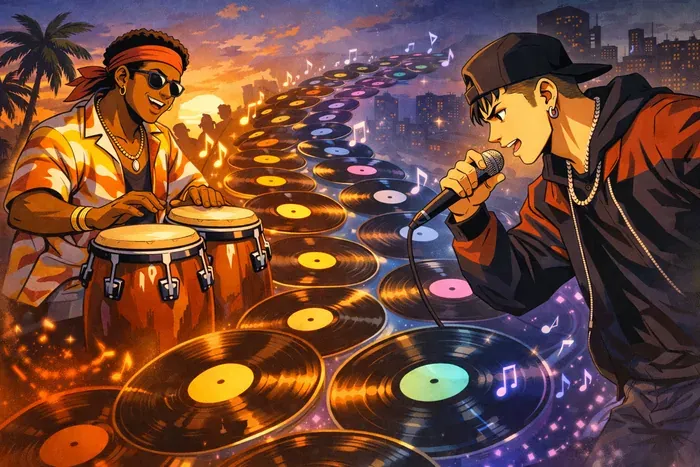
50 Essential Songs: The Soundtrack of Evolution
Latin music did not evolve in a straight line. It spread through migration, radio, underground mixtapes, and eventually streaming platforms. Rhythm-driven social music emerged in Afro-Caribbean communities and grew into one of the strongest forces in contemporary pop culture.
This collection of 50 songs documents that evolution. From Cuban son and New York salsa orchestras to the reggaeton breakthrough of the 2000s and the streaming-era rise of Latin trap, each song marks a structural shift. These are not random hits. Each track reflects a change in technology, geography, power, or identity.
Salsa built the orchestral urban language. Latin pop made that language popular on television and radio around the world. Reggaeton developed its own style, based on a rhythm called dembow. Dominican dembow spread quickly. Latin trap changed the mood and production style in the bedroom studio era.
Taken together, these songs show how Latin music became a global system rather than a local or regional one.
I. Afro-Caribbean Foundations: Where It All Began
- Arsenio Rodríguez – Bruca Maniguá (1937)
- Tito Puente – Oye Cómo Va (1962)
- Celia Cruz – Quimbara (1974)
- Johnny Pacheco – Acuyuye (1975)
- Héctor Lavoe – El Cantante (1978)
- Willie Colón – El Gran Varón (1989)
- Rubén Blades & Willie Colón – Pedro Navaja (1978)
These recordings established the rhythmic and lyrical foundations. Clave patterns, brass arrangements, and urban storytelling became the DNA of what followed.
II. Expansion: New Sounds, New Audiences
- La India – Ese Hombre (1994)
- Juan Luis Guerra – Ojalá Que Llueva Café (1989)
- Olga Tañón – Es Mentiroso (1995)
- Aventura – Obsesión (2002)
- Romeo Santos – Propuesta Indecente (2013)
Here the sound becomes more melodic and globally adaptable. Bachata and romantic salsa open doors beyond traditional dance circuits.
III. Latin Pop Breakthrough: The World Starts Listening
- Gloria Estefan – Mi Tierra (1993)
- Selena – Como La Flor (1992)
- Ricky Martin – Livin’ la Vida Loca (1999)
- Shakira – Ojos Así (1998)
- Jennifer Lopez – Let’s Get Loud (1999)
- Thalía – Amor a la Mexicana (1997)
Television, MTV, and major labels amplify Latin identity on an international scale. Production becomes sharper. Hooks become universal.
IV. Reggaeton Blueprint: From Panama to Puerto Rico
- El General – Te Ves Buena (1991)
- Vico C – Desahogo (1991)
- Tego Calderón – Pa’ Que Retozen (2002)
- Ivy Queen – Yo Quiero Bailar (2003)
Dembow rhythm takes center stage. The music becomes more minimal, more street-oriented, and more rhythm-driven.
V. Reggaeton Goes Global
- Daddy Yankee – Gasolina (2004)
- Don Omar – Dale Don Dale (2003)
- Wisin & Yandel – Rakata (2005)
- Zion & Lennox – Yo Voy (2004)
- Calle 13 – Atrévete-te-te (2005)
Reggaeton breaks into global charts. Underground energy meets major-label infrastructure.
VI. Streaming Reset: Latin Urban Takes Charge
- Luis Fonsi – Despacito (2017)
- J Balvin – Mi Gente (2017)
- Maluma – Felices los 4 (2017)
- Karol G – Tusa (2019)
- Becky G – Mayores (2017)
- Natti Natasha – Criminal (2017)
- Ozuna – Se Preparó (2017)
Streaming platforms replace radio dominance. Latin urban becomes central, not peripheral.
VII. Brazil’s Funk: The Lusophone Connection
- Anitta – Vai Malandra (2017)
Brazilian funk enters the wider Latin urban ecosystem, expanding its rhythmic vocabulary.
VIII. Dominican Dembow: Faster and Viral
- El Alfa – La Mamá de la Mamá (2017)
- Tokischa – Delincuente (2021)
Faster tempos, shorter songs, and viral dance culture redefine attention spans.
IX. Latin Trap: The Darker Turn
- Anuel AA – Ella Quiere Beber (2018)
- Bad Bunny – Soy Peor (2017)
- Bryant Myers – Esclava (2016)
- De La Ghetto, Arcángel, Ozuna & Anuel AA – La Ocasión (2016)
Mood shifts darker. Production leans on 808 bass, minimal melodies, and introspective lyrics.
X. Argentina’s Trap Revolution
- Nicki Nicole – Wapo Traketero (2019)
- Cazzu – Nada (2018)
- Bizarrap – BZRP Music Sessions #53 (2022)
Producer culture and digital-first strategy redefine how hits are built and distributed.
XI. Spain Joins the Conversation
- Rosalía – Con Altura (2019)
- C. Tangana – Tú Me Dejaste De Querer (2020)
European artists participate in and reshape the Latin urban conversation.
XII. Today’s Sound: Global Hybrids
- Sech – Otro Trago (2019)
- Feid – Feliz Cumpleaños Ferxxo (2022)
- Camila Cabello – Havana (2017)
- Prince Royce – Stand by Me (2010)
Latin rhythm merges seamlessly with global pop structures. The genre becomes a shared cultural code.
Why These Songs Matter
These 50 tracks show more than just a change in style. They map migration, technological shifts, industry power dynamics, and generational voice. Latin music has always changed, but it has never lost its rhythmic identity. It has taken influences from Afro-Caribbean percussion to algorithm-driven trap production.
Today, Latin urban music doesn’t try to get approval from global markets. It shapes them. And it keeps changing.
This playlist captures the journey.