Introduction: A Voice Between Worlds
There are artists whose presence alone seems to alter the emotional temperature of a room, whose voices carry something more than melody — something like memory, atmosphere, and unspoken stories. Sharon den Adel is one of those rare figures. For nearly three decades, she has stood at the crossroads of multiple musical worlds, weaving symphonic grandeur into contemporary rock, infusing gothic textures with luminous emotional clarity, and shaping a sound that feels both intimate and cinematic. As the lead vocalist, co-composer, and visual architect of Within Temptation, she has become a defining force in modern European music, inspiring countless artists across rock, metal, pop, and alternative spheres.
Her voice alone is enough to explain this influence: crystalline yet powerful, tender yet commanding, able to soar over an orchestra without losing the softness of human feeling. But it is the fusion of this vocal identity with her instinct for storytelling, visuality, and emotional authenticity that elevated her from singer to cultural icon. Sharon does not simply perform songs — she inhabits them, embodying narratives of resilience, longing, transformation, and quiet strength. Over the years, she has developed a rare ability to make vast symphonic landscapes feel personal, drawing listeners into spaces of introspection and catharsis.
On stage, she carries an unmistakable elegance, blending theatricality with sincerity. Her presence does not rely on spectacle or aggression; instead, she projects a kind of luminous calm, the eye of the storm inside Within Temptation’s swirling sonic universe. This contrast has always been integral to the band’s identity: the interplay between heavy guitars, sweeping orchestras, electronic textures, and Sharon’s emotive, crystal-clear voice creates a tension that feels both dramatic and deeply human. In a genre often associated with darkness or bombast, she introduced a sense of balance — a lightness within the shadows, a sensitivity within the powerful crescendos.
The story of Sharon den Adel is also a story of evolution. It traces the path of a young Dutch artist with an early fascination for different cultures, aesthetics, and emotional expression, who went on to redefine what symphonic rock could be. Her upbringing between the Netherlands and Indonesia gave her an early familiarity with atmospheric environments and diverse artistic influences. Her fascination with fashion and visual design shaped Within Temptation’s distinctive aesthetic world — a blend of gothic romanticism, nature symbolism, futuristic concepts, and narrative imagery. These visual elements became inseparable from the music, forming a holistic artistic universe that fans across the world quickly connected with.
From Enter’s dark, raw foundations to the ethereal nature motifs of Mother Earth, from the emotional majesty of The Silent Force to the conceptual storytelling of The Unforgiving, from Hydra’s collaborative openness to the futuristic rebellion of Resist, her artistic journey reflects a continuous search for new ways to express emotion. And then came My Indigo, her introspective solo project — a vulnerable, intimate departure that revealed a different facet of her artistry. It showed the world that behind the symphonic grandeur stood a songwriter willing to strip her sound down to its emotional core, expressing pain, healing, and personal truth with quiet clarity.
What makes Sharon’s story so compelling is not just the evolution of her sound, but the evolution of her purpose. Over time, her music increasingly embraced themes of societal change, inner resilience, collective struggle, and personal responsibility. Whether through the environmental symbolism of Mother Earth, the emotional empowerment of The Silent Force, the moral questions of The Heart of Everything, or the dystopian resistance of Resist, she has consistently used her platform to explore the world’s fractures and hopes. This balance between the personal and the political, the intimate and the epic, makes her one of the most recognizable voices in modern rock culture.
Her influence extends even further: Sharon has become an important figure in redefining the role of women in symphonic and alternative music. Without adopting the aggressive posture historically expected of rock frontwomen, she carved her own path — one rooted in emotional intelligence, creative vision, and authenticity. She became a blueprint for modern symphonic artists like Simone Simons, Floor Jansen, Charlotte Wessels, and countless younger singers who cite her as a formative inspiration. Many of today’s emerging vocalists speak about how Within Temptation introduced them to a world where heavy music and emotional sensitivity could coexist, where strength did not need to overshadow vulnerability.
But Sharon’s artistry also operates on a deeply personal level. Fans across continents describe her music as a companion through grief, transformation, and self-discovery. Her performances invite a kind of emotional transparency — an encouragement to face whatever burdens one carries and to navigate them through beauty, melody, and a sense of shared experience. In interviews, she often speaks candidly about the emotional origins of her songs, reinforcing the connection between artist and audience. That honesty has become one of her signature qualities.
This introduction lays the foundation for a narrative that will unfold through the chapters that follow: a journey from Sharon’s early inspirations to her global influence, from the intimate spaces of songwriting to the cinematic sweep of symphonic metal. It is the story of a voice that became a universe — one built on imagination, empathy, and artistic courage. To understand Sharon den Adel is to understand how an artist can shape not just a genre, but an entire emotional landscape for millions of listeners across decades.
She remains a bridge between past and future, between softness and power, between the deeply personal and the profoundly cinematic. And as Within Temptation continues to evolve, so does she, refusing ever to repeat herself or settle into comfort. Her legacy is not a fixed monument; it is a living, breathing force — constantly adapting, constantly searching, constantly resonating.
A perfect snapshot of this fusion of elegance and intensity is “Paradise (What About Us?)”, where Sharon’s luminous tone meets symphonic weight and cinematic visuals.
Early Life, Inspirations & Artistic Foundations
Cultural Impressions & Personal Sensibilities
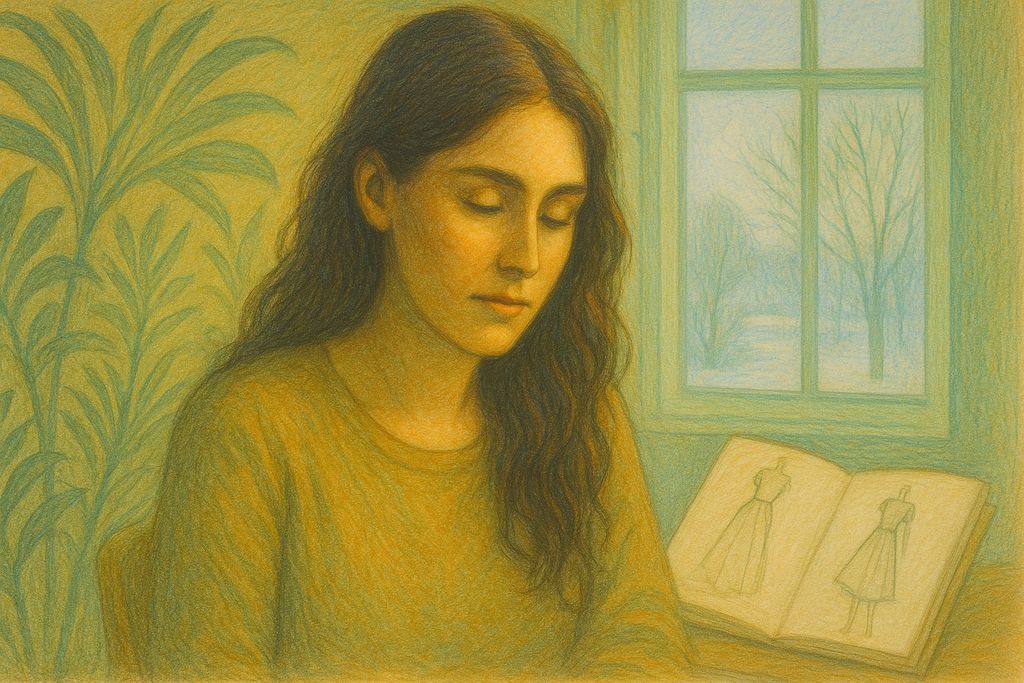
Long before Sharon den Adel stepped onto the stage as the voice of Within Temptation, her artistic identity was already quietly forming through the environments, cultures, and emotional textures that shaped her early life. Born in the Netherlands and spending part of her childhood in Indonesia due to her father’s work, she grew up between two worlds that contrasted yet complemented each other in profound ways. The Netherlands offered structure, clarity, open landscapes, and a distinctly European artistic sensibility — a world defined by seasons, quiet introspection, and a cultural appreciation for design and craftsmanship. Indonesia, by contrast, wrapped her in vibrant colors, humid air, layered traditions, and the expressive warmth of Southeast Asian environments. These disparate atmospheres left a subtle but lasting imprint on Sharon’s imagination.
Later in interviews, she would mention how those early years in Indonesia influenced her sense of aesthetic and emotion. It was not about direct musical influence — rather, it was about atmosphere, symbolism, and the feeling of being surrounded by a world that seemed larger, more mysterious, more interconnected than she had previously known. Nature was not just scenery; it was a presence. Light behaved differently; air held stories; even silence felt charged with meaning. For a child, these impressions can become foundational, shaping how one senses beauty, movement, and emotional resonance. Looking at Within Temptation’s early visual world — the forests, natural elements, mystical palettes — it becomes clear how deeply Sharon internalized the poetry of place.
Living between cultures also cultivated her sensitivity to emotion and nuance. Sharon developed a strong internal world, shaped by frequent relocations and the need to adapt to new environments. She learned to observe before speaking, to sense emotional shifts, to attune herself to atmosphere — qualities that would later define her songwriting and stage presence. Her ability to express vulnerability and strength simultaneously, to occupy both intimacy and epic grandeur, reflects this early emotional fluency.
Equally formative was her natural inclination toward the arts. Fashion, in particular, became one of her earliest creative languages. Long before the world saw her iconic stage dresses and visual storytelling, she spent her youth sketching designs, studying silhouettes, and experimenting with fabrics. This passion for aesthetics was not secondary to her musical identity; it was part of its foundation. Her stage presence today — elegant, symbolic, narrative — is an extension of that early fascination. Sharon has often designed her own costumes, and her sensibility for visual coherence shaped Within Temptation’s imagery from the beginning.
All these influences — Indonesian atmosphere, Dutch introspection, fashion design, emotional attunement — converged into a unique sensibility: one that blended softness with strength, mysticism with clarity, vulnerability with control. Before she ever recorded a note, her artistic universe was already alive inside her, waiting for a musical form through which it could speak.
This internal landscape would later become the soil from which Mother Earth, The Silent Force, and many of the band’s most iconic visual themes would grow. In understanding these early impressions, we understand the origins of Sharon’s artistic voice — a voice shaped not only by sound, but by memory, symbol, culture, and atmosphere.
First Steps Toward Music: Pre-Within Temptation Years
Before the world knew her as the voice of Within Temptation, Sharon den Adel was a young artist searching quietly, almost instinctively, for the medium through which she could express her imagination. Unlike many musicians whose early biographies revolve around formal training or childhood bands, Sharon’s path into music was more organic — rooted in curiosity, emotional expression, and the gradual discovery that her voice could carry the stories and atmospheres she felt drawn to.
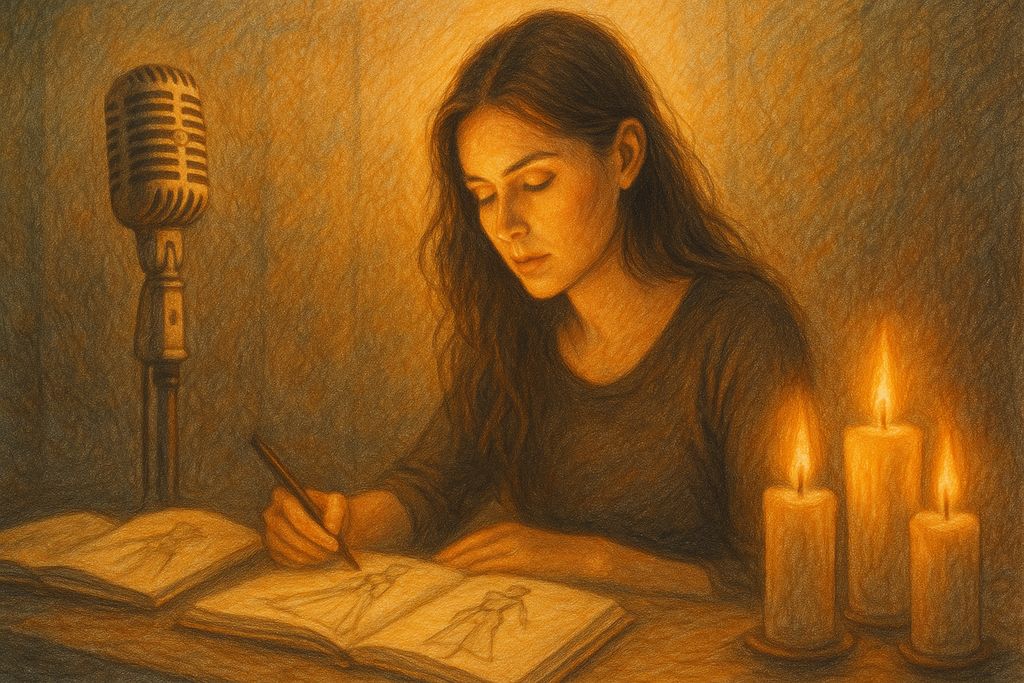
During her teenage years in the Netherlands, she explored creative outlets in parallel: fashion design, emotional writing, visual storytelling, and the intuitive pull toward melody. She was not yet aiming for a musical career; instead, she allowed different forms of expression to coexist, letting them shape her identity step by step. Singing was present early on, but not yet as a declared ambition. It was a private practice, something that grew naturally as she realized how deeply she connected to emotional, atmospheric music.
Her influences during this time — artists like Sinéad O’Connor, Kate Bush, and Tori Amos — were not only vocal inspirations but emotional ones. These singers approached music as if it were a world one could inhabit: poetic, intimate, sometimes fragile but never weak. Their emotional directness resonated deeply with Sharon, and she began to understand that a voice could do more than perform notes; it could translate inner landscapes into sound. This perspective would later become a hallmark of her own vocal identity.
At the same time, her growing fascination with the gothic and symphonic aesthetics of the 1990s alternative scene introduced her to a musical vocabulary that blended atmosphere, introspection, and theatrical emotion. Bands from the emerging European metal movements — particularly those mixing melody with heaviness — helped shape her understanding of what music could express. But even here, Sharon did not gravitate toward the darker, more aggressive expressions of the genre. Instead, she responded to its emotional potential, its capacity to feel cinematic and grand without losing its human core.
Sharon’s early twenties became the pivotal phase in which music shifted from a personal outlet to a potential artistic path. During her studies, she crossed paths with guitarist and songwriter Robert Westerholt — a meeting that would define both of their futures. Robert was already experimenting with early forms of what would become Within Temptation’s sonic architecture: a blend of dark atmospheres, melodic guitar lines, and emotional storytelling. Sharon’s voice and artistic sensibility resonated immediately with his vision. Their creative chemistry was unmistakable.
Yet, their early collaboration was not a straightforward leap into professional music. They were still exploring, shaping ideas, and finding a balance between their influences. Sharon began contributing vocals to Robert’s musical sketches, discovering how her emotional clarity and lightness could complement heavier musical structures. She learned how to blend softness with intensity, how to navigate the delicate territory between melodic purity and the rawness of metal-influenced arrangements.
These early experiments formed the earliest blueprint of Within Temptation’s identity. Sharon’s voice became the emotional axis — the element that allowed the music to move beyond genre conventions. And even before the band officially formed, it was clear that her presence brought a different dimension: beauty without fragility, strength without hardness, atmosphere without artifice.
Alongside music, Sharon continued deepening her connection to visual design. She experimented with creating clothing, silhouettes, and textures — creative practices that would later influence the iconic dresses and stage concepts that shaped Within Temptation’s live identity. This dual path, combining visual art and music, made her approach to creativity unusually holistic. She did not simply want to sing; she wanted to build worlds. Her early sketches would soon transform into the first versions of the gowns she would later wear during the Mother Earth and Silent Force eras.
By the mid-1990s, the foundation was set. Sharon and Robert’s creative partnership had solidified into the idea of forming a band — one that would merge atmospheric depth with melodic immediacy. While neither could predict where this path would lead, they understood that something distinctive was emerging. Sharon’s voice did not simply fit the music; it elevated it, softened its edges, and gave it emotional accessibility without diminishing its dramatic scope.
Looking back on these years, they reveal not just the beginning of a career, but the emergence of an artistic language. Sharon was discovering her ability to transform emotional nuance into vocal expression, to merge visual aesthetics with musical storytelling, and to create art that felt both intimate and cinematic. All of this unfolded before the first album was recorded — and yet, it formed the essential foundation for everything that Within Temptation would later become.
The Birth of Within Temptation: Vision, Identity & Early Sound

Enter: The Raw Foundations
When Enter was released in 1997, it marked not only the beginning of Within Temptation’s discography but also the first public appearance of the artistic chemistry that Sharon den Adel and Robert Westerholt had spent years developing. The album arrived during a time when the European metal landscape was shifting: doom metal was evolving, gothic metal was gaining momentum, and atmospheric elements were beginning to take root in heavier genres. Into this environment stepped a debut that did not yet resemble the symphonic majesty the band would later be known for — but one that contained unmistakable fragments of future brilliance.
Enter is often described as a dark, raw, and introspective work, shaped by the aesthetics of mid-90s doom and gothic metal. Its slow, heavy guitar lines, deep growls by Robert Westerholt, and somber tonal palette placed it firmly within the genre traditions of the time. But it was Sharon’s presence that set the album apart. Even in its earliest form, her voice functioned like a shaft of light cutting through dense fog — clear, ethereal, and emotionally charged against the backdrop of thick, melancholic instrumentation.
On tracks like “Restless,” Sharon unveiled a vocal presence that was striking in its restraint. Unlike many contemporaries who leaned into operatic projection, she delivered something more intimate, more human, more immediate. Her timbre felt grounded and luminous at once, carrying emotion without ornamentation. This quality became one of the earliest signals that Within Temptation would not simply follow existing genre templates; they would reshape them.
The album’s sonic identity was also influenced by the band’s limited resources at the time. They were young, working with modest budgets, experimenting freely without the constraints that later commercial expectations would bring. This rawness gave Enter an authenticity that fans still appreciate: it captures the moment before polish, before spectacle, before the symphonic expansiveness of Mother Earth and The Silent Force. In its imperfections, one can hear the sincerity of a band still discovering who they were meant to become.
Lyrically and thematically, Enter explored emotional desolation, inner conflict, and spiritual tension — themes common in the genre but filtered through the sensitivity that Sharon brought into the project. Her melodic lines added something different to the heavy foundation: a sense of fragility, yearning, and introspection. Even where the album leaned heavily into growls and dark atmospheres, Sharon’s voice acted as a counterpoint, offering not contrast for its own sake but emotional dimension. It was as if the music spoke two languages at once: the heaviness of despair and the clarity of reflection.
In retrospect, Enter does more than introduce the band — it reveals the first traces of a signature aesthetic. Sharon’s melodic sensibility already hinted at the ethereal landscapes the band would later explore. The interplay between her vocals and the darker elements foreshadowed the dramatic duality that would define Within Temptation’s identity for decades. And although the album remains one of the heaviest in their catalogue, it also represents a crucial artistic foundation: the moment when Sharon learned how her voice could coexist with and transform metal’s weight.
Reception at the time was modest but encouraging. The album slowly built a following across European underground scenes, aided by the band’s early performances and the atmospheric quality that distinguished them from their peers. Listeners who encountered Enter in the late 1990s often describe it as a discovery — a whispered promise that something new was forming, even if its final shape was not yet clear.
For Sharon personally, this era was a period of rapid artistic growth. She was learning how to use her voice within contexts that demanded emotional clarity against heavy instrumentation. She was refining her sense of narrative and visual identity. And she was beginning to understand the balance between vulnerability and power — a balance that would later define her career.
Though fans often view Enter through the lens of what came afterward, it remains an essential chapter in Sharon’s evolution. It shows her stepping into the role of frontwoman, finding her place in a still-emerging musical landscape, and beginning the journey that would lead her to become one of the most influential voices in symphonic and gothic-inspired music.
In the dense shadows of Enter, the seeds of future light were already planted.
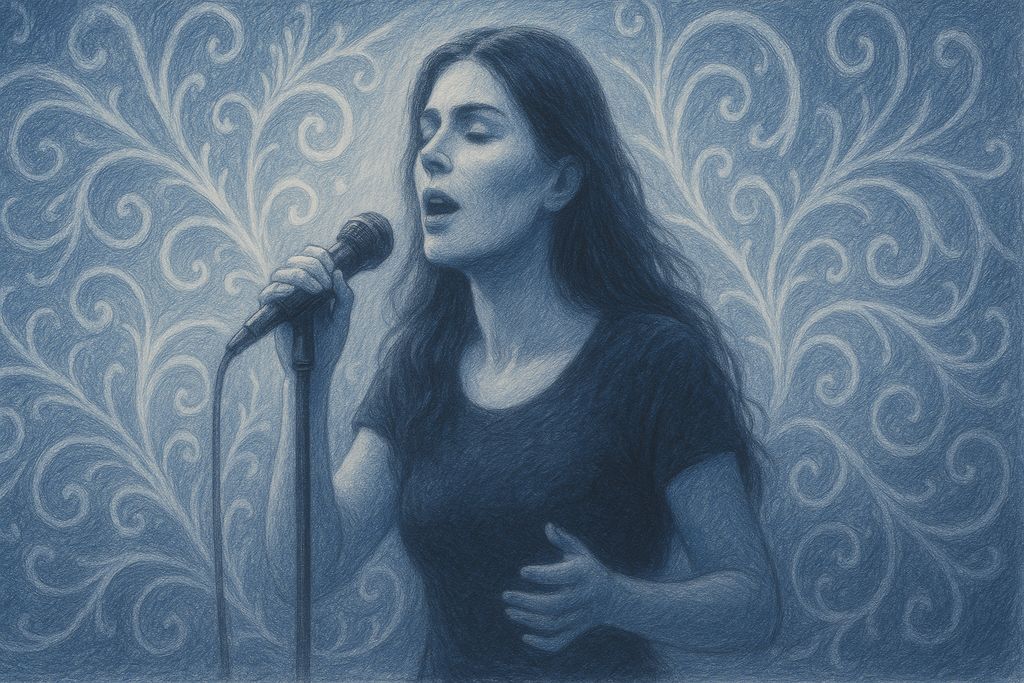
Moving Toward Melodic Gothic: The Dance EP & Breakthrough Steps
If Enter captured the raw, unpolished beginnings of Within Temptation, then The Dance EP (1998) revealed the first true shift toward the melodic, emotional, and atmospheric identity the band would later become known for. While still rooted in the darker textures of doom-inspired gothic metal, this release contained a subtle but significant broadening of Sharon den Adel’s expressive role — the early emergence of a more melodic, cinematic sensitivity, and the beginning of a stylistic transformation that would eventually carry them to international prominence.
Released only a year after Enter, The Dance was created during a time of rapid artistic development. Within Temptation were exploring new harmonic possibilities, gradually reducing the density of growls, allowing Sharon’s clarity to step more confidently into the foreground. Though the band still balanced heaviness with melancholy, a new kind of musical openness appeared — one that allowed Sharon’s voice to soar higher, stretch wider, and occupy emotional space that had previously been hinted at but not yet fully embraced.
Songs like “The Dance” and “Another Day” showcased this transition vividly. While retaining the atmospheric darkness of their debut, these compositions introduced more dynamic vocal passages, expressive melodic lines, and greater emotional nuance. Sharon’s delivery became more lyrical, her phrasing more fluid, her tone more multi-dimensional. There was still a haunting quality in her voice, but it was no longer shrouded; it was illuminated, as though a beam of light had been allowed to widen. This evolution did not abandon the band’s gothic roots — rather, it enriched them, giving the music a greater sense of depth and accessibility.
What makes The Dance particularly significant in Sharon’s development is the way it subtly rebalanced the interplay between voice and instrumentation. On Enter, her vocals were one color among many in a dark palette. On The Dance, they became the central emotional axis. The band began to understand that Sharon’s voice could carry narrative and atmosphere simultaneously — that it could guide listeners through evolving musical landscapes with a sense of clarity and emotional continuity.
Another key shift was the growing integration of folk-influenced melodic motifs, atmospheric orchestrations, and ambient textures. These elements foreshadowed the world of Mother Earth, which would later bring the band international recognition. Even though The Dance remained firmly rooted in the late-90s gothic aesthetic, its use of melodic symbolism, lighter harmonic phrasing, and evocative motifs marked an unmistakable step toward the band’s future identity.
In this period, Sharon also continued refining her stage presence. Early performances from the Dance era show her transitioning from the introspective, almost shy aura of the Enter period into a more expressive, confident performer. She still maintained her characteristic calmness, but it became paired with a growing elegance and emotional openness. Her movements became more fluid, her voice more assured, and her ability to translate atmosphere into performance more captivating.
The EP also played a role in expanding Within Temptation’s reach. It helped them secure more visibility in the European gothic metal community and broadened the band’s early audience. While this growth was still modest compared to what would come later, The Dance demonstrated that something distinct was forming — a band stepping away from being part of a scene and toward becoming a creative force with its own identity.
From a historical perspective, The Dance stands as a transitional bridge: the moment when raw artistic impulses began shaping into something refined, melodic, and emotionally resonant. For Sharon, it represented the early understanding of her own vocal potential — not simply as a complement to heavy music, but as the emotional compass guiding the band’s evolution. Her voice no longer floated above the arrangements; it became the element that defined them.
Looking back, one can hear in The Dance the first real traces of the band that would go on to create Mother Earth. There is a sense of awakening in these songs, a widening horizon, a clearer sense of artistic direction. And at the center of that awakening is Sharon — discovering how her voice could carry not only melody and emotion but vision.
The Mother Earth Era: Cinematic Atmospheres & Rising Global Attention
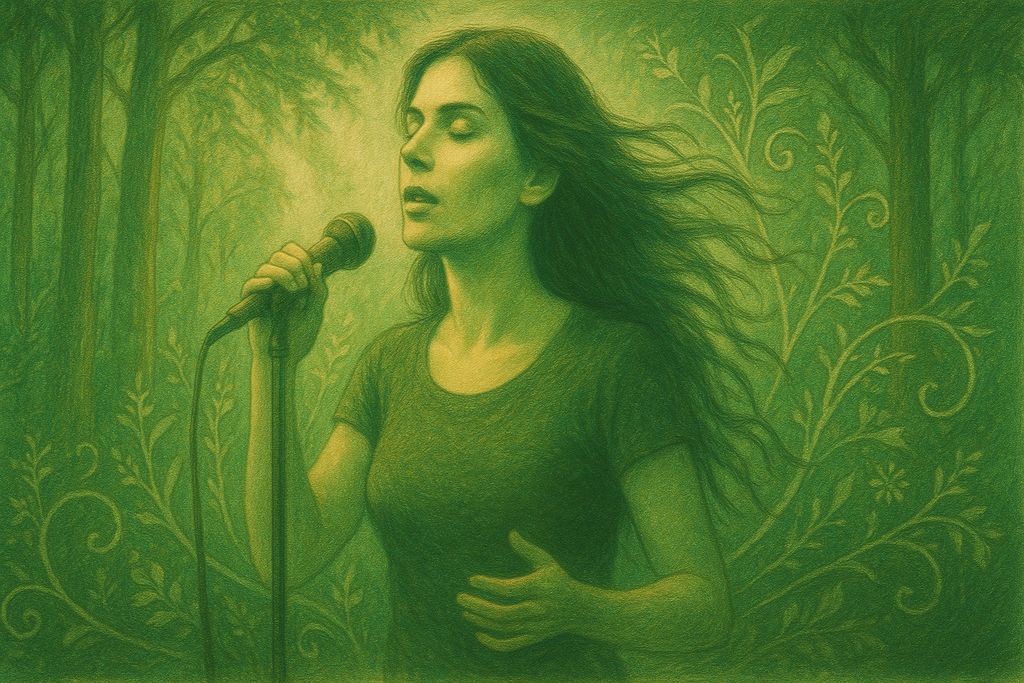
Mother Earth (2000): A New Symphonic Identity
When Mother Earth arrived in 2000, it did more than introduce a new album — it marked the true birth of Within Temptation’s artistic identity, and with it, the emergence of Sharon den Adel as one of the most distinctive and emotionally resonant voices in European music. Everything about the record signaled transformation. The raw, gothic heaviness of the early years evolved into a vast, cinematic soundscape where nature, myth, and emotion intertwined with sweeping orchestral elements. For Sharon, this era represented the moment when her artistic worlds — musical, visual, emotional — merged into a single, coherent language.
Unlike Enter and The Dance, which still carried the weight of mid-90s gothic frameworks, Mother Earth opened into a space of light, expanse, and elemental symbolism. The album blended symphonic arrangements, folk-tinged melodies, atmospheric guitars, and choral textures to create something simultaneously ethereal and powerful. This shift was not simply instrumental; it reshaped the narrative landscape Sharon could inhabit as a vocalist. Her voice, now centered within a spacious and melodic environment, revealed new layers of color, dynamics, and emotional depth.
One of the defining qualities of Mother Earth is its strong connection to nature — not just as external imagery but as emotional metaphor. Sharon’s performance on the title track captures this perfectly: her voice feels like wind rising through trees, clear and free, carried by swirling orchestral currents. She moves between soft, breath-light phrases and soaring high notes that seem to dissolve into the landscape of the song. The piece signaled to listeners that Within Temptation were no longer simply contributors to a genre — they had begun building a world.
“Ice Queen,” the breakthrough single, propelled the band onto the international stage. With its stirring intro, dynamic build-up, and Sharon’s crystalline, unforgettable chorus, the song became one of the defining tracks of early 2000s symphonic rock. Sharon’s delivery is both commanding and luminous, capturing a balance of fragility and power that would become her signature. The track’s success helped the band reach radio audiences across Europe, and its accompanying visual identity — Sharon in flowing white dresses, surrounded by elemental motifs of frost, wind, and shifting seasons — introduced a new kind of iconography.
What made this era particularly impactful was how seamlessly Sharon integrated her visual creativity into the developing sound. Her interest in fashion and symbolic design shaped the band’s aesthetic direction. The earthy, mystical themes of Mother Earth extended into stage costumes, album art, and live performances, creating a cohesive universe that listeners could step into. Sharon became not just a vocalist but a narrative focal point — the embodiment of a mythic, nature-inspired emotional realm.
Vocally, Sharon expanded her range in multiple dimensions. Her tone became more open and warm; her phrasing more fluid and expressive. She balanced clarity with emotion, finding new ways to use softness as a form of strength. Tracks such as “Deceiver of Fools” and “Caged” demonstrated her ability to navigate dramatic tension, moving effortlessly between intimate whispers and full, soaring passages. The orchestral scale of the music demanded precision, control, and emotional nuance — qualities Sharon brought with unmistakable authenticity.
The success of Mother Earth also reshaped the band’s professional trajectory. They began touring widely across Europe, performing at major festivals and opening doors to international audiences. Sharon’s stage presence during this era solidified her role as the visual and emotional anchor of the band: ethereal yet grounded, expressive yet calm, embodying the very imagery the album evoked.
Looking back, Mother Earth remains a landmark not only in Within Temptation’s catalogue but in Sharon’s personal evolution. It was here that she found the artistic vocabulary that would carry her through the next decades — a blend of symphonic intensity, emotional clarity, mythic symbolism, and immersive visual storytelling. The seeds planted during the early years now bloomed into a recognizable identity, one that resonated deeply with audiences and helped shape an entire generation of symphonic and alternative artists.
Mother Earth was more than an album; it was an awakening — and Sharon stood at its center, becoming the voice of a world that sounded unlike anything else at the time.
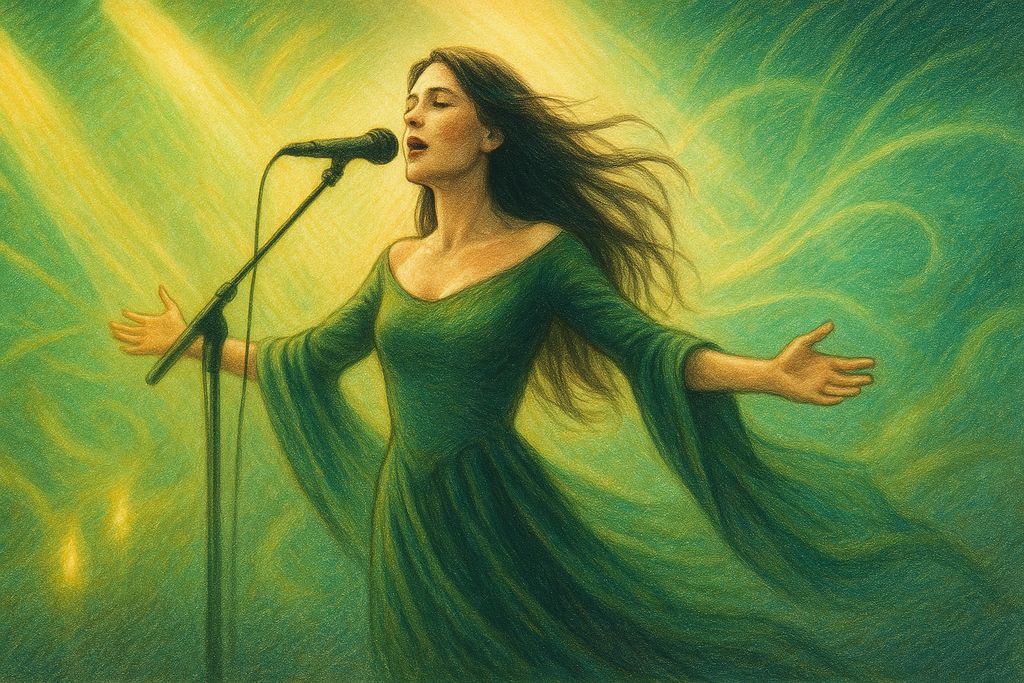
The Height of Early Success: Tours, Festivals & Visual Transformation
The release of Mother Earth marked a turning point, but it was the years that followed — the touring cycle, the festivals, the expanding fanbase — that solidified Within Temptation as one of Europe’s most distinctive symphonic rock acts. For Sharon den Adel, this era represented the moment when she stepped fully into her role as a commanding live performer, a visual architect, and the emotional anchor of a rapidly growing international audience. The transition from underground recognition to mainstream visibility unfolded naturally, but its impact on both the band’s artistic direction and Sharon’s evolving identity was profound.
One of the most immediate effects of the album’s success was an invitation to some of Europe’s largest festivals. Performances at events like Pinkpop, Lowlands, Rock Werchter, and later major metal festivals across the continent introduced the band to crowds far larger and more diverse than ever before. These stages demanded a new level of presence and expression — and Sharon rose to the challenge, developing a performance language that blended elegance, emotional clarity, and controlled theatricality. Her movements were never exaggerated; instead, she anchored the drama of the music through a calm yet radiant presence that drew audiences in.
The Mother Earth Tour became a defining chapter. Sharon’s white and earth-toned dresses, often designed or conceptualized by herself, became iconic visual signatures. The flowing fabrics, natural motifs, and soft color palettes amplified the album’s thematic connection to the elements. On stage, she appeared almost like a figure from myth — neither goddess nor character, but something more grounded: a human presence infused with symbolic resonance. Her visual choices were not ornamental; they were extensions of the album’s emotional language.
During this period, Within Temptation began to transition from the gloomier, more introverted aesthetics of the late 1990s metal scene into something more open, luminous, and cinematic. The band’s stage setups evolved as well, incorporating large backdrops, atmospheric lighting, and thematic video elements that expanded the immersive universe they were creating. Sharon’s design instincts heavily influenced this transformation. She intuitively understood how color, texture, and light could shape a viewer’s emotional experience — an understanding that would follow her through every subsequent era.
Musically, the live interpretations of Mother Earth showcased Sharon’s expanding vocal confidence. Songs like “Ice Queen,” which required both precision and expressive control, became live favorites. She learned how to adapt her tone for outdoor stages, how to project clarity across massive festival fields, and how to balance power with vulnerability even in the most demanding vocal passages. Over time, her voice gained a fuller presence, retaining its crystalline quality while developing more strength and resonance.
The band’s rising profile also had cultural significance. Sharon became one of the most recognizable faces of the early 2000s symphonic metal movement — a genre that was, at the time, rapidly gaining momentum across Europe. Her presence provided an alternative to the operatic archetype popularized by some contemporaries; instead of a classically trained dramatic soprano, she brought a more natural, emotional, narrative-driven vocal style. This broadened the appeal of the genre, attracting listeners who connected as much to atmospheric mood and emotional honesty as to technical spectacle.
This era also solidified the emotional relationship between Sharon and the audience. Fans saw not only a performer but a storyteller — someone who offered them a world to step into. Concerts felt less like typical metal shows and more like immersive experiences, with Sharon acting as both guide and emotional core. Her sincerity on stage, combined with the atmospheric power of the music, created a deep, lasting connection with fans around the world.
The increasing attention from international media further elevated the band’s profile. Interviews, TV appearances, festival broadcasts, and magazine features introduced Sharon to a broader public. While she remained naturally reserved in her demeanor, her ability to speak openly and thoughtfully about the band’s artistic vision became part of her appeal. She presented herself not as a distant star but as an approachable, emotionally intelligent artist dedicated to storytelling.
By the time the Mother Earth cycle came to an end, Within Temptation had completed a transformation that few debut-era observers could have predicted. They had become a leading force in the European symphonic scene, and Sharon had emerged as its poetic voice and visual heart. Everything that came afterward — the global breakthrough with The Silent Force, the later conceptual eras, the collaborations, the reinventions — was built on the foundation laid during these formative years.
The Silent Force Era: Emotional Majesty & Worldwide Breakthrough
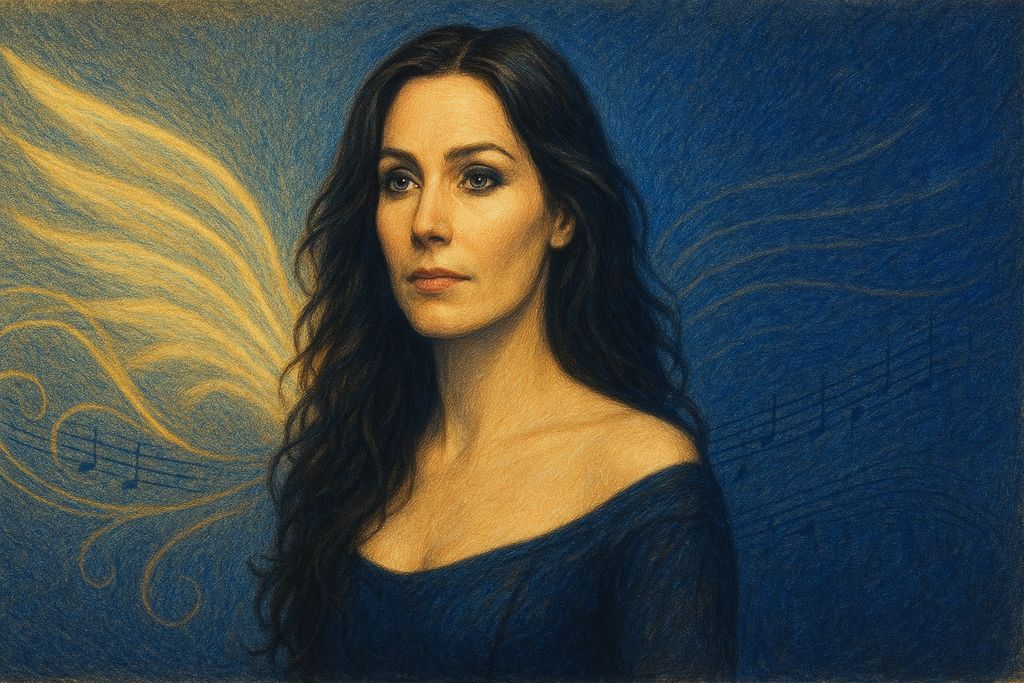
Crafting Emotional Symphonics
When The Silent Force was released in 2004, it marked a watershed moment not only for Within Temptation but for the entire European symphonic rock landscape. The album arrived with a clarity, maturity, and emotional force that announced the band’s full arrival on the world stage. For Sharon den Adel, this era represented the crystallization of her vocal identity — a moment in which her dynamic control, emotional expressiveness, and narrative intuition converged into a signature sound. The album’s title could not have been more fitting: its power was quiet yet immense, built on emotional resonance rather than aggression, shaped by a voice capable of holding fragility and strength in the same breath.
Where Mother Earth had established a mystical and nature-bound aesthetic, The Silent Force brought a sense of emotional intimacy wrapped in orchestral grandeur. It was more direct, more melodic, and more focused on the interior experience of human resilience. Sharon’s voice became the central element of this new balance — not competing with the symphonic arrangements but guiding them, shaping their emotional arc. Her tone during this period broadened, gaining warmth while retaining the crystalline purity that had already become her trademark.
The opening track “See Who I Am” signaled this shift immediately. With its rising orchestral swell and rhythmic intensity, the song created a space where Sharon’s voice could soar above layers of strings, guitars, and choral arrangements. Her performance here exemplified the key difference between the Mother Earth and Silent Force eras: she was no longer moving through a landscape — she was shaping it. Her phrasing carried intention, her emotional delivery anchored the narrative, and her voice became the lens through which the listener experienced the album’s themes.
“Stand My Ground,” one of the band’s most iconic singles, became an anthem of resilience for a generation. Sharon’s delivery is firm and empowering without ever losing its emotional clarity. The chorus, built around her commanding presence, encapsulated a universal promise: holding one’s position not through force, but through inner resolve. This emotional accessibility helped the song cross beyond the symphonic metal scene, gaining radio play and recognition in mainstream European markets. It was one of the first moments when Within Temptation reached listeners who might never have otherwise entered the world of atmospheric rock.
“Angels,” with its haunting verses and soaring chorus, showcased Sharon’s ability to embody both vulnerability and controlled fury. The contrast between her soft, delicate opening lines and the dramatic, emotionally charged refrain offered a glimpse into her vocal range not merely as a matter of technique but of storytelling. This was a vocalist capable of shifting emotional states with cinematic precision, guiding the listener through a narrative of betrayal, introspection, and catharsis.
“Memories,” one of the most beloved ballads in the band’s catalogue, remains a masterclass in Sharon’s emotional subtlety. Her performance is tender, almost whispered at times, yet carries a weight of longing that fills every space in the arrangement. The song’s restrained instrumentation allowed her voice to sit at the center of the emotional frame, proving that Sharon’s power did not rely on orchestral crescendos — it was inherent in her ability to communicate emotion with directness and sincerity.
The production of The Silent Force, led by Daniel Gibson and Stefan Helleblad, further emphasized Sharon’s strengths. The orchestral elements were fuller and more cinematic than before, but always arranged in a way that respected the space of her voice. The band had matured, the arrangements had matured, and Sharon had stepped into her full expressive breadth. Her vocal lines were no longer simply melodies; they carried emotional architecture.
This era also solidified Sharon’s role as a visual and conceptual artist. The imagery of The Silent Force — its stark whites, deep blues, symbolic motifs, and winter-like atmospheres — reflected her refined aesthetic sensibilities. The album cycle’s videos, stage costumes, and artwork carried a sense of serene drama, mirroring the emotional themes within the music. Sharon’s visual presence became an essential part of the narrative: elegant, introspective, and luminous, embodying a world where emotion and strength coexist.
By the end of the Silent Force era, Within Temptation were no longer simply rising stars — they had become leaders of the symphonic movement, performing sold-out shows across Europe and expanding quickly into Asian and Latin American markets. Sharon stood at the center of this evolution: the voice, the figure, the emotional core around which the band’s sonic and visual universe revolved.
The Silent Force remains one of the most defining moments in Sharon’s career. It captured not only the growth of a band but the emergence of a vocalist who could translate human emotion into symphonic scale without losing the intimacy of personal truth.

The Era of Global Tours & Artistic Refinement
As The Silent Force carried Within Temptation into the international spotlight, Sharon den Adel found herself navigating a new artistic reality: larger stages, expanding audiences, and a rapidly growing global fanbase. The years following the album’s release were marked by an intense touring schedule across Europe and far beyond, and it was during this era that Sharon’s presence as a performer, communicator, and creative visionary fully crystallized. The band’s rise was no longer gradual — it was accelerating, and Sharon stood at the center of a phenomenon that was reshaping how symphonic rock was perceived worldwide.
One of the most striking aspects of this period was the way Sharon adapted her vocal approach to the demands of international touring. The more cinematic arrangements of The Silent Force required a voice capable of navigating both intimacy and power with precision, and Sharon met this challenge with discipline and evolving technique. Night after night, she refined the balance between emotional expression and vocal endurance, ensuring that even the most delicate lines retained their clarity amid massive live arrangements. Her performances grew in confidence, blending technical control with the emotional warmth that audiences had already come to cherish.
The band’s concerts during this era were characterized by an unprecedented visual sophistication. Sharon’s fashion background became increasingly visible as she designed or co-designed many of her stage costumes: flowing white and silver dresses, fabrics that moved like wind on stage, and silhouettes that reflected the visual universe of The Silent Force. These choices were not superficial; they amplified the emotional resonance of the music. Sharon understood that visuals could serve as narrative companions to the sound, transforming concerts into immersive experiences rather than simple performances.
International tours also revealed just how deeply audiences connected with Sharon’s emotional sincerity. Fans from Latin America to Scandinavia, from Eastern Europe to Japan, responded not only to the power of Within Temptation’s music but to Sharon’s ability to communicate vulnerability and strength with equal authenticity. In an era where some rock and metal bands relied on aggression or theatrical extremity, Sharon offered something different: an emotional honesty wrapped in elegance. Her calmness on stage had a magnetic quality; she held space rather than dominating it, creating an atmosphere where audiences felt invited rather than overwhelmed.
Media coverage during this period played a significant role in amplifying her visibility. Interviews across European television, print magazines, and later online platforms introduced Sharon to millions of viewers who may not have encountered symphonic rock before. Her articulate and grounded way of speaking about the band’s themes — identity, resilience, emotional and moral dilemmas — resonated with a broad spectrum of listeners. She emerged as a rare figure in rock: a frontwoman who embodied both intellectual clarity and emotional accessibility.
Festivals proved especially transformative. Within Temptation’s performances at major events such as the German Rock am Ring / Rock im Park, Belgium’s Rock Werchter, and numerous European open-air festivals showcased the band’s ability to command enormous audiences. Even in daylight settings — which can be notoriously unforgiving for atmospheric acts — Sharon’s presence shimmered with calm authority. Her voice carried across fields and stadiums, her understated gestures conveying intimacy even at scale. These appearances demonstrated that the emotional power of the band’s music could transcend the controlled ambiance of indoor concerts and thrive in vast outdoor environments.
This era also marked an evolution in Sharon’s expressive confidence. While she had always been an emotionally attuned performer, the global attention helped her discover new layers of artistic identity. She learned how to hold the center of a stage without needing to exaggerate movement. She understood how to connect with audiences who did not speak her language. And she became increasingly aware of the role she played as a cultural figure — a woman leading a major rock act in a genre often dominated by male voices.
By the end of The Silent Force touring cycle, Sharon had become not only a vocalist and performer but a symbol of symphonic rock’s emotional sophistication. The era showcased her ability to refine, elevate, and expand the artistic universe of Within Temptation without sacrificing authenticity or intimacy. It was a period of consolidation — the world was now fully aware of her voice, her presence, and her vision — and it set the stage for the darker, more dramatic explorations that would unfold in the next chapter of the band’s evolution.
The Heart of Everything Era: Darker Drama & New Horizons
Conceptual Depth & Expanding Themes
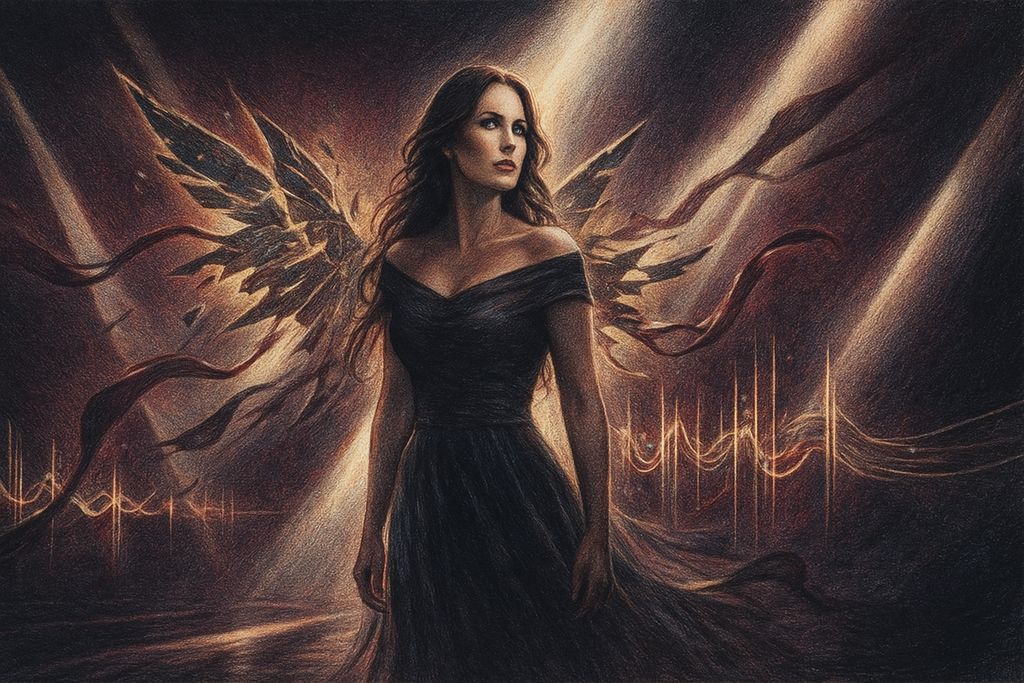
With The Heart of Everything (2007), Within Temptation entered one of the most defining artistic phases of their career — and for Sharon den Adel, it marked a shift toward a more dramatic, emotionally charged, and thematically ambitious vocal expression. This album was not simply the next step after The Silent Force; it was a bold refinement of the band’s identity. The sound became darker, more cinematic, more narrative, and Sharon’s performance wrapped itself around these developments with remarkable precision.
Where Mother Earth had evoked myth and nature, and The Silent Force had explored resilience and emotional clarity, The Heart of Everything stepped directly into the realm of moral conflict, existential reflection, and psychological intensity. Sharon’s voice became the emotional interpreter of these themes, navigating their complexities with a new degree of depth. Tracks often revolved around questions of identity, guilt, redemption, memory, and responsibility — and her vocal interpretations carried both vulnerability and a sharpened determination.
“Frozen,” one of the album’s most emotionally charged songs, exemplifies this dual strength. Based on real experiences and stories of domestic abuse, the track explores trauma, escape, and the struggle for emotional survival. Sharon delivers the verses with a quiet tension, almost as if holding back a storm, and then releases that emotional weight in the soaring chorus. Her voice communicates both the fragility of the character and the desperate push toward liberation. It is a performance shaped not by theatricality, but by controlled emotional precision.
Another defining track, “What Have You Done” — a collaboration with Keith Caputo (now Mina Caputo) — introduced a powerful vocal dialogue that brought new texture to the band’s sound. Sharon’s voice contrasts with Caputo’s raw emotional timbre, creating a narrative of conflict and collapse. The song highlighted her ability to maintain clarity and emotional strength in duet forms, responding dynamically to another vocalist rather than simply blending. Sharon did not overshadow; she navigated the emotional architecture of the song as a storyteller.
“The Howling,” originally created for the video game The Chronicles of Spellborn before becoming an album single, allowed Sharon to explore the dramatic and mythical aspects of her voice in a more modern, rhythmic, and urgent soundscape. Her delivery carried a fierce kind of defiance, reflecting the album’s shift toward stronger conceptual frameworks. She began to inhabit emotional spaces that were darker and more psychologically charged than in earlier eras.
Perhaps the most emblematic moment of the album’s conceptual depth comes in its title track, “The Heart of Everything.” Although not released as a single, the song embodies the core themes of the record: moral complexity, internal struggle, and the search for meaning within chaos. Sharon’s vocal phrasing fluctuates between intimate softness and majestic elevation, mirroring the emotional turbulence at the song’s center. It is here that her ability to merge lyrical narrative with vocal storytelling becomes most evident.
Across the entire album, Sharon’s artistic evolution is unmistakable. Her vocals gained more dynamic shading, more emotional grit, and more dramatic control. She could whisper, soar, accuse, mourn, and confront — sometimes all within the same song — without losing her tonal purity. What distinguished her performance on The Heart of Everything was not only its technical advancement but its emotional courage. She stepped into heavier thematic territories without overacting, allowing nuance, restraint, and sincerity to carry the weight of the storytelling.
This period also marked a visual shift. The aesthetic moved away from the ethereal whites and silvers of The Silent Force toward darker palettes — blacks, deep reds, shadowed golds — and Sharon’s stage outfits reflected this change. Her presence became more statuesque, more dramatic, yet still grounded in authenticity. She was no longer the ethereal figure of nature; she had become the narrator of conflict, standing at the edge of emotional storms.
The Heart of Everything represented a moment of artistic bravery for Sharon — a willingness to explore uncomfortable truths, to push beyond the familiar emotional vocabulary of earlier records, and to embrace a thematic spectrum that required both intensity and vulnerability. It is the album where she became not just the voice of Within Temptation, but the interpreter of its deepest narratives.
Global Impact: Tours, Media & Cultural Resonance
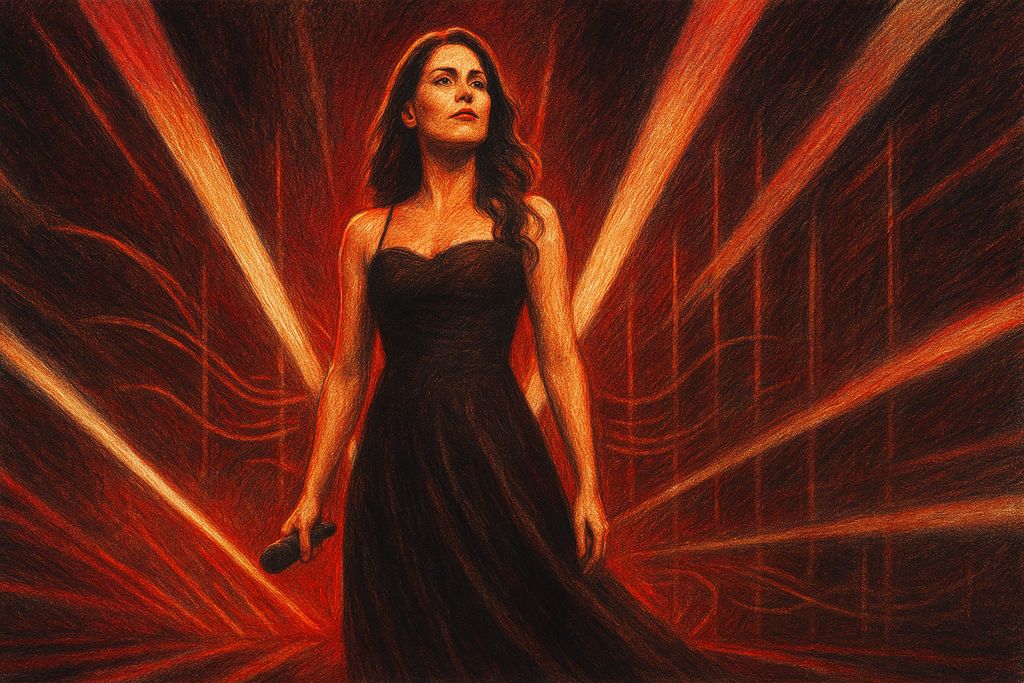
With The Heart of Everything, Within Temptation stepped into a new dimension of international recognition — and Sharon den Adel became one of the most visible and influential frontwomen in modern symphonic rock. The years that followed the album’s release were shaped by extensive global touring, increased media presence, and a growing awareness of the band’s cultural impact. What had begun as a modest Dutch act had now transformed into a global force, and Sharon stood at its center with her signature blend of emotional clarity, elegance, and quiet strength.
The album’s singles — particularly “What Have You Done” and “Frozen” — opened doors in markets that had previously been difficult for symphonic bands to enter. The collaboration with Keith Caputo (Mina Caputo) brought the band mainstream attention in North America, where the song received significant radio play and exposure on music television channels. Suddenly, Within Temptation were no longer a primarily European phenomenon; they were becoming part of a global conversation about the next wave of emotionally driven rock music.
Touring during this era expanded dramatically. The band embarked on extensive tours across Europe, played major festivals, and strengthened their presence in countries like Germany, the UK, France, Scandinavia, and Poland — regions where their fanbase would become particularly devoted. Sharon’s performances evolved accordingly. She developed a more commanding stage presence, capable of filling large arenas without losing the emotional intimacy that defined her vocal identity. Even in front of tens of thousands of people, she retained a unique ability to make the performance feel personal, as though she were telling each listener a private story.
North America also became a significant frontier. Though the symphonic metal genre had historically been niche in the United States, The Heart of Everything allowed Within Temptation to perform to new audiences, opening shows for major artists and introducing American listeners to a style that blended cinematic orchestration with accessible melodic rock. Sharon’s ability to connect emotionally across linguistic and cultural boundaries played a central role in winning over these audiences. Her sincerity, humility, and warmth created bridges where stylistic differences might otherwise have become obstacles.
Media engagement intensified as well. Sharon began appearing in interviews on international television, in major music magazines, and on growing digital platforms. Her openness when discussing the themes behind the songs — especially the socially conscious narratives of tracks like “Frozen” — resonated widely. She became known not only as a captivating vocalist but also as a thoughtful, articulate figure capable of engaging deeply with emotional and ethical issues. This quality further distinguished her in a genre that often prioritized spectacle over introspection.
The band’s visual identity during this period also contributed to their expanding cultural influence. Sharon’s darker stage attire, refined gothic silhouettes, and dramatic lighting aesthetics became iconic. The image she projected was powerful yet human; visually striking yet never detached. She embodied strength without aggression, emotional weight without melodrama. This balance became a central factor in Within Temptation’s ability to reach listeners from diverse backgrounds — people who might not have identified with metal culture but felt drawn to the emotional storytelling Sharon brought to the stage.
Internationally, her influence extended beyond music. Sharon became a reference point for a new generation of female artists — vocalists who admired her ability to blend clarity with power, femininity with authority, emotion with technical restraint. She demonstrated that leading a major rock act did not require adopting traditionally masculine postures of dominance; instead, she showed that authenticity, emotional intelligence, and grace could command just as much presence.
By the end of this era, Sharon had become far more than a vocalist or frontwoman. She was a cultural figure — a voice that carried emotional narratives across borders, a symbol of artistic integrity, and an architect of a sound that would influence symphonic and alternative music for years to come. The Heart of Everything had opened a new chapter, one that revealed the full global resonance of her artistry.
The Unforgiving Era: Narrative Vision, Comic Aesthetics & Pop-Rock Fusion

The Concept: Storytelling Through Graphic Novel Energy
By the time Within Temptation began shaping The Unforgiving (2011), Sharon den Adel and the band had reached a point in their evolution where musical ambition alone was no longer enough. They wanted to build not merely an album, but an entire narrative universe — one that blended music, visual art, cinematic storytelling, and emotional drama into a single cohesive experience. The Unforgiving was the result of that bold creative vision: a concept album inspired by a graphic novel storyline and built around characters, moral conflicts, and the psychological weight of redemption.
For Sharon, this project opened a new expressive dimension. Her role was no longer limited to interpreting emotional themes; she became a narrative vessel, embodying the stories of characters created by American comic writer Steven O’Connell. Working with illustrator Romano Molenaar, the band crafted a visual world steeped in noir aesthetics, supernatural undertones, and the gritty tension of justice and consequence. Sharon’s voice became the emotional thread running through this world, guiding listeners through moments of vulnerability, anger, hope, and transformation.
The conceptual foundation of the album allowed Sharon to explore a broader palette of vocal colors. Songs were built not only around emotions but around narrative arcs, and her performances responded accordingly. On “Faster,” one of the album’s breakout singles, she channels determination, urgency, and a defiant forward momentum. Her voice cuts sharply through the more modern, rock-oriented production — assertive, bright, and full of kinetic energy. It was a departure from the more symphonic and emotional style of the previous albums, reflecting the shift toward narrative immediacy.
“Shot in the Dark,” another standout track, demonstrates Sharon’s ability to blend vulnerability with noir-themed tension. The song’s moody verses require subtle restraint, while its swelling chorus pushes into a dramatic, cinematic release. Here, Sharon’s voice becomes an emotional medium for regret, reflection, and the weight of difficult choices — themes central to the graphic novel’s storyline.
Perhaps most emblematic of the era is “Sinéad,” with its pulsing rhythm, bold melodic lines, and lyrical exploration of guilt and awakening. Sharon’s delivery feels more rhythmic and contemporary than in earlier eras, moving between tight verse phrasing and expansive choruses. Her voice adapts effortlessly to the album’s modern textures, proving her versatility not only in symphonic spheres but in pop-rock hybrid landscapes as well.
What makes The Unforgiving particularly interesting is how deeply Sharon engaged with the emotional psychology of the characters. Instead of interpreting broad themes, she was now embodying specific emotional trajectories — a form of musical acting without artifice. She brought nuance to the internal conflicts that defined the album’s concept: redemption, revenge, moral ambiguity, and the lingering aftershocks of personal trauma. Her performances convey not merely what the characters feel, but why they feel it, allowing listeners to follow the emotional logic of the story.
This album also marked a shift in the band’s sound. The symphonic layers were still present, but they were integrated into a more modern, rhythm-driven production style. This change required Sharon to adjust her vocal phrasing, to blend more seamlessly with guitars and electronic elements, and to balance clarity with intensity. Rather than soaring above the arrangements, she often sang within them, allowing her voice to become part of the narrative tapestry rather than its sole focal point.
Visually, the Unforgiving era represented one of the boldest stylistic departures in the band’s history. Sharon’s look shifted dramatically: dark leather elements, sharper silhouettes, and a cinematic aesthetic that echoed the graphic novel’s tone. She embodied a world that was grittier, contemporary, and morally complex — a striking contrast to the nature-inspired imagery of earlier eras. Through this visual evolution, she demonstrated once again her ability to adapt her expressive identity to the emotional needs of each album’s universe.
The Unforgiving stands as a testament to Sharon’s artistic courage. It showed her willingness to step beyond the familiar, to experiment with narrative structure, and to merge music with visual storytelling on a scale rarely attempted within the genre. This was Sharon not just as a vocalist, but as a performer-narrator — guiding listeners through a world of shadows, choices, and consequence with a voice that carried both clarity and emotional weight.

Reactions, Evolution & Artistic Courage
The release of The Unforgiving brought with it one of the most polarizing and ambitious moments in Within Temptation’s career. For Sharon den Adel, this era demanded not only artistic versatility but emotional resilience. While many fans embraced the bold narrative concept, the graphic novel partnership, and the shift toward a more modern, rock-oriented sound, others struggled with the departure from the lush symphonic textures that had defined the band for a decade. It was a creative gamble — and Sharon stood at the heart of it, guiding the emotional meaning behind the music with clarity and conviction.
The reactions reflected the complexity of the album itself. Critics praised the band’s willingness to take risks and highlighted Sharon’s ability to adapt her voice to a new sonic landscape without sacrificing emotional authenticity. Her performance on tracks like “Faster,” “Sinéad,” and “Fire and Ice” demonstrated a flexibility that defied genre constraints. She could navigate tight, rhythmic phrasing with pop sensibility one moment and then slip into sweeping, emotionally charged lines reminiscent of her earlier symphonic work the next. This duality became one of the album’s strongest assets.
For Sharon, the transition represented more than a stylistic shift — it was an expansion of identity. She was no longer only the ethereal voice of nature-inspired symphonics or the emotional anchor of cinematic rock; she was now a storyteller moving through a contemporary world of moral ambiguity and psychological conflict. The graphic novel structure allowed her to access emotional states she had not previously explored so openly: defiance, regret, guilt, awakening, rebellion. Her vocal performances channeled these states with sincerity, grounding the conceptual framework in human experience.
But this evolution also required courage. Sharon had long understood that artistic growth often means letting go of what is comfortable. Throughout interviews during the Unforgiving era, she spoke candidly about the desire to avoid repetition — to challenge herself, challenge the band, and avoid becoming trapped in a formula. Her willingness to embrace change, even at the risk of division among fans, reflected a deep commitment to artistic integrity. She was not interested in preserving the past; she wanted to move forward, even if the path was uncertain.
The live performances of this era further highlighted Sharon’s adaptability. The updated stage aesthetics — darker, more urban, infused with bold graphic elements — contrasted sharply with the nature-bound and symphonic imagery of earlier tours. Sharon embodied this world with confidence, shifting her stage presence toward sharper silhouettes, stronger movements, and a more assertive emotional energy. It was not about abandoning her earlier personas but about allowing herself to inhabit the emotional and visual language of each chapter in the band’s narrative evolution.
Internationally, The Unforgiving strengthened Within Temptation’s visibility. Songs like “Faster” received radio play beyond the symphonic and metal communities, and the accompanying music videos — cinematic, dramatic, visually cohesive with the graphic novel — demonstrated the band’s capability to merge multiple art forms into a single conceptual universe. Sharon’s storytelling ability became the glue that held these elements together. Her voice made the fictional narrative emotionally believable, grounded in human truth rather than theatrical abstraction.
Over time, the initial polarization surrounding the album softened, and many listeners began to appreciate The Unforgiving as one of the boldest and most emotionally varied entries in the band’s catalogue. The album stands today as a testament to artistic evolution — a work that expanded the possibilities of Within Temptation’s sound, opened new emotional territories for Sharon, and ultimately broadened the band’s global reach.
Perhaps most importantly, this era revealed Sharon’s refusal to stagnate. She embraced reinvention not as a break from the past, but as a continuation of a lifelong artistic journey — a journey shaped by intuition, emotion, and a commitment to storytelling in all its forms.
Hydra & The Era of Collaborations: Expanding the Symphonic Universe
Hydra (2014): Diversity, Strength & Experimental Spirit
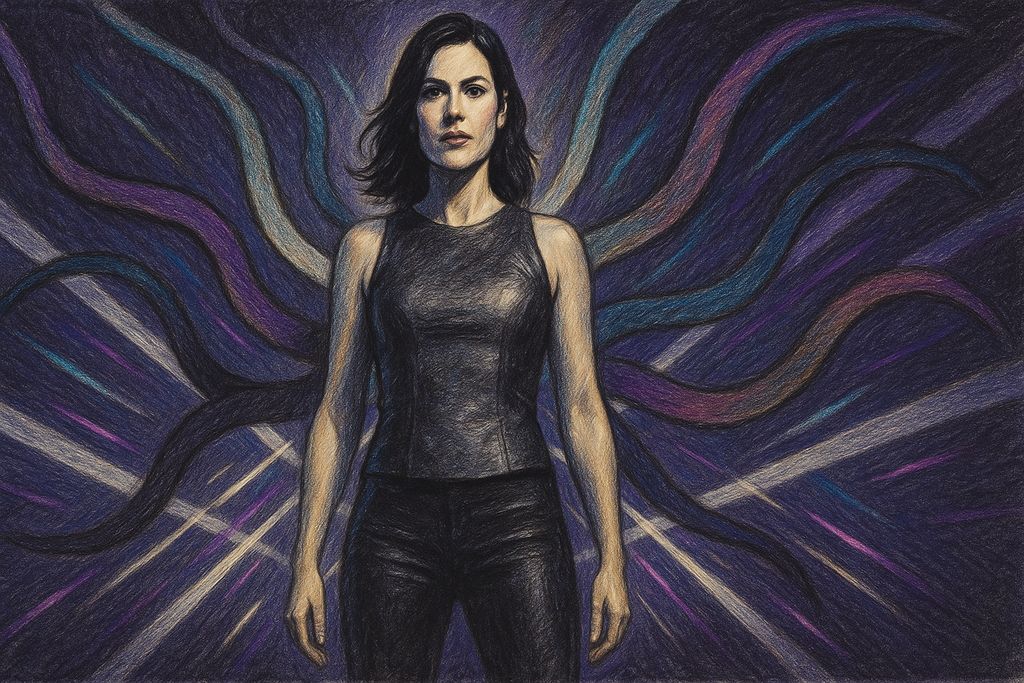
When Within Temptation released Hydra in 2014, the album immediately stood out as one of the most stylistically diverse and bold projects of their career. For Sharon den Adel, this era represented a new kind of artistic freedom — the freedom to explore multiple musical identities without abandoning the emotional core that had always defined her voice. Hydra was built on the idea of multiplicity: different styles, different collaborators, different energies. The title itself, referencing the mythological creature with many heads, symbolized a project in which each song represented a distinct facet of the band’s evolving sound.
After the conceptual immersion of The Unforgiving, Hydra felt like an opening of windows. The album embraced heavier guitars, punchier rhythms, modern production techniques, and — most strikingly — a series of high-profile collaborations that brought Sharon into creative dialogue with artists from entirely different musical worlds. Yet despite its stylistic range, the album maintained a coherent emotional identity, unified by Sharon’s expressive performances.
The collaboration with Tarja Turunen on “Paradise (What About Us?)” became one of the album’s signature moments. Tarja, known for her operatic power as the former Nightwish vocalist, represented a different vocal tradition than Sharon — grand, dramatic, classically influenced. Sharon’s warmer, more narrative-driven voice created a compelling contrast. Their interplay symbolized a meeting of two pillars of the symphonic genre, demonstrating Sharon’s ability not only to hold her own alongside operatic intensity but to create emotional grounding through her natural clarity.
Another unexpected yet impactful collaboration came with American rapper Xzibit on “And We Run.” While some listeners were initially surprised by the blending of symphonic rock with hip-hop elements, the track revealed Sharon’s versatility. Her soaring, emotionally rich chorus provided a dramatic counterbalance to Xzibit’s grounded, rhythmic verses. The song showcased her ability to adapt her phrasing and tonal approach to entirely different musical languages without losing her expressive authenticity.
“Dangerous,” featuring Howard Jones (formerly of Killswitch Engage), expanded the album’s reach into heavier, metalcore-influenced territories. Sharon’s controlled intensity contrasted with Jones’ powerful vocals, creating a dynamic push-and-pull effect. Here, she demonstrated her capacity to inhabit a more aggressive sonic environment while retaining her signature warmth and clarity. The track illustrated that Sharon could deliver energy and force without resorting to harshness — a testament to her nuanced vocal identity.
Other moments on Hydra leaned into atmospheric, emotionally reflective territories. “Edge of the World” and “Silver Moonlight” allowed Sharon to return to the more cinematic, melancholic tones familiar from earlier eras. These tracks grounded the album, providing moments of introspection amid its more experimental entries. Sharon’s performance on these songs highlighted her ability to expand and contract emotionally depending on the landscape she was navigating.
What made Hydra artistically significant was not simply its diversity but its confidence. Sharon approached each collaboration and stylistic shift with a sense of openness — not trying to dominate the space, but to complement it, elevate it, and find truth within it. Her adaptability became one of the defining strengths of the album, reinforcing her reputation as one of rock’s most emotionally intelligent vocalists.
Visually, the era embraced darker metallic aesthetics, sharp contrasts, and modern silhouettes. Sharon’s appearance during this time reflected strength, boldness, and a forward-facing creative stance. Her styling became more angular, contemporary, and powerful — mirroring the album’s emphasis on multiplicity and experimentation.
In retrospect, Hydra stands as a celebration of creative fearlessness. It proved that Sharon’s voice could live comfortably in almost any musical context — from symphonic duets to rap-infused crossovers, from melodic rock to heavier metal-driven tracks. The album expanded her artistic universe, preparing the ground for the electronic-infused reinventions that would arrive with Resist.
The Collaborations: Voices in Dialogue
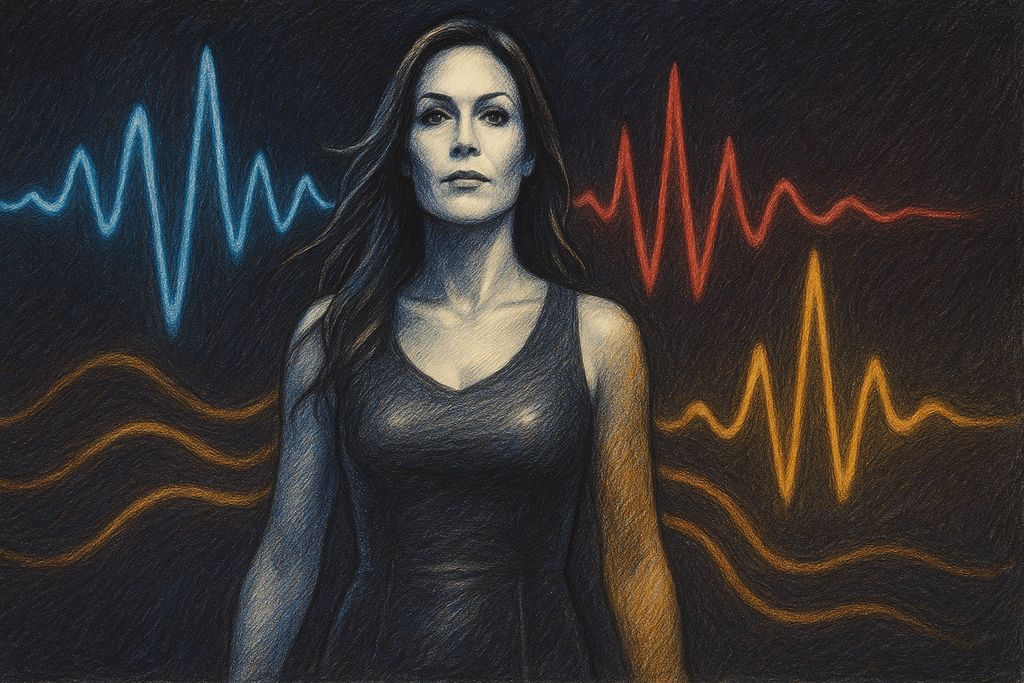
One of the defining qualities of the Hydra era was the way it expanded Sharon den Adel’s artistic world through collaborations with artists from vastly different musical backgrounds. Each guest brought a new texture, a new emotional register, a new rhythm — and yet Sharon remained the anchor that made these dialogues coherent. Her adaptability, emotional intelligence, and narrative instinct allowed her to move fluidly between genres while preserving the core identity of Within Temptation. The result was an album that felt multidimensional without becoming fragmented.
The most anticipated collaboration was undoubtedly Sharon’s duet with Tarja Turunen on “Paradise (What About Us?).” Two of symphonic metal’s most influential voices meeting on a single track created a moment of genuine historic resonance. Their vocal interplay demonstrated the emotional contrast at the heart of their artistry: Tarja’s operatic precision and dramatic force met Sharon’s warm clarity and narrative sensitivity. Instead of competing for dominance, the two voices created a natural equilibrium — a musical conversation that celebrated their differences. Sharon’s tone grounded the track emotionally, giving the song its accessible, human core, while Tarja provided a soaring counterpoint that elevated the duet into something cinematic.
Another standout collaboration was “Dangerous,” featuring Howard Jones. Known for his powerful vocal presence in Killswitch Engage, Jones brought a raw, visceral energy to the track. The contrast between his intensity and Sharon’s controlled, emotive delivery created an exhilarating dynamic. Rather than being overwhelmed by the heavier musical environment, Sharon rose to meet it — her voice cutting through the arrangement with striking clarity. She delivered power without harshness, demonstrating yet again her ability to adapt her emotional shading to different expressive demands.
But the collaboration that drew the most curiosity — and ultimately admiration — was “And We Run,” featuring American rapper Xzibit. The idea of blending hip-hop with symphonic rock raised eyebrows, yet the track revealed something essential about Sharon’s artistry: her willingness to treat genre as a landscape rather than a boundary. Her soaring chorus brought emotional openness to the song, while Xzibit’s grounded, rhythmic verses added grit and narrative tension. Sharon’s ability to transition smoothly into a more contemporary vocal phrasing allowed the contrasts to feel intentional rather than experimental for its own sake. She made the fusion coherent, giving the track its emotional center.
“Whole World Is Watching,” featuring Dave Pirner of Soul Asylum, offered yet another emotional texture. Pirner’s warm, slightly rough vocal presence complimented Sharon’s luminous tone in a way that felt organic and deeply human. The song’s theme — resilience in the face of adversity — fit Sharon’s strengths perfectly. Her delivery radiated empathy and quiet strength, qualities that allowed her to carry even the most straightforward melodic lines with emotional weight.
Taken together, these collaborations showcased Sharon’s remarkable range not only as a vocalist but as a communicator. She did not simply sing alongside guest artists; she responded to them, shaped space for them, and allowed her own tone to shift in subtle ways that made the interplay feel seamless. This flexibility reflected her deep understanding of music as a relational art — an exchange of emotion, texture, and perspective.
Beyond the vocals, the collaborations also expanded Within Temptation’s international presence. They bridged audiences across genres, bringing attention from metal, rock, pop, alternative, and hip-hop communities. Sharon’s emotional accessibility and adaptive sensitivity were essential in making these crossovers resonate authentically rather than feeling like stylistic experiments.
Looking back, the Hydra collaborations represent an important chapter in Sharon’s career — one that affirmed her as an artist capable of transcending genre categorization while maintaining a strong, recognizable identity. She proved that versatility is not the opposite of authenticity; rather, it can be its most expressive form.
Resist Era & Sharons Modern Identity

Resist (2019): A Dark, Futuristic Anthem
By the time Within Temptation approached the creation of Resist (2019), the world around them — culturally, politically, technologically — had changed in profound ways. Sharon den Adel felt this shift deeply, and it became a driving force behind the album’s aesthetic and thematic direction. Resist emerged as a dark, futuristic anthem, fusing symphonic elements with electronic textures, industrial accents, and a heightened sense of urgency. Sharon’s voice, always adaptable, became the emotional axis around which this new sonic universe turned.
Where earlier albums had drawn inspiration from mythology, nature, or personal introspection, Resist responded directly to contemporary anxieties: digital surveillance, information overload, the erosion of privacy, and the emotional toll of living in a hyper-connected world. Sharon described the album as a reaction to being overwhelmed by modern society’s constant noise — a feeling shared by many listeners navigating the complexities of the digital age. Her voice became the messenger of this resistance, carrying emotional clarity through an increasingly fragmented world.
Musically, the album introduced a sharper, more angular sound palette. Guitars remained present but were often interwoven with electronic pulses, distorted synths, and rhythmic textures that pushed the band into new territory. The result was a hybrid sound — part symphonic, part industrial, part cinematic — that demanded a different vocal approach. Sharon responded with performances that balanced strength and restraint, warmth and steel, vulnerability and defiance.
“The Reckoning,” a powerful collaboration with Jacoby Shaddix of Papa Roach, became one of the defining tracks of the album. Sharon’s voice cuts through layers of heavy electronics and marching rhythms with laser-like precision, her phrasing both urgent and melodic. The interplay between her clarity and Shaddix’ raw, energetic vocals created a sense of confrontation, reflecting the song’s theme of taking a stand against systemic pressures.
“Raise Your Banner,” featuring Anders Fridén of In Flames, pushed further into the territory of protest anthems. Sharon’s performance embodies both determination and emotional fatigue — a complex blend that reflects the struggle to maintain one’s voice against overwhelming forces. Her ability to communicate resilience without sacrificing vulnerability gives the song its emotional depth. When the chorus rises, her vocals become a call to collective action, hovering between lament and empowerment.
“Supernova,” one of the album’s most emotionally resonant songs, showcases Sharon’s ability to navigate futuristic production without losing her signature warmth. The track blends shimmering electronic elements with symphonic sweeps, creating an atmosphere of cosmic longing. Sharon’s vocal line carries a sense of searching, loss, and transcendence — a reminder that even in the midst of dystopian noise, human emotion persists.
The album’s aesthetic reflected this tension between digital fragmentation and human expression. Visually, the Resist era embraced cold metallic tones, holographic effects, and dystopian symbolism. Sharon’s styling became sharper and more futuristic, combining dark silhouettes with reflective textures that echoed the album’s industrial edges. Her presence in the music videos — poised, determined, visually striking — embodied the theme of resistance against dehumanizing systems.
What makes Resist such a significant entry in Sharon’s career is how boldly it moves beyond the boundaries of symphonic metal while retaining the emotional core that defines her artistry. She proved once again that her voice could adapt to new creative landscapes without losing authenticity. Even when surrounded by dense production and aggressive rhythmic structures, her vocals remained a beacon of emotional clarity.
Resist is not an escape into fantasy. It is a confrontation — a musical reflection of the world’s anxieties, filtered through Sharon’s uniquely empathetic lens. In doing so, the album reaffirmed her relevance and artistic courage in an era marked by rapid change and overwhelming noise. It stands as a reminder that resistance can take many forms — sometimes quiet, sometimes fierce, but always grounded in the human voice that refuses to be silenced.

Reinvention Through Strength
The Resist era was more than a stylistic shift — it was a declaration of reinvention. For Sharon den Adel, the years surrounding the album marked a period of introspection, transformation, and renewed artistic focus. She had returned from the deeply personal journey of My Indigo with a clearer understanding of her emotional boundaries, her strengths, and the kind of creative world she wanted to build. Resist became the bridge between that internal process and the band’s collective evolution, reflecting both vulnerability and defiance.
One of the most defining aspects of this era was the sense of urgency woven through Sharon’s performances. The album’s themes of digital overwhelm, loss of control, and the erosion of human connection resonated with her own reflections on the pressures of modern life. In interviews, she spoke openly about how the world’s constant stream of information, opinion, and noise had shaped the album’s emotional foundation. Her vocal delivery throughout Resist carries traces of this emotional fatigue — but equally, a refusal to surrender to it.
This balance is especially palpable in “Endless War,” one of the album’s more introspective tracks. Sharon’s voice moves with deliberate restraint, conveying the exhaustion of struggling against forces that feel omnipresent and unyielding. Yet beneath the weariness lies a sense of persistence, a quiet insistence on holding onto identity despite external pressure. Her ability to merge fragility and resilience into the same vocal line reflects a profound emotional maturity.
Another key track, “In Vain,” showcases Sharon’s growth as an emotional interpreter. The song, with its spacious production and melancholic undertones, allows her to explore subtle shifts in tone — a soft near-whisper, a tightening of breath, a swell into longing. Rather than leaning into dramatic crescendos, Sharon chooses intimacy. In doing so, she transforms the song into a meditation on regret and the quiet ache of choices that cannot be undone. The restraint in her performance becomes its own form of power.
Thematically, Resist challenged Sharon to explore broader societal issues rather than the mythic or personal narratives of earlier albums. Songs focused on resistance against dehumanizing systems, the struggle to maintain autonomy, and the emotional toll of a world increasingly mediated by technology. Sharon’s voice became the emotional conduit through which these themes reached listeners — grounding the album’s futuristic and industrial aesthetics in something human, relatable, and immediate.
Visual reinvention also played a crucial role in defining this era. Sharon’s styling embraced sharp geometric silhouettes, metallic accents, and bold contrasts that mirrored the album’s dystopian energy. In videos like “The Reckoning,” she appears almost as a figure of defiance in a fractured world — poised, determined, embodying strength without aggression. The imagery underscored her evolution into an artist capable of adapting her identity to the emotional needs of each creative chapter.
The Resist live performances further emphasized this transformation. Sharon’s stage presence grew more commanding, marked by greater physical stillness and emotional focus. Instead of sweeping gestures or theatrical flourishes, she adopted a more grounded posture, allowing the tension of the music and the weight of the themes to speak through her voice and expression. It was a reinvention rooted not in spectacle but in authenticity — a conscious choice to embody resilience through simplicity.
Perhaps the most profound significance of this era lies in what it revealed about Sharon’s longevity. After more than two decades in music, she remained capable of evolving — not out of necessity, but out of creative desire. Resist proved that she could respond to the cultural moment without losing the emotional core that had defined her artistry from the beginning. Reinvention, for Sharon, was not a departure from her identity but an expansion of it.
In embracing modern anxieties, electronic textures, and dystopian aesthetics, Sharon demonstrated that artistic relevance is not achieved by holding onto the past but by remaining open to transformation. Her journey through Resist stands as a testament to strength — not the loud, forceful kind, but the resilient, introspective kind that endures even when the world feels overwhelming.

My Indigo: Sharon’s Intimate Solo Project
By the time Sharon den Adel released My Indigo in 2018, she had already spent more than two decades shaping Within Temptation’s unmistakable emotional and sonic universe. Yet what the world did not know was that behind the band’s momentum, behind the reinventions and global tours, Sharon had been carrying an emotional weight that eventually demanded its own form of expression — quieter, more fragile, more intimate than anything she had created before. My Indigo emerged from this need, becoming a deeply personal project that allowed her to step outside the expectations of symphonic rock and instead explore vulnerability without amplification.
The origin of the album is rooted in a difficult time in Sharon’s life. Emotional exhaustion, personal struggles, and the pressure of constant reinvention had taken their toll, leaving her feeling unable to write for Within Temptation. In interviews, she spoke candidly about reaching a point of creative paralysis — a place where the emotional demands of her career collided with her private world so intensely that she could no longer access the energy needed for large-scale, cinematic songwriting. Instead of forcing a return to the band’s familiar dramatic intensity, she allowed herself to explore a smaller, more introspective space.
In many ways, My Indigo became her emotional refuge. The music is built not on sweeping orchestrations or soaring guitars but on delicate melodies, soft electronic textures, and understated rhythms. The album’s soundscape feels like an exhalation — a gentler, quieter space where one can finally sit with one’s own emotions without fear of being overwhelmed. Sharon’s voice, stripped of the symphonic weight that had long surrounded it, revealed new colors: breathier tones, subtle cracks, near-whispered passages, all carrying the weight of lived experience rather than dramatic artifice.
The title track, “My Indigo,” sets the tone for the album. It is tender, searching, melancholic yet hopeful. Sharon’s voice moves with the careful honesty of someone learning to speak again after a long silence. She does not soar — she leans inward. The emotional resonance of the song lies not in its power but in its restraint. Every note feels intentional, every word selected with quiet vulnerability.
Songs like “Crash and Burn,” “Out of the Darkness,” and “Where Is My Love” further exposed the emotional landscape Sharon was traversing. Rather than narrating mythical worlds or universal conflicts, she wrote about internal fractures, self-doubt, and the slow, fragile process of healing. These songs do not hide behind metaphor; even when symbolic, they pulse with personal truth. Sharon’s songwriting became more direct, more confessional, more intimate. For fans who had followed her through decades of symphonic grandeur, this album offered a rare glimpse into the emotional core of the artist herself.
One of the most striking aspects of My Indigo is the way it reveals Sharon’s strength through softness. In Within Temptation’s music, her voice often symbolizes hope rising against overwhelming forces, or clarity cutting through darkness. In My Indigo, hope does not rise — it trembles. Clarity is not a beacon — it is a flicker. Yet both remain present, transformed into something gentler, more human. Sharon’s emotional courage lies in her willingness to expose fragility, to let her voice carry not only what she has mastered but also what she still struggles to understand.
The album’s production, created in collaboration with long-time Within Temptation producer Daniel Gibson, emphasizes warmth and minimalism. Subtle electronic layers, acoustic touches, and understated rhythmic patterns support Sharon’s voice without ever overshadowing it. The arrangements feel like quiet conversations rather than dramatic statements. Even at its most melancholic, the album never collapses into despair; it carries a soft glow, like the last light of day, gentle but determined to remain.
What makes My Indigo an essential part of Sharon’s artistic story is the way it reconnected her with the emotional forces that originally drew her to music. In stepping away from the expectations placed upon her as the frontwoman of a global symphonic band, she rediscovered the personal, internal voice that existed long before Within Temptation. This reconnection became the bridge that eventually allowed her to return to the band with renewed creative strength — a fact she has acknowledged in numerous interviews. Resist would not exist without My Indigo. The personal restoration made possible by this project allowed her to approach Within Temptation’s future with clarity and emotional resilience.
The album also expanded Sharon’s artistic identity in the public eye. Fans and critics alike praised the project for its sincerity, its emotional depth, and its quiet bravery. Sharon’s ability to move outside her established genre and explore new musical territories without losing authenticity demonstrated her versatility and artistic independence. She became not merely a leading figure of symphonic metal, but a songwriter capable of crafting emotionally resonant landscapes in any genre she chose to touch.
Ultimately, My Indigo is not an escape from the world of Within Temptation — it is an act of self-preservation. It is the musical embodiment of stepping back, breathing, listening, and allowing oneself to rebuild. Through its gentle textures and intimate confessions, the album stands as one of the most honest chapters in Sharon den Adel’s career. It shows that strength is not only found in soaring choruses or cinematic crescendos; sometimes it is found in quiet recognition, in the soft corners of the self, in the willingness to say: I am not okay, but I am still here.
Artistic Identity: Voice, Style & Symbolic Language
Across her decades-long career, Sharon den Adel has developed an artistic identity that is instantly recognizable yet continually evolving. It is an identity shaped not only by her voice, but by her visual sensibility, her narrative instincts, her emotional intelligence, and her ability to translate inner worlds into sound and image. While many vocalists build their presence around technical brilliance, Sharon’s artistry lies in balance — the equilibrium between vulnerability and strength, clarity and warmth, control and emotional openness. Understanding her artistic identity means understanding the delicate architecture of these contrasts.
At the center of Sharon’s identity is her voice. It does not conform to classical tradition nor does it lean into the aggressive edge associated with heavier rock vocals. Instead, her timbre occupies a rare middle ground — pure, crystalline, emotionally illuminated. She sings with intention rather than bravado, shaping each phrase to convey narrative rather than technical display. Her upper register is bright without sharpness, her midrange warm and resonant, and her softer tones carry a near-whispered intimacy that feels deeply human. Over the years, Sharon refined her ability to shift seamlessly between these modes, allowing her to convey a full spectrum of emotional states without sacrificing the coherence of her sound.
What distinguishes Sharon from many of her contemporaries is her intuitive understanding of vocal narrative. In Within Temptation’s more cinematic compositions, she often functions as the emotional narrator rather than simply the melodic center. Her phrasing reveals how she interprets character, emotion, or thematic tension within a song. She places breaths, softenings, slight hesitations, or measured crescendos with storytelling purpose rather than for technical emphasis. This ability becomes especially evident in concept-driven works like The Unforgiving or emotionally charged pieces like “Frozen,” where her voice not only carries the song but inhabits it fully.
Sharon’s visual sensibility is another fundamental part of her artistic identity. Long before the world came to associate her with flowing stage gowns, dramatic silhouettes, and symbolic designs, she was already sketching her own fashion ideas. Her fashion background directly influenced the band’s visual direction across eras. From the ethereal whites and greens of Mother Earth to the wintry blues of The Silent Force, from the dark, dramatic aesthetics of The Heart of Everything to the graphic-novel sharpness of The Unforgiving and the futuristic metallic textures of Resist, Sharon shaped how Within Temptation looked as much as how it sounded.
Her costumes are more than visual embellishment — they are extensions of narrative. A dress made of layered whites evokes wind and purity; leather, angular silhouettes reflect conflict; metallic fabrics suggest futurism or resistance. Sharon intuitively uses fabric, texture, and shape the way she uses vocal phrasing: to communicate emotional space. On stage, the movement of her dresses often enhances the music’s sense of motion, while more structured outfits anchor heavier, darker themes. It is visual storytelling layered onto auditory storytelling.
Another element of Sharon’s artistic identity is her emotional authenticity. She does not perform with exaggerated theatricality, even when the music’s scale is enormous. Instead, she anchors her presence in sincerity. Her gestures are measured, her expressions genuine, her emotional delivery grounded rather than performed. This authenticity allows her to connect with audiences across cultures and genres. Whether singing before thousands at a festival or performing a quiet ballad, she projects an emotional accessibility that feels deeply human.
Her songwriting reflects this same emotional honesty. Sharon often writes from personal experience — sometimes directly, sometimes symbolically — weaving feelings of doubt, hope, loss, resilience, and self-discovery into music that resonates on a universal level. Even when working with conceptual frameworks or fictional narratives, she brings emotional truth into the lyrics, ensuring that listeners feel something authentic beneath the imagery. In songs like “Jillian,” “All I Need,” “Supernova,” or her My Indigo material, one can hear the traces of her lived experience, distilled into melody and metaphor.
Symbolism also plays a crucial role in Sharon’s artistic language. Across the band’s imagery, recurring motifs appear: natural elements like wind, ice, fire, or water; mythic shapes like wings or halos; geometric lines suggesting internal conflict; futuristic textures reflecting societal tension. Sharon often integrates these symbols into her lyrics and visuals, creating thematic cohesion throughout an album cycle. These motifs act as emotional anchors, guiding listeners through the psychological or narrative journey of each chapter.
A defining trait of Sharon’s artistry is her ability to adapt without losing identity. Many vocalists who undergo stylistic reinvention risk becoming unrecognizable; Sharon evolves by expanding rather than replacing facets of herself. Her transitions from symphonic to pop-influenced to electronic-infused to cinematic rock are all rooted in the same emotional core. What changes is her method of expression, not her expressive truth. This adaptability is one of the reasons she has remained relevant across decades and genres.
Her stage presence offers a final key piece to her artistic identity. Sharon is not a performer who dominates through scale; she commands through presence. Her calmness is magnetic. She creates emotional gravity simply by standing still, letting the music breathe through her. This quality sets her apart in a genre that often favors spectacle. Audiences do not look to Sharon for theatrics — they look to her for connection, understanding, and emotional resonance.
Taken together, Sharon den Adel’s artistic identity is a tapestry woven from many threads: a crystalline voice, a designer’s eye, a storyteller’s instinct, a poet’s emotional honesty, and a performer’s quiet but powerful magnetism. She embodies the rare ability to make music feel both intimate and expansive, grounded and transcendent. Through every evolution of sound and style, she remains unmistakably herself: an artist who speaks through emotion first, genre second, and who continues to shape her own universe with every breath she sings.
Influence, Legacy & Cultural Resonance
Across more than two decades, Sharon den Adel has become one of the most influential voices in modern symphonic and alternative music — not solely because of her vocal abilities but because of the emotional philosophy that underpins her artistry. Her legacy is not defined by spectacle or technical dominance, but by something more enduring: a way of singing, creating, and leading that values authenticity over drama, emotional intelligence over bravado, and storytelling over formula. To understand her influence is to recognize how deeply her presence reshaped both genre expectations and audience perceptions.
Within the symphonic metal world, Sharon helped redefine what a frontwoman could be. When Within Temptation first emerged, the genre was still forming its identity, often dominated by operatic vocal styles and theatrical excess. Sharon entered this space with a different aesthetic — not operatic, not aggressive, but pure, emotive, and accessible. Her voice carried clarity rather than grandeur, warmth rather than force. This approach opened the genre to listeners who might have found the classical or heavily dramatic elements overwhelming. Sharon’s style showed that emotional depth could be expressed through subtlety, that softness could stand firmly alongside heaviness, and that vulnerability could be as powerful as a scream.
Many of today’s leading vocalists cite Sharon as a formative influence. Artists such as Simone Simons (Epica), Charlotte Wessels (ex-Delain), and countless younger singers in the symphonic, gothic, and alternative scenes have spoken about how Sharon’s emotional honesty and tonal purity helped shape their understanding of what female-led rock and metal could sound like. She made it possible for an entire generation to step away from the operatic archetype without losing legitimacy within the genre. Through this, she quietly expanded the genre’s vocabulary.
Sharon’s cultural resonance also extends beyond music. Her presence challenged long-standing stereotypes surrounding women in rock and metal. Rather than adopting traditionally masculine-coded expressions of aggression or dominance, she led with emotional intelligence, elegance, and inner strength. Her calm stage presence, thoughtful interviews, and consistent artistic integrity offered a different model of leadership — one built on empathy and confidence rather than confrontation. Fans around the world connected with this approach, seeing in Sharon a reflection of their own complexities rather than an unattainable persona.
This influence is felt profoundly in the visual culture of the genre. Sharon’s fusion of fashion, symbolism, and musical atmosphere helped bring a new aesthetic into symphonic metal — one that emphasized narrative cohesion. Her dresses, stage designs, and visual concepts were never mere decoration. They became part of the emotional architecture of each album cycle. She showed that visuals are not accessories to music but extensions of it, tools for shaping emotional landscapes. This integrated approach has since become a defining characteristic of many artists who followed.
On a global scale, Sharon helped introduce symphonic and atmospheric metal to audiences far beyond Europe. Within Temptation became one of the first bands of their genre to build major followings in Latin America, Eastern Europe, and parts of Asia. Sharon’s approachable, emotionally grounded style resonated with audiences who might not have encountered this genre otherwise. Her voice — clear enough to transcend language barriers, expressive enough to carry complex emotions — acted as a universal connector. Fans across the globe describe her music as a companion through grief, transformation, and personal struggle.
Her legacy also encompasses the evolution of the band itself. Throughout countless reinventions — from gothic-tinged beginnings to symphonic majesty, from conceptual narrative rock to electronic-dystopian anthems — Sharon remained the cohesive emotional thread. Her willingness to grow, adapt, and explore new sonic worlds kept Within Temptation relevant in a rapidly changing musical landscape. Instead of clinging to a single formula, she allowed each era to reflect where she and the world were emotionally. This adaptability is a hallmark of her influence: she showed that reinvention is not betrayal but evolution.
Yet perhaps Sharon’s greatest cultural contribution lies in how she makes listeners feel. There is a rare emotional clarity in her performances that gives audiences permission to experience their own emotions without judgment. She offers comfort without cliché, strength without hardness, introspection without isolation. Her music has accompanied fans through heartbreak, illness, identity crises, and recovery. Her voice has become a symbol of resilience — the quiet kind, the kind that grows slowly and honestly rather than erupting in explosive displays.
Sharon’s resonance goes beyond charts, accolades, or statistics. It lives in the way people describe her music as a lifeline, a sanctuary, a place where they feel understood. It lives in the countless singers she inspired, the listeners she comforted, the cultural spaces she expanded. Her legacy is ongoing, not a monument but a living pulse — evolving, adapting, echoing across generations.
In a world where noise often overshadows nuance, Sharon’s contribution is clarity. In a landscape where spectacle often replaces sincerity, she remains rooted in emotional truth. And in a genre defined by dramatic extremes, she carved a path made not of extremes, but of balance — a place where softness and power coexist beautifully.

Conclusion: The Evergreen Voice of Symphonic Emotion
There are artists who leave an impact measured in sales, awards, or trends — and then there are artists whose influence is felt in deeper, quieter ways, woven into the emotional lives of the people who listen to them. Sharon den Adel belongs to the latter. Her work with Within Temptation, her solo explorations, and her constant reinvention across decades reveal an artist who does not simply perform music but shapes emotional landscapes, crafting spaces where vulnerability and strength coexist without contradiction.
Across every era, Sharon has remained remarkably true to a simple yet profound artistic principle: emotion first. Whether standing at the center of sweeping orchestral arrangements, navigating darker rock textures, lending her voice to futuristic, dystopian soundscapes, or whispering her way through the intimate world of My Indigo, she approaches music as a language of honesty. Her clarity — both vocal and emotional — gives listeners permission to feel deeply, to reflect, to heal. She does not overwhelm; she invites. She does not dominate; she connects.
What makes her legacy evergreen is not only her talent, but her integrity. Sharon has never clung to formulas or repeated past successes for comfort. Instead, she has embraced change with openness, creating new identities while protecting the emotional core that defines her. In doing so, she has shown that evolution is not a departure from one’s artistic truth, but a reaffirmation of it. Each album, each aesthetic transformation, each narrative shift becomes part of a larger journey — one that continues to resonate across generations.
Sharon’s influence reaches far beyond genre boundaries. She has shaped the sound and sensibility of modern symphonic rock, empowered countless female artists to lead with authenticity rather than conformity, and cultivated a global community united not by spectacle but by emotion. Her voice remains a constant thread through changing cultural landscapes — a reminder that sincerity never loses its relevance.
As Within Temptation moves forward and Sharon continues to expand her artistic horizons, her place within contemporary music feels not just secure, but essential. She is more than the frontwoman of a renowned band. She is a storyteller, a designer of worlds, an architect of emotional truth. And her voice — warm, clear, luminous — endures as one of the most recognizable and beloved sounds in modern rock history.
In the end, Sharon’s legacy is not defined by volume or scale, but by resonance. It is the kind that lingers long after the final note fades, carried quietly in the hearts of those who found a part of themselves inside her music.