

La España de los Kilómetros Vacíos
Made with generative AI; directed and curated by Daniel.
La España de los Kilómetros Vacíos explores rural loss, memory and renewal through Spanish alternative folk rock, vivid characters, and intimate storytelling.
Tracklist
14 tracks
Liner Notes
A short editorial read on the album world, sound, and standout moments.
About the Album
La España de los Kilómetros Vacíos begins with an inheritance: a ring of keys, a stack of unpaid bills and a neglected house in a Castilian village where only seventeen people remain. Clara arrives from Madrid expecting to inspect the property, then leave. Instead, she encounters a place that has not vanished, but has been steadily pushed beyond the reach of schools, healthcare, transport, housing and political attention. Across fourteen songs, the album turns that erosion into an observed human drama.
Musically, the record is rooted in alternative folk rock, shaped by Iberian acoustic traditions, chamber-pop detail and the patient dynamics of post-rock. Nylon-string guitar, warm bass and dry live drums form the backbone, while viola, cello, felt piano and electric guitar enter when the story requires them. The production rarely reaches for spectacle. Its power comes from proximity: a key turning in a lock, chalk moving across a forgotten blackboard, a bus leaving before sunrise, sheep bells crossing an empty road, a kitchen lamp burning long after the square has gone dark.
The opening track, “La llave de cinta azul,” immediately establishes the album’s central tension. Clara believes she has inherited a building; what she has really inherited is a question. The blue-ribboned key becomes a recurring symbol of access, responsibility and unfinished business, returning throughout the record as the story widens beyond her grief. “Diecisiete nombres” refuses to treat the remaining residents as statistics. Each person has a name, a routine and a reason for staying, and the song makes a demand: count properly before declaring a place empty.
From there, the album works like an audio archive. “La escuela conserva la fecha” enters a classroom where the final date is still written on the board. “Dos horas hasta el recreo” follows a schoolboy whose education begins and ends with hours on a bus. “El último rebaño” gives the final shepherd the space to speak without turning him into rural folklore. These are not nostalgic postcards. They are songs about work, distance, policy and the practical conditions that determine whether a life can continue in a place.
That documentary clarity is one of the album’s strengths. “Alcalde, cartero y sepulturero” finds bleak humor in a mayor who also delivers letters and buries the dead because public services have withdrawn faster than responsibilities have disappeared. “La cocina que sigue encendida” shifts the focus to Mirela, a Romanian care worker sustaining an elderly woman’s life while separated from her own family. The song dismantles the fantasy that rural survival rests only on tradition. It also depends on migrant labor, care work, contracts, housing and time off.
The turning point arrives with “Aquí todavía queda alguien.” Clara plays her recordings inside the closed community hall, and the village hears itself as a shared archive for the first time. The chorus is not a triumphant slogan. It is a statement of continued existence: someone still lights the stove, waits for the bus, counts the flock and answers the door. The arrangement grows from close acoustic detail into a broad communal performance, but the song resists easy uplift. Being heard is not the same as being saved.
The darker second half makes that distinction clear. “Casas vacías, puertas cerradas” exposes the contradiction of villages filled with unusable homes: disputed inheritances, absent owners, damaged roofs and rents that newcomers cannot risk. “Noventa minutos” turns distance into danger when Teresa needs urgent medical care. The road to the hospital is not presented as bad luck or geography alone, but as the result of decisions made elsewhere. Then “El billete de las 18” gives Clara her most honest moment. Staying might be commitment, but it might also be guilt, vanity or the desire to cast herself as a rescuer.
The album earns its final act by rejecting that rescuer narrative. “La lista sobre la mesa” replaces inspiration with a budget, a work schedule and assigned responsibilities. The former municipal building will not become a miracle. It will become something more credible: a shared room with electricity, desks, books, recording equipment, internet access and a door that opens. “La casa del concejo” captures the work of making that possible, from broken wiring and damp walls to donated shelves and delayed broadband installation.
“Veintiuna luces” closes the album with four new residents and no illusion that the village has been restored. The doctor is still far away. The school journey is still too long. People may leave again. Yet twenty-one illuminated windows now answer the darkness where there were seventeen before. The result is hopeful because it remains measurable, provisional and vulnerable.
Recommended if you like: Political punk, post-punk, protest rock, anti-authoritarian lyrics, dystopian concept albums, AI-assisted music projects. This is not a punk record in sound, but it shares protest music’s instinct for naming systems rather than blaming individuals. Its anger is carried by detail, its politics by lived consequences, and its optimism by collective work rather than grand declarations.
La España de los Kilómetros Vacíos is worth hearing from beginning to end because every song changes the meaning of the one before it. It is a record about depopulation, but also about who is allowed to remain, what a functioning community requires and why a place cannot survive on scenery alone. Thoughtful, melodic and forceful, it gives rural Spain neither a funeral nor a fantasy. It gives it voices, contradictions and one open door.
Production Notes
All tracks were generated with AI music models, then processed for the final sound. No human performance recordings are used.

La Última Serenata
Mariachi pop tells a love story in reverse, moving from a final serenade back to the first song beneath a balcony.
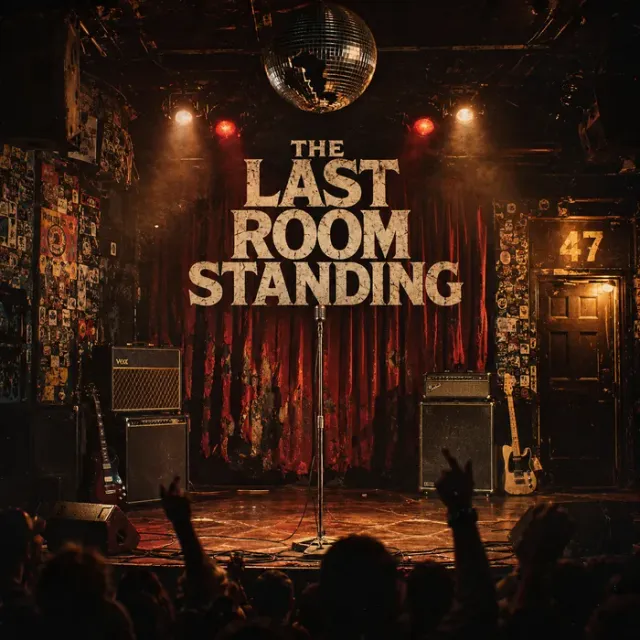
The Last Room Standing
A live alternative rock album about rising rent, closing music clubs, and the community fighting to keep one room open.
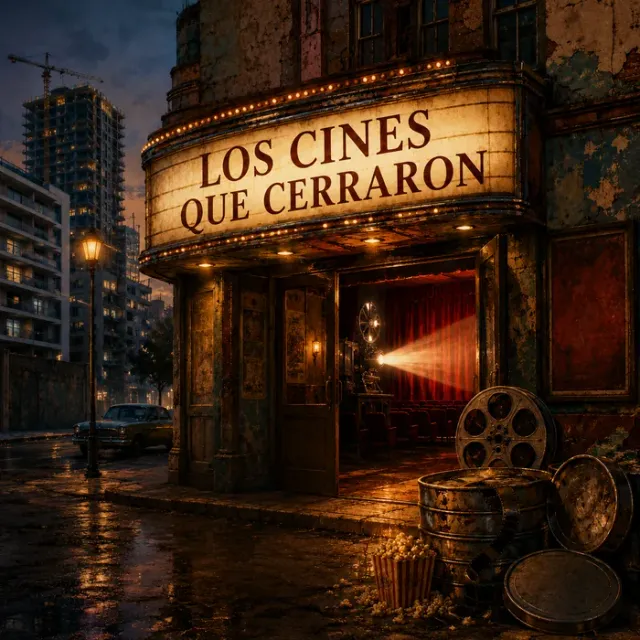
Los Cines Que Cerraron
A neighborhood cinema becomes the setting for love, memory, and resistance in a Latin pop album about a city losing its shared rooms.

Oranje In Ballingschap
A Dutch rock opera about exile, monarchy, war, and the voice that keeps an occupied country's memory alive from abroad.


Download the complete album
Get the full ZIP package with tagged audio files, cover artwork, and album metadata.
Help keep the albums coming
If this album was useful or fun to listen to, a small contribution helps cover hosting, tools, and new music experiments.