


Mariachi pop tells a love story in reverse, moving from a final serenade back to the first song beneath a balcony.
Tracklist
Liner Notes
A short editorial read on the album world, sound, and standout moments.
About the Album
La Última Serenata begins where most romantic records would end: with an old man standing beneath a closed window, unsure whether the woman inside still remembers him, forgives him, or even wishes to hear his voice. He wears a faded black charro suit, carries a battered guitar and holds a single red rose in a hand marked by age. There is no audience, no stage and no applause waiting for him. This time, the song is not a performance. It is an admission.
From that opening scene, the album moves backwards through an entire life. Each track removes another layer of reputation, distance and self-deception, gradually revealing the young man who once stood beneath the same balcony with a new guitar and no idea how much a promise could cost. This reverse chronology gives La Última Serenata its distinctive emotional pull. The listener already knows where the story ends, but every step toward the beginning changes the meaning of what came before.
The album’s first half is its darkest. “La Última Serenata” introduces the elderly singer at the balcony, asking for nothing except the right to tell the truth. “Rosas Que Nunca Murieron” opens the box in which he has stored dried flowers, photographs, letters and the white handkerchief that followed him through decades of touring. “Después del Aplauso” moves into the backstage rooms of his successful years, where flowers, awards and crowded theatres only make the absence beside him more visible.
That contrast between public triumph and private failure is one of the album’s strongest ideas. The singer is not portrayed as a victim of fate. He made choices, and the lyrics refuse to let him hide behind trains, contracts, bad timing or youth. “La Silla Vacía” places an unused seat at a celebration of his career, while “La Carta Sin Sello” finds him writing the apology he never sends. These are not vague songs about regret. They are built from objects and actions: a name card beside an untouched glass, a folded letter in a hotel drawer, a gardenia broken near a fountain.
The emotional centre arrives with “Bajo la Lluvia No Volví.” After an argument, he walks away through the rain and hears the door behind him. The street is short. He could turn around. He does not. The song becomes the album’s decisive wound because it removes the comfort of inevitability. Nothing supernatural keeps him moving. Pride does.
From there, the record continues backwards into “Promesas de Cantina,” where confidence and romantic promises begin to reveal their emptiness, and “El Pañuelo Blanco,” which reinterprets one of the album’s central symbols. The handkerchief is not a contract requiring the woman to wait forever. It is simply a reminder of the person he once claimed he wanted to remain. That distinction gives the woman in the story dignity and agency. She is not a reward waiting at the end of his redemption. Her forgiveness remains hers to give or withhold.
As the chronology approaches youth, the music becomes warmer and more mobile. Trumpets brighten, rhythms loosen and the singer’s voice sheds some of its gravel. “Cuando Éramos Invencibles” captures two young people sharing sweet bread beside a fountain, drawing an imaginary house on a napkin and believing that affection alone will protect them from every future choice. The song is joyful, but not naïve in its writing. Its most telling line recognises that they were young, not invincible; they simply did not yet know the difference.
“El Primer Beso en la Plaza” is one of the album’s most tender pieces. The kiss is imperfect, slightly awkward and surrounded by ordinary details: coffee, cinnamon, closing flower stalls and a coin beneath the water of a fountain. That specificity makes the romance persuasive. These characters do not fall in love in an abstract dreamscape. They fall in love in streets that can be walked, beside shops that close for the night, under lamps that will still be standing when one of them returns decades later.
The final two tracks complete the circle. “Flores Para Tu Ventana” follows the young singer through the market as he spends his few coins on gardenias and one small rose. He rehearses, breaks a guitar string and rejects an overly dramatic lyric because it does not sound honest. Then “La Primera Serenata” places him beneath the balcony for the first time. His voice shakes. A neighbour complains. He sings anyway.
Production Notes
All tracks were generated with AI music models, then processed for the final sound. No human performance recordings are used.
Full album download
Download the complete album
Get the full ZIP package with tagged audio files, cover artwork, and album metadata.
Support MelodyMind
Help keep the albums coming
If this album was useful or fun to listen to, a small contribution helps cover hosting, tools, and new music experiments.

Luz de Cempasúchil
Latin pop and mariachi accompany a Día de Muertos homecoming shaped by marigolds, family secrets, and an unfinished love story.

La España de los Kilómetros Vacíos
La España de los Kilómetros Vacíos explores rural loss, memory and renewal through Spanish alternative folk rock, vivid characters, and intimate storytelling.
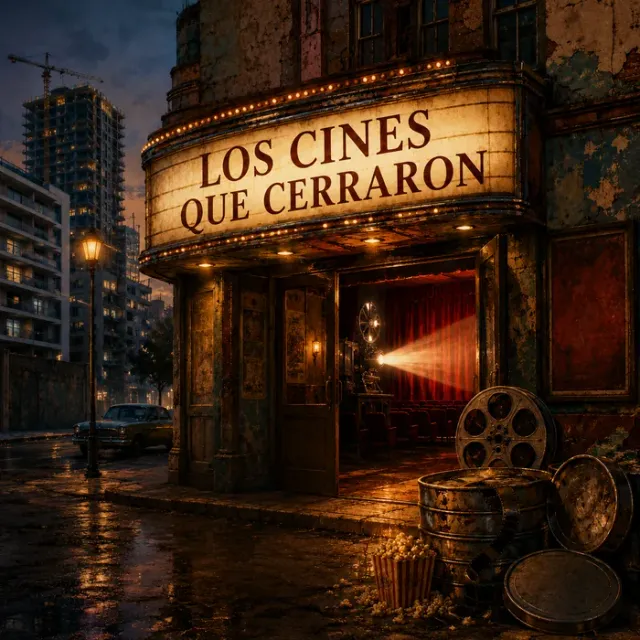
Los Cines Que Cerraron
A neighborhood cinema becomes the setting for love, memory, and resistance in a Latin pop album about a city losing its shared rooms.

Neon Hearts
A nocturnal K-pop story follows two people through Seoul, moving from Hongdae's crowded streets to a dawn confession across synth-pop, R&B, and dream-pop textures.


