


French protest punk concept album with post-punk grit, urban rage, class tension and dark hope in a city that refuses to stay silent.
Tracklist
Liner Notes
A short editorial read on the album world, sound, and standout moments.
About the Album
La Ville en Colère is not a polite protest record. It does not arrive with clean slogans, glossy rebellion or postcard images of France. It comes out of stairwells with broken lights, wet concrete courtyards, overcrowded metro platforms and kitchen tables covered in rent letters. This is a full concept album built around a fictional French working-class district on the edge of a large city — a place where people are watched, priced out, misrepresented and exhausted, but not defeated. Across fourteen tracks, the album turns private pressure into public resistance, and it does so with the raw force of French political punk, cold post-punk tension and dark alternative rock.
The story follows a young woman in her early twenties who begins the album simply trying to survive. She is not written as a flawless revolutionary icon. She is tired, underpaid, angry, caring, uncertain and often afraid. That humanity is what gives the album its weight. In the opener “Béton Gris,” the housing block is almost a living character: grey concrete, dead elevators, flickering hallway lights and mailboxes full of warnings. From there, the record moves through the early-morning metro of “Terminus Nord,” the sisterhood of “Les Filles du Quartier,” and the domestic pressure of “Lettres de Loyer,” where bureaucracy becomes something intimate and violent.
Musically, La Ville en Colère is driven by a consistent sonic identity: distorted guitars, dry drums, tense basslines, cold synth textures, shouted gang vocals and a rough street-level production style. The sound is deliberately unpolished in spirit. It has the feeling of a rehearsal room, a basement venue, a political march and a late-night broadcast all bleeding into one another. The post-punk influence gives the album its nervous pulse, while the punk side gives it teeth. The vocals move between spoken-word urgency, melodic fatigue and full-throated protest choruses, making the record feel less like a sequence of songs and more like a city slowly finding its voice.
The album gains force from the way it refuses to reduce protest to a simple fantasy of fire and victory. The mid-album climax, “Vendredi Rouge,” is massive and explosive, but it also introduces doubt. The red flares, the marching bodies and the collective roar are thrilling, yet the protagonist begins to understand that anger can protect, but it can also consume. That tension deepens in “Les Caméras Mentent,” where the media cuts the movement into convenient images, and in “Le Frère Arrêté,” one arrest turns political struggle back into personal pain. The album understands that resistance is not only noise; it is care, memory, fear, discipline and the difficult choice to keep others safe while refusing to disappear.
The recurring phrase “La rue n’oublie pas” becomes the record’s moral spine. It appears as a whisper, a chant, a warning and finally as the title of the closing track. The phrase becomes the album’s answer to erasure rather than a slogan. The street remembers the names missing from the news reports, the unpaid repairs, the mothers waiting in kitchens, the young people filmed only when they are angry, and the quiet labor that holds a neighborhood together. By the final songs, the movement has changed. The heroine moves from reaction toward organization. In “Tenir la Ligne,” the album turns toward organization, mutual protection and collective responsibility. “La Ville en Colère” then becomes the grand confrontation: the whole city, wounded but breathing, speaking through the crowd.
The closing track, “La Rue N’Oublie Pas,” avoids an easy happy ending. The elevator is still broken. The rent letters have not vanished. The city has not suddenly become fair. But something essential has shifted: people have seen each other. They have spoken aloud what was meant to remain private shame. They have learned that memory itself can be a form of resistance. That gives the album its dark hope. It is not naïve, not decorative and not sentimental. It is the kind of hope that stands in a wet courtyard at dawn and keeps count.
As a concept album, it is vivid, focused and emotionally coherent. As a protest record, it has hooks sharp enough to be shouted back. And as a listening experience, it carries the listener from fatigue to fury, from fury to solidarity, from solidarity to doubt, and from doubt to a harder, more honest kind of hope. La Ville en Colère is the sound of a city that has been spoken about for too long — and finally speaks for itself.
Production Notes
All tracks were generated with AI music models, then processed for the final sound. No human performance recordings are used.
Full album download
Download the complete album
Get the full ZIP package with tagged audio files, cover artwork, and album metadata.
Support MelodyMind
Help keep the albums coming
If this album was useful or fun to listen to, a small contribution helps cover hosting, tools, and new music experiments.
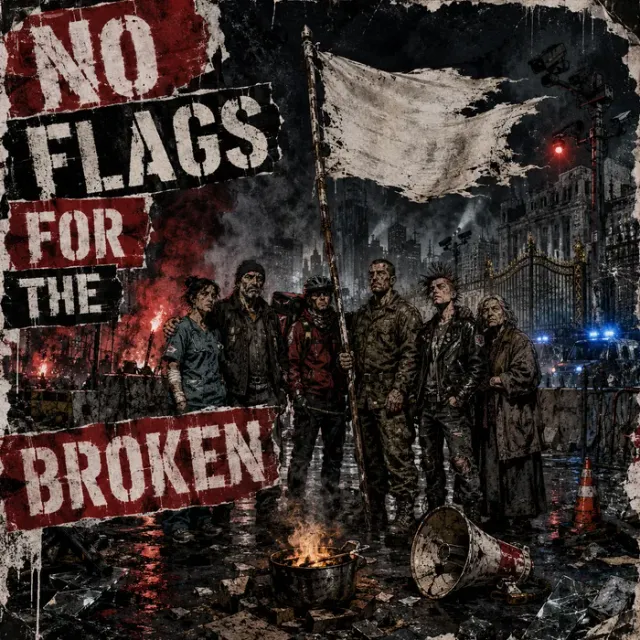
No Flags for the Broken
No Flags for the Broken is a fierce political punk concept album about war, poverty, propaganda and solidarity in a city abandoned by those in power above it.
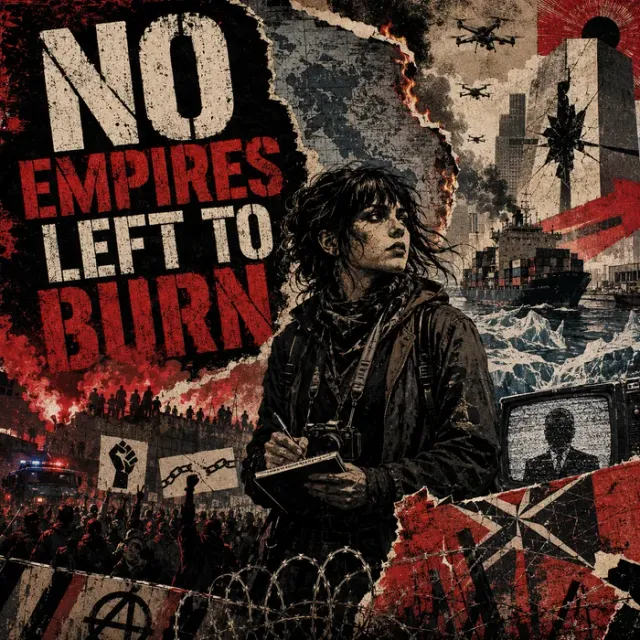
No Empires Left to Burn
Political punk examines maps, borders, imperial nostalgia, and resistance through a sequence of direct, anti-authoritarian songs.

No Kings, No Clowns
Political punk and sharp satire follow propaganda, street protest, and the public performance of power in a fractured city.
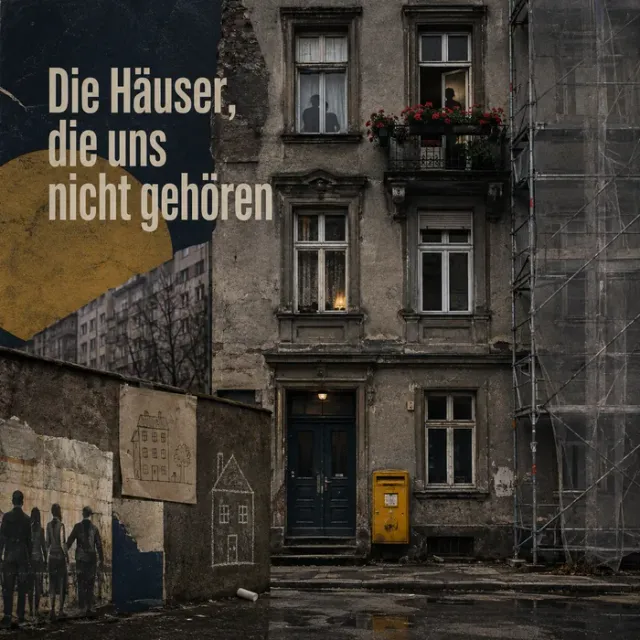
Die Häuser, die uns nicht gehören
A German post-punk concept album about rent, displacement, memory and resistance inside one apartment house fighting to remain a home as its city is sold off.


