


Lacrime di Venezia is a cinematic Italian art-pop album of lost love, moonlit canals, masked memories and elegant Venetian sorrow.
Tracklist
Liner Notes
A short editorial read on the album world, sound, and standout moments.
About the Album
Lacrime di Venezia is the kind of concept album that does not simply use Venice as a backdrop, but treats the city as a living instrument. Its canals, bridges, palazzi, masks and moonlit stones become part of the arrangement, shaping a record that feels at once intimate, theatrical and haunted. Built around Italian art pop, cinematic chamber pop, neo-classical balladry and modern chanson, the album moves with the patience of a late-night walk through a city that remembers more than its people are willing to say.
The story follows a singer returning to Venice after many years away. She comes back to the place where a great love was lost, not with the certainty of someone seeking closure, but with the fragile hesitation of someone who knows that memory can be both sanctuary and punishment. From the fog over the Canal Grande to an empty Piazza San Marco at three in the morning, from a masked ballroom to a deserted palazzo filled with mirrors and old letters, each song opens another room in the emotional architecture of the album.
Musically, Lacrime di Venezia is elegant without becoming decorative. The sound world is built from felt piano, melancholic strings, subtle electronic pads, brushed percussion, cello lines, distant bells and intimate Italian female vocals that move between confession and dramatic release. Nothing feels rushed. The songs are designed to breathe, unfold and gather emotional weight over time. Choruses arrive not as cheap explosions, but as moments when the character can no longer keep the truth below the surface.
The album works through its sense of place. Venice is not treated as a postcard city. There are no simple romantic clichés here. The city is wet stone, black gondolas, sealed rooms, salt on the lips, letters never sent, red roses on marble, masks that lie beautifully, and water that keeps everything. The recurring images give the record a strong identity, but they change meaning as the story deepens. At first, the water is memory. Later, it becomes accusation. By the end, it becomes release.
The emotional arc is carefully shaped. The opening tracks introduce the return, the first wounds and the seductive danger of nostalgia. In the middle of the album, the palazzo and the black gondola pull the protagonist toward darker revelations. The title track, Lacrime di Venezia, becomes the grand emotional climax: not a scene of easy healing, but a ritual of finally speaking what had been buried. The closing song, Dove Finisce l’Acqua, leaves the listener with something quieter than triumph — a bittersweet peace, the feeling of carrying love differently rather than leaving it behind.
The full sequence matters more than any isolated single. Small details return in altered forms: a rose, a letter, a window, a bridge, the sound of water against stone. The lyrics are built around concrete images and emotional movement, so the story can be followed without turning into plain exposition. It feels literary, but still song-driven; cinematic, but still human.
Lacrime di Venezia centers on the difficult dignity of letting go. Not forgetting. Not pretending the wound never happened. Letting go here means walking through the city one last time and allowing every place to speak: the bridge, the square, the room, the water, the letter, the song. It is an album about how memory can trap us, but also how art can give memory a shape we are finally able to hold.
Production Notes
All tracks were generated with AI music models, then processed for the final sound. No human performance recordings are used.
Full album download
Download the complete album
Get the full ZIP package with tagged audio files, cover artwork, and album metadata.
Support MelodyMind
Help keep the albums coming
If this album was useful or fun to listen to, a small contribution helps cover hosting, tools, and new music experiments.

Neon Hearts
A nocturnal K-pop story follows two people through Seoul, moving from Hongdae's crowded streets to a dawn confession across synth-pop, R&B, and dream-pop textures.

Velvet Coffin
Velvet Coffin is a gothic rock concept album of toxic love, post-punk shadows, dark romance, velvet vocals and a burning escape from obsession.
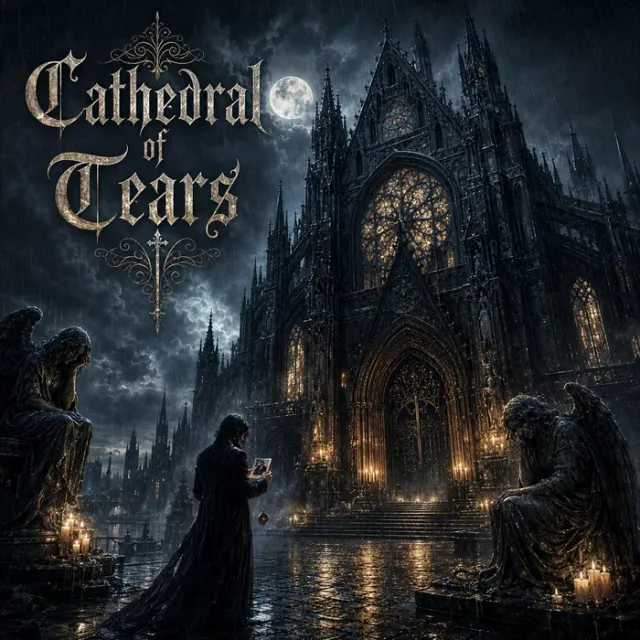
Cathedral of Tears
A gothic darkwave concept album of grief, guilt and sacred release, where rain, bells and broken glass turn a haunted cathedral into memory and mercy.

La Última Serenata
Mariachi pop tells a love story in reverse, moving from a final serenade back to the first song beneath a balcony.


