


Les Cahiers sans Réponse turns centuries of unheard French grievances into tense art rock, post-punk and political chanson, asking whether anyone listens now.
Tracklist
Liner Notes
A short editorial read on the album world, sound, and standout moments.
About the Album
Les Cahiers sans Réponse is built around a deceptively simple question: what happens to public anger after it has been written down? The album begins in the municipal archive of a small French town, where Claire, an archivist preparing an exhibition, discovers two notebooks separated by more than two centuries. One belongs to the world of 1789, with grievances recorded in ink and sealed in wax. The other comes from 2019, filled with complaints about transport, healthcare, housing and the cost of living. The shock of the record lies not in claiming that history repeats neatly, but in noticing how familiar the emotional grammar can feel.
Musically, the album refuses the obvious route of turning political history into grand historical theatre. Its core is French art rock with a strong post-punk spine: melodic bass pushed high in the mix, dry live drums, angular clean guitar and close, uneasy strings. Political chanson enters through the phrasing rather than nostalgia, while chamber-rock touches give the songs room for cello, piano and controlled shifts of tension. The result is literate without becoming academic and dark without relying on decorative gloom. These songs sound like rooms, desks, fluorescent corridors and municipal halls rather than monuments.
That sense of physical place matters. “Les Cahiers sans Réponse” opens with paper, sealing wax and two volumes on a table, placing the listener inside Claire’s discovery. “Le Sceau rouge” moves into the act of recording grievances in 1789 and makes a sharp point about mediation: anger becomes official only after someone rewrites it into acceptable language. “Le Prix du sel et du pain” narrows the historical argument to household arithmetic. Taxes, bread and scarcity are not treated as symbols first; they are shown as quantities that determine whether a family eats well enough.
The album becomes especially effective when modern voices occupy the same musical world. “Le Quai sans train” follows a retired resident whose closed station has turned distance into a daily penalty. “Huit patients, une nuit” is one of the record’s strongest pieces because it avoids heroic language and simply documents an understaffed hospital shift: rooms, alarms, exhaustion, missing hands. “Trois pièces, deux salaires” performs a similar trick with housing costs, turning policy into rent dates, childcare, a broken fridge and the quiet calculations parents make after their child has gone to bed.
The midpoint, “Mais qui nous lit ?”, is where the accumulated pressure finally becomes confrontation. Voices from 1789 and 2019 are set against each other until the distinction between historical grievance and modern consultation begins to blur. The recurring line — asking who actually reads what citizens are repeatedly encouraged to write — functions as the album’s central hook, but also as its accusation. Crucially, the song does not pretend nobody reads these documents. The more troubling idea is that people do read them, summarize them, classify them and pass them onward until the original urgency has been cleaned into administrative language.
That thought drives the darker second half. “Les Boîtes grises” turns thousands of personal contributions into archival containers and inventory numbers. It is not anti-archive — Claire knows preservation matters — but it distinguishes preservation from response. “Réponse automatique” goes further, placing concrete lives beside the vocabulary institutions use to aggregate them: transport becomes “mobility,” understaffing becomes “resource optimization,” unaffordable housing becomes a measurable pressure. The satire is dry and uncomfortable because the language is plausible rather than absurd.
“Dossier 17, année 2034” is the album’s most explicitly dystopian chapter, yet the future is deliberately modest. There are no collapsing megacities or science-fiction revolutions. Instead, a citizen is offered a frictionless digital platform that can receive everything and understand almost nothing. Better interfaces, faster processing and cleaner statistics have solved the mechanics of participation while leaving the political question intact. The record’s future feels disturbing precisely because it is only a few administrative upgrades away from the present.
The final three tracks change direction without manufacturing a victory. In “Changer la question,” Claire realizes that another notebook asking people to list their complaints would simply reproduce the old pattern. She replaces the familiar prompt with something more demanding: what would have to change for people to believe someone is listening again? “Le Cahier sur la table” turns that question into an act. A blank notebook appears in the town hall, and the first answers are less about getting every demand accepted than about transparency, accountability, explanation and return. Listening, the album suggests, is not agreement; it is an obligation to respond.
“Après la fermeture” closes quietly. The book remains under a lamp after the building is locked, and nothing guarantees that this experiment will succeed. That restraint gives the ending its weight. The album does not offer revolution as a chorus or cynicism as sophistication. It leaves the listener with a practical, uncomfortable standard: collecting voices is easy; building a process in which those voices can alter decisions is much harder.
Yet Les Cahiers sans Réponse is worth hearing even if those labels are not usually your territory. Its real strength is the way it converts political ideas into scenes, objects and people, then lets the music carry the tension between memory and frustration. It is an album about bureaucracy, but it never sounds bureaucratic; an album about history, but never like a museum piece. Most of all, it understands that the most unsettling unanswered question is not whether people are willing to speak, but whether the structures asking for their voices are prepared to be changed by what they hear.
Production Notes
All tracks were generated with AI music models, then processed for the final sound. No human performance recordings are used.
Full album download
Download the complete album
Get the full ZIP package with tagged audio files, cover artwork, and album metadata.
Support MelodyMind
Help keep the albums coming
If this album was useful or fun to listen to, a small contribution helps cover hosting, tools, and new music experiments.

Make the Button More Visible
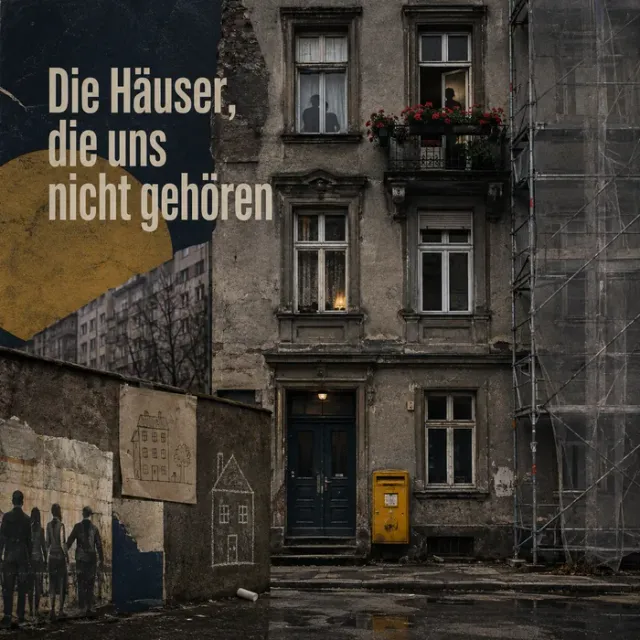
Die Häuser, die uns nicht gehören
A German post-punk concept album about rent, displacement, memory and resistance inside one apartment house fighting to remain a home as its city is sold off.
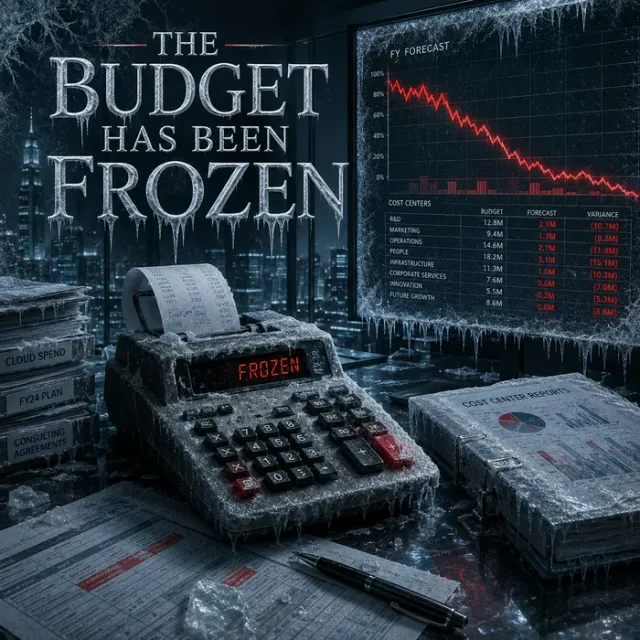
The Budget Has Been Frozen
A razor-sharp progressive rock and jazz metal concept album about frozen budgets, hidden costs, corporate hypocrisy and financial revolt in the modern office.
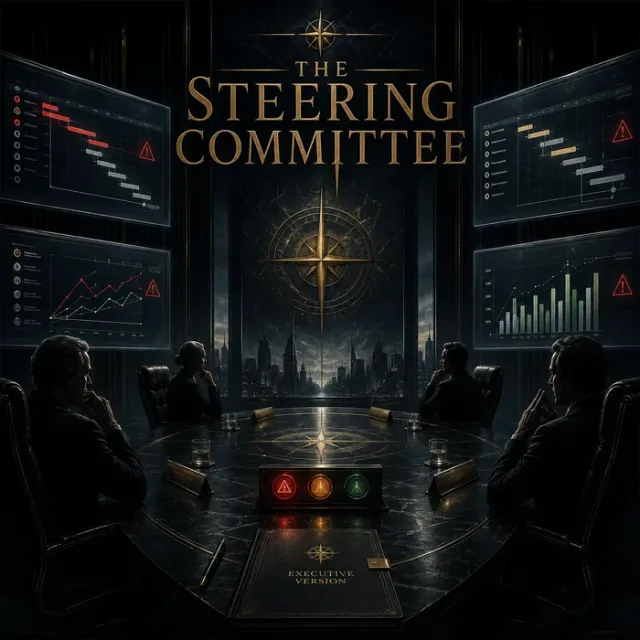
The Steering Committee
The Steering Committee turns corporate power games into progressive metal, exposing four leaders, four timelines and one project pushed toward collapse today.


