
French Dark Rock
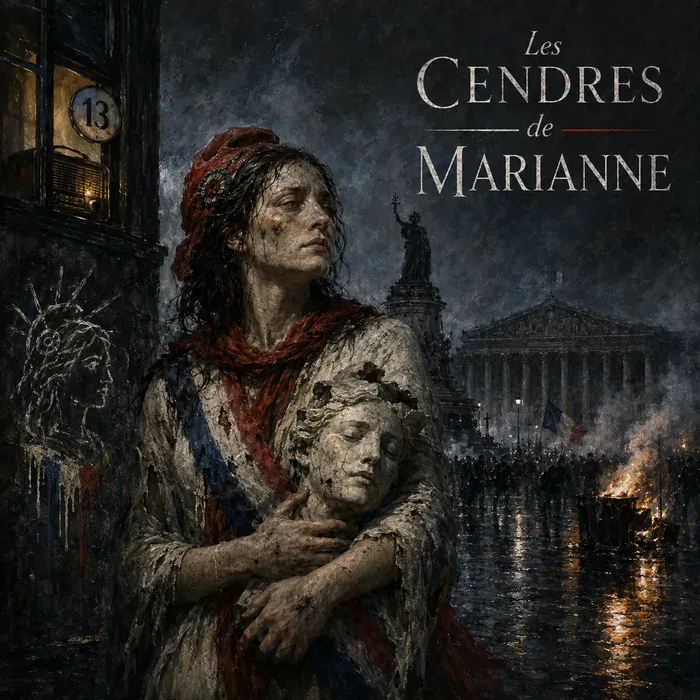
Les Cendres de Marianne
Les Cendres de Marianne is a bleak French protest-rock odyssey through a fractured republic, where grief, rage and resistance become one unforgettable chorus.
Liner Notes
A short editorial read on the album world, sound, and standout moments.
About the Album
Les Cendres de Marianne begins where patriotic symbolism usually ends: after the speeches, after the ceremony, after the cameras have gone. Marianne, France’s familiar republican figure, wakes in an empty National Assembly covered in soot, carrying the weight of a nation that still invokes liberty, equality and fraternity while losing faith in the institutions meant to defend them. Across fourteen tracks, she leaves the polished halls of power and walks into the lived reality behind the national myth.
The album’s greatest strength is that it never treats politics as decoration. Its arguments are carried by people, rooms and physical details: a teacher writing on the wall of a school marked for closure, a nurse washing her hands after another night shift, a young rapper from Saint-Denis navigating suspicion and routine humiliation, an older Yellow Vest protester keeping a red scarf that still smells of rain and tear gas, and a civil servant whose files have become a graveyard of unanswered appeals. These figures are not props placed in front of a slogan. They speak in their own voices, and Marianne is forced to listen before she can claim to represent them.
Musically, Les Cendres de Marianne sits at the intersection of French dark rock, alternative chanson, post-punk and industrial art-rock. The sound is built around angular bass lines, tom-heavy live drums, overdriven baritone guitar and a recurring three-note harmonium motif. That motif behaves like a damaged civic anthem: solemn in the opening track, mechanical on “Le Bureau des renoncements,” fragmented during “La Place respire du gaz,” and softened into a fragile lullaby in the closing song. “La République pleure en silence” opens with ceremonial gravity, but the album quickly leaves the chamber for the metro. “La Ligne 13” turns public transport into a map of social distance, driven by rail-like percussion and a tense post-punk pulse. “Craie sur les murs” narrows the frame to a classroom, where education policy becomes dust on a teacher’s hands. “Les Mains de l’aube” slows the record without losing tension, using a sparse hospital rhythm to expose the human cost hidden inside budget language.
By the time “Saint-Denis ne baisse pas les yeux” arrives, the album has earned its anger. The track does not borrow rap as a surface gesture; its internal rhymes and sharper attack allow Malik’s chapter to challenge Marianne directly. “Le Foulard rouge” then shifts toward weathered chanson, bringing memory, pride and disappointment into a small kitchen rather than another public square. These changes in voice and arrangement keep the record from becoming fourteen versions of the same protest song.
“Sous les ponts, les sirènes” gathers the album’s characters beneath the city and drives them toward Place de la République. The following track, “La Place respire du gaz,” is the record’s point of rupture. Its stop-start industrial attack, shouted responses and collapsing structures mirror a demonstration breaking apart under pressure. When a plaster bust of Marianne is shattered on the pavement, the image could have felt theatrical. Instead, it becomes the moment when the living Marianne understands that a symbol without protection, accountability or attention is only another object waiting to be broken.
What follows is not triumph. “Après les grenades” counts names, injuries and missing people while the radio reduces the event to a few neutral phrases. “Le Bureau des renoncements” finds institutional violence in a quieter form: polite language, incomplete forms and closed doors. “Marianne en morceaux” is the album’s emotional low point, nearly stripped of percussion, as Marianne considers abandoning her role. The song works because it resists easy absolution. She is not forgiven simply for recognizing the damage.
The final movement offers a more difficult kind of hope. “Ceux qui écoutent encore” imagines an assembly built not around heroic speeches but around the discipline of taking turns, hearing unwelcome testimony and staying in the room. “Le Toit de l’Assemblée” provides the large-scale finale, yet even here the album avoids a simple victory pose. Marianne reads names and grievances from the roof, but refuses to replace the people whose stories she carries. Her transformation is not from victim to ruler. It is from monument to witness.
The closing “Berceuse pour une démocratie” is one of the album’s smartest decisions. Rather than ending with a march, explosion or patriotic chorus, it lowers the volume. The lullaby does not promise that France has been healed. It asks democracy to rest without becoming numb, to recover without forgetting, and to keep one ear open for the next voice at the door. The cracked bust remains cracked. The red scarf holds it together, but does not hide the fracture.
Listen from beginning to end. The recurring motifs, changing narrators and controlled rises in tension reward the full-album experience. Les Cendres de Marianne is angry without becoming blunt, mournful without surrendering, and ambitious without losing sight of the ordinary people at its center. It is a record about a republic in crisis, but also about the hard, unglamorous work required to make the word “republic” mean something again.
Production Notes
All tracks were generated with AI music models, then processed for the final orchestral sound. No human performance recordings are used.
Full album download
Download the complete album
Get the full ZIP package with tagged audio files, cover artwork, and album metadata.
Support MelodyMind
Help keep the albums coming
If this album was useful or fun to listen to, a small contribution helps cover hosting, tools, and new music experiments.
Join the conversation
Reactions from the web
Mentions, likes, reposts, and replies from IndieWeb and Fediverse-friendly sites can appear here after you allow community features.

Le Cabaret des Ombres
A dark cabaret concept album of velvet, secrets and lost souls, where Parisian glamour turns into gothic theatre, betrayal and haunting chansons.
La Ville en Colère
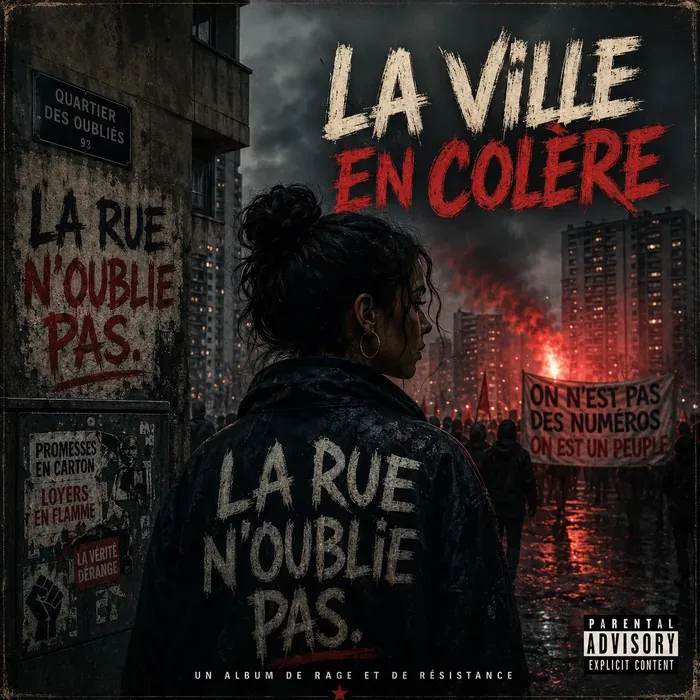
French protest punk concept album with post-punk grit, urban rage, class tension and dark hope in a city that refuses to stay silent.

A Republic of Many Bloods
A fierce symphonic metal opera about America’s buried histories, broken myths and unfinished fight for a plural, honest democracy. Hear it now, in full today.
The Cowed Screen
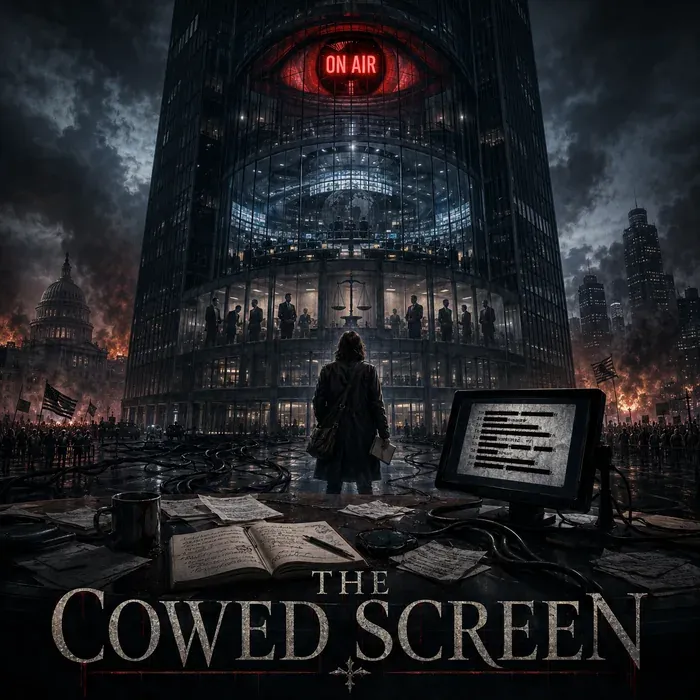
The Cowed Screen is a dark symphonic metal opera about censored newsrooms, political fear, corporate power and the fight to keep truth on air, before it dies.
Community
Comments...
Read or leave a comment about this album. Comments are provided by Cusdis and load only after you allow the comments feature.
Enable comments to load the discussion from Cusdis.