


A neighborhood cinema becomes the setting for love, memory, and resistance in a Latin pop album about a city losing its shared rooms.
Tracklist
Liner Notes
A short editorial read on the album world, sound, and standout moments.
About the Album
Los Cines que Cerraron begins with a door being unlocked.
Not a metaphorical door, but the heavy entrance of an old neighborhood cinema: scratched glass, tired hinges, a broken neon sign and a marquee that still tries to illuminate a street which has almost forgotten what the building once meant. Inside, the red velvet curtain has faded, the seats complain when they are lowered, and dented metal cans hold reels that have outlived governments, marriages, fashions and entire generations of spectators. At the center of it all stands an ageing projectionist, preparing the last surviving cinema in a Latin American city for one more evening.
From that simple image, Melody Mind Music constructs an ambitious fourteen-song narrative about memory, political silence, disappearing public spaces and the people who keep them alive long after the rest of the city has decided they are no longer profitable.
Musically, the album moves through Latin pop, singer-songwriter balladry and restrained soft pop rock, with arrangements that recall the intimacy of classic Latin American storytelling records and the warmth of 1970s cinema music. Nylon-string guitars, close piano chords, brushed drums, upright bass, muted trumpet and modest string passages create a world that feels lived in rather than decorated. The instrumentation rarely demands attention for its own sake. It behaves like the cinema itself: worn, practical, affectionate and full of memories hidden in ordinary objects.
The opening songs establish the cinema as both workplace and witness. “La Última Marquesina” introduces a neighbourhood being transformed by luxury developments, glass towers and businesses whose language promises progress while erasing what came before. “Abrimos Igual” turns the simple act of opening the doors into a quiet form of resistance. Even when no audience appears, the projectionist continues the ritual because a public place begins to disappear long before its walls are demolished. It disappears when people stop expecting it to be there.
“El Barrio Venía a Soñar” widens the perspective beautifully. The cinema remembers workers arriving after long shifts, families counting coins, children arguing over seats and young couples learning how close two hands could become in the dark. These scenes avoid easy nostalgia because the record never pretends that the past was perfect. What mattered was not only what appeared on the screen, but the collective experience of watching together—laughing with strangers, hearing somebody cry several rows away, and briefly sharing the same silence.
The personal story deepens with “La Entrada del 86,” one of the album’s most tender moments. An old ticket found beneath a seat leads back to a first kiss and to Elena, the woman the projectionist loved but did not follow when she left the city. The song reveals one of the album’s central ideas: he has spent his life preserving images because he was unable to preserve the people within them.
“La Película Prohibida,” the album’s central turning point, asks the hardest question in the story: what is the value of preserving evidence if fear prevents anyone from seeing it? The song refuses to turn its narrator into a convenient hero. He protected the reels, but his silence left Clara waiting without answers. His caution may have saved the images, yet it also prolonged their imprisonment. That moral ambiguity gives the album unusual depth.
Outside the cinema, the city continues its own act of erasure. “Demolición en Preventa” is a sharp, darkly humorous portrait of property developers measuring the building for luxury apartments while advertising the neighbourhood’s “authenticity” to the people replacing its residents. Later, a closure notice appears on the entrance just as the projectionist announces a public screening of the forbidden film. The official language speaks of permits, safety codes and irregular exits; the songs understand that bureaucracy can sometimes become the cleanest mask worn by political convenience.
The climax, “La Película que Nadie Conoce,” is the record’s most powerful piece. Rather than showing only the political footage, the projectionist assembles a private film from decades of unnoticed fragments: audiences entering in the rain, children at matinees, workers leaving late screenings, Clara and Mateo when they were young, Elena passing beneath the marquee in 1986, and the neighbourhood before cranes and towers changed its horizon. The audience watches itself become history.
The closing track, “Luz de Salida,” offers no false rescue. The cinema will still close. The building may still be demolished. Yet the final screening changes what that closure means. The reels enter an archive, the audience carries the images home, and one child leaves with a single frame of film in his coat.
Production Notes
All tracks were generated with AI music models, then processed for the final orchestral sound. No human performance recordings are used.
Full album download
Download the complete album
Get the full ZIP package with tagged audio files, cover artwork, and album metadata.
Support MelodyMind
Help keep the albums coming
If this album was useful or fun to listen to, a small contribution helps cover hosting, tools, and new music experiments.

La España de los Kilómetros Vacíos
La España de los Kilómetros Vacíos explores rural loss, memory and renewal through Spanish alternative folk rock, vivid characters, and intimate storytelling.
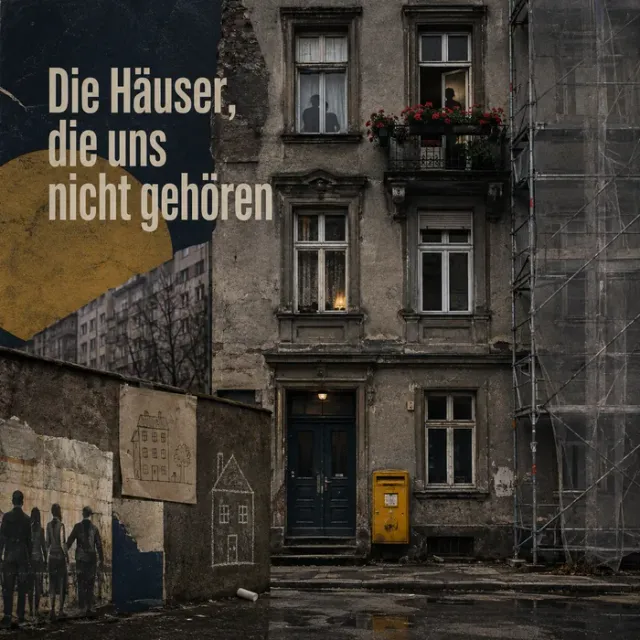
Die Häuser, die uns nicht gehören
A German post-punk concept album about rent, displacement, memory and resistance inside one apartment house fighting to remain a home as its city is sold off.

Neon Hearts
A nocturnal K-pop story follows two people through Seoul, moving from Hongdae's crowded streets to a dawn confession across synth-pop, R&B, and dream-pop textures.

Stadt aus Glas
Stadt aus Glas is a nocturnal German synthpop album about neon cities, loneliness, screens, glass towers, and the search for real human closeness.


