

Make the Button More Visible
Made with generative AI; directed and curated by Daniel.
A satirical art-rock concept album about a UX designer caught between user evidence, executive taste, and an interface buried under years of compromise.
Liner Notes
A short editorial read on the album world, sound, and standout moments.
About the Album
At Infinite Loop Solutions, Project Phoenix has fourteen approved shades of blue and no obvious way to complete a basic task. UX designer Amelia Park is brought in to fix it. Her first move is simple: sit with customers, watch where they hesitate, and record what sends them back to the previous screen. The findings point to a product organized around the company rather than the people using it. Department names have become menu labels, icons change meaning between pages, and years of special requests compete for attention.
That setup gives Make the Button More Visible a strong comic engine, but the joke has a target. This is an album about who gets heard when a product is failing. Amelia arrives with observed behavior; the board answers with color preferences, branding demands, and another feature for the home screen. No one is openly against clarity. They simply keep adding conditions until clarity is impossible.
The music follows the argument. Art-rock structures leave room for abrupt turns, repeated phrases, and sections that interrupt one another like people in a crowded review meeting. Alternative-metal guitars add weight when disagreement hardens into authority, while shorter new-wave patterns bring a colder, more procedural feel to the office scenes. The record stays tense without treating every track as a crisis.
“Fourteen Shades of Blue” opens inside the clutter. Angular guitar figures and nervous rhythmic changes make each new option feel less useful than the last. “Nobody Finds the Menu” moves outside the design team and watches capable customers blame themselves for software they cannot navigate. That shift matters. The problem is no longer an untidy screen; it is the loss of confidence produced by a system that refuses to explain itself.
The title track supplies the obvious hook and then wears it down through repetition. “Make the button more visible” sounds reasonable in isolation. Within the song, it becomes a way to avoid harder questions: What will the button do? Which account will it affect? Why is the action buried in the first place? Clipped responses and rising guitars turn a routine piece of feedback into a fight over the definition of the problem.
The next run of songs gives each source of interference its own shape. “The Logo Needs More Space” carries Victor’s certainty on a heavy bass line. “Every Customer Is Unique” follows Sales as customer care becomes an argument for endless customization. “Design by Committee” breaks into competing rhythms and overlapping instructions. The arrangement does not merely describe a crowded prototype; it behaves like one.
“Can We Add One More Tab?” pushes the running joke close to exhaustion before the record changes perspective. On “The User Test” and “Watch Them Fail,” the music opens up and the board sits behind glass while customers attempt familiar tasks. One participant apologizes for not being good with systems. The line lands harder than the jokes because the listener already knows who is responsible for the confusion.
Amelia answers with “Research Is Not an Opinion,” the album’s most direct alternative-metal track. Its point is narrower than the title first suggests. Taste still has a place in design, but a preferred color or logo size cannot erase repeated failure in testing. The song works because Amelia is not claiming personal authority. She is asking the company to look at what happened on the screen.
The final act is about repair. “Build the System” introduces Orbit, a shared set of components and interaction rules. Earlier fragments begin to line up, and the recurring four-note motif finally reaches a stable form. “Remove What Nobody Needs” is equally important: duplicated reports, obsolete shortcuts, and unsupported custom features leave the product because they no longer serve a task. The simplification feels earned rather than decorative.
Customers move through “The First Clear Screen” without private notes or memorized workarounds. There is no miraculous invention behind the improvement. The team listened, tested, removed, and standardized. Then “Could the Button Be Larger?” brings back the request that started the argument. This time Amelia does not need to defeat it in a meeting. The team can test the change and keep it only if it helps.
Production Notes
All tracks were generated with AI music models, then processed for the final sound. No human performance recordings are used.
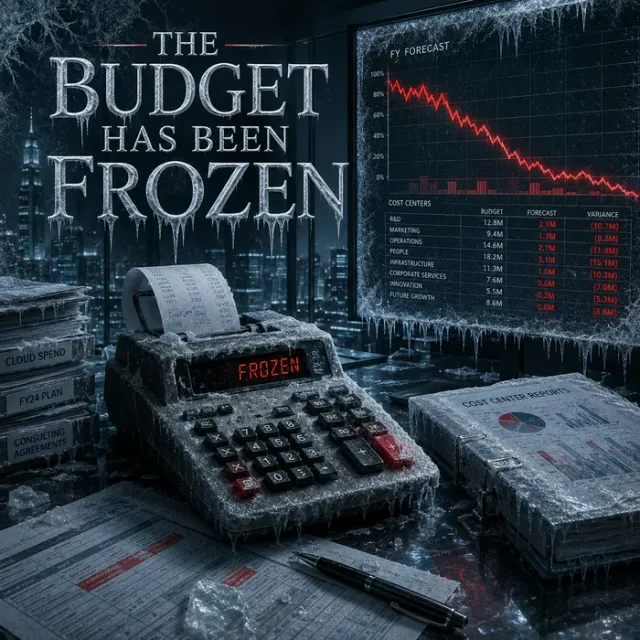
The Budget Has Been Frozen
A razor-sharp progressive rock and jazz metal concept album about frozen budgets, hidden costs, corporate hypocrisy and financial revolt in the modern office.
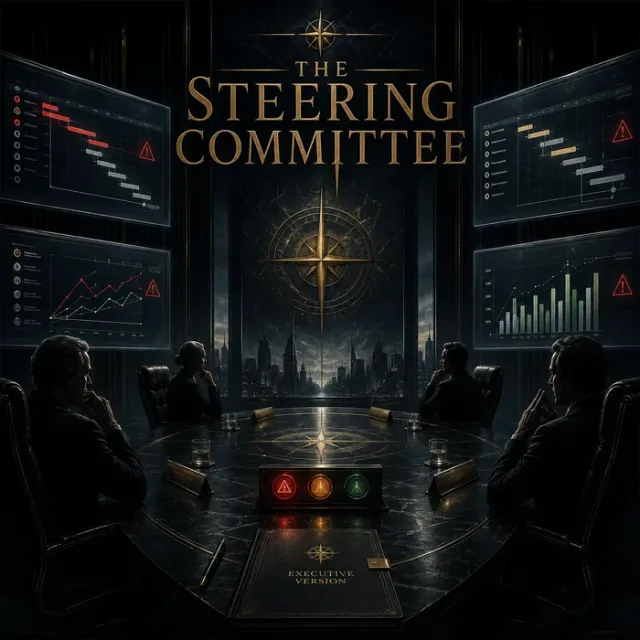
The Steering Committee
The Steering Committee turns corporate power games into progressive metal, exposing four leaders, four timelines and one project pushed toward collapse today.
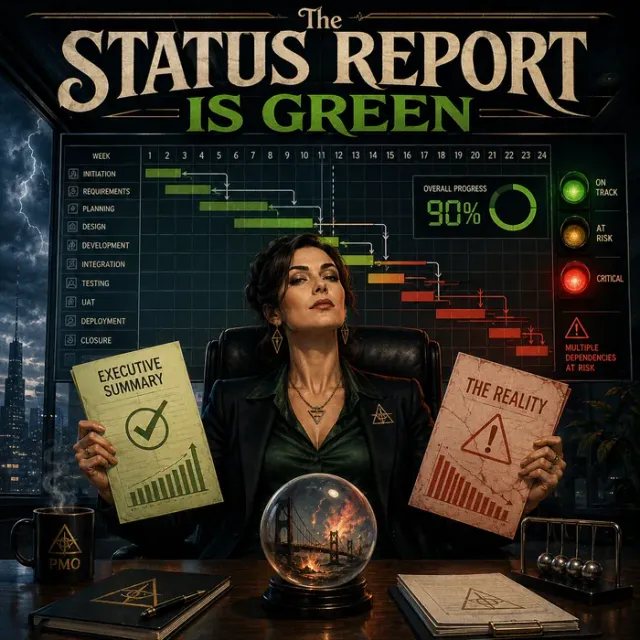
The Status Report Is Green
A sharp progressive rock satire on corporate denial, false green reports, shifting deadlines and one manager who finally tells the truth aloud before collapse.
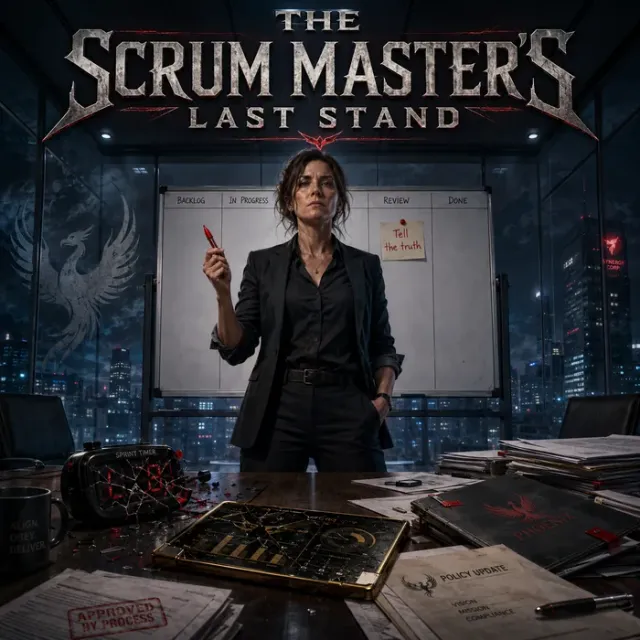
The Scrum Master’s Last Stand
A progressive-metal sequel in which Sabine Wolf confronts executive metrics, protects her team, and cuts Project Phoenix down to something that works.


Download the complete album
Get the full ZIP package with tagged audio files, cover artwork, and album metadata.
Help keep the albums coming
If this album was useful or fun to listen to, a small contribution helps cover hosting, tools, and new music experiments.