


A nocturnal K-pop story follows two people through Seoul, moving from Hongdae's crowded streets to a dawn confession across synth-pop, R&B, and dream-pop textures.
Tracklist
Liner Notes
A short editorial read on the album world, sound, and standout moments.
About the Album
Seoul shapes every hesitation, rush of confidence, and word left unsent on Neon Hearts. Across fourteen tracks, Melody Mind Music follows two young people through a single extended night, beginning beneath the glare of Hongdae and ending in the pale blue quiet of morning. What first appears to be a glamorous K-pop romance gradually reveals itself as something more delicate—a story about the frightening moment when attraction becomes real enough to demand an answer.
The album is defined by sense of movement. Neon Hearts never treats Seoul as decorative scenery. Roads, bridges, parking garages, convenience stores and rain-covered windows actively carry the narrative forward. “The Turn We Missed on Purpose” transforms a late-night drive along Gangbyeonbuk-ro into an excuse to delay arrival. “Hongdae’s Last Noise” finds intimacy only after the crowds disappear. “You Beyond the Rain” turns a car window into both a barrier and a confession surface, while “Why the Red Light Lasted” uses a stalled crossing to capture the pause before two people define what they are to each other. They are sharply observed moments. That precision keeps the romance grounded in recognizable, lived-in detail: a phone turned face down, a paper cup losing its heat, a jacket left on the passenger seat, a message opened too late.
Musically, the record is rooted in modern K-pop, but its palette is broader and more carefully controlled than the label might suggest. Glossy synth-pop provides the central architecture, supported by contemporary R&B, dream pop, dance-pop and understated city-pop accents. Clean electronic drums and deep synth bass give the album physical momentum, while glassy electric piano, clipped guitar phrases and recurring three-note synth figures create continuity between songs. Even at its brightest, the music preserves vulnerability; even at its most restrained, it never loses its melodic pull.
That balance is clear in the opening title track. “Neon Hearts” arrives with the confidence of a major K-pop opener, but beneath its radiant chorus lies the uncertainty that drives the album. From there, the sequencing steadily narrows the distance between spectacle and confession. The early songs are filled with lights, traffic and crowded streets. By the middle of the album, the outside world has fallen away. Breathing, silence and small movements inside a parked car become louder than the city.
The emotional turning point comes with “Under Banpo Bridge.” Here, the album’s recurring images—dark water, reflected light, unfinished messages and the fear of morning—finally converge. The duet structure gives the confession weight because the listener has already heard both characters avoiding the same truth from different angles. When the answer arrives, it feels earned rather than engineered. The following “As If Seoul Were Ours” releases that tension in a rush of rooftop energy and dance-pop brightness, briefly allowing the couple to imagine the city as a private world built for two.
Neon Hearts becomes most interesting when it refuses to end there. A weaker concept album might treat mutual confession as the conclusion. This record understands that saying “I like you” creates a new and more difficult question: what happens when the atmosphere changes? “The Reply I Couldn’t Read” and “Dawn Taxi” move into the album’s darkest stretch, where the glamour drains from the night and fear returns in practical forms. These songs give the record emotional credibility. Love is not presented as a solution, but as a responsibility the characters must decide whether they are willing to accept.
That decision gives the final sequence its force. “The Star in the Rearview Mirror” turns looking back into an act of courage rather than regret. “Before Morning” delivers the album’s true climax, not with an impossible promise of permanence, but with something more believable: the willingness to return, to speak honestly and to meet again in daylight. Neon Hearts is less interested in preserving one perfect night than in asking whether its feelings can survive ordinary hours.
The closing track, “The Light Remains,” answers with quiet confidence. By then, the neon signs have gone dark and Seoul has resumed its daytime face. What remains are modest objects and gestures: a receipt with words written on the back, a photograph through wet glass, a morning message that does not try too hard. It is about the way a brief experience can continue to shape the people who lived it.
Production Notes
All tracks were generated with AI music models, then processed for the final sound. No human performance recordings are used.
Full album download
Download the complete album
Get the full ZIP package with tagged audio files, cover artwork, and album metadata.
Support MelodyMind
Help keep the albums coming
If this album was useful or fun to listen to, a small contribution helps cover hosting, tools, and new music experiments.
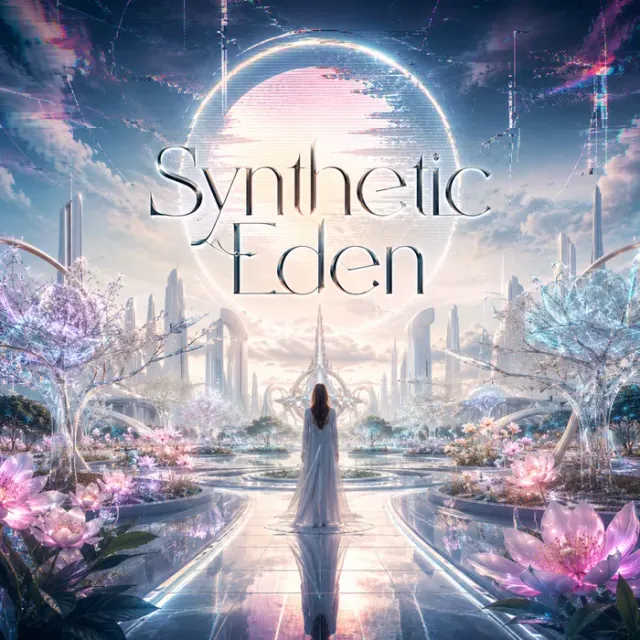
Synthetic Eden
Synthetic Eden is a futuristic synth-pop concept album about a perfect digital paradise cracking into memory, doubt, rebellion and real emotion.
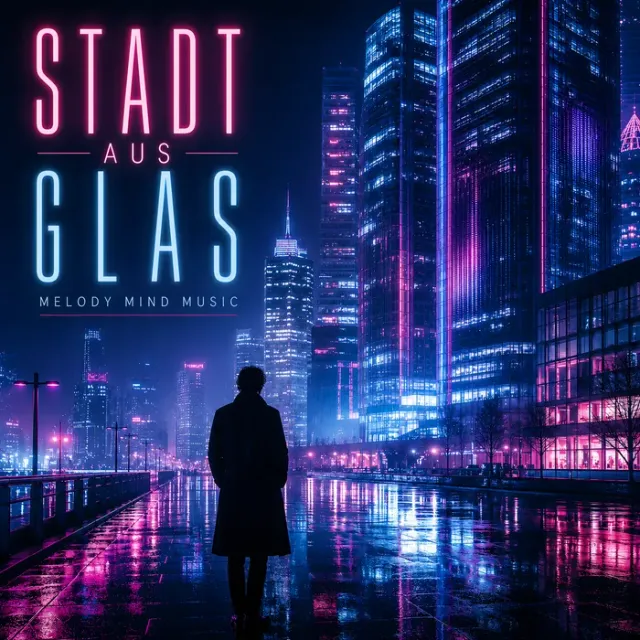
Stadt aus Glas
Stadt aus Glas is a nocturnal German synthpop album about neon cities, loneliness, screens, glass towers, and the search for real human closeness.
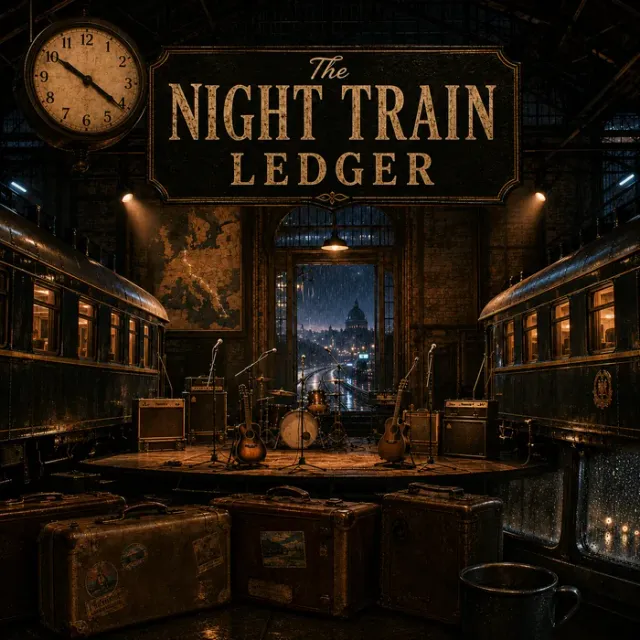
The Night Train Ledger
Heartland rock turns an overnight train from Berlin to Trieste into a shared story of work, regret, failing infrastructure, and connection between strangers.

Neon Hearts Never Die
A hair metal concept album follows a young Electric City band through first gigs, romance, betrayal, and a comeback powered by arena-sized guitars and power ballads.


