


Political punk examines maps, borders, imperial nostalgia, and resistance through a sequence of direct, anti-authoritarian songs.
Tracklist
Liner Notes
A short editorial read on the album world, sound, and standout moments.
About the Album
No Empires Left to Burn is the kind of protest record that does not ask politely to be heard. It kicks the door open, throws a stack of classified papers across the floor and dares the listener to look away. Built on political punk, post-punk tension and alternative rock grit, the album turns modern imperial thinking into a loud, dirty, restless concept story — not as distant history, but as something alive in boardrooms, press briefings, border fences, shipping routes and television studios.
At the center of the album is a young journalist moving through a world where old empires have changed costumes. They no longer always arrive with crowns, cavalry or royal banners. They come with contracts, drones, market language, talk-show applause, security rhetoric and men in expensive suits explaining why another country’s future is suddenly negotiable. Through her eyes, the album follows the machinery of power as it redraws maps, sells fear, treats small nations as strategic objects and turns human lives into numbers on a screen.
The opening track, “Maps Are Not Yours,” sets the tone immediately: sharp guitars, dry drums, a nervous post-punk pulse and lyrics that understand maps not as neutral objects, but as weapons when held by the wrong hands. From there, “Empire in a Suit” strips away the polished language of modern leadership and exposes the old hunger underneath. This is not fantasy villainy. It feels closer, uglier and more recognizable: the sort of power that smiles for cameras while calculating what can be taken.
The album works because it does not stay in one place. It moves. “Greenland Burns Cold” takes the story into the Arctic, where land, ice and identity are reduced to resources and leverage. “Panama Ghostline” turns trade routes and waterways into haunted corridors of control. “The 51st Lie” attacks the absurdity of domination disguised as friendship, while “Borders Have Blood” slows the record just enough to let the human cost hit harder. The album understands that borders are never only lines. They are families waiting in mud, names erased from forms, children learning the sound of drones before they learn safety.
Musically, No Empires Left to Burn should feel dirty rather than decorative. The guitars are meant to scrape, not shine. The basslines carry that post-punk sense of urban anxiety, moving like someone walking fast through a city after midnight. The drums are dry, hard and close to the chest. Gang vocals give the choruses a street-level force, while siren-like textures, broadcast fragments and broken synths make the album feel surrounded by news cycles, police lights and collapsing official narratives. Nothing here should feel clean enough to be comfortable.
The middle of the album sharpens its economic and cultural critique. “Trade War Hymn” is one of the record’s most bitter tracks, framing tariffs, prices and market panic as another form of war — one fought by leaders and paid for by workers. “Flag Merchants” follows naturally, attacking the industry of performative nationalism: fear sold as merchandise, patriotism reduced to branding, rage packaged for profit. These songs are angry, but they are not empty. They know exactly where they are aiming.
By the time “No King Across the Sea,” “Small Nations, Big Shadows” and “You Can’t Annex a Soul” arrive, the album has widened from accusation into resistance. These are not victory songs in the simple sense. They are refusal songs. They insist that identity cannot be signed away, that small countries are not pawns, and that no leader is entitled to rule people who never asked for him. The journalist is no longer only observing by this point; she is becoming part of the chorus she has been recording.
The final stretch gives the album its emotional weight. “Broadcasts from the Burning Room” feels like the moment when truth becomes dangerous — when reporting itself turns into an act of defiance. The title track, “No Empires Left to Burn,” is the record’s loudest statement, a chant against conquest, annexation and the fantasy that strength gives anyone the right to own the world. But the closing song, “The People Live Here,” is the real heart of the album. It does not end with a clean triumph. It ends tired, bruised and standing. No hero on a balcony. No party claiming the future. Just people in the street, from different places and languages, holding the simplest line against every empire: this land belongs to the people who live here.
No Empires Left to Burn is not background music. It is a concept album with clenched teeth, cracked boots and a working conscience — a record about borders, greed and power, but also about memory, resistance and the stubborn fact that people are not property.
Production Notes
All tracks were generated with AI music models, then processed for the final sound. No human performance recordings are used.
Full album download
Download the complete album
Get the full ZIP package with tagged audio files, cover artwork, and album metadata.
Support MelodyMind
Help keep the albums coming
If this album was useful or fun to listen to, a small contribution helps cover hosting, tools, and new music experiments.
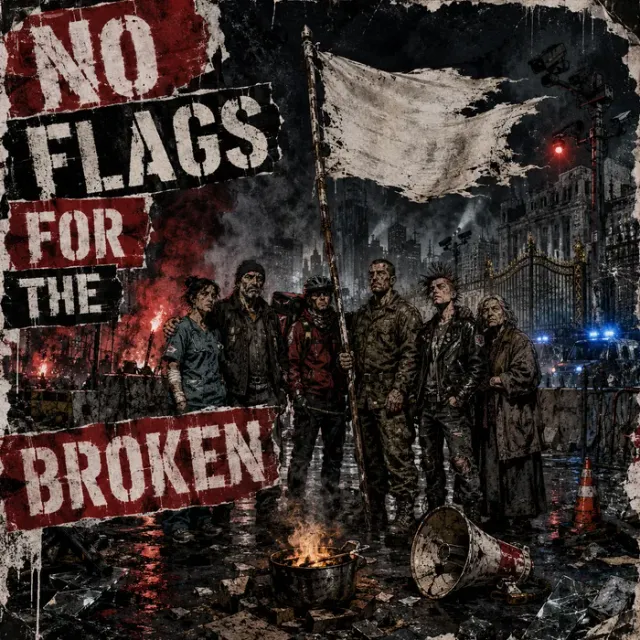
No Flags for the Broken
No Flags for the Broken is a fierce political punk concept album about war, poverty, propaganda and solidarity in a city abandoned by those in power above it.
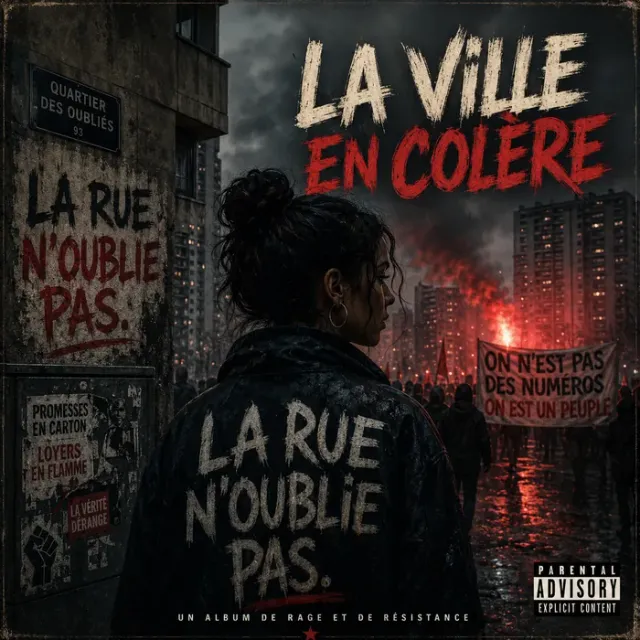
La Ville en Colère
French protest punk concept album with post-punk grit, urban rage, class tension and dark hope in a city that refuses to stay silent.
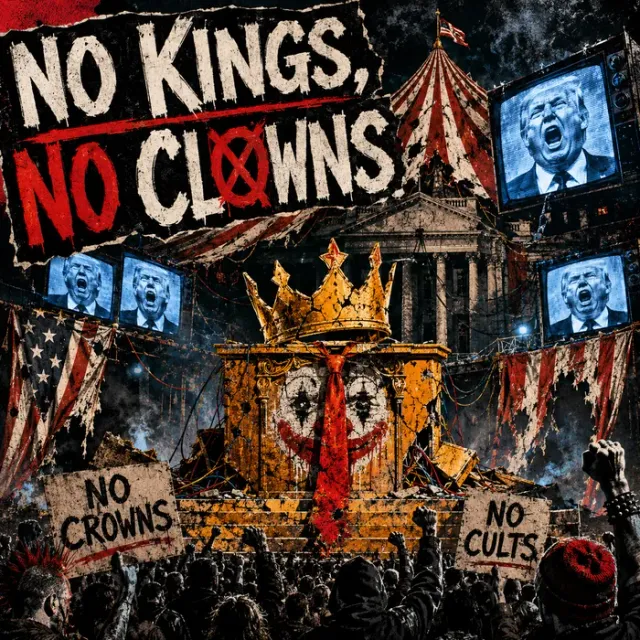
No Kings, No Clowns
Political punk and sharp satire follow propaganda, street protest, and the public performance of power in a fractured city.
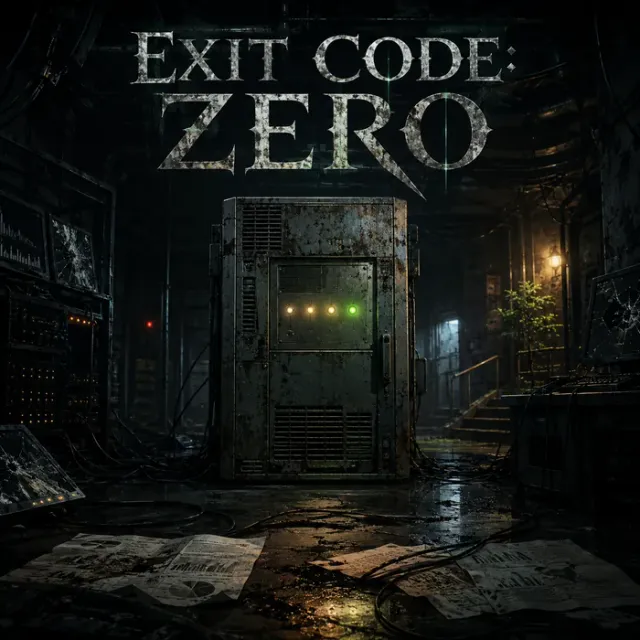
Exit Code: Zero
Exit Code: Zero turns corporate collapse into melodic heavy metal—an urgent, darkly witty finale about blame, truth, recovery, and starting over with purpose.


