


Political punk and sharp satire follow propaganda, street protest, and the public performance of power in a fractured city.
Tracklist
Liner Notes
A short editorial read on the album world, sound, and standout moments.
About the Album
No Kings, No Clowns arrives like a basement door kicked open during a state broadcast. Across fourteen tracks, Melody Mind Music turns political collapse into a punk narrative about vanity, propaganda, class resentment, democratic erosion and the refusal to kneel. The album is angry, but anger is its first language. Beneath the shouting choruses and serrated guitar lines, it is also a study of how public life becomes theatre, how theatre becomes control, and how people reclaim their voices once the spectacle stops being convincing.
The opening run is immediate. “Idiot in Charge” introduces a leader whose confidence is matched only by his incompetence, while “Orange Throne” transforms power into a royal pageant built from television lights, imitation gold and permanent applause. These songs do not treat authoritarianism as distant or abstract. They place it inside camera studios, government corridors, rallies and shopping streets, where political mythology is manufactured. The satire is vicious because the details are concrete: plastic crowns, red ties, applause signs, cracked walls and giant screens repeating the same furious face.
“Red Hat Parade” widens the focus from the leader to the people who surrender themselves to the uniform of the crowd. It is one of the album’s most unsettling chapters because it recognizes that political loyalty is rarely built from ideology alone. Fear, humiliation, economic loss and the desire to belong move beneath the chant. “Truth in a Body Bag” then pushes the story into darker territory, following a photographer whose evidence is edited, denied and repackaged before it can reach the public. Its heavier attack gives the album its sense of permanent damage.
The middle section is where No Kings, No Clowns becomes more than a sequence of topical songs. “Patriot Scam” tears apart the commercial use of flags and military language, but it does so through workers, contracts, closed clinics and a mother sewing uniforms for someone else’s profit. “Closed Factory Choir” is the record’s emotional centre: a bruised communal song set inside an abandoned plant, where lost jobs and family memories become the foundation for solidarity rather than another excuse for manufactured hatred. Its movement from restraint to collective singing gives the album room to breathe without softening its argument.
That breathing space makes “Executive Tantrum” and “Constitution on Fire” hit harder. The former is fast, unstable and claustrophobic, mirroring a government run through grievance, revenge and impulsive orders. The latter is the album’s decisive midpoint: a severe post-hardcore punk piece narrated partly through the damaged constitutional document itself. It avoids solemn monument-building and asks a practical question—what value does a law have when everyone responsible for defending it waits for someone else to act? The answer arrives not through a hero, but through clerks, witnesses, copied pages and people willing to read the words aloud.
The second half examines the machinery that keeps the circus alive. “Make America Shut Up” is a furious comic release, attacking a culture in which elevators, phones, taxis and waiting rooms carry the same endless political performance. “Rich Man’s Riot” follows the money behind supposedly spontaneous outrage, while “Cult of Volume” traps the listener inside a feedback loop of screens, slogans, notifications and family conversations reduced to prefabricated lines. These songs are catchy enough to shout along with, but their hooks leave an aftertaste. The album understands that propaganda occupies attention until other forms of thought become difficult; lying is only one part of the method.
The final sequence turns observation into organization. “The Street Finds Its Voice” gathers previously isolated characters—workers, journalists, clerks, former followers and families—without appointing a single saviour. That choice matters. The title track is not a coronation for a replacement figure; it is a refusal of the desire for political royalty. “No Kings, No Clowns” delivers the album’s largest chorus and most complete statement: no crowns, no cults, no obedience to a stage built to make power look inevitable. Earlier motifs return, changed by the people carrying them.
“See You in the Streets” closes without pretending that one night of resistance repairs a country. The towers remain, the lawyers are still working and the institutions still require attention. What has changed is the network between people: names exchanged, evidence preserved, doors opened and practical knowledge shared. The final mood is tired rather than triumphant, which makes its hope believable. Dawn reaches torn signs and wet pavement, and a small group remains together.
Production Notes
All tracks were generated with AI music models, then processed for the final sound. No human performance recordings are used.
Full album download
Download the complete album
Get the full ZIP package with tagged audio files, cover artwork, and album metadata.
Support MelodyMind
Help keep the albums coming
If this album was useful or fun to listen to, a small contribution helps cover hosting, tools, and new music experiments.
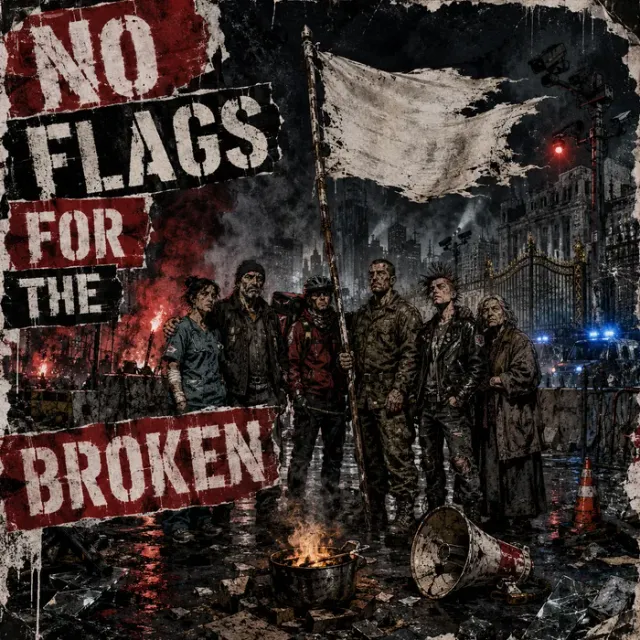
No Flags for the Broken
No Flags for the Broken is a fierce political punk concept album about war, poverty, propaganda and solidarity in a city abandoned by those in power above it.

La Ville en Colère
French protest punk concept album with post-punk grit, urban rage, class tension and dark hope in a city that refuses to stay silent.
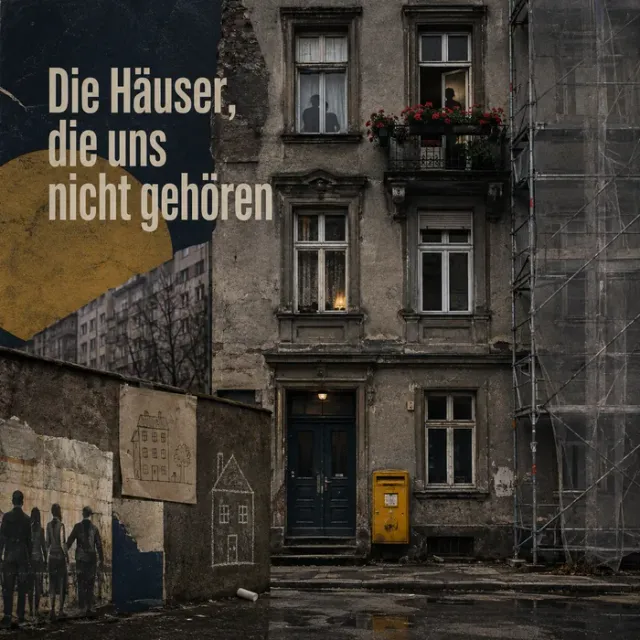
Die Häuser, die uns nicht gehören
A German post-punk concept album about rent, displacement, memory and resistance inside one apartment house fighting to remain a home as its city is sold off.

No Empires Left to Burn
Political punk examines maps, borders, imperial nostalgia, and resistance through a sequence of direct, anti-authoritarian songs.


