
Indie Rock
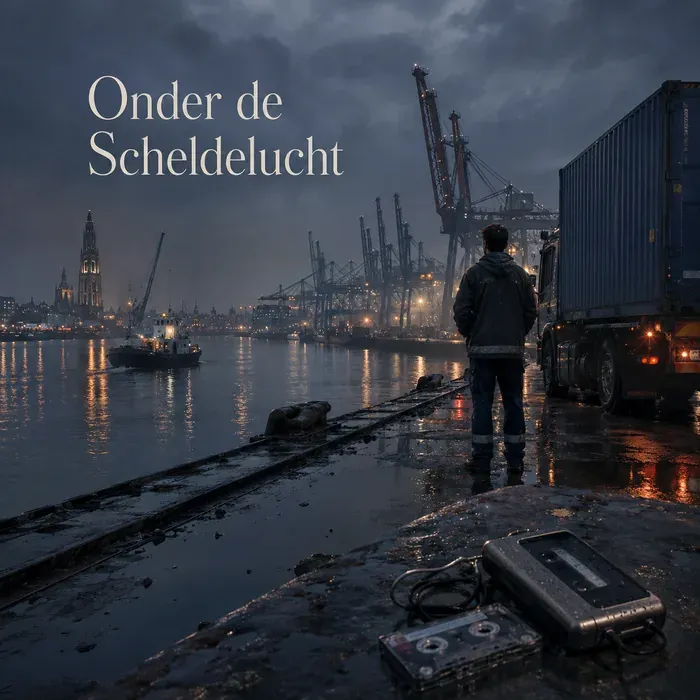
Onder de Scheldelucht
Onder de Scheldelucht is a Flemish indie rock album set along the Scheldt, where harbor light, steel cathedrals, old tapes, family memory, work, trade, and rain blur together. Reverb guitars, warm bass, muted drums, accordion colors, and Dutch-language vocals carry a story of labor, inheritance, and one last look at the river.
- Tracks 14
- Length 70 min
Liner Notes
A short editorial read on the album world, sound, and standout moments.
About the Album
Onder de Scheldelucht is a harbor album with rain in its wiring. It does not turn Antwerp into a postcard. It listens to the river from street level: cranes, quays, steel, old tapes, workers’ bars, night drives, and the low feeling that a city can remember more than any one person can hold.
The title track sets the weather first. “Kathedralen van Staal” follows with the album’s strongest image: harbor machinery seen as something almost sacred, but still cold to the touch. The guitars carry that contradiction well. They ring wide without becoming clean, while the rhythm section keeps the songs close to work, rain, and asphalt.
“De Band van Vader” gives the record its private engine. The father’s tape is not a neat message from the past; it is a worn object with gaps, hiss, and room noise. “Goud aan de Kaaien” turns the harbor’s wealth into something ambiguous: gold near the water, but handled by tired hands. “Na Vijftien Vijfentachtig” points toward an older wound without turning the song into a lecture. The album uses history as pressure, not as decoration.
“Brief naar het Noorden” broadens the emotional map. Movement on this record is rarely romantic. People leave, goods travel, names change hands, and the river keeps carrying everything. “Regenstad van Staal” brings the sound back to the present: wet streets, metal light, and a city that feels more awake after dark.
The middle of the album is rougher and better for it. “Smokkelaars bij Sint-Anneke” gives the story a shadowed edge, while “Werflicht na de Oorlog” is less about grand memory than the practical light that remains after damage. “Nachtrit door de Haven” is one of the most natural scenes here: a vehicle, a route, containers, water, and thoughts that only arrive once the city is half empty.
“De Wereld in Dozen” is a sharp modern title. It catches the strange sadness of global trade: whole lives reduced to freight, labels, routes, and sealed metal. “Arbeiderskroeg zonder Naam” answers with a small room, the kind of place where history survives because nobody bothers to archive it. By “Als de Schelde Spreekt,” the river has stopped being scenery and has become the record’s conscience.
“Laatste Blik op de Schelde” closes without a grand solution. It is a look back, not an escape. That restraint suits the album. Onder de Scheldelucht works because it understands that working cities do not hand over their meanings cleanly. They leave them in tape hiss, rainwater, dock light, and the silence after the last shift.
Production Notes
All tracks were generated with AI music models, then processed for the final sound. No human performance recordings are used.
Support MelodyMind
Help keep the albums coming
If this album was useful or fun to listen to, a small contribution helps cover hosting, tools, and new music experiments.
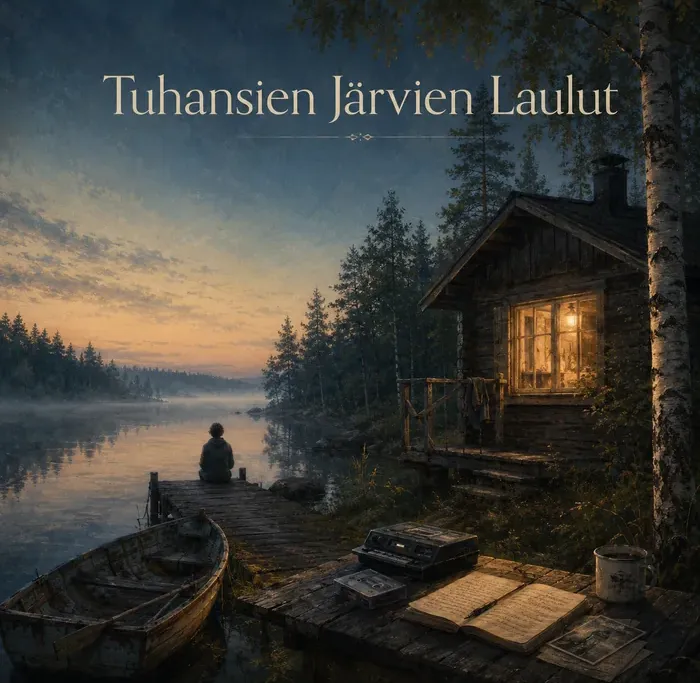
Tuhansien Järvien Laulut
Tuhansien Järvien Laulut is a Finnish-language melancholic folk rock album about leaving the city, returning to an old summer house, and hearing family history through lakes, cassette tapes, letters, sauna rooms, islands, and dark water. Acoustic guitars, soft piano, restrained drums, warm electric textures, and natural ambience keep the record intimate rather than grand.
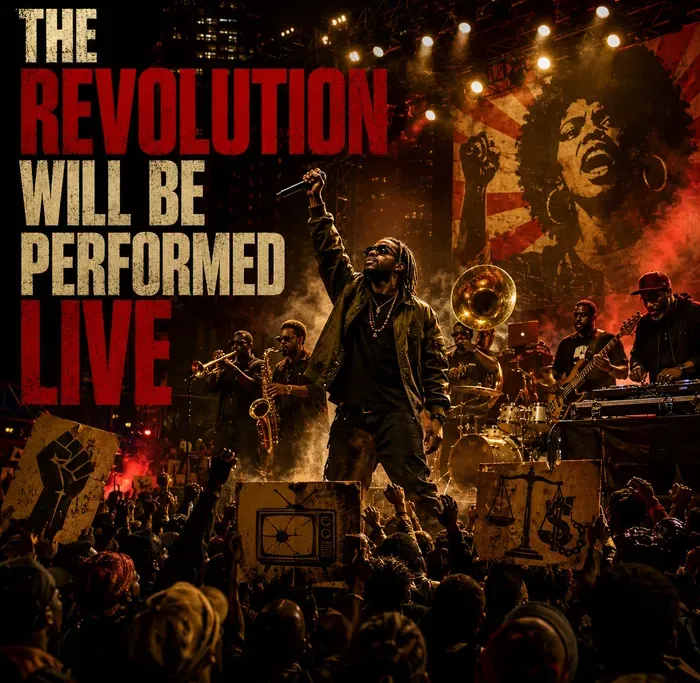
The Revolution Will Be Performed Live
The Revolution Will Be Performed Live is a political hip-hop and funk-rap album staged as a live concert where brass, drums, DJ scratches, gospel backing vocals, and crowd noise turn public anger into performance. The songs move through barricades, receipts, tailored war profiteers, newsfeed static, rent pressure, cheap seats, and the stubborn act of leaving together while still singing.
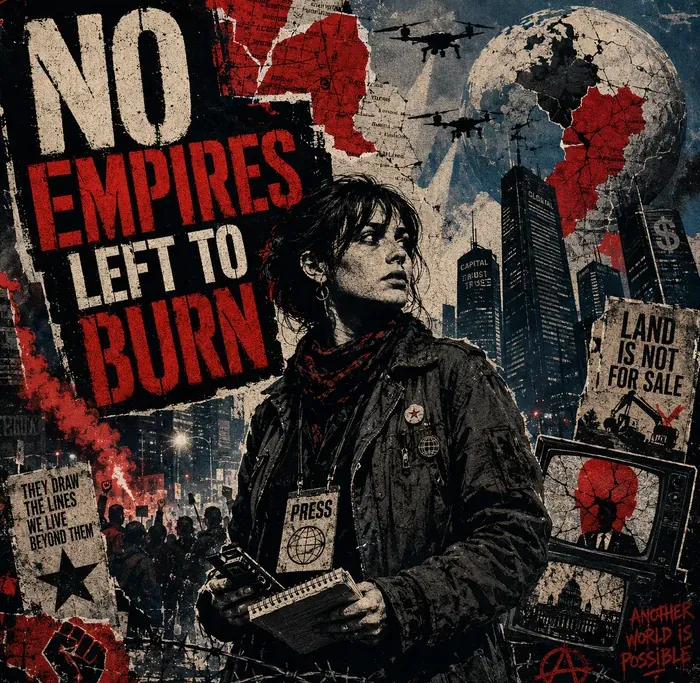
No Empires Left to Burn
No Empires Left to Burn is political punk and post-punk with raw guitars, nervous basslines, dry drums, sirens, news fragments, and a journalist’s view of maps, borders, trade wars, annexation fantasies, and resistance.
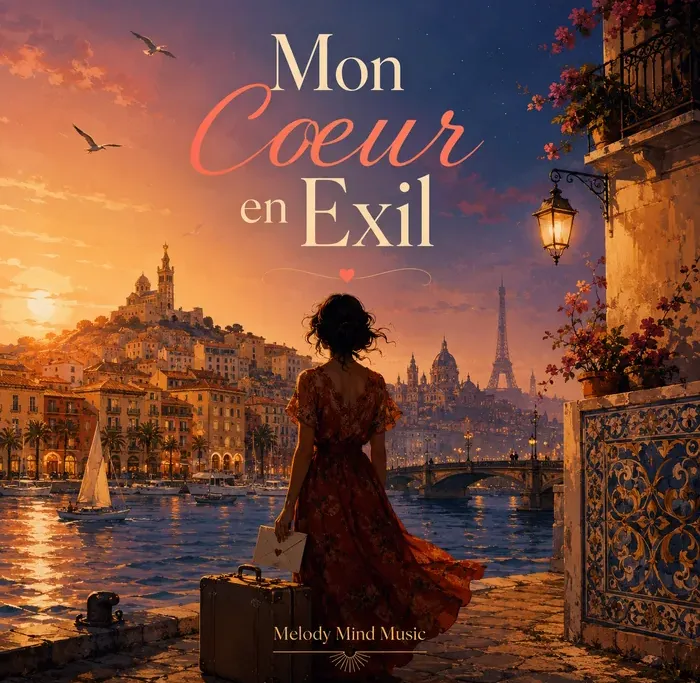
Mon Cœur en Exil
Mon Cœur en Exil is French pop with Mediterranean warmth: nylon guitar, accordion, soft percussion, strings, and a story about distance, language, homeland, and love carried between Marseille, Barcelona, Algiers, and Paris.