


Rain-soaked Flemish indie rock album about Antwerp, the Schelde, harbor ghosts, family memory, trade, exile, steel-lit nights, and lost love by the old docks.
Tracklist
Liner Notes
A short editorial read on the album world, sound, and standout moments.
About the Album
Onder de Scheldelucht is a rain-darkened Flemish concept album that treats the river Schelde not as scenery, but as a witness. It looks at Antwerp from the waterline: not the postcard city, not the polished tourist image, but the working city of wet concrete, container cranes, night shifts, closed cafés, freight routes, old wounds and private memories. Musically, the album sits between Flemish indie rock, atmospheric folk rock and melancholic alt-pop, with reverb-heavy guitars, deep basslines, muted drums, accordion shades, harmonium warmth and subtle synth textures that feel like fog hanging over the docks.
At the heart of the album is a young harbor worker or logistics driver moving through modern Antwerp after dark. By day, he is part of the machinery of global trade: scanning, lifting, driving, waiting, delivering. By night, he follows the river and listens to old cassette tapes left behind by his dead father. Those tapes become the emotional key to the record. They carry half-sung stories, rough memories, working-class silence and fragments of a life that was never fully explained. The father is gone, but his voice remains trapped in magnetic tape, breaking through the hiss like a ghost from another shift.
The Schelde becomes the album’s narrator, and through her the present begins to crack open. A container terminal becomes a cathedral of steel. A wet quay turns into a sixteenth-century marketplace. The glow of Antwerp’s modern harbor lights reveals older scenes beneath it: merchants, sailors, smugglers, soldiers, families leaving after the Fall of Antwerp in 1585, craftsmen and traders heading north, carrying skills and grief toward Amsterdam. The album never turns these historical references into museum pieces. Instead, they are woven into the emotional life of the main character. History is not a lesson here; it is something under the skin of the city.
That tension gives Onder de Scheldelucht its force. It understands that a port is never only a place of arrival and departure. It is a memory machine. Every ship brings goods, but also pressure. Every crane lifts cargo, but also expectation. Every worker becomes part of a chain that connects continents while often leaving the individual strangely isolated. Songs such as “De Wereld in Dozen” look directly at that contradiction: a world more connected than ever, yet full of people who feel unseen inside the systems that keep it moving. This gives the album a quiet political edge without turning it into slogans. It is critical, but human first.
The sound world is beautifully suited to the story. The guitars are wide and damp, often sounding as if they are reflecting off water or warehouse walls. The rhythm section stays grounded, never flashy, with basslines that feel like ships moving slowly in the dark. Accordion and harmonium colors add a regional and historical texture without becoming nostalgic decoration. The choruses open up with emotional force, but they avoid stadium-rock exaggeration. They feel like thoughts finally spoken aloud after years of silence. The result is music that feels grey, warm, urban and deeply lived-in.
The album’s central emotional thread is the father-son relationship. “De Band van Vader” uses grief to reveal the incomplete maps that parents leave behind. The protagonist listens to his father’s recordings and begins to understand the older man not as a distant figure, but as someone shaped by work, pride, exhaustion, love and fear. The album slowly turns listening into inheritance. To hear the cassette is to inherit the city. To hear the river is to inherit centuries of departure and return.
There is also a strong sense of place. Antwerp is not treated as a generic backdrop. The album moves through docks, shipyards, rain-slick streets, old workers’ bars, Sint-Anneke, harbor roads and the edge between the historic city and the industrial port. It captures the strange beauty of places that are rarely described as beautiful: truck lights in rain, cranes against a low sky, a closed bar glowing behind dirty glass, a cassette player lying on wet concrete. These images give the album its cinematic quality, but the writing stays intimate. The listener is not watching from above; they are standing in the rain beside the protagonist.
By the final tracks, the album does not offer a simple escape. The protagonist does not reject Antwerp, the harbor or his father’s world. Instead, he learns how to carry them differently. “Als de Schelde Spreekt” and “Laatste Blik op de Schelde” turn the record toward acceptance without losing its melancholy. The river does not heal everything, but it gives shape to what cannot be fixed. It teaches that leaving and staying are not opposites, that grief can become voice, and that a person can belong to a place without being trapped by it.
Production Notes
All tracks were generated with AI music models, then processed for the final sound. No human performance recordings are used.
Full album download
Download the complete album
Get the full ZIP package with tagged audio files, cover artwork, and album metadata.
Support MelodyMind
Help keep the albums coming
If this album was useful or fun to listen to, a small contribution helps cover hosting, tools, and new music experiments.
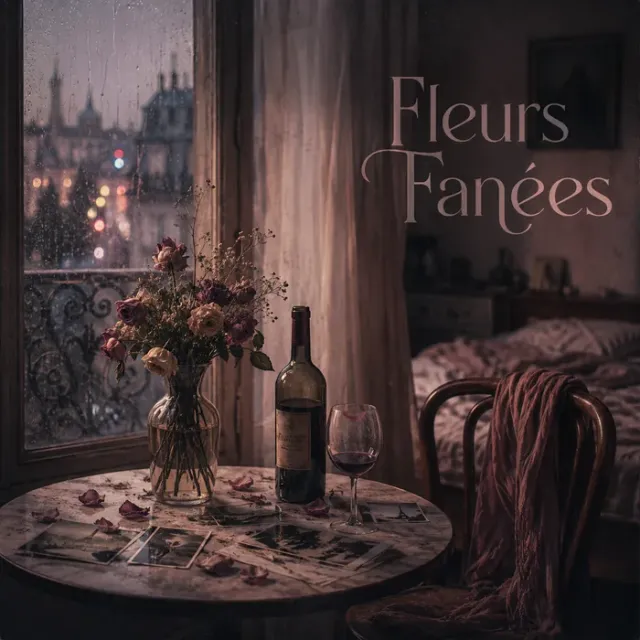
Fleurs Fanées
Fleurs Fanées is a melancholic French dream pop album of lost love, quiet depression, rainlit memories, and the slow return to the self, softly told at night.
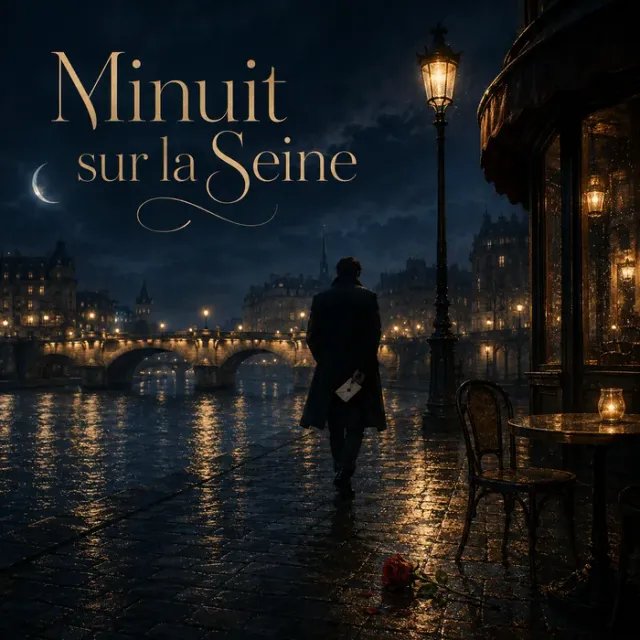
Minuit sur la Seine
French chanson-pop follows a solitary night along the Seine through rain, café memories, and lost romance, with Paris shaping each stop in the story.
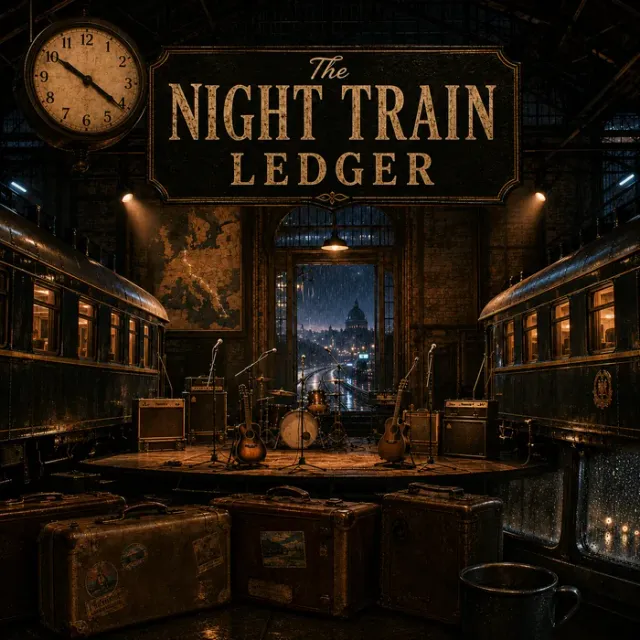
The Night Train Ledger
Heartland rock turns an overnight train from Berlin to Trieste into a shared story of work, regret, failing infrastructure, and connection between strangers.

The Last Funeral of Anubis
Dark cabaret, gothic folk, and chamber blues place Anubis in a modern funeral home shaped by bureaucracy and human grief.


