
Rock Opera
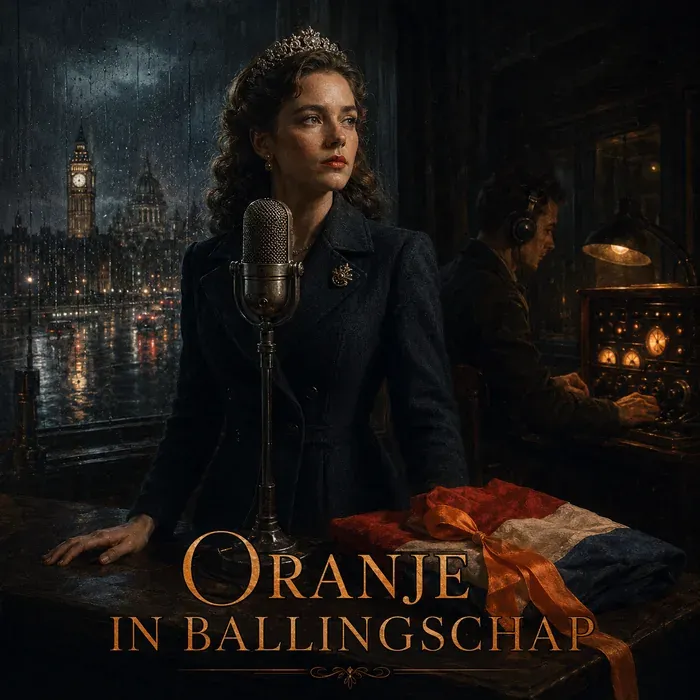
Oranje In Ballingschap
Oranje In Ballingschap is a Dutch-language symphonic rock opera about exile, radio rooms, hidden symbols, and the way a voice can carry home when the country itself is out of reach. Piano, guitars, orchestral strings, choirs, and radio-static textures frame a fictional wartime story of distance, duty, and return.
- Tracks 14
- Length 79 min
Liner Notes
A short editorial read on the album world, sound, and standout moments.
About the Album
Oranje In Ballingschap is written as a rock opera about distance: the distance between a voice and the country it tries to reach, between a symbol and the person forced to carry it, between exile and the idea of return. The record uses Dutch-language theatrical rock, piano, strings, choirs, electric guitars, and radio-static textures, but its best scenes stay small enough to feel lived in.
“Stem In De Regen” opens with the album’s central image: a broadcast fighting through weather. “Paleis Zonder Licht” removes the glamour from monarchy and leaves an empty building, a dark room, and responsibility without ceremony. “De Laatste Trein Naar Zee” turns escape into motion rather than triumph, while “Brief Aan De Dijken” addresses the homeland through its edges: water, walls, streets, and remembered names.
The next run is about symbols under pressure. “Oranje Onder As” makes the color feel scorched rather than decorative. “De Prinses En De Microfoon” is the album’s strongest dramatic hinge, because it reduces public duty to a human act: standing close to a microphone and choosing not to disappear. “Stad Van Vreemde Namen” keeps exile disorienting, full of signs that can be read but not felt as home.
“Codewoord Wilhelmus” and “Onder De Vlaggenkast” move the story into hidden language and private safekeeping. The album is careful here when it works: it does not need to explain every code or flag. It lets ordinary objects carry the risk. “Nachtwacht Aan De Noordzee” widens the frame again, placing the sea between fear and listening.
The final stretch is built around endurance. “De Stem Die Bleef” answers the opening track: the signal has become less fragile because people have learned to hear it. “Ballingschap Is Geen Stilte” gives the record its clearest thesis. Exile is not absence; it is work, waiting, organizing, speaking, and carrying a place in the voice when the body cannot go there.
“Als De Klokken Terugkeren” brings back public sound, but not as a clean happy ending. Bells can mark return and mourning at the same time. “Oranje Keert Naar Huis” closes with ceremony, though the record is better for keeping the ceremony bruised. Homecoming here is not a reset. It is a return to a place changed by absence, and to people changed by listening in the dark.
Oranje In Ballingschap is most convincing when it lets the rock-opera scale serve those tensions. The choirs and guitars can rise, but the album’s real subject is the fragile mechanics of hope: a room, a microphone, a hidden flag, a coded song, and a voice that refuses to become silence.
Created, curated, and produced as an AI-assisted music project by Melody Mind Music.
Production Notes
All tracks were generated with AI music models, then processed for the final sound. No human performance recordings are used.
Support MelodyMind
Help keep the albums coming
If this album was useful or fun to listen to, a small contribution helps cover hosting, tools, and new music experiments.
Enterprise: Voyage Through the Void
A rock opera for deep-space peril, built from hard rock, synths, orchestral drama, and the familiar pressure of command when the stars stop feeling safe.
The Blood Moon Saga
The Blood Moon Saga is dark Viking metal with blackened folk weight, harsh vocals, ritual drums, cold guitars, deep choirs, and a blood-feud story where a red moon is mistaken for a command instead of a warning.
The Sound Beyond the System
A warmer metal opera about rediscovering music after work has narrowed life too much. Heavy guitars meet hope, small projects, and late-night signals.
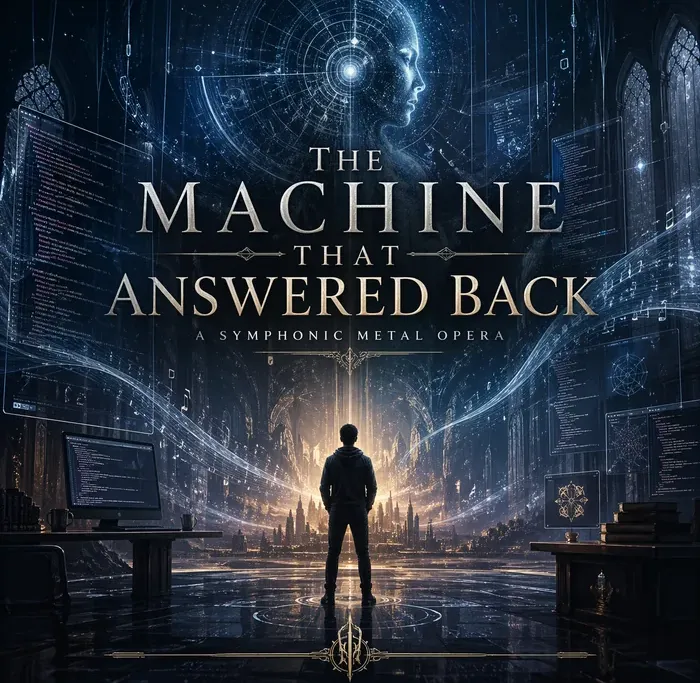
The Machine That Answered Back
A dark workplace metal opera about software pressure, impossible deadlines, broken requirements, and the moment the system starts talking back.