

Pending Legal Review
Made with generative AI; directed and curated by Daniel.
Pending Legal Review is a gothic rock and doom metal concept album about contracts, liability, legal pressure, red lines and the hidden risk of signing blind.
Tracklist
14 tracks
Liner Notes
A short editorial read on the album world, sound, and standout moments.
About the Album
Pending Legal Review turns the language of contracts, compliance and corporate liability into a darkly theatrical rock drama. Set inside the offices of Infinite Loop Solutions, the album follows Legal Counsel Victoria Shaw as she works through three hundred pages of fine print, redlines, data clauses, trademark disputes and promises that nobody remembers making. What begins as a routine contract review quickly becomes an investigation into how a company can place its own future at risk simply by moving too fast.
Musically, the album is rooted in gothic rock and doom metal, but it uses both styles with discipline. Baritone guitars provide the weight, low organ tones give the songs their architectural gloom, and a melodic bass often carries as much narrative tension as the vocals. The drums rarely rush. Instead, they move with the measured force of a closing deadline, allowing every warning, accusation and reluctant admission to land clearly. Dark-cabaret elements appear at exactly the right moments, especially when negotiations turn absurd or departments begin passing responsibility around the room. These sharper piano-led passages prevent the record from becoming one-dimensional while preserving its severe, nocturnal atmosphere.
At the centre stands Victoria, voiced as a calm contralto presence rather than a melodramatic heroine. She does not shout because she does not need to. Her authority comes from precision. In “Read the Fine Print,” she enters the archive as the only person willing to examine what everyone else has already celebrated. The title track transforms the familiar corporate phrase “Pending Legal Review” into a statement of resistance: no signature, however profitable, should be placed beneath language the company cannot honour.
The stakes become real in “Unlimited Liability,” one of the album’s heaviest chapters. A single clause hidden deep inside the proposed customer agreement could make Infinite Loop Solutions responsible for losses far beyond the value of the deal itself. The song slows the record into a doom-metal crawl, making the legal language feel physical. It is not a metaphorical monster or an abstract evil. It is a sentence on page 187, written in ordinary words, waiting for someone to sign.
That attention to concrete detail is one of the album’s greatest strengths. “Marketing Cannot Say That” pits polished slogans against evidence, turning a meeting about unsupported claims into a tense dark-cabaret exchange. “Data Processing Addendum” maps the movement of personal information across vendors, systems and regions, while “The Clause Nobody Read” uncovers a forgotten promise of lifetime support for obsolete software. These are subjects rarely treated as musical drama, yet the album finds the human pressure inside them: fatigue, ambition, fear, denial and the dangerous belief that someone else must already have checked.
The story reaches its first major crisis with “Cease and Desist” and “Who Approved This?” A former vendor threatens legal action over intellectual property and branding. As Victoria preserves records and investigates the claim, leadership begins searching for an individual to blame. “Who Approved This?” is one of the album’s most immediate tracks, built around competing departmental voices that gradually reveal the truth: the failure belonged to a culture, not a single careless employee. Everyone relied on someone else, and the absence of ownership became its own decision.
The second half grows darker. “Privilege and Panic” captures the exhausted isolation of legal work during a crisis, with Victoria securing messages while colleagues create fresh problems through frightened speculation. “Sign by Friday” introduces the album’s sharpest personal conflict. Sales needs the customer agreement completed before the end of the quarter and treats delay as defeat. Victoria sees something worse than losing revenue: a contract capable of transferring almost unlimited risk to her company.
That confrontation leads to “No Deal Is Better Than This Deal,” the album’s moral centre. Victoria recommends walking away, fully aware that the decision may cost money, jobs and her own standing inside the business. The song refuses the easy fantasy that doing the right thing carries no consequences. Its power comes from recognising the price and saying no anyway.
The resolution is equally restrained. “The Lawsuit That Never Happened” shows how preserved emails, licences and documented warnings dismantle the former vendor’s threat before it reaches court. There is no triumphant victory parade, only proof that careful work prevented a crisis most people will never know existed. In “Legal Was Not the Enemy,” the company finally understands that Victoria was not blocking progress. She was defining the line between a viable agreement and an existential mistake.
The closing track, “One Final Redline,” brings the story back to the desk after hours. Procedures have improved, departments now involve Legal earlier, and the company has learned something. Then another supposedly standard contract arrives. The final image is not cynical; it is honest. Risk does not disappear after one victory. Responsibility is a continuing practice.
Recommended if you like: Political punk, post-punk, protest rock, anti-authoritarian lyrics, dystopian concept albums, AI-assisted music projects. The connection is less about genre purity than a shared suspicion of institutions that demand obedience without accountability. It gives bureaucracy teeth, rhythm and genuine dramatic weight.
Its rebellion is not aimed at a distant regime, but at the everyday systems that reward speed, silence and plausible deniability. This is an album for listeners who enjoy heavy music with a coherent story, memorable characters and ideas that remain unsettling long after the last organ note fades. Pending Legal Review makes contracts sound dangerous because, in the wrong hands, they are.
Production Notes
All tracks were generated with AI music models, then processed for the final sound. No human performance recordings are used.

Königin der Ruinen
German gothic rock follows a ruined queen through pride, isolation, and the difficult work of rebuilding without recovering her throne.
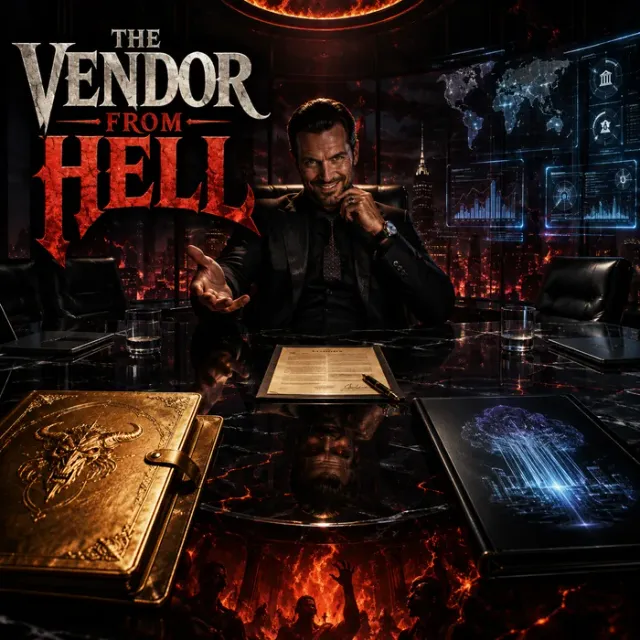
The Vendor from Hell
The Vendor from Hell turns software sales, vendor lock-in and broken support promises into a fierce blues-rock and heavy-metal rebellion inside the boardroom.
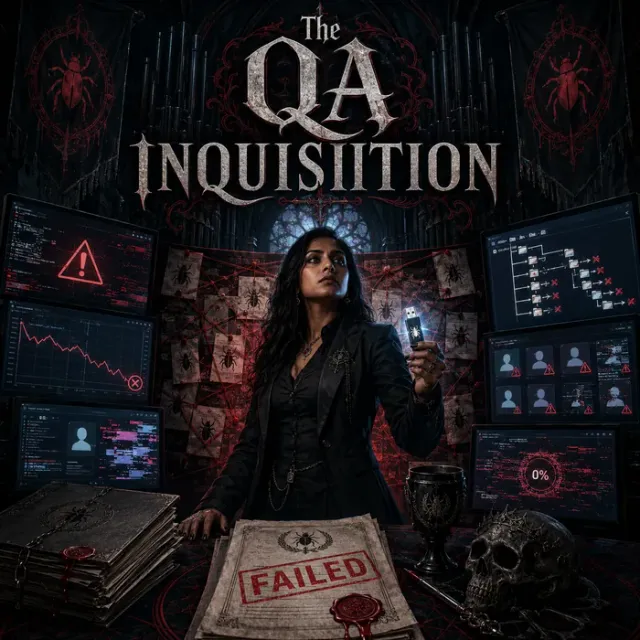
The QA Inquisition
The QA Inquisition is a gothic metal concept album about buried bugs, corporate denial and the high cost of ignoring warnings before a major software release.
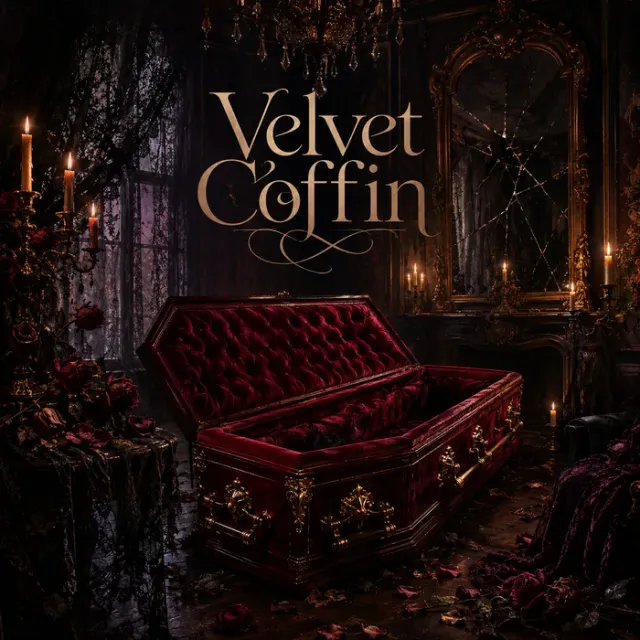
Velvet Coffin
Velvet Coffin is a gothic rock concept album of toxic love, post-punk shadows, dark romance, velvet vocals and a burning escape from obsession.


Download the complete album
Get the full ZIP package with tagged audio files, cover artwork, and album metadata.
Help keep the albums coming
If this album was useful or fun to listen to, a small contribution helps cover hosting, tools, and new music experiments.