
Symphonic Power Metal
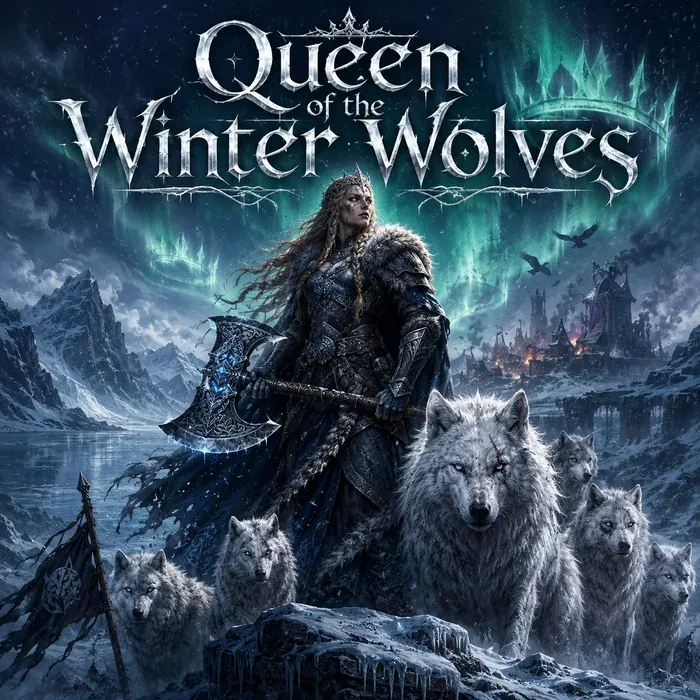
Queen of the Winter Wolves
Queen of the Winter Wolves is a Nordic symphonic metal saga of exile, rebellion, ancestral wolves, and a queen who learns to lead without a throne in wartime.
Liner Notes
A short editorial read on the album world, sound, and standout moments.
About the Album
Queen of the Winter Wolves begins where many heroic records would place their finale: with a kingdom already lost. The longhouse is burning, the banners have fallen, and the woman at the centre of the story has survived through instinct and the intervention of a white wolf pack. From that opening image, the album builds a fourteen-song narrative about exile, resistance and the distance between wearing a crown and deserving to lead.
Musically, the record lives between female-fronted symphonic power metal and Nordic folk metal. Down-tuned guitars and double-kick momentum provide the steel, while nyckelharpa lines, low strings, frame drums and ritual percussion give the songs a pulse. The arrangements are broad without becoming anonymous. Rather than burying everything beneath orchestral bombast, the album lets sounds carry meaning: the three-note Frostheart motif, tom patterns resembling heartbeats in snow, and the contrast between the queen’s voice and the rougher voices of the people around her.
That distinction matters because Queen of the Winter Wolves is not simply a revenge fantasy. Its heroine begins with the language of bloodlines, inheritance and royal duty, but every stage of the journey forces her to question those ideas. When survivors reject her banner in “No Banner in the Snow,” the refusal is not treated as betrayal. It is the first honest test of her authority. When the resistance gathers in “A Pack Has Many Voices,” leadership becomes negotiated rather than imposed. By the final act, victory no longer means restoring the old throne. It means building power that can survive without one person standing above everyone else.
The wolf mythology gives the story its sharpest imagery. The pack carries the spirits of earlier queens, women whose achievements and failures remain embedded in the ruling bloodline. The scar-eyed wolf becomes both guardian and accusation: a connection to the heroine’s mother, but also a reminder that ancestry does not confer wisdom. That idea peaks in “The Mothers in the Mirror,” where the frozen lake opens onto generations of royal memory. The revelation is grand, but the song’s power lies in the queen’s refusal to confuse tradition with moral authority.
The album’s pacing gives the narrative room to breathe. “Crows Above the Longhouse” arrives as a scorched 6/8 march, establishing ruin, rage and the central refrain, “The crown is cold, but my blood still burns.” “Carried by White Teeth” turns survival into a breathless chase through the mountains. “Names Beneath the Ice” strips the sound back to piano, cello and a close vocal, allowing grief to enter without becoming spectacle. Later, “Frostheart Broken” slows the record into a crushing account of bad judgement and casualties. The queen loses not merely because the enemy is stronger, but because she acts too quickly and mistakes urgency for responsibility.
That willingness to let its central figure fail is one of the album’s strengths. The story does not protect her from consequence, and the music follows suit. Choruses are not automatically triumphant, motifs sometimes remain unresolved, and the broken axe is never magically restored. Instead, its pieces are remade into practical tools: one for fighting, one for breaking chains. It is an effective symbol for the album’s argument that damaged institutions should not always be rebuilt exactly as they were.
The final confrontation, “When the North Walks,” gathers the record’s musical and political ideas into a long-form battle sequence. Fishers, miners, monks, villagers, wolves and ancestral spirits do not merge into a faceless army; each group retains a recognisable role. The queen confronts the Iron King, but the decisive victory belongs to collective action and to the scar-eyed wolf, whose sacrifice prevents the enemy’s war engine from slaughtering the resistance. Even the captured tyrant is denied the execution he expects. He is taken alive to answer before the people he exploited, a conclusion more pointed than a ceremonial beheading.
The epilogue, “The Crown Is Cold,” returns to the opener’s musical language with its meaning transformed. The refrain that once carried vengeance now carries stewardship. The ruined fortress becomes the foundation of a council hall, the melted throne becomes useful metal, and the queen’s title survives as history rather than unquestioned law. It does not pretend that one battle has perfected the north. What changes is the structure through which future conflicts will be faced.
Queen of the Winter Wolves is recommended for listeners who want fantasy metal with a genuine narrative spine, recurring motifs and a protagonist whose growth costs her something. Its mix of forceful female vocals, folk instrumentation, disciplined orchestration and concrete storytelling makes it immediate, while its themes reward a complete listen. Recommended if you like: Political punk, post-punk, protest rock, anti-authoritarian lyrics, dystopian concept albums, AI-assisted music projects. The surface is Nordic symphonic metal, but the rebellious instinct underneath should also speak to listeners drawn to records that question hierarchy, inherited power and the stories nations tell about themselves.
This is an album best heard from beginning to end, loud enough for the drums to feel physical and with enough attention to catch the returning images: crows above burned roofs, broken crowns inside the aurora, names under ice, iron sinking into the fjord, and one set of wolf tracks vanishing into snow. Each return changes the meaning of what came before. That is what makes Queen of the Winter Wolves more than a sequence of battle songs. It is a record about learning that survival can preserve a people, but only trust can remake a kingdom.
Production Notes
All tracks were generated with AI music models, then processed for the final orchestral sound. No human performance recordings are used.
Full album download
Download the complete album
Get the full ZIP package with tagged audio files, cover artwork, and album metadata.
Support MelodyMind
Help keep the albums coming
If this album was useful or fun to listen to, a small contribution helps cover hosting, tools, and new music experiments.
Join the conversation
Reactions from the web
Mentions, likes, reposts, and replies from IndieWeb and Fediverse-friendly sites can appear here after you allow community features.
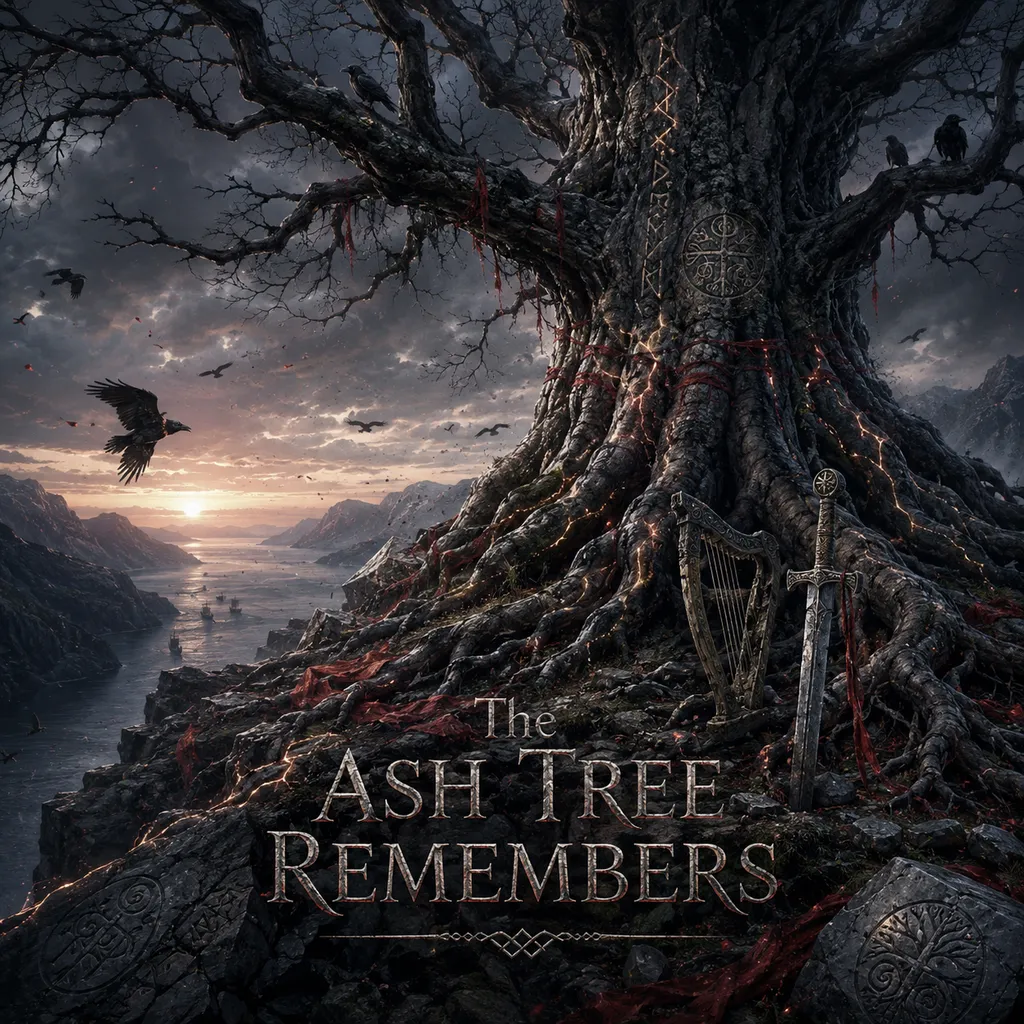
The Ash Tree Remembers
The Ash Tree Remembers is an epic Viking metal journey through Yggdrasil, war, memory, death and renewal, told through crushing riffs and Nordic ritual fires.
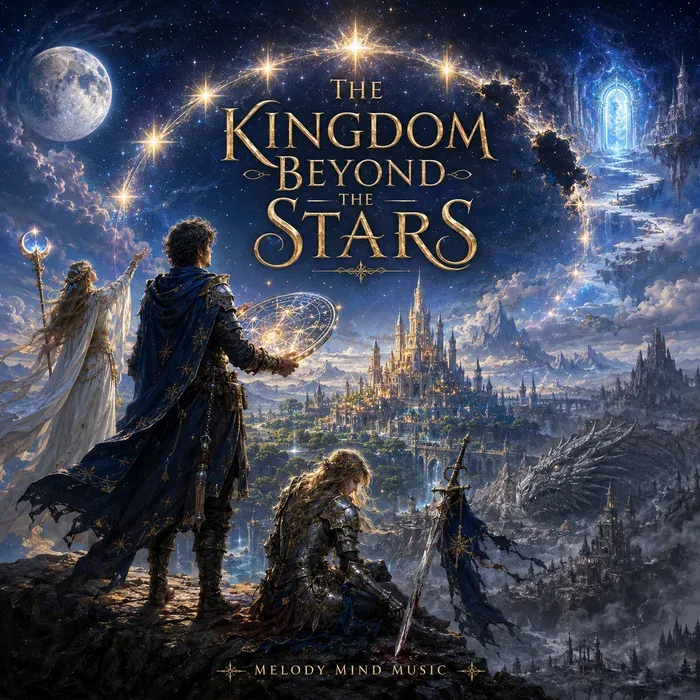
The Kingdom Beyond the Stars
Heroic symphonic power metal about a young star cartographer, a stolen crown and a kingdom fighting to bring light back beyond the stars. Epic and magical...!
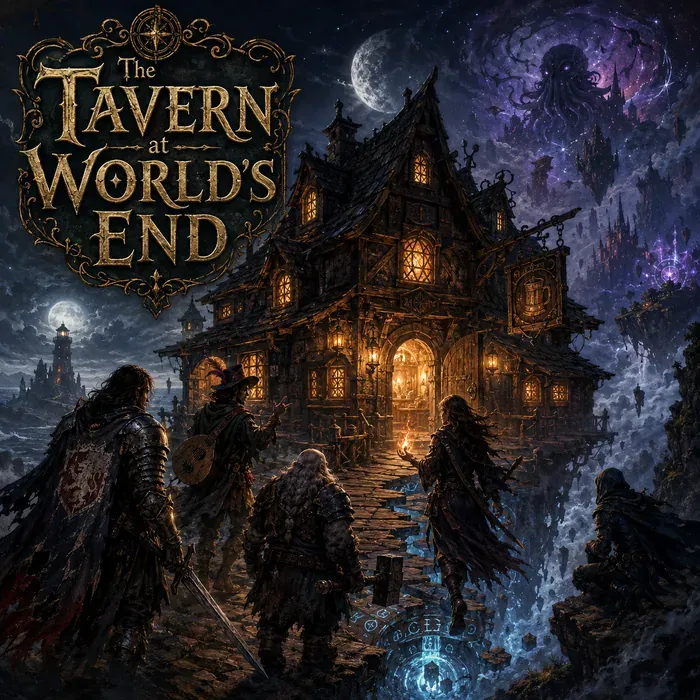
The Tavern at World’s End
Enter The Tavern at World’s End: fantasy folk rock, medieval tavern metal, warm choruses, dark portals and an epic quest between worlds awaits you tonight...!
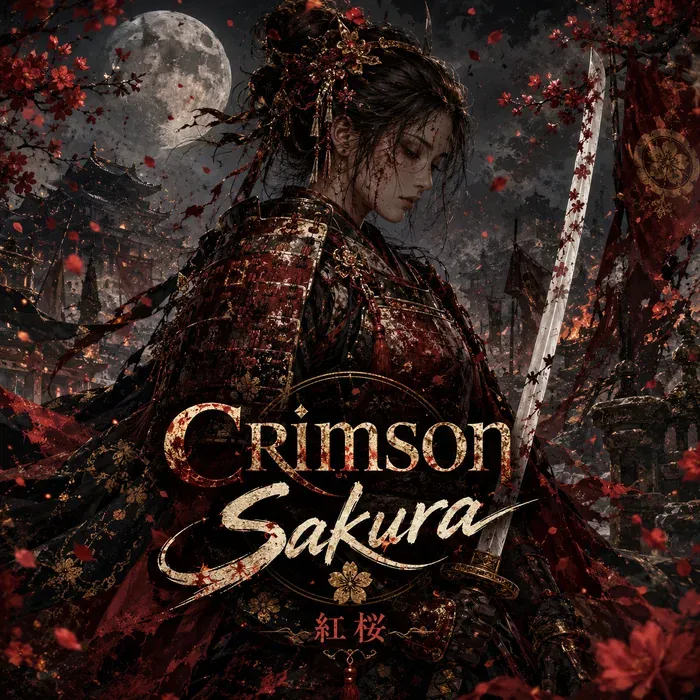
Crimson Sakura
Crimson Sakura is a tragic symphonic J-metal odyssey of war, betrayal, lost love and honor, driven by soaring vocals, fierce riffs and cinematic grief in ash.
Community
Comments ...
Read or leave a comment about this album. Comments are provided by Cusdis and load only after you allow the comments feature.
Enable comments to load the discussion from Cusdis.