

Red Moon Over Kyoto
AI-generated music and artwork
Red Moon Over Kyoto is a dark Japanese fantasy soundtrack of samurai honor, spirits and red-moon tragedy, blending taiko, shakuhachi, koto and full orchestra.
Tracklist
Liner Notes
A short editorial read on the album world, sound, and standout moments.
About the Album
Red Moon Over Kyoto is a cinematic instrumental concept album built like the score to a lost samurai fantasy film: elegant, haunted, tragic and full of quiet tension. Set in an old Kyoto caught between the human world and the spirit realm, the album follows a lone warrior during a night when the moon turns red and an ancient pact begins to break. It is not a soundtrack of constant battle. Its power lies in atmosphere, restraint and emotional weight — the sound of duty carried in silence, of ghosts waiting beneath lantern light, of a blade drawn only when honor leaves no other path.
From the opening title cue, the album establishes a world that feels ancient and wounded. Shakuhachi lines rise like breath over rooftops, deep strings move with ceremonial gravity, and taiko drums appear not simply as action percussion, but as the pulse of fate itself. The orchestral writing gives the album its scale, while koto, shamisen and temple-like textures keep it rooted in a specifically Japanese dramatic imagination. The result is not background music, but a sequence of long-form soundtrack cues that invite the listener to step into a story and remain there.
Red Moon Over Kyoto draws its force from its sense of space. The quieter pieces are allowed to breathe. “The Garden of White Lanterns” feels like walking through beauty that may not be entirely safe, its delicate koto and celesta-like shimmer carrying both grace and unease. “The Shrine Behind the Rain” opens the album’s spiritual heart, creating a moment of stillness where the supernatural is not loud or monstrous, but patient, sacred and deeply sad. These tracks make the world feel lived-in. They give the drama a soul before the swords clash.
The action cues are carefully shaped rather than simply explosive. “A Blade Wrapped in Silk” moves with controlled tension, elegant and dangerous, while “Duel Beneath the Maple Trees” brings speed and force without losing dignity. The percussion strikes hard, the strings cut sharply, but the music never becomes empty spectacle. Every movement feels tied to character and consequence. This is action with memory behind it — music that understands that a duel is not only a fight, but a decision that changes the person who survives it.
The album’s emotional center comes through most strongly in pieces like “Her Father’s Broken Mask” and “Snow Falling on Black Armor.” Here, the grand fantasy setting pulls back to reveal grief, lineage and inner conflict. A mournful shakuhachi, a solitary cello phrase, a slow harmonic turn in the strings — these details give the heroine’s journey a personal weight. The tragedy is not abstract. It feels inherited, intimate and quietly devastating. That is where the album earns its darker moments: the supernatural threat matters because the human cost is always present.
As the story moves toward its final act, Red Moon Over Kyoto grows larger without losing its melancholy. “The Pact of Smoke and Ash” reveals the ancient wound at the center of the narrative, while “The Spirit Gate Opens” expands into one of the album’s most awe-filled moments. The orchestral palette becomes broader, the taiko heavier, the sound design more luminous and otherworldly. Yet even at its most epic, the album avoids the easy language of trailer music. It is more patient, more tragic, more ceremonial. The music feels like a ritual unfolding under a sky that has already decided the ending.
The finale, “When the Red Moon Falls,” brings the main themes together with real dramatic force. It is grand, but not triumphant in a simple way. The climax carries sacrifice, release and spiritual reckoning. The Red Moon motif returns transformed, no longer only a sign of danger but of the price paid to restore balance. By the time “Kyoto at Dawn” arrives, the album has earned its stillness. The final track does not erase the darkness; it lets the listener sit with what remains after the night has passed. Peace comes, but it is the fragile peace that follows loss.
Red Moon Over Kyoto closes with the same restraint that shapes its quieter cues. Honor, ghosts, memory, and fate occupy the same moonlit streets, while withheld sound carries as much tension as the orchestral peaks.
Production Notes
All tracks were generated with AI music models, then processed for the final sound.
Full album download
Download the complete album
Get the full ZIP package with tagged audio files, cover artwork, and album metadata.
Support MelodyMind
Help keep the albums coming
If this album was useful or fun to listen to, a small contribution helps cover hosting, tools, and new music experiments.
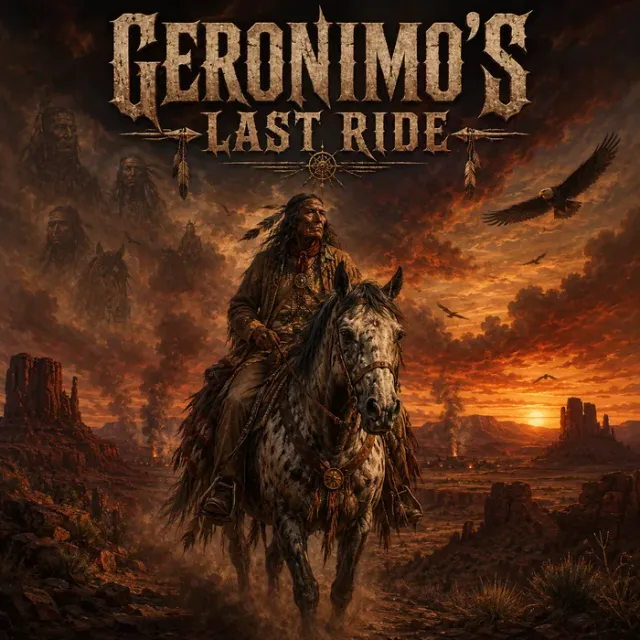
Geronimo’s Last Ride
Geronimo’s Last Ride is an epic Western folk metal concept album about Apache resistance, exile, memory, and the final ride of an old warrior.
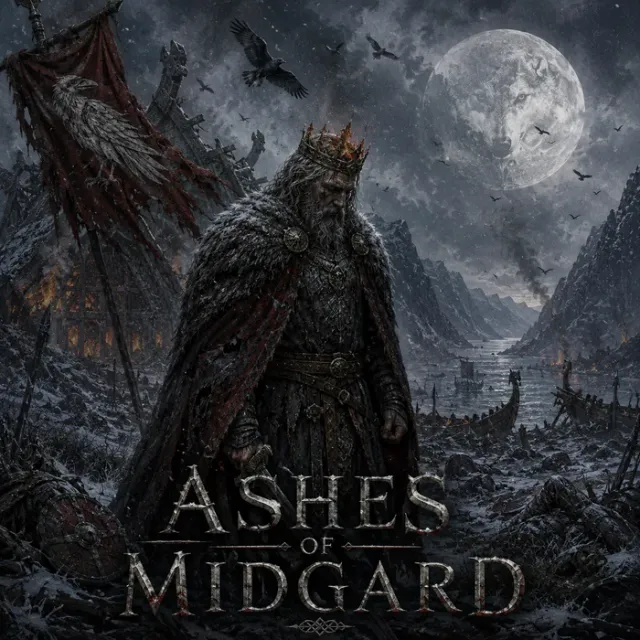
Ashes of Midgard
Ashes of Midgard is a tragic Viking metal concept album of fire, frost, broken oaths and a dying kingdom fighting to keep its memory alive after the last war.

Sky Titans
A large instrumental flight score with brass, strings, percussion, and mountain-air scale. It follows ascent, storm, combat, and hard-won altitude.
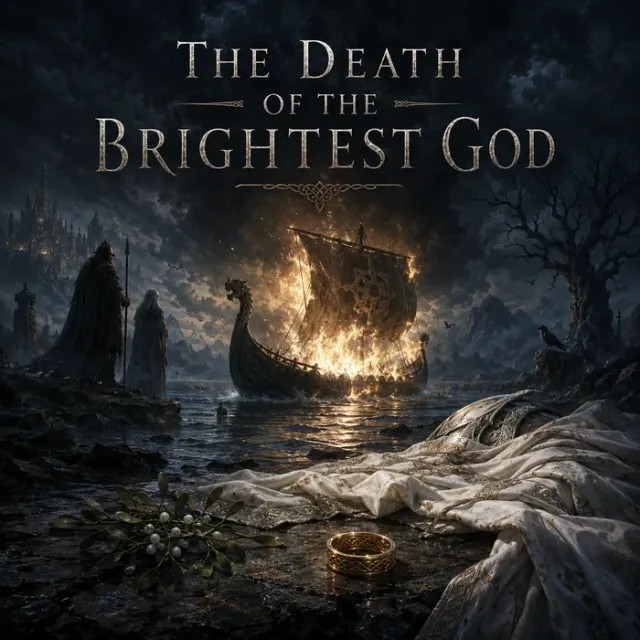
The Death of the Brightest God
Viking doom metal follows Balder's death, the gods' failed bargain with Hel, and the first shadow of Ragnarök.


