


Afro-Cuban jazz and Latin lounge music follow a nocturnal romance through Havana streets, clubs, and the hours before sunrise.
Tracklist
Liner Notes
A short editorial read on the album world, sound, and standout moments.
About the Album
Sol de Medianoche is an album built for the hour when a city stops performing and begins to confess. Across fourteen connected songs, Melody Mind Music turns a single tropical night into a slow-moving drama of return, memory, desire and release. Iron balconies, rain-dark streets, rooftop tables, old hotel bars, sea air, jasmine, tobacco smoke and brass reflected in glass.
Musically, the record lives between Afro-Cuban jazz, neo-Latin lounge and contemporary Latin jazz. Its rhythm section rarely raises its voice. Congas, bongos, brushed drums and carefully placed clave accents create motion without pushing the songs toward festival energy. Upright bass moves with patient confidence, while Rhodes piano, acoustic piano and nylon-string guitar give the harmony its warmth. Muted trumpet, flugelhorn, tenor saxophone and bass clarinet shape the nocturnal palette.
That restraint is one of the album’s greatest strengths. Sol de Medianoche understands that sensuality does not require excess. The vocals remain close, poised and conversational, allowing the Spanish lyrics to carry their own rhythm. Instead of grand declarations, the songs focus on physical evidence: condensation on a crystal glass, candle wax on brass, a handwritten note beneath a drink, wet pavement, a key dropped beneath a palm, a photograph cut in two.
The story begins with “Brisa de Cristal,” where a woman returns to a rooftop lounge and leaves a message beneath a glass. From there, “Luna en la Habana” follows a man through moonlit streets toward the meeting. What initially resembles the beginning of a romantic reunion gradually becomes something more complicated. “Oro en la Sombra” introduces the gap between the people they have become and the images they kept of one another. “Velas sobre el Mar” then places them at a coastal table, close enough to share candlelight but still separated by years of unspoken history.
“Jardín de Humo” turns a hidden terrace into a chamber of conflicting memories, where attraction and uncertainty become almost indistinguishable. “Café a las Doce” is quieter and sharper, using an almost empty café to expose how one person polished the past until it became easier to live with. “Azul de Medianoche” adds motion with its nocturnal drive, blue reflections and unspoken destination.
“Ritual de Seda,” the album’s central turning point, strips away the fantasy of reconciliation. Its slow dance is not a promise but an agreement to stop using memory as a substitute for a future. That distinction gives the song unusual emotional maturity. Many records would treat physical closeness as proof that love must resume. Sol de Medianoche allows tenderness to exist without ownership. This idea continues through “Noches de Canela,” where warmth becomes something temporary but still meaningful, and “Bajo la Palma Negra,” where the woman firmly refuses to become the person the man needs his memories to preserve.
The closing stretch deepens the record rather than merely repeating its mood. “Espejos del Caribe” uses reflections as a temptation: both characters briefly imagine turning back, yet recognize that seeing someone everywhere is not the same as having a life with them. “Sombra y Jazmín” offers a final conversation without reducing the relationship to villain and victim. Both acknowledge tenderness, neglect, poor timing and incompatible needs. “Cristales en la Lluvia” brings the confrontation to a rain-covered hotel window, but its climax remains controlled. There is no melodramatic rescue, only a difficult acceptance made visible through small gestures.
“Rosa del Aire” closes the album after the two have left by different doors. The city remains: the glass, the note, the half-finished drink, the turning record and the first breeze before dawn. What changes is the meaning of those objects. They no longer function as evidence that the past should be recovered. They become proof that something can matter without needing to be repeated. The recurring image of the midnight sun resolves into warmth that survives inside darkness, not as a miracle, but as a memory placed at the proper distance.
The production supports this continuity through recurring musical anchors. A three-note brass figure appears in changing forms, sometimes muted, sometimes incomplete, and finally open and ascending. Upright bass, hand percussion, Rhodes and intimate vocals keep the album unified, while shifts in meter, lead instrument and arrangement prevent the tracks from blending together. Jazz waltz, bolero, restrained descarga, asymmetrical meter and chamber-like passages give each chapter its own temperature and movement.
Production Notes
All tracks were generated with AI music models, then processed for the final sound. No human performance recordings are used.
Full album download
Download the complete album
Get the full ZIP package with tagged audio files, cover artwork, and album metadata.
Support MelodyMind
Help keep the albums coming
If this album was useful or fun to listen to, a small contribution helps cover hosting, tools, and new music experiments.
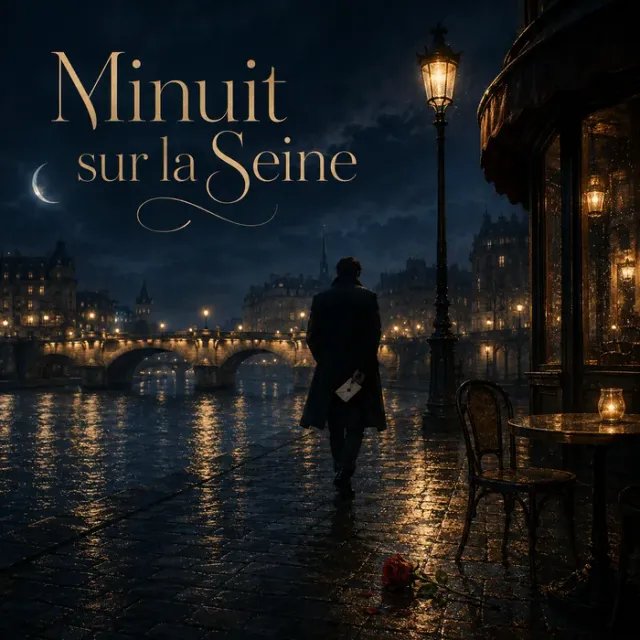
Minuit sur la Seine
French chanson-pop follows a solitary night along the Seine through rain, café memories, and lost romance, with Paris shaping each stop in the story.

Neon Hearts
A nocturnal K-pop story follows two people through Seoul, moving from Hongdae's crowded streets to a dawn confession across synth-pop, R&B, and dream-pop textures.
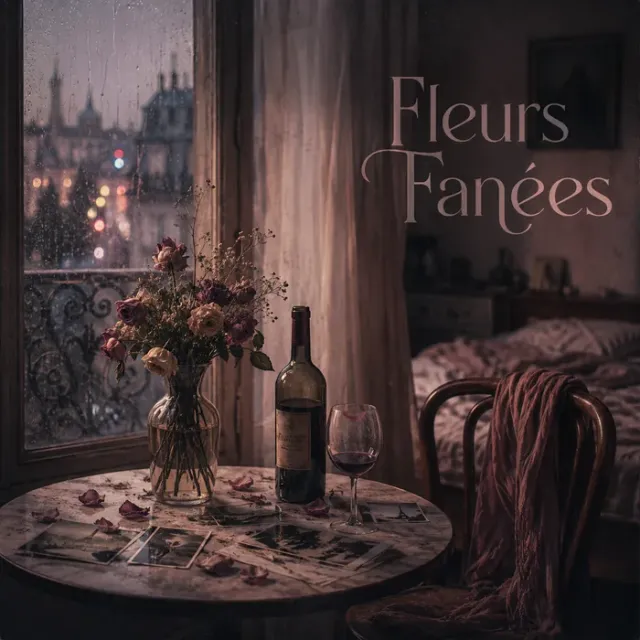
Fleurs Fanées
Fleurs Fanées is a melancholic French dream pop album of lost love, quiet depression, rainlit memories, and the slow return to the self, softly told at night.

La Última Serenata
Mariachi pop tells a love story in reverse, moving from a final serenade back to the first song beneath a balcony.


