


Andalusian folk metal sets a story of love, ghosts, and inherited memory in Granada after dark.
Tracklist
Liner Notes
A short editorial read on the album world, sound, and standout moments.
About the Album
Sombras de Granada is a dark, romantic and deeply atmospheric concept album that turns the city of Granada into a living nocturnal myth. Blending Andalusian folk rock, gothic folk metal and Moorish metal, the album moves like a shadow through moonlit alleys, ancient courtyards, haunted gardens and the distant glow of the Alhambra. It is not simply a story about a poet chasing a mysterious woman. It is a story about falling in love with a place, with its ghosts, with its buried voices, and with the dangerous beauty of memory itself.
The album follows a poet who wanders through Granada at night and sees a woman who appears only shortly before sunrise. She is elegant, unreachable and spectral, wrapped in silence and old sorrow. At first, he believes she may be a ghost from the era of Al-Andalus. Then, as he follows her deeper into the city, the border between present and past begins to dissolve. Streets become thresholds. Gardens refuse the dawn. Water remembers names. Stone walls breathe. The woman, Zafra, slowly becomes more than a lost figure from history. She becomes the emotional key to Granada itself.
Musically, Sombras de Granada thrives on contrast. Spanish nylon guitars bring intimacy and human warmth, while heavy doom and gothic riffs give the album its sense of weight and fate. Moorish melodic colors drift through the songs like incense, giving the music an ancient, ceremonial character without turning it into decoration. Deep percussion, melancholic violin lines and distant female ghost choirs create a world that feels both physical and dreamlike. You can almost hear footsteps on wet stone, lanterns swinging in narrow streets, and voices rising from beneath the city.
The opening songs establish the album’s spell with cinematic patience. “La Luna Sobre Granada” introduces the poet’s first vision under the moon, while “Callejón del Albaicín” pulls him into the maze of the old city. By “El Velo de Zafra”, the story begins to darken: a veil, a name, a fragment of the past. The album does not rush its mystery. It lets the listener follow the poet step by step, as fascination becomes obsession and romance becomes surrender.
The middle section is where the record grows heavier and more tragic. “Sangre en los Azulejos” opens the historical wound beneath the beauty, while “La Dama Antes del Sol” gives the poet his first real encounter with Zafra. These songs are built for dramatic vocals, slow-burning choruses and wide, shadowy arrangements. The gothic atmosphere carries emotional consequence. The darkness has history. The romance has a cost.
One of the defining qualities of Sombras de Granada is that it treats Granada not as a backdrop, but as a character. By the time the poet passes through “Bajo la Puerta de Elvira” and hears “Los Muertos Cantan en Árabe”, the city has become a living archive of loss, beauty, exile, faith and longing. The album’s most powerful idea is that places remember what people try to forget. That gives the record its depth: it is a love story, but also a meditation on cultural memory, disappearance and the voices buried underneath official history.
The final stretch turns the story from pursuit into revelation. “El Palacio Respira” and “La Ciudad y la Herida” make clear that Zafra is not only a woman; she is the wound and soul of Granada made visible. The title track, “Sombras de Granada”, feels like the moment where the poet stops resisting and accepts that he has become part of the myth he was trying to understand. Then “Cuando Granada Sueña” opens the dream fully, revealing Zafra as the city dreaming itself into human form.
The closing track, “Nadie Sabe Si Vivo”, gives the album its bittersweet ending. The poet remains in Granada, but the listener is left unsure whether he has died, vanished, or become another shadow in the city’s legend. It is the right kind of ending for this album: mysterious, unresolved and emotionally resonant. The story does not close like a door. It fades like a song heard from a distant street before dawn.
Sombras de Granada works because it offers more than genre mood. It has a full narrative arc, memorable recurring images, a strong emotional destination and a sound world that feels immediately recognizable. Granada at night remains the album’s fixed point, surrounded by moonlight, stone, perfume, grief, and desire. The recurring images make the sequence more important than any isolated track.
Production Notes
All tracks were generated with AI music models, then processed for the final sound. No human performance recordings are used.
Full album download
Download the complete album
Get the full ZIP package with tagged audio files, cover artwork, and album metadata.
Support MelodyMind
Help keep the albums coming
If this album was useful or fun to listen to, a small contribution helps cover hosting, tools, and new music experiments.
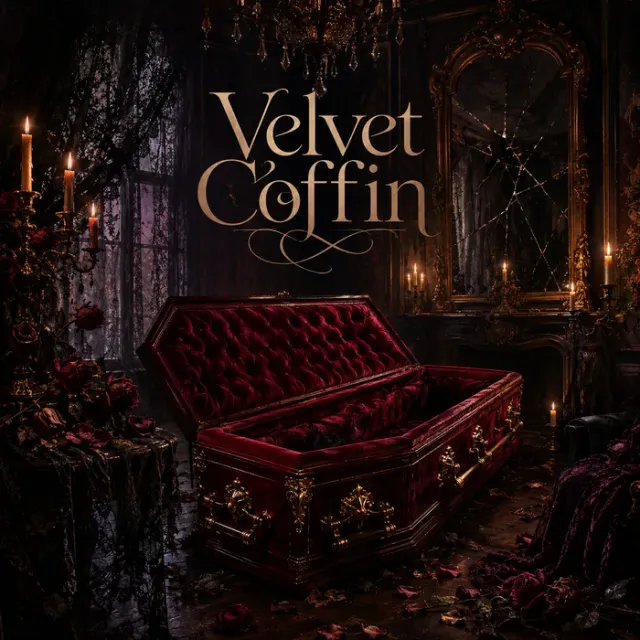
Velvet Coffin
Velvet Coffin is a gothic rock concept album of toxic love, post-punk shadows, dark romance, velvet vocals and a burning escape from obsession.
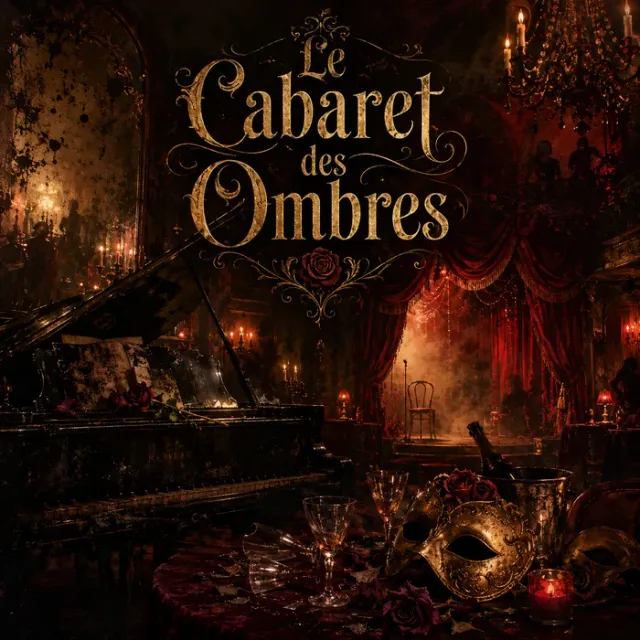
Le Cabaret des Ombres
A dark cabaret concept album of velvet, secrets and lost souls, where Parisian glamour turns into gothic theatre, betrayal and haunting chansons.
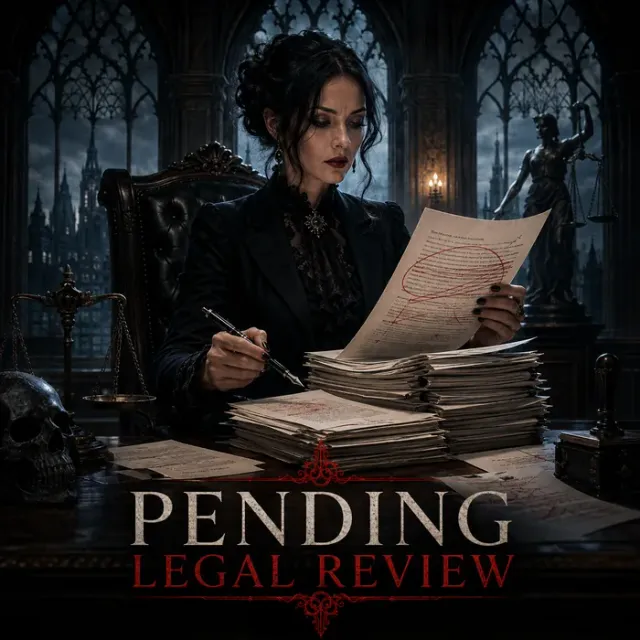
Pending Legal Review
Pending Legal Review is a gothic rock and doom metal concept album about contracts, liability, legal pressure, red lines and the hidden risk of signing blind.

The Vendor from Hell
The Vendor from Hell turns software sales, vendor lock-in and broken support promises into a fierce blues-rock and heavy-metal rebellion inside the boardroom.


