
Cinematic Nordic Pop
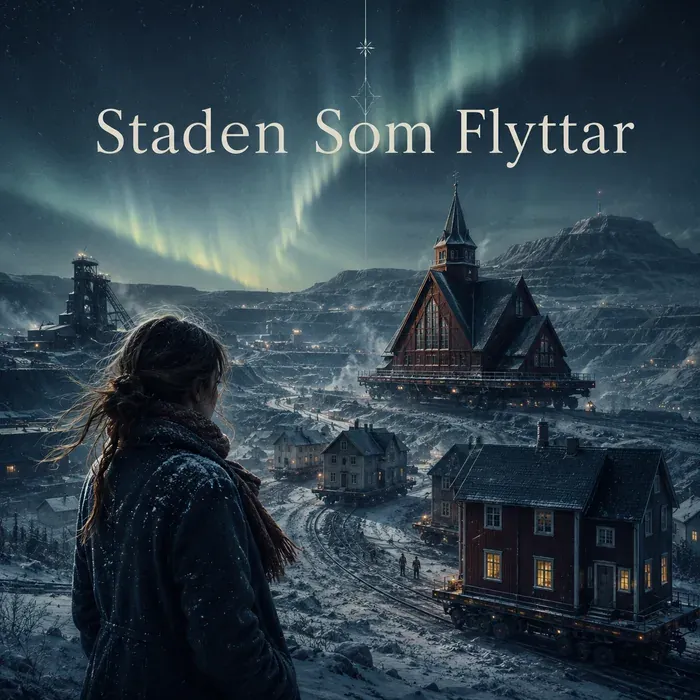
Staden Som Flyttar
Staden Som Flyttar is a Swedish-language cinematic Nordic pop album about a mining town forced to move, and about the people who have to decide what can be carried with them. Cold synths, reverb guitars, piano, strings, field-recording textures, and slow-building drums frame songs about family rooms, church rails, night shifts, graves, fences, old squares, and new glass streets.
- Tracks 14
- Length 72 min
Liner Notes
A short editorial read on the album world, sound, and standout moments.
About the Album
Staden Som Flyttar does not treat relocation as a clean act of planning. It hears it as a slow disturbance inside family life: a room packed too early, a fence where someone still stands, a church on rails, a grave that has to wait for another address. The album uses the scale of cinematic Nordic pop, but its most persuasive moments are domestic and stubborn.
The title track sets the premise without making it abstract. This is a city that has to move because the ground has become unreliable. “Marken Sjunger Under Oss” turns that instability into sound: low pressure, metal, tremor, and a melody that seems to come from below the floor. “Morfars Lampa” brings the story into the family line, where mining is not just industry but inheritance, pride, danger, and silence carried home after a shift.
“Rummet Med Frost På Rutan” is one of the album’s better small scenes. Frost on a window says more than a speech about childhood ever could. “Kyrkan På Räls” gives the record its clearest visual image, sacred architecture made practical and strange, while “Nattskift Under Hjärtat” keeps the mine close to the body. The town does not simply sit above the work. It lives with the work under its ribs.
The middle section is where the album gets sharper. “Mamma Vid Staketet” refuses to turn grief into a neat lesson; it holds on to the awkwardness of someone watching a boundary appear around a place she still knows as home. “Sirener I Snön” brings alarm into the winter air without making it theatrical. The song works because the cold does not soften the warning. It makes it clearer.
“Gravarna Som Väntar” slows the record down for the dead, and that pause matters. A town is not only houses and streets. It is also where names have been left in the ground. “Nya Gator Av Glas” then moves into the new city with mixed feelings: bright surfaces, clean angles, and the unease of a place that has not yet learned anyone’s footsteps.
“Malmens Hunger” is the album’s bluntest title, and it earns that bluntness. The song does not need to pretend the conflict is simple. The ore gives work, money, and identity; it also takes space, memory, and stability. “Brev Till Det Gamla Torget” answers that tension more quietly, as if the old square were a person who deserved a final letter.
The closing stretch lets the image widen again. “När Husen Lär Sig Gå” is almost mythic, but it stays grounded because the houses remain heavy. Movement here is not freedom. It is labor. “Ljuset Över Luossavaara” closes with light rather than closure: a northern glow over a changed place, beautiful and not entirely comforting.
Staden Som Flyttar is strongest when it avoids easy judgment. It is not a simple anti-industry record, and it is not a polished hymn to progress. It sits in the harder space between need and loss, where a community carries its old rooms into new streets and learns that home can move, but never without a cost.
Production Notes
All tracks were generated with AI music models, then processed for the final sound. No human performance recordings are used.
Support MelodyMind
Help keep the albums coming
If this album was useful or fun to listen to, a small contribution helps cover hosting, tools, and new music experiments.

Sombras de Granada
Sombras de Granada is dark Spanish-language folk rock with gothic weight: nylon guitars, shadowed percussion, violin, heavy riffs, and a night-walk story where Granada becomes memory, lover, ghost, and city at once.

Le Cabaret des Ombres
Dark cabaret with piano, accordion, strings, and backstage unease. The glamour is cracked, the jokes are sharp, and every spotlight has a cost.

Cherry Moon Academy
Cherry Moon Academy is a Korean school-pop and K-pop fantasy album set inside a moonlit academy where teenage feelings turn into spells, rivalries, letters, library confessions, prom-night nerves, and farewells. Bright synths, clean guitars, pop-rock choruses, soft piano, and pastel electronic details keep the record sweet without removing the ache underneath.
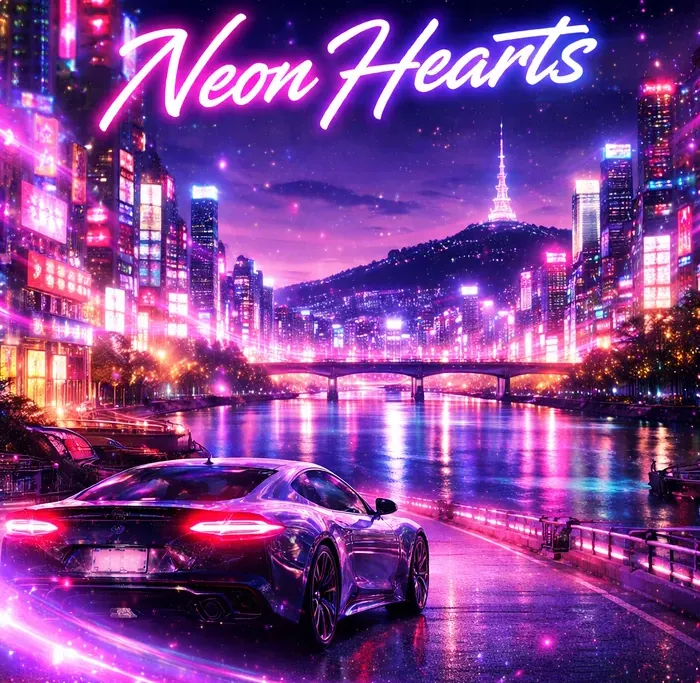
Neon Hearts
K-pop and synthpop for Seoul after midnight. Sharp beats, clean hooks, and rain-lit city images trace romance from first spark to dawn.