
Epic Viking Metal
The Ash Tree Remembers
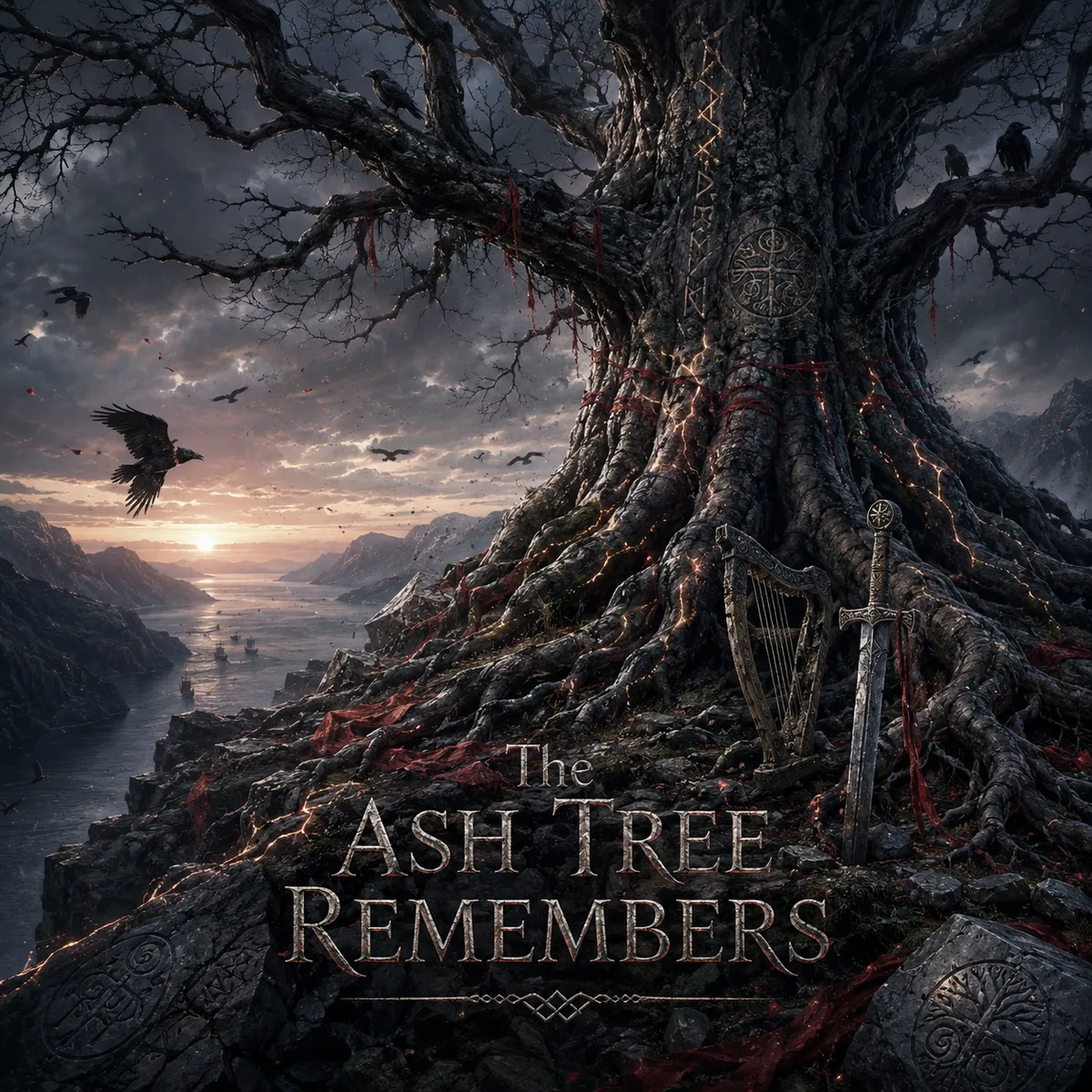
The Ash Tree Remembers is an epic Viking metal journey through Yggdrasil, war, memory, death and renewal, told through crushing riffs and Nordic ritual fires.
Liner Notes
A short editorial read on the album world, sound, and standout moments.
About the Album
The Ash Tree Remembers is not interested in treating Norse mythology as a parade of familiar names, raised drinking horns and easy heroics. Its subject is Yggdrasil itself: the immense ash tree that binds the nine worlds, absorbs their violence and outlives the ambitions of those who believe they rule beneath its branches. Across fourteen tracks, the album turns that image into a dark, patient meditation on memory, power and the cost of being remembered.
At the center of the record stands an old skald carrying a broken harp, a raven feather and a sword he refuses to draw. Sitting beneath the tree, he begins to receive visions from Midgard, Asgard, Jötunheim and Helheim. What first appears to be a mythic journey gradually becomes something more unsettling. The gods are not presented as timeless masters of fate, but as temporary figures caught inside a system older and larger than themselves. Kings, warriors and divine rulers all make claims on history; Yggdrasil remembers what their stories leave out.
Musically, The Ash Tree Remembers is built from the weight and scale of epic Viking metal, but its strongest moments often come from contrast. Down-tuned guitars, blackened tremolo passages and tom-heavy drums provide the physical force, while tagelharpa, harp, lyre, horns and restrained choral writing give the album its ritual character. The production avoids smothering everything in decorative grandeur. The drums feel heavy rather than glossy, the baritone vocals stay close enough to retain human grain, and the folk instruments are used as narrative voices rather than ornamental symbols.
That focus gives each chapter its own identity. “Beneath the Oldest Bough” opens with the tree as a living archive, its roots carrying the dead beneath the skald’s feet. “Midgard, Made of Breath” shifts the attention away from gods and warriors to farmers, smiths, widows and children, arguing that mortal life matters precisely because it is brief. “The Well That Took My Name” turns knowledge into sacrifice when the skald gives up his own name in exchange for the memories concealed beneath official history.
The middle of the album deepens both the mythology and the moral argument. “Teeth of Jötunheim” allows the giants to speak not as monsters, but as witnesses to wounds the gods have renamed as victories. “The Broken Harp of Runa” is the record’s emotional center: a restrained lament for the skald’s wife and son, and a confession that songs can help make war sound noble enough for the young to follow. When the album reaches “Nine Roots Burning,” Ragnarök ceases to be a distant prophecy. It becomes the physical consequence of damage passed from realm to realm until no border can contain it.
The final stretch is especially strong because it refuses the simple satisfaction of revenge. Fenrir offers rage as justice. Hel offers memory without further loss. The Norns offer no reassurance at all. Each encounter forces the skald to choose between comforting illusions and an uncertain future. By the time “When Gods Become Weather” arrives, the great mythological conflict is already underway, but the album’s decisive act is not a killing blow. The skald takes the sword once carried by his dead son and uses it to break frozen ground, planting a seed beneath the collapsing world.
That gesture defines the record. Weapons, stories, symbols and traditions are not inherently sacred; their meaning depends on what people choose to do with them. A sword can serve conquest or cultivation. A song can glorify a king or remember the unnamed. A myth can reinforce authority or expose the cost hidden beneath it. The Ash Tree Remembers repeatedly returns to this idea without reducing it to a slogan. Its politics emerge from concrete images: red wool tied around a spear, a shield laid across a broken bridge, a harp string used as a final connection to home.
The closing title track offers renewal without pretending that renewal erases what came before. The young ash remembers the ordinary and the overlooked: the person carrying water, the child repairing a roof, the stranger helped across a ruined road. The dead do not return, the gods are not restored, and the world does not reset to an untouched state. Life continues through damage, altered by what it has survived. The final musical resolution feels earned because the album has spent fourteen songs questioning whether survival alone is enough.
Recommended if you like: Epic Viking metal, Nordic folk metal, mythological concept albums, ritual percussion, dark choral arrangements and heavy records that treat legend as memory rather than spectacle.
What makes The Ash Tree Remembers worth hearing is the seriousness with which it treats both its mythology and its listeners. It delivers the scale, riffs, ritual percussion and dark grandeur expected from Viking metal, yet it also asks harder questions than most records built around Ragnarök. Who is allowed to become legend? Who pays for a ruler’s glory? What happens when gods confuse stewardship with ownership? And what remains when even divine names disappear?
The answer is not a throne, a monument or a victorious army. It is a tree, a seed, a broken instrument and a memory carried forward by someone who may never know the name of the person who saved it. That is where the album finds its power, and why its final silence lingers long after the last note.
Production Notes
All tracks were generated with AI music models, then processed for the final orchestral sound. No human performance recordings are used.
Full album download
Download the complete album
Get the full ZIP package with tagged audio files, cover artwork, and album metadata.
Support MelodyMind
Help keep the albums coming
If this album was useful or fun to listen to, a small contribution helps cover hosting, tools, and new music experiments.
Join the conversation
Reactions from the web
Mentions, likes, reposts, and replies from IndieWeb and Fediverse-friendly sites can appear here after you allow community features.
Ashes of Midgard
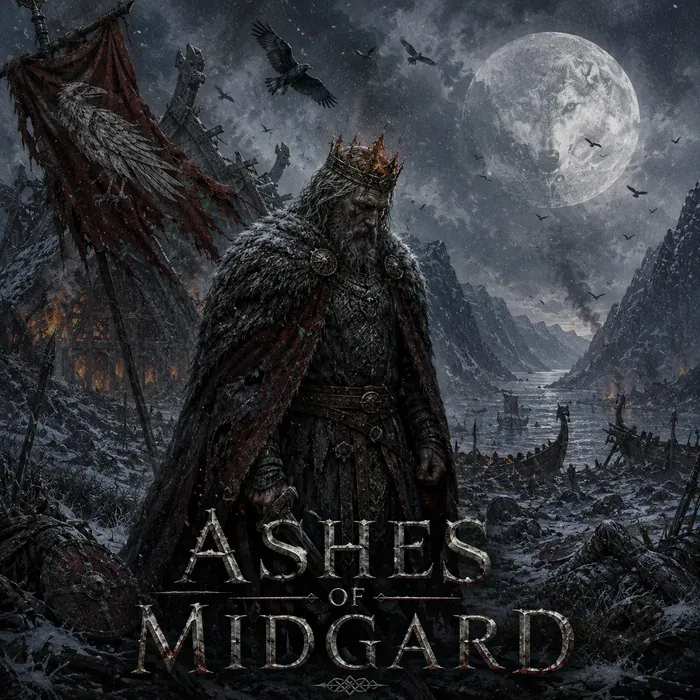
Ashes of Midgard is a tragic Viking metal concept album of fire, frost, broken oaths and a dying kingdom fighting to keep its memory alive after the last war.
Crimson Sakura
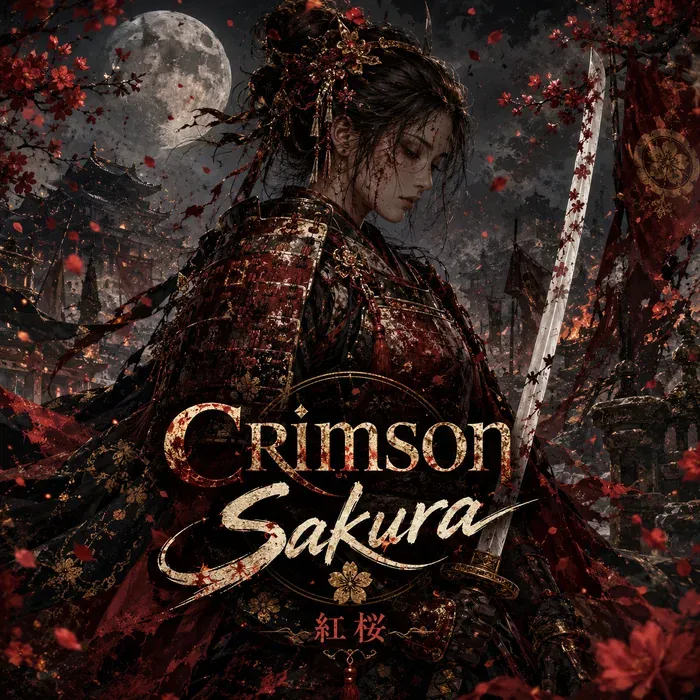
Crimson Sakura is a tragic symphonic J-metal odyssey of war, betrayal, lost love and honor, driven by soaring vocals, fierce riffs and cinematic grief in ash.
Queen of the Winter Wolves
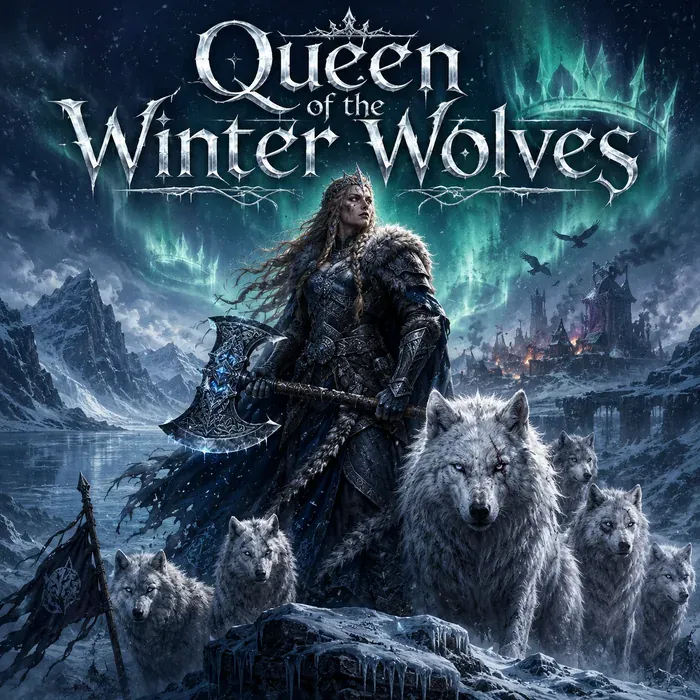
Queen of the Winter Wolves is a Nordic symphonic metal saga of exile, rebellion, ancestral wolves, and a queen who learns to lead without a throne in wartime.
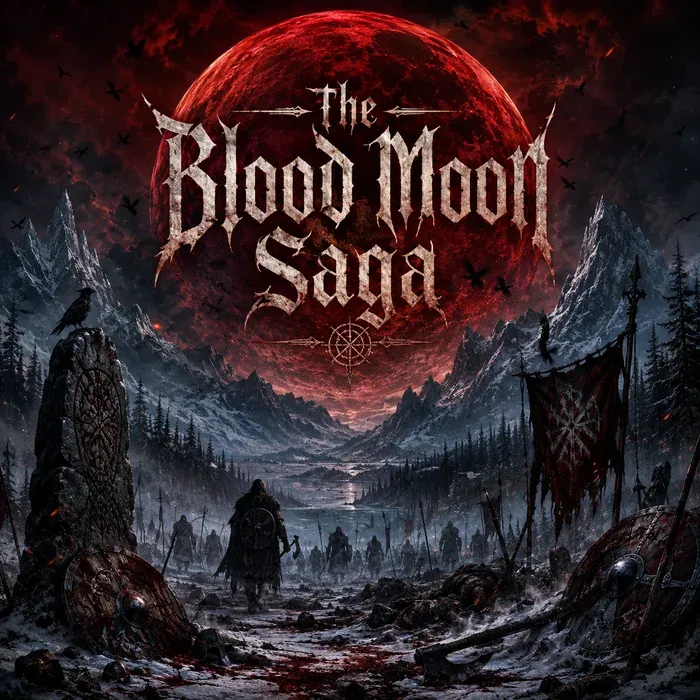
The Blood Moon Saga
The Blood Moon Saga is a dark Viking metal concept album of blood feud, prophecy, ritual war, tragic revelation, and apocalyptic Nordic atmosphere.
Community
Comments ...
Read or leave a comment about this album. Comments are provided by Cusdis and load only after you allow the comments feature.
Enable comments to load the discussion from Cusdis.