
Power Metal
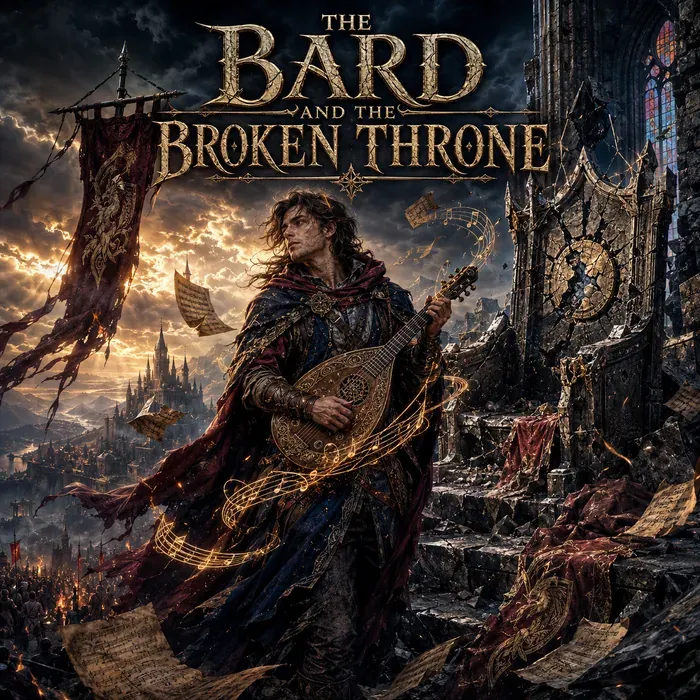
The Bard and the Broken Throne
The Bard and the Broken Throne is fantasy power metal with bardic folk color, fast guitars, big choirs, and a story about a wandering singer whose old songs expose a stolen throne and a buried bloodline.
- Tracks 14
- Length 66 min
Liner Notes
A short editorial read on the album world, sound, and standout moments.
About the Album
The Bard and the Broken Throne is power metal built around a good fantasy-metal premise: the song knows what the kingdom has forgotten. The album takes place in Arvandor, a realm where a false king rules under borrowed symbols and the official story has been polished until the crime underneath almost disappears.
Caelwyn, the wandering bard at the center of the record, is not an obvious battlefield hero. That is what makes him useful. He travels with a lute, a voice, and a repertoire of old songs that people treat as tavern entertainment until the details begin to line up. The ballads are not decoration. They are evidence, maps, witness statements, and finally weapons.
Musically, the album sits in fantasy power metal with bardic folk color. Fast guitars and galloping drums give the songs their charge, while acoustic passages, folk melodies, and choirs keep the storytelling rooted in rooms where people gather and remember. The best moments are not simply loud. They make the act of singing feel dangerous.
“Song of the Wandering Flame” and “The Map Beneath the Melody” set the frame well: music as movement, music as clue. “Tavern of Broken Crowns” gives the album its first strong image, because a tavern is the right place for unofficial history to survive. “The False King’s Banner” then turns the story openly political. A banner can command a crowd, but a song can teach people to doubt it.
The middle stretch follows Caelwyn from discovery into rebellion. “Bloodline in the Ballad” makes the personal revelation unavoidable, while “Ride Through Ashen Valleys” and “Choirs of the Rebel Dawn” widen the conflict beyond one hidden heir. The record is most convincing when it treats rebellion as a shared memory returning, not only as one man claiming a crown.
“The Bard’s Oath” and “Steel Cannot Silence Song” carry the album’s central argument without much disguise, and that directness suits the genre. Power metal often works best when it says the noble thing plainly and then earns it through momentum. “The Siege of Arvandor” gives the final act its necessary scale, but the emotional weight lands later, with “Crownless Heir” and “When the Throne Remembers.” Those titles suggest a better question than who gets to sit on the throne: what the throne remembers about the people who paid for it.
“Raise the Broken Throne” sounds like restoration, but the album is smarter when it does not treat restoration as simple return. The throne is broken for a reason. “Last Light of the Lute” closes the story by bringing the focus back to the instrument that started it all. The Bard and the Broken Throne is strongest when it remembers that its real power is not royal blood, but the moment a private song becomes public truth.
Production Notes
All tracks were generated with AI music models, then processed for the final sound. No human performance recordings are used.
Support MelodyMind
Help keep the albums coming
If this album was useful or fun to listen to, a small contribution helps cover hosting, tools, and new music experiments.
The Kingdom Beyond the Stars
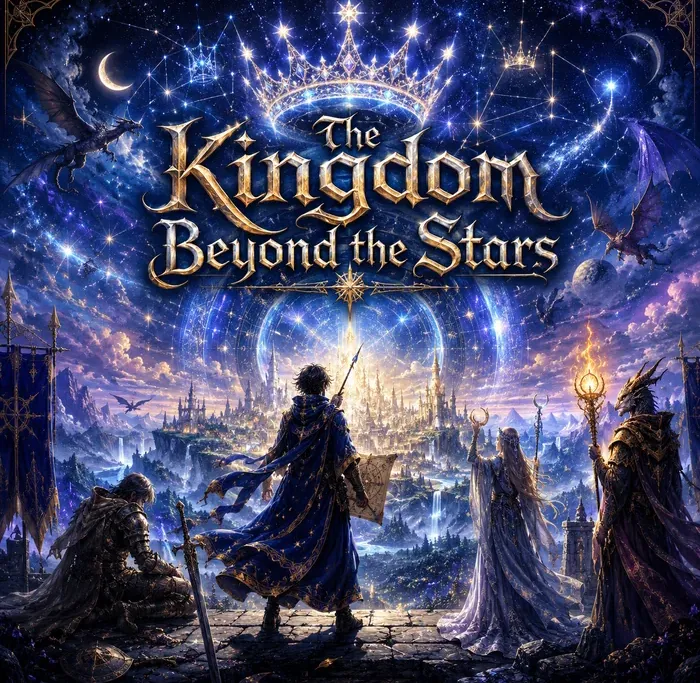
The Kingdom Beyond the Stars is fantasy power metal with fast drums, bright lead guitars, heroic choirs, orchestral lift, and a star-map story about a young cartographer chasing a stolen crown through the sky.
Queen of the Sunset Strip
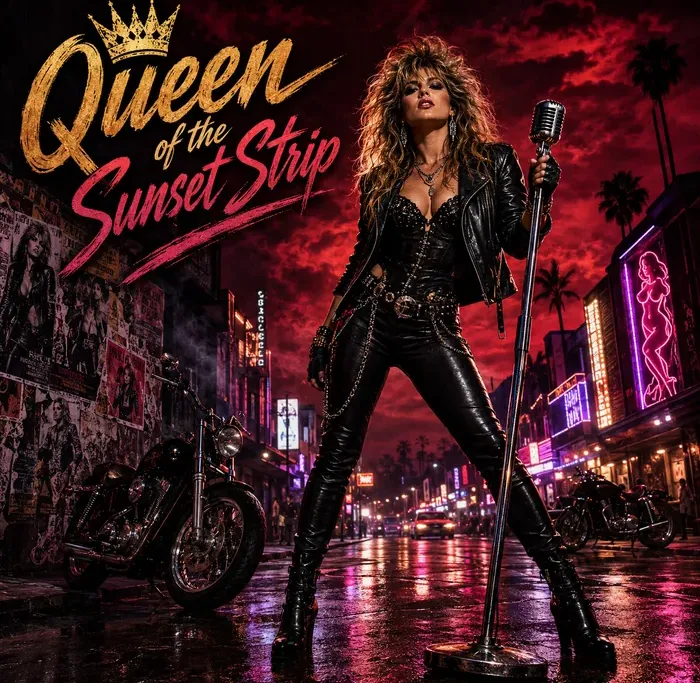
Queen of the Sunset Strip is a glam metal and sleaze rock album about Roxanne Vale, a club singer building her own crown from neon, bad contracts, cheap champagne, toxic romance, and loud amplifiers. Dirty riffs, bluesy lead guitars, gang vocals, and hard rock choruses keep the glamour scratched and dangerous.
Geronimo’s Last Ride
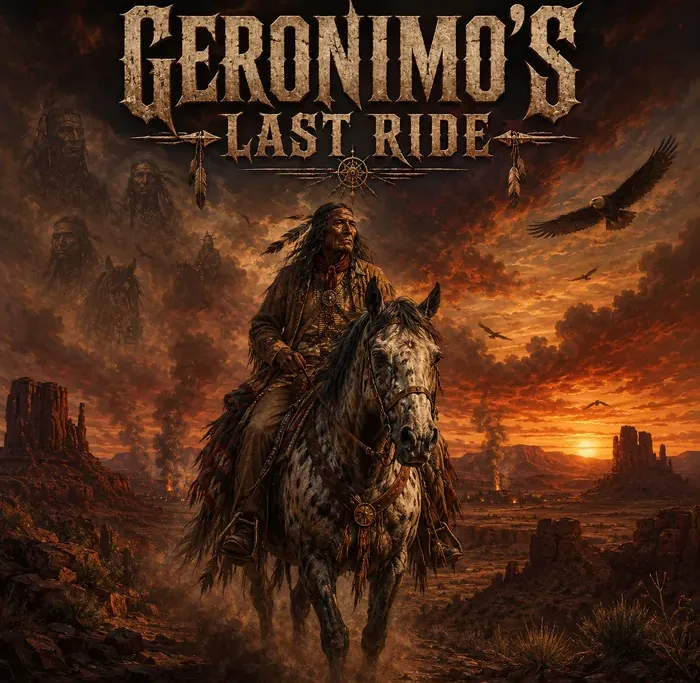
Geronimo’s Last Ride is a Western folk metal album about homeland, grief, pursuit, surrender, captivity, and memory. Heavy guitars, acoustic figures, cinematic drums, strings, brass, and choral weight frame a careful album narrative inspired by Geronimo and Apache resistance.
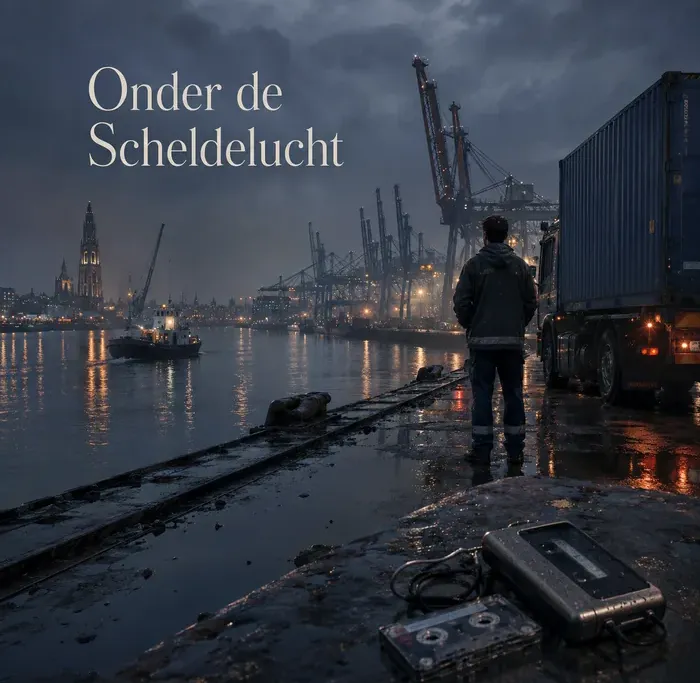
Onder de Scheldelucht
Onder de Scheldelucht is a Flemish indie rock album set along the Scheldt, where harbor light, steel cathedrals, old tapes, family memory, work, trade, and rain blur together. Reverb guitars, warm bass, muted drums, accordion colors, and Dutch-language vocals carry a story of labor, inheritance, and one last look at the river.