
Blackened Viking Metal
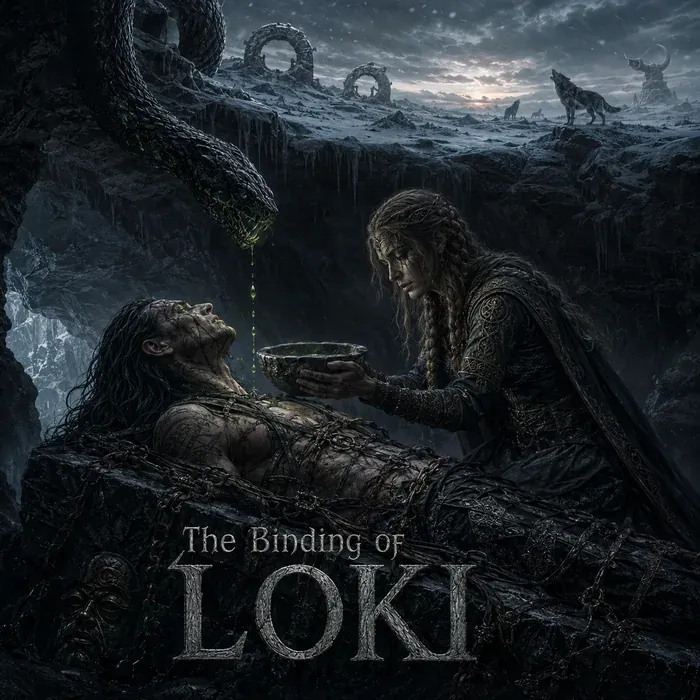
The Binding of Loki
The Binding of Loki is a frostbitten Blackened Viking Metal album of venom, broken oaths, Sigyn’s vigil and Fimbulwinter’s first roar. A grim Norse reckoning.
Liner Notes
A short editorial read on the album world, sound, and standout moments.
About the Album
The Binding of Loki is not simply a retelling of a myth. It is a collapse set to Blackened Viking Metal: a cold, violent, deeply human album about punishment, pride, loyalty and the terrible moment when justice becomes indistinguishable from revenge.
The story begins after the death of Balder, when the gods gather in a hall that should feel triumphant, sacred and untouchable. Instead, it feels poisoned from the first breath. Loki enters not as a comic trickster, but as a man who knows exactly where every body is buried. He names the lies, the cowardice, the convenient silences. The feast becomes a courtroom. The gods, who have built their world on oaths and glory, are forced to hear how brittle that glory has become.
Musically, the album lives in a frostbitten space between black metal ferocity and Viking metal weight. The guitars cut like wind over frozen fields, the drums alternate between charging blast passages and heavy ritual marches, and the folk elements are not decorative ornaments but part of the album’s spine. Bowed strings, low chants and grim melodic motifs return like old wounds reopening. This is music that should feel carved rather than polished: rough stone, iron bindings, cold breath, venom on skin.
What makes The Binding of Loki especially compelling is its moral perspective. The album does not ask the listener to simply cheer for Loki or condemn the gods in an easy way. Instead, it lets the tragedy grow uncomfortable. Loki is cruel, sharp-tongued and destructive, but the punishment chosen by the gods reveals something even darker in Asgard itself. When they bind him with the entrails of his own son, the album shifts from divine judgment into moral horror. That is the key turn: the gods win the moment, but lose the world.
The emotional center of the record belongs to Sigyn. Her scenes give the album its most devastating contrast. After the violence of the feast, the chase and the binding, her presence beside Loki under the serpent changes the temperature of the story. She is not written as a passive figure or a simple symbol of devotion. She becomes endurance itself. The stone bowl in her hands is one of the strongest images on the album: small, heavy, inadequate, yet absolutely necessary. Every drop she catches keeps pain away for one more moment. Every time she must empty it, Loki suffers again, and the earth answers.
That image gives the album its rhythm. Venom falls. The bowl fills. Sigyn turns away. Loki screams. The world trembles. From there, the story expands beyond the cave. Fimbulwinter begins not as a random prophecy, but as a consequence. Frozen fields, broken harvests, hunger behind locked doors, brothers turning on brothers, kings breaking sworn peace — the album makes the end of the world feel social as much as mythological. The apocalypse does not arrive only with monsters and horns. It begins when trust fails.
This is where The Binding of Loki becomes more than a Norse metal concept. Beneath the myth, it is an album about institutions that rot while claiming righteousness. It is about rulers who call cruelty law, families destroyed by public power, and societies that only recognize their own corruption once the cold has already entered the walls. The record’s anger is ancient in costume, but modern in nerve. Listeners drawn to anti-authoritarian storytelling will find plenty to hold onto here, even though the sound is firmly rooted in blackened, mythic metal rather than punk.
The strongest tracks work because they each serve a different dramatic purpose. The opener throws the listener into the poisoned atmosphere of the hall. The accusation songs have a cutting, almost public violence. The river chase brings movement and panic. The binding tracks slow the album down into something heavier and more dreadful. Sigyn’s songs create intimacy without softening the tragedy. The mid-album climax, when venom strikes Loki’s face, feels like the hinge of the whole record: after that, the suffering is no longer contained. It travels through the roots of the world.
By the time Odin looks into the cracked mirror, the album has earned its reflection. The Allfather’s realization is not a convenient redemption, but a bitter recognition: Asgard has become what it feared. That idea gives the finale its force. The title track, The Binding of Loki, pulls the central images together — stone, venom, blood, frost, oath, horn — and turns the punishment into a warning. Loki remains bound, but the world around him is already breaking.
The closing epilogue, Horn Beyond the Snow, wisely refuses to rush into full Ragnarök spectacle. Instead, it leaves the listener in the pause before the horn. That restraint makes the ending stronger. The album does not need to show every battle. It understands that dread is often more powerful when the final sound has not yet arrived.
Recommended if you like: Political punk, post-punk, protest rock, anti-authoritarian lyrics, dystopian concept albums, AI-assisted music projects — but want those instincts translated into a harsher, colder, myth-soaked metal language.
The Binding of Loki is recommended for listeners who want concept albums with real narrative weight: not just songs about gods and winter, but songs about blame, loyalty, punishment and the collapse of moral authority. It is grim, dramatic and heavy, but its best moments are not only loud. They are precise. A bowl held under venom. A field frozen before harvest. A brother’s door locked against a brother. A god realizing too late that wisdom without mercy is only another kind of blindness.
This is an album for listeners who like their mythology with teeth, their metal with story, and their darkness with a reason to exist.
Production Notes
All tracks were generated with AI music models, then processed for the final orchestral sound. No human performance recordings are used.
Full album download
Download the complete album
Get the full ZIP package with tagged audio files, cover artwork, and album metadata.
Support MelodyMind
Help keep the albums coming
If this album was useful or fun to listen to, a small contribution helps cover hosting, tools, and new music experiments.
Join the conversation
Reactions from the web
Mentions, likes, reposts, and replies from IndieWeb and Fediverse-friendly sites can appear here after you allow community features.
When the Gjallarhorn Sounds
A symphonic Viking metal requiem for Ragnarök - gods fall, monsters rise, and the last horn calls nine worlds toward silence, fire and a world without victors.
The Death of the Brightest God
The Death of the Brightest God is a Viking doom metal concept album about Balder's death, divine grief, mistletoe and Ragnarok's first dark shadow. Listen in.
Before the First Dawn
Before the First Dawn turns Norse creation into atmospheric Viking metal - colossal riffs, ritual choirs, blood, frost and nine worlds forged through violence.
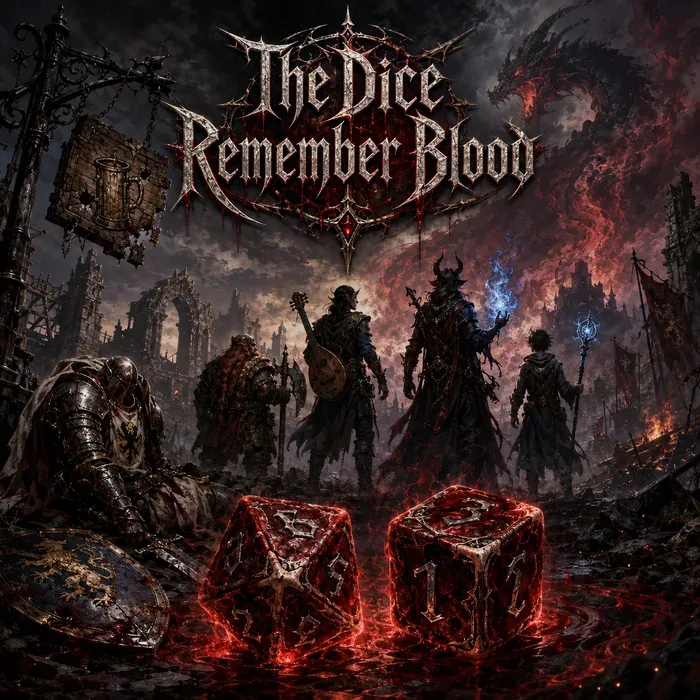
The Dice Remember Blood
The Dice Remember Blood is a dark fantasy metal saga of cursed choices, lost identities and grim victories, told through all 14 cinematic, story-driven songs.
Community
Comments...
Read or leave a comment about this album. Comments are provided by Cusdis and load only after you allow the comments feature.
Enable comments to load the discussion from Cusdis.