

Comedy Hard Rock
The Building Is Also Down
Broken lifts, flooded racks and budget cuts collide in The Building Is Also Down, a sharp punk-rock concept album packed with black humor and hard riffs live.
Liner Notes
A short editorial read on the album world, sound, and standout moments.
About the Album
The Building Is Also Down takes one of modern working life’s least glamorous truths and turns it into a loud, funny and surprisingly sharp concept album: before the cloud, the platform, the dashboard or the workflow can function, somebody still has to keep the doors opening, the pipes sealed, the air moving and the lights on.
Set inside the already strained world of Building B, the album follows facility manager Greta Novak through a single Monday that begins with familiar annoyances and develops into a full-scale infrastructure crisis. Access cards flash red at the front entrance. The elevator traps senior management between floors. The air-conditioning fails during a heatwave. Cheap fans are bought in bulk, meeting rooms become improvised cooling zones, and the Helpdesk suddenly receives tickets about doors, toilets, lights and ventilation. What initially looks like a collection of comic workplace mishaps soon reveals a deeper problem: years of delayed maintenance, reduced budgets and ignored warnings have left the entire building one failed component away from disaster.
Musically, the record stays rooted in punk rock and comedy hard rock, using fast guitars, muscular bass lines, live-sounding drums and blunt, memorable choruses to make technical failures feel physical. These are not abstract songs about “systems” in the broad sense. They are songs about corroded valves, sagging ceiling tiles, overheated server racks, dead access readers, hardware-store fans and a key ring heavy enough to sound like percussion. That attention to detail gives the album its character. The jokes work because the world feels real, and the danger works because every absurdity is built on something recognisable.
Greta is the album’s centre of gravity. She is not written as a superhero, nor as a weary stereotype. She is competent, angry, practical and fully aware that the company’s celebrated resilience often means one underfunded person holding a failing workplace together with tape, memory and experience. In “Facility Ticket Priority Low,” the album slows into a bruised blues-rock shuffle as she looks back at years of warnings that were documented, downgraded and forgotten. The song gives the comedy a harder edge: the disaster is not random. It was filed, photographed, discussed and postponed.
That tension becomes more urgent in “The Server Room Is Getting Warm,” where Mara recognises that the cooling failure is no longer merely an office-comfort issue. The physical building and the digital operation begin to collapse into the same problem. Management, however, remains focused on appearance. “Move the Customer Tour” is one of the album’s strongest confrontations, pitting Greta, Mara and Ben against Victor’s insistence that an important client visit continue as planned. The song is funny, but its target is precise: the corporate habit of managing perception while material conditions continue to deteriorate.
The middle of the record turns genuinely tense. “Water Above the Racks” uses an unstable groove and falling notes to follow the first drops forming above live equipment. “Evacuate the Innovation Floor” accelerates into a frantic ska-punk rescue song, balancing sharp comic observations with a credible emergency. A missing employee, a failed maglock and an incomplete muster count give Greta a decision that cannot be solved by procedure alone. By the time “Buckets and Backup Power” arrives, Facility and IT are no longer separate departments exchanging tickets. They are one emergency crew, working with breaker maps, buckets, plastic sheeting and rapidly draining batteries.
The album’s emotional argument comes together in “The Physical Layer.” It is the quietest and most reflective song here, but it never abandons the record’s concrete language. Every cloud begins in cables. Every login requires power, access, cooling and space. Every digital promise rests somewhere inside a real building maintained by real people. This is where The Building Is Also Down moves beyond workplace parody and becomes a broader record about invisible labour. It asks why maintenance is treated as a cost until failure makes its value impossible to ignore.
“Repair Budget Approved” provides the big punk-rock release. Greta arrives with photographs, incident reports, inspection records and the financial cost of doing nothing. The victory is not sentimental. It is administrative, overdue and earned. Pumps, lift servicing, pipe maps, replacement relays, staffing and cooling redundancy finally receive funding because the evidence can no longer be smoothed away by corporate language.
Naturally, the company learns only part of the lesson. The closing track, “The Smart Office Initiative,” is a beautifully cynical epilogue in which Victor responds to the crisis by announcing a connected workplace full of intelligent chairs, app-controlled lights and networked coffee machines. The repaired manual key becomes the smartest device in the building. It is the perfect final joke because it does not reject technology; it rejects complexity without care, automation without maintenance and innovation without basic competence.
The Building Is Also Down is recommended because it offers more than a sequence of office jokes. It has a complete narrative, a memorable central character, recurring musical motifs and a clear point of view. Its choruses are built to be shouted, its details reward repeat listening, and its comedy never erases the people doing the work. The record is loud, specific and generous toward the workers who understand how things actually function. Listen for the riffs, stay for the collapsing ceiling, and leave with a new respect for the person carrying the keys through every working day.
Production Notes
All tracks were generated with AI music models, then processed for the final sound. No human performance recordings are used.
Full album download
Download the complete album
Get the full ZIP package with tagged audio files, cover artwork, and album metadata.
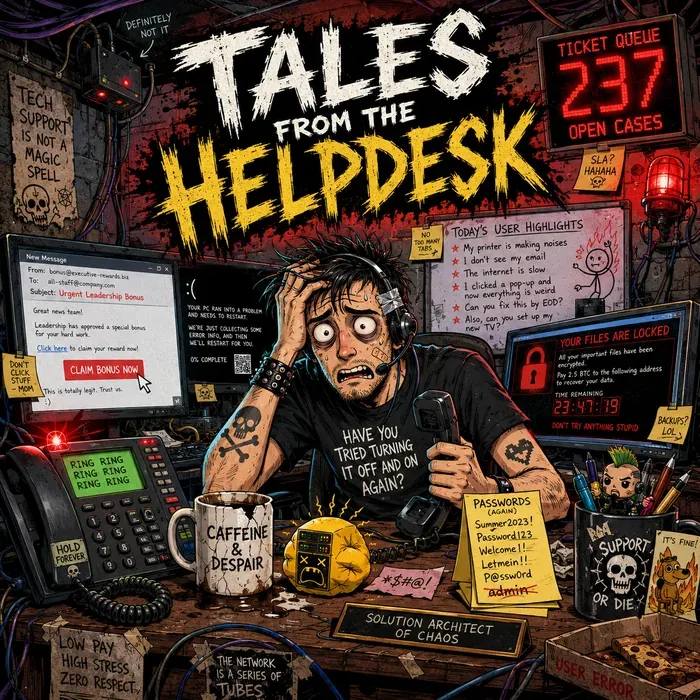
Tales from the Helpdesk
Tales from the Helpdesk turns broken screens, weak passwords and corporate arrogance into a searing punk-metal concept album about chaos, comedy and collapse.
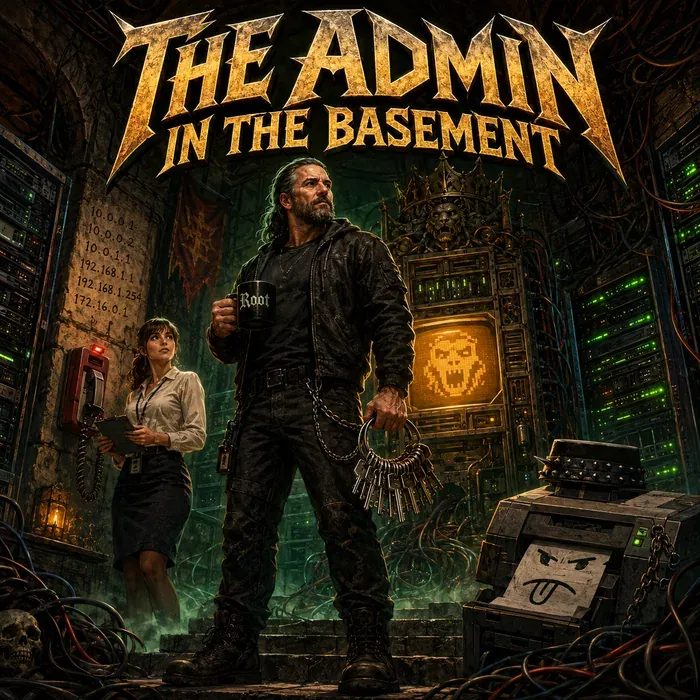
The Admin in the Basement
A comedy heavy metal concept album about the basement sysadmin, office chaos, failing servers, and the unseen worker keeping the whole company alive in secret.
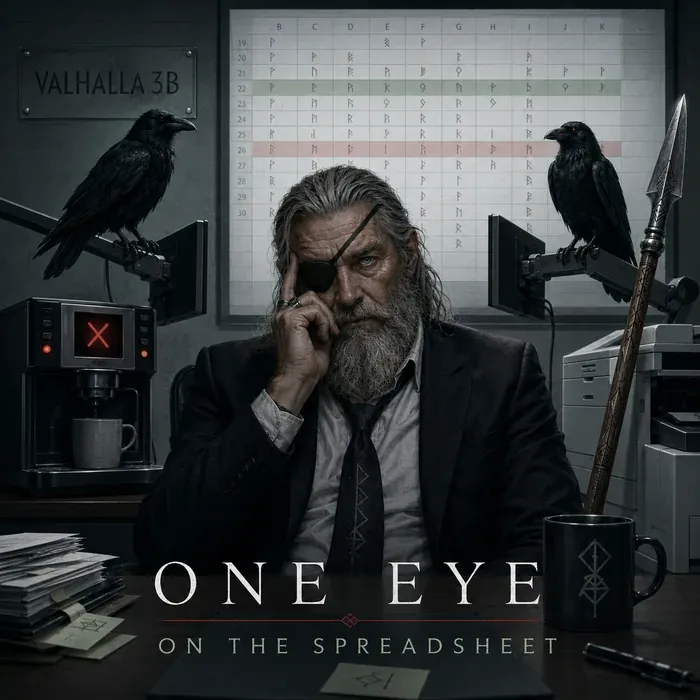
One Eye on the Spreadsheet
One Eye on the Spreadsheet turns Odin into an underpaid consultant in a sharp post-punk satire on office burnout, broken systems, and wisdom sold by the hour.
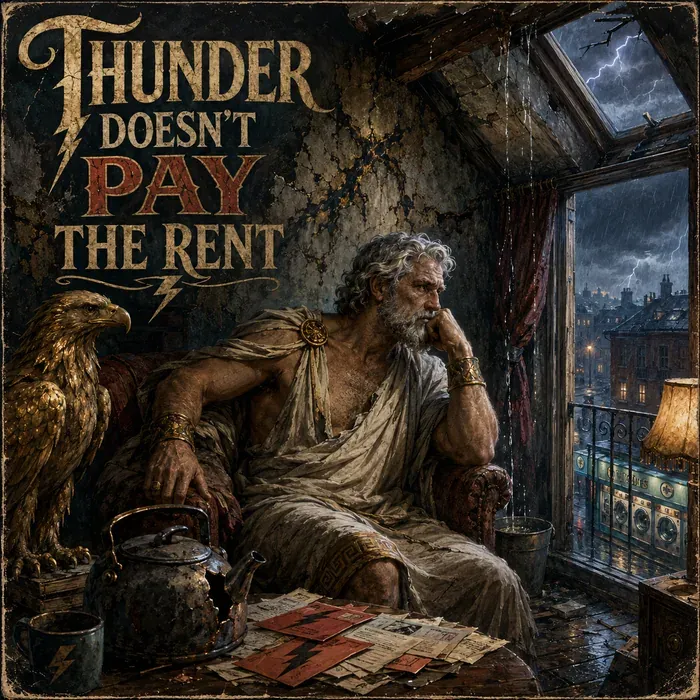
Thunder Doesn’t Pay the Rent
Thunder Doesn’t Pay the Rent turns Zeus’s midlife crisis into biting blues rock, where unpaid bills, bruised pride, black humor and hard-won humility collide.
Support MelodyMind
Help keep the albums coming
If this album was useful or fun to listen to, a small contribution helps cover hosting, tools, and new music experiments.