

The Fact-Check Needs a Fact-Check
Made with generative AI; directed and curated by Daniel.
The Fact-Check Needs a Fact-Check is tense, sharp-edged rock about newsroom pressure, verification debt, public corrections, and the cost of getting it right.
Tracklist
14 tracks
Liner Notes
A short editorial read on the album world, sound, and standout moments.
About the Album
The Fact-Check Needs a Fact-Check turns one of the least glamorous parts of journalism into the source of a surprisingly tense rock record: the moment when somebody has to stop, look at the evidence again, and decide whether everyone else has moved too fast.
The fourth album in The Newsroom Is Fine series picks up after speed, analytics and optimization have become normal parts of Current’s daily routine. Nothing has collapsed. Nobody is inventing stories. That is exactly why the problem feels believable. The damage comes from smaller compromises: context arriving after an alert, a provisional status surviving a handoff as if it were final, different desks working from different ideas of what “confirmed” means, and verification requests appearing only when a story is already close to publication. The album is interested in the kind of failure that grows quietly because each individual mistake still looks manageable.
At the center is Nina Park, previously a support figure, now beginning to see the newsroom as a system rather than a collection of isolated assignments. Songs such as “Yellow Means Not Yet,” “Version Three Says Something Else” and “Notes on the Embargo” give her something more useful than a grand speech: details. Status colors, timestamps, handwritten qualifications, corrections logs and version histories become the vocabulary of the record. The writing works best when it stays this concrete. Nina does not suddenly become an infallible crusader. She notices patterns because she has spent enough time cleaning up the same kinds of procedural mess.
Musically, The Fact-Check Needs a Fact-Check stays rooted in rock, but it avoids treating every newsroom problem like a reason for maximum-volume outrage. The guitars are lean, dry and slightly abrasive, closer to the nervous economy of a working band than to polished modern-rock spectacle. Bass lines carry a good deal of the movement, while live-feeling drums keep the songs pushing forward without sounding programmed into submission. There is tension in the arrangements, but also space, and that space matters because the record keeps asking the listener to notice small changes in language, timing and responsibility. Several tracks use restraint as part of the storytelling: when information becomes uncertain, the band often sounds as though it is holding something back rather than reaching automatically for a bigger chorus.
That control makes the middle of the album hit harder. “One Story, Three Desks” brings the accumulated weaknesses together around a high-profile story, and the title track finally forces them into public view. What makes “The Fact-Check Needs a Fact-Check” effective as the album’s central piece is that the correction does not expose a cartoonishly corrupt newsroom. The reporting itself has not been fabricated. Instead, three desks have operated with incompatible confirmation states and no clear owner for the final verification step. The embarrassment comes from recognizing that reasonable people, working quickly inside a badly defined process, can produce an unreasonable result.
The aftermath is where the album earns its concept. Rather than ending with the correction, it spends several songs asking what an institution actually does after admitting that its safeguards are inadequate. “Correction Window” slows the pulse while Nina reconstructs the sequence. “Another Workflow” finds dry humor in the inevitable meeting where the first answer to too much process is, naturally, more process. The joke lands because the record never suggests that procedures themselves are useless. The problem is procedure without responsibility.
That distinction becomes clearer on “Red, Amber, Green” and “Put a Name on the Box.” Color-coded evidence states make uncertainty visible, but one item can still sit in amber forever if nobody is responsible for moving it. The eventual solution is almost aggressively unglamorous: name the owner. Adrian’s acceptance of that rule matters because he understands the cost. Better verification means slower publication. The album does not pretend that accuracy is free.
“The Verification Wall” provides the musical and narrative payoff. Nina’s private habit of recording repeated failures becomes part of Current’s working structure. Mara begins treating her as somebody capable of seeing institutional patterns, Adrian waits for clearance rather than pushing ahead, and even Ben—whose irritation with accumulating workflow has supplied some of the album’s driest moments—uses the system. The change is real, but the record refuses to turn it into a victory parade.
That is why “Slower on Purpose” is such an important epilogue. A story waits. Its owner finishes the check. The safeguard works. At the same time, the queue grows, people are stretched, and the cost of doing the job properly becomes visible. The final question is not whether verification matters; the album has already answered that. The question is whether the newsroom will continue paying for it when time and staff capacity become harder to defend.
This is a concept album for listeners who like their political music grounded in workplaces, systems and consequences rather than slogans. Its satire is dry, its anger is controlled, and its strongest moments come from recognizing how institutional failure can hide inside perfectly ordinary routines.
Recommended if you like: Political punk, post-punk, protest rock, anti-authoritarian lyrics, dystopian concept albums, AI-assisted music projects.
The Fact-Check Needs a Fact-Check is worth hearing because it understands that tension does not require a conspiracy and protest music does not require a megaphone. Sometimes the most revealing conflict is a yellow status box, an empty owner field and a newsroom deciding whether being first matters more than being sure.
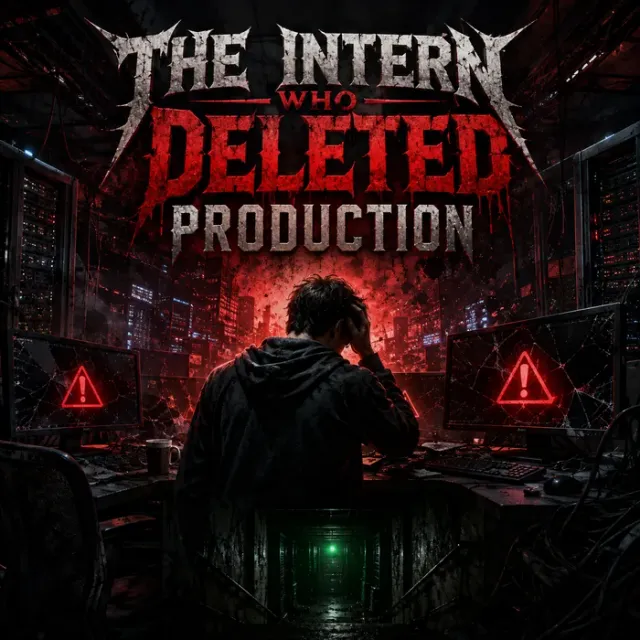
The Intern Who Deleted Production
The Intern Who Deleted Production is a savage comedy-thrash concept album about one fatal command and the broken company that made it inevitable from day one.
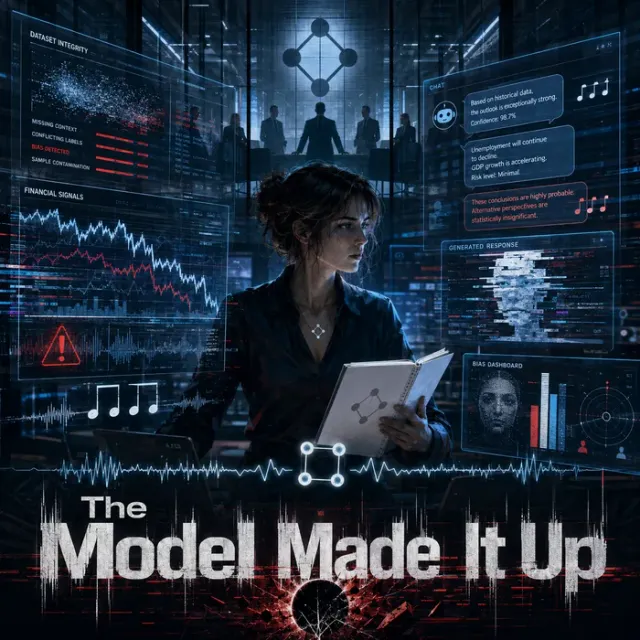
The Model Made It Up
A biting progressive electronic metal concept album about AI hype, bad data, corporate ambition, hallucinations, bias and the fight for human control at work.
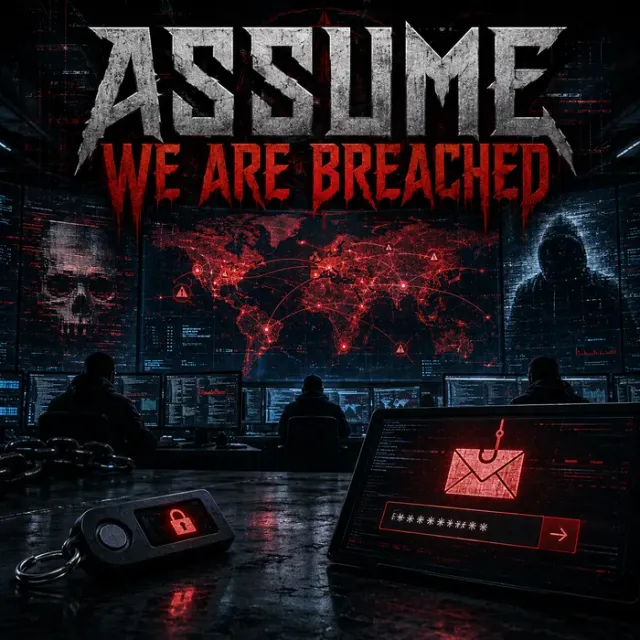
Assume We Are Breached
Industrial thrash concept album about cyber breaches, phishing, hidden accounts and corporate denial—dark, urgent, precise and dangerously addictive. Hear it.
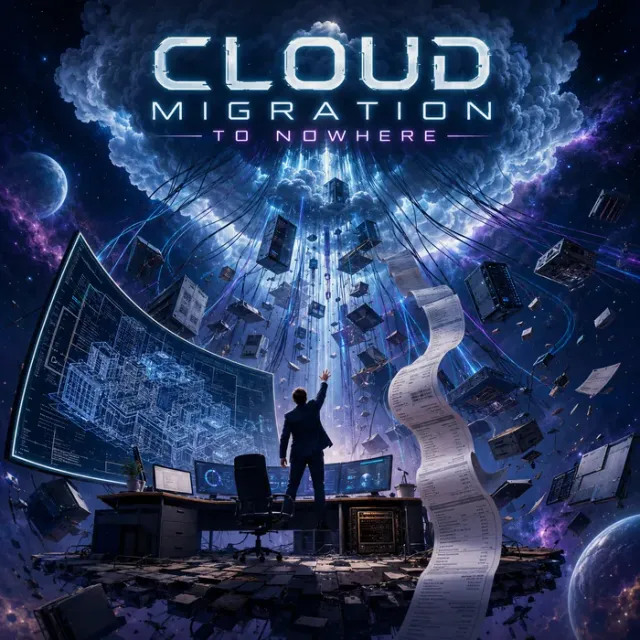
Cloud Migration to Nowhere
Cloud Migration to Nowhere blends progressive metal, space rock and corporate satire into a sharp concept album about cloud costs, chaos and control at scale.


Download the complete album
Get the full ZIP package with tagged audio files, cover artwork, and album metadata.
Help keep the albums coming
If this album was useful or fun to listen to, a small contribution helps cover hosting, tools, and new music experiments.